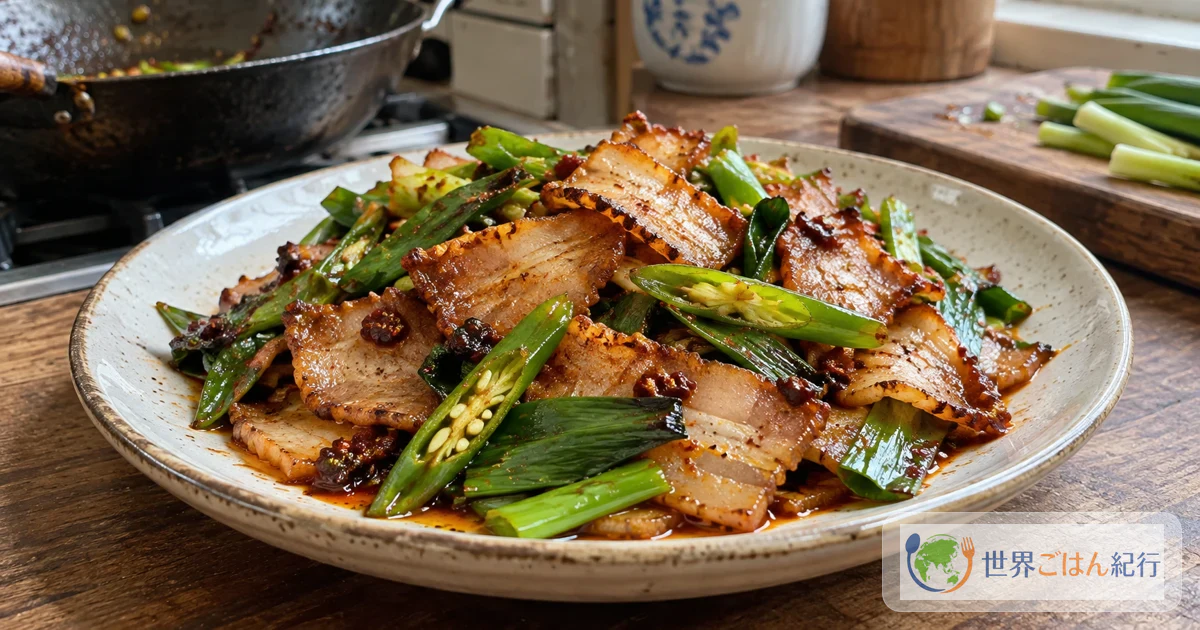
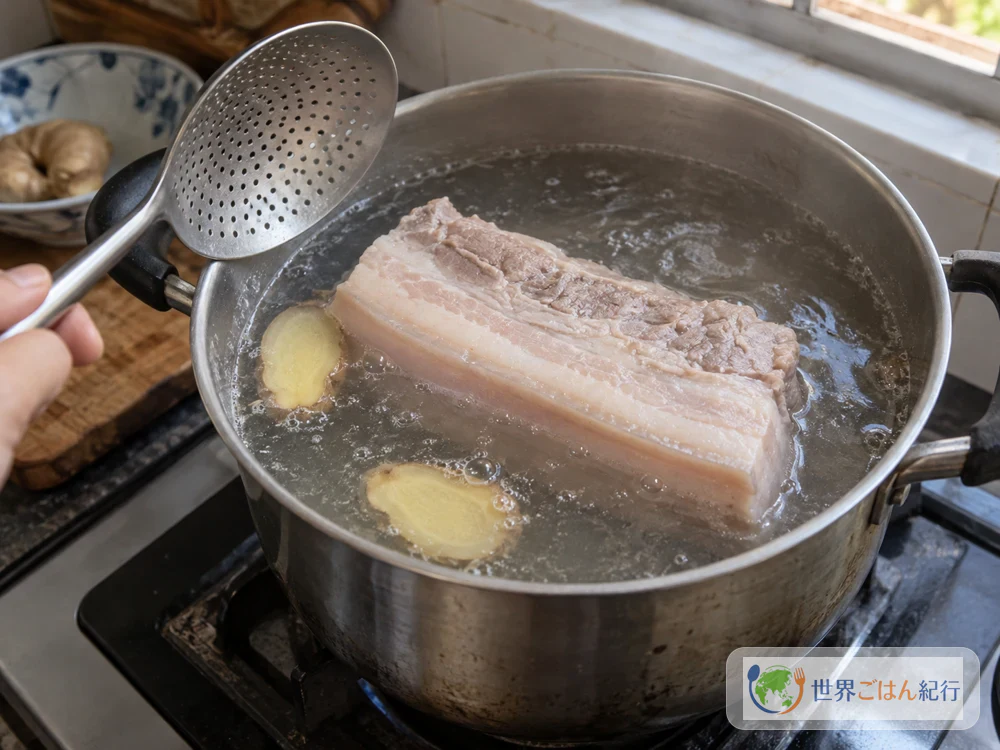
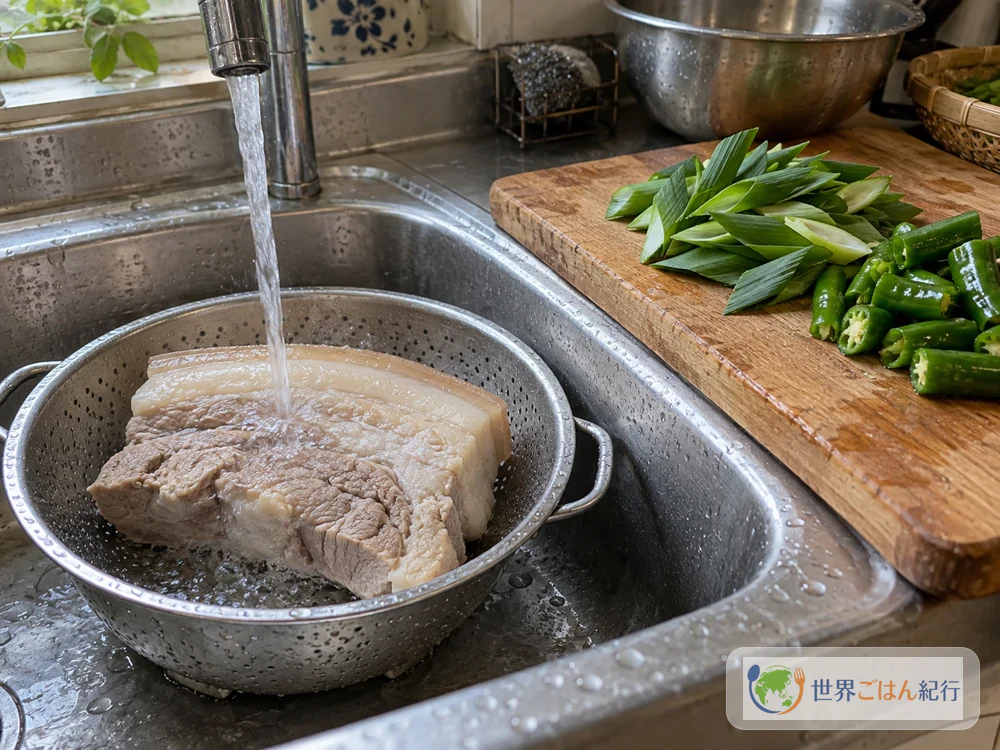
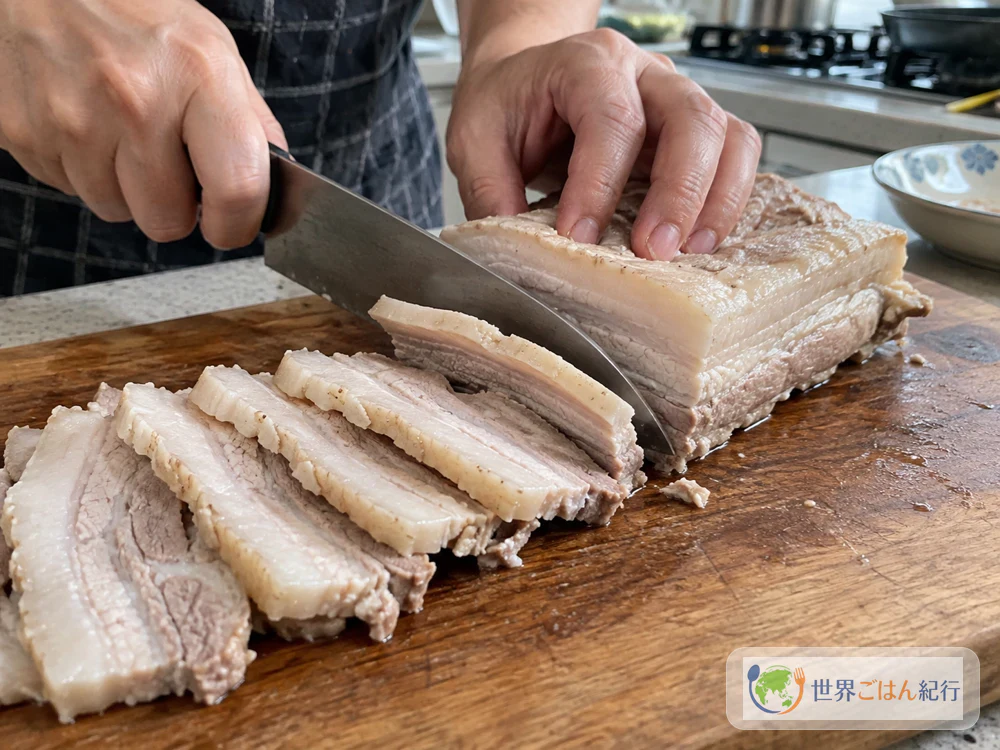
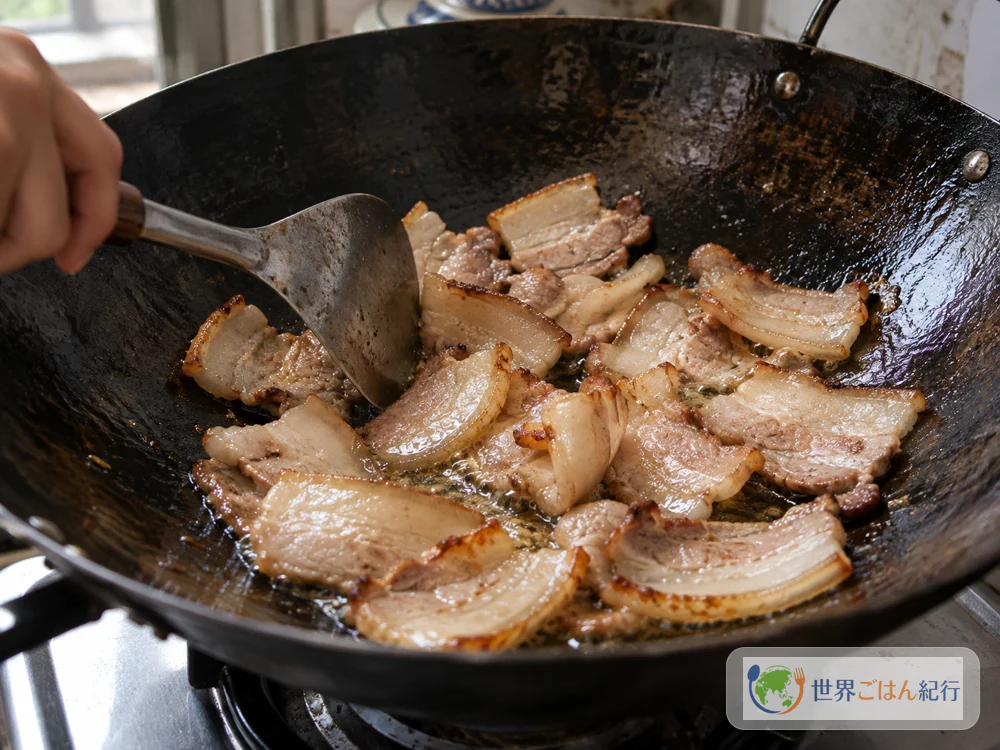
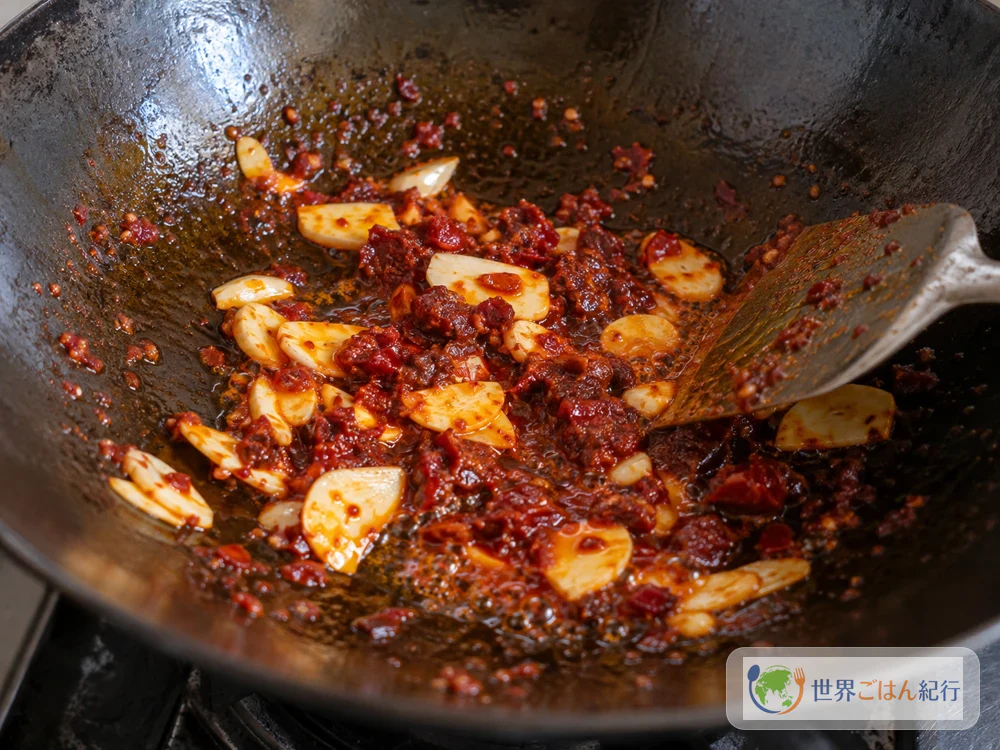
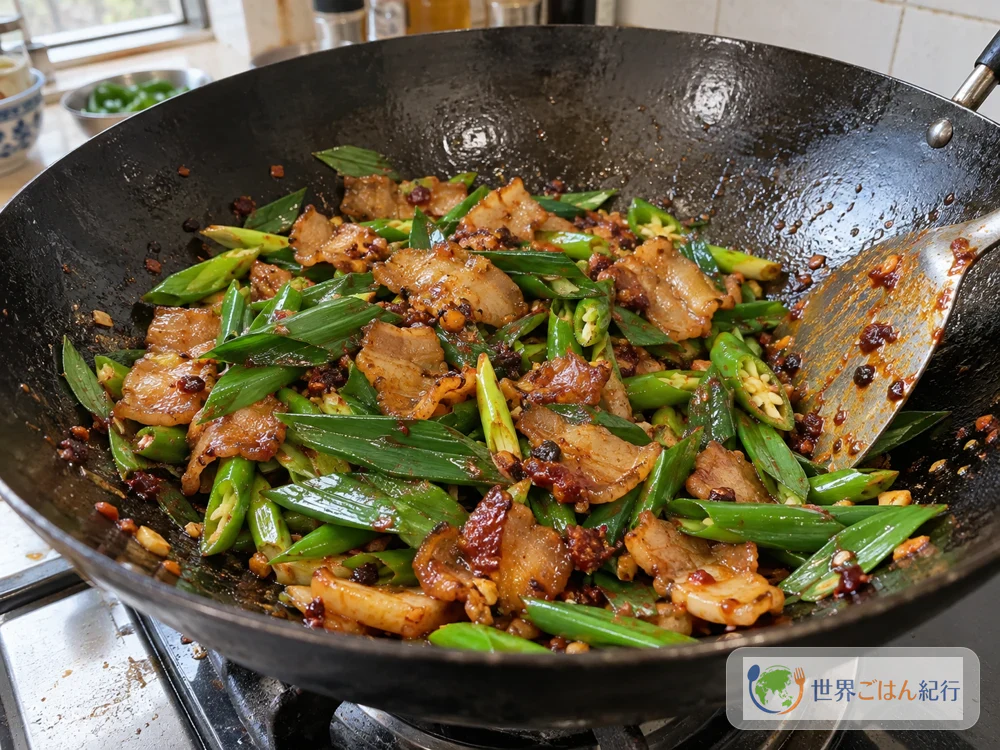
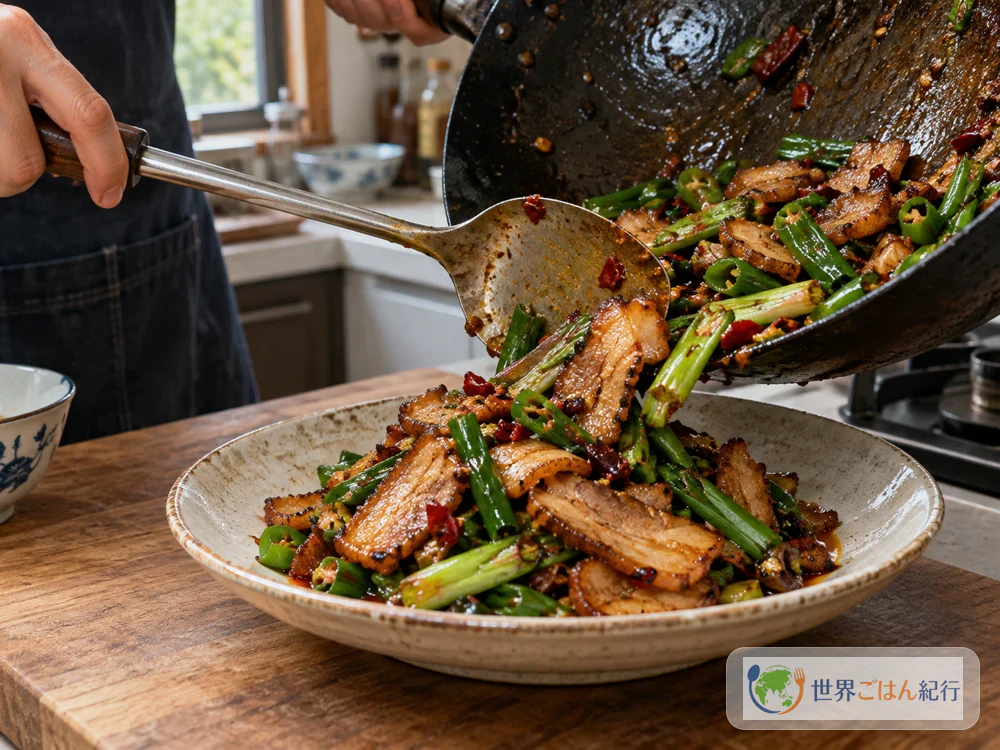
The block of pork belly just lifted from the pot is white and plump. Let it cool, slice it thin, and drop the slices into a hot wok, and with the crackle of rendering fat the edges of the meat curl round. Add doubanjiang, and the oil turns red before your eyes as the aroma of fermented beans and chilies fills the kitchen. This is hui guo rou, said to be Sichuan's most famous and most deeply loved dish.
How "meat returned to the wok" became Sichuan's nostalgia
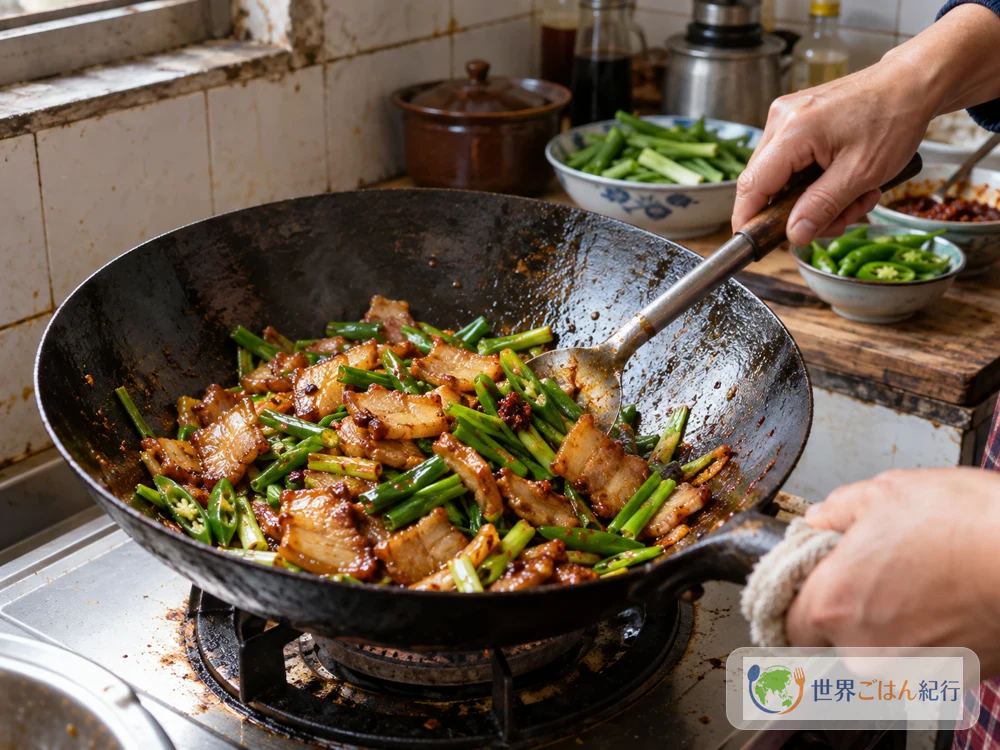
The name hui guo rou (回锅肉) literally means "meat returned to the pot." Pork is first simmered, taken out of the pot, sliced, and returned to the pot to stir-fry. Those two rounds of cooking became the name of the dish. In English it is rendered "twice-cooked pork."
The British food writer Fuchsia Dunlop, known for her research on Sichuan cooking, presents hui guo rou in her book Land of Plenty as the most famous and best-loved dish in Sichuan. For Sichuan people living abroad it is a nostalgic taste that recalls home, often tied to childhood memories of the older generation. She also writes an episode she heard from a restaurant owner in Chengdu: in the old days when pigs were raised free-range, when someone cooked hui guo rou, the aroma let the whole neighborhood know at once.
The shape of finished hui guo rou, with the curled, rounded edges of the meat, is called "dengzhanwo xing" (灯盏窝形) in an old Chengdu expression. It is named for its resemblance to the small lamp dishes that held oil for light in pre-revolutionary China.
According to the same book, hui guo rou was once the dish regularly eaten at meetings of Sichuan's secret societies, and in parts of western Sichuan it is still nicknamed "paoge rou" (袍哥肉), "the meat of the secret society." Sichuan cooks traditionally use skin-on pork leg, half fat and half lean. Because that is hard to find elsewhere, this version uses a block of pork belly, which is easy to work with even without the skin.
How it differs from the cabbage version
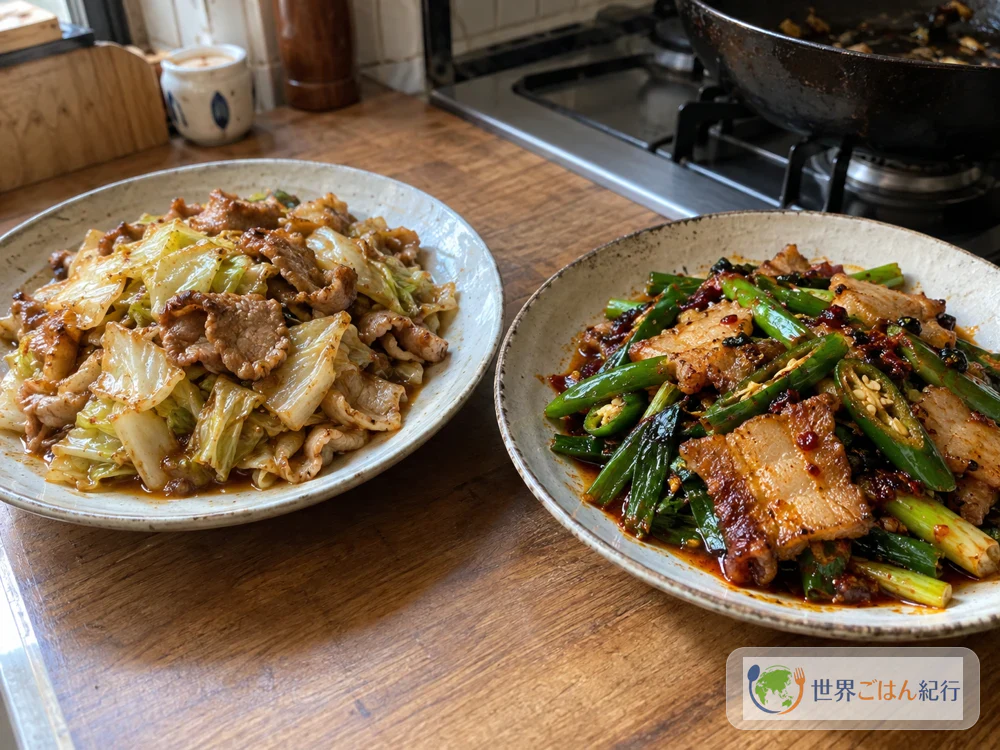
Outside Sichuan, many people think of hui guo rou as pork and cabbage stir-fried in a sweet-and-savory miso sauce. There are versions made with cabbage, bell pepper, and onion, but the vegetable Sichuan cooks traditionally use is the green garlic called suan miao (蒜苗). Dunlop says young, slender leeks make a perfectly good substitute, and ordinary leeks with plenty of green leaf, or Chinese scallions, can also be used.
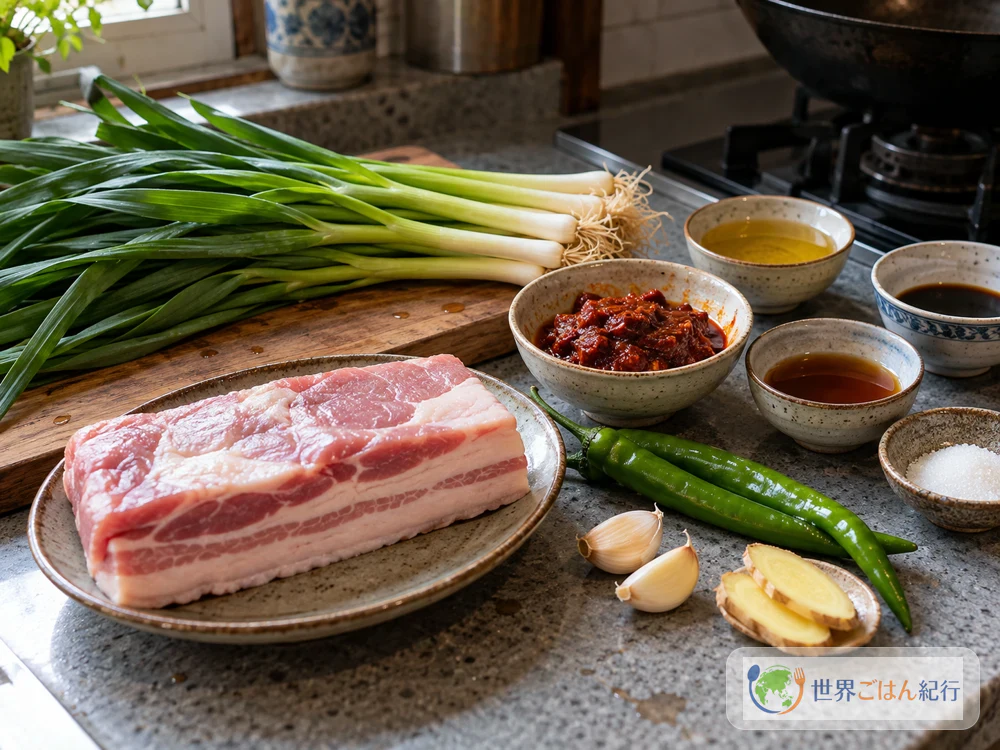
The easiest to find are green garlic or scallions. Green garlic is sometimes seen at farmers' markets and some grocery stores. If you cannot find it, use plenty of the green part of scallions and you get the green aroma of Sichuan hui guo rou. Either one, cut on a diagonal to about 5 cm lengths.
Doubanjiang is the seasoning that nearly decides the taste of hui guo rou. Its aroma and heat vary a good deal by brand, so the first time use the amount in the ingredient list and, if it seems lacking, increase it a little next time. Doubanjiang made in Pixian (郫县) in Sichuan is available at Chinese grocery stores and online.
Ingredients (serves 4)
At the stage of stir-frying the doubanjiang and garlic, if the oil temperature is high they scorch in an instant. Scorching brings bitterness and lowers the taste of the whole dish, so in step 5 always lower the heat to medium-low.
How to make hui guo rou
Count on about 10 minutes of prep, about 35 minutes of cooking including simmering the pork and stir-frying, and about 45 minutes in all. The pork is sliced after being simmered and cooled, so leave it uncut until just before stir-frying.
The liquid the pork was simmered in keeps the savoriness of the pork and the aroma of ginger. Season it with salt and add greens or an egg and you have a simple soup for the table.
Heating a wok over high heat makes oil spatter and smoke easily. Turn on the exhaust fan, and wipe the pork dry before it goes in the wok. If it is still wet, the oil spatters violently.
Serving and how to eat it
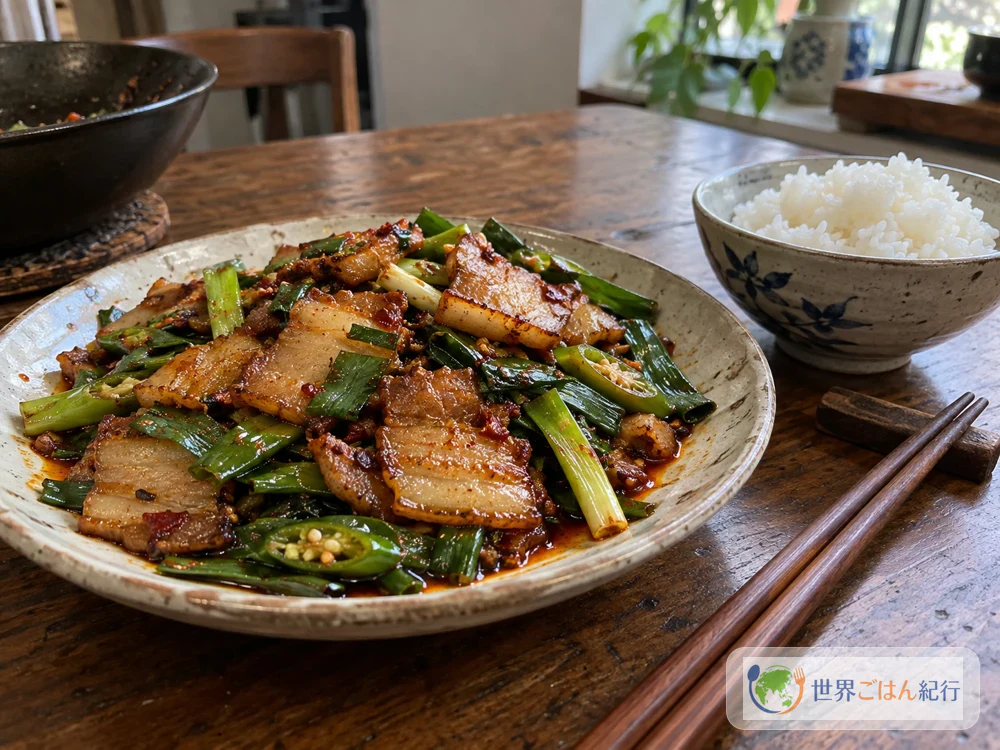
Hui guo rou is best eaten with freshly cooked white rice. Dunlop also writes that eaten with plain white rice it makes a wonderful meal. The sweetness of the fat and the heat of the doubanjiang go well with rice, and one plate sends many bowls of rice down. Spoon the red oil left on the plate over the rice, and you enjoy it to the last bit.
To round out a Sichuan home meal with another dish, mapo tofu (in Japanese), which uses the same doubanjiang, goes well. Two spicy meat dishes get heavy, so make the other dish something light, like stir-fried greens or an egg soup, and the table balances well.
Ways to vary it
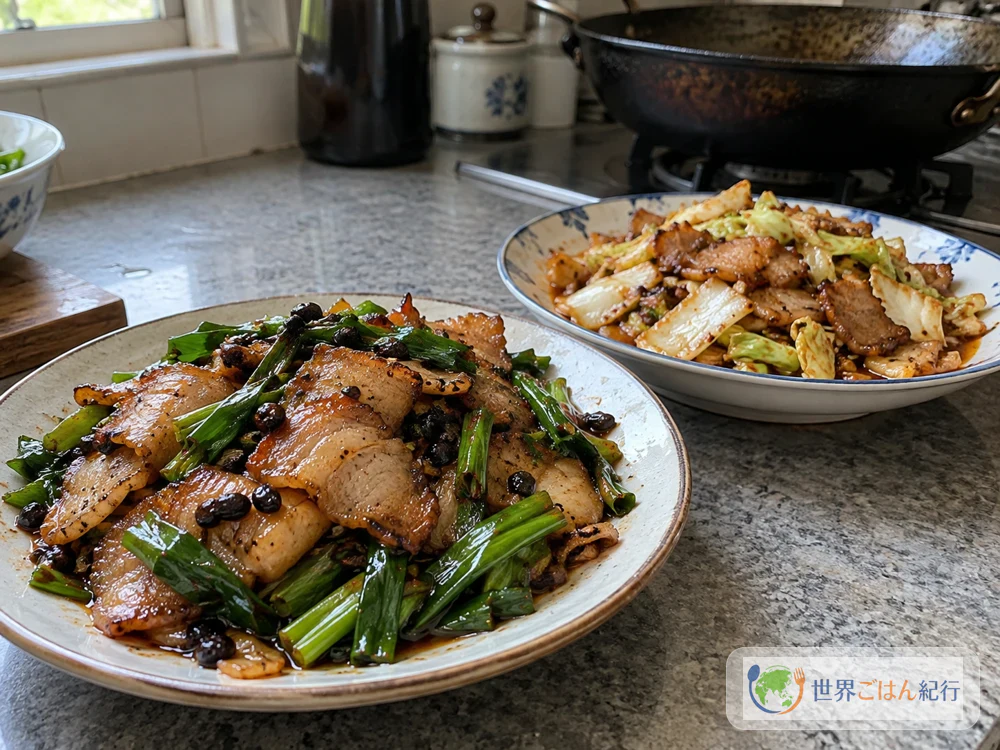
There are versions that add tianmianjiang (sweet bean sauce) or douchi (fermented black beans) to the doubanjiang. Adding 1 tsp tianmianjiang increases sweetness and richness, and adding 1 tsp chopped douchi deepens the fermented aroma further. Stir-fry either in step 5 together with the doubanjiang.
Dunlop also mentions a variation called guokui hui guo rou (锅盔回锅肉), made with the flat Sichuan flatbread guokui (锅盔). Fried pita bread would give a similar texture. To move it toward the cabbage style, use 1/4 head of roughly chopped cabbage in place of the green garlic, and stir-fry the cabbage 30 seconds first in step 6 before returning the pork, so it does not get watery.
Frequently asked questions
Can I use sliced pork from the store?
You can make it with store-bought sliced pork, but the texture changes greatly from a block that is simmered and then sliced, and the edges are less likely to curl into the lamp-dish shape. For the real hui guo rou experience, I recommend starting from simmering a block of pork belly.
What if I have no green garlic?
You can substitute scallions. Use plenty of the green part and cut on the diagonal into 5 cm lengths. To make up for the garlic aroma, add one more clove of sliced garlic.
How can I make it less spicy?
Reduce the doubanjiang to 1 tbsp and swap the green chilies for bell pepper, and the heat becomes much milder. Adding 1 tsp tianmianjiang makes up for the lack of flavor.
Can I make it ahead?
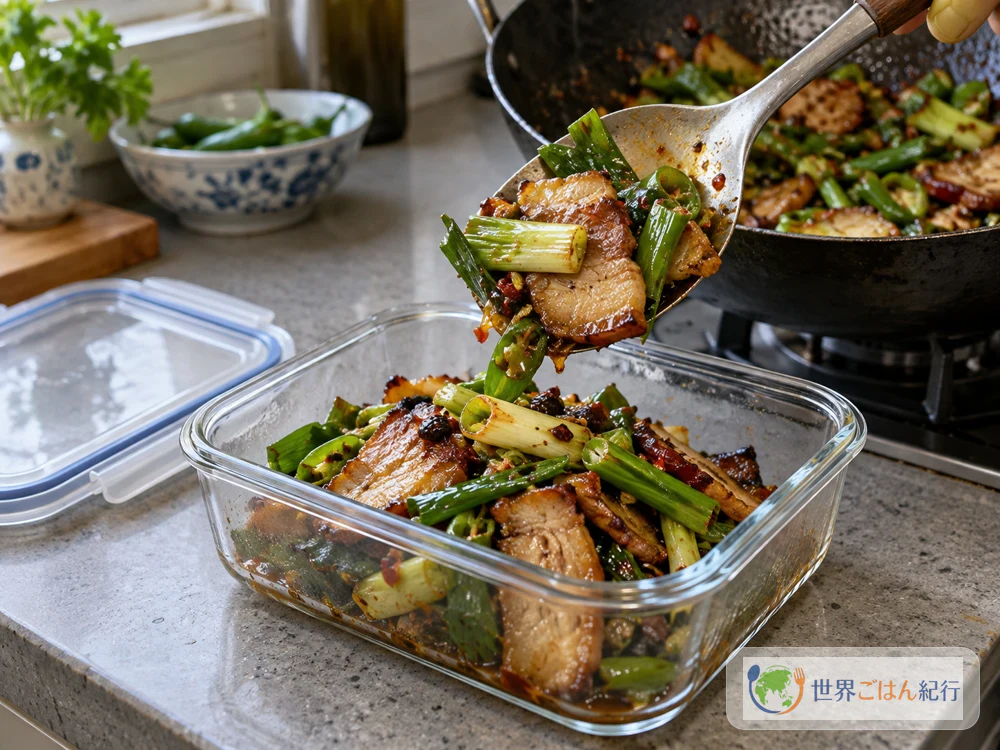
If time passes after stir-frying, the vegetables wilt and the texture suffers. If you simmer the pork and refrigerate it as a block, you can make the dish by slicing and stir-frying just before eating. Let the simmered pork cool before refrigerating it, and use it up soon.
Sources
- NPR, Fuchsia Dunlop, "Twice-Cooked Pork (Hui Guo Rou)," published 2 May 2008 (excerpt from Land of Plenty, 2001). Accessed and checked: 22 October 2026. https://www.npr.org/2008/05/08/89925951/twice-cooked-pork
- The Woks of Life, "Twice Cooked Pork." Accessed and checked: 22 October 2026. https://thewoksoflife.com/twice-cooked-pork/
- Wikipedia, "Twice-cooked pork." Accessed and checked: 22 October 2026. https://en.wikipedia.org/wiki/Twice-cooked_pork