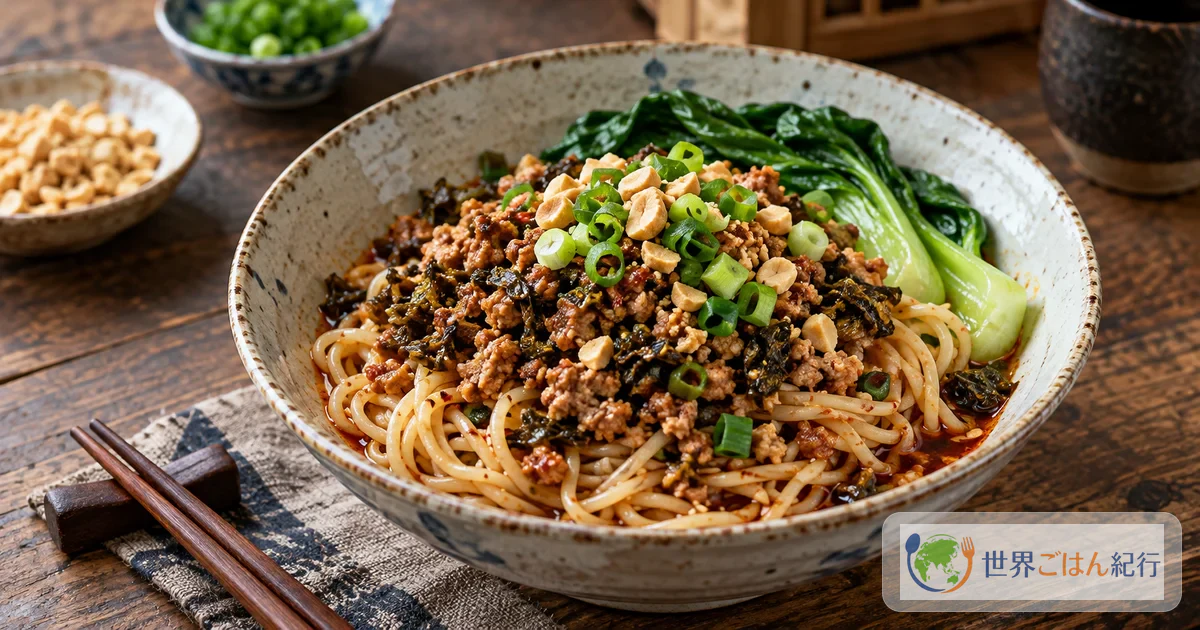
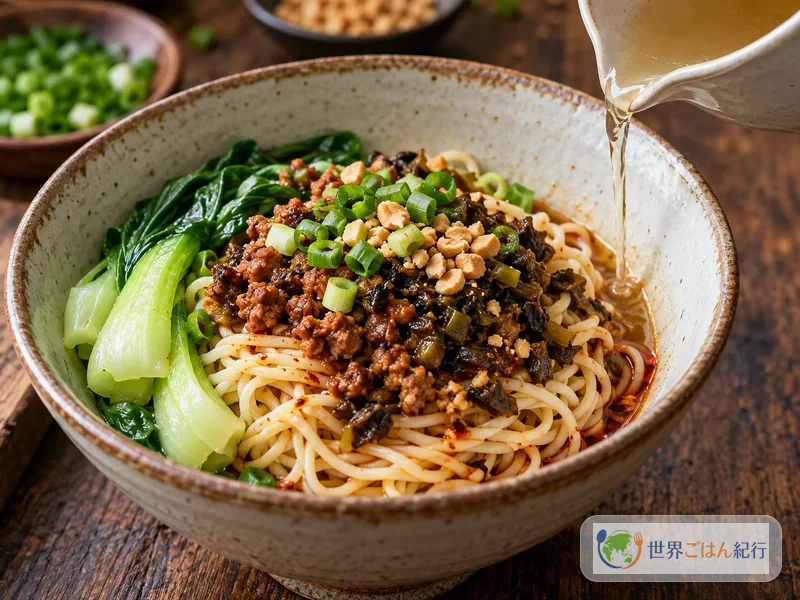
At the bottom of a small bowl lie glossy red chili oil, black vinegar, and soy sauce. On top go a handful of freshly boiled noodles, crisp-fried pork topping, greens, and chopped scallions. The scent of Sichuan pepper rises with the steam, and when you toss from the bottom with chopsticks, the noodles turn red. Take a bite, and after the chili heat, the tingling numbness slowly catches up on your tongue. This is dandan noodles (dandan mian, 担担面), a noodle dish born on the street corners of Sichuan.
A Sichuan snack sold from a shoulder pole

"Dandan" refers to carrying on a shoulder pole (bian dan). Dandan noodles are said to be named for the sellers who walked the streets with the noodles and sauce equipment hanging from both ends of a shoulder pole. When a customer called, they set down their load on the spot, put the sauce in a bowl, boiled the noodles, and handed it over quickly. It was a light noodle in a small bowl, in an amount a shoulder pole could carry.
There are several theories about where and when it began. China's English-language newspaper China Daily presents it as starting in 1841, with a seller nicknamed Chen Baobao in Zigong, Sichuan, who walked the streets selling from a shoulder pole. Another widely known account says the dish was born in Chengdu, the provincial capital of Sichuan. Either way, dandan noodles have been eaten for over 100 years as one of Sichuan's representative xiaochi (small snacks).
In Japan, "tantanmen" calls to mind a bowl of noodles in a sesame-rich soup. The Japanese tantanmen is said to have been introduced to Japan by the Sichuan-born chef Chen Kenmin (Chen Jianmin) and spread in its soupy form. The original Sichuan dandan noodles are dry tossed noodles with no soup.
Elaine, the cook who runs the Sichuan recipe site China Sichuan Food, explains that because sellers originally served the noodles tossed with sauce and toppings, the original dandan noodles are dry. There is just a little soup. Served in a small bowl and eaten hot, enjoying the crisp texture of the pork topping is the Sichuan way. In Sichuan, they are loved as crisp, spicy, numbing noodles, and every shop has its own variations.
What to know when cooking it in a home kitchen
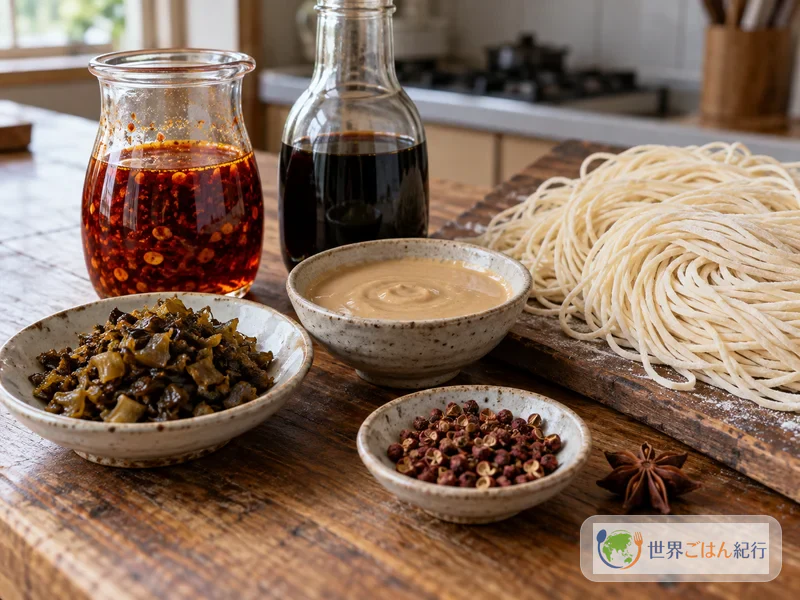
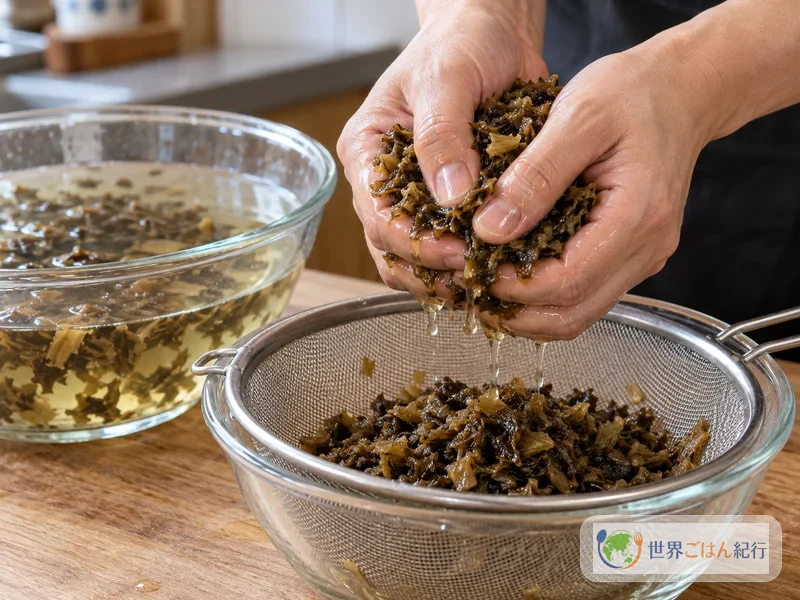
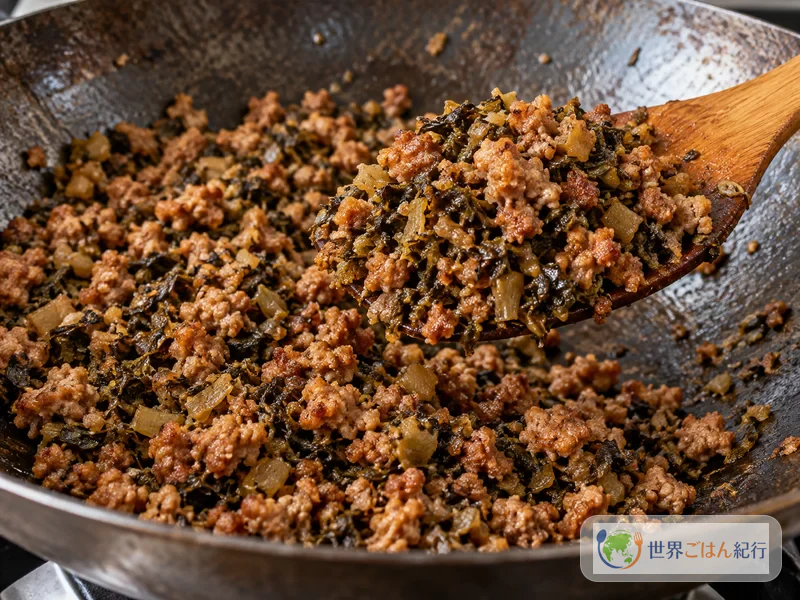
What defines the flavor of this dish is yacai (芽菜). It is a Sichuan pickle made by pickling and aging mustard stems, counted as one of Sichuan's three great pickles. It is a finely chopped, dark pickle sold in bags at Chinese grocery stores and online. Some products are quite salty, so soaking in cold water for 10 minutes to remove salt makes it easier to use. If you can't find it, you can chop zha cai (Sichuan preserved mustard stem) finely as a substitute, but it won't have yacai's distinctive sweet aroma.
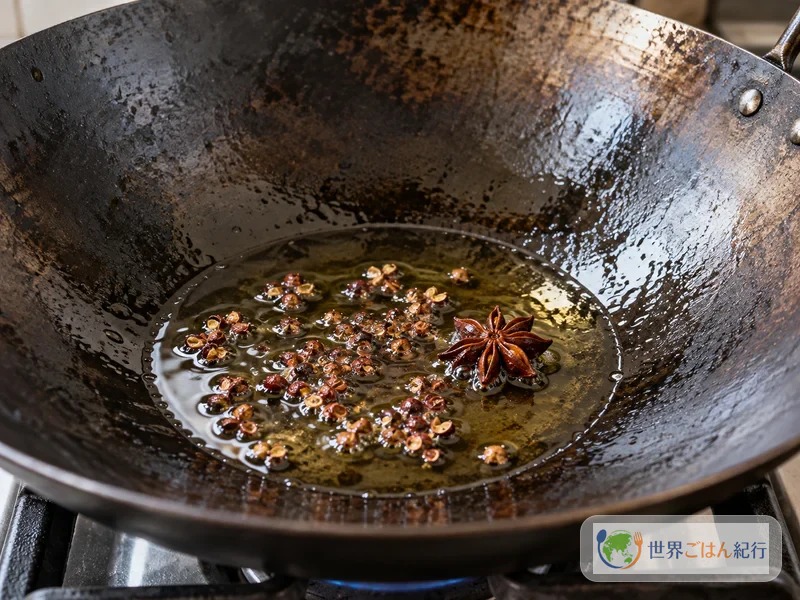
For Sichuan pepper, buying the whole peppercorns and grinding them yourself makes the numbing aroma far stronger. A mortar can make them fine, and a spice mill does it in an instant. For chili oil, a Sichuan-style one without solids and with a strong chili aroma suits it. For black vinegar, Chinese Zhenjiang vinegar is the closest, but Japanese black vinegar can substitute.
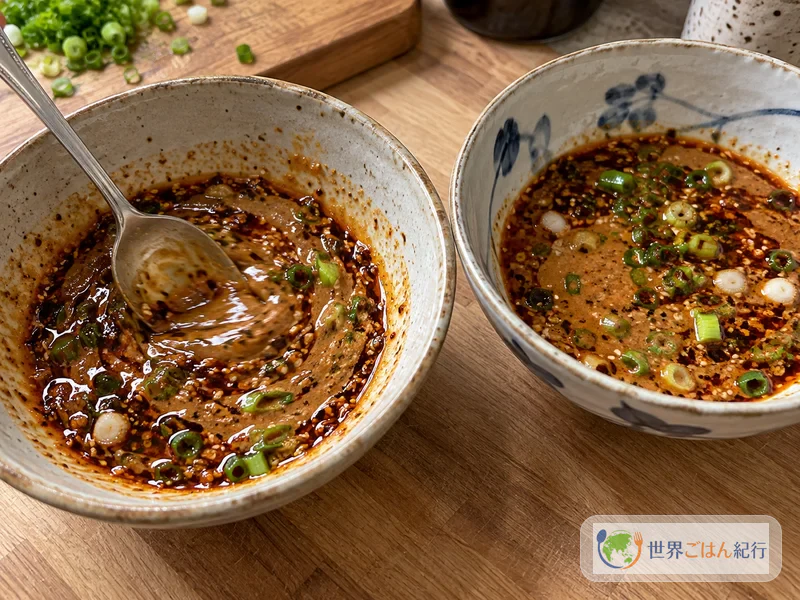
Sesame paste can be white sesame paste or Chinese zhima jiang (sesame sauce). The oil often separates at the bottom, so stir well in the jar before measuring. If it is stiff, thin it by dissolving it with soy sauce a little at a time, so it blends into the sauce more easily.
Thin, fresh Chinese noodles suit it best. If you make it with what is easiest to get, fresh Chinese noodles or even thin udon will still let you enjoy the flavor of the sauce.
Ingredients (serves 2)
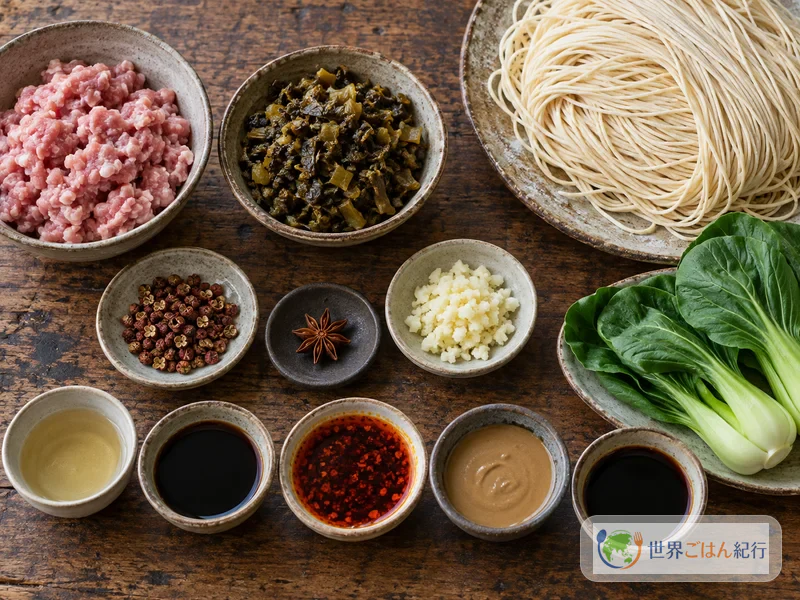
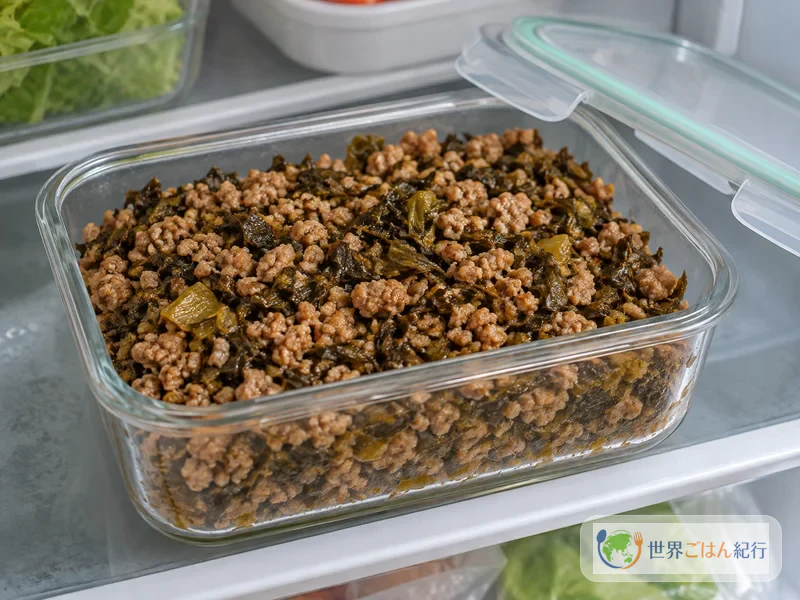
The amounts are based on the recipe by Elaine at China Sichuan Food. The pork topping is an easy-to-make quantity and plenty remains even after using it for two servings of noodles. Refrigerate the rest and use it with rice or in stir-fries.
This dish contains wheat (noodles, soy sauce), soy (soy sauce), sesame, and peanuts. Peanuts are a food that can cause severe allergic reactions, so leave them out if anyone has an allergy. The amounts of chili oil and Sichuan pepper greatly change the heat and the numbing, so use less for children.
How to make dandan noodles
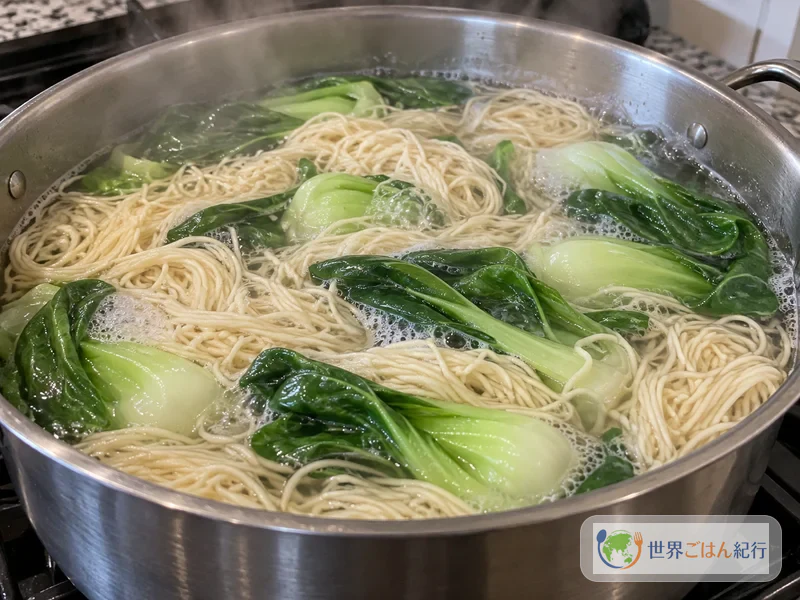
Preparation takes about 15 minutes and cooking about 20, about 35 minutes in all. If you make the pork topping first, all that remains is to boil the noodles and toss them.
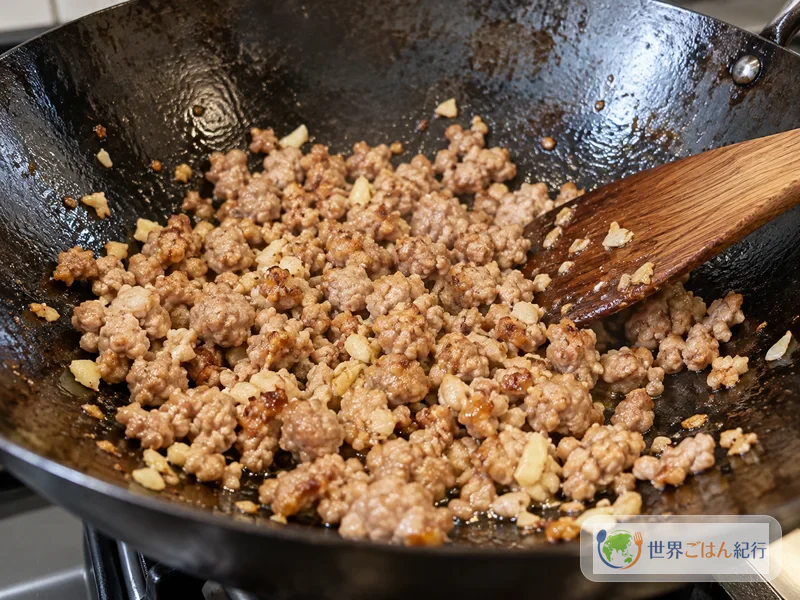
Cook the ground pork thoroughly to the center. Japan's Ministry of Health, Labour and Welfare advises heating pork to 75°C at the center for at least 1 minute. Add the yacai only after checking that the meat has fully changed color with no red parts left.
The trick is not to add too much stock. About 60 ml per serving loosens the sauce a little so it coats the noodles, without turning it into a soup noodle. Served in a small bowl, you can finish before the noodles cool, and the texture of the pork topping lasts.
Toss and eat hot in a small bowl
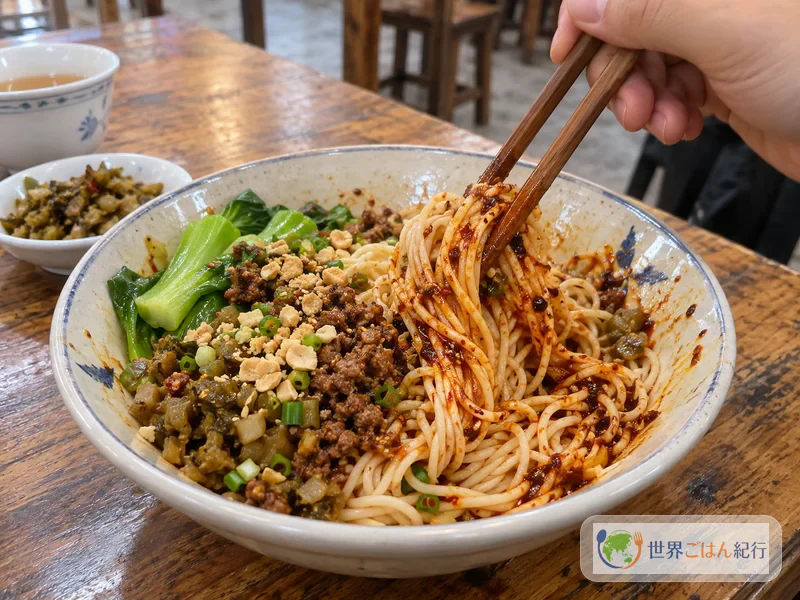
Dandan noodles are not noodles to eat in quantity from a big bowl. In Sichuan they are a light snack eaten quickly from a small bowl. Enjoy the aroma of Sichuan pepper and sesame that rises the moment you toss, the crisp pork topping, and the toasty peanuts all at once while hot. Putting a bite of rice into the sauce left at the bottom of the bowl and mixing it is another good way to eat.
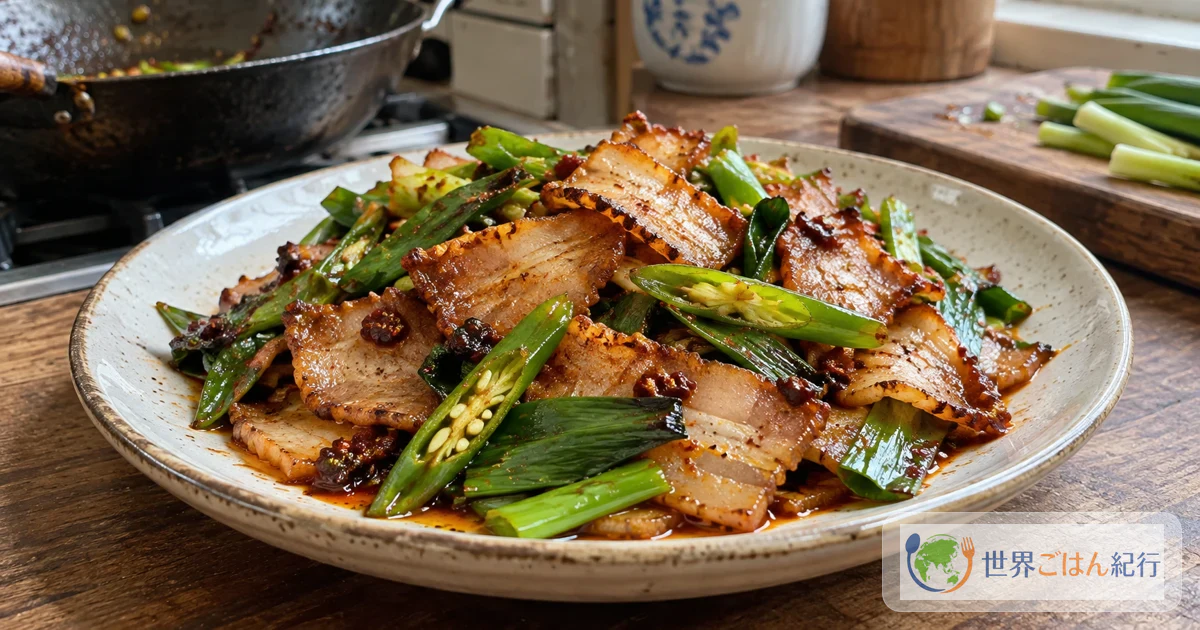
To round out a Sichuan meal with another dish, Mapo tofu (in Japanese), also built on Sichuan pepper, Hui guo rou, twice-cooked pork stir-fried, and Shuizhu niurou, beef poached in plenty of chili and Sichuan pepper, all go well.
The toppings for dandan noodles that China Daily describes include, besides ground pork and yacai, bean sprouts and young pea shoots (doumiao). If you make it in Japan, boiling pea shoots briefly and topping the bowl with them in place of the greens makes a bowl closer to a Sichuan street stall.
Ways to vary it
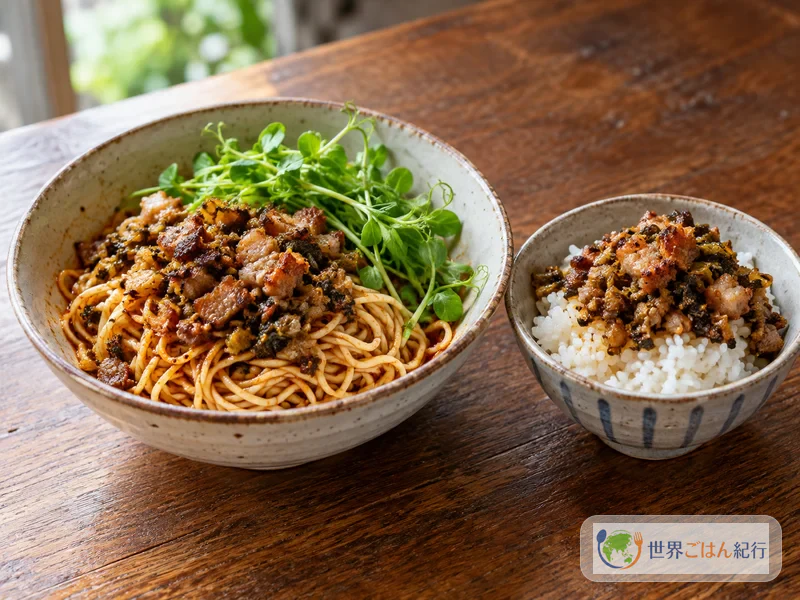
To move toward the soupy Japanese tantanmen, increase the sesame paste in the sauce to 1 tbsp and pour in about 250 ml hot chicken stock per serving. You get a mellow soup noodle with the sesame aroma in front. It is a completely different dish from the dry Sichuan dandan noodles, but you can enjoy two flavors from the same pork topping and sauce.
Leftover pork topping can be put to many uses: spooned over freshly cooked rice, tossed with boiled bean sprouts or greens, or mixed into fried rice. It keeps in the refrigerator until the next day. For people who don't like spice, cutting the chili oil and bringing out just the aroma of Sichuan pepper keeps the numbing fragrance while dialing back the heat.
FAQ
Can I make it without yacai?
You can chop zha cai finely as a substitute. Zha cai is saltier than yacai and has less of the sweet aroma, so soak it in water to remove salt and fry it with a pinch of sugar for a closer flavor.
How long does the pork topping keep?
Let it cool, put it in a storage container, refrigerate, and finish it by the next day. To use it, rewarm it in a skillet to crisp it, and the just-made texture comes back.
Is it okay to add no stock at all?
You can eat it without, but a small amount of stock loosens the sauce so it coats the noodles. Elaine's recipe at China Sichuan Food also pours in a little stock before tossing.
The numbing from the Sichuan pepper is too strong.
Halve the Sichuan pepper powder in the sauce or leave it out. The Sichuan pepper used to scent the oil for the pork topping is removed, so almost no numbing remains from it. Adding the powder a little at a time to find your preferred amount is recommended.
Sources
- China Sichuan Food, Elaine, "Dan Dan Noodles." (accessed and checked 22 October 2026). https://www.chinasichuanfood.com/dan-dan-noodles/
- China Daily, "Dandan Noodles," updated 23 December 2019. (accessed and checked 22 October 2026). https://govt.chinadaily.com.cn/s/201912/23/WS5e158702498e1ed196a6bc52/dandan-noodles.html
- Wikipedia, "Dandan noodles." (accessed and checked 22 October 2026). https://en.wikipedia.org/wiki/Dandan_noodles
- Ministry of Health, Labour and Welfare (Japan), "Cook beef and pork liver and pork thoroughly" (leaflet for display in restaurants; in Japanese). (accessed and checked 22 October 2026). https://www.mhlw.go.jp/file/06-Seisakujouhou-11120000-Iyakushokuhinkyoku/innsyokutenn.pdf