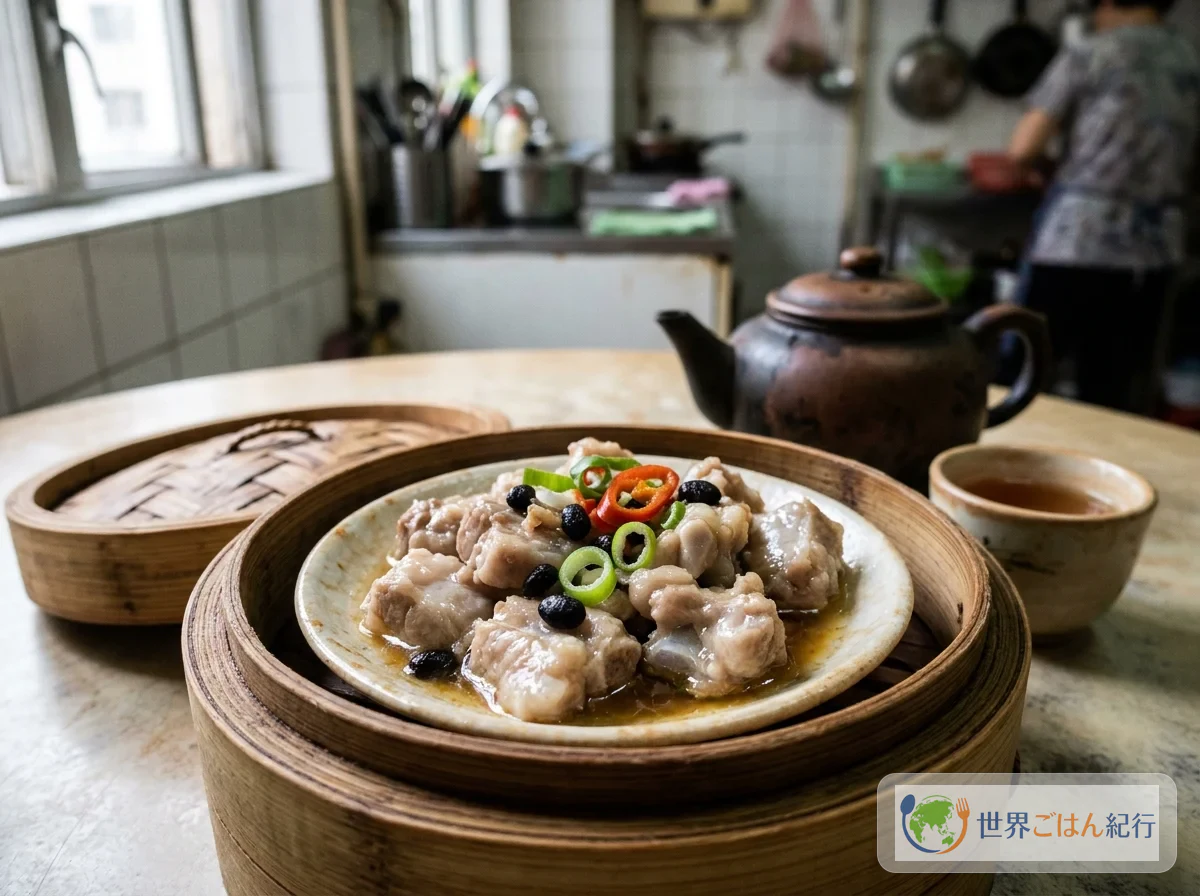
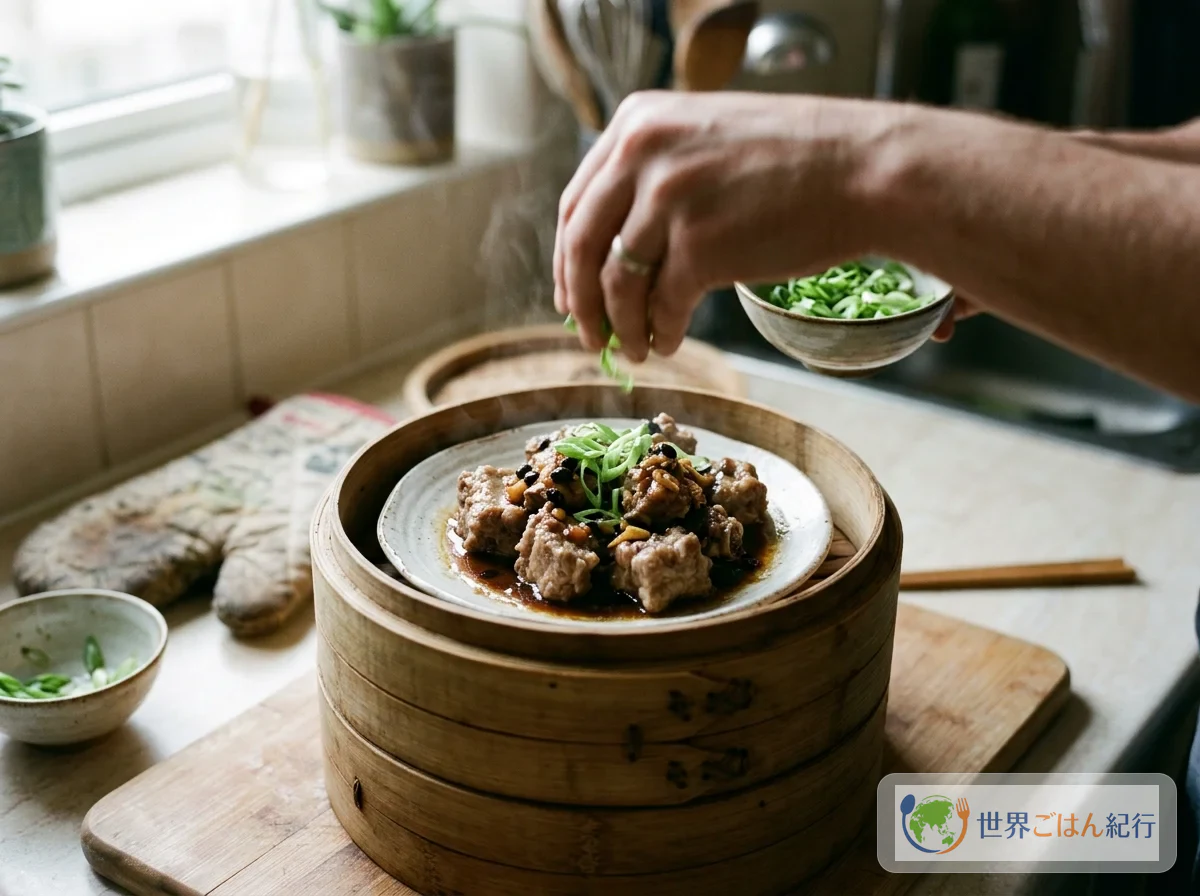
A morning teahouse is full of steam and chatter. On the round table sit a teapot and cups, and a stack of small bamboo steamers. Lift a lid and you find bite-sized pieces of bone-in pork on a small plate, scattered with black beans and red chili, with a thin, glossy sauce pooling around them. Alongside har gow and siu mai, this is a dim sum dish that Hong Kong yum cha tables keep ordering: si zap paai gwat (豉汁蒸排骨). In Cantonese, 豉汁 means a sauce of fermented black beans and 排骨 means spare ribs. The name says it all: spare ribs steamed in black bean sauce.
The small plate of black bean aroma in every teahouse steamer
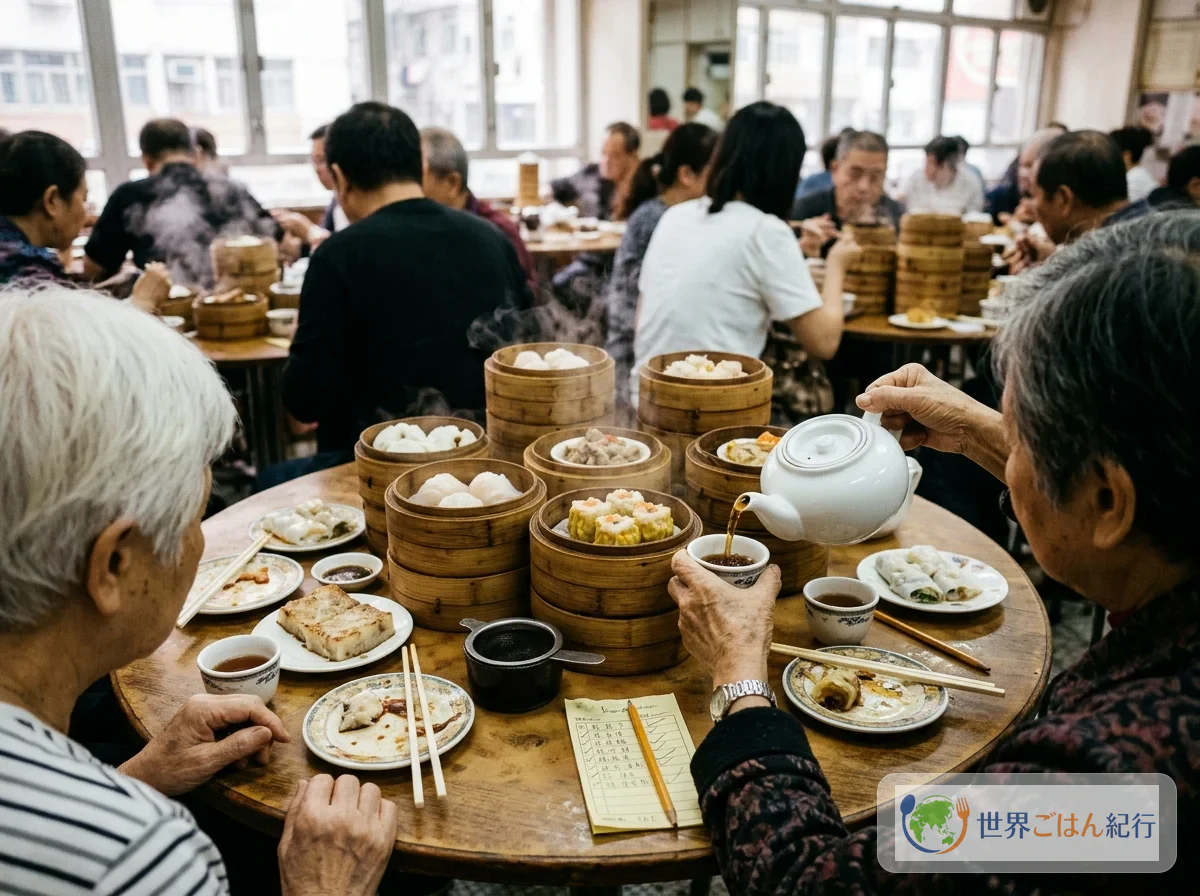
The Cantonese word yum cha (飲茶) literally means "drink tea." It is a meal of dim sum eaten with tea, traditionally enjoyed from morning into the early afternoon. Older people who have finished their morning exercise gather at teahouses to nibble dim sum and chat, a scene as old as yum cha itself. The style of wheeling carts of steamers around the dining room is said to have started in the early 1960s, and today more places have you mark an order sheet instead.
Among dim sum, si zap paai gwat is a classic meat dish. It comes in a small steamer, one portion at a time, piping hot. Ellen, who writes the Hong Kong home-cooking blog The Hong Kong Cookery, says teahouses use not ordinary spare ribs but the end pieces with cartilage in place of bone. In Hong Kong markets this cut is sold as 豬軟骨 ("pork soft bone").
Hong Kong's teahouses have a long history. The old Lin Heung Tea House (蓮香樓), founded in 1889, closed in 2022 and reopened in Central in April 2024. Another custom you often see at yum cha is tapping the table lightly with your index and middle fingers to thank someone who has poured your tea.
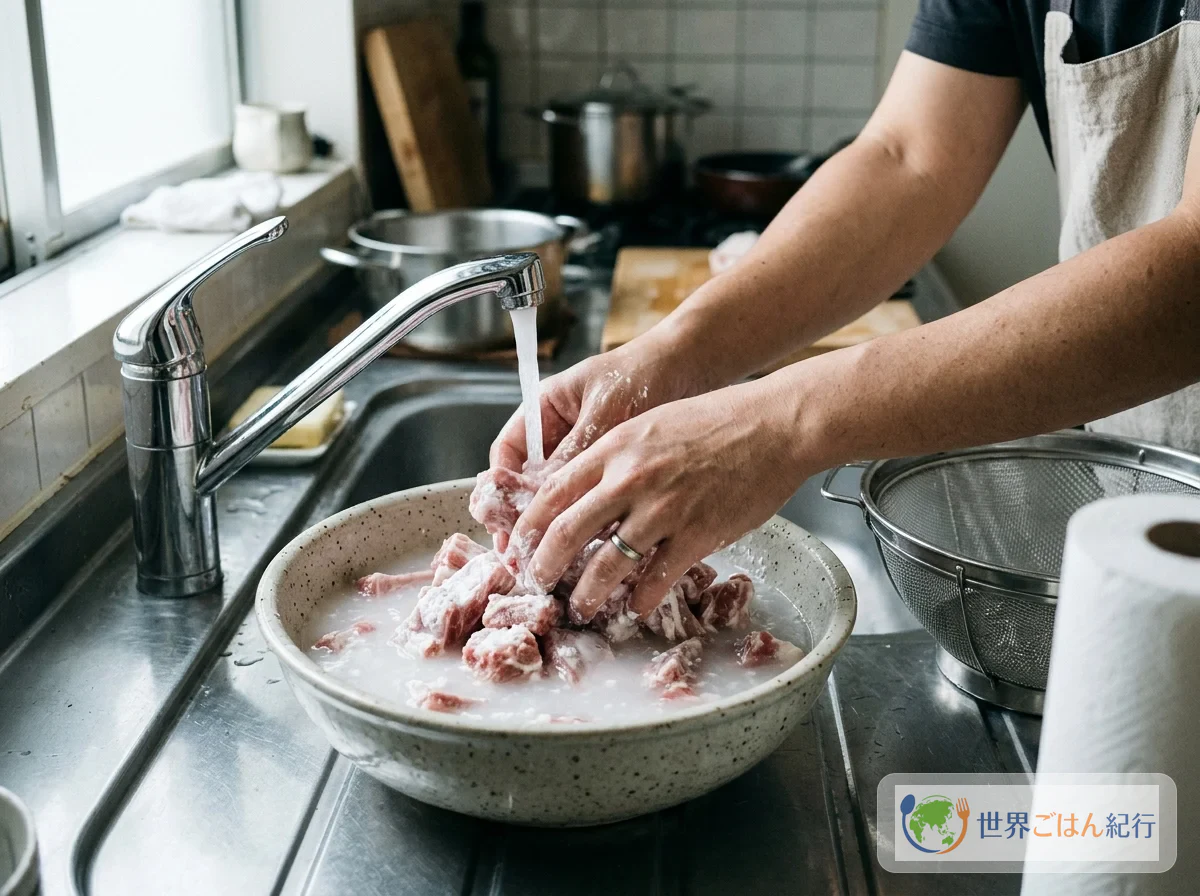
What makes the flavor, of course, is the fermented black bean. These are black soybeans that have been salted, fermented, and dried, and they have a deep savoriness behind the saltiness. Fermented black beans are an old seasoning, already in use in the Han dynasty, and they are essential to Cantonese steamed and stir-fried dishes. The reason the teahouse version looks pale and refined is that the meat is rinsed for a long time during preparation to draw out the color of the blood.
What to know when you cook it at home
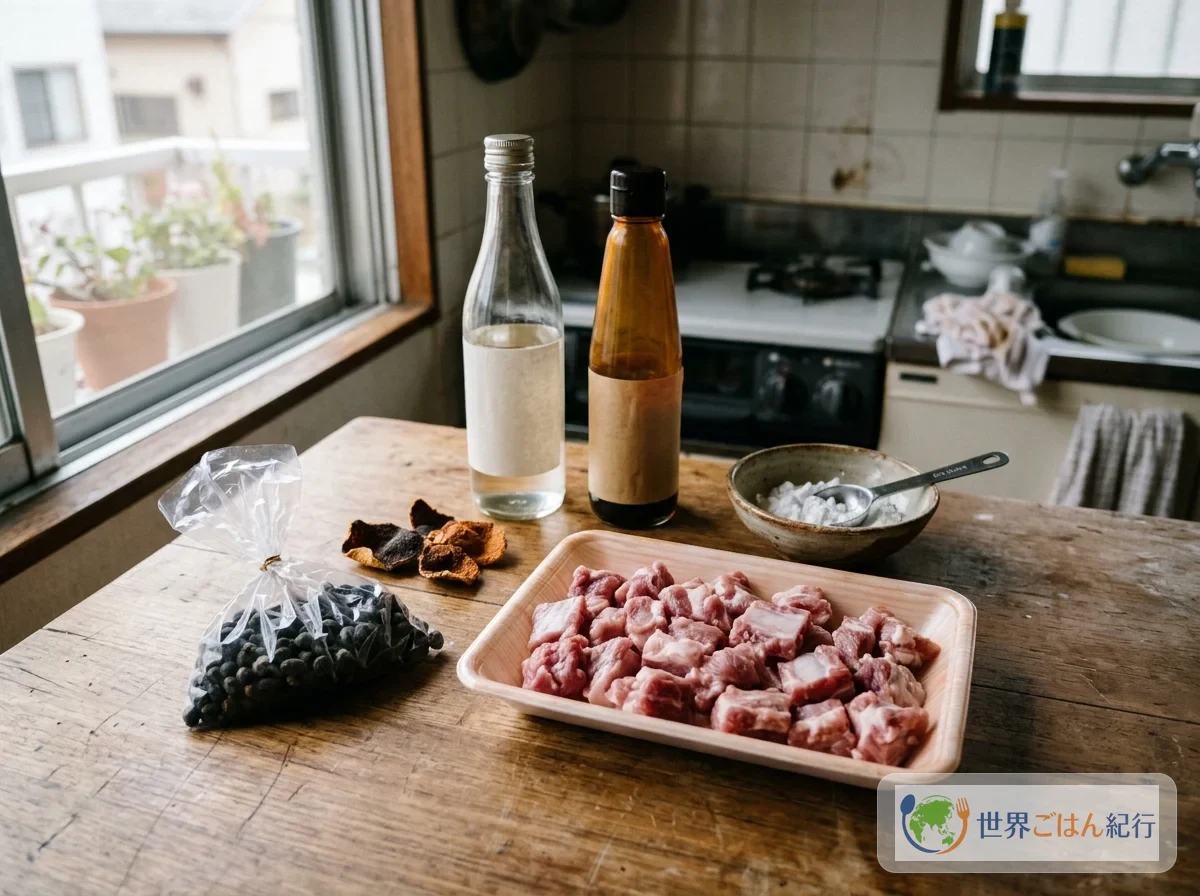
The closest thing to Hong Kong's 豬軟骨 is the cartilage section of pork belly, sold by many butchers as pork cartilage ribs. If you cannot find it, the easy route is to have spare ribs cut into 2–3 cm pieces at the meat counter. Many shops will cut through the bone for you. A home kitchen knife cannot cut bone, so do not force it.
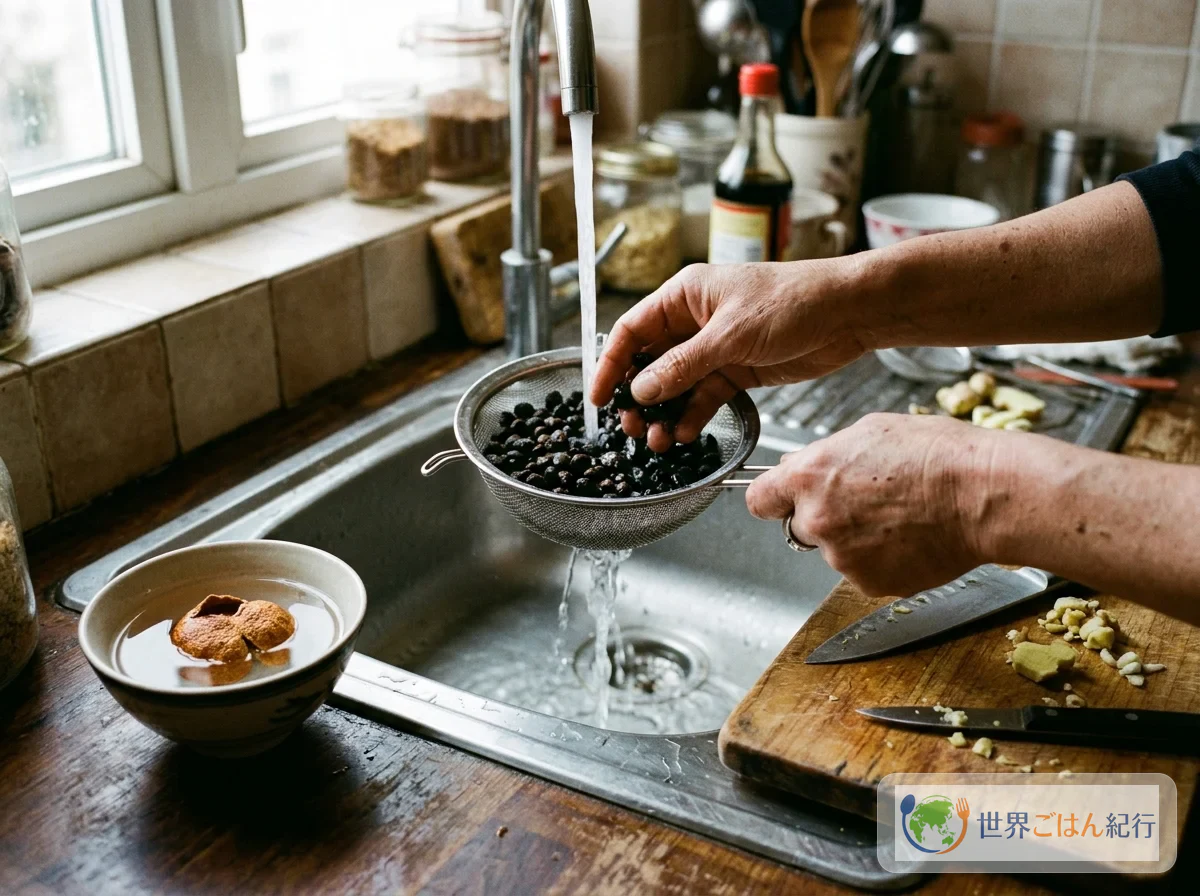
Fermented black beans come dried in bags from Chinese grocery stores or online. You can also use jarred black bean sauce, but it already contains garlic, oil, and seasonings and is salty, so if you do, halve the salt and soy sauce in the marinade. You can make the dish without dried tangerine peel (chenpi). Adding it layers a fresh citrus note over the heavy aroma of the beans and moves the dish closer to the teahouse taste.
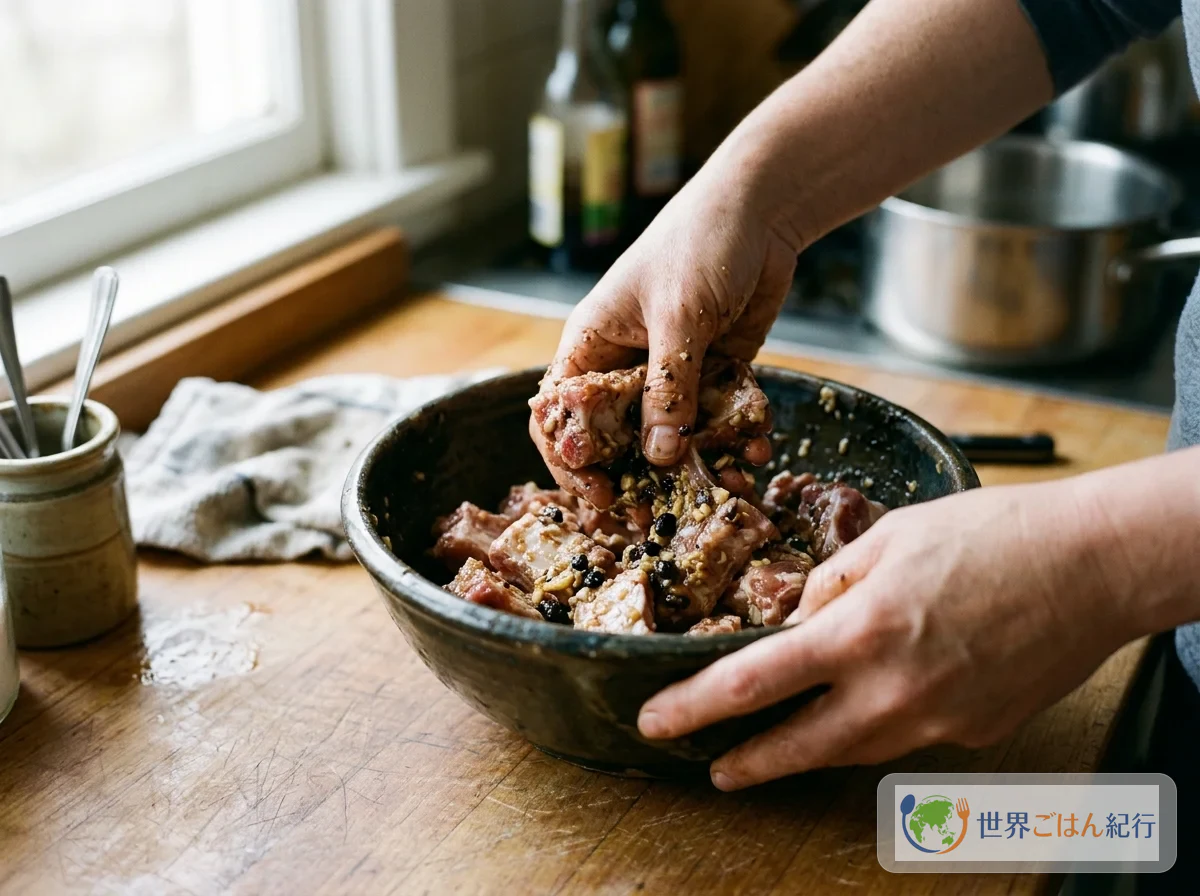
Roughly chop the black beans before mixing them into the marinade instead of using them whole, and the aroma reaches all the meat. Do not chop them too fine, though, or the dish turns dark; stop when about half of each bean still holds its shape.
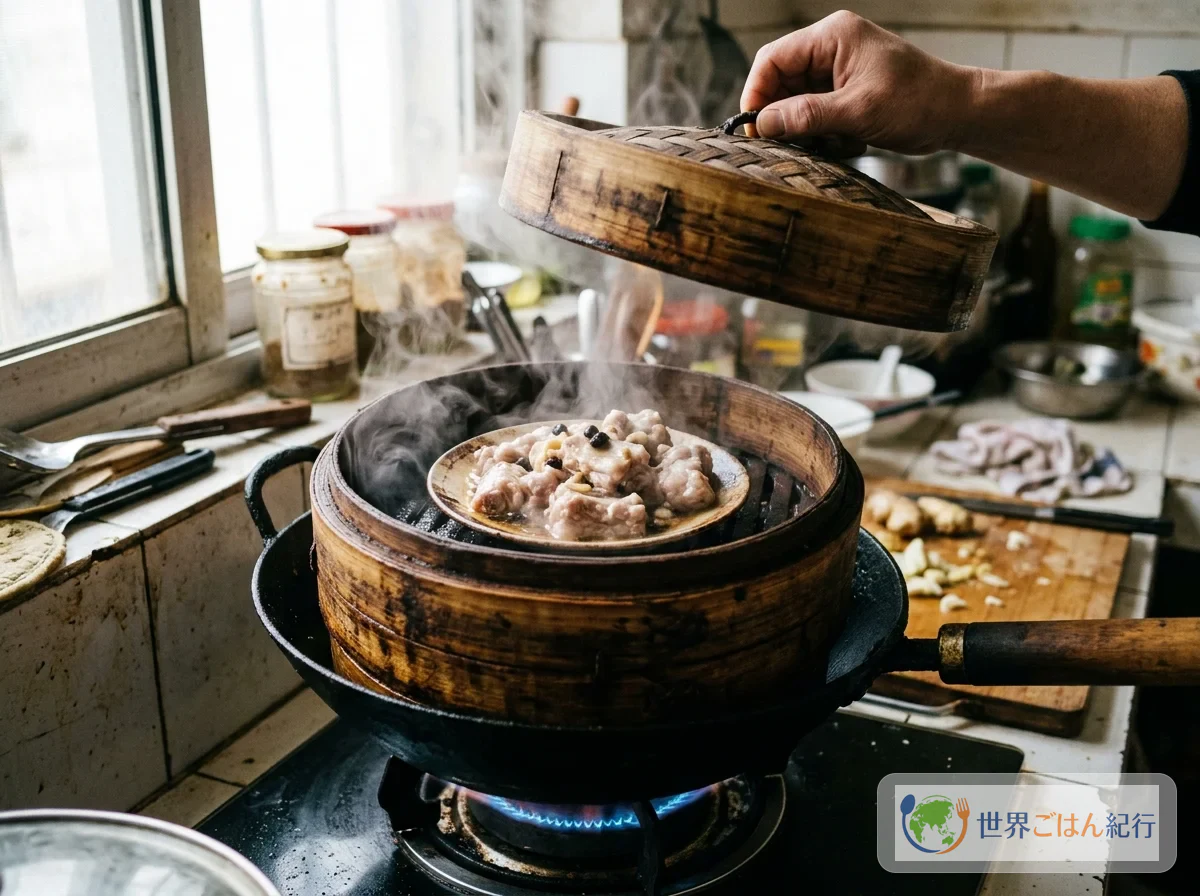
A bamboo steamer or a metal steamer both work. You can also set a plate on a steaming rack in a wok with water. What matters is to bring the water to a full boil before the plate goes in.
Ingredients (serves 4)
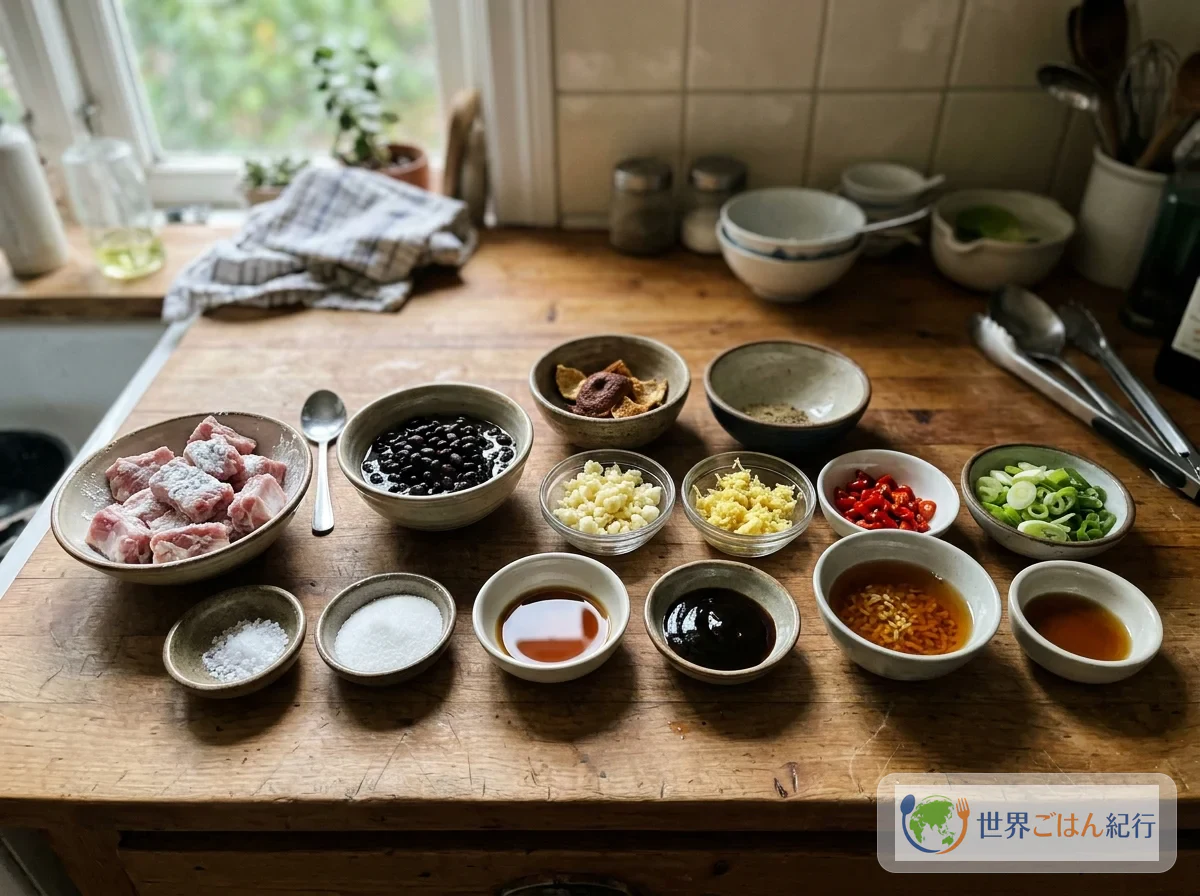
Fermented black beans, soy sauce, and oyster sauce contain soy and wheat, and oyster sauce is made from oysters. If you have allergies, check the ingredient labels. Fermented black beans are very salty, and if you use them without rinsing, the dish will turn quite salty.
How to make si zap paai gwat
Including at least 30 minutes for the marinade, the whole dish takes about 1 hour 20 minutes. If you marinate the meat the night before and refrigerate it, all that is left on the day is steaming.
Cook pork all the way through. As a guide to preventing food poisoning from meat, Japan's Ministry of Health, Labour and Welfare advises heating the center to 75°C for at least 1 minute. The parts near the bone are slow to cook, so check larger pieces with extra care.
Start the timer when you place the plate in after steam is already rising. If you put it in before the water boils, the coating on the surface gets watery and the steaming time is hard to predict. For a softer texture where the meat falls away from the bone, lower the heat to medium and steam for 40 minutes to 1 hour.
As dim sum, or over rice
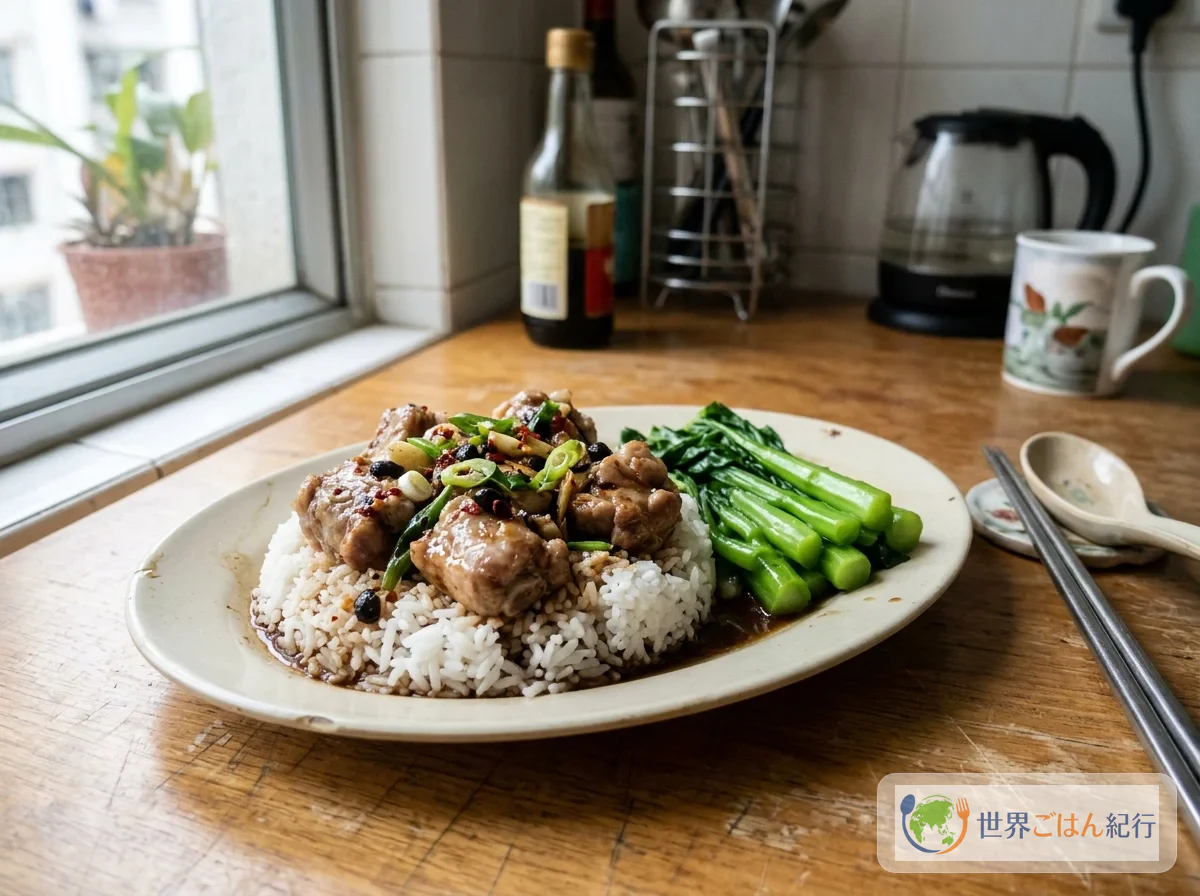
The best way to enjoy si zap paai gwat is as a dim sum dish, picked from a small plate. Take a sip of hot tea, then alternate between the crunch of cartilage and the meat that has absorbed the savoriness of the black beans. To build a fuller Hong Kong table, pair it with char siu and xiaolongbao and you can set up a yum cha spread at home.
Serving it over rice as a one-plate meal is also good. Add boiled greens, then spoon the juices from the bottom of the plate over the rice, and the savoriness of the black beans and soy sauce soaks in and keeps the chopsticks moving.
Si zap paai gwat is sometimes steamed over a bed of taro under the meat. The taro soaks up the extra juices from the meat and the flavor of the black beans, becoming a treat of its own.
Ways to vary it
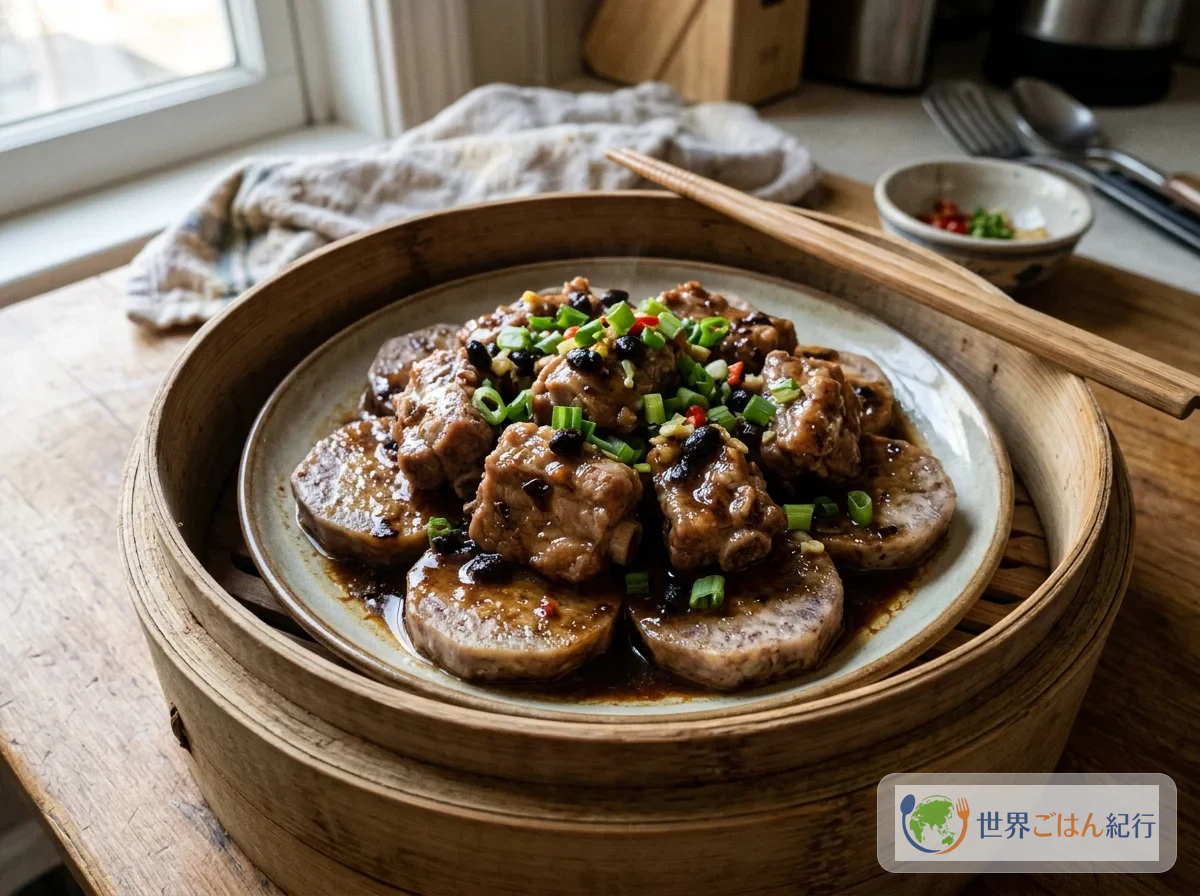
To use taro, peel 200 g and cut into 1 cm rounds, lay them on the bottom of the plate, put the seasoned meat on top, and steam over high heat for 20 minutes the same way. It is done when a bamboo skewer slides easily into the taro. If you do not like taro, you can use kabocha squash instead; its sweetness goes well with the saltiness of the black beans.
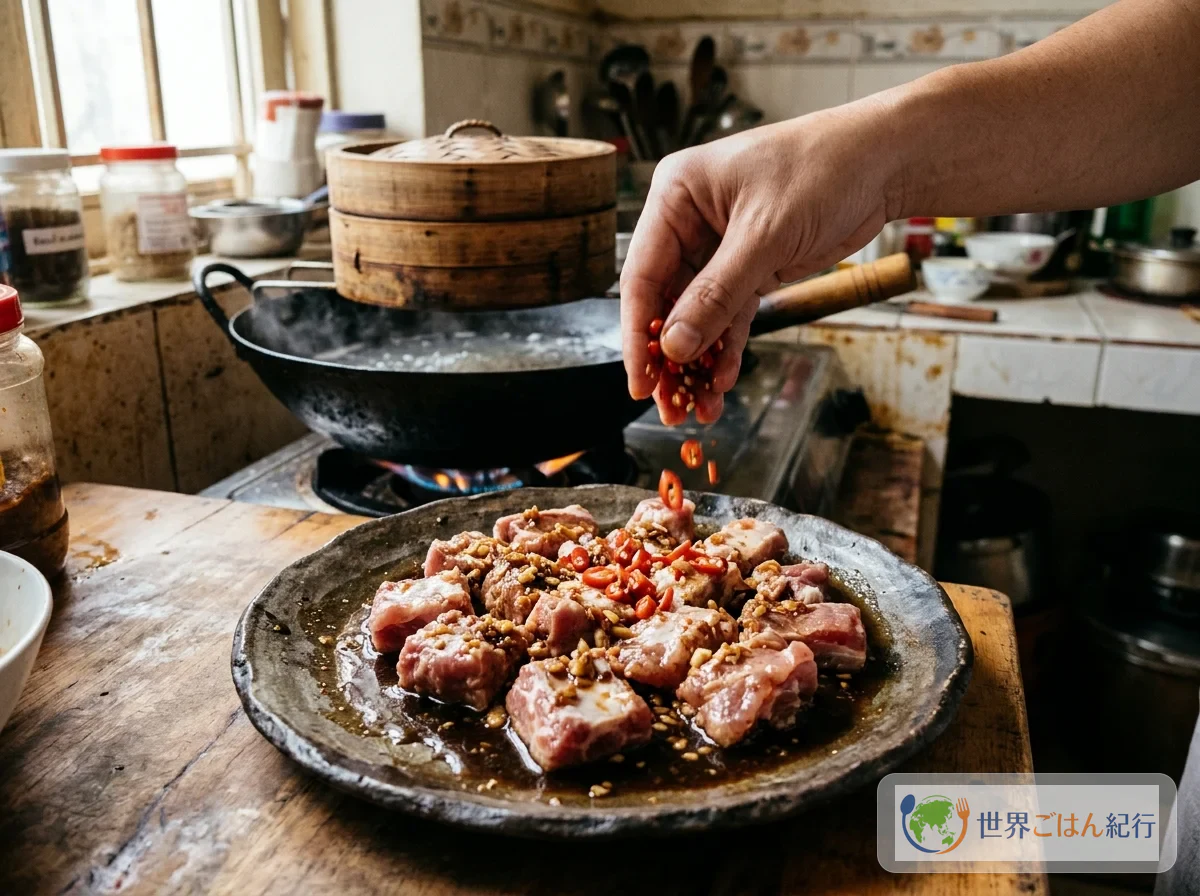
If you like heat, increase the red chili along with green chili for a taste like a Hong Kong neighborhood diner. If you are cooking for children, leave out the chili and finish with plenty of julienned ginger for a cleaner flavor.
Frequently asked questions
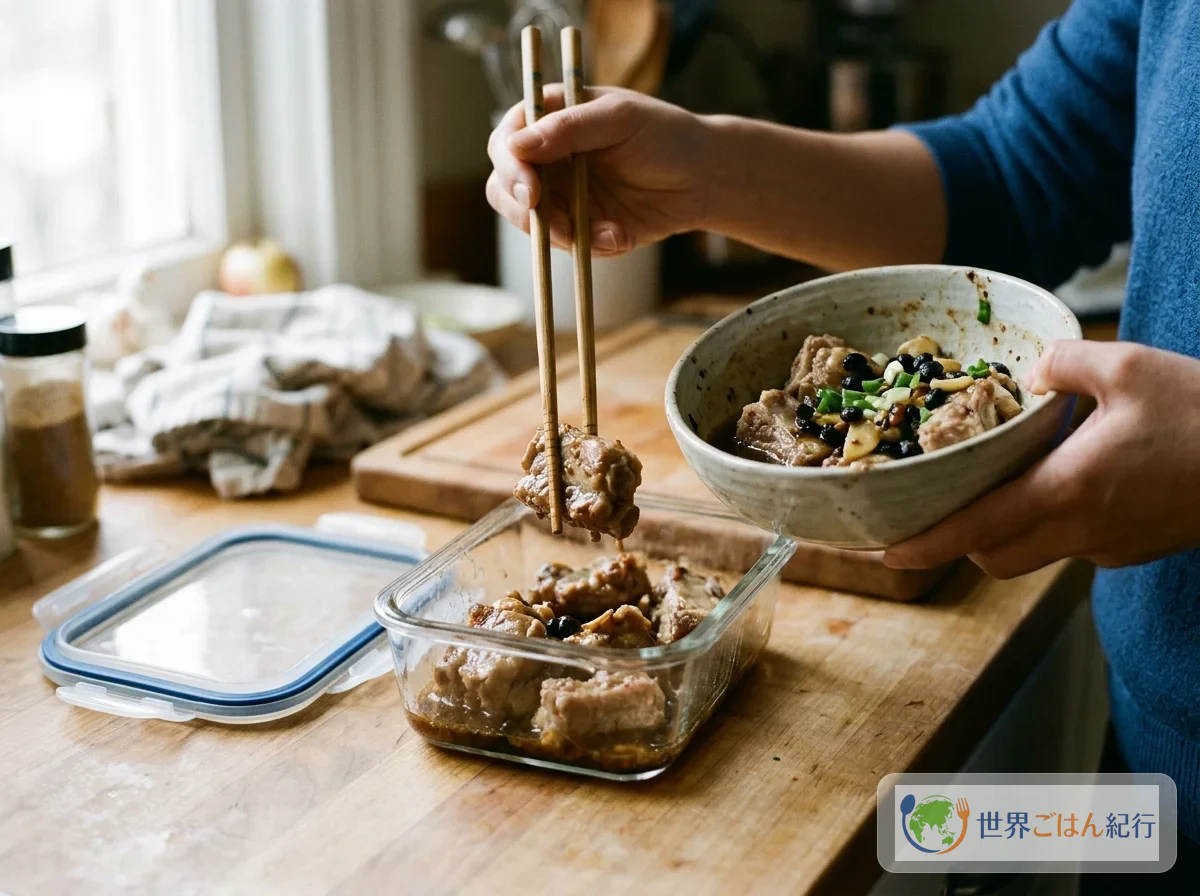
Do I really have to rinse the meat with cornstarch?
You can skip it, but blood and tiny bone fragments stay on the surface of the meat, so the steamed color turns brownish and a slight off smell is more likely. If you want the pale teahouse finish, I recommend the 1–2 minute rinse.
Can I freeze it after marinating?
Once the seasoning and cornstarch have been worked in, spread the meat flat in a freezer bag and freeze for about 2–3 weeks. Thaw it in the refrigerator, arrange it on the plate, and steam it the same way.
What if I do not have a steamer?
Pour about 2 cm of water into a deep frying pan, lay a cloth in it, set the plate on top, cover, and steam over high heat. Water drips easily from the lid, so wrapping the lid in a cloth keeps the coating from getting watery.
How do I reheat leftovers?
Keep in the refrigerator and finish by the next day. Steam again for 5–6 minutes, until hot all the way through. You can also use a microwave, but the coating tends to firm up, so cover with plastic wrap and heat in short bursts.
Sources
- Made With Lau, "Steamed Spare Ribs with Black Bean Sauce (豉汁蒸排骨)." Accessed and checked: 22 October 2026. https://www.madewithlau.com/recipes/steamed-spare-ribs
- The Woks of Life, "Dim Sum Steamed Spare Ribs with Black Beans." Accessed and checked: 22 October 2026. https://thewoksoflife.com/wprm_print/dim-sum-steamed-spare-ribs-with-black-beans
- The Hong Kong Cookery, Ellen L., "Chinese Steamed Spareribs with Black Bean Sauce," published 24 June 2017. Accessed and checked: 22 October 2026. https://www.thehongkongcookery.com/2017/06/chinese-steamed-spareribs-with-black.html
- Tiffy Cooks, "Dim Sum Chinese Steamed Spareribs with Black Bean." Accessed and checked: 22 October 2026. https://tiffycooks.com/dim-sum-chinese-steamed-spareribs-with-black-bean/
- Wikipedia, "Yum cha." Accessed and checked: 22 October 2026. https://en.wikipedia.org/wiki/Yum_cha
- Ministry of Health, Labour and Welfare (Japan), "Cook meat thoroughly" (in Japanese). Accessed and checked: 22 October 2026. https://www.mhlw.go.jp/stf/seisakunitsuite/bunya/0000049964.html