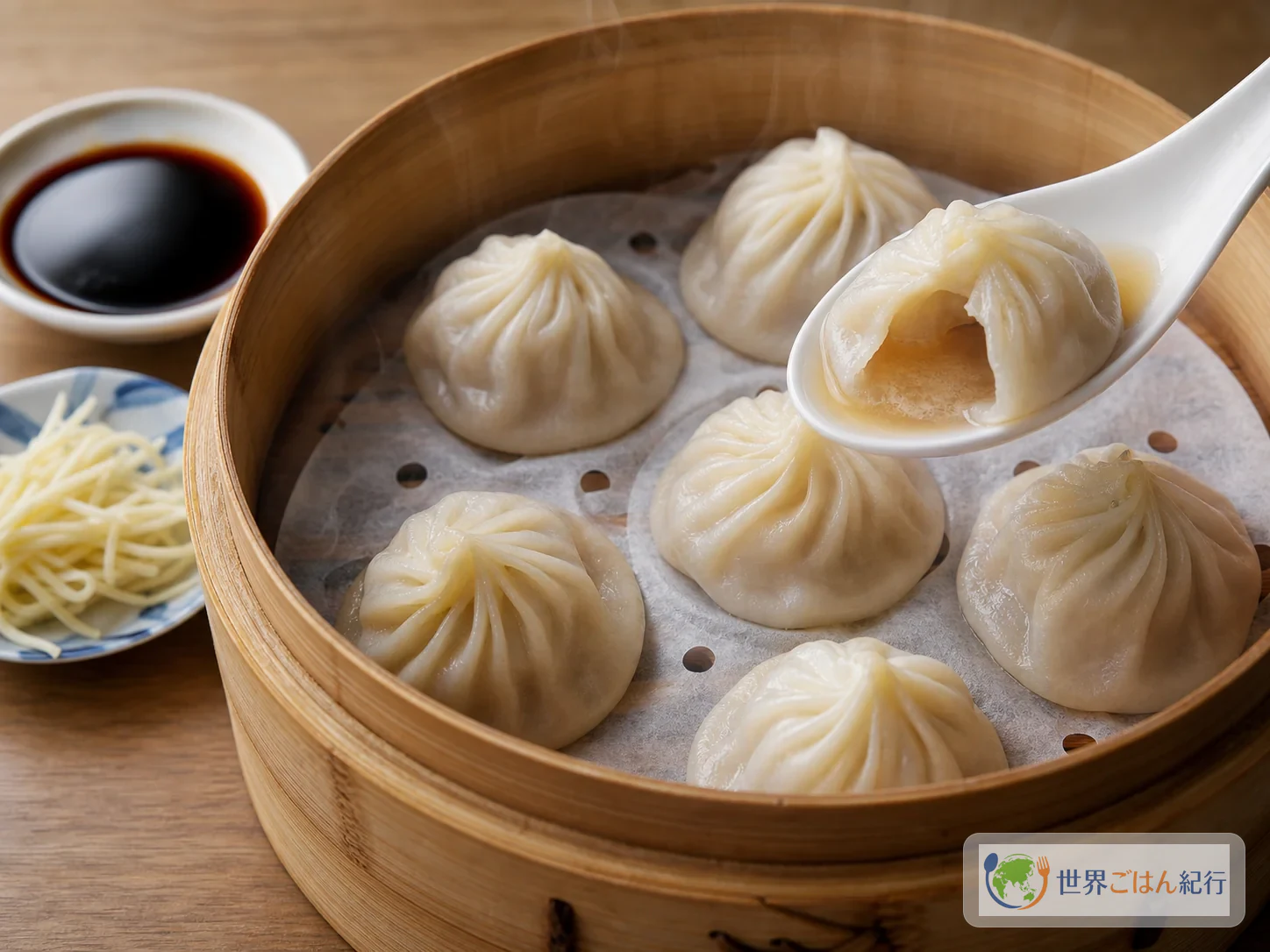
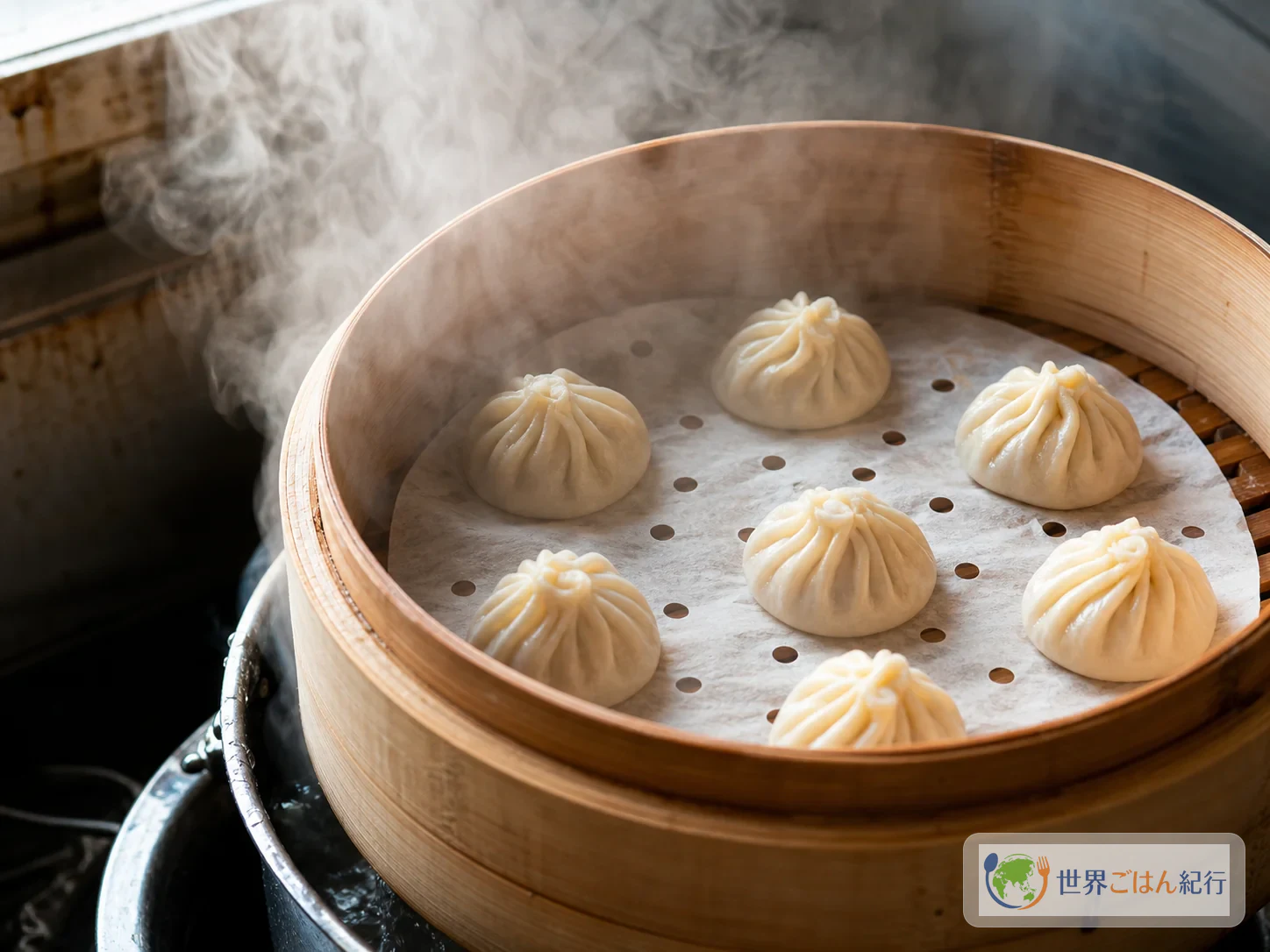
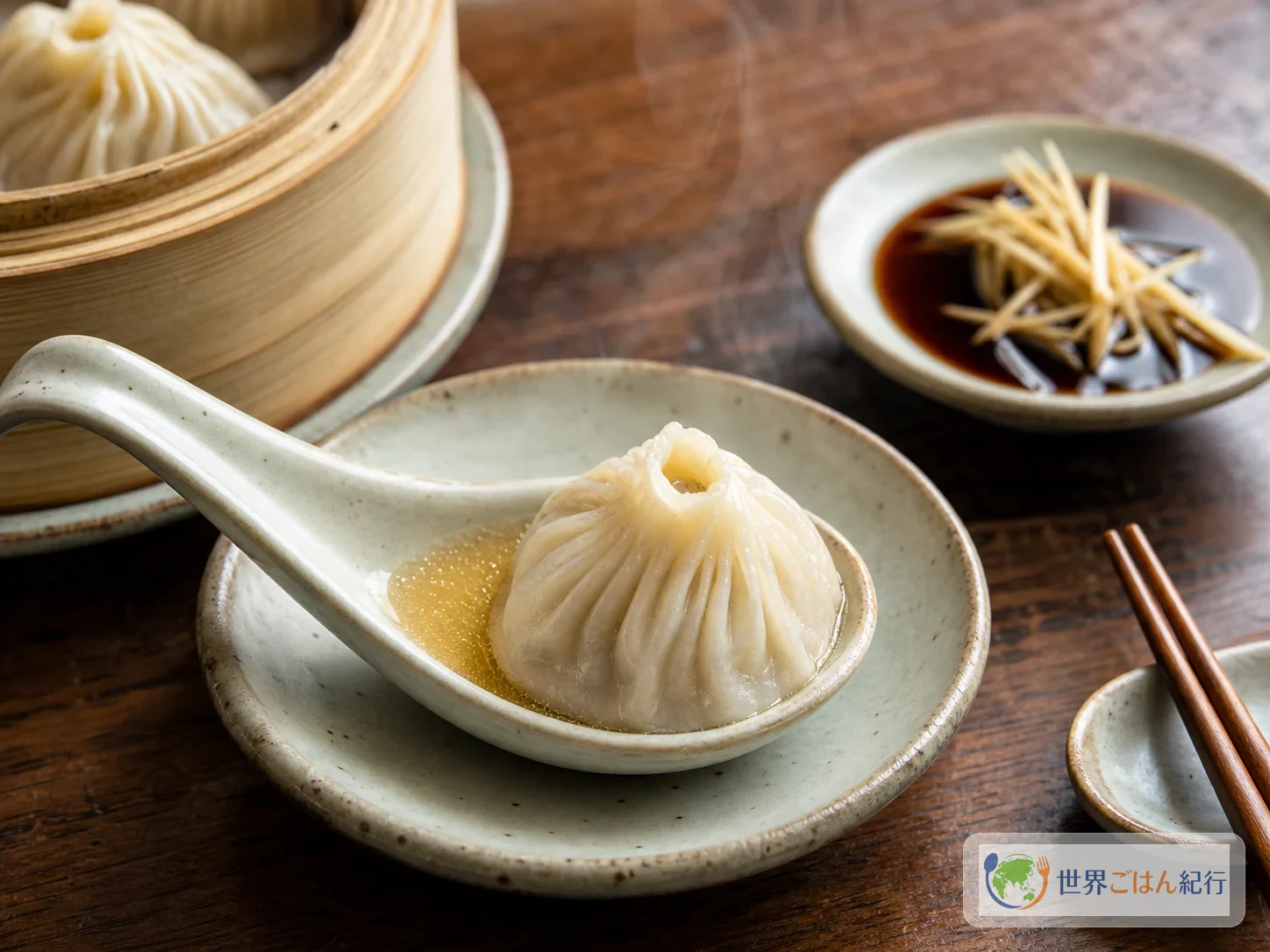
Lift the lid of the steamer and the soup is trembling inside the white skin.
From the moment you lift one with chopsticks, xiaolongbao makes you think about how to eat it.
Hurry and the skin breaks; wait too long and the steam fades.
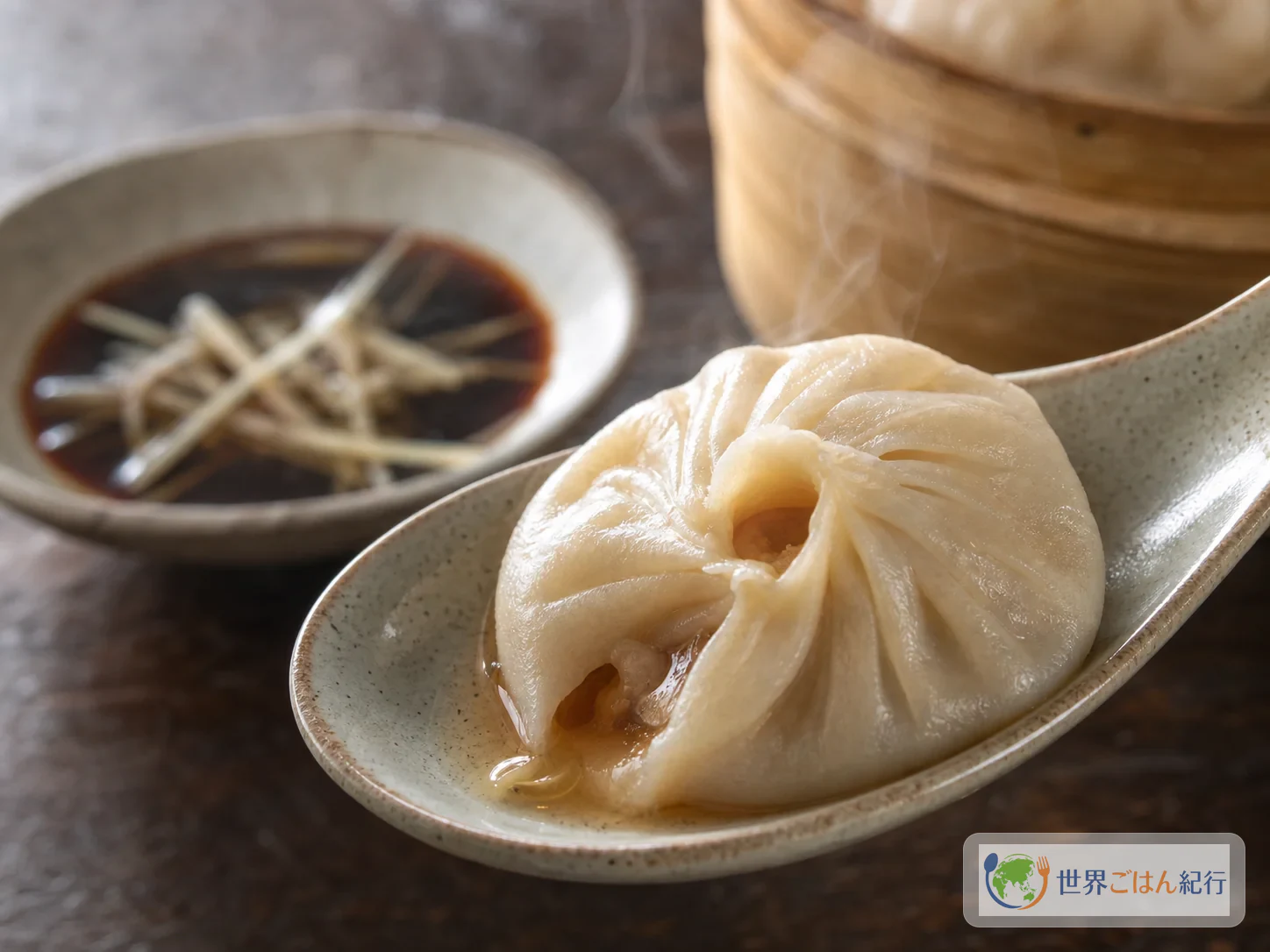
Move one to a spoon, tear a little hole in the top, and sip the soup first.
A small dish of black vinegar with julienned ginger finally decides the next bite.
What is hard in a home kitchen is not competing on the number of pleats.
It is keeping the soup mixed into the filling solid until just before steaming.
If that holds, even a handmade skin that is a bit uneven will give the juice back when you bite.
This recipe takes the thin skin and generous filling of Shanghai's Nanxiang xiaolongbao as a guide and swaps in a gelatin method that is easier to handle at home.
The meat filling makes 24 dumplings, the skins are rolled by hand, and it covers the state of the finished steam and how to recover if something goes wrong.
It also separates by the role of each flavor whether to look for Shaoxing wine and Zhenjiang vinegar or whether ordinary seasonings are enough.
Shanghai morning rising from a small basket
Xiaolongbao is written 小籠包 (xiǎolóngbāo) in Chinese.
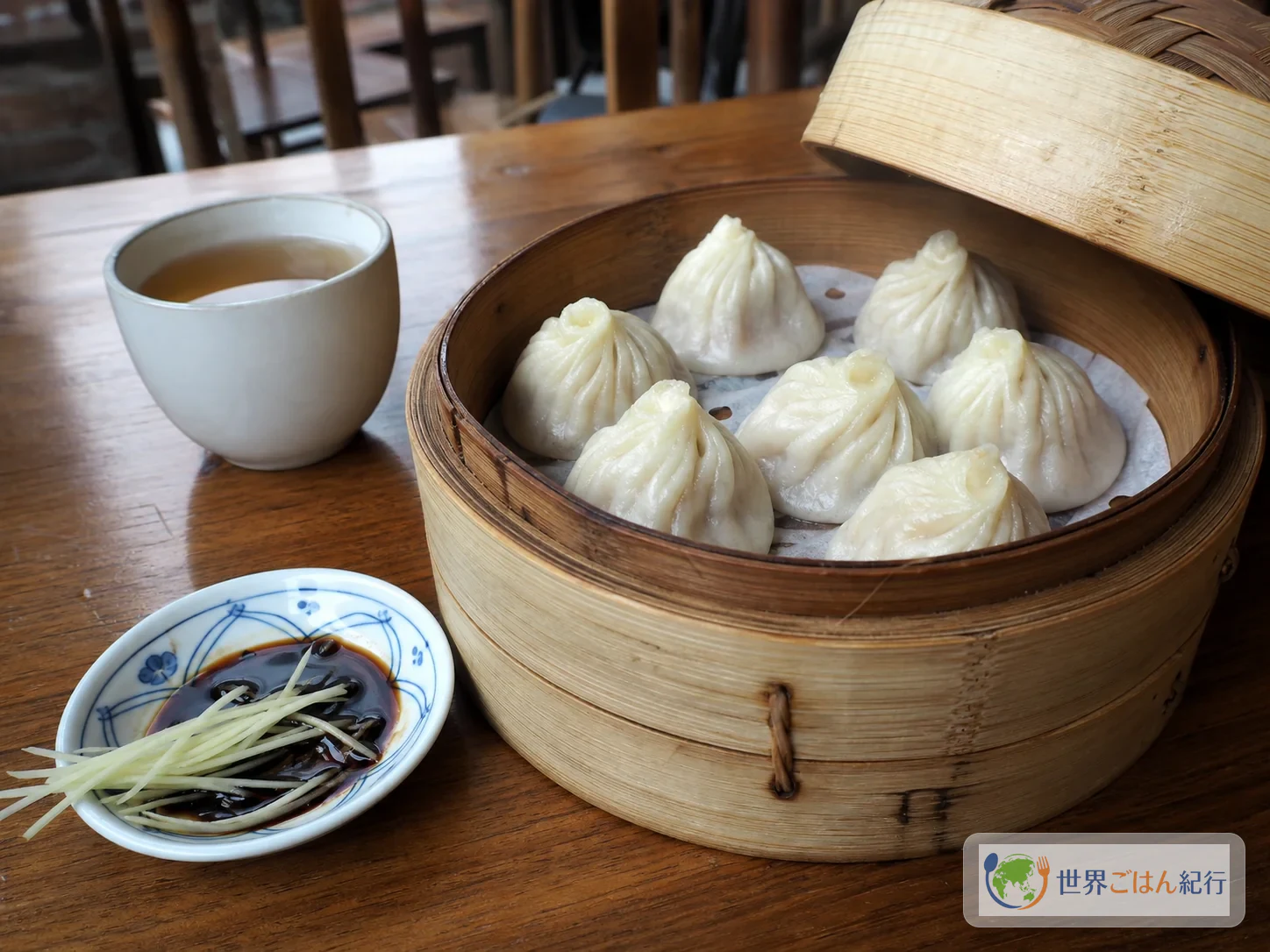
As the name says, "a small bun steamed in a small basket," it is a dim sum whose near-single-serving parcels are steamed in a bamboo steamer.
The type known from Nanxiang in Shanghai fills a thin skin with pork and mixes into the filling an aspic made from pork skin and the like.
The heat of the steam melts the aspic and soup forms inside the skin.
In the food culture introduction by the Shanghai municipal government, Nanxiang xiaolongbao is described as having a thin skin, a generous filling and a salty meat juice.
At least 18 pleats per dumpling is given as a guide, and the steamed skin turning translucent is also listed as a sign of quality.
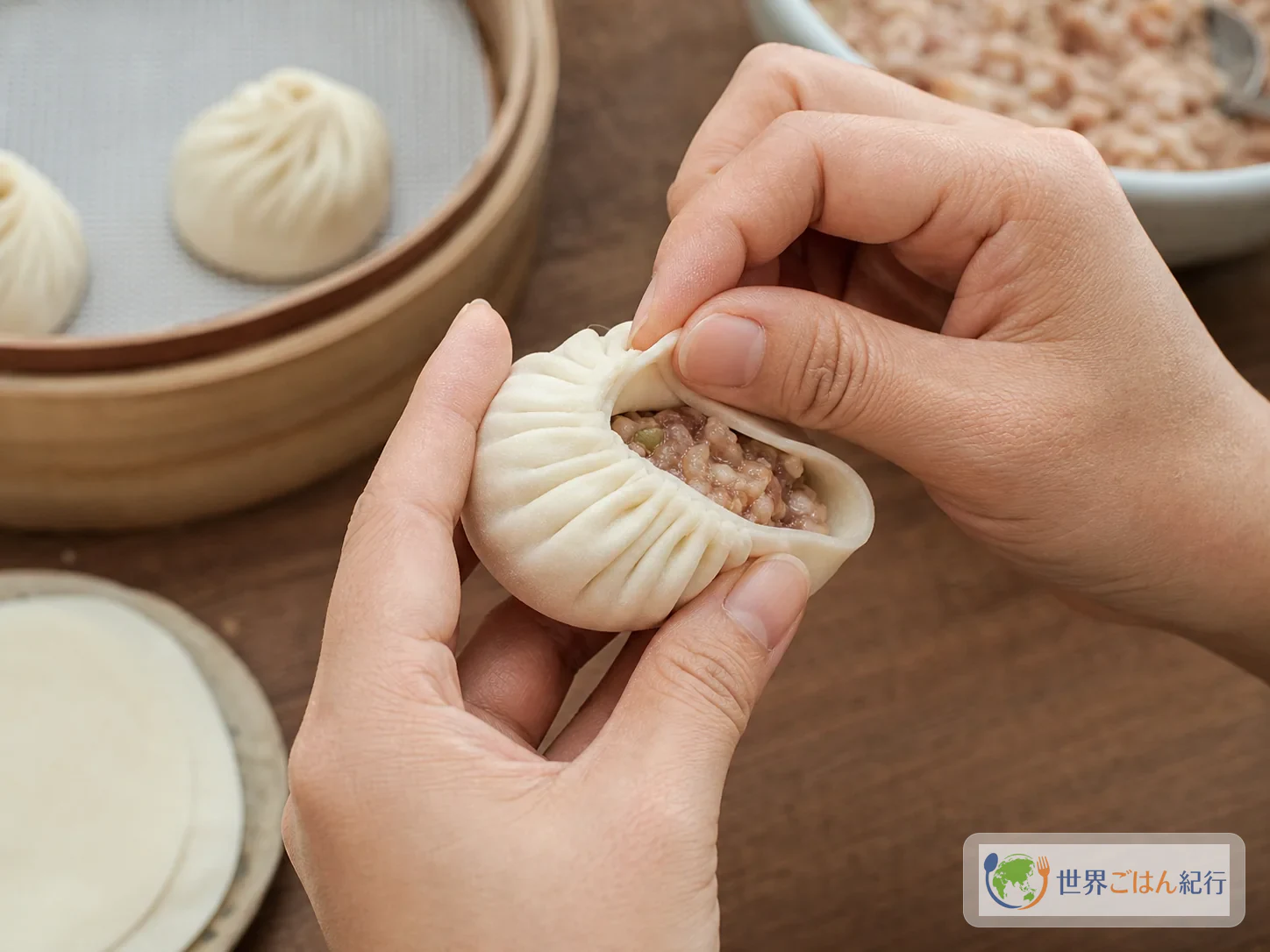
The pleats are not decoration but the slack that gathers the skin to form a pouch for the soup.
There is also an order to eating it locally.
Lift it gently with chopsticks, move it to a spoon without breaking the skin, open the top a little and sip the soup.
Then touch it to the dish of black vinegar and ginger and eat the skin and meat.
That the Shanghai government guide describes "hold gently, move slowly, make a small hole and sip the soup" is also wisdom for handling both the heat and the thinness of the skin.
Made elsewhere, you are tempted to eat the filling first like a gyoza.
But with xiaolongbao the impression changes with how you receive the juice left in the skin.
If you include carrying it from the steamer to the plate as part of the process, the meaning of the wrapping becomes easier to see.
How the outline changes between Nanxiang and Wuxi
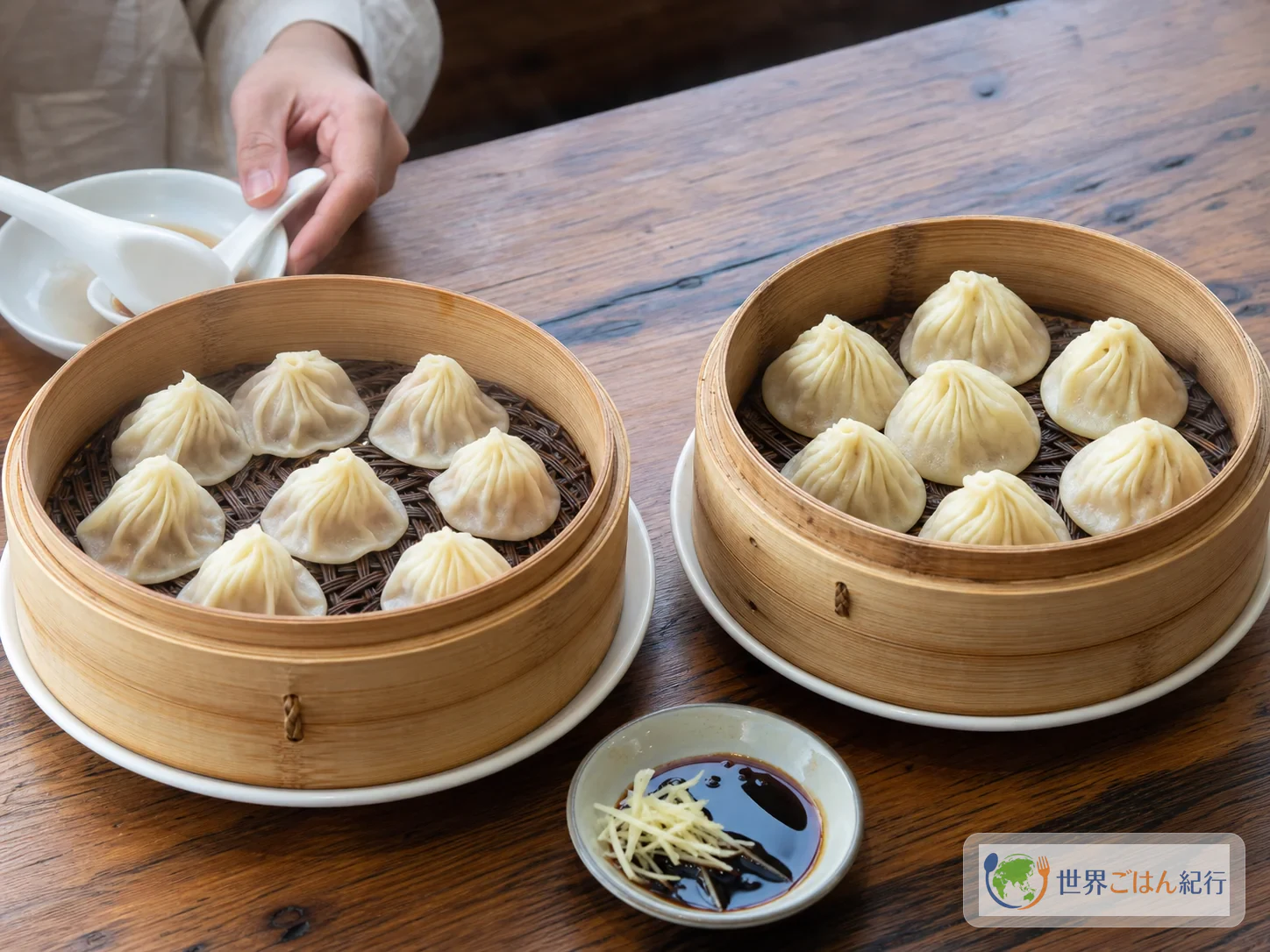
If you think of xiaolongbao as one fixed taste, you can easily misjudge the substitutes.
The Nanxiang type puts the thin skin and meat juice forward and builds the filling around pork.
The Shanghai food culture introduction also describes seasonal xiaolong with crab roe and winter bamboo shoots added in autumn and winter.
It is easier to understand as a dish that centers on the skin that receives the juice and adds seasonal aromas, rather than one with the same filling every day.
On the other hand, Wuxi xiaolongbao in Jiangsu is described in the Wuxi municipal government's introduction as a local dish with a history of more than 100 years, and sweet-salty flavor is given as its feature.
The flow of eating with vinegar and ginger is shared, but where the sugar is placed and the sweetness of the juice differ.
The Nanxiang style first brings the savor of the meat and the lightness of the skin, and the Wuxi style rounds the meat juice with sweetness.
This formula leans toward Nanxiang and uses only 1 tsp sugar.
To lean toward Wuxi, make the sugar in the filling 1 1/2 tsp and put out a little more black vinegar at the table.
If adding crab roe, use a small amount of a pre-cooked product whose ingredients and allergen labeling you can confirm, and reduce the salt of the filling first.
Adding raw crab directly to the filling and changing the steaming time is not suited to a first attempt.
Such differences are useful not for deciding "authentic or substitute" but for deciding shopping priorities.
It does not become a different dish because you lack Shaoxing wine.
If you keep three things — a thin skin, set meat juice, and black vinegar with ginger on the side — the landing point as a home xiaolongbao remains.
Ingredients and amounts, designed to wrap 24
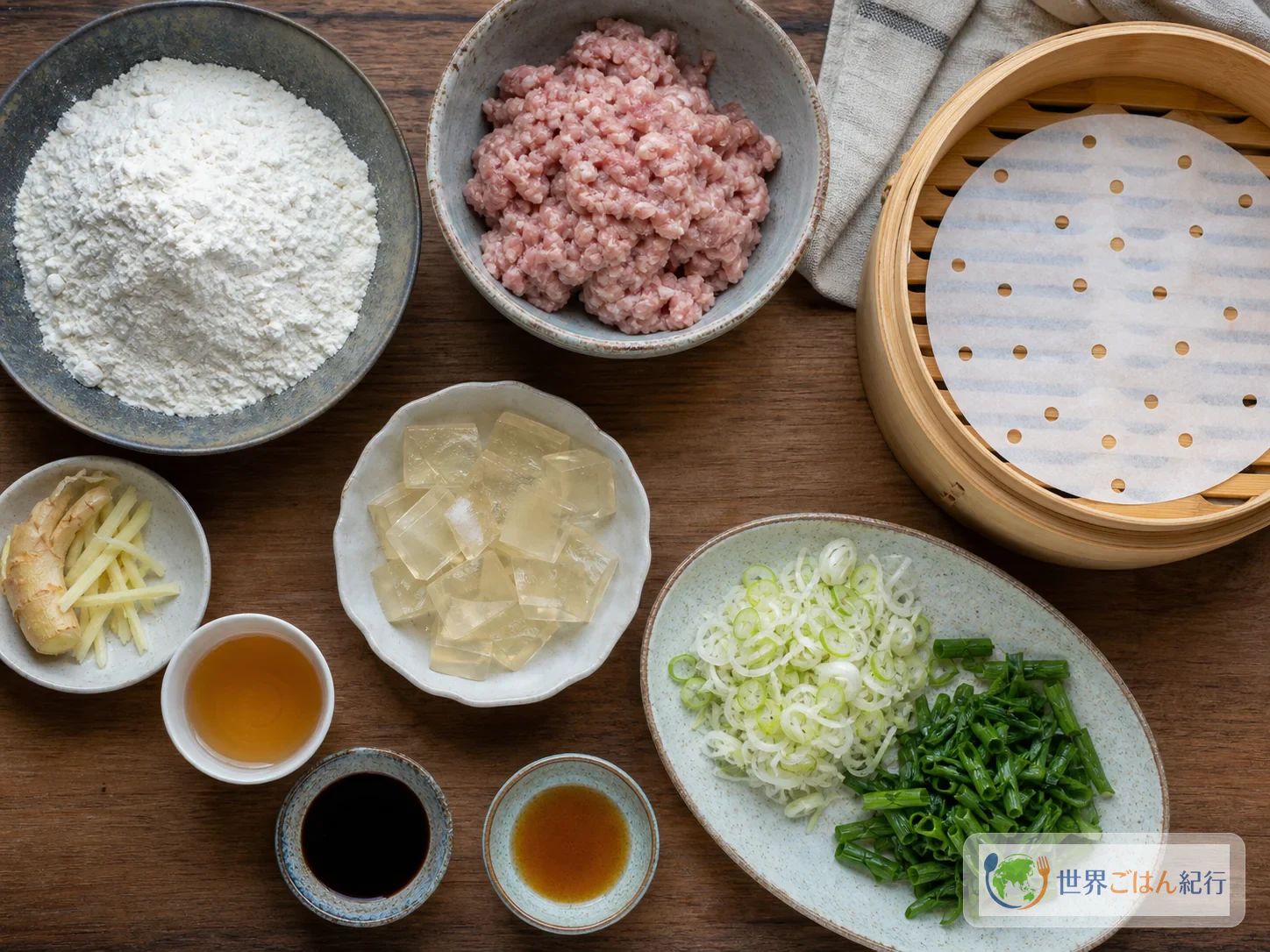
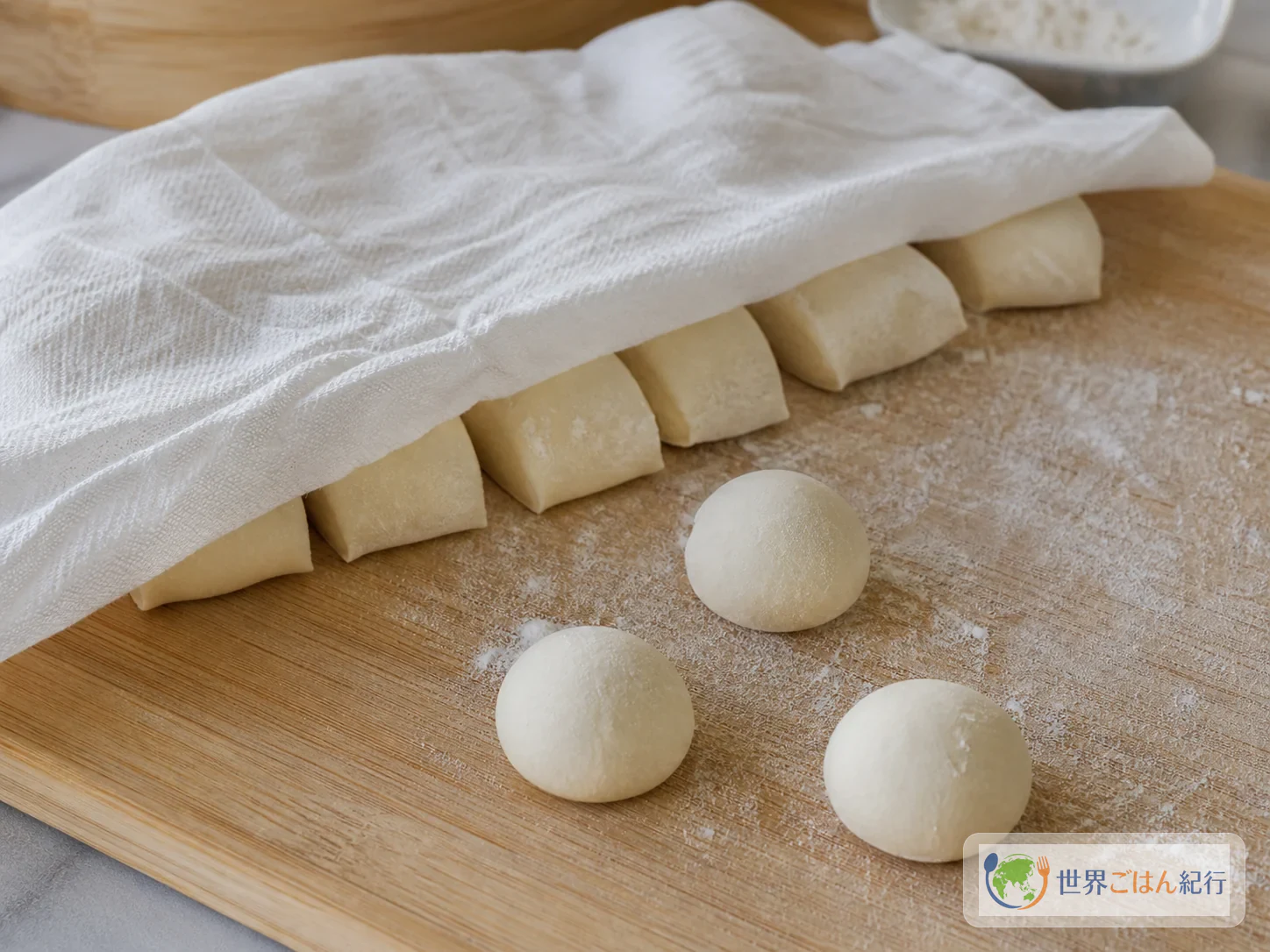
These are amounts for 4 servings, 24 dumplings.
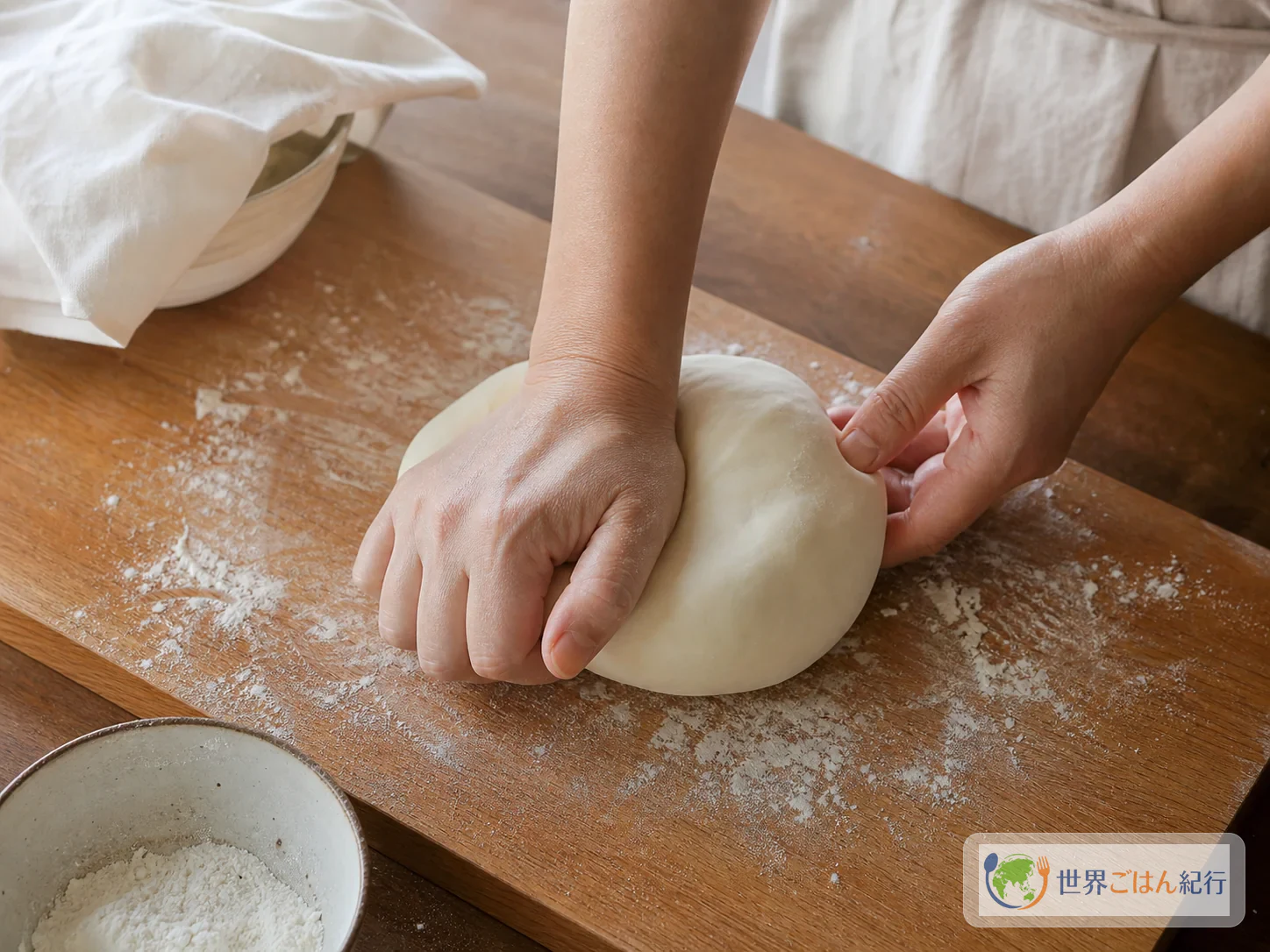
Because the skin is handmade, don't put all the water in the flour at once after measuring; watch how it comes together and adjust the last 5 ml.
Absorption changes with room temperature and the flour brand, so aim for a state as soft as an earlobe with a surface that has not dried.
This uses ingredients that contain pork, soy, wheat and sesame. The source of gelatin differs by product, so check the label if you have allergies. The soup in freshly steamed dumplings is extremely hot, so don't bite the skin right away; open a small hole on the spoon and let the steam escape before eating.
The nutrition figures are approximate for dividing the ingredients above into 24 and eating 6 per person.
They change with pork fat, the strength of the soup and the amount of black vinegar, and are not calculated from product nutrition labels.
Set the soup and return it to the skin
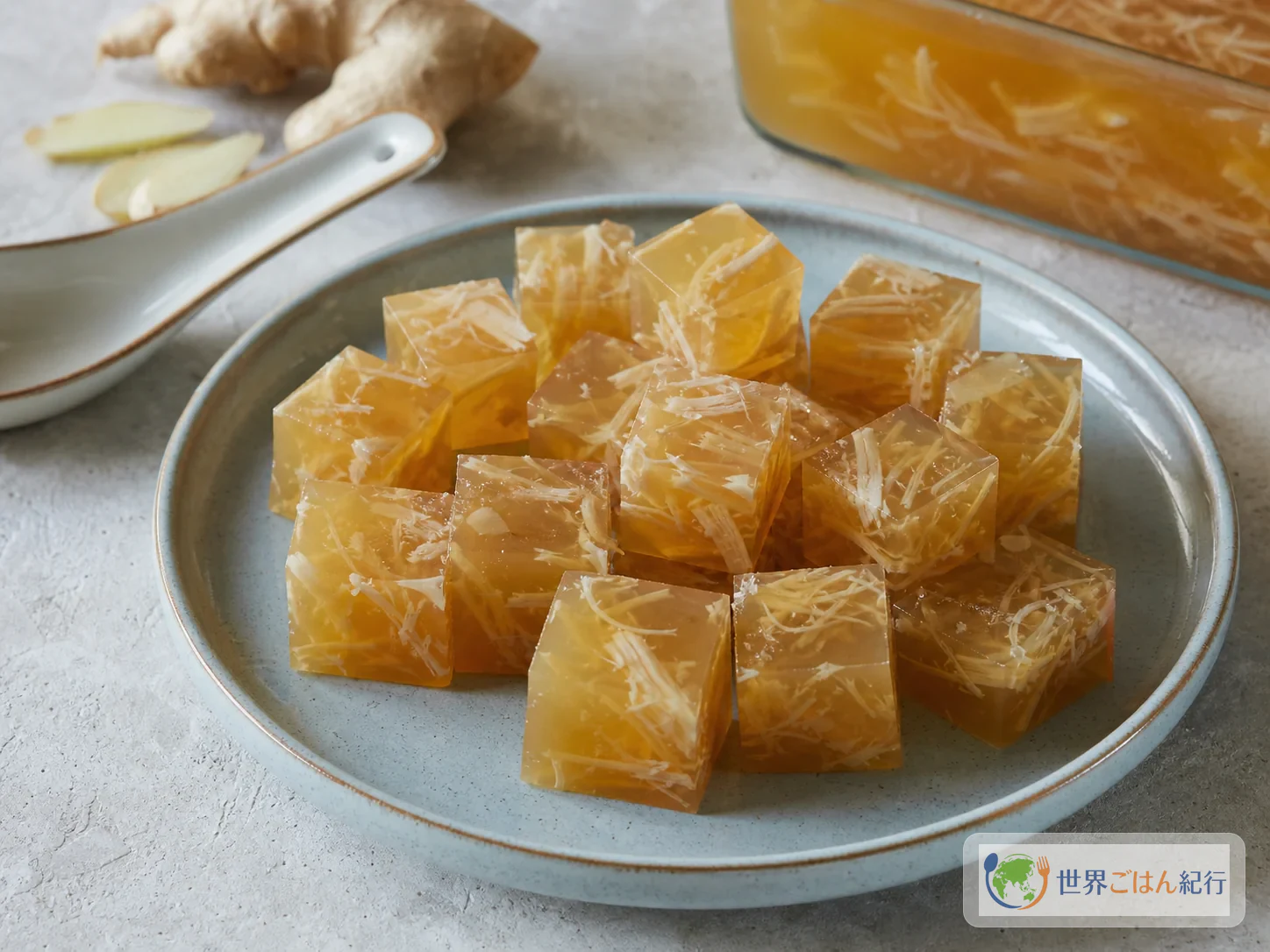
The soup of xiaolongbao is not something newly poured in the steamer.
The aspic mixed into the filling melts and becomes liquid, taking on pork fat and aromatics.
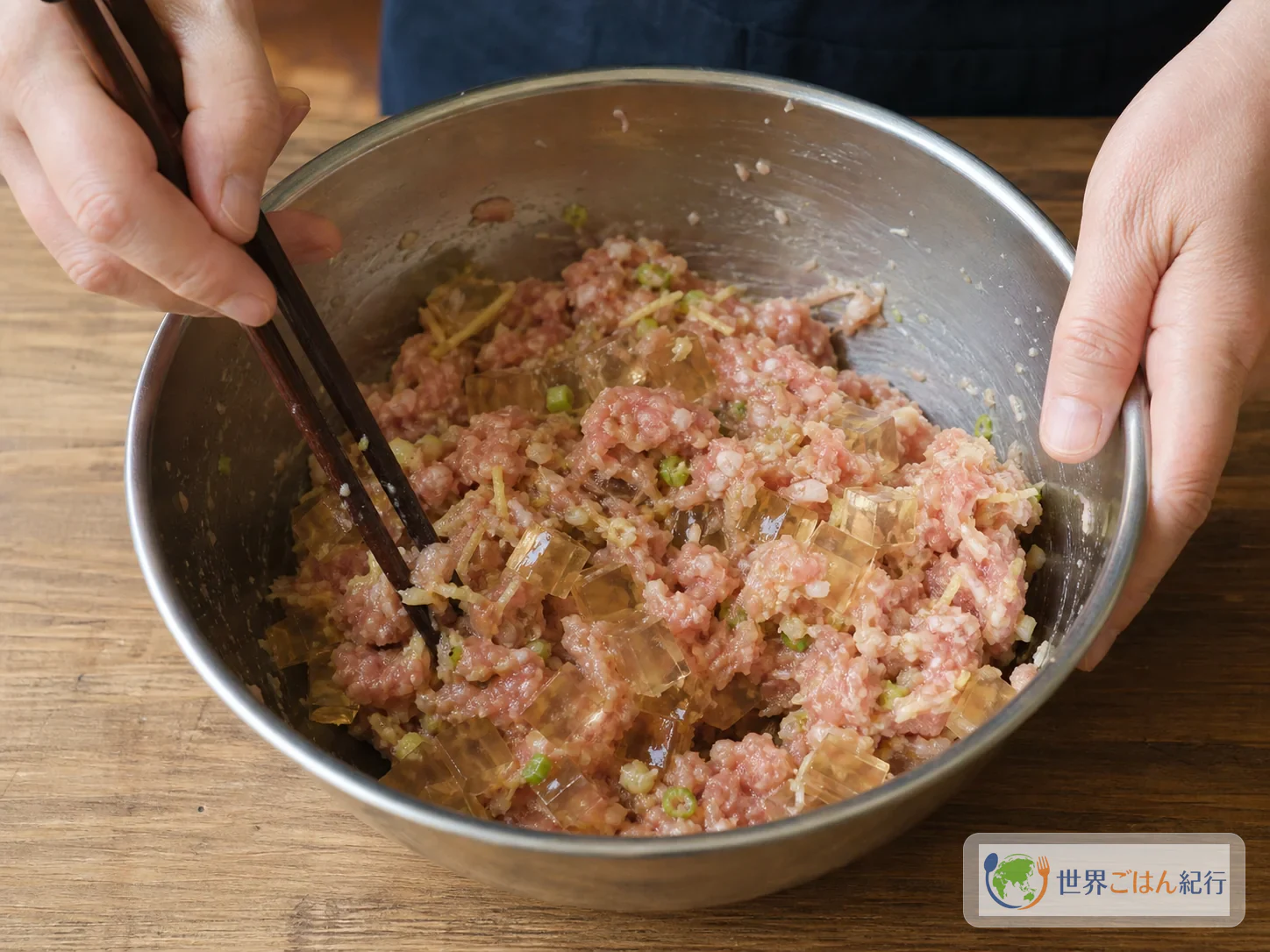
The Woks of Life home method also chills an aspic made by extracting collagen from pork skin and bones, and folds the set pieces into the filling.
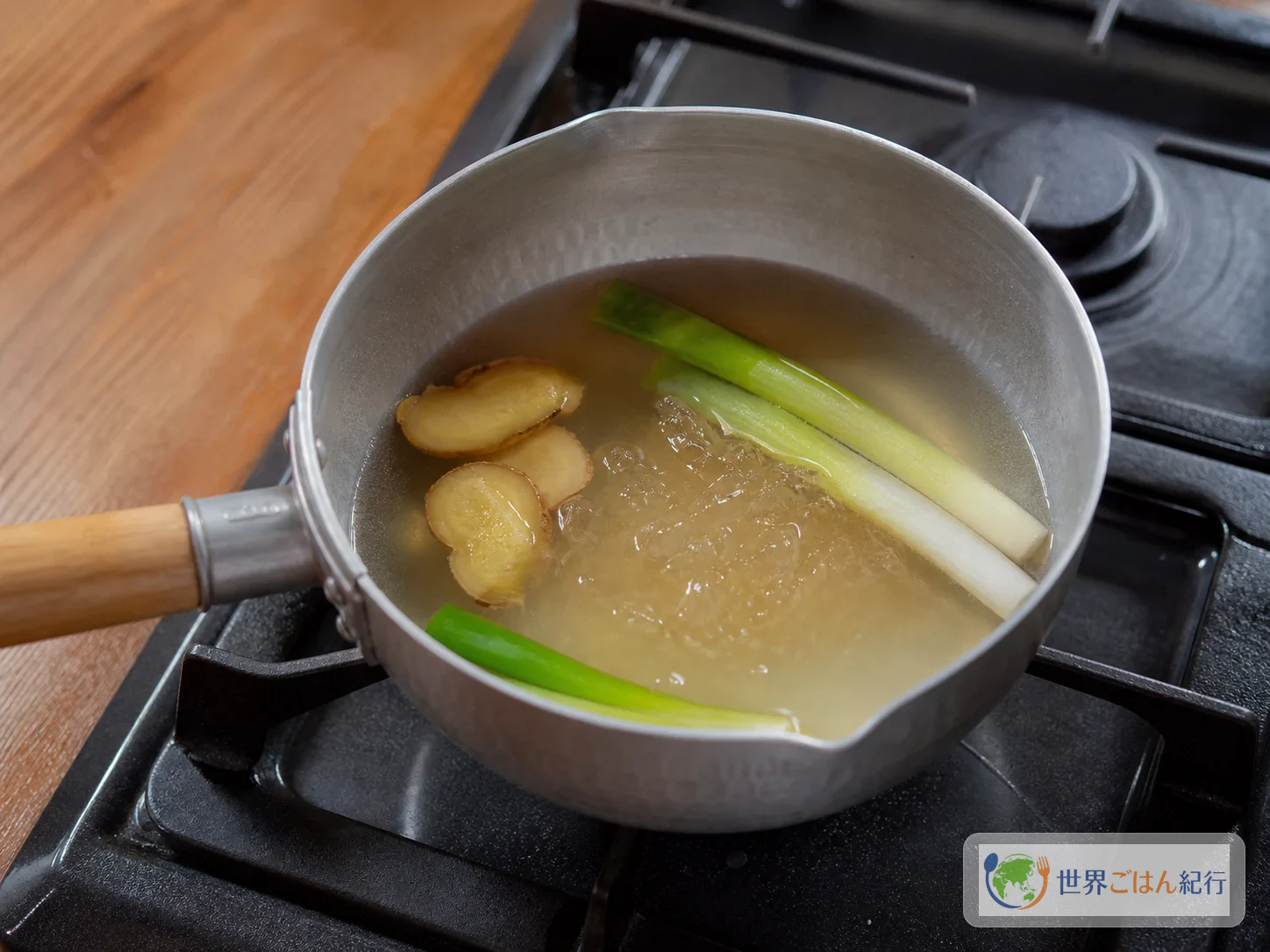
Put the chicken stock, ginger, green part of the long onion, Shaoxing wine and salt in a pot and warm for 5 minutes over low heat.
There is no need to boil off the aroma.
Add the powdered gelatin.
For the type bloomed in water follow the product's instructions, and for the type that dissolves directly into liquid stir until the lumps disappear.
When the heat has cooled, move it to a container and chill in the refrigerator for at least 4 hours, ideally overnight.
It is easy to wrap when it is springy to a finger press and does not flow when you tilt the container.
If it does not set, return the soup to the pot and warm it, dissolve a little more gelatin in small amounts, and chill again.
Put into the filling while hot, the fat floats and the filling loosens before it is wrapped in the skin.
The main line using pork skin and the home version using gelatin do not taste exactly the same.
Pork-skin aspic tends to give more meat aroma and richness of fat, while the gelatin version lets you build the taste of the soup directly.
If you gather the ingredients at once at an ordinary grocery store, the order of learning the wrapping with the gelatin version first, then trying pork skin or pork bones, is the least strained.
Deciding what to buy and what to skip
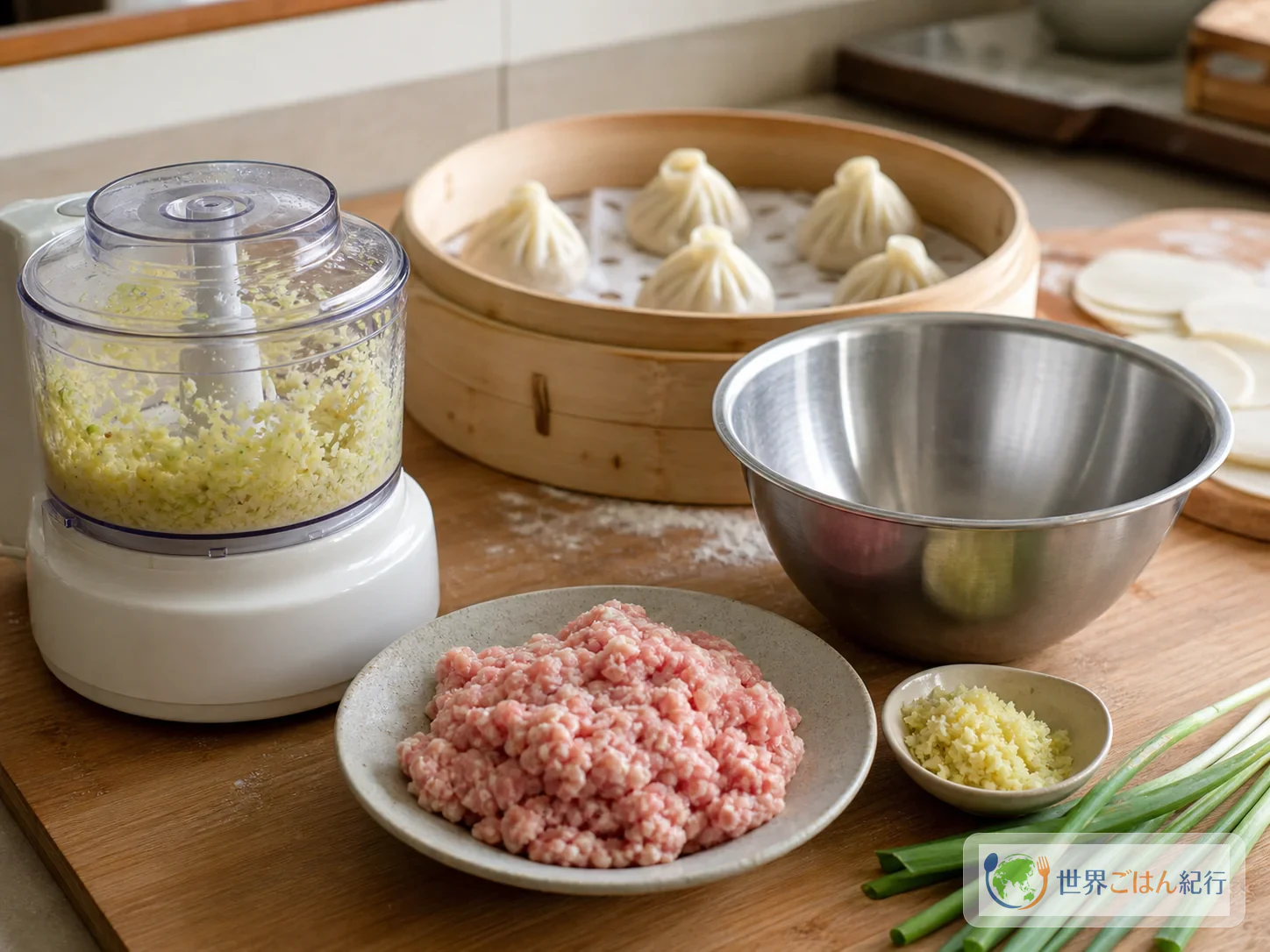
For xiaolongbao shopping you don't need to move all the ingredients to online ordering.
Choose the ground pork, flour, ginger and long onion locally, and look only for black vinegar and Shaoxing wine, and you can approach the local aroma while reducing leftovers.
Shaoxing wine is used in both the filling and the aspic, so it is easier to match the aroma than with cooking sake.
However, even replacing it with sake the first time, with ginger and black vinegar the outline of the flavor is hard to lose.
Black vinegar has a deeper aroma than rice vinegar and catches the fat of pork.
Because it is a seasoning not used in large amounts at once, try it in a small bottle and buy a larger size only if you plan to use it for gyoza or sweet-and-sour pork too.
A steamer creates the atmosphere of xiaolongbao, but before buying you need to check that its diameter fits the pot you have.
If you use a steamer of about 24 cm, putting about 6 per tier spaced apart makes it less likely the skins touch each other.
If you only make it once, a deep pot with a steaming rack and perforated parchment paper will do.
The condition for adding equipment is whether you will use it for shumai, meat buns and steamed vegetables too.
If you want to make the meat finer than ground and sticky, a food processor saves time.
But you can also make it by chopping coarsely with a knife, chilling, and working it with chopsticks in one direction.
If you are trying xiaolongbao just once, skip a large machine; if you will make gyoza, shumai and tsukune together, check on the product page whether the capacity, blade structure and ease of washing suit your kitchen.
How to make xiaolongbao: wrap, leaving the center of the skin
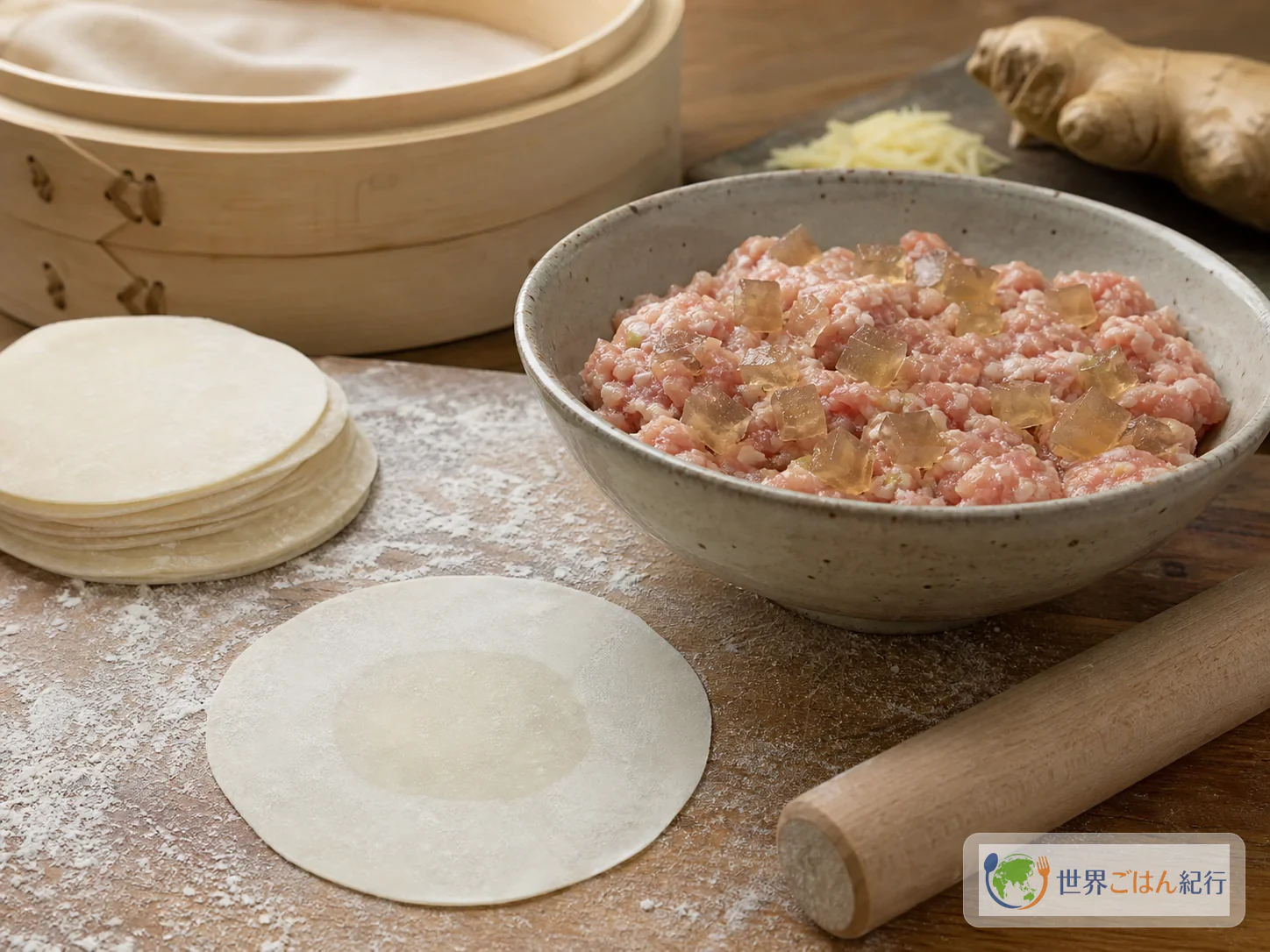
Proceed in the order of kneading the flour, chilling the filling, rolling the skins, wrapping and steaming.
If you confirm the aspic has set before making the skins, the temperature of the filling is hard to raise until you finish wrapping.
Three adjustments to keep the skin and soup from escaping
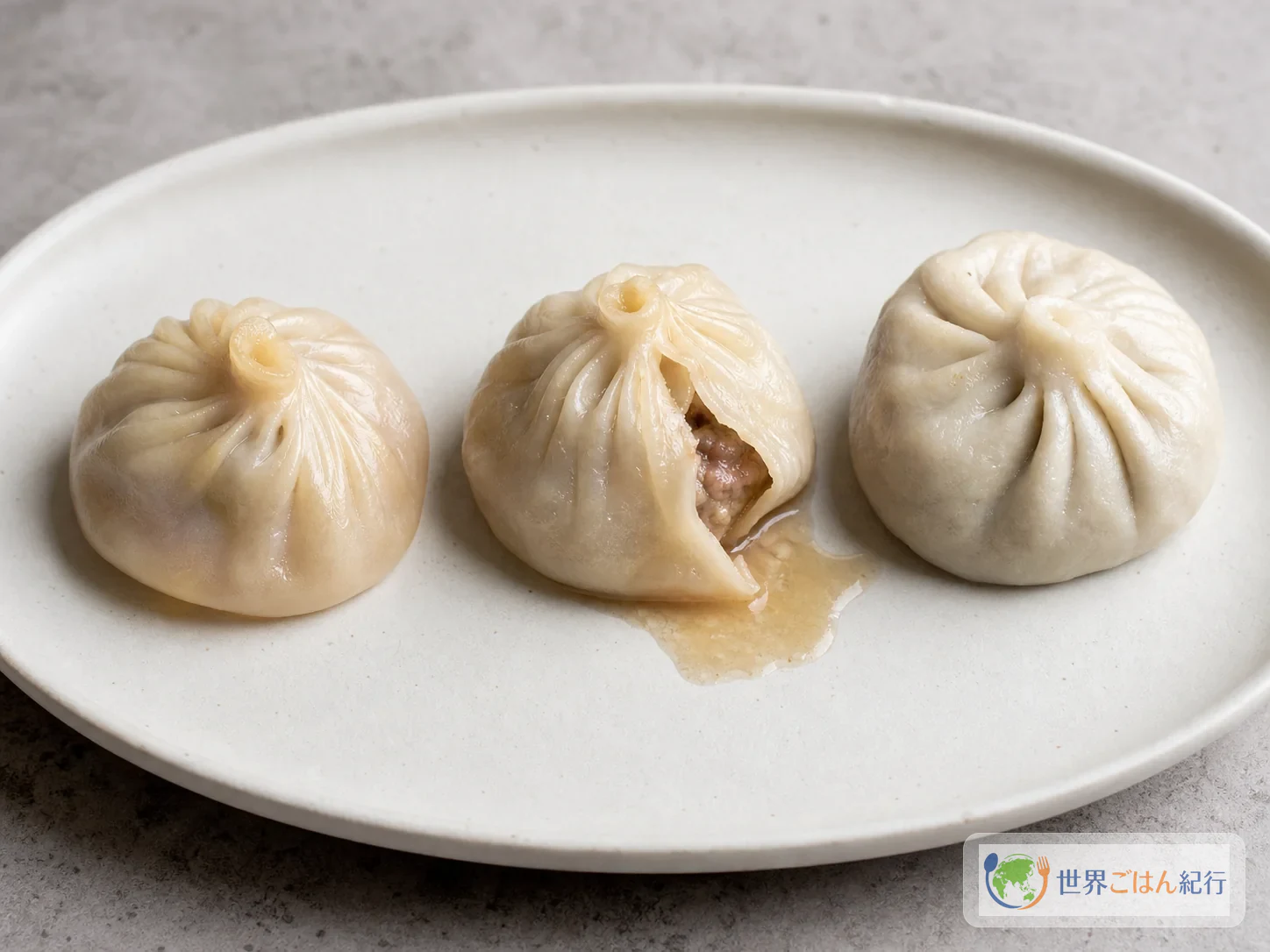
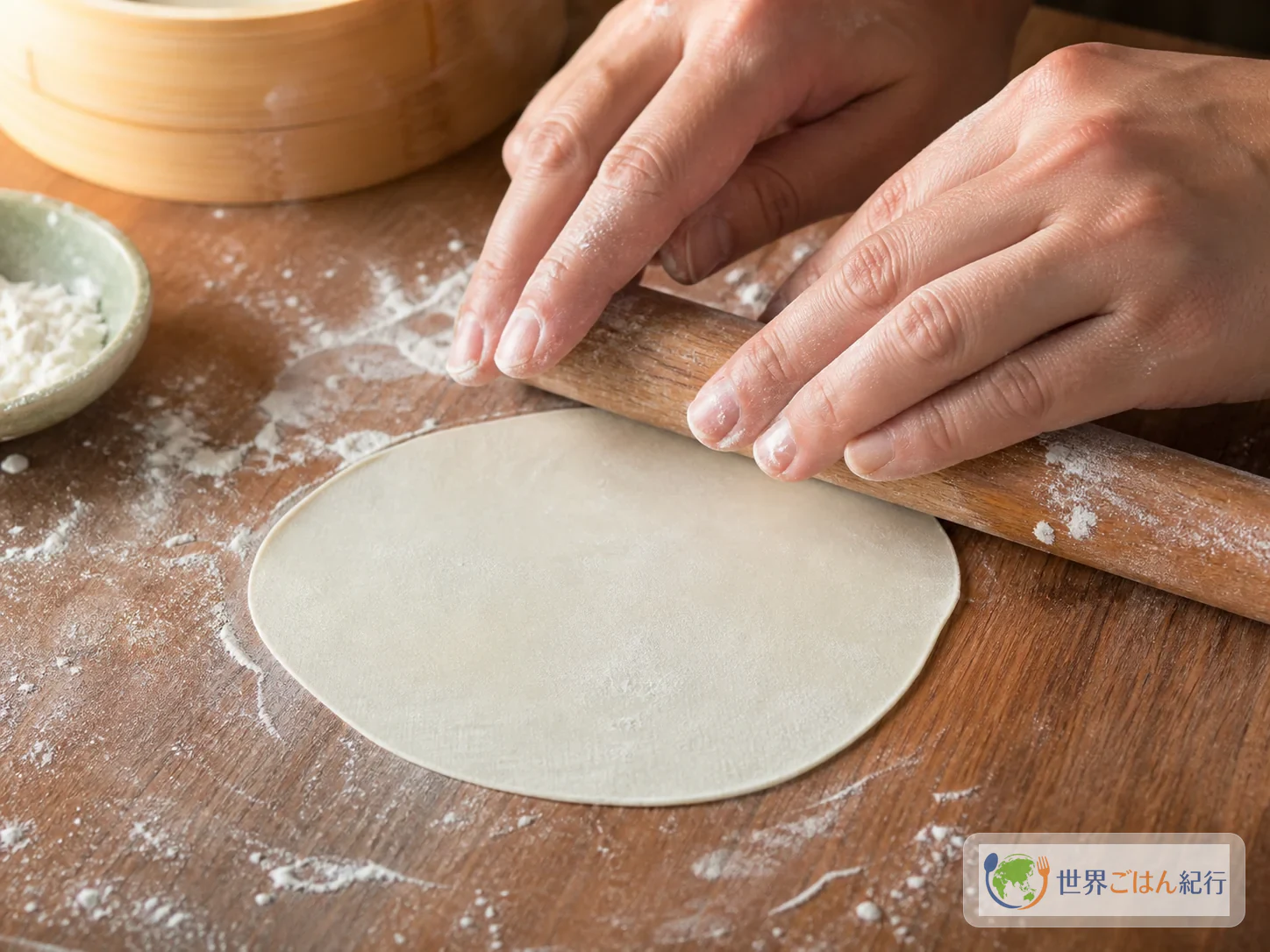
Don't make the center of the skin too thin
A thin skin is different from a skin that is too thin.
The rim is made thin for gathering pleats, but the center keeps the thickness to hold the weight of the filling and the juice.
The home methods at The Woks of Life and School of Wok also share the idea of making the rim thin and the center thicker so the skin tears less.
If the center looks see-through while rolling, do not press the rolling pin any further.
Use the aspic cold
Take the filling from the refrigerator and wrap it right away, replenishing 6 at a time.
On a hot day, set the filling bowl over ice water.
If the corners of the aspic get soft enough to crush with a finger, stop wrapping and chill for 10 minutes.
When soft filling is placed on a thin skin, the juice seeps into the skin while you gather pleats and easily leaks from the seam.
Don't let them touch in the steamer
If steamed touching, the surface gets damp from the steam and pulls the neighbor's skin when moved.
For a 24 cm steamer, a guide is about 6 per tier.
When you want to pack more, splitting into two tiers keeps more juice than increasing the count.
Without a steamer you can substitute a deep pot and a steaming rack, but if you wrap the lid in a cloth so water drops from the lid do not fall on the dumplings, take care that the cloth does not hang toward the fire.
Where to draw the line with ordinary ingredients
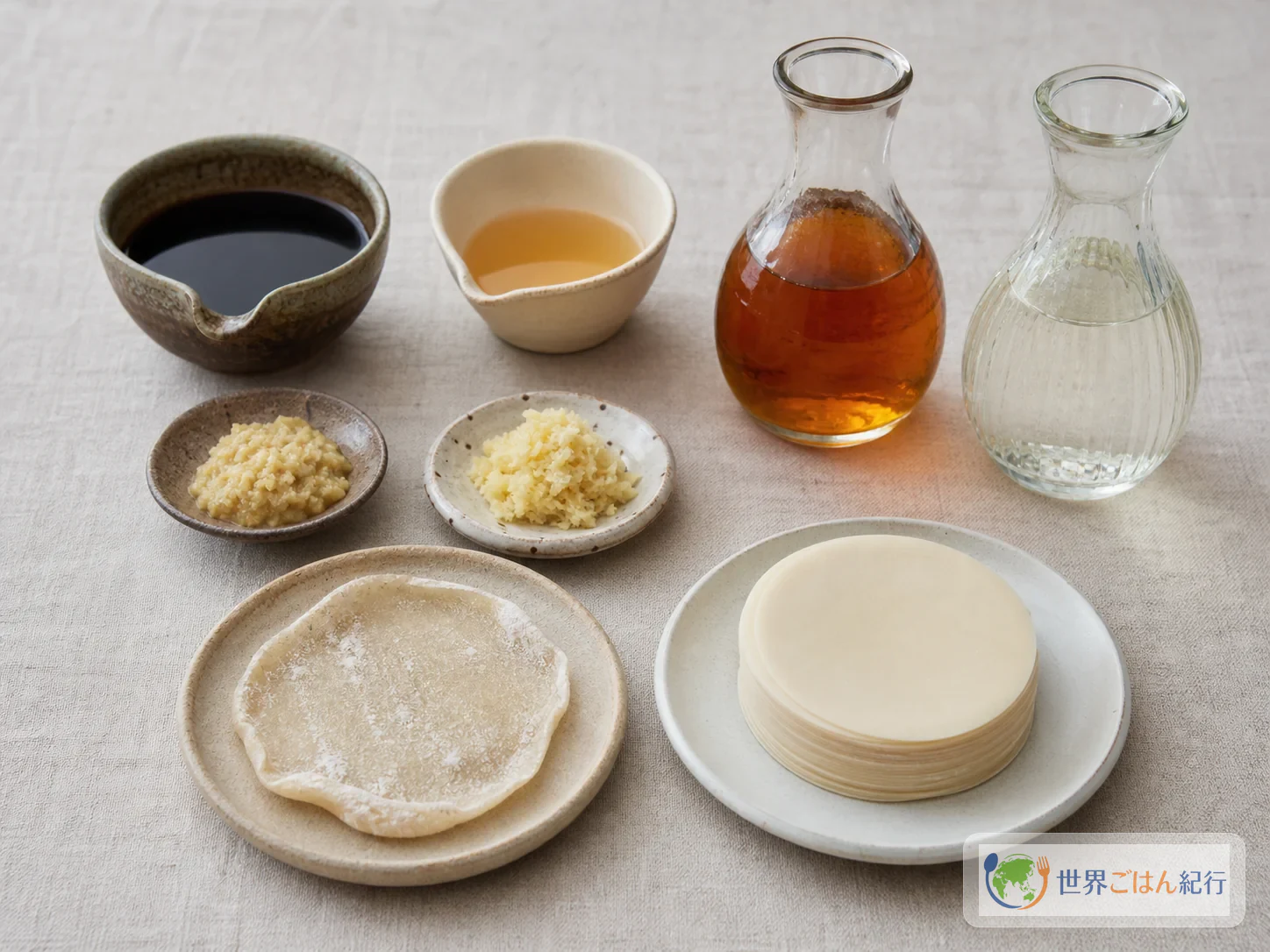
| What to keep | What can replace it | What changes |
|---|---|---|
| Thin skin and center thickness | Store-bought gyoza wrappers in place of handmade skins | The skin is thicker and it moves toward a gyoza with less soup |
| Pork and aspic | Ground chicken and chicken stock | Fat and richness are lighter. Set the aspic in the same amount |
| Shaoxing wine | Sake | The sweet aroma comes slightly forward, but the role of settling the meat odor remains |
| Black vinegar | Rice vinegar | Acidity comes through but the aged aroma and roundness weaken |
| Long onion and ginger | Onion only | The aroma of the juice tends to be monotonous, so keep the ginger if possible |
If you use store-bought gyoza wrappers, don't force the thickness thinner; reduce the filling to 15–18 g.
You may moisten the edge of the skin with water to gather pleats, but if you want more soup in the xiaolongbao, return to the handmade skin.
Practicing the first wrap with store-bought skins and making them from flour the next time is a realistic order.
When replacing pork with chicken, since there is less fat, increasing sesame oil from 1 tsp to 2 tsp makes the mouthfeel less dry.
However, the condition of heating the meat through to the center does not change.
If adding shrimp, reduce the pork by 50 g and finely chop 50 g peeled shrimp, and check the shellfish labeling and doneness.
Because the more raw ingredients you add the less the steaming time can be simply added up, for the first 24 pork alone is easiest to recover from mistakes.
To compare related steamed dumpling wrapping, Nepal's momo skin and filling is also a reference.
On a day you want to make the aroma of fermented seasoning the star, reading it alongside how doubanjiang is handled in mapo tofu (in Japanese) shows the difference in the order of moving aroma into the oil even within Chinese cooking.
If you are curious about connecting pork with a sweet aroma and rice, you can also compare with Taiwan's lu rou fan braise (in Japanese).
Storage and re-steaming the next day
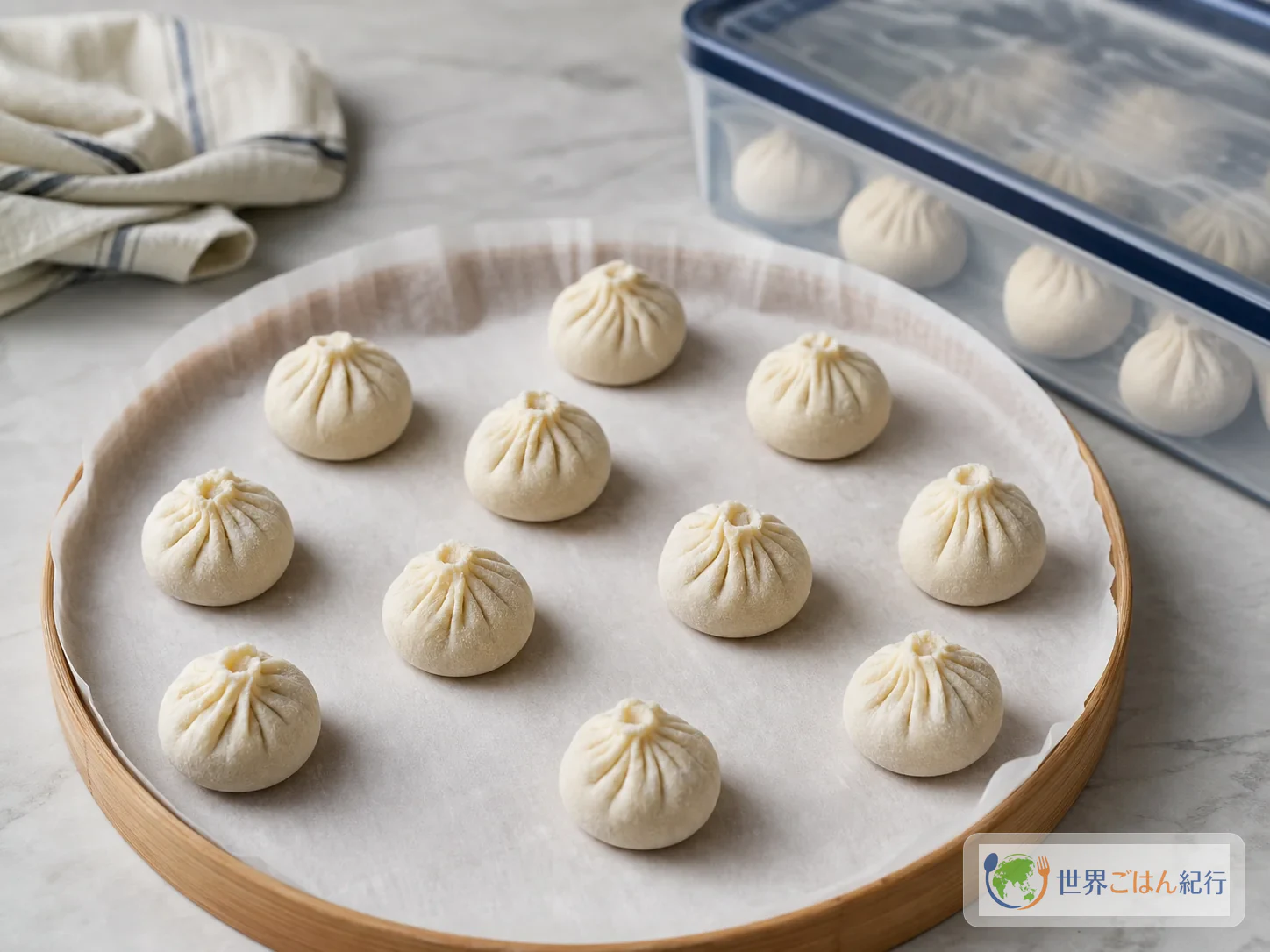
Wrapped xiaolongbao have the best skin condition right before steaming.
If refrigerating, seal so they do not dry and steam them the same day.
To carry over to the next day, chilling the filling and aspic separately and leaving the wrapping for the day tears less.
To freeze, arrange the wrapped dumplings spaced apart on paper and freeze until the surface firms.
Once firm, move them to a freezer bag and use within about 2 weeks.
Do not thaw frozen ones; place them in a steamer once steam is rising.
Skins that have dried and cracked tend to leak juice before steaming, so don't force them into storage; use them as filling for soup dumplings.
When steaming from frozen, extend the steaming time to 12–14 minutes and break open one representative dumpling to confirm it has cooked through to the center.
Reheating steamed xiaolongbao in a microwave hardens the skin and tends to heat the juice unevenly.
Warming for 5–7 minutes in a steamer with a little water is better for restoring the skin.
Even reheated ones need care about heating at the center and about burns.
FAQ
What if the aspic won't set?
How it sets changes with the refrigerator temperature, the strength of the soup and how the gelatin was bloomed.
If it flows when you tilt the container, don't put it in the filling; return it to the pot.
Don't increase the added gelatin all at once; adjust in small amounts using the labeled amount as a base.
I can't make 18 pleats
The number of pleats is one element of quality, but chasing the number from the first time makes the seam loose.
Reduce the filling a little and first close it without gaps with 12–14 pleats.
Next, make the rim of the skin thinner and increase to 18 pleats.
Prioritize a seam that doesn't let the juice escape over the number.
Can I use gyoza wrappers?
You can, but the skin is thick and the texture and amount of soup after steaming change.
Reduce the filling to 15–18 g and steam right after wrapping.
If you want the thin skin that feels like xiaolongbao, make it from flour next time.
I don't have black vinegar
Rice vinegar can substitute.
Increase the julienned ginger a little and, rather than mixing vinegar into the filling, dip a little at a time at the table to adjust the taste.
Balsamic vinegar and sweet seasoned vinegars change the direction of the meat juice, so they are not suited to a first substitution.
Can the filling be vegetarian?
It becomes a different design from this xiaolongbao using pork, chicken stock and gelatin.
A method using mushrooms, napa cabbage and tofu with agar to set the soup is conceivable, but how it melts when steamed and how the skin tears differ.
If you have dietary restrictions, check the labels of the gelatin and seasonings and rebuild the amounts from the start as a vegetable dim sum.
Buy thin skins, buy a steamer, or add a time-saving tool? What to decide first with xiaolongbao is how many times you will make it.
If only once, learn the process with store-bought skins and the steaming rack you already have.
If you will keep making gyoza and shumai too, gather black vinegar and Shaoxing wine in amounts you can use up and invest in a tool that makes the filling fine.
Then the next time you lift the lid, you can check as a judgment of your own kitchen whether the soup trembles inside the skin.
Sources
- Shanghai Municipal Government, "Xiaolongbao: A Taste of Shanghai" (features, way of eating and seasonal fillings of Nanxiang xiaolongbao. Accessed and checked: 2026-07-29)
- Shanghai Municipal Government, "Explore Shanghai's culinary heritage through 12 traditional dishes" (thin skin, pork-skin aspic, 18 or more pleats, an explanation of intangible heritage. Accessed and checked: 2026-07-29)
- Shanghai Municipal Culture and Tourism Bureau, "南翔小笼馒头制作技艺" (origin, filling, pleats and seasonal fillings of Nanxiang xiaolong. Accessed and checked: 2026-07-29)
- Wuxi Municipal Government, "Wuxi xiaolongmantou" (history of Wuxi xiaolong, sweet-salty flavor, eating with vinegar and ginger. Accessed and checked: 2026-07-29)
- The Woks of Life, "Steamed Shanghai Soup Dumplings (Xiaolongbao)" (home method for aspic, skin, filling, steaming and freezing. Accessed and checked: 2026-07-29)
- School of Wok, "Xiao Long Bao" (the idea of mixing aspic into the filling, skin thickness. Accessed and checked: 2026-07-29)
- Ministry of Agriculture, Forestry and Fisheries of Japan, "調理器具・調理編" (cooking meat to the center, a guide of 75°C for at least 1 minute; in Japanese. Accessed and checked: 2026-07-29)