Some evenings you pick up a pack of thin-sliced beef and don't want a stir-fry or a stew at all; you want the kitchen to smell of Sichuan pepper. Fry chili bean paste at the bottom of the pot and red oil seeps out, with garlic and ginger close behind. Slip the beef in slice by slice and, even though it's cooking, it doesn't tighten up; it loosens softly in the spicy broth.
Shuizhu niurou (shuǐ zhǔ niú ròu / 水煮牛肉) is a home-friendly version of the Sichuan cooking method called shuizhu. The name sounds like something pale simmered in water, but in reality it's a forceful dish built on doubanjiang, dried chilies, Sichuan pepper and hot oil. Like mapo tofu (in Japanese), it revolves around chili bean paste and Sichuan pepper, but here thin-sliced beef and vegetables take the lead instead of tofu, so at the table it feels almost as satisfying as a hot pot.
This recipe uses thin-sliced beef, napa cabbage and bean sprouts you can find at most supermarkets, plus Pixian doubanjiang and whole Sichuan peppercorns for a properly Sichuan red oil. The heat is gentler than at a Sichuan restaurant, but it keeps what defines shuizhu: red oil, a tingling aroma, tender meat and vegetables laid underneath.
Shuizhu niurou: Sichuan beef that opens up its aroma with red oil

In Chinese, shuizhu literally reads as "boiled in water." In Sichuan cooking, though, shuizhu niurou (boiled beef) or shuizhu yu (boiled fish) means cooking the main ingredient in a spicy broth, then pouring hot oil over chilies and Sichuan pepper at the end to wake up their aroma. English-language introductions to Sichuan food usually describe shuizhu as a combination of chili oil, Sichuan pepper and vegetables, and it's a different thing from an ordinary braise.
When you make it at home, the key isn't cranking up the heat. Fry the doubanjiang in oil to bring out its fermented aroma; coat the beef in starch and cook it briefly; and use hot oil at the end to wake up the Sichuan pepper and chilies. Stick to those three things, and the dish has a clear shuizhu outline even if you go easy on the chilies.
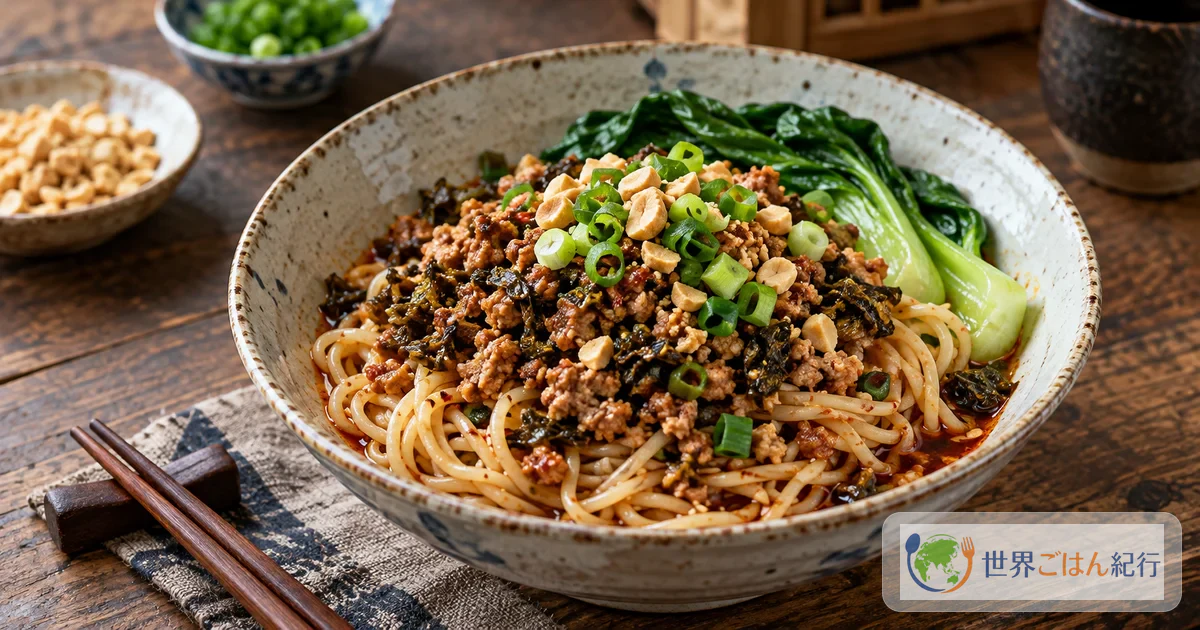
Among red-oil dishes, biangbiang noodles (in Japanese) are a dry dish where the aromatics bloom on top of the noodles, and chow mein is about stir-frying noodles and toppings against a hot wok. With shuizhu niurou, you lay vegetables in the serving bowl, pour in the hot broth and finish with sizzling oil. Gathering around one big bowl feels like making a small version of a spicy Sichuan hot pot.
Why shuizhu niurou isn't "watery" on a Sichuan table
Shuizhu is the name of a Sichuan cooking method: made the same way with pork, it becomes shuizhu roupian, and with fish, shuizhu yu. The common pattern is to cook thinly sliced ingredients briefly in a spicy broth, serve them over vegetables, and pour hot oil over chilies and Sichuan pepper.
If you only look at the "water" in the name, you'll miss the heart of the dish. What matters on a Sichuan table isn't frying the meat in oil until it toughens, but sliding thinly sliced meat briefly through a spicy broth, then sizzling chilies and Sichuan pepper with hot oil at the end. Sichuan cooking demonstrations follow the same pattern: vegetables are laid in the bottom of the bowl, the beef is cooked briefly in a broth seasoned with doubanjiang, and hot oil is poured over chopped chilies and Sichuan pepper. Shuizhu isn't a mild simmered dish; it's gentle cooking paired with strong aroma.
There are regional differences, too. At Chengdu eateries, shuizhu goes beyond beef to fish, pork, eel and vegetables, and the vegetables underneath and the types of chili change from shop to shop. For shuizhu fish, the flesh is cooked even more briefly so it doesn't break apart; for beef, some places coat it with starch or egg white. At home, people often use whatever vegetables are cheap that day as the base: napa cabbage, bean sprouts, lettuce, celery or garlic shoots. It's a meat dish, but the vegetables at the bottom soak up the spicy oil and broth and become a second star.
When making it at home, it's easier to finish the bowl if you think about which elements you can cut back while keeping the outline, rather than copying the amount of oil and chilies used in Sichuan. Protect these: frying the Pixian doubanjiang in oil, not relying on ground Sichuan pepper alone, never boiling the meat hard, and never skipping the finishing oil. The vegetables, on the other hand, are easy to swap for supermarket staples like napa cabbage, bean sprouts and komatsuna (Japanese mustard spinach). On a milder day you can cut the chilies, but if you also cut back too far on the Sichuan pepper and doubanjiang, it drifts away from shuizhu niurou toward a plain red beef soup.
| The Sichuan approach | What to do in a home kitchen |
|---|---|
| Slice the meat thin and cook it briefly | Any thin slices around 2 mm are easy to work with, even if not cut for hot pot |
| The vegetables catch everything at the bottom of the bowl | Napa cabbage, bean sprouts, komatsuna or green cabbage all work |
| Fry the doubanjiang before it goes into the broth | Loosen the Pixian doubanjiang in oil first, let it turn fragrant, then add the stock |
| Open up the aroma with finishing oil | Even if you cut the oil, keep at least 2 tbsp and pour it straight onto the chilies and Sichuan pepper |
Ingredients and amounts for a home kitchen

Serves 4. You don't need expensive beef; chuck eye (shoulder loin) or trimmings are plenty. Rather than thick slices for grilling, choose slices about 2 mm thick, which turn tender with a short cook.
This recipe uses beef and seasonings that may contain soy and wheat. Ingredients in doubanjiang, soy sauce and bouillon granules vary by brand, so check the labels if you have allergies. The numbing tingle of Sichuan pepper is separate from chili heat, so the first time, don't go above 2 tsp; it makes the dish easier to finish.
Ingredients and tools worth a closer look

For shuizhu niurou, the things worth seeking out aren't the beef or the cabbage but the doubanjiang and Sichuan pepper that anchor the aroma, plus a pot that handles hot oil comfortably. Buy ordinary meat and vegetables nearby, and save your attention for the few items that make it taste like Sichuan.
Pixian doubanjiang isn't a sweet bean paste; it's a salty seasoning made by fermenting broad beans with chilies. In shuizhu niurou it provides the red color of the broth, the fermented aroma and the base of the heat. You can make the dish with other doubanjiang, but the depth of aroma changes quite a bit. Look for it at Asian grocers or online.
Whole Sichuan peppercorns are easier to work with than ground. Lightly crushing the whole peppercorns releases an aroma a lot like citrus peel. If someone at the table doesn't like the tingle, put the finishing portion in a separate dish so each person can adjust it.
Because you pour hot oil over the dish at the end, a deep pan is the safer choice. With a wide wok, you can blanch the vegetables, loosen the doubanjiang in oil and make the broth all in one pan.
Method: keep the beef tender and raise the red oil
Shuizhu niurou is a lively dish, but it isn't one you boil hard over high heat. Only the doubanjiang-frying stage is about building aroma; the beef cooks briefly in gently bubbling broth. If you drop all the beef in at once it clumps, so add it while separating the slices with chopsticks.
Common problems and how to fix them

When shuizhu niurou goes wrong, it's less often too spicy than one of four things: tough beef, oil that isn't red, a thin broth, or bitter Sichuan pepper. Most of these can be prevented by following the order of the steps.
| What happened | Cause | Fix |
|---|---|---|
| Tough beef | It kept cooking in a hard-boiling broth | Bring the broth down to a gentle bubble and stop when 80 percent of the pink is gone |
| Beef clumps together | No oil after the starch, or all added at once | Add 2 tsp oil to the marinade and slide the slices in one at a time with chopsticks |
| Oil isn't red | The doubanjiang wasn't fried before the broth went in | Fry it for 2 minutes over medium-low heat and wait until red oil separates |
| Bitter | The Sichuan pepper or chilies scorched | Use medium-low heat for the first Sichuan pepper, and pour the finishing oil after turning off the heat |
| Too salty | Too much doubanjiang and soy sauce | Add 100 ml broth and 1 tsp black vinegar to cut the heaviness |
If you add more doubanjiang to make it spicier, the salt goes up too. For more heat, add 1 tsp chili flakes; for more tingle, add 1/2 tsp Sichuan pepper to the finish. If people at the table want different levels of heat, varying the finishing chilies and Sichuan pepper bowl by bowl is the practical approach.
Where to draw the line with local substitutes
What you want to protect in shuizhu niurou is frying the doubanjiang, the aroma of Sichuan pepper, a short cook for thin-sliced meat, and a bed of vegetables underneath. The cut of beef and the vegetables can change to suit your kitchen.
| What makes it taste like Sichuan | Why it matters | Substitute |
|---|---|---|
| Pixian doubanjiang | The aroma of fermented broad beans and chilies is the foundation of shuizhu | With regular doubanjiang, use a little more and cut back on the sugar |
| Whole Sichuan peppercorns | Brings not just tingle but an almost citrusy aroma | With ground Sichuan pepper, start with 1/2 tsp in the finish |
| Thin-sliced beef | Cooks tender in a short time | Thin-sliced pork loin turns it into something like shuizhu roupian (boiled pork slices) |
| Napa cabbage and bean sprouts | Catch the spicy broth and keep the dish from becoming tiring | Green cabbage, komatsuna, soybean sprouts |
| Hot finishing oil | Wakes up the chilies and Sichuan pepper at the very end | Even if you cut the oil, keep 2 tbsp |
Made with pork, it becomes close to shuizhu roupian. Use 300 g thin-sliced pork loin; the salt in the marinade stays the same. Shuizhu yu, made with fish, needs even more delicate cooking, so beef is easier for a first attempt.
The other line to draw is between heat and aroma. For heat alone, any ground red chili will do, but the depth that makes it taste of Sichuan comes from the fermented aroma of Pixian doubanjiang and the citrusy tingle of Sichuan pepper. If you want to keep shopping simple, get the beef, cabbage and sprouts at the supermarket and limit the specialty items to doubanjiang and whole Sichuan peppercorns. On the other hand, it's fine to swap the Shaoxing wine for sake, use leek instead of scallions, and skip the cilantro. Rather than making everything with Sichuan ingredients, keeping those two pillars of flavor is what lands the dish as shuizhu, even in a home pot.
On days when you're splitting the heat for the family, use half the chilies when making the broth, then vary the finishing chilies and Sichuan pepper bowl by bowl. Once the whole platter is spicy, you can't take it back, but right before the finishing oil you can still adjust. For anyone who doesn't like heat, set aside some beef and vegetables in a separate heatproof bowl and pour oil over just garlic and scallions. Top only the adults' bowls with chopped chilies and Sichuan pepper, and one pot makes the same dinner for everyone.
Serving and storage, and keeping it good until the next day
Shuizhu niurou pairs well with plain white rice, which nicely absorbs the spicy oil. For side dishes, light things suit it better than strongly seasoned stir-fries: cucumber dressed with black vinegar, chilled tomatoes, or egg drop soup. Rather than adding another spicy dish, it's fun to browse on to the vegetarian Buddha's delight (in Japanese) or to biryani (in Japanese), with a completely different aromatic profile, and compare how each meal is put together.
To store, transfer the beef and vegetables with their broth to a clean container and refrigerate once it has cooled slightly. Eat it by the next day. A small saucepan works better than the microwave for reheating. Warm it over low heat until it bubbles gently, and stop before the beef toughens. If the aroma has faded, add a pinch of Sichuan pepper just before eating.
Freezing isn't recommended. The bean sprouts and cabbage lose their moisture and the coating on the beef breaks down. Leftover broth is easy to finish the next day by adding tofu or glass noodles for a small mala soup. In that case, add 100 ml water, taste for salt, and only then add soy sauce.
Frequently asked questions
Why use oil if it's called "water-boiled"?
Sichuan shuizhu cooks the main ingredient in a spicy broth, then opens up chilies and Sichuan pepper with hot oil at the end. Rather than thinking of it as boiling in water alone, it's easier to grasp as a dish that combines broth with aromatic oil.
Which cut of beef works best?
Thin-sliced chuck eye, trimmings and thin-sliced round all work well. Fatty short plate makes the oil heavy, and thick steak cuts won't turn tender in a short cook. Choose slices about 2 mm thick.
How can I adjust it if I don't like Sichuan pepper?
Reduce the Sichuan pepper that goes into the broth to 1/2 tsp and serve the finishing portion on the side. Leaving it out entirely weakens the shuizhu character, but with doubanjiang and chilies it still works as a spicy beef soup.
Can I serve it at a table with kids or people who don't like spicy food?
If you're making it in one pot, use 1 tbsp doubanjiang and halve the dried chilies and chili flakes. After dividing it up, add the hot oil, chilies and Sichuan pepper only to the adults' bowls.