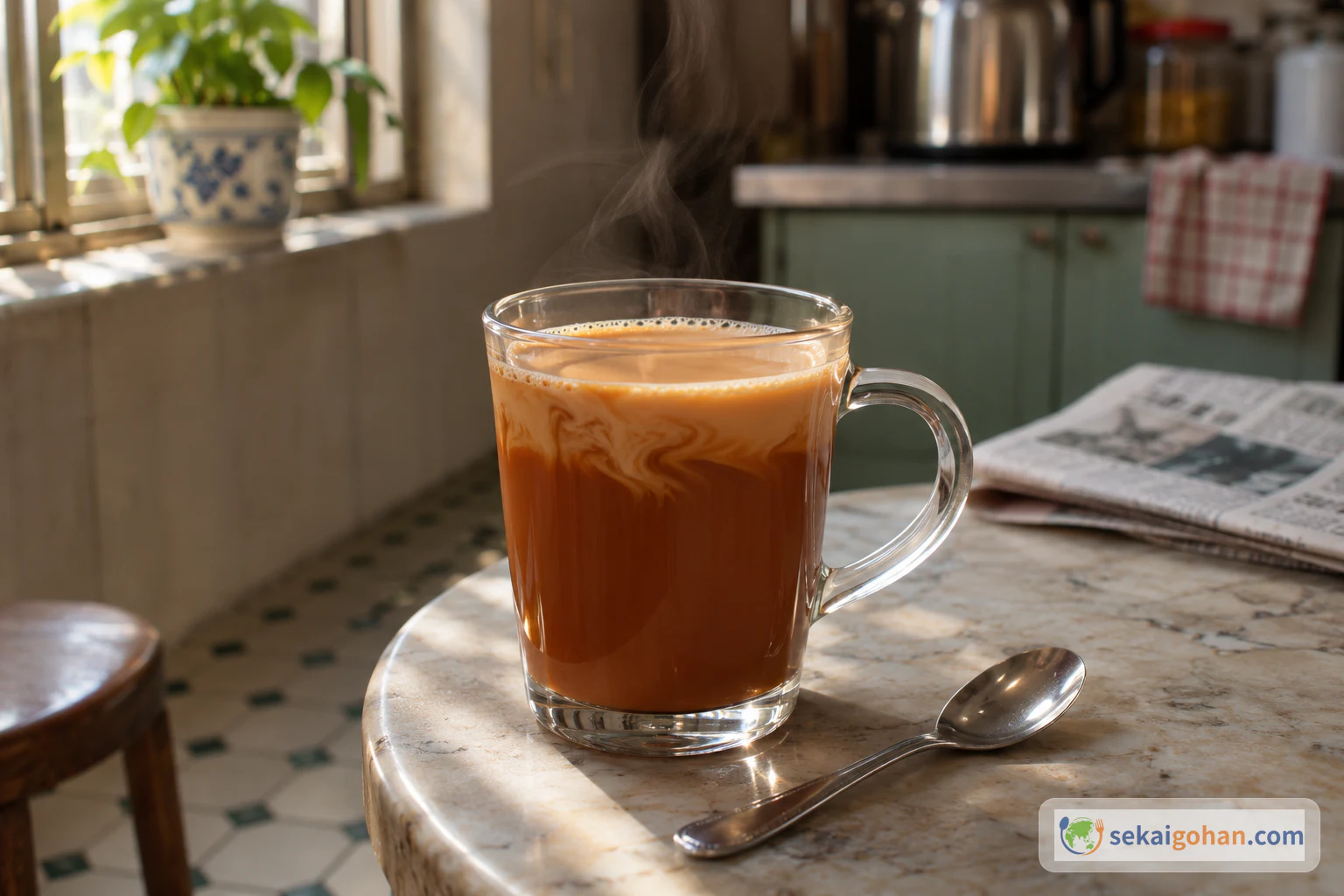
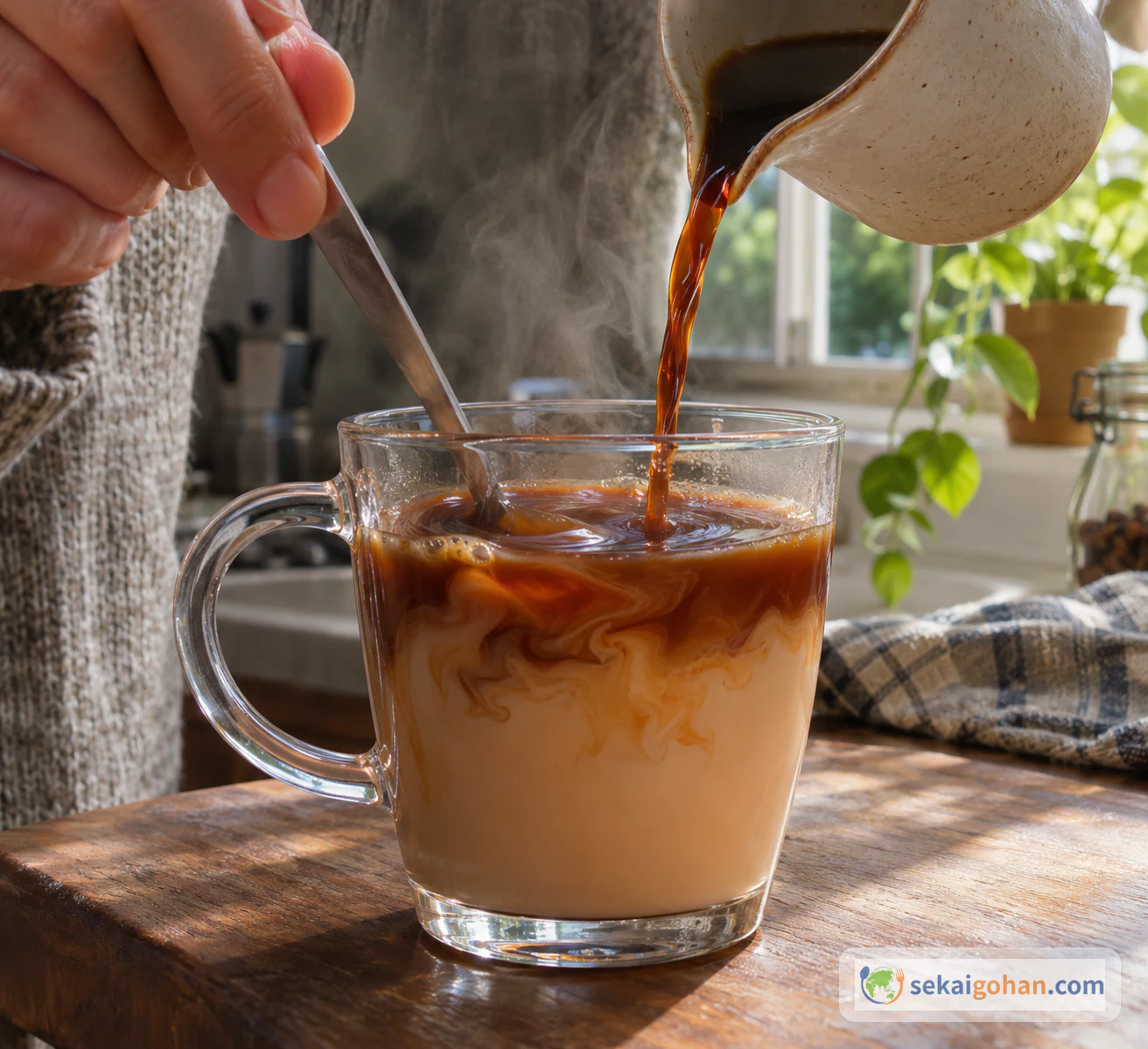
The coffee goes in last. It slides over the milk tea in a darker band, a marbled line forms where the two meet, and then the spoon goes in and the whole cup turns one even, café-au-lait brown. Yuenyeung (鴛鴦) is the cup that sits beside a folded newspaper in a Hong Kong cha chaan teng, the tiled, round-tabled tea cafés where the city eats breakfast and a quick lunch. It tastes of strong, slightly tannic black tea first, then a roasted bitterness from the coffee, all rounded off by the thick sweetness of condensed milk. It comes hot or iced, and it is the house drink of Hong Kong in a way few others are.
Two Drinks in One Cup
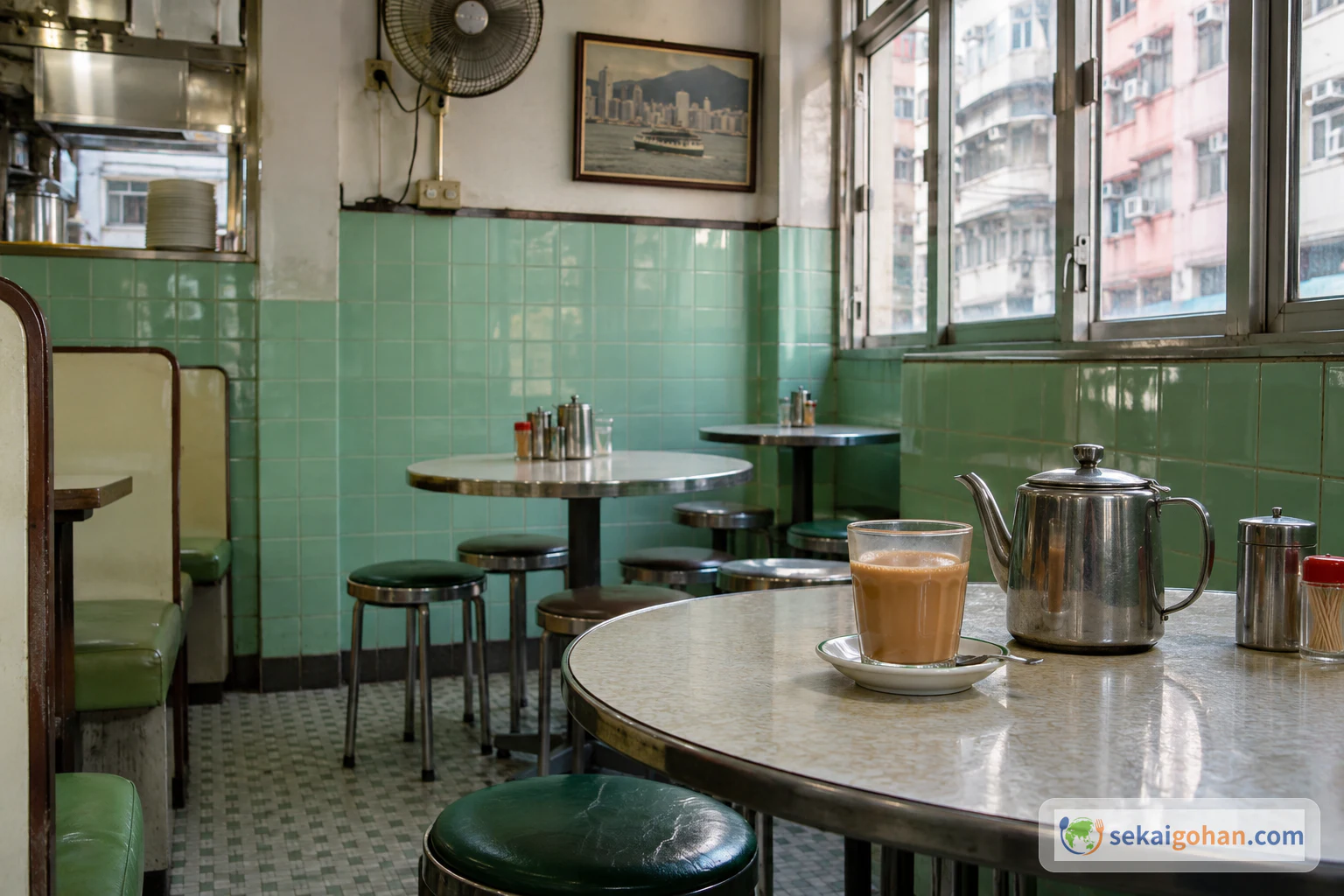
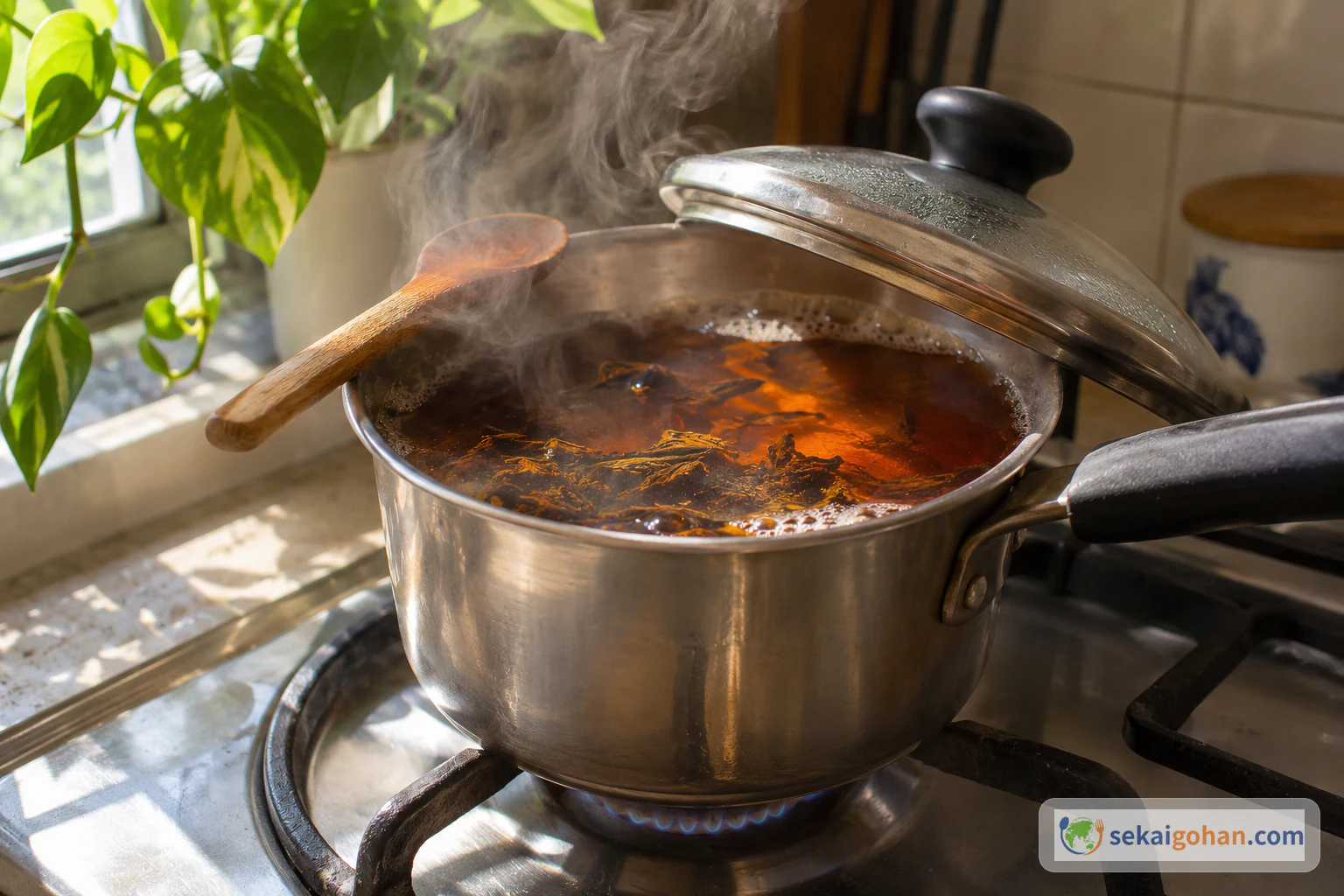
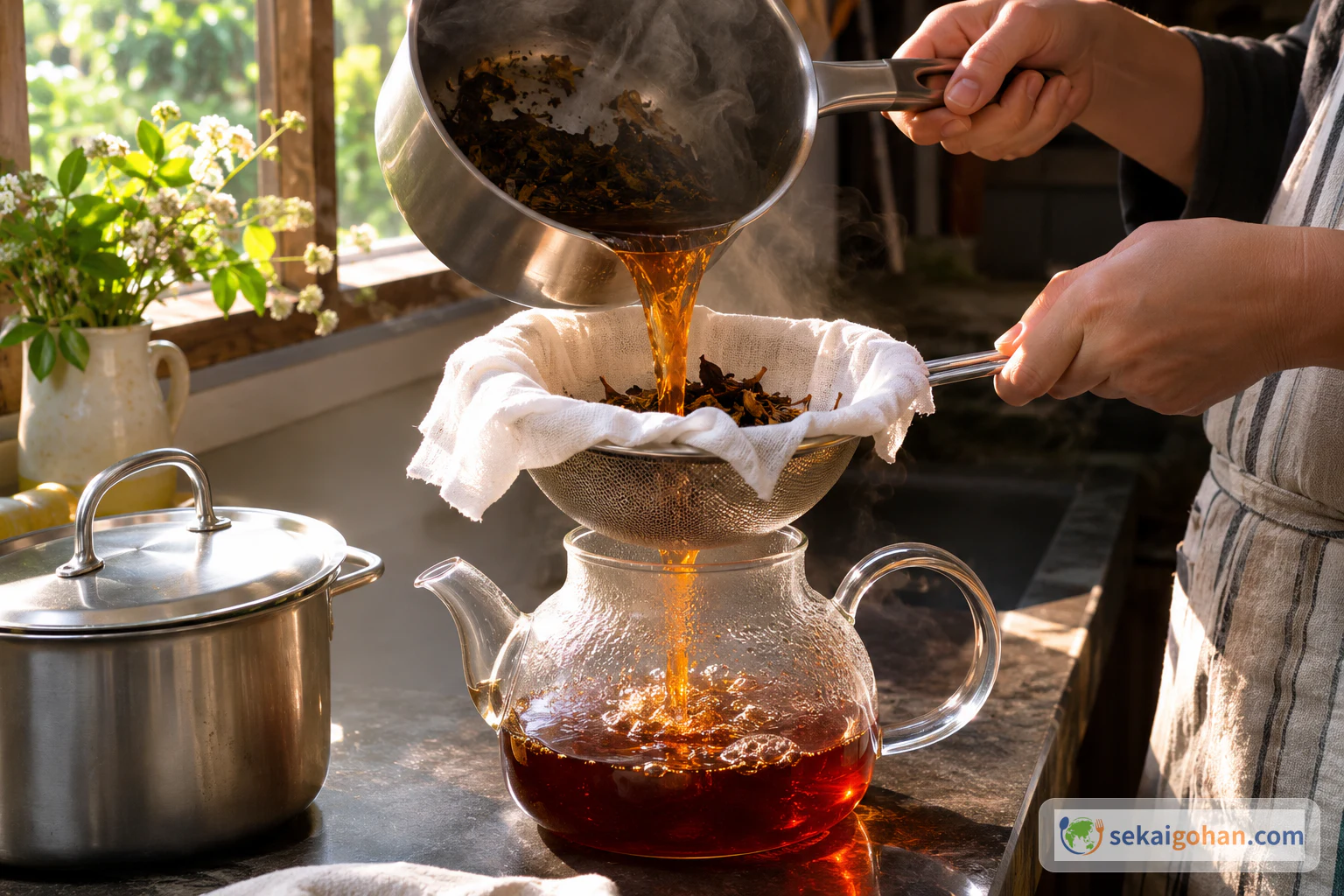
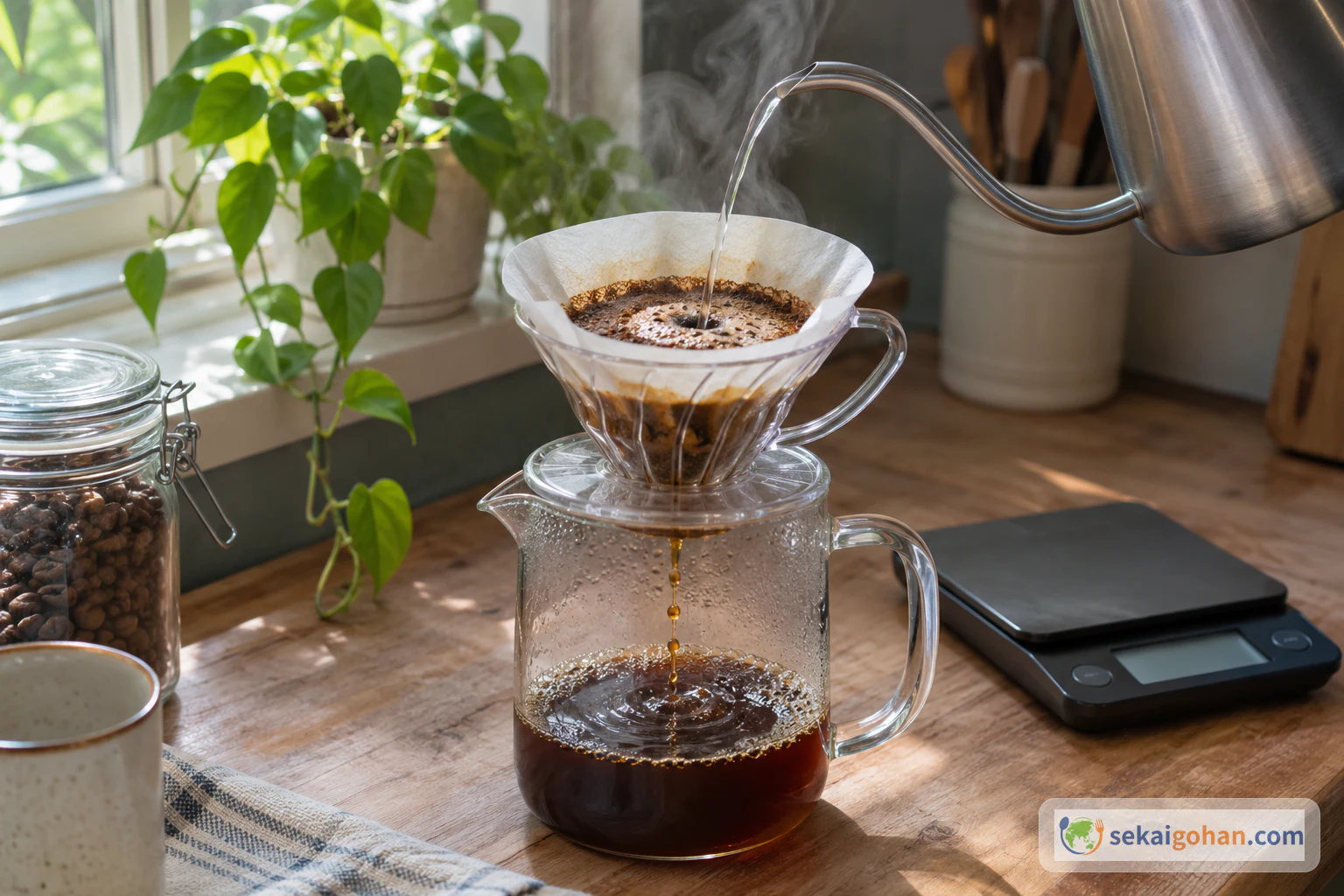
Hong Kong milk tea came from British milk tea and took about a century to become its own thing. Cafés brew a blend of several black teas, each shop keeping its own mix. They boil and steep it, then pour it through a cloth-bag strainer from one pot into another, again and again, a move called 撞茶 ("hitting the tea") that aerates it and smooths the edges. The cloth bag is why the drink is also called silk stocking milk tea. Evaporated milk (淡奶) finishes it. Coffee in these cafés is made just as plainly: boiling water poured over the grounds and left to steep.
Yuenyeung puts the two together with evaporated milk into one warm cup. Hong Kong lists the making of milk tea and the making of yuenyeung as separate entries on its intangible cultural heritage list: the milk tea technique is placed in the 1940s, while the date for yuenyeung is left open. Where the mix began is not settled. One long-running cha chaan teng claims it was first poured there in the 1950s, another account names 1952, and many see it growing out of the coffee culture that was already arriving in the city. The drink also turns up in Macau and in Hong Kong communities abroad.
鴛鴦 means a pair of mandarin ducks. The male and female look nothing alike, yet they are always seen together, so the word stands for a devoted couple. Here the odd couple is tea and coffee, two drinks that look and taste different and still end up in the same cup.
In a cha chaan teng, yuenyeung does not always appear on the printed menu. Regulars simply ask for it by name, hot or with ice, the way they would a cup of milk tea.
Ingredients
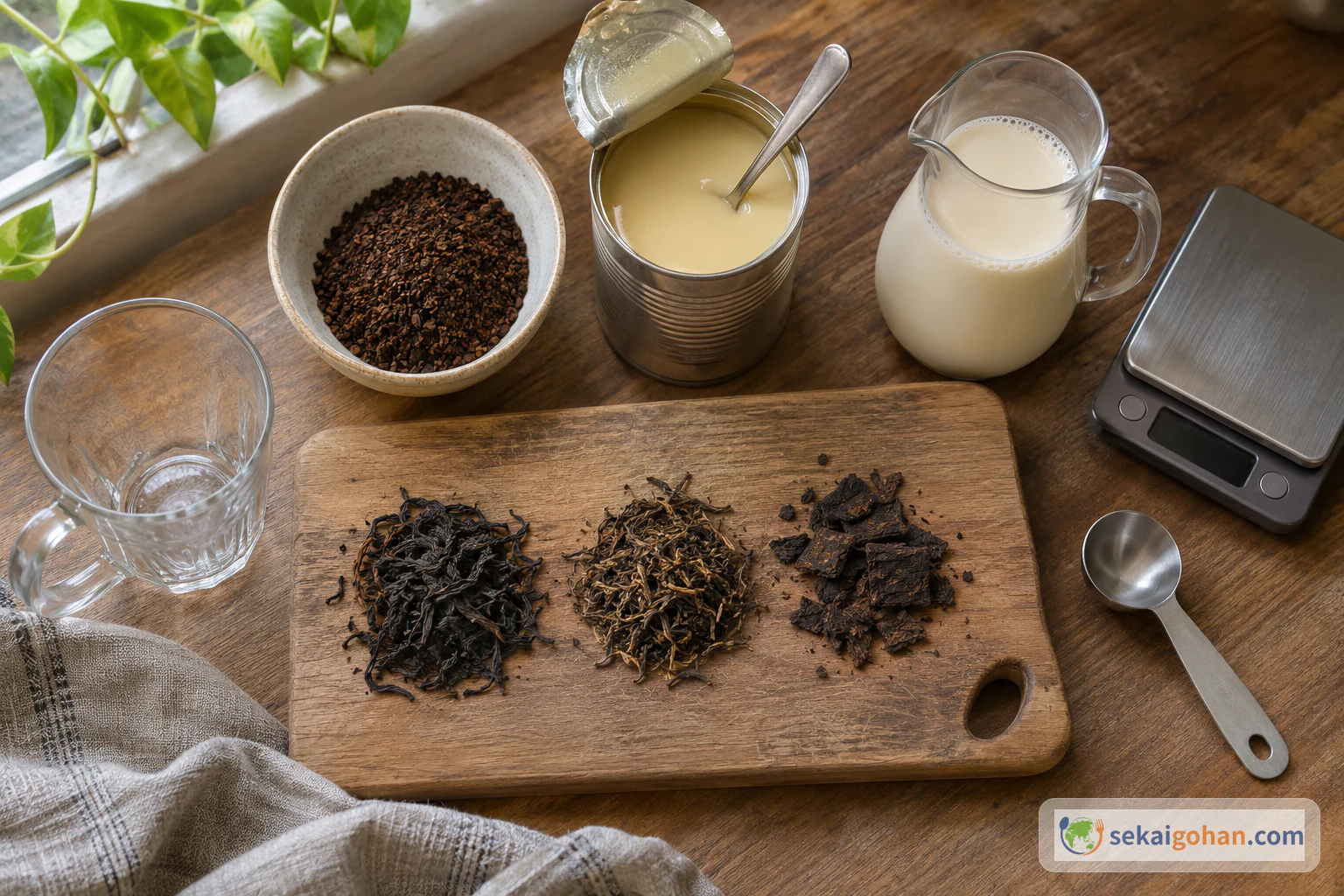
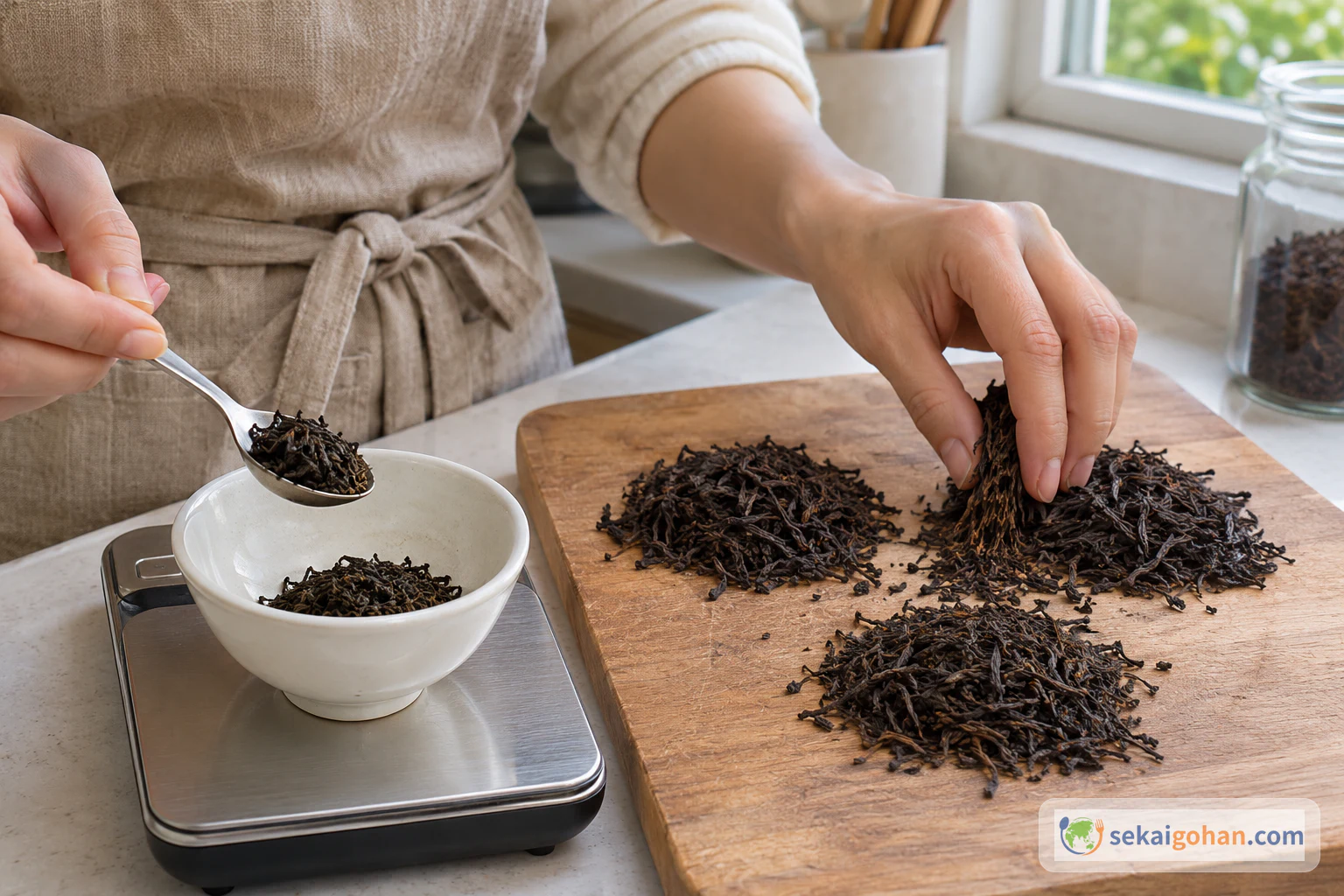
Loose leaves vary so much in size that a teaspoon of fine Ceylon and a teaspoon of large Assam leaves weigh different amounts. A scale that reads to 0.1 g keeps the three teas in balance, and the gram figures are the ones to trust.
Contains milk (sweetened condensed milk and evaporated milk). Contains caffeine from both tea and coffee.
Equipment
- Small lidded saucepan, about 1 quart (1 L)
- Fine-mesh tea strainer, or a cloth filter
- Two heatproof pots or jugs, for pouring the tea back and forth
- Coffee dripper and paper filter
- Measuring spoons
- Kitchen scale that reads to 0.1 g
- Heatproof cup or glass
Choosing and Substituting
The tea is where the drink lives, so spend your attention there. Assam and Ceylon loose leaf are easy to find at tea shops, import grocers and online; pu-erh is sold at Chinese grocers, often pressed into cakes that you break into small pieces. Sweetened condensed milk is on most supermarket shelves. Evaporated milk sits beside it in many stores and is worth picking up for the cha chaan teng finish, though the drink holds together without it.
| Swap | What it changes |
|---|---|
| Ceylon only, no Assam or pu-erh | Works; the tea tastes lighter, with less body and fewer layers |
| Leave out the pu-erh | The aroma turns lighter and the color less deep |
| Ceylon tea bags instead of loose Ceylon | Works for the Ceylon part of the blend |
| 2 shots of espresso instead of brewed coffee | A sharper, more pointed bitterness |
| No evaporated milk | Still a complete drink; less dairy richness |
The thing to keep is a strong, simmered tea and a coffee brewed noticeably stronger than you would drink it on its own. Everything else bends.
Method
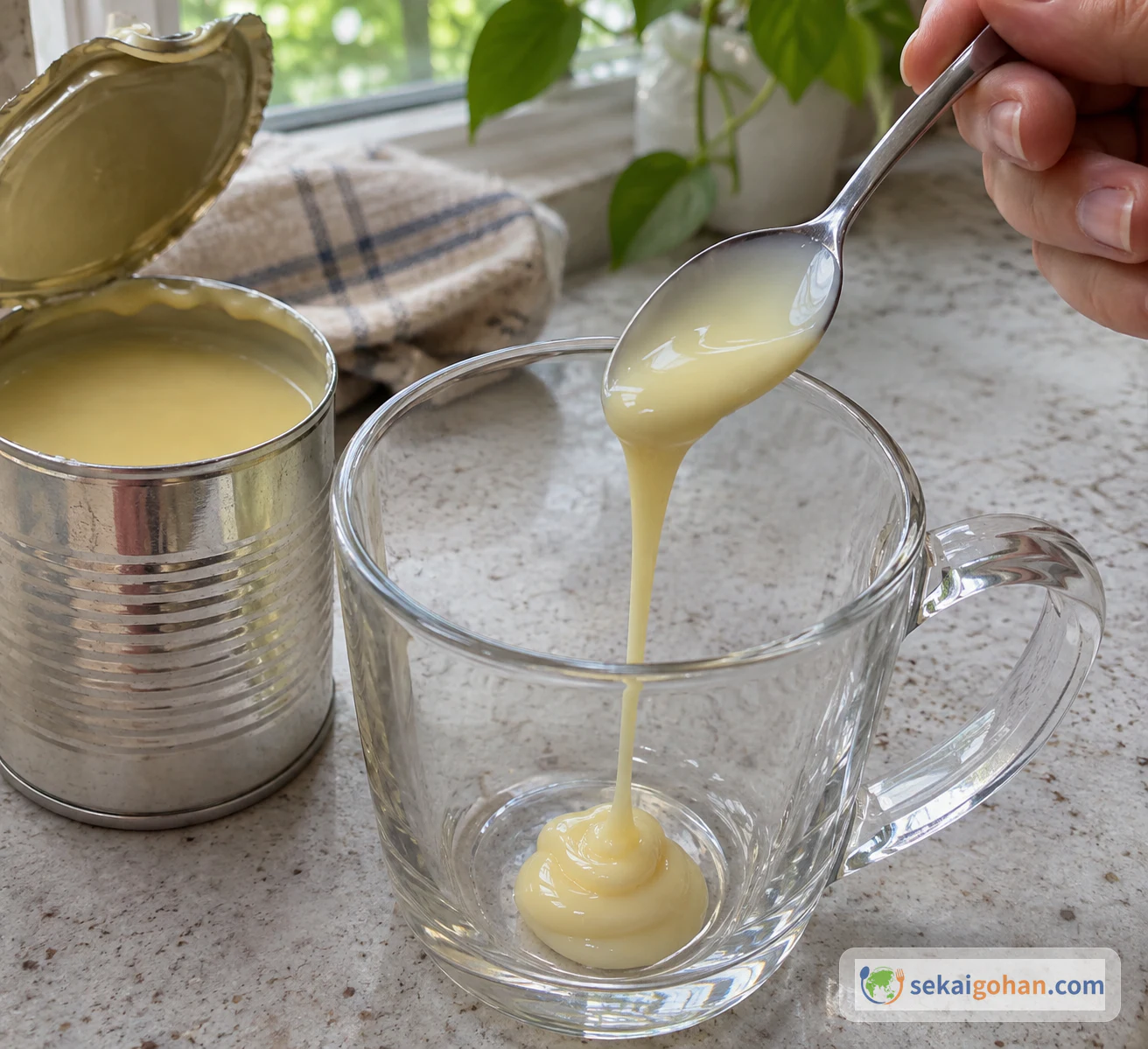
The tea comes first and does most of the work on its own: once it is covered and simmering, you have ten quiet minutes to set up the dripper and warm the cup. The coffee is brewed only after the tea is strained, so both are hot when they meet. The cup is built in a fixed order, sweet milk at the bottom, tea next, coffee last.
Keep the finished drink off a boil. Once milk is in, never let it boil, or it splits.
When It Goes Wrong
| What you see | Why | What to do |
|---|---|---|
| Thin, watery taste | Tea simmered too briefly, too few leaves, or ice melting into it | Give the tea its full 10 minutes; for iced, brew the tea a little stronger |
| Too bitter or harsh | Coffee too strong, or tea oversimmered | Use a scant ½ cup (100 ml) of the coffee; next time brew with 1½ tbsp of grounds |
| Gritty texture | Strainer too coarse | Double the strainer or line it with cloth |
| Too sweet | 3 teaspoons of condensed milk | Use 2 next time and add more only after tasting |
| Lukewarm cup | Cold cup pulling heat from the drink | Rinse the cup with hot water before building the drink |
| Sweet sludge left at the bottom | Condensed milk not stirred up | Stir down to the base of the cup until no white streaks remain |
Serving, Variations and Storage
At the table
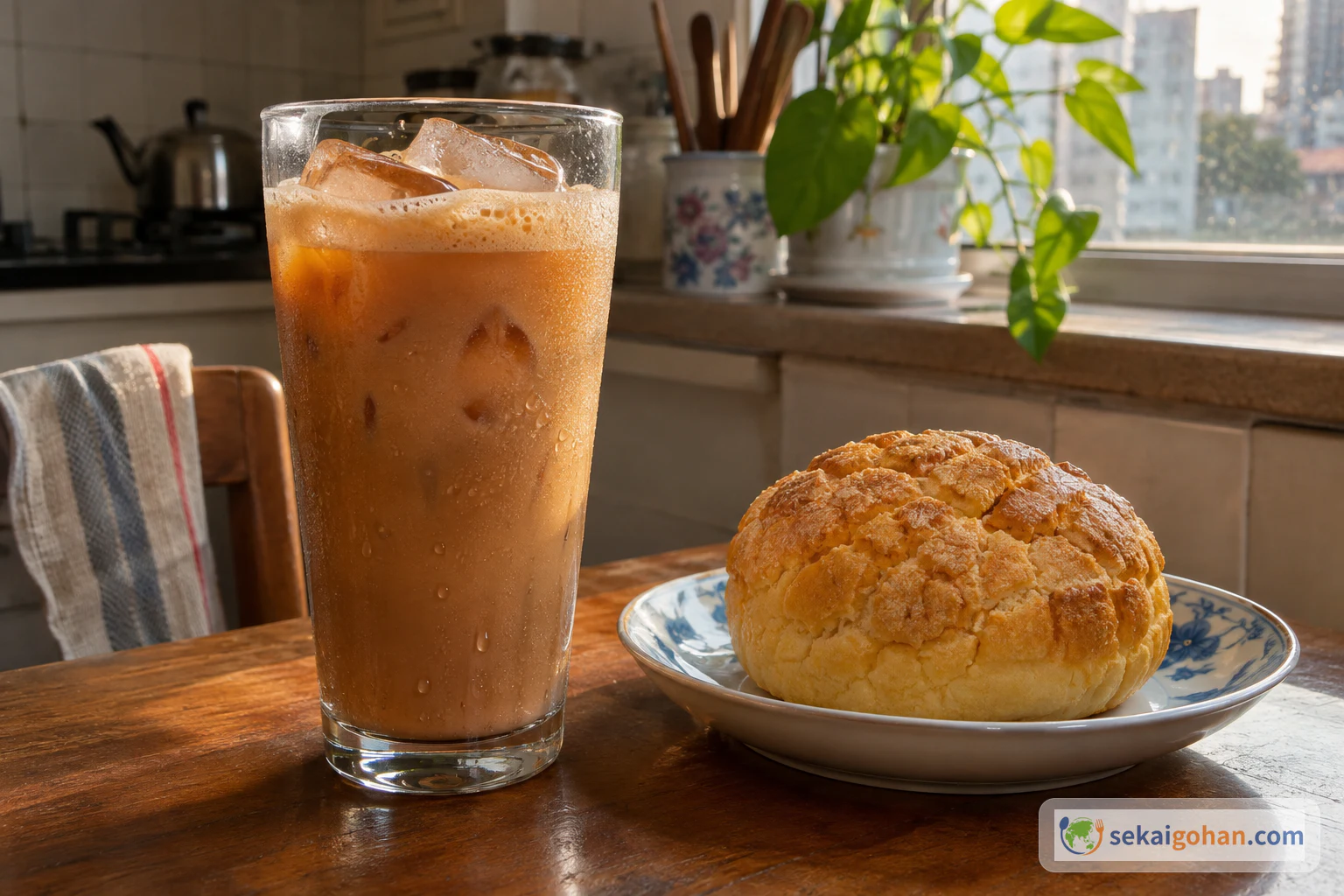
Yuenyeung belongs to the morning or the afternoon break, next to something from the bakery case. The bitterness of the coffee cuts through sweet, buttery buns, and the cup is strong enough to carry a light meal.
Variations
- Iced. In a larger jug, stir the condensed milk into the strained tea, then let the tea and the coffee cool. Fill a glass with ice and pour in the tea first, then the coffee. Brew the tea a little stronger so the melting ice does not wash it out.
- Closer to 3:7. The usual rule of thumb is three parts coffee to seven parts milk tea, and the amounts above lean further toward the tea. For a cup nearer that rule, simmer the tea in a scant 1½ cups (350 ml) of water and brew the coffee with ⅔ cup (150 ml). The coffee's bitterness comes forward.
- Half and half. Use equal parts milk tea and coffee for a cup where the coffee leads and the creaminess steps back.
- Without condensed milk. Simmer whole milk and sugar with the tea, each to taste, until the tea thickens slightly. It comes close to the body that condensed milk gives.
Storing and reheating
Cool any leftover, cover it and refrigerate it promptly. Because it holds milk, drink it the same day, or the next day at the latest. Stir before drinking, and reheat in a pan or the microwave, stopping before it boils so the milk does not split.
Yuenyeung carries the caffeine of both tea and coffee. In Hong Kong eateries a cup of milk tea averages about 170 mg of caffeine, up to 220 mg, and a cup of ordinary coffee can reach 380 mg; how much tea goes in and how it is brewed shifts the figure a lot. These are survey figures for eatery drinks, not a measurement of this recipe. Children 12 and under should keep to 2.5–5 mg per kg of body weight a day, about 95–190 mg for a 38 kg (84 lb) child. Pregnant or breastfeeding readers and anyone sensitive to caffeine should take care with this drink.
Frequently asked questions
Can I use instant coffee?
You can, but the roasted, toasty edge changes. Ground medium-dark coffee or espresso gives the bitterness that holds its own against simmered tea and condensed milk. Instant tends to taste flatter in the finished cup.
Is this the same as the yuanyang milk tea sold in Taiwan?
No. The Taiwanese café version is a quicker drink of tea-bag tea, fresh milk, a shot of espresso and sugar. The Hong Kong cup is built on simmered loose-leaf tea and evaporated or condensed milk, which gives a heavier, rounder body.
How do I order it in Hong Kong?
Ask for it by name, even if it is not printed on the menu. Say whether you want it hot or iced; cha chaan teng serve it both ways.
Can I make the tea ahead for a group?
Simmer and strain the tea, then keep it covered and hot without boiling while you brew the coffee. Build each cup in order at the last minute, condensed milk first, so every glass gets its own stir.