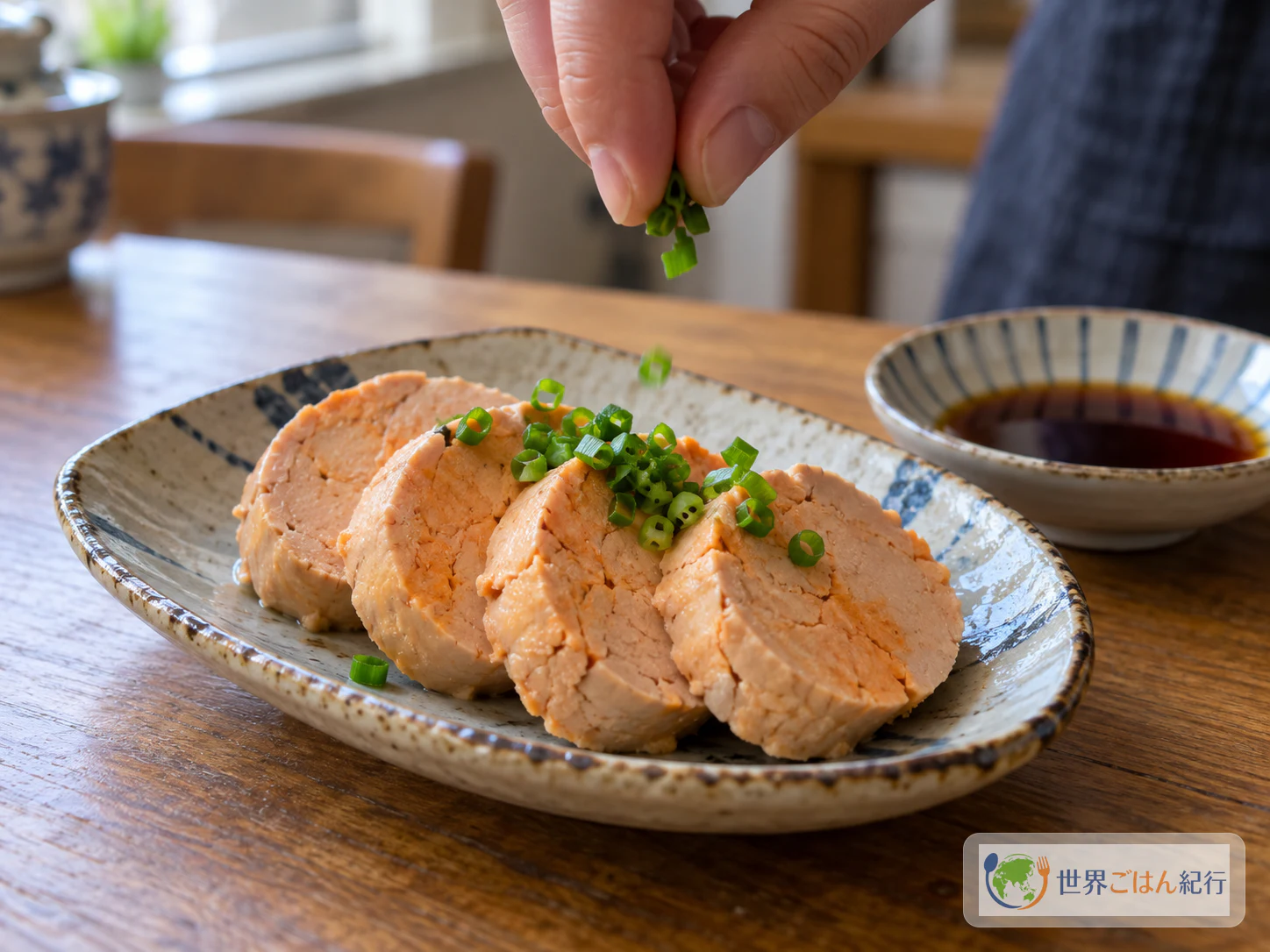
Ankimo: A Few Rich Slices for a Winter Table
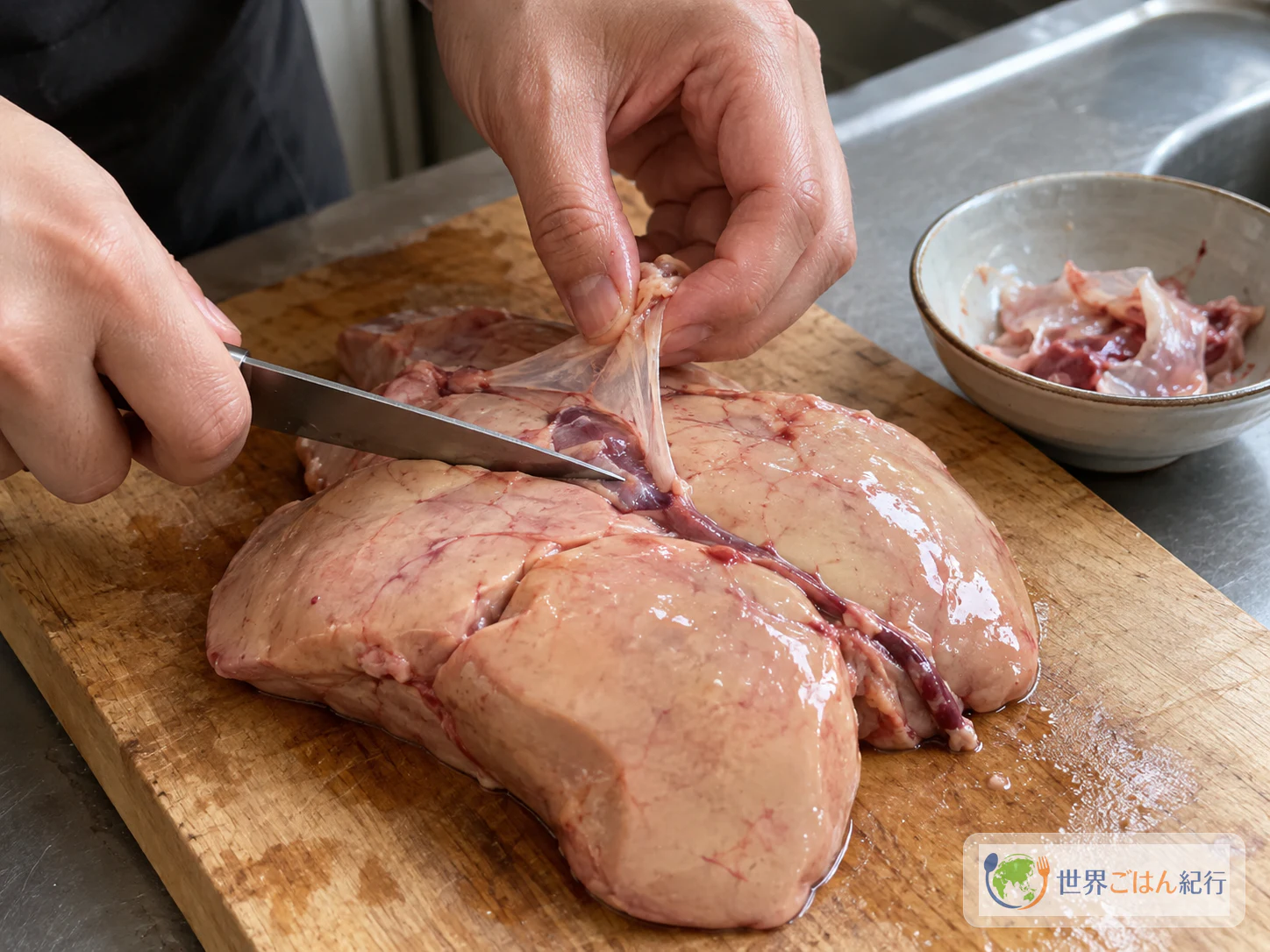
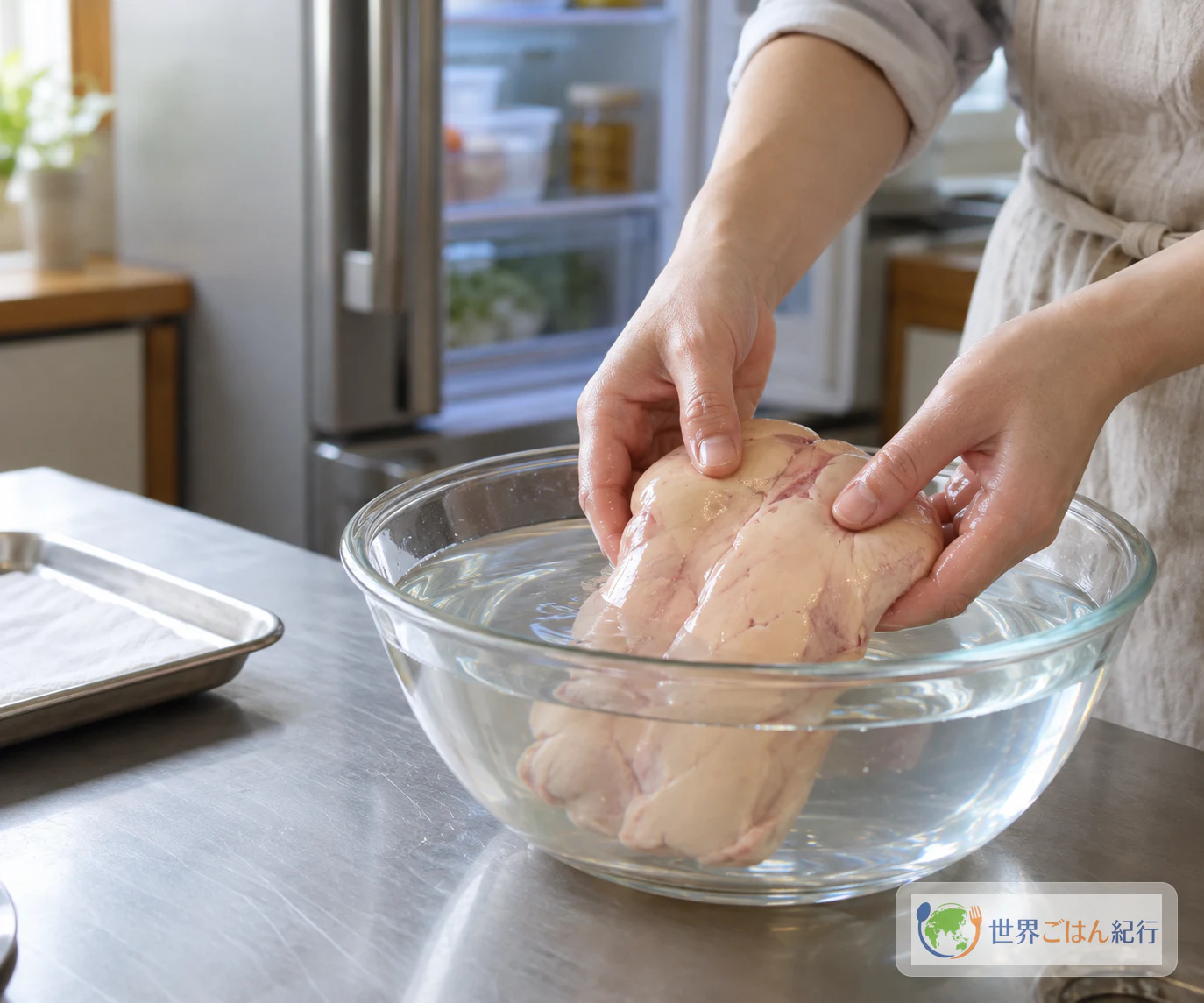
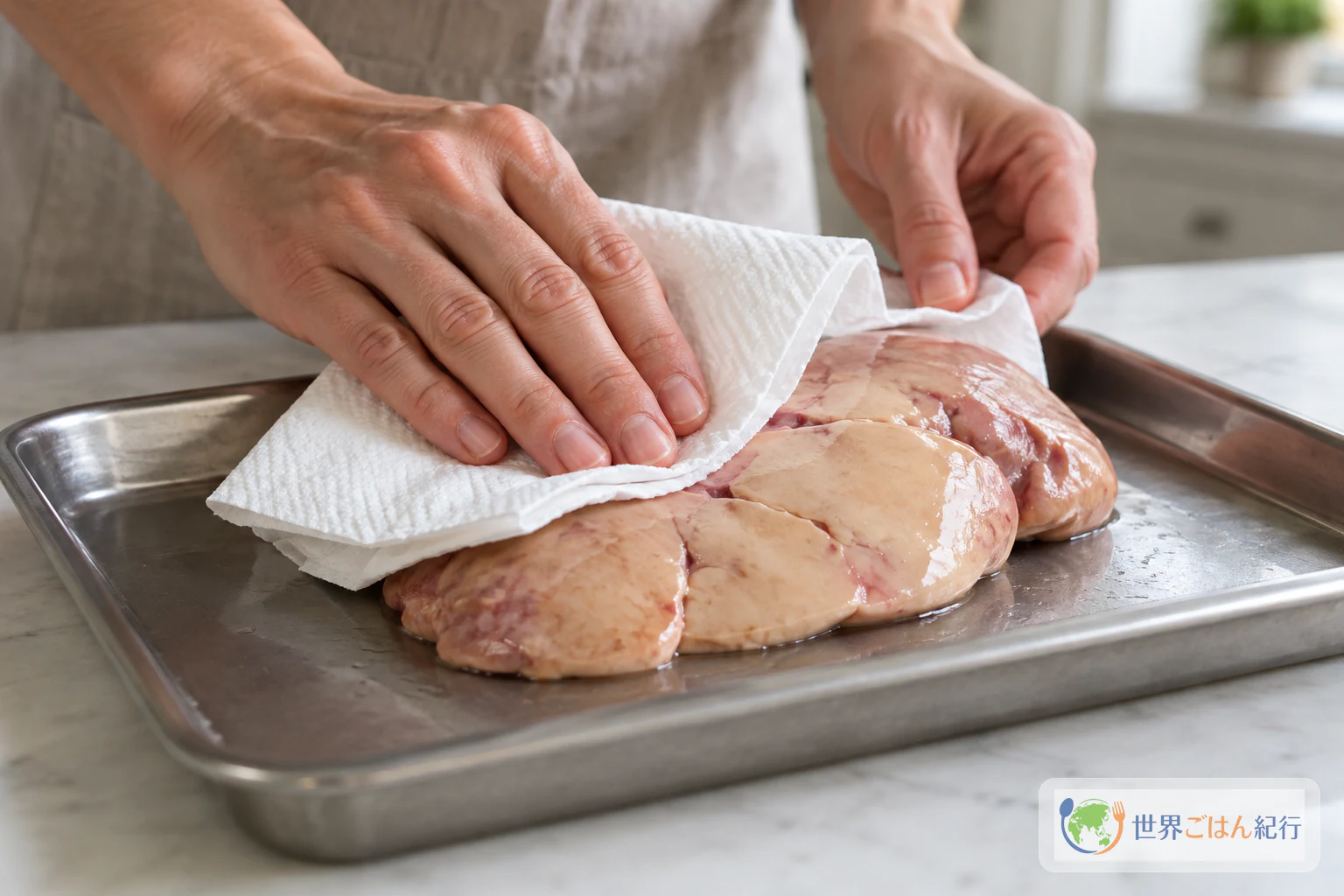
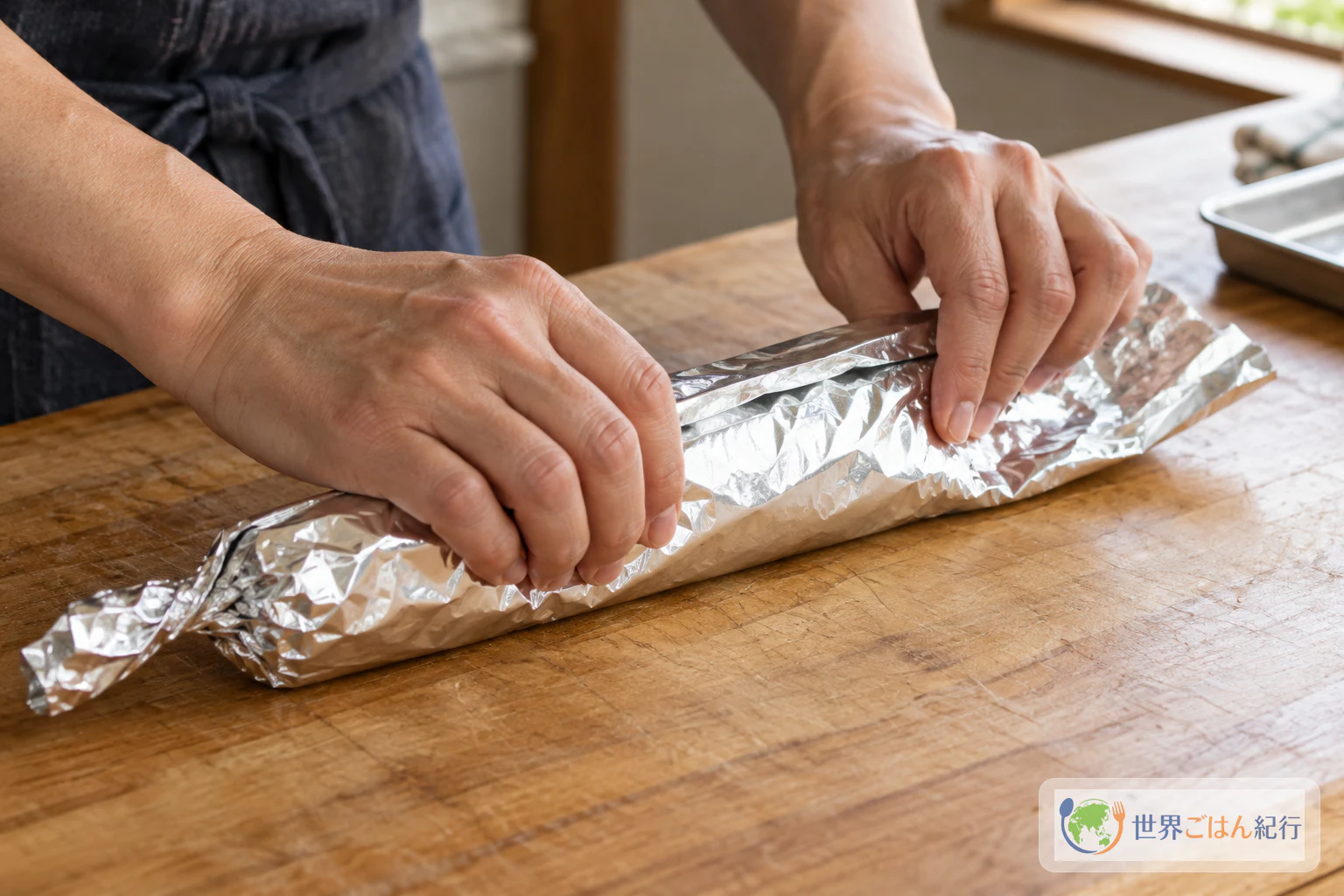
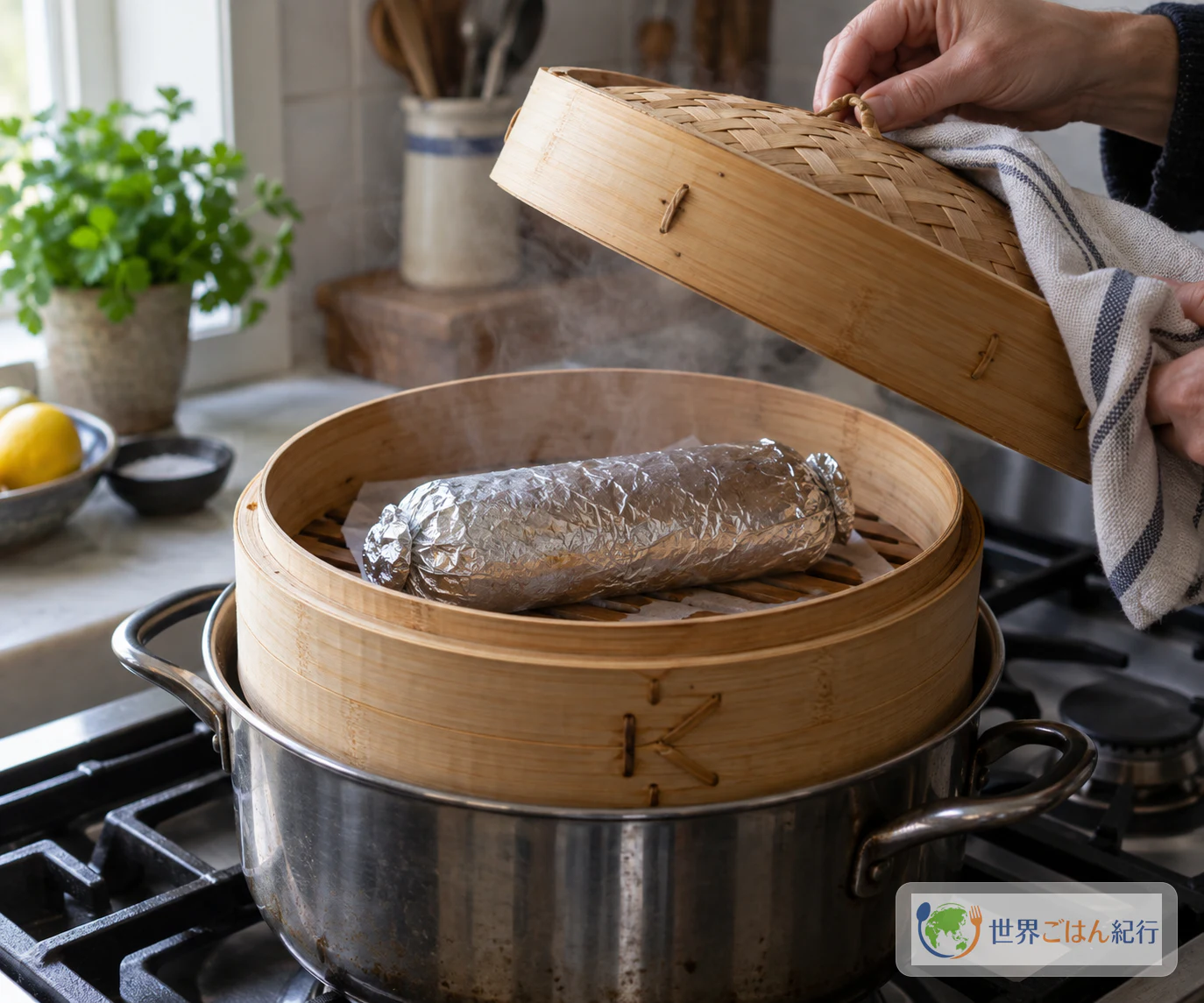
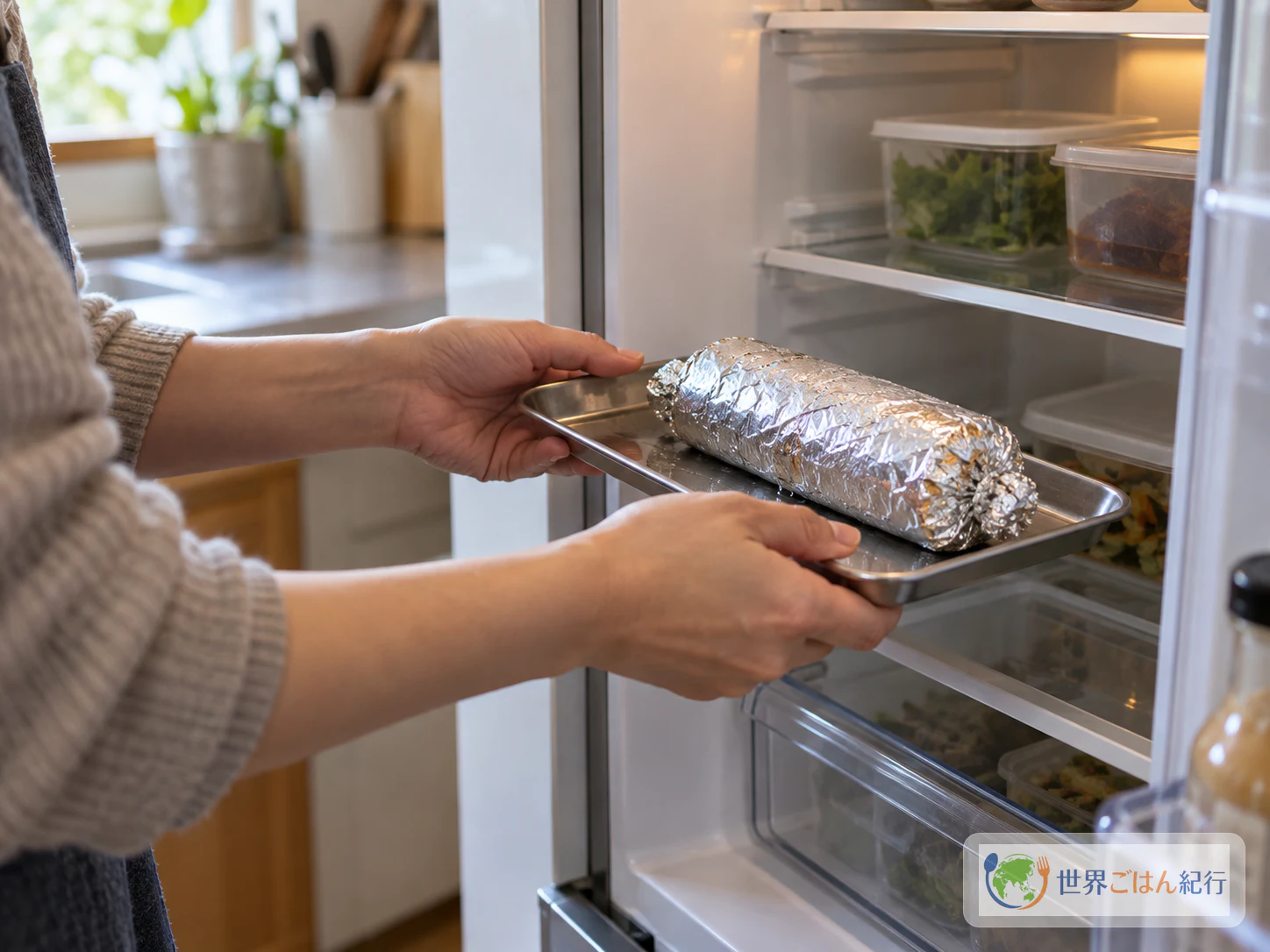
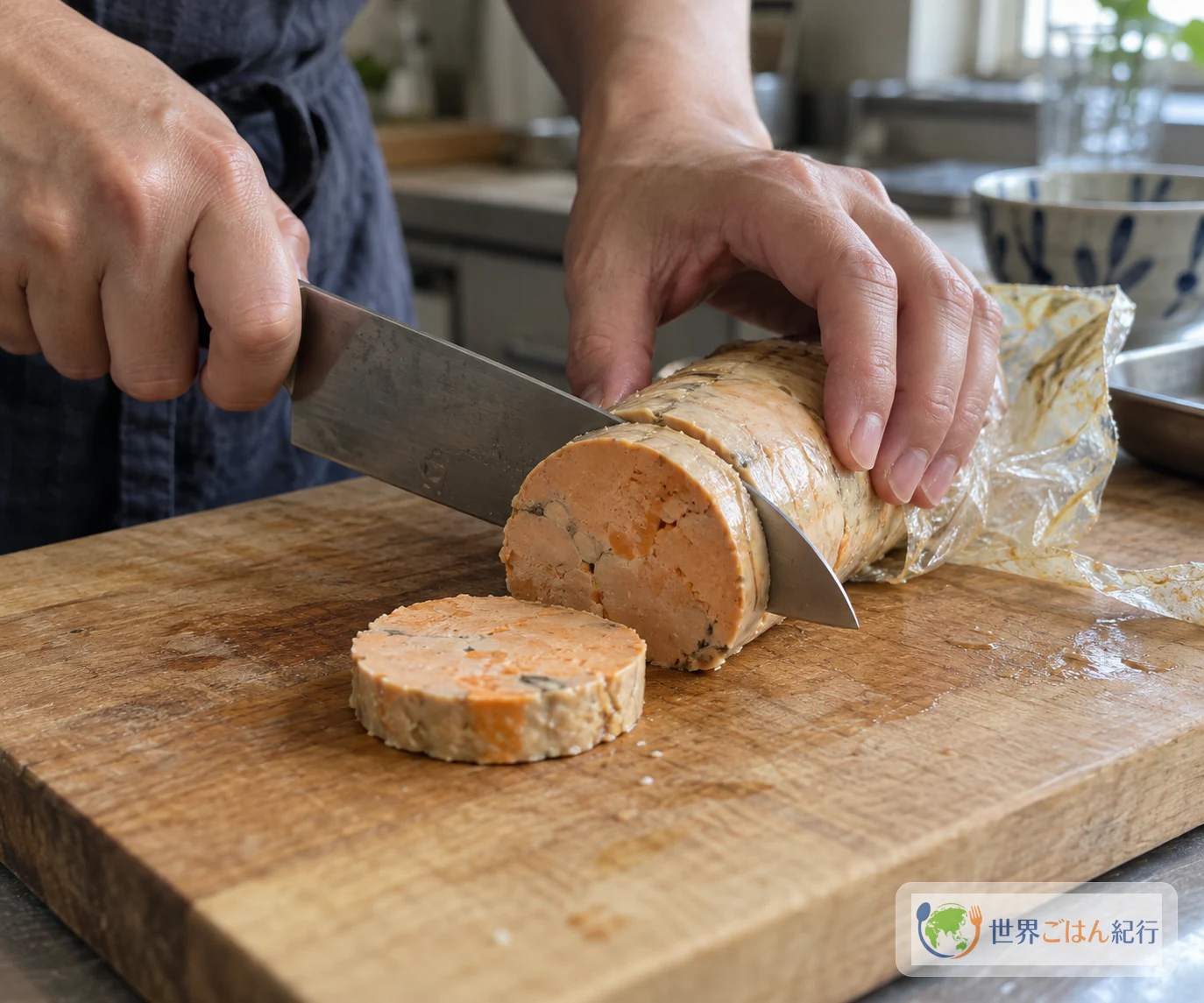
Remove the visible blood vessels and membrane, soak the liver cold, wipe it dry, steam it in a firm foil log until it is thoroughly cooked, then chill it well before slicing. Ponzu on the side is all it needs.
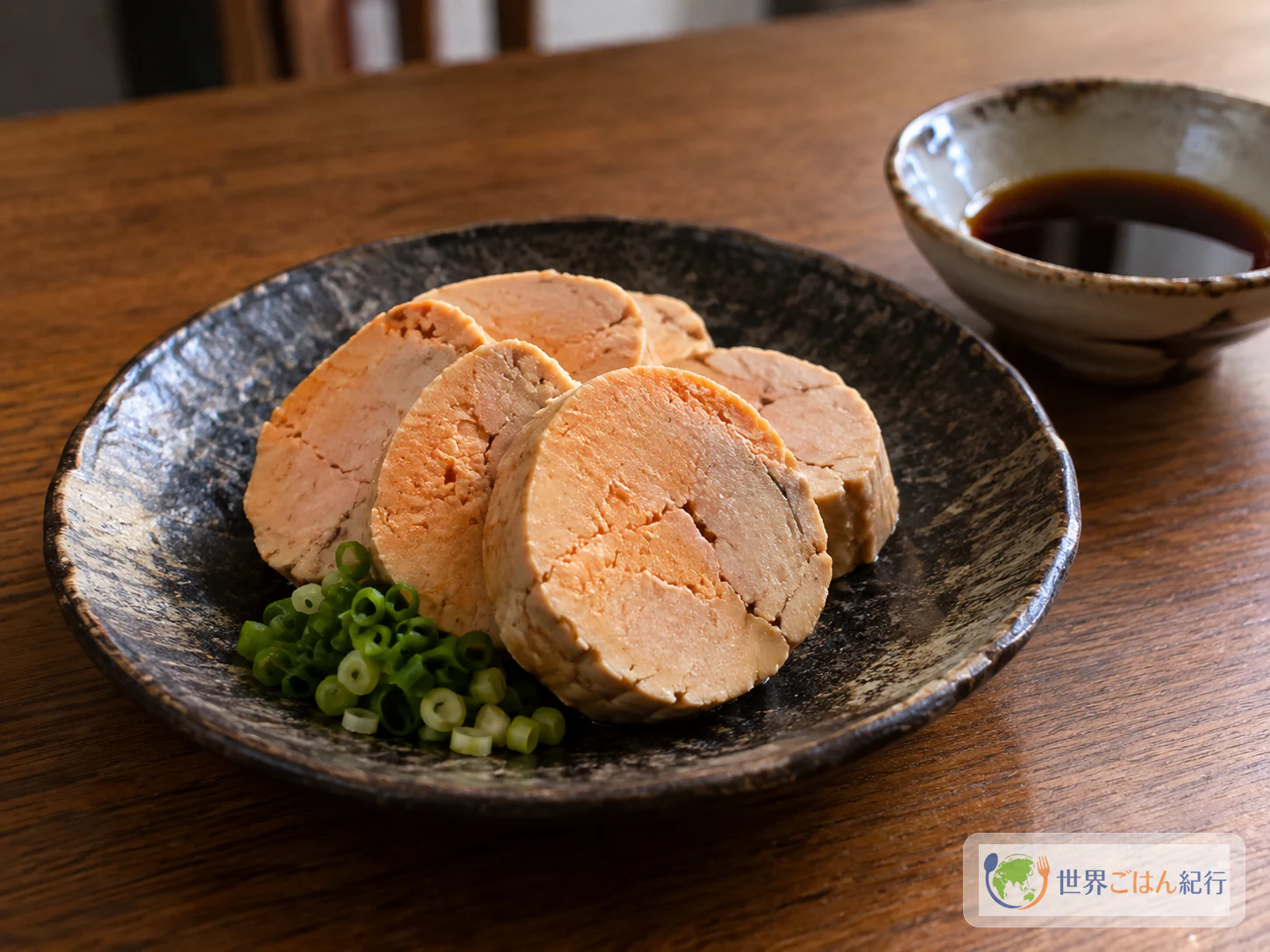
On a winter table in Japan, ankimo arrives as a few small, pale slices beside a dish of ponzu. The tart citrus soy cuts through the dense, rich liver, and the slices are eaten slowly, one at a time. Making it at home comes down to two things: careful preparation of the raw liver, and heating it all the way through before it is chilled and sliced.
Ankimo (あん肝) is monkfish liver that has been cleaned, steamed, chilled and cut. It is a dish of its own. It is not the same as anko nabe, the monkfish hotpot in which several parts of the fish are simmered with vegetables, or dobu-jiru, a rich hotpot into which the liver is dissolved.
This recipe follows a published home recipe for steaming ankimo in a steamer, listed as serving 2. It has not been kitchen-tested for this article, so the finished weight after steaming and the number of slices you will get are not confirmed. For more dishes from the same country, see Japanese recipes.
Ingredients (2 servings)
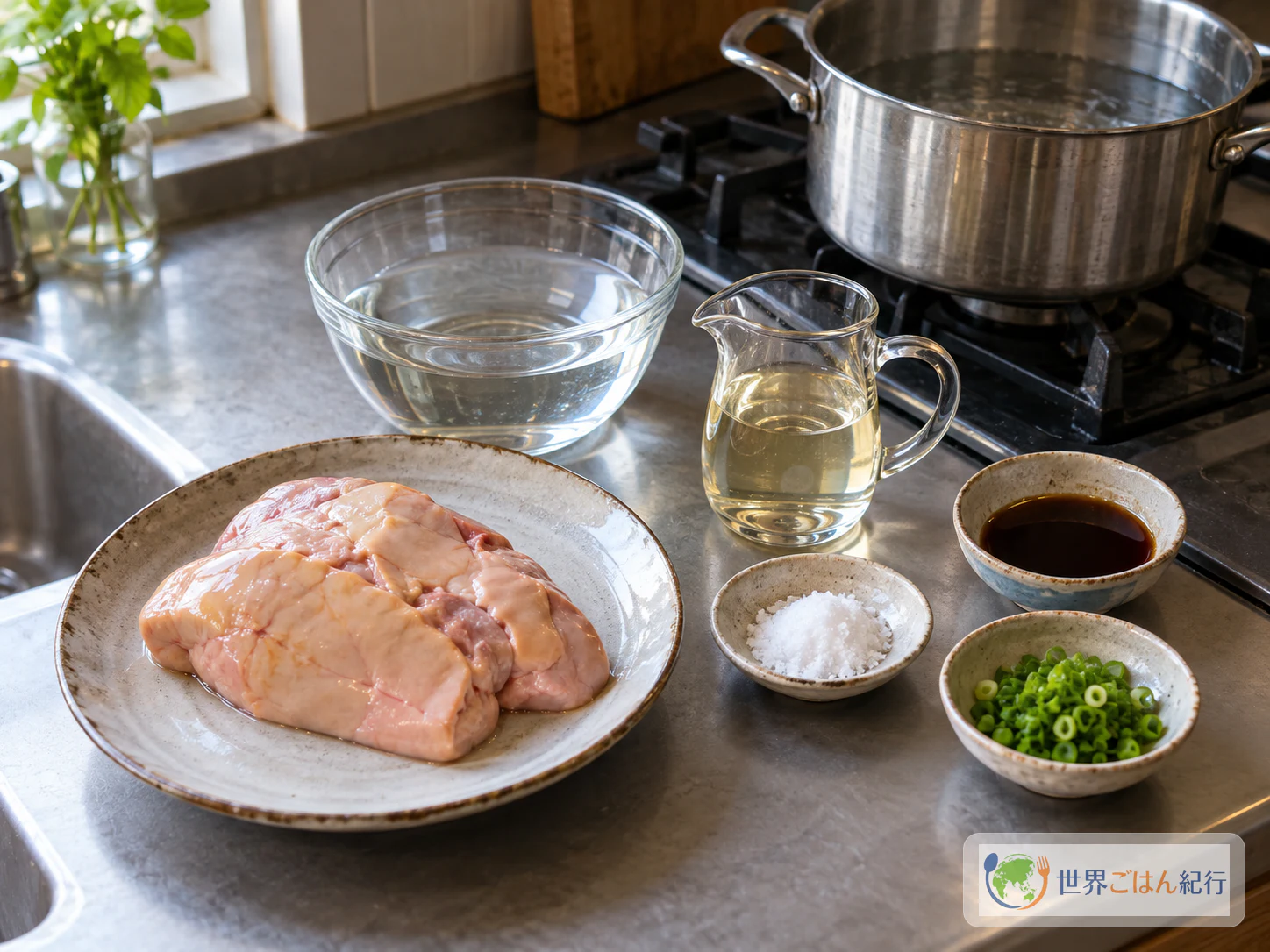
The amounts below are kept exactly as the source recipe gives them. The water and cooking sake form a soaking liquid for the liver; the liver is not meant to absorb all of it. Ponzu and scallion are not part of the base recipe; they are the optional serving choices used in this version.
Ankimo is made from the liver of monkfish, a fish. If you have a fish allergy, take that into account. Ask the shop where you buy the liver about any cross-contact.
Equipment
- Steamer
- Cutting board and small knife
- Two bowls (one for washing, one for the soaking liquid)
- Kitchen paper
- Aluminum foil
- Bamboo skewer
- A small tray for cooling
- A clean food thermometer for checking the center
Choosing the Liver and the Sake
There is no substitute for the monkfish liver. Another kind of liver would make a different dish, so if you want to make this recipe, you need monkfish liver. Look for it at a fishmonger, and check that it is sold for cooking. Availability depends on the season and the shop.
Cooking sake is the base here. The source recipe notes that sake (nihonshu) or white wine can stand in for cooking sake, but the flavor changes. White wine in particular moves the dish away from its Japanese character. If you want the result described in this recipe, use cooking sake.
Method: Clean, Soak Cold, Steam, Chill
Do not taste the raw liver. Salt, sake, vinegar and ponzu season the liver and help with its smell, but they are not a substitute for heating. Thorough cooking is what deals with parasites (see "Eating Ankimo Safely" below).
Eating Ankimo Safely
Do not eat the liver raw, and do not taste it before it is cooked. Salt, sake, vinegar or ponzu alone do not make it safe.
Japan's Ministry of Agriculture, Forestry and Fisheries notes that spirurid nematode larvae can be found in the internal organs of marine fish, including monkfish, and that they are inactivated by thorough heating. The Ministry of Health, Labour and Welfare advises not eating the internal organs of fish raw, checking fish visually, and, as a measure against Anisakis specifically, heating to 70°C or higher, or to 60°C for 1 minute. It also states that vinegar, salt, soy sauce or wasabi alone do not kill Anisakis. Those heating conditions are for Anisakis; they are not a general standard for every pathogen.
The salt and sake soak in this recipe is there for seasoning and to reduce the liver's smell. It is not a parasite treatment. The 20–30 minute steaming time is the recipe's guide, while safety comes from heating the liver thoroughly to the center, and the general home guideline of 75°C at the center for at least 1 minute is a separate, general figure.
When Things Go Wrong
| Problem | Likely cause | What to do |
|---|---|---|
| The liver is hard to roll or falls apart | Too much moisture on the surface, or the liver was broken up during trimming | Wipe it dry with kitchen paper, keep the lobes whole, and let the foil support the shape |
| Not sure it is cooked through | Thick log, weaker steamer or heat | Steam longer and check again. The listed time is not a safety guarantee, especially if you made the log thicker |
| Slices crumble when you cut | The liver was not chilled enough | Return it to the refrigerator until firm. The source recipe chills it for about 1 hour |
| A strong smell remains | Blood vessels or membrane left on, or the soak was skipped | Next time, remove the visible vessels and membrane, wash the liver, and soak it cold for about 30 minutes |
Ways to Serve It
The basic way to eat ankimo is sliced 1 cm thick with ponzu. Everything else is optional and separate from the base recipe:
- Ponzu and momiji-oroshi: a common pairing of tartness and gentle heat from grated daikon with chili.
- Ponzu and scallion: the version shown in this article; scallion adds a fresh aroma.
- On a shiso leaf: laying the slices on shiso (大葉) adds fragrance and color to the plate.
- With wakame: a little seaweed alongside, as an optional addition not found in the source recipe.
Ibaraki's Winter Monkfish and Its Many Forms
In Ibaraki Prefecture, monkfish dishes are presented as a taste of winter. The prefecture's tourism association introduces monkfish landed off the Joban coast as a winter specialty and describes several ways it is eaten side by side: hotpot, dobu-jiru, ankimo and tomozu. The tourism pages of Mito City introduce Ibaraki's monkfish hotpot, give the season as November to March, and note that the liver grows large in winter.
These dishes use the same fish in very different ways. Ankimo is the liver on its own, steamed and sliced. Monkfish hotpot simmers several parts, such as the flesh and the liver, with vegetables. Dobu-jiru is introduced as a rich hotpot with the liver dissolved into it, and the Ibaraki tourism association describes it as a local dish originally eaten by fishermen aboard their boats. How it is made varies from restaurant to restaurant, so no single method should be taken as the only way.
Leftovers
Divide any leftovers into clean, shallow containers so they cool quickly. Do not leave them standing at room temperature for a long time; refrigerate them promptly and keep them refrigerated. No storage period is given here, so finish them soon rather than making ankimo to keep.
Frequently Asked Questions
How do I reduce the fishy smell?
Remove the visible blood vessels and membrane, wash the liver with water, then soak it in the refrigerator for about 30 minutes in water and cooking sake with the salt dissolved in.
How long should I steam it?
The source recipe gives 20–30 minutes over medium heat once the steamer is steaming. The size of the liver and your steamer change how it cooks, so that time alone does not guarantee safety. Heat it thoroughly to the center.
If I soak it in salt and sake, can I eat it raw?
No. The soak is for seasoning and smell. Protection against parasites comes from heating.
How is ankimo different from dobu-jiru?
Ankimo is the liver steamed on its own and sliced. Dobu-jiru is a hotpot into which the liver is dissolved, with the fish and vegetables cooked in it.
How many days does it keep?
No number of days is given here, because the sources used do not confirm one. Refrigerate it after cooling and eat it soon. Don't make it intending to store it.
References
- Kurashiru, "あん肝の下ごしらえ 作り方・レシピ" (How to prepare ankimo). The base recipe: amounts for 2 servings, removing blood vessels and membrane, the 30-minute soak in water, cooking sake and salt, steaming over medium heat for 20–30 minutes, chilling, and slicing. https://www.kurashiru.com/recipes/84dd6fcd-84f1-43bb-b42f-a1bc3ed31a3c
- Ibaraki Prefecture Tourism and Local Products Association (Kanko Ibaraki), "食のプロフェッショナルも評価する『茨城あんこう料理』を食べに茨城県に出かけよう!" Ibaraki's winter monkfish dishes, monkfish from off the Joban coast, and the coexistence of dobu-jiru, hotpot, ankimo and tomozu. https://www.ibarakiguide.jp/gourmet/ibaraki_restaurant/anko.html
- Ministry of Agriculture, Forestry and Fisheries, "3.微生物" (Microorganisms). Spirurid nematode larvae in the internal organs of marine fish including monkfish, and their inactivation by thorough heating. https://www.maff.go.jp/j/syouan/tikusui/gyokai/busitu/biseibutu/index.html
- Ministry of Health, Labour and Welfare, "アニサキスによる食中毒を予防しましょう" (Preventing Anisakis food poisoning). Not eating fish organs raw, visual checks, heating conditions against Anisakis, and that vinegar, salt, soy sauce or wasabi alone do not kill it. https://www.mhlw.go.jp/stf/seisakunitsuite/bunya/0000042953.html
- Mito City, "『あんこう』を水戸で味わってみませんか?" Ibaraki's monkfish hotpot, the November–March season, and the liver growing large in winter. https://www.city.mito.lg.jp/page/113259.html
- Ministry of Health, Labour and Welfare, "家庭での食中毒予防" (Preventing food poisoning at home). The general heating guideline of 75°C at the center for at least 1 minute, and dividing leftovers into clean shallow containers to cool quickly and refrigerating them. https://www.mhlw.go.jp/stf/seisakunitsuite/bunya/kenkou_iryou/shokuhin/syokuchu/01_00008.html