Chawanmushi: A Small Bowl Where You Taste the Dashi
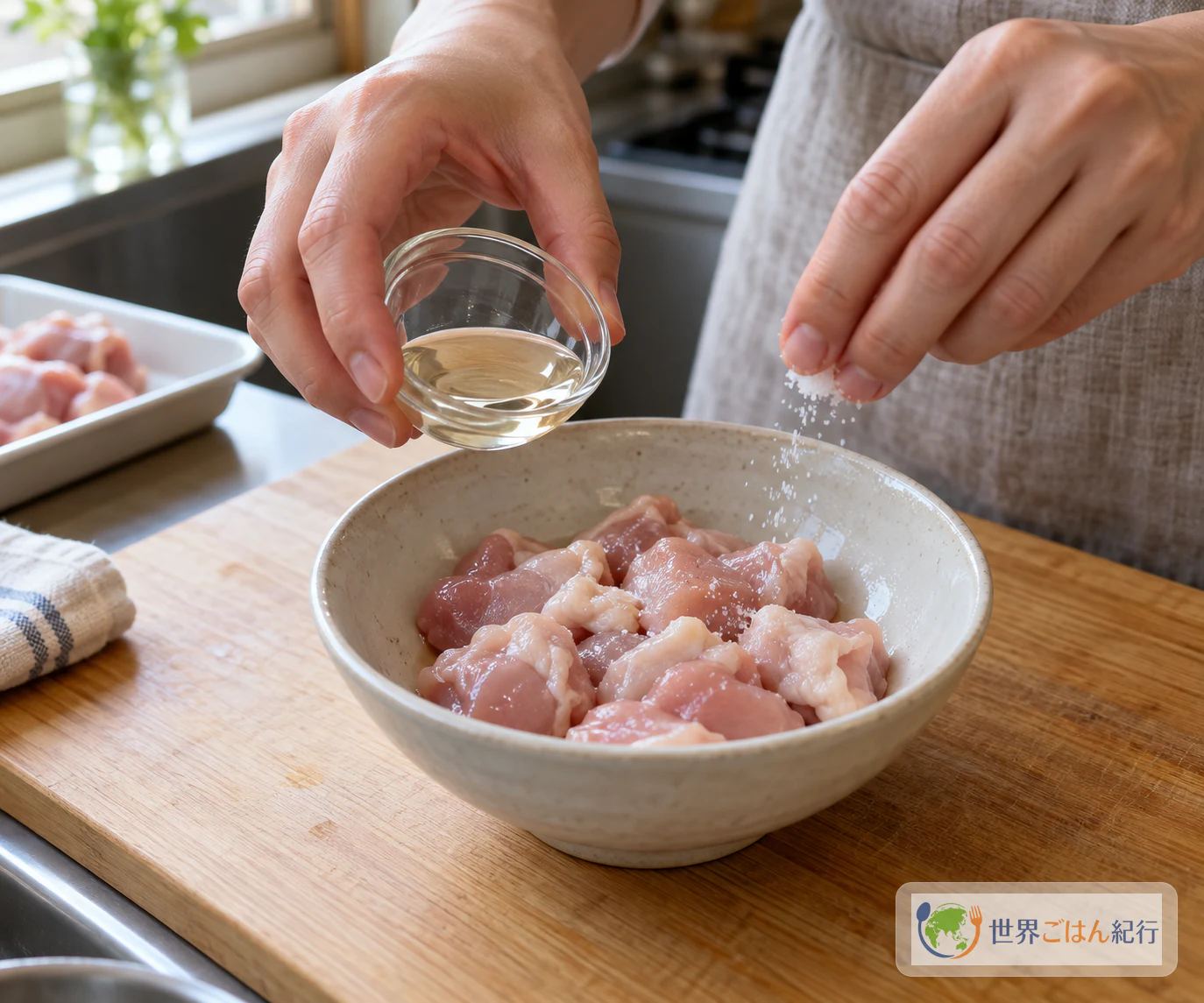
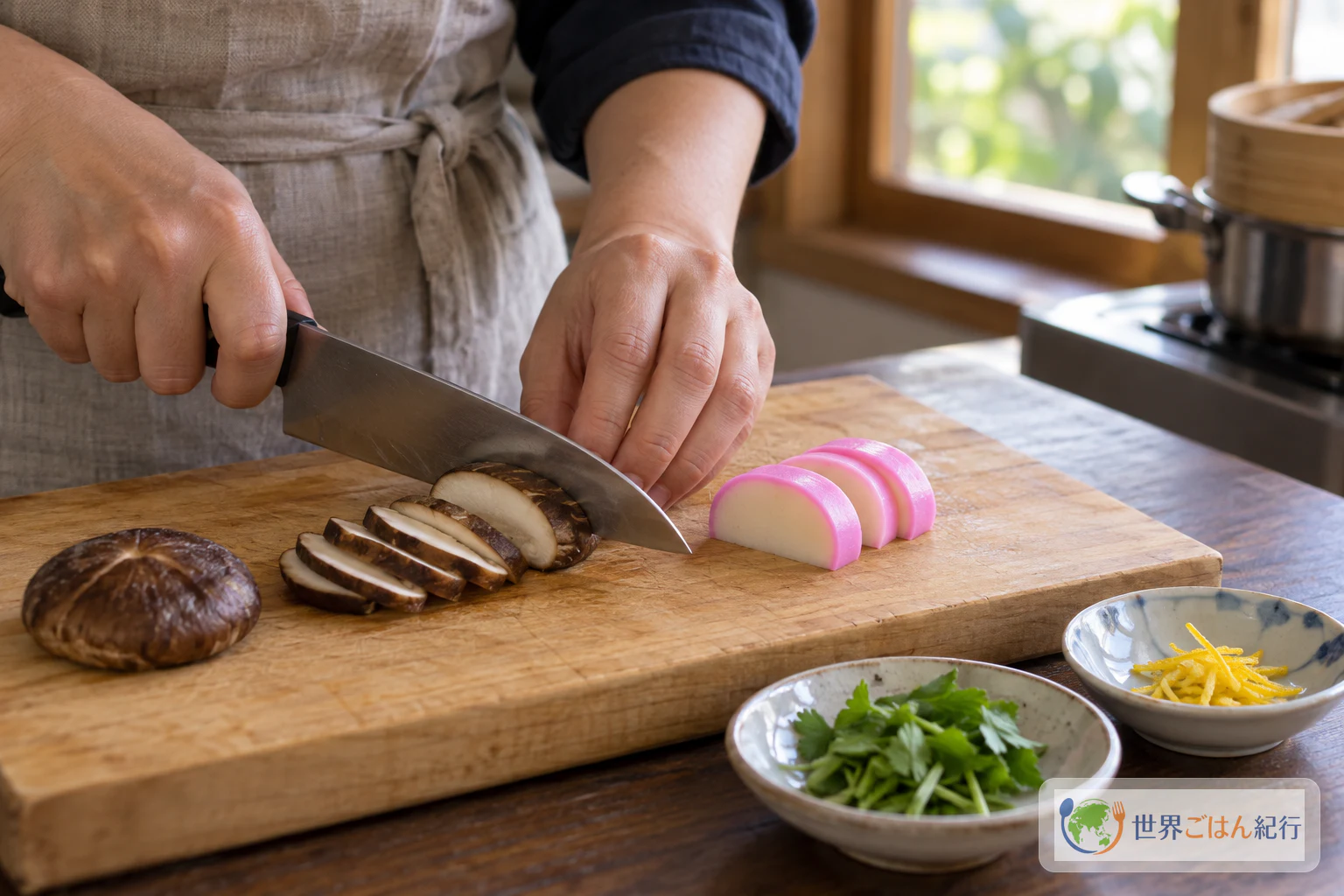
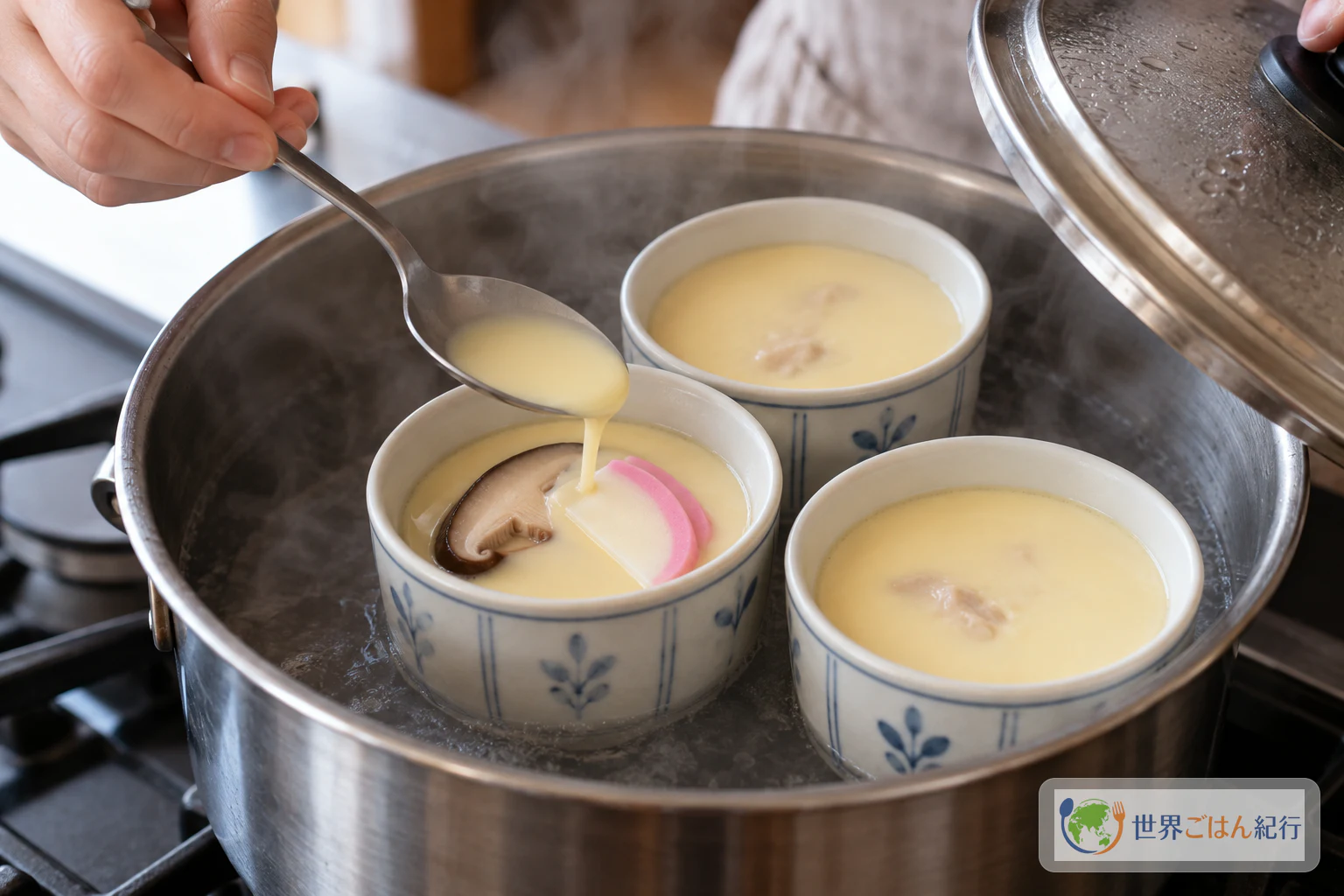
Gently mixed egg and dashi, steamed until the custard is soft and smooth. Chicken sits inside the custard, and shiitake and kamaboko go on top partway through steaming. Mitsuba and yuzu peel go on at the very end.
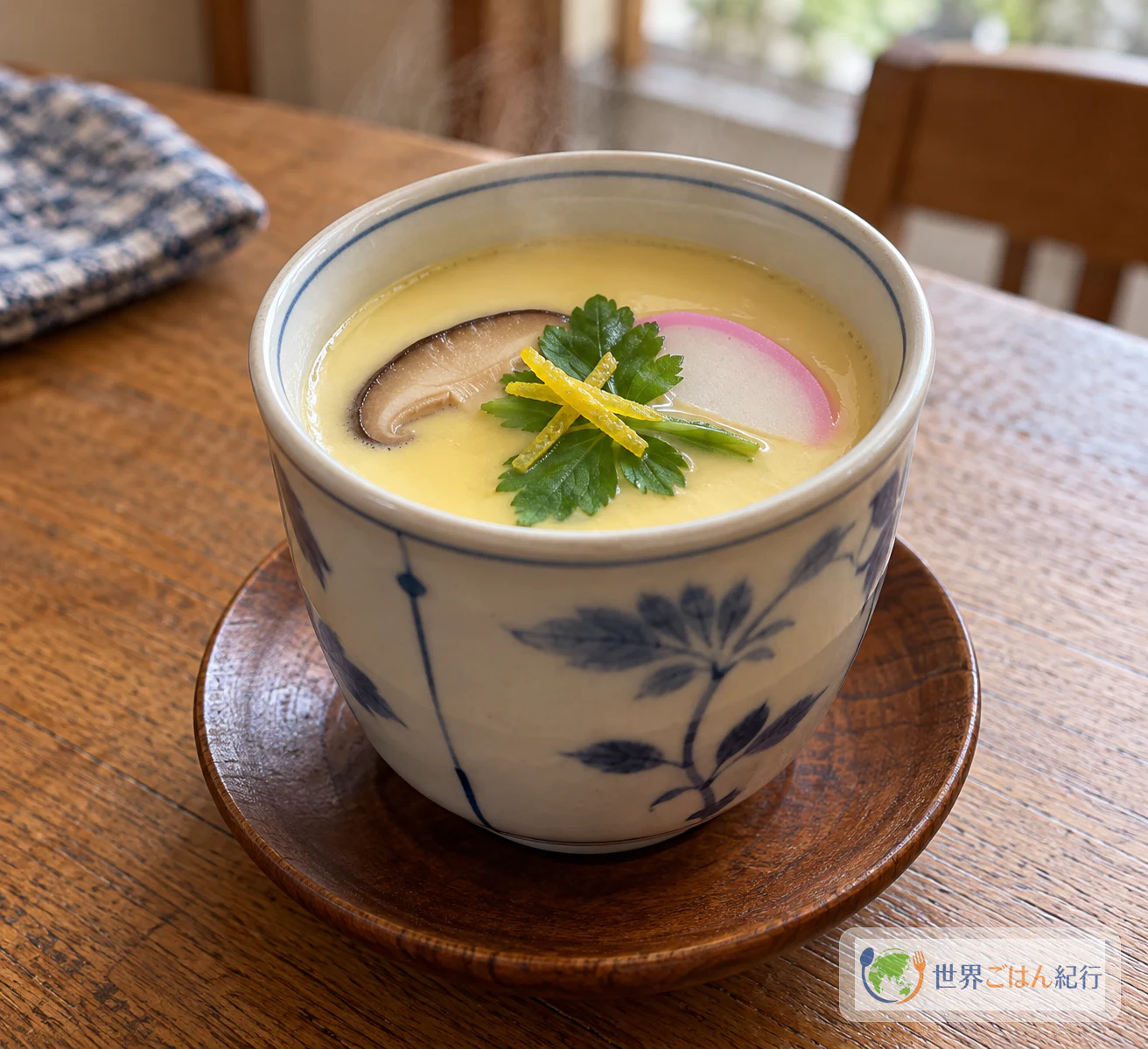
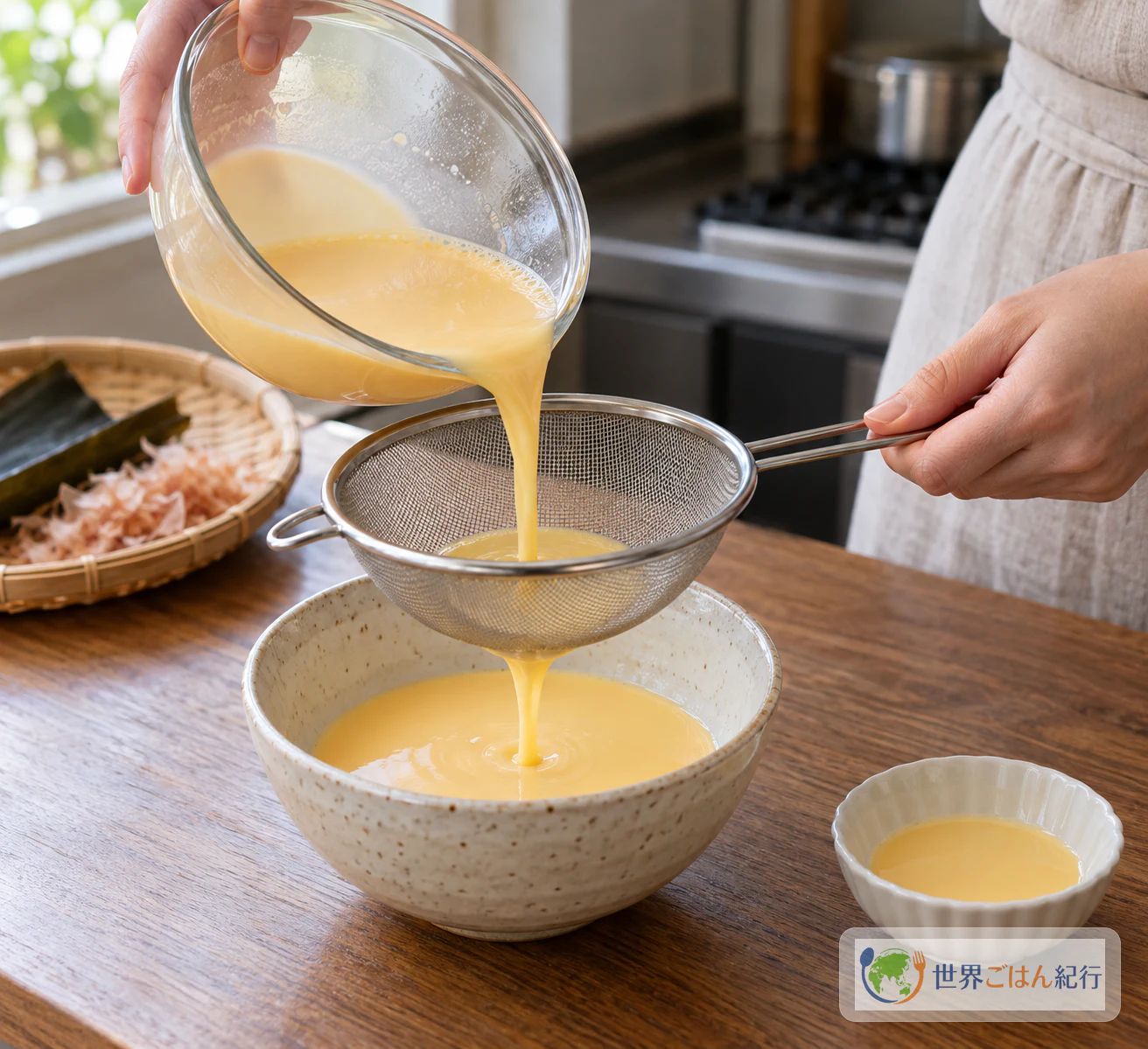
A small heatproof bowl comes out of the pot. Its surface is pale and smooth. The chicken is hidden in the custard below. Slices of shiitake and kamaboko rest near the top, with a little mitsuba and a few fine strands of yuzu peel. Chawanmushi (茶碗蒸し) is a Japanese savory custard. It is made by steaming egg mixed with dashi, the stock made here from kombu and shaved bonito. Kikkoman Home Cooking presents it as a soup course, and that is a useful way to think about it. The egg holds the dashi, and what you are really tasting is the stock.
The name puts together chawan, a small bowl, and mushi, steaming. Fillings and proportions differ from recipe to recipe. This article follows one complete home recipe: Kikkoman Home Cooking's chawanmushi, credited to cooking expert Makiko Oda (小田真規子). Its fillings are chicken thigh, fresh shiitake and kamaboko (Japanese fish cake), finished with mitsuba and, if you have it, yuzu peel. It contains no shrimp or ginkgo. It is steamed in an ordinary pot with a lid, not in a dedicated steamer.
Sekai Gohan has not kitchen-tested this recipe. The amounts, heat levels, times and visual cues below come from the published Kikkoman recipe, used as written.
Ingredients: 2 Eggs to 300 mL Dashi, Plus a Separate Dashi Batch
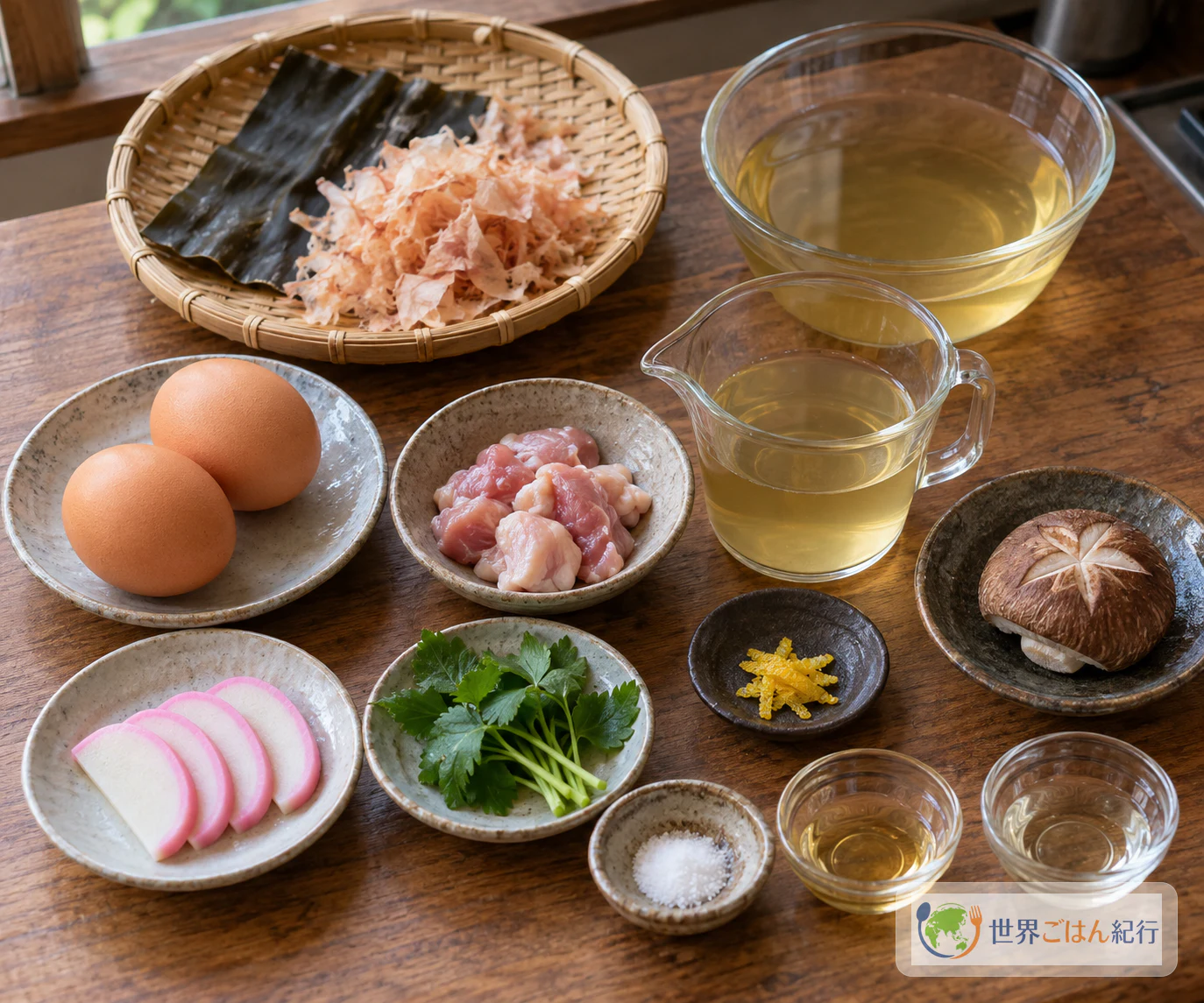
Kikkoman gives egg to dashi as 1:3 by volume. In its recipe that means 2 eggs (100 g total) and 1½ cups of dashi. In Kikkoman's measuring convention, 1 cup is 200 mL, 1 tablespoon is 15 mL and 1 teaspoon is 5 mL. So the custard takes 300 mL of dashi. An American cup is a different size, so measure the dashi in millilitres.
The dashi is made as a separate, larger batch. Only 300 mL of it goes into the custard. Do not pour the whole batch into the eggs.
The recipe does not state a number of servings, a bowl count or a bowl size. Divide the mixture among heatproof bowls that fit side by side in your pot.
Equipment
- A saucepan for making the dashi
- A strainer lined with paper towel, for straining the dashi
- A measuring cup (this recipe's cup is 200 mL)
- A bowl for mixing the custard and a fine sieve for straining it
- A small dish for the reserved custard
- Heatproof bowls that fit side by side in your pot (the source gives no number or size)
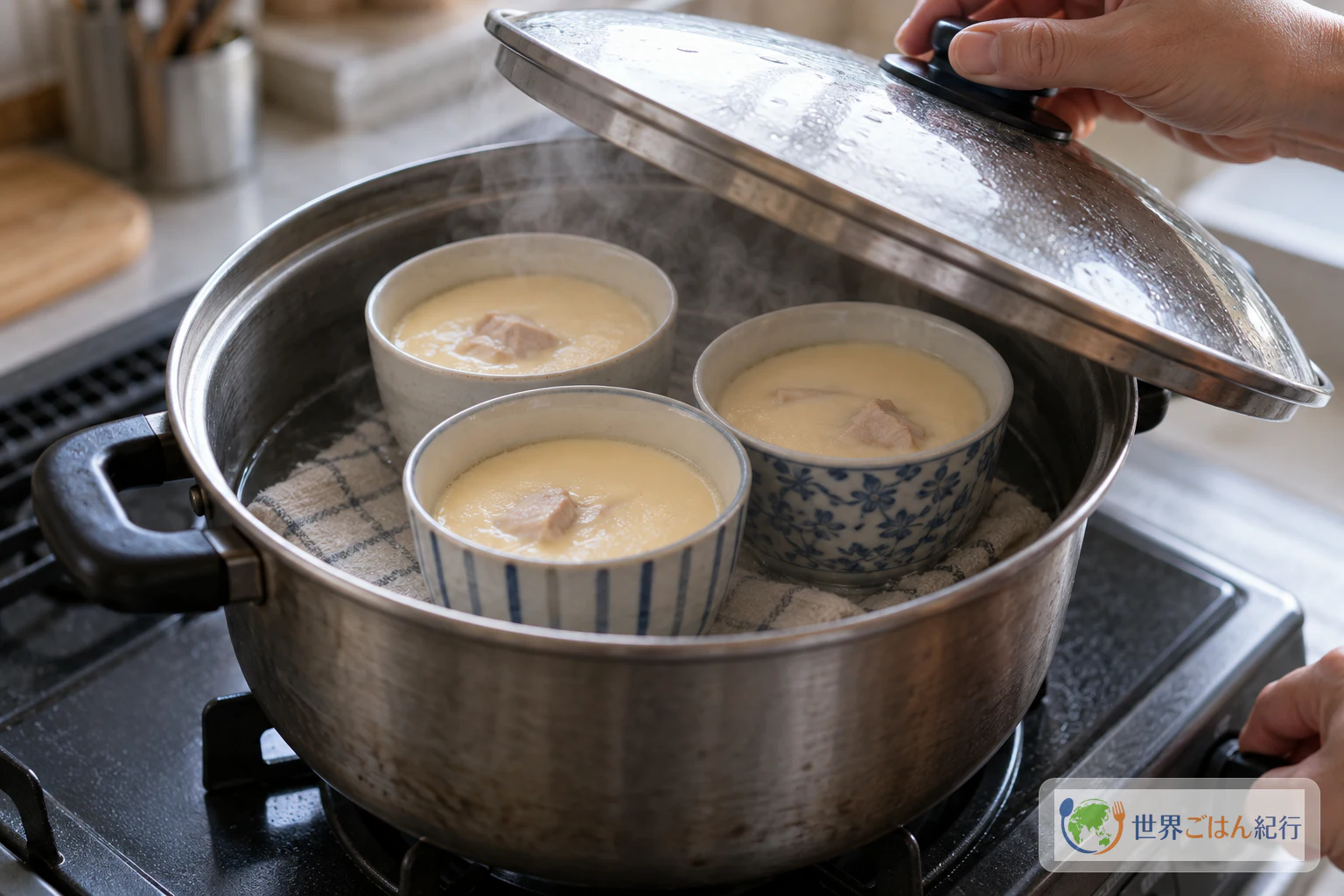
- A pot with a lid that holds the bowls; a clear lid lets you watch the custard without lifting it
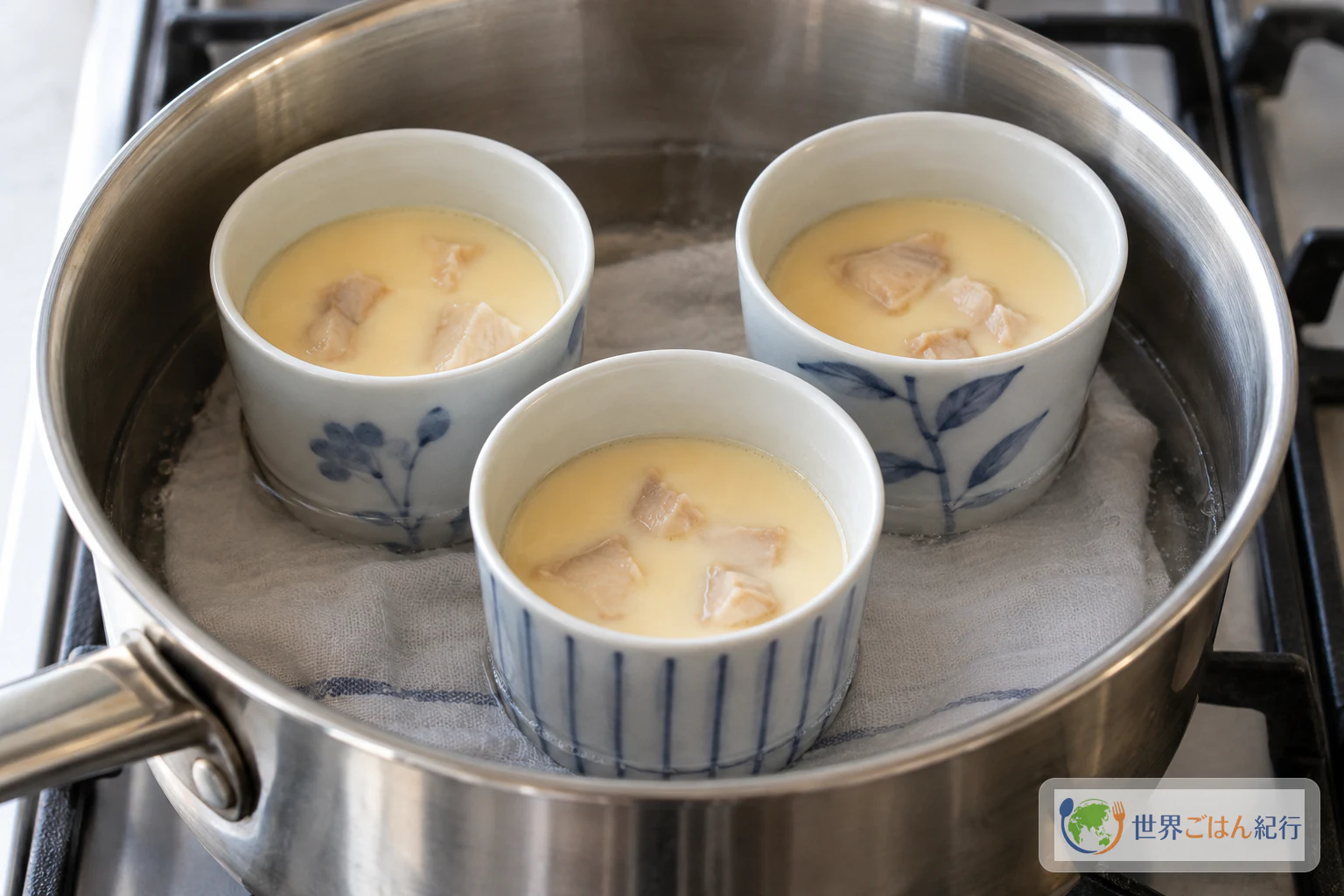
- A thin cloth to lay in the bottom of the pot
- Water for the pot: 3 cups (600 mL)
- Chopsticks, for shifting the lid ajar
Choosing and Preparing What You Need
Eggs. The recipe gives 2 eggs weighing 100 g together, with no size grade. Weigh them if you can, and keep the 100 g figure instead of guessing a size.
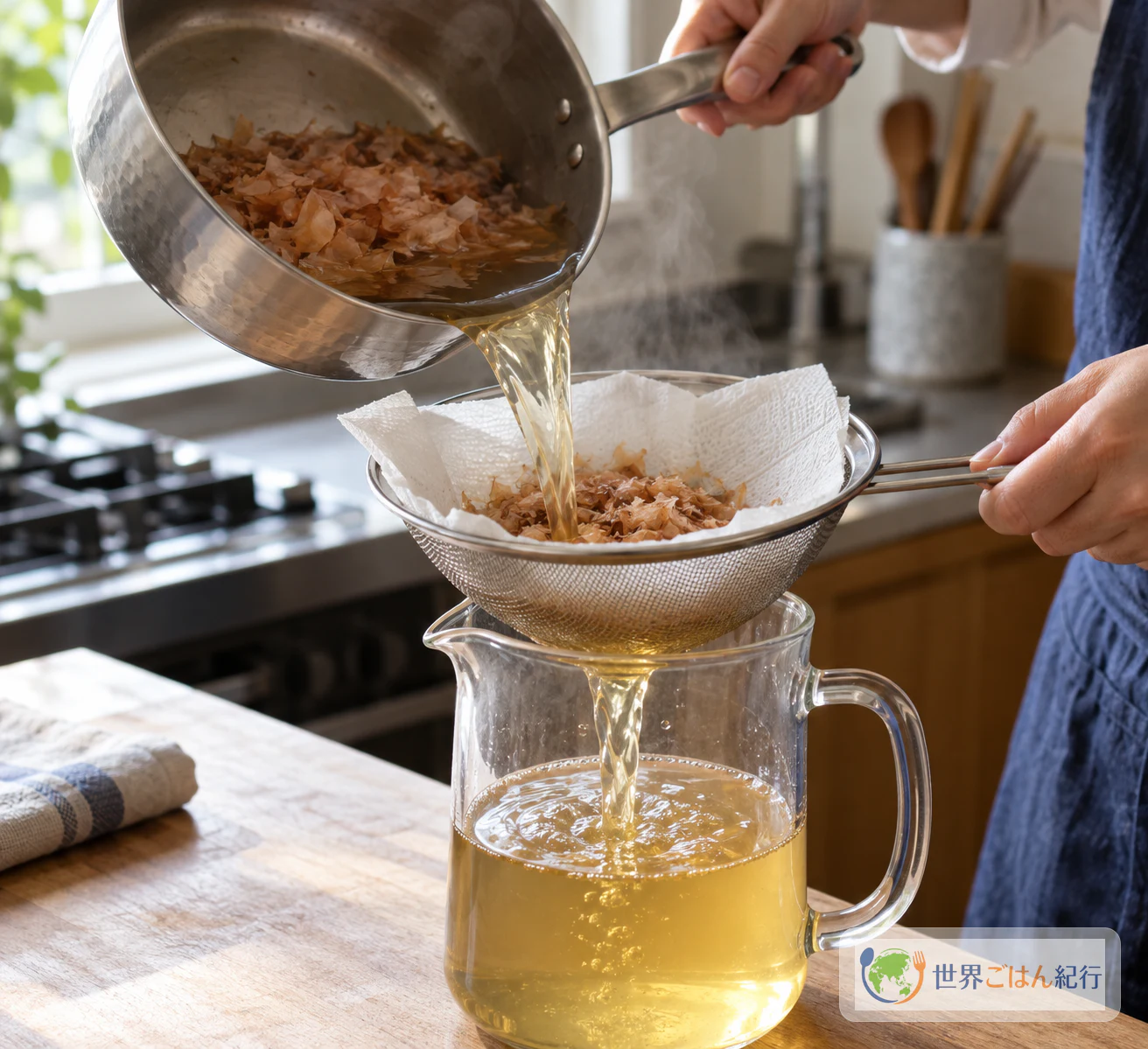
Dashi. This recipe makes its own kombu-and-bonito dashi. The batch makes more than the 300 mL you need. Use the rest for something else. The recipe does not cover store-bought stock or other bases, so none is suggested here.
Fillings. Chicken thigh, shiitake and kamaboko are the whole filling. Shrimp, ginkgo and other extras appear in other chawanmushi recipes, but not in this one. Adding them would change a formula that was designed without them.
Yuzu. The source lists yuzu peel as "if available" and gives no amount. If you have no yuzu, finish with mitsuba alone.
Method: One Pot, Staged Steaming
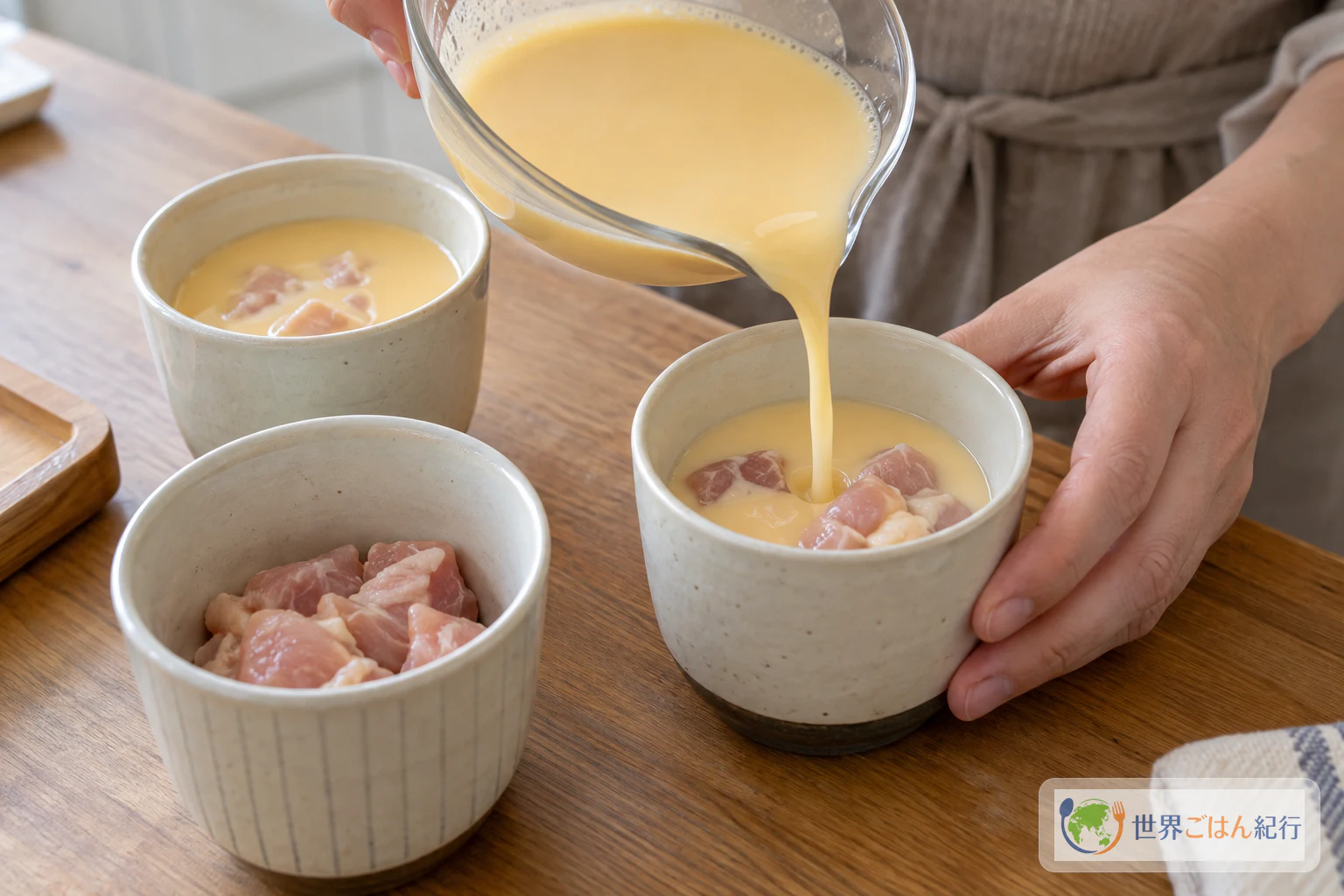
The bowls go in with only the chicken and custard. Shiitake and kamaboko are added after the first steaming, together with a little reserved custard. Then comes a short final steam. Mitsuba and yuzu go on last, after the bowls come out of the pot.
Reading the Custard: What Each Cue Tells You, and What It Doesn't
The recipe's cues are about the texture of the custard. They are tied to this method's heat levels, lid positions and times in this pot. The source discusses heat in more than one way, so this article does not give one temperature that guarantees a smooth result. Use the staged steps above as written.
| What you see or do | What the source uses it for | What it does not tell you |
|---|---|---|
| Custard mixed gently and strained | Keeping air out of the custard before steaming | It is not a guarantee of a perfect texture by itself |
| Surface turns pale after the covered steam | Sign that the custard is warming and starting to set | It does not show how hot the chicken is |
| Lid shifted ajar on low heat | Lets steam escape and prevents an overly strong boil | It is not a general temperature setting for every pot |
| Center bends gently | When to add the toppings and reserved custard | It is not a sign that the chicken is cooked through |
| White surface, toppings no longer shift | Finished appearance after the final steam | It is not a food-safety test |
A smooth custard does not have to be see-through. The chicken is meant to stay hidden inside it.
The Kikkoman recipe does not give a temperature for the chicken. A pale surface, a gently bending center or the final appearance of the custard describe texture only. None of them confirms the temperature at the center of the chicken.
As general guidance for meat, Japan's Ministry of Health, Labour and Welfare says it is important to heat the center to 75°C for at least 1 minute. That figure comes from the ministry, not from this recipe. Judging the chicken is a separate check from judging the custard.
The water level matters too. Bowls that sit in water up to their rims can take in boiling water. The source sets the water below the rims and leaves the bowls uncovered; the pot lid is what you adjust. Bowl shape and how full you fill each bowl can also affect steaming. The source gives no bowl size or number, so none is given here.
Other Versions of Chawanmushi
There is no single fixed chawanmushi. Japan's Ministry of Agriculture, Forestry and Fisheries publishes a separate recipe. It also pairs egg and dashi with chicken and shiitake, but adds shrimp and steams the bowls in a frying pan. NHK's Kyo no Ryori program published another recipe by Hideko Noguchi (野口日出子). It serves five, uses 3 eggs and 540 mL dashi, includes shrimp, chicken tenderloin, shiitake, ginkgo, kamaboko, mitsuba and yuzu, and uses a steamer.
Each of these is a complete recipe with its own proportions and method. If you want shrimp or ginkgo, follow one of those recipes as written. Mixing their fillings or steps into this pot method changes a formula that was not designed for them.
Korean gyeran jjim is also a steamed egg dish, but it is a separate dish with its own recipes, not another version of chawanmushi.
A Savory Course in a Small Bowl
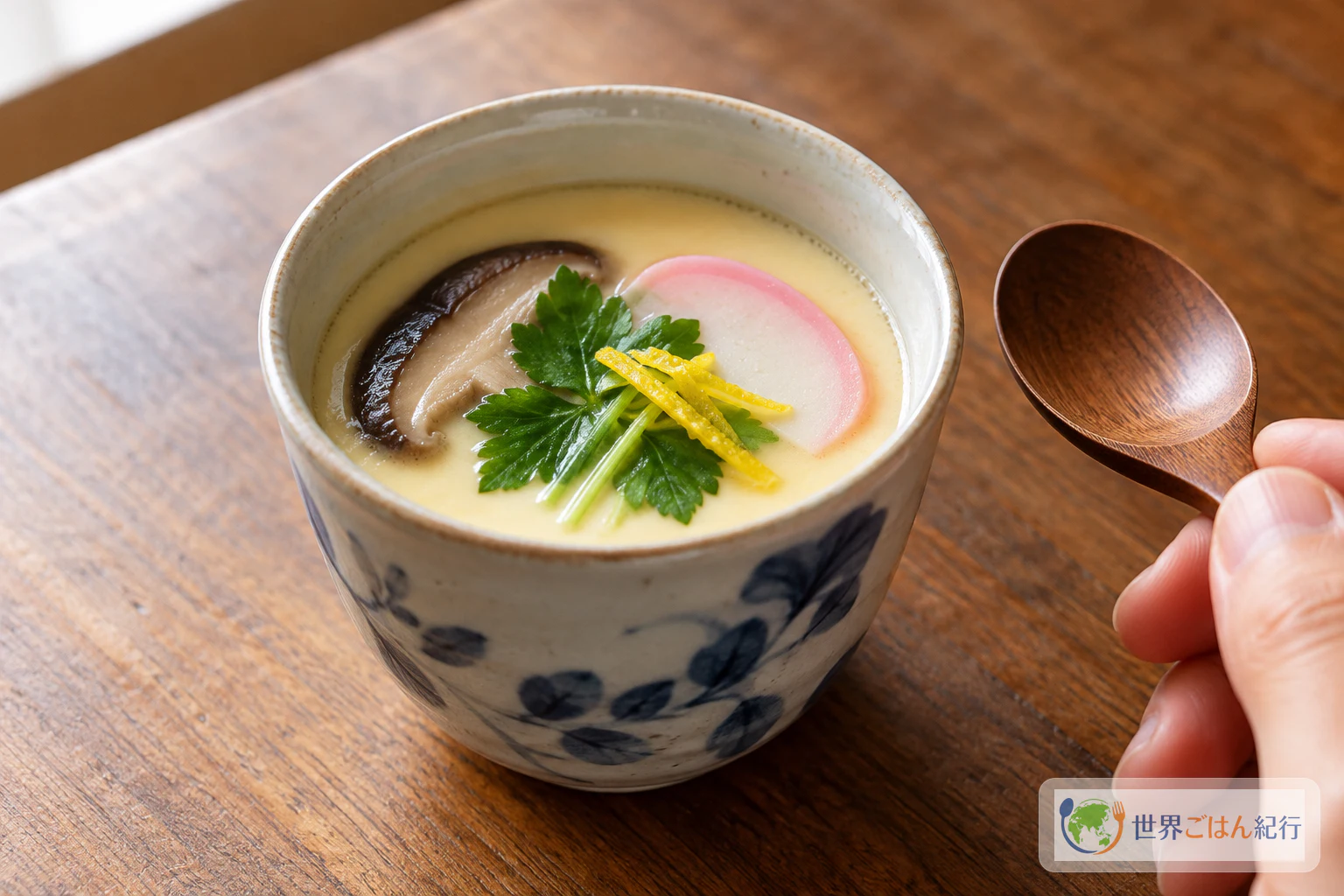
Kikkoman presents chawanmushi as a soup course, a dish where egg carries the flavor of dashi. That is why this recipe takes care with the stock. The kombu soaks before heating and never boils, and the bonito steeps off the heat. Each spoonful brings custard, a little chicken from below, and shiitake and kamaboko from the top, with mitsuba and yuzu adding aroma.
The sources used here do not settle where chawanmushi came from or when it spread, so this article makes no claim about its history. For more dishes from the same country, see Japan.
Frequently Asked Questions
This is a stovetop pot-steaming recipe. The bowls stay uncovered, and the heat is managed with the pot lid. Most answers below come back to that.
How many bowls does this make?
The source does not say. It gives no serving count, bowl count or bowl size. Divide the custard among heatproof bowls that fit side by side in your pot, with the water kept below their rims. The 200 mL cup in the recipe is a measuring unit, not the size of a serving bowl.
Why are the shiitake and kamaboko added later?
That is how this recipe is staged. Only the seasoned chicken goes into the bowls at the start. The shiitake and kamaboko go on after the first steaming, once the center bends gently, with the reserved custard spooned over them. Then the bowls get a short final steam.
Can I cover each bowl with foil or a lid?
Not in this method. The bowls are steamed open on a cloth in the pot, and you adjust the pot lid instead: off at first, on for the first steaming, then shifted ajar on low heat.
Can I use a steamer basket or the microwave?
This recipe covers only pot steaming. Other published chawanmushi recipes use a steamer, but with their own amounts and steps. If you use one of those methods, follow that recipe as a whole rather than mixing it with this one.
Can I use all the dashi I made?
No. The batch from 5–6 cups of water makes more than the custard needs. Only 300 mL goes in with the 2 eggs. Use the rest for something else.
If the custard looks set, is the chicken cooked?
The custard cues do not tell you that. The recipe gives no temperature for the chicken. Japan's Ministry of Health, Labour and Welfare advises heating meat until the center reaches 75°C for at least 1 minute. Treat that as a separate check from the texture of the custard.
Sources
- Kikkoman Home Cooking, recipe credited to Makiko Oda, "茶碗蒸し" (Chawanmushi). The recipe followed in this article: the egg to dashi ratio of 1:3 by volume, all ingredient amounts, how to make the dashi, the single-pot steaming method with its heat levels, lid positions, times and texture cues, and the note about the water level in the pot. https://www.kikkoman.co.jp/homecook/washoku/019/
- Kikkoman Home Cooking, "ホームクッキングの表記について" (About measurements in Home Cooking). The measuring convention: 1 cup = 200 mL, 1 tablespoon = 15 mL, 1 teaspoon = 5 mL. It does not describe serving bowl size. https://www.kikkoman.co.jp/homecook/quantity.html
- Ministry of Agriculture, Forestry and Fisheries of Japan, "茶碗蒸し" (Chawanmushi). A separate recipe that also combines egg and dashi with chicken and shiitake, adds shrimp, and uses a frying-pan steaming method. Cited only as a variation. https://www.maff.go.jp/j/yusyutu_kokusai/kokuchi/middle_east/japan-cuisine/ja/japan/19/index.html
- NHK Educational, Minna no Kyo no Ryori, recipe by Hideko Noguchi, "茶碗蒸し" (Chawanmushi). A separate five-serving recipe with 3 eggs and 540 mL dashi, shrimp, chicken tenderloin, shiitake, ginkgo, kamaboko, mitsuba and yuzu, steamed in a steamer. Cited only as a variation. https://www.kyounoryouri.jp/recipe/2113_%E8%8C%B6%E7%A2%97%E8%92%B8%E3%81%97.html
- Ministry of Health, Labour and Welfare of Japan, "お肉による食中毒の原因や予防方法について紹介します" (Causes and prevention of food poisoning from meat). General guidance that heating the center of meat to 75°C for at least 1 minute is important. It is not a time or temperature schedule for this recipe. https://www.mhlw.go.jp/stf/web_magazine/closeup/08.html