Curry Udon: Pork, Onion and Dashi Under a Smooth Curry Soup
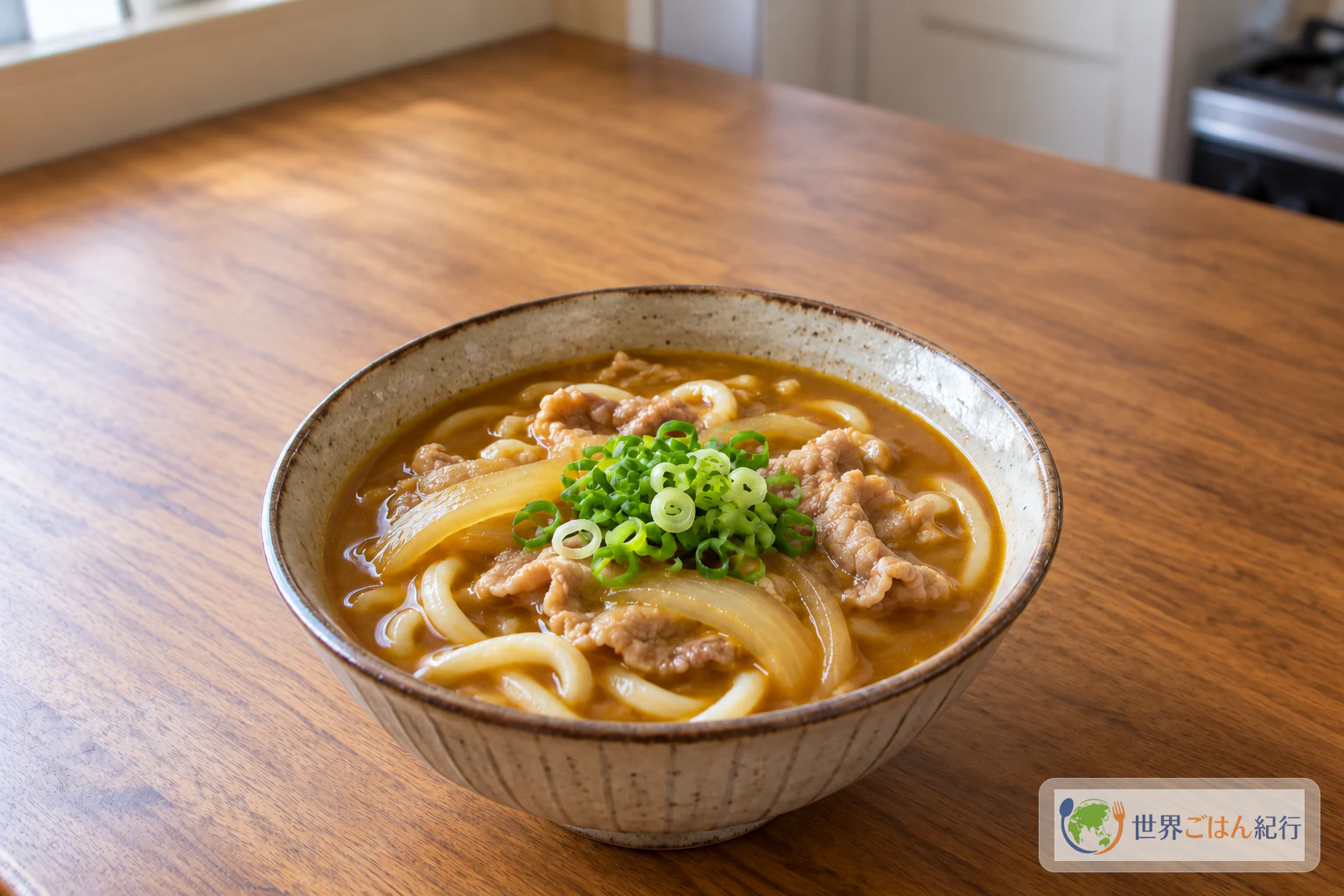
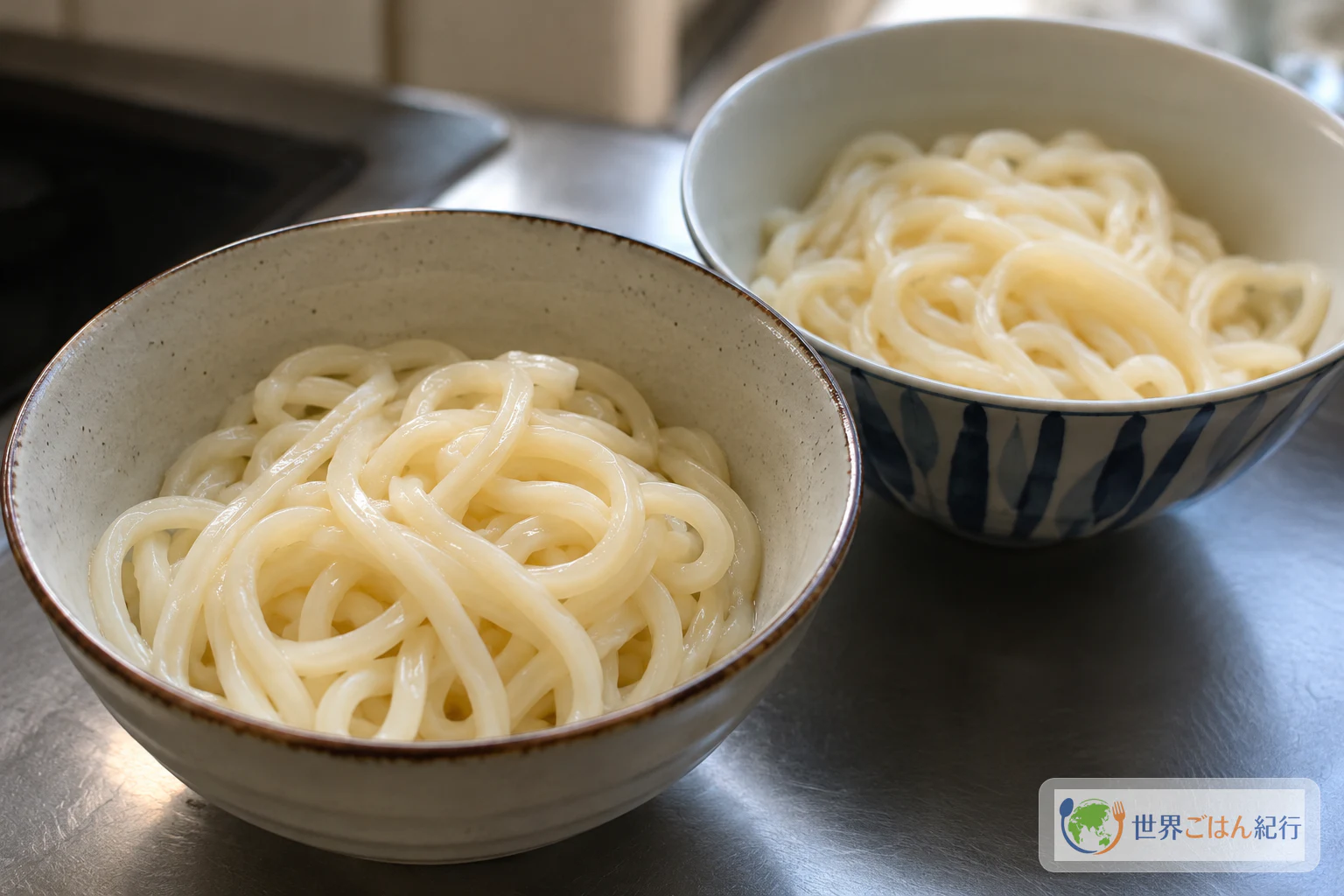
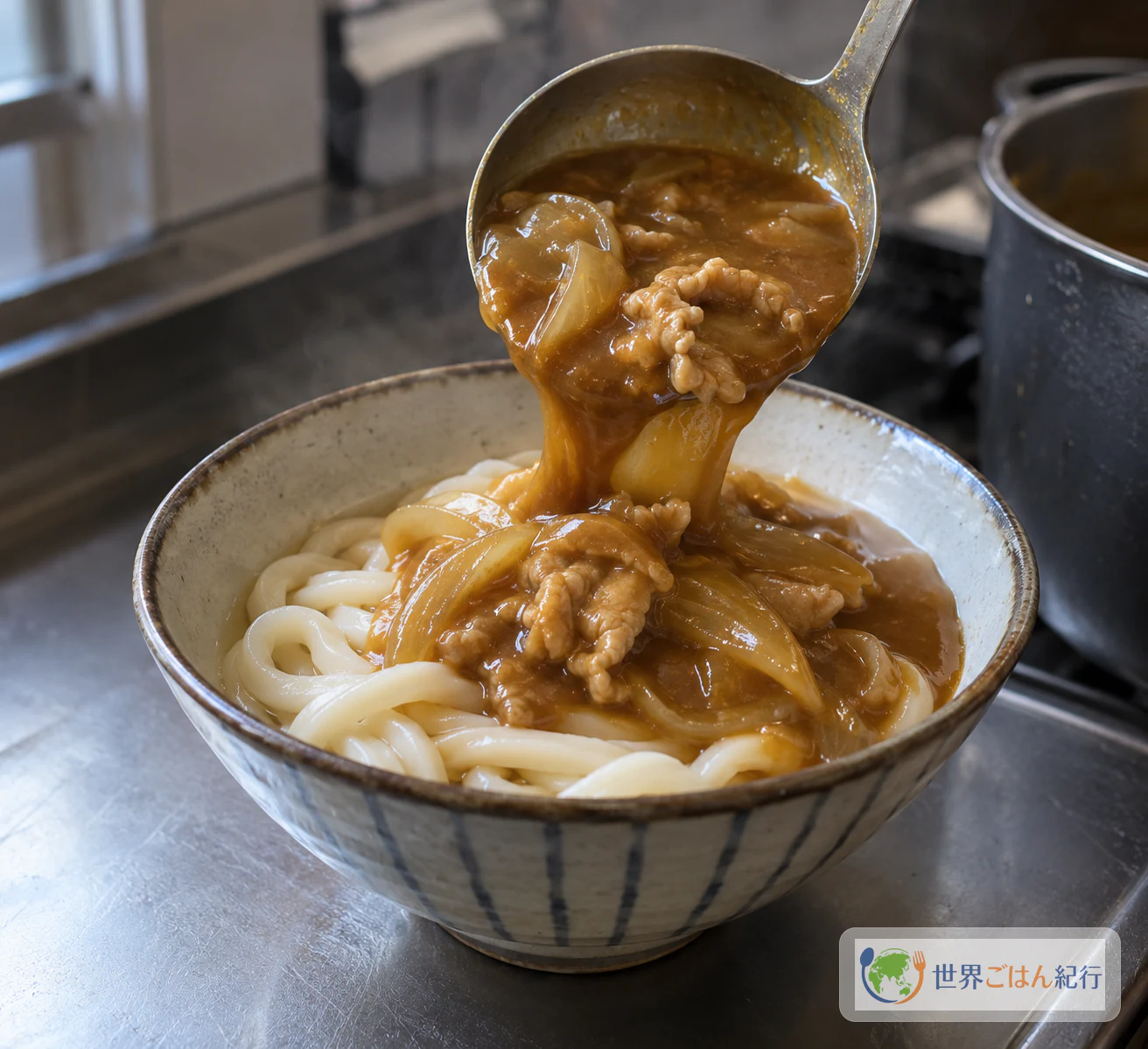
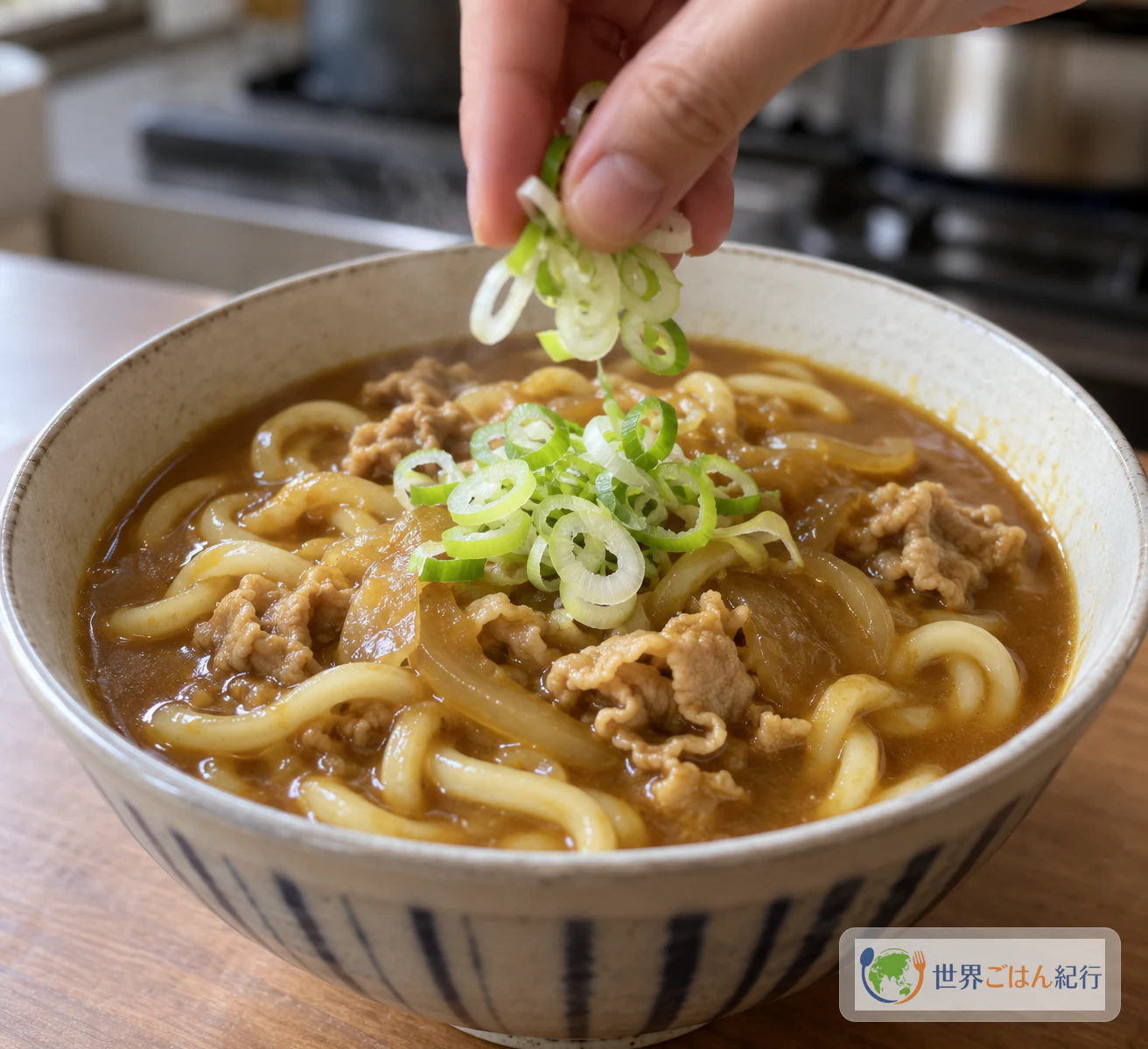
Frozen Sanuki udon cooked in its own pot, then covered with a curry soup of pork, onion and dashi. The roux goes in only after the heat is off, one portion at a time, fully dissolved in a ladle first.
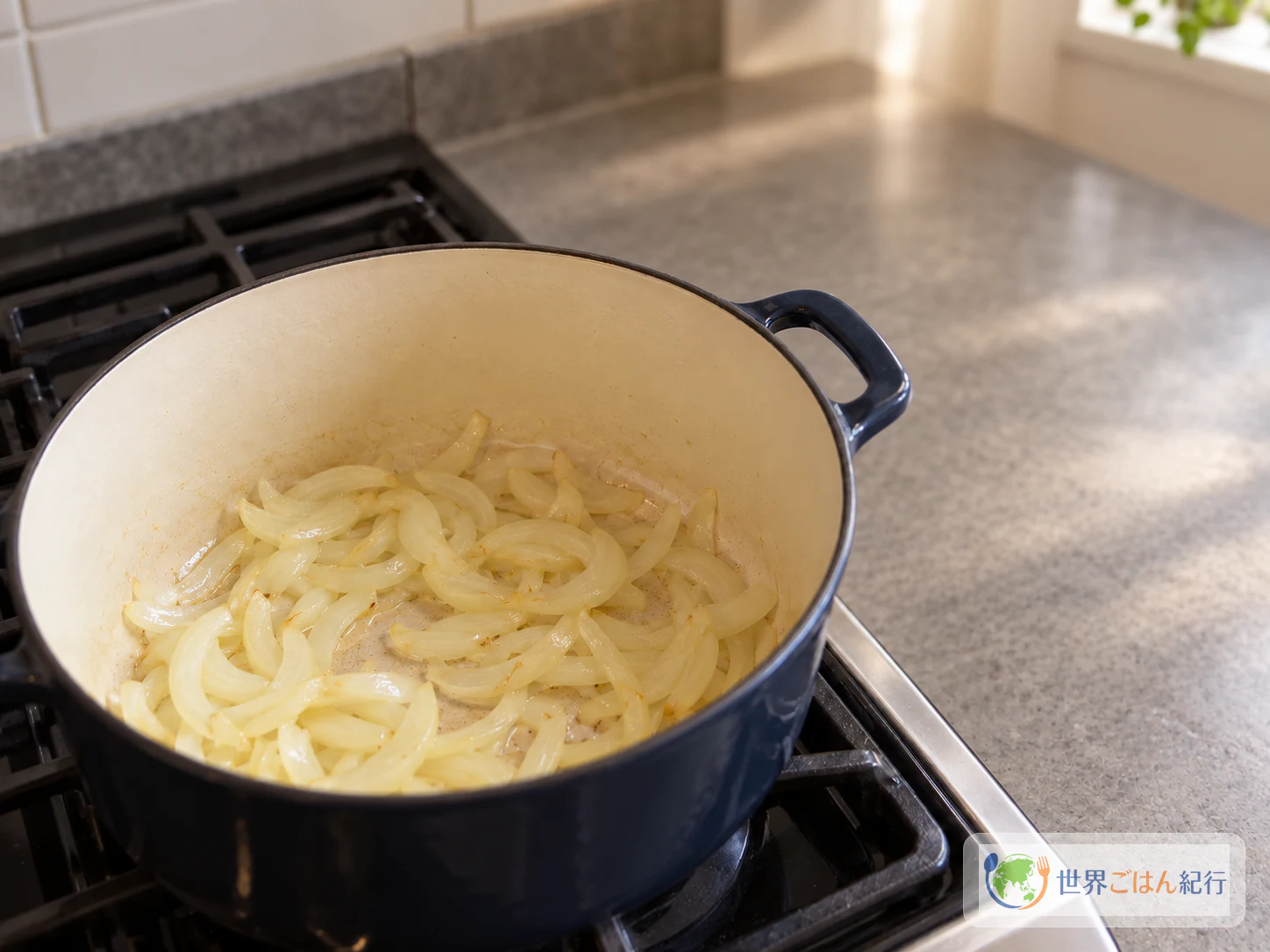
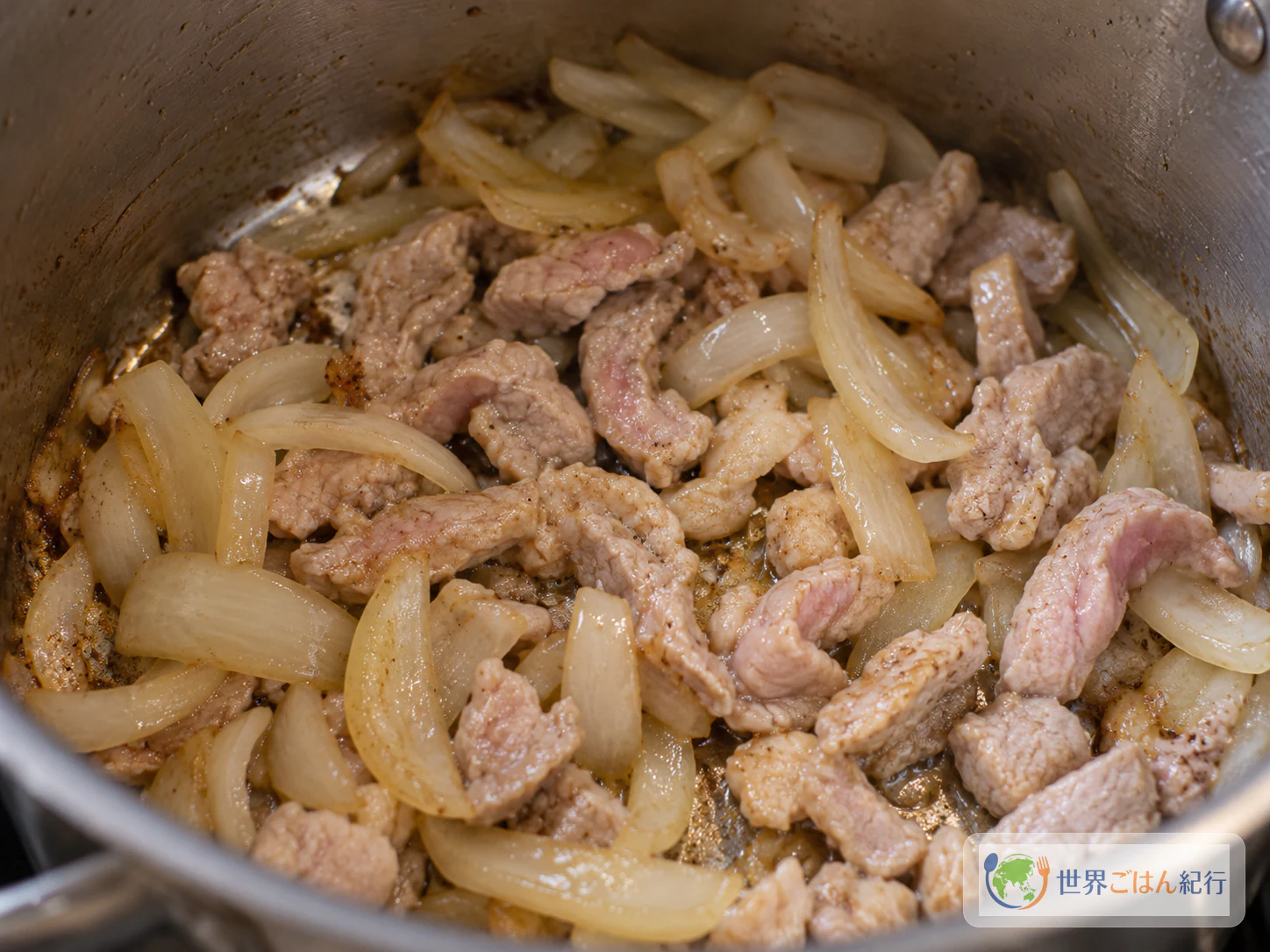
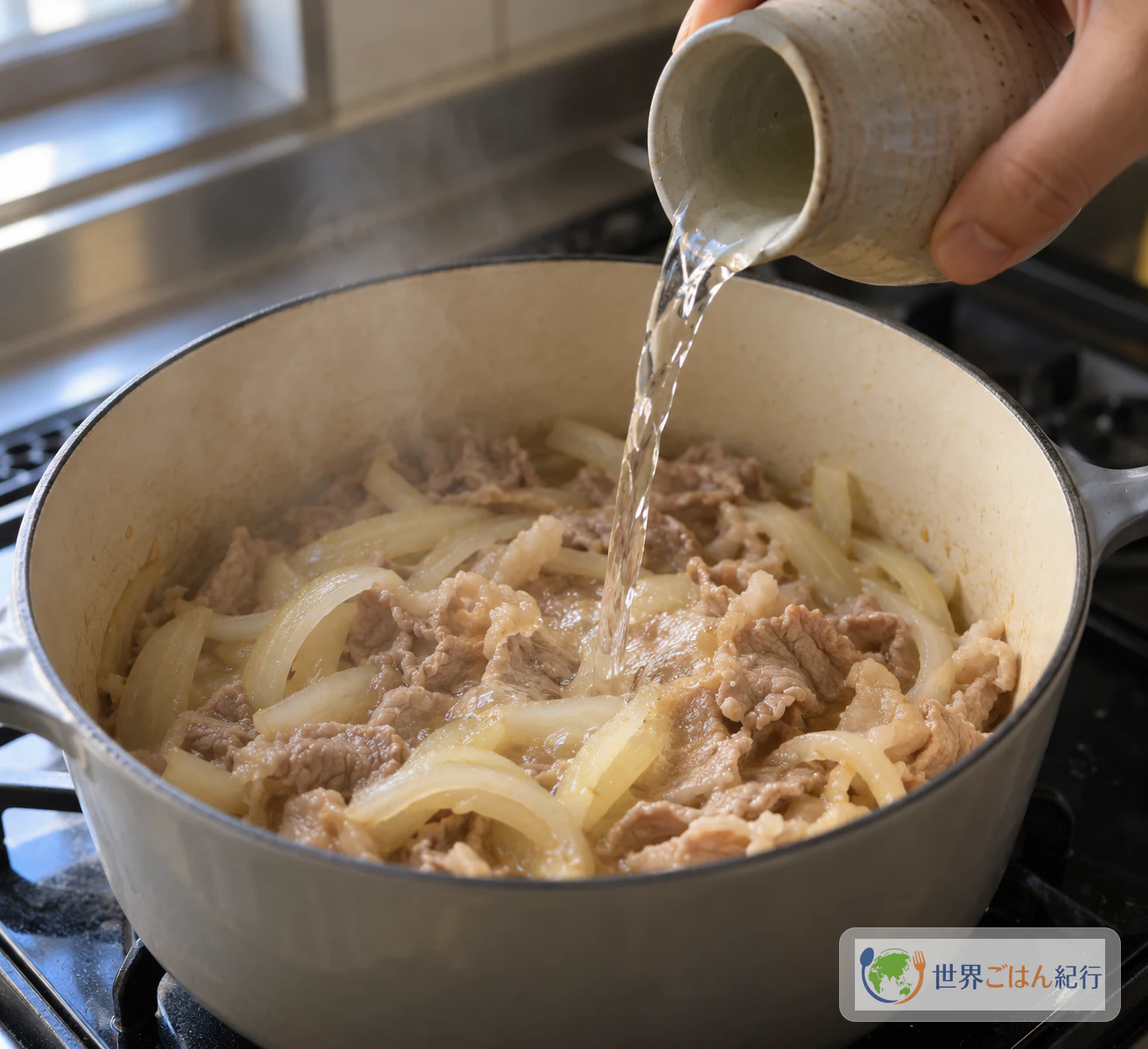
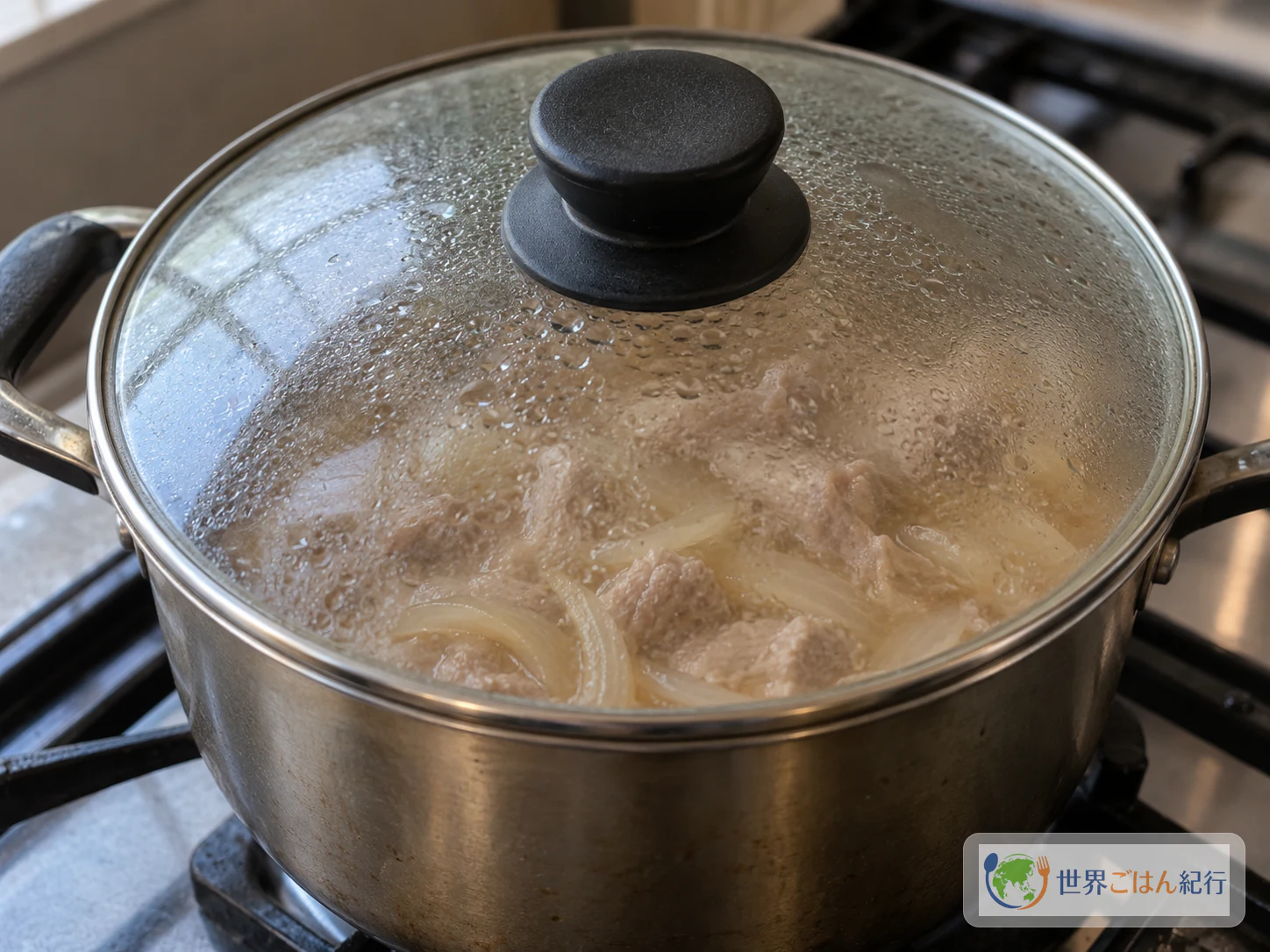
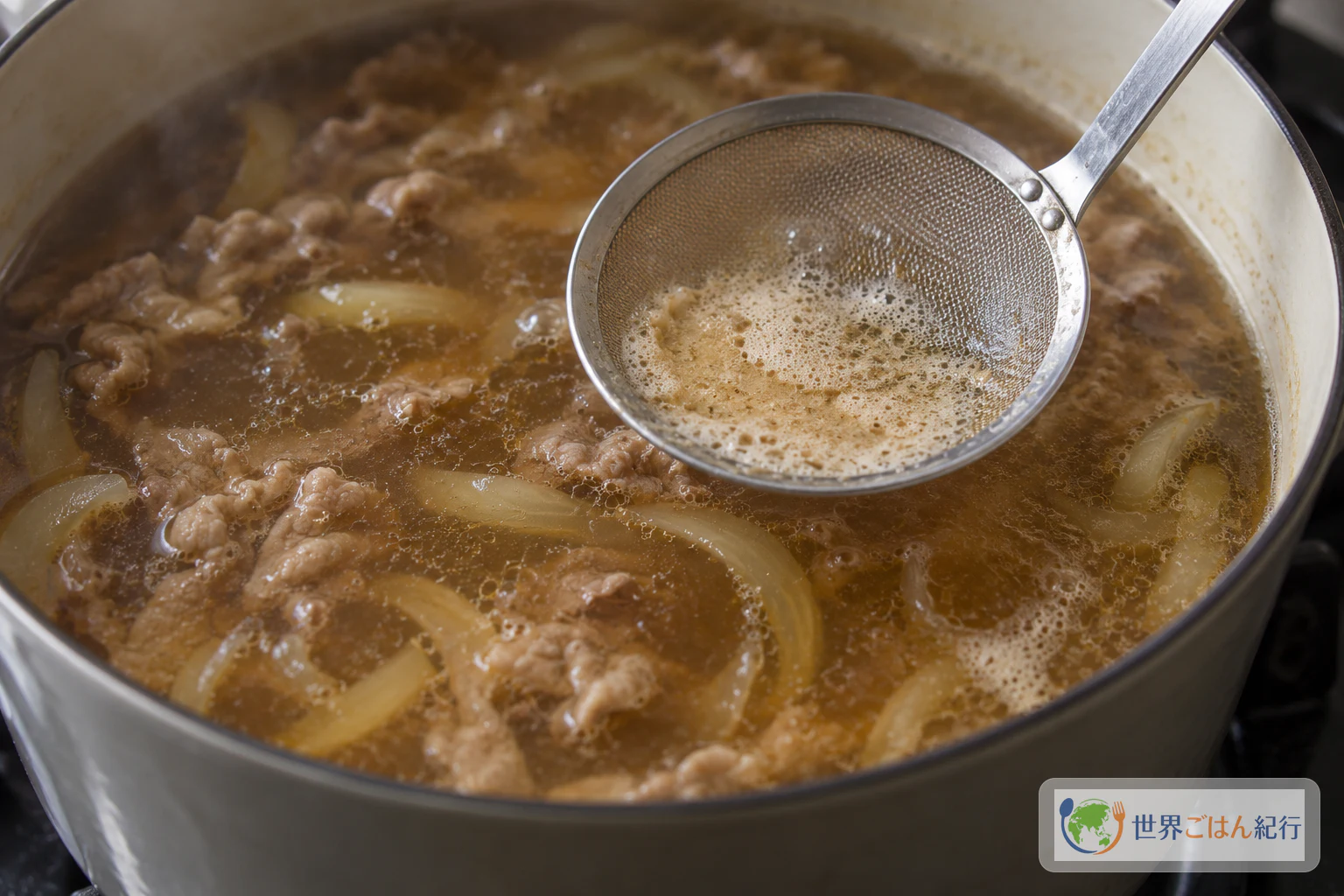
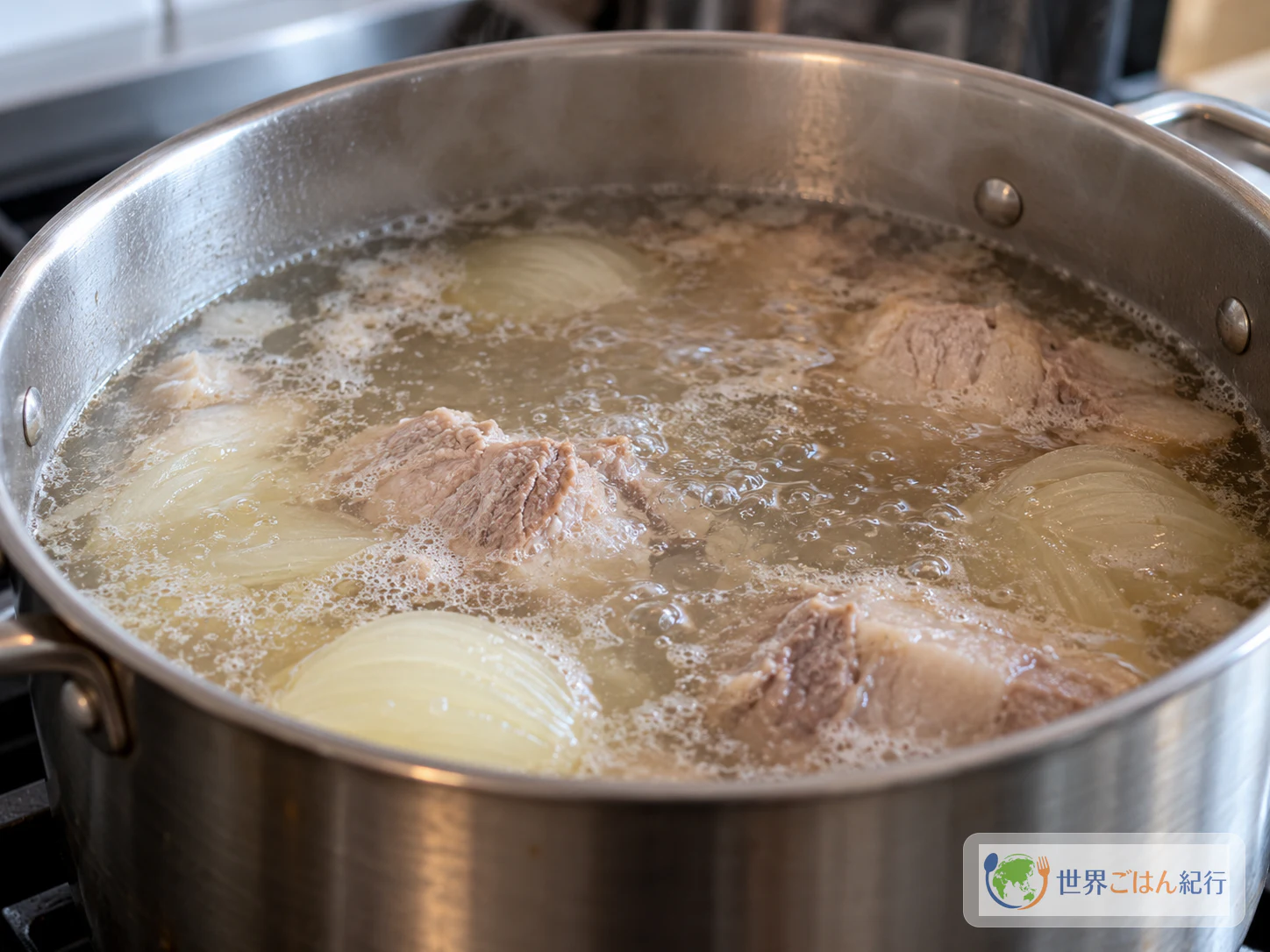
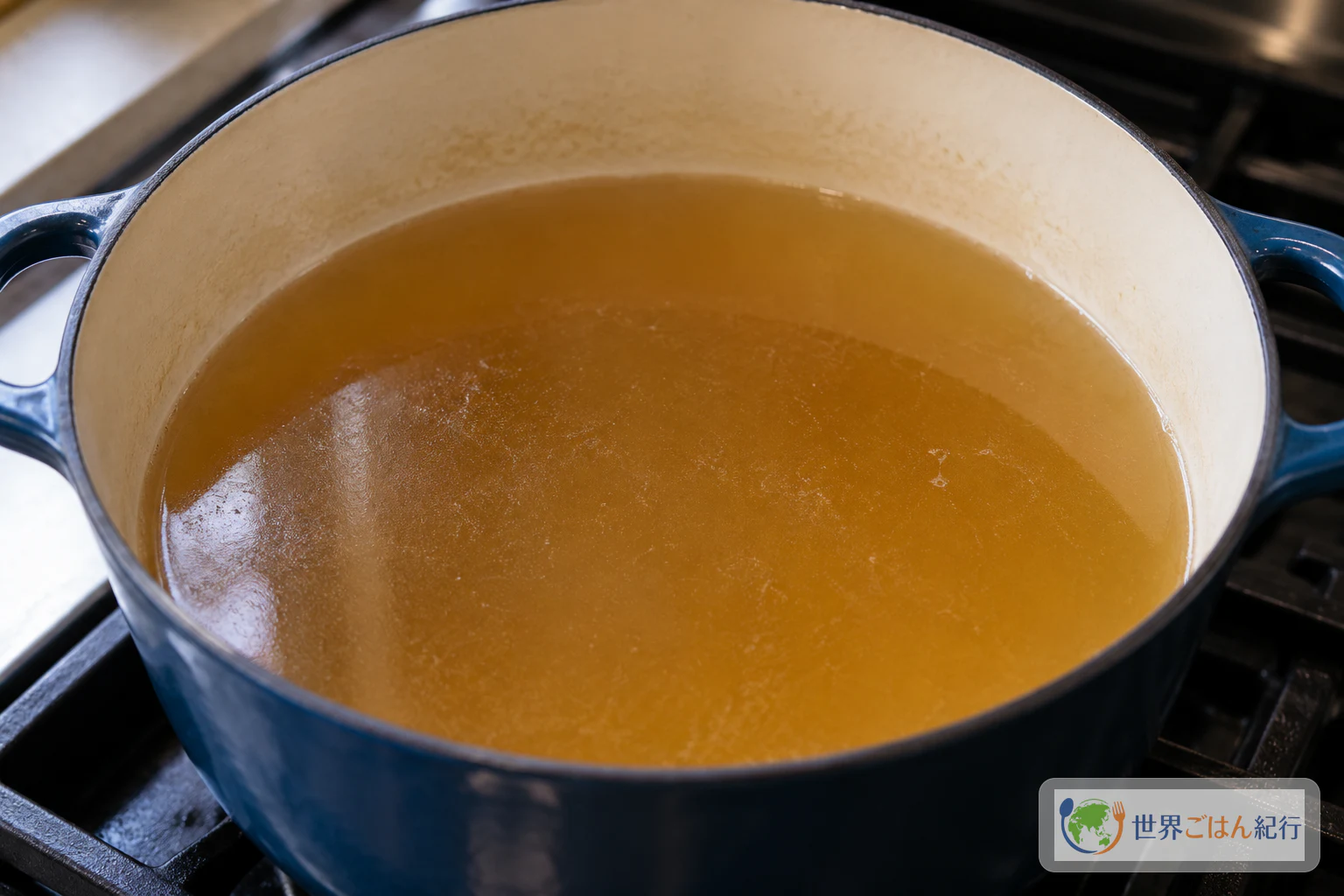
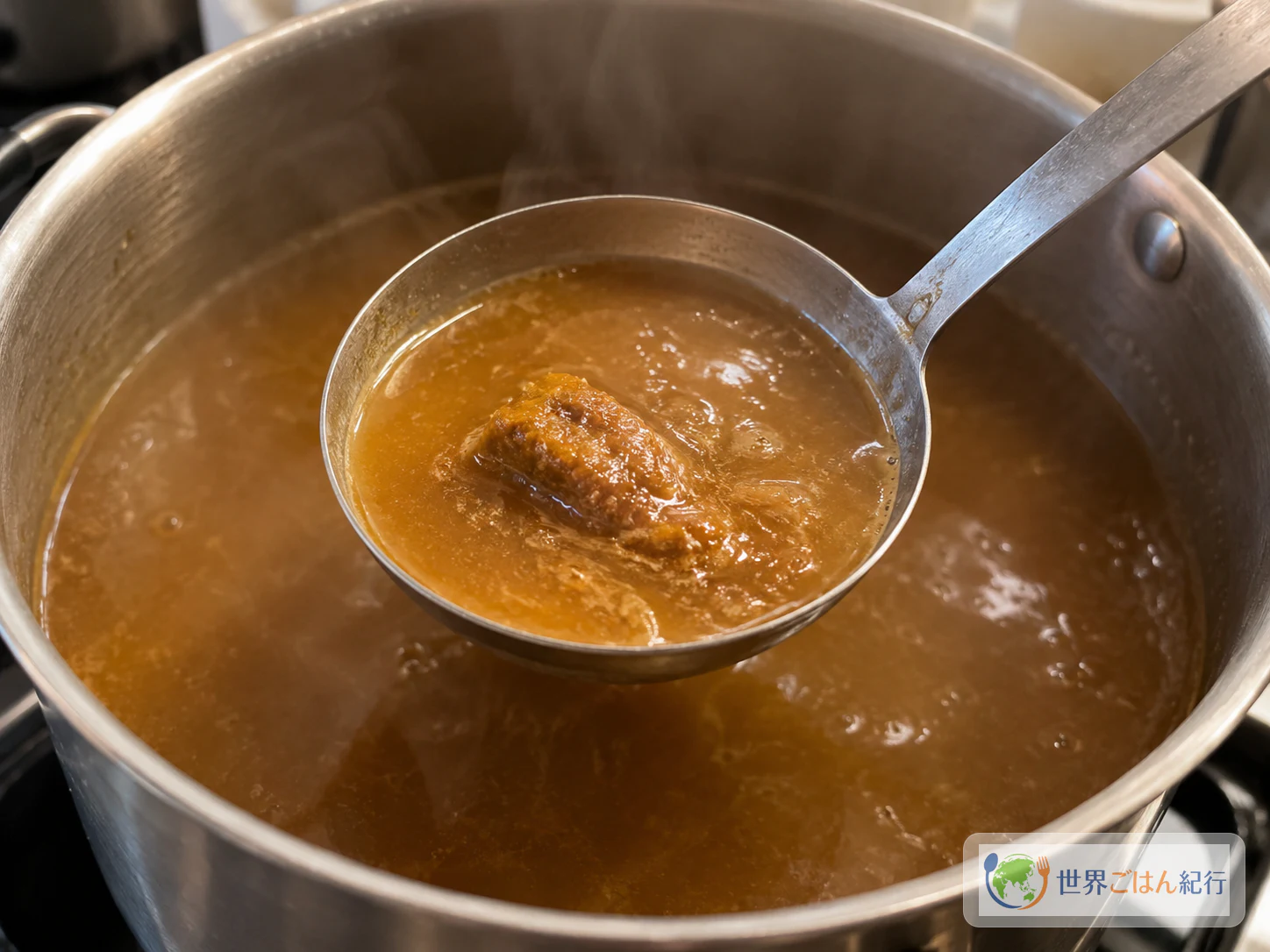
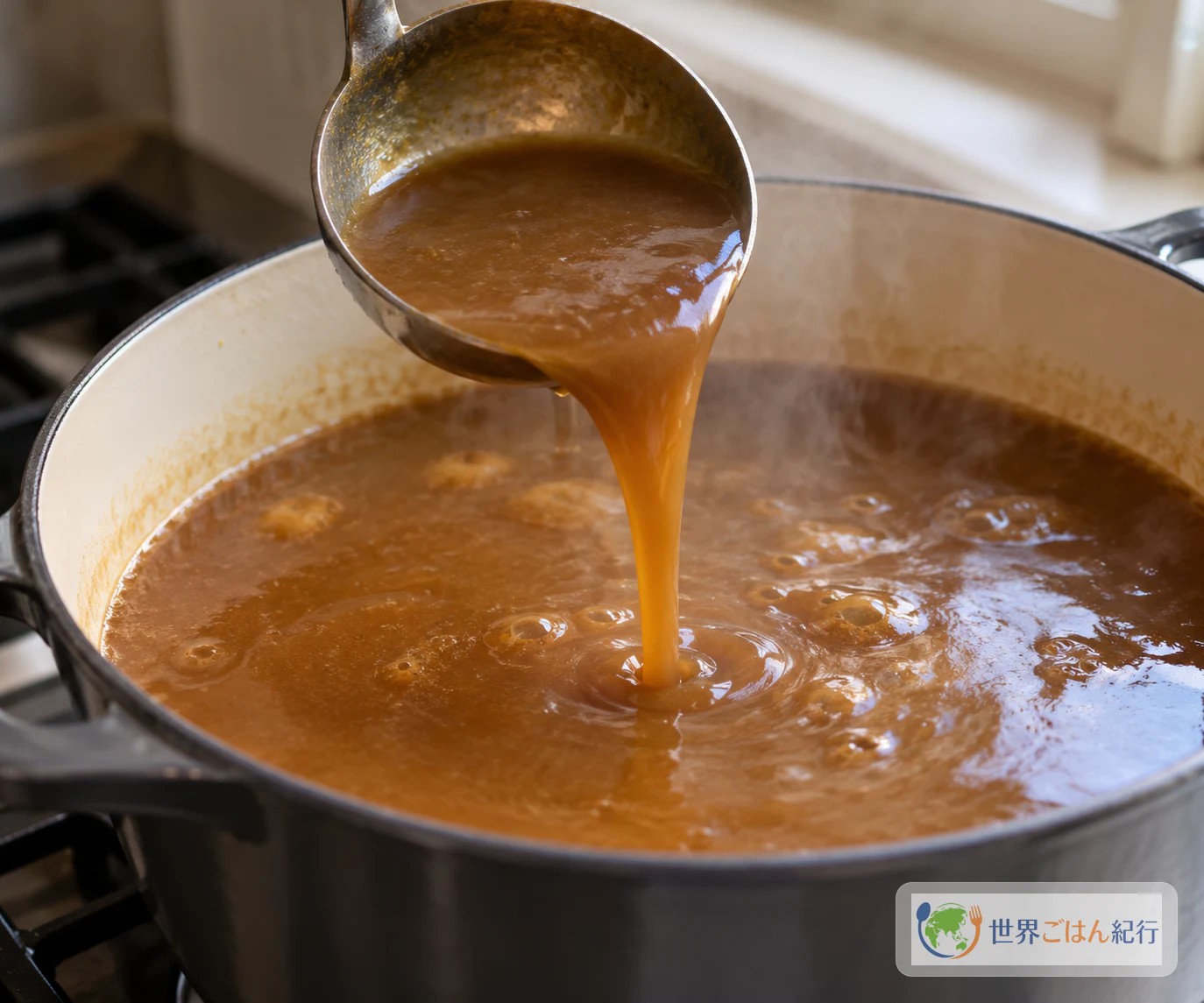
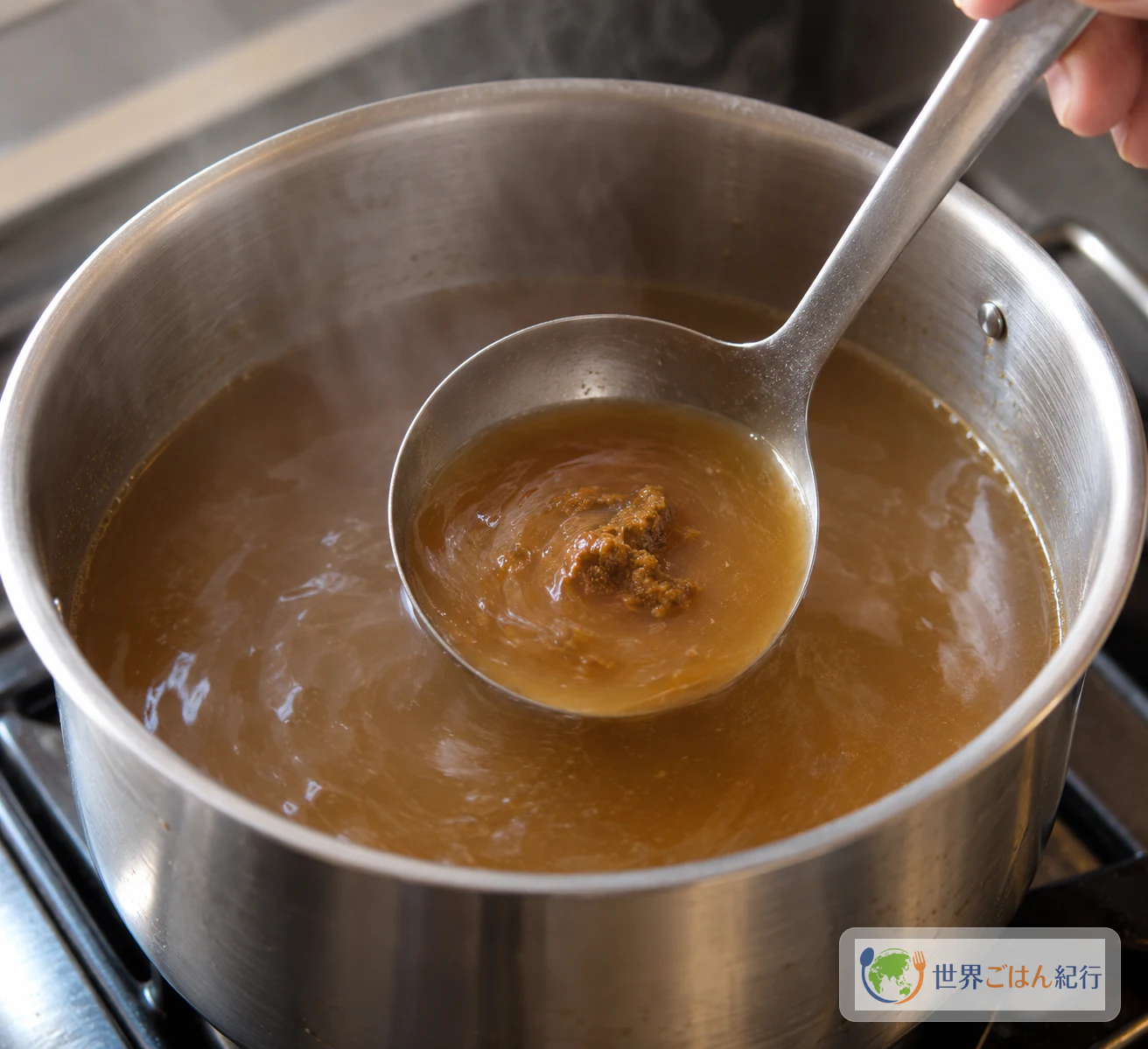
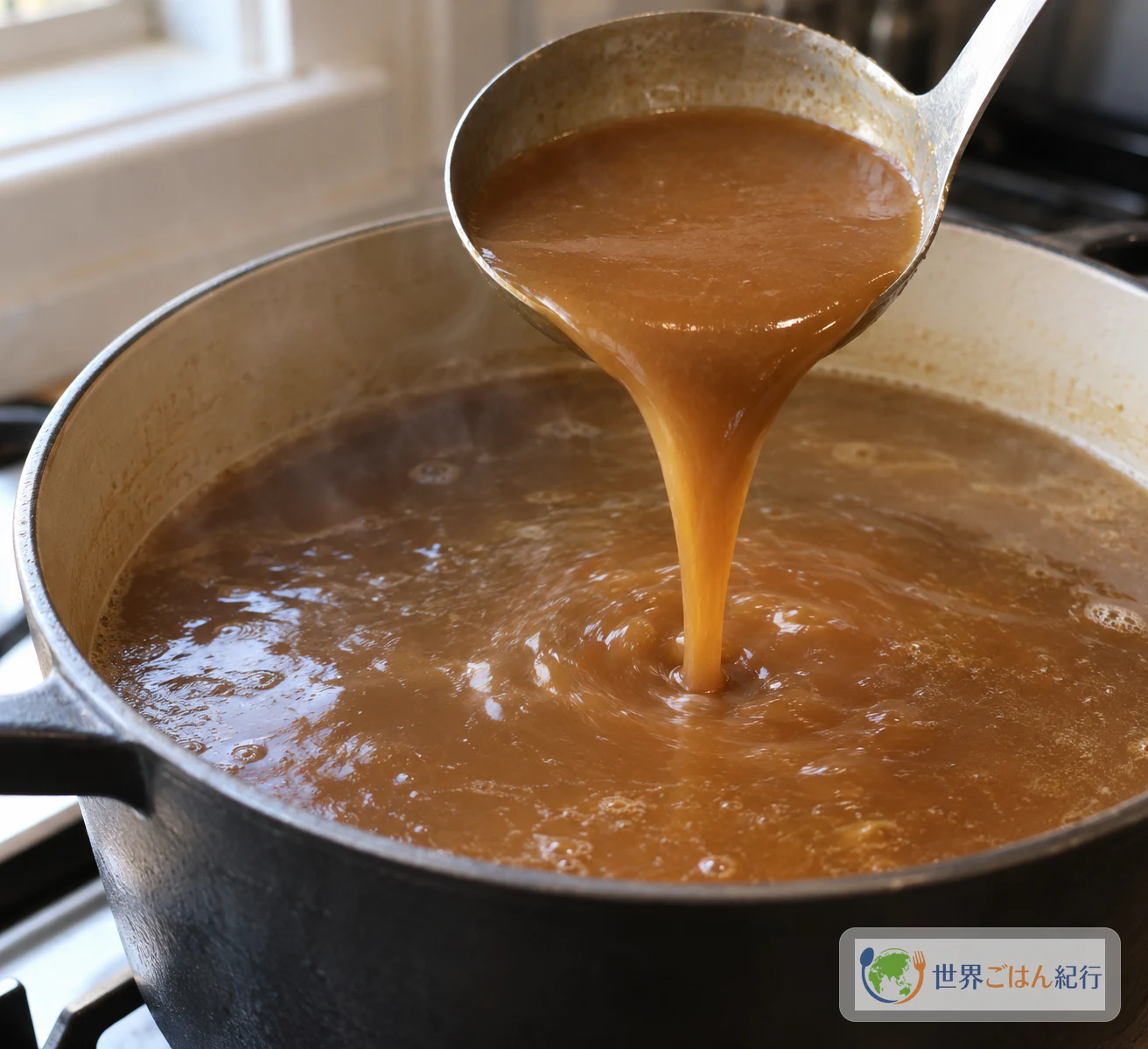
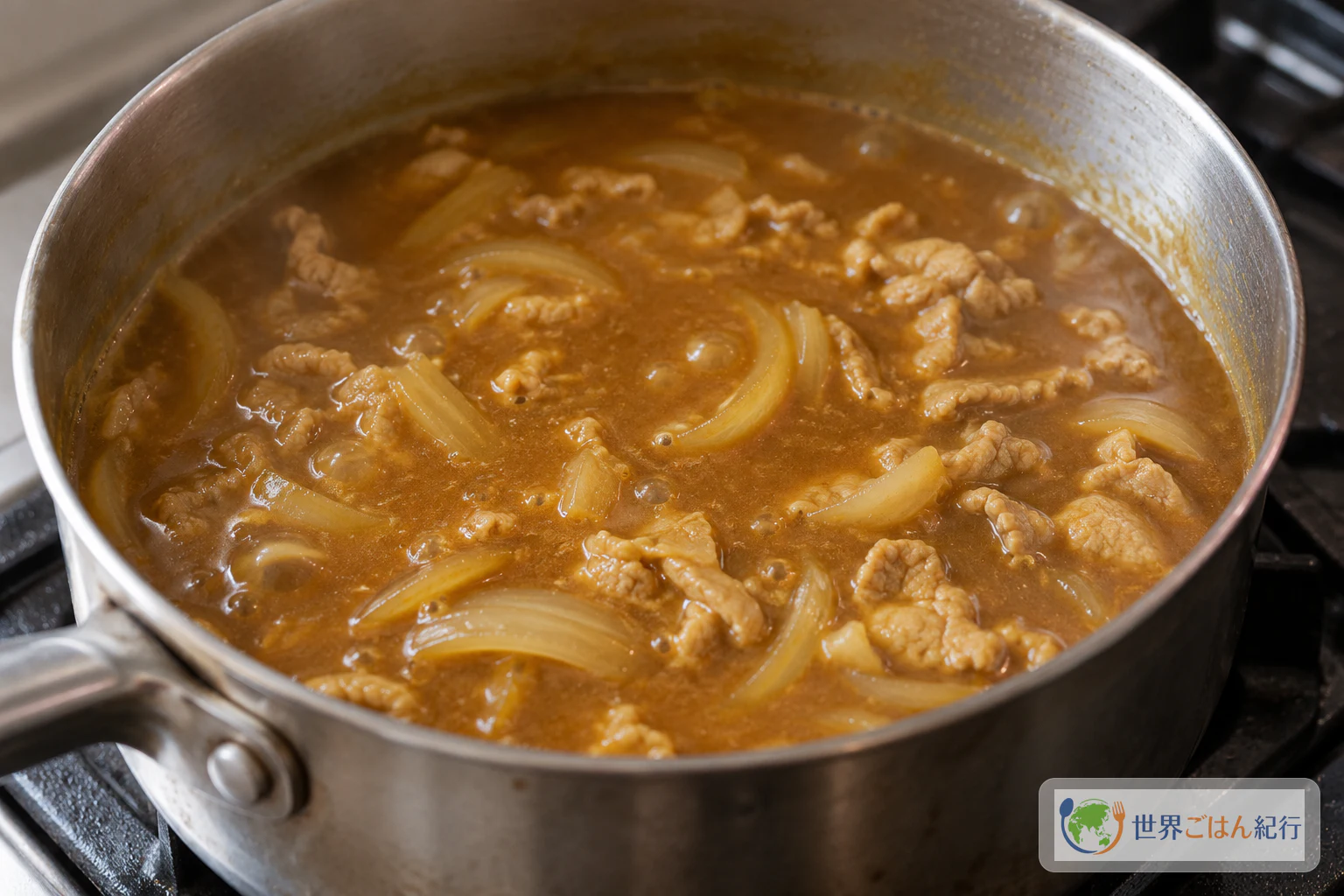
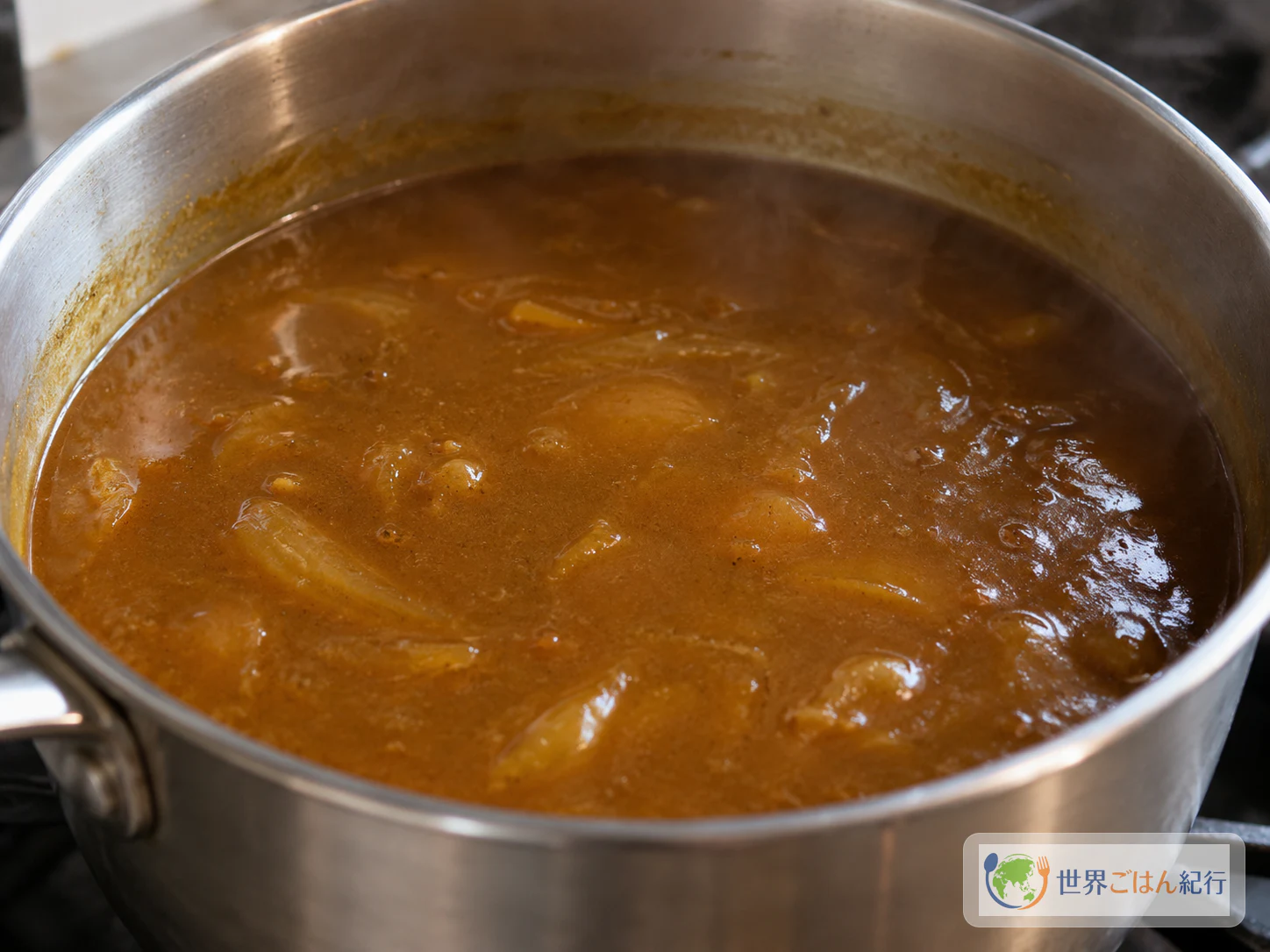
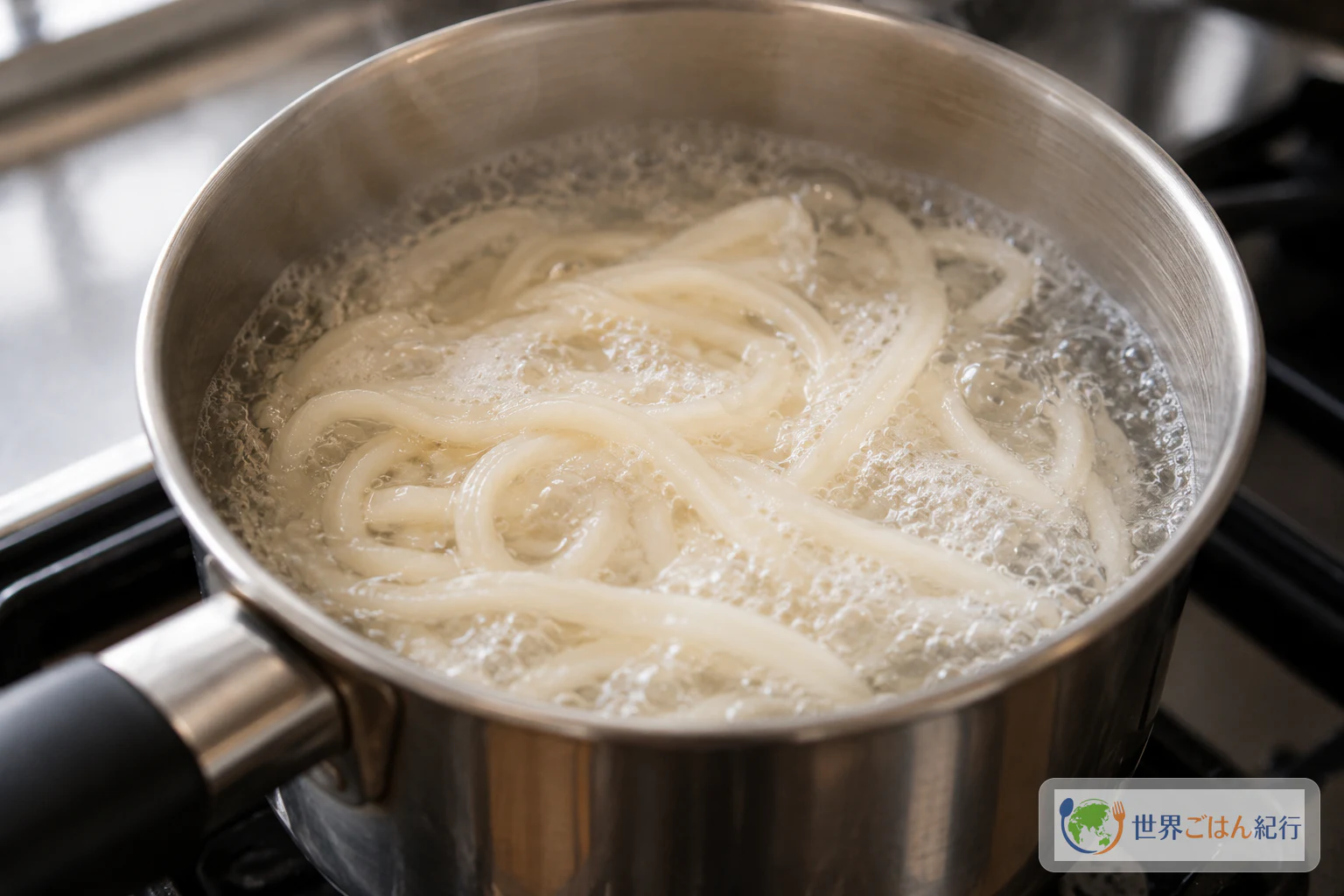
A pot of pork and onion simmers in dashi. The heat goes off, a ladleful of hot stock comes up, and a portion of curry roux dissolves completely into it. Meanwhile, in a second pot, frozen udon heats through. At the table, the drained noodles go into bowls, the curry soup is ladled over them, and sliced scallions go on top.
Namiko Hirasawa Chen of Just One Cookbook describes curry udon as chewy udon noodles served in a rich, fragrant curry soup, and presents it as a dish that suits a busy weeknight. She calls it a menu item that has been popular in Japan for a long time, and notes that it is less known than curry rice. That is as far as the sources here go: they do not establish where or when curry udon began, a regional style, or a particular kind of restaurant as its birthplace, so this article does not offer an origin story. For more dishes from the same country, see Japan.
This article follows one recipe only: her pork loin version, made with prepared Awase Dashi, Japanese boxed curry roux and frozen Sanuki udon, for two bowls. It is not a blend of different recipes.
About This Version: Cups, Roux Weight and Timing
This recipe has not been kitchen-tested by Sekai Gohan. The amounts, order and times all come from Namiko Hirasawa Chen's recipe on Just One Cookbook, with three points clarified below.
The cup is a 240 ml US cup. The recipe calls for 3 cups of dashi. In the site's measurement FAQ, the author explains that her recipes use a US measuring cup of 240 ml, not the 200 ml Japanese measuring cup. Three of those cups work out to 720 ml. That figure is a calculation from the FAQ; the recipe page itself prints "3 cups."
The roux is fixed at 50 g. The recipe page prints the roux as "2 cubes (2 oz, 50 g)." This article uses 50 g total. It does not claim that 2 oz and 50 g are exactly equal, or that two cubes from every brand weigh 50 g; cube sizes differ, so weighing is the reliable way to get 50 g.
The time estimate disagrees with itself. The recipe card lists 10 minutes prep, 40 minutes cook and 50 minutes total, while the introduction on the same page says the dish takes under 30 minutes. The page does not explain the difference. The 50 minutes here is the card's estimate, not a time measured by us, and neither figure is a promise.
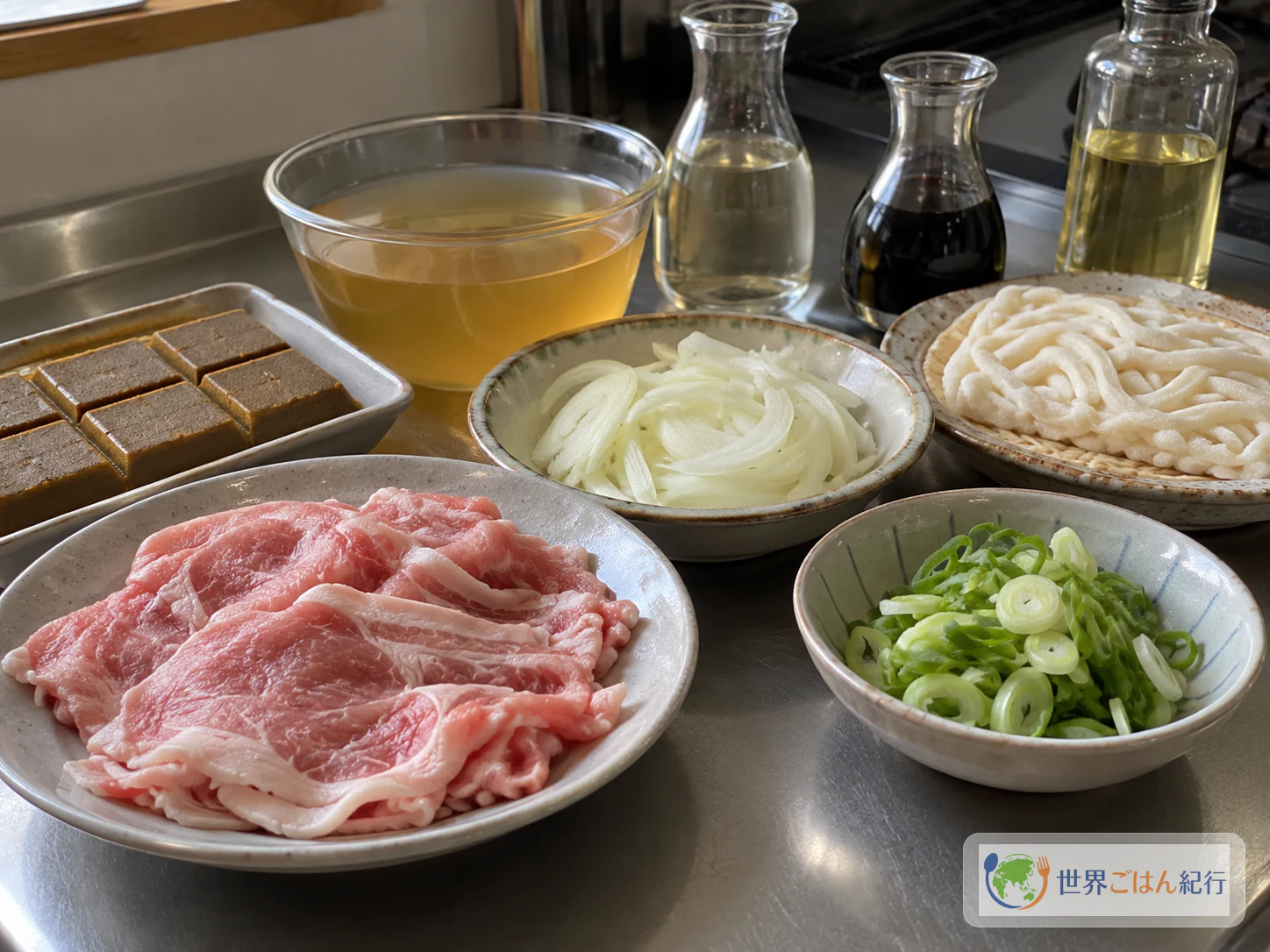
Ingredients (2 Servings)
Choosing the Dashi, Roux and Noodles
- Dashi: Use dashi you have already made or prepared. Measure 720 ml.
- Curry roux: Weigh out 50 g rather than counting cubes, since cube size varies between brands. Plan to divide it into two portions for dissolving. The ingredients in boxed roux differ by product, so if allergies matter at your table, read the label of the box you buy.
- Udon: Choose frozen Sanuki-style udon, enough for two servings (500 g). Follow the package directions for cooking time.
- Garnish: Scallions are the only topping in this version.
Equipment
- Medium pot with a lid
- Ladle
- Skimmer
- Second pot for cooking the udon
- Strainer or colander
- Kitchen scale
- 2 bowls
Method: Simmer the Soup, Dissolve the Roux, Cook the Noodles Apart
The curry soup and the noodles cook in separate pots and only meet in the bowl. Every portion of roux is fully dissolved in a ladle of hot stock, with the heat off, before it goes into the pot.
When Something Goes Off Course
| Condition | What to check | What to do |
|---|---|---|
| A piece of roux is still solid in the ladle | The portion has not finished dissolving | Keep stirring inside the ladle until it is smooth, then pour it back |
| You are about to add roux with the burner still on | Step 8 was skipped | Turn off the heat first, then dissolve each portion in a ladle |
| The roux cubes in your box are a different size | Cube weight varies by brand | Weigh 50 g in total and split it into two portions |
| You measured the dashi with a Japanese measuring cup | That cup holds 200 ml | Measure 720 ml of dashi for this recipe |
| The soup is boiling hard after the roux goes in | The heat is too high | Lower it; keep a gentle simmer, and turn it off once bubbling after the soy sauce |
| You are unsure how long to cook the noodles | Times vary by product | Follow the directions on the udon package |
Other Published Ways to Make Curry Udon
The pork, dashi and boxed-roux method above is not the only published way to make this dish. Two Japanese food companies publish their own curry udon recipes with quite different formulas. S&B Foods offers a two-serving version that builds the soup from concentrated mentsuyu, water and curry powder, cooks chicken breast in it, thickens it with potato starch mixed with water, and briefly simmers the noodles with long onion. Ajinomoto's AJINOMOTO PARK offers a four-serving recipe with chicken thigh, carrot and green onion, seasoned with mirin, soy sauce and Hon-dashi, finished with commercial curry roux and a starch slurry, and poured over separately warmed noodles.
These are mentioned only to show that recipes differ. None of their ingredients or steps belong in the recipe on this page, and they are not offered here as substitutions.
Frequently Asked Questions
How many milliliters is 3 cups of dashi here?
720 ml. Namiko Hirasawa Chen's FAQ says her recipes use a 240 ml US measuring cup rather than the 200 ml Japanese cup, and 3 × 240 ml gives 720 ml. The recipe page itself prints "3 cups."
How many roux cubes do I need?
Use 50 g of roux in total. The recipe page lists "2 cubes (2 oz, 50 g)," but cube sizes differ between brands, so weighing 50 g is more reliable than counting cubes.
How long do I cook the udon?
Follow your package directions. The recipe page gives one minute for the particular frozen Sanuki udon the author used, but that is an example for that product, not a time for every brand.
Can I make this in 30 minutes?
The sources do not settle this. The recipe card lists 10 minutes prep and 40 minutes cook, 50 minutes total, while the page's introduction says under 30 minutes. This article reports the card's 50 minutes as the author's estimate; it has not been timed by us.
Should the pot be covered after skimming?
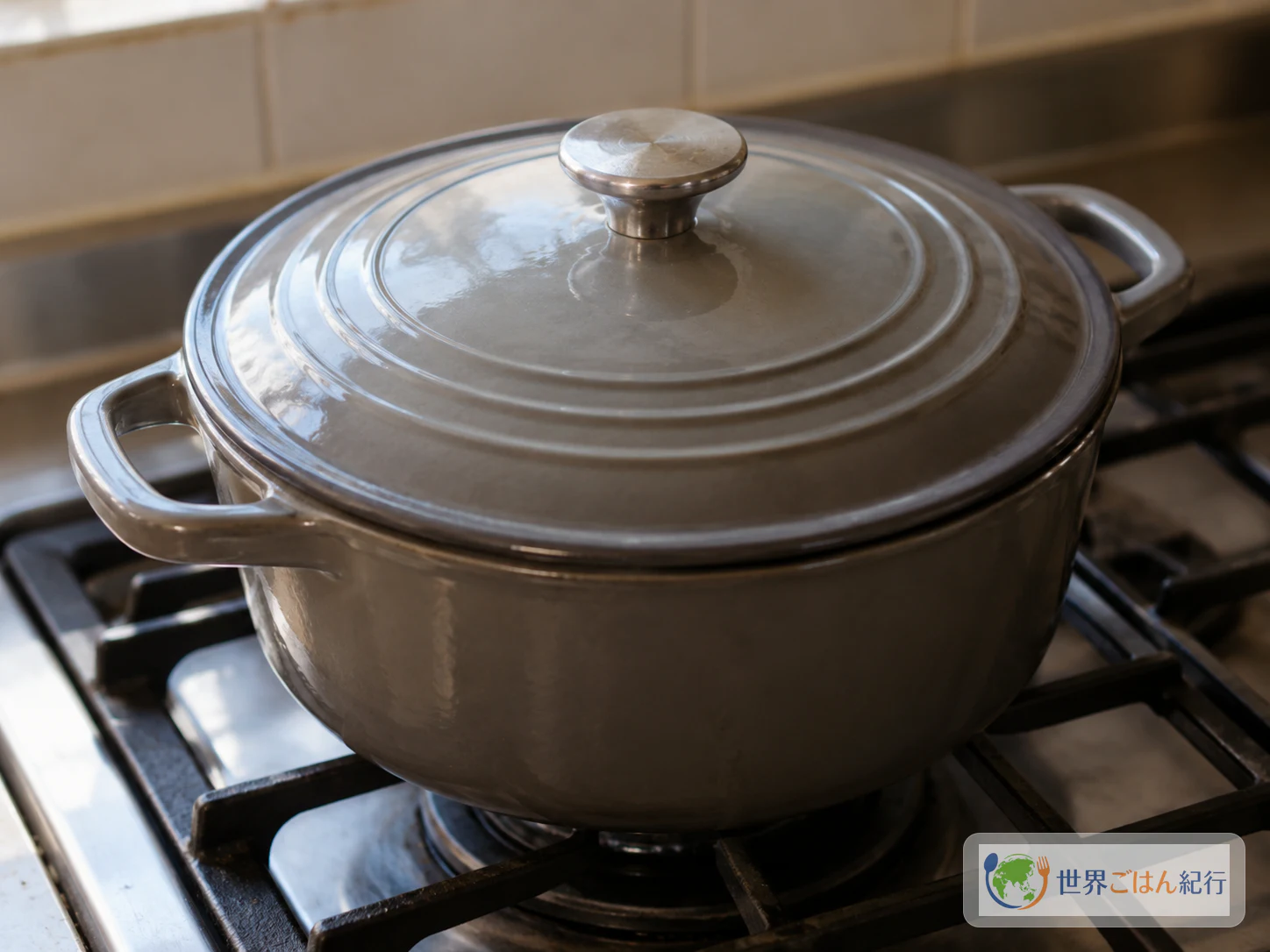
The recipe states a lid only for the first 5 minutes of simmering the dashi, and again at the end, when the finished soup is kept warm off the heat. It does not say whether to cover the pot again after skimming, so this article leaves that open.
Why turn off the heat before adding the roux?
So the roux can be dissolved smoothly in a ladle of hot stock rather than landing as a solid block on the hot bottom of the pot, where it could scorch before it melts. The recipe gives a choice between low heat and off; this version uses off.
Can I add egg, fish cake or other toppings?
This version uses scallions only. Other published curry udon recipes use different ingredients, but those are separate recipes and are not part of this one.
Sources
- Namiko Hirasawa Chen, Just One Cookbook, "Curry Udon (Video) カレーうどん." The recipe followed in this article: ingredients and amounts for 2 servings, method and order, the recipe card's prep, cook and total times alongside the under-30-minutes description, the one-minute example for frozen Sanuki udon, and the author's description of curry udon as a long-popular Japanese menu item. https://www.justonecookbook.com/curry-udon/
- Just One Cookbook, "Frequently Asked Questions — Measurements." The author's definition of her recipe cup as a 240 ml US measuring cup rather than the 200 ml Japanese cup, used to derive 720 ml for 3 cups. https://www.justonecookbook.com/faqs/
- S&B Foods Inc., "カレー粉で作る!簡単カレーうどん" (Japanese). A separate official curry udon recipe using curry powder, mentsuyu, chicken breast and potato starch; cited for comparison only. https://www.sbfoods.co.jp/recipe/detail/02283.html
- AJINOMOTO PARK / Ajinomoto Co., Inc., "基本のカレーうどんの作り方" (Japanese). A separate official curry udon recipe using chicken thigh, carrot, mirin, Hon-dashi, curry roux and potato starch; cited for comparison only. https://park.ajinomoto.co.jp/recipe/card/700787/