Tokyo-Style Shoyu Ramen: A Bowl Built from Broth, Tare and Noodles
Keep the broth clear, keep the salty tare separate until the bowl, and boil the noodles last. The flavor of each bowl comes together at the moment you combine them.
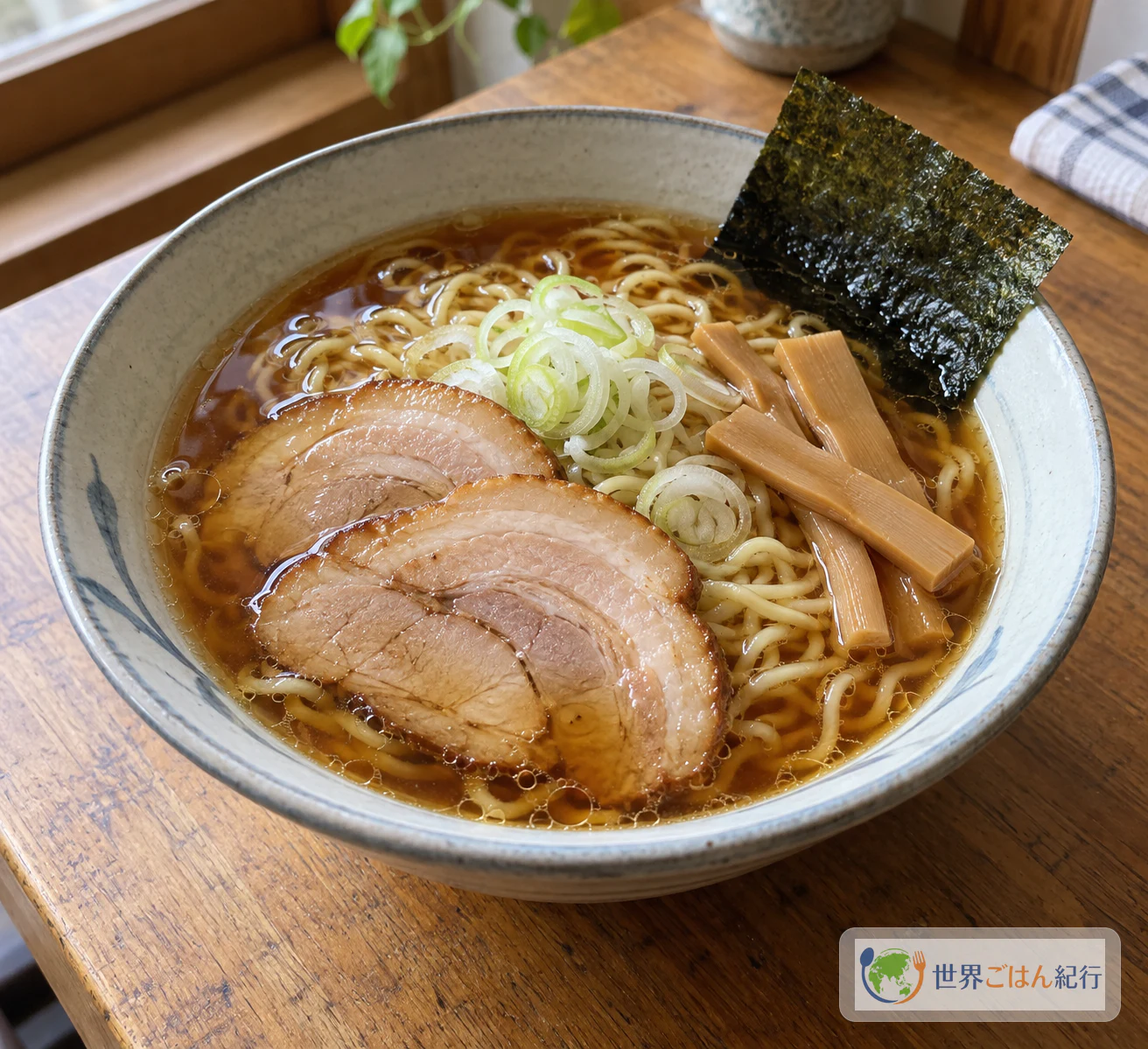
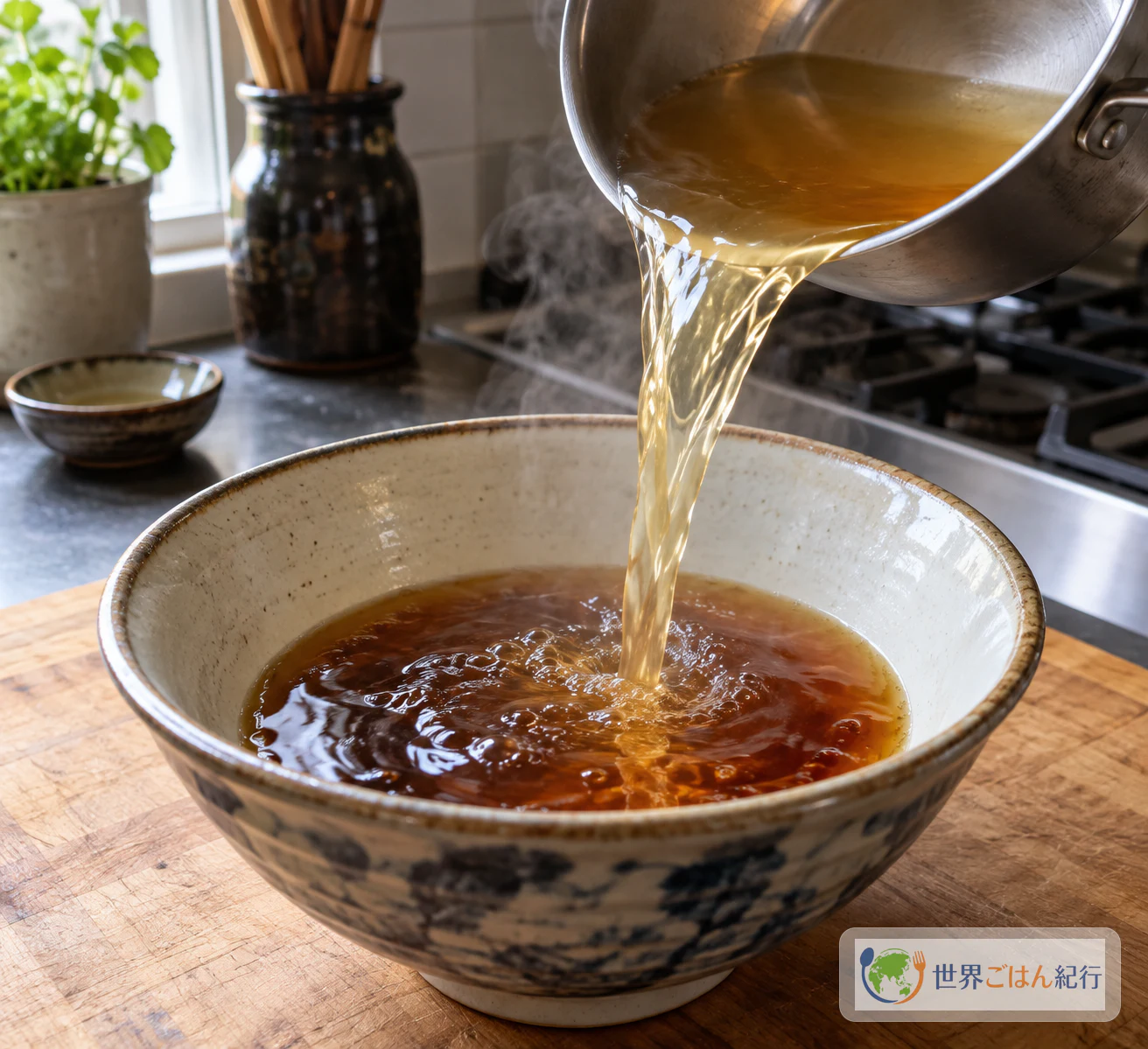
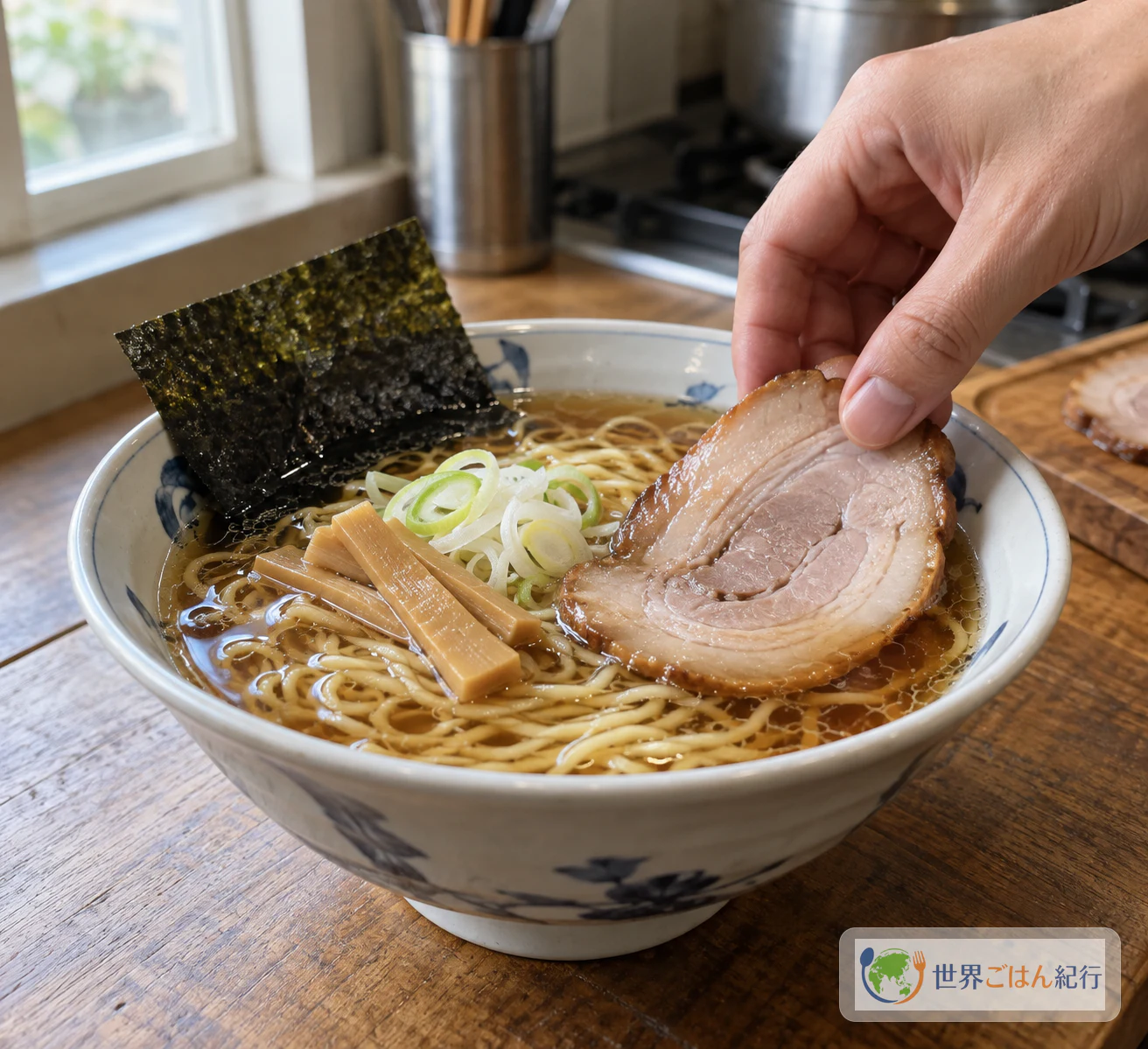
A spoonful of dark soy tare sits at the bottom of an empty bowl. Hot, clear amber broth is poured over it, and the two blend to one even color. Freshly drained curly noodles go in next, then slices of chashu, menma, green onion and a sheet of nori. That is the shape of a Tokyo-style shoyu ramen: not one pot that holds every flavor, but a broth, a tare and noodles brought together bowl by bowl.
This recipe follows one example of that style, a shoyu ramen recipe shared by the owner of Bizentei, a ramen shop in Tokyo, and published by Just One Cookbook. It is not a recipe for "Japanese ramen" as a whole, and it does not claim to represent every shoyu ramen in Japan. It is a home version of one clear Tokyo-style bowl.
The work is long but not complicated. The broth simmers for six hours, and the pork belly that cooks in it becomes chashu in a separate pot of soy tare. Making the broth and chashu the day before is recommended, so that on the day you eat, the only work left is heating broth, boiling noodles and seasoning each bowl.
If you are looking for the milky, opaque pork-bone style of Kyushu, that is a different bowl with the opposite goal for the broth. See tonkotsu ramen for that style.
What Makes This Bowl Tokyo-Style Shoyu
In the example this recipe follows, a Tokyo-style shoyu ramen is made of a clear broth, a soy-based tare, medium-thin curly noodles, chashu, menma, green onion and nori. The broth here is built from pork leg bones, onion, garlic and ginger, with pork belly cooked in it, and later chicken fat and the green parts of Japanese long onion.
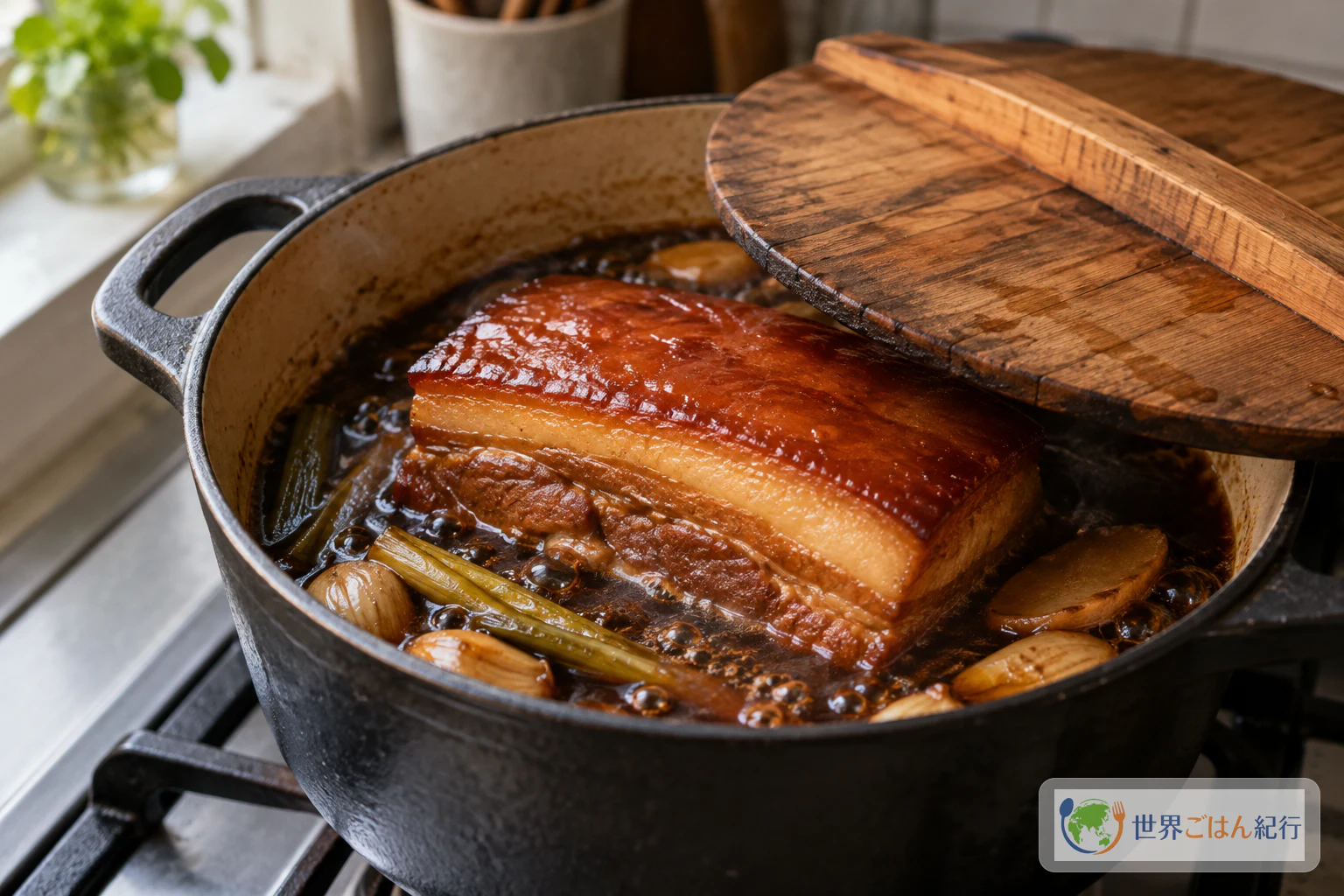
The tare is where "shoyu" comes from. Soy sauce, sake, mirin and salt are combined with some of the broth, the pork belly braises in it, and that liquid then seasons each bowl. Because the tare is a concentrated, salty base, it is not something to drink as soup on its own; you add it to the bowl a little at a time and adjust with hot broth.
Ingredients for an 8-Bowl Batch
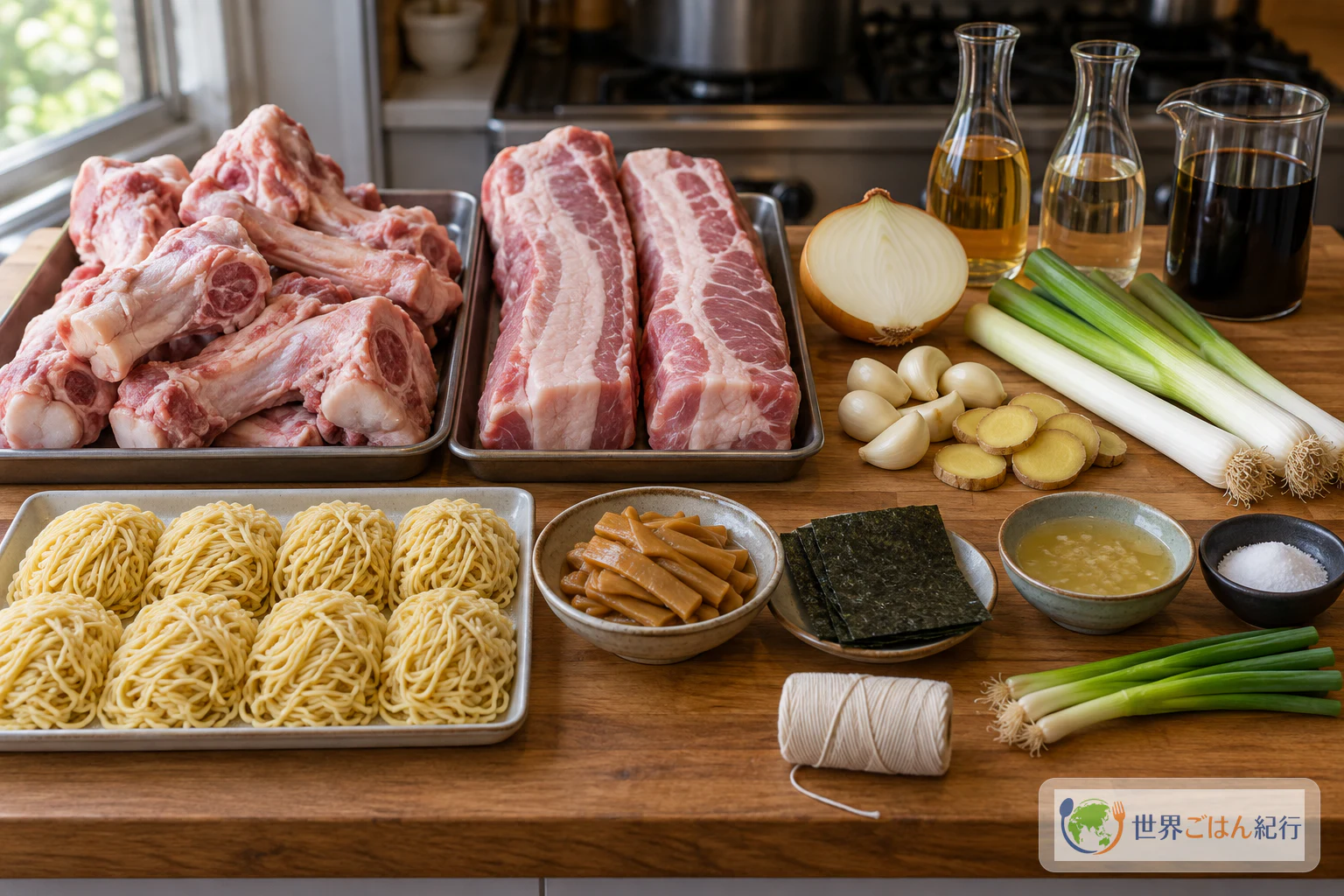
The source recipe recommends making the broth, chashu and tare as a full batch even if you are cooking for fewer people, because halving it does not give the same concentration. The batch makes 8 bowls' worth of broth and tare. Noodles and toppings are prepared only for the number of bowls you are serving that day.
Equipment
- A large stockpot with enough room that the water, bones and pork belly do not boil over when it comes to a boil
- A second, smaller pot for braising the chashu in the tare
- A drop lid (otoshibuta), or a lid that rests directly on the braising liquid
- A fine-mesh skimmer for foam
- A sturdy fine-mesh strainer for straining out bones and aromatics
- Kitchen twine for tying the pork belly
- A separate pot of boiling water for the noodles, and a strainer for draining them
- Separate cutting boards and utensils for raw meat and for cooked food
- Shallow containers for cooling broth and chashu quickly
- A probe thermometer, if you have one, for checking the center of the pork
Choosing and Substituting
Salt. Salt crystals differ in size, so the same tablespoon holds different amounts of salt. The source writes its tare for Diamond Crystal kosher salt (3 tbsp) and gives half that amount for table salt or fine sea salt. This recipe uses the fine-salt option, 1.5 tbsp. Keep to the measure that matches your salt rather than converting it to grams, and season each bowl gradually.
Soy sauce. Use dark (koikuchi) soy sauce. Light (usukuchi) soy sauce differs in color and saltiness, so it is not recommended as a same-amount substitute.
Sake. Some cooking sake contains added salt. Check the label, and take that into account when you season the bowls.
Bones and chicken fat. If pork bones or chicken fat are hard to find, you can build a broth around a chicken carcass instead, but it will not taste the same as the source recipe.
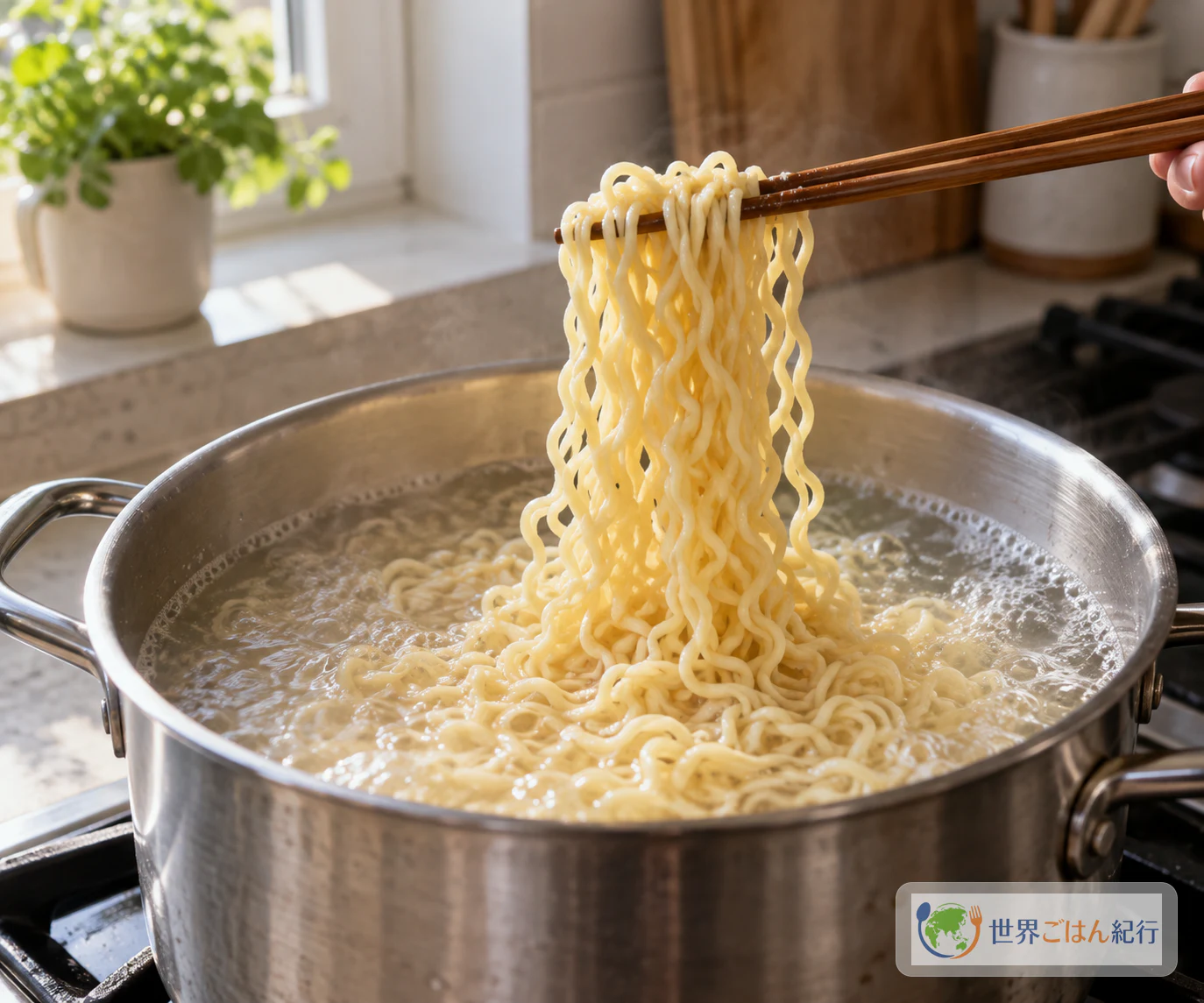
Noodles. Store-bought fresh medium-thin curly ramen noodles work well. Follow the cooking time on the package.
This recipe contains wheat (noodles, and possibly soy sauce), soy (soy sauce) and pork. Check the labels of the noodles, soy sauce and store-bought menma.
Before You Start: Two Pots, Six Hours
The broth simmers for 6 hours, but you are not working the whole time. From the 3-hour mark, the broth pot and the chashu pot run side by side: the chashu braises for 2 hours while the broth simmers for its last 3. Don't add these together as one long sequence.
The schedule follows the broth pot:
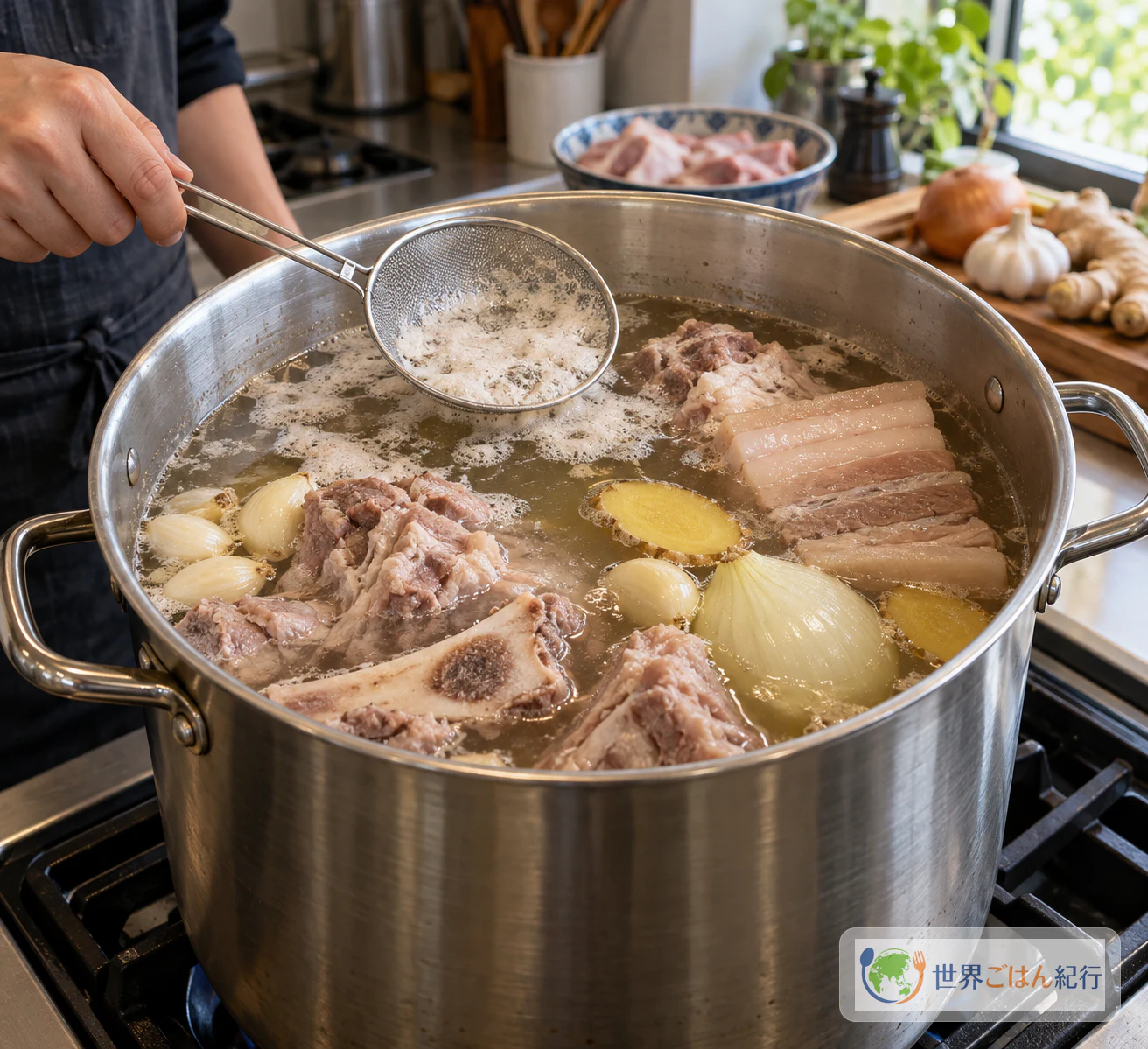
- From the boil: add the pork belly; higher heat, uncovered, skimming foam.
- Shortly before 2 hours: ladle out 480ml of broth for the tare.
- At 2 hours: add the chicken fat and the green parts of the long onions.
- At 3 hours: move the pork belly to the tare to braise for 2 hours. Turn the broth to low for 3 more hours.
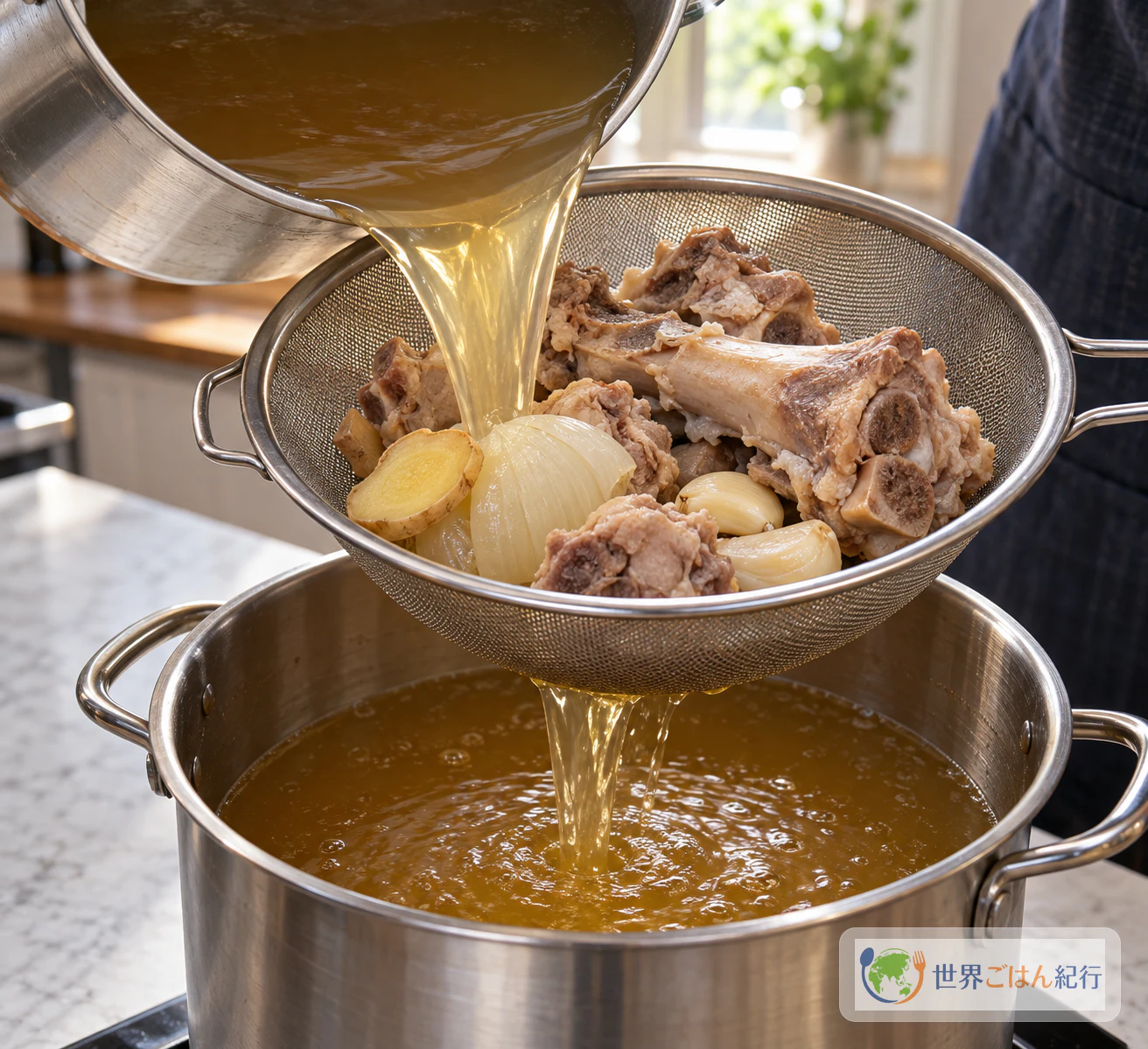
- At 6 hours: strain the broth.
Use a pot large enough for the source's water amount. If your pot is too small, topping it up endlessly with water over six hours will not give the same finished broth. Don't leave the stove unattended during the long simmer.
Don't wash raw meat; rinsing spreads bacteria around the sink and kitchen. Keep the cutting board, knife and tongs you use for raw pork separate from those used for cooked chashu and for serving. Japan's Ministry of Health, Labour and Welfare gives heating the center of meat to 75°C for at least 1 minute as a general guideline against many pathogens. Don't assume the pork is safe simply because it has simmered for a long time; if you have a thermometer, check the temperature at the center. Don't leave cooked broth or chashu at room temperature; divide it into shallow containers and refrigerate it quickly.
Fixing Common Problems
| Problem | Likely cause | What to do |
|---|---|---|
| The broth is cloudy | A hard rolling boil or stirring | For the clear Tokyo style, bring it back to a gentler simmer and stop stirring. Milky tonkotsu aims for the opposite result |
| The bowl is too salty | Too much tare went in at once | Add tare a little at a time in each bowl. If the broth has reduced, add hot water to the broth before judging the seasoning |
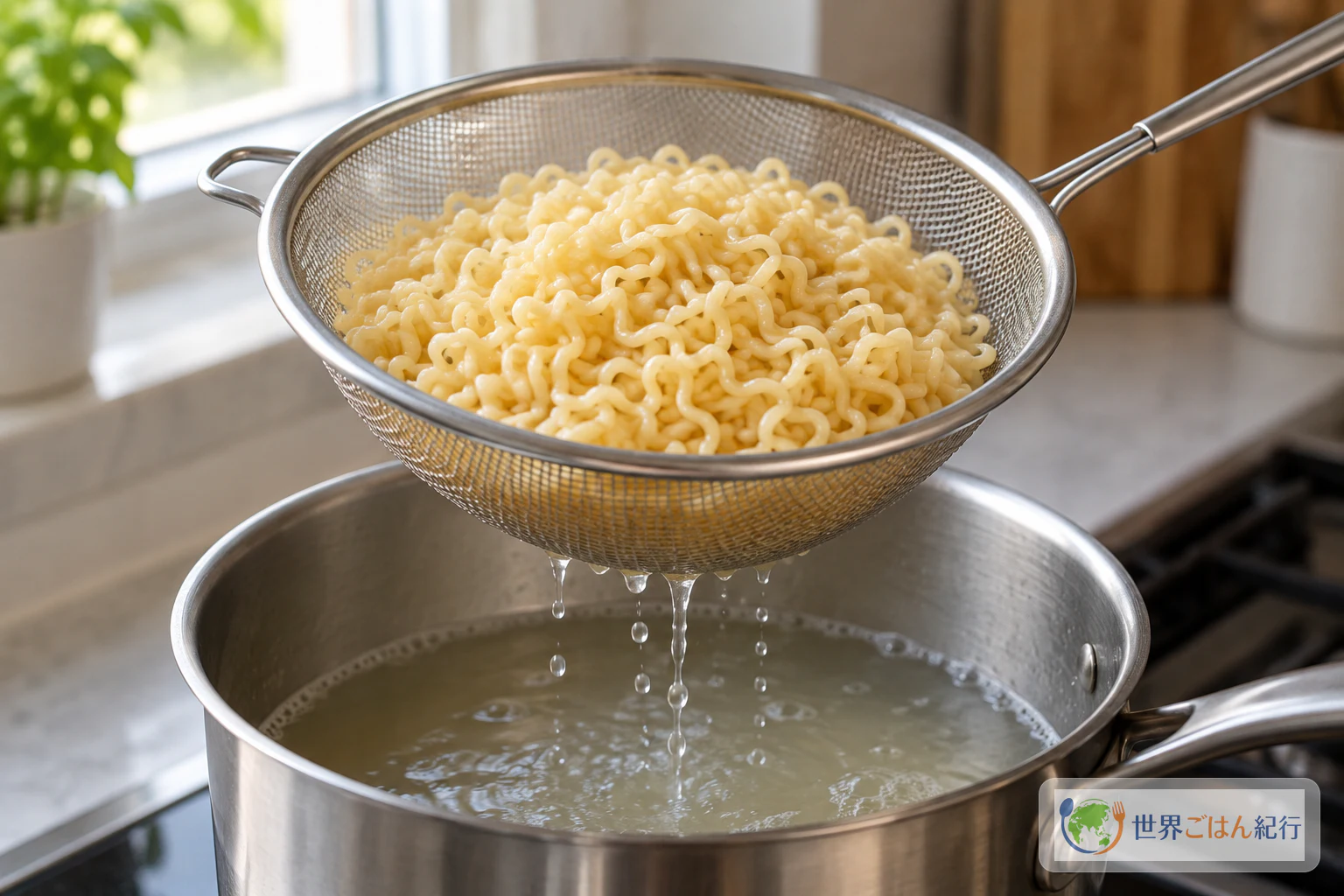
| The noodles are soft and swollen | Cooked too early or left waiting | Boil the noodles last, drain them and serve at once. Don't hold cooked noodles in the broth |
| The broth is close to boiling over | Pot too full during the higher-heat phase | Turn the heat down until it settles, and add the remaining water only when there is room |
Variations
These small changes keep the Tokyo-style shape of the bowl:
- Lighter finish: leave out the chicken fat.
- Thinner noodles: use a thinner fresh noodle, cooked to the time on its package.
- Simpler toppings: center the bowl on green onion and nori.
These turn it into a different dish:
- Miso: replacing the shoyu tare with miso makes a different bowl; it needs its own recipe rather than a swap.
- Milky pork-bone broth: for the opaque, creamy style, see tonkotsu ramen.
One Bowl Among Many Regional Styles
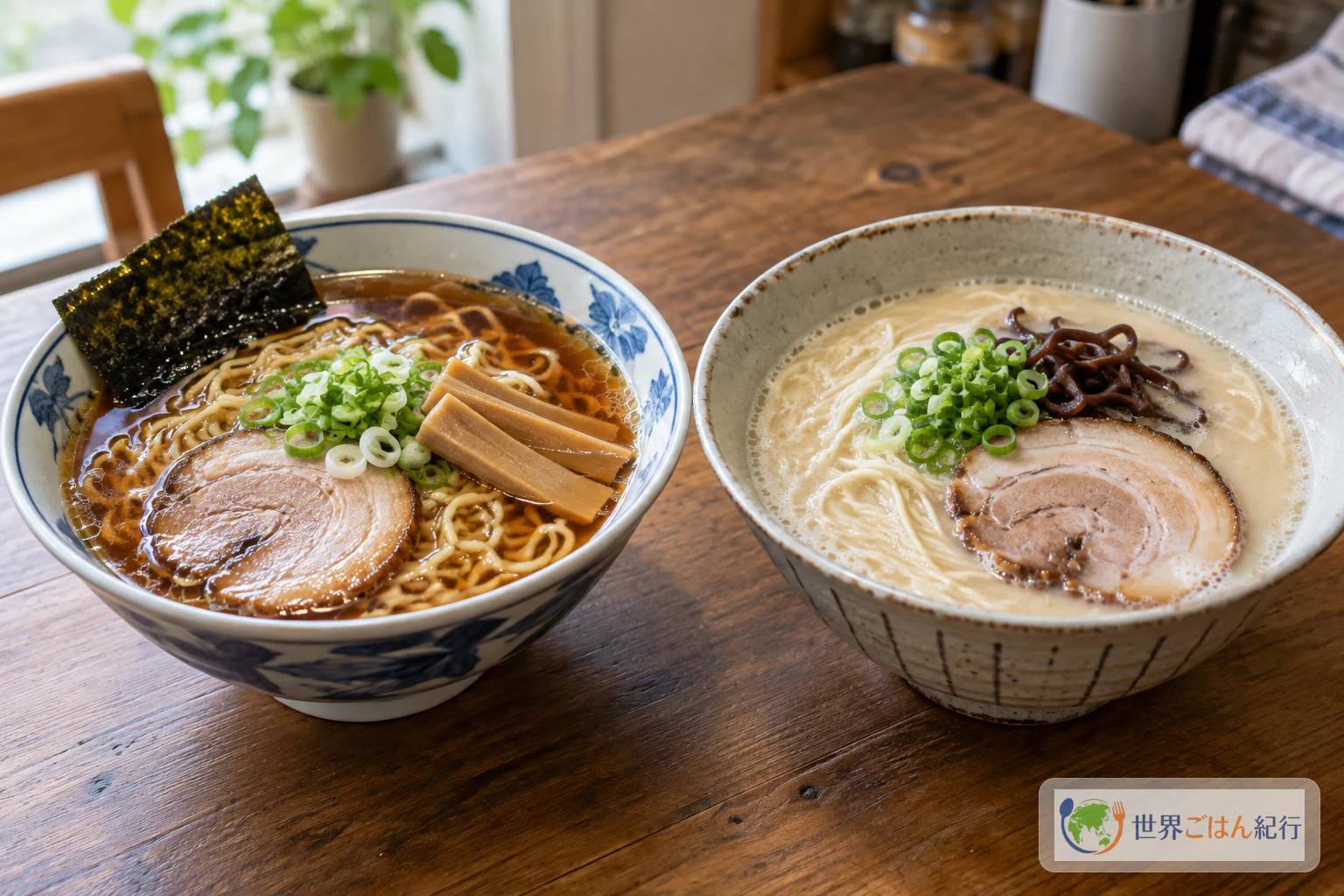
Ramen in Japan is not a single nationwide recipe. The Japan National Tourism Organization describes different types, such as shoyu, miso and tonkotsu, along with regional differences in noodles and toppings. Tonkotsu ramen, for example, is a Kyushu style said to have originated in Kurume, and it is distinguished from ordinary shoyu ramen.
Tokyo's official tourism guide describes ramen as a noodle dish of Chinese origin that changed into different forms across Japan, and notes that ramen from many regions can be found side by side in Tokyo. The bowl in this recipe is one Tokyo-style shoyu example within that wider range.
Shoyu, miso and tonkotsu are not three points on a single scale. Shoyu and miso describe the tare, while tonkotsu describes the broth, so the categories can overlap in one bowl. Thinking of a bowl as broth, tare, fat and noodles put together makes it easier to see what each style changes.
Frequently Asked Questions
What is the difference between shoyu ramen and tonkotsu ramen?
They are named along different axes. Shoyu refers to the soy-based tare, while tonkotsu is also used to describe the type of broth, and the two can be combined. The bowl here aims for a clear broth; tonkotsu aims for a milky one.
Can I make the broth the day before?
Yes, and it is recommended. Strain it, divide it into shallow containers, cool it quickly and refrigerate it. Keep to the same hygiene for the chashu and tare, and boil the noodles just before eating.
Can I use store-bought noodles?
Yes. Fresh medium-thin curly ramen noodles work well. Follow the cooking time on the package.
Can I use light (usukuchi) soy sauce instead?
It is not recommended as a same-amount substitute. Its color and saltiness differ from dark (koikuchi) soy sauce.
Can I shorten the six-hour simmer?
A shorter simmer will not give the same result as the shop owner's recipe this article follows. A short-cooking version would need to be designed as a separate recipe.
Sources
- Japan National Tourism Organization (JNTO), "Ramen 101 | Eat Ramen in Japan." Used for the different types of ramen such as shoyu, miso and tonkotsu, regional noodles and toppings, and tonkotsu as a Kyushu style said to originate in Kurume, distinct from ordinary shoyu ramen. https://www.japan.travel/en/sg/story/ramen/
- Just One Cookbook, "Shoyu Ramen - Recipe from Bizentei, Tokyo" (recipe shared by Masamoto Ueda of Bizentei). Used for the composition of a Tokyo-style shoyu bowl, the ingredients and amounts, the 6-hour broth, the chashu braised in tare, the salt-type options, noodle cooking and per-bowl seasoning. https://www.justonecookbook.com/shoyu-ramen/
- GO TOKYO / Tokyo Convention & Visitors Bureau, "Oodles of Noodles—A Guide to Eating Ramen in Tokyo." Used for ramen as a noodle dish of Chinese origin that changed across regions of Japan, and for the many regional styles found in Tokyo. https://www.gotokyo.org/en/story/guide/oodles-of-noodles-a-guide-to-ramen-in-tokyo/index.html
- Ministry of Agriculture, Forestry and Fisheries of Japan, "安全に食事を楽しむ!肉、魚、野菜の調理法" (Cooking meat, fish and vegetables safely). Used for cooking meat through to the center, not washing meat, keeping raw-meat utensils separate, and cooling cooked food quickly in shallow containers. https://www.maff.go.jp/j/pr/aff/2506/spe1_02.html
- Ministry of Health, Labour and Welfare of Japan, "お肉はよく焼いて食べよう" (Cook meat thoroughly). Used for the guideline of heating the center of meat to 75°C for at least 1 minute. https://www.mhlw.go.jp/stf/seisakunitsuite/bunya/0000049964.html