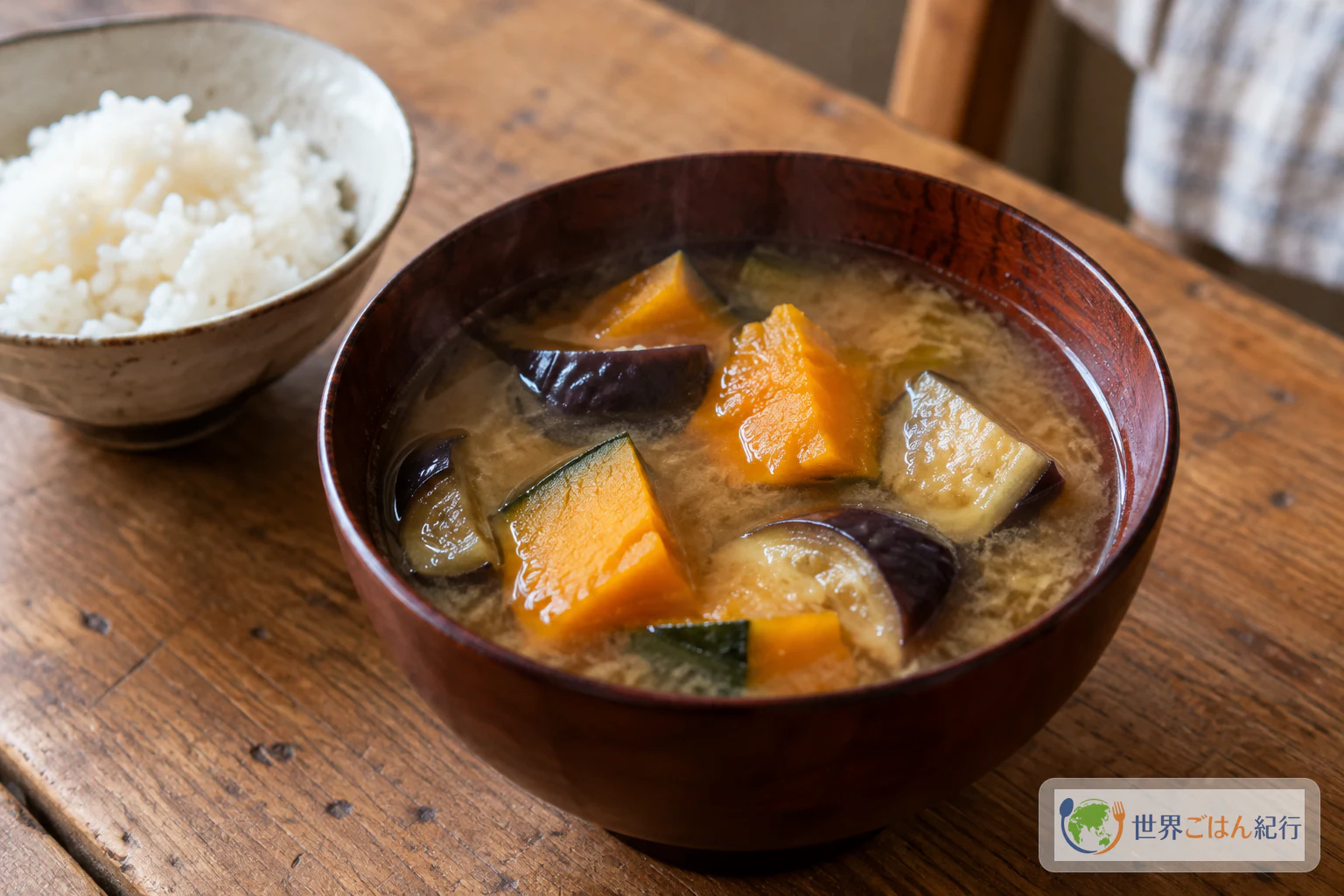
Kabocha and Eggplant Miso Soup, Brought Together by Kombu Dashi
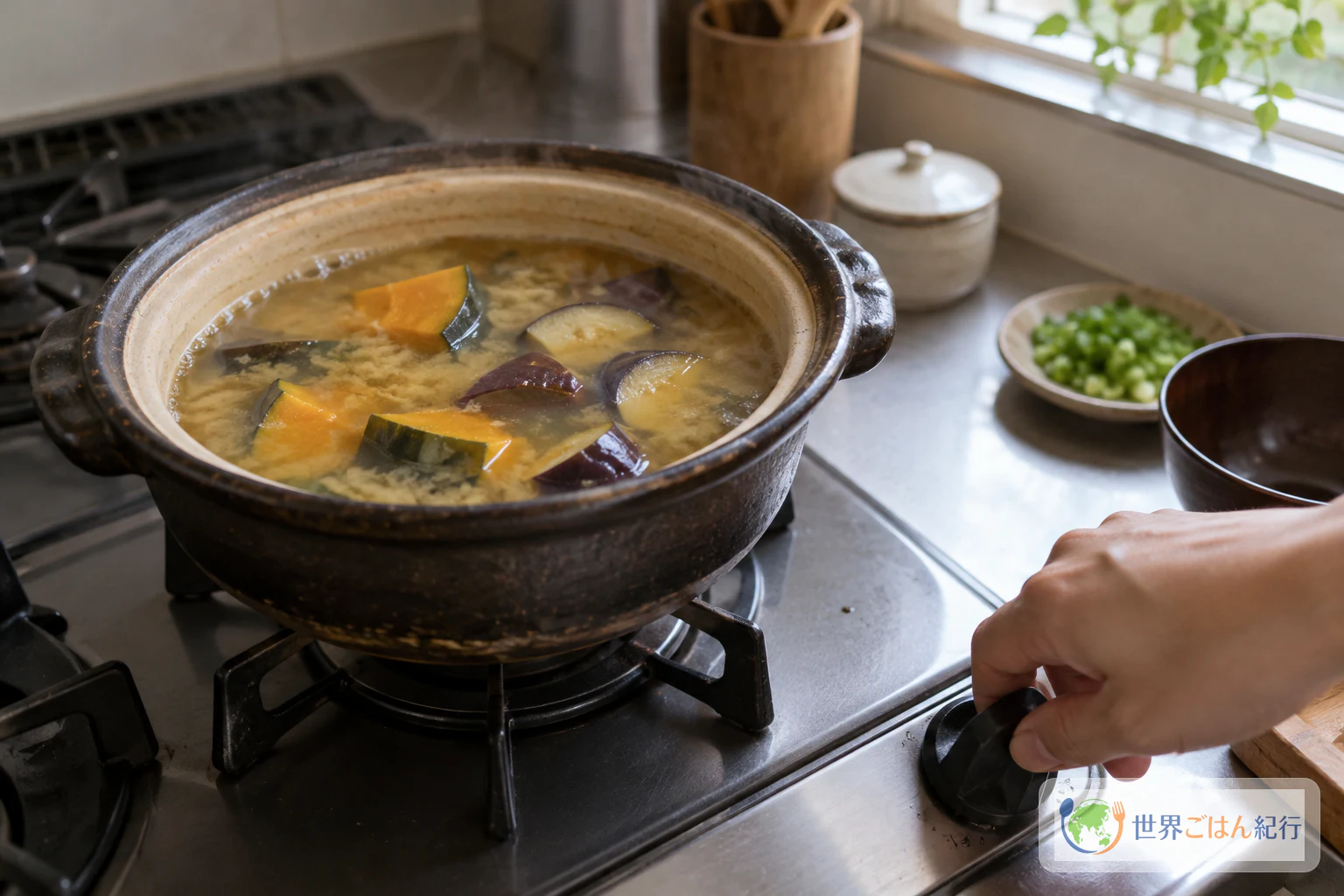
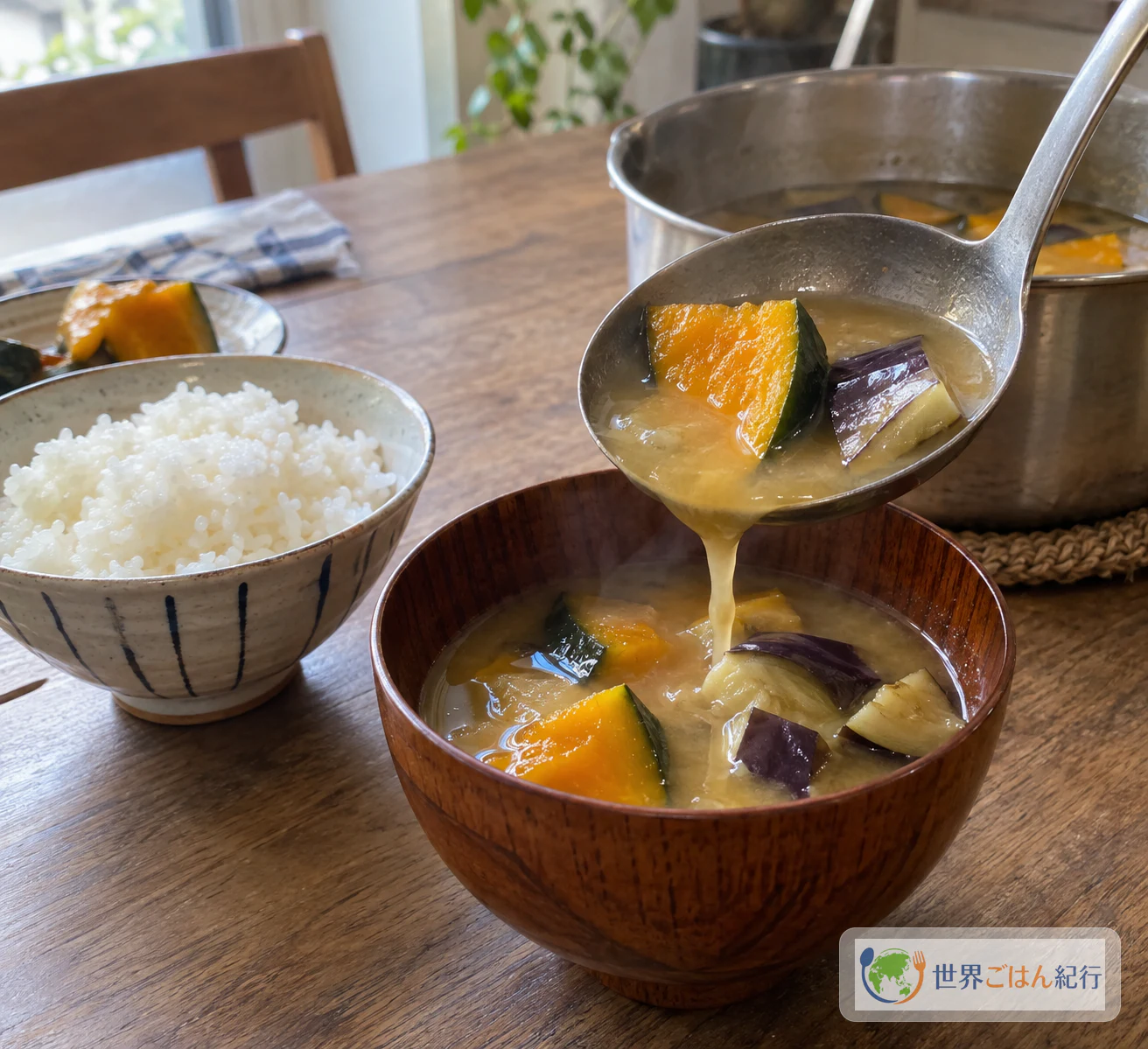
Kombu gives a gentle savoriness, miso adds a fermented aroma, kabocha brings sweetness and eggplant turns soft. Add the miso last, and turn off the heat just before the soup comes back to a boil.
In Japan, a bowl of rice and a bowl of miso soup often sit side by side at an ordinary breakfast or dinner. Miso soup is everyday home food. Rather than one fixed recipe, it is a soup in which the dashi (broth), the miso and the seasonal vegetables change from household to household.
This article follows one published version of the soup: kabocha squash and Japanese eggplant in a dashi made only from kombu, as given in a Kikkoman recipe for two. Tofu, wakame, scallions, extra salt, oil and bonito-based dashi are not part of this version, so they are left out here. It is one home-style example among many. It is not a single national standard or a regional specialty. For more about the country's food, see Japan.
Ingredients and Preparing the Kombu Dashi
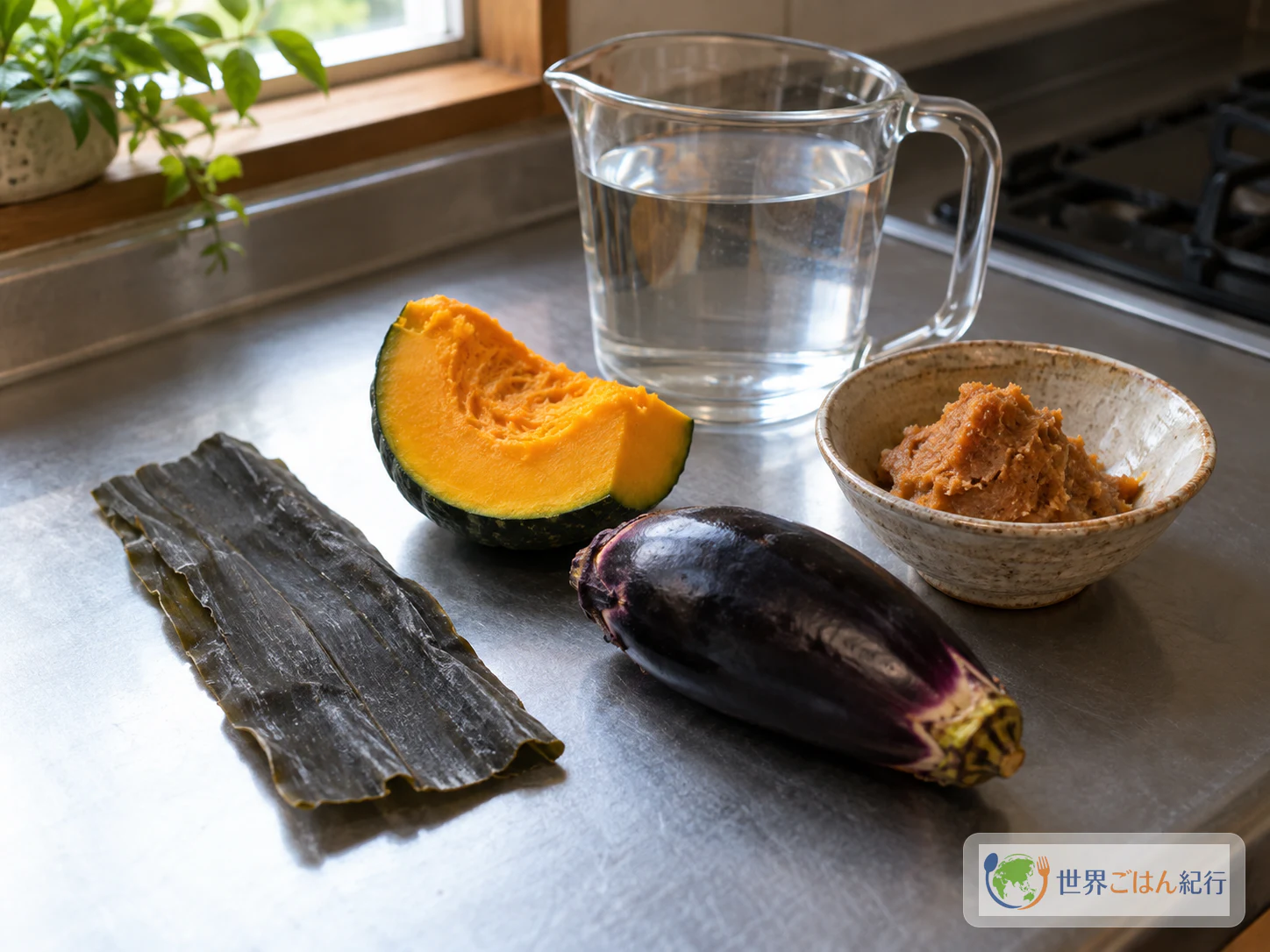
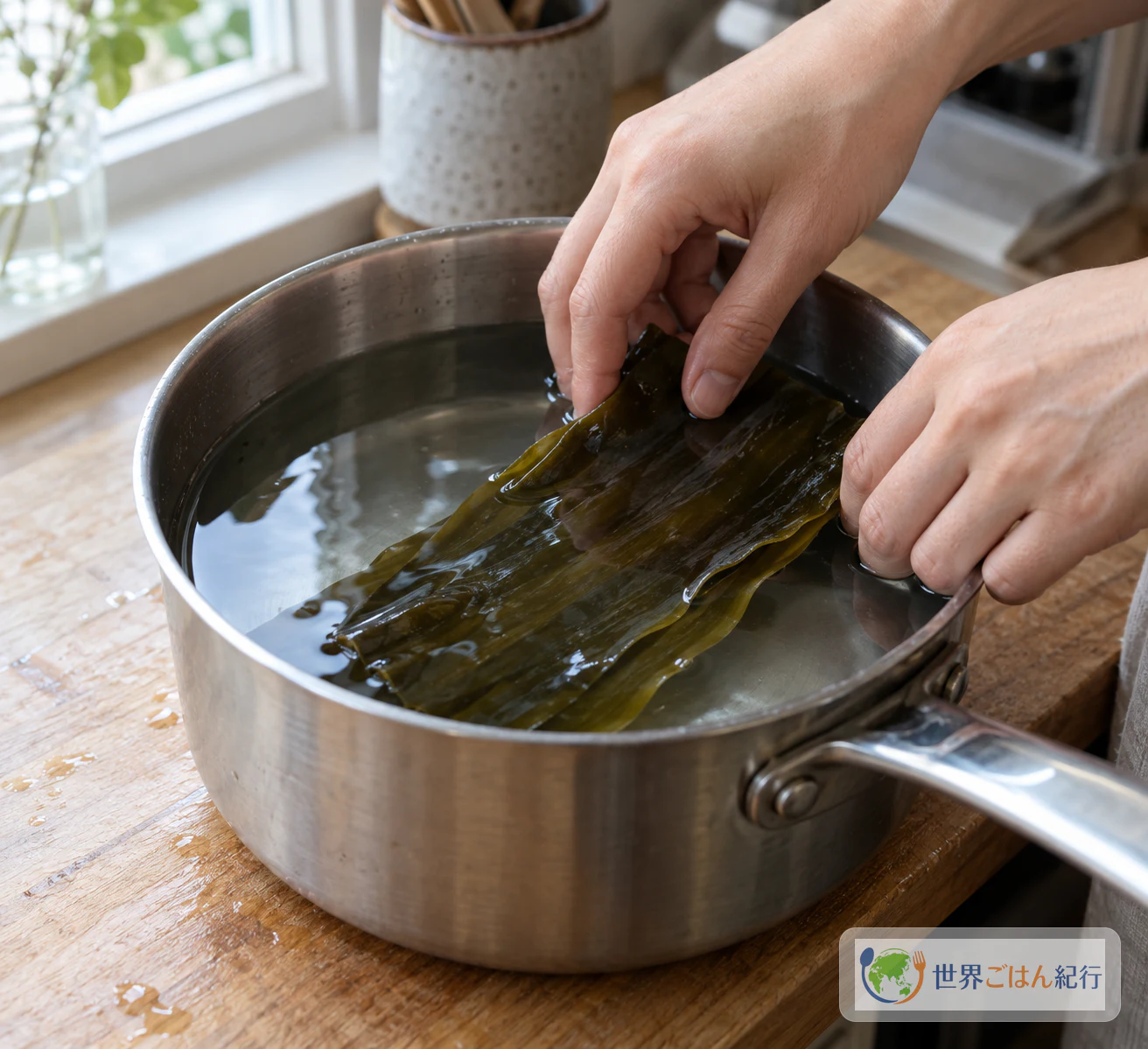
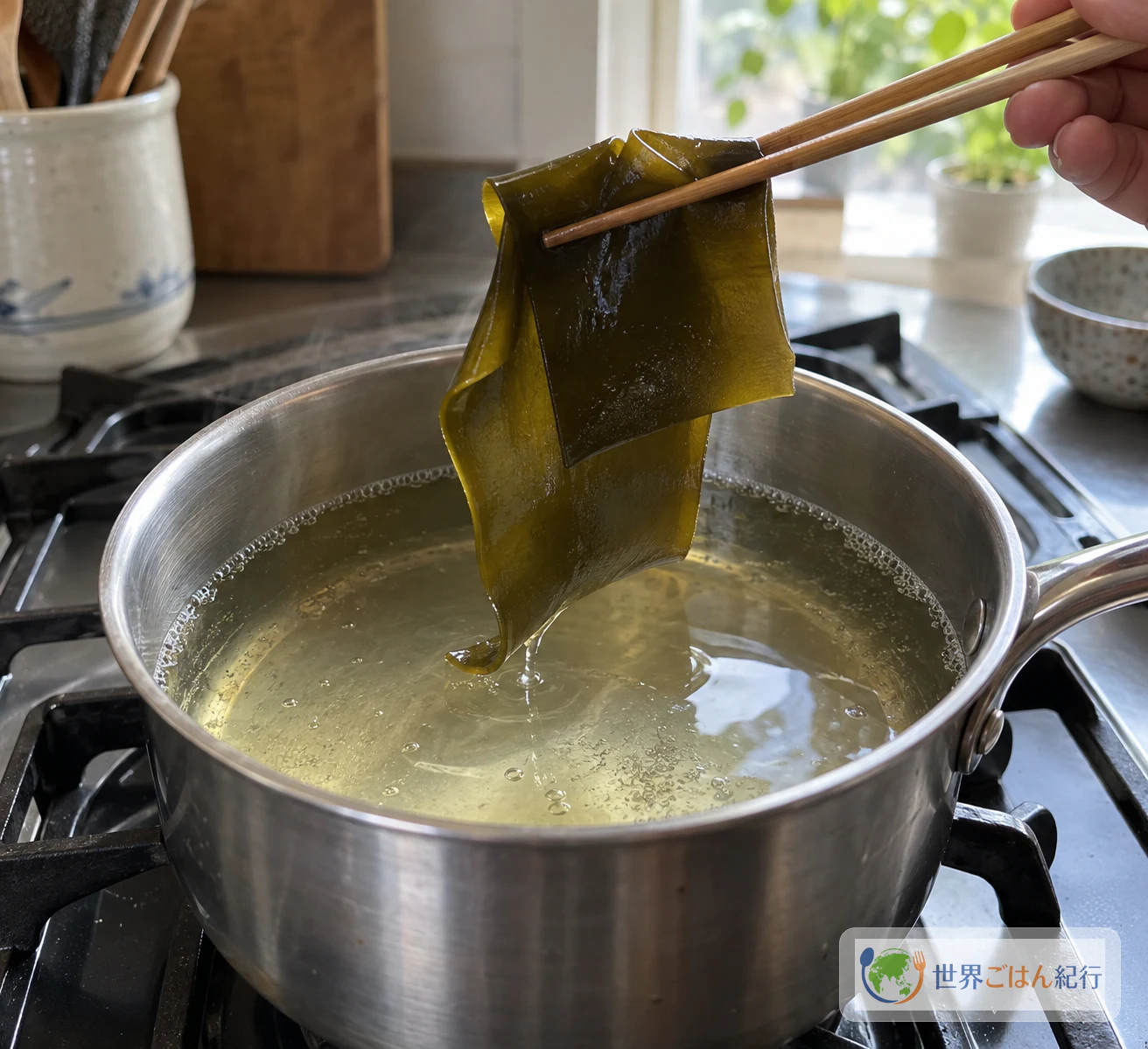
Before you cook, keep two numbers apart. You use 500 ml of water to make the kombu dashi. Only 300 ml of that finished dashi goes into the soup. The amounts below are what the source recipe gives for two servings.
The recipe doesn't name a type of miso, so this article doesn't assume rice miso or any other kind. Miso products differ in saltiness and flavor, so the same spoonful can taste different from one brand to the next. Treat 1 1/2 tbsp as your starting point and taste.
Miso is made from soybeans, so anyone with a soy allergy should not assume any miso is safe. Ingredients vary by product, and some miso is made with barley or wheat. Check the ingredient and allergen label on the miso you buy. This recipe makes no claim that the soup is free of any allergen.
Equipment
- A saucepan for soaking and heating the kombu
- A second pot for cooking the soup
- A measuring jug for the 500 ml of water and the 300 ml of dashi
- A knife and cutting board
- A ladle (and chopsticks for lifting out the kombu). A small miso strainer is handy but optional
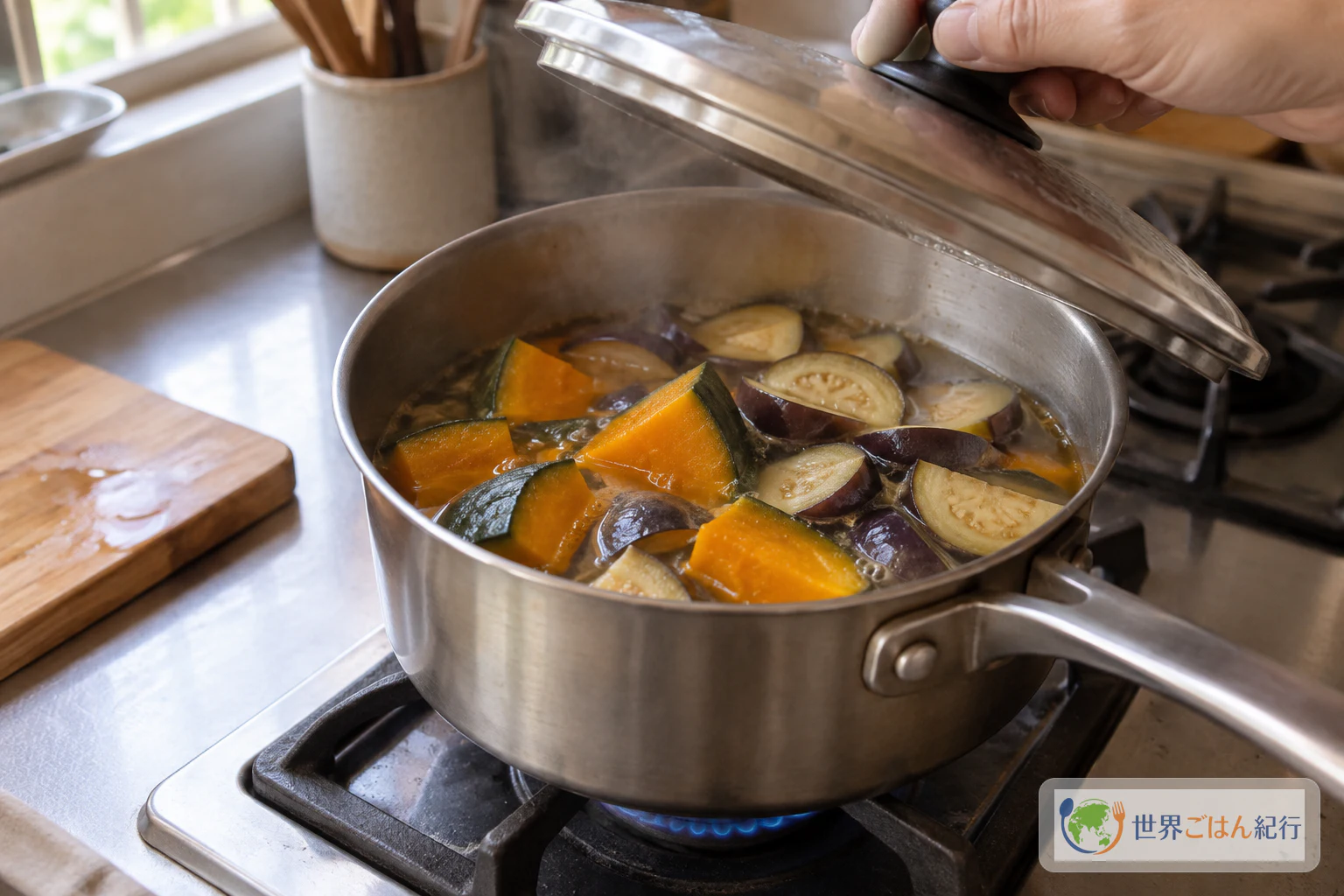
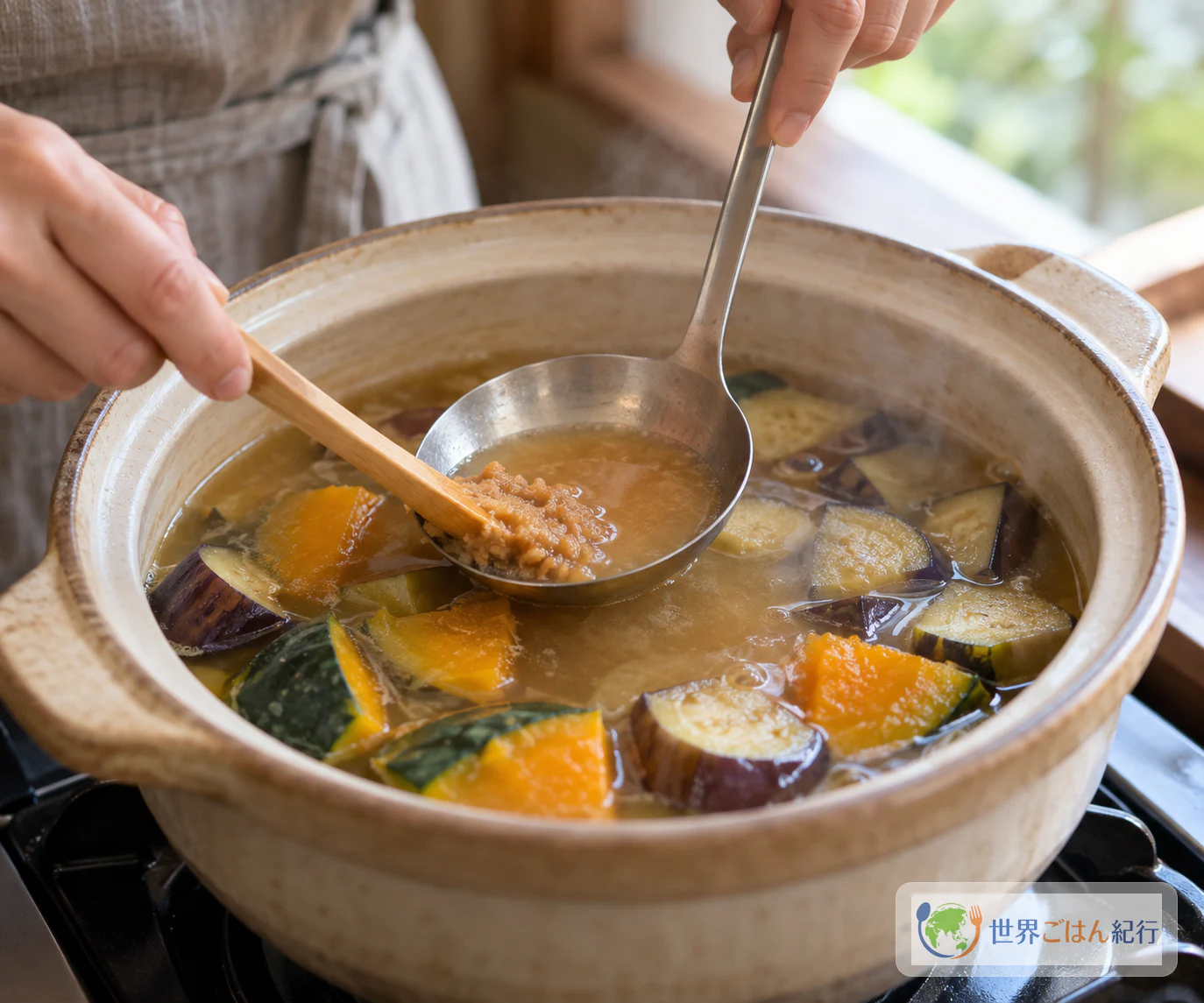
Method: Cook the Vegetables, Then Dissolve the Miso
The source estimates about 10 minutes for cutting and cooking the vegetables. That doesn't include the 3-hour kombu soak, so start the soak well ahead.
Troubleshooting
| What happened | Likely cause | What to do |
|---|---|---|
| The miso aroma is faint | The soup boiled for a while after the miso went in | Next time, add the miso last and turn off the heat just before it reboils |
| The soup tastes thin | All 500 ml of water went into the soup, or the amounts got mixed up | Use 500 ml only to make the dashi, then measure 300 ml of finished dashi into the soup |
| The vegetables are still firm | Cut sizes or your stove differ from the source's | Keep the lid on, cook a little longer and check again before adding the miso |
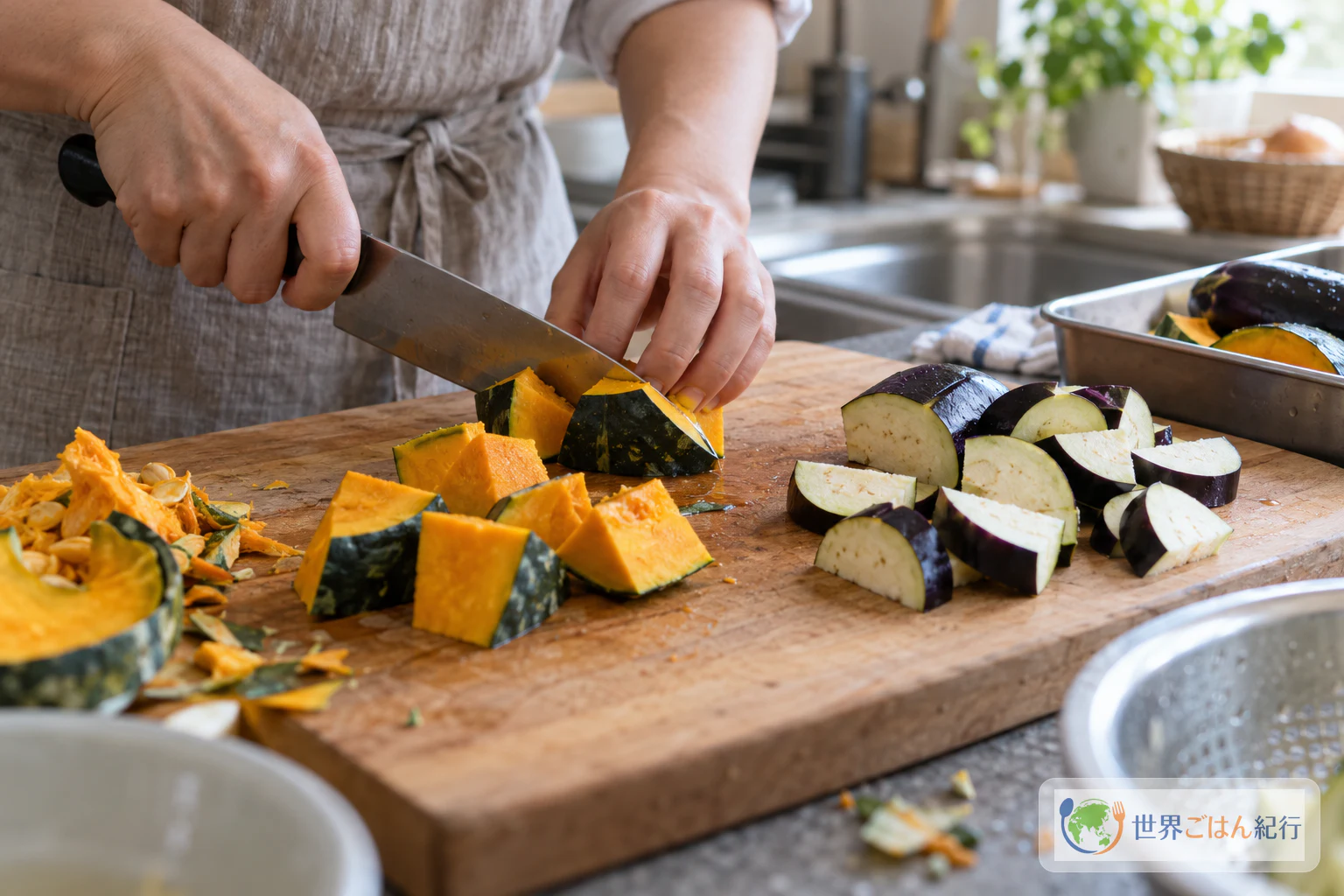
| The kabocha broke apart | The pieces were cut very small | Cut bite-size pieces and keep them even |
| Too salty, or not salty enough | Miso varies in saltiness by product | Start from 1 1/2 tbsp and adjust with more or less miso. This recipe adds no extra salt |
Matching the Soup to Your Miso, and Other Variations
- Compare miso types. The kabocha's sweetness makes it easier to taste how different miso products compare. Miso can be made with rice koji, barley koji or soybean koji, and color and flavor also change with production method and salt content. Treat the differences as saltiness and aroma, not as one being better.
- Kombu-only dashi. This version uses only kombu, so it has no bonito (katsuobushi) flavor. Bonito-based dashi would give a different-tasting soup.
- Soak the kombu ahead. Starting the 3-hour soak earlier shortens the time you spend at the stove later.
- Even eggplant slices. Cutting the eggplant to the same width makes it easier to see when it's done.
Miso soup is a dish where the dashi, the miso and the seasonal vegetables change from home to home. For example, an English-language page from Japan's Ministry of Agriculture, Forestry and Fisheries shows a miso soup with tofu, wakame and green onion. That is a separate recipe. Those ingredients are not added to this one.
Japanese cooking advice also notes that cut size changes cooking time. Root vegetables cook faster in thin slices, tofu can be scooped in with a spoon, and leafy greens can be torn by hand. Those ideas belong to other versions of the soup. This recipe keeps to bite-size kabocha and 1 cm eggplant.
Frequently Asked Questions
When do I add the miso?
At the end, once the vegetables are cooked. Dissolve it in a ladle with a little broth, stir it in, and turn off the heat just before the soup comes back to a boil.
Do I use all 500 ml of the dashi?
No. The 500 ml of water is for making the kombu dashi. Measure only 300 ml of the finished dashi into the soup.
Which miso should I use?
The source doesn't name a type, so use one you like. Miso products differ in saltiness and aroma, so start with 1 1/2 tbsp and taste. If allergies are a concern, read the label, since some miso contains barley or wheat as well as soy.
Can I soak the kombu overnight in the fridge instead?
The source page describes a refrigerated cold-brew dashi as a separate method. This article follows the 3-hour in-pot soak and heating. It doesn't cover swapping one method for the other.
Can I store leftover soup?
The source recipe gives no storage time or reheating instructions for the finished soup, so this article doesn't give any. The source's note on how long cold-brewed kombu dashi keeps in the fridge applies to that dashi only. It doesn't apply to finished miso soup.
Sources
- Kikkoman Corporation, "Miso Soup with Kabocha and Japanese Eggplant." Main source for the ingredients, amounts and method. Also covers the everyday role of miso soup, the differences between rice, barley and soybean miso, how to make the kombu dashi, and turning off the heat just before the soup reboils so the miso keeps its aroma. Source check date: 2026-10-23. https://www.kikkoman.com/en/cookbook/washoku/misosoup.html
- Ministry of Agriculture, Forestry and Fisheries of Japan, "Miso soup." Used only as an example of a different filling, with tofu, wakame and green onion. Not mixed into this recipe. Source check date: 2026-10-23. https://www.maff.go.jp/e/policies/market/japan-cuisine/japan/8/index.html
- Ajinomoto Co., Inc., "Misoshiru no tsukurikata" (How to make miso soup, in Japanese). Used only for general advice on how cut size changes cooking time and on simple ways to prepare fillings. Its amounts are not used. Source check date: 2026-10-23. https://www.ajinomoto.co.jp/hondashi/misoshiru/how/index.html