Morioka Jajamen: One Bowl That Changes Halfway Through
This is a home recipe for two, and it has not been kitchen-tested by Sekai Gohan. The base is the version published by JA Zen-Noh Tamago. The final pan-heating step for the egg soup is our own safety addition, explained under the method.
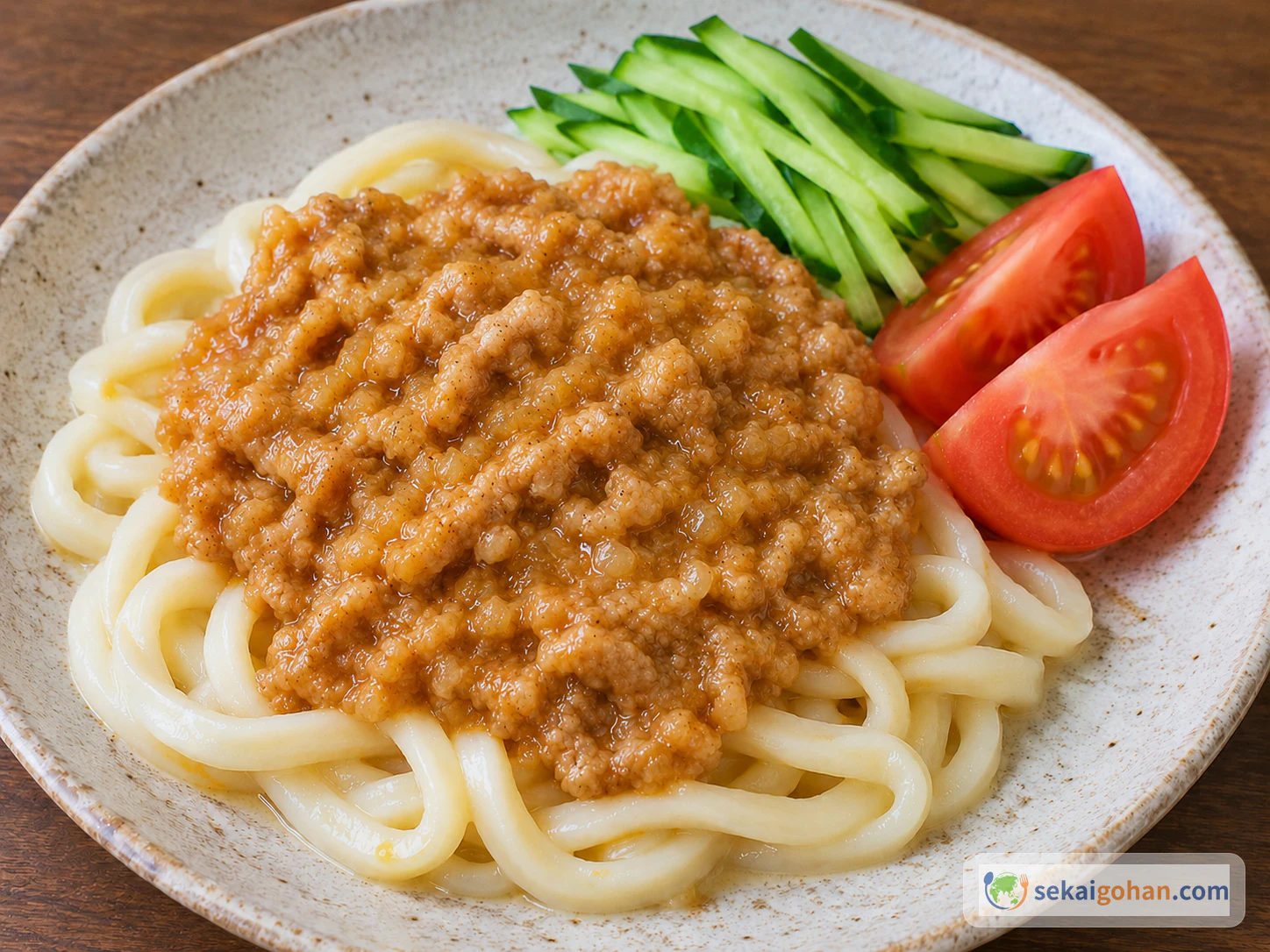
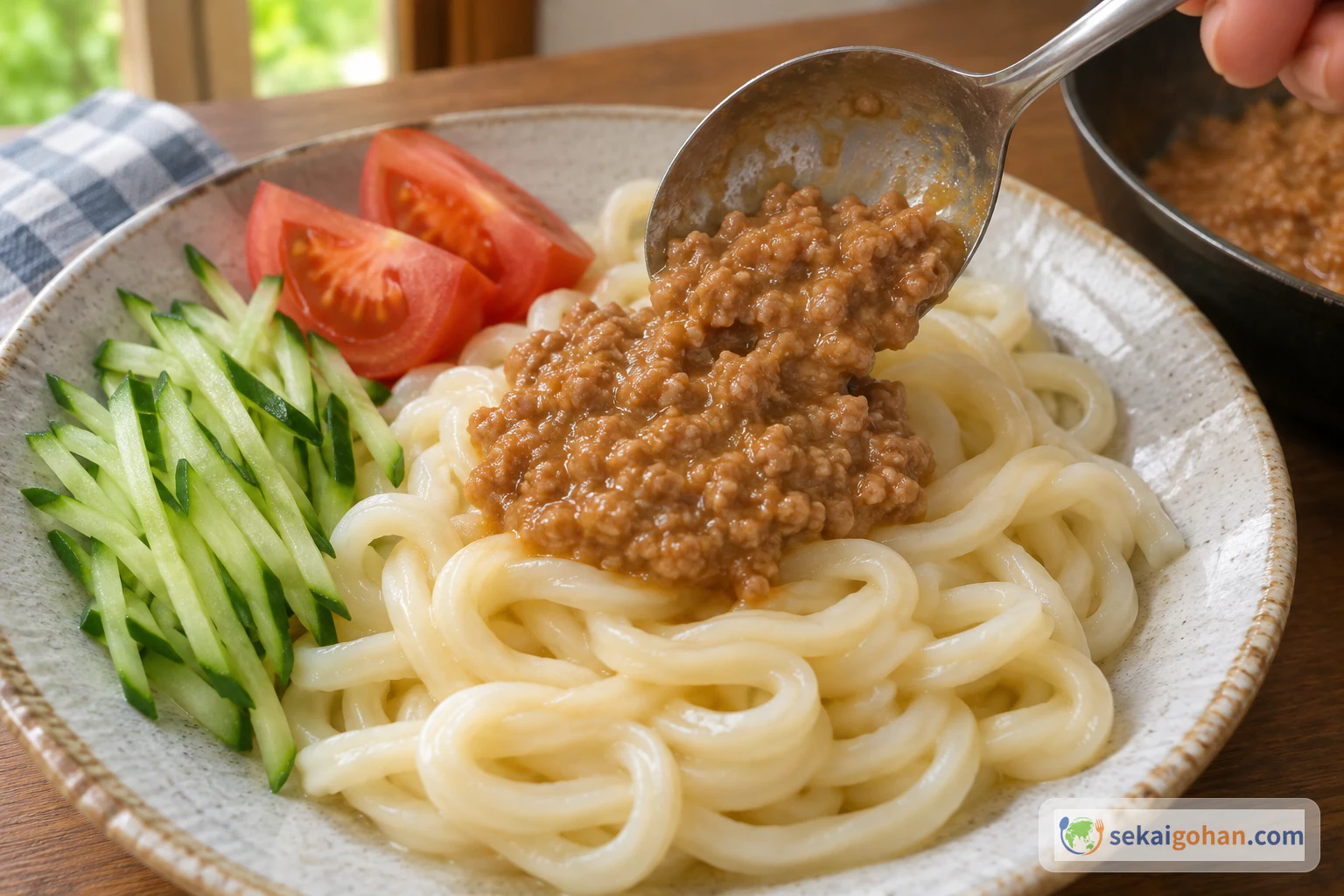
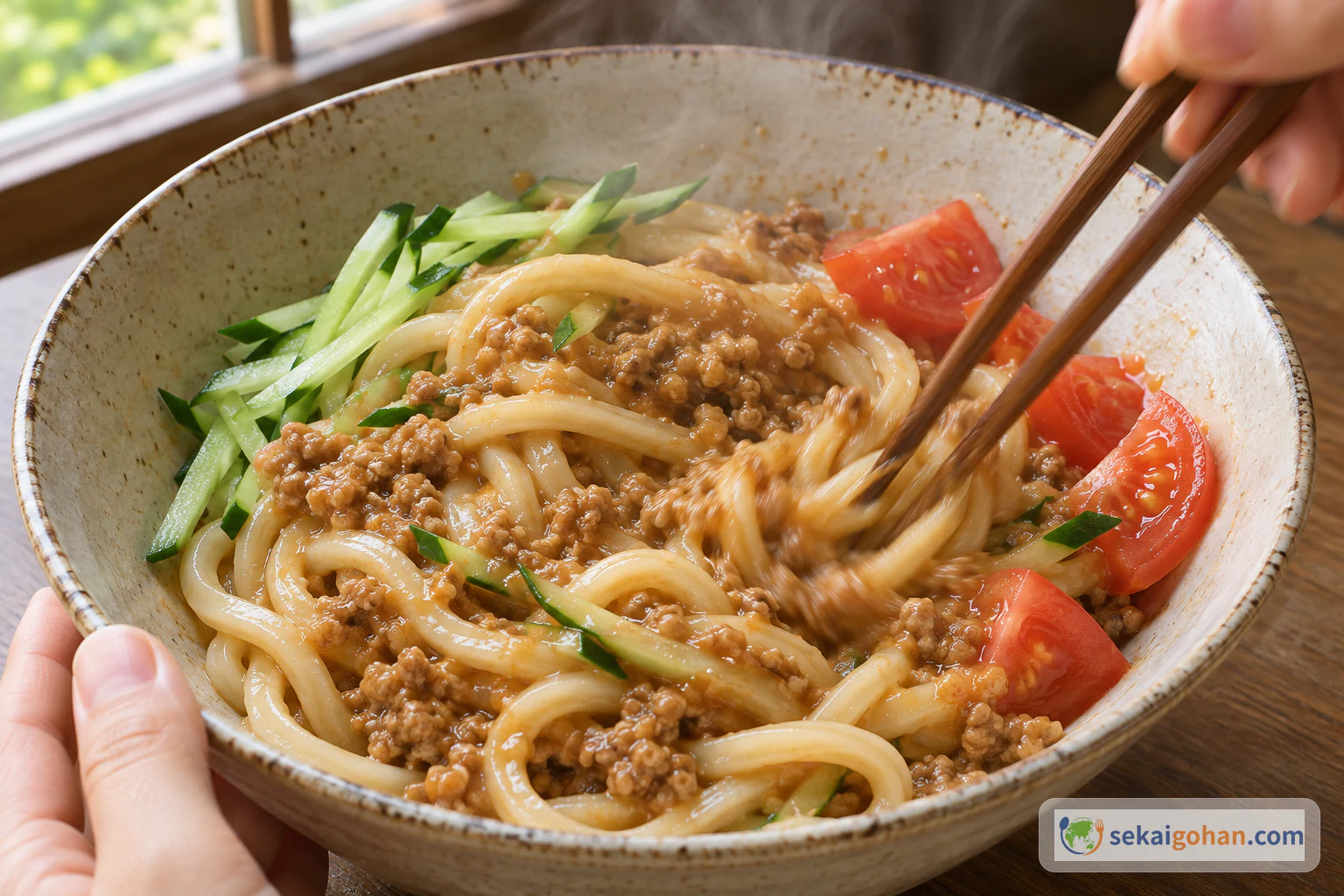
A bowl of hot noodles arrives with cucumber and a spoonful of meat miso. Each diner then takes over, mixing the noodles and sauce and adding vinegar, garlic, chili oil or grated ginger to taste. That is how Morioka City and Iwate's official tourism site describe jajamen, the noodle dish of Morioka in Iwate Prefecture.
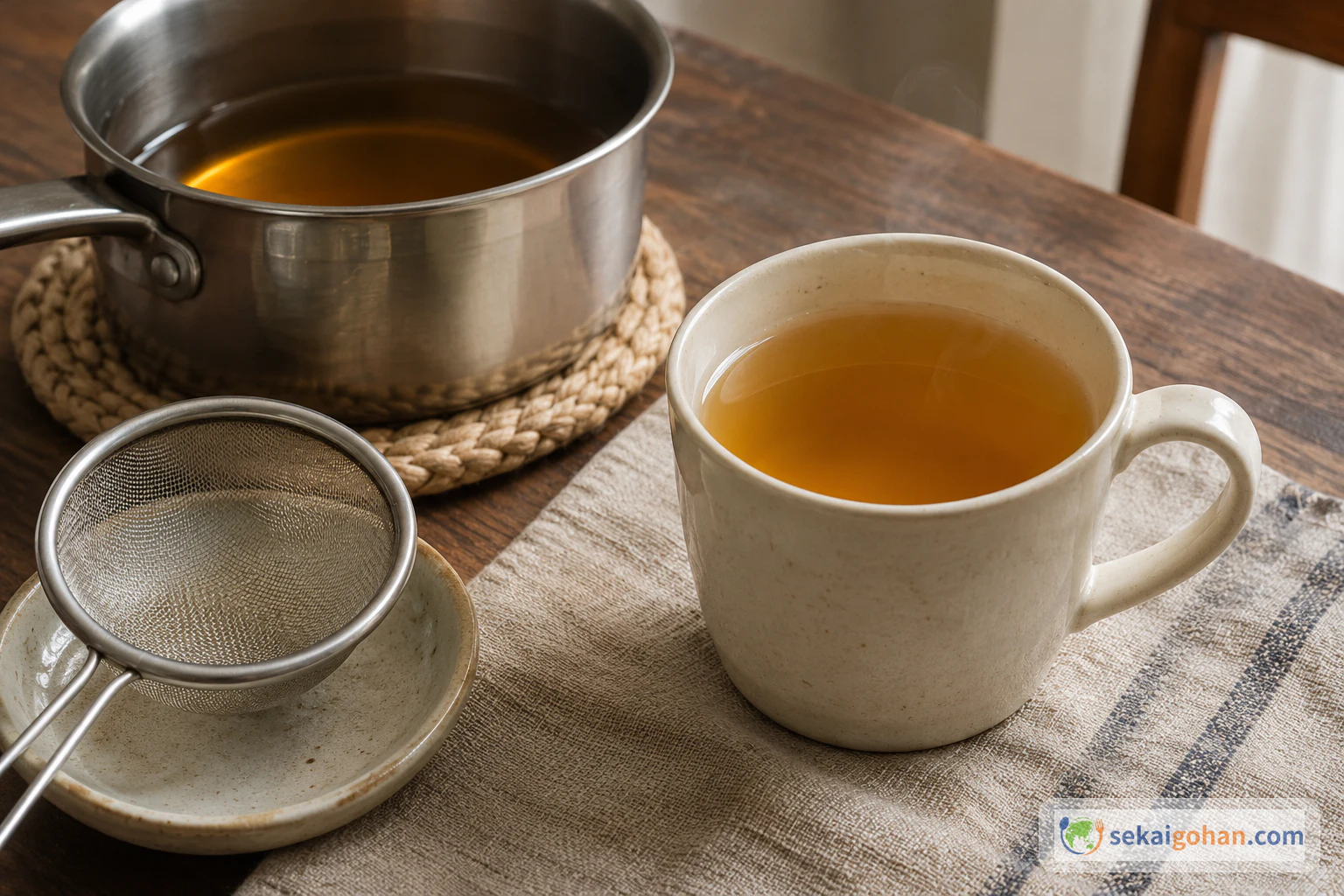
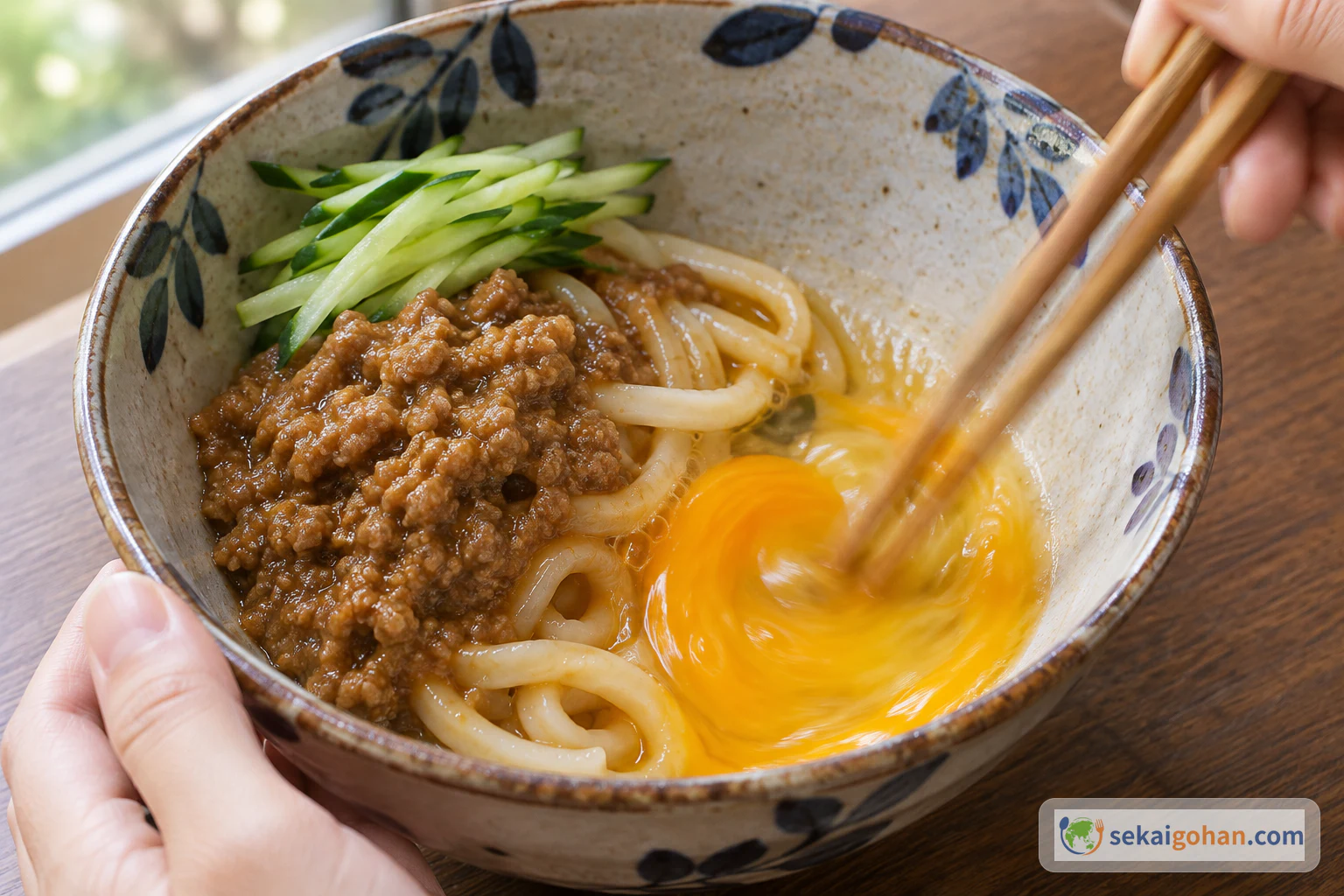
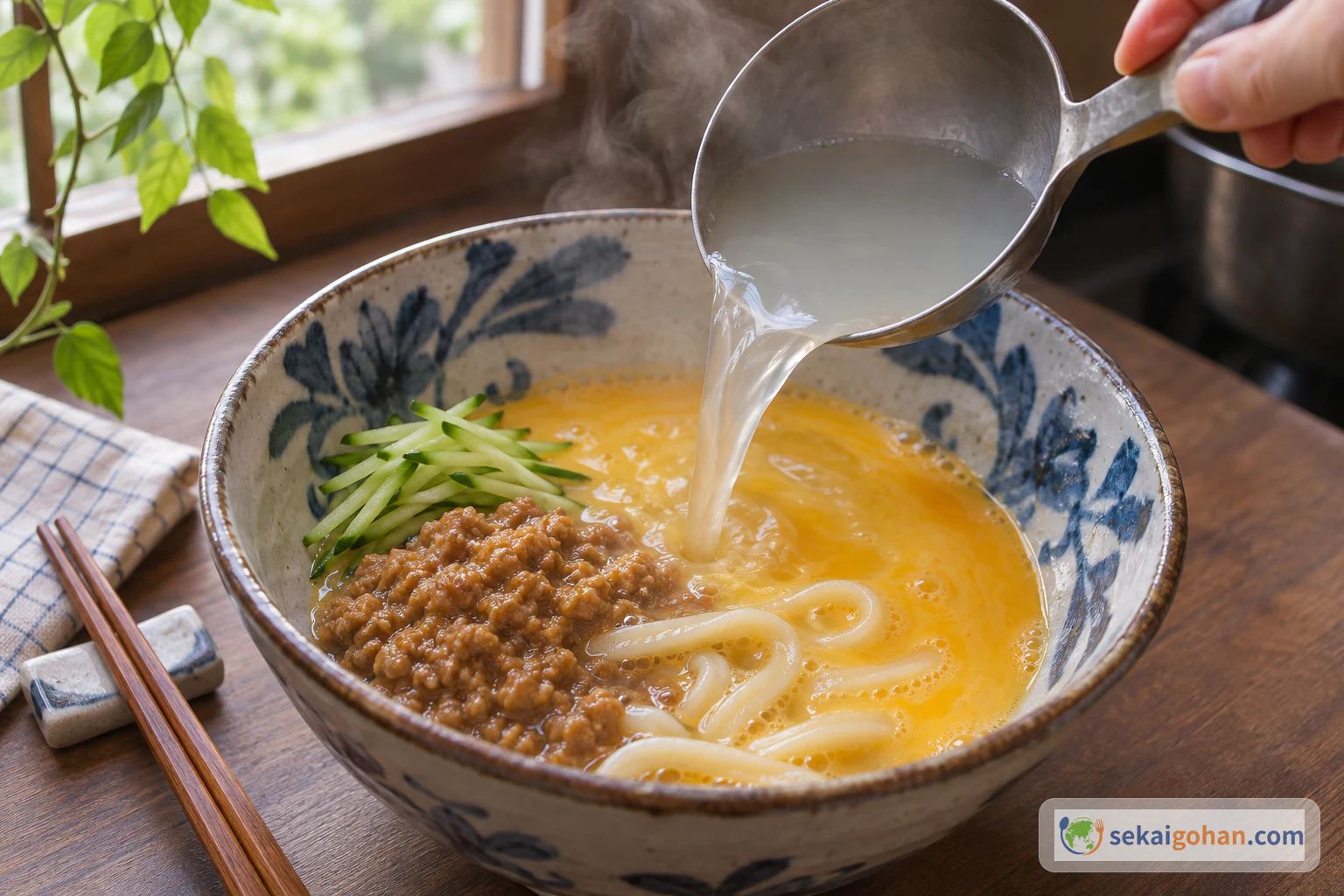
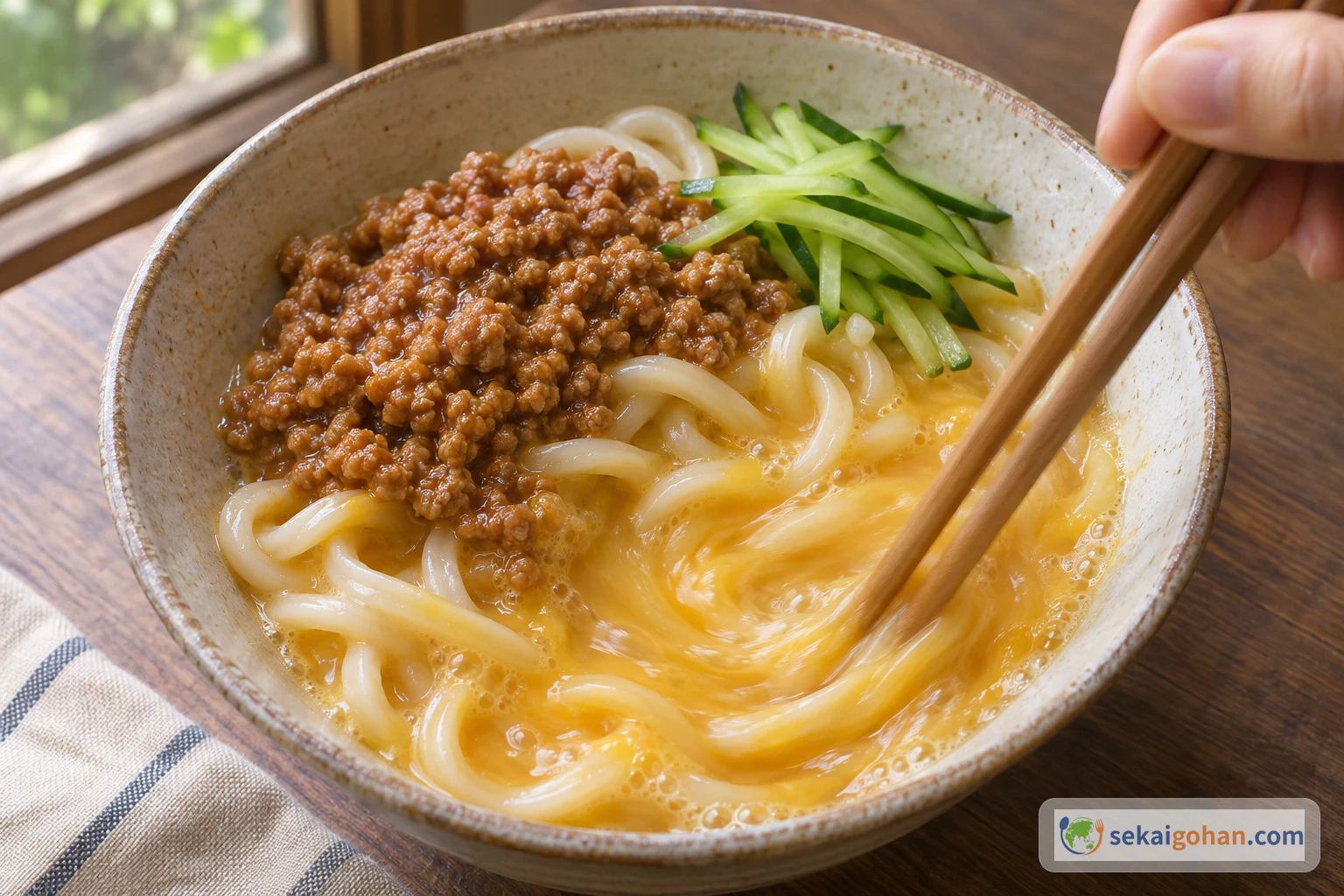
The meal doesn't end when the noodles are nearly gone. A little noodle and meat miso stay in the bowl, then egg and hot noodle cooking water turn what's left into chitantan (チータンタン), an egg soup.
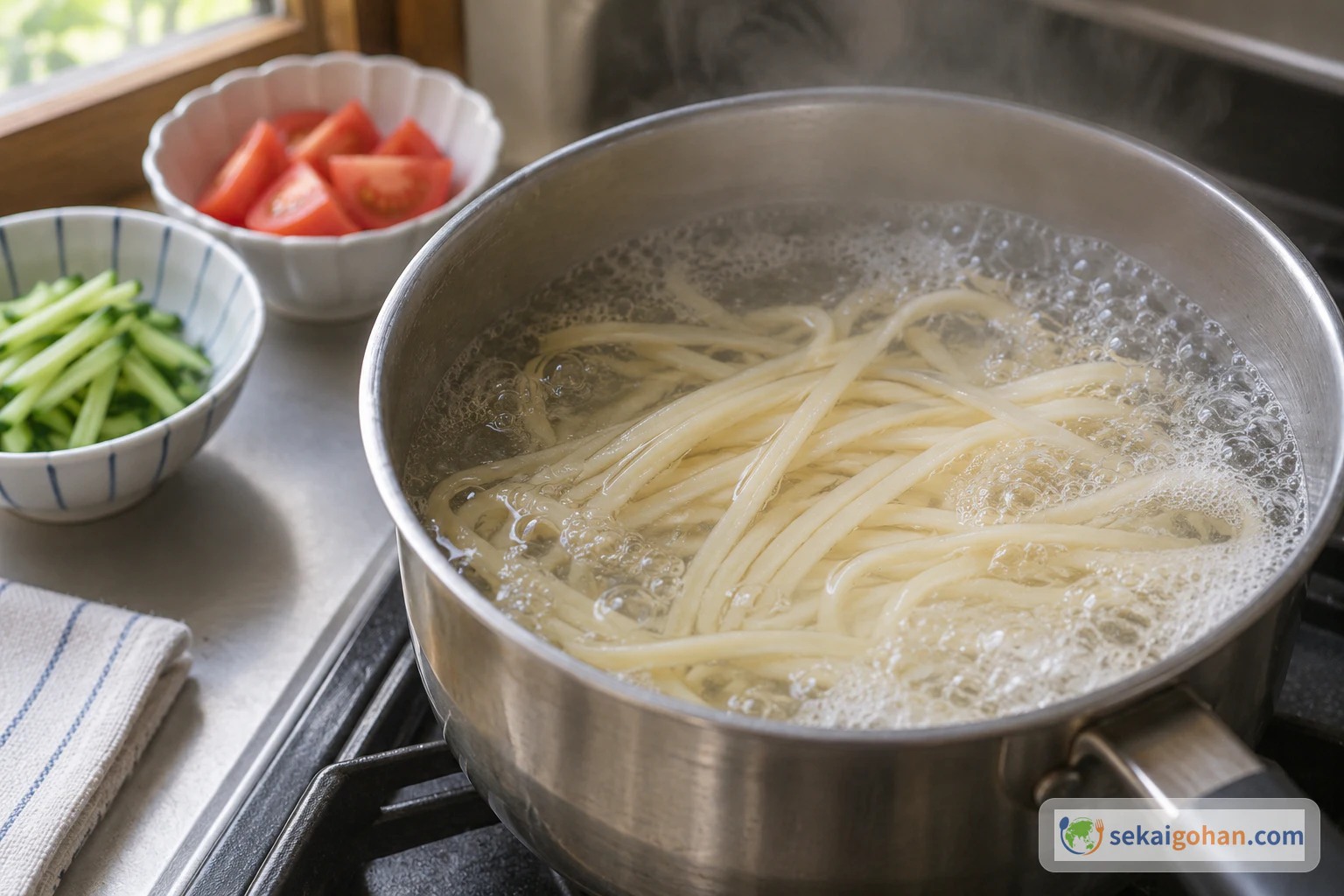
Restaurants each work on their own miso, so no single recipe stands for the whole dish. The version here is one home example. It uses dried udon and adds tomato alongside the cucumber.
Ingredients for 2 Servings
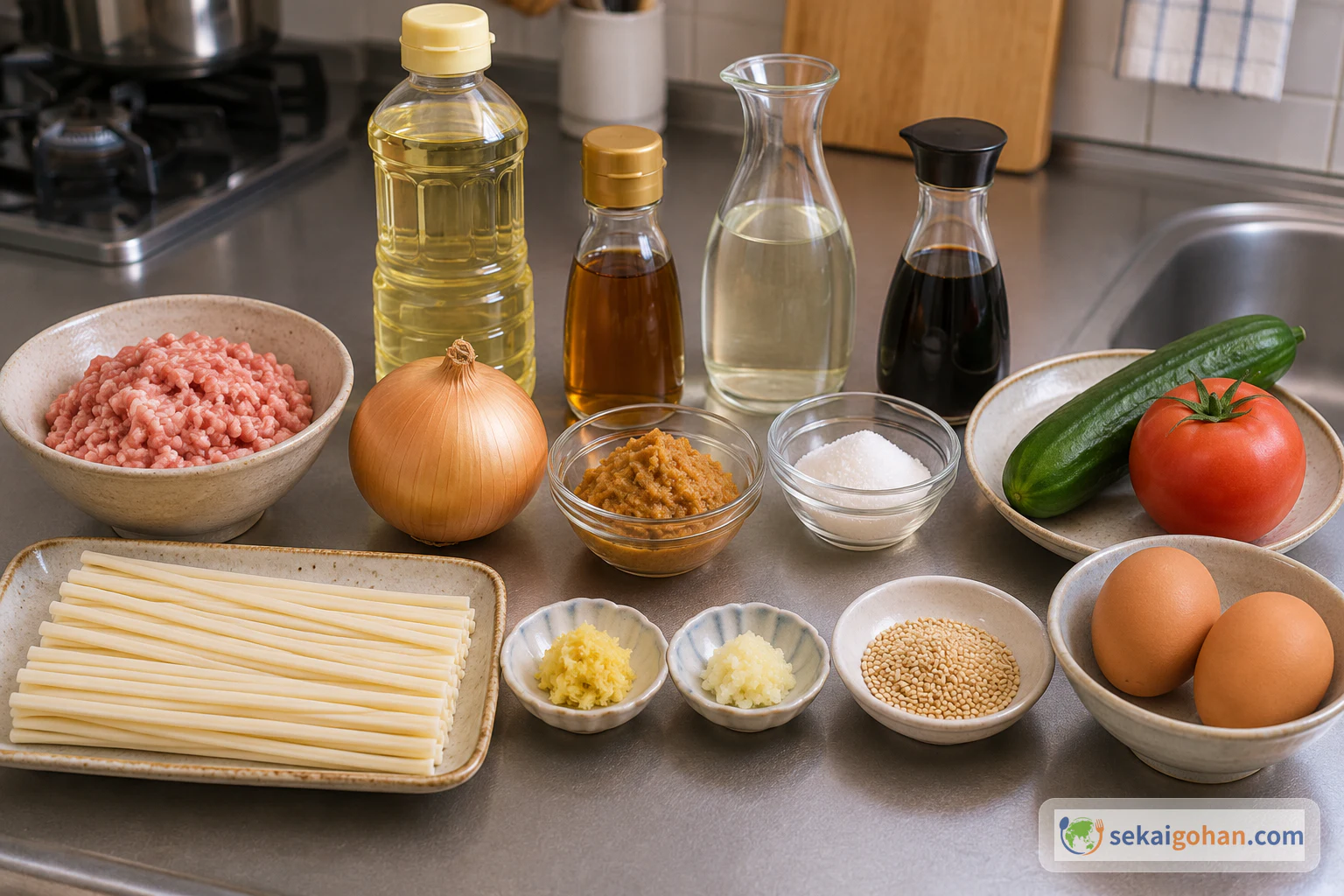
This dish contains wheat (udon), soy (miso and soy sauce), sesame and egg, along with pork. Check the labels on the products you buy.
Equipment
- Frying pan
- Wooden spatula
- Pot for the noodles
- Colander
- Small pan for the chitantan
- Mixing bowl and spoon for the sauce
- Knife and cutting board
- Two serving bowls and chopsticks
- Food thermometer, if you have one
Choosing and Swapping Ingredients
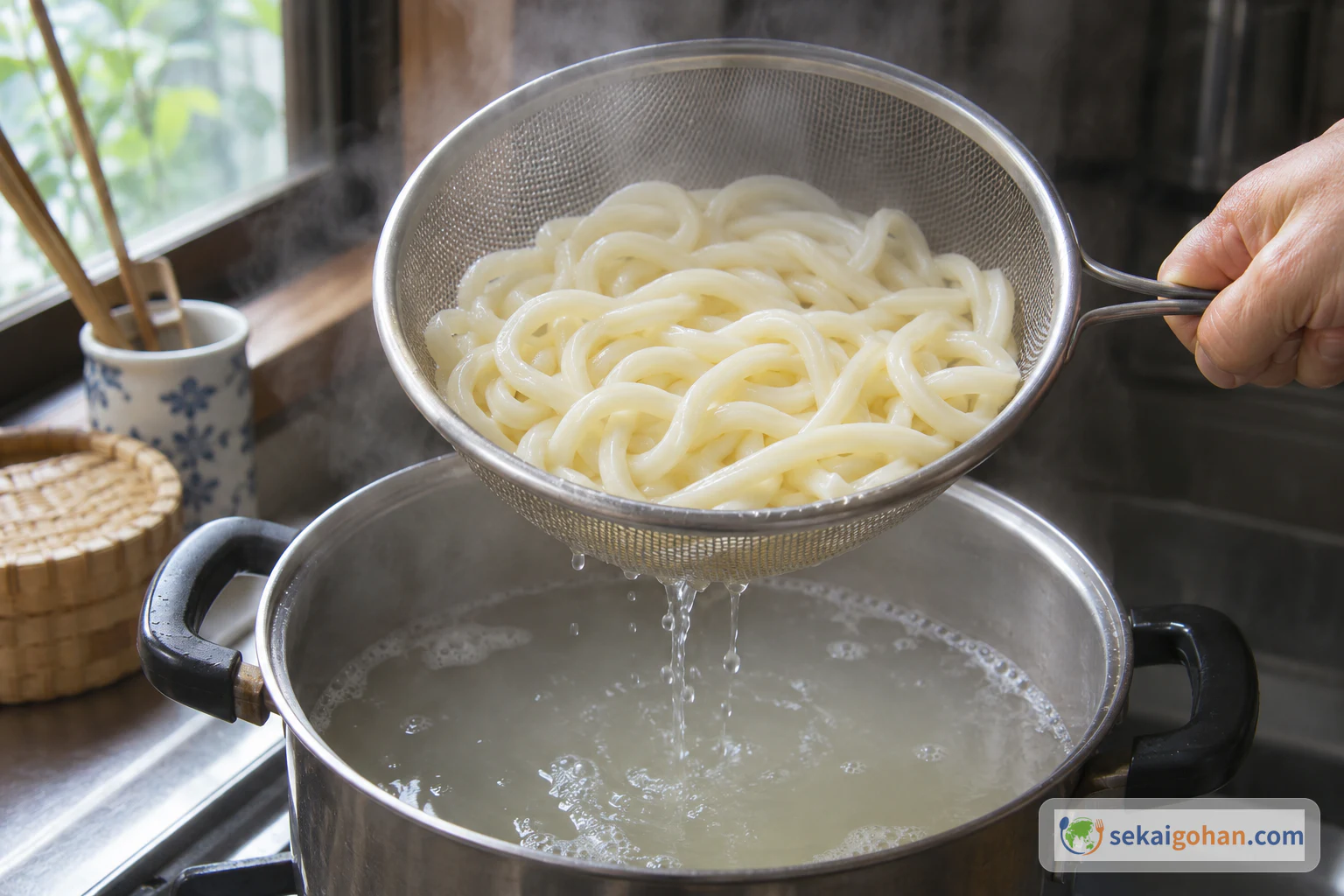
Udon. Choose flat noodles if you can, since Morioka jajamen is served with hot flat noodles. Cook them according to the package. Dried udon is a home option, and we don't claim it matches the noodles served in Morioka.
Meat. You can use ground pork or a mixed grind. We use pork here, and a mixed grind will change the flavor of the meat.
Sake. If you have none, use 2 tbsp of water instead. Expect a little less aroma and richness.
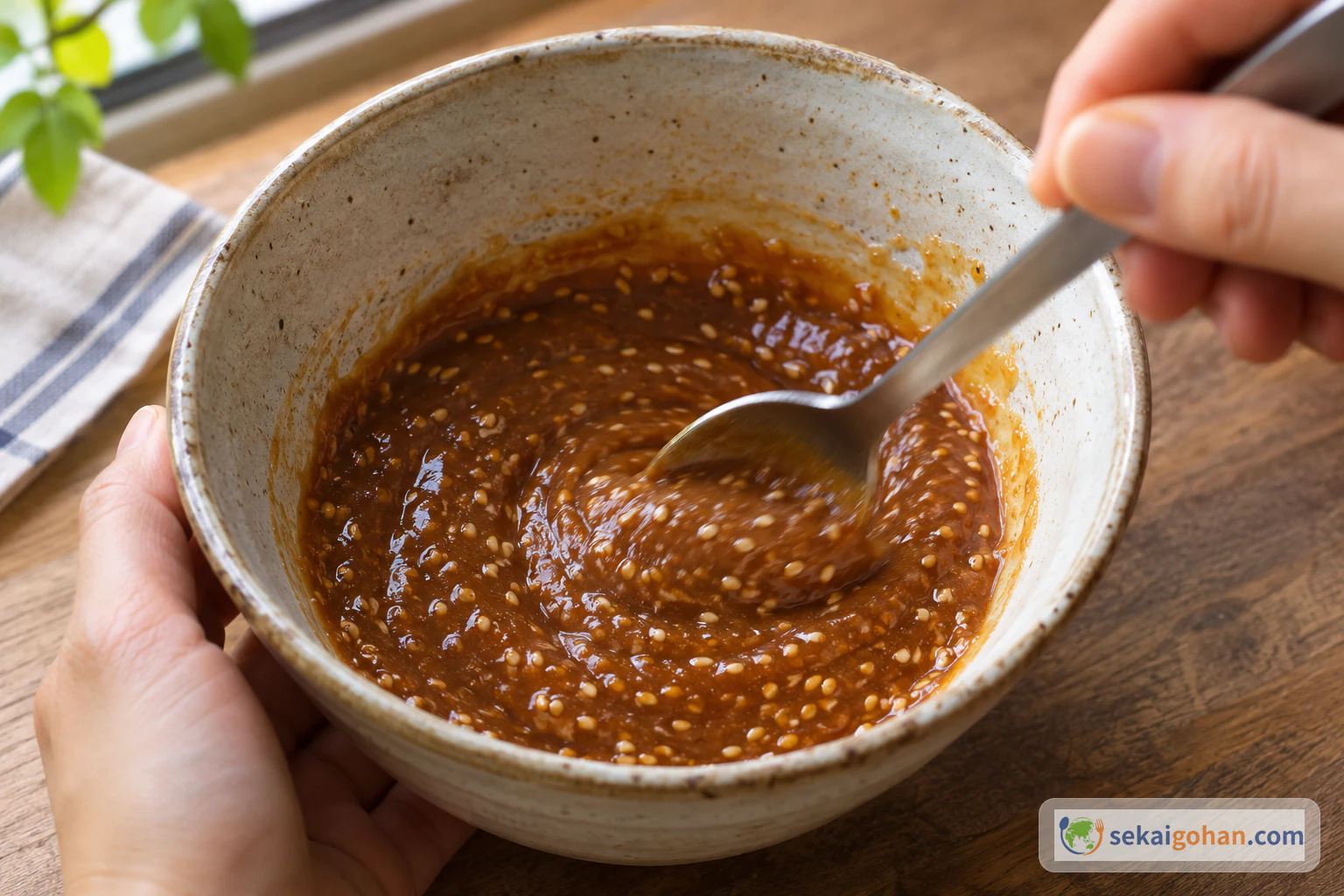
Miso. Flavor changes with the brand and its saltiness, so start with the 2 tbsp and adjust at the table.
Method: Meat Miso First, Then Noodles, Then Soup
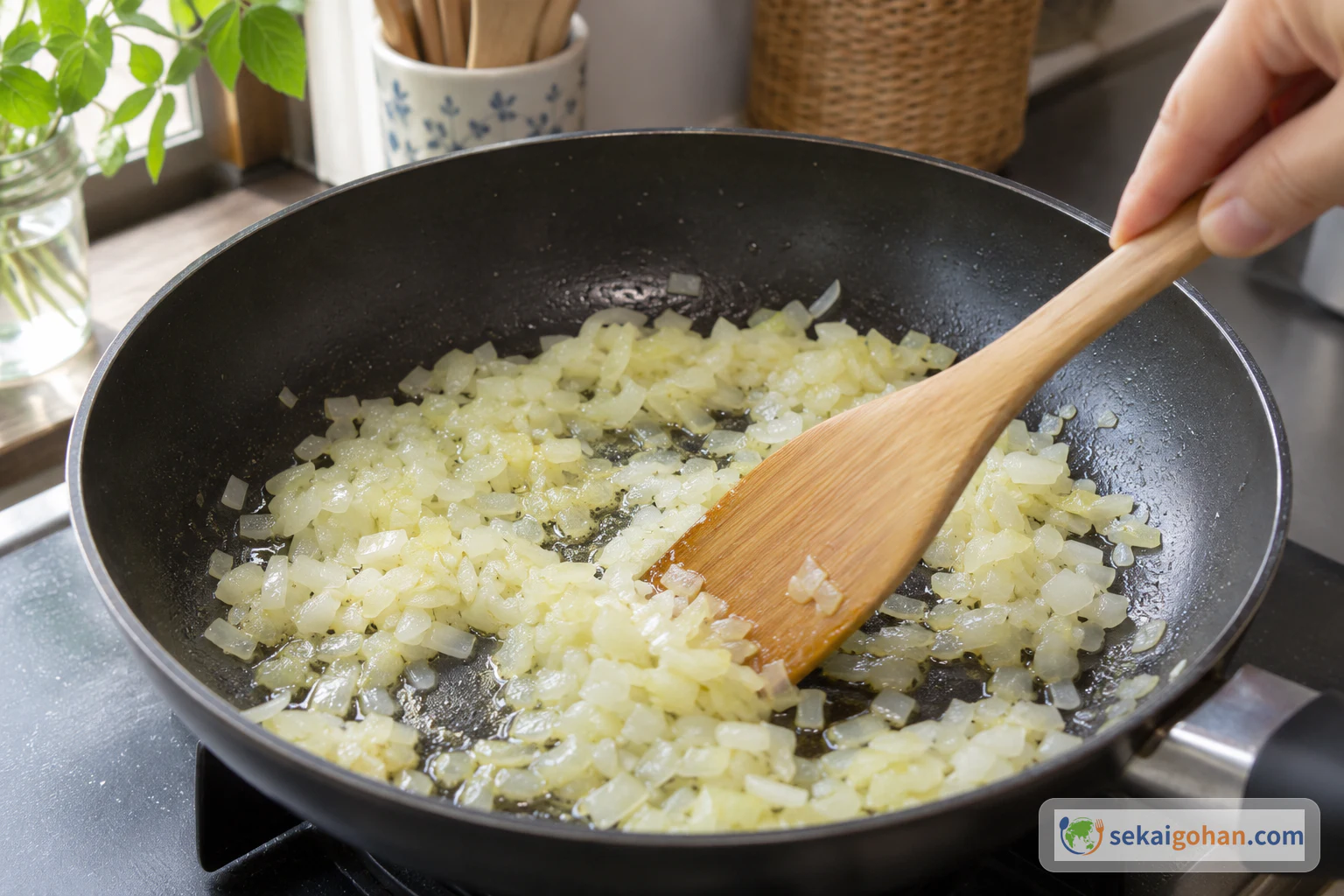
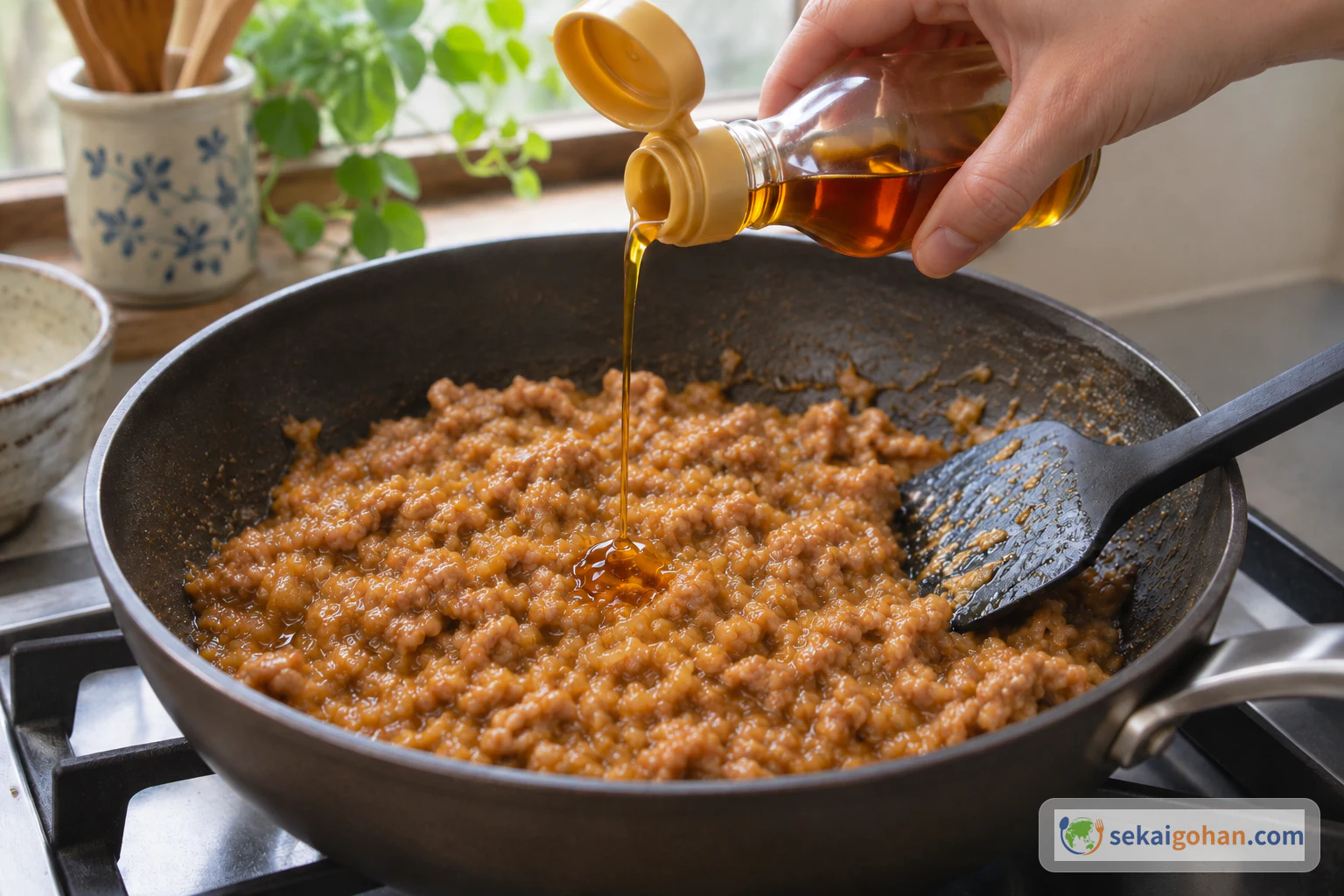
Finishing the meat miso before boiling the noodles lets you plate the udon while it is still hot.
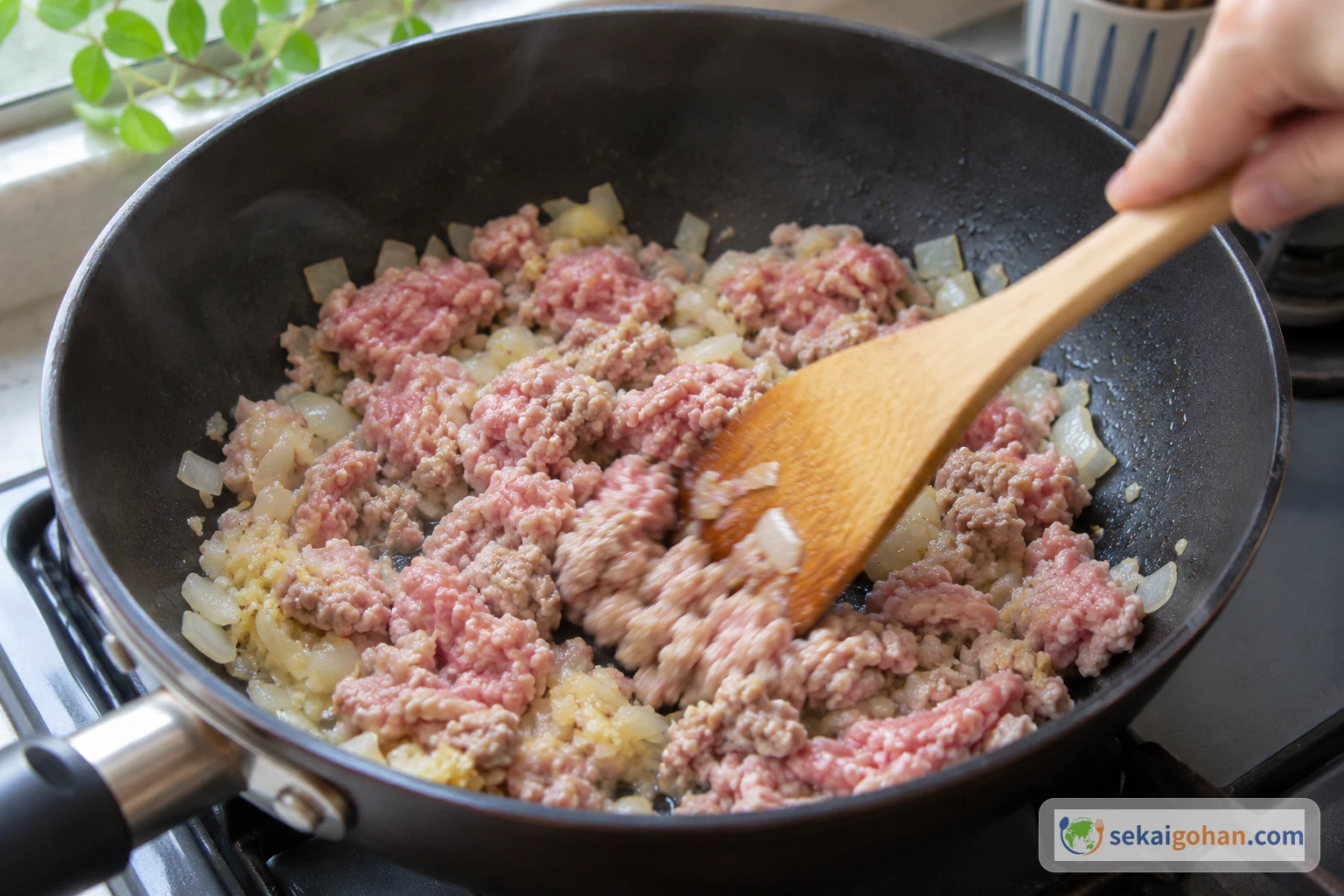
Pork: Japan's Ministry of Health, Labour and Welfare gives 75°C at the center for at least 1 minute as its guide for meat. Meat color alone doesn't confirm this. The ministry also advises keeping utensils used for raw meat away from other foods, or washing them each time.
Chitantan: Steps 10 to 12 follow the JA Zen-Noh Tamago method, which pours hot noodle water over raw egg. That recipe gives no temperature, time or check for a fully cooked egg, and hot water alone cannot be relied on to cook it. Step 13 is therefore our editorial addition and is not part of that recipe. It follows the public standard of 70°C for at least 1 minute published by Aichi Prefecture for food businesses, and Shiga Prefecture's explanation that Salmonella dies at about 70°C for about 1 minute. Shiga also advises keeping eggs refrigerated and not cracking them ahead of time. Steam or the look of the egg in a photo doesn't show its temperature.
Higher-risk diners: The ministry advises against serving unheated dishes to people with lower resistance. Anyone pregnant, young children, older adults and people with weakened immune systems should avoid raw or soft egg. Make sure step 13 is completed, or leave out the egg.
When Something Goes Wrong
| Problem | What to do |
|---|---|
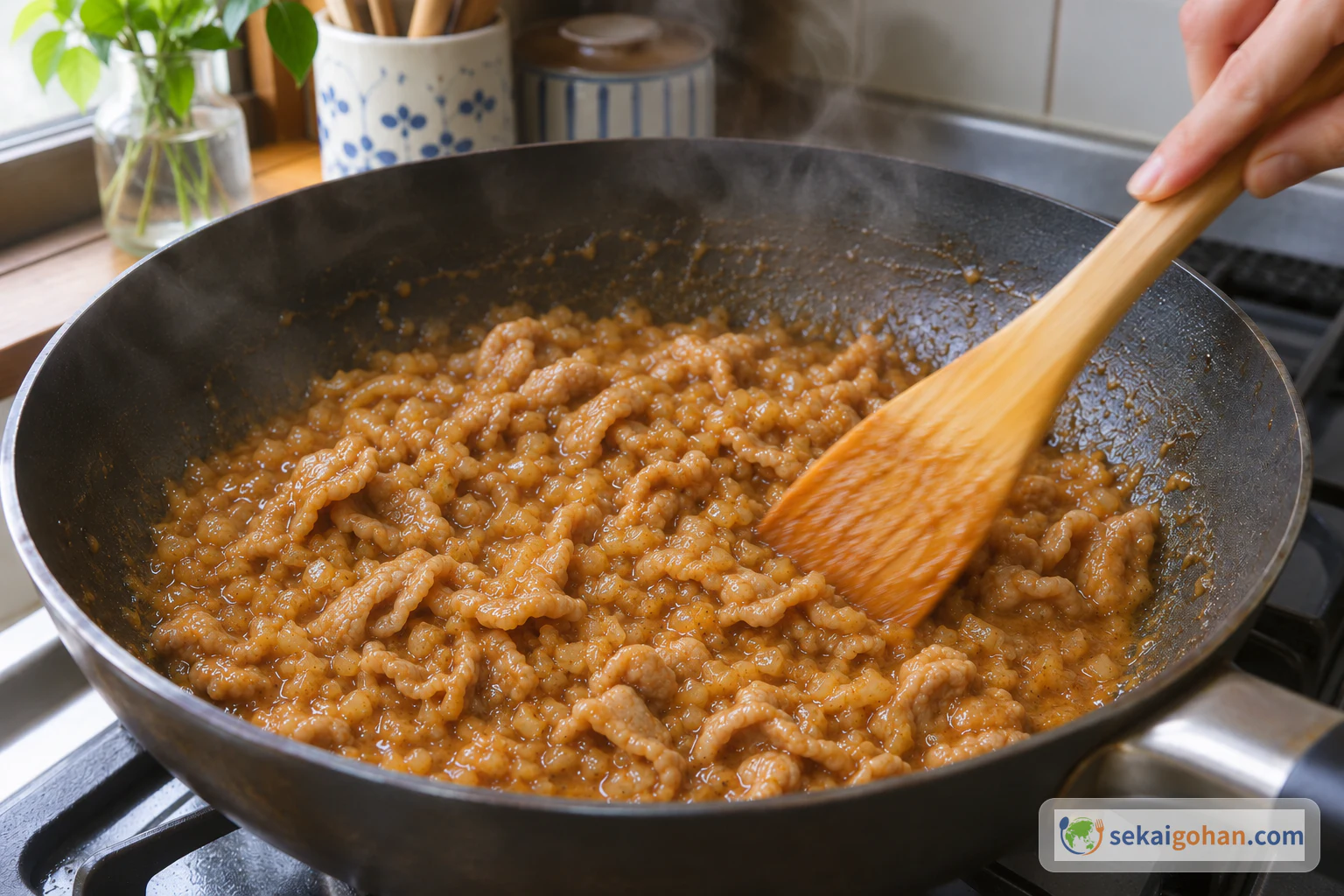
| The meat miso is watery | Keep stirring over medium heat for the full 3 to 5 minutes, until the sauce coats the meat and no liquid pools. Don't add extra seasoning to thicken it. |
| The flavor is too strong or too mild | Miso varies in saltiness. Don't add more soy sauce or salt to the pan. Let each person adjust with a little vinegar or chili oil at the table. |
| The noodles have gone cold | Boil them just before serving, drain, and plate while hot. Finish the meat miso first. |
| There is no noodle water left | Chitantan can't be made this way without it. Next time, set some aside before draining. |
| The egg isn't firmly set | Keep heating in the small pan until the soup reaches 70°C or the egg is firmly set, then hold for at least 1 minute. |
Ways to Change the Bowl
| Change | Effect |
|---|---|
| Use a mixed grind instead of pork | Changes the flavor of the meat |
| Use water instead of sake | Gives a little less aroma and richness |
| Add 1 tsp doubanjiang to the sauce | Adds heat; the JA Zen-Noh Tamago recipe lists it as optional, and we leave it out of the standard version |
| Add vinegar at the table | Adds acidity |
| Add chili oil at the table | Adds heat and aroma |
| Leave out the tomato | Moves closer to the general descriptions from Morioka, which don't require it |
| Leave out the egg | Ends the meal with the noodles and skips chitantan |
Where the Dish Comes From
Morioka City explains that the dish began at a street stall run by Takashina (高階貫勝) of Pairon (白龍), who took a stir-fried miso noodle dish from northeastern China as a reference. We're relying on the city's summary here and aren't adding dates or further biography.
The Chinese connection doesn't make it the same as Chinese zhajiang noodles in general. The city and Iwate's tourism site describe a Morioka way of eating: hot flat noodles, meat miso and garnishes such as cucumber and scallion. Diners season and mix to their own taste, mixing everything at once or a little at a time, and finish with egg soup.
Home versions vary too. The Pal System co-op, for example, publishes one with frozen udon, meat miso simmered until little liquid remains, cucumber and shredded scallion. We haven't blended its ingredients or amounts into this recipe. The tomato here comes from the JA Zen-Noh Tamago version and isn't a fixture of the dish everywhere.
Morioka jajamen is also separate from two other dishes linked with the region: Morioka reimen, built around cold noodles and soup, and wanko soba, which is defined partly by how it is served. For more from the country's table, browse Japanese recipes.
Leftovers
Eat the dish soon after cooking, and don't leave food at room temperature for long during or after cooking. Divide any leftovers into clean, shallow containers so they cool quickly, then refrigerate right away. Reheat thoroughly before eating. Our food safety references don't give a storage period, so we don't state one here.
Frequently Asked Questions
Do I need doubanjiang?
No. The JA Zen-Noh Tamago recipe lists 1 tsp as something to add "if you have it". The standard version here leaves it out, which keeps the heat down.
Do I need tomato?
No. The home recipe used here includes it, but Morioka City's general description doesn't treat it as essential, so you can leave it out.
Is pouring hot noodle water over the egg enough?
We can't say that it is. The recipe we follow doesn't give a final egg temperature, a time or a way to check for doneness, which is why we add the pan-heating step. That step is our editorial addition, based on the Aichi and Shiga prefectural guidance, and it hasn't been kitchen-tested.
What if I can't make chitantan?
Without reserved noodle water, you can't make it this way. If you can't heat the egg thoroughly, leave it out and end with the noodles.
Can I store jajamen?
It's best eaten right after cooking. For leftovers, follow the guidance above: shallow containers, quick cooling, refrigeration and thorough reheating.
Sources
- JA Zen-Noh Tamago Co., Ltd., "ご当地レシピ!岩手県 盛岡じゃじゃ麺." The two-serving home recipe: ingredients, amounts and method, including chitantan made with egg and hot noodle water. https://www.jz-tamago.co.jp/customer/atoz/recipe/a2z00016714/
- Morioka City, "盛岡市の味と技." The city's account of the dish's beginnings, the optional table seasonings, and finishing with chitantan. https://www.city.morioka.iwate.jp/shisei/morioka_profile/1009300.html
- Iwate official tourism site "Iwate no Tabi" / Morioka Convention and Visitors Association, "盛岡じゃじゃ麵(盛岡市)." Hot flat noodles, cucumber, scallion and meat miso, seasoning to taste, and the egg soup finish. https://iwatetabi.jp/spots/70504/
- Pal System Consumers' Co-operative Union, "だいどこログ: 盛岡じゃじゃ麺." A separate home version with frozen udon, used for comparison only. https://daidokolog.pal-system.co.jp/recipe/10272
- Ministry of Health, Labour and Welfare, Japan, "子ども食堂における衛生管理のポイント." Separating or washing raw-meat utensils, the 75°C for at least 1 minute guide for meat, and care for people with lower resistance. https://www.mhlw.go.jp/stf/newpage_00381.html
- Ministry of Health, Labour and Welfare, Japan, "家庭でできる食中毒予防の6つのポイント." The 75°C for at least 1 minute guide, avoiding long periods at room temperature, cooling leftovers in shallow containers, and thorough reheating. https://www.mhlw.go.jp/www1/houdou/0903/h0331-1.html
- Aichi Prefecture, Living Environment Hygiene Division, "殻付卵・未殺菌液卵を使う調理の加熱殺菌基準." A standard for food businesses: 70°C for at least 1 minute, or an equivalent method, when cooking with shell eggs. https://www.pref.aichi.jp/soshiki/eisei/0000008894.html
- Shiga Prefecture, "サルモネラ属菌(卵の取扱い)." Salmonella dies at about 70°C for about 1 minute; refrigerate eggs and don't crack them ahead of time. https://www.pref.shiga.lg.jp/ippan/kurashi/syokunoanzen/16497.html