Bossam Kimchi: A Whole Filling Gathered Inside Cabbage Leaves
This is an edited, refrigerated version of bossam kimchi, not a faithful reproduction of a traditional recipe. The oysters and baby octopus are cooked, nothing ferments at room temperature, and the parcels are eaten on the day they are made. This version has not been kitchen-tested.
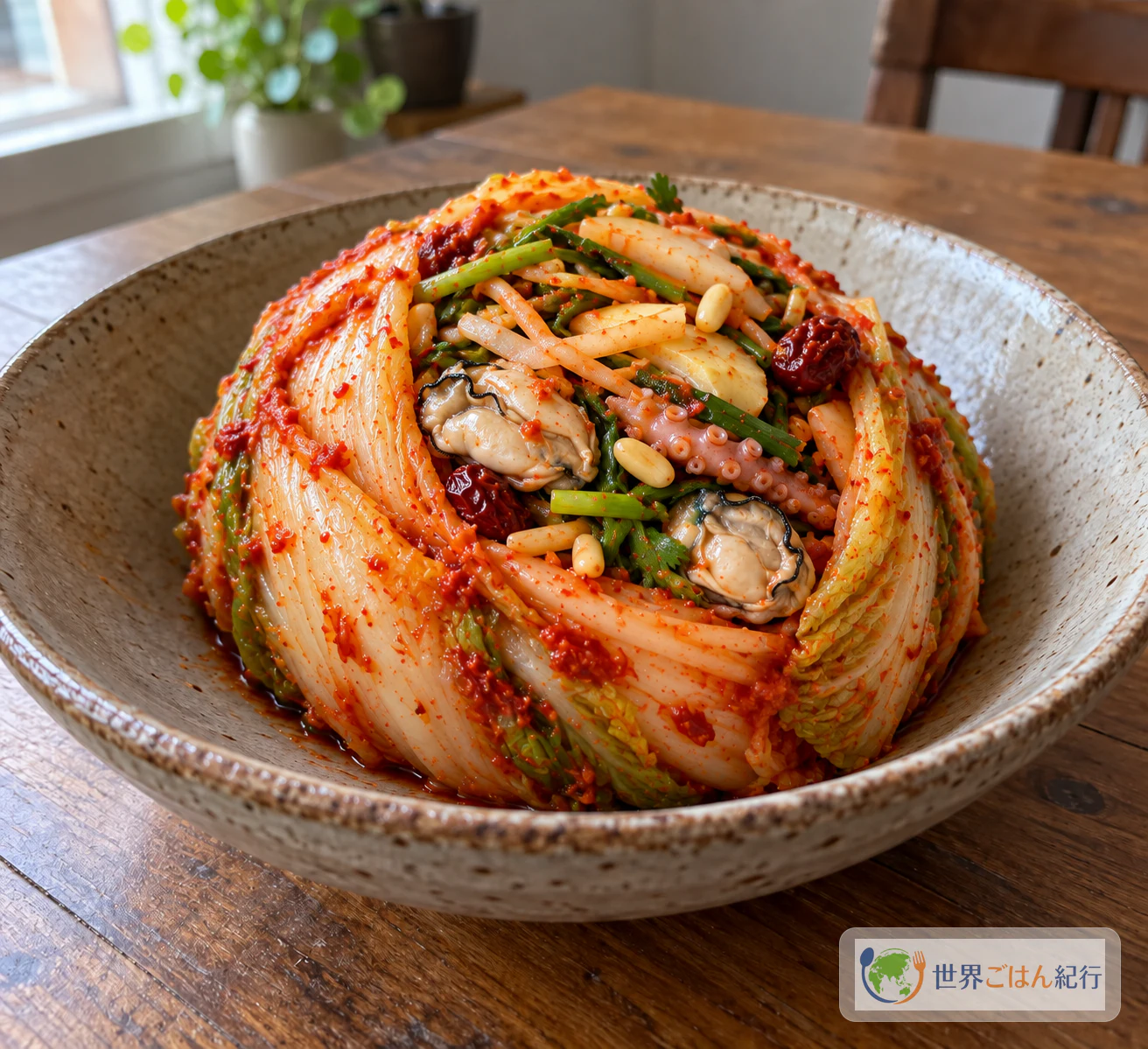
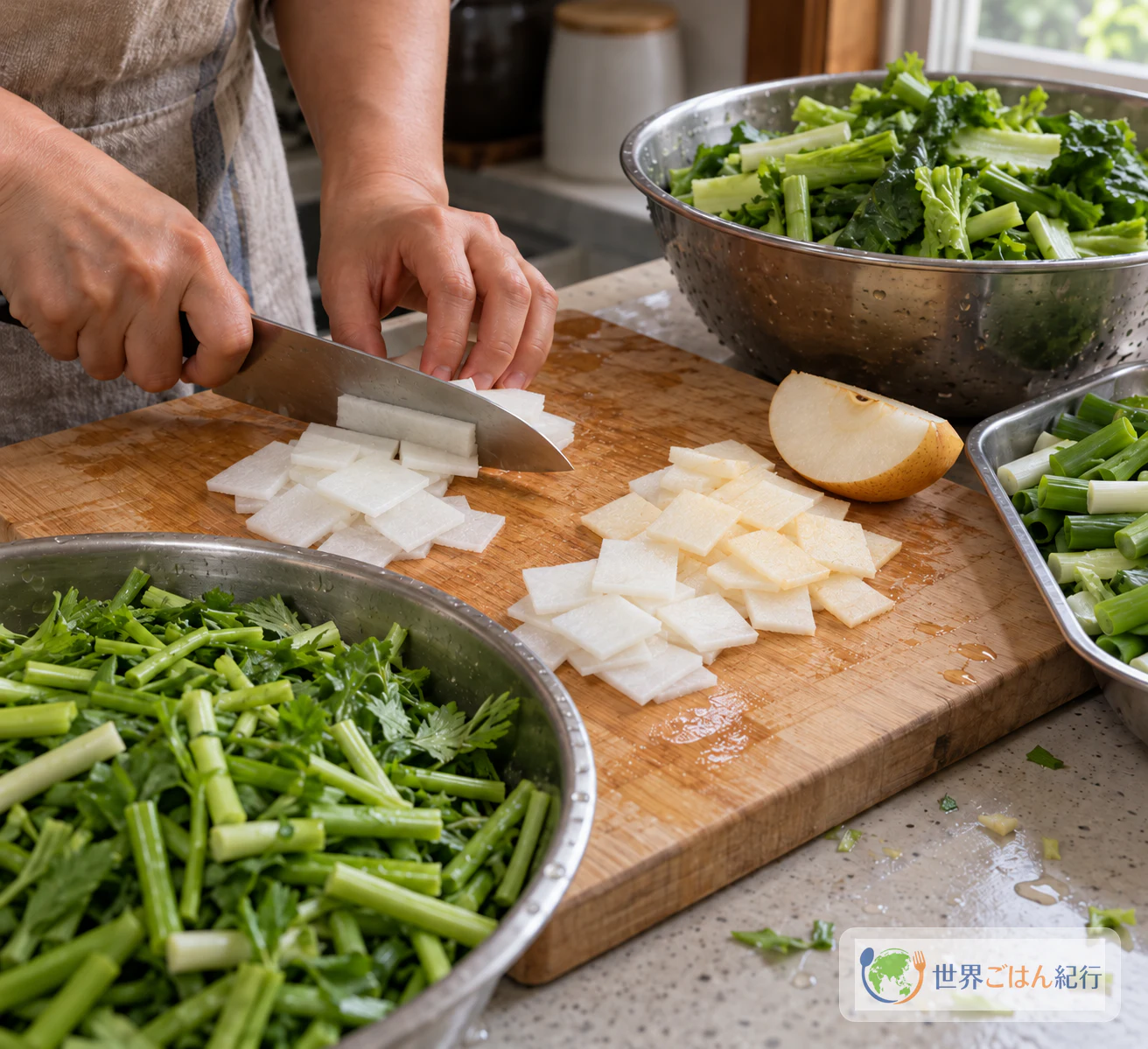
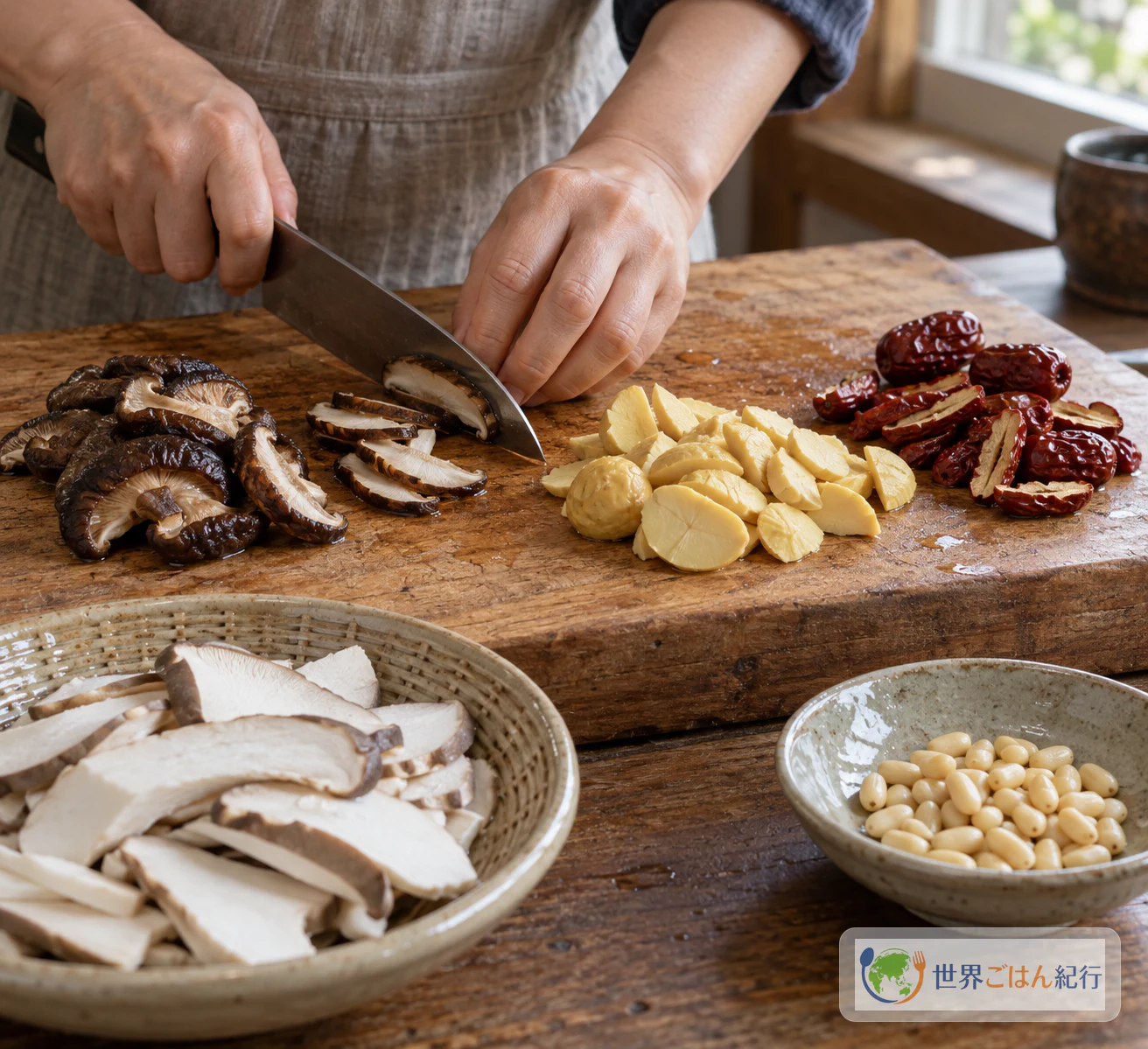
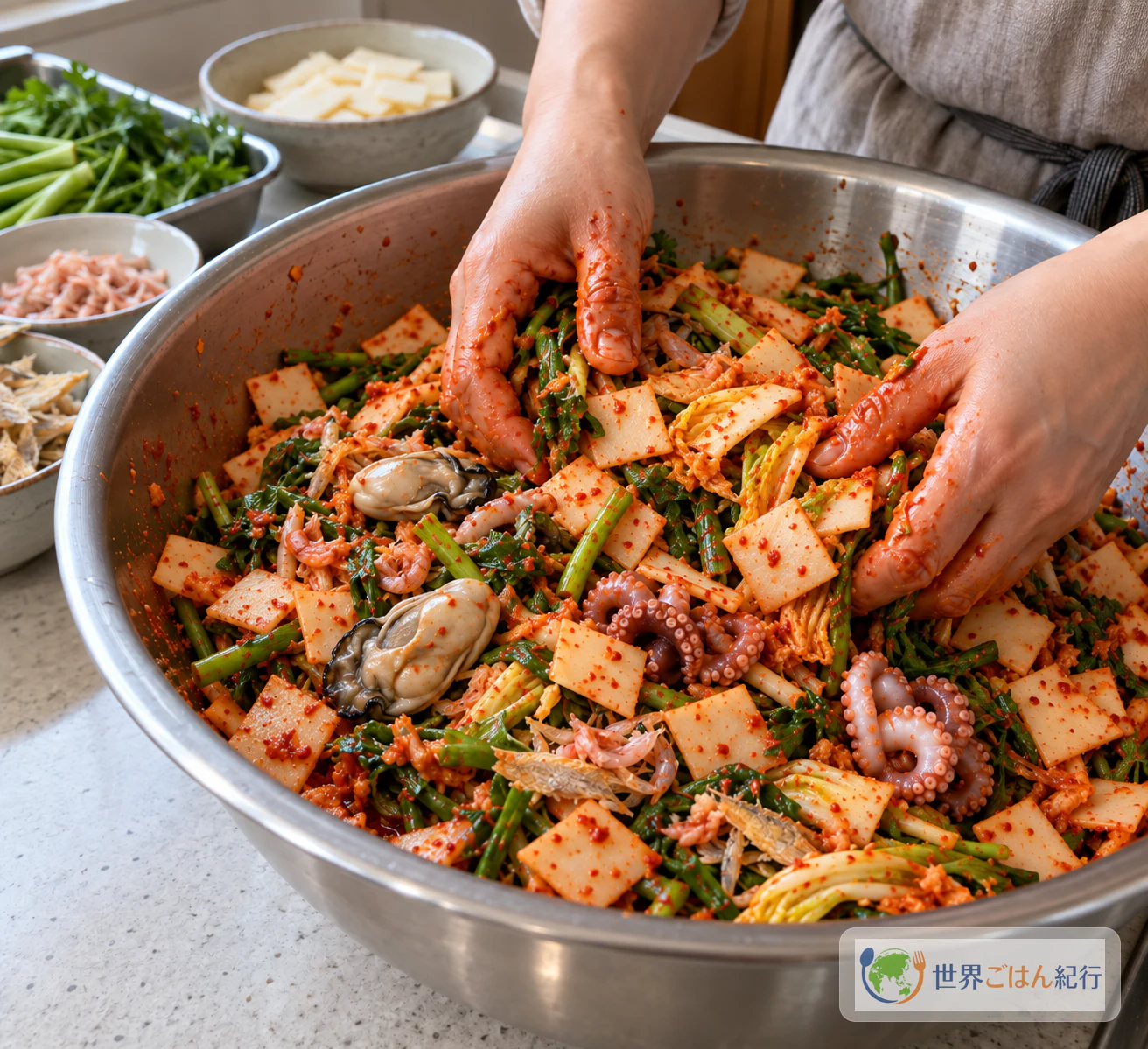
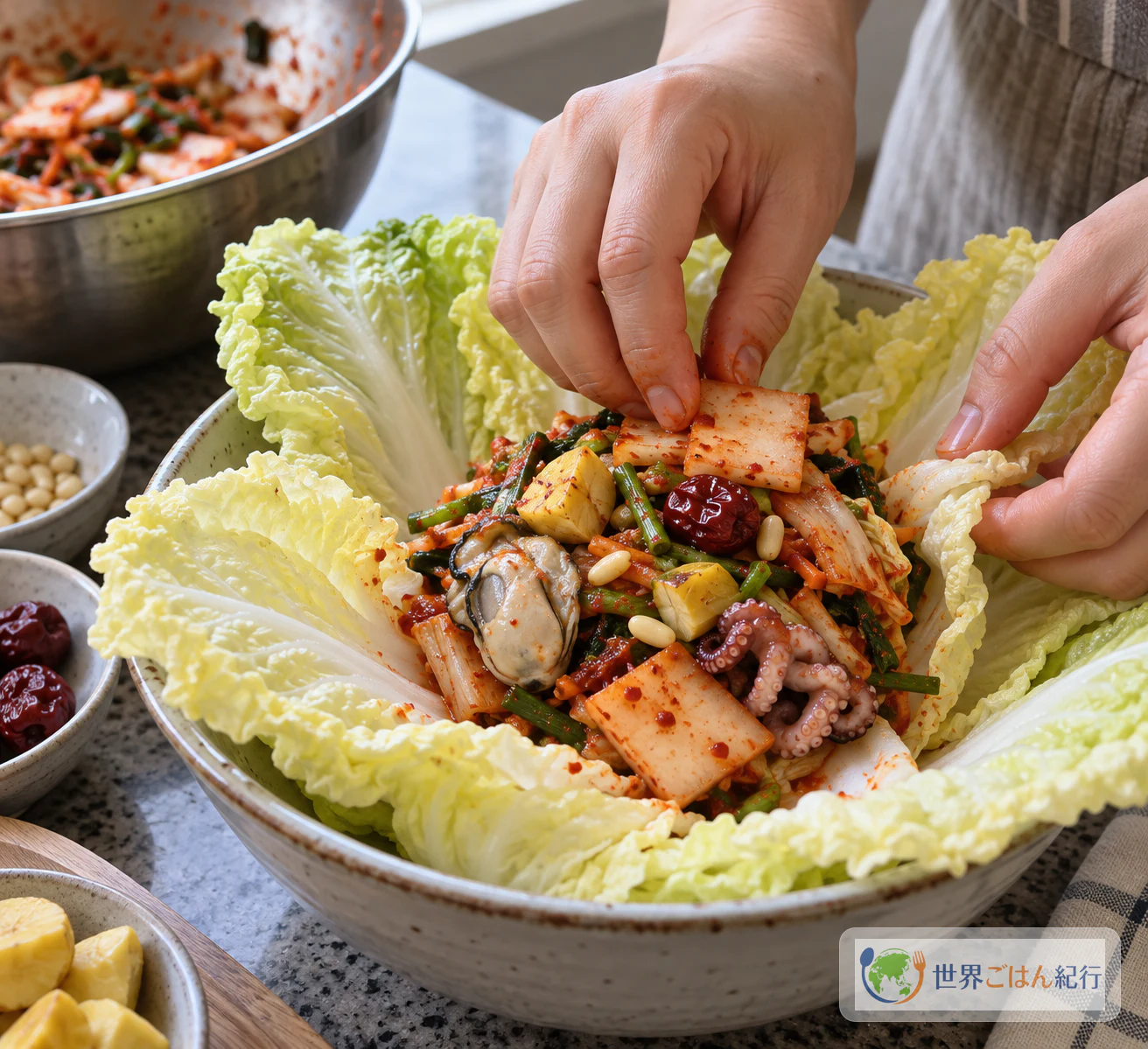
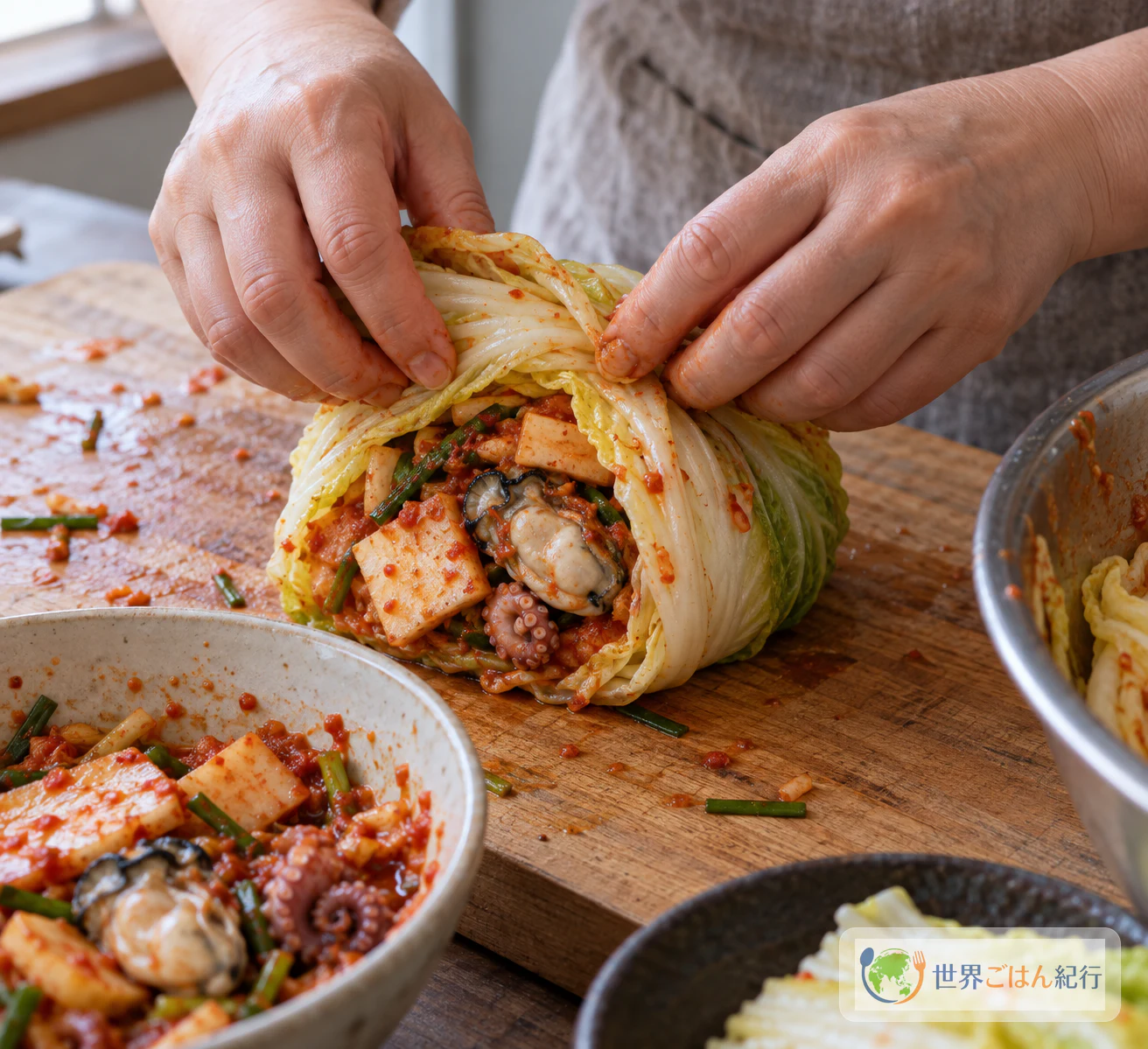
Broad salted cabbage leaves lie open in a bowl. Radish, pear and greens go into the center, red with ground pepper, with chestnut, jujube and pine nuts on top. Then the leaves are drawn up and over until the whole thing is a single round bundle, shaped much like something tied in a wrapping cloth. When it is opened, the colors of the fruit, nuts and seafood appear from inside.
Bossam kimchi (보쌈김치) is a kimchi from Gaeseong in which salted napa cabbage leaves enclose the filling. It is a different dish from the pork bossam many people know, where boiled pork is wrapped in leaves at the table. There is no pork here. The word bossam points to the wrapped form, and the wrapped ingredients make up the dish. The flavor comes from salted cabbage, the savoriness of ground red pepper and salted seafood, and the sweetness and bite of pear, chestnut and jujube.
The ingredient amounts and the order of work follow the bossam kimchi recipe published by Korea.net in cooperation with the Institute of Traditional Korean Food. That recipe uses raw oysters and raw baby octopus and finishes the parcels in a jar with fish broth. We have changed those parts for home kitchens, and the background section explains each change.
Ingredients for One Head of Napa Cabbage
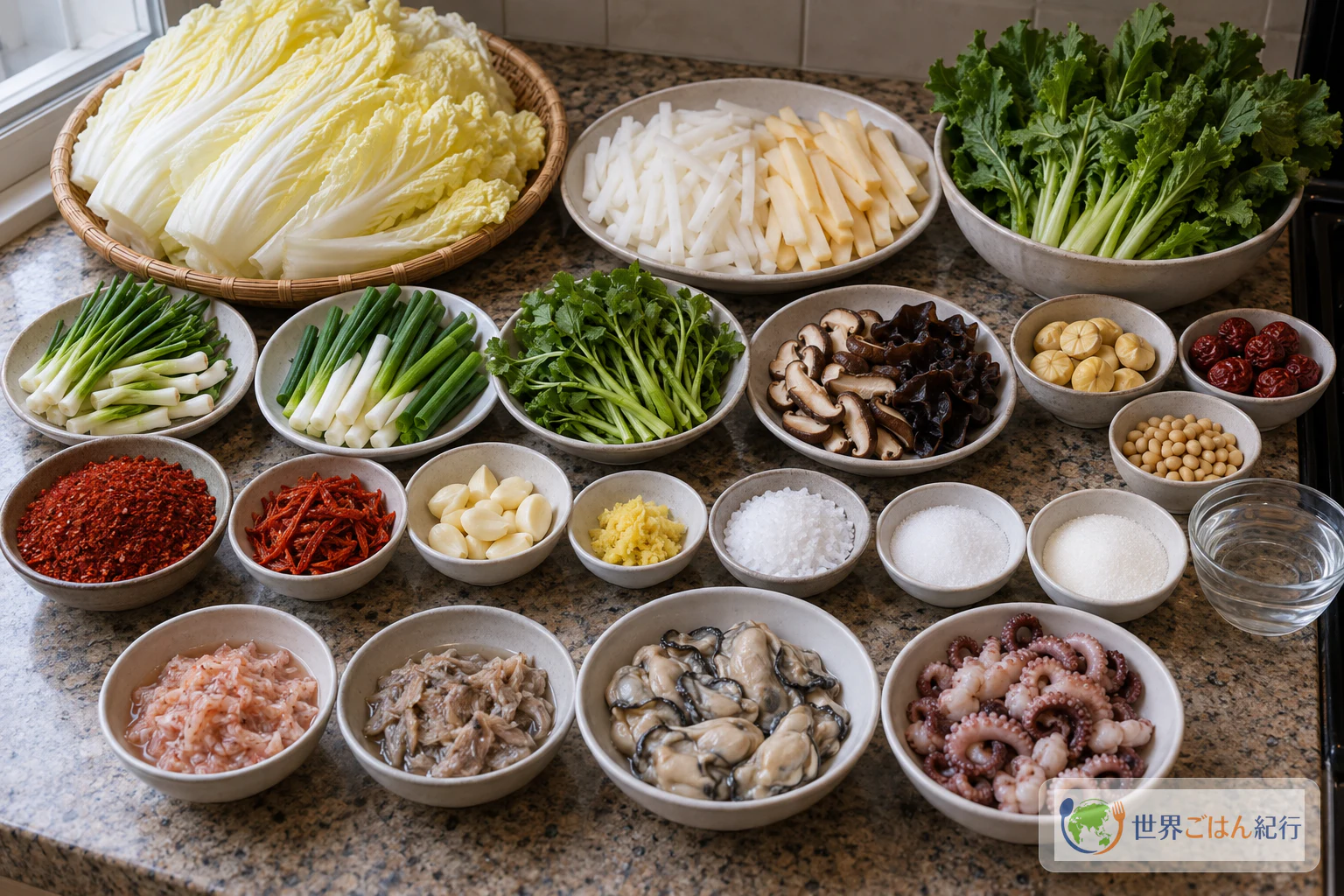
Equipment
- Wide basin for salting
- Colander
- Two knives and two cutting boards, one set only for raw seafood
- Small pot
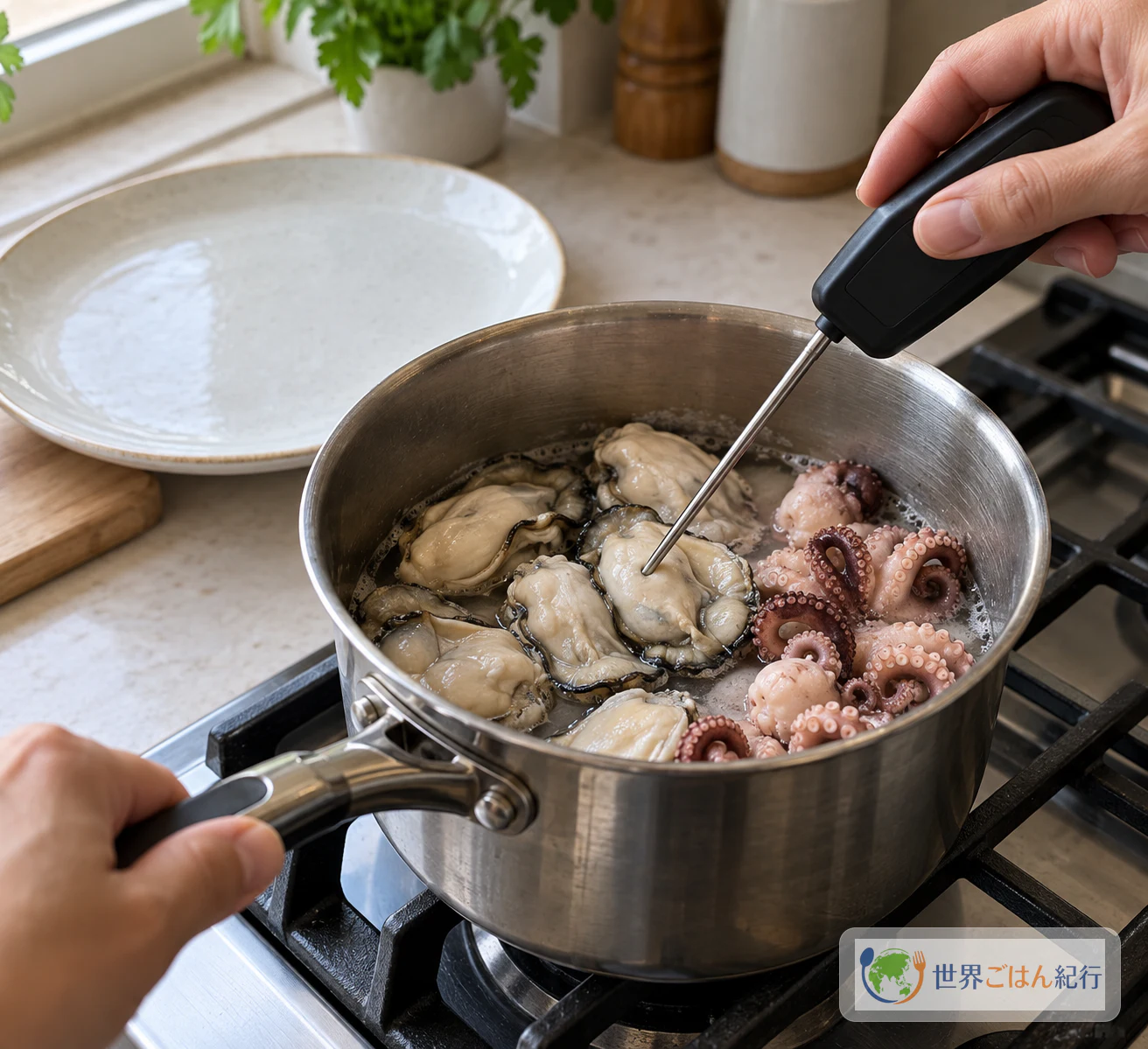
- Instant-read thermometer with a clean probe
- Shallow containers for cooling
- Large mixing bowl
- Small deep bowl for shaping the parcels
Choosing and Substituting
Water parsley: Minari is water parsley, known as seri in Japan. English recipes sometimes call it watercress, but that is a different plant.
Pear and radish: Any pear works here, and it need not be a Korean variety. Japanese daikon can stand in for Korean radish, but its heat and moisture differ.
Cabbage: Large, soft leaves are the easiest to wrap, and Gaeseong cabbage is not required. Ordinary napa cabbage can work if you use its big outer leaves.
Stone mushroom: This can be hard to find. You can leave it out, but the parcel loses some of its texture and appearance. Shiitake is a separate ingredient and doesn't replace it.
Salted shrimp and corvina: These stay in their salted form and are not interchangeable with fresh seafood. Follow the product label for handling and storage. We have no tested substitute for either one.
This dish contains shrimp, fish, octopus, oysters and pine nuts. Check the labels on salted products, and take care with cross-contact.
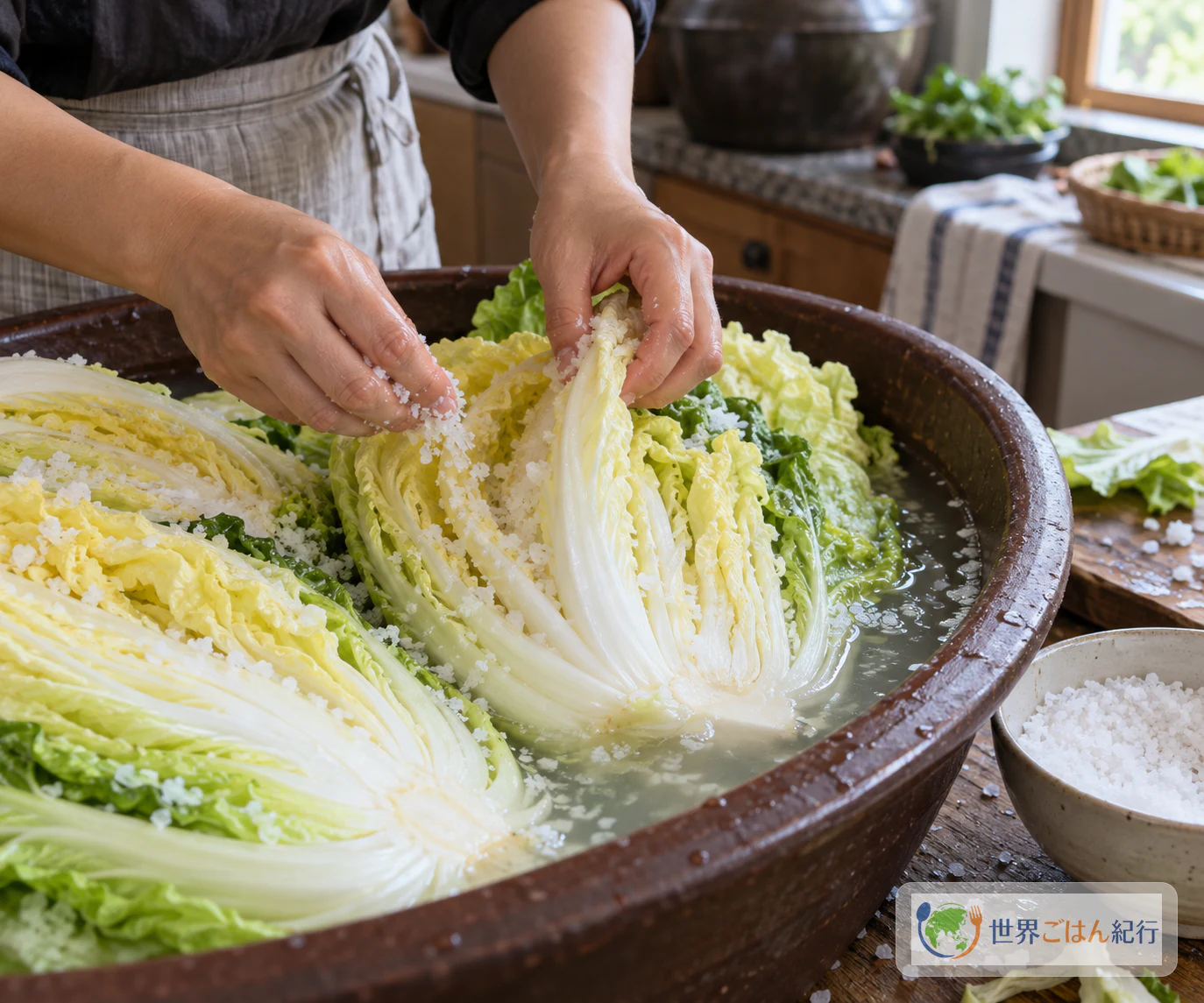
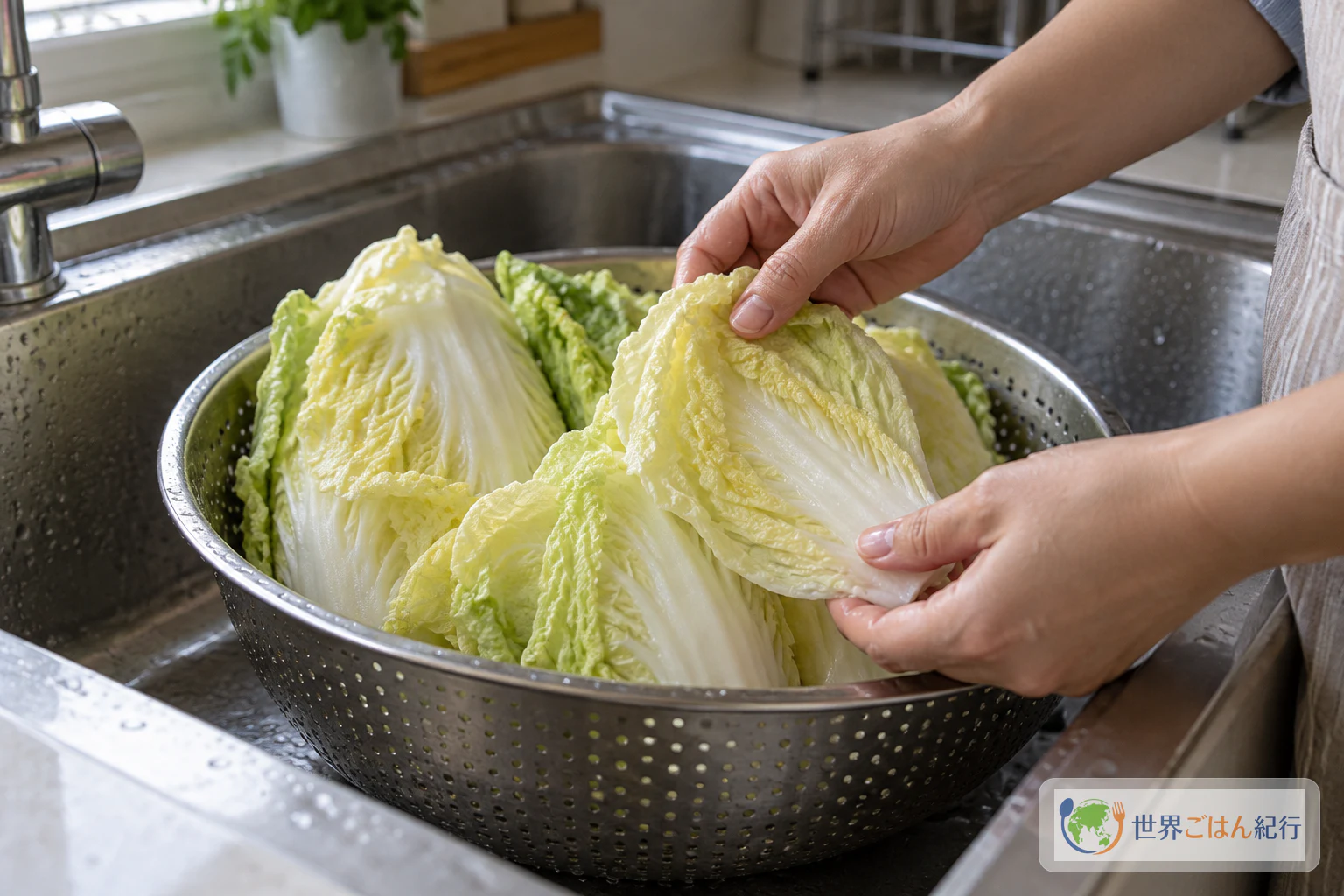
Method: Salt, Prepare, Cook, Chill, Then Wrap
Keep raw oysters and octopus away from the other ingredients, and use a separate knife and cutting board for them. They never go into the filling raw.
Serving and Storage: Chill, Open, and Finish the Same Day
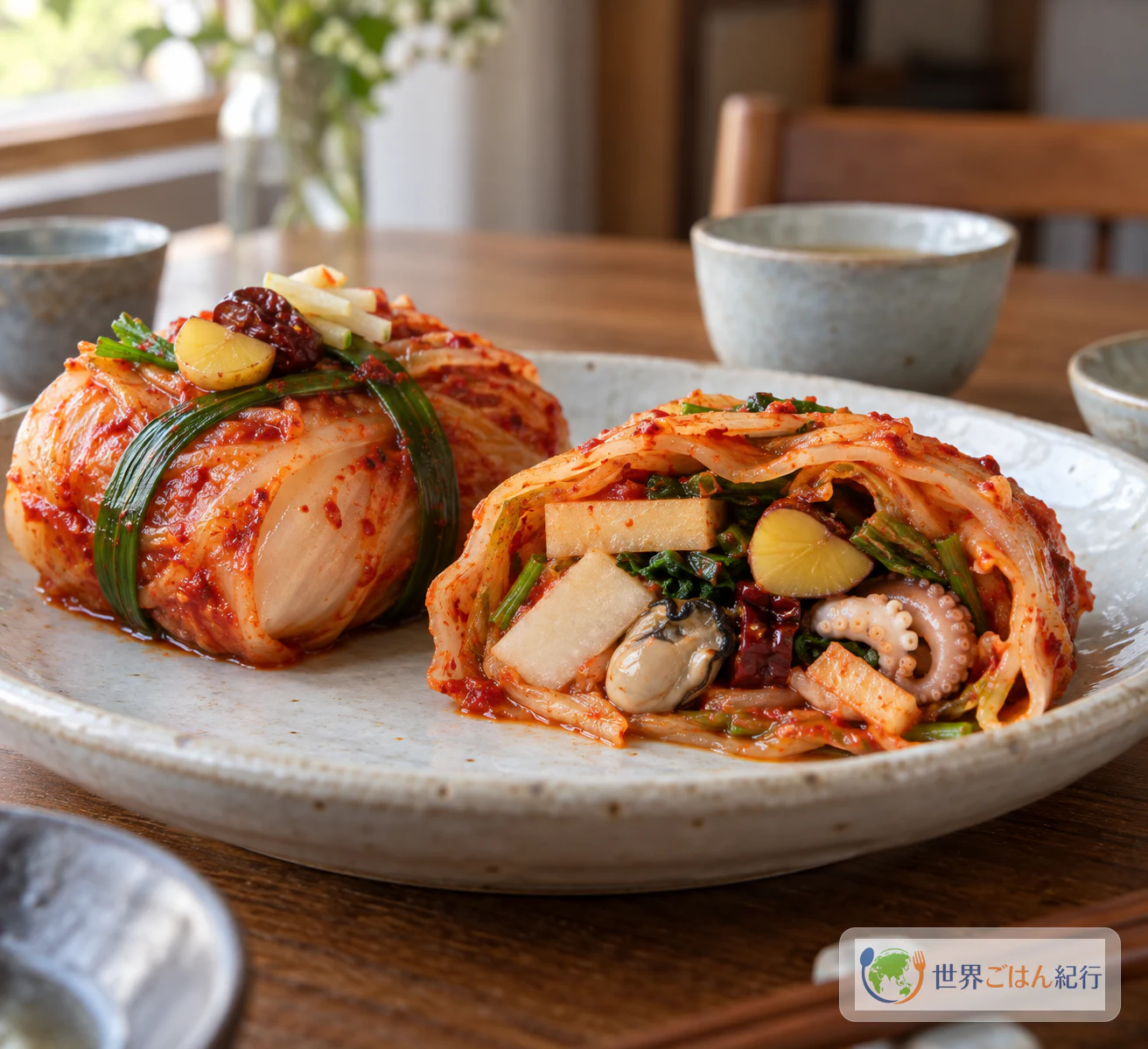
Serve the parcels chilled from the refrigerator and open them to reveal the filling.
Keep them refrigerated at 4°C (40°F) or below until serving, and eat them all on the day they are made. Plan the meal so that you have no leftovers. We give no storage period because we have no evidence to support one for a kimchi containing cooked seafood. The same-day limit is our own cautious editorial choice. Heating the seafood doesn't guarantee that the finished parcels will keep.
Fixing Problems: Torn Leaves, Wet Filling, Too Much Salt
| Problem | Likely cause | What to do |
|---|---|---|
| The leaf tears while wrapping | The leaf is too small or thin | Overlap another large outer leaf. This is an untested editorial suggestion |
| The filling is watery | The cabbage wasn't drained enough | Give the cabbage its full drain of about 1 hour, and add broth only sparingly or not at all |
| The cabbage tastes too salty | The cabbage wasn't rinsed enough | Wash it 3 to 4 times under running water before draining |
| The filling tastes too salty | Salted ingredients and seasoning salt added up | Add the seasoning salt gradually and taste first. The oyster and octopus salts are for cleaning only, so don't add them to the filling |
| The seafood hasn't reached 85°C | The pieces are large or the pot isn't hot enough | Keep cooking, check the center again, and then hold for at least 1 minute |
Variations to Consider
None of these has been tested, so treat them as starting points rather than finished recipes.
- Lighter on the sweet garnishes: Use less chestnut, jujube and pine nut so that the crunch of cabbage and radish comes forward.
- Seri in place of minari: This is an easier-to-find ingredient in Japan, though the aroma may differ.
- Without fresh seafood: Build the parcel around vegetables, fruit and nuts. The salt and salted seasonings would need rethinking. If you still use saeujeot or fish sauce, it isn't seafood-free.
Gaeseong and the Wrapped Form
The Encyclopedia of Korean Folk Culture from the National Folk Museum of Korea describes bossam kimchi as a local dish of the Gaeseong area, made by wrapping fillings such as radish, fruit and seafood in salted cabbage leaves. It also links the wrapping to the character of the local cabbage. The Korea Tourism Organization presents Gaeseong wrapped kimchi as a folk dish of Gaeseong and Hwanghae-do, now in North Korea, and explains that the name comes from its resemblance to a traditional wrapping cloth. Its list of fillings includes chestnut, pear, jujube, pine nuts and water parsley.
Korea.net introduces the dish as a kimchi for special meals and feasts, with a generous range of ingredients. For more from the same country, browse our Korean recipes.
What we changed, and why
| Point | In the published recipes | In this article |
|---|---|---|
| Oysters and octopus | Korea.net uses them raw | Both are cooked and chilled before mixing |
| Finishing | Korea.net packs the parcels into a jar and pours in fish broth | No jar; a little broth is optional, and the parcels go straight into the refrigerator |
| Fermentation | KBS World's separate recipe uses raw seafood and keeps the kimchi at about 15°C for 3 days | No fermentation stage; eaten the same day |
| Mixing the seafood | Korea.net mixes about two-thirds of the seafood in and puts one-third on top | All cooked seafood is folded in, because it isn't clear which ingredients that split covers |
| Water parsley | Korea.net's English table says "watercress" for 미나리 | Written as water parsley |
The amounts come only from Korea.net. KBS World's recipe uses a different formula, with 2 kg of cabbage and about 7 hours of salting, so we did not mix the two.
The 85°C for at least 1 minute comes from South Korea's Food Safety Korea, whose norovirus guidance covers oysters and other bivalves. Applying the same target to baby octopus is our own cautious editorial extension, because that guidance doesn't address octopus. The 2-hour window, 4°C (40°F) refrigerator temperature, shallow containers for cooling and separation of raw seafood come from the U.S. FDA. Neither source evaluates this dish, and this version has not been kitchen-tested, so we make no claim about its final saltiness or yield.
Frequently Asked Questions
Is bossam kimchi the same as pork bossam?
No. Bossam kimchi is a kimchi in which salted cabbage leaves wrap a filling. Pork bossam is boiled pork wrapped in leaves at the table.
Why is it linked to Gaeseong?
The National Folk Museum of Korea's encyclopedia and the Korea Tourism Organization both describe it as a regional dish of the Gaeseong area. We don't add a founding date or origin story, because those sources don't support one here.
Can I wrap it with ordinary napa cabbage?
As an editorial suggestion, yes. Use the large outer leaves and overlap them if they are small or tear. The feel will differ from Gaeseong cabbage, and we have not tested the wrap ourselves.
Is it safe if I use raw oysters and let the kimchi ferment?
Don't count on fermentation to make raw seafood safe. Food Safety Korea identifies bivalves such as oysters as possible sources of norovirus and advises cooking them to a center temperature of 85°C for at least 1 minute. That is why we don't recommend the raw-seafood method for home cooks.
What if I can't find stone mushroom or salted corvina?
Stone mushroom can be left out, with some loss of texture and appearance. For salted corvina, we have no tested substitute. Another salted fish would change the flavor, so don't treat it as the same ingredient. If you try one, season by tasting.
Sources
- Korea.net / Ministry of Culture, Sports and Tourism, in cooperation with the Institute of Traditional Korean Food, "Korean recipes: Bossam kimchi (보쌈김치)." The ingredient amounts, salting, cutting, fish-broth and wrapping steps, and the description of the dish as a Gaeseong kimchi for special meals. https://www.korea.net/NewsFocus/Culture/view?articleId=131138
- National Folk Museum of Korea, Encyclopedia of Korean Folk Culture, "보쌈김치." The definition of the dish, its link to Gaeseong, its special ingredients, and the cabbage's suitability for wrapping. https://folkency.nfm.go.kr/topic/%EB%B3%B4%EC%8C%88%EA%B9%80%EC%B9%98
- Korea Tourism Organization / VisitKorea, "Gaeseong Wrapped Kimchi (개성보쌈김치 / Gaeseongbossamkimchi)." The Gaeseong and Hwanghae-do association, the wrapping-cloth explanation of the name, and examples of fillings. https://english.visitkorea.or.kr/svc/contents/contentsView.do?vcontsId=181705
- KBS WORLD, "Bossam-kimchi (보쌈김치)." A separate recipe, used only for comparison: 2 kg of cabbage, about 7 hours of salting, raw seafood, and about 15°C for 3 days. Not adopted here. https://world.kbs.co.kr/service/contents_view.htm?board_seq=337190&id=&lang=e&menu_cate=lifestyle
- Ministry of Food and Drug Safety, Republic of Korea / Food Safety Korea, "식중독 정보." Norovirus guidance on cooking oysters and other bivalves to a center temperature of 85°C for at least 1 minute. https://www.foodsafetykorea.go.kr/portal/board/boardDetail.do?bbs_no=bbs400&menu_grp=MENU_NEW02&menu_no=4417&ntctxt_no=1068747
- U.S. Food and Drug Administration, "Safe Food Handling." Refrigerator temperature of 40°F (about 4°C) or below, refrigeration within 2 hours of cooking, cooling in shallow containers, and keeping raw seafood separate. http://www.fda.gov/food/buy-store-serve-safe-food/safe-food-handling