Jingisukan: Lamb on the Crown, Vegetables Around the Rim
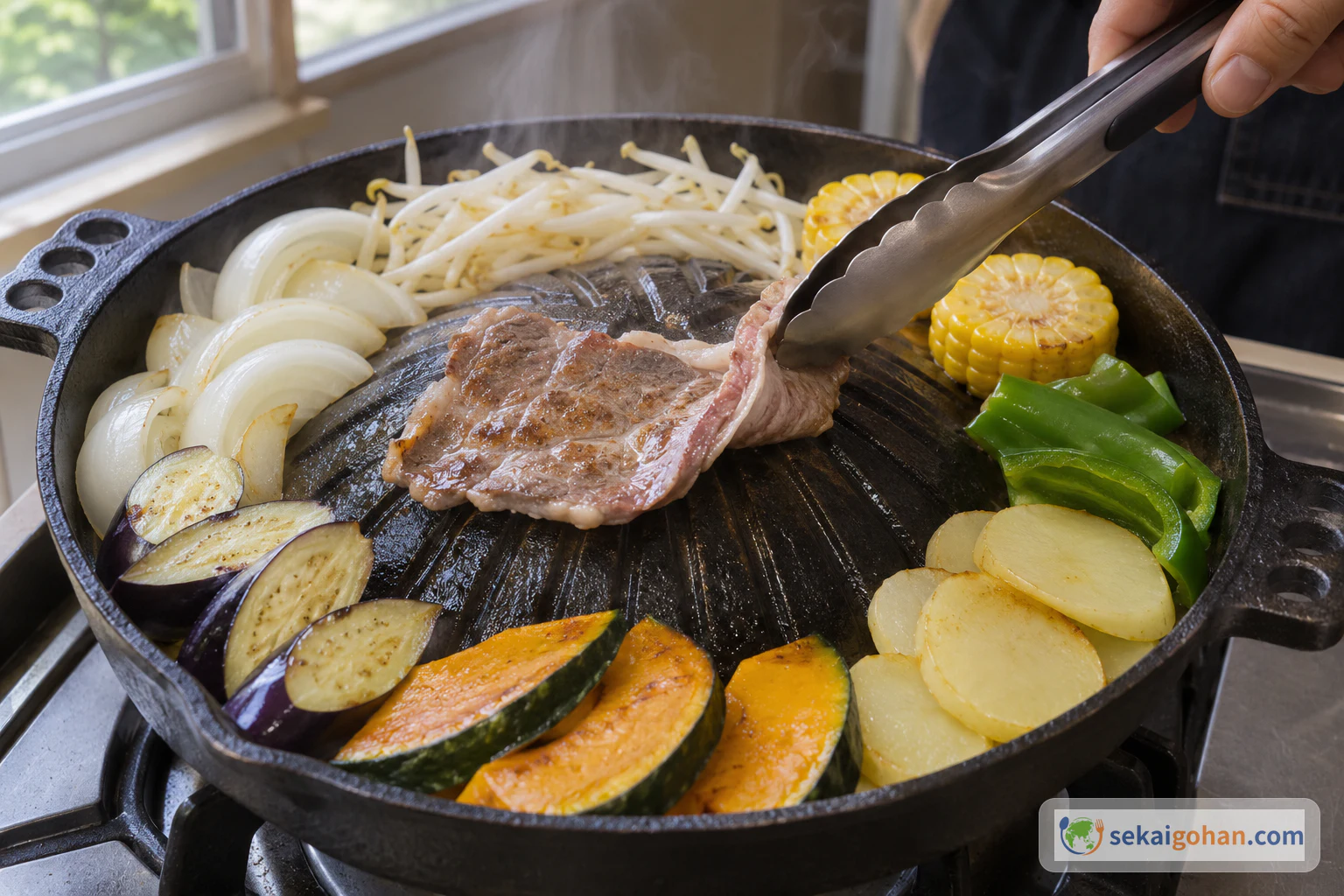
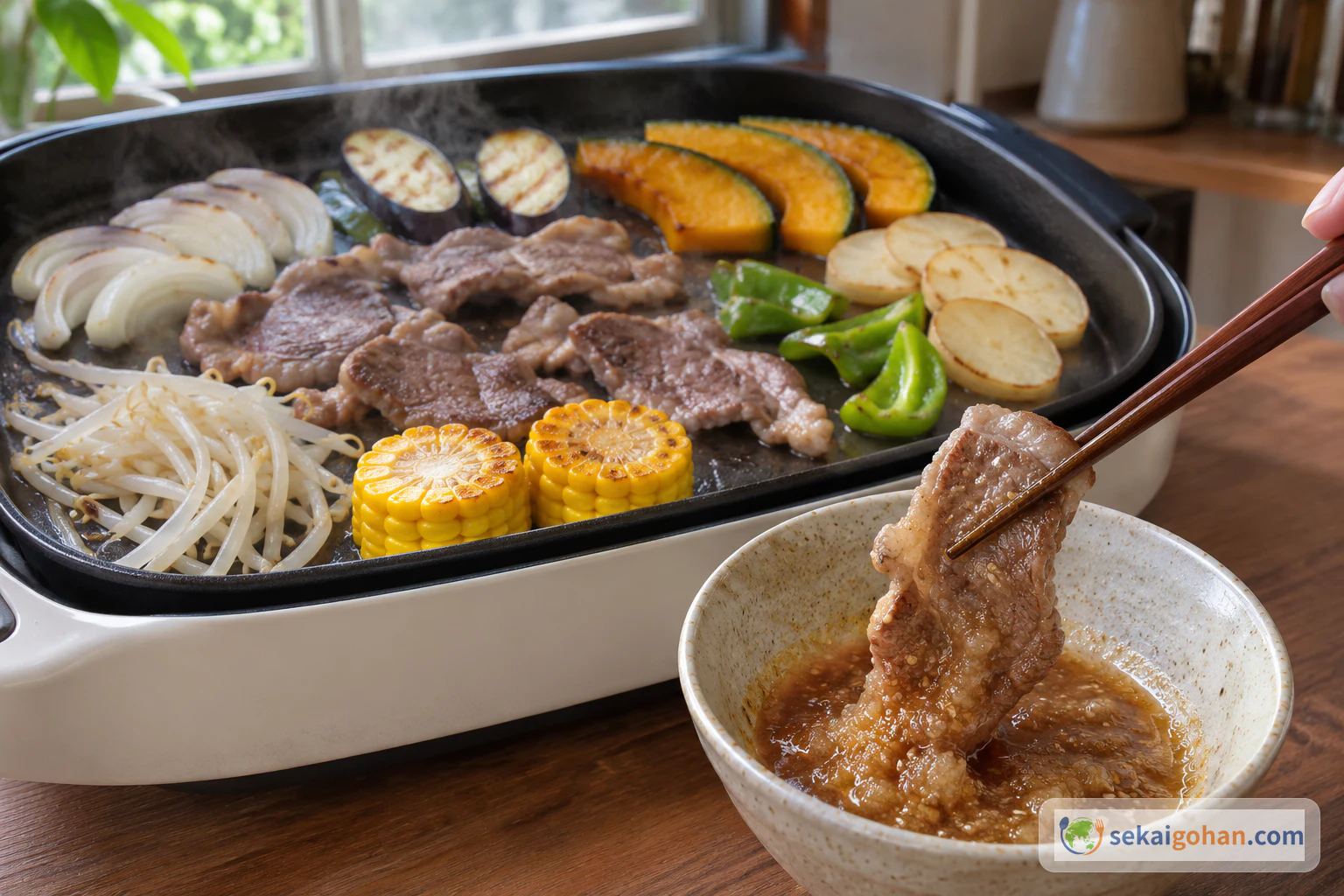
Grill the lamb plain, with no marinade, and dip each cooked piece in the sauce at the table. Let the lamb's own fat grease the pan, and let its juices run down to the vegetables.
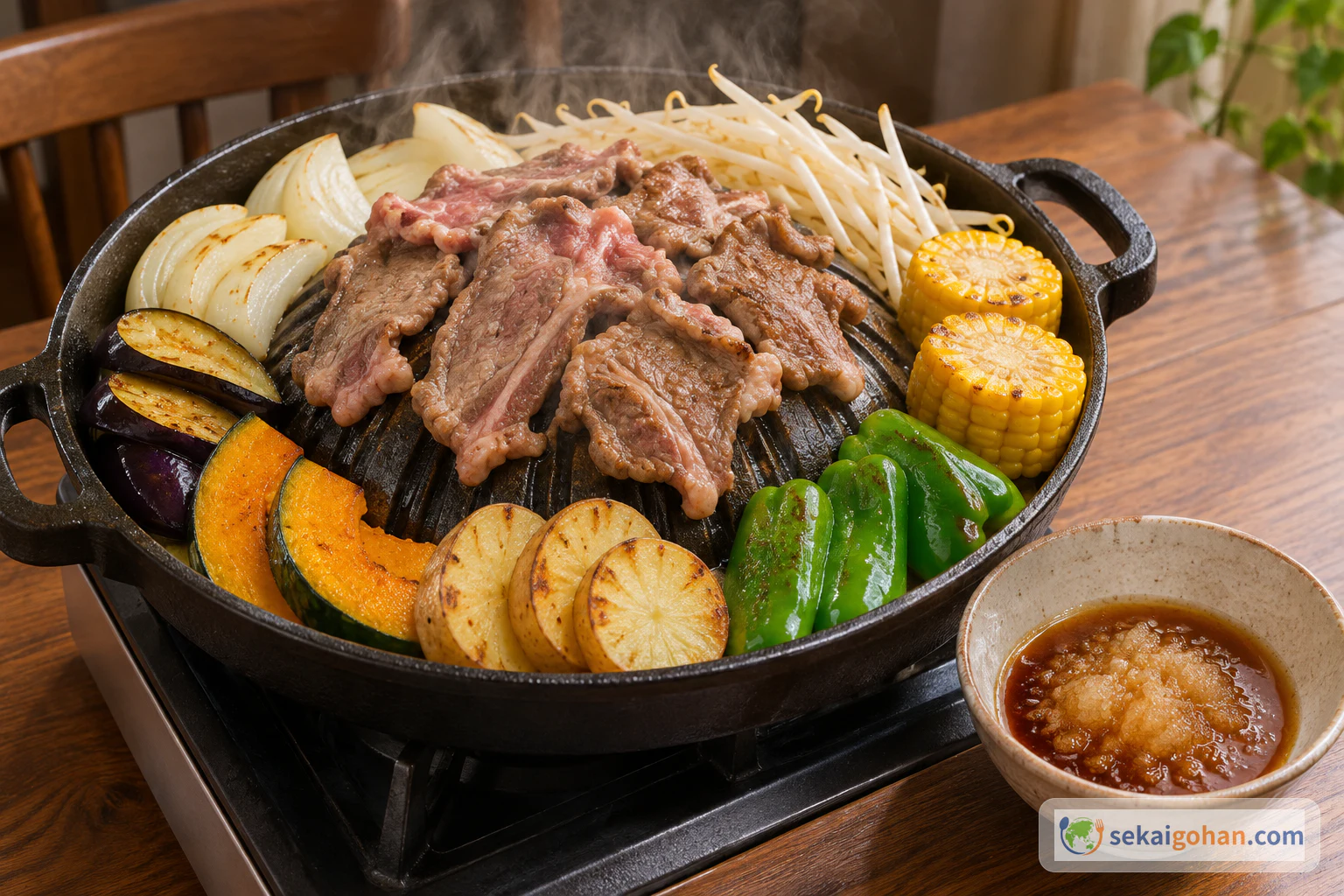
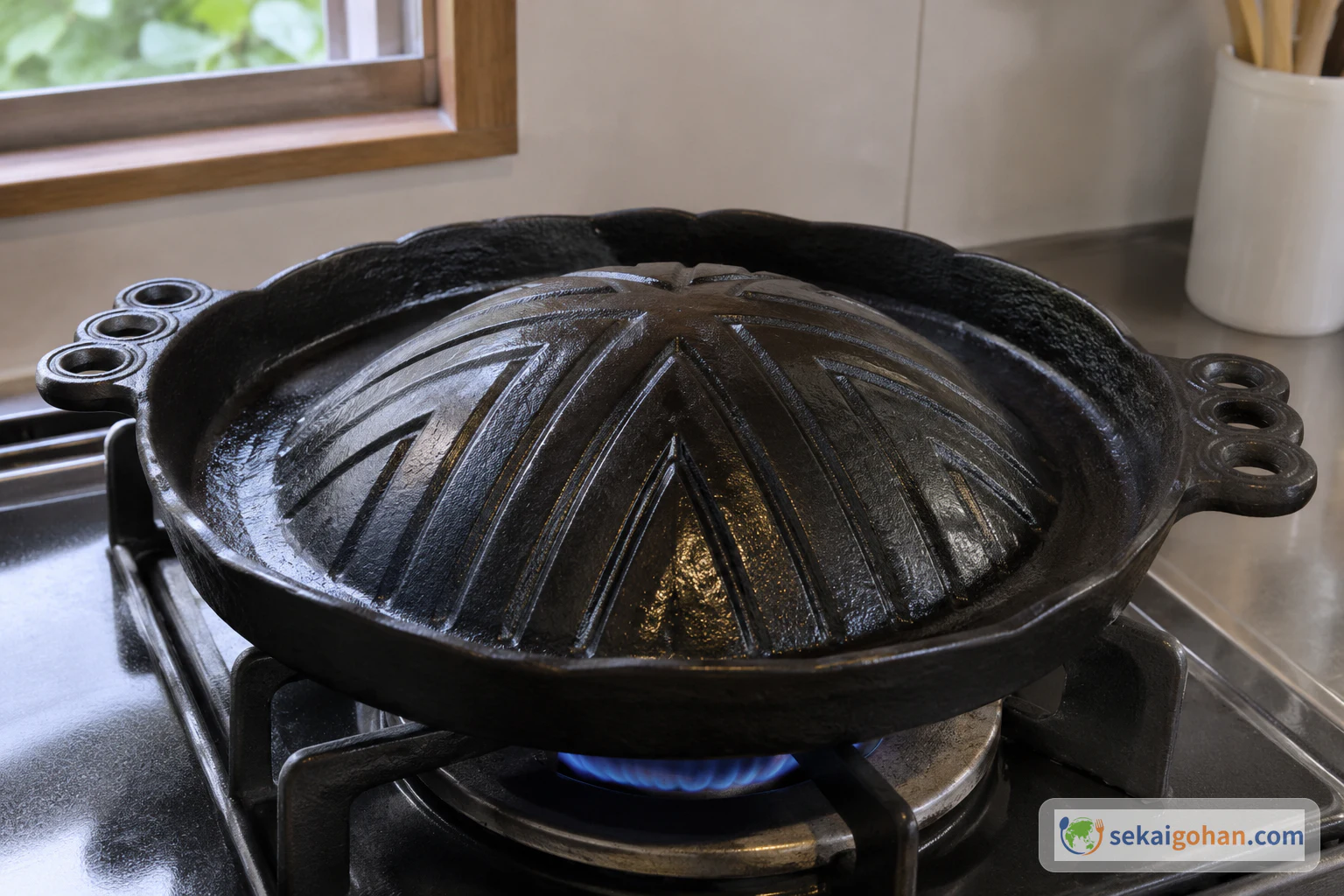
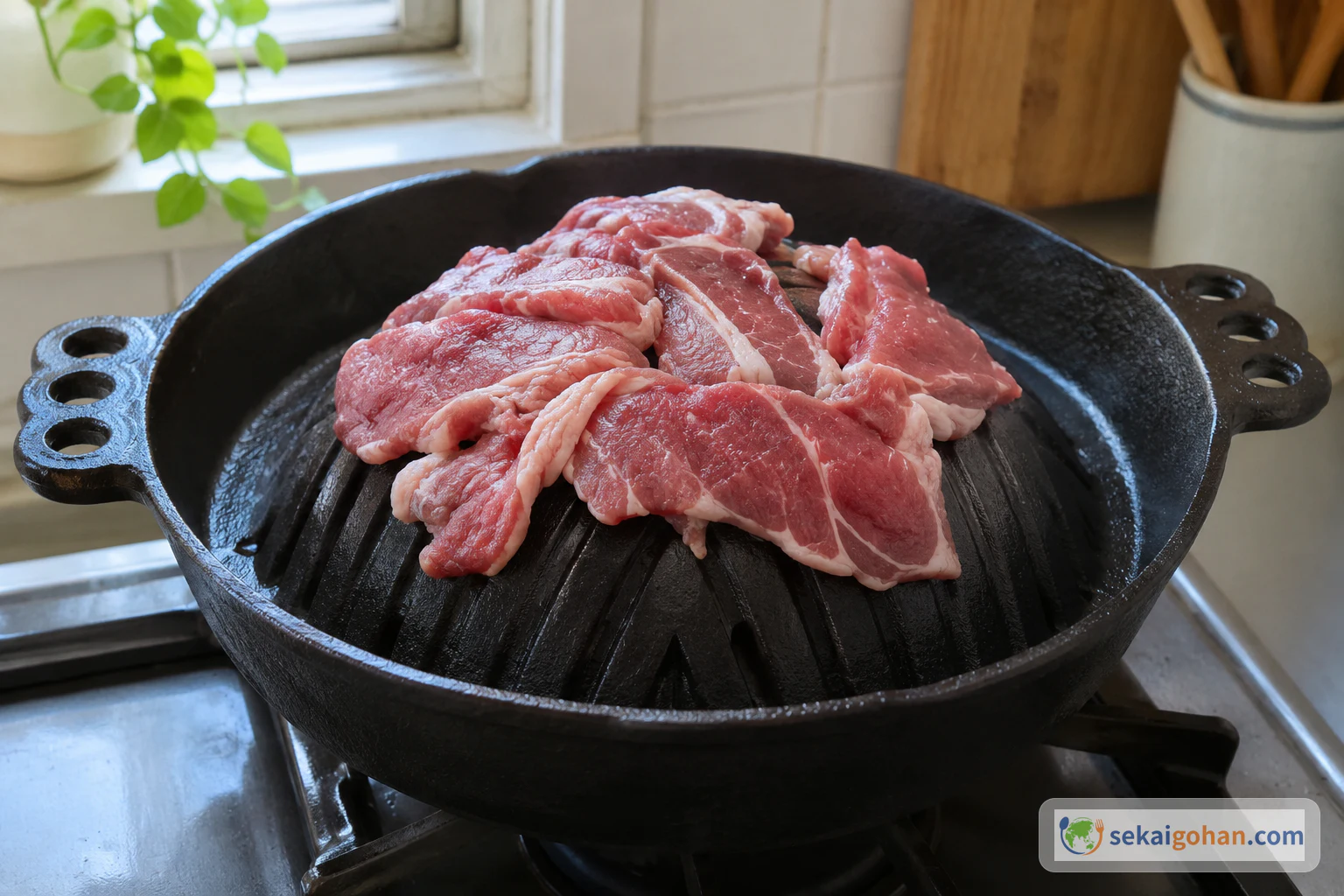
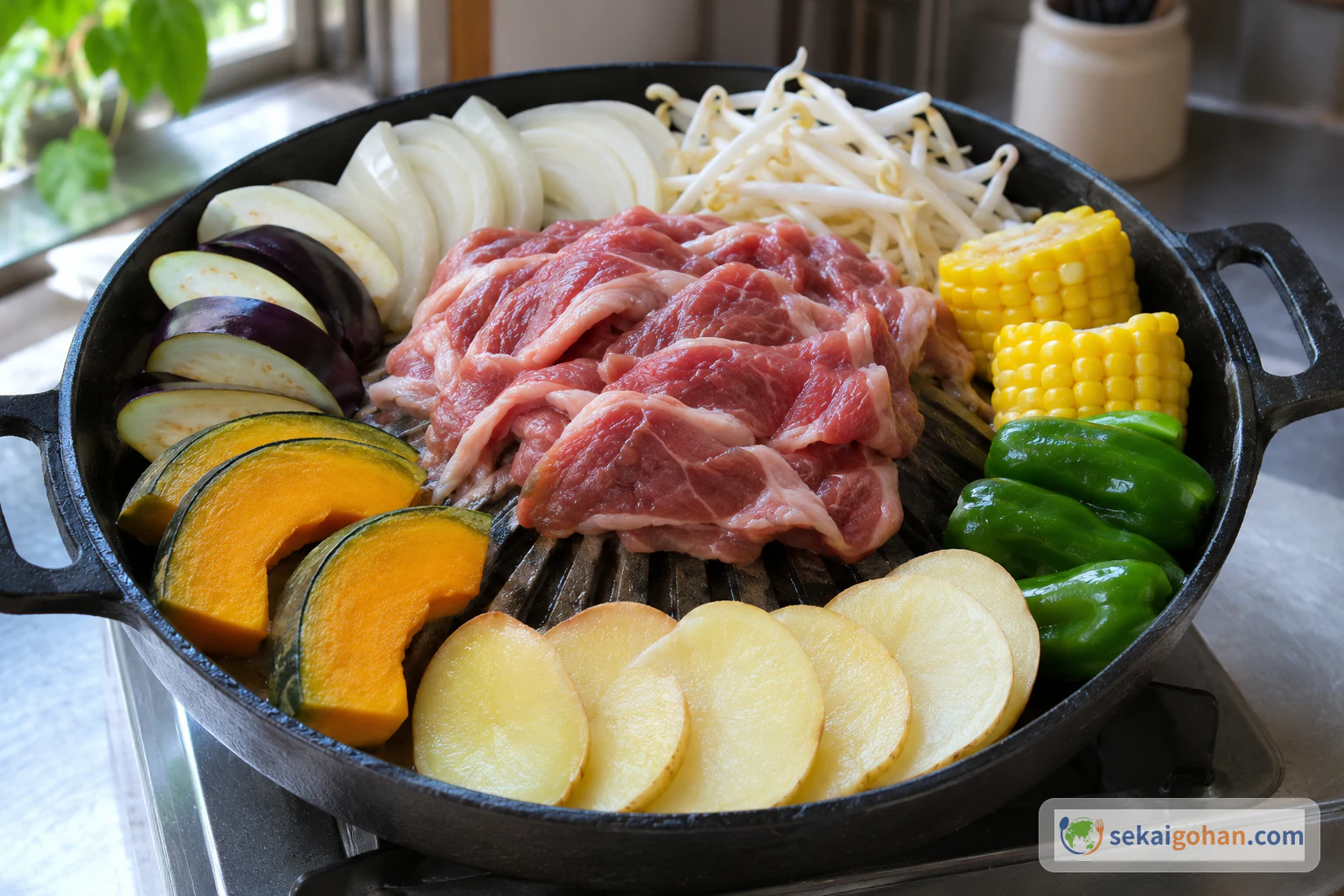
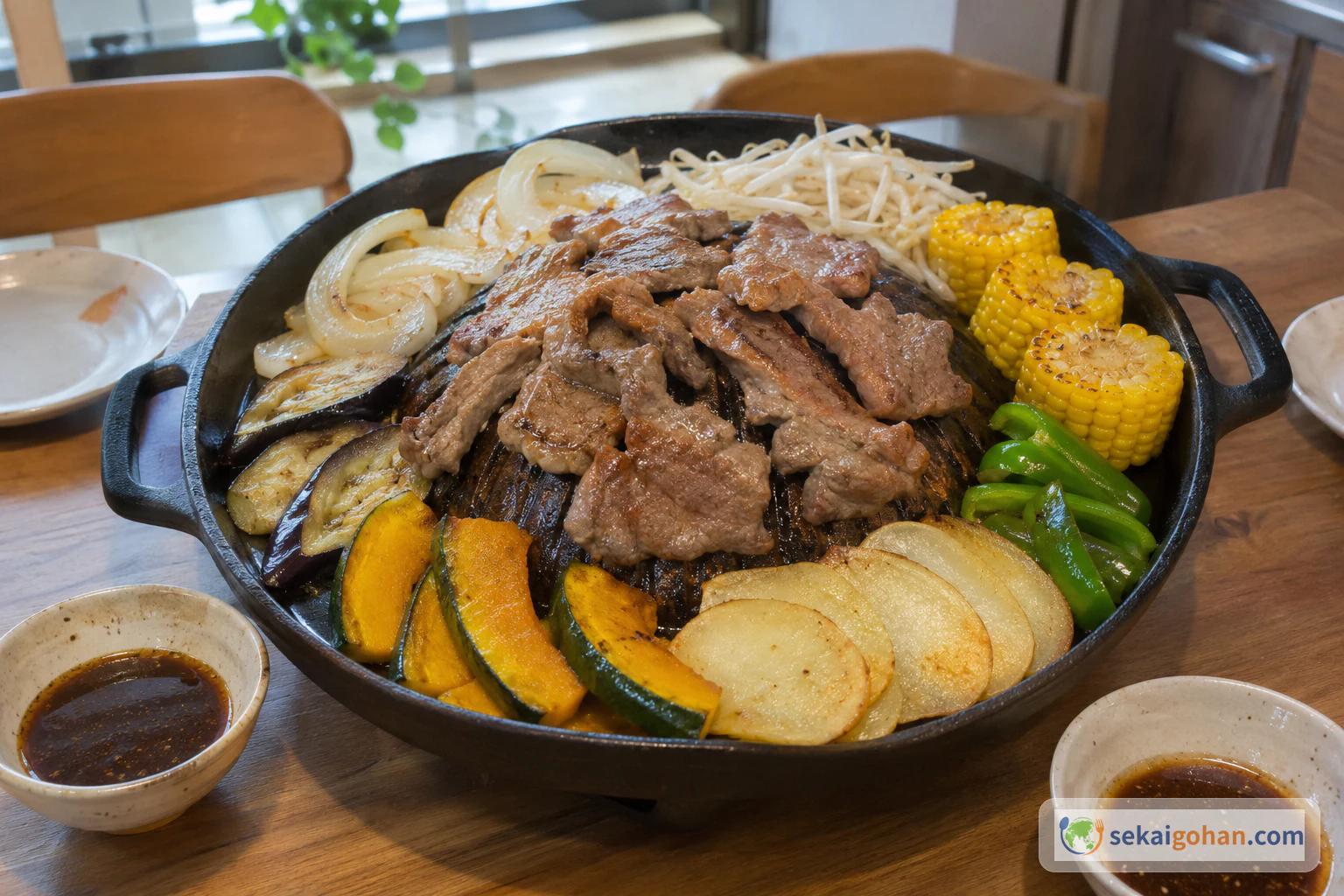
In Hokkaido, jingisukan is a dish people gather around, at home and outdoors: under the cherry blossoms in spring and at open-air meals in summer. Sheep meat and vegetables go onto a cast-iron pan with a raised center. The meat sits on the crown and the vegetables sit around the rim. As the lamb cooks, its juices run down the slope and flavor the onions, sprouts and pumpkin below.
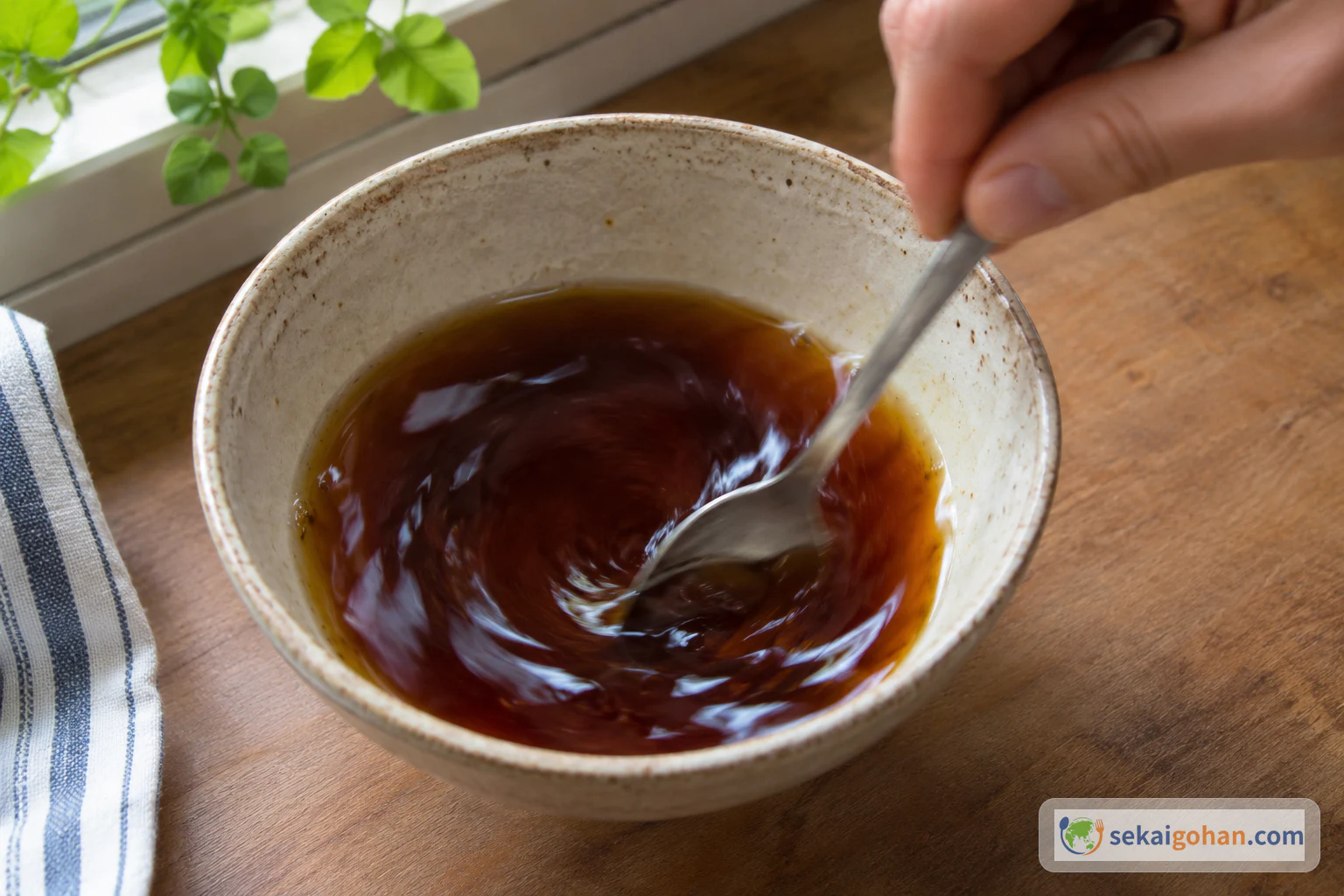
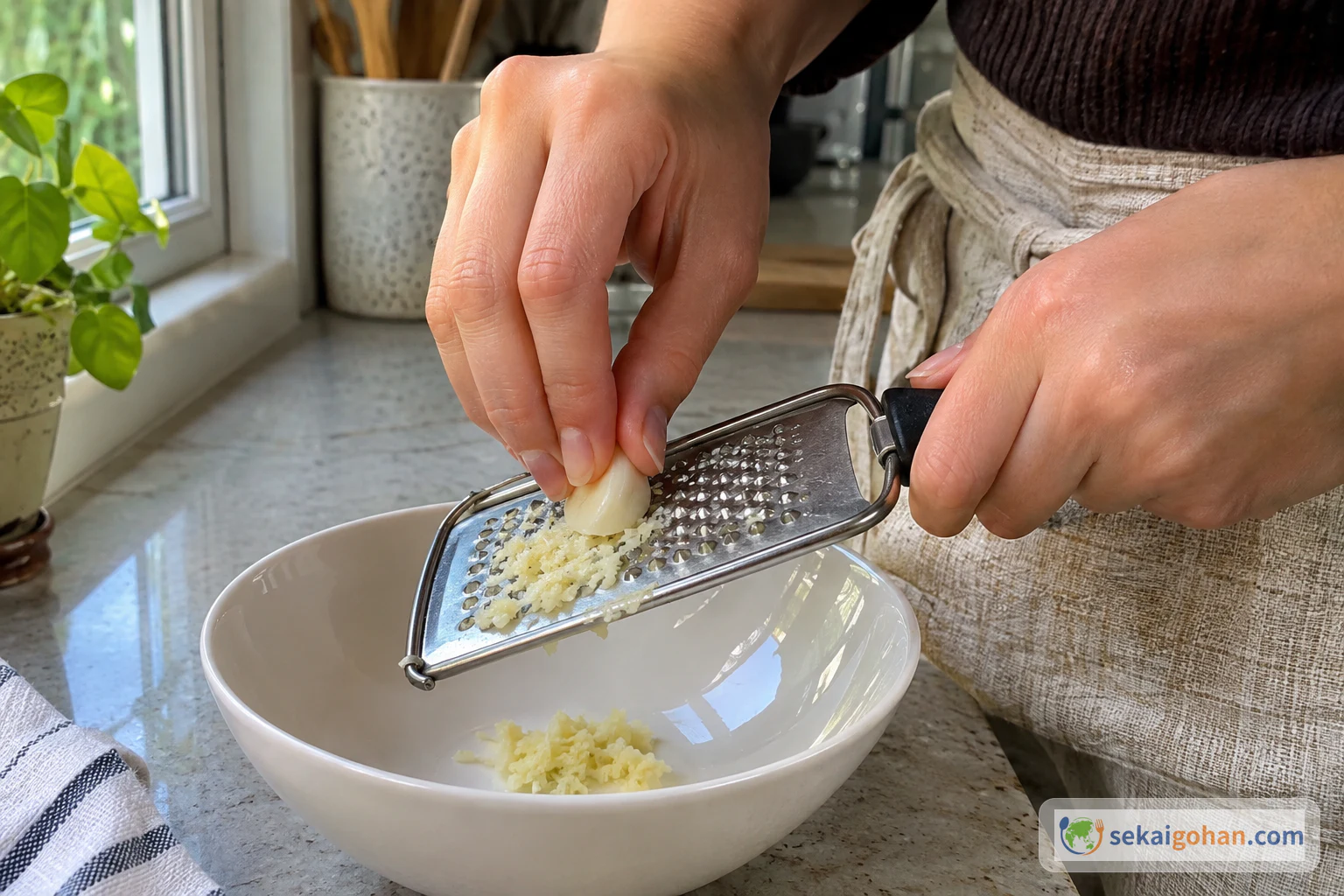
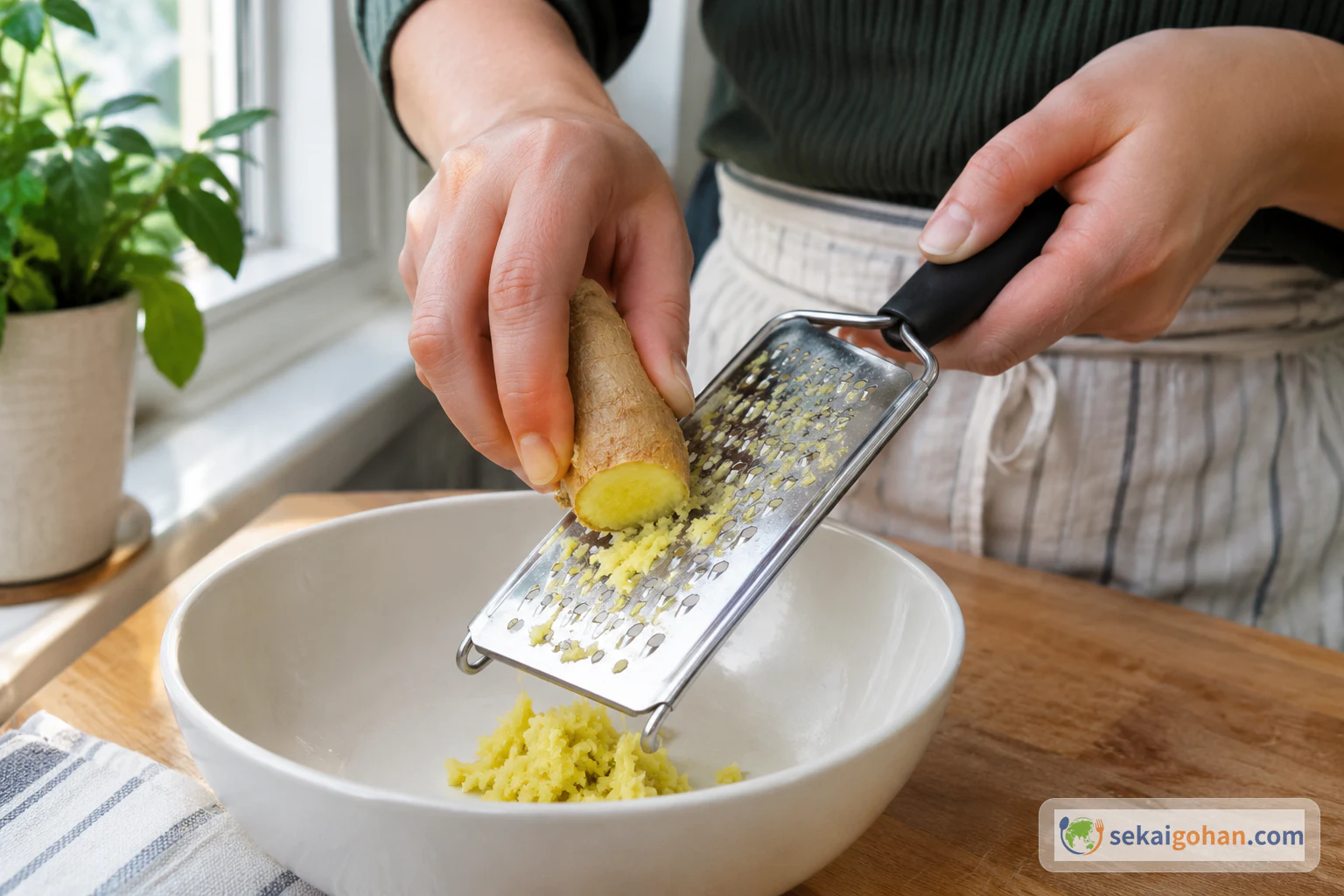
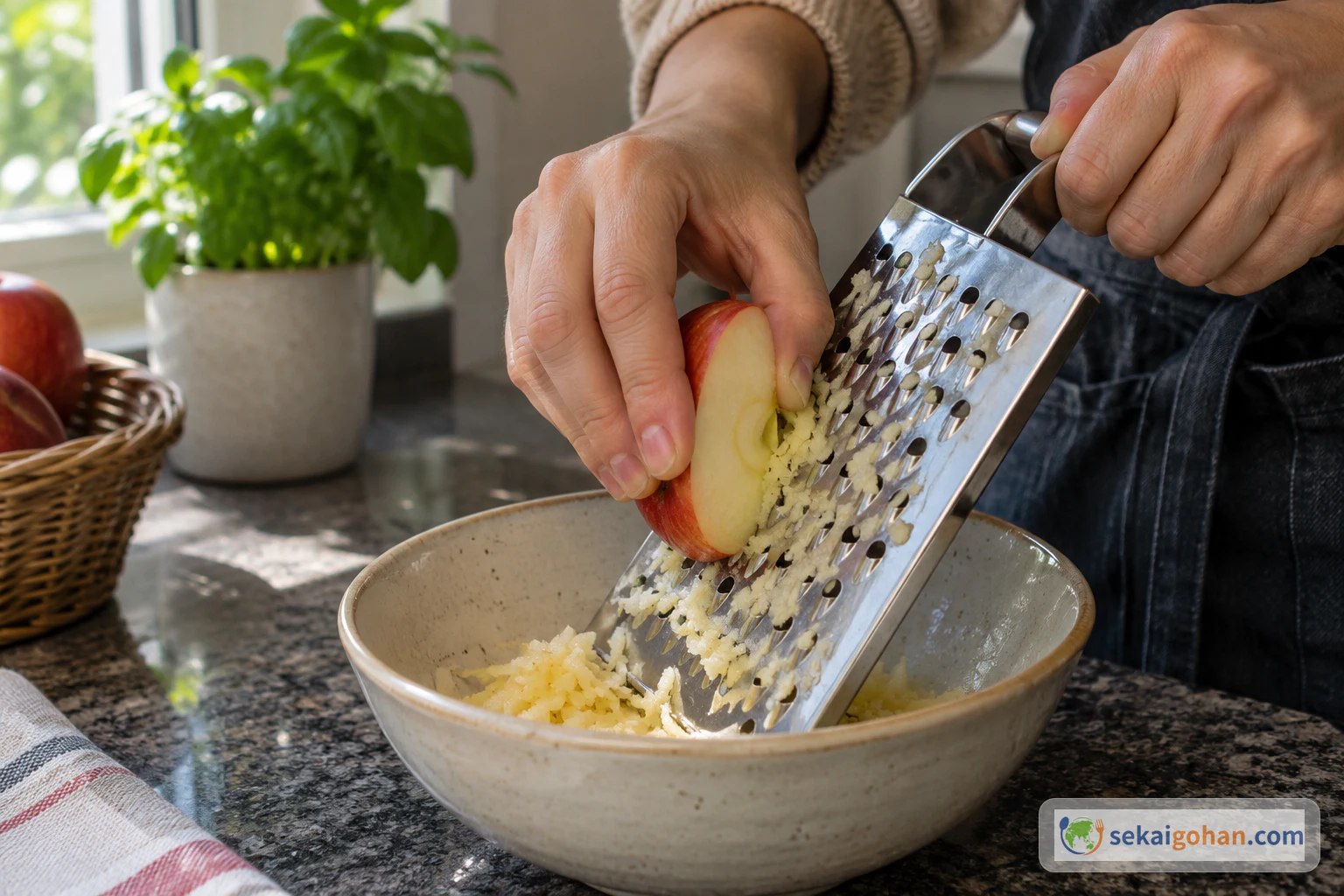
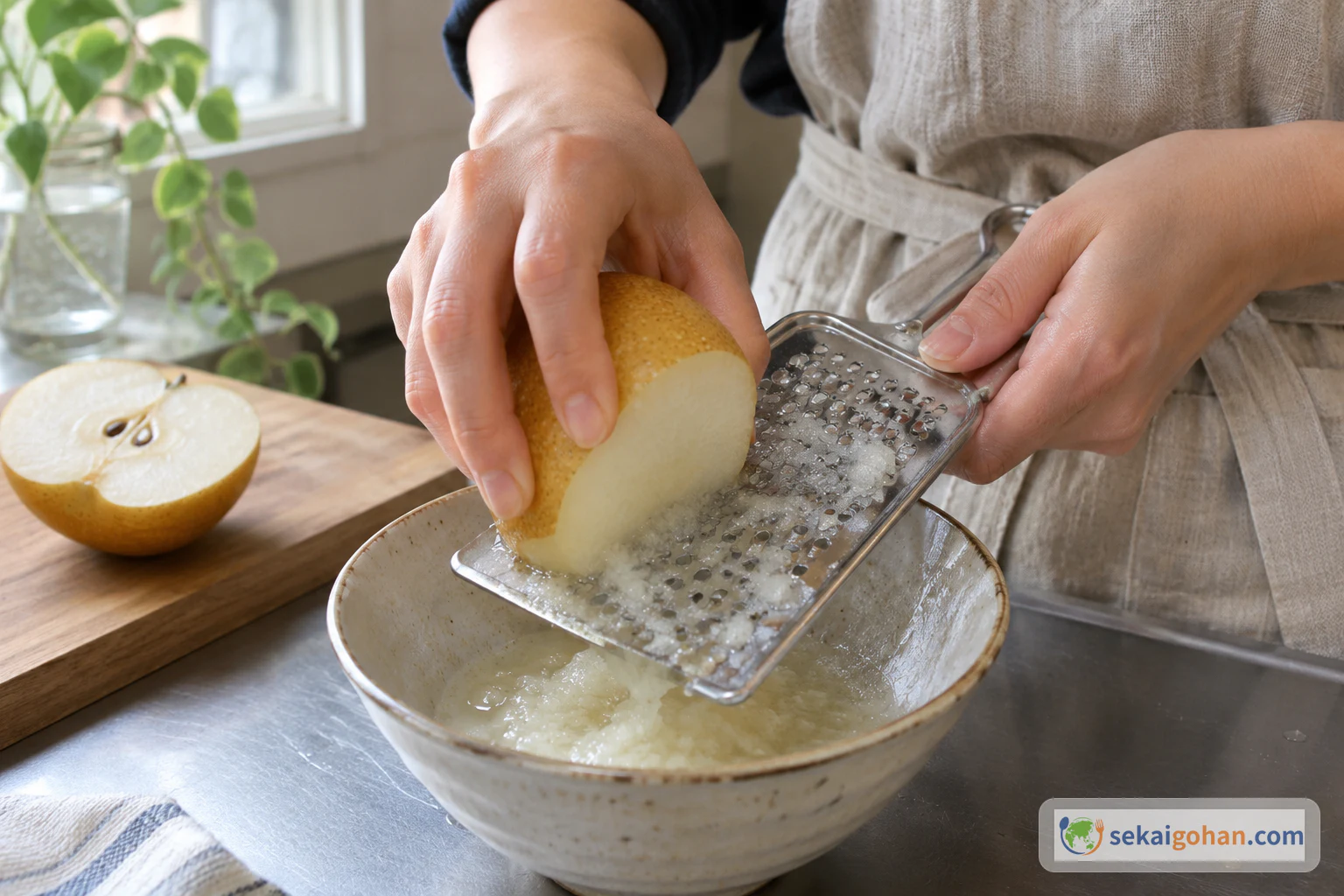
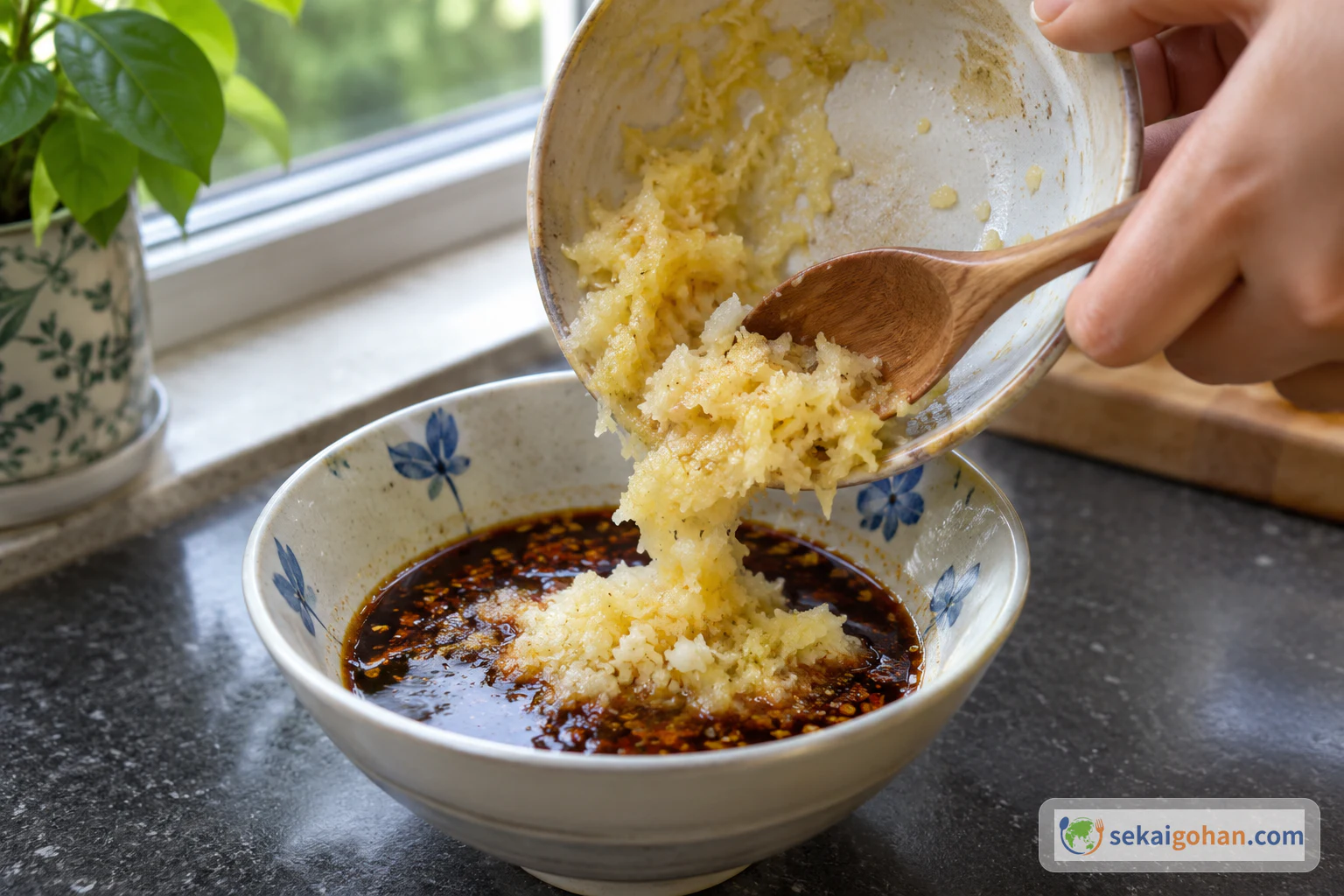
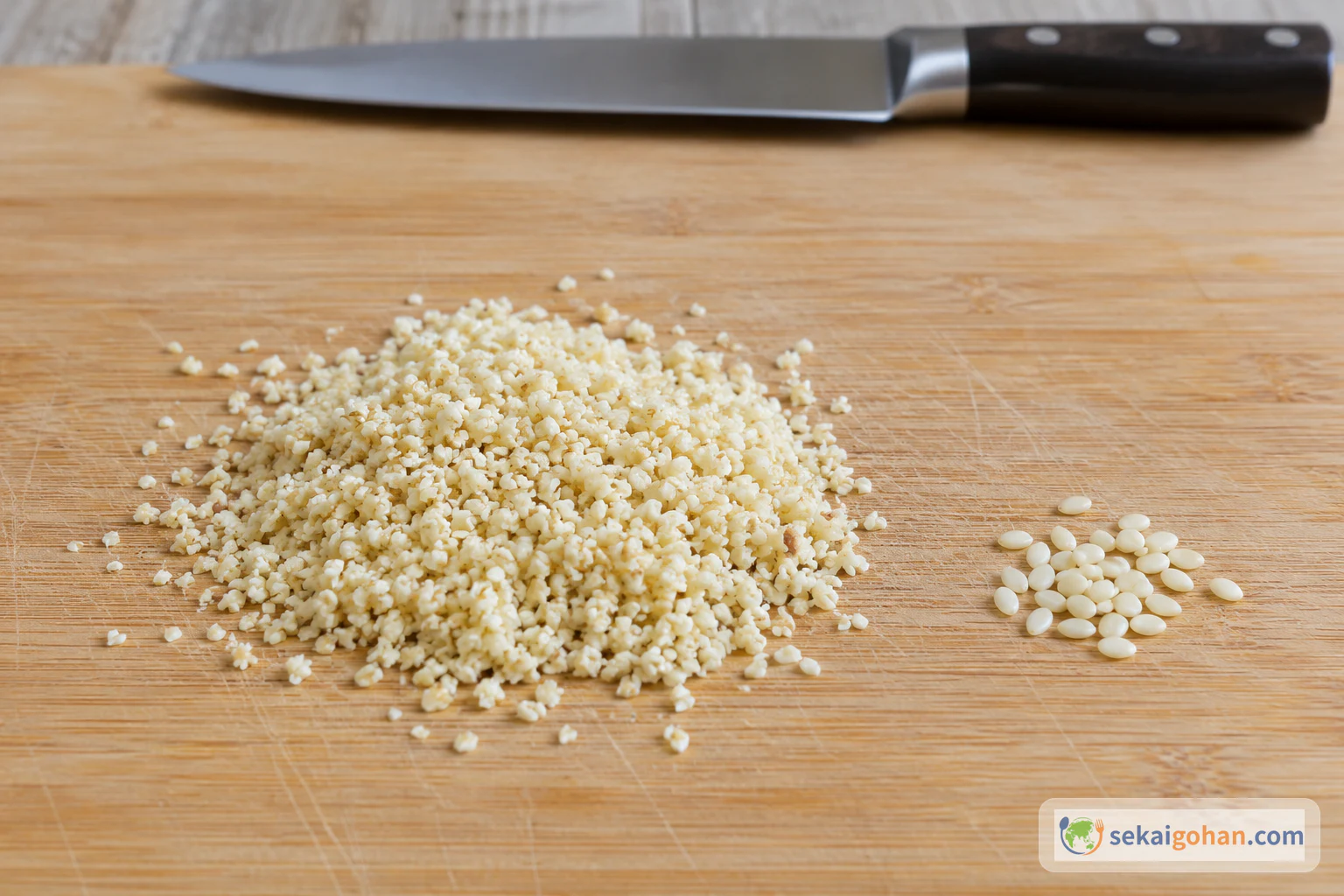
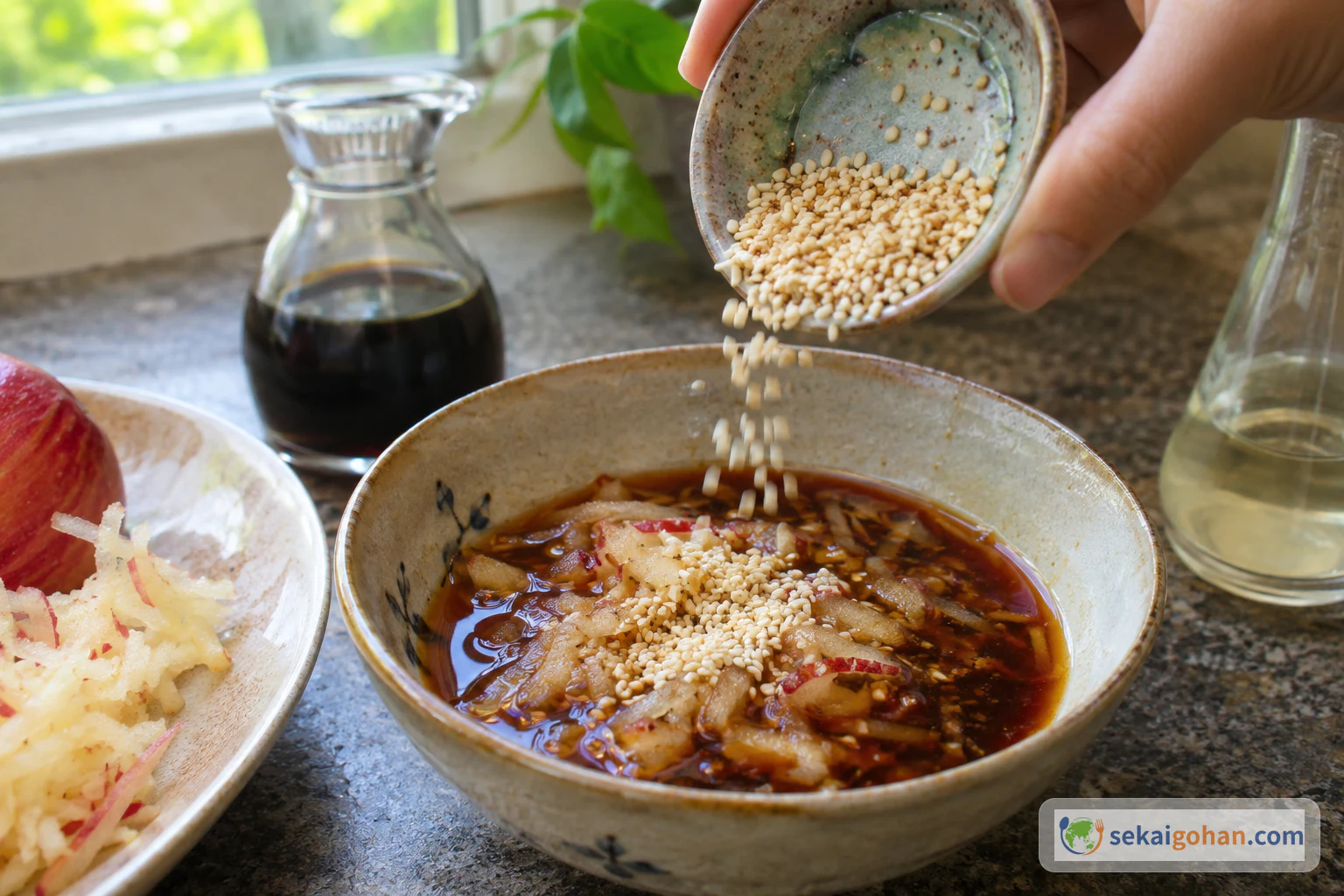
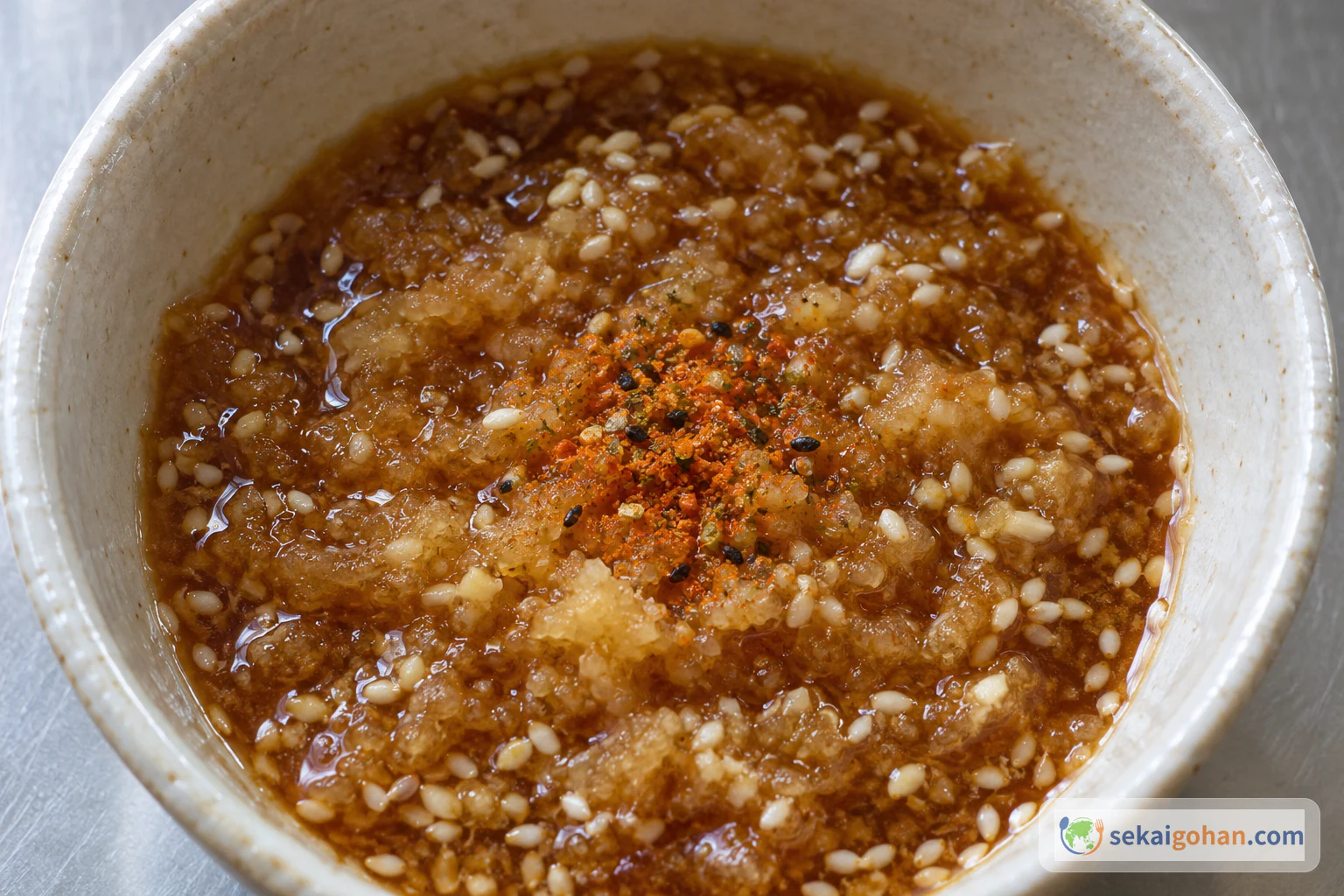
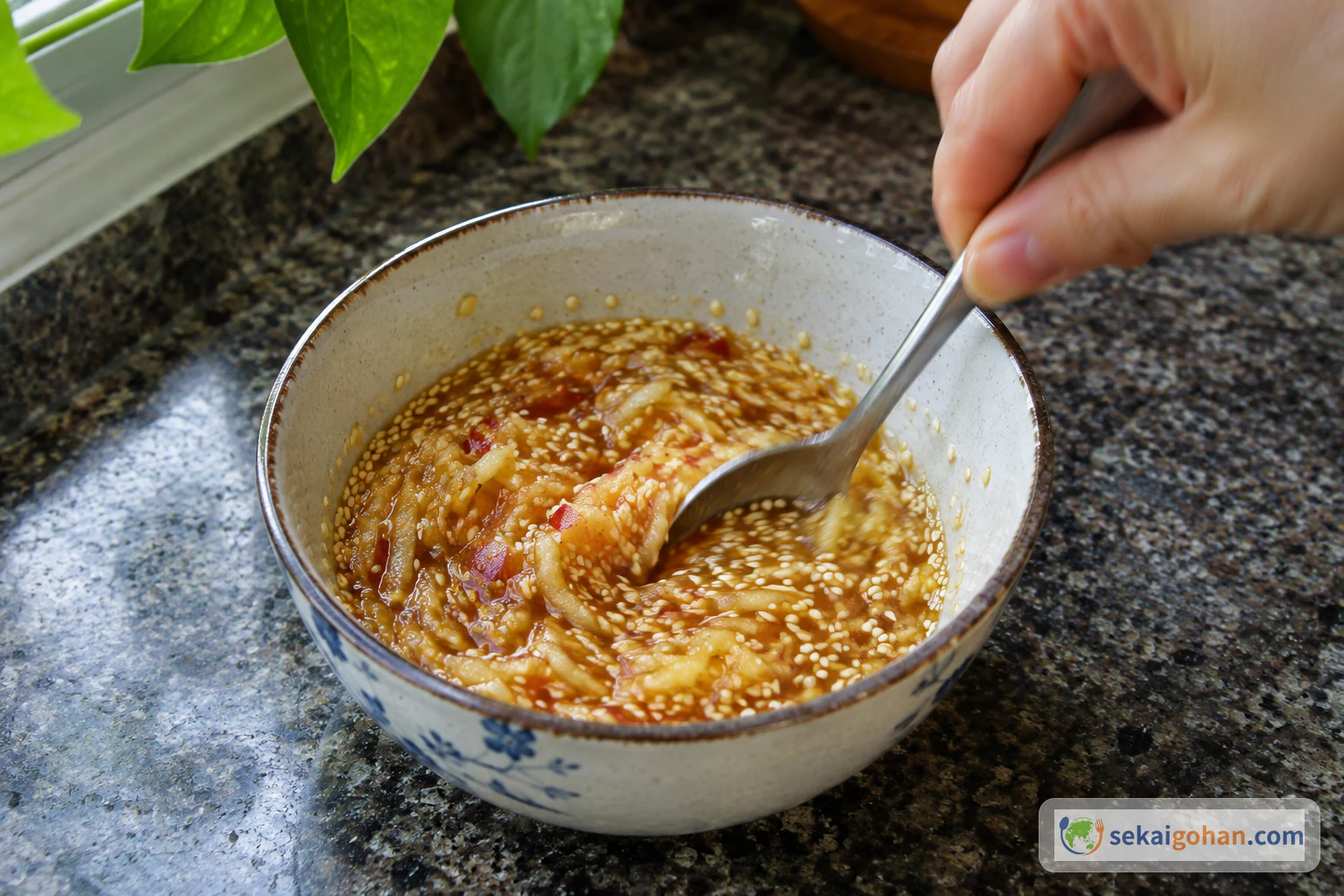
There are two main ways to make it in Hokkaido. In one, the meat is marinated in a seasoned sauce before grilling. In the other, the meat is grilled plain and then dipped in a separate sauce. This article follows the second style. Raw lamb goes onto the pan with nothing on it, and the flavor comes from a dipping sauce made with soy sauce, vinegar, sake and grated apple, pear, garlic and ginger. The two styles use different ingredients and steps, so it helps to know which one you are making before you buy the meat.
In Japanese it is written ジンギスカン, and sometimes 成吉思汗, the Japanese rendering of the name Genghis Khan. The name does not settle where the dish came from. The origin is discussed further down.
About This Version: A Four-Serving Family Recipe from Hokkaido
This recipe follows the four-serving jingisukan from Uchi no Kyōdo Ryōri ("Our Local Cuisines"), a regional-food collection published by Japan's Ministry of Agriculture, Forestry and Fisheries (MAFF). That page credits the recipe to the book Hokkaido no Aji (The Taste of Hokkaido) by Akiko Nambu. The page also notes that recipes vary by region and household, and that its photos may differ from the recipe as written. All quantities, cuts and steps here come from that recipe. Different cuts from other Hokkaido pages, the marinade, and the heated sauce used in a school-lunch version have not been mixed in.
A few points are editorial choices for this article and are stated openly here:
- Shichimi timing. Shichimi (Japanese seven-spice chili blend) appears in the ingredient list, but the method never says when to add it. Here it is stirred into the dipping sauce along with everything else.
- Soy sauce and vinegar. The recipe does not name a type. This article uses ordinary Japanese dark soy sauce (koikuchi) and grain vinegar.
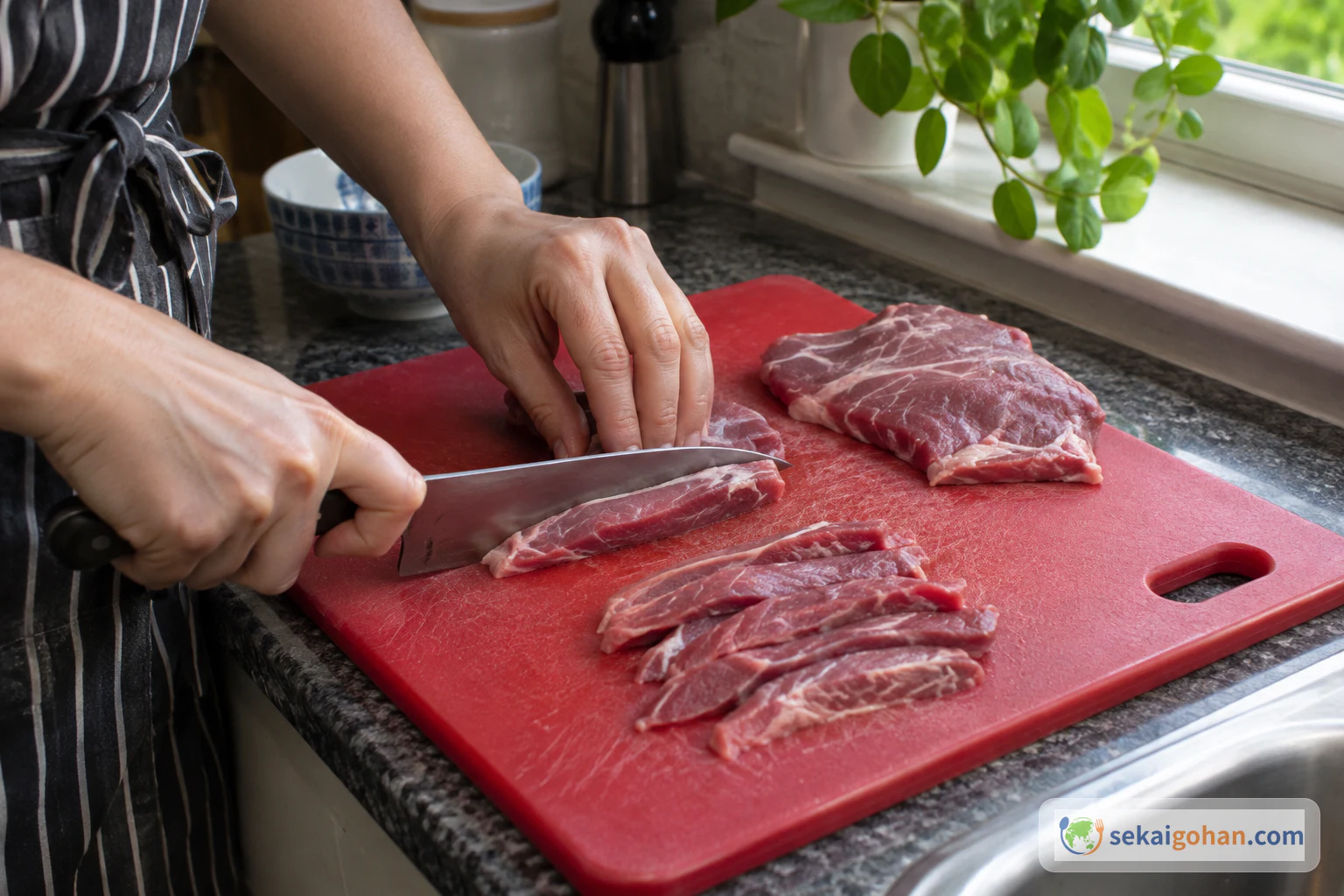
- Lamb. The recipe calls for thinly sliced sheep meat. This article uses thin, boneless lamb. Mutton works too.
- Food-safety guidance. The note on cooking meat to 75°C and on keeping raw-meat utensils separate comes from general household guidance from Japan's Ministry of Health, Labour and Welfare. It is not a time or temperature from the recipe.
This recipe has not been kitchen-tested by Sekai Gohan. The photos illustrate each action; they do not prove exact amounts, temperatures or cooking times.
Ingredients for 4 Servings
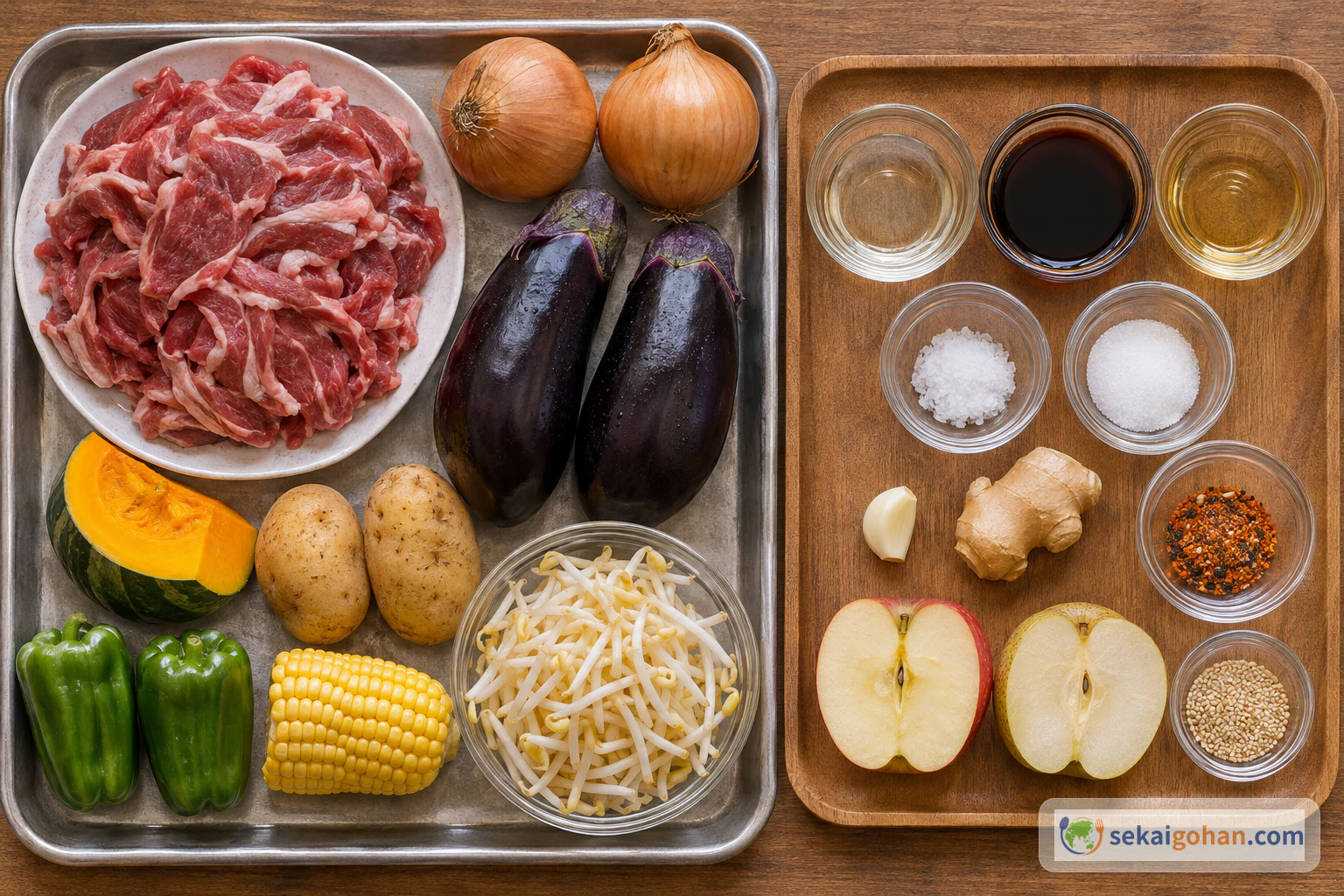
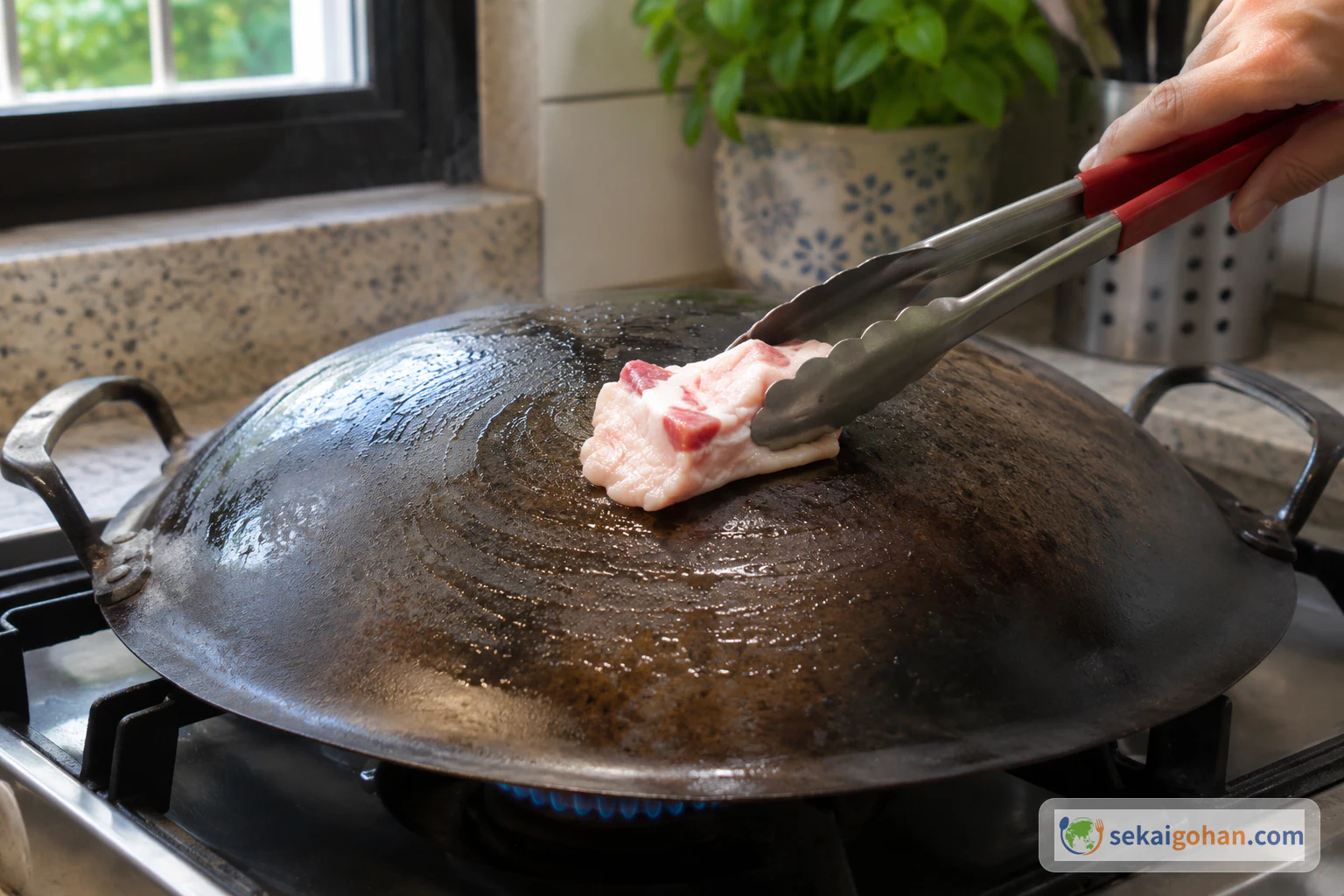
Do not add oil. The lamb's fat greases the pan.
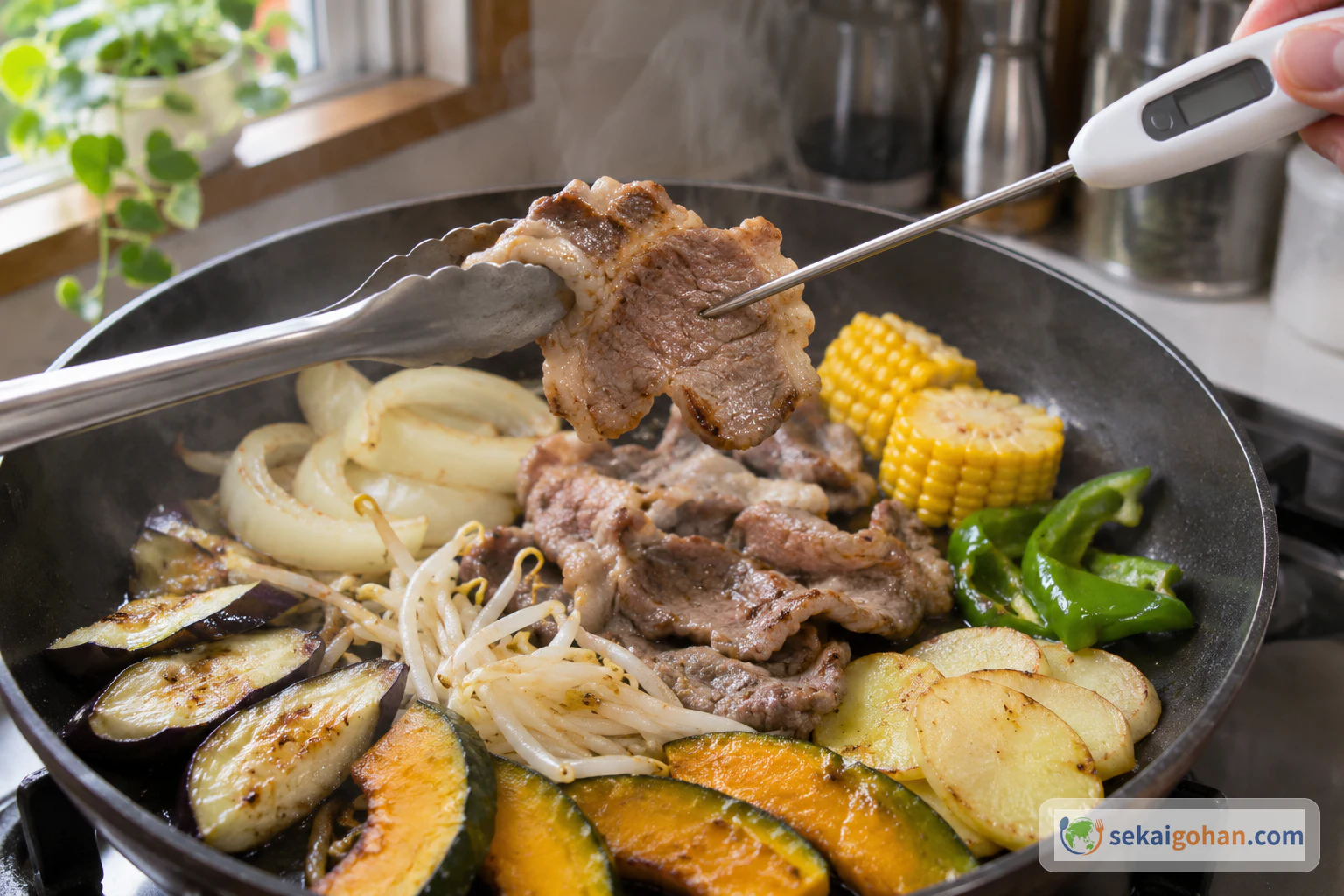
Use one set of tongs for raw meat and different chopsticks for eating, and keep a separate board for raw meat. Cook the lamb thoroughly and never serve it undercooked. Vegetables that raw meat juices have touched also need to be cooked through. For general household food safety, heat the center of the meat to 75°C for at least 1 minute.
The dipping sauce is not heated, so the sake in it stays uncooked. Keep that in mind when deciding who will eat it.
Choosing the Lamb and Vegetables
Buy plain meat, not pre-marinated. Look for thinly sliced lamb or mutton with no seasoning. Pre-seasoned jingisukan meat belongs to the marinated style. Lamb has a milder flavor, and mutton has a stronger, more distinctly sheepy one. Both are eaten in Hokkaido. Some of the fat should be on the meat, because it greases the pan.
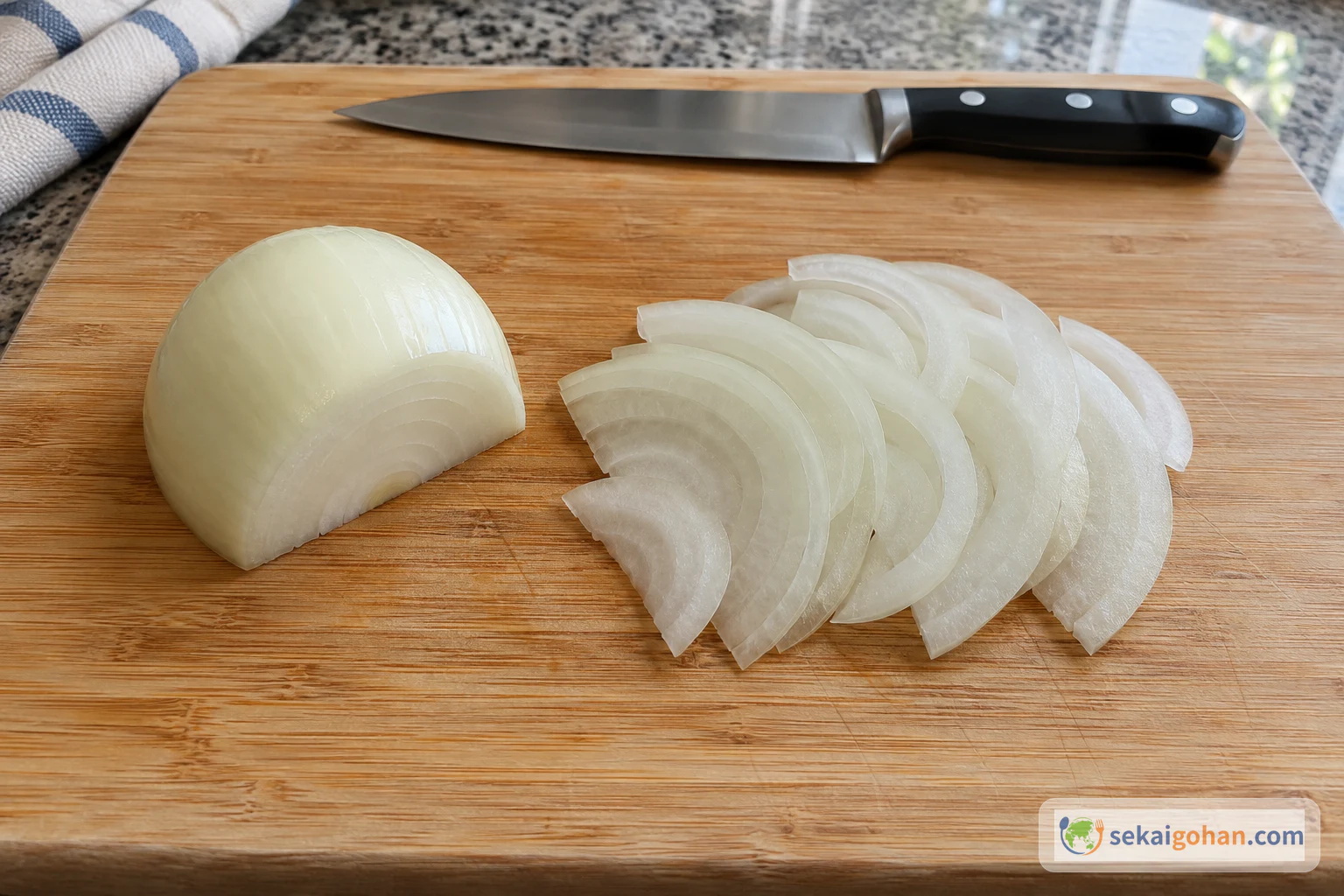
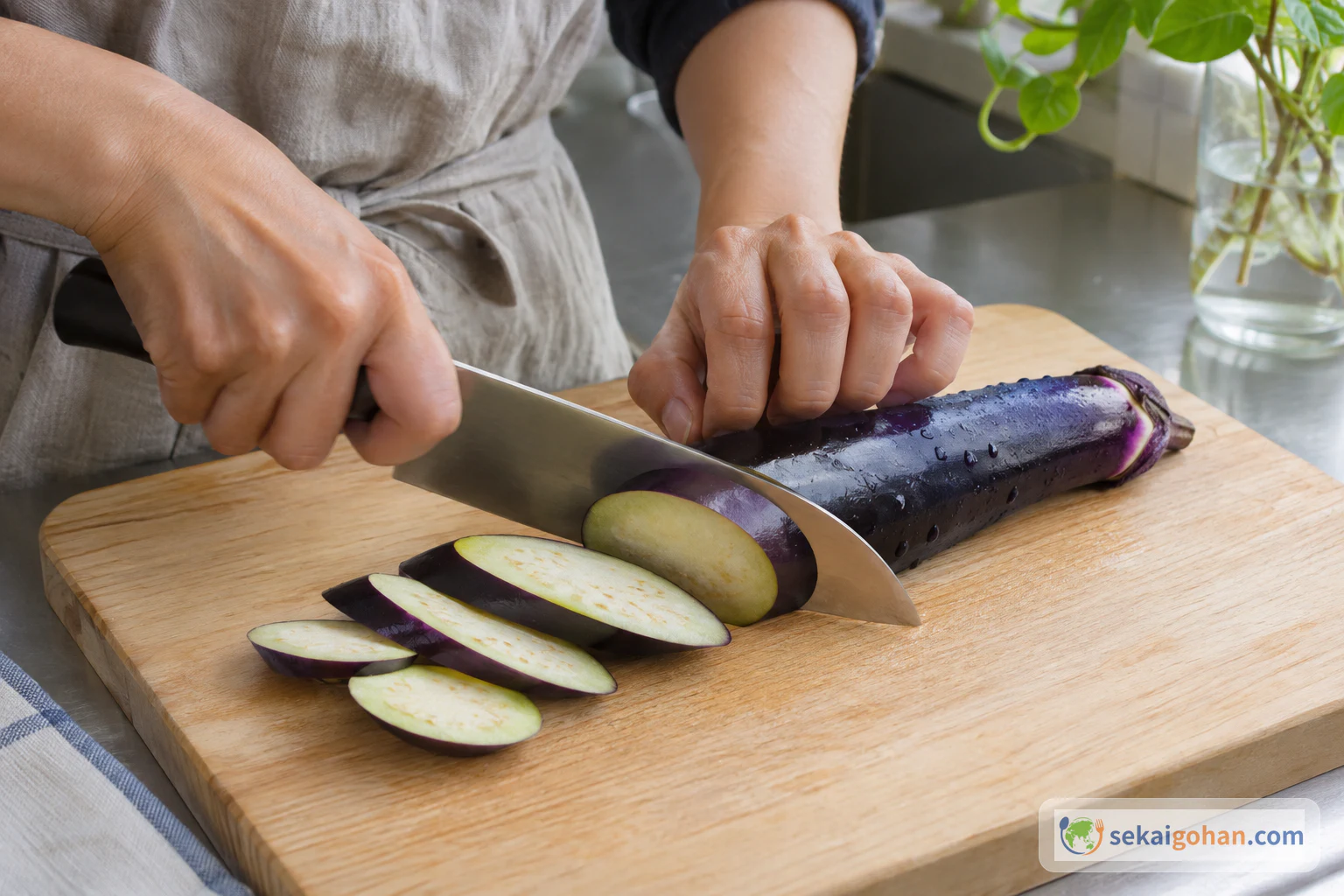
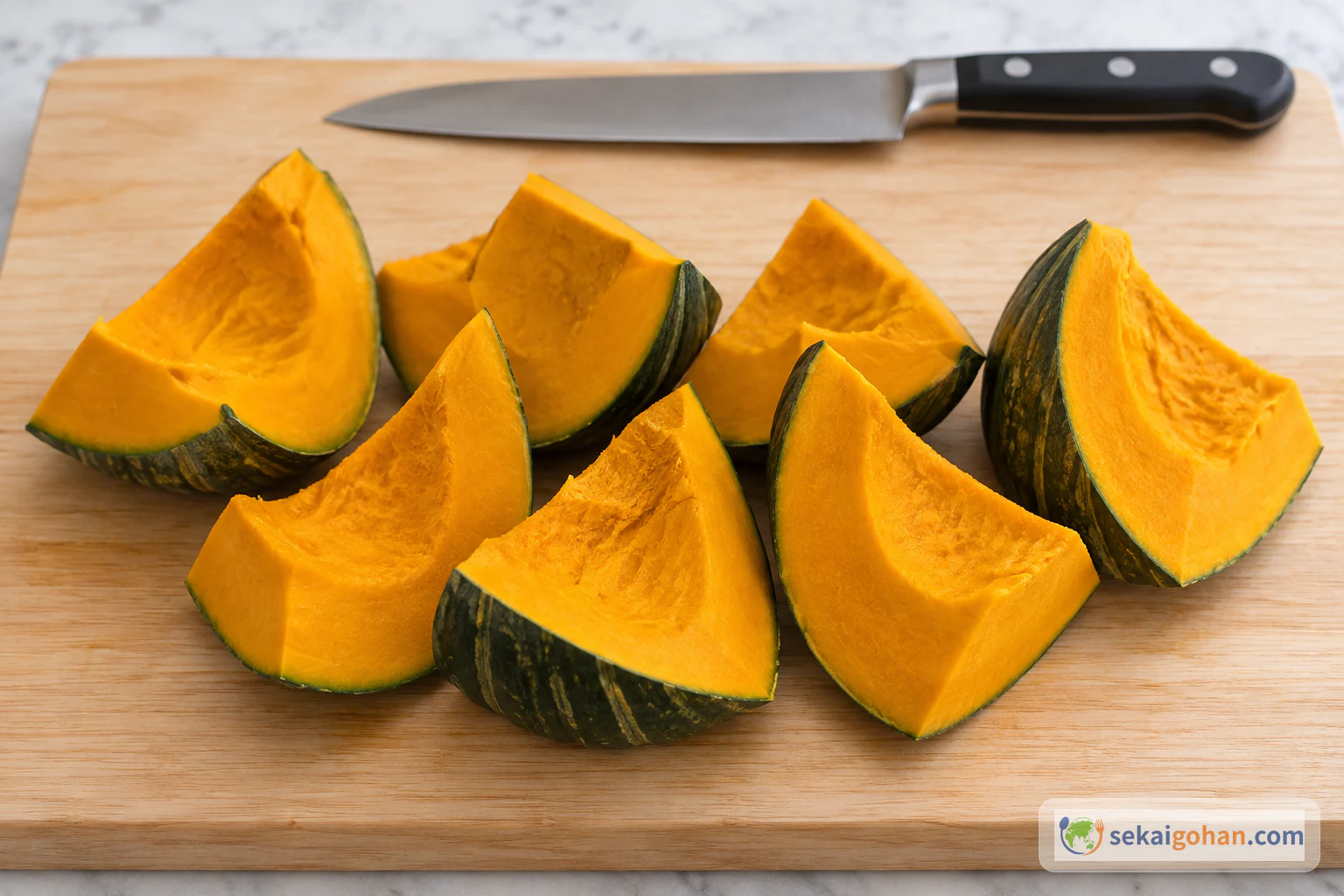
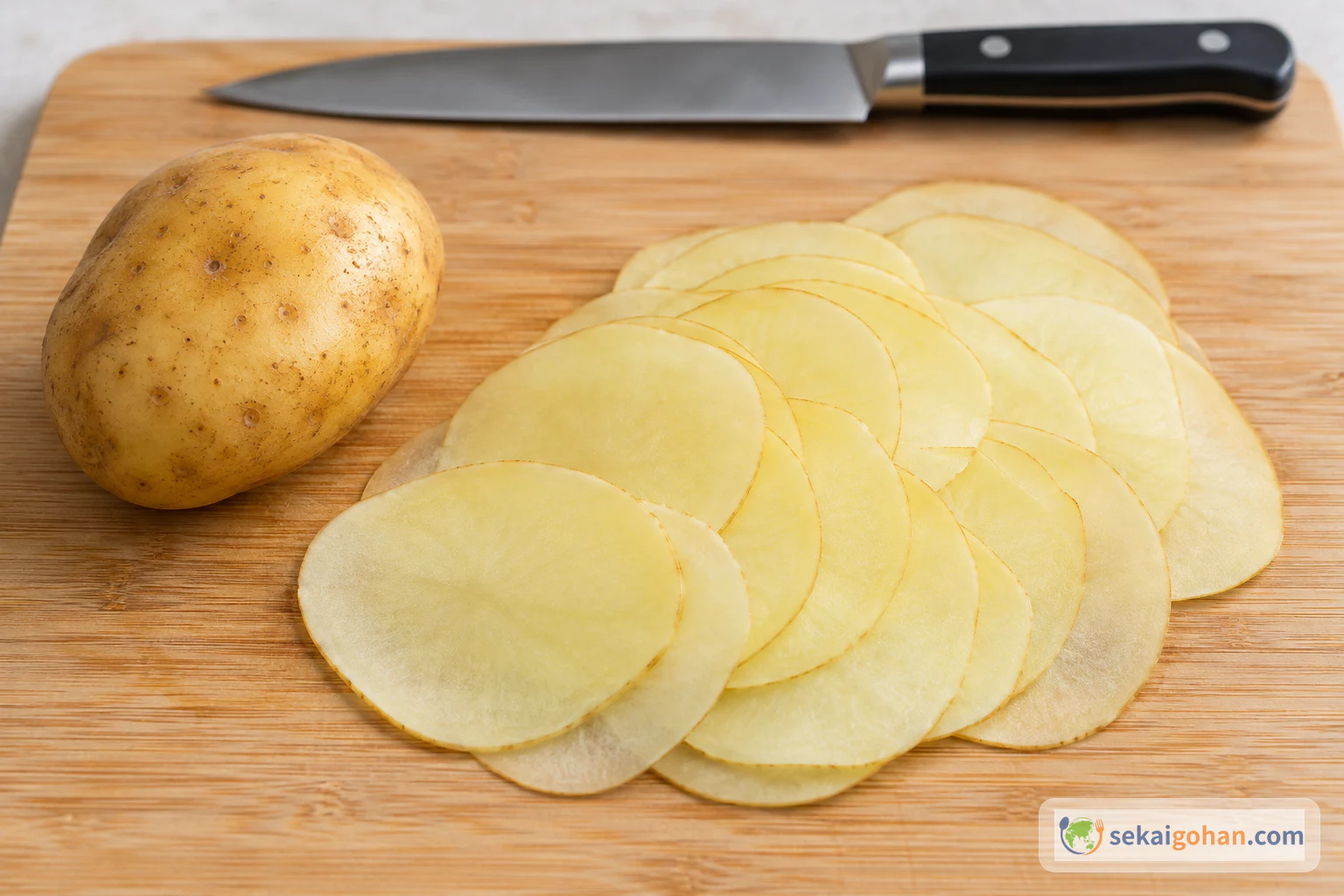
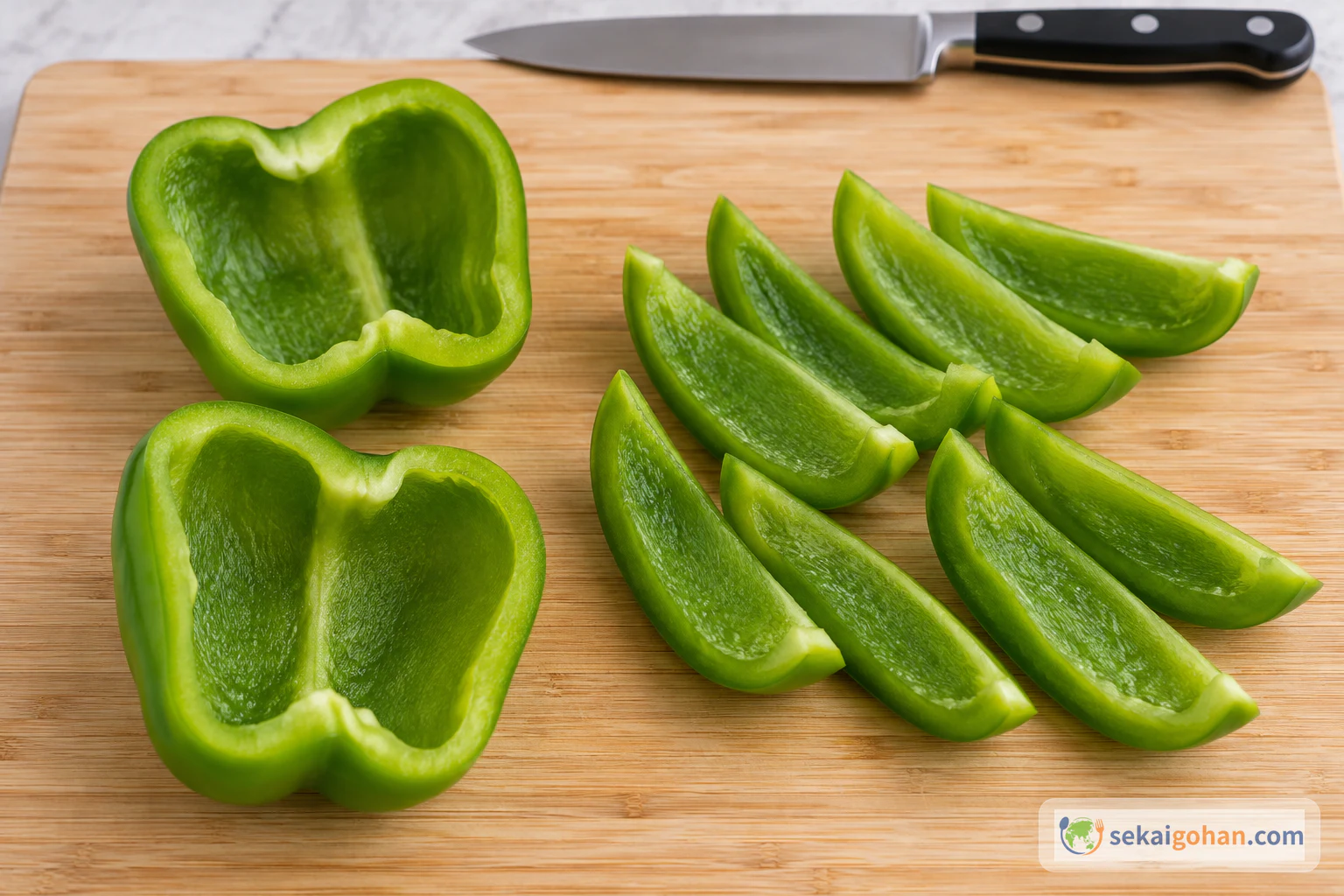
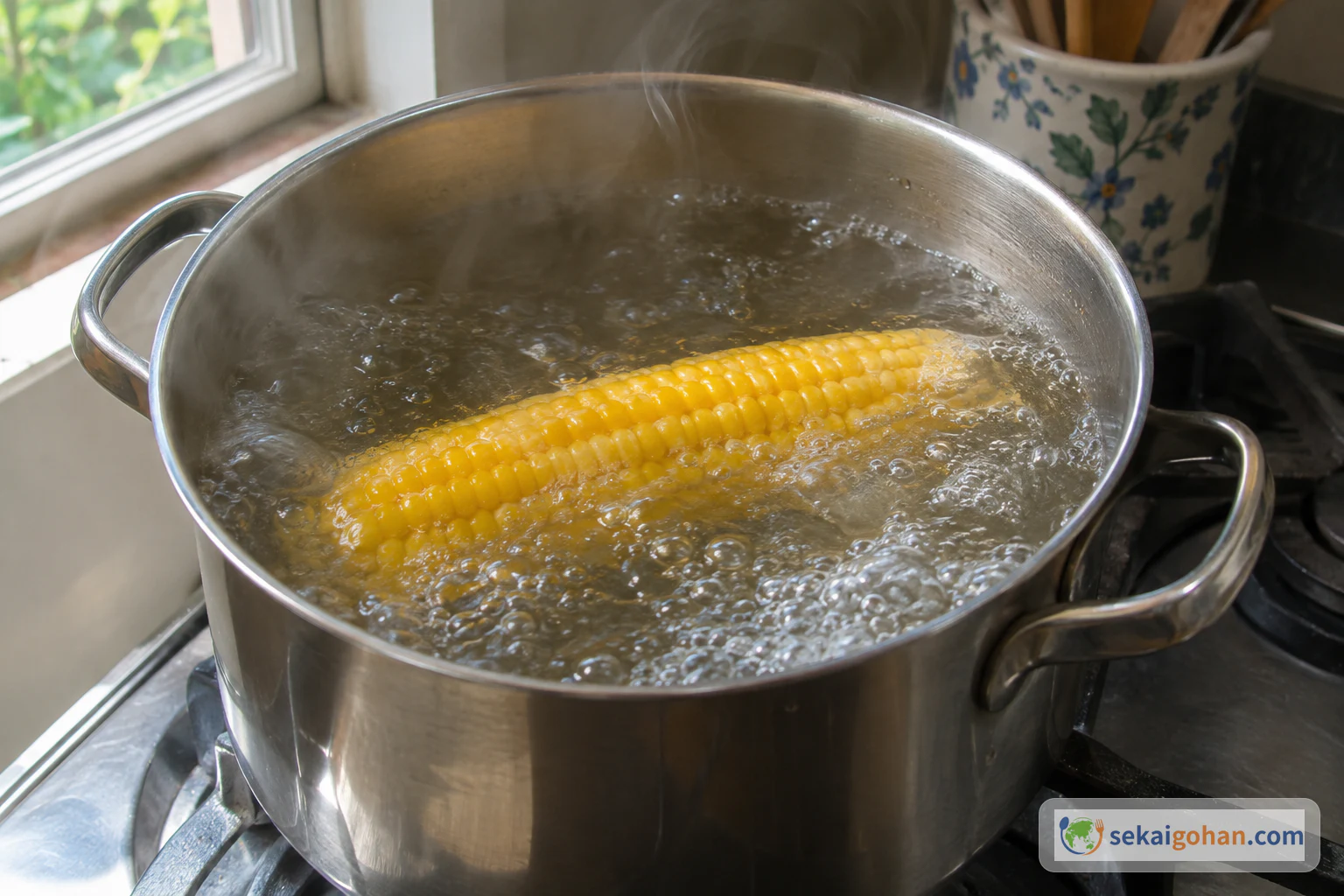
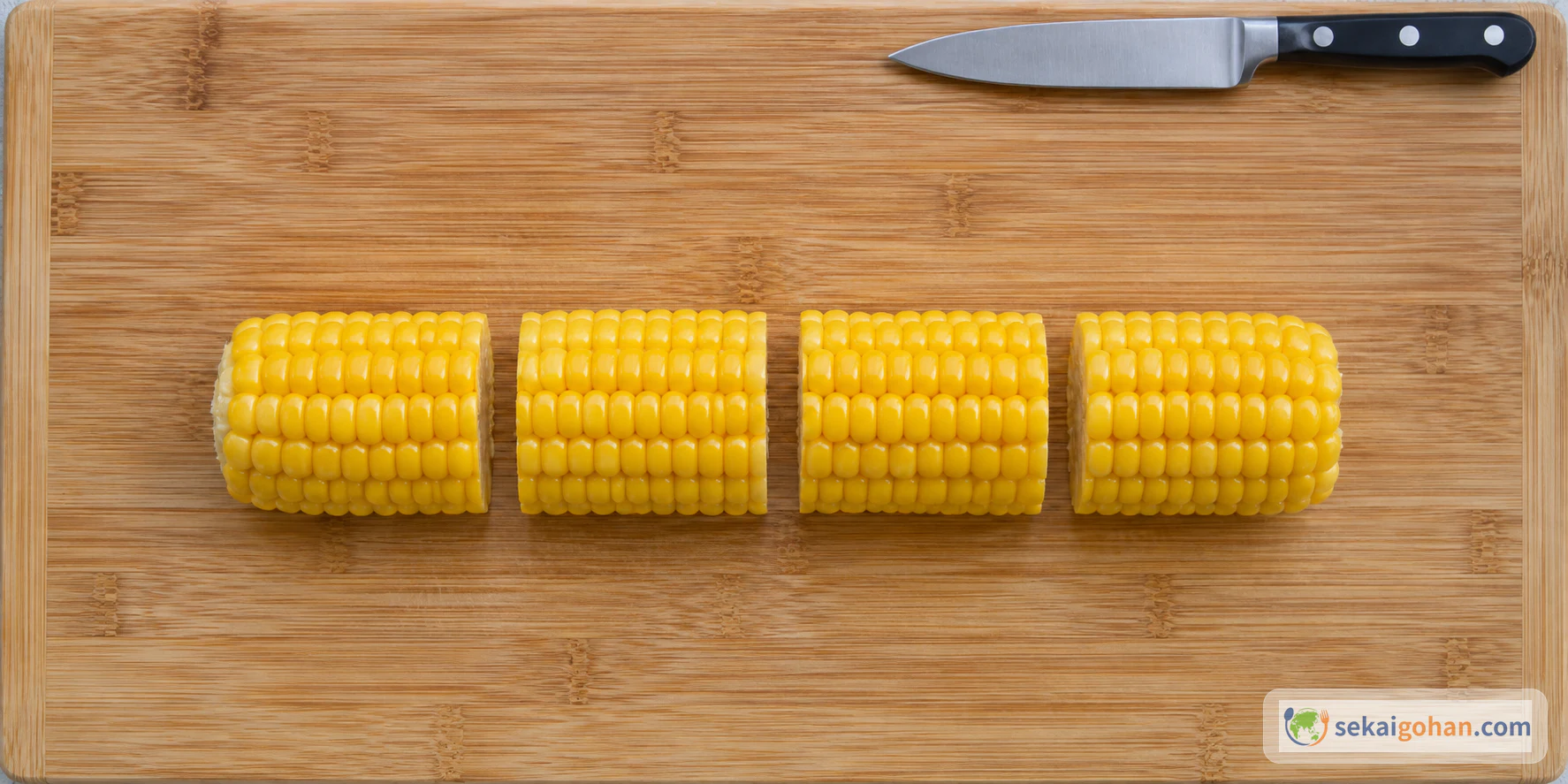
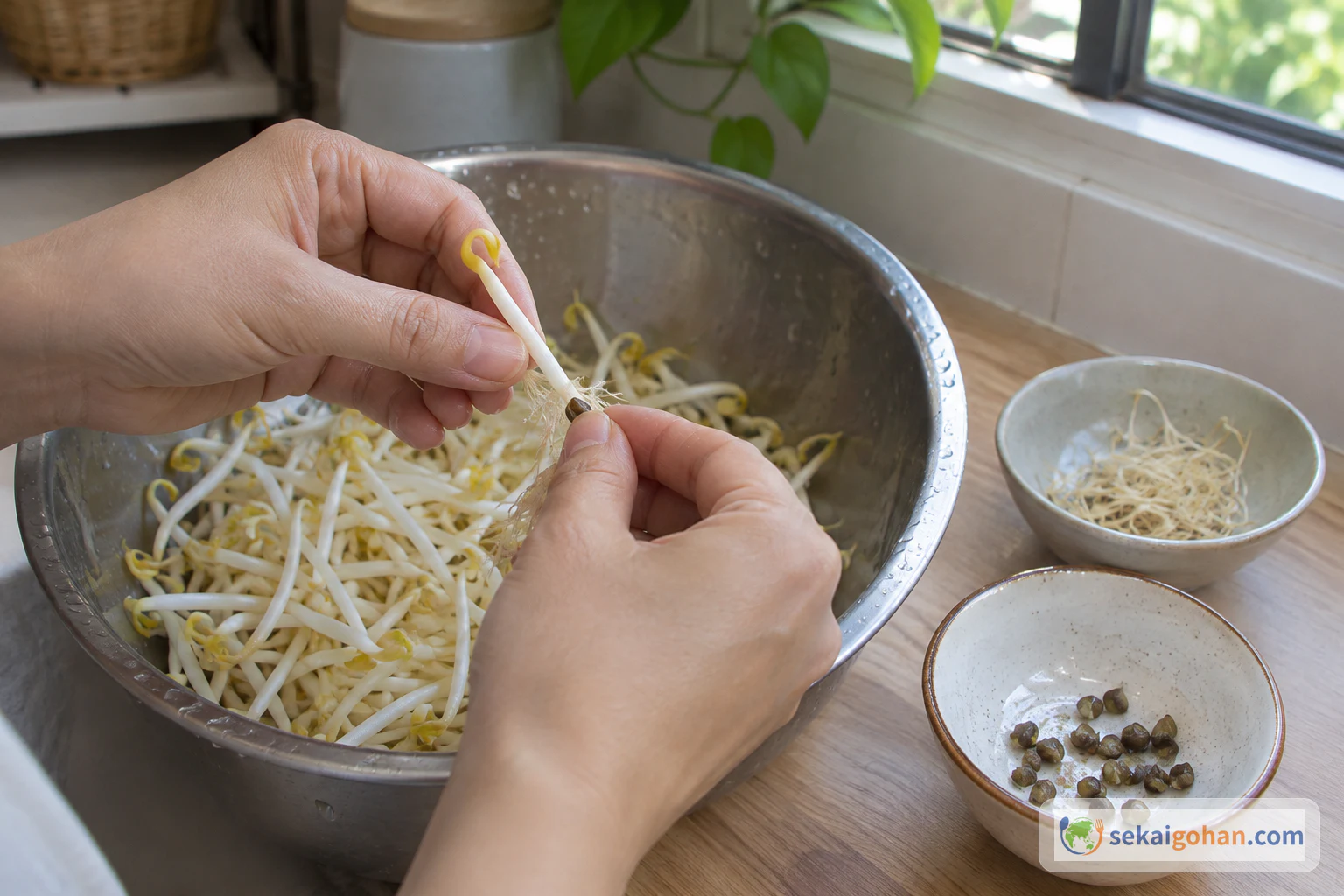
Vegetables. Ordinary yellow onions work fine. Choose potatoes for thin slicing. For eggplant, Japanese eggplant is shown here. If you have long eggplants or another shape, cut them into pieces that are about as easy to eat. Kabocha is the usual Japanese pumpkin. Bean sprouts from any supermarket are fine. A fresh ear of corn is boiled before it goes on the pan. Use a whole ear of corn.
Fruit for the sauce. Any apple works. A Japanese nashi pear is the easy choice in Japan.
Equipment
- Jingisukan pan: a cast-iron pan with a raised, domed center and a channel around the rim
- Or a flat hot plate or heavy frying pan (the juices will not run down to the vegetables the same way)
- Separate cutting boards for raw meat and for vegetables
- Kitchen knife
- Grater
- Pot for boiling the corn
- Bowls for the sauce, one per diner if you like
- Tongs used only for raw meat
- Chopsticks for eating, kept separate from the raw-meat tongs
- Food thermometer, if you have one
Method: Cut, Make the Sauce, Grill, Dip
Put the meat on the crown and the vegetables around the rim. Grill everything together and eat each piece once it is cooked, dipped in the sauce from your own bowl. Cook the meat and vegetables thoroughly, and use the general food-safety check described below.
Troubleshooting
| Problem | Likely reason | What to do |
|---|---|---|
| The lamb is tough | It stayed on the pan too long | Thin lamb cooks quickly. Take each piece as soon as it is cooked through, and add more meat a little at a time |
| The pan doesn't grease well | The meat has very little fat | Rub a fattier piece over the pan. If you still need it, a little oil is a home adjustment the recipe itself does not use |
| Vegetables at the rim are still raw | The rim is cooler than the crown, or the pan is crowded | Keep grilling them and turn them. Cook everything that raw juices have touched until it is done |
| The sauce tastes flat or sharp | Salt and shichimi are only "a little" | Add salt or shichimi a pinch at a time and taste |
| No juices running to the vegetables | Using a flat hot plate or frying pan | This is expected on a flat surface. Grill the meat and vegetables side by side and dip as usual |
Variations
- Marinated style. In Takikawa, in inland central Hokkaido, the meat is marinated in a seasoned sauce before grilling. That is a regional style with its own ingredients and steps, not a fix for this recipe. Don't mix the two.
- Mutton instead of lamb. Mutton gives a stronger sheep flavor. Use the same amount and the same method.
- Without a jingisukan pan. A flat hot plate or heavy frying pan works for grilling, but the juices won't flow from the meat to the vegetables the way they do on a domed pan.
- Noodles at the end. Some people finish a jingisukan meal by simmering noodles such as udon in the sauce left in the pan. This is an optional way of eating, not part of the main recipe. Heat the noodles thoroughly.
- Household vegetables. Families vary in which vegetables they use. To try this recipe as written, start with the seven vegetables listed above.
Background: Wool Sheep, Outdoor Tables and Two Styles
Jingisukan grew out of Hokkaido's sheep. According to MAFF, sheep were raised in Hokkaido for their wool. As the wool situation changed after the war, sheep were increasingly raised and eaten for meat, and that background is tied to how sheep meat became familiar in the region. The materials of Japan's school nutritionist association give a similar account. Today the dish is known throughout Hokkaido, at home and at outdoor gatherings such as spring cherry-blossom viewing.
The origin is uncertain. MAFF presents several theories about how jingisukan was created, and one of them holds that it was modeled on a Chinese grilled-lamb dish. Despite the name, popular stories such as a Mongolian origin or Genghis Khan grilling meat on a helmet are not established facts.
Two regional styles. MAFF's guide to traditional Japanese foods describes the domed pan, meat at the center and vegetables around it, and contrasts two styles: Takikawa, where the meat is marinated first, and Sapporo's Tsukisamu area, where plain meat is grilled and dipped afterward. These are regional differences, not one right way and one wrong way. Sapporo's official tourism site also notes that both lamb and mutton are used, that both styles exist, and that how people eat jingisukan varies by household and restaurant.
For more dishes from across the country, see Japan.
Frequently Asked Questions
How is this different from marinated jingisukan?
The difference is when the flavor goes on. In the marinated style, the meat soaks in sauce before it is grilled. In this dip-after style, plain meat is grilled and then dipped in a separate sauce. Both are Hokkaido styles, with Takikawa known for marinating and Sapporo's Tsukisamu area for dipping afterward.
Can I make it without a jingisukan pan?
Yes. A flat hot plate or heavy frying pan is a practical substitute, though it is an editorial suggestion rather than part of the recipe. On a flat surface the meat juices won't run down to the vegetables the way they do on a domed pan.
Lamb or mutton?
Either. Both are eaten in Hokkaido. Lamb is milder, and mutton has a stronger sheep flavor. This article uses thin, boneless lamb, but the recipe only specifies thinly sliced sheep meat.
Can I change the vegetables?
Families do use different vegetables. The amounts and cuts in this article are the recipe's own seven vegetables. Treat any change as your own variation, and other recipes may cut the vegetables differently.
Should I pour the sauce over the meat before grilling?
No. In this style the sauce stays in its own bowl, and you dip the cooked meat and vegetables into it.
When does the shichimi go in?
The recipe lists shichimi but doesn't say when to add it. This article adds it while mixing the dipping sauce, as an editorial choice.
Does the sake in the sauce cook off?
The sauce is not heated, so the sake is used uncooked. Keep this in mind when deciding who will eat it.
How do I know the lamb is done?
The recipe gives no grilling time or temperature. Cook the meat thoroughly; color alone does not establish doneness. As general household guidance, Japan's Ministry of Health, Labour and Welfare gives 75°C at the center for at least 1 minute. Use separate tongs for raw meat and separate chopsticks for eating.
Sources
- Ministry of Agriculture, Forestry and Fisheries (MAFF), "ジンギスカン/成吉思汗 北海道 | うちの郷土料理" (Jingisukan, Hokkaido | Our Local Cuisines). The four-serving recipe with all ingredients, quantities and four method steps, credited to the book Hokkaido no Aji by Akiko Nambu. Also the dip-after and marinated styles, the link between sheep raising and lamb eating in Hokkaido, the multiple origin theories, and eating at home and outdoors. https://www.maff.go.jp/j/keikaku/syokubunka/k_ryouri/search_menu/menu/jingisukan_hokkaido.html
- Ministry of Agriculture, Forestry and Fisheries (MAFF), "ジンギスカン|にっぽん伝統食図鑑" (Jingisukan | Illustrated Guide to Japanese Traditional Foods). The domed pan with meat at the center and vegetables around it, the Takikawa and Sapporo Tsukisamu styles, lamb and mutton, origin theories, and the shift from wool to meat. https://www.maff.go.jp/j/keikaku/syokubunka/traditional-foods/menu/zingiskan.html
- MAFF Hokkaido Regional Agricultural Administration Office, "ジンギスカン" (Jingisukan). Eating jingisukan at home and outdoors, including cherry-blossom viewing, and a separate example recipe used only for comparison. https://www.maff.go.jp/hokkaido/suishin/shokuiku/dentoshoku_jingisukan.html
- Welcome to Sapporo, "The best way to enjoy Jingisukan and the most popular restaurants." Lamb and mutton, the pre-seasoned and dip-after styles, finishing with noodles simmered in the pan's sauce, and variation between households and restaurants. https://www.sapporo.travel/en/gourmet/feature/hokkaido-local-dish-genghis-khan-mongolian-barbecue/
- 全国学校栄養士協議会 (National School Nutritionists' Council), "北海道 郷土食 ジンギスカン" (Hokkaido Local Food: Jingisukan). The Takikawa marinated style and the Tsukisamu dip-after style, and how sheep raised for wool made sheep meat familiar in Hokkaido. Its school-lunch recipe was not used. https://www.zengakuei.or.jp/kyodosyoku/pref/hokkaido_03.html
- Ministry of Health, Labour and Welfare, "家庭での食中毒予防" (Preventing Food Poisoning at Home). General guidance on heating meat to 75°C at the center for at least 1 minute and keeping utensils for raw meat separate. https://www.mhlw.go.jp/stf/seisakunitsuite/bunya/kenkou_iryou/shokuhin/syokuchu/01_00008.html