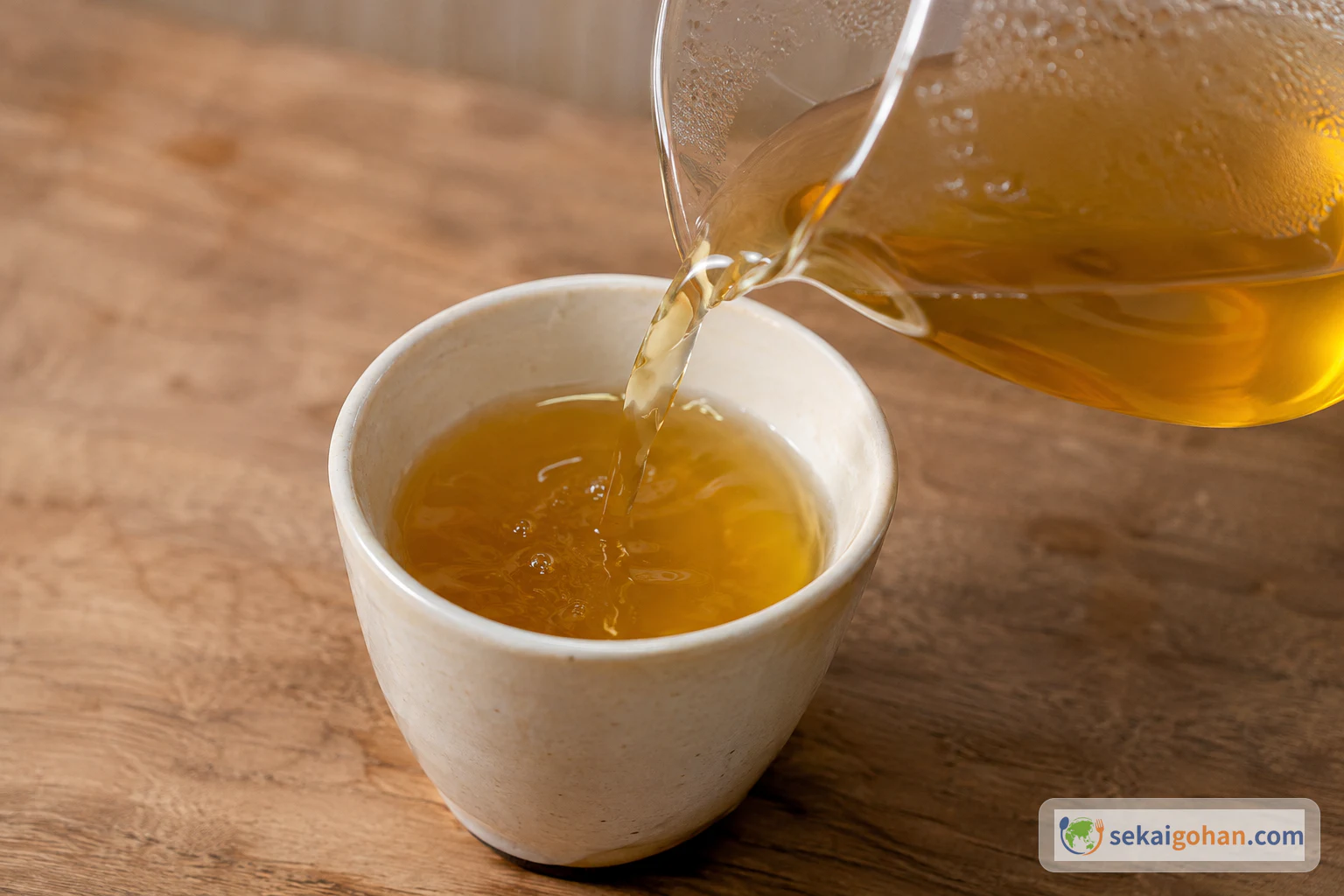
Oksusu-cha: Roasted Corn Kernels Simmered in Water
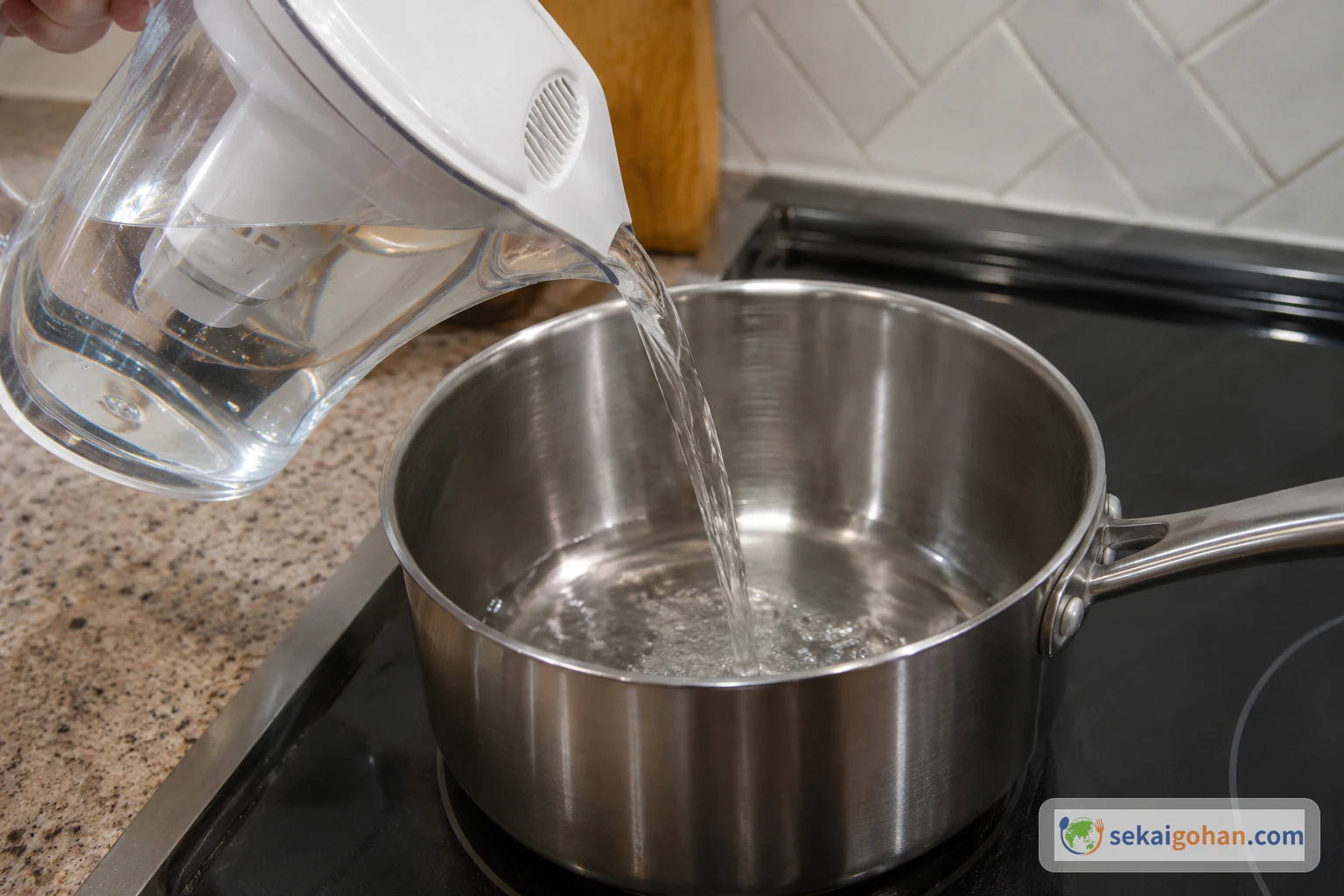
Two ingredients, one pot: ready-roasted corn kernels and filtered water. Boil, simmer, strain and pour while it is hot. Nothing else goes in.
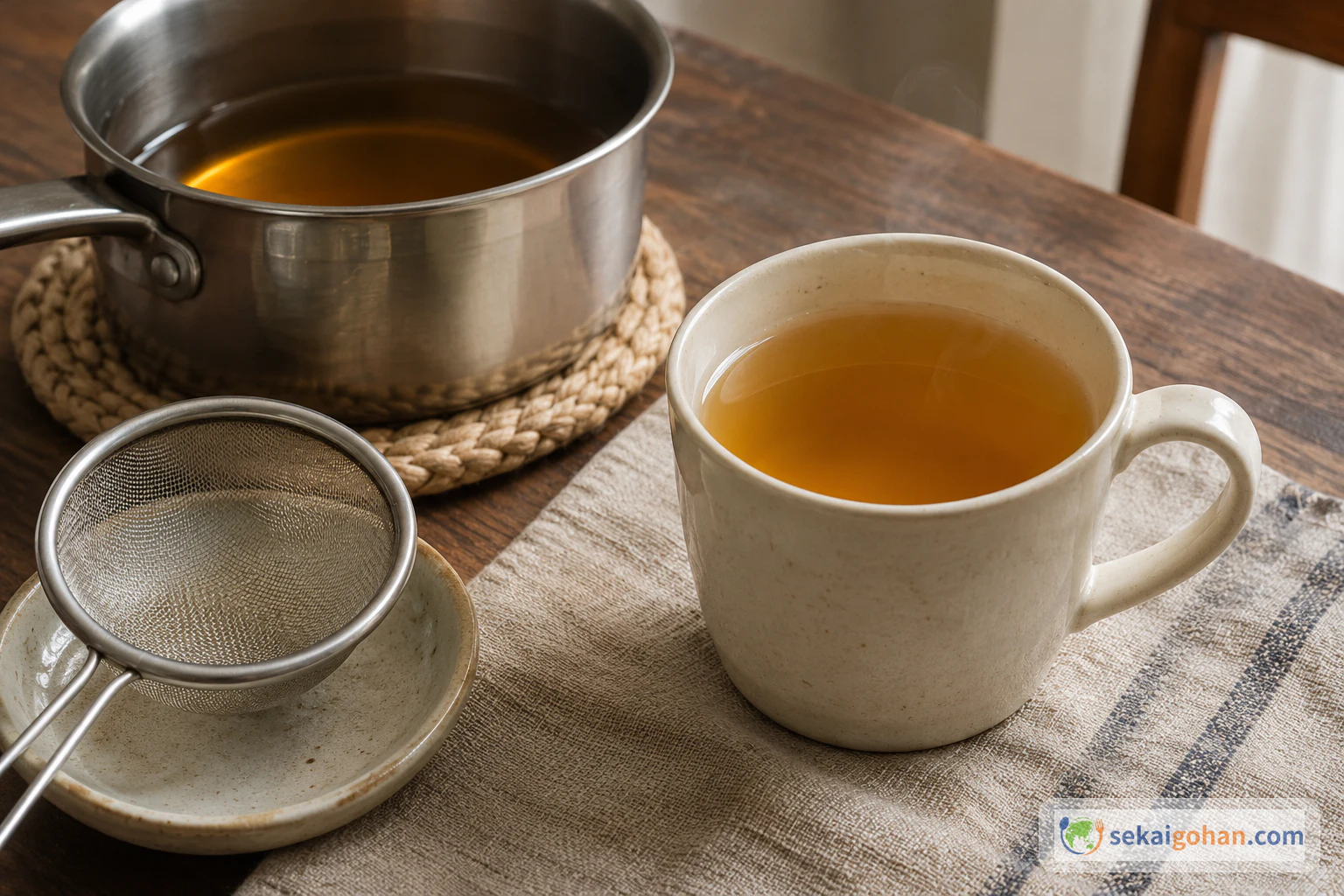
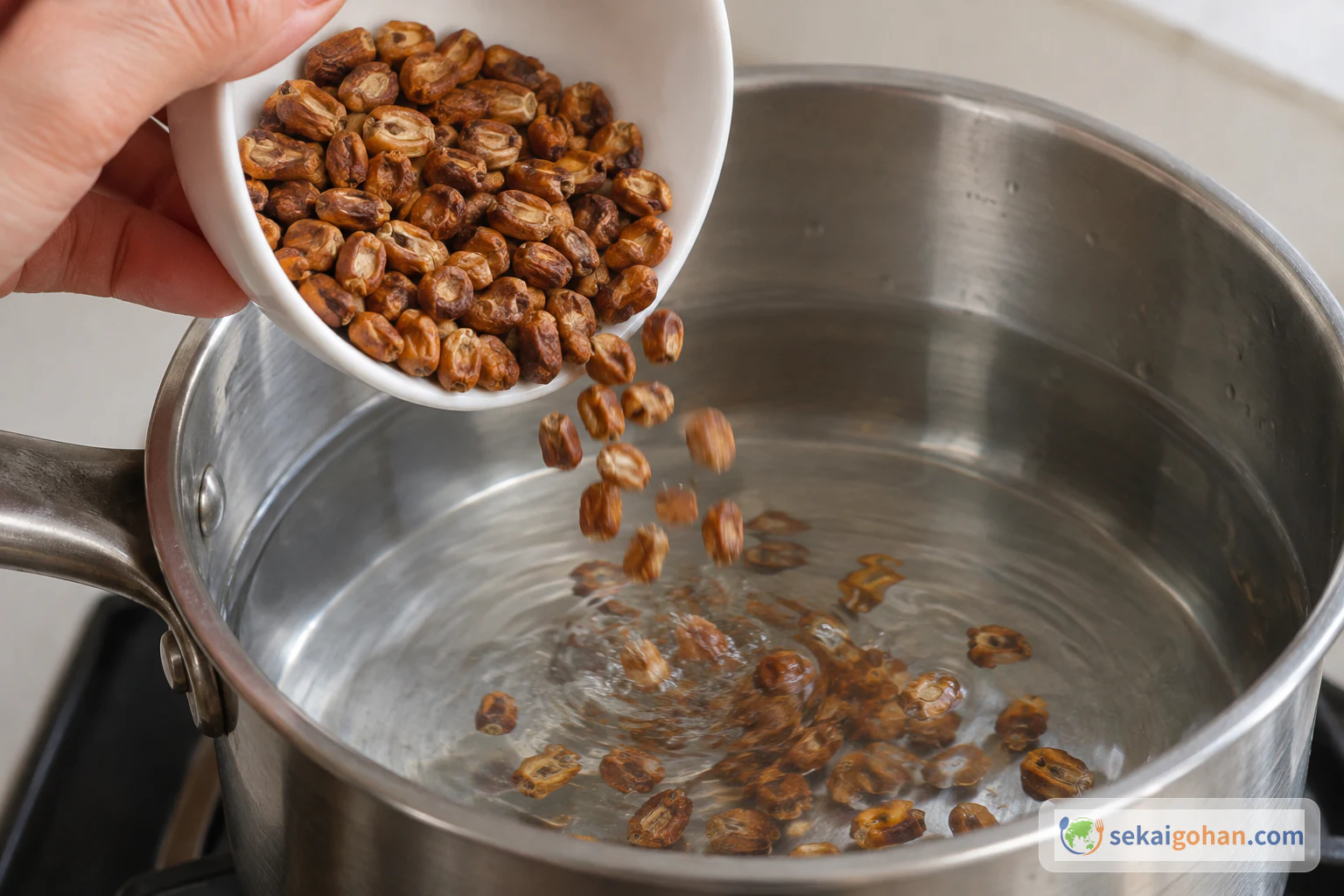
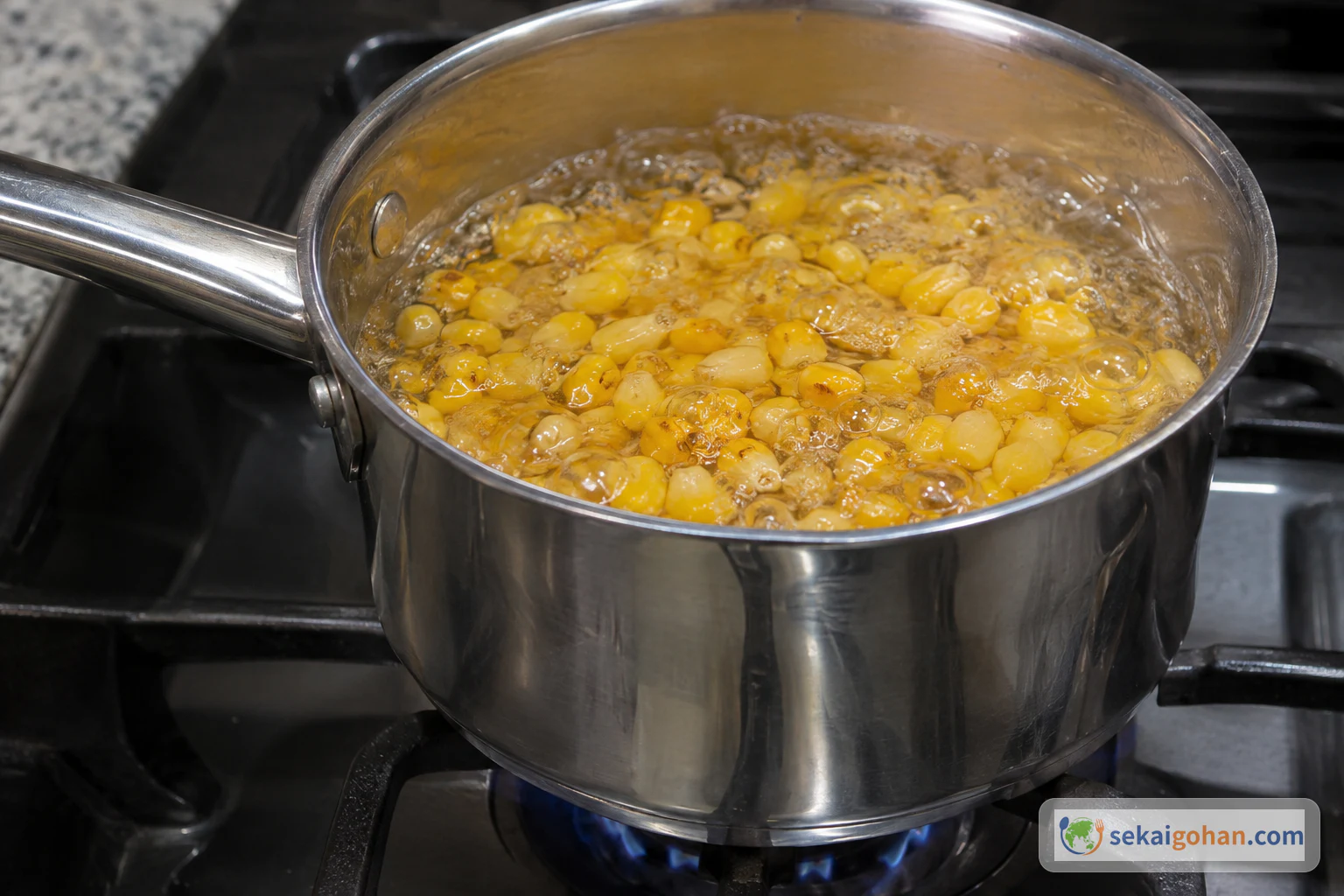
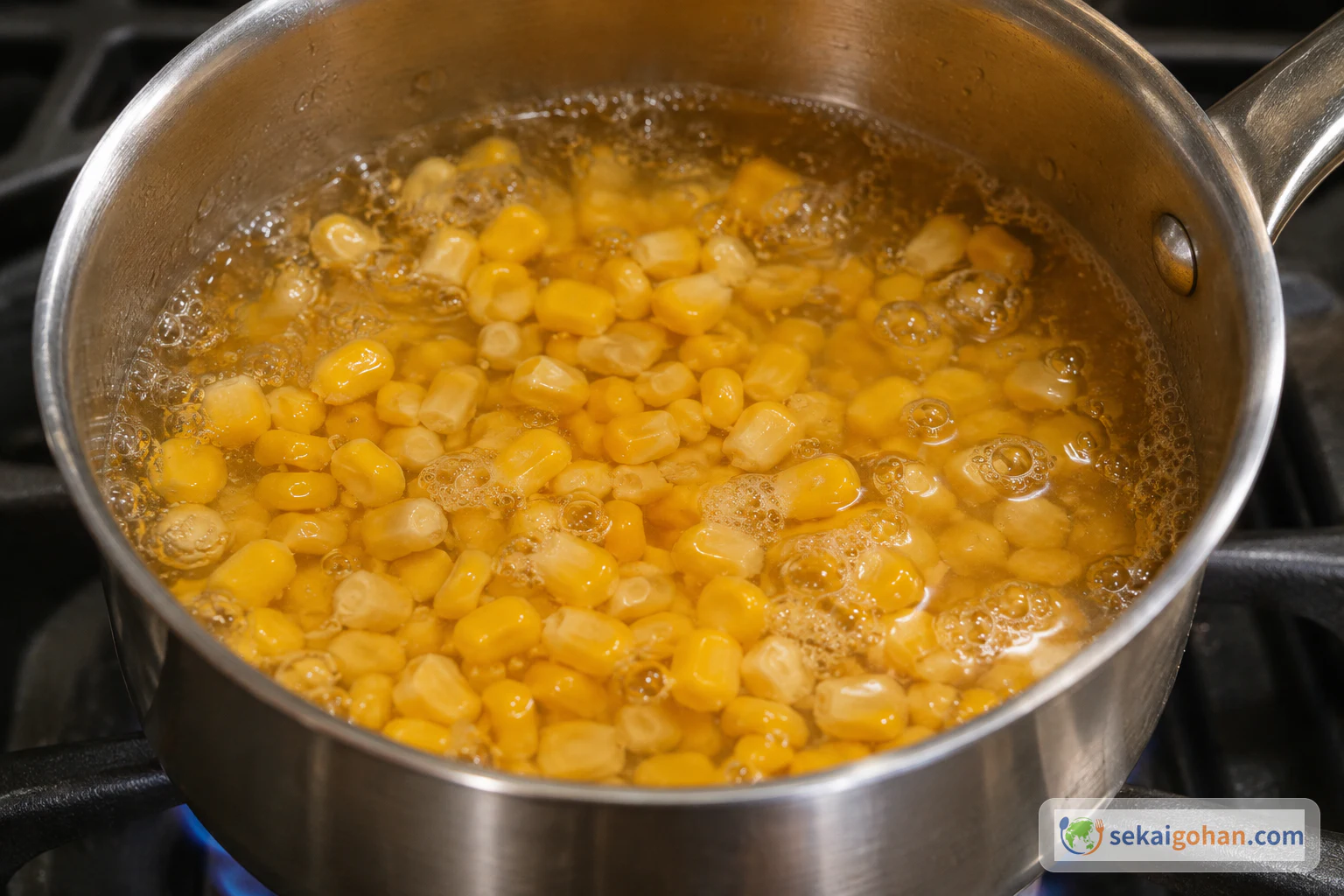
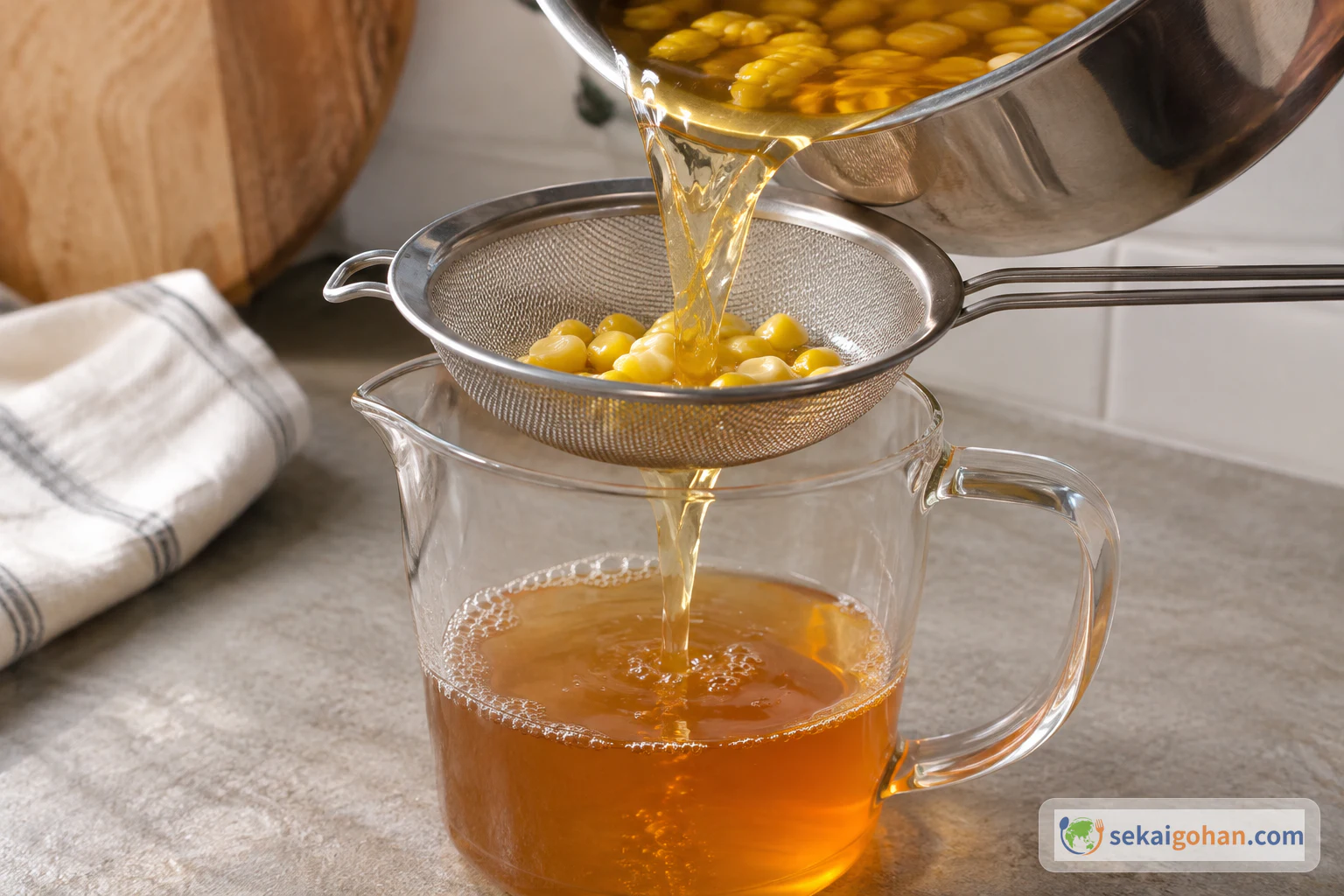
Dry, golden-brown roasted corn kernels go into a saucepan of water. The pot comes to a boil, settles to a gentle simmer, and the water slowly takes on color from the roasted corn. After straining, what is left in the cup is oksusu-cha (옥수수차), a Korean grain drink made from roasted corn.
Despite the word "tea," there are no tea leaves here. Oksusu-cha is an infusion of roasted corn kernels in water. This article follows one specific hot version published by Jee Choe on her site Oh, How Civilized: 3 tablespoons of roasted whole corn kernels and 4 cups (32 fl oz) of filtered water, made for 4 servings. In her write-up she explains that she buys commercially roasted kernels rather than roasting them herself, and this article does the same. It does not cover roasting raw corn at home. The recipe as a whole has not been kitchen-tested by Sekai Gohan.
Jee Choe's page also includes a separate cold-serving version. That version is not part of this article; the recipe here ends with the tea served hot.
In Korean it is written 옥수수차 and romanized as oksusu-cha (oksusu means corn, cha means tea). The Korean Traditional Knowledge Portal's record of the drink also gives the name gangnaengi cha alongside it.
A Grain Drink With a Record in Gangwon
The Korean Traditional Knowledge Portal, in a record supplied by the Rural Development Administration of Korea, lists oksusu-cha as a traditional beverage and registers it as a regional food of Gangwon Province. That record is a useful anchor for the drink's place in Korean food, but it is a record of one region. It does not establish a single place of origin, and it does not show how often the drink is made in households across the whole country.
The portal's record carries its own preparation, which differs from the one followed here: about 70 g of corn, no stated amount of water, and sugar added to taste if wanted. Those details belong to that record and are not mixed into this recipe. The version below uses only roasted kernels and water, in Jee Choe's amounts.
For more dishes and drinks from the same table, see the collection of Korean recipes.
Ingredients for 4 Servings
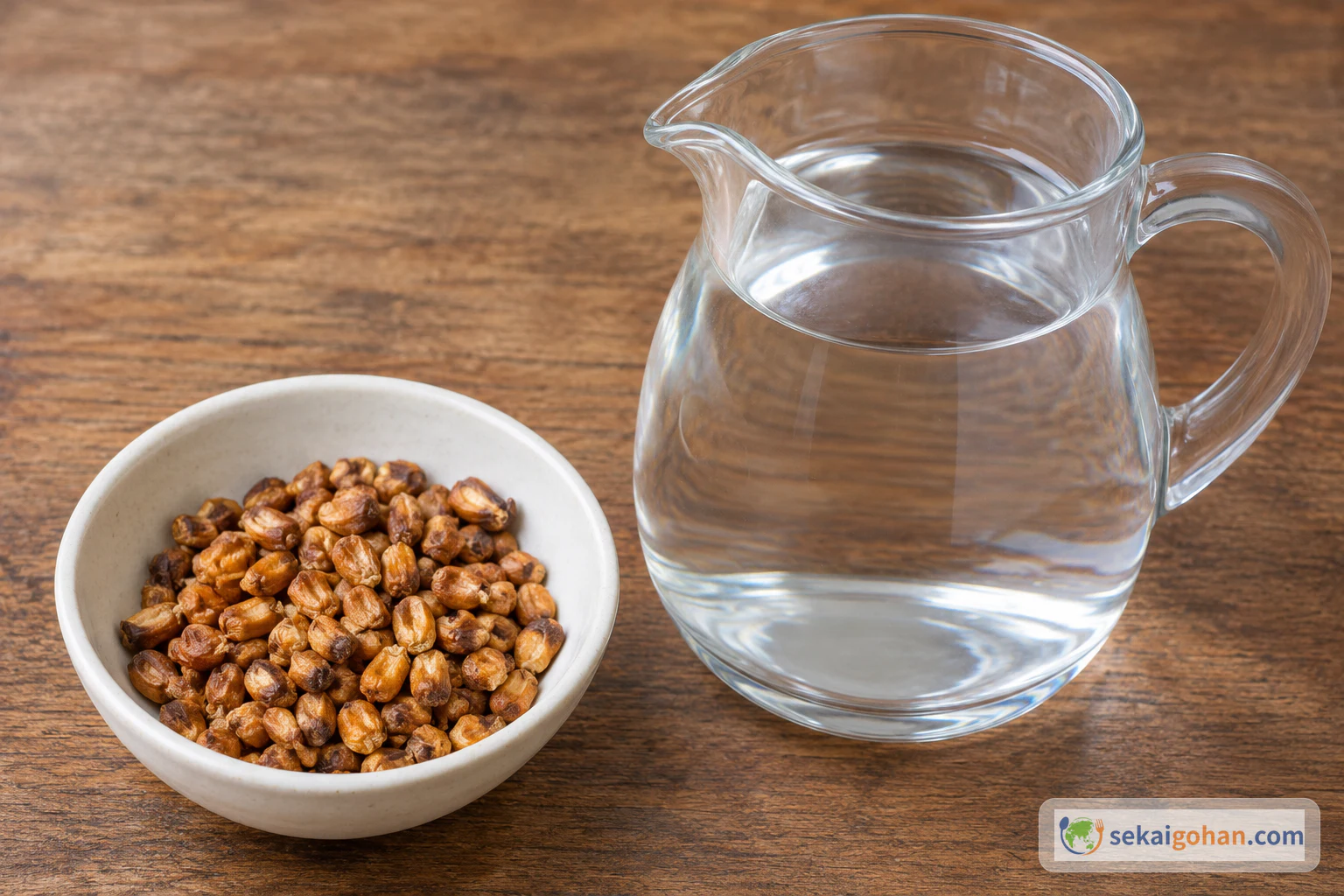
Equipment
- A saucepan
- A fine-mesh sieve
- A heatproof jug or bowl to strain into
- Cups for serving
Choosing the Corn: Roasted Kernels Sold for Tea
What you are looking for is corn that has already been roasted and is sold for making corn tea. The kernels are dry, hard and toasted golden-brown to brown, not plump and bright yellow. Look in the tea section of a Korean grocery or a well-stocked Asian market, and check the label to confirm the kernels are roasted.
Some things look similar but are not the same ingredient for this recipe:
| Instead of roasted kernels | Why it is not the same |
|---|---|
| Raw dried corn | Not roasted. This recipe does not include a home-roasting step |
| Canned or frozen sweet corn | A different ingredient altogether; the result would not be this drink |
| Corn tea bags | A different product; this recipe uses loose whole kernels |
| Corn silk tea | Made from the silk, not the kernels |
| Barley and corn blends | A mixed tea; this recipe uses corn kernels alone |
Method: Boil, Simmer, Strain, Pour
Each step is a single action. The only timed part is the 10-minute simmer after the pot boils.
Serving It Hot
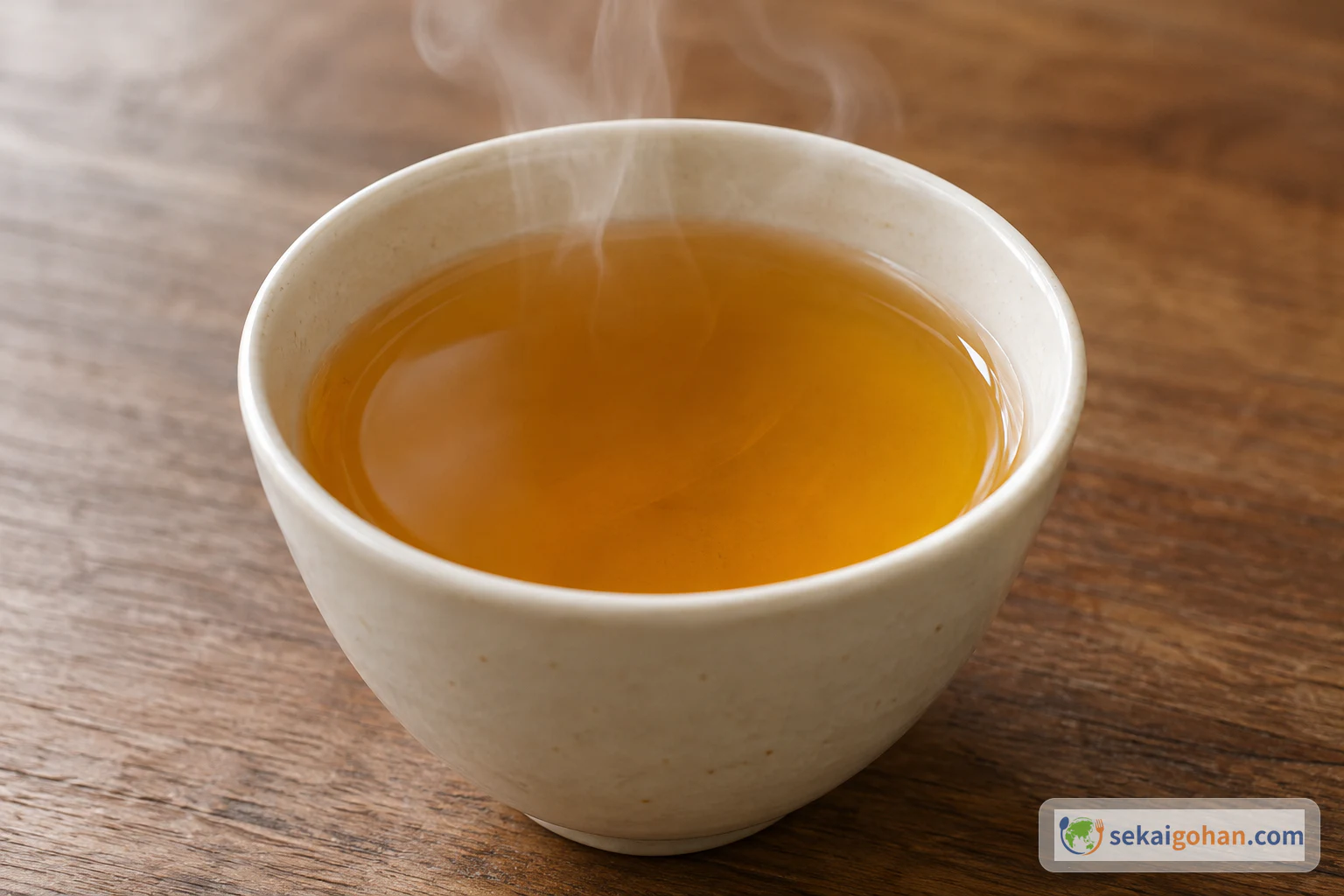
This version is served hot, straight from the pot. It is plain by design: no sugar, honey, lemon or ice, and no barley or corn silk mixed in.
Common Mix-ups
| What you notice | What is going on | What to do |
|---|---|---|
| The kernels look plump and lighter after time in the water | Dry kernels take up water as they boil and simmer | Nothing; this is expected. The kernels should be dry and brown only before they go into the water |
| The kernels you bought are bright yellow, soft or moist | They are probably not roasted corn tea kernels | Look for dry, ready-roasted kernels labeled for corn tea |
| Bits of kernel end up in the cup | The tea was poured without straining, or through a coarse strainer | Strain through a fine-mesh sieve before pouring |
| You reach for tea leaves or a tea bag | Oksusu-cha is not made from tea leaves | Use loose roasted corn kernels and water only |
Frequently Asked Questions
Is oksusu-cha made with tea leaves?
No. Despite the name, it is roasted corn kernels simmered in water. There are no tea leaves in this recipe.
Can I use fresh, canned or raw corn?
Jee Choe's recipe calls for roasted whole corn kernels, and she buys them commercially rather than roasting them herself. Fresh, canned, frozen or unroasted kernels are not the same ingredient, and swapping them in will not give the same drink. This article does not include a method for roasting corn at home.
Should I add sugar?
This recipe is water and roasted kernels only. The Korean Traditional Knowledge Portal's Gangwon record describes a separate preparation in which sugar may be added to taste, but that belongs to a different recipe and is not combined with this one.
Can I chill it or keep it in the fridge?
Jee Choe's page has a separate cold version, but this article covers only the hot version, which ends with the tea poured and served hot. No cooling method or storage time is given here.
Is oksusu-cha drunk all over Korea?
The record confirmed here is a registration of oksusu-cha as a regional food of Gangwon Province, listed as a traditional beverage. That supports its place in Gangwon's food record, but it is not evidence of a single origin or of how commonly it is made in households across the country.
Why are the amounts in cups and tablespoons, not grams or milliliters?
The amounts are kept in the units Jee Choe's recipe uses, 4 cups (32 fl oz) of water and 3 tablespoons of kernels, rather than converted, so the proportions stay exactly as published.
Sources
- Jee Choe, "Corn Tea," Oh, How Civilized. The recipe followed here: 4 servings; 3 tablespoons of commercially roasted whole corn kernels and 4 cups (32 fl oz) of filtered water; boiled, simmered for 10 minutes, strained and served hot. Also the author's note that she buys roasted kernels rather than roasting them herself. https://www.ohhowcivilized.com/corn-tea/
- Korean Traditional Knowledge Portal (supplied by the Rural Development Administration of Korea), "Oksusu cha
(Corn Tea)." The name, its classification as a traditional beverage, and its record as a Gangwon regional food. The record's separate preparation (about 70 g of corn, optional sugar) is not used in this recipe. https://koreantk.com/ktkp2014/food/food-view.view?foodCd=TF10002889