Namie Yakisoba: Thick Noodles, Pork, Bean Sprouts and Sauce Stir-Fried Until No Liquid Remains
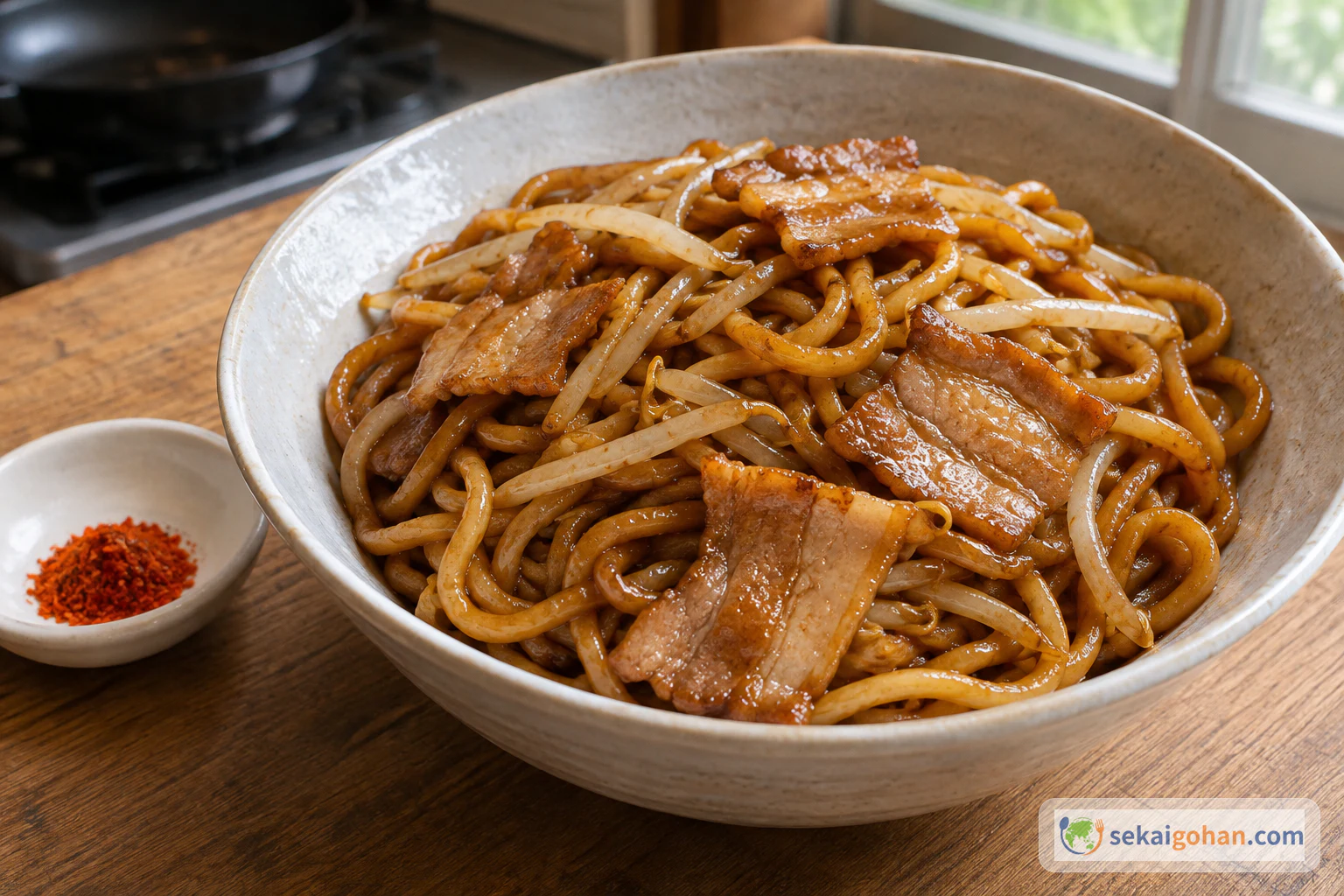
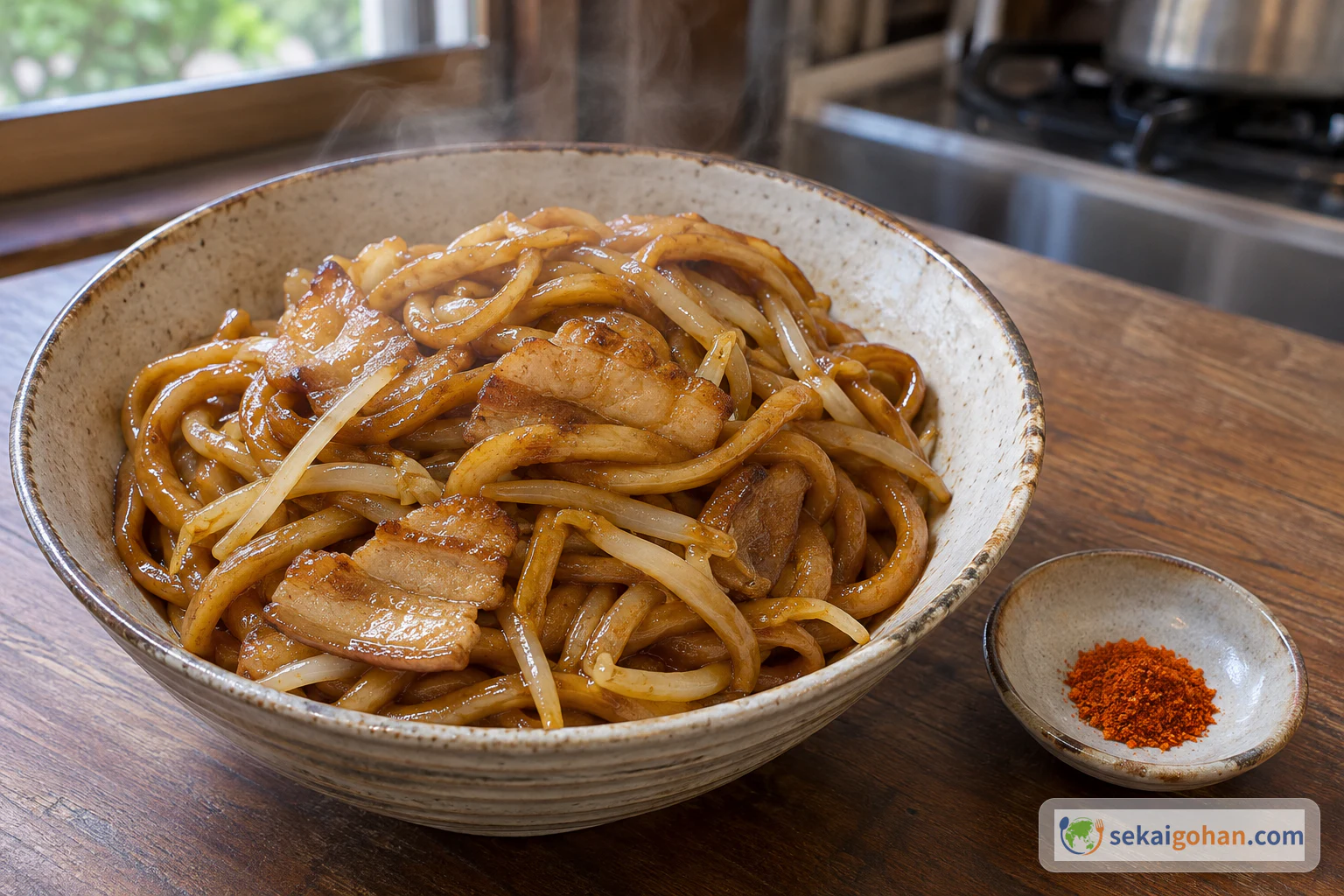
Extra-thick noodles, pork and bean sprouts as the only fillings, and a rich sauce stir-fried until no liquid is left in the pan. Ichimi chili, if you want it, goes on the side.
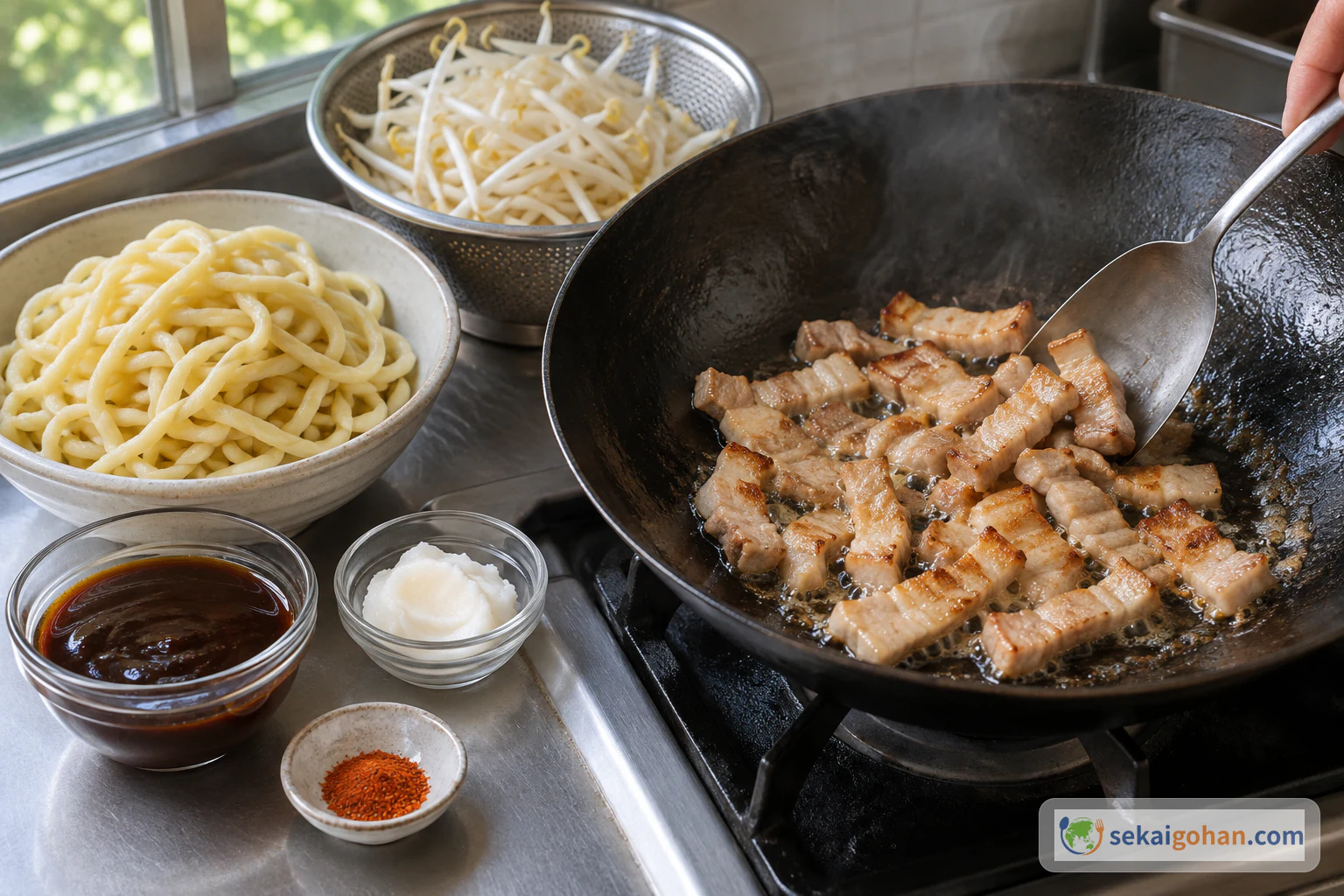
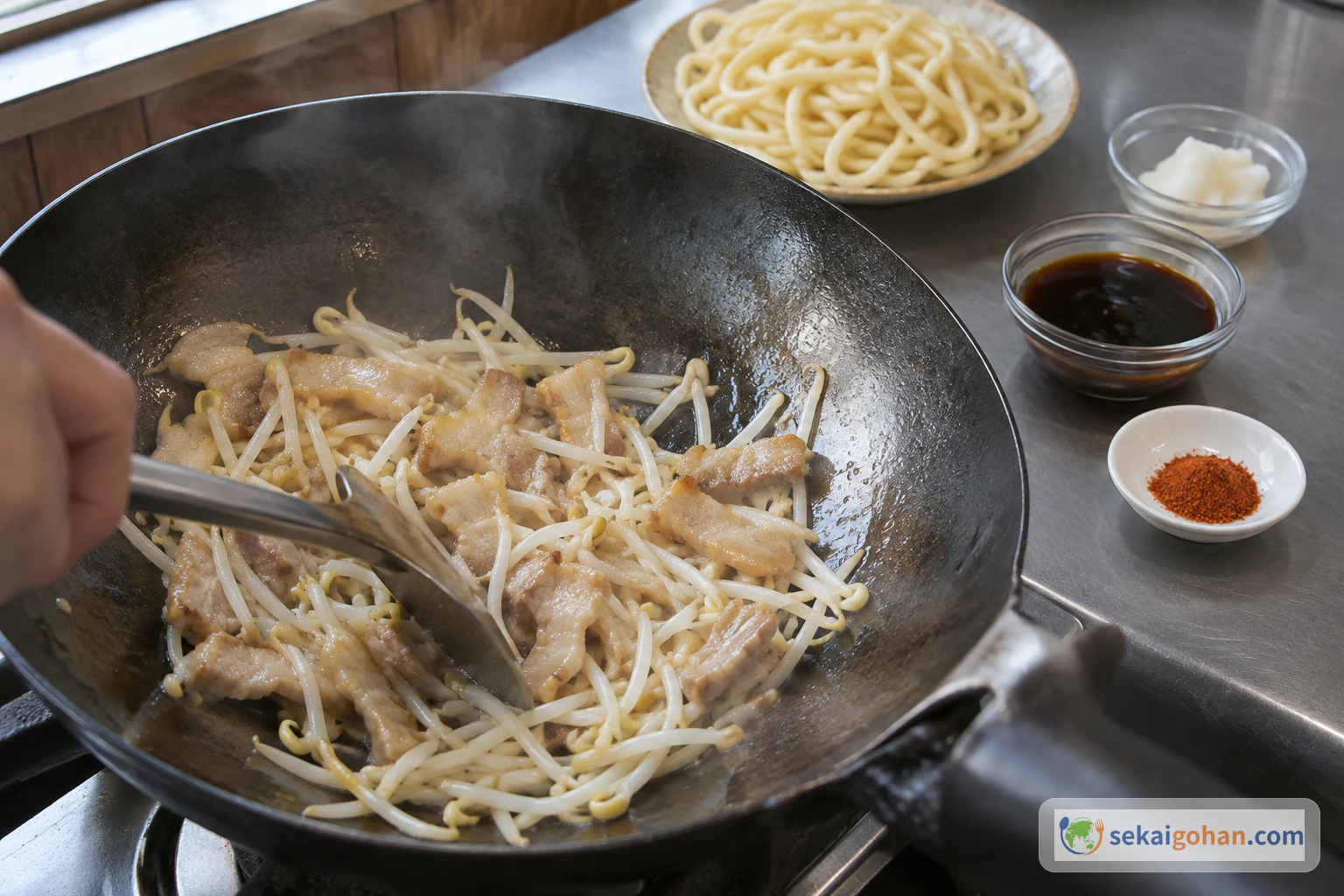
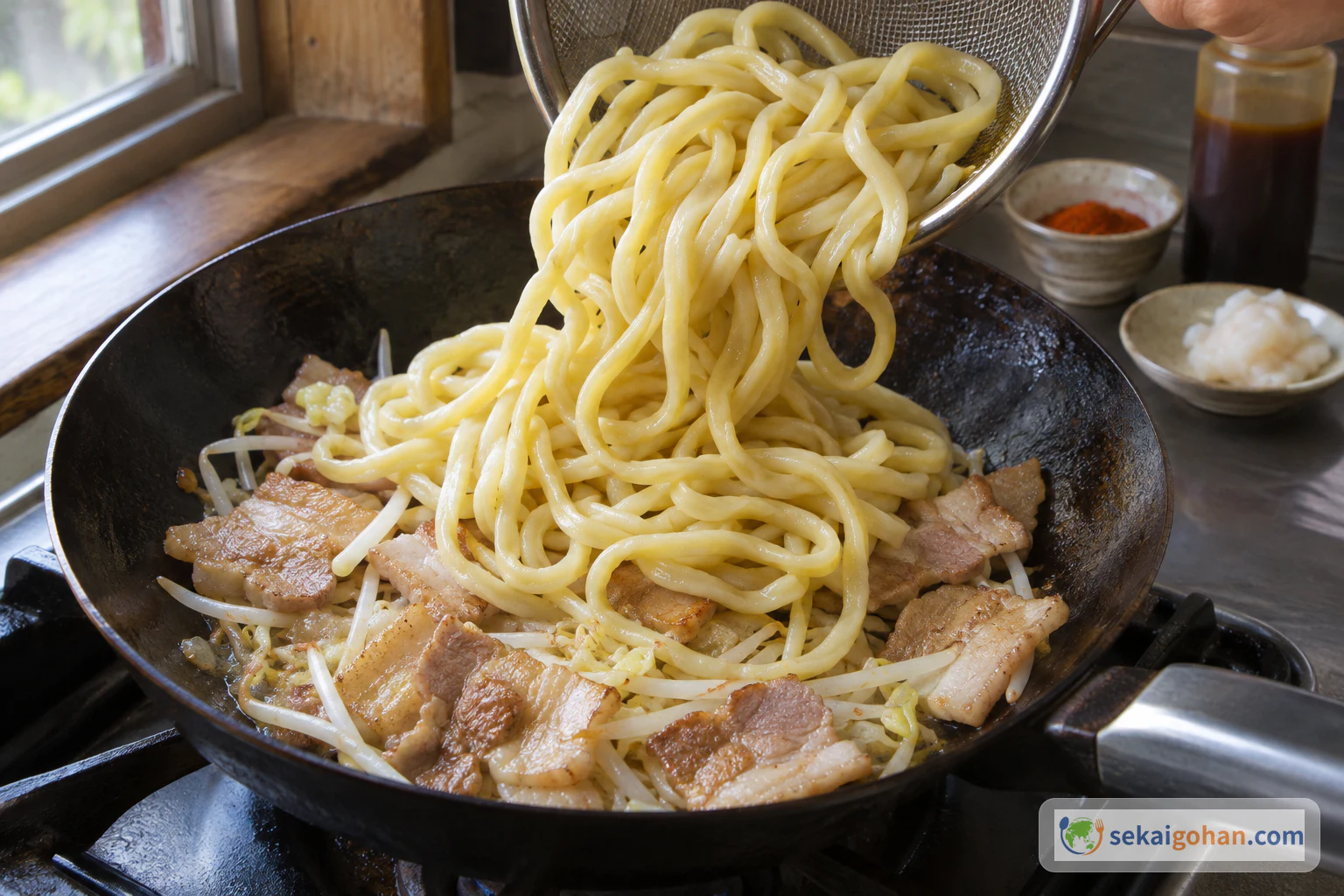
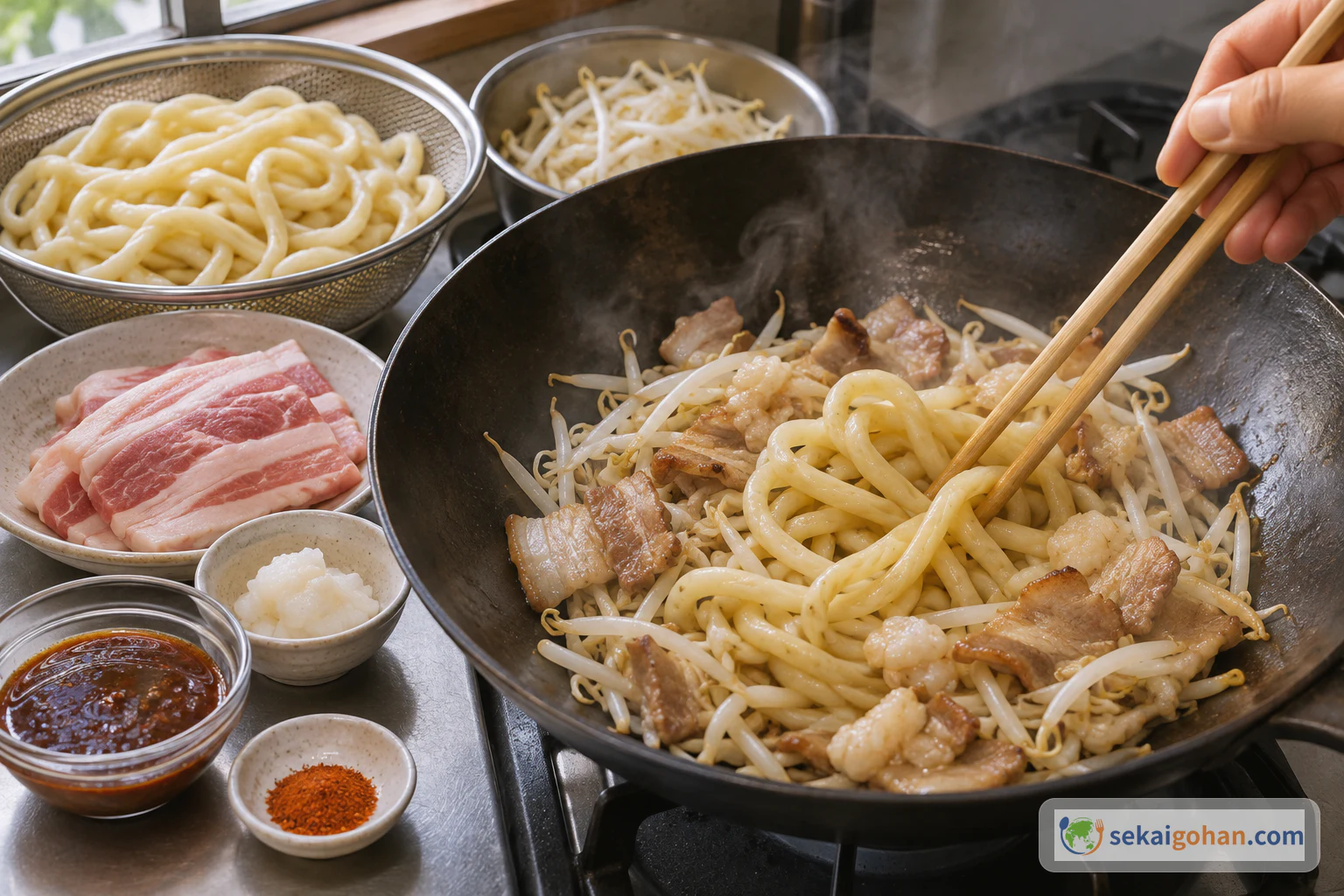
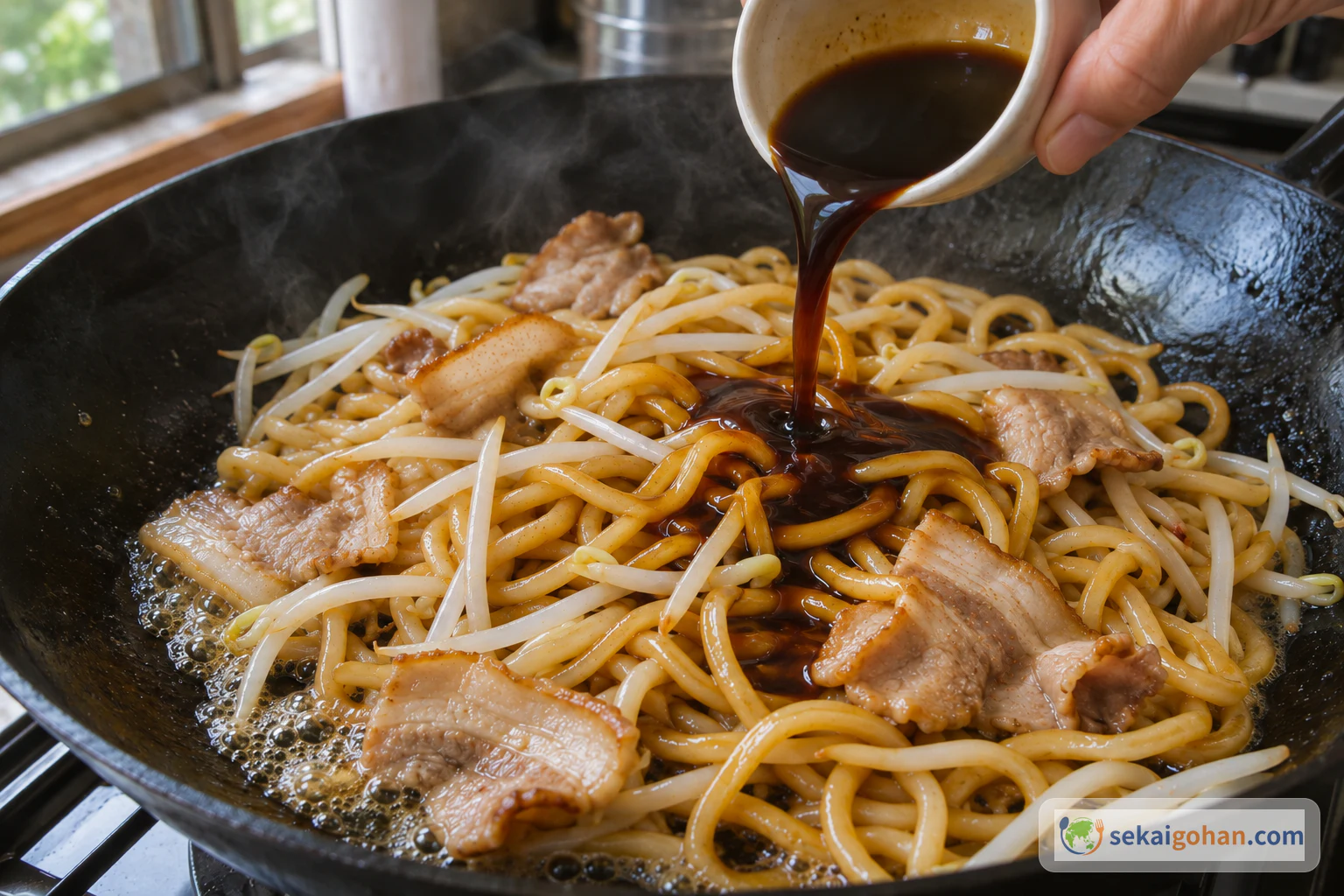
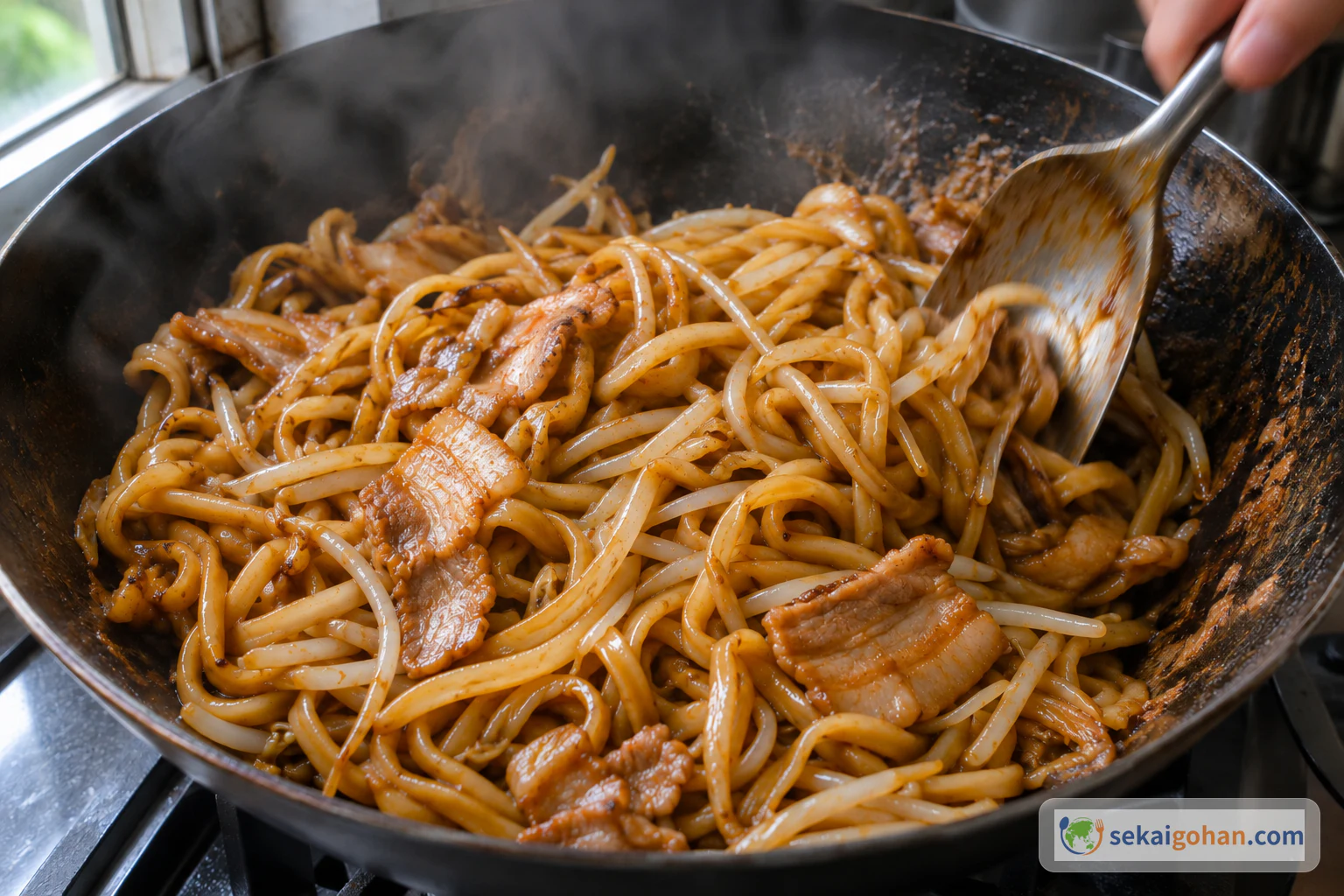
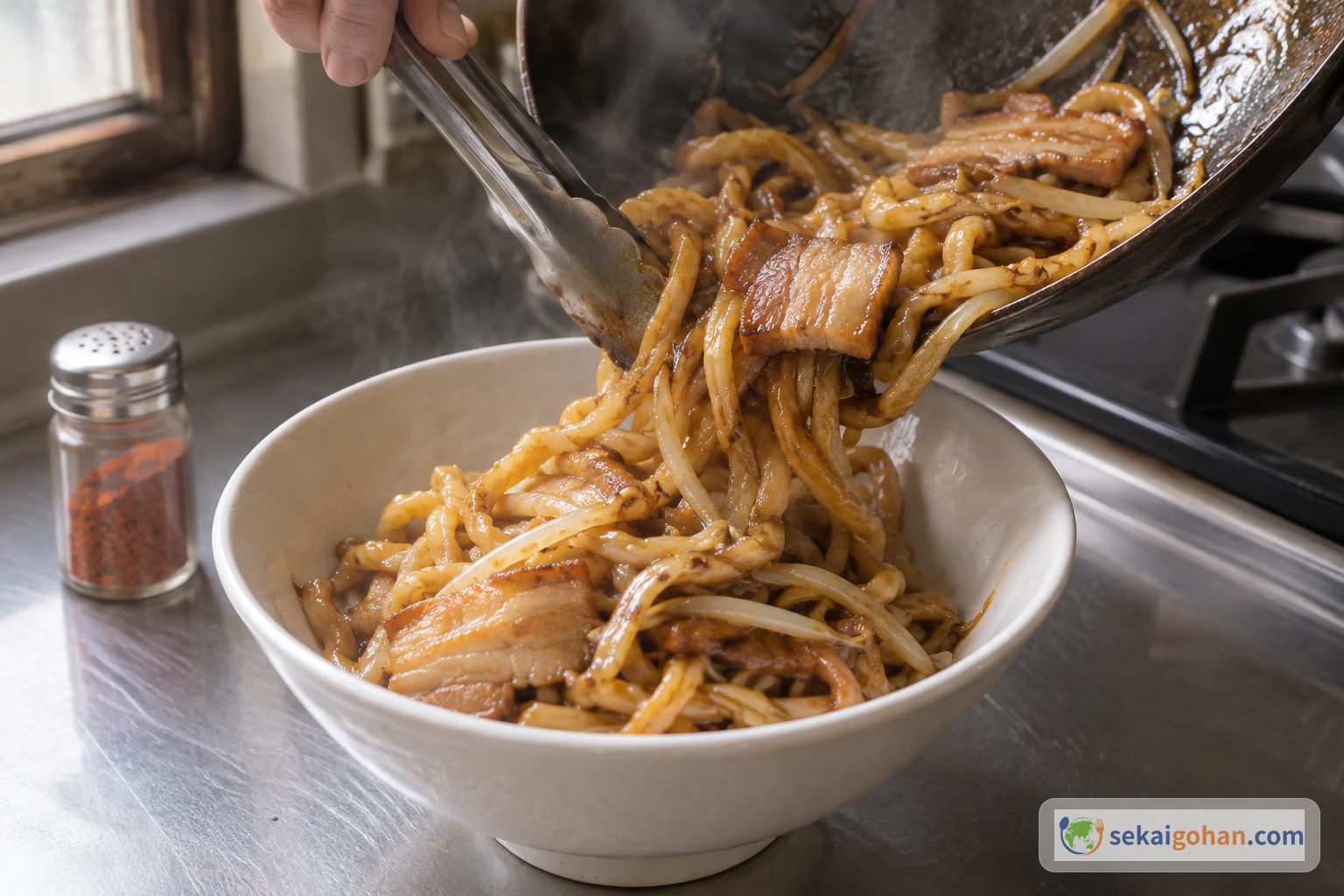
Lard melts in the pan, pork belly browns, a handful of bean sprouts goes in, and then come the noodles: extra-thick. Dark sauce is poured over and everything is stirred until the pan bottom is dry and the sauce clings to every noodle. That is Namie yakisoba (なみえ焼そば), the local dish of Namie Town in Futaba District, Fukushima Prefecture.
What sets it apart from ordinary Japanese sauce yakisoba is short and specific. The town and its chamber of commerce describe it as extra-thick Chinese-style noodles, pork and bean sprouts as the basic fillings, and a rich sauce flavor. The chamber of commerce explains that it is said to have been devised about 50 years ago to give workers a filling meal that kept them going; the town presents it as soul food loved locally for half a century.
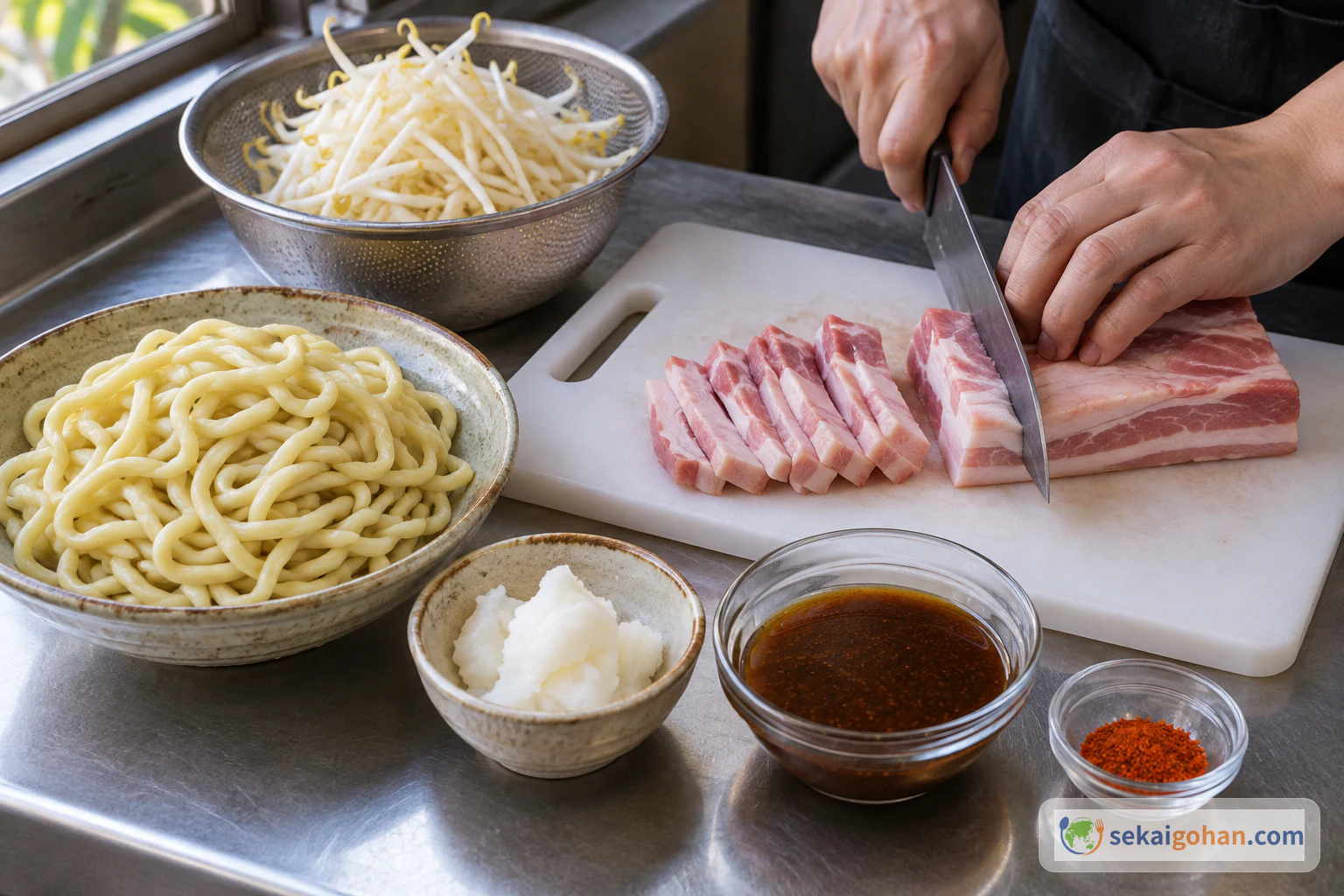
Shops in Namie each have their own noodle thickness and sauce, so there is no single "correct" plate. This article follows one serving published by a member of Namie Yakisoba Taikoku (浪江焼麺太国), the local group that promotes the dish: one bundle of dedicated noodles, 50g pork belly and 170g bean sprouts, cooked in a fixed order. Sekai Gohan has not kitchen-tested this recipe. For more dishes from the same country, see our Japan page.
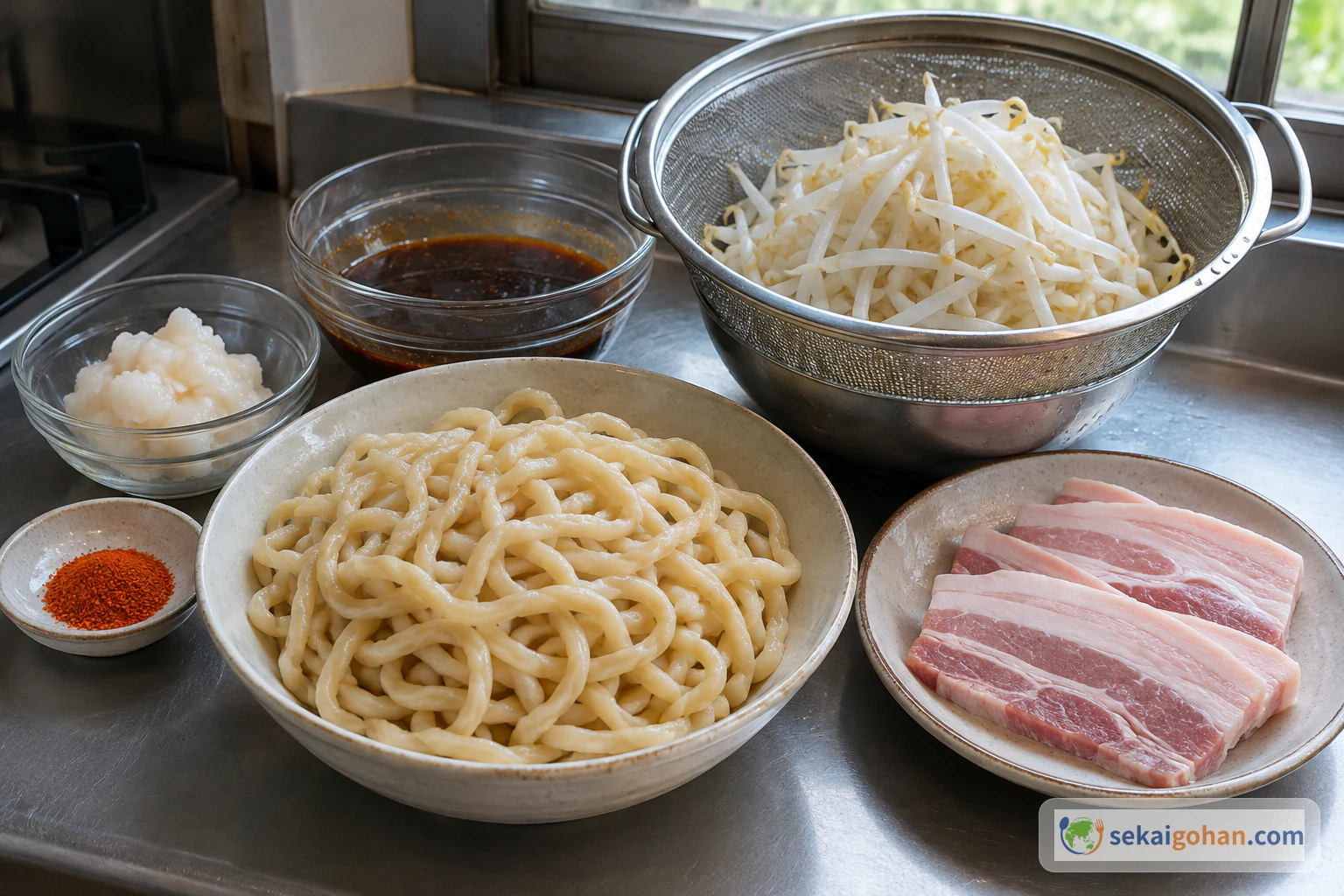
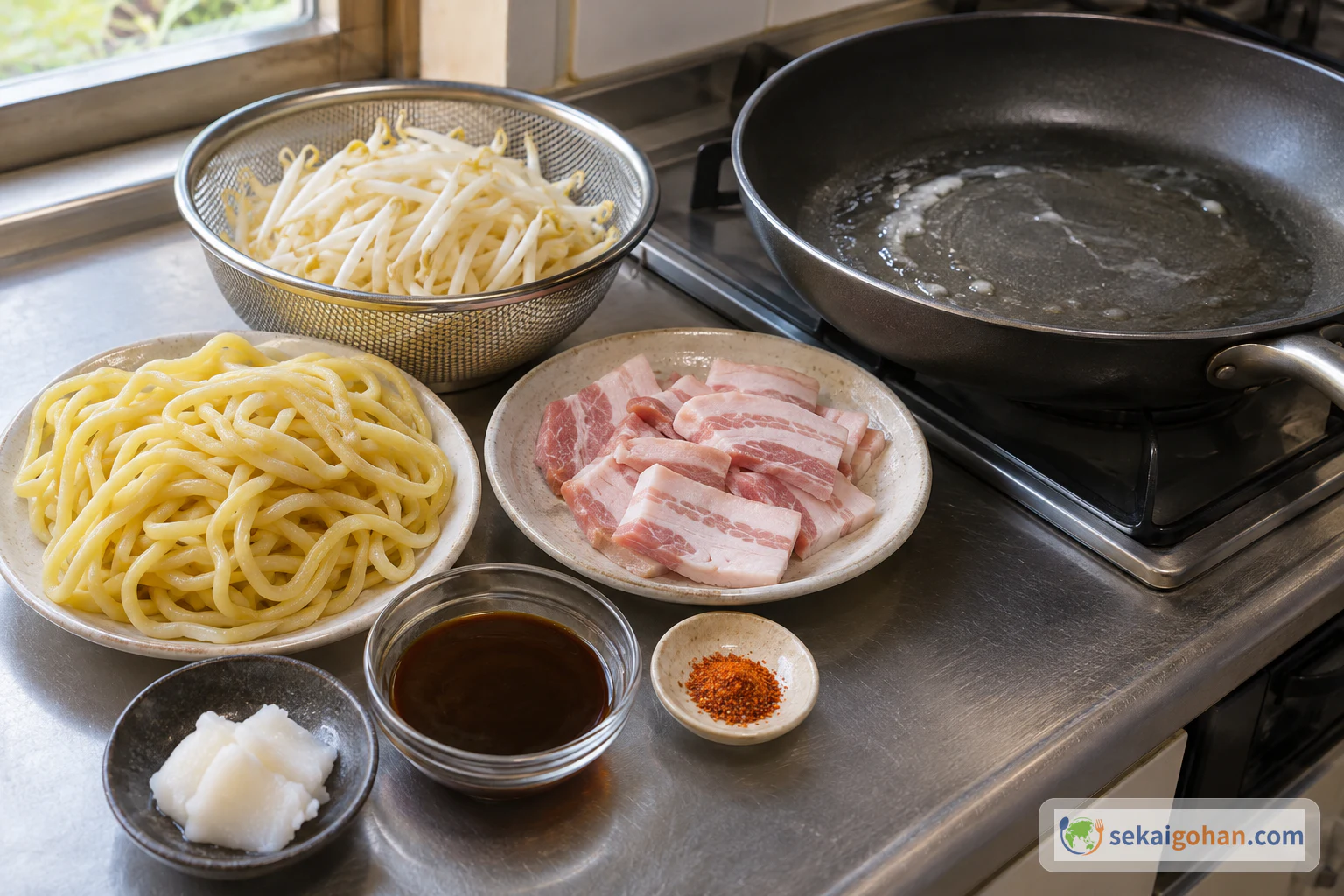
Ingredients for One Bundle of Noodles
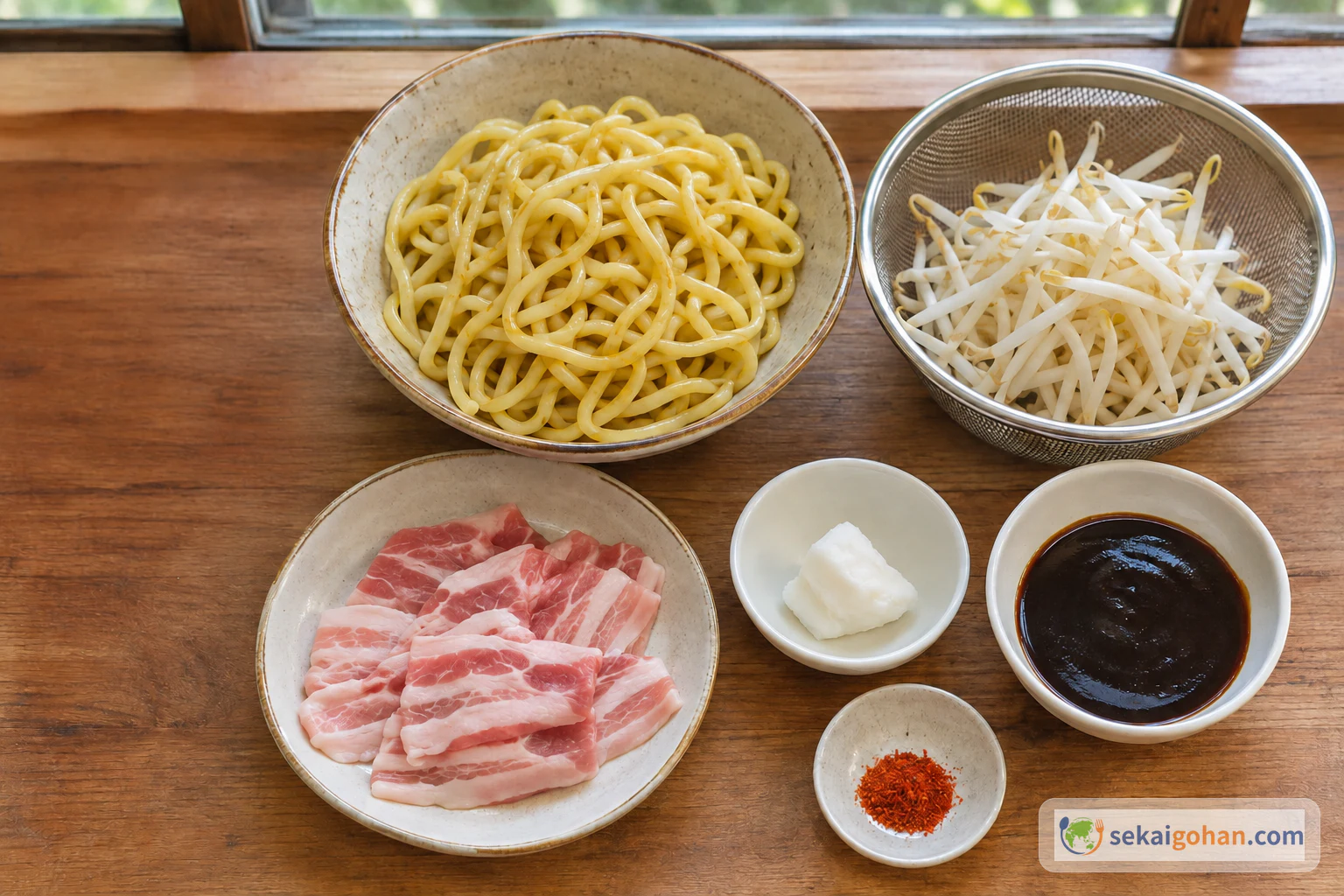
Nothing else goes into this plate: no cabbage, onion, egg, pickled ginger or aonori.
Choosing Noodles, Sauce and Lard
Noodles. Dedicated Namie yakisoba noodles come first. This recipe uses them cooked and ready for stir-frying. Check the pack for thickness, whether the noodles are boiled or steamed, and any instructions on water, oil or loosening, and follow them. If you can't find dedicated noodles, thick Chinese-style noodles are a reasonable stand-in, but the texture will differ. Thin noodles do not give the same dish.
Sauce. If your noodles come as a set with sauce and lard sachets, use the sachets meant for one portion. A general yakisoba sauce can stand in as an approximation, but its sweetness and thickness differ, and it is not the same as Namie yakisoba sauce. Adjust the amount by how well it coats the noodles.
Allergens. Check the labels on the noodles and sauce you buy for allergens such as wheat, egg and soy.
Equipment
- Knife
- Cutting board used only for raw meat
- Colander
- Large frying pan (lets you spread the noodles and stir-fry the sprouts without piling them up)
- One cooking utensil for stir-frying, such as a spatula
- Chopsticks
- Serving bowl
- Small dish for the ichimi
Before You Cook: Pork and Sprouts Need Real Heat
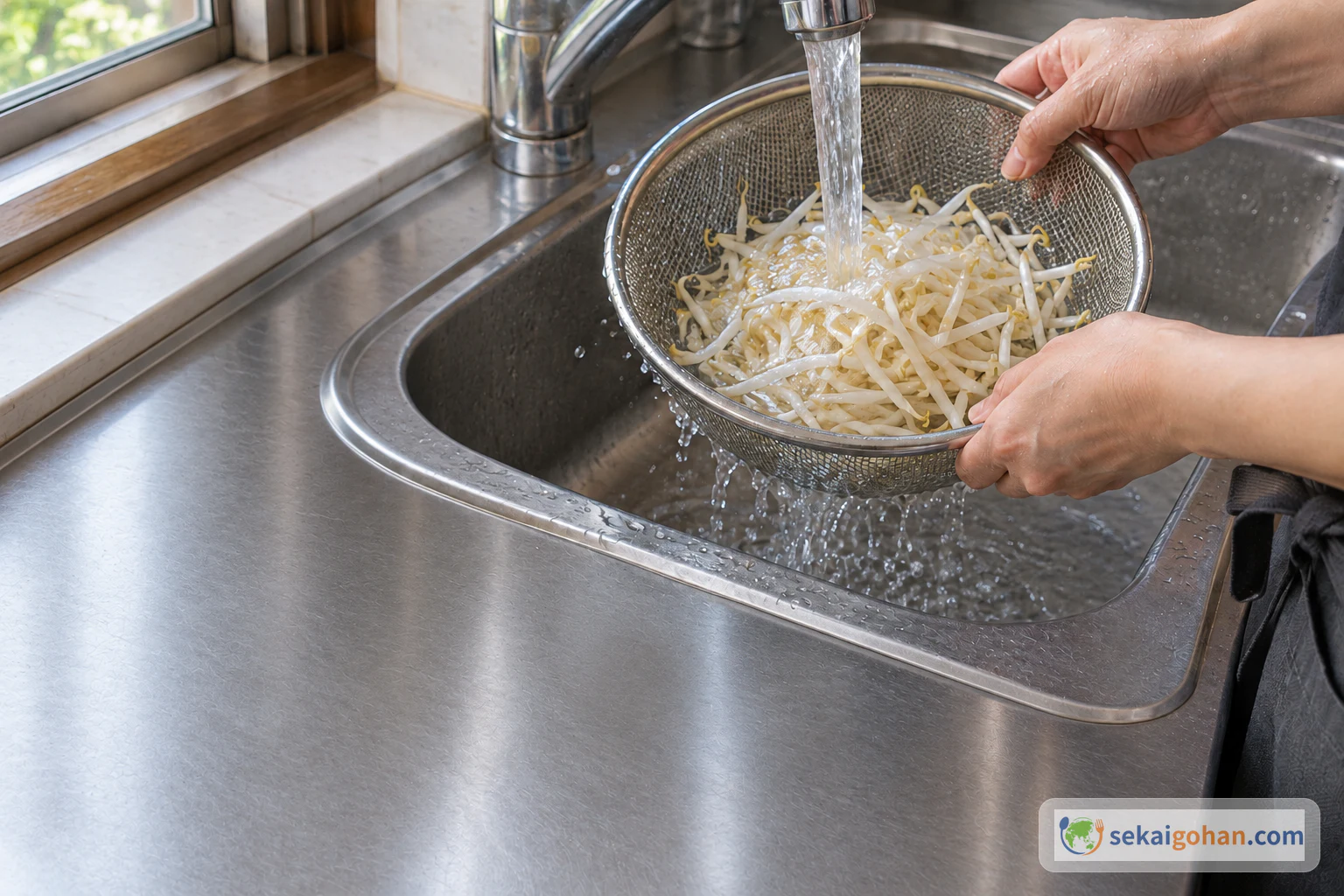
Cook the pork through to the center: 75°C at the center for at least 1 minute. Browning on the surface does not show that the center is cooked, and the photos in this article are not proof of temperature. Keep raw pork on its own board, away from the sprouts and cooked food. Rinse the sprouts under running water, and keep cooking them through the noodle and sauce stages so they are thoroughly heated when served. Do not serve half-raw or raw bean sprouts.
Wet Sauce, Clumped Noodles: Fixing Problems in the Pan
| Condition | What to do |
|---|---|
| Sauce liquid is still pooling in the pan | Keep stir-frying over the heat until it cooks off and the sauce coats the noodles |
| The pan is too small to spread the noodles | Cook one portion at a time so the noodles and sprouts are not piled up |
| The noodles break or stay in clumps | Don't loosen them forcefully. If the pack gives loosening instructions, follow them |
| The sprouts still seem raw at the end | Keep cooking until they are thoroughly heated before serving |
Cooking one portion at a time is a practical suggestion for home kitchens, not a guarantee of timing.
Variations Worth Making
- The baseline plate. Dedicated thick noodles, pork, bean sprouts and sauce, with nothing added. Make this first.
- Ichimi at the table. Ichimi chili on the side lets each person set their own heat; local guidance treats it as a way of enjoying the dish, not a required ingredient.
- Easier-to-find noodles. Swap in thick Chinese-style noodles. Expect a different texture; this is a Namie-style home version rather than the regional plate itself.
- One portion per batch. Match the batch to your pan so the noodles have room to spread.
- Shop-to-shop range. Namie shops differ in noodle thickness and sauce. Appreciate the range, but don't blend different shops' formulas into one plate.
Namie Yakisoba in the Life of the Town
Namie Town's official introduction to its local specialties places Namie yakisoba among the town's foods and describes it as soul food that has been loved locally for half a century. The Namie Town Chamber of Commerce gives a little more: the dish is said to have been devised about 50 years ago with workers in mind, made thick and hearty so it would satisfy and keep them going. Neither gives an exact year or a single inventor, and none is assumed here. A Japanese national tourism database likewise introduces it as a Namie dish of extra-thick Chinese noodles, pork, bean sprouts, lard and a special sauce.
The recipe in this article comes from a January 2014 article (ALPS Vol. 116) by Asami (浅見公紀) of Namie Yakisoba Taikoku. Its title moves "from machi-okoshi to machi-nokoshi": from reviving the town to keeping the town alive. The article introduces the dish as an inexpensive, filling meal for local workers and notes that each shop in town has its own noodle thickness and sauce. It also records how the group, formed in 2008 around the chamber of commerce's youth division, began cooking for evacuated townspeople in Nihonmatsu City after the 2011 evacuation, bringing them the taste of home. In that telling, the dish is more than a regional food-contest favorite; it is part of how the community held together.
The recipe gives one bundle of dedicated noodles, 50g pork belly and 170g bean sprouts, and states that the sprouts are the same amount as the noodles. It does not specify whether the noodles are raw or boiled, and gives no amounts for the lard and sauce, no heat level and no cooking times. This article reads the noodles as 170g and uses cooked extra-thick noodles; that is our choice, not something the recipe states.
For comparison, another noodle maker, Oisoya, publishes a two-serving home version using its own flat noodles, with the pork taken out and water added to cook the noodles. Because flat noodles don't match the extra-thick definition, it is not mixed into the recipe here.
Frequently Asked Questions
How is Namie yakisoba different from ordinary yakisoba?
The Namie Town Chamber of Commerce and the town describe it as extra-thick Chinese-style noodles, pork and bean sprouts as the basic fillings, and a rich sauce flavor. The sauce is stir-fried until no liquid remains, so it clings to the thick noodles.
How much should I use of the noodles and bean sprouts?
The ALPS recipe lists one bundle of dedicated noodles and 170g bean sprouts, noting that the sprouts are the same amount as the noodles, so this article uses 170g of noodles. That does not mean every product's bundle is 170g: a current shelf-stable Namie yakisoba product from the noodle maker Asahiya lists 130g of boiled Chinese noodles per serving, with one sachet each of sauce, lard and ichimi. Treat that as a different product standard, and don't mix it into this recipe's amounts.
Why does this recipe use cooked noodles?
The recipe doesn't say whether the dedicated noodles are raw or boiled. This article uses cooked extra-thick noodles ready for stir-frying. If your pack gives its own instructions, follow them.
Is ichimi chili required?
No. The chamber of commerce mentions it as a way of enjoying the dish, and the recipe adds it only to taste. Here it is served on the side.
What if I can't find dedicated noodles?
Thick Chinese-style noodles are a reasonable substitute, but the texture will differ, and thin noodles won't give the same dish. Follow the pack for any water, oil or loosening instructions.
Can I use regular yakisoba sauce?
You can make an approximation, but sweetness and thickness differ from Namie yakisoba sauce, so the result is not the same. This article doesn't offer a homemade sauce blend.
How far should I cook the pork?
Through to the center. Japan's Ministry of Health, Labour and Welfare advises heating meat, including pork, so the center reaches 75°C for at least 1 minute. Browning on the surface is not proof.
Why cook the bean sprouts so thoroughly if the step says "lightly stir-fry"?
The light stir-fry is a midway stage. The sprouts keep cooking through the noodle and sauce steps. Japan's Ministry of Agriculture, Forestry and Fisheries notes that bean sprouts are generally eaten cooked, and that insufficient heating and other improper handling can lead to food poisoning. Rinsing vegetables under running water and keeping raw-meat tools apart from ready-to-eat food follows general food-safety guidance from FoodSafety.gov.
Can I add cabbage, egg or pickled ginger?
They are not part of this recipe. Adding them moves the plate toward a home-style variation rather than the regional dish described by the town.
Sources
- Namie Town Chamber of Commerce, "なみえ焼そば" (Namie yakisoba). Definition of the dish (extra-thick Chinese-style noodles, pork and bean sprouts, rich sauce), ichimi as a way of eating it, and the explanation that it is said to have been devised about 50 years ago as a filling meal for workers. https://r.goope.jp/nsci/free/namieyakisoba
- 浅見公紀 (Namie Yakisoba Taikoku), "福島県 浪江町『なみえ焼そば』—『まちおこし』から『まちのこし』へ," ALPS Vol. 116 (January 2014), Regional Society Life Plan Association. The recipe used here (dedicated noodles, 50g pork belly, 170g bean sprouts and its cooking order), differences between shops, and the group's activities after the disaster. https://www.lifeplan.or.jp/alps/alps_pdf/alps116/alps116_37.pdf
- Namie Town, "〖浪江の魅力〗特産品" (Namie's Attractions: Local Specialties). The town's description of the dish's basic makeup and its place as local food for half a century. https://www.town.namie.fukushima.jp/site/understand-namie/26165.html
- Asahiya, "常温なみえ焼そば 4食 秘伝ソース・ラード・一味唐辛子付き." A current product's per-serving units (130g boiled Chinese noodles, sauce, lard and ichimi sachets) and allergen labeling including wheat, egg and soy. https://asahiyamen.com/products/namiyaki-jouon01
- Oisoya, "なみえ焼そば." A comparison home recipe using flat noodles; not used in this recipe. https://www.oisoya.jp/recipe/2688/
- Ministry of Health, Labour and Welfare (Japan), "お肉による食中毒の原因や予防方法について紹介します。" Cooking meat, including pork, to 75°C at the center for at least 1 minute. https://www.mhlw.go.jp/stf/web_magazine/closeup/08.html
- Japan47go tourism database, "なみえ焼そば/福島県." Location in Namie, Futaba District, Fukushima, and an introduction listing noodles, pork, bean sprouts, lard and sauce. https://www.japan47go.travel/ja/detail/1d0844a6-f222-4bdb-ae81-ba6cf562a8f4
- Regional Society Life Plan Association, "ALPS その他の記事一覧." Confirmation that issue 116 was published in January 2014. https://www.lifeplan.or.jp/alps/alps_theme/alps_others.htm
- FoodSafety.gov, "4 Steps to Food Safety." Rinsing produce under running water and keeping raw-meat tools separate from ready-to-eat food. https://www.foodsafety.gov/keep-food-safe/4-steps-to-food-safety
- Ministry of Agriculture, Forestry and Fisheries (Japan), "もやしの微生物実態調査の結果(概要)." Bean sprouts are generally cooked before eating, and insufficient heating can lead to food poisoning. https://www.maff.go.jp/j/syouan/nouan/kome/k_yasai/attach/pdf/index-23.pdf