Kani-maki-jiru: Crab You Pound and Strain, Then Meet Again as Soft Curds
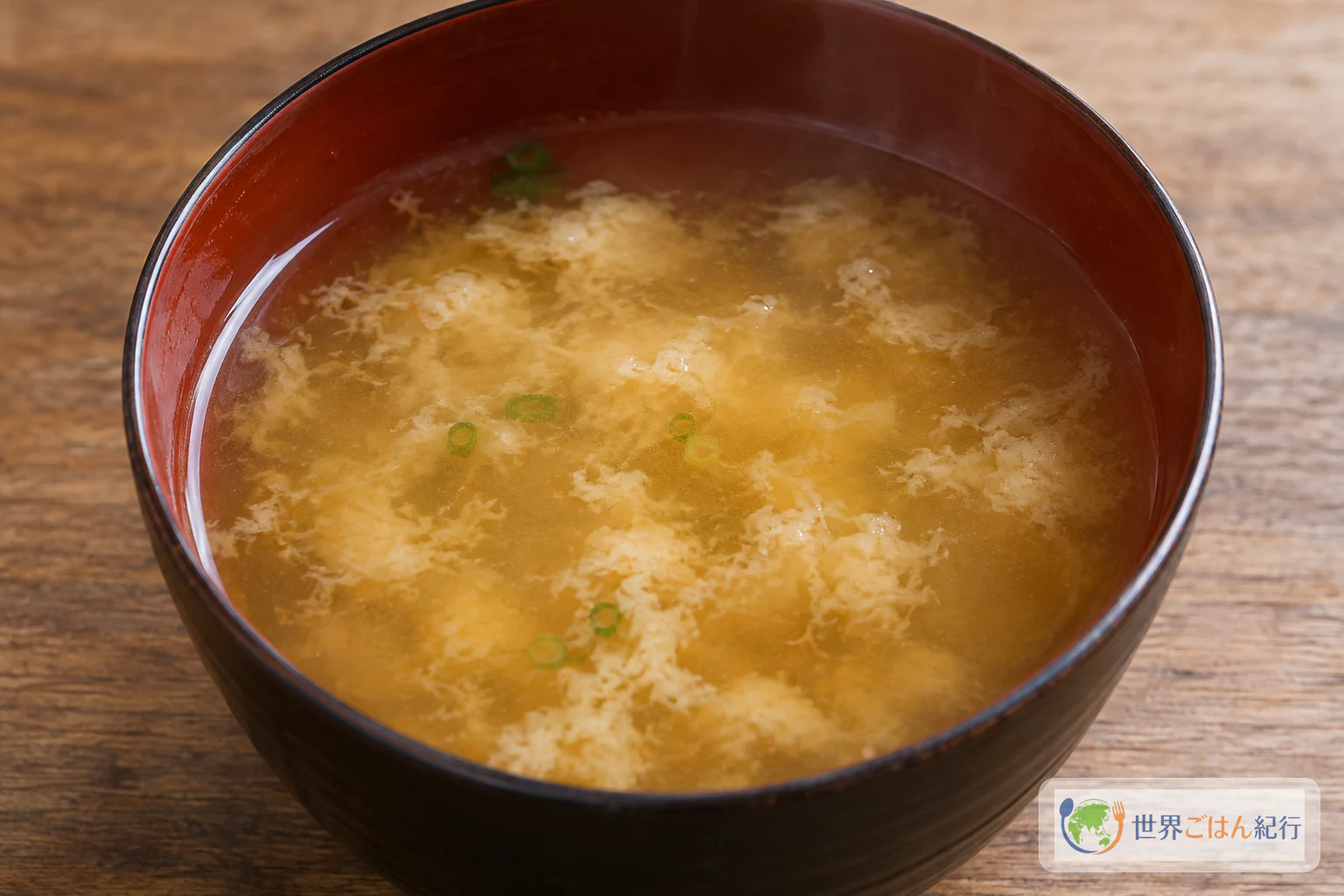
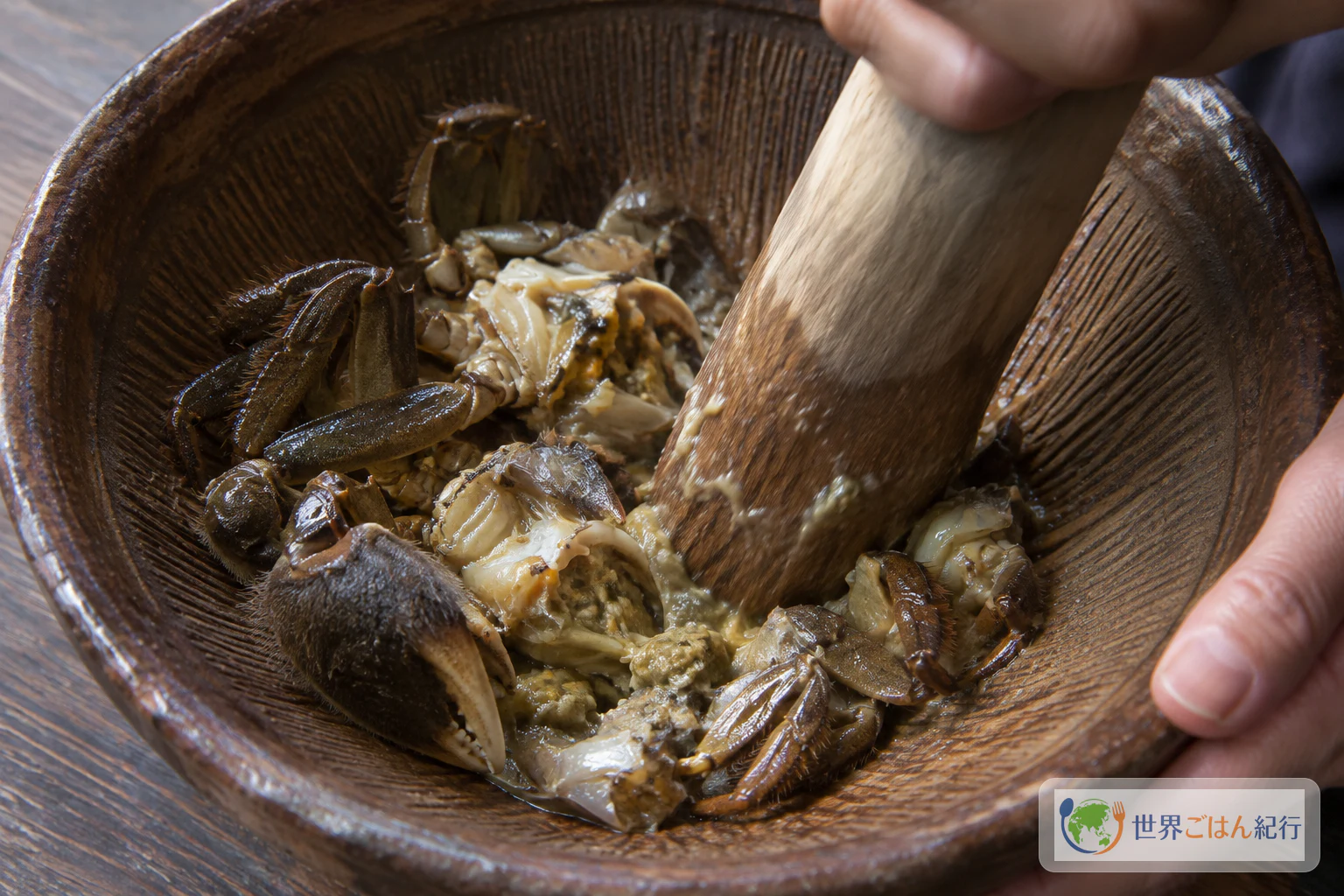
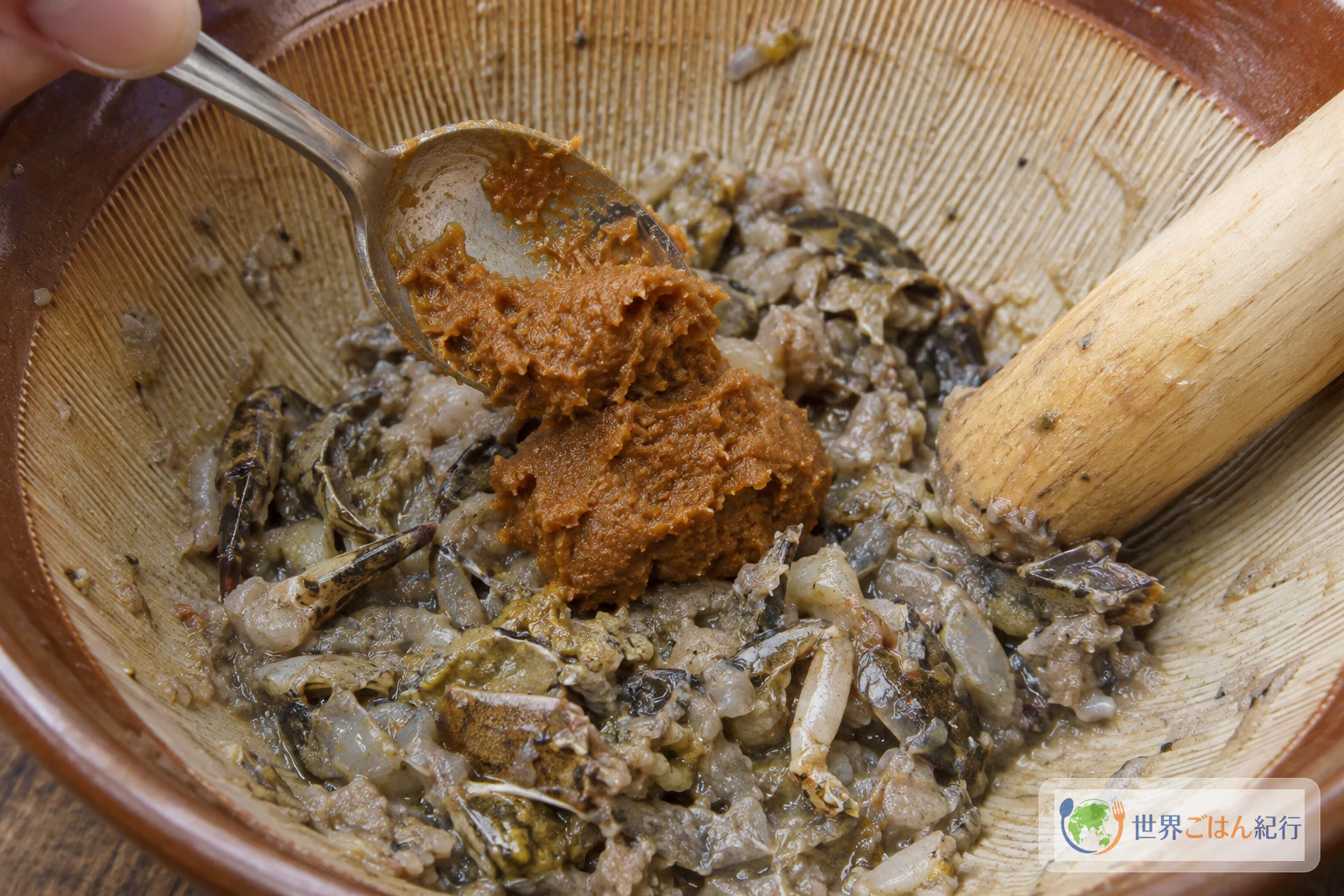
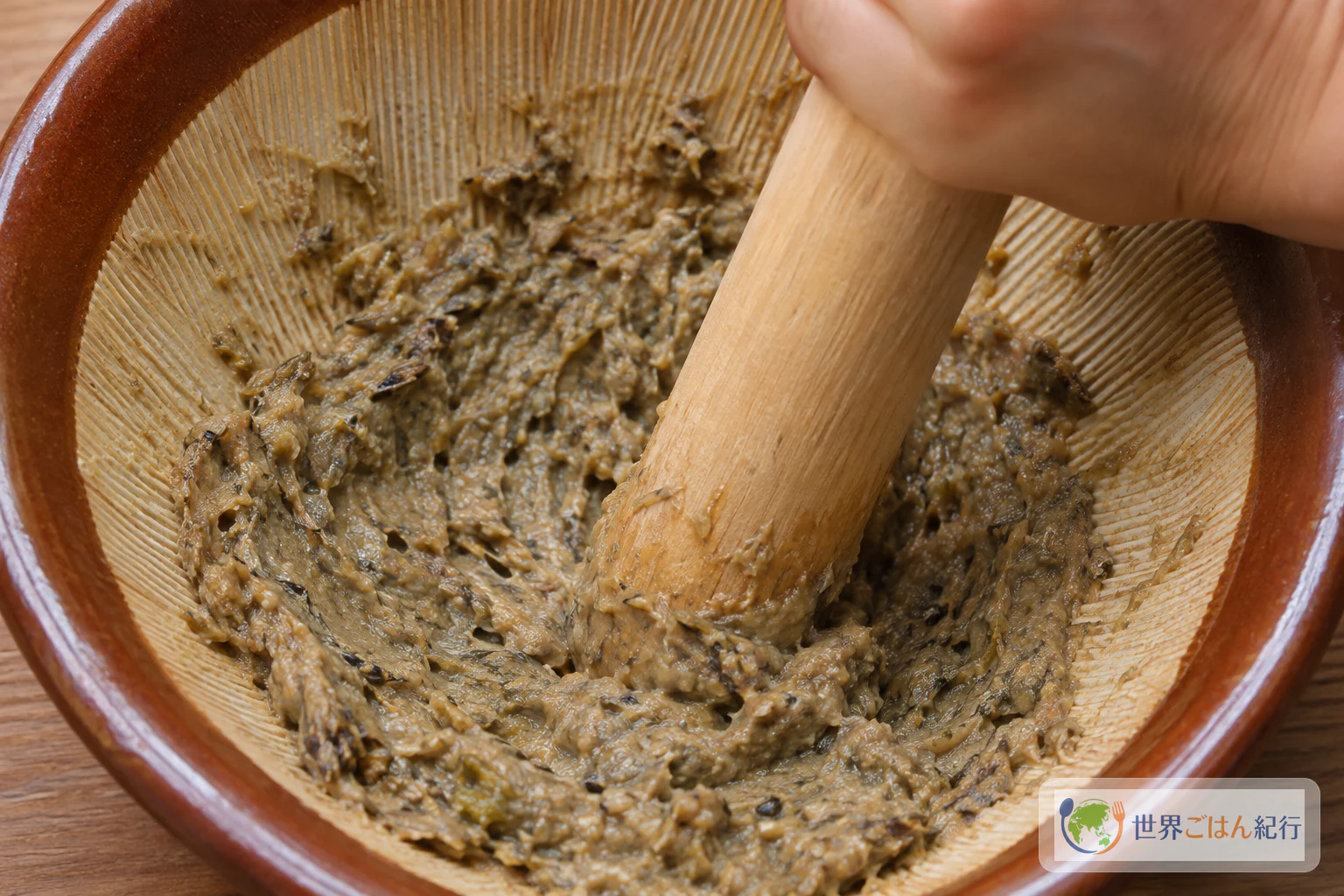
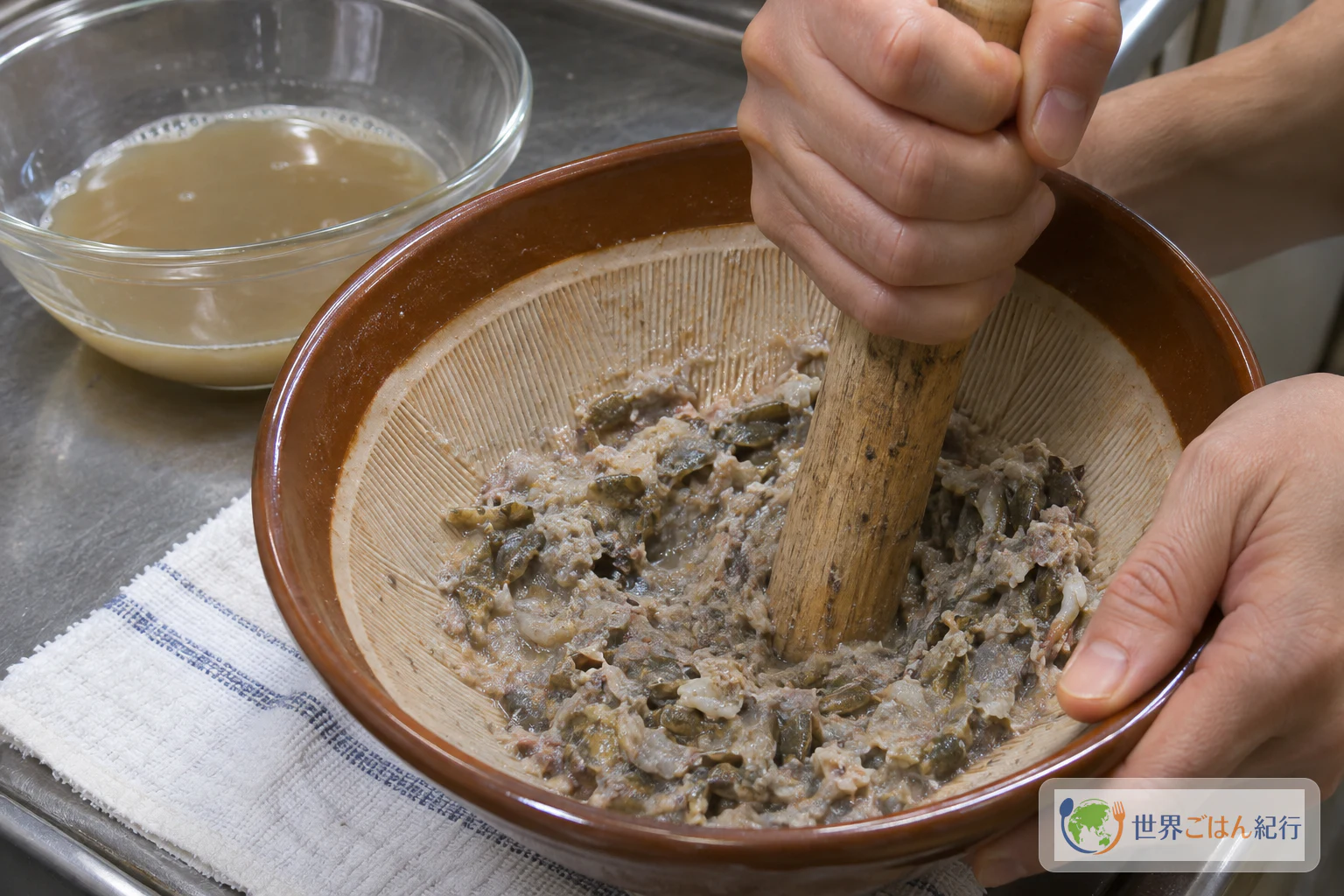
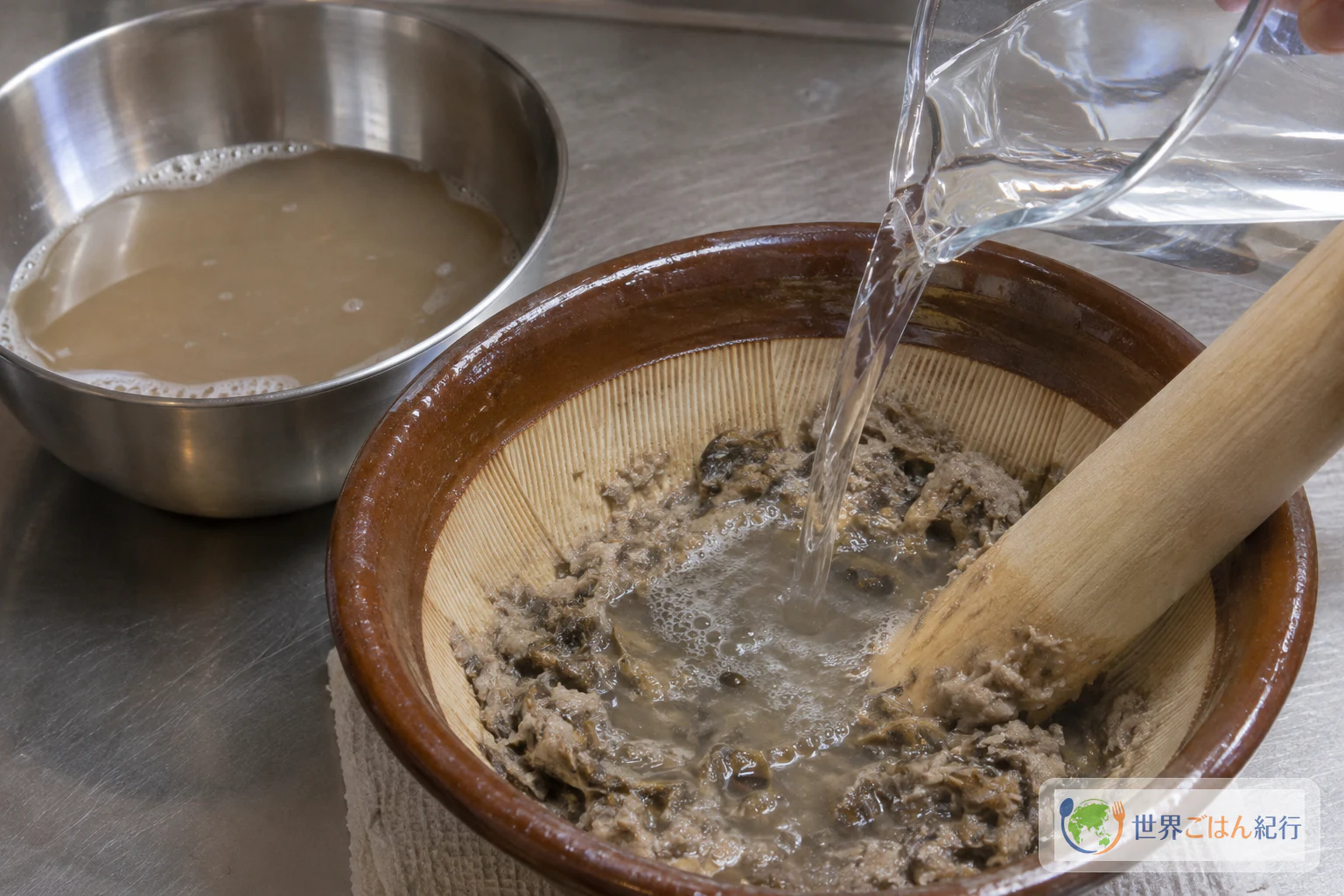
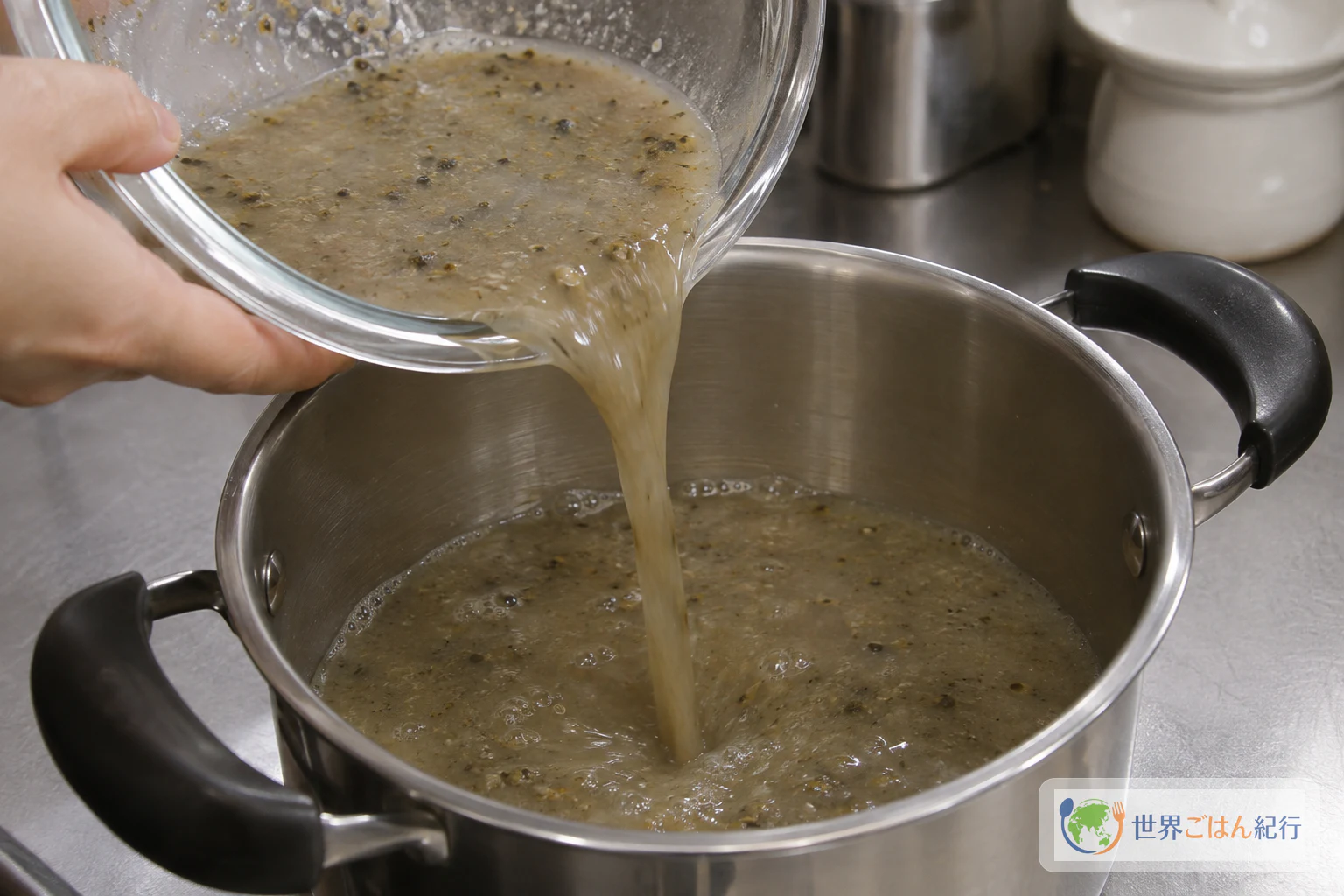
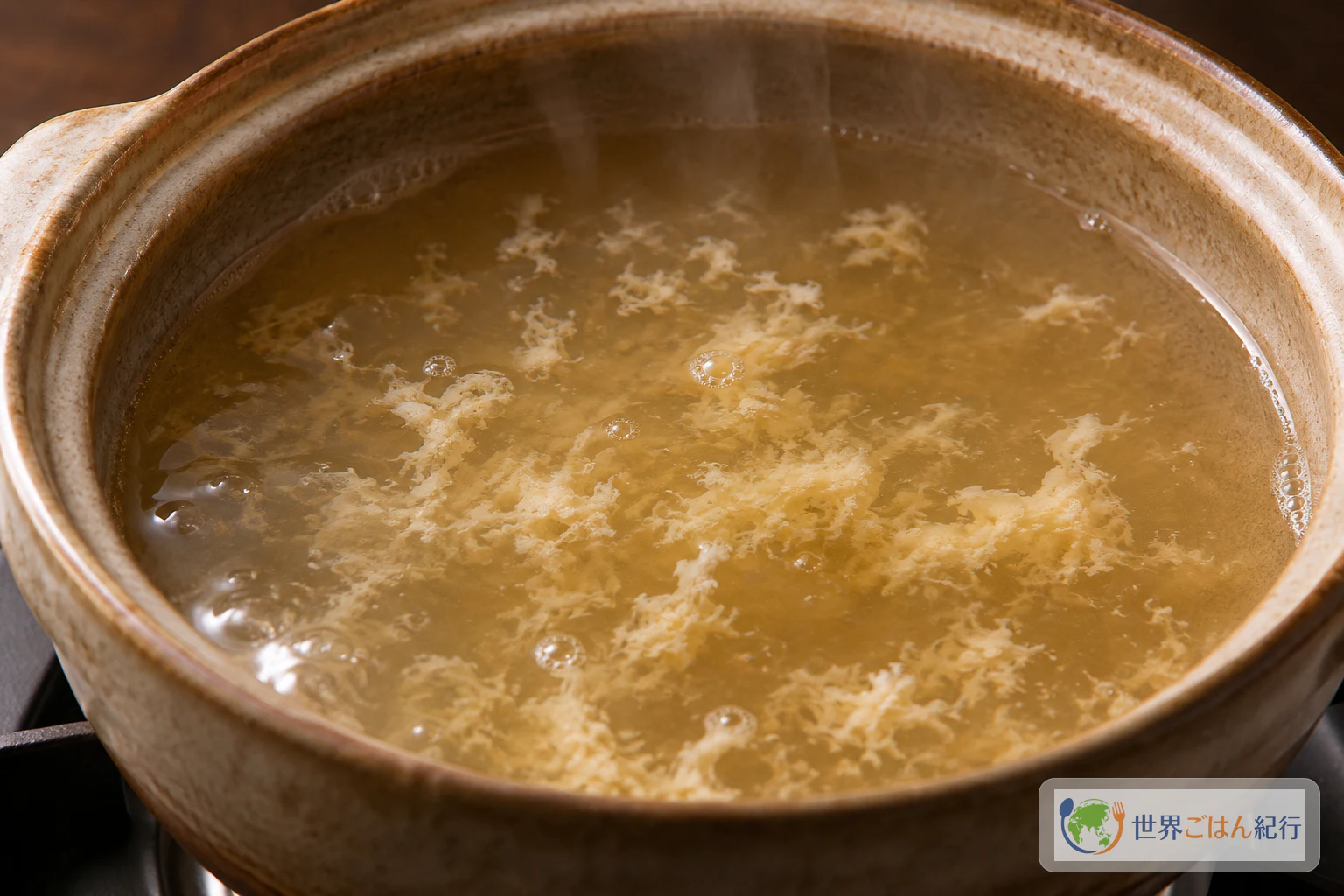
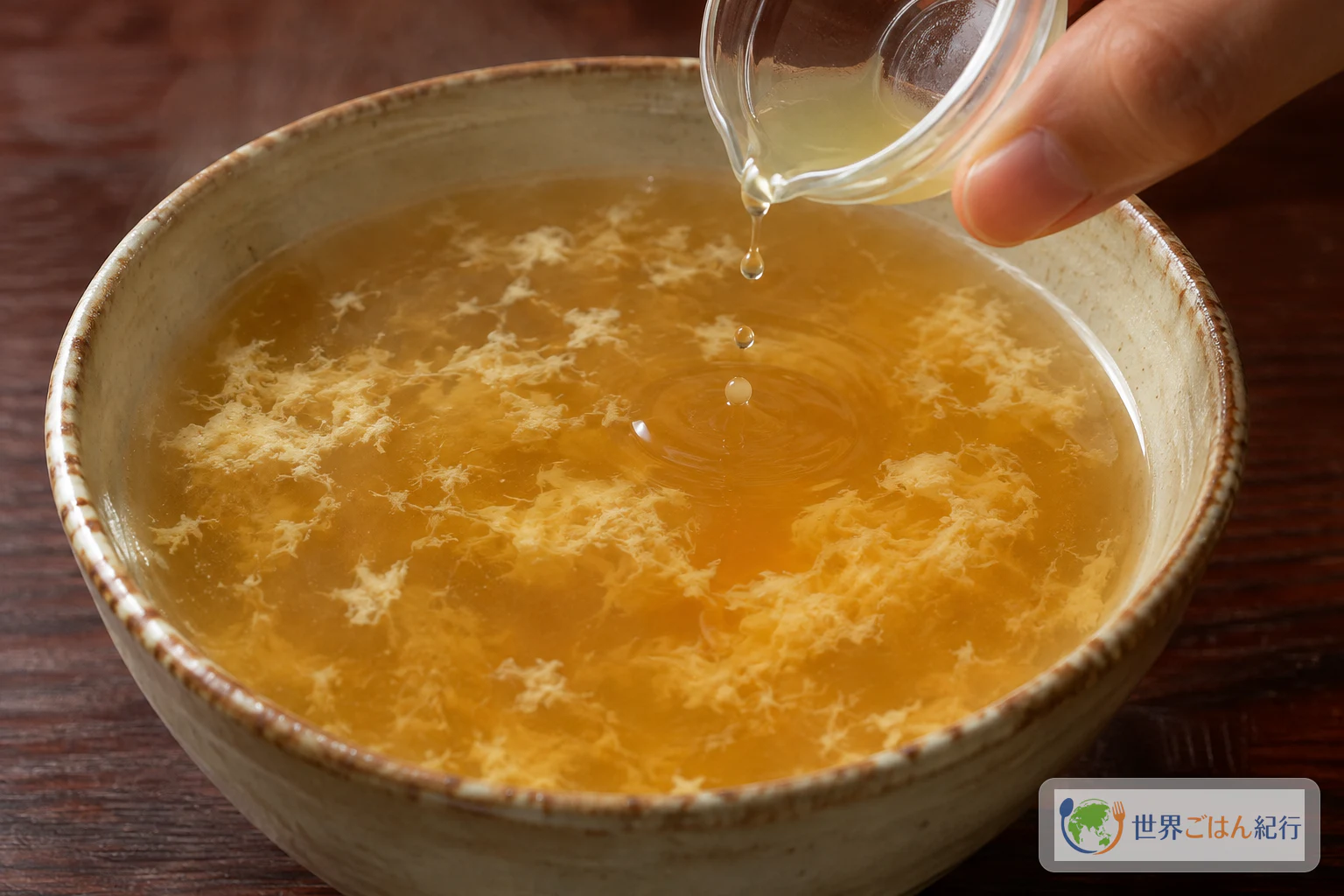
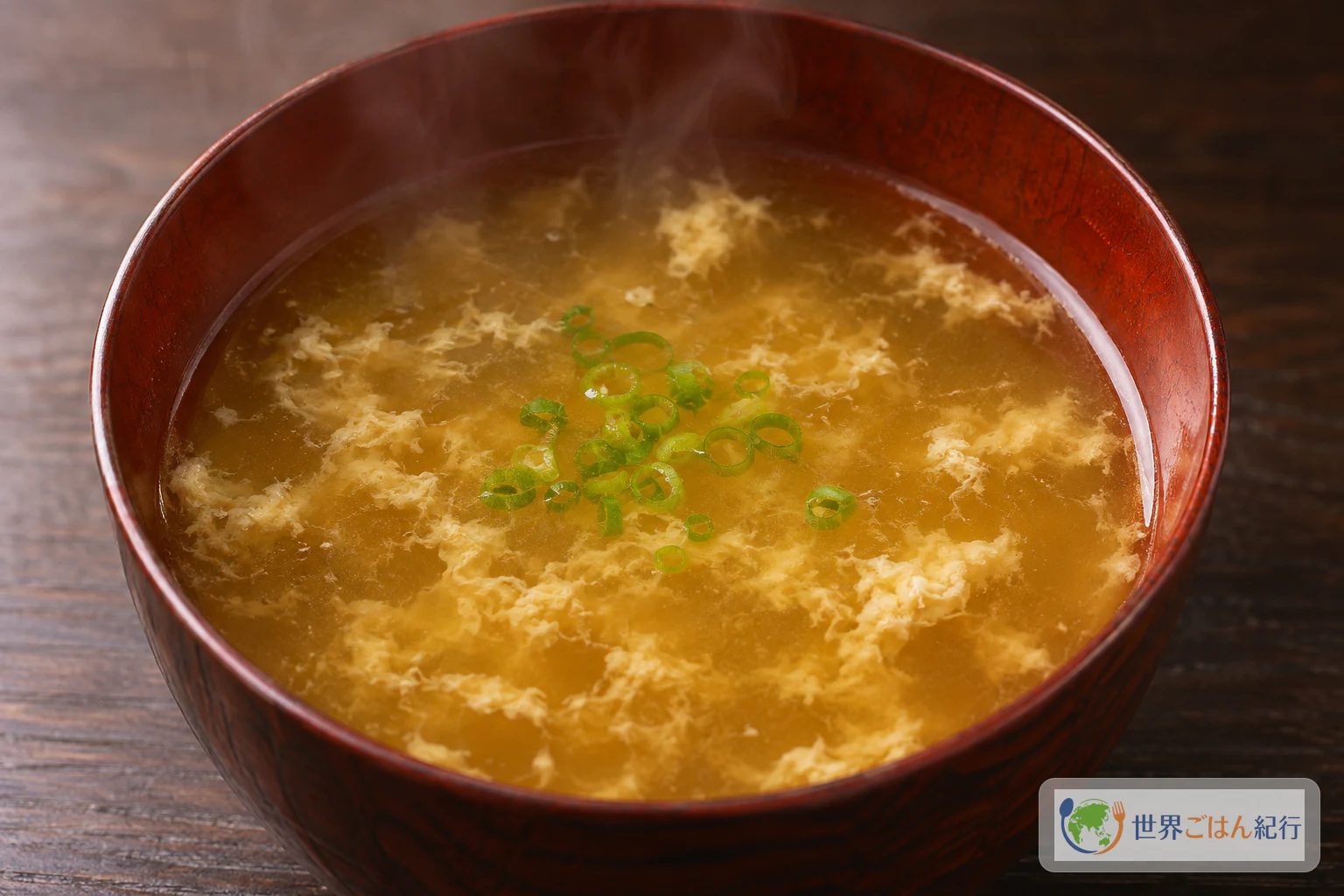
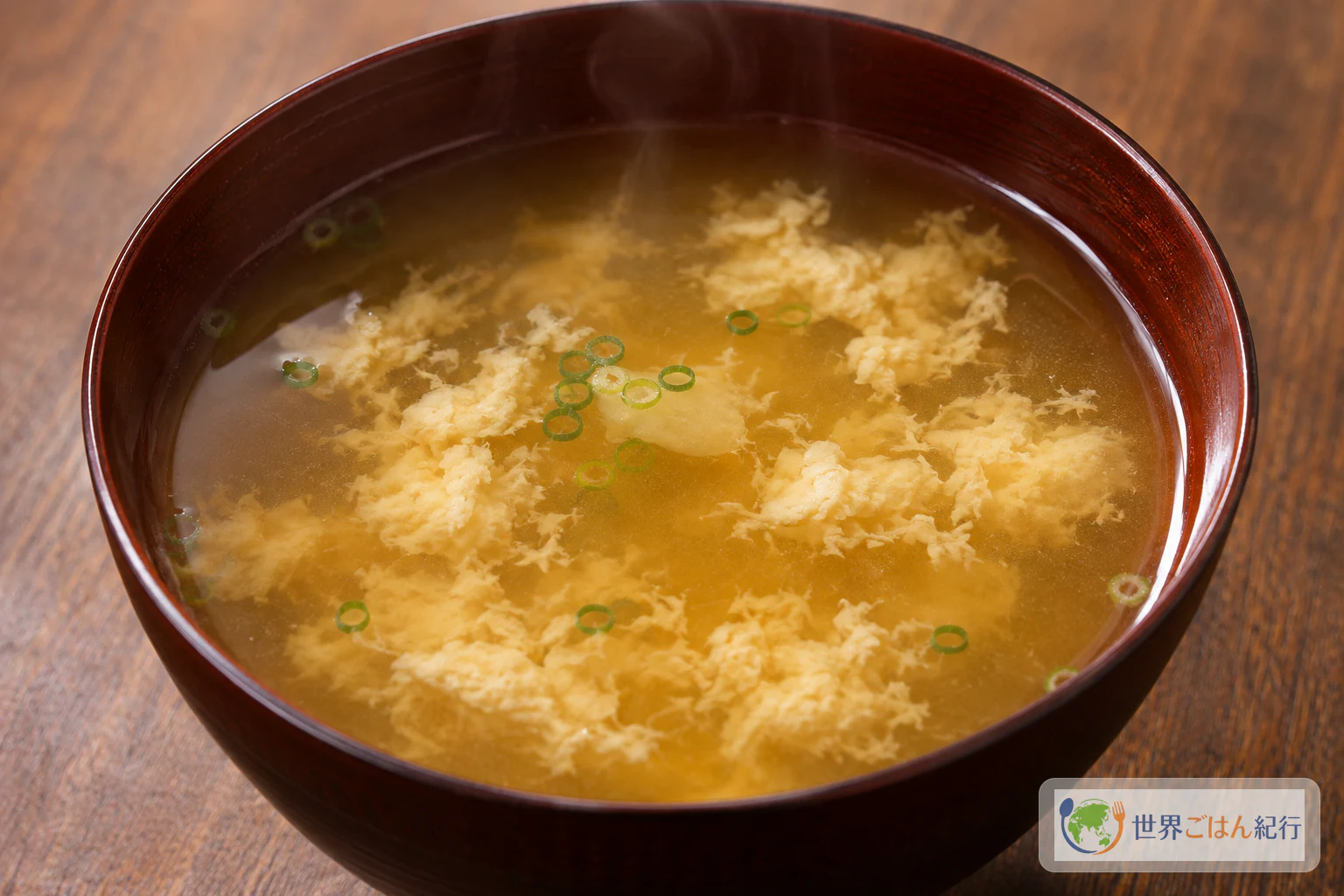
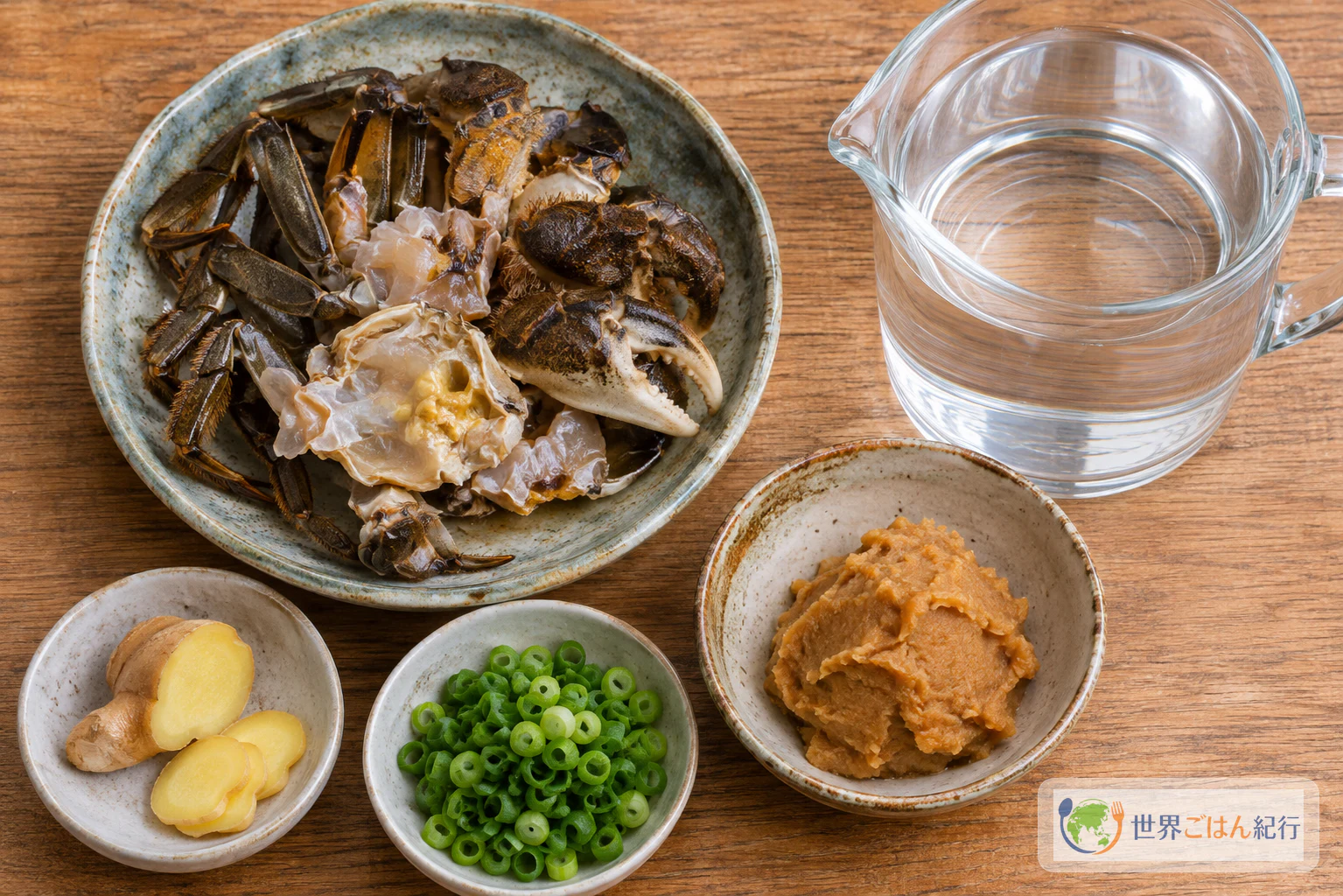
Only three ingredients go into the pot: crab, miso and water. The crab is pounded and strained before any heat is applied, so no legs or shell reach the bowl. What you see there is clear miso soup with soft, fluffy curds.
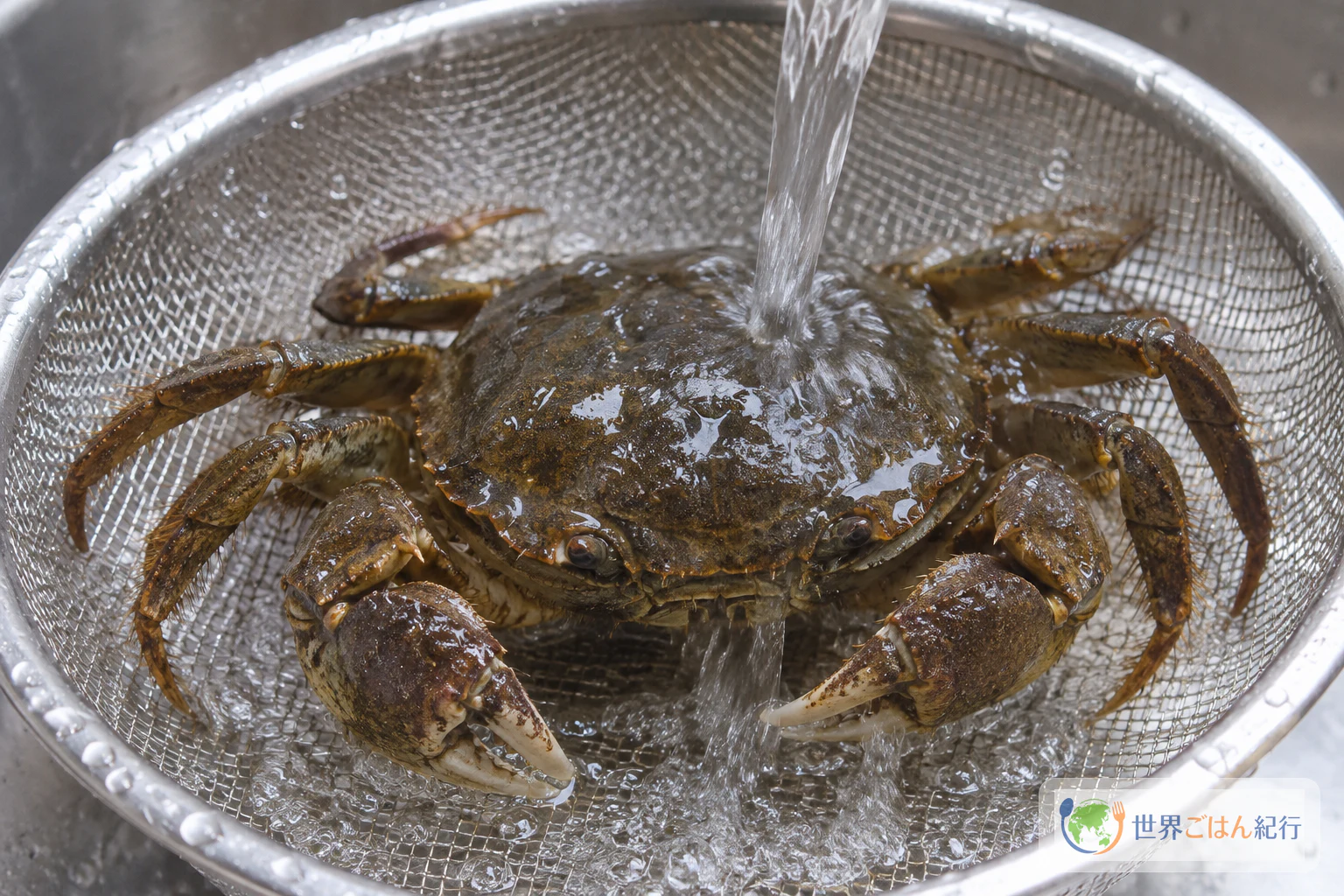
In Kitago, in Miyazaki Prefecture, the yamataro crab is caught from autumn into winter. This river crab, also known as mokuzugani, climbs the rivers, grows, and then moves back downstream to spawn. Around September and October, local cooks pound it with miso, strain it, and cook the liquid into kani-maki-jiru (かに巻き汁). Japan's Ministry of Agriculture, Forestry and Fisheries (MAFF) explains the name through the way miso wraps around the crab's savory flavor.
This article follows one version only: the recipe from the JA Miyazaki Prefectural Women's Organization Council, published on MAFF's regional cuisine site. The finished soup resembles oboro tofu, with soft, irregular curds rather than chunks of crab.
Other Japanese regions have their own crab soups, and they are different dishes. Nothing from them has been mixed in here.
This recipe has not been kitchen-tested by Sekai Gohan. The amounts and method come from the published recipe, and the safety guidance comes from separate public health sources.
Read This First: Raw Freshwater Crab and Heat
Kani-maki-jiru is a fully heated soup, not a raw crab dish, but you do handle raw crab while making it. Japan's Ministry of Health, Labour and Welfare (MHLW) names three routes of lung fluke infection linked to freshwater crabs such as mokuzugani and sawagani: eating them raw, eating them undercooked, and secondary contamination from cooking tools.
The City of Hiroshima's parasite guidance lists mokuzugani among the infection sources for Westerman's lung fluke and gives the heating condition as 75°C at the center for 1 minute. This article applies that condition to the whole soup, including its coldest part. It is a safety addition from a separate source, not a figure from the MAFF recipe, which gives no cooking time or temperature.
- Never taste or eat raw crab, the raw pounded mixture, or the strained liquid before it is cooked.
- Keep tools used for raw crab away from cooked food and serving dishes, and wash them thoroughly after use.
- Make sure the coldest part of the whole soup reaches 75°C at its center and stays there for 1 minute.
- The start of a boil, the look of the curds, washing, straining and the images in this article do not prove the soup is safe. Washing and straining should not be treated as removing parasites.
Ingredients (Serves 4)
Equipment
- Mortar and pestle, or a blender
- Sieve
- Clean bowls for collecting the strained liquid
- Cooking pot
- Food thermometer
- Serving bowls
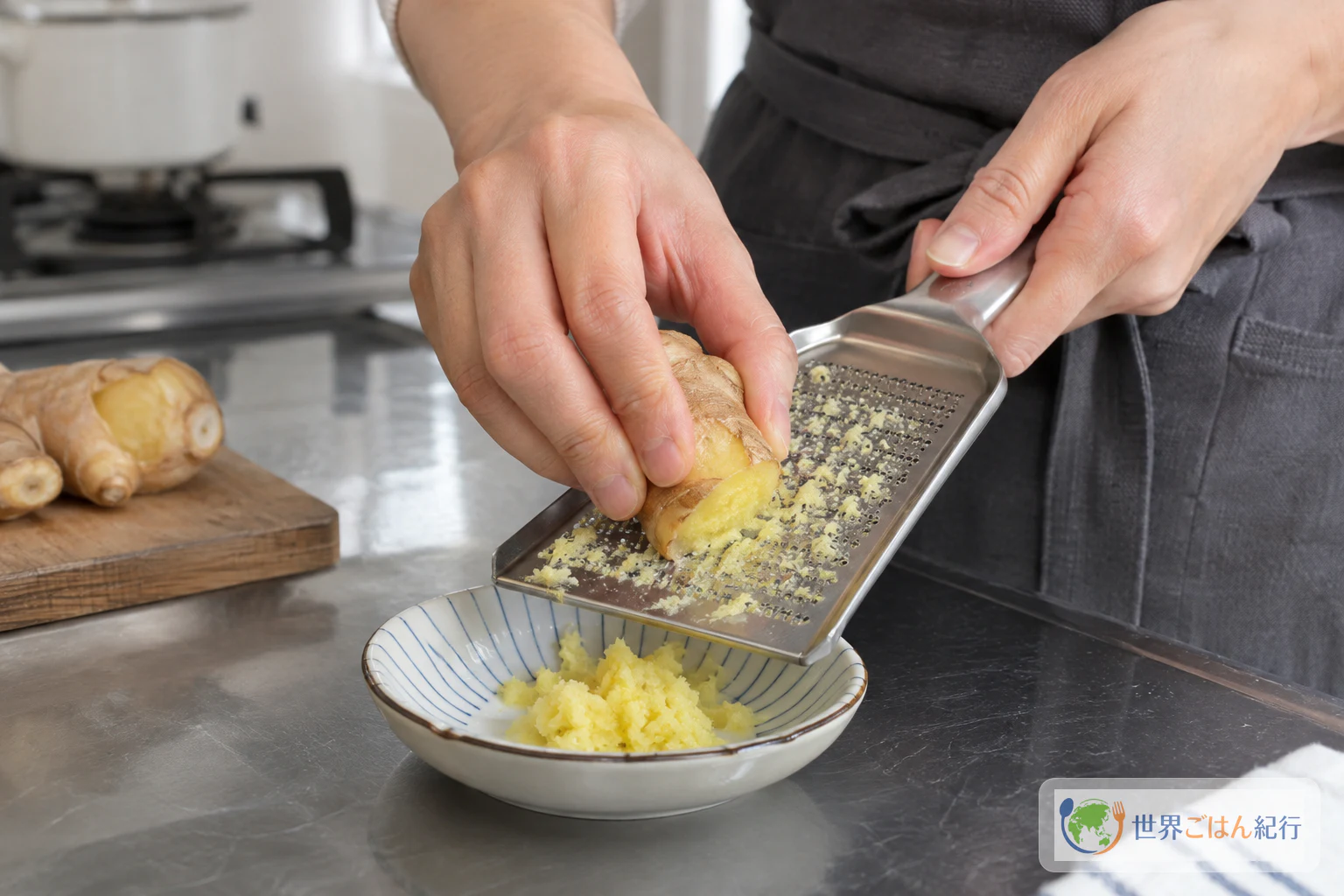
- Grater, small fine strainer and small dish, if using ginger
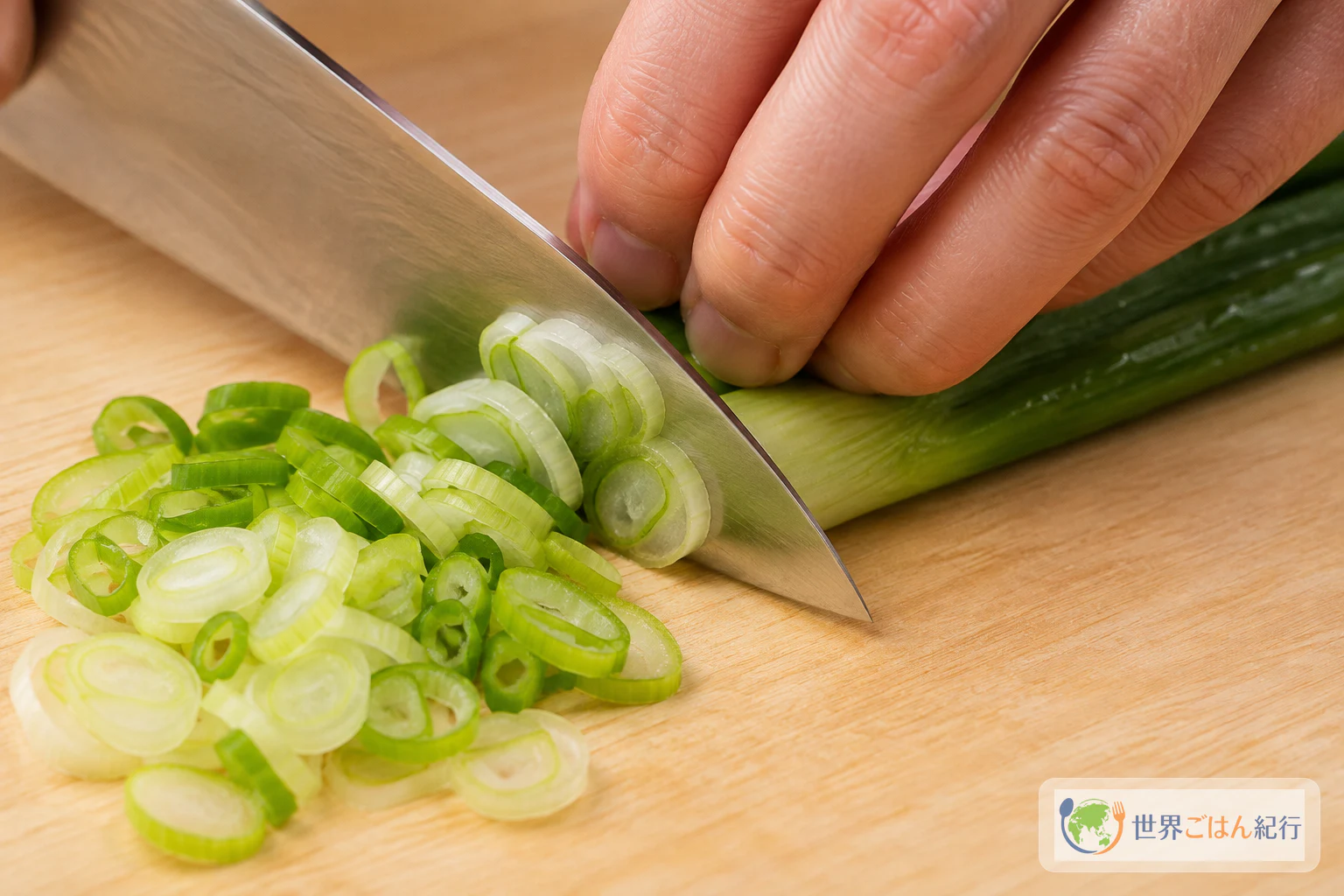
- Knife and cutting board that have not touched raw crab, if using green onion
Choosing the Crab and Miso
Use crab legally sold as domestic food, and follow its label and handling directions. Yamataro crab is the river crab also called mokuzugani, not a marine crab. This article does not suggest gathering crab from the wild, importing it, or replacing it with another species. If you can't buy it through legal food channels, don't improvise this dish with something else.
No particular type of miso is required. A mortar and pestle or a blender will both work for the crab. Leave out dashi, noodles and vegetables, which would make it a different soup.
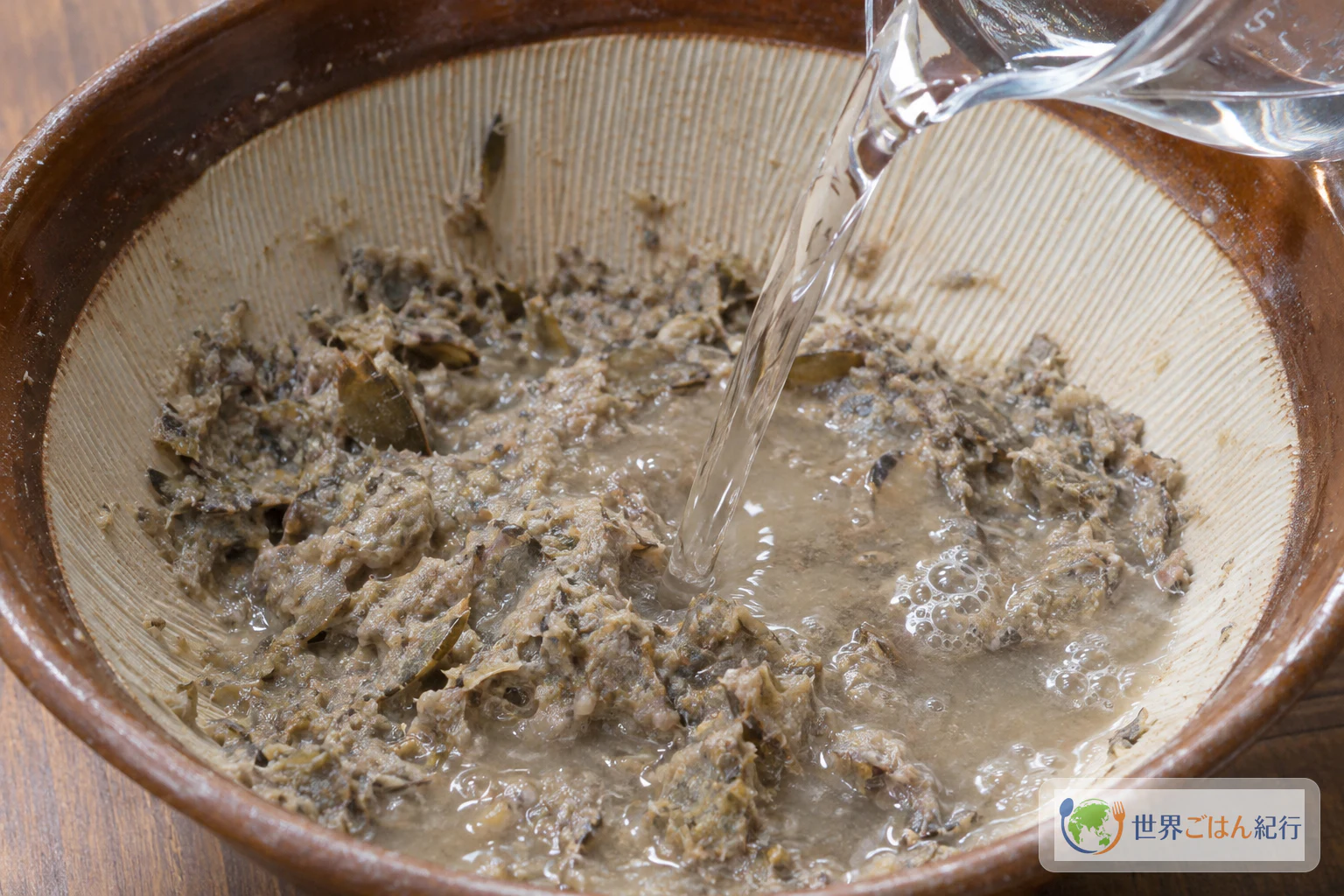
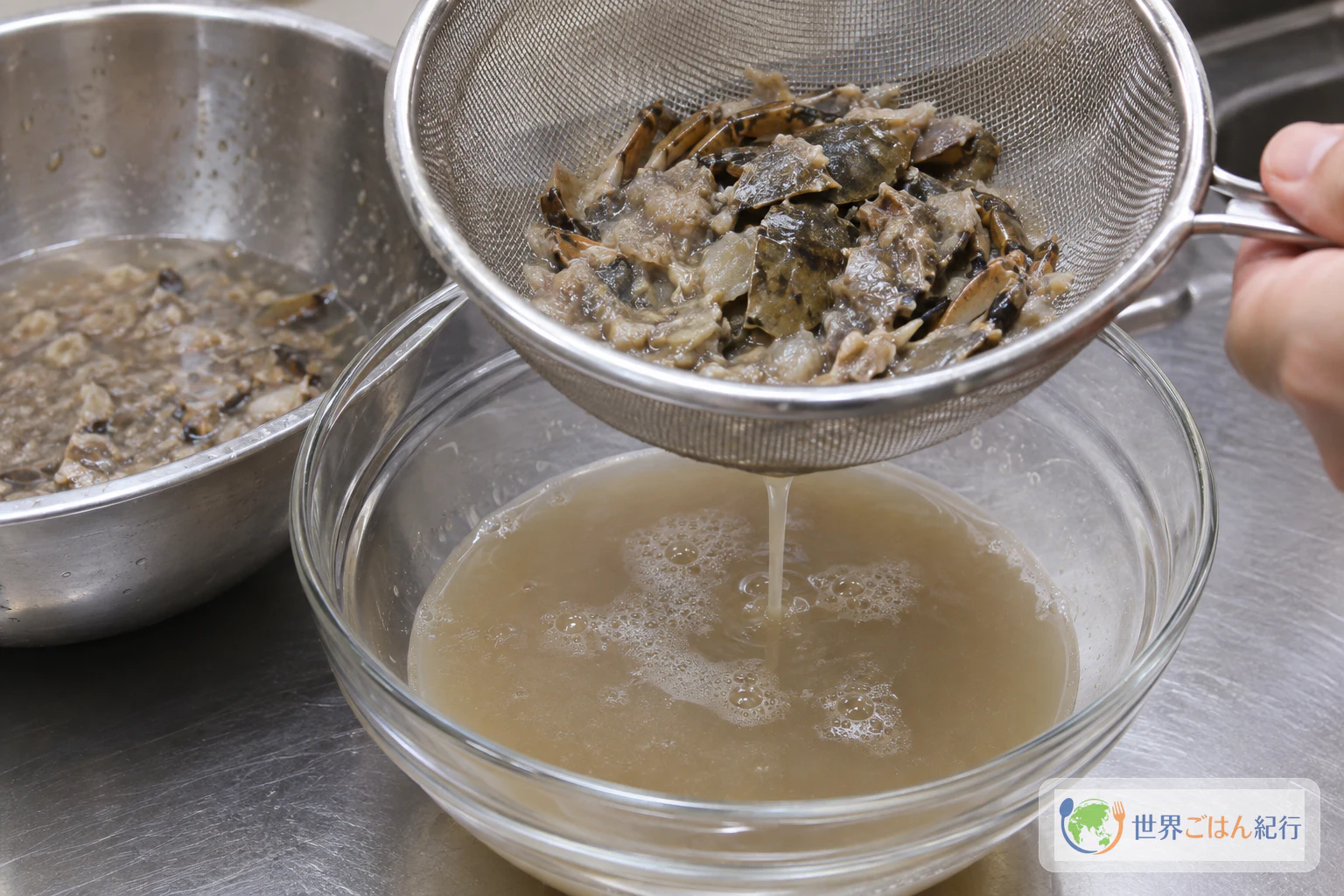
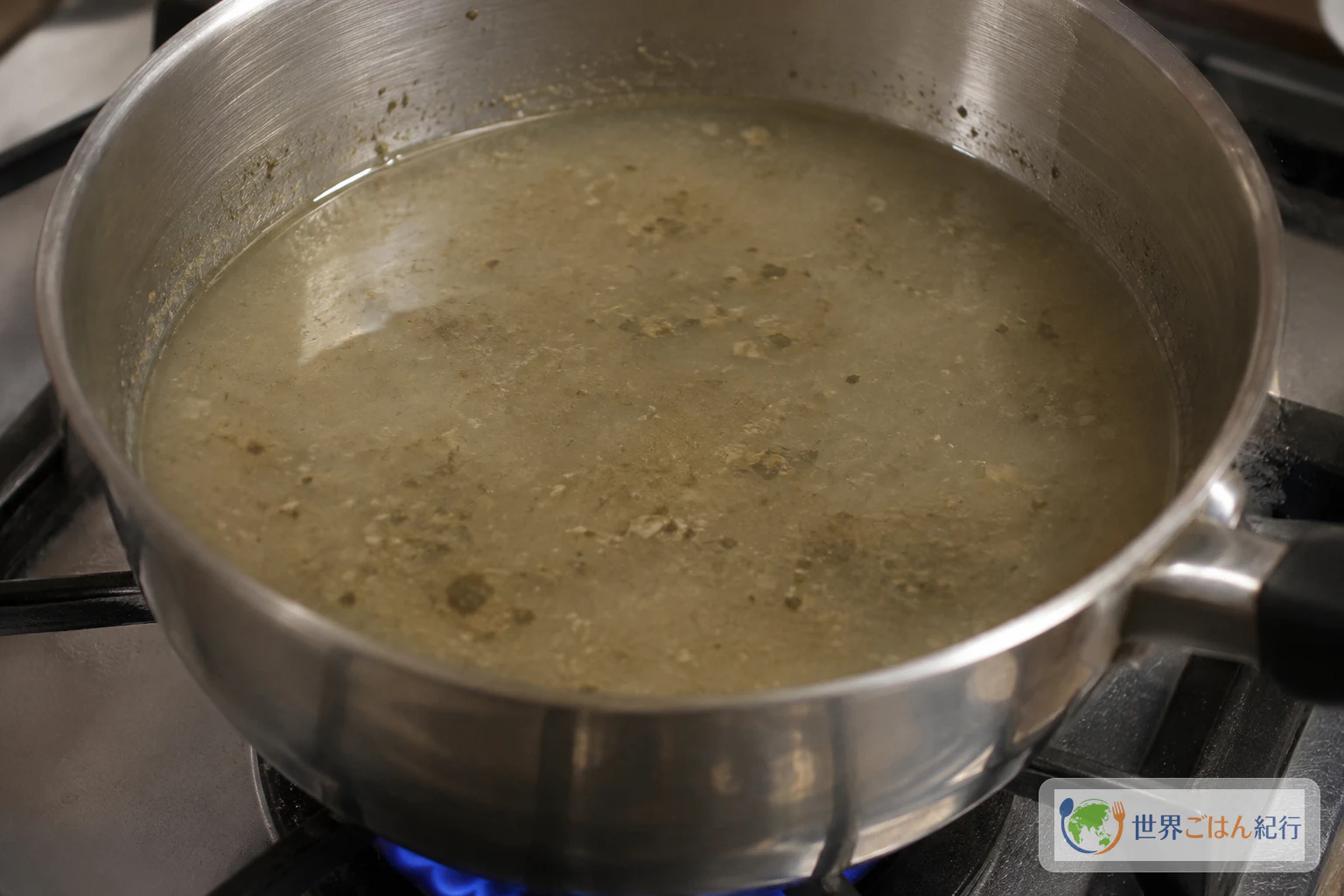
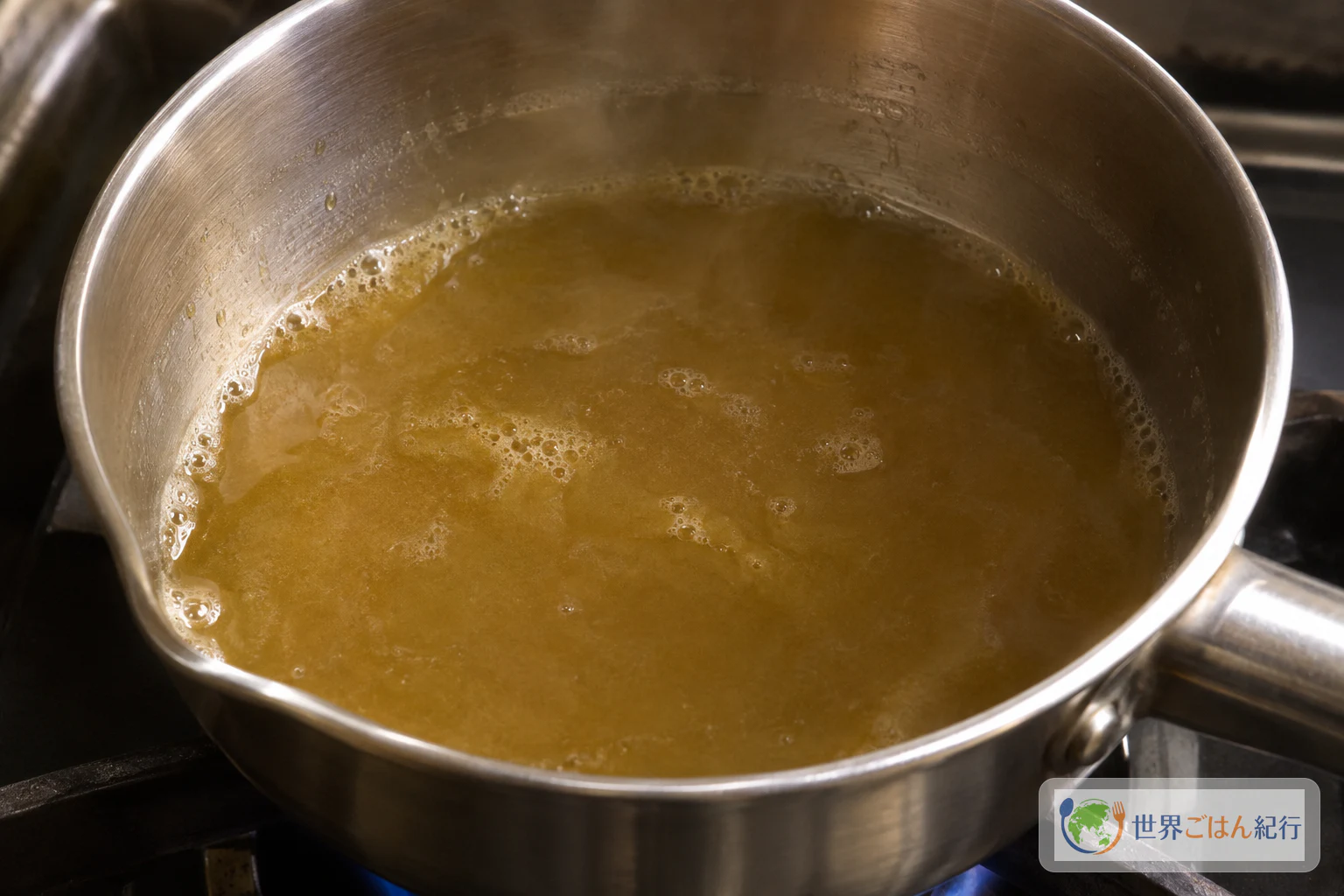
Method: Pound, Strain Twice, Strain Again, Then Heat
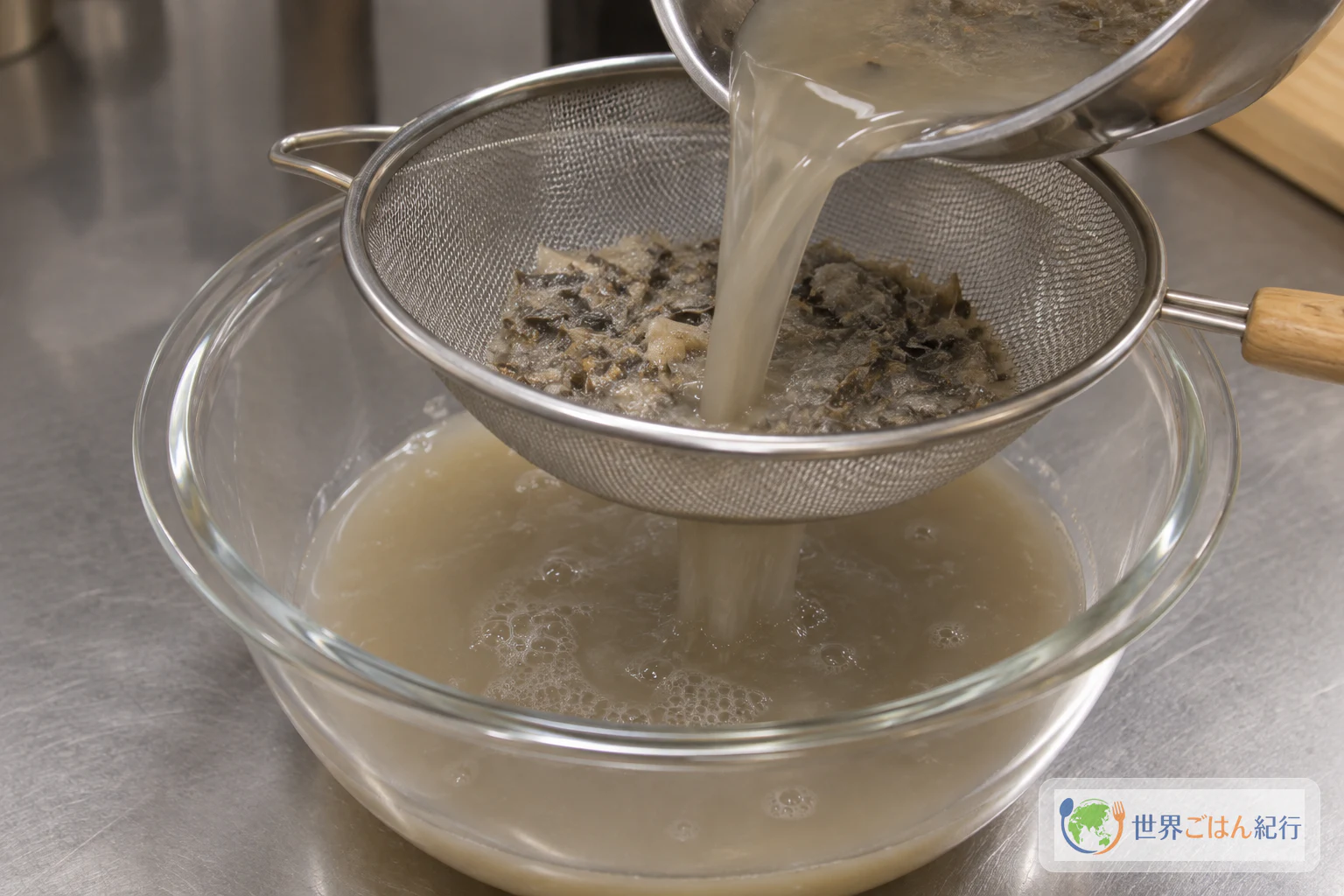
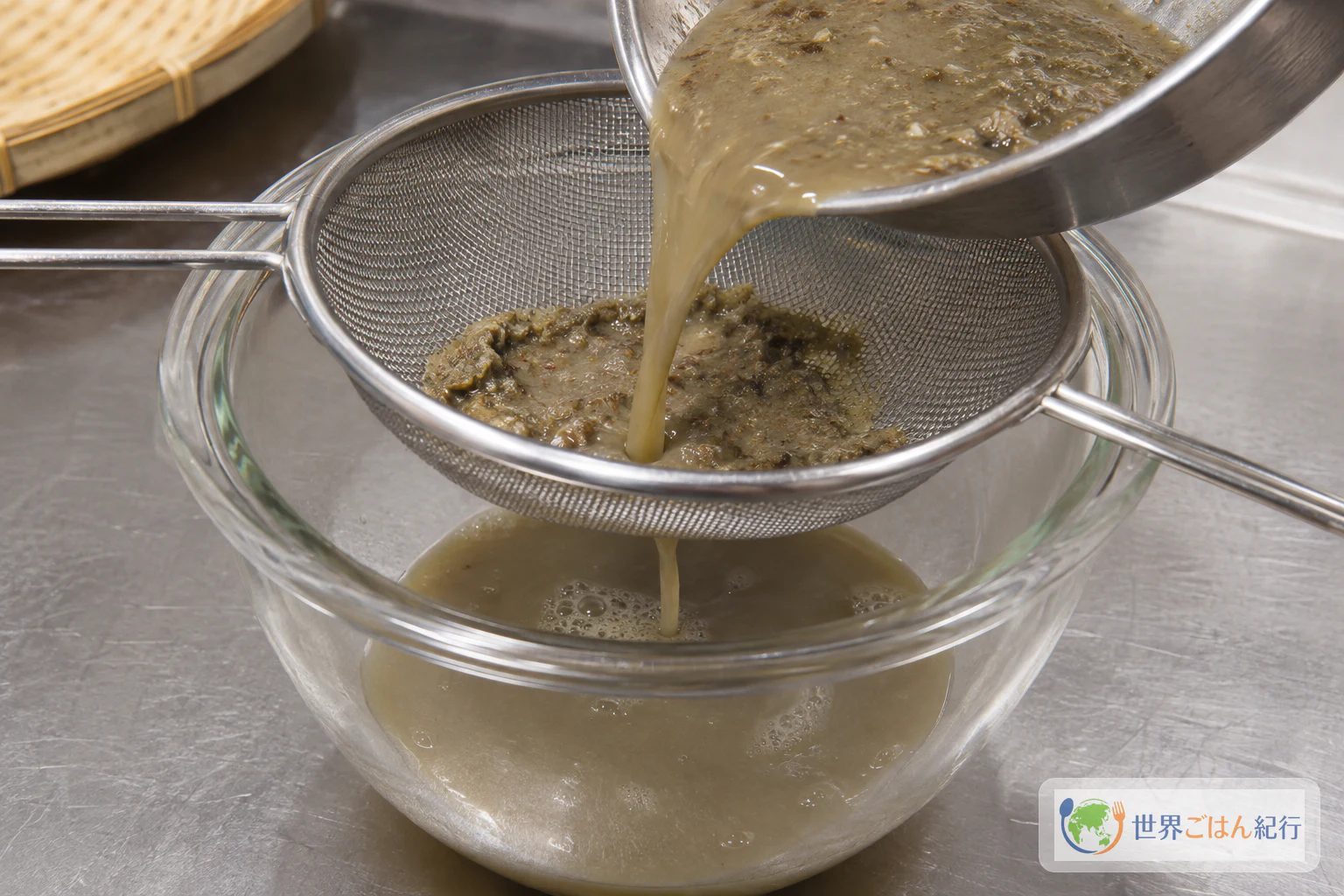
The crab is strained before it is heated. The first and second strained liquids are combined, and the combined liquid goes through the sieve once more. Only that liquid goes into the pot.
When Something Looks Off
| What you notice | What it means | What to do |
|---|---|---|
| You want to check the seasoning while pounding | The mixture is still raw | Do not taste it. Wait until the whole soup is fully heated |
| Coarse crab is left in the sieve | This is expected | Leave it out of the pot. Do not scrape it into the liquid |
| You can see pieces in the collected liquid before heating | It needs more straining | Pour it through a clean sieve again before it goes into the pot |
| The soup has started to boil | Only the heat setting changes here | Turn it to low and keep cooking until the temperature condition in step 15 is met |
| Curds have formed, but you haven't checked the temperature | Curds do not prove the soup is safe | Check the coldest part of the soup with a food thermometer |
| A board or tool that touched raw crab is the only one at hand | It could contaminate the garnish or cooked soup | Do not use it for the garnishes or serving. Use a separate, clean one |
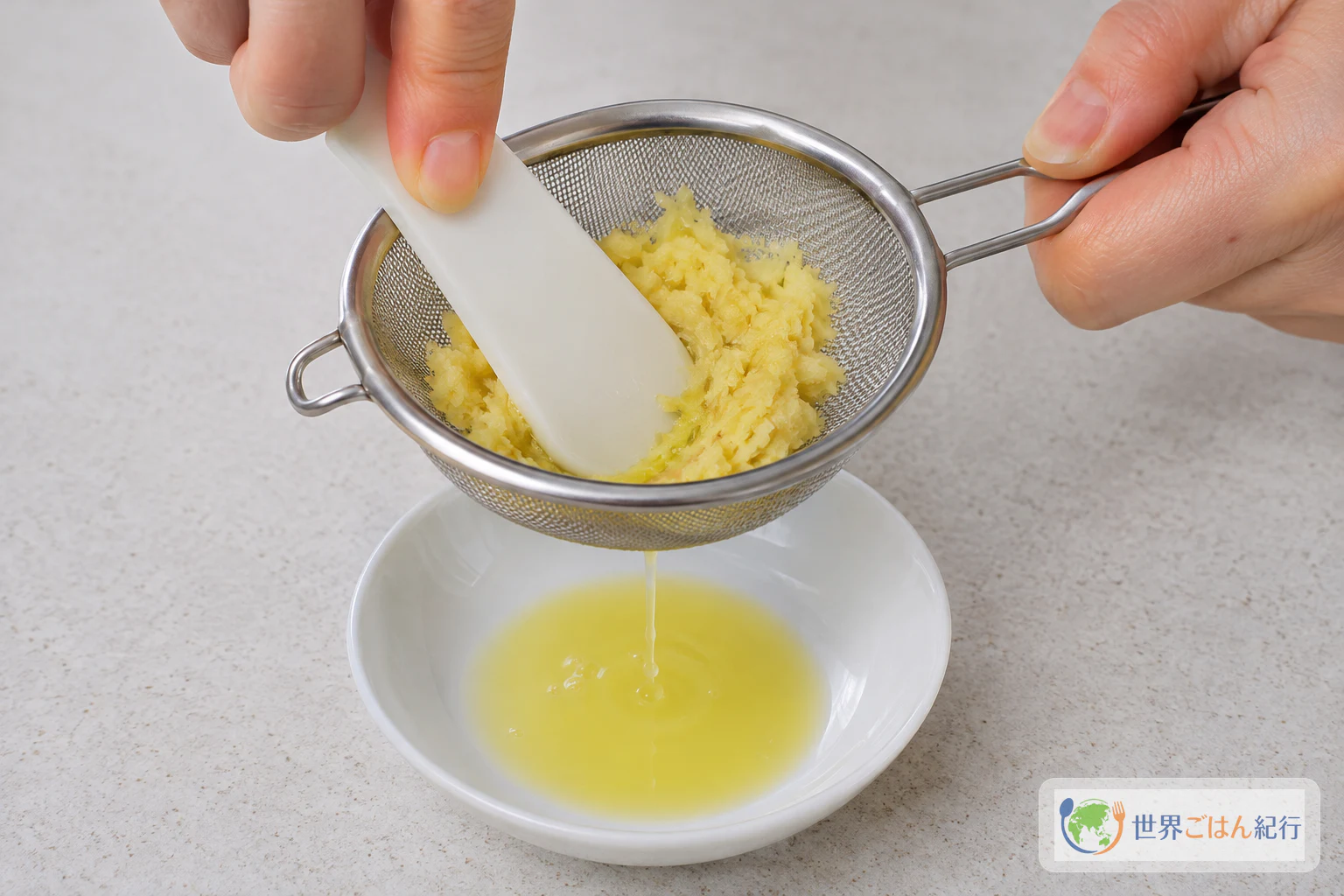
| There is ginger pulp in the bowl | Only the juice belongs in the soup | Press the grated ginger through a fine strainer and use only the juice |
Variations: Optional Garnishes, and Other Regions' Crab Soups
Within this version, the main choice is the garnish. Serve the soup plain, or add ginger juice, green onion or both. You can also choose between a mortar and a blender for the crab.
Other crab soups in Japan may have similar names but use different ingredients and methods. They are worth knowing as separate dishes:
| Dish | Region | How it differs |
|---|---|---|
| Kani-maki-jiru (かに巻き汁) | Kitago, Miyazaki | Crab pounded with miso, strained in stages, with no solid additions beyond the optional garnishes |
| Tsugani-jiru (つがに汁) | Kochi | Crab is also pounded and strained, but the ingredients, seasoning and method differ |
| Kani-jiru (かに汁) | Tottori | A miso soup with pieces in it: red snow crab meat, daikon, carrot and long green onion |
Kitago and Its River Crab
Kitago is now part of the Kitago and Sakatani area of Nichinan City in Miyazaki Prefecture. According to MAFF, yamataro crab is caught there from autumn to winter, and the soup belongs to the food customs of around September and October. The dish depends on the crab's life in the river, climbing upstream to grow and later traveling back down to spawn.
The soup's appearance comes from its method. Because the crab is pounded and strained before cooking, the bowl holds no recognizable crab at all, only soft curds resembling oboro tofu in a clear miso soup. For other regional dishes, you can explore more food from Japan.
MAFF's recipe does not set a heating time, and this article does not add one or any further history about the dish's origins.
Frequently Asked Questions
Is the crab eaten raw?
No. This is a fully heated soup, though it starts with raw crab. Don't taste the raw crab, pounded mixture or strained liquid. MHLW lists raw eating, incomplete heating and contaminated cooking tools as infection routes for lung fluke from freshwater crabs.
Does the 75°C for 1 minute come from the recipe?
No. MAFF's recipe says to start on high heat and turn to low when the soup begins to boil. The 75°C for 1 minute comes from the City of Hiroshima's guidance on parasites, and this article applies it to the coldest part of the whole soup as a separate safety measure.
Should I scrape the residue left in the sieve?
No. MAFF's English translation can be read as scraping the sieve, but the Japanese text says to strain the collected crab liquid once more. This article follows the Japanese text.
Should the crab be fully picked crabmeat?
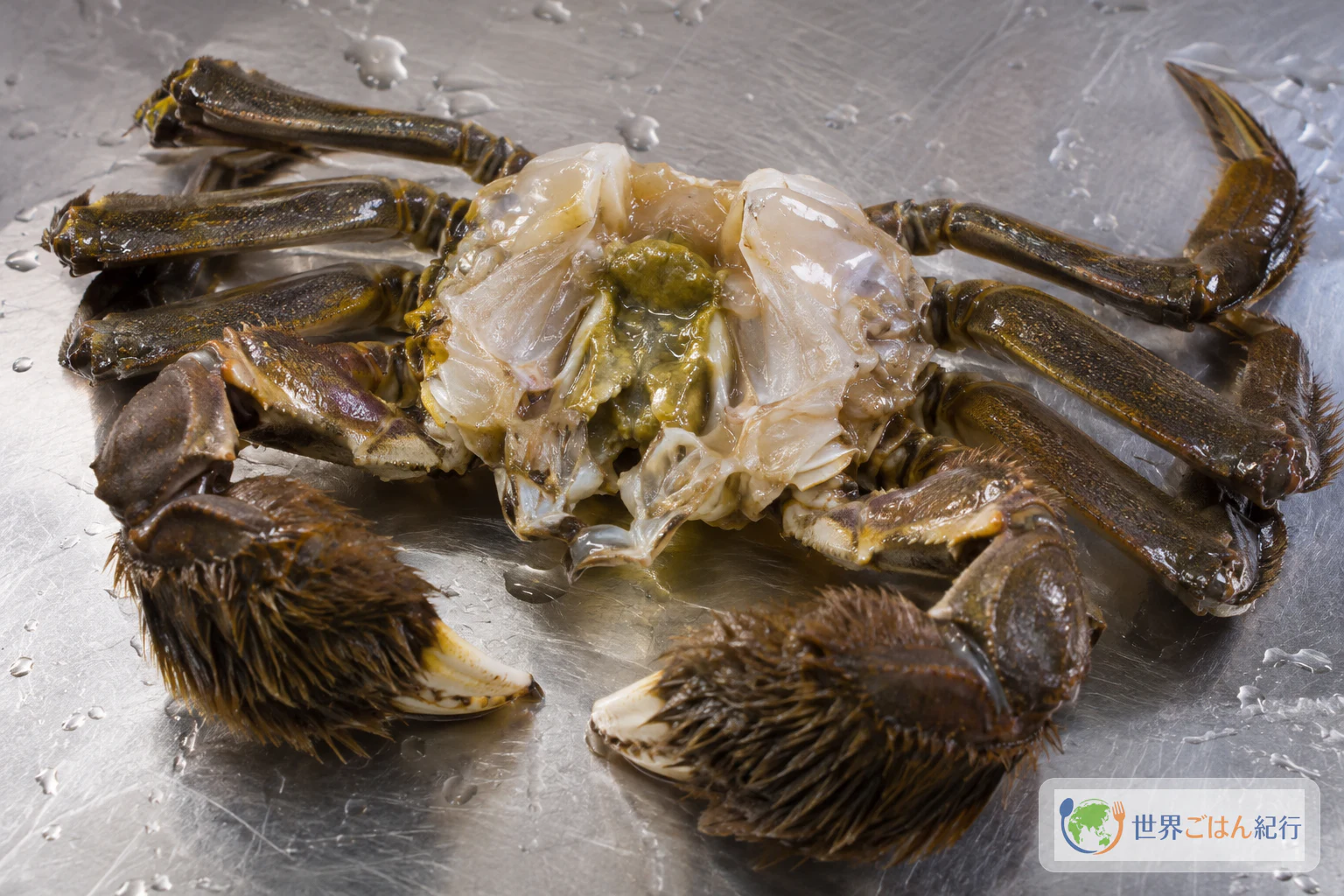
No. The Japanese recipe lists yamataro crab with the top shell removed (甲羅をとったもの), and this article does not narrow that to shell-free meat. It also doesn't describe how to take a crab apart, because the recipe doesn't.
When exactly does the heat go down?
Start on high heat and turn it to low as soon as the soup begins to boil. That is the point the Japanese recipe specifies, rather than an arbitrary moment after high heat.
Can I make it with another crab, or add dashi or vegetables?
This article does not suggest either. Replacing the crab is outside this recipe, and dashi, noodles and vegetables aren't part of the Kitago version.
Can I freeze the crab to make it safe, or keep leftovers?
This article offers no freezing method for parasite control and no storage guidance, because the sources used here do not support them. The soup is meant to be served freshly made.
Sources
- Ministry of Agriculture, Forestry and Fisheries of Japan (recipe provided by the JA Miyazaki Prefectural Women's Organization Council), "かに巻き汁 宮崎県 | うちの郷土料理." Used for the Kitago background, the amounts for 4 servings, the method, and the optional ginger juice and green onion. https://www.maff.go.jp/j/keikaku/syokubunka/k_ryouri/search_menu/menu/kanimaki_jiru_miyazaki.html
- Ministry of Health, Labour and Welfare of Japan, "食品媒介の寄生虫疾患対策等について" (September 22, 1997). Used for raw eating, incomplete heating and secondary contamination from cooking tools as lung fluke infection routes for freshwater crabs such as mokuzugani and sawagani. https://www.mhlw.go.jp/web/t_doc?dataId=00ta6006&dataType=1&pageNo=1
- City of Hiroshima, "寄生虫(クドア・セプテンプンクタータ、サルコシスティス・フェアリー等)." Used for mokuzugani as an infection source for Westerman's lung fluke and the heating condition of 75°C at the center for 1 minute. https://www.city.hiroshima.lg.jp/business/shokuhin-eisei/1053247/1053264.html
- Kochi Prefecture Agricultural Promotion Department, "つがに汁." Used only to compare Kochi's tsugani-jiru as a separate regional dish. https://www.chisanchisho.pref.kochi.lg.jp/life/dtl.php?hdnKey=774
- Piatto Co., Ltd. (Piatto Kitchen), "かに汁(鳥取県)|レシピ." Used only to compare Tottori's kani-jiru as a separate regional dish. https://kitchen.piatto.co.jp/pages/24?b_id=247&detail=1&r_id=369