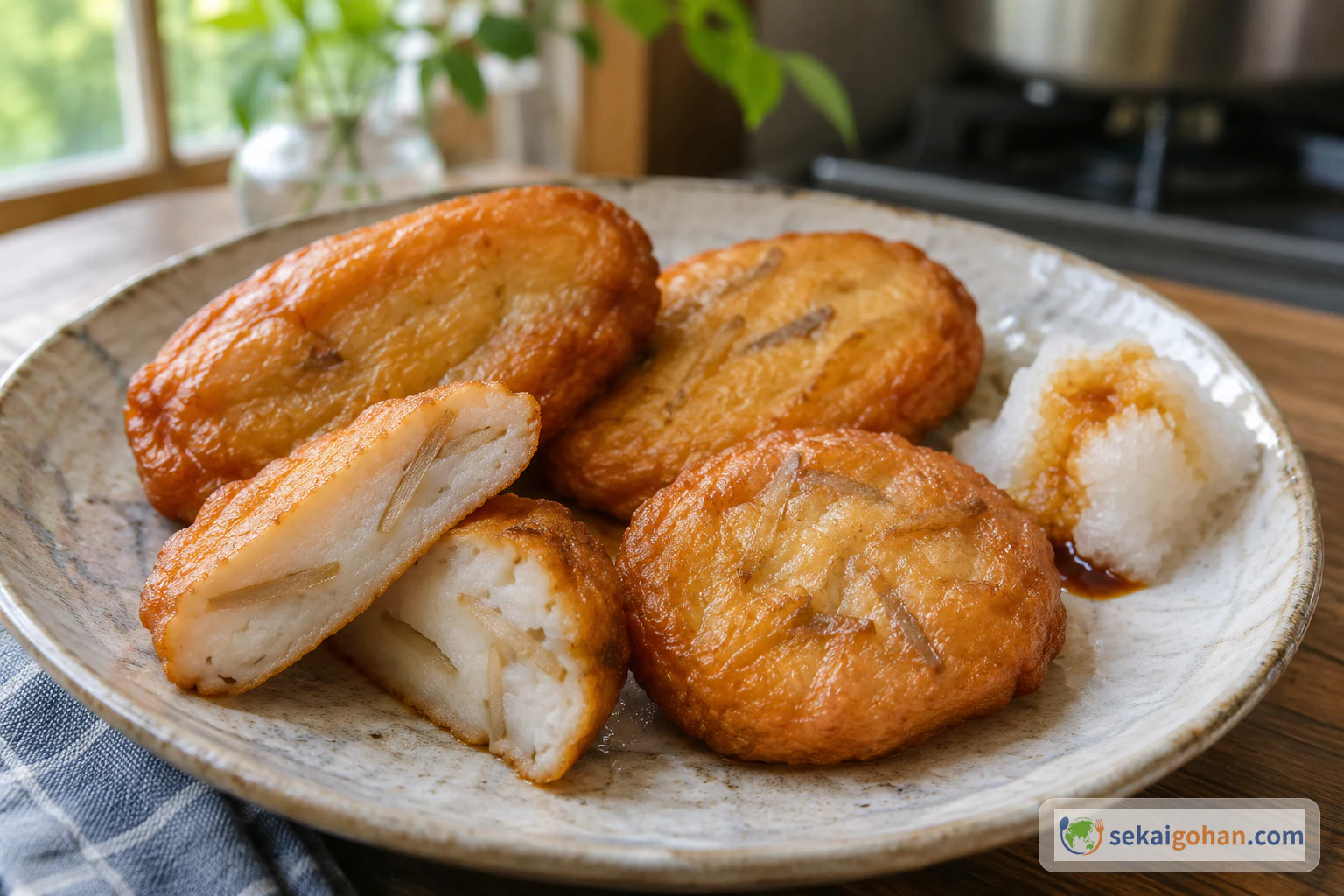
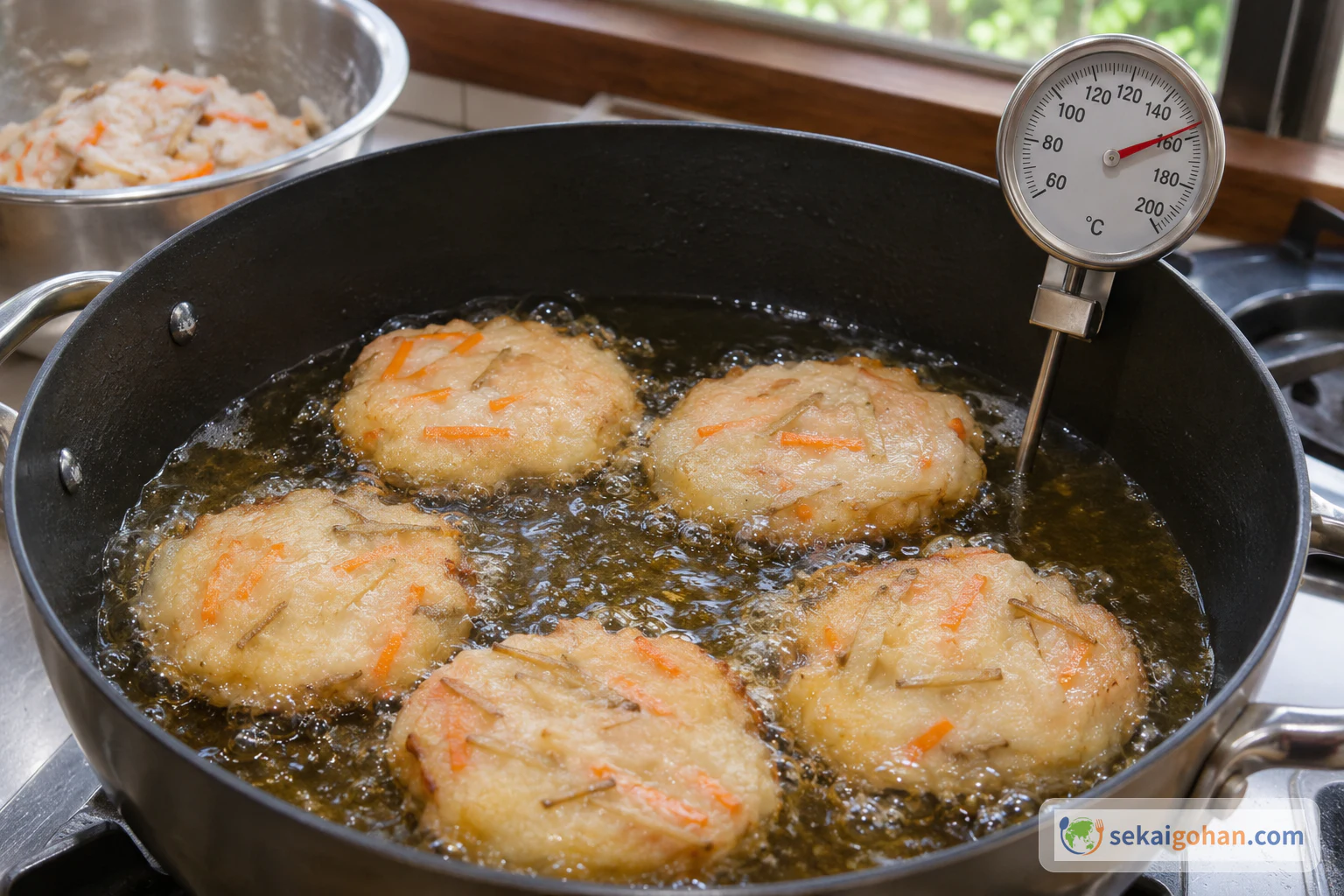
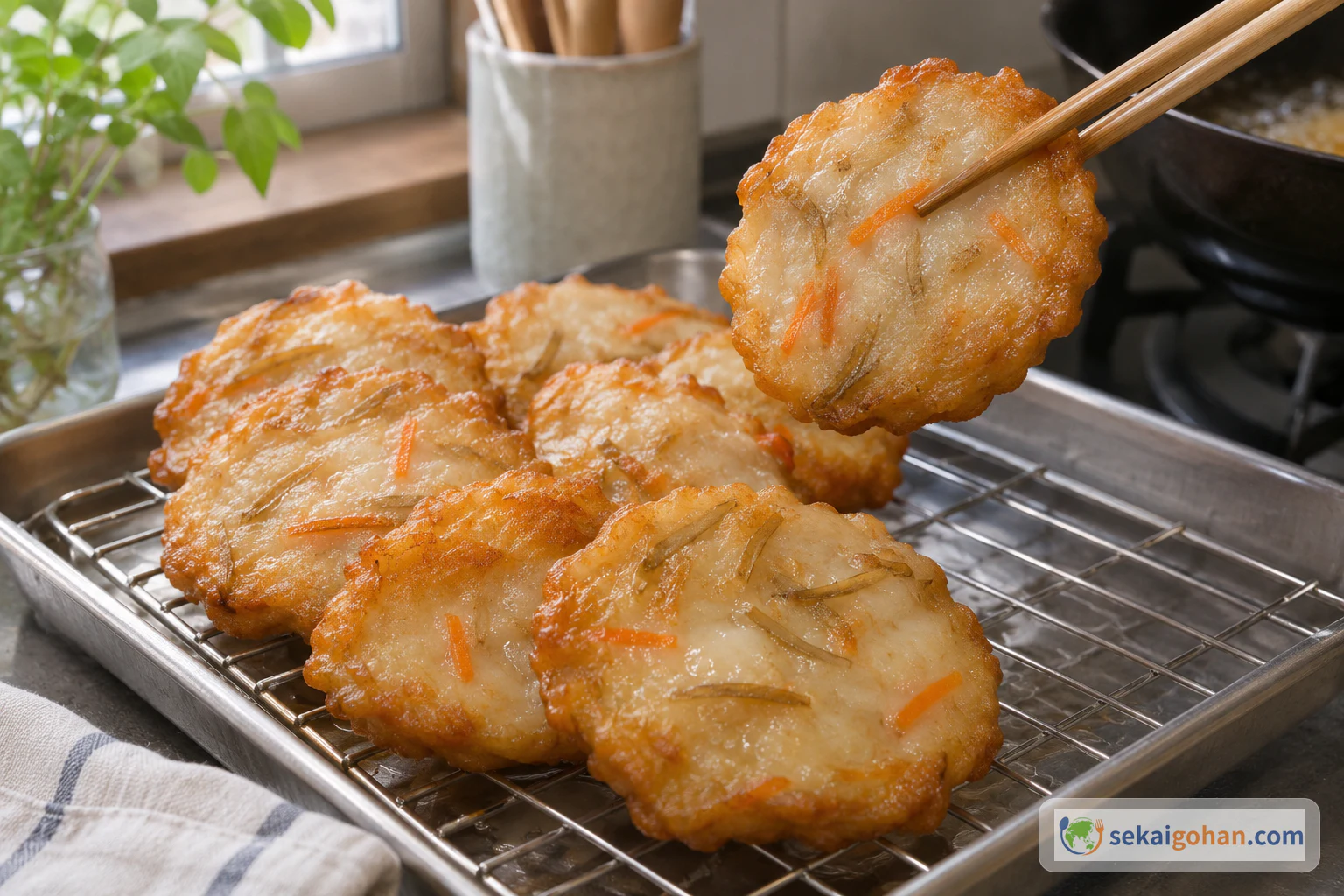
Slide a flat oval of fish paste into oil at a gentle heat, and at first it simply lies low in the pan with a steady fizz of small bubbles around its edges. Then it swells, lifts to the surface and turns slowly to gold. That is satsuma-age: white fish ground to a sticky paste, shaped by hand and fried. In Kagoshima it goes by tsukeage, and it is sweet there, springy rather than flaky when you bite it warm, with fine threads of burdock and carrot running through.
Tsukeage, Tenpura, Satsuma-age: One Fish Cake, Several Names
Ask for satsuma-age in Kagoshima and people will know what you mean, but the everyday word there is tsukeage. In the Kansai region the same fried fish cake is usually called tenpura, which shares its sound with batter-fried tempura. The name satsuma-age carries Satsuma, the old name tied to Kagoshima, and how that name settled in the Kanto region is a matter of guesswork rather than record.
In Kansai, "tenpura" on a fish-cake counter means fried fish paste like this one. Battered, deep-fried seafood and vegetables share the same sound, so check what is in the tray before you order.
Where the dish began is not settled. The most common story places its birth in the time of Shimazu Nariakira, lord of Satsuma, with Kishu hanpen and kamaboko as the models and the recipe adjusted so the cakes would keep through hot, humid weather. Another line traces it to chikiagi from Ryukyu. Some accounts add that frying fish paste was a way to make fish last.
It began as food for New Year and celebrations and has since become an everyday thing, bought by the bagful and eaten at any meal. In 2016 it was named among the 28 dishes of "Kagoshima no aji," the prefecture's list of its own home tastes, alongside the wider spread of Japanese home cooking.
What makes it taste like Kagoshima
Kagoshima tsukeage is sweet. The local finish comes from sugar and from akumochi-zake, a dark sake made by adding lye to the fermenting sake mash before pressing. Kagoshima cooks grind sardine, horse mackerel, flying fish, mahi-mahi, silver-stripe round herring and lizardfish into the paste, and many kitchens and shops add drained tofu or egg along with potato starch, salt and vegetables. Akumochi-zake is hard to find outside the region, so this version leaves it out and lets the sugar carry the sweetness. The base here is white fish, which gives the cleanest spring.
Ingredients
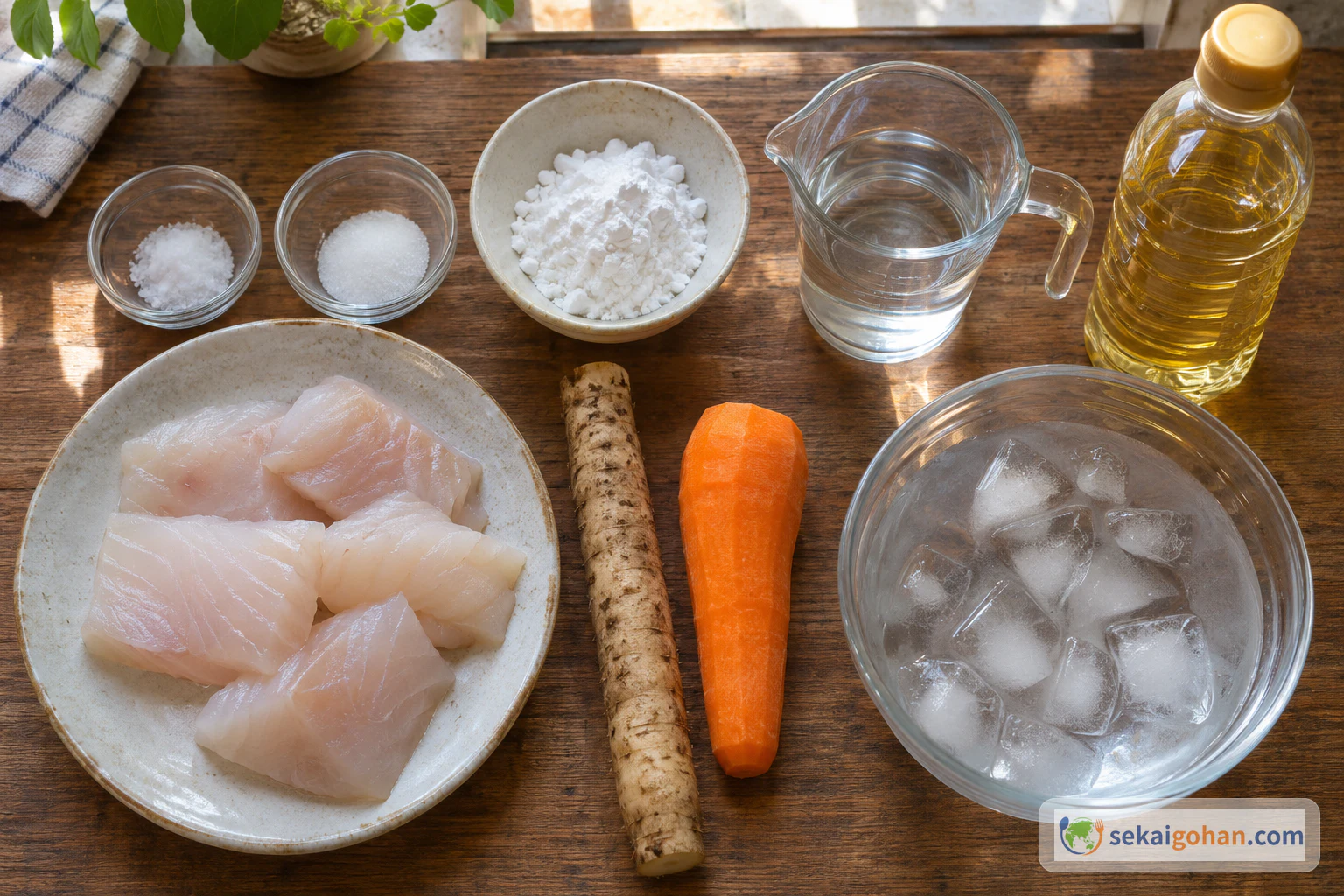
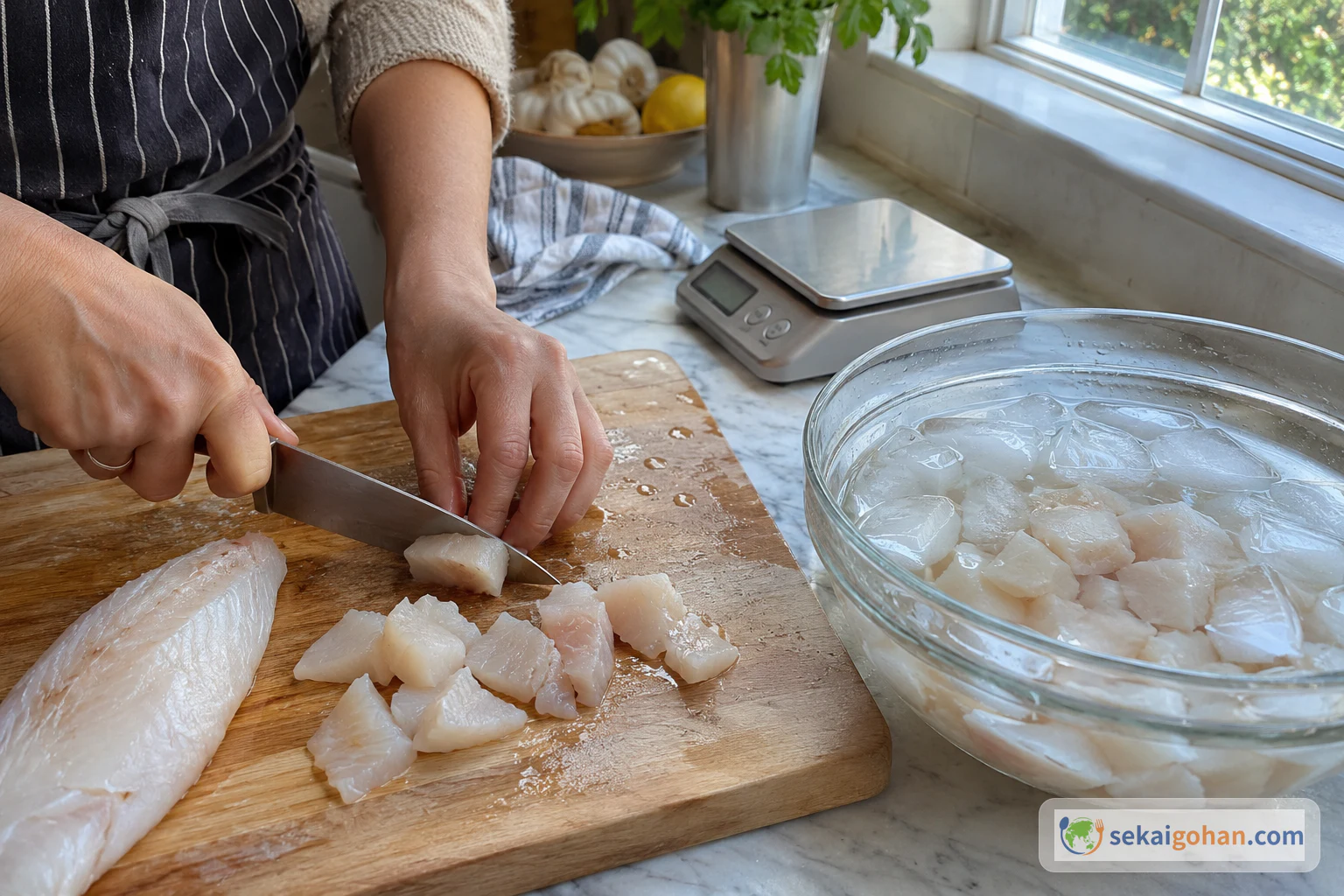
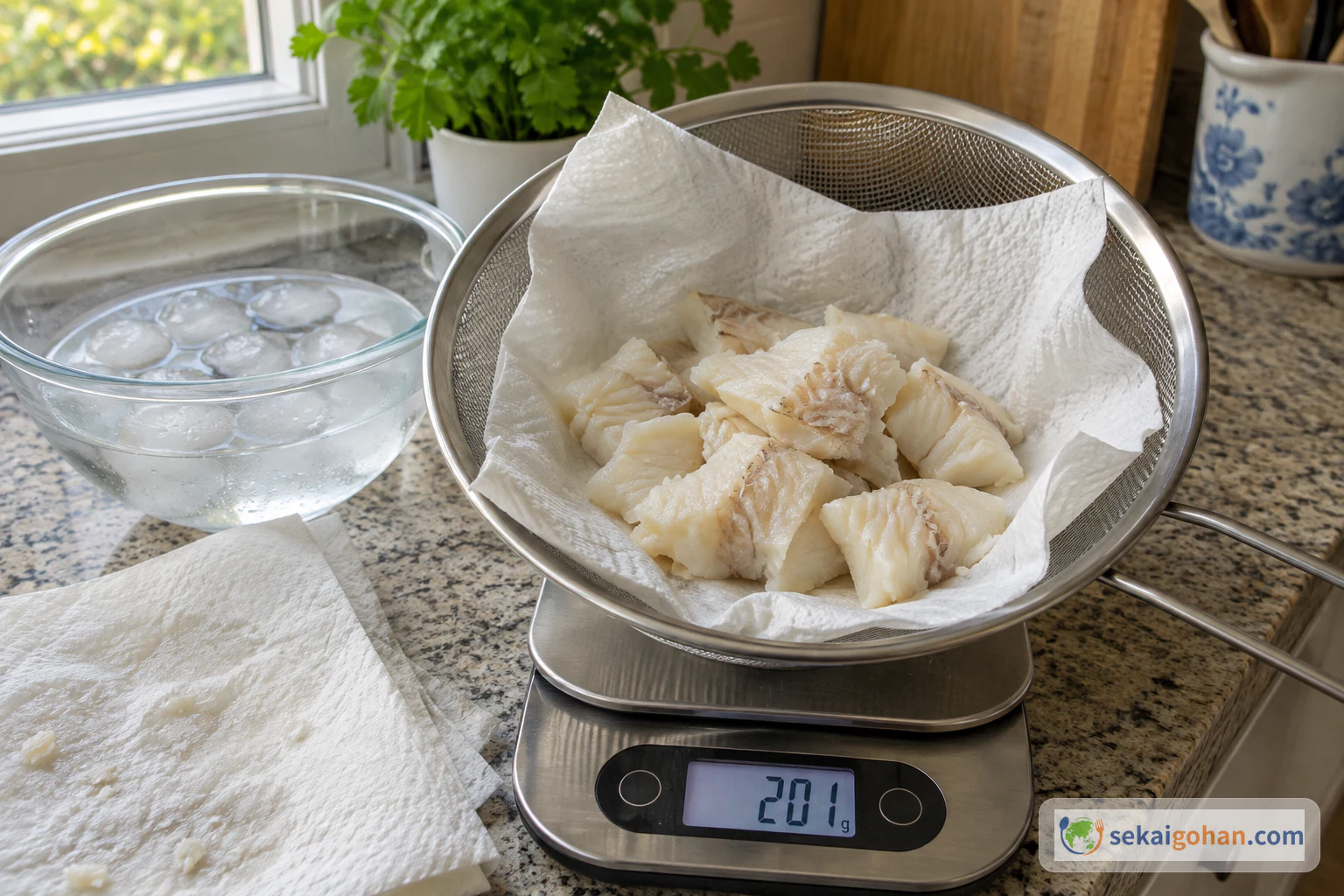
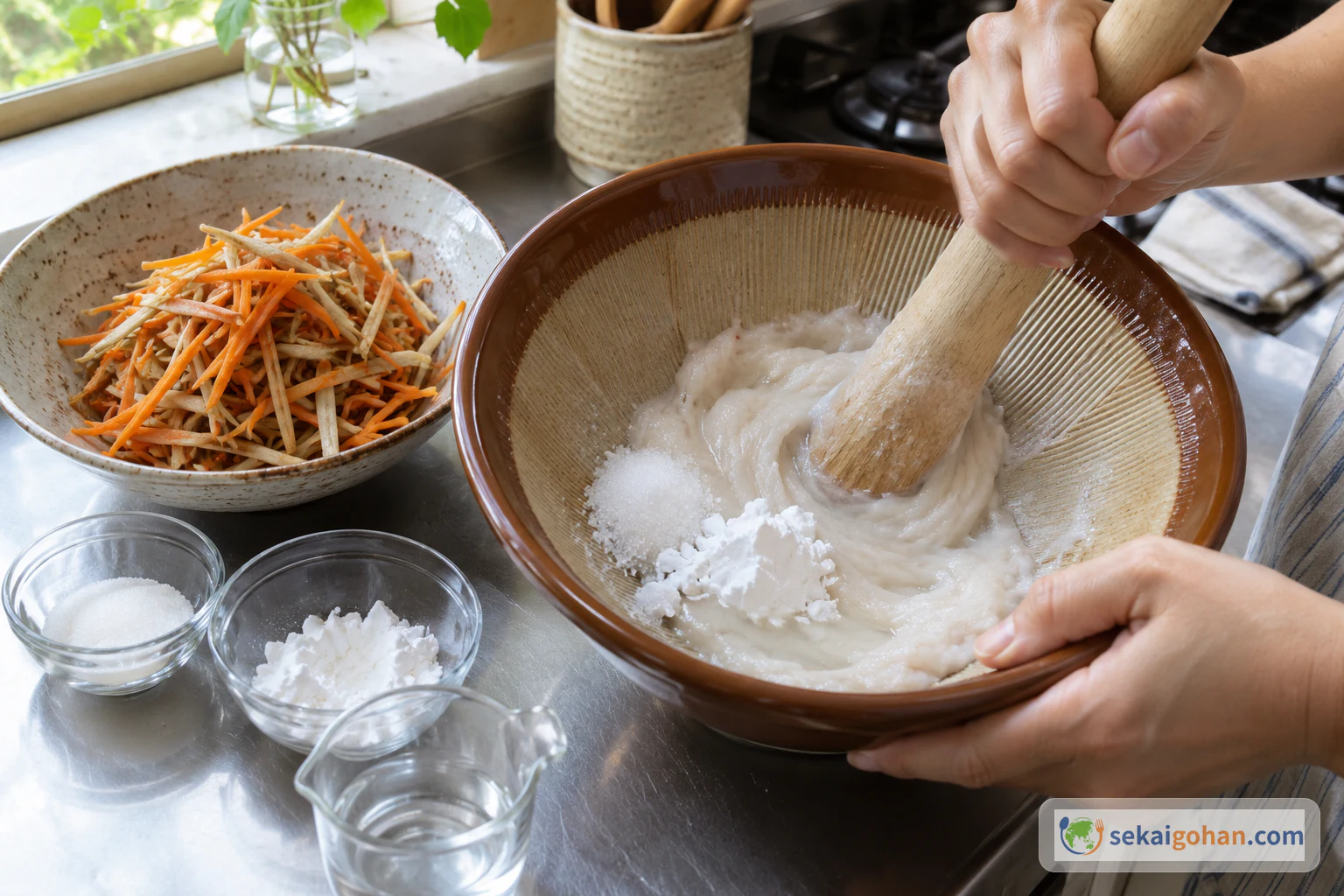
The salt, sugar, starch and water all follow the fish: 1 to 2 g of salt per 3½ oz (100 g) of fish, with sugar, starch and water scaled the same way. Weigh the fish after soaking and draining, and use a scale for the small amounts. A pinch more or less of salt changes how firmly the paste sets.
This recipe contains fish and potato starch. It has no wheat, egg or soy, but store-bought satsuma-age often contains wheat, egg and soy. A soy sauce dip adds wheat and soy.
Equipment
- Suribachi (ridged Japanese mortar) and wooden pestle
- Knife and cutting board
- Bowl for ice water
- Fine sieve and paper towels
- Kitchen scale
- Deep, heavy pan for frying
- Frying thermometer
- Tray lined with parchment
- Wire rack set over a tray
- Cooking chopsticks or a slotted spoon
Choosing Fish, Starch and Tools
Fresh white fish is the foundation. Sea bream, largescale blackfish (mejina) and pike conger (hamo) all grind into a paste with real spring. Outside Japan, cod or sea bass from a fishmonger work well, and whatever you pick should be the freshest on the counter, since the springiness depends on it. Ask for skinless, boneless fillets to save time. Oily, blue-backed fish set less springy, a trade-off covered in the questions below.
Use potato starch, not cornstarch. Japanese katakuri-ko is potato starch, and Japanese and Asian grocers stock it under that name. Cornstarch is a different starch, so keep the two apart. Burdock and carrot are optional; leave them out and you get a smooth, plain cake that shows off the fish.
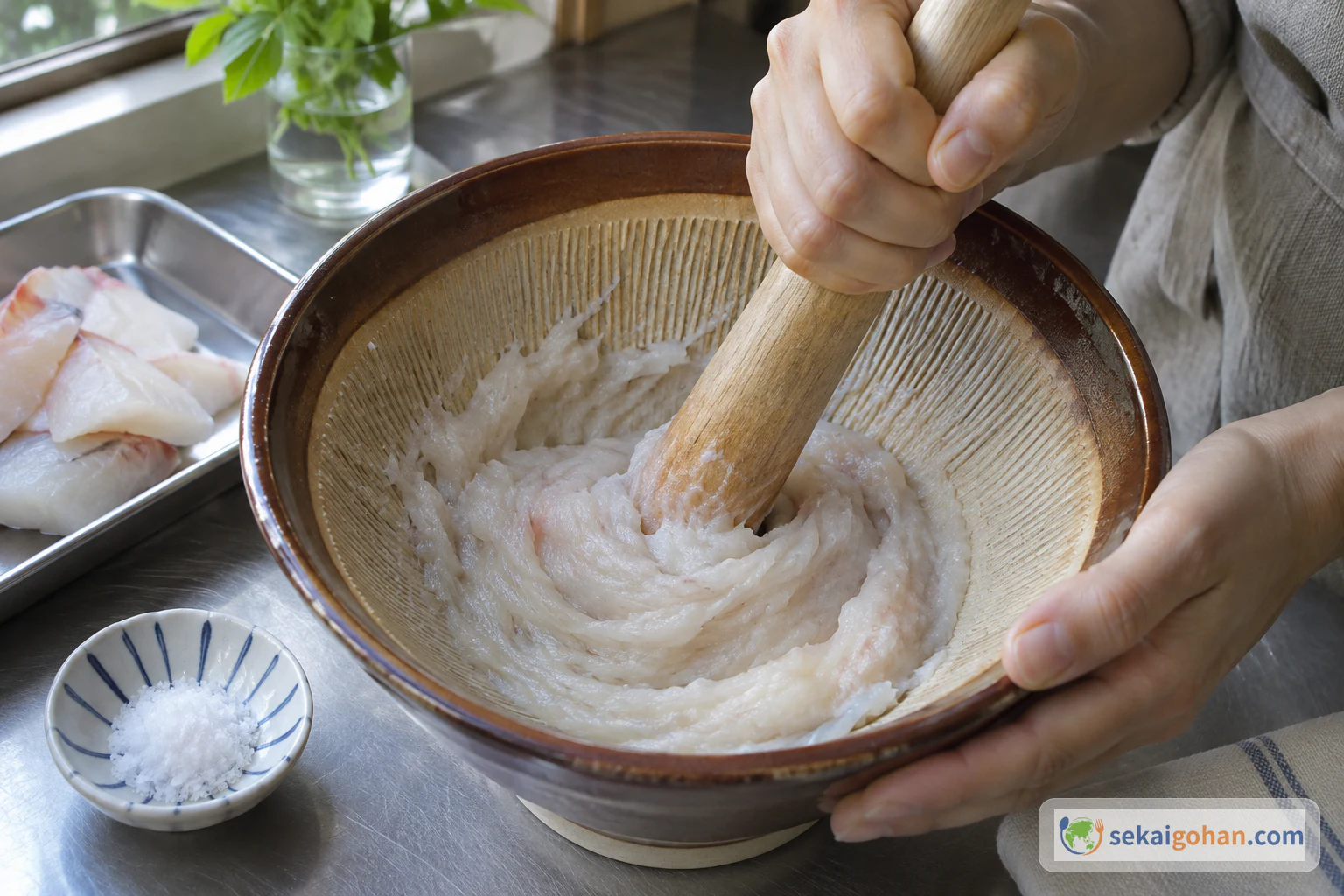
The suribachi is worth seeking out at a Japanese shop or online. Its ridges stretch and work the fish proteins in a way a smooth bowl cannot. A frying thermometer is the other purchase that pays off, because the whole recipe turns on holding the oil low.
Method
Keep everything cold from the first cut to the last turn of the pestle; warm paste loses its spring. The grinding is the long, hands-on stretch, about half an hour, so set up in the coolest corner of the kitchen. Frying is slow and calm. Heat the oil only once the patties are shaped and waiting on the tray.
There is sugar in the paste, so hot oil browns the outside long before the center cooks. Keep the oil low and steady and let the patties take their full time. The slow heat is what makes them puff.
When It Goes Wrong
| What you see | Why | What to do |
|---|---|---|
| Soft, dull cake with little spring | The paste warmed while grinding, the salt went in late, or the fish was oily | Work in a cool spot, cool your hands in ice water, grind with salt before anything else, and use white fish |
| Dark outside, raw middle | Oil too hot for a paste that contains sugar | Bring the oil back to about 320°F (160°C) and fry for the full time |
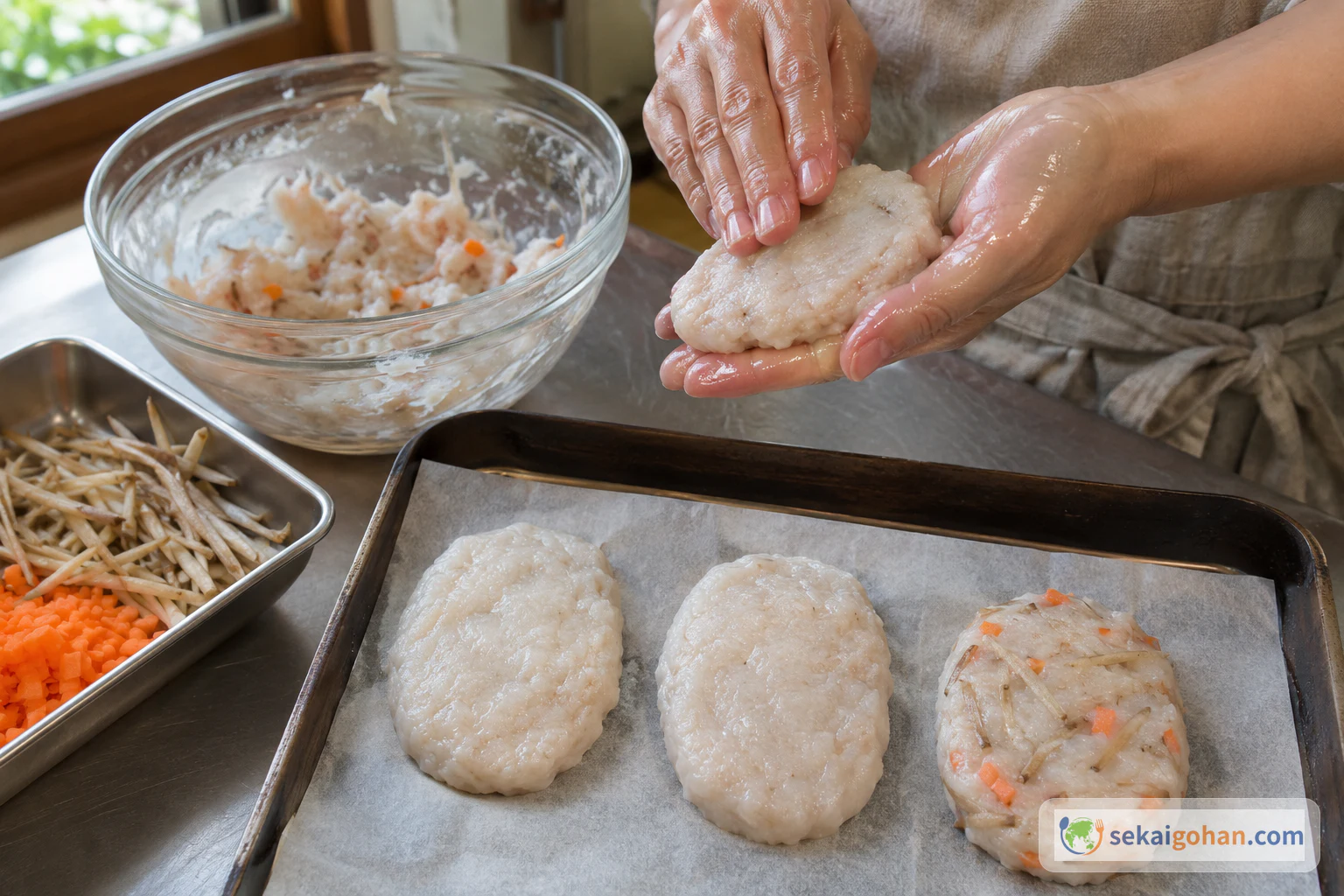
| Edges cooked, thick center underdone | Patties shaped too thick or uneven | Press them flat and even; return underdone cakes to the oil |
| Grainy, crumbly texture | Grinding stopped before the fish turned to a smooth paste | Grind until no grains remain before adding salt |
| Paste sticks to your hands while shaping | Dry palms | Rub a little oil over your hands before each patty |
Serving, Variations and Storage
At the table
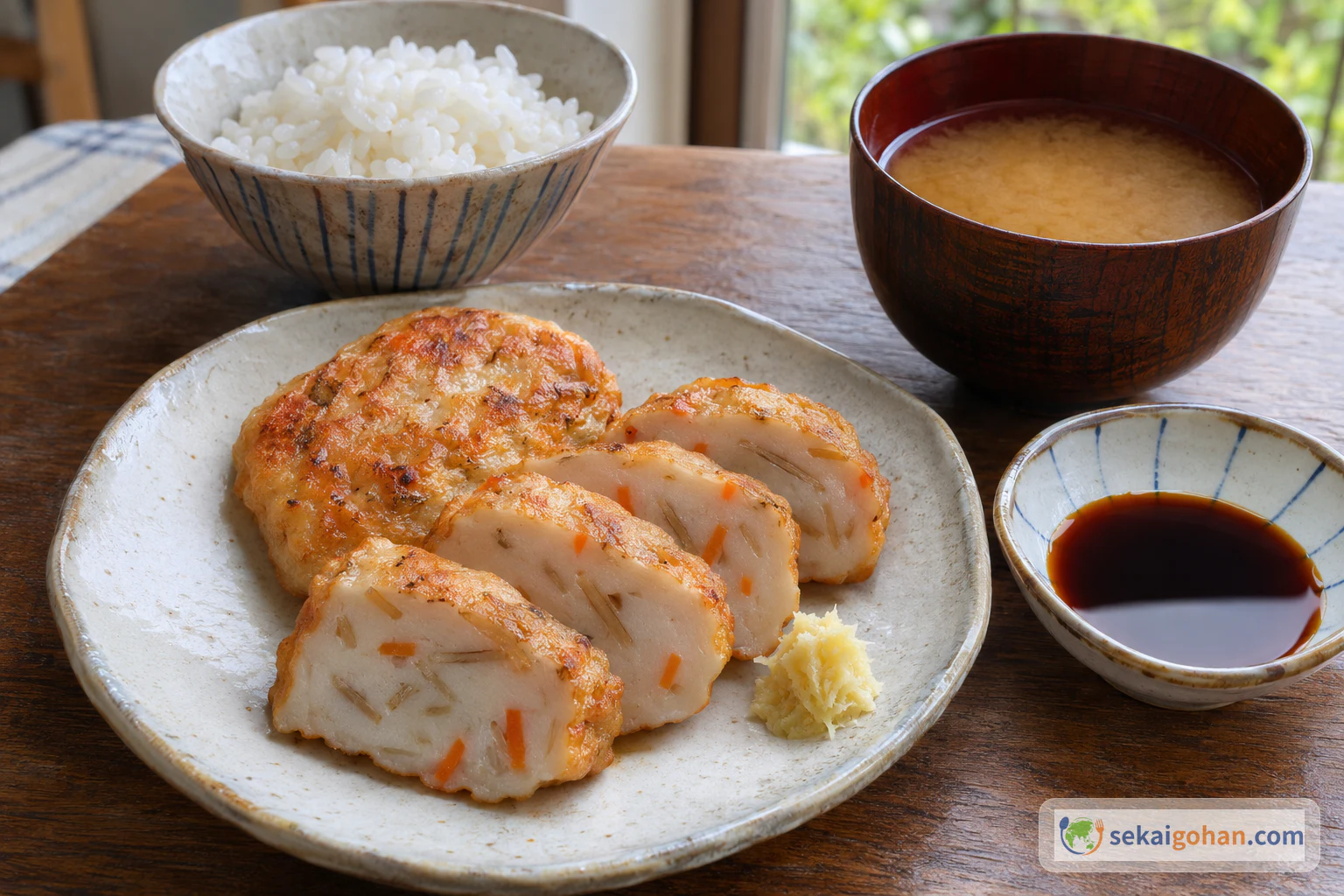
Eaten straight from the rack, satsuma-age needs nothing. The next day it is best lightly toasted in a dry pan or under the grill, sliced and served with grated ginger and soy sauce, or with grated daikon, next to rice and miso soup. It also goes into stir-fries, where it should go in at the very end: the sugar in the paste scorches quickly.
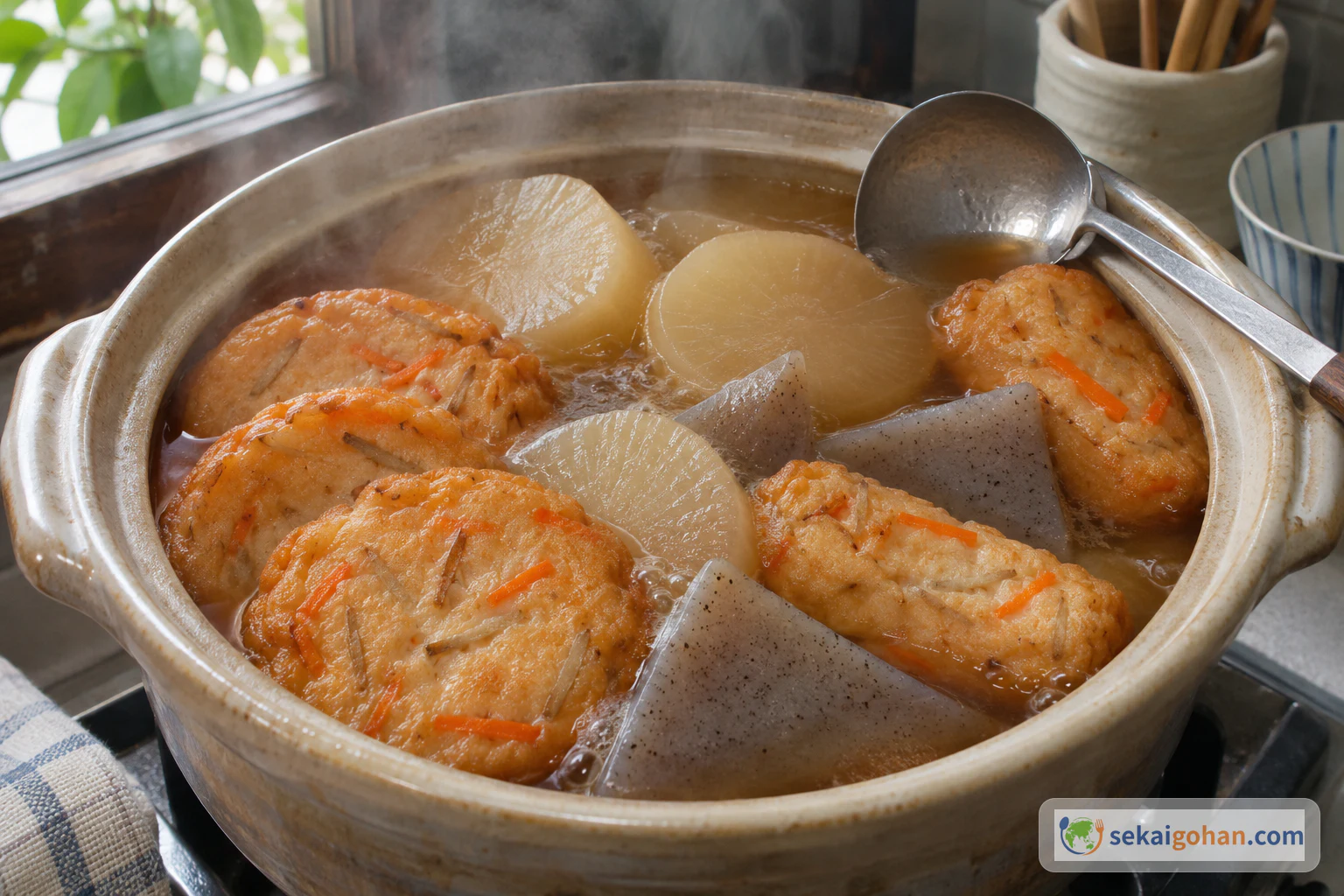
In winter the cakes go into the oden pot, simmered with daikon and konnyaku. They soak up the broth and swell, and their sweetness seeps into everything around them.
Variations
- Pickled red ginger (beni shoga) folded into the paste gives a sharp, salty-sour bite and pink flecks.
- Grated yamaimo (Japanese mountain yam) makes a lighter, fluffier cake.
- Akamoku seaweed adds a sea flavor and a slippery, dark green fleck.
- Drained tofu or egg, as in many Kagoshima kitchens, makes a softer, rounder cake; start with a small amount and adjust to the paste. Egg white or finely chopped onion also go in well.
Storage
Homemade satsuma-age is best eaten the day it is fried. Eat any that are left over soon, and cook them through again when you toast them or add them to oden.
Frequently Asked Questions
Can I use mackerel or sardines?
You can, and Kagoshima cooks use sardine and horse mackerel. Oily, blue-backed fish give a paste with less spring than white fish, so the cake comes out softer and tastes stronger of fish. Keep it cold and grind it well with the salt to get as much bounce as the fish allows.
Can a food processor replace the suribachi?
A food processor turns the fish to paste in about a minute, but the result has less spring. Run it briefly, then finish the paste in the suribachi, adding the salt there and grinding until sticky. With neither tool, chop the fish very finely with a knife before grinding in a bowl.
How can I make it less salty?
Use the low end of the salt range, 2 g for 7 oz (200 g) of fish, rather than cutting salt out entirely. The salt is what makes the paste set and spring. Serve the cakes plain or with grated ginger instead of a soy sauce dip.