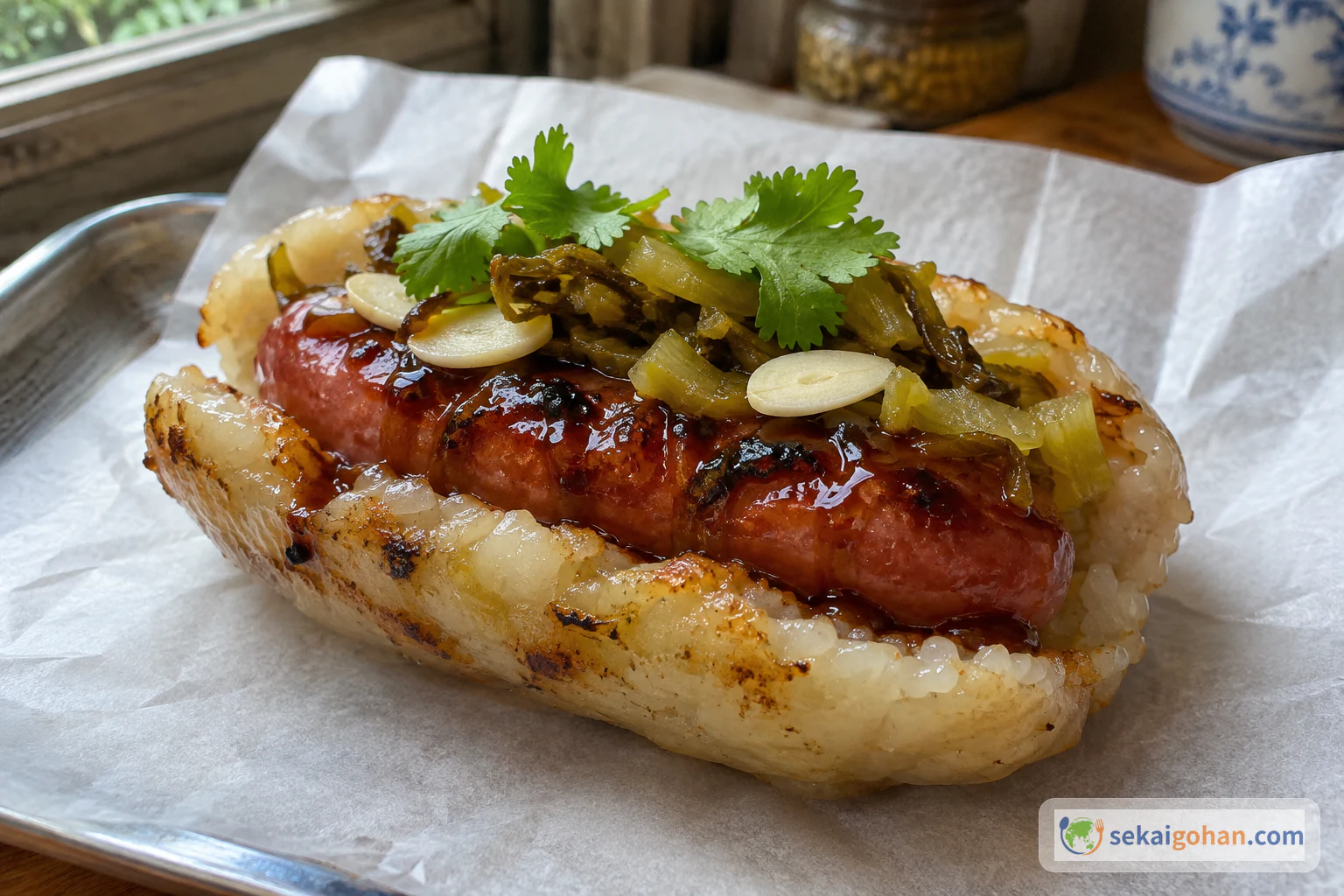
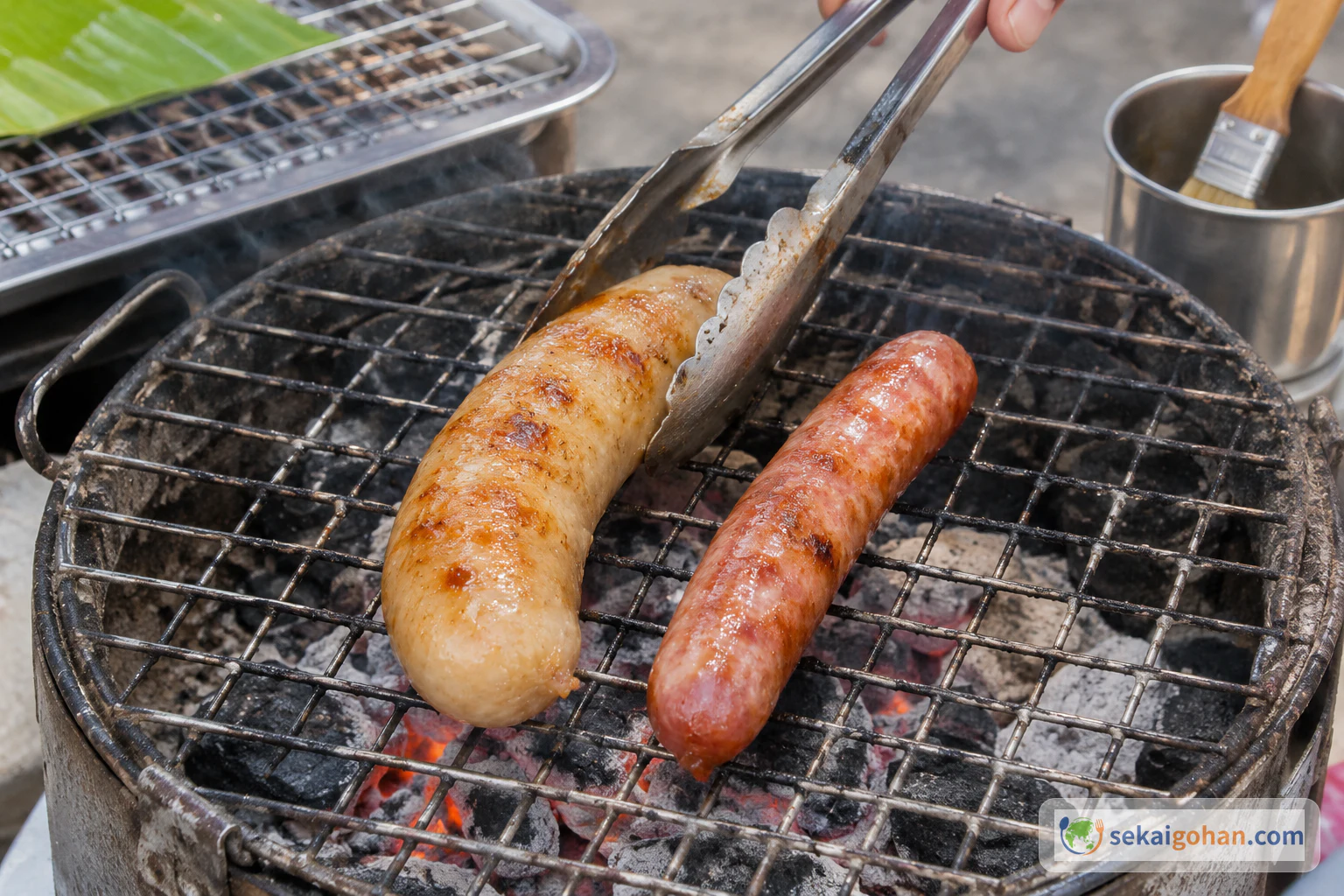
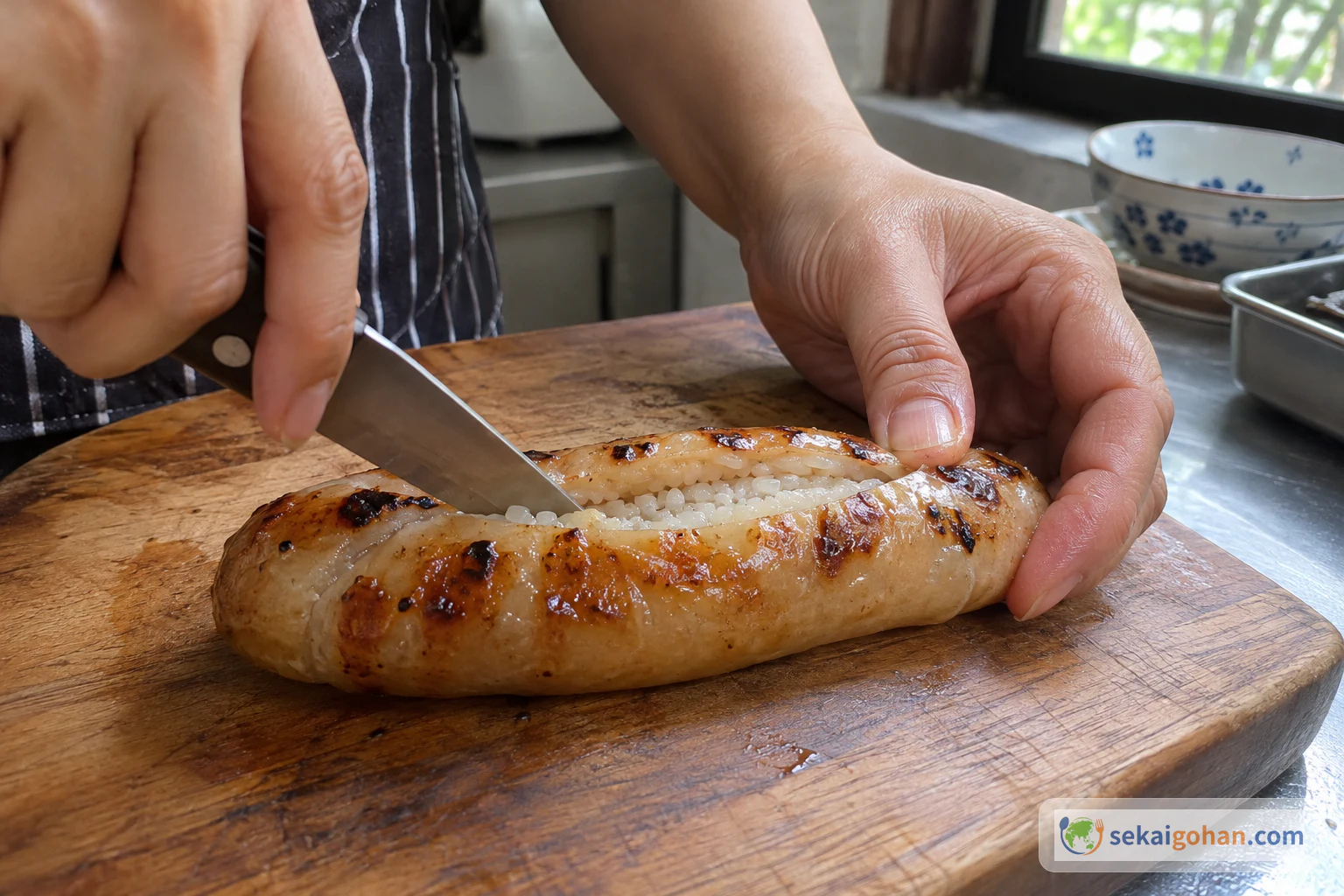
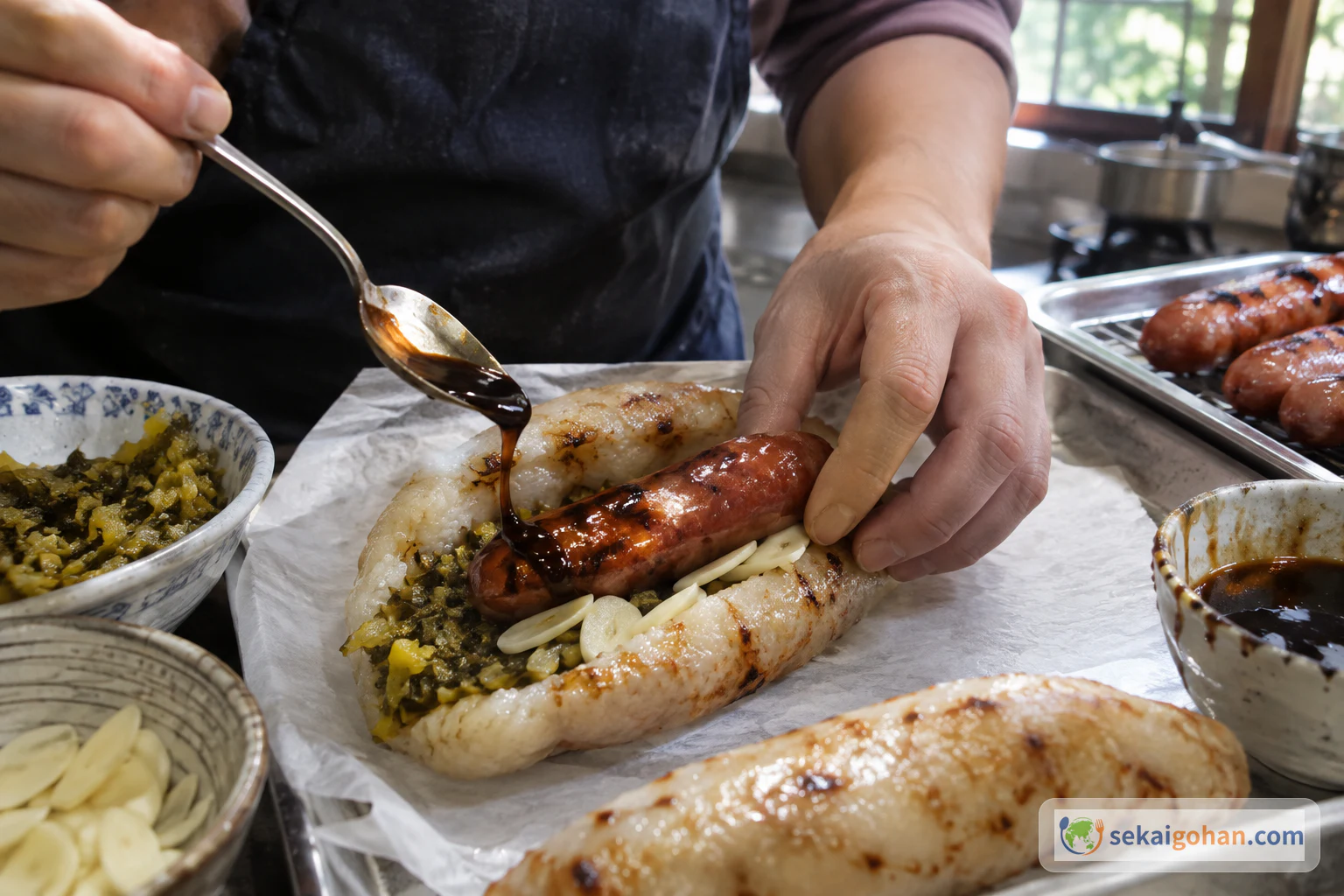
Two kinds of sausage sit side by side over the charcoal: a fat one, pale gold and blistering, and a slim one, glossy and darkening at the edges. When the order comes in, the vendor takes the fat one off the grill, runs a knife down its length and opens it like a bun. Thick sauce goes in, then slivers of raw garlic and a little pickle, and last of all the slim sausage is pressed into the slit before the whole thing drops into a paper bag. The fat sausage is sticky rice steamed inside a pork casing; the slim one is a sweet, garlicky Taiwanese pork sausage. You bite through a crisp skin into soft, savory rice scented with dried shrimp and shallot, then into juicy pork, with the sharp heat of garlic and the sourness of the pickle cutting through both.
A hot dog with a rice-sausage bun
The name reads like a riddle. In Mandarin it is dàcháng bāo xiǎocháng, and in Taiwanese Hokkien tōa-tn̂g pau sió-tn̂g. Taken word for word it means "large intestine wraps small intestine." Nobody eating it is thinking about anatomy. The "large" is the rice sausage that plays the part of the bun, and the "small" is the grilled Taiwanese sausage tucked inside it. It is one of the most recognizable snacks at the night markets of Taiwan, eaten standing at the stall or walking on to the next one.
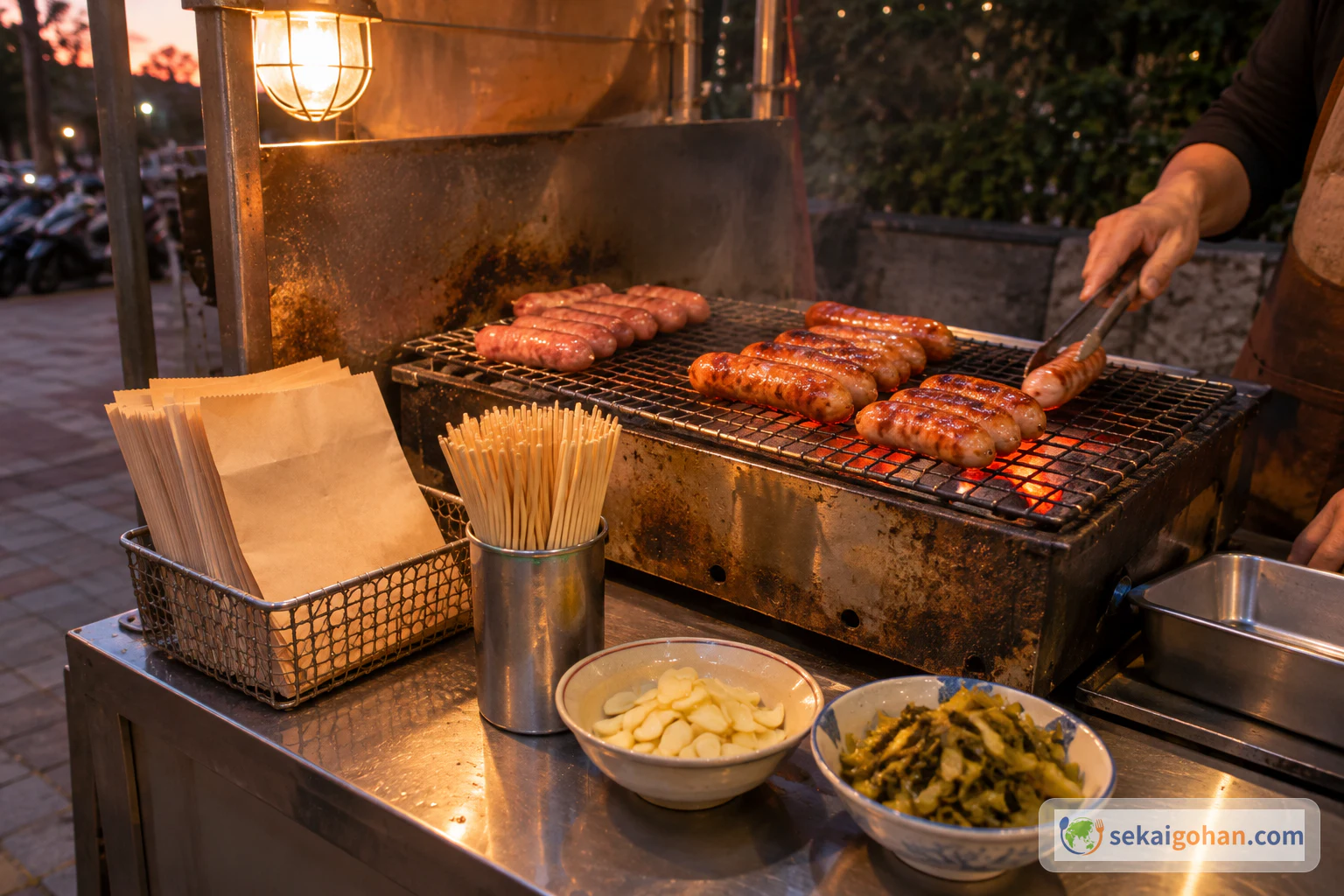
Two sausages, two schedules
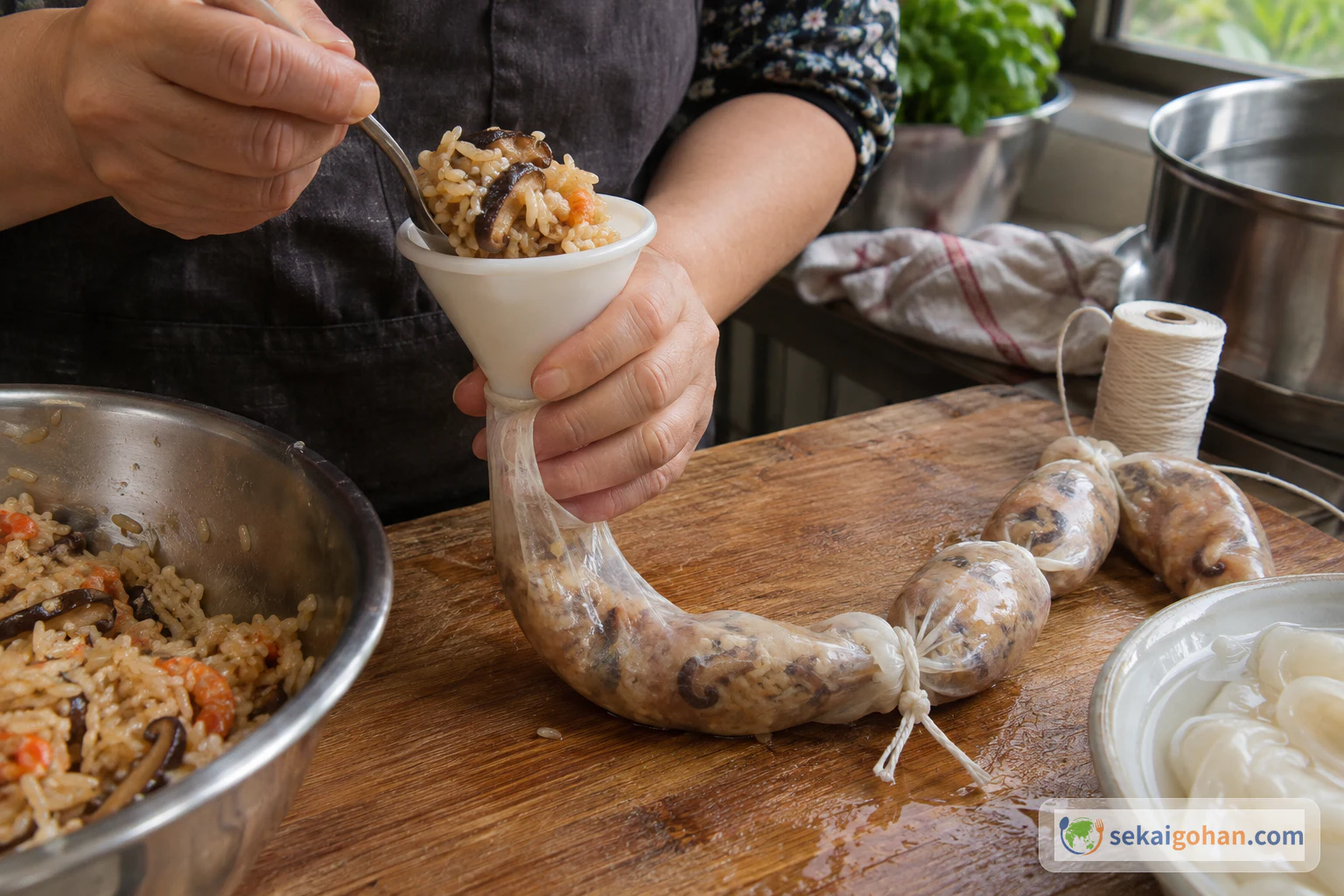
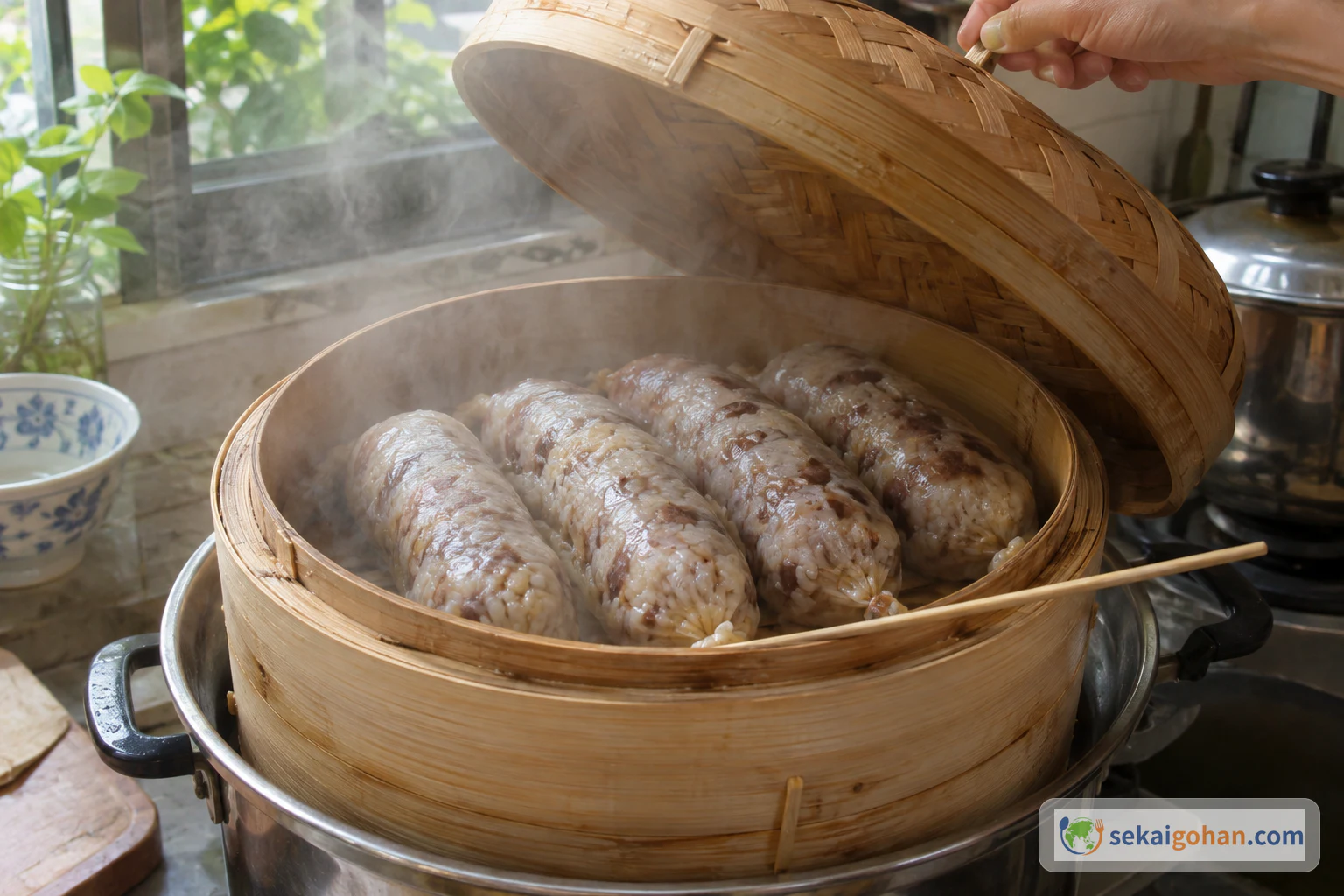
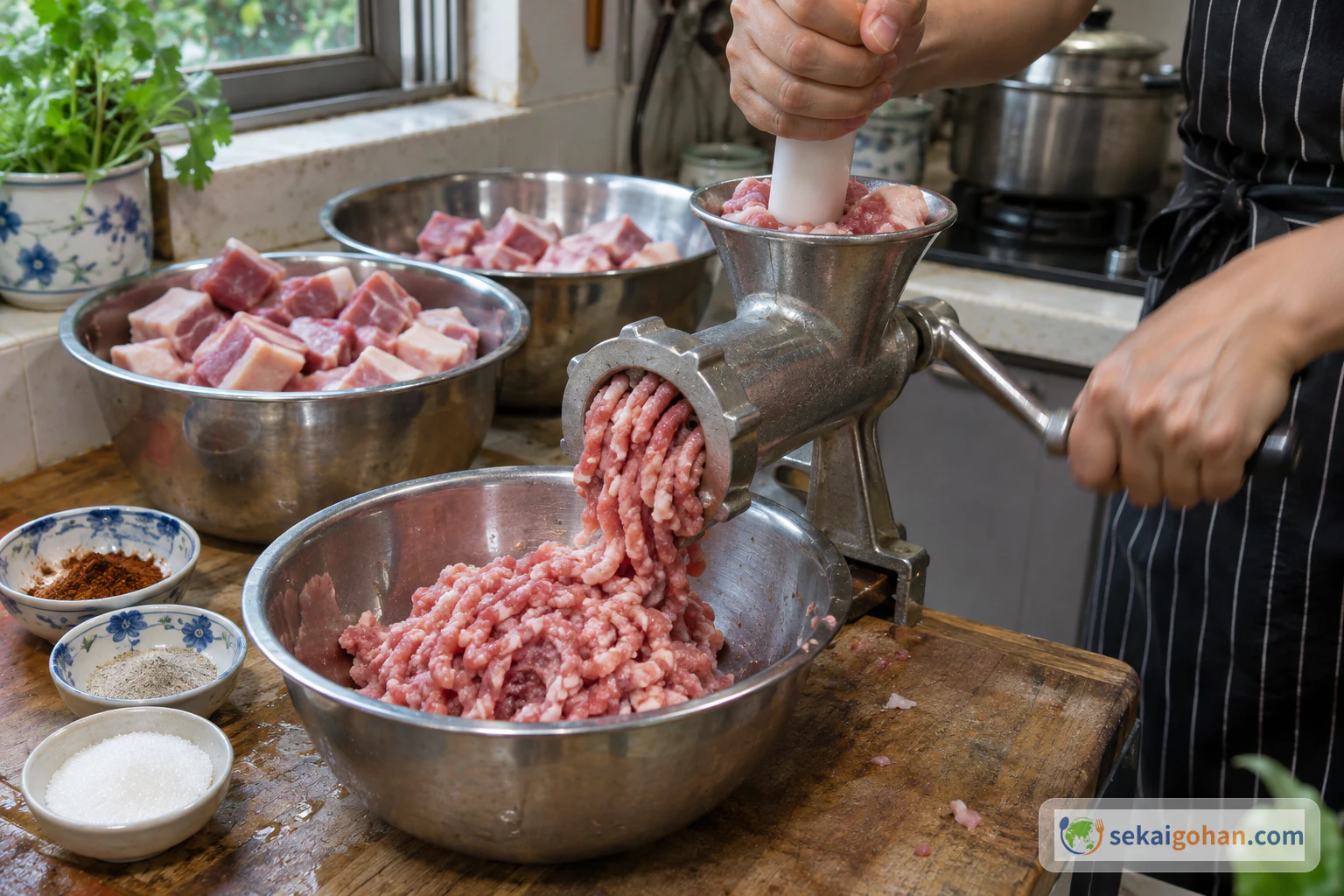
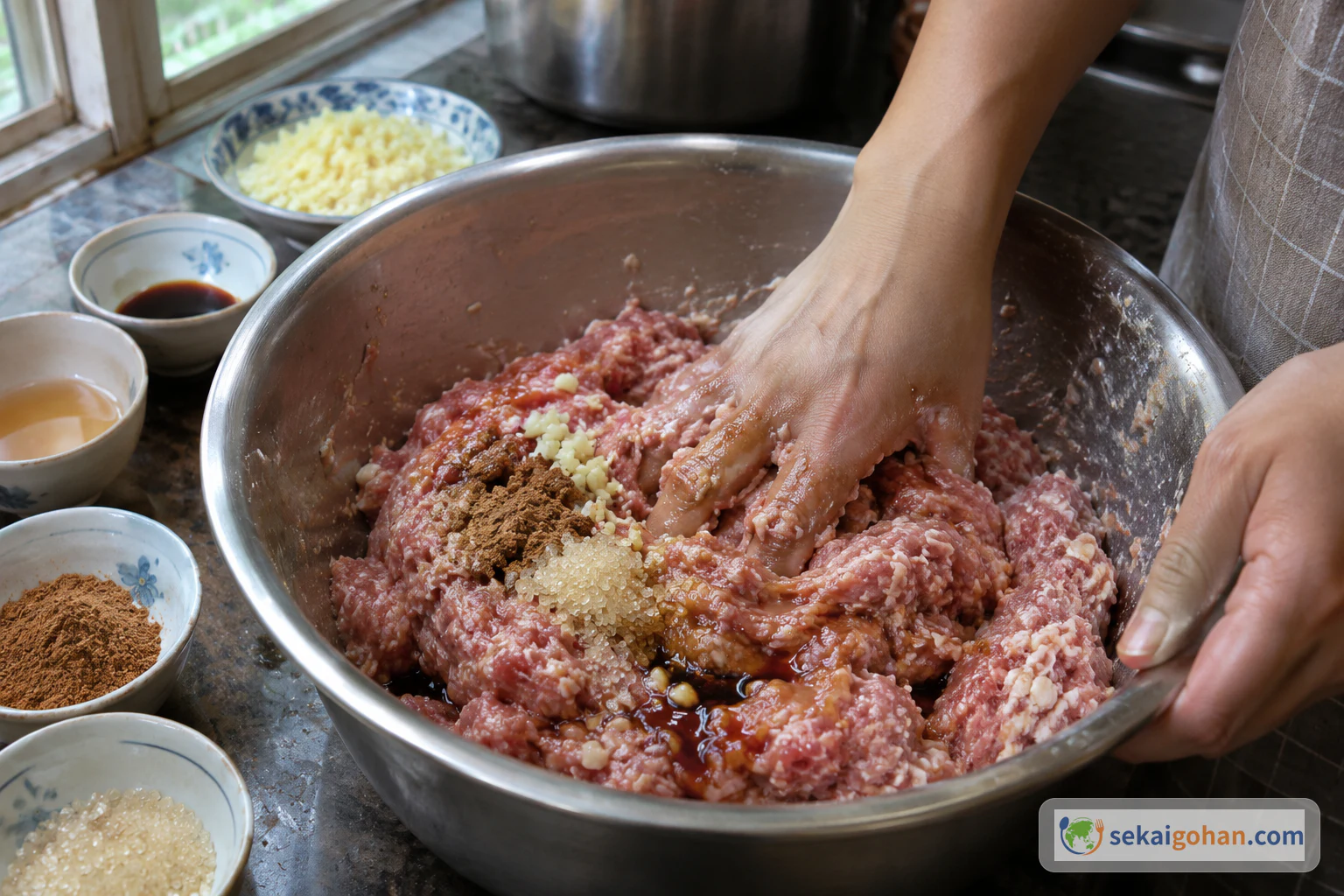
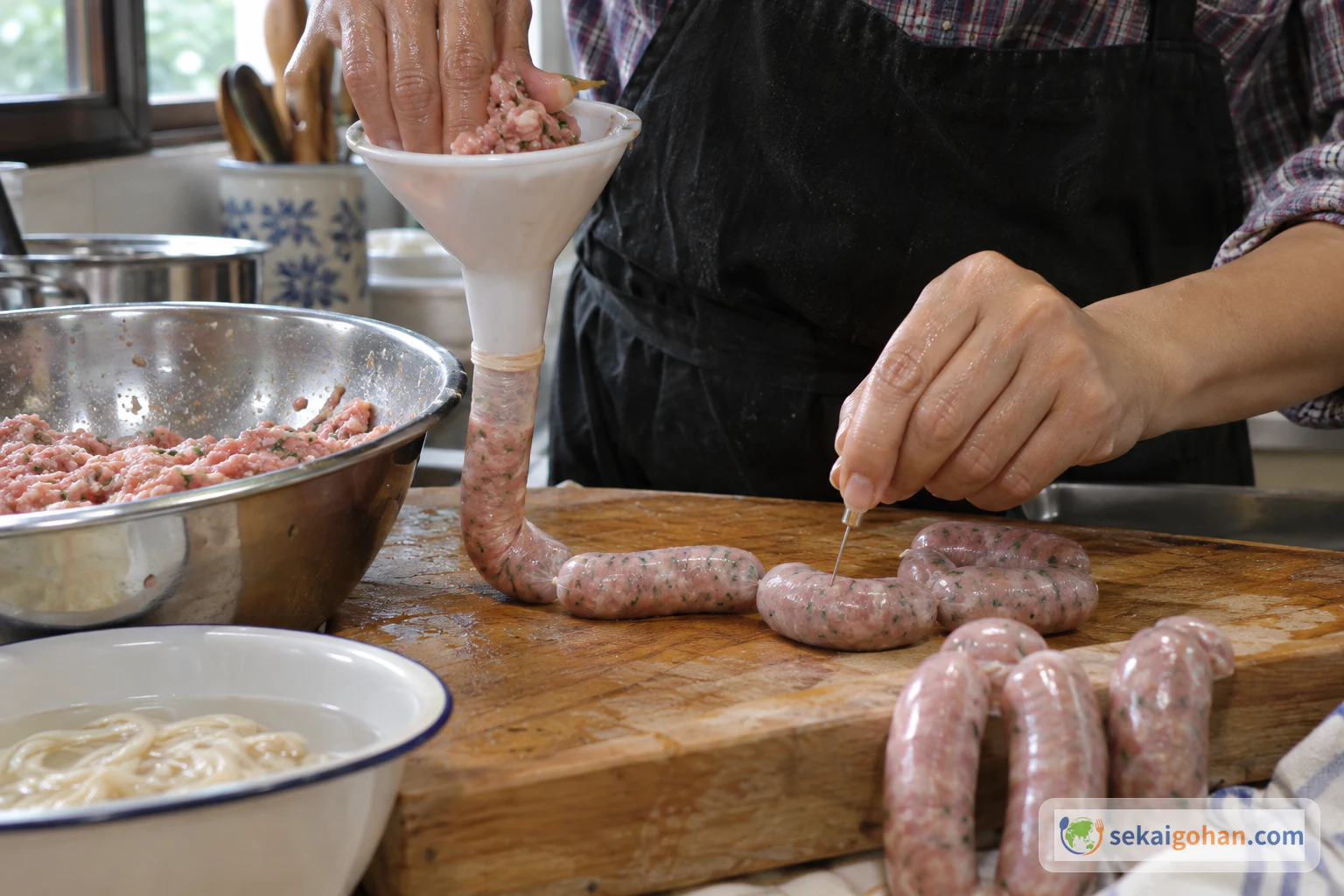
At a stall, the two halves are made on different clocks. The rice sausage is stuffed by hand on the morning it is sold. The pork sausage is ground, seasoned, stuffed and dried a few days earlier. Both are finished over charcoal, and nothing is assembled until someone orders, because the rice sausage is at its best hot, with the skin grilled until slightly crisp and cut open right away.
Rice sausage also has a life of its own. It is sold on its own at fried-food stalls, the same kind that sell Taiwanese popcorn chicken, and at home it is sliced into rounds and eaten with drinks. The story usually told is that rice sausage became a popular quick snack in the 1990s and the sausage-in-a-rice-bun followed. Where it was first made is not settled.
What changes from stall to stall
The frame never changes: rice sausage outside, pork sausage inside, both grilled. What goes between them does. The basic set is sauce, raw garlic and pickles. Some stalls use pickled mustard greens, others pickled radish with cilantro; you also find crushed peanuts, sweet chili sauce, pickled cucumber, and a thick, sweet Taiwanese soy paste spooned in as the sauce. There is no single correct set. If you love the charcoal end of the night market, it sits in the same evening as pepper buns baked against the walls of a drum oven.
In Taiwan the pork sausage on its own is called xiāngcháng, "fragrant sausage," and the rice sausage nuòmǐcháng, "glutinous rice sausage." In English the dish usually goes by "small sausage in large sausage," and you will also see it called a Taiwanese hot dog.
Ingredients
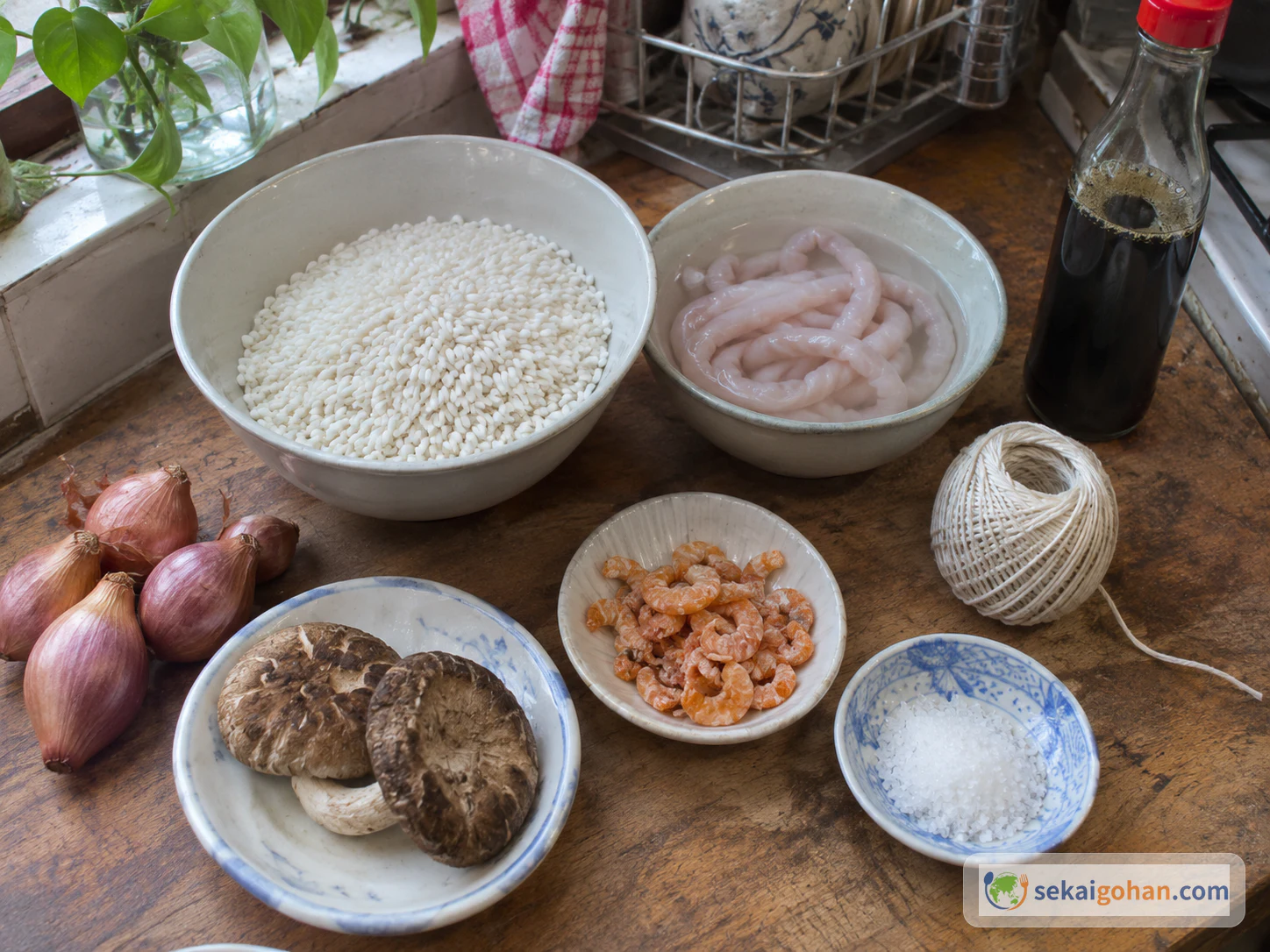
There are two separate builds here: a rice sausage made on the day, and a pork sausage started days ahead. The pork sausage amounts are small and exact, so weigh them on a gram scale.
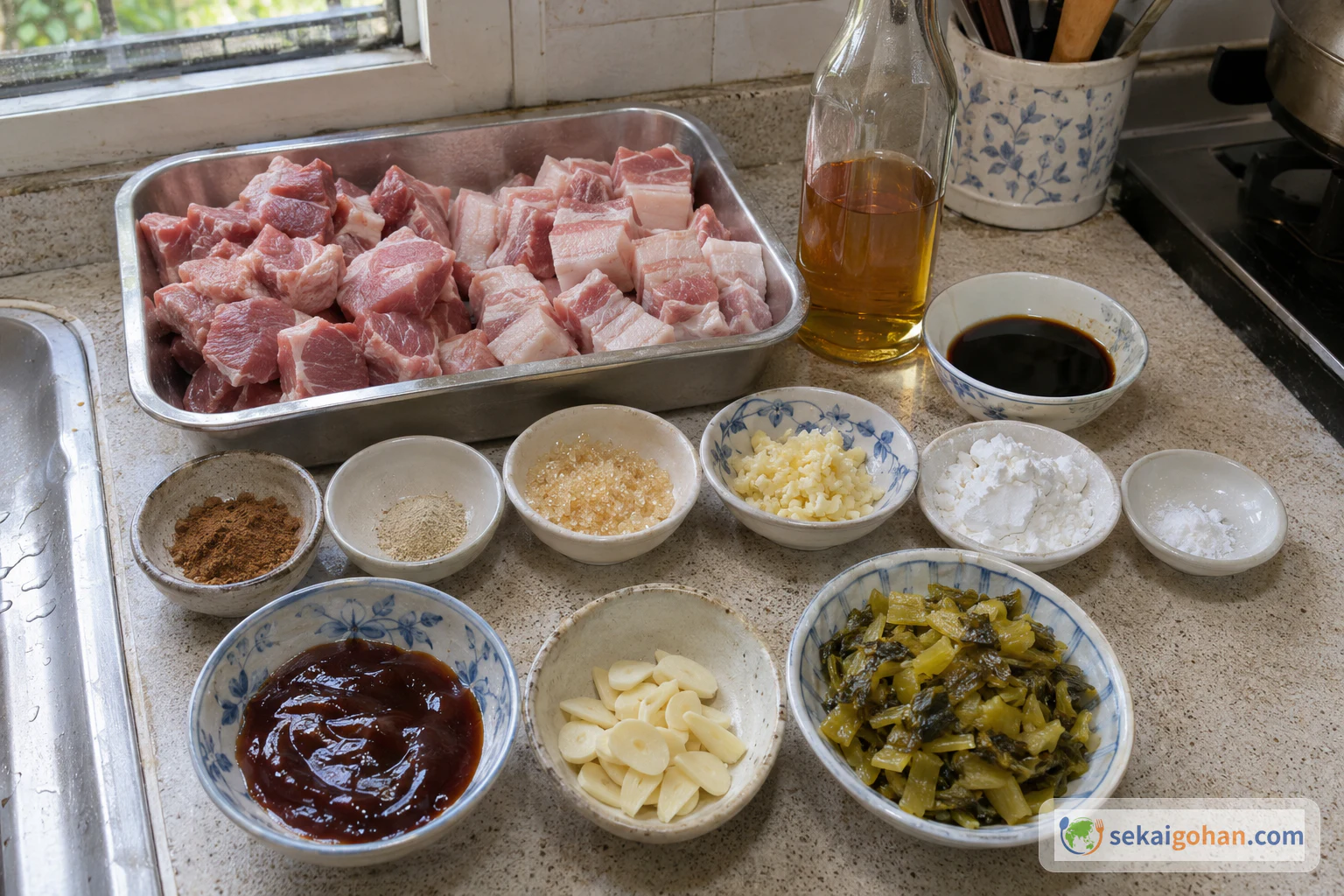
Salt, baking soda and curing salt work by weight in a mix this size. Weigh each one in grams; spoon measures of different salts and powders do not line up.
This dish contains pork (meat and casings) and shellfish (dried shrimp). Soy sauce, dark soy sauce and soy paste contain soy; check their labels for wheat as well. Check dried shrimp and other dried goods for any additive statements on the label. If you add crushed peanuts, the dish contains peanuts. Insta Cure #1 is a nitrite curing salt.
Equipment
- Gram scale
- Meat grinder with an 8 mm (5/16-inch) coarse plate
- Sausage funnel or stuffer
- Kitchen twine
- Bamboo skewer
- Needle or sausage pricker
- Steamer (bamboo steamer over a pot, or a steaming pot)
- Wire rack and tray that fit in the refrigerator
- Charcoal grill, grill pan or frying pan
- Instant-read thermometer
- Sharp knife and a cutting board kept for raw pork
What to buy and what you can swap
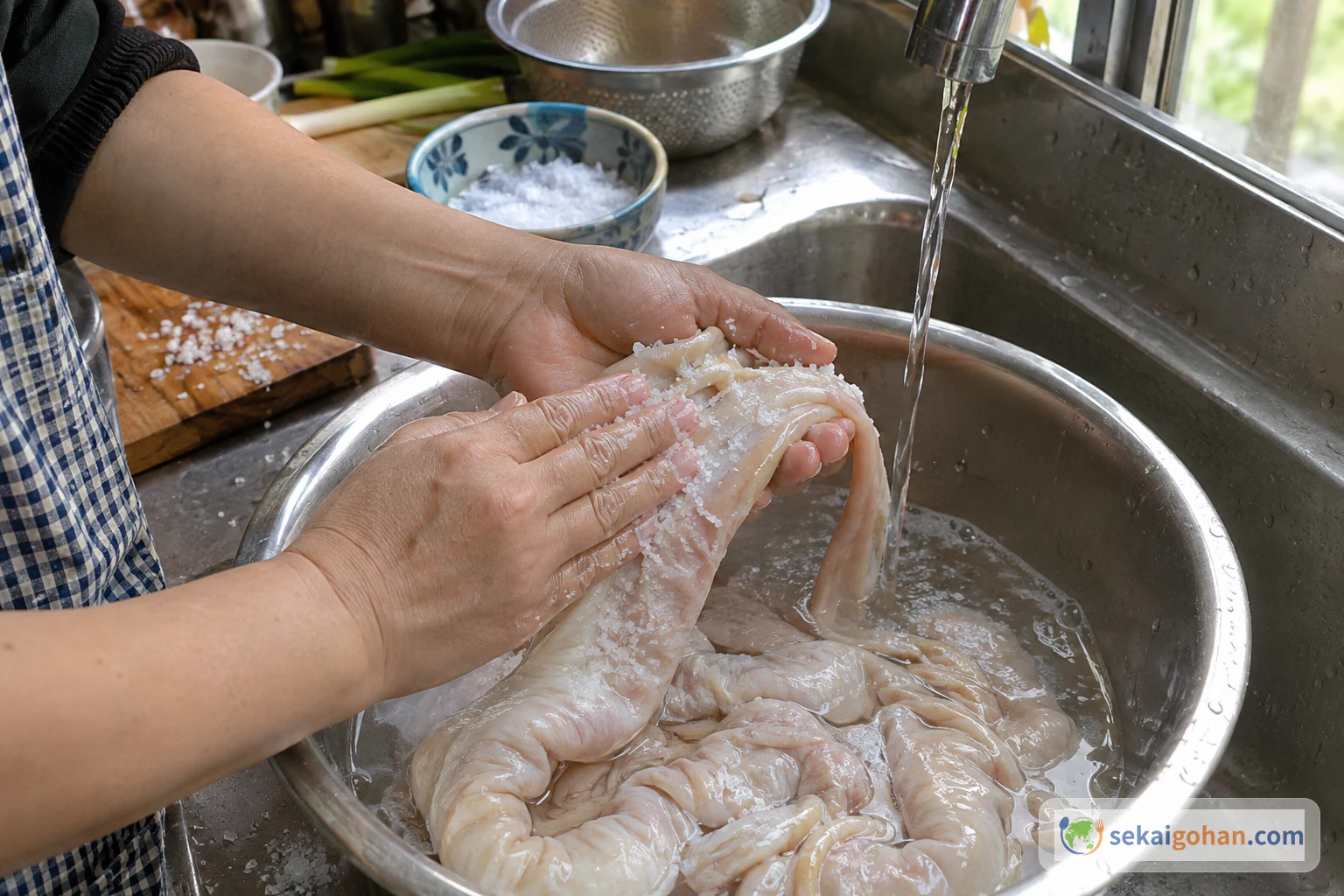
The pork casing is the one thing you cannot work around for the homemade version, since both sausages depend on it. Look for sausage casings at a butcher, an Asian grocer or online. The kind and width of casing you find changes how easily it fills; a wider casing takes the rice more easily, and the slim sheep casing gives the finger-size pork links.
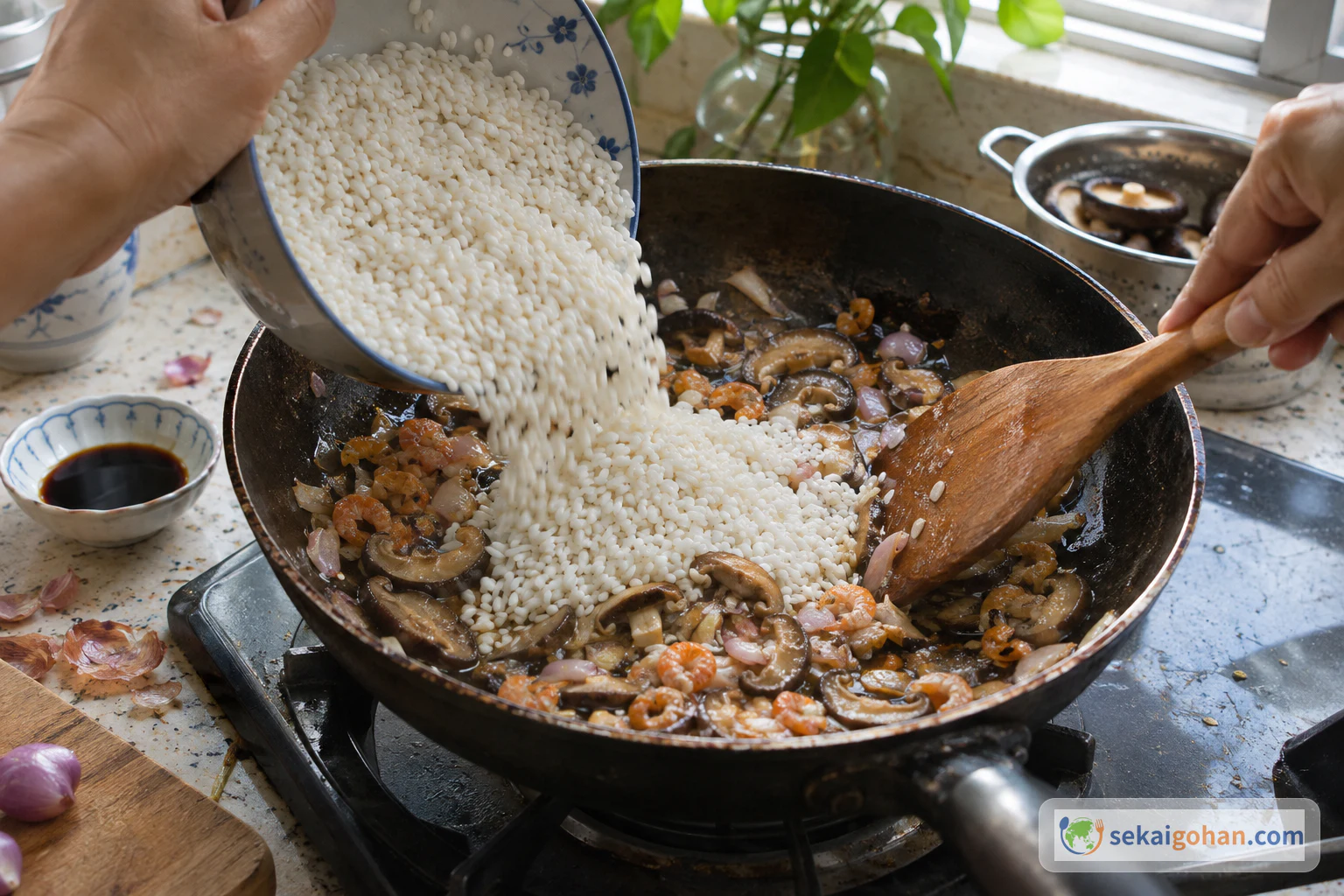
Dried shrimp, five-spice powder, Chinese rice wine and Taiwanese soy paste come from an Asian or Taiwanese grocer. Dried shrimp carries the rice sausage, so keep it in; leaving it out moves the flavor somewhere else. Chinese rice wine is its own product, and Japanese cooking sake is a different one. Dark soy sauce is thicker and darker than regular soy and is there for color as much as taste; light soy works but gives a paler sausage. The potato starch is sold in Japanese shops as katakuriko. Taiwanese soy paste is worth tracking down: ordinary soy sauce is thin and runs straight out of the slit, while the paste clings to the rice.
Taiwanese cooks favor long-grain glutinous rice for rice sausage; the recipe above calls only for glutinous rice, so use the kind you can find. The quickest honest shortcut is store-bought Taiwanese sausage, so that only the rice sausage is homemade.
| Keep this for a Taiwanese taste | You can let this go |
|---|---|
| Rice stuffed raw into a casing and steamed, not cooked rice wrapped around | Charcoal; a grill pan or frying pan works |
| Sweetness, five-spice and garlic in balance in the pork sausage | The optional SavorYe |
| Skin grilled crisp before the rice sausage is cut | Cilantro, peanuts or sweet chili |
| Raw garlic and pickles against the rich rice | Which pickle you use |
Method
The pork sausage comes first in real time even though it comes second in the steps. Start steps 5 to 9 a few days ahead: the casings soak for at least 12 hours and the links dry in the fridge for 48–72 hours. On the day you eat, make the rice sausage in steps 1 to 4, then grill both and assemble. The long stretches are all hands-off; the steaming is the only hands-off wait on the day itself.
Keep raw pork, casings and their juices away from anything eaten without further cooking, including the garlic slivers and pickles. Wash any knife and board used for raw meat, then pour boiling water over them before using them for anything else. Do not serve either sausage raw or half-cooked.
When it goes wrong
| What you see | Why | What to do |
|---|---|---|
| The rice sausage bursts in the steamer | Packed too tightly; the rice swelled | Fill with visible slack next time. Grill the burst pieces and eat them on their own |
| The rice crumbles when you cut it | Cut straight from the steamer | Grill the skin until crisp first, then slit |
| The pork sausage is crumbly when bitten | The mix was not worked enough | Keep mixing until it is very sticky before stuffing |
| Links split on the grill | Trapped air or heat too high | Prick every air pocket; turn the heat down and turn often |
| Pale links with little aroma | Drying was cut short | Give them the full 48–72 hours uncovered in the fridge |
| Charred outside, below 167°F (75°C) inside | Heat too strong | Move the links to a cooler part of the grill or lower the pan heat and keep turning until the center reaches temperature |
Serving and variations
At the table
This is street food, eaten in the hand straight off the grill, and it is a meal on its own. At home it makes a good centerpiece for a Taiwanese night-market evening alongside a bowl of braised pork rice and something fried. Set out the garlic and pickles in separate dishes so everyone builds their own; raw garlic is how it is eaten at stalls, and the amount is a matter of taste.
Variations
- Rice sausage on its own. Steam and grill it, then slice into rounds and serve with drinks. You taste the dried shrimp and shallot more clearly without the pork.
- Southern-style rice. Stir crushed peanuts into the rice before stuffing, as cooks in southern Taiwan do. It adds a nutty richness and some crunch.
- More in the rice. A small amount of rice vermicelli, shredded potato or diced sausage stirred into the filling makes it chunkier.
- A different topping set. Swap the mustard greens for pickled radish and cilantro, or add sweet chili sauce for a sweeter, hotter bite.
Storing and reheating
Cool leftover steamed rice sausage, wrap or cover it, and refrigerate promptly. One home cook's rule of thumb is about 1 week in the refrigerator and about 10 days in the freezer; this is a personal guideline, not an official food-safety standard. Reheat it by steaming or grilling until the center reaches at least 167°F (75°C). Keep the dried raw pork links in the refrigerator until you cook them.
Frequently asked questions
Can I use store-bought Taiwanese sausage?
Yes, and it is the most practical first attempt. Look for Taiwanese-style sausage at an Asian grocer, skip steps 5 to 9, and grill it to 167°F (75°C) at the center for at least 1 minute. The rice sausage is where homemade makes the biggest difference.
Can I skip the drying?
Drying gives the sausage its color and aroma. Undried links grill up paler and taste flatter, and their casings stay soft. Whether dried or not, they still need the full center temperature.
Is Taiwanese sausage the same as Chinese lap cheong?
No. Taiwanese sausage belongs to the same Chinese sausage family, but it is dried for a much shorter time, so it is juicier and sweeter. Lap cheong is drier and firmer, and it makes a different dish here.
Do I have to add raw garlic?
It is the standard stall condiment, and its sharpness is what balances the rich rice and sweet pork. Use as much or as little as you like. If you leave it out, lean more on the pickles for contrast.