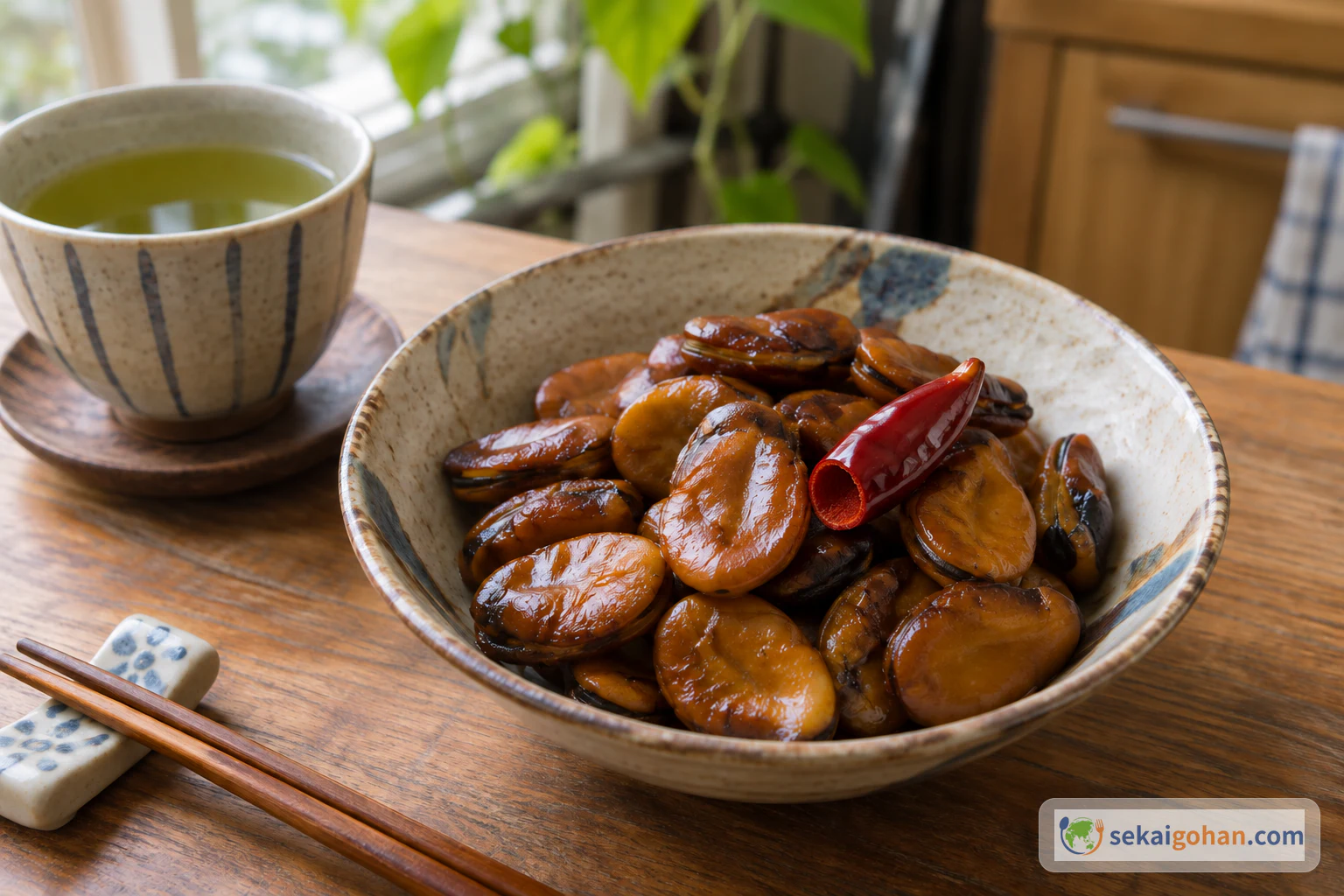
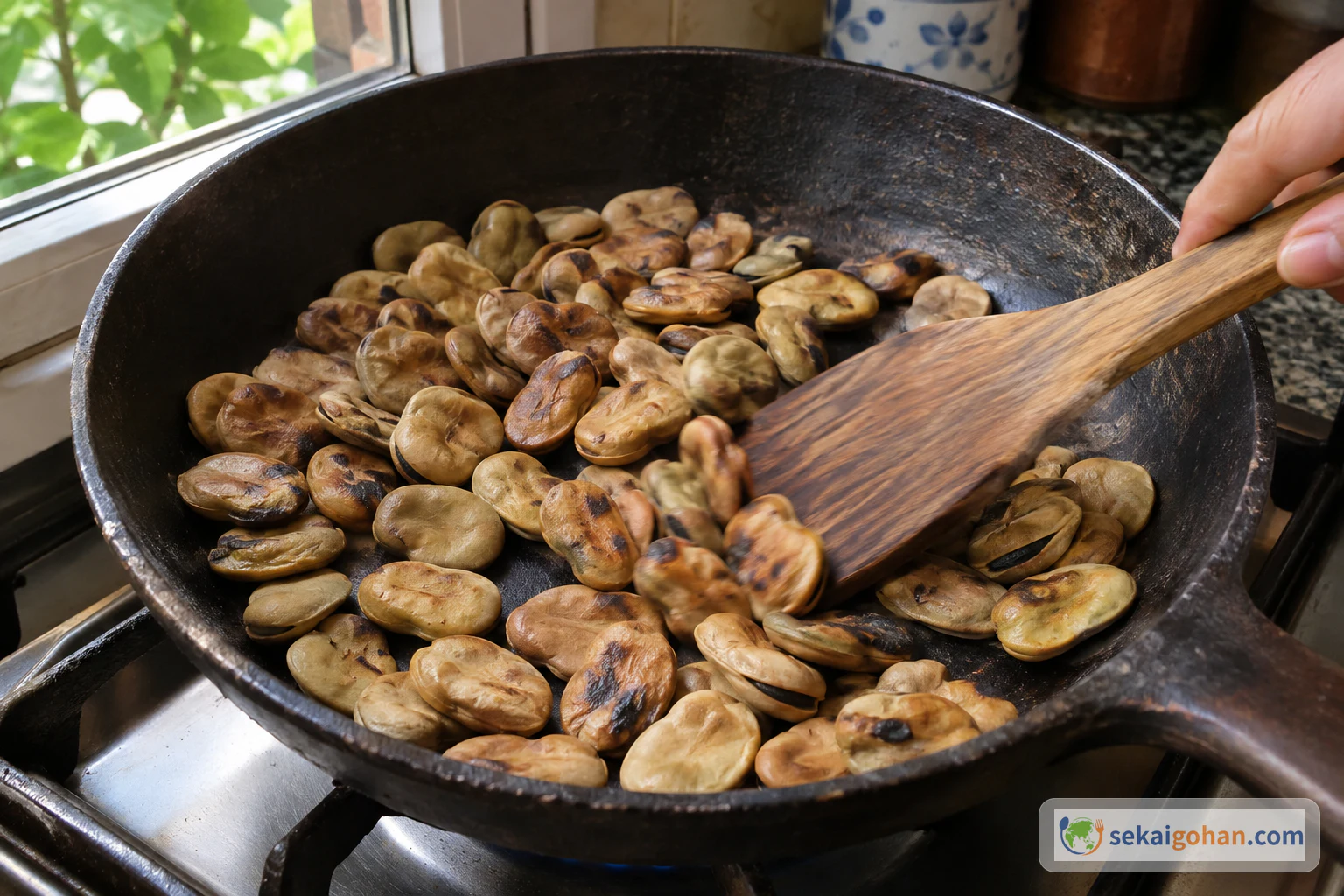
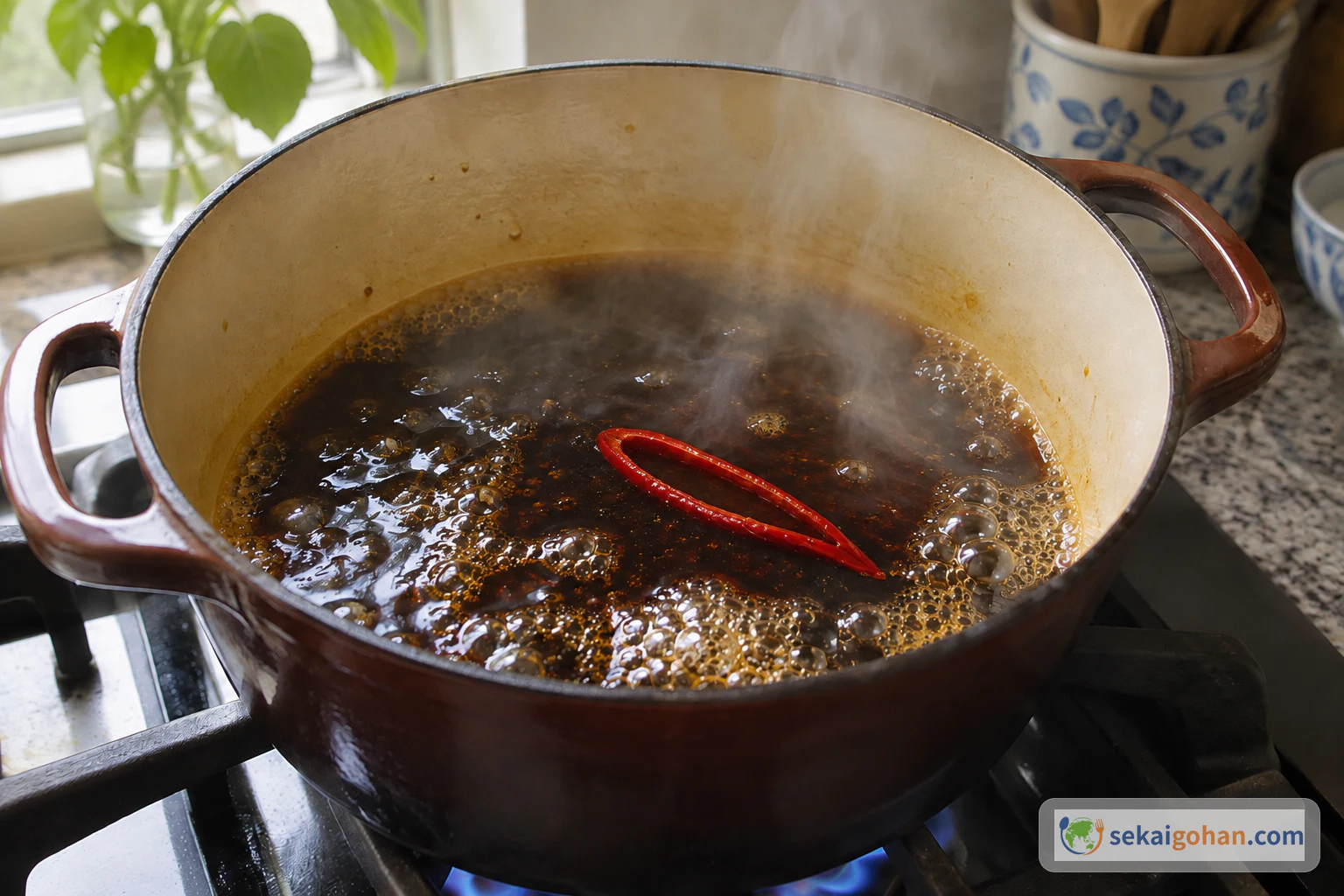
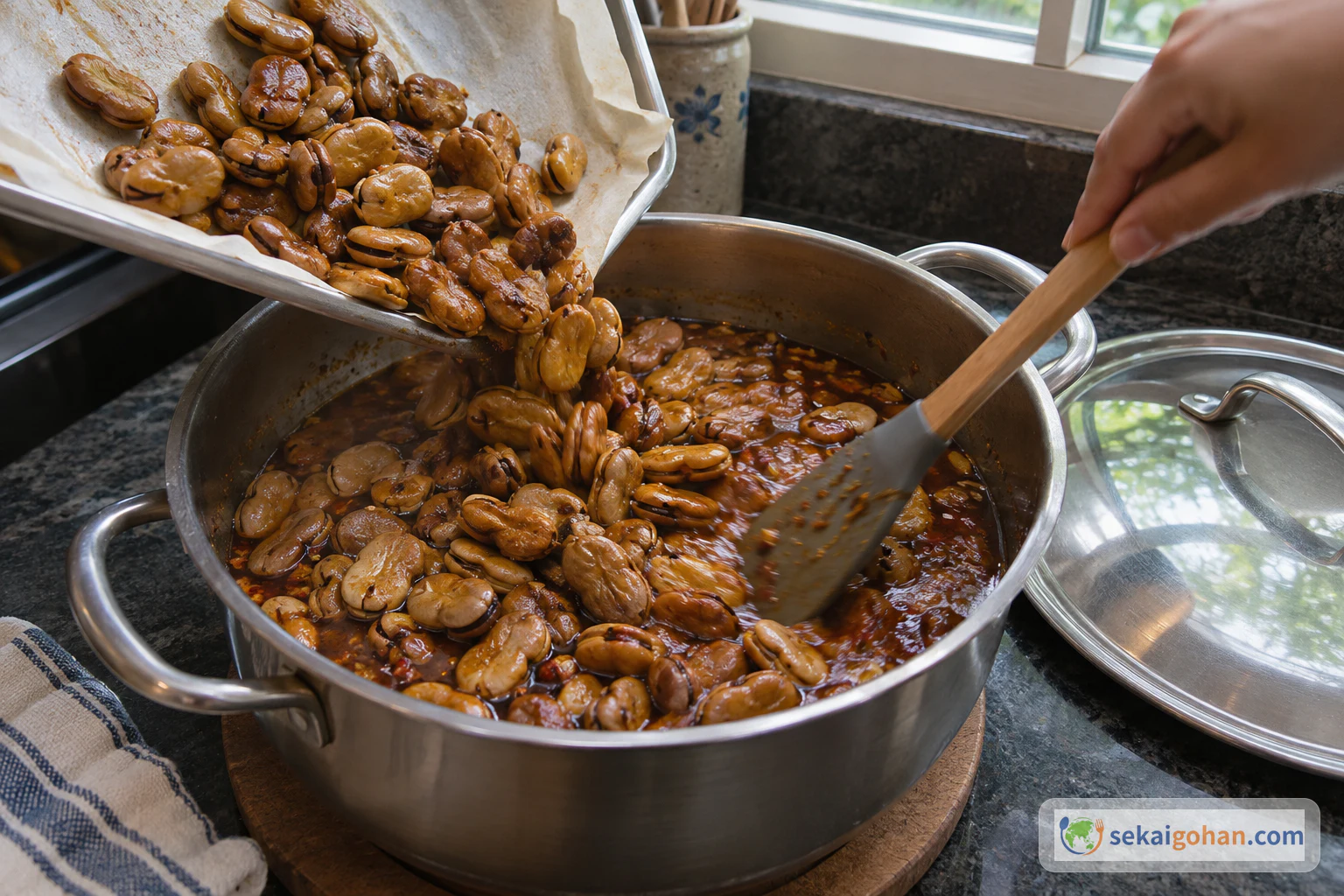
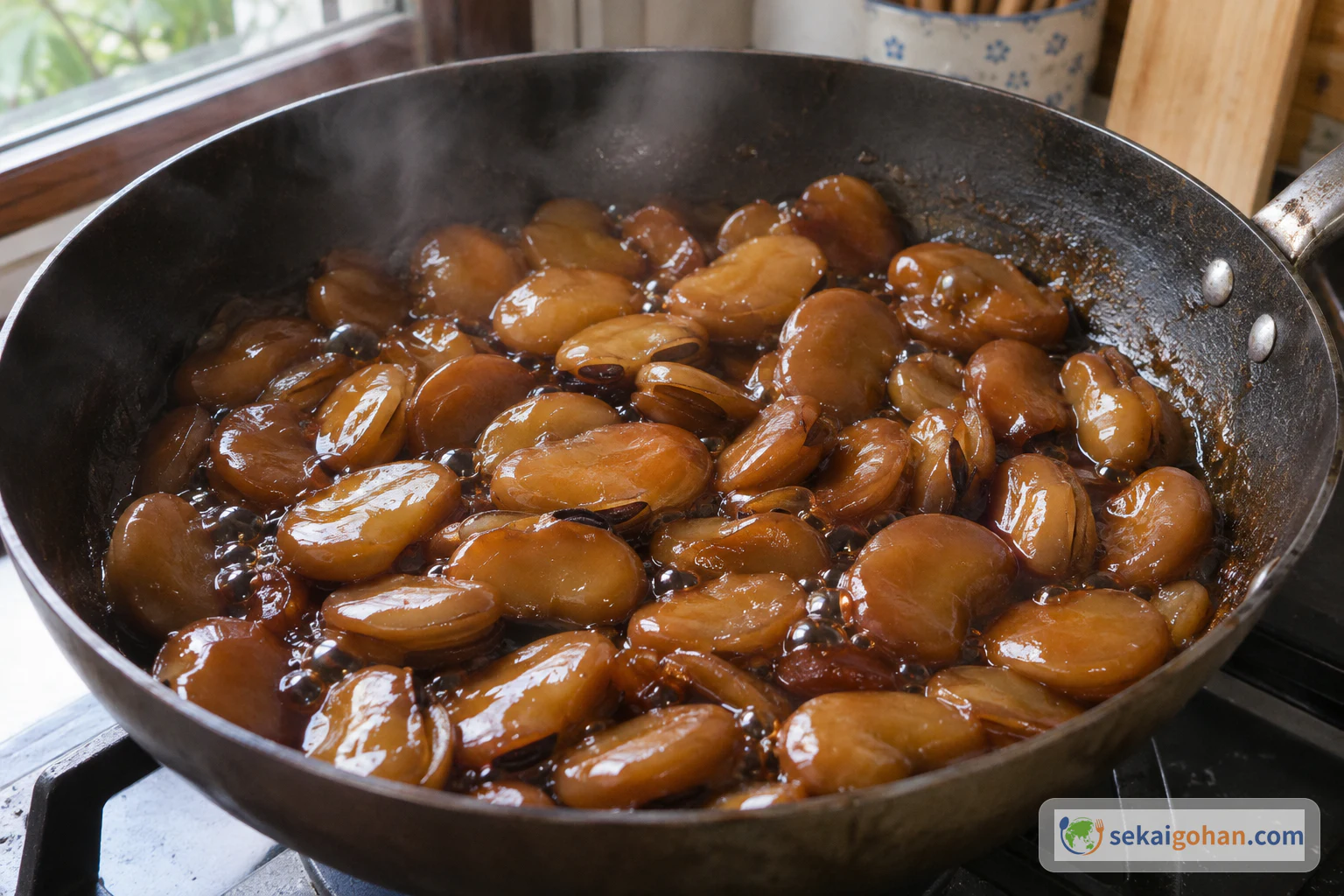
Dried fava beans go into a heavy pot with no oil and no water, and for a long while nothing seems to happen. You keep the flame low and shake the pan. Slowly the pale skins scorch in patches, dark spots spread across them, and the kitchen starts to smell toasty. Then the hot beans go straight into a pot of boiling soy sauce, sugar and chili, the lid goes on, and the pot sits overnight. By the next day you have shoyumame, the sweet-salty bean dish of Kagawa Prefecture in Japan. The beans are glossy, a little smoky from the roasting, gently hot, and they crumble softly when you bite.
Beans from the Paddy Edges, a Dish for Every Day and Every Festival
Kagawa farmers once planted fava beans along the ridges between their rice paddies, so a strip of ground that grew nothing else still gave a crop. Fava beans spoil quickly, though, and households needed a way to keep the harvest. Roasting the dried beans and steeping them in seasoned soy sauce did that, and the result keeps well. That is why shoyumame became so useful as an everyday side dish.
Where the dish began is not settled. The usual story goes like this. An old woman was roasting fava beans to welcome henro, the pilgrims who walk Shikoku's temple route. Some of the beans fell into her jar of soy sauce, and the flavor they soaked up turned out to be worth repeating. It is a story told about the dish, not a recorded history, but it shows where shoyumame lives: in a home kitchen with a pot of beans on the fire and someone at the door to feed.
In Kagawa, shoyumame belongs at both kinds of table. On ordinary days it is a small side dish next to rice. At nanzogoto, the farm observances and village festivals, it is the snack served with sake. At New Year some households put it in their osechi boxes in place of sweet black beans. Seasonings change from one house to the next, but the method stays the same: roast first, then steep.
Shōyu is soy sauce and mame is beans. The name says nothing about roasting, yet the roasting is what makes the dish. Simmered beans are cooked soft in liquid. Shoyumame beans are scorched dry first and then drink the seasoning, so they keep a toasted edge inside their soft, crumbly texture. More dishes from the same country are collected under Japan.
Ingredients (serves 4)
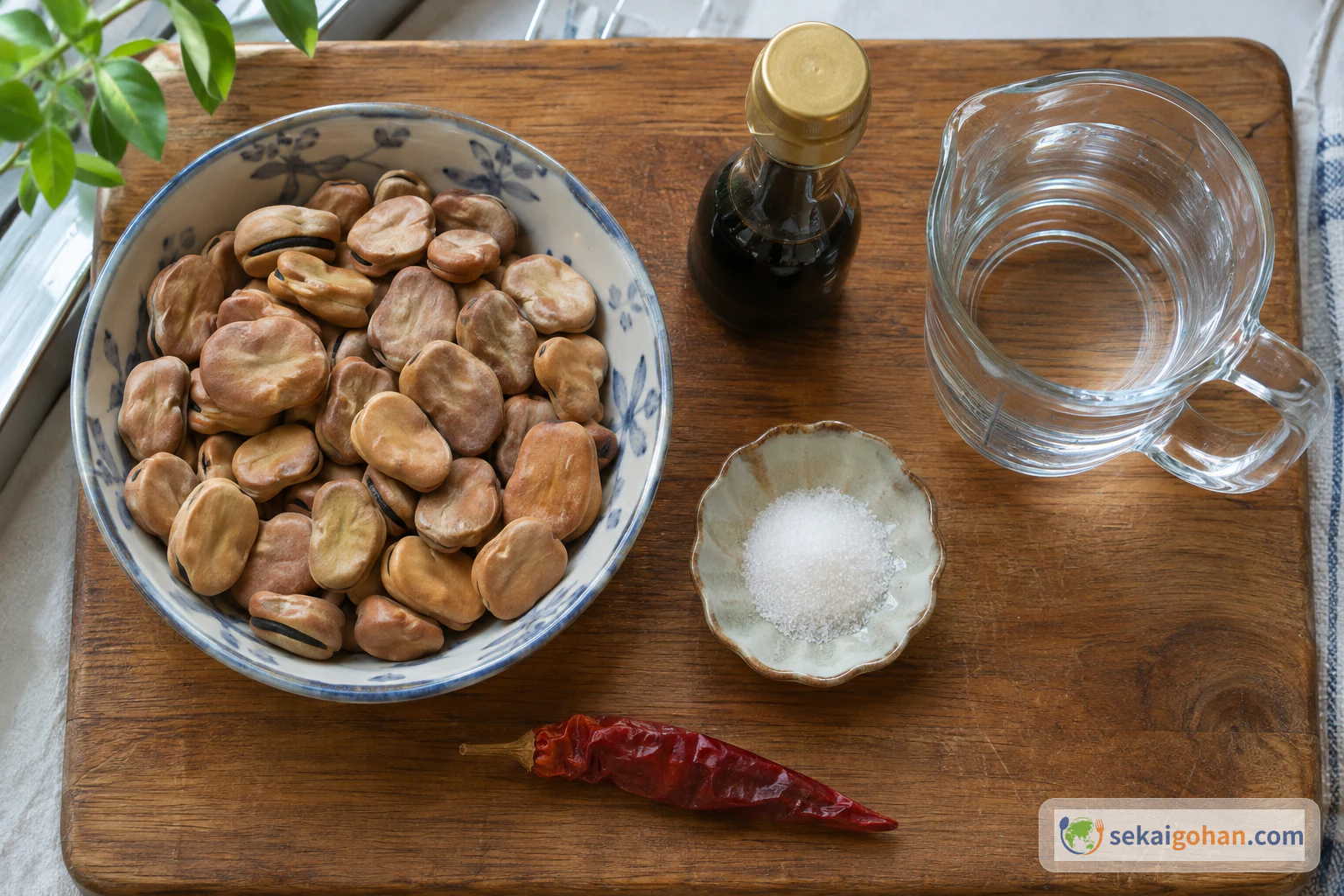
Soy sauce contains soy and wheat. If you have been told to avoid fava beans, or are worried about eating them, ask your doctor before making this dish.
Equipment
- Heavy-bottomed pot with a lid (a traditional clay roasting pan, hōroku, works for the roasting stage too)
- Wooden spatula
- Kitchen scissors
- Tray or plate for the roasted beans
- Clean lidded container for storing
Choosing and Substituting
The one thing worth hunting down is the dried mature fava bean. It is broad, flat and oval, tan-skinned, with a dark mark where it was joined to the pod. Many supermarkets do not stock it. Look in Japanese, Middle Eastern or Mediterranean grocers, or buy it online. Any dried fava bean works, not only the ones sold for roasting.
Fresh, frozen and canned fava beans cannot go through this method. They are already moist or soft, so there is nothing to roast dry, and the dish will not have its scorched aroma or its crumbly bite. Use ordinary sugar and soy sauce from your usual shop. The chili is the part you can adjust most freely: keep all the seeds out for mild warmth, or see the variations below for more heat.
The dry roasting and the overnight steep in hot liquid make this dish what it is. Change the chili or your brand of soy sauce if you like, but do not skip the roast or shorten the night.
Method
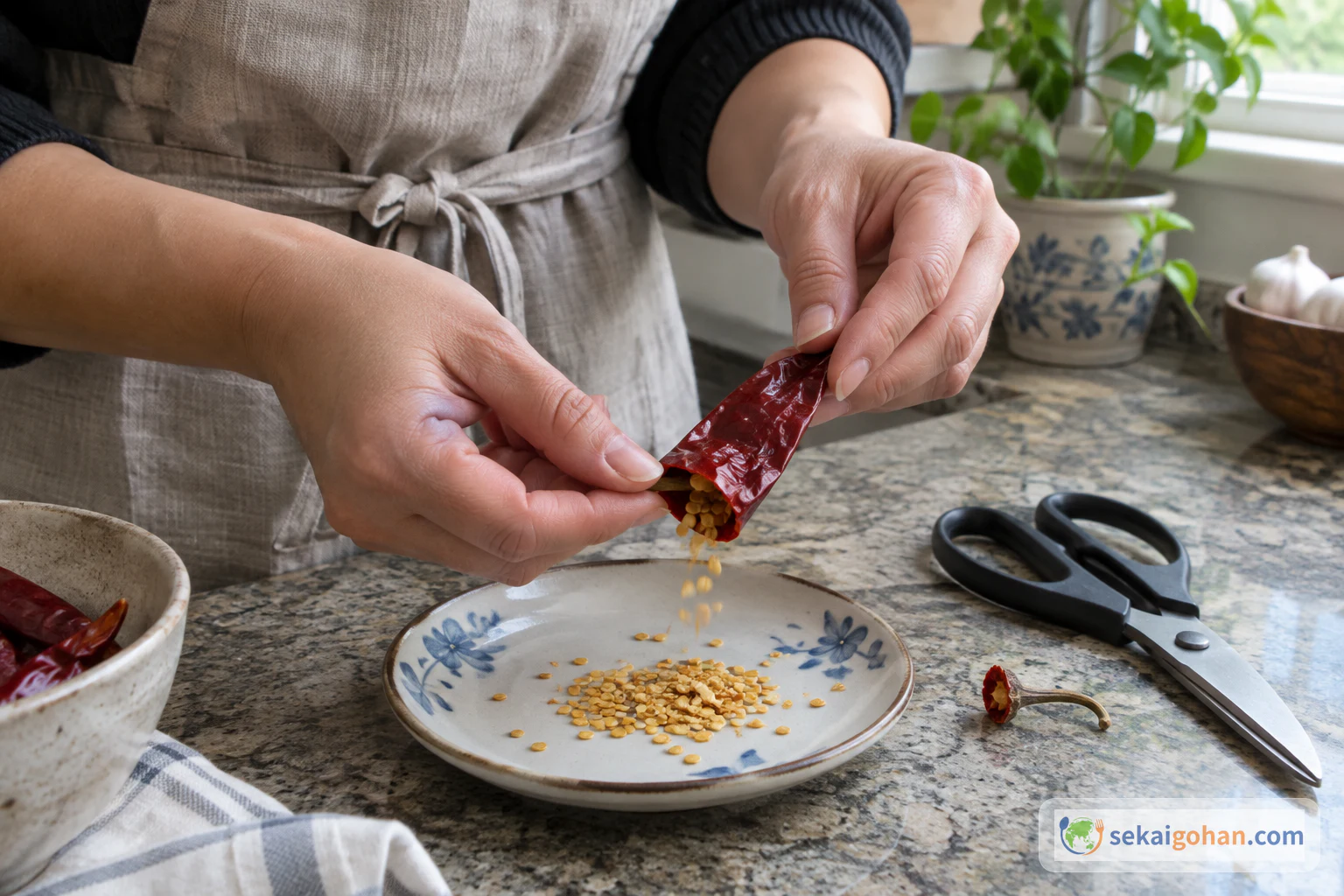
The work happens in two short sessions at the stove with a night between them. On the first day you trim the chili, roast the beans slowly, boil the seasoning liquid and drop the hot beans into it. Then the covered pot sits untouched until the next day, when one gentle simmer finishes the beans. Most of the first session is spent standing over the roasting beans, so get the chili and the tray ready before you light the burner.
When It Goes Wrong
| What you see | Why | What to do |
|---|---|---|
| Beans taste bitter and smell burnt | Roasting heat too high, or the beans sat still | Next time keep the flame low and shake the pot steadily. Lower the heat as soon as a sharp smell appears |
| Some beans are pale, others black | They were not turned often enough | Stir and shake throughout the roast so every side touches the pot |
| Beans are still hard after the simmer | They have not yet taken up enough liquid | Keep simmering on low until a bean is soft in the center. |
| Too spicy | Chili seeds were left in | Next time shake out every seed before the chili goes into the liquid |
Serving, Variations and Storage
At the table
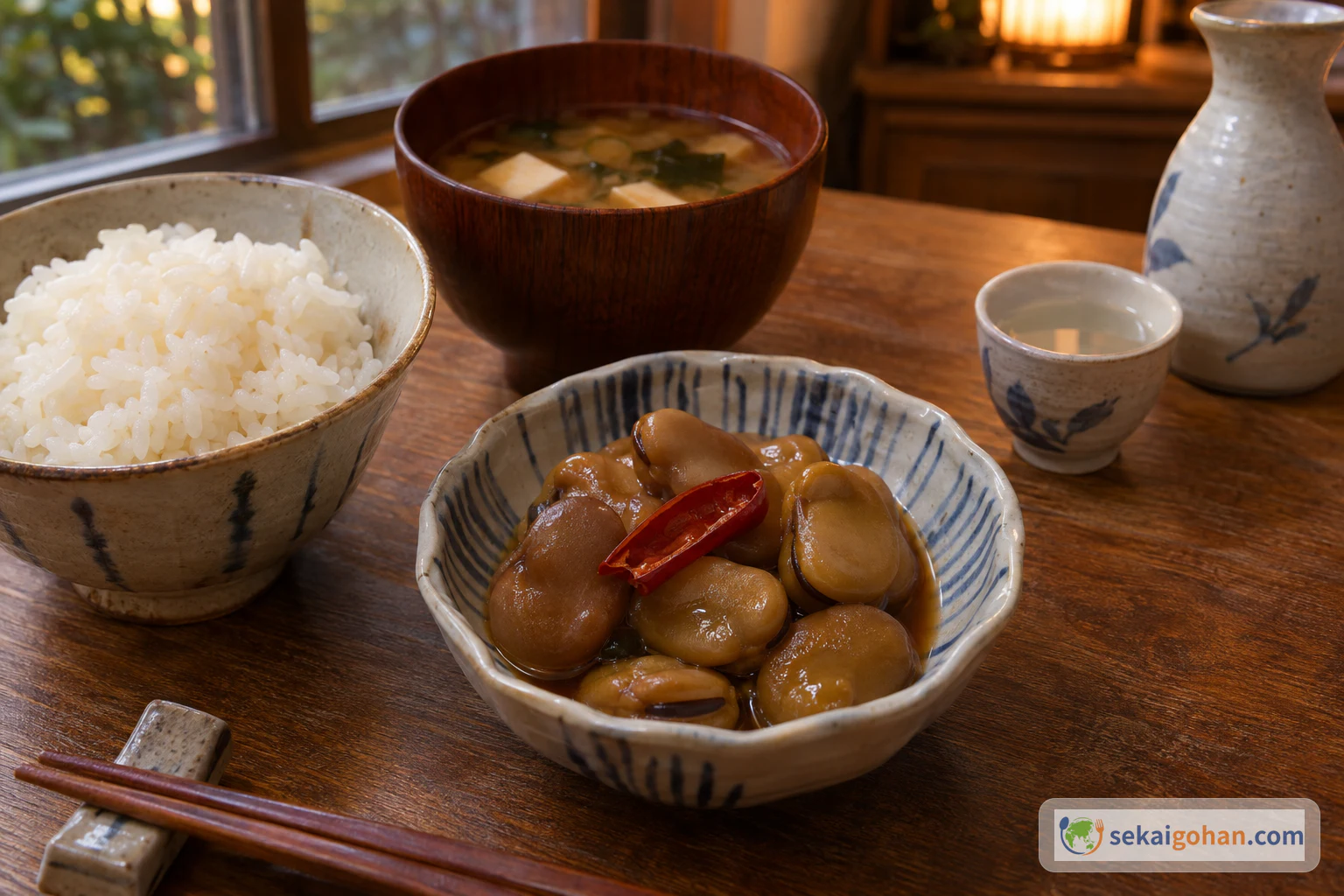
Serve shoyumame in a small bowl with white rice and miso soup as one of the everyday side dishes, or set it out with sake the way it is served at festival gatherings. At New Year it can take the black beans' place in the osechi box. Eat it with chopsticks, a few beans at a time, together with some of the glossy liquid.
Variations
- Hotter beans. Leave some or all of the seeds in the chili. The liquid takes on more heat, and so do the beans as they soak overnight.
- Quick soybean version. For roasted soybeans left over from Setsubun, boil a liquid of ¾ cup plus 1 tbsp (200 ml) water, ½ oz (15 g) sugar, ¾ oz (20 g) soy sauce and 2 dried chilies. Add 4½ oz (130 g) roasted soybeans and simmer for about 10 minutes. The beans are small and round and the flavor is lighter. It is a separate dish, not a shortcut to fava-bean shoyumame.
Storing
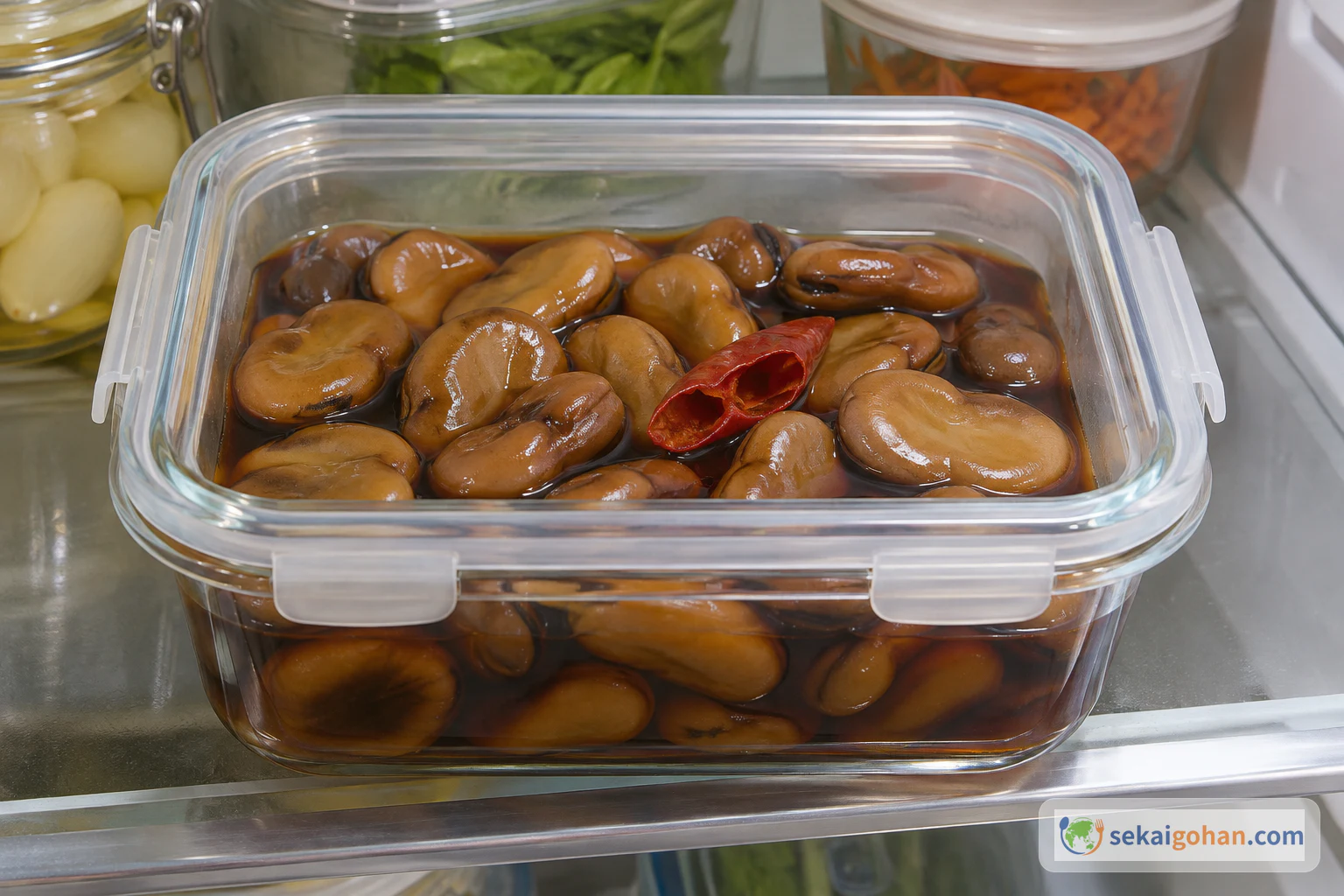
Shoyumame keeps well; that was the reason for making it in the first place. Let it cool, then move it to a clean container with a lid, refrigerate it, and eat it soon.
Frequently asked questions
Can I make shoyumame with fresh fava beans?
No. This dish starts from dried mature fava beans that are roasted dry, and fresh beans are too moist to roast that way. Cook fresh fava beans another way and save this method for dried ones.
How is it different from Japanese simmered beans?
Simmered beans such as New Year black beans are cooked slowly in sweet liquid from the start. Shoyumame beans are roasted first and only then steeped and simmered. The roast gives them a toasty aroma, and the finished beans crumble rather than staying smooth.
I don't have a clay roasting pan. Is a regular pot fine?
Yes. A heavy-bottomed pot roasts the beans well, and you can use the same pot for the seasoning liquid and the overnight rest. A thin pan heats unevenly and scorches the beans more easily, so choose the heaviest pot you have.