Ichigo Daifuku: A Red Strawberry Inside Dark Bean Paste and Soft Mochi
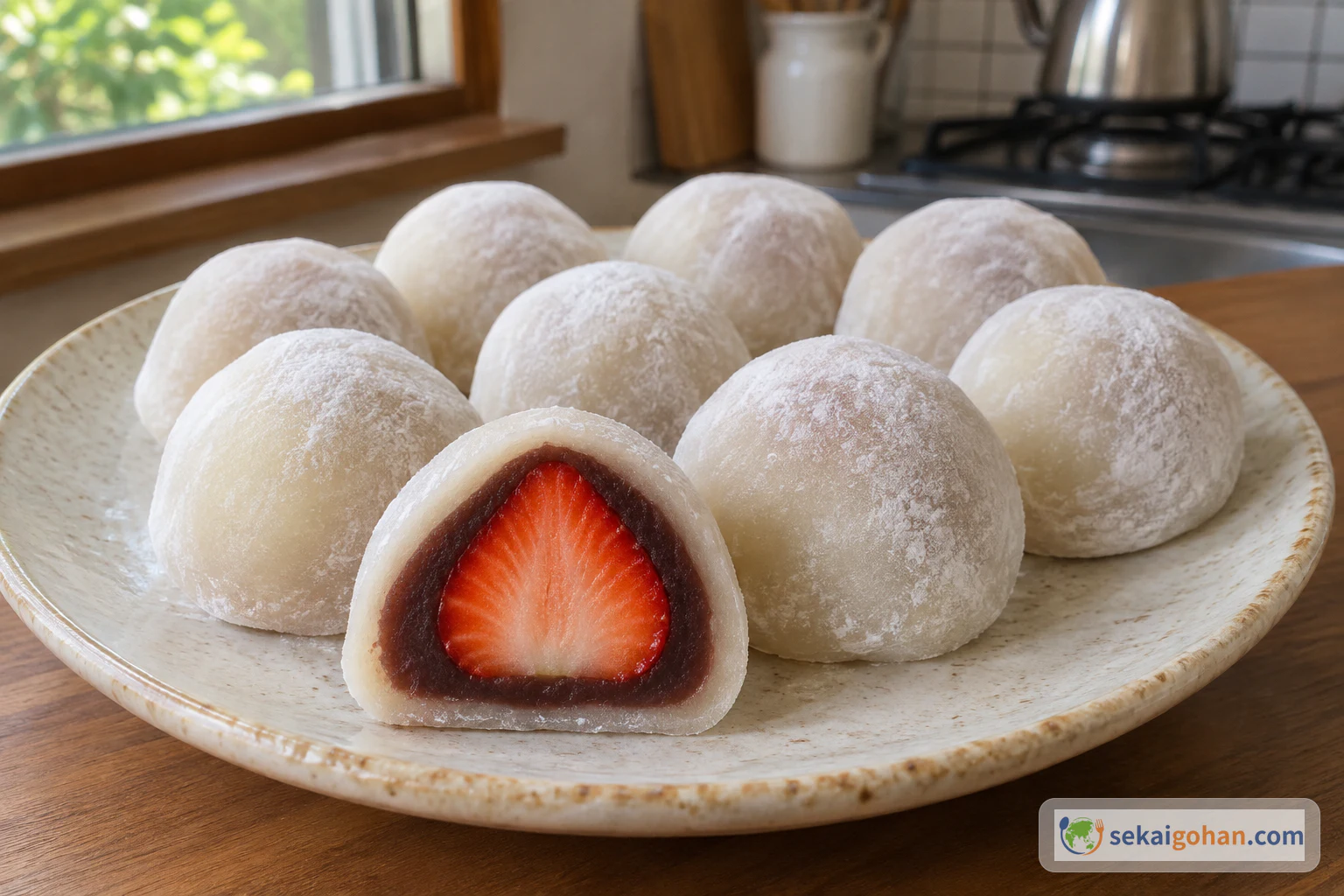
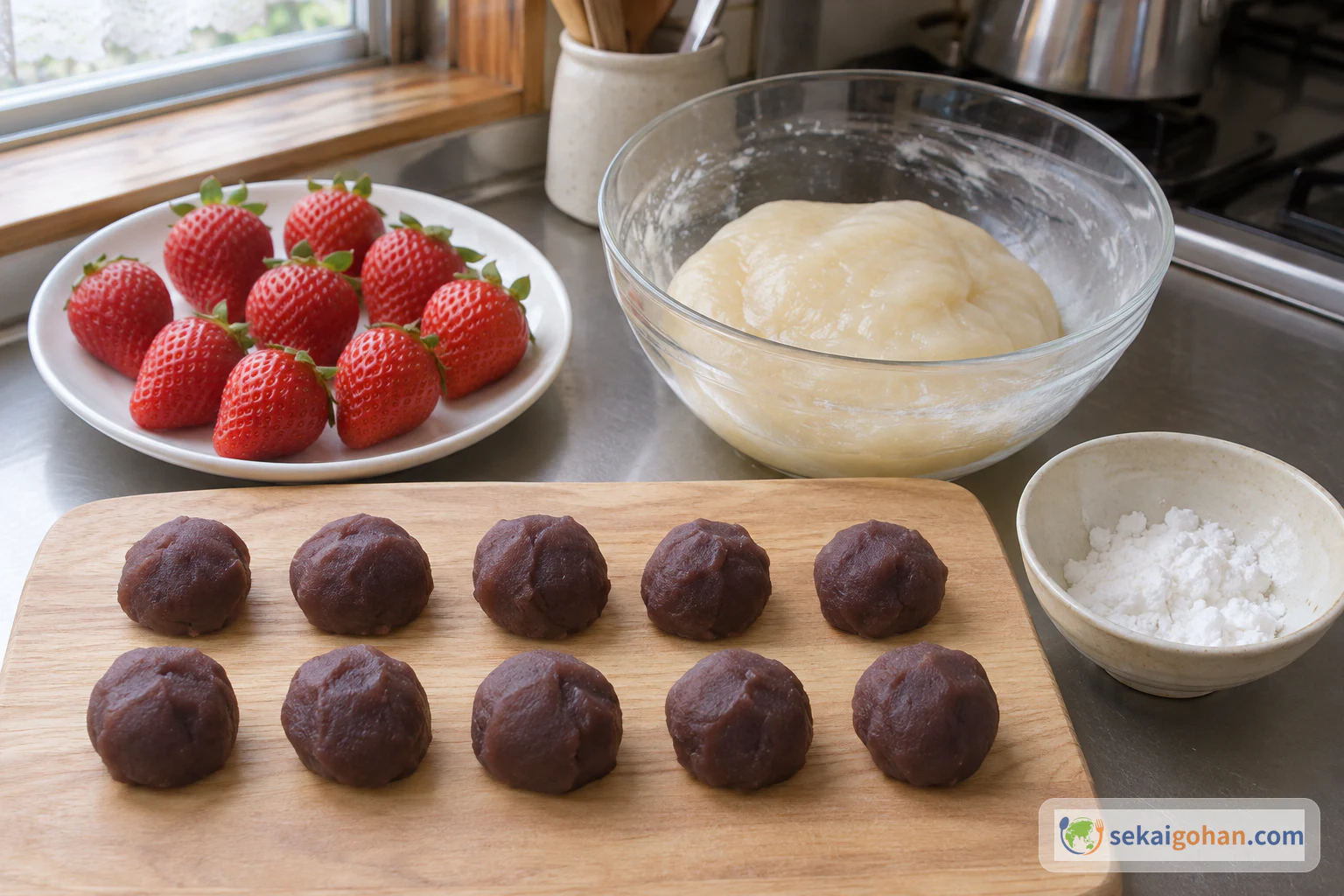
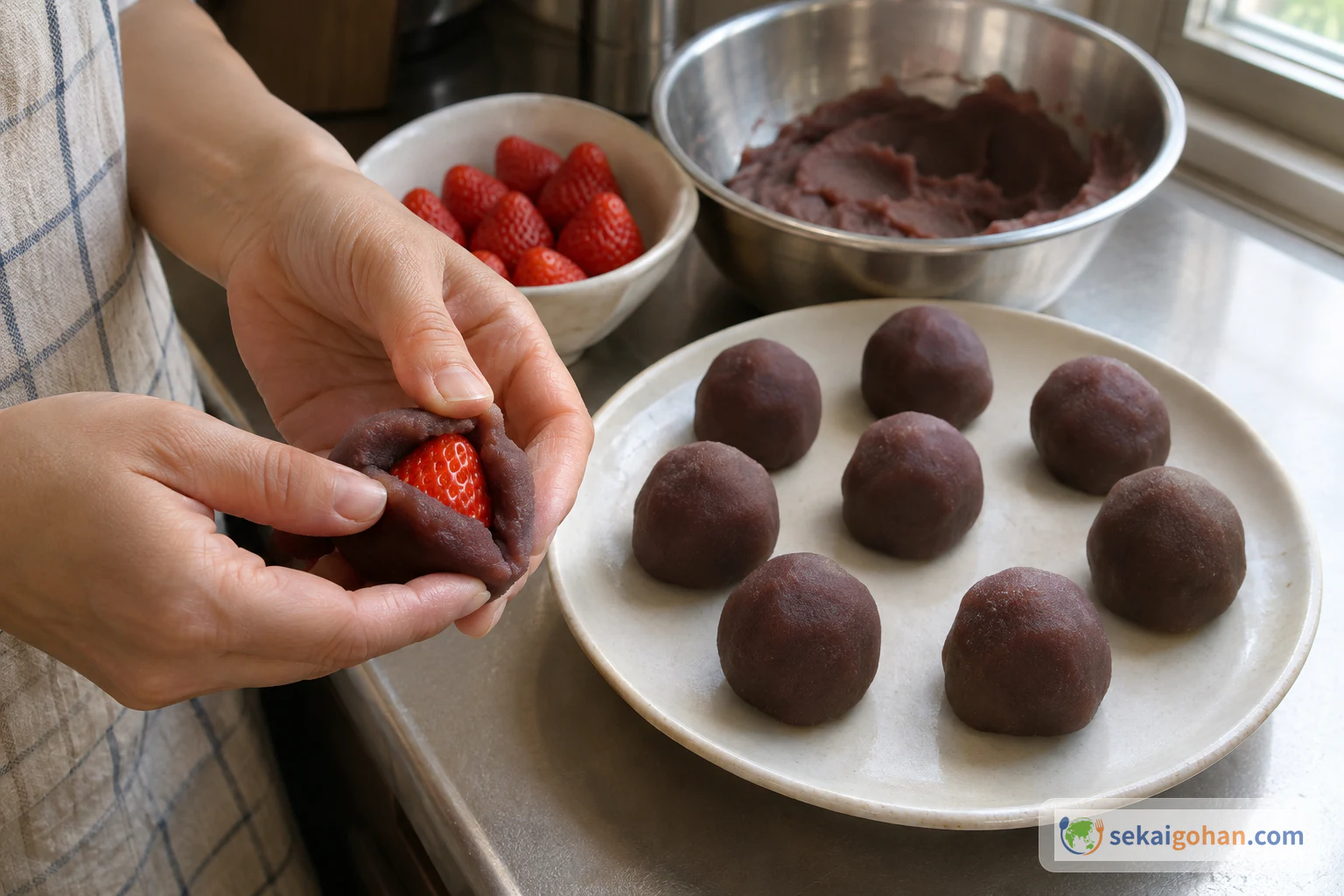
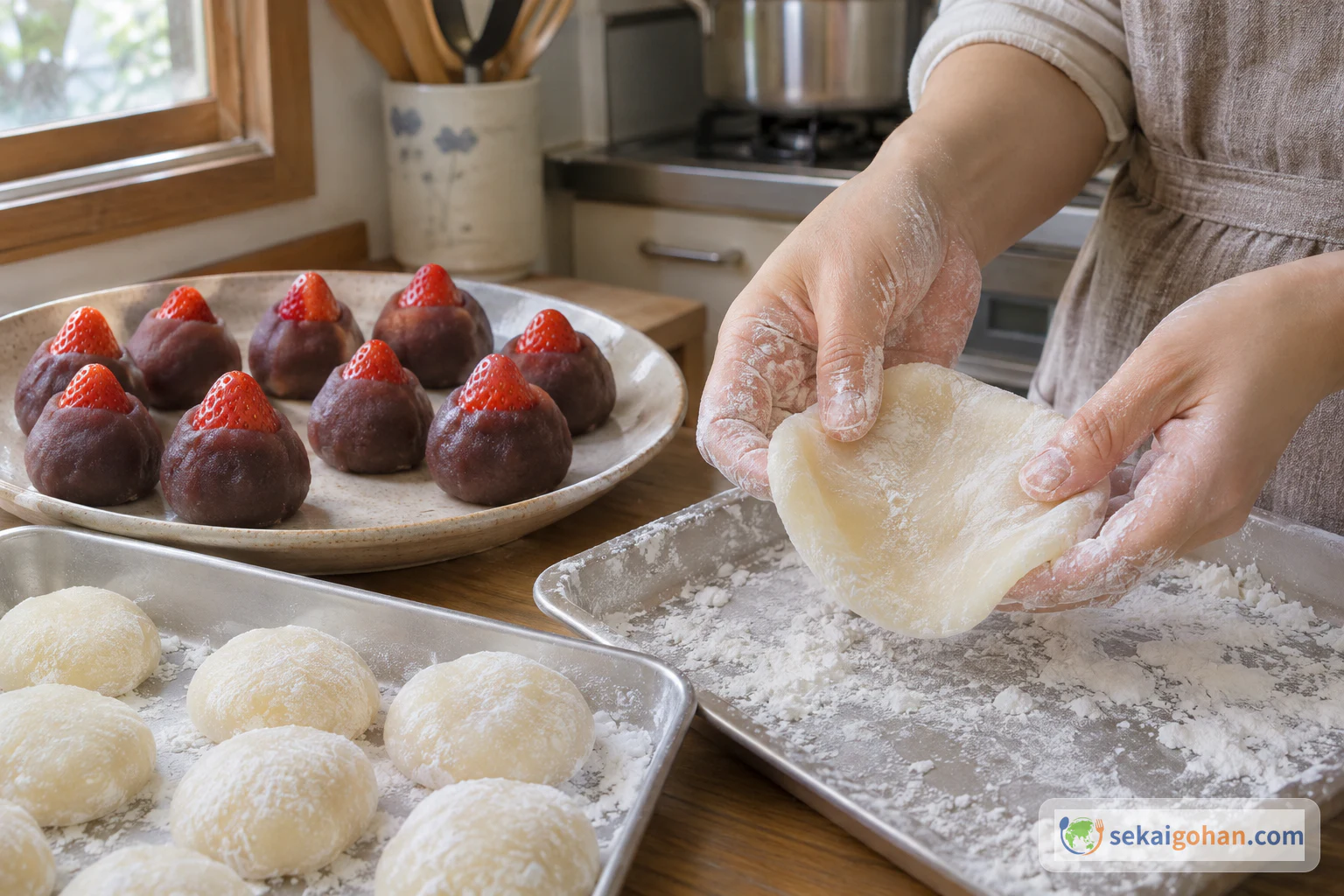
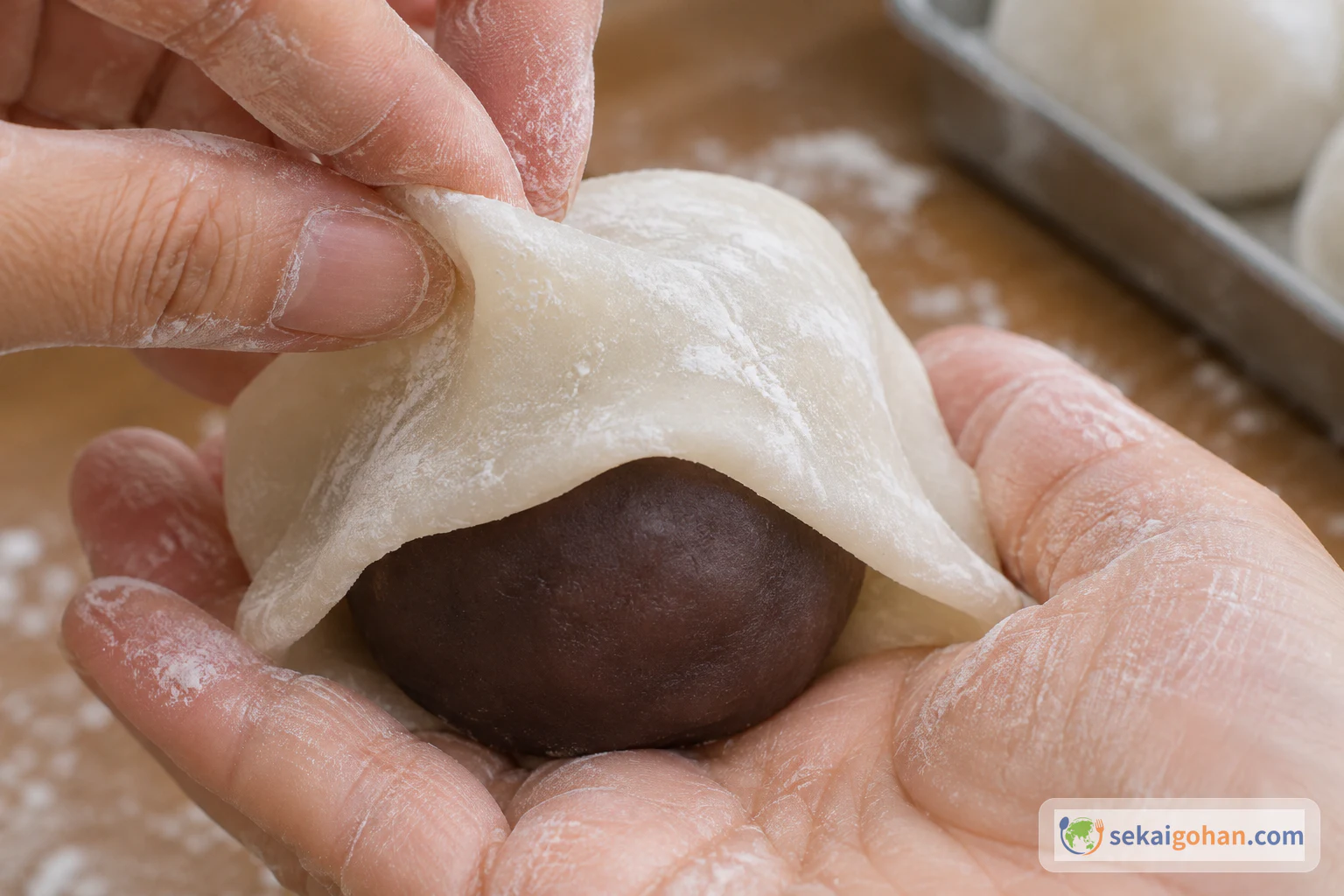
Each piece is one whole, dry strawberry, closed inside a thin, even layer of smooth koshi-an. A soft, glossy gyuhi wrapper goes around the outside and is sealed underneath. When you cut one open, you should see three clear layers: red fruit, dark bean paste and pale mochi.
Cut an ichigo daifuku (いちご大福) in half and the cross-section tells you how it was built. In the middle is a bright red strawberry. Around it is a thin ring of dark, smooth bean paste, and outside that is a soft, pale layer of gyuhi, a tender mochi dough. The juicy fruit, the dense sweet paste and the stretchy wrapper are the whole point of this Japanese sweet. Each one is wrapped by hand.
Sekai Gohan has not kitchen-tested this recipe as a whole.
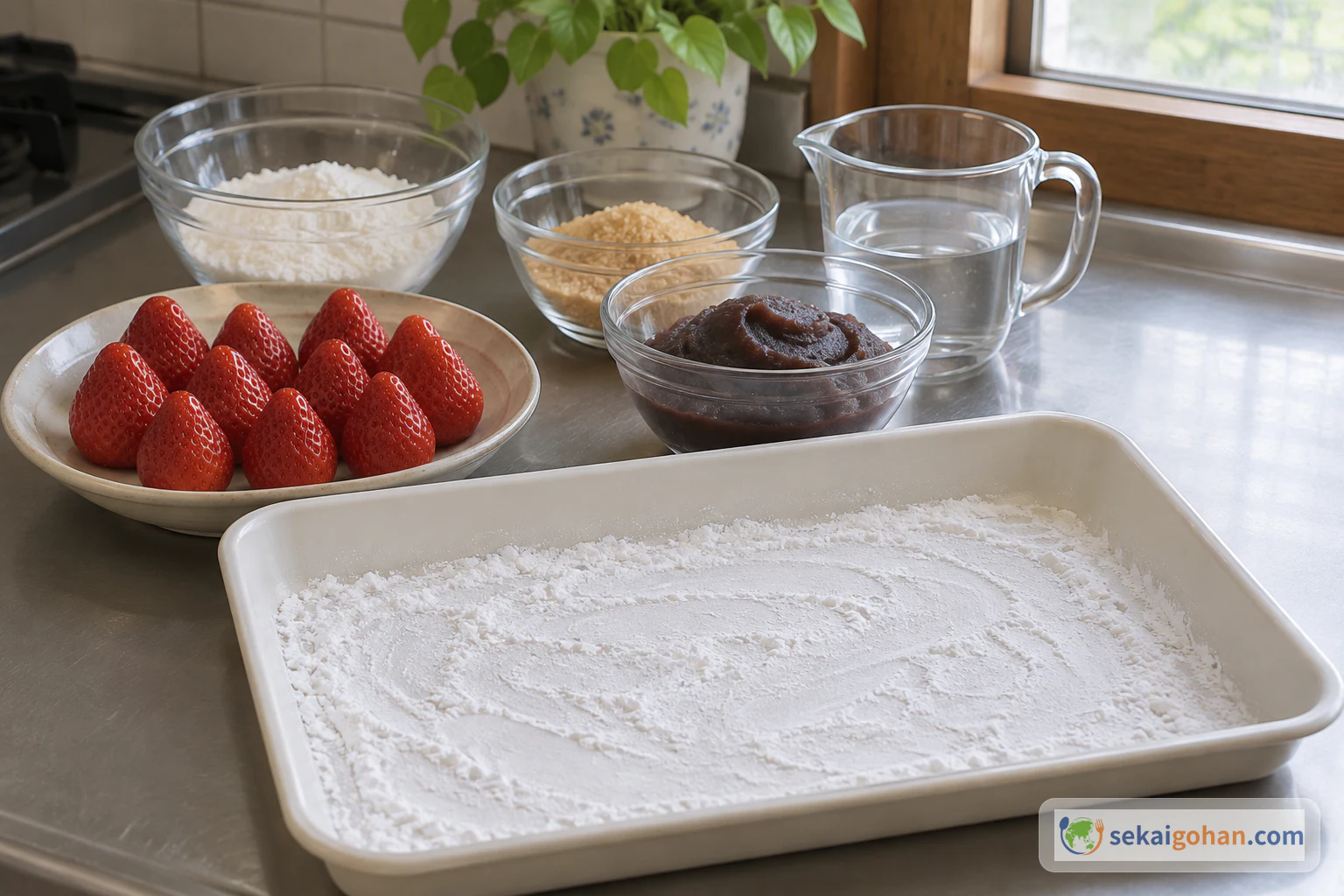
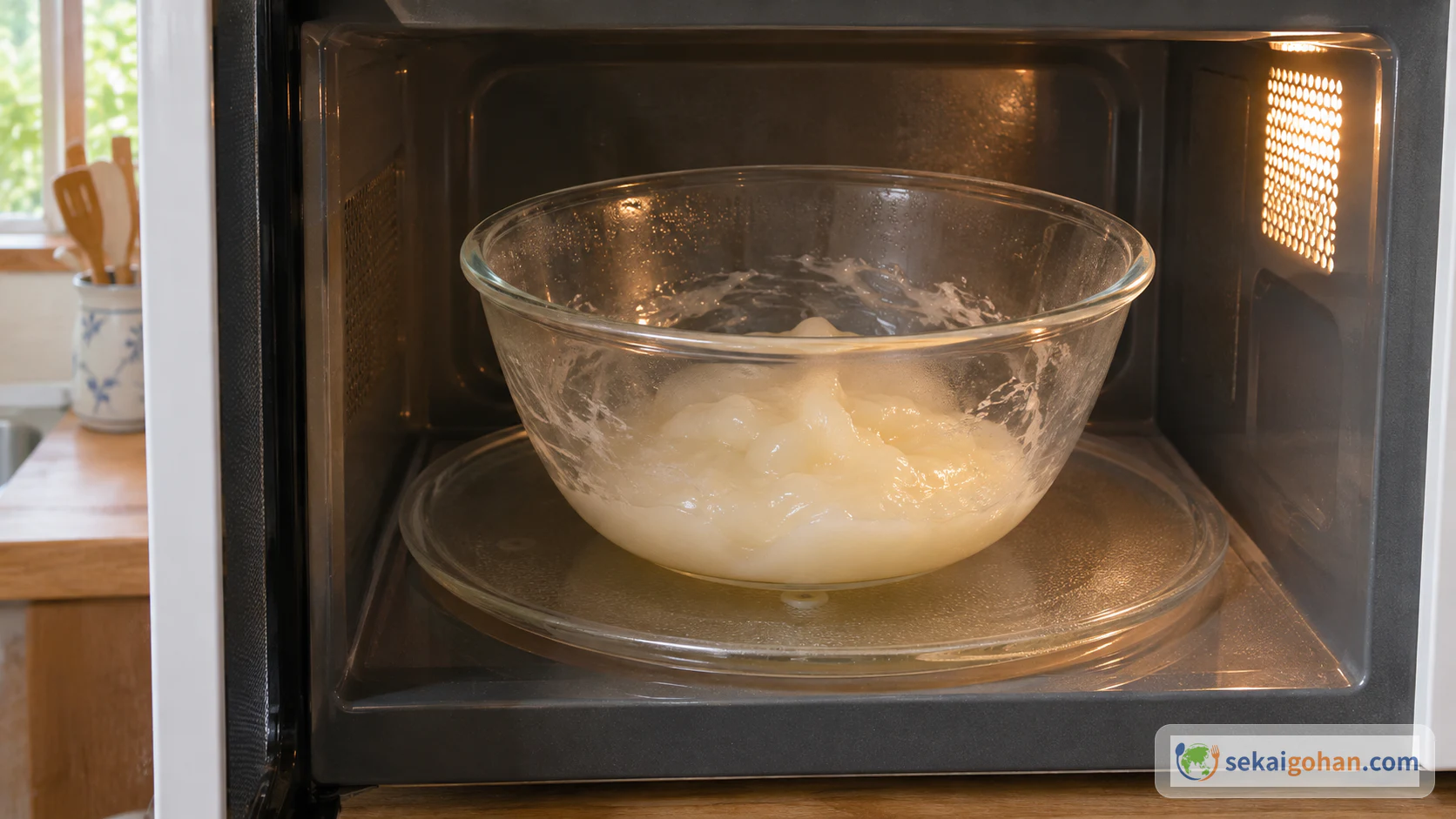
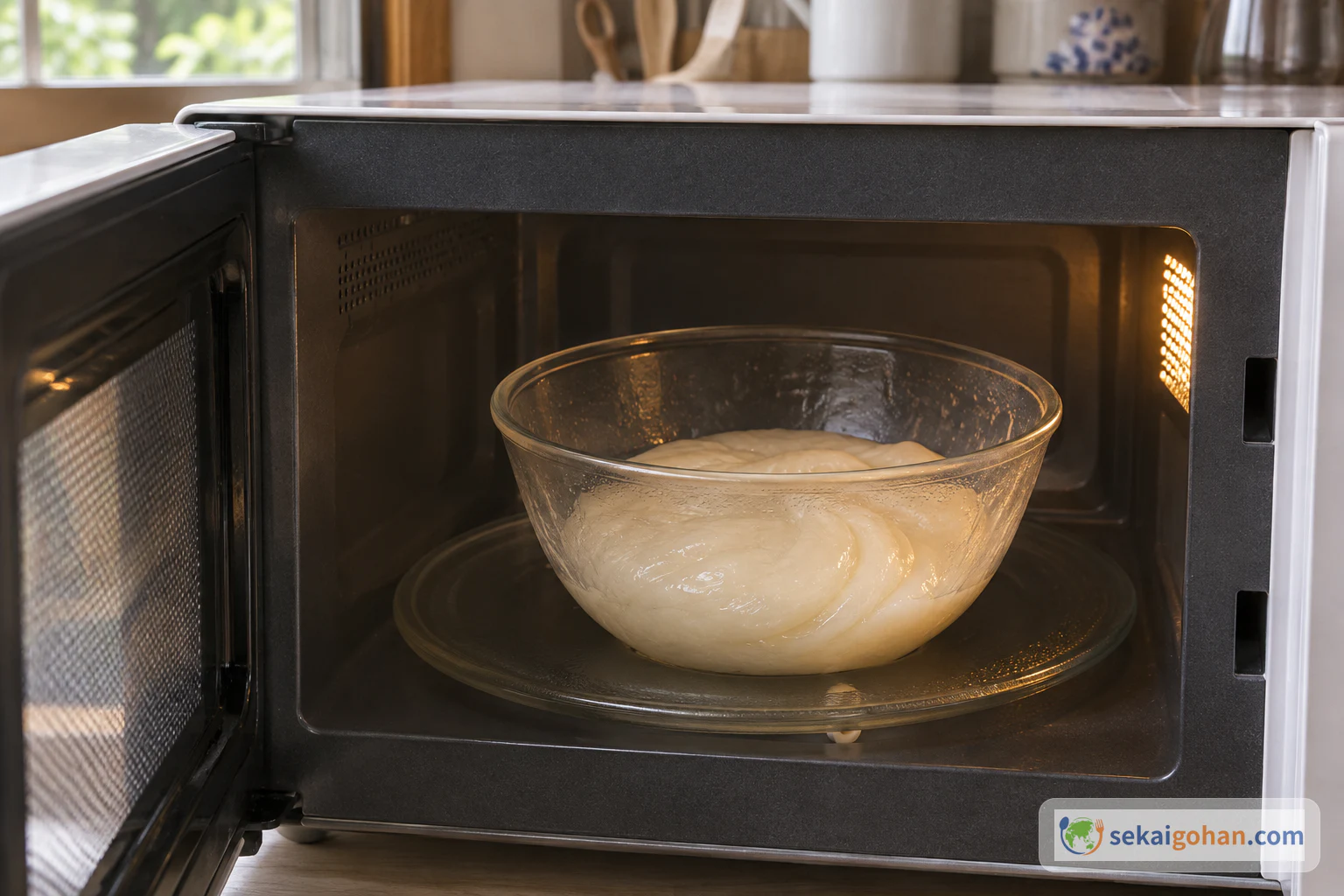
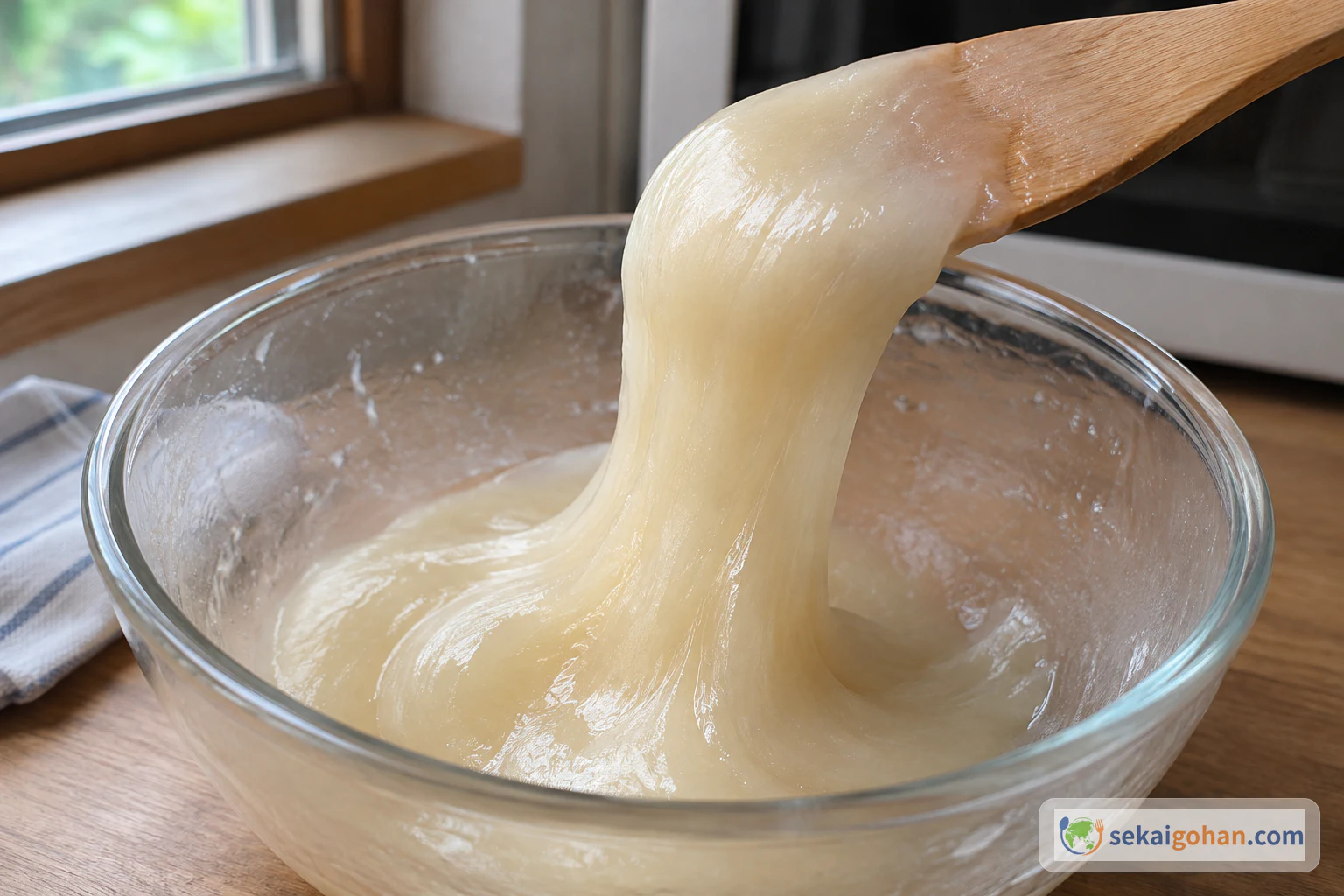
This article follows one published version: the microwave ichigo daifuku recipe from Mitsui DM Sugar, a Japanese sugar company. It makes ten pieces from shiratamako, cane sugar, water, strawberries and koshi-an (smooth red bean paste), with potato starch used only for dusting. You heat the gyuhi in short rounds at 600W and knead it after each one. You decide it is done by how it looks, glossy and soft, and not only by the minutes. The heating times in that recipe are approximate. They are not a measure of internal temperature or proof of safety. Microwaves differ, so watch the dough.
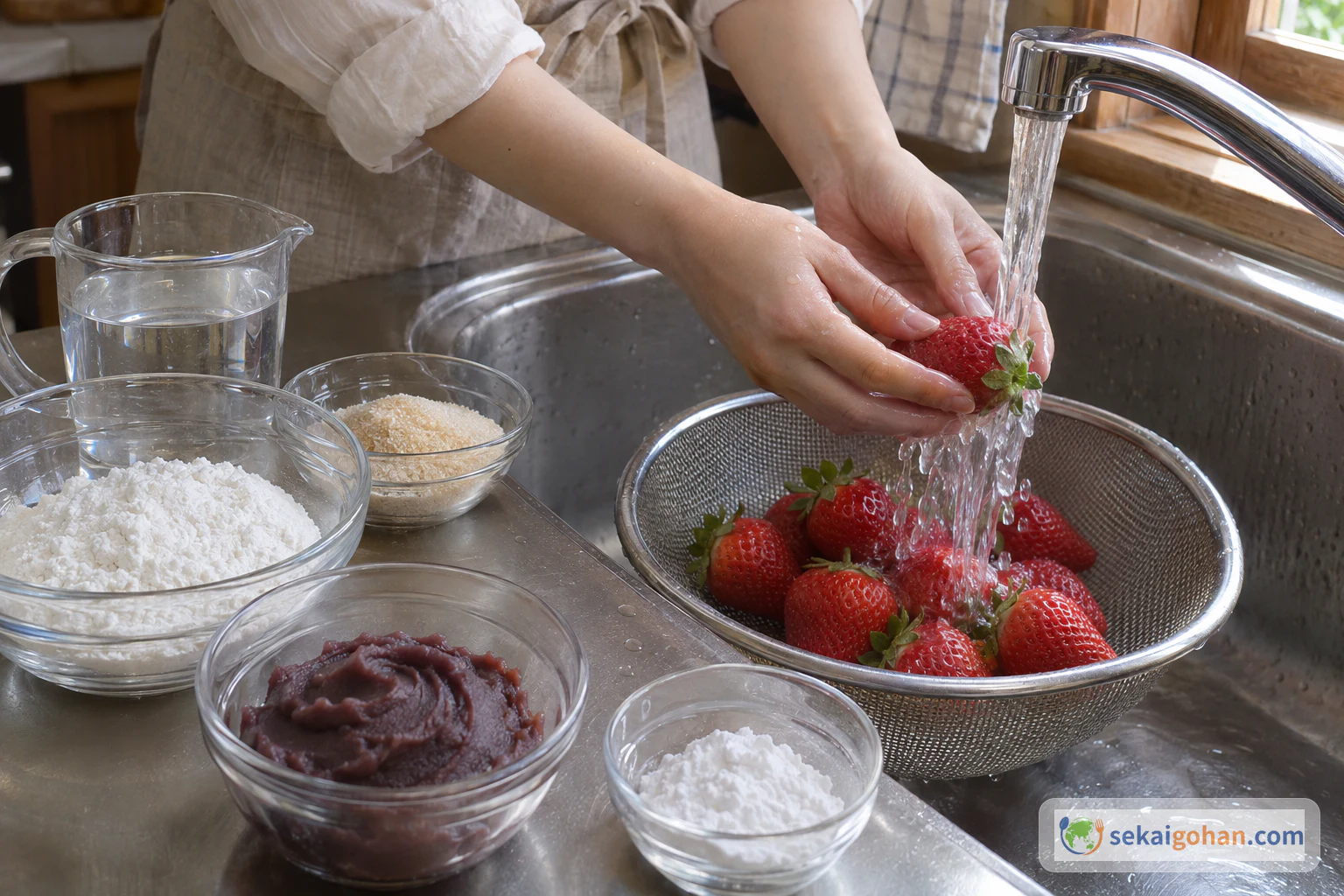
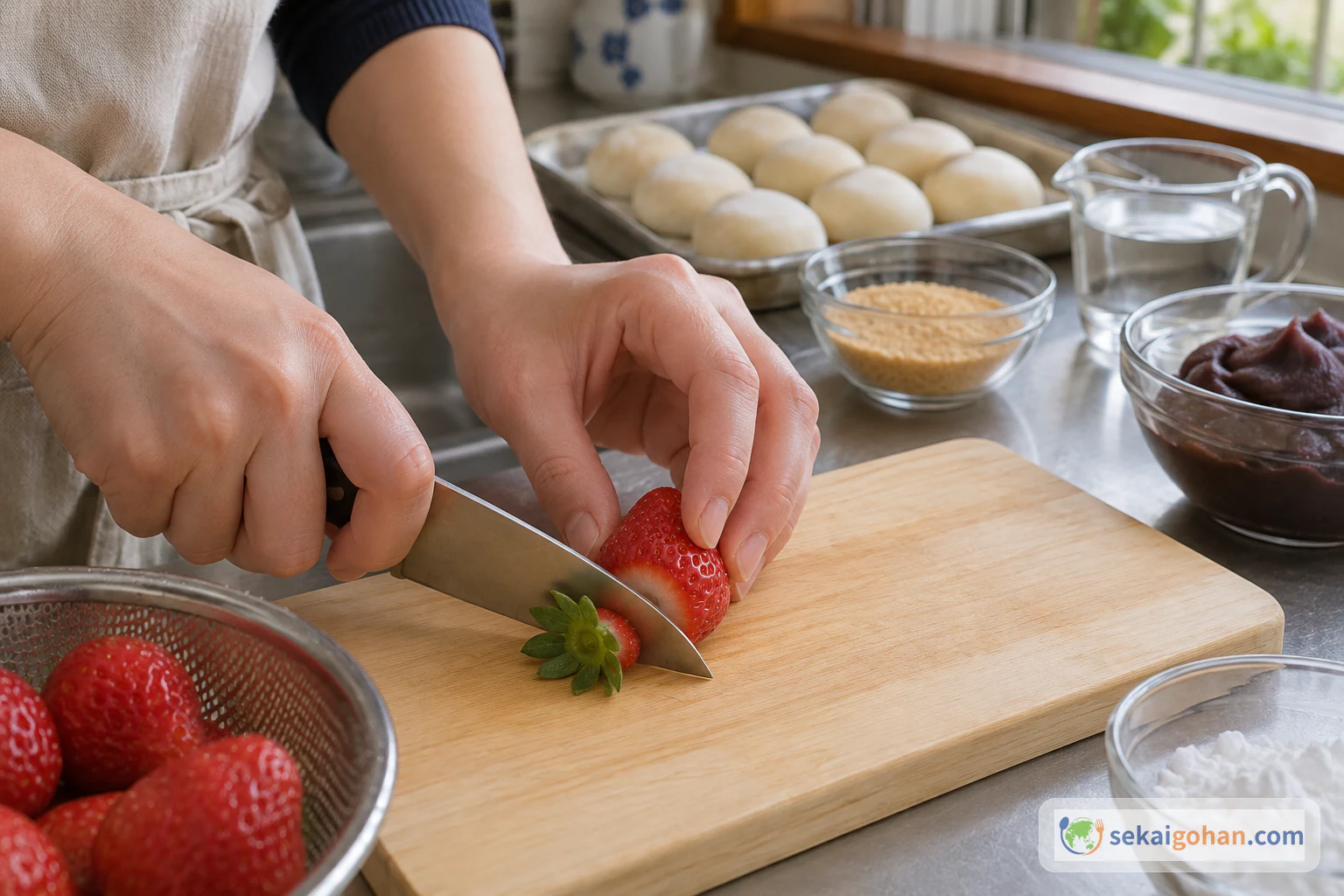
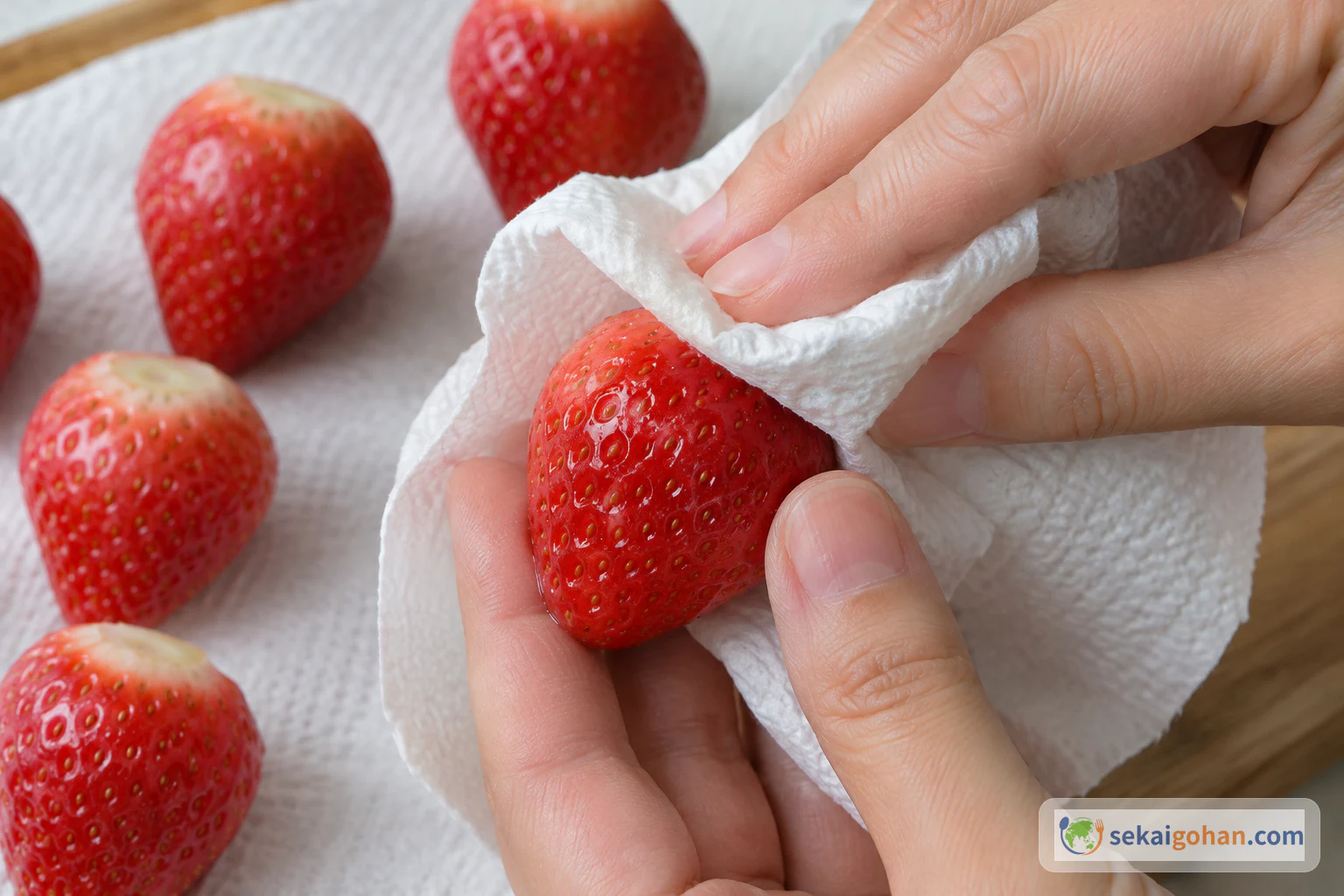
Before anything is wrapped, the strawberries are hulled and wiped dry. This article also adds one hygiene step that the recipe does not include: rinse the berries under running water first. Japan's Ministry of Agriculture, Forestry and Fisheries (MAFF) gives this as general advice for fruit eaten raw, along with washing your hands before cooking. For more dishes from the same country, see the Japan page.
This is the koshi-an version, in which each strawberry is fully hidden inside the bean paste before the gyuhi goes on. There is no strawberry poking out of the top. Versions with white bean paste (shiro-an), chunky bean paste (tsubu-an) or store-bought cut mochi exist, but they use different amounts and methods, and they are only described further down.
Which Ichigo Daifuku This Is, and How Other Versions Differ
Published recipes for ichigo daifuku differ in their dough, their bean paste and their fruit, so it helps to fix the version first.
| Version | What it does | How it is used in this article |
|---|---|---|
| Mitsui DM Sugar microwave recipe | Shiratamako, cane sugar and water microwaved at 600W in three rounds. Koshi-an wraps each strawberry, gyuhi wraps the outside. Makes 10 | The recipe followed below |
| Shiratamaya Shinzaburo microwave recipe | Also makes gyuhi from shiratamako in the microwave, but with different amounts of sugar and water, and the sugar goes in at a different point | Comparison only. Its amounts and order are not mixed into this recipe |
| Ehime Prefecture recipe | Uses Beni Shizuku (紅い雫), a strawberry variety bred in Ehime. The berry is wrapped in bean paste and then in gyuhi | An example of how the choice of fruit can carry a regional flavor. It does not mean the dish comes from Ehime |
| Imuraya recipe | A shortcut using cut mochi (kiri-mochi) and sweetened boiled azuki beans | A different method, mentioned only as an alternative |
The references used here do not establish where ichigo daifuku started, who invented it or when. This article doesn't guess. It treats ichigo daifuku as a Japanese wagashi that people make at home one piece at a time, and it notes that recipes really do vary in paste, dough and fruit.
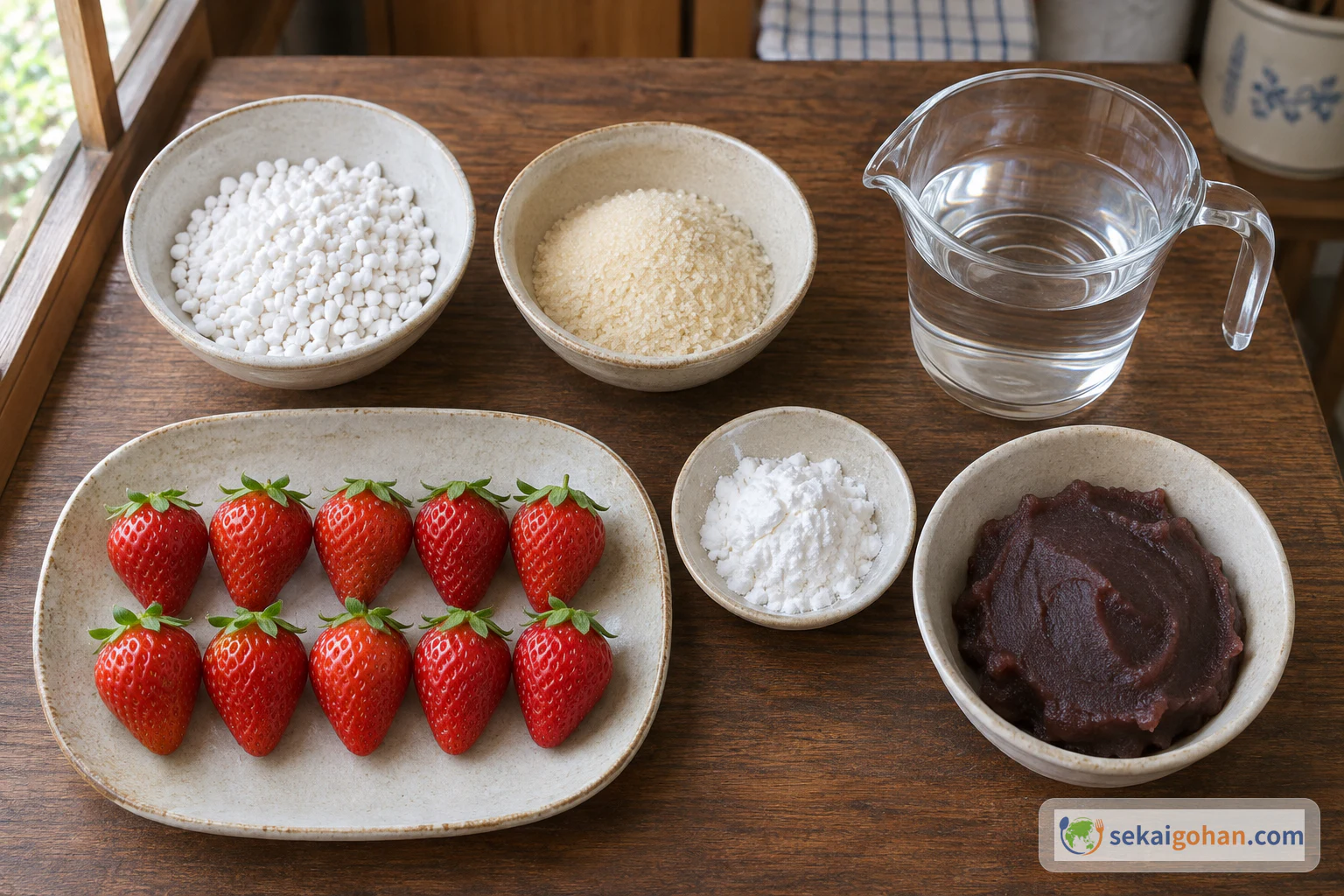
Ingredients for 10 Pieces
Equipment
- Microwave with a 600W setting
- Large microwave-safe bowl
- Whisk
- Wooden spatula
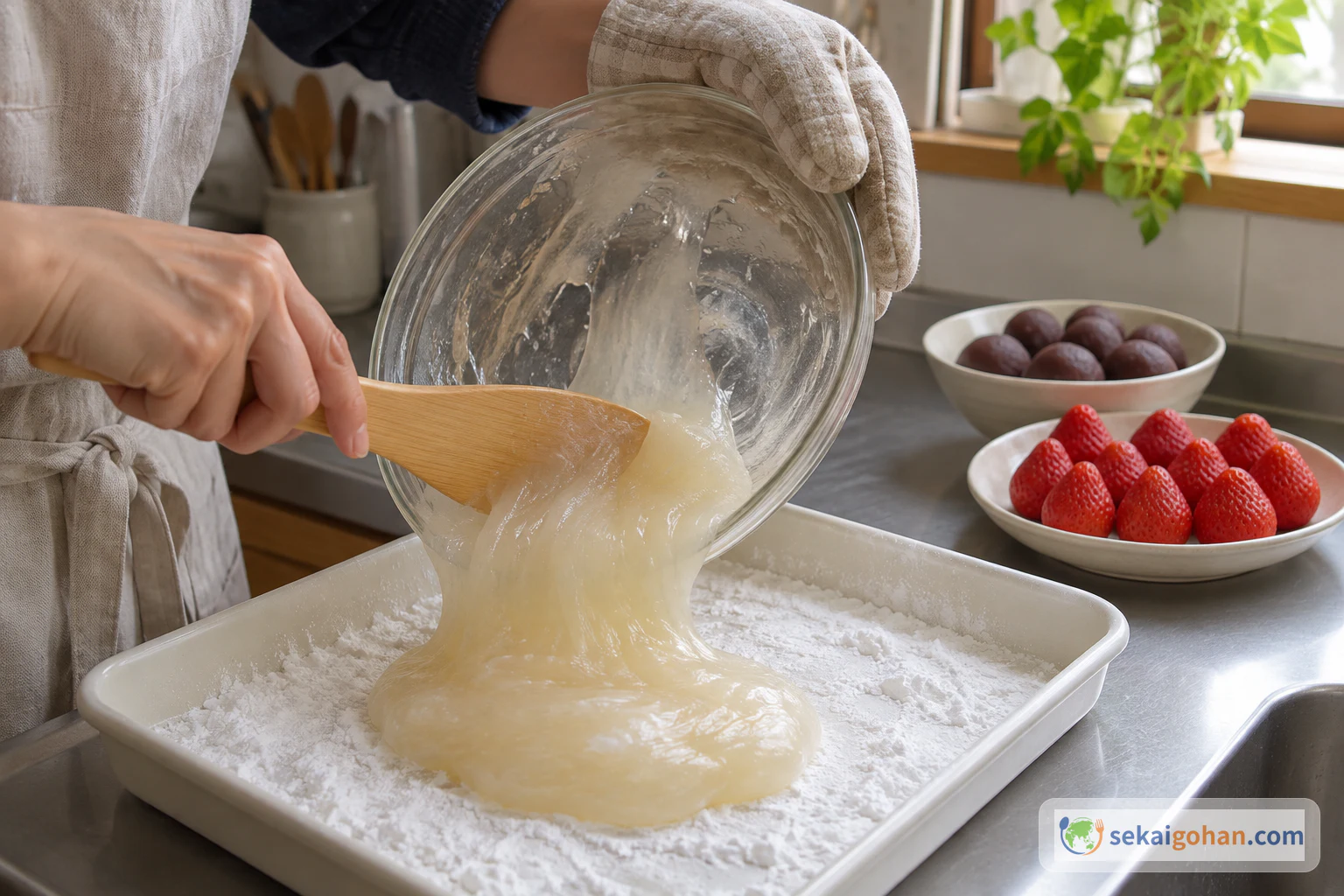
- Shallow tray (for receiving the hot gyuhi)
- Kitchen scissors
- Knife and cutting board (for hulling the strawberries)
- Clean paper towels
- Oven mitts or a heatproof cloth
Choosing and Substituting Ingredients
Cane sugar. This recipe uses Japanese cane sugar (sato-kibi-to), and the gyuhi may come out a light ivory color instead of pure white. That is expected. Using ordinary white sugar (jōhakutō) instead is your own change to the recipe, and the color and flavor may change.
Shiratamako. Use shiratamako. Do not treat it as the same thing as mochiko or other rice flours; any substitution would make a different dough.
Bean paste. Choose a paste with less moisture because it wraps more easily. Shiro-an or tsubu-an can be used as variations, but how wet and how firm the paste is will change how easily it closes around the fruit.
Strawberries. Choose small, round berries. They are easier to cover evenly, and the wrapper is less likely to tear. If you want to bring in a regional variety, such as Ehime's Beni Shizuku, pick by size and shape as well as by name.
All six ingredients are common wagashi ingredients in Japan, and the equipment is ordinary kitchen equipment. You don't need special tools.
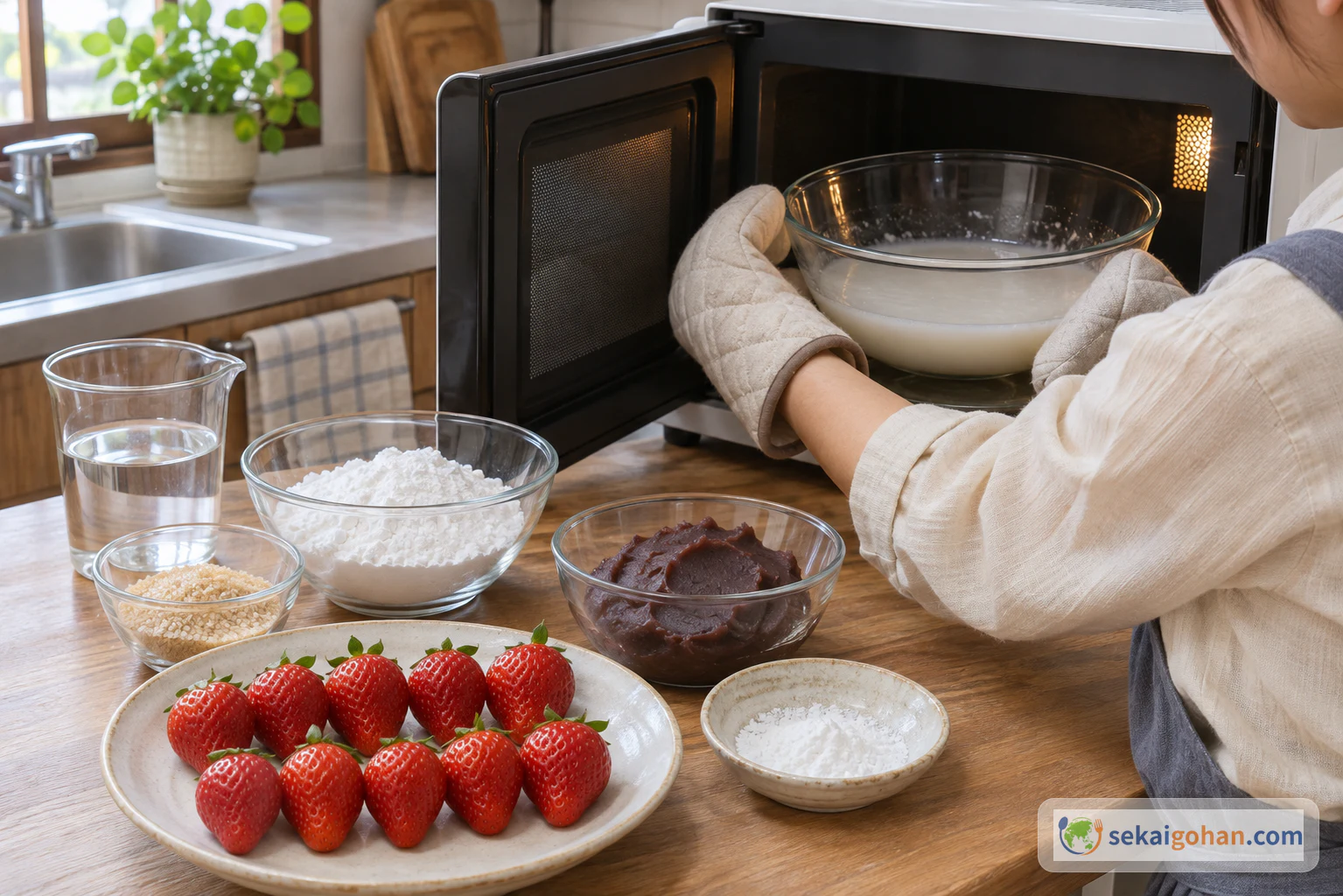
The gyuhi and the bowl get very hot in the microwave. Use oven mitts or a heatproof cloth to take the bowl out, keep your face away from the steam, and don't handle hot dough with bare hands. Wait until it has cooled enough to touch.
Method: Wrap the Filling First, Then Make the Gyuhi
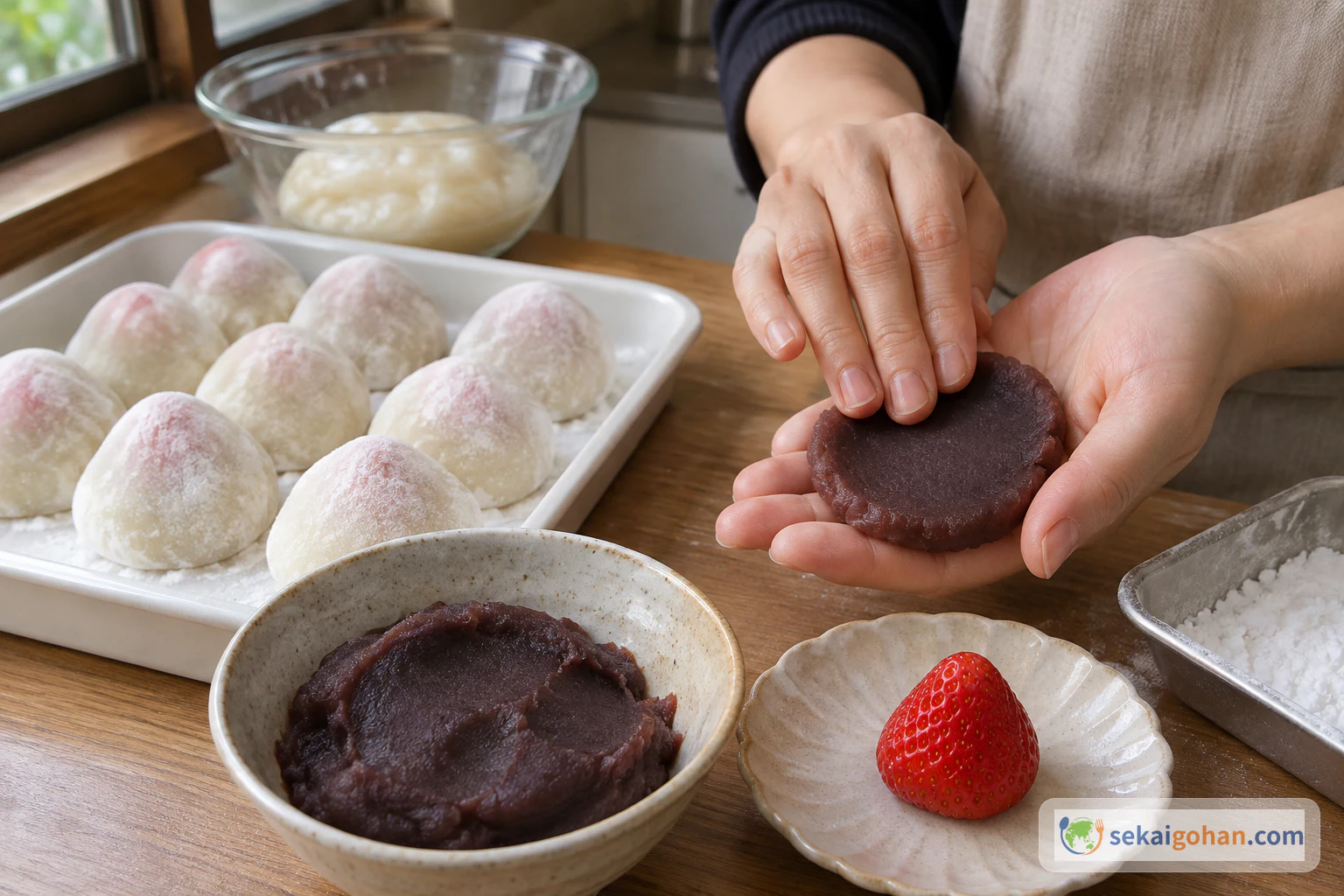
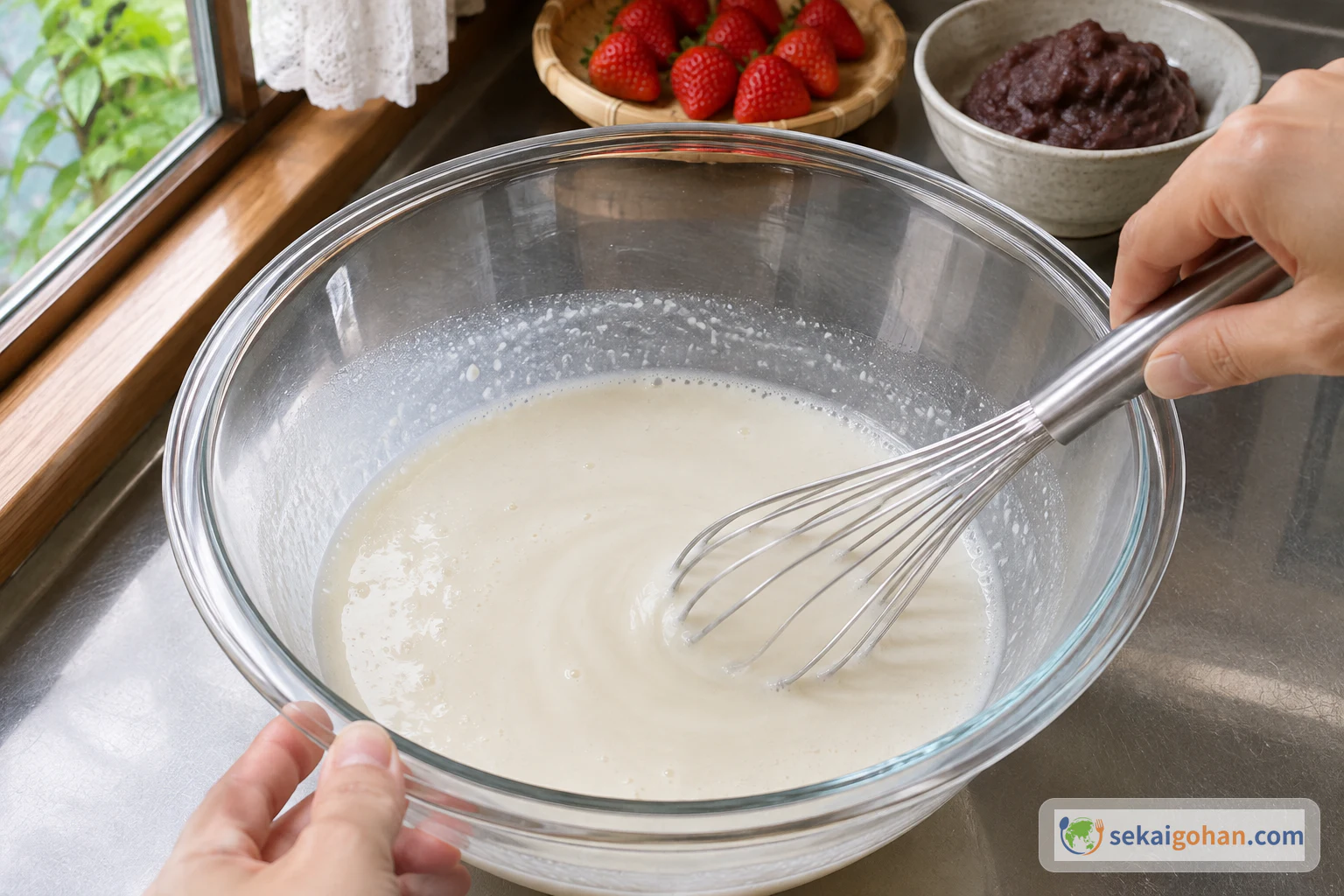
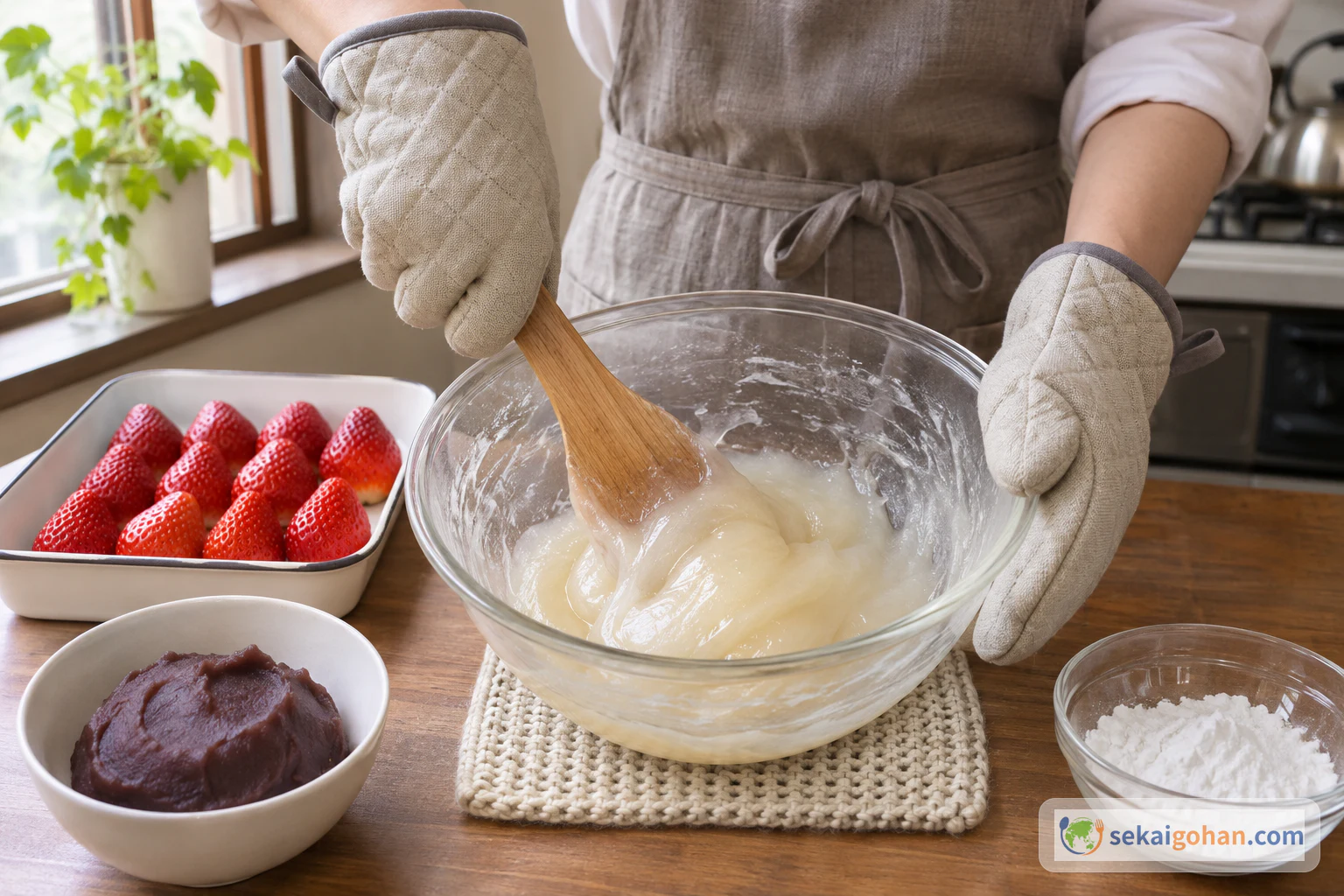
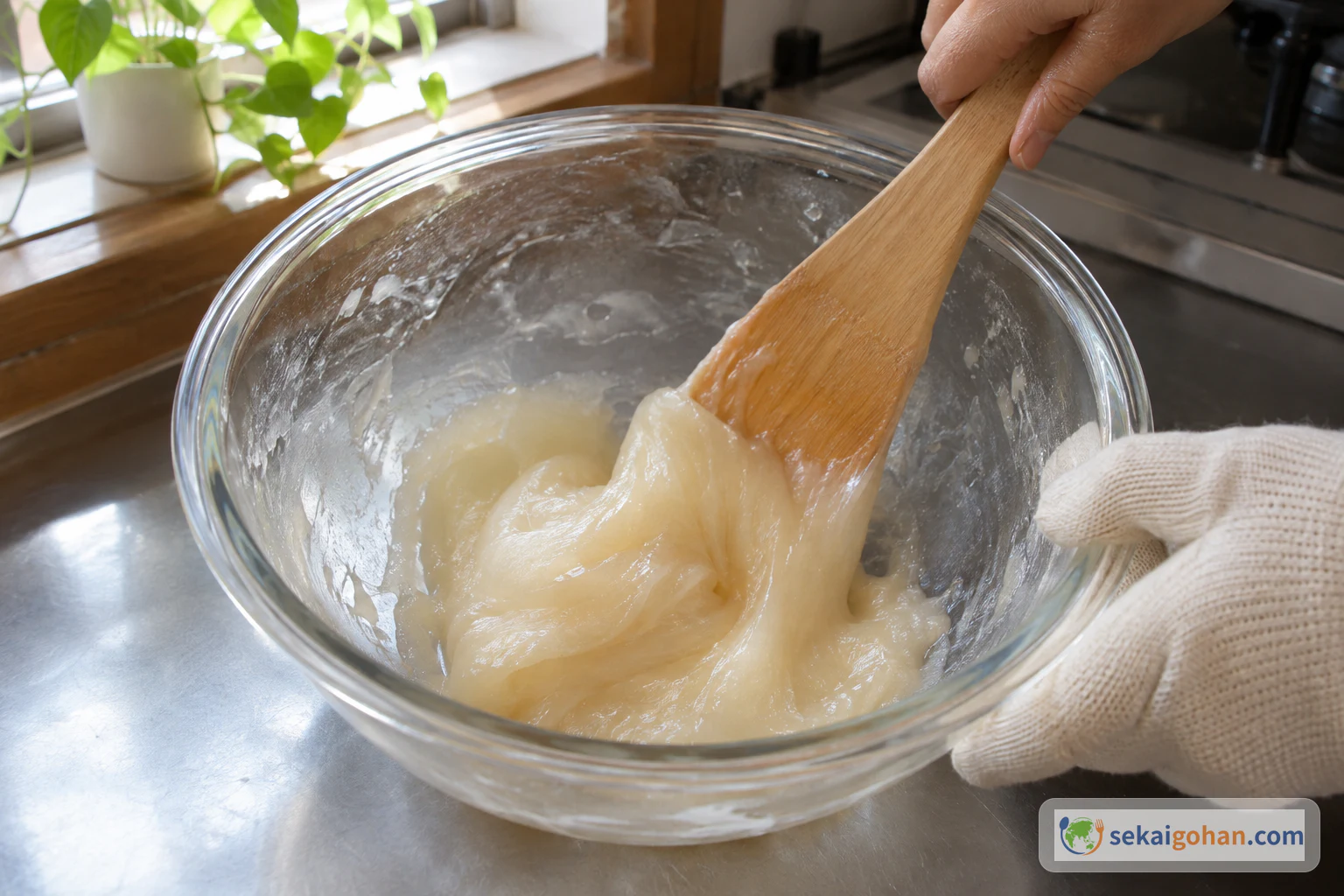
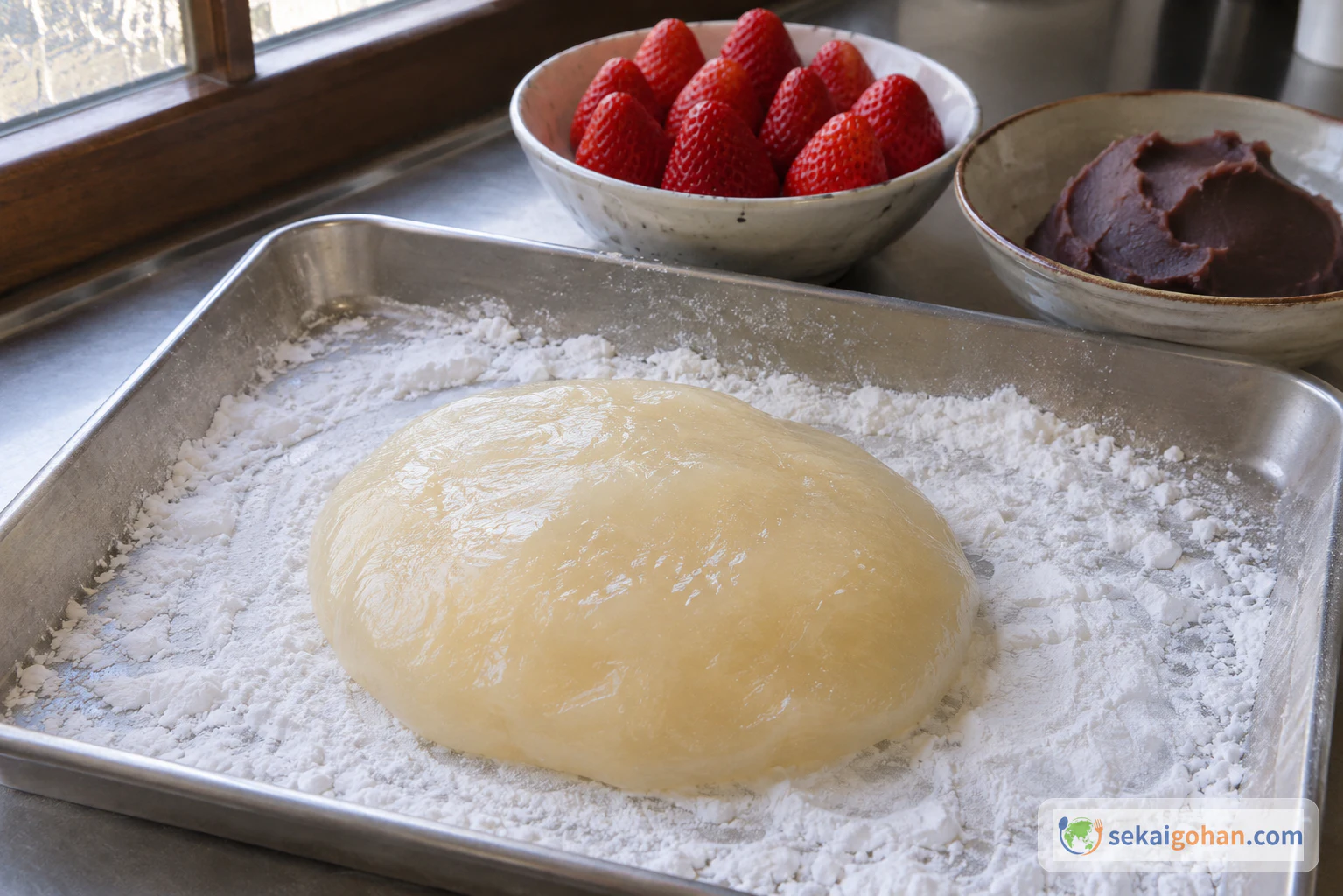
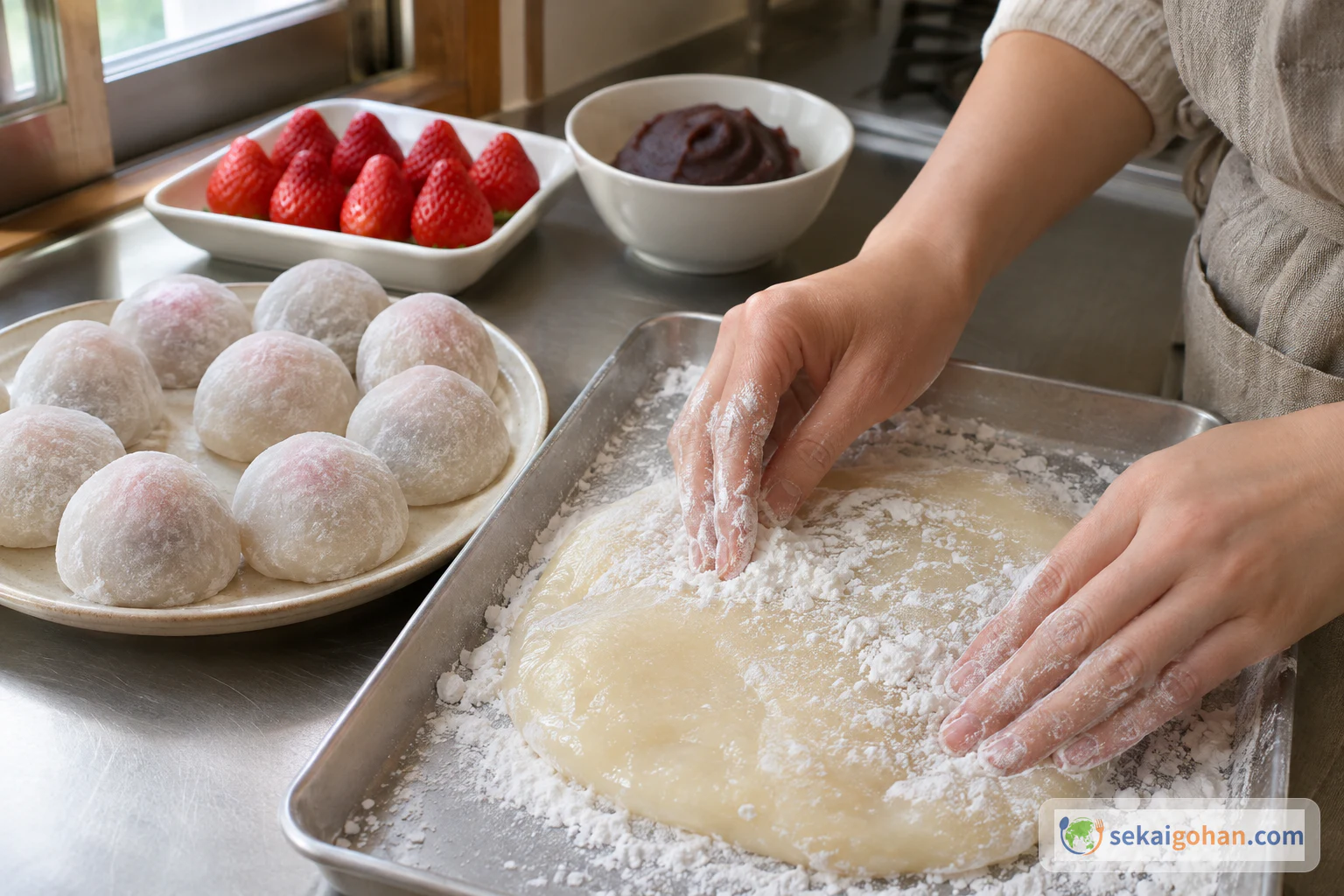
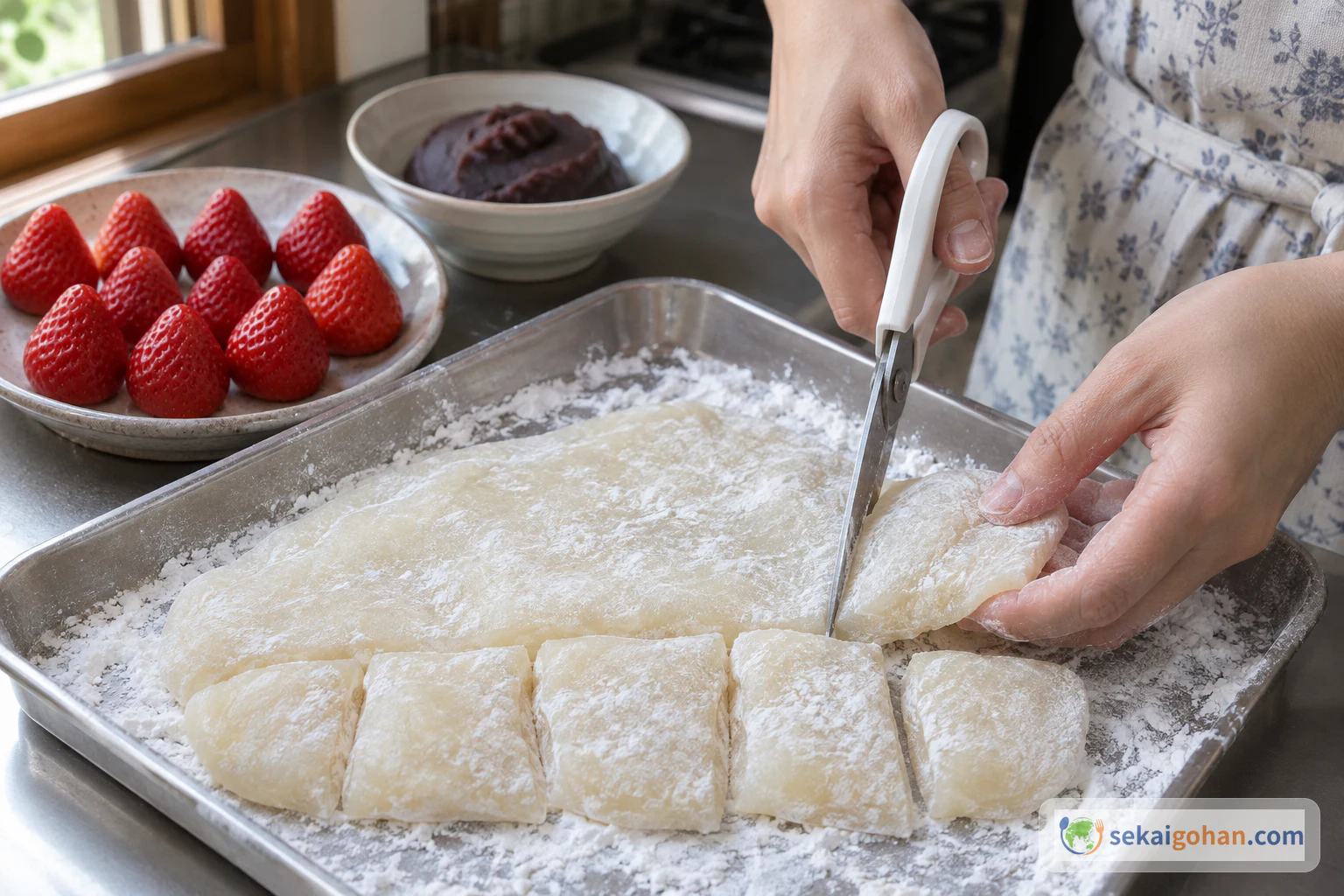
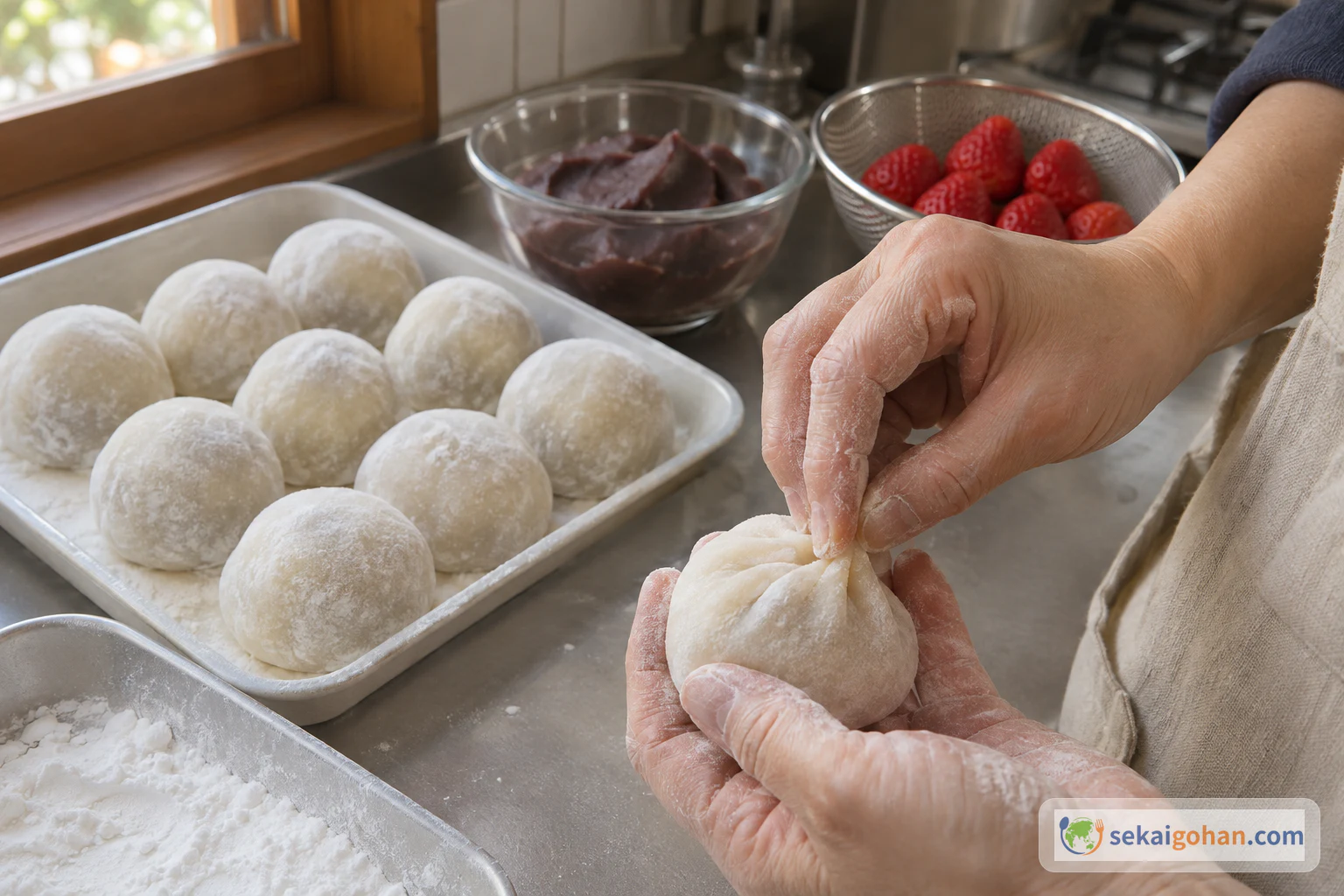
First make all ten bean-paste-wrapped strawberries and set them aside. Then make the gyuhi, which you heat in three short rounds and knead after each one. Wrap the pieces once the dough has cooled enough to handle.
Troubleshooting
| Problem | Likely cause | What to do |
|---|---|---|
| The bean paste is soft and spreads | The paste is too moist or was shaped at the last minute | Shape the 20g balls before you start the gyuhi. Choose a firmer, less moist paste |
| The gyuhi sags or won't come together | It hasn't been heated or kneaded enough | Knead well after each round. Judge the last round by gloss and a soft, cohesive mochi texture, not by the minutes |
| The dough sticks to your hands, the tray or the scissors | Not enough dusting | Dust the tray, the dough surface and your hands generously with potato starch. Keep the starch on the outside only |
| The wrapper tears | The berry is large or uneven, the paste is uneven, or the gyuhi was stretched too thin | Choose small, round strawberries, spread the paste thin and even, and don't overstretch the wrapper |
| The paste won't close around the berry | The berry is wet | Blot each strawberry thoroughly dry after rinsing and hulling |
Serving and Eating Safely
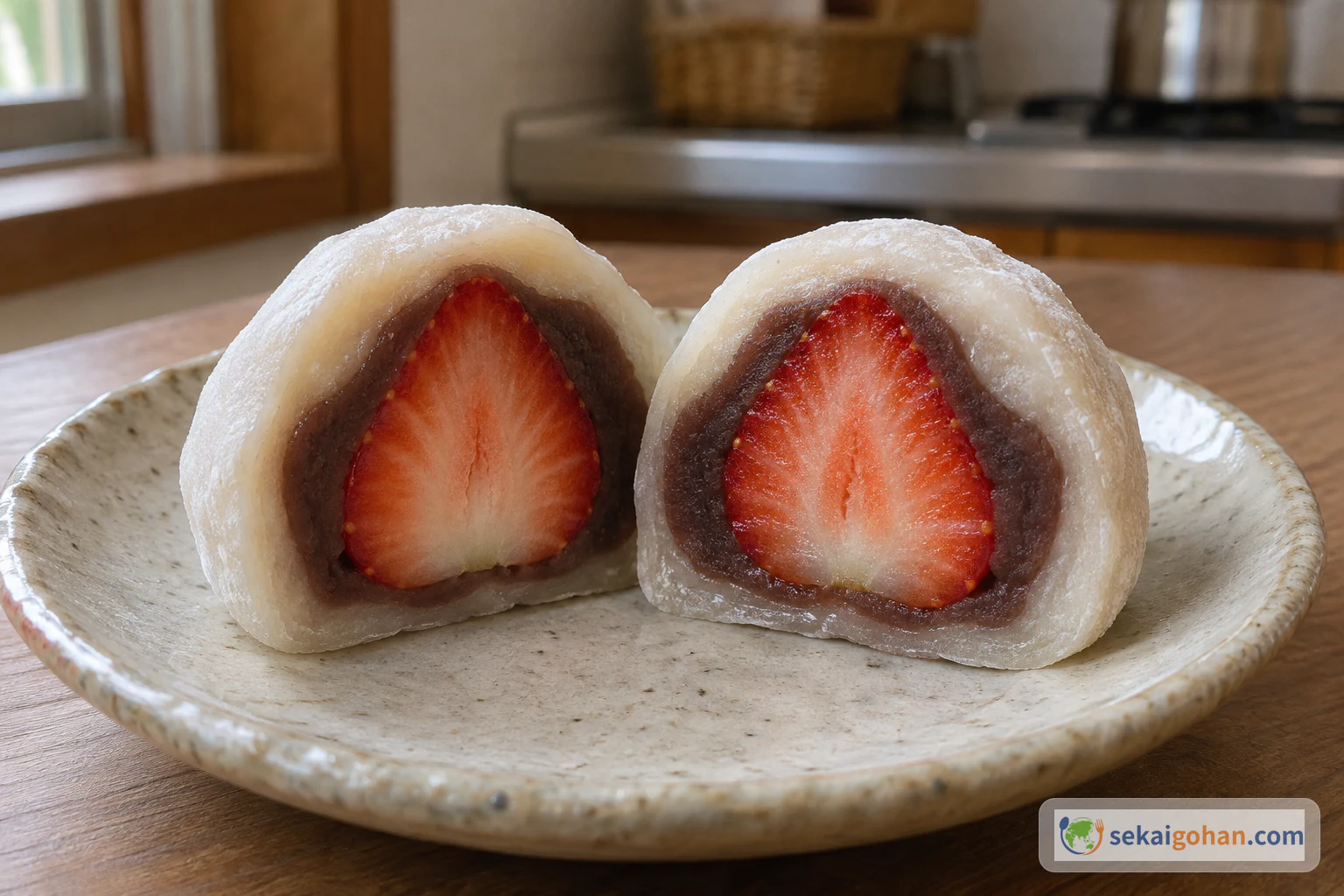
Cutting a piece in half shows the three layers and makes each bite smaller.
Mochi is soft and sticky, so cut it into small pieces that are easy to eat. Take modest bites, and eat slowly, chewing well. When older people are eating mochi, someone nearby should keep an eye on them. This is general advice for mochi. It is not a measure of risk specific to ichigo daifuku.
Variations
These are options outside the recipe above. Each is a separate version, not an adjustment to these amounts:
- White bean paste (shiro-an) or chunky bean paste (tsubu-an). This changes the flavor and look. How moist and firm the paste is affects how easily it wraps, so firmer pastes are easier.
- Smaller strawberries. These are easier to cover completely and give a smaller piece.
- Regional varieties. Ehime Prefecture publishes an ichigo daifuku recipe using its own variety, Beni Shizuku. Choosing a local strawberry is one way the dish can reflect a place.
- Cut-mochi version. Imuraya publishes a shortcut using kiri-mochi and boiled azuki beans. It is a different method with its own amounts and steps, and it is not covered in this article.
Frequently Asked Questions
How long do I heat the gyuhi?
In the Mitsui DM Sugar recipe, you heat it at 600W for about 2 minutes, then about 1 minute, then 30 seconds to 1 minute, kneading after each round. These are approximate times. Microwaves differ, so stop when the dough is glossy and soft like mochi. The times are not a measure of internal temperature or a safety guarantee.
Does the potato starch go into the dough?
No. It is only for dusting the tray, the dough's surface and your hands, so the gyuhi doesn't stick.
Can I use tsubu-an or shiro-an instead of koshi-an?
Yes, as a variation, but it is no longer the version followed here. How moist and firm the paste is changes how easily it wraps. Mitsui DM Sugar recommends a paste with less moisture.
Can I use white sugar instead of cane sugar?
That is your own change to the recipe. The recipe uses Japanese cane sugar, which can leave the gyuhi light ivory. With ordinary white sugar, the color and flavor may change.
Why rinse the strawberries if the recipe only says to wipe them?
This article adds the rinse based on MAFF's general food-hygiene advice, which says to rinse fruit eaten raw under running water before preparing it and to wash your hands before cooking. Afterward, hull the berries and blot them thoroughly dry, as the recipe directs.
How long do they keep, and can I reheat them?
The references used for this article do not confirm a storage time, a storage method or a way to reheat ichigo daifuku, so this article doesn't give any.
Sources
- Mitsui DM Sugar Co., Ltd. (DM三井製糖株式会社), "Ichigo daifuku (いちご大福)." The recipe followed in this article: ingredients for 10 pieces (shiratamako 100g, cane sugar 50g, water 180ml, potato starch as needed, 10 strawberries, koshi-an 200g), the 600W microwave steps and how the dough should look, how to wrap the filling, advice on choosing the bean paste and strawberries, and the warning about burns. It is one company's recipe, not the only correct version. https://www.msdm-hd.com/jp/recipe/detail/0315.html
- Shiratamaya Shinzaburo (白玉屋新三郎), "Easy in the microwave! Ichigo daifuku with shiratamako (レンジで簡単!白玉粉を使ったいちご大福)." Used only for comparison: a microwave shiratamako gyuhi with different sugar and water amounts and a different point for adding the sugar. https://www.shiratamaya.co.jp/recipe/recipe_wastweets/ichigodaifuku/
- Ehime Prefecture (愛媛県), "Ehime recipes (February 2025 issue)." The strawberry variety Beni Shizuku, bred in Ehime, and a prefectural recipe that wraps the berry in bean paste and then in gyuhi. It is not used as evidence that the dish comes from Ehime. https://www.pref.ehime.jp/page/99498.html
- Imuraya Co., Ltd. (井村屋株式会社), "Ichigo daifuku (いちご大福)." A separate shortcut version using cut mochi and boiled azuki beans, mentioned only as an alternative. https://www.imuraya.co.jp/recipe/azuki/ichigodaihuku/
- Consumer Affairs Agency, Japan (消費者庁), "Beware of choking on mochi over the New Year holidays." General advice for eating mochi: cut it small, take modest bites, chew slowly and well, and watch over older people while they eat. It gives no risk figures specific to ichigo daifuku. https://www.caa.go.jp/policies/policy/consumer_safety/caution/caution_046
- Ministry of Agriculture, Forestry and Fisheries, Japan (農林水産省), "Basics of preventing food poisoning." General household hygiene: rinse fruit eaten raw under running water before preparing it, and wash your hands before cooking. It does not cover storing ichigo daifuku. https://www.maff.go.jp/j/pr/aff/2506/spe1_01.html