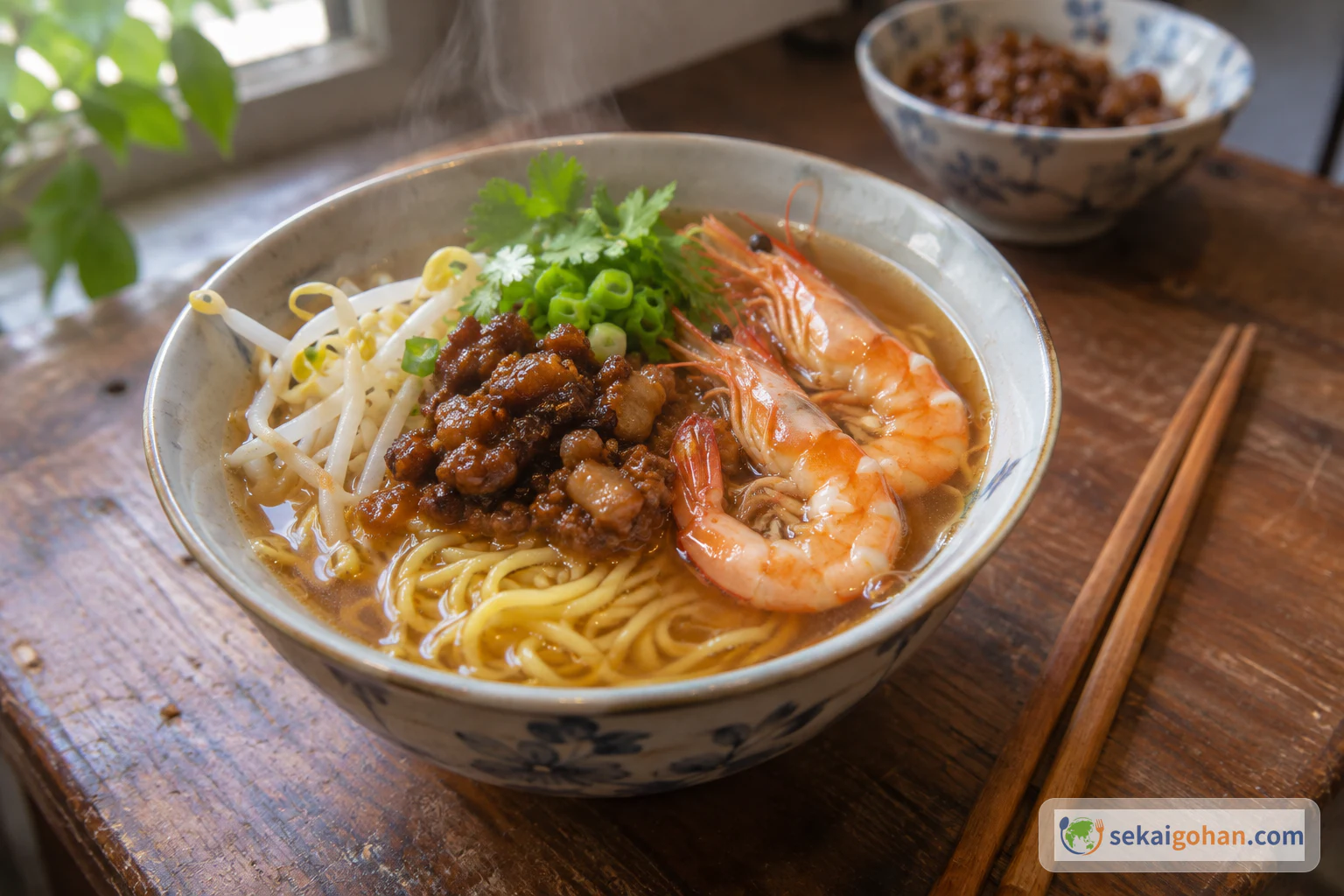
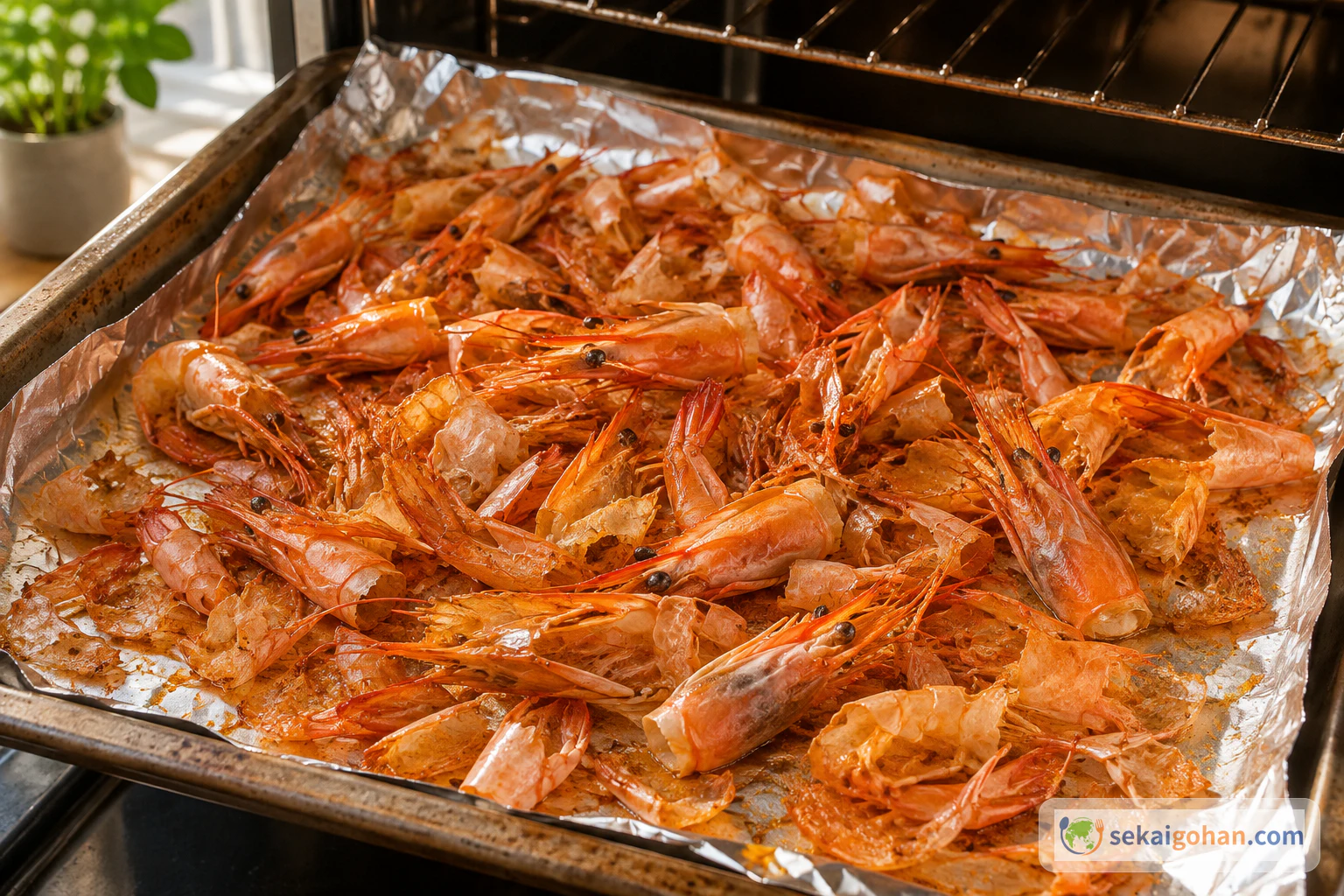
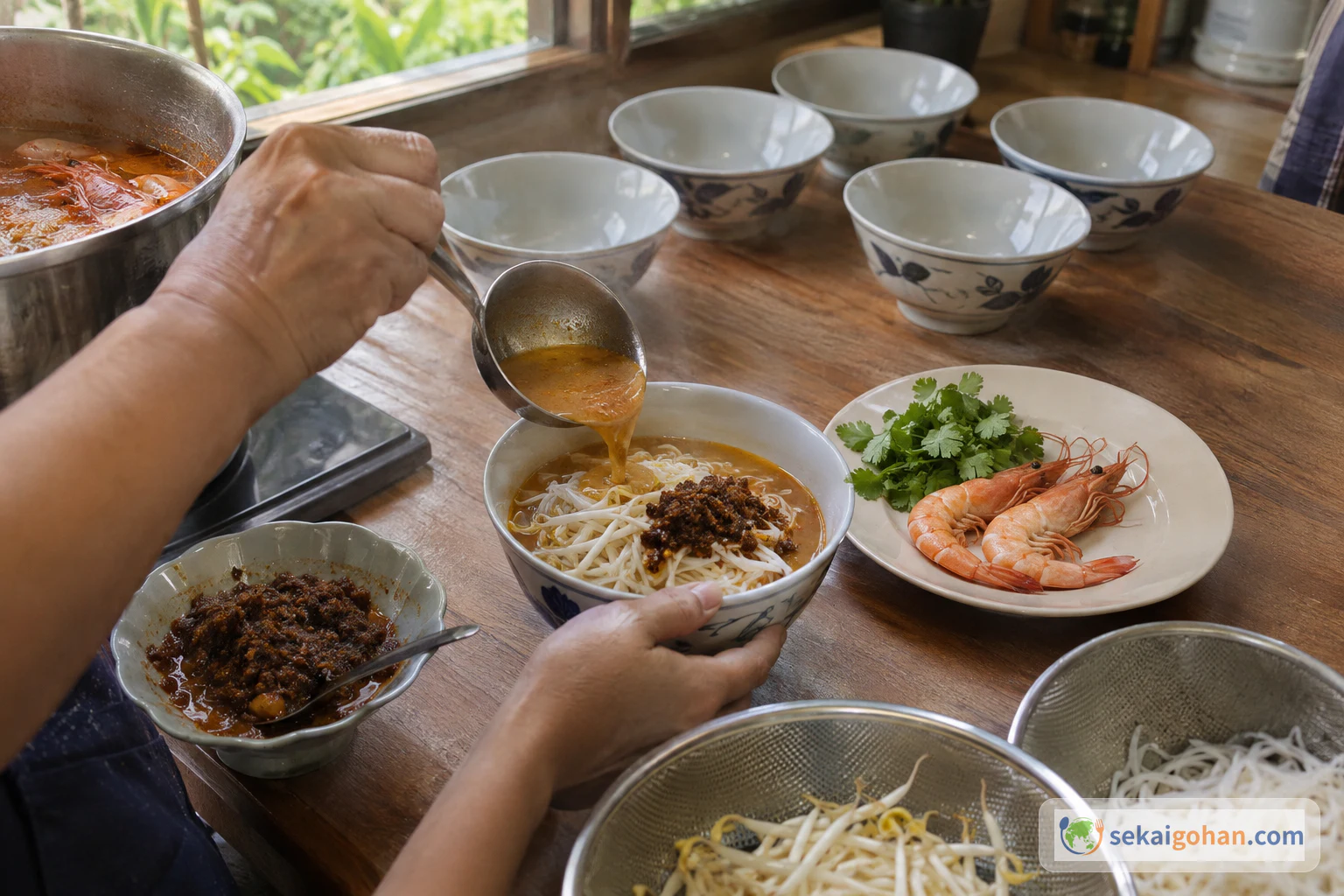
As the shrimp heads roast, the shells dry out and turn from coral to a deep red. A little orange fat seeps onto the tray, and the kitchen fills with the smell of toasted shellfish. That smell is how ta-a noodles begin. The dish is a small bowl from Tainan in southern Taiwan: yellow alkaline noodles in a clear amber broth made from shrimp heads and shells, topped with a spoonful of soy-braised minced pork, a tail-on prawn, bean sprouts, spring onion and cilantro.
The broth is sweet and tastes of the sea. The pork adds salt and fat, and the raw herbs keep each mouthful fresh. The portion is small on purpose. It is a few bites of noodles for a slow afternoon or a late-night hunger, not a full meal.
A Shoulder Pole, a Slack Season and a Small Bowl
The name describes how the dish was first sold. In Taiwanese it is ta-a-mī, and in Mandarin danzai mian (擔仔麵). Both refer to the shoulder pole that street sellers carried through town, with a pot hanging from one end and bowls and noodles from the other. Pole sellers like that can still be seen in Tainan, and the small bowl comes from that way of selling. Whatever you could carry on your shoulders had to feed one customer after another.
The story usually starts in the late Qing dynasty, during the Guangxu reign, with a man named Hong Yutou (洪芋頭, also written 洪竽頭). Accounts of his work differ. In one he is a fisherman, and in another he moves cargo by small boat. Both agree on what happened next. In the stormy season, boats could not go out and his work dried up. To get through those lean weeks, he carried noodles to the front of the Shuixian Temple (水仙宮) in Tainan and sold them there. They were his mother's pork-sauce noodles, a family recipe. Late at night he hung a red lantern.
"Ta-a" (擔仔) refers to the shoulder-pole load. Du Xiao Yue (度小月) means "getting through the slack month," the off-season when the boats stayed home. The noodle stall took that second phrase as its name, so both the dish's name and the shop's name come from the same lean season by the water.
The bowl was meant as a snack from the start, and it still is. People eat it as an afternoon bite or a late-night one. Each bowl holds only about 2 oz (50–60 g) of noodles. That is enough to take the edge off hunger, and small enough that a second bowl is easy to order.
Tainan and Taipei, one name, two bowls
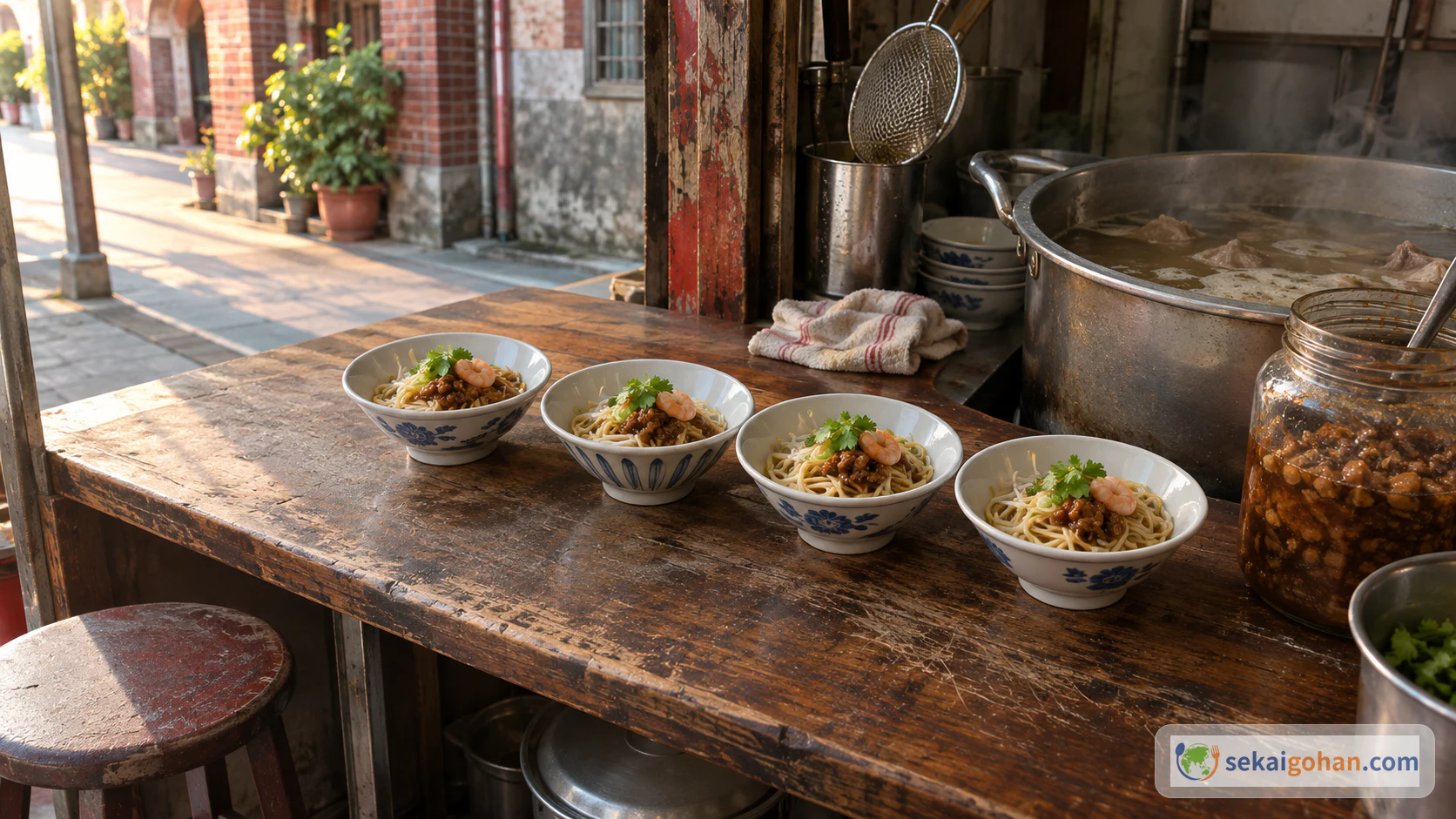
In Tainan the bowl is plain: noodles, pork sauce, bean sprouts, sometimes garlic chives, and spring onion. A prawn is often an extra. In the south the prawn is usually a small, red-shelled "fire-burnt shrimp" (火燒蝦), laid on top with its tail on. In Taipei, a restaurant on Huaxi Street called Tainan Danzai Noodles serves the dish in a much more formal setting. There the bowl gets a spoonful of garlic paste and a splash of black vinegar, and the prawn tail is spread into a fan. The name is the same, but the bowl, the price and the room are very different.
Under those differences, every version shares four things: a small bowl, a shrimp broth, a soy-braised pork sauce and fresh herbs. Each shop builds its own style on top of those four.
Ta-a noodles, tshik-a noodles and lu rou fan
Northern Taiwan has a different noodle dish called tshik-a-mī (切仔麵). Its name comes from shaking the noodles in a bamboo strainer. The broth is made from pork bones or pork belly, the portion is much bigger, and it comes topped with sliced pork and garlic chives. Both dishes use the same kind of noodle, an egg noodle made with lye water. Ta-a noodles are the small, shrimp-based snack of the two.
The pork sauce on top might remind you of lu rou fan, the braised pork served over rice. In lu rou fan the pork is the whole point. In ta-a noodles it is a small, salty center, and the noodles and the shrimp broth lead. Both belong to the snack-stall cooking of Taiwan, and they show how one pot of pork sauce can go in two directions.
Ingredients (serves 6)
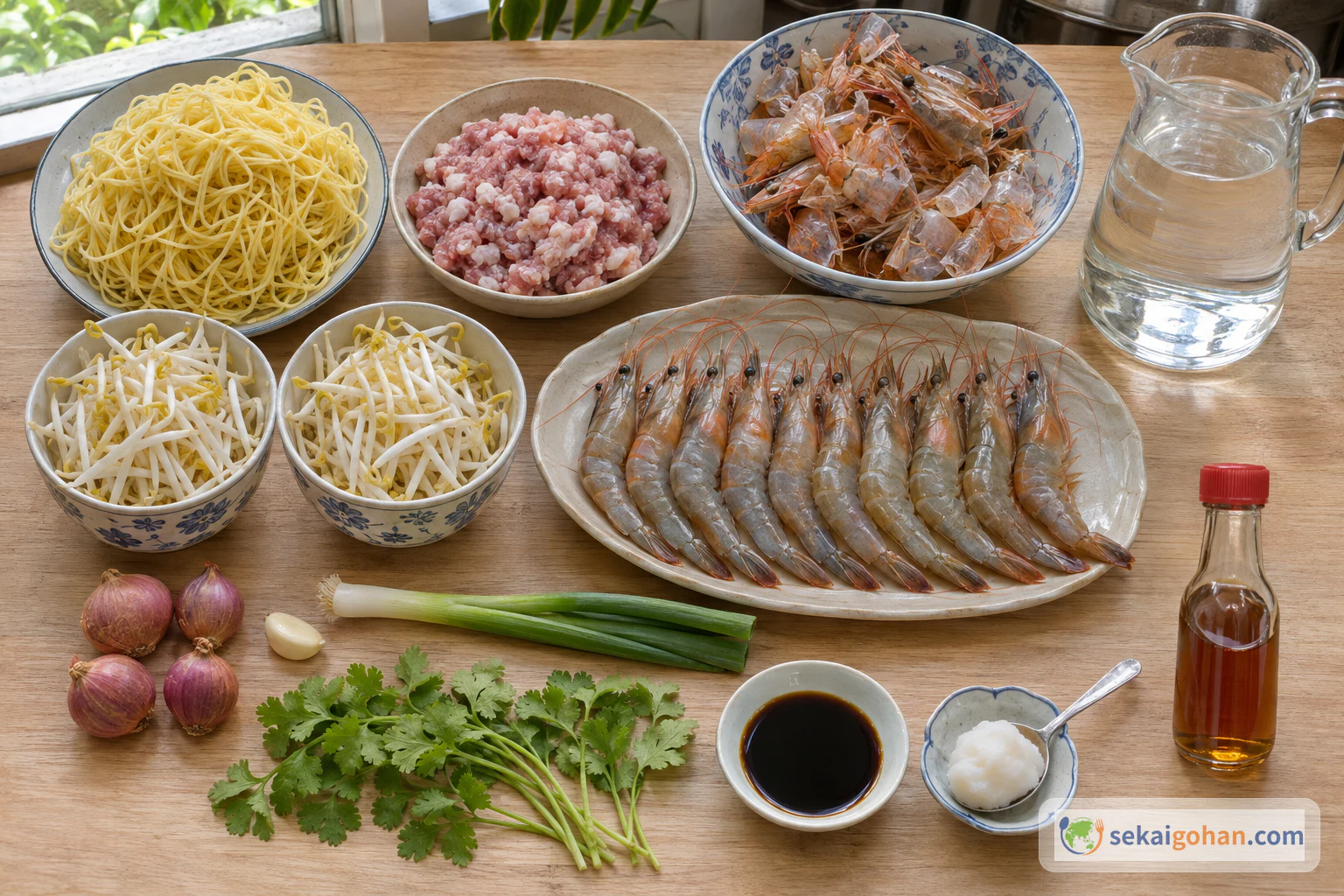
This dish contains crustaceans (shrimp), fish (fish sauce), soy (soy sauce, oyster sauce in the sweeter pork sauce) and wheat (noodles, soy sauce). Ta-a noodles are traditionally egg noodles made with lye water, and the yellow noodles sold abroad vary. Check the noodle label for egg. Cilantro is a garnish and can be left off.
Equipment
- Rimmed baking tray lined with foil, or a wide pan
- Large pot for the broth
- Second pot to strain the broth into
- Fine-mesh strainer (and paper towel to line it, if you like)
- Wok or deep skillet for the pork sauce
- Saucepan of boiling water for the sprouts and noodles
- Wire skimmer or noodle basket
- Small soup bowls, about 5 inches (12–14 cm) across
Choosing and Substituting
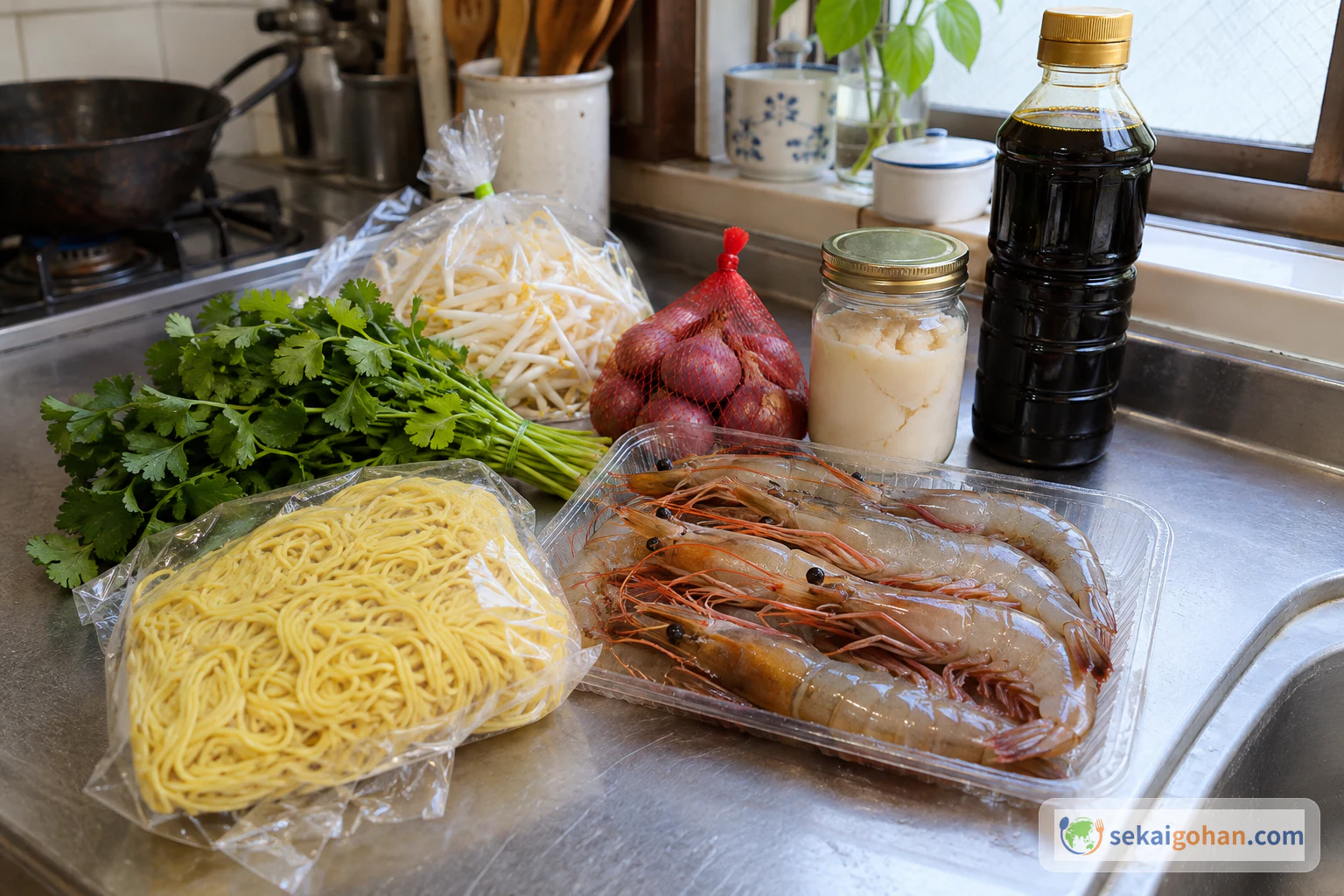
Three things make this taste like Tainan: a red-tinged broth made from shrimp shells, salty and fatty soy-braised pork, and raw spring onion and cilantro on top. Keep those three, and the rest can change with what your shops sell.
Shrimp heads and shells are the one ingredient with no substitute, and you need a lot of them. Buy whole, head-on prawns, often sold frozen. Sweet shrimp and black tiger prawns both work. Save the peeled meat for another meal. If you buy peeled shrimp and add only their shells, you will not have enough to reach 2.2 lb (1 kg), and the broth will taste thin. If you can't collect that much, halve every ingredient together rather than cutting only the shells. For the topping, any prawn works as long as the tail is still on.
- Noodles. Taiwanese yau mien is ideal. Chinese yellow alkaline noodles from an Asian grocer come close in color and spring. Noodles with less alkaline bite let the salt of the broth come forward.
- Dark soy sauce. Use Chinese dark soy sauce, or a Taiwanese black-bean soy sauce (蔭油, 壺底油). All-purpose soy sauce gives a paler color and a harsher salt taste. Light soy sauce leaves the pork far too pale, so skip it.
- Shallots. Small red shallots (紅蔥頭) are the ones Taiwanese cooks use. A small red onion works, but it is sweeter and less fragrant.
- Pork. Fatty minced pork is essential. If your shop sells only lean mince, mix shoulder mince with belly mince.
- Pork lard. Vegetable oil with a few drops of sesame oil works. The aroma changes and the richness drops.
- Fish sauce. Salt can replace it, but the broth loses its savory fish note.
Method
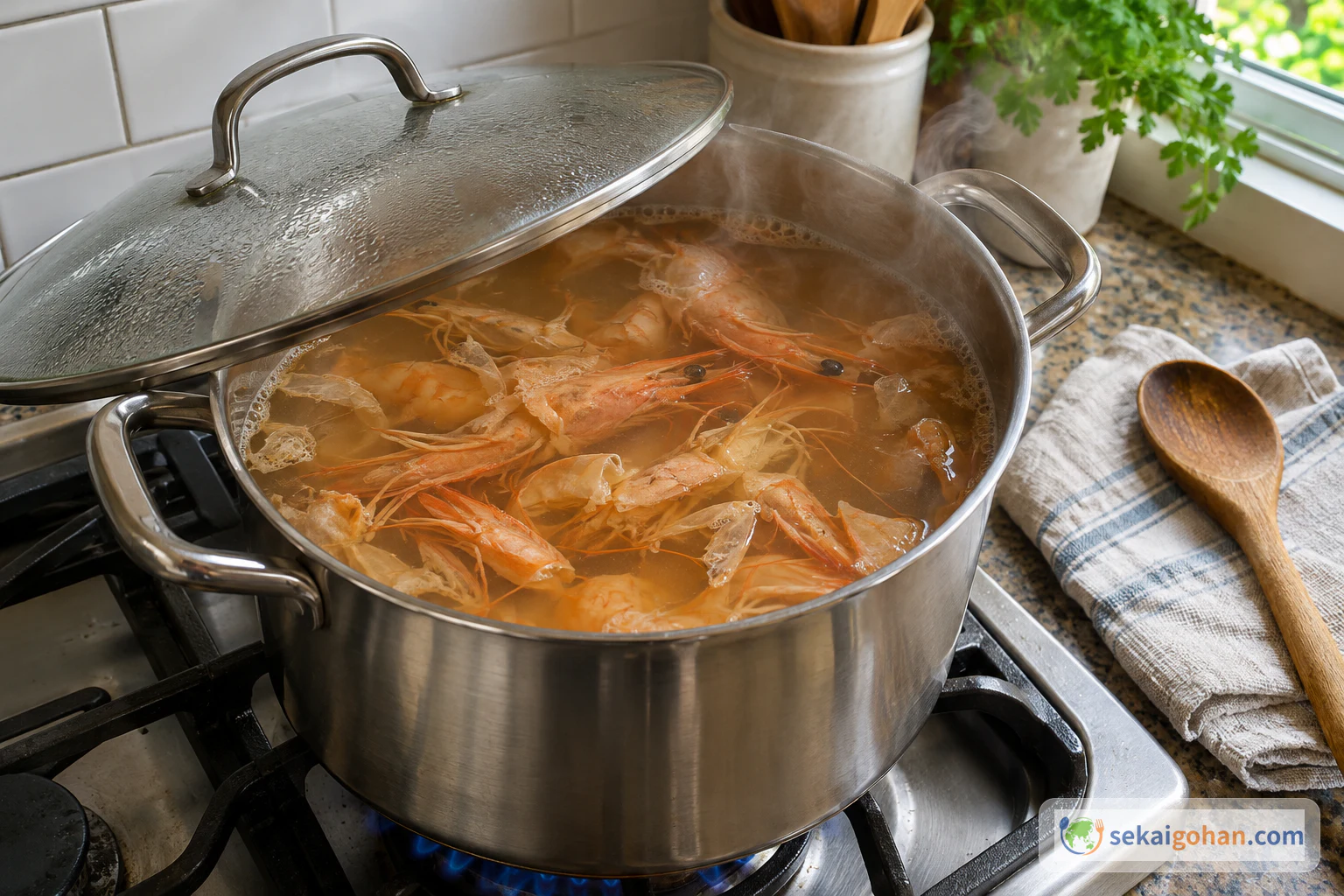
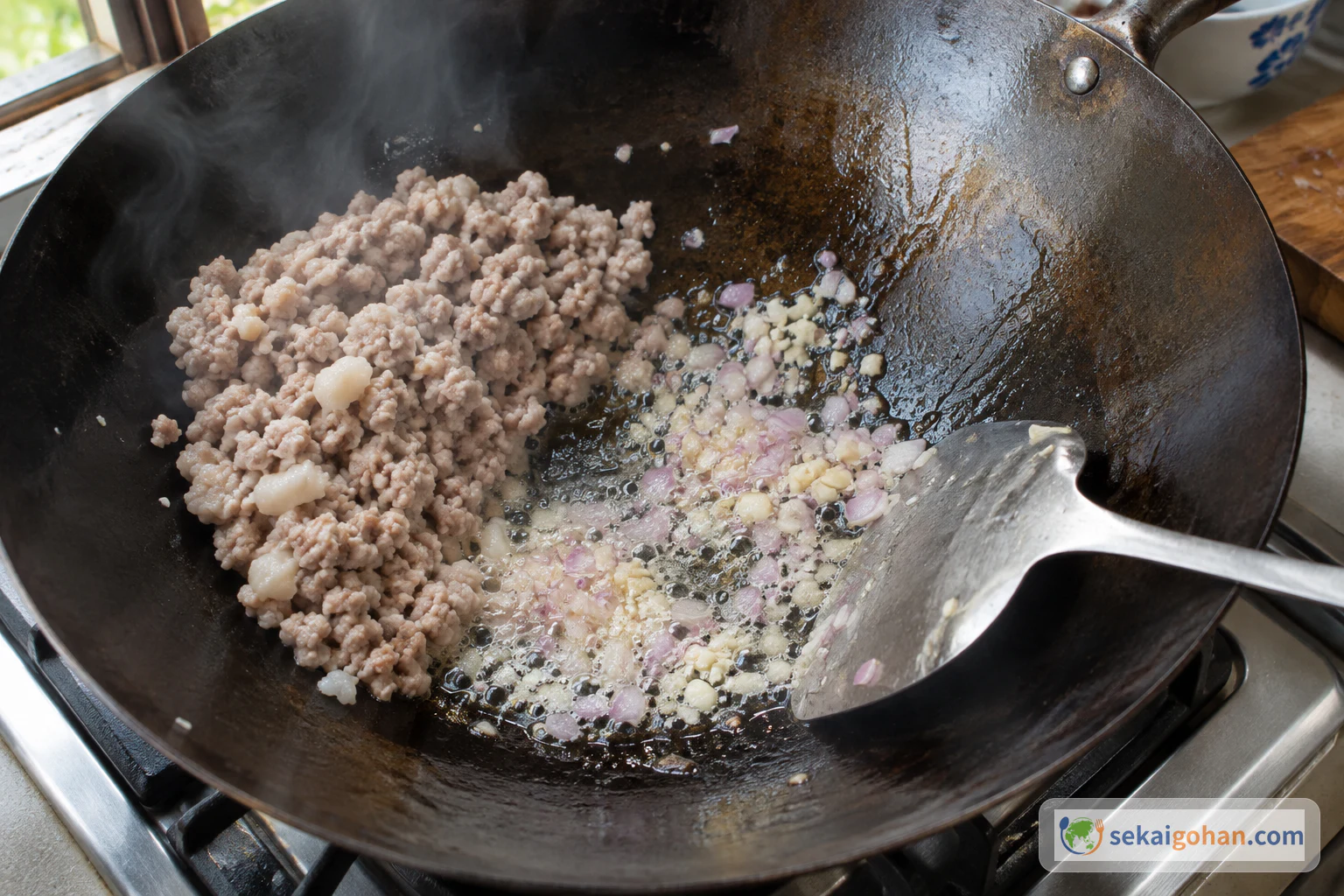
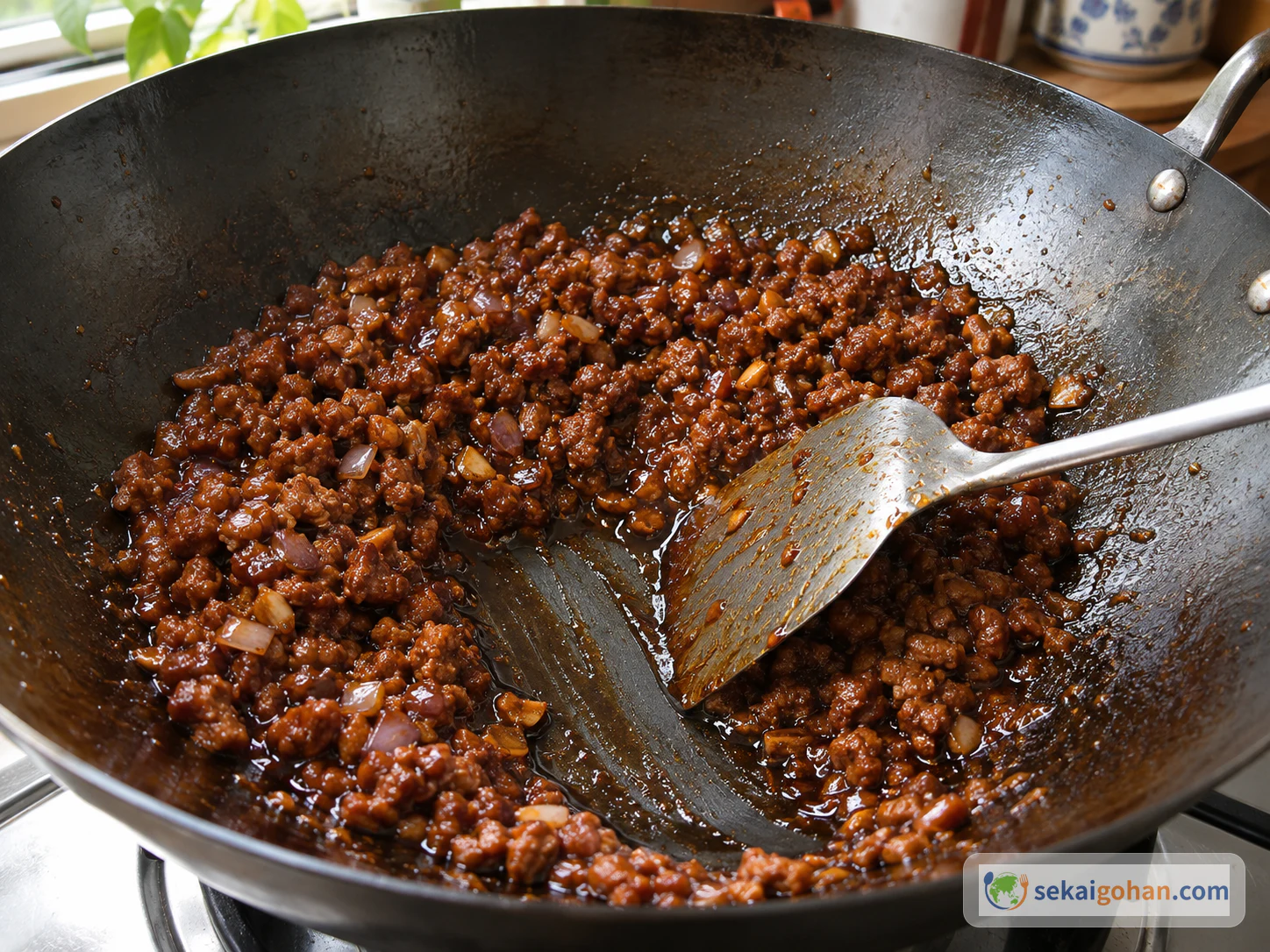
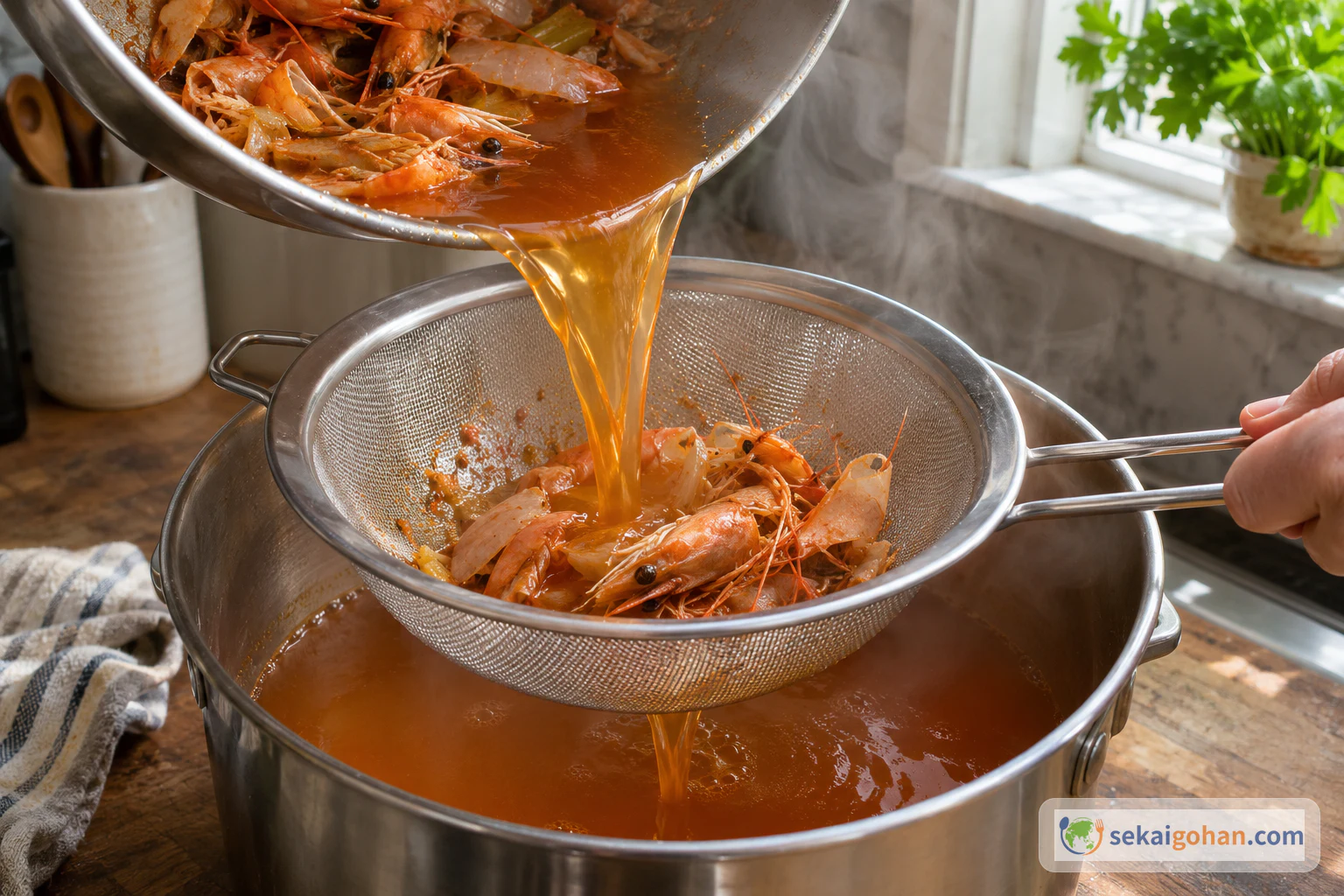
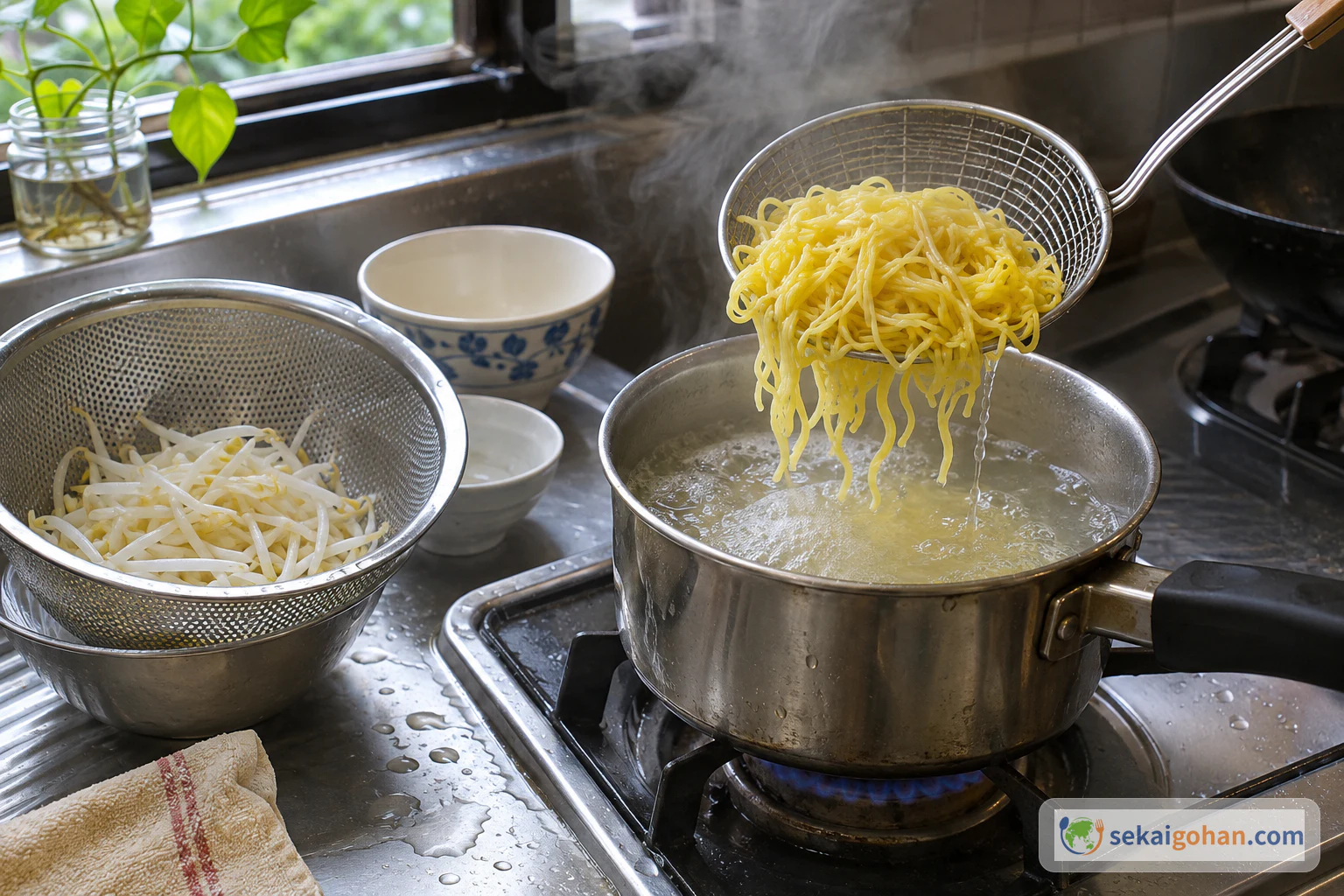
The broth sets the pace. Roast the shells first, then get them simmering. Make the pork sauce during the 45 minutes the broth simmers. Poach the prawns at the end of the simmer, strain the broth, and cook the noodles last, one bowl at a time, right before serving.
Raw shrimp heads and shells drip juice. Wash your hands and the cutting board after handling them, and keep them away from food that won't be cooked.
When It Goes Wrong
- The broth is cloudy or tastes harsh → it boiled hard, or some shells scorched → keep it at a bare simmer, and throw away any blackened shells before they go into the pot.
- The broth smells fishy → the shells were underroasted → roast until they are dry, deep red and toasty, and don't skip the roast.
- The pork sauce is too salty → dark soy sauces vary a lot in saltiness → add a little water to the sauce, simmer briefly, then taste again. This sauce has no sugar, so the salt has nothing to hide behind. Don't add more soy.
- The pork sauce is dry and crumbly → the mince was too lean → use fatty mince, or mix in belly mince next time.
- The prawns are tough → they cooked in the broth for too long → give them only the last minute, and take them out before you strain.
Serving, Variations and Storage
Serve ta-a noodles the way they are eaten in Tainan: one small bowl at a time, as an afternoon snack or a late-night bite. Six bowls lined up on the counter make it easy for everyone to come back for a second. Put out extra pork sauce and the herbs so people can top their own bowls.
Variations
- Sweeter pork sauce. The main pork sauce uses soy sauce only. It has no sugar, fried shallots, five-spice or rice wine, so it tastes saltier and sharper than the sweet-salty pork sauce at Tainan shops. For that rounder flavor, make the sweeter pork sauce from the ingredient table and use it in place of the main one. Don't combine the two. Fry the shallots and spring onion in the oil over low heat until fragrant. Add the pork and stir-fry over medium heat until it turns white and breaks apart, then stir in the oyster sauce. Add the soy sauce, water and sugar, bring to a boil, and simmer over low heat for about 10 minutes. This recipe uses a lot of soy sauce, so use Taiwanese-style soy sauce; a Japanese-style or all-purpose soy sauce tastes harsher.
- Garlic and black vinegar, Taipei style. Put the noodles in the strainer basket with the sprouts on top, then flip them into the bowl so the noodles cover the sprouts. Add a spoonful of garlic paste, a splash of black vinegar and the pork sauce, then pour in the broth. Finish with a prawn, its tail spread into a fan, and cilantro. The vinegar makes the pork fat taste lighter.
- Garlic chives. Tainan stall bowls often include garlic chives. Cut a small handful and blanch them with the sprouts for 10–15 seconds. They add a green, oniony bite the main recipe doesn't have.
- A deeper broth. Add a little dried shrimp (蝦米) or dried flatfish (扁魚) to the shells while they simmer to strengthen the seafood aroma.
Storage
Cool the pork sauce and the strained broth, then refrigerate them promptly in clean, covered containers and use them by the next day (an editorial guideline that has not been verified). Store the prawns separately from the broth. Reheat the pork sauce in a pan until it is hot all the way through. Don't reheat noodles. Cook fresh noodles for each bowl. A stall keeps its pot going all day, but at home, don't leave the broth or pork sauce sitting out at room temperature.
Frequently Asked Questions
Can I make the broth from chicken or pork stock instead?
Yes. Some ta-a bowls are made with pork-bone, chicken-bone, or kombu-and-bonito stock, often with a few shrimp shells, dried shrimp or dried flatfish added for aroma. The shrimp-shell broth here gives the red color and the sweet sea flavor that make the dish taste like Tainan.
Do I need to clean the shrimp heads before roasting?
Trim off the long antennae and the legs, because leftover legs can make the broth smell fishy. Leave the heads whole otherwise.
How is this pork sauce different from lu rou fan?
Lu rou fan is braised pork spooned over rice, with the meat as the main part of the dish. Here the pork sauce is a small, salty topping that seasons the broth as it melts. Fatty minced pork, shallots and soy sauce are the base of both. A bowl of ta-a noodles uses only a spoonful or two.
What kind of prawn should go on top?
Any prawn with the tail still on. In southern Taiwan the usual choice is a small red-shelled shrimp, laid on whole. Medium head-on prawns work well because their heads and shells can go into the broth.