Tokyo Tempura: Seafood and Vegetables, Each Eaten Fresh from the Oil
A thin, lightly mixed batter that lets the shrimp, fish and vegetables taste like themselves, and the habit of eating each piece soon after it leaves the oil.
Tempura is often described by its light batter alone, but the batter is only part of the story. In Tokyo, tempura is a dish of seafood and vegetables dipped in batter and fried, then eaten while still hot, one piece after another. Japan's Ministry of Agriculture, Forestry and Fisheries (MAFF) presents it as a regional dish of Tokyo, and Japan's national tourism organization describes the light, crisp batter around seasonal seafood and vegetables, the broth dip with grated radish, and the point of serving it fresh.
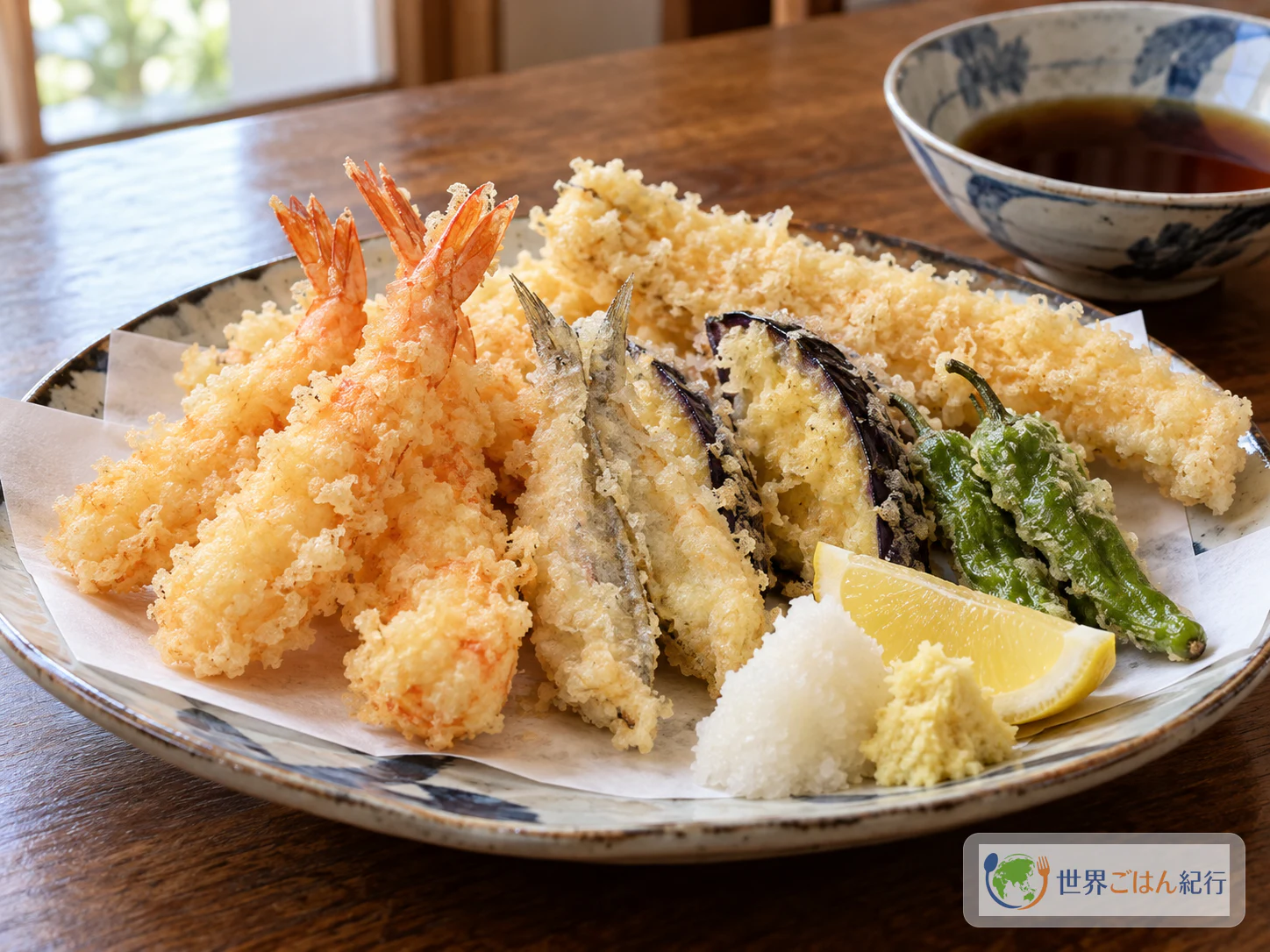
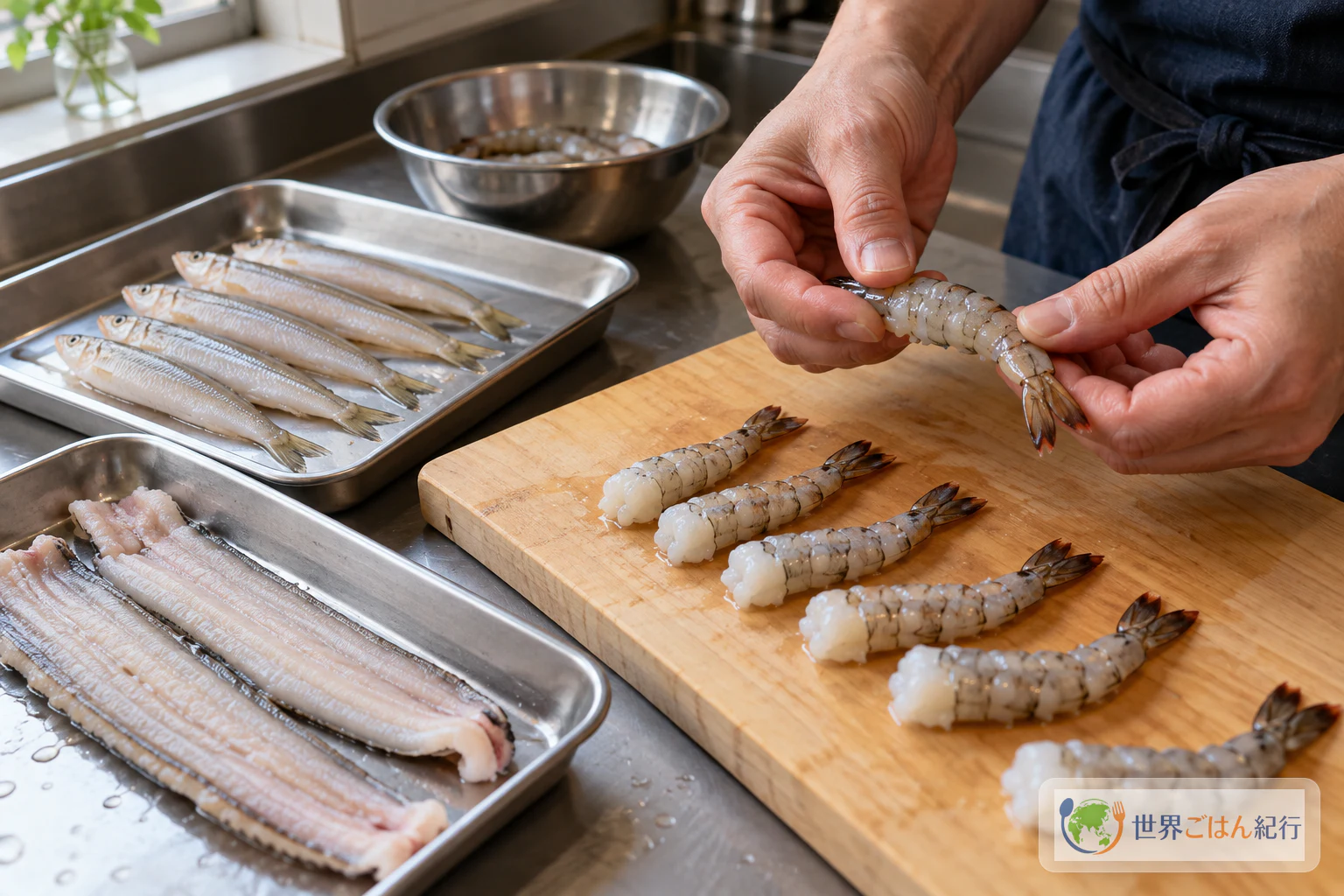
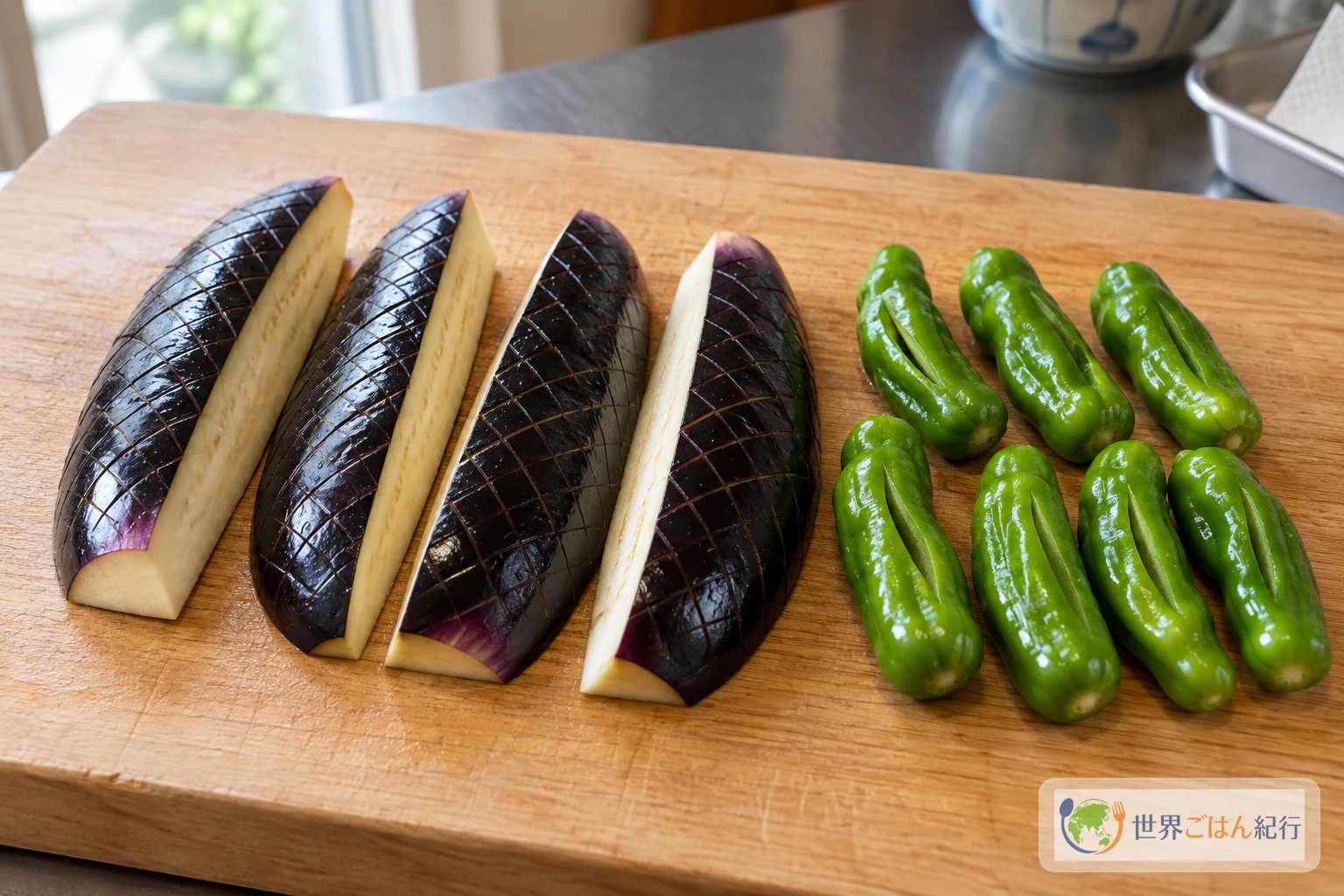
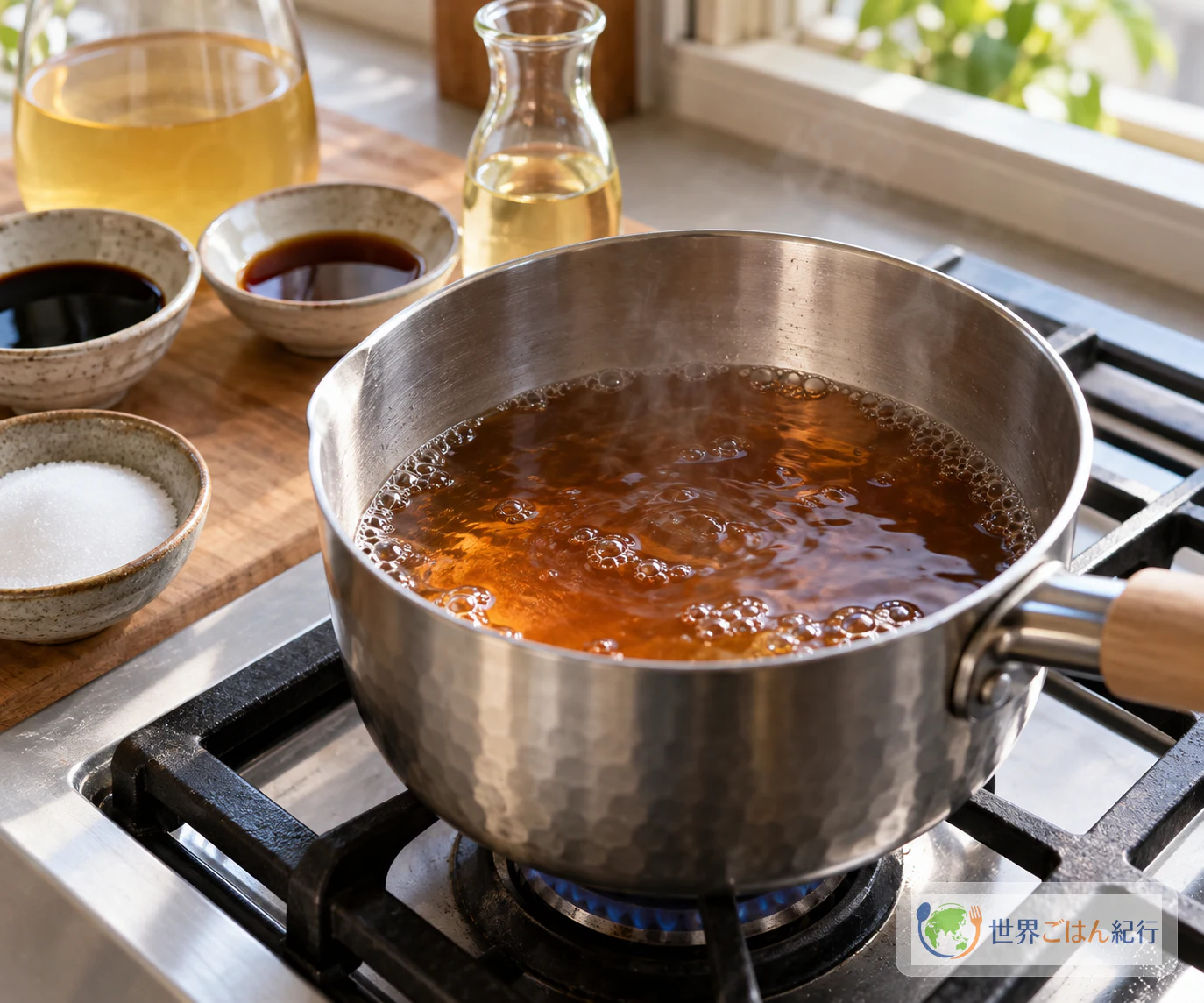
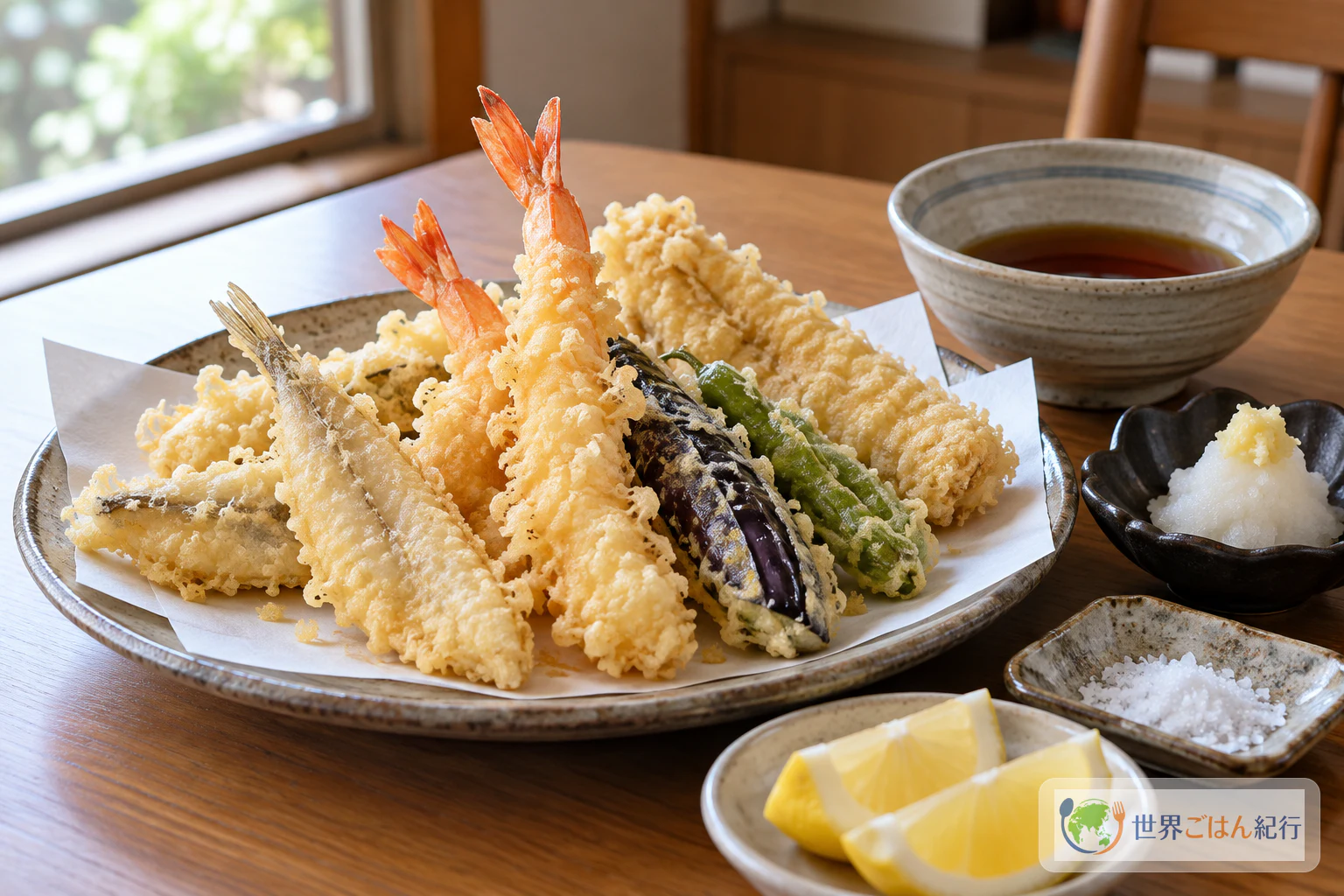
This recipe follows the MAFF Tokyo recipe for four: small Japanese tiger shrimp, sillago, conger eel, eggplant and shishito peppers, with a dipping sauce called tentsuyu, grated daikon and ginger, or lemon and salt. It is one Tokyo form of the dish, not the only formula; MAFF itself notes that recipes vary by region and household.
The name also needs a little care. According to MAFF, in the Kamigata region (around Osaka and Kyoto) the word "tempura" has been used for fried fish paste, while in Edo (old Tokyo) it referred to seafood fried in batter. What you are making here is the Edo kind. For more dishes from the same country, see Japan.
From Edo Food Stalls to Restaurants and Home Tables
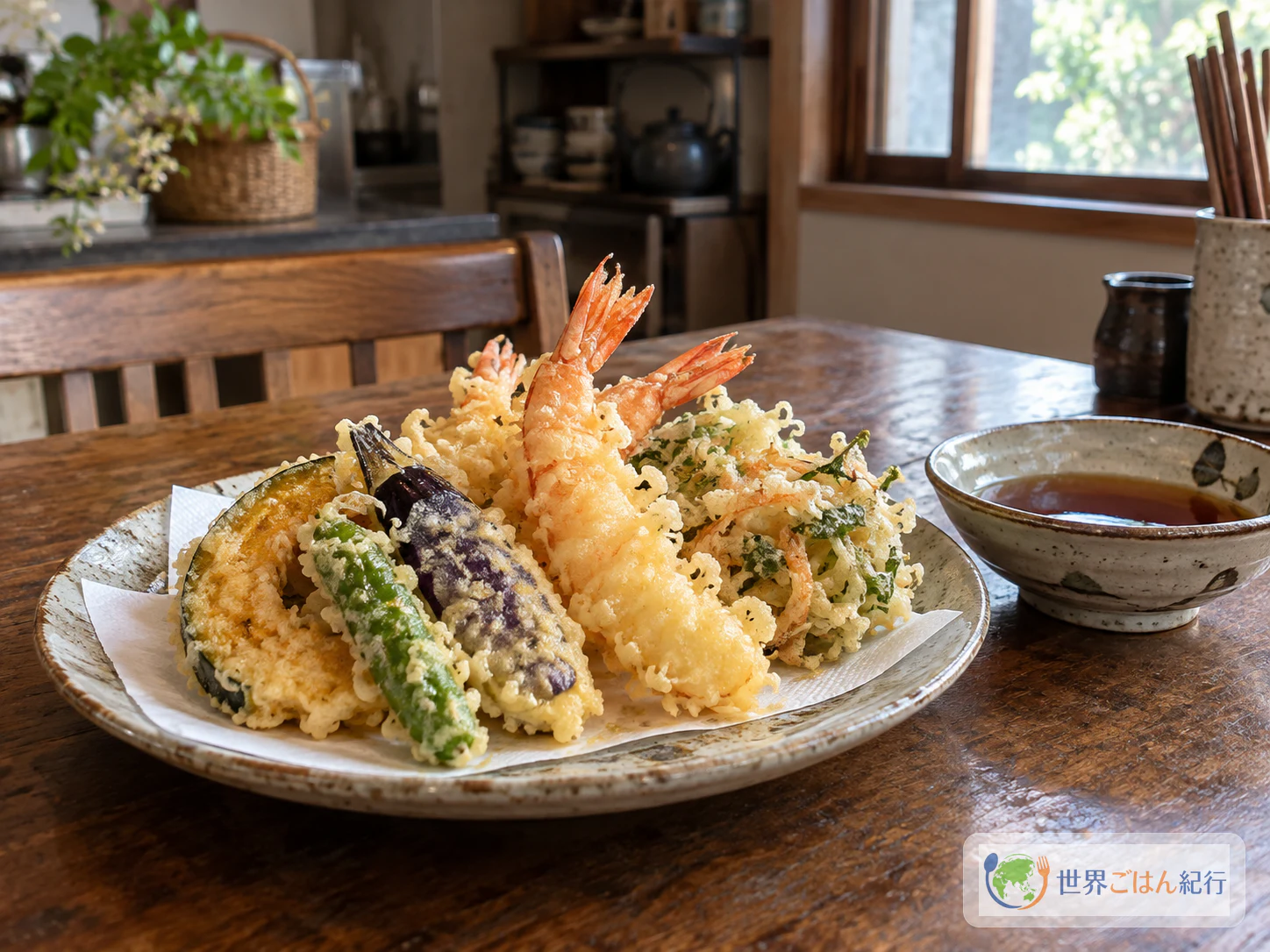
MAFF writes that tempura is said to have originated in a fritter-like Portuguese dish introduced in the mid-16th century. That is how the origin is passed down, not a settled single answer, and this article does not add any further theory about where the word comes from. Using large amounts of oil was limited for a long time; MAFF connects the spread of tempura to the growth of rapeseed oil production during the Edo period.
In Edo, tempura became food from street stalls. MAFF traces how, from the Meiji era onward, it was also served in restaurants, and how today it reaches home cooking and ready-made side dishes. Web Japan, a site of Japan's Ministry of Foreign Affairs, makes a similar point from another angle: a dish that looks simple ranges from everyday home food to the cooking of skilled restaurant chefs. Tempura sits comfortably at both ends.
The same sources show how tempura moves beyond the plate. Web Japan describes choosing seasonal ingredients, and serving tempura as tendon (on a bowl of rice) or on top of soba and udon noodles. MAFF also mentions tendon, where tempura is simmered briefly in a sweet-salty sauce and set on rice.
Ingredients for 4: Tiger Shrimp, Sillago, Conger Eel and Two Vegetables
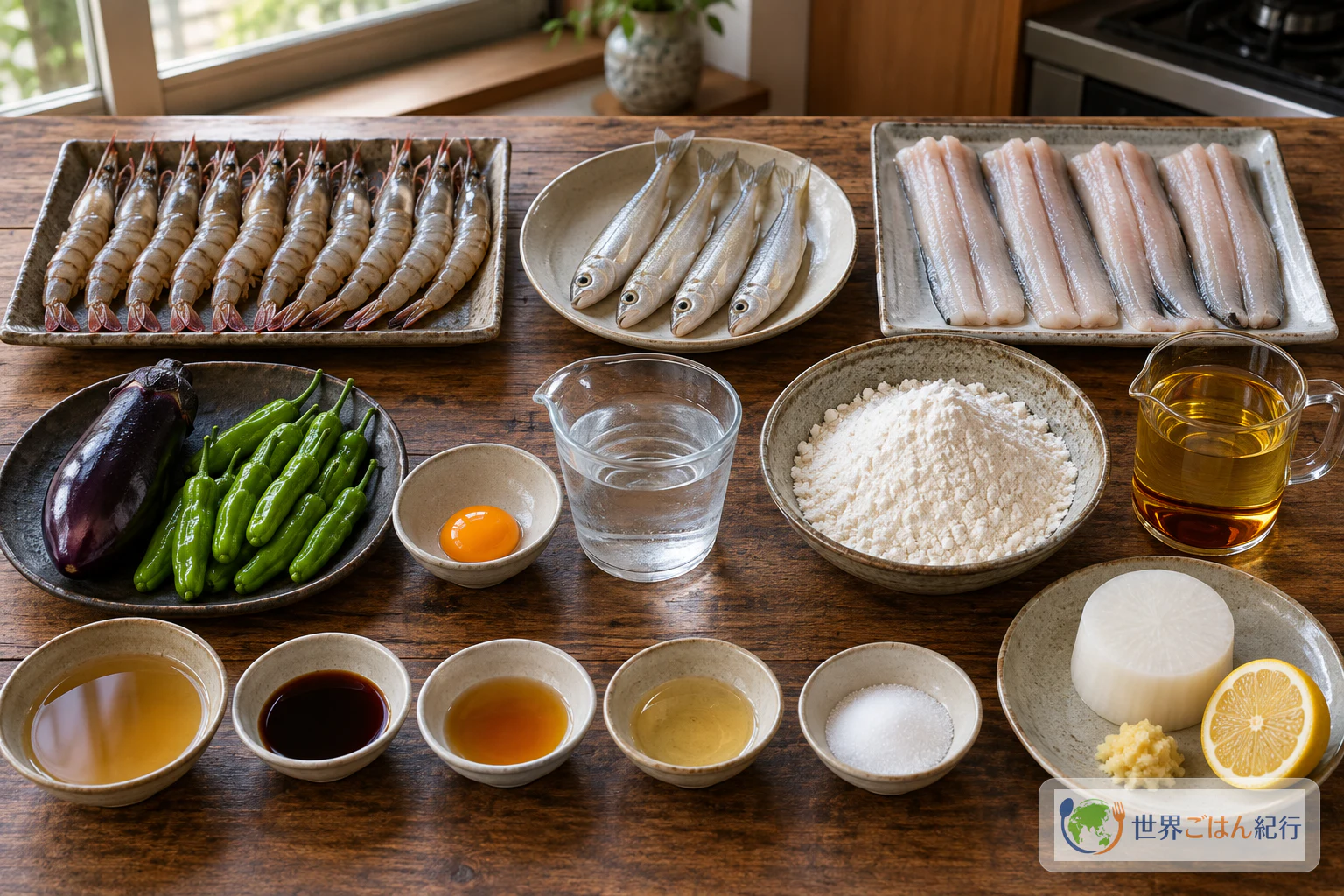
These are the amounts from the MAFF Tokyo recipe. The cups are kept as the source gives them. As an editorial measuring convention—not a cup capacity specified by MAFF—this recipe uses a 200ml measuring cup, so 1½ cups of cold water is 300ml and 1 cup of dashi is 200ml. The 2 cups of flour is a volume of 400ml, not 400g; do not convert it to grams. The water for the batter and the dashi for the sauce are measured separately.
The source does not give a number for the frying oil. Mix the two oils by volume at 7:3, and use an amount that suits your pot and the frying conditions it is made for; never fill the pot to the brim. One egg yolk is used, and the leftover white is simply extra. Do not add a whole egg instead.
This recipe contains shrimp, fish (sillago and conger eel), egg and wheat. The tentsuyu contains soy from the soy sauce, and the frying oil contains sesame. Check the labels of the dashi, soy sauces, flour and oils you use.
Choosing and Substituting
Flour. The Japanese text of the MAFF recipe specifies hakurikiko (cake flour). The English version of the same page lists all-purpose flour, but the Japanese original is followed here.
Soy sauce. The tentsuyu uses two soy sauces in different amounts. Light soy sauce (usukuchi) is not the same as regular dark soy sauce (koikuchi); simply swapping one for the other changes the color and the saltiness of the sauce, so they are not treated as interchangeable.
Oil. The 3 parts of sesame oil in the 7:3 blend carry the aroma the recipe intends. Keep the ratio as given.
Shrimp and fish. The following are editorial suggestions, not part of the Tokyo recipe. If you use a different kind of shrimp, the size, sweetness and how it cooks through will change. If sillago is hard to find, another white fish can stand in, but it will taste different, and it is no longer the Tokyo original. Buying already-opened conger eel or already-cleaned sillago shortens the preparation; in either case, check that excess moisture has been wiped off.
Equipment
- A deep, stable pot for frying
- A cooking thermometer
- A wire draining rack
- Thick cooking chopsticks
- A sieve for sifting the flour
- A mixing bowl for the batter
- A small saucepan for the tentsuyu
- A grater for the daikon and ginger
- Kitchen paper for wiping the ingredients dry
Method: Prepare Everything, Then Fry Seafood Before Vegetables
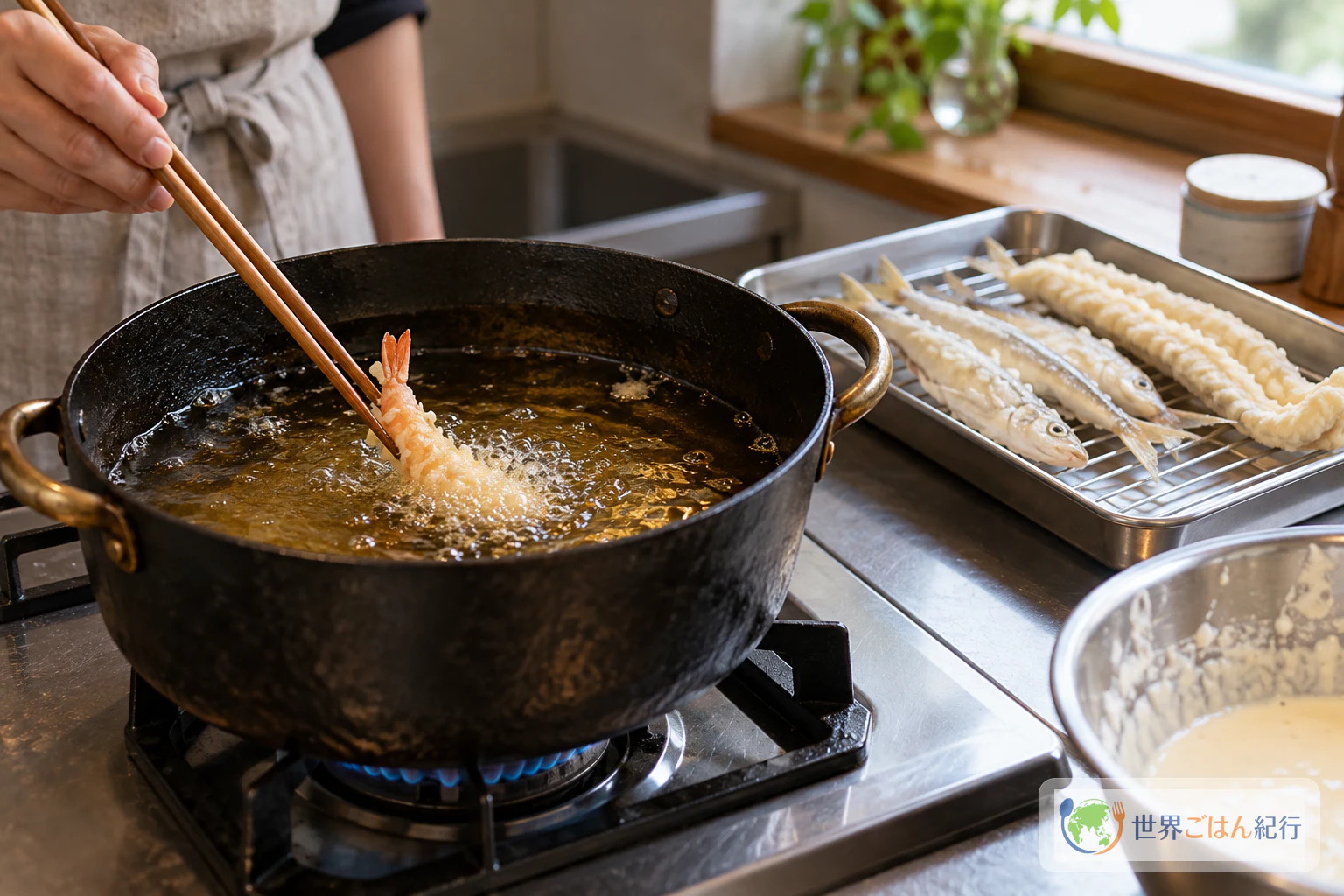
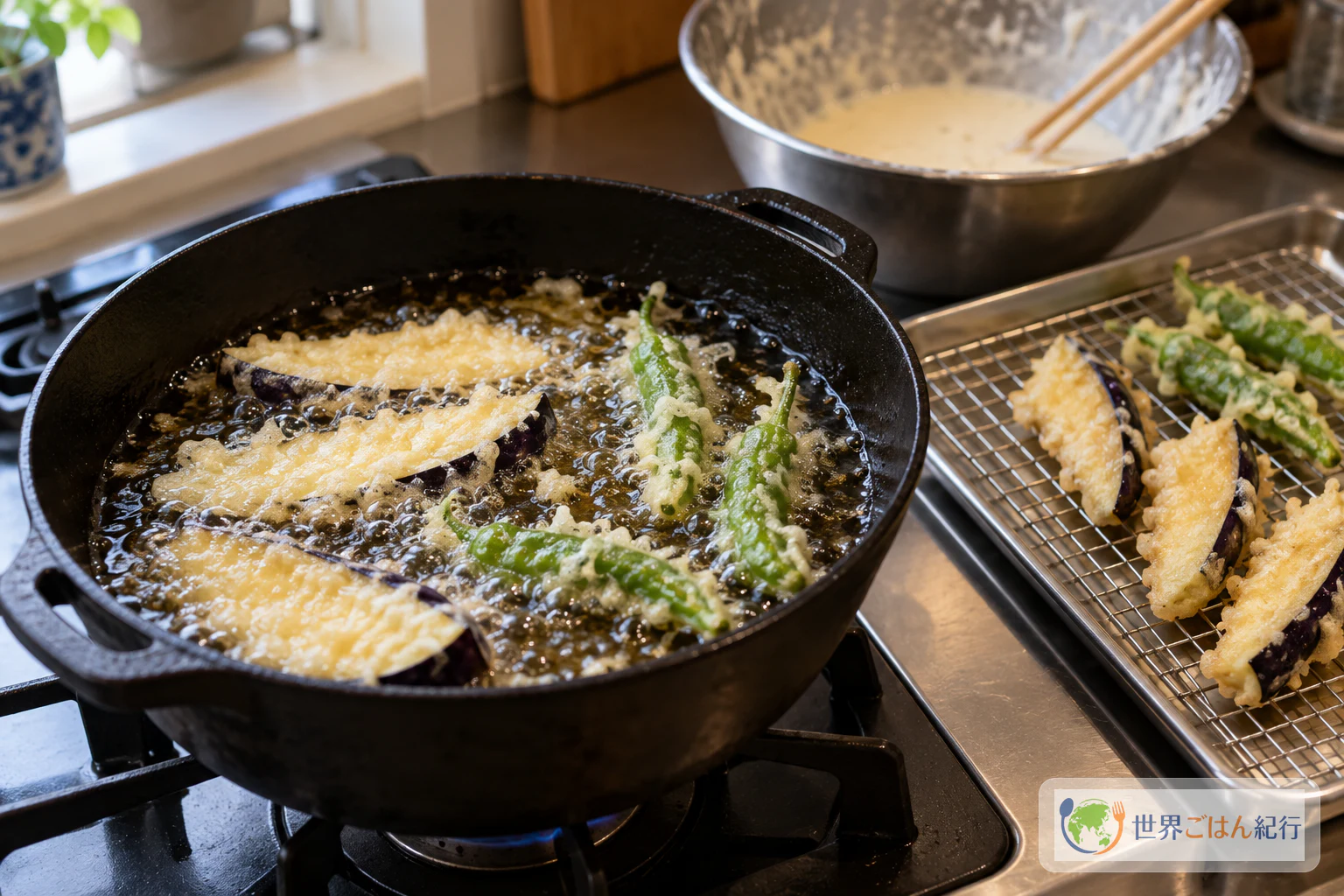
All the cutting and the sauce come first. Start heating the oil, then mix the batter, then fry the seafood at 180°C and the vegetables at a slightly lower temperature. The source gives no frying time for each ingredient. Batter appearance alone does not establish whether the seafood is cooked through.
Heavy, Oily, Curled: Fixing Common Problems
| Condition | Likely cause | What to do |
|---|---|---|
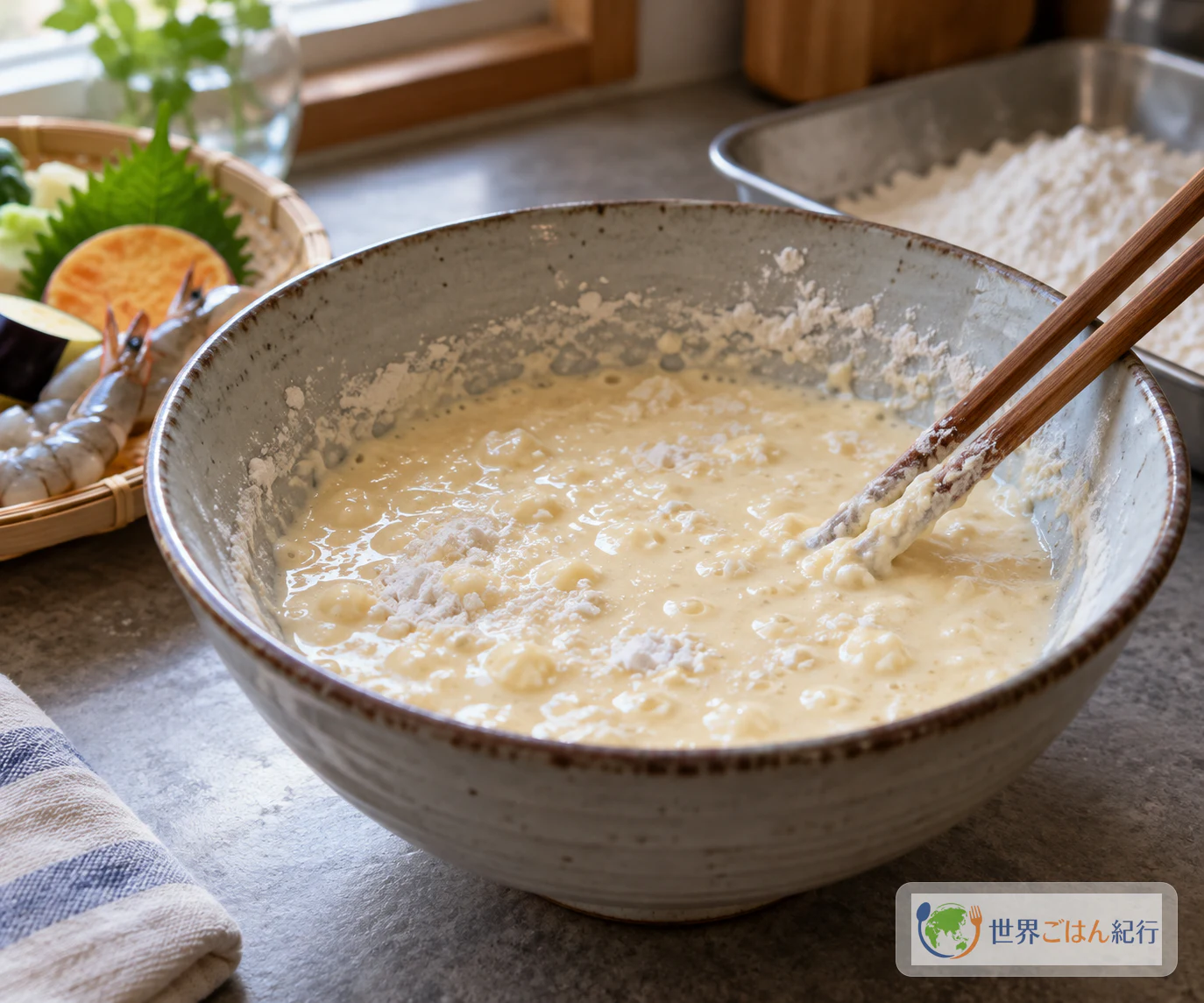
| The batter is thick and heavy | Mixed too long, or water not cold | Next batch, mix only until some dry flour remains and use cold water. Make the batter after the oil starts heating |
| The pieces come out soft and oily | Too many pieces at once, so the oil cooled | Fry fewer pieces at a time and let the oil return to temperature between batches. Drain on a wire rack |
| The batter sinks and stays down | Oil not hot enough | Wait for the batter test to sink partway and rise right away, or for the thermometer to read 180°C |
| The shrimp curled | Back not straightened | Next time, bend the back gently in about 3 places with the belly up before coating |
| The conger eel batter is not crisp | Taken out too early | Fry it a little longer than the other seafood, until the batter is crisp |
| The oil spatters | Moisture on the ingredients, or shrimp tail tips not trimmed | Wipe all ingredients dry and cut the tail tips at an angle |
Tempura is meant to be eaten freshly fried. The source gives no storage or reheating method, so this recipe does not offer one; plan to fry what you will eat.
Ways to Eat It: Tentsuyu, Lemon and Salt, Rice and Noodles
The source offers two ways to eat this tempura. One is tentsuyu with grated daikon and ginger, a pairing Kikkoman and the Japan National Tourism Organization also describe. The other is lemon and salt, which keeps the taste of the shrimp and fish in front.
These variations sit outside the main recipe; keep them separate from it:
- A smaller, shrimp-centered plate. For fewer ingredients, fry mainly shrimp. The amounts in the main recipe would need to be worked out again; they are not simply cut down here.
- Seasonal vegetables. Web Japan describes choosing ingredients in season. Amounts and frying conditions depend on each vegetable and are not given here.
- Tendon. MAFF describes simmering tempura briefly in a sweet-salty sauce and setting it on rice. That sauce is not the same as this tentsuyu.
- Tempura soba or udon. Web Japan describes tempura on noodles. As the broth soaks in, the batter changes texture.
Frequently Asked Questions
Which ingredients can I use at home?
This recipe uses the ingredients the Tokyo recipe specifies: shrimp, sillago, conger eel, eggplant and shishito peppers. Other seasonal ingredients are a separate idea, and their amounts and frying conditions are not covered here. If you substitute another white fish for sillago, expect a different taste.
What happens if I mix the batter too much?
The batter becomes sticky and is less likely to fry up light. Stop while a little dry flour still remains.
What size is a "cup" in this recipe?
This recipe uses a 200ml measuring cup. The 1½ cups of cold water is 300ml and the 1 cup of dashi is 200ml. The 2 cups of cake flour is a 400ml volume, not a weight.
Can I eat it with something other than tentsuyu?
The source gives lemon and salt as the other option. Households have their own ways too, but this recipe follows the two the source describes.
How is Edo tempura different from tempura in western Japan?
According to MAFF, in Kamigata the word "tempura" has been used for fried fish paste, while in Edo it meant seafood fried in batter. This recipe is the Edo-style seafood and vegetable kind.
Sources
- Ministry of Agriculture, Forestry and Fisheries (Japan), "Tempura | Our Regional Cuisines." Tokyo/Edo regional definition and history with its qualified origin wording, and the four-person recipe used here: ingredients, amounts, preparation, the 180°C cue, frying order and serving options. https://www.maff.go.jp/e/policies/market/k_ryouri/search_menu/2438/index.html
- 農林水産省「うちの郷土料理」, 「てんぷら 東京都」 (recipe by Naoyuki Yanagihara). The Japanese original of the same recipe and its 12 steps, including cake flour (hakurikiko) and straightening the shrimp by bending the back side. https://www.maff.go.jp/j/keikaku/syokubunka/k_ryouri/search_menu/menu/34_6_tokyo.html
- Kikkoman Corporation, "Tempura Recipe (Japanese Deep Fried Vegetables and Shrimp)." Cold water and minimal mixing, not crowding the oil, draining on a rack, and serving with tentsuyu and grated daikon and ginger. A separate recipe; its amounts are not used here. https://www.kikkoman.com/en/cookbook/washoku/tempura.html
- Web Japan / Ministry of Foreign Affairs of Japan, "Tempura | Cookbook." Seasonal ingredients, tendon and tempura soba/udon, and the range from home food to skilled restaurant cooking. https://web-japan.org/kidsweb/cook/temprua/
- Japan National Tourism Organization, "10 dishes you shouldn't leave Japan without trying." Light, crisp batter around seasonal seafood and vegetables, the broth dip with grated radish, and serving fresh. https://www.japan.travel/en/au/experience/cuisine/10-dishes-you-shouldnt-leave-japan-without-trying/
- デリッシュキッチン, 「素材一つで!ししとうの素揚げ」. Wiping shishito peppers dry and making a small lengthwise slit to help prevent bursting. A separate recipe; its oil amount, salt and heat are not used here. https://delishkitchen.tv/recipes/490589059194814887