Tonkatsu: A Crisp Panko Crust Around Moist Pork Loin
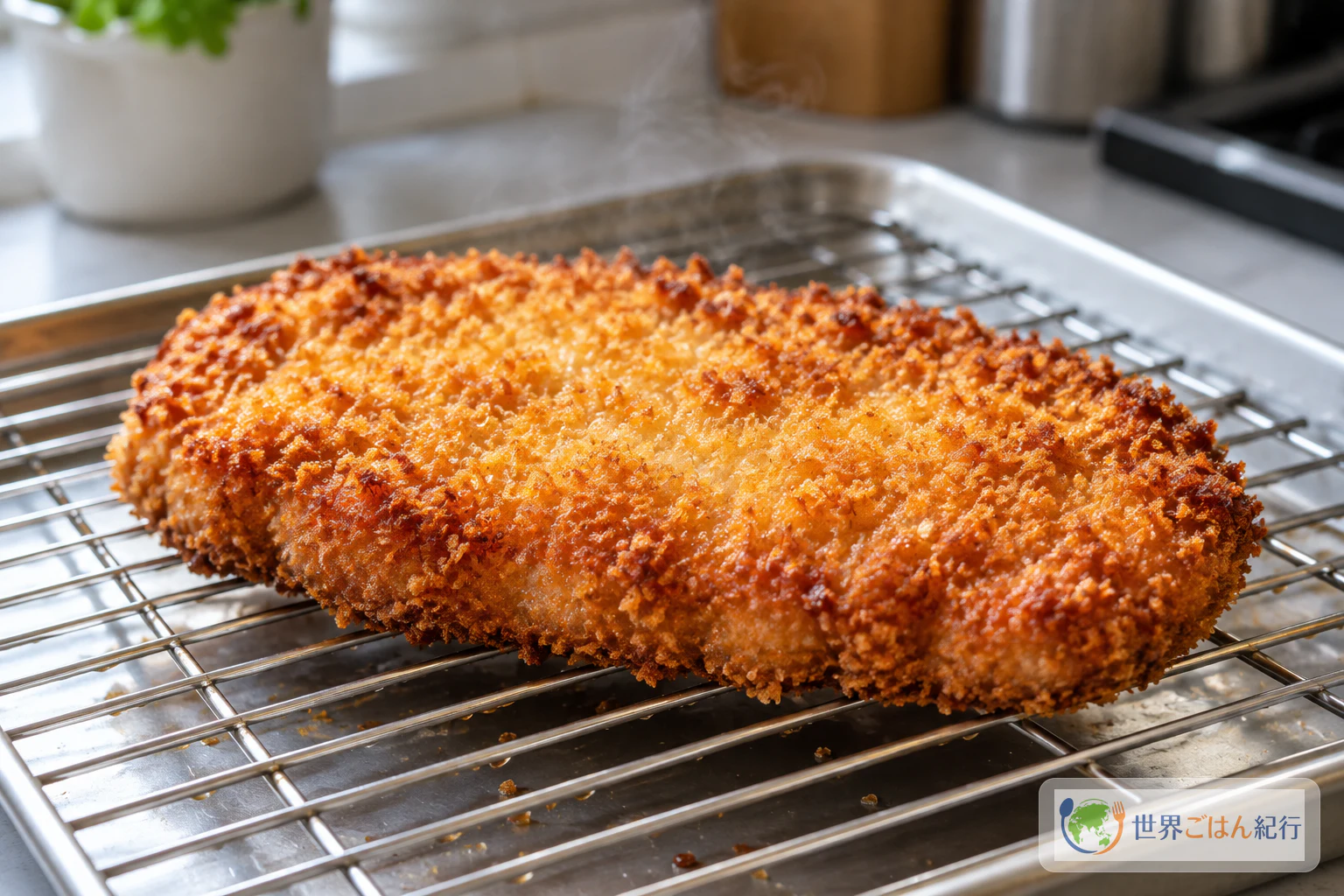
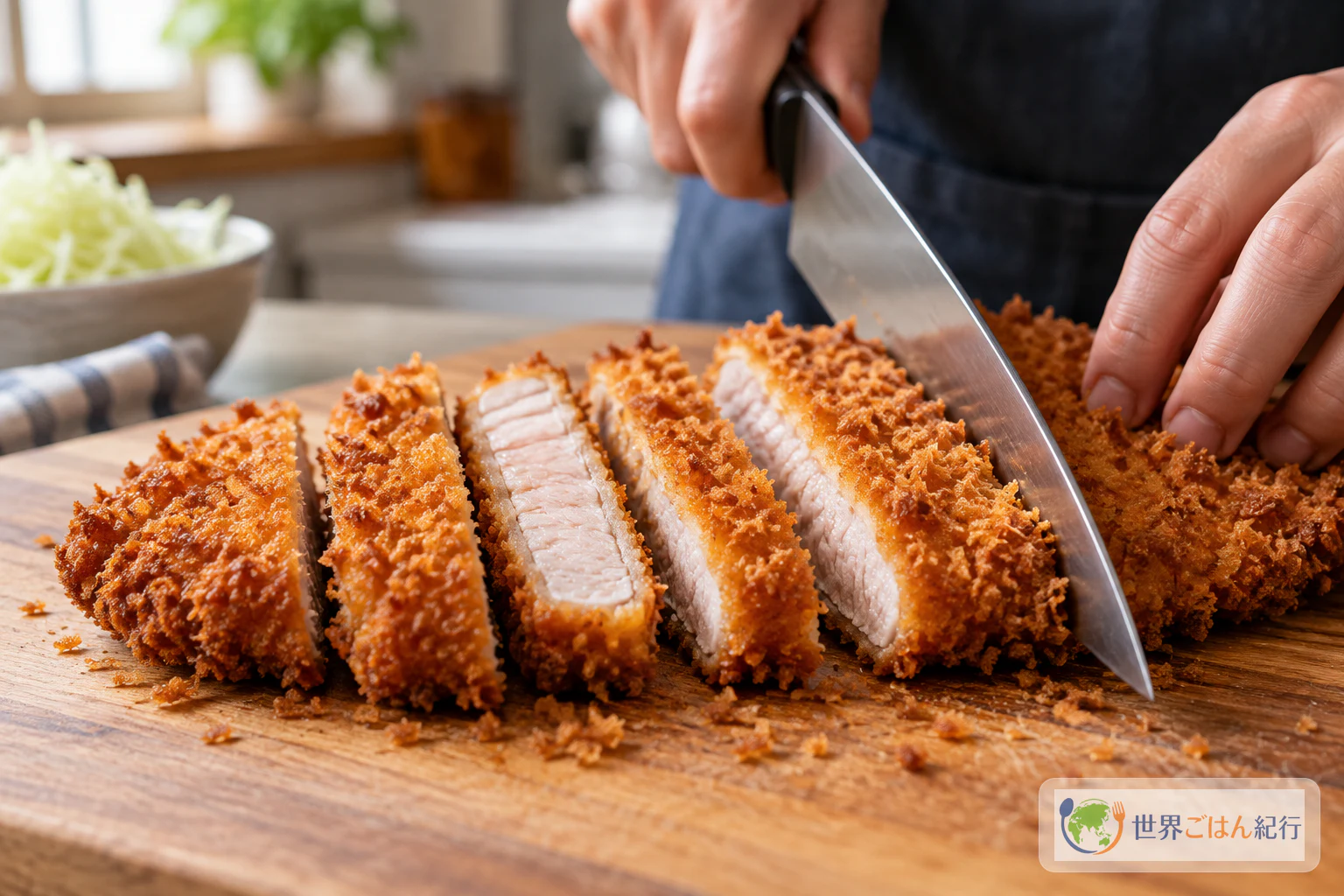
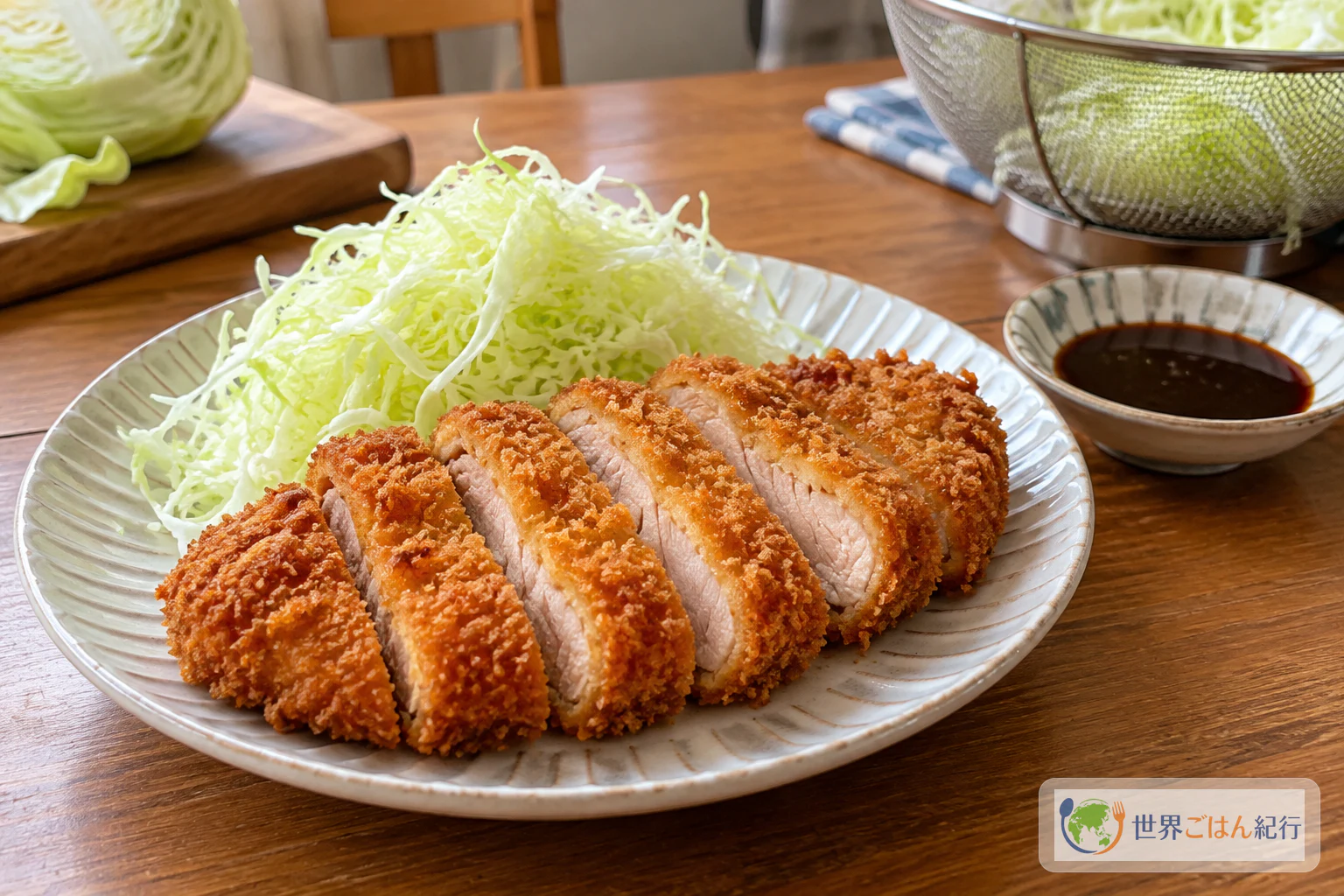
A crust that stays on the meat when you cut it, pork loin that lies flat and is cooked through to the center, and a mound of cold, crisp cabbage beside it.
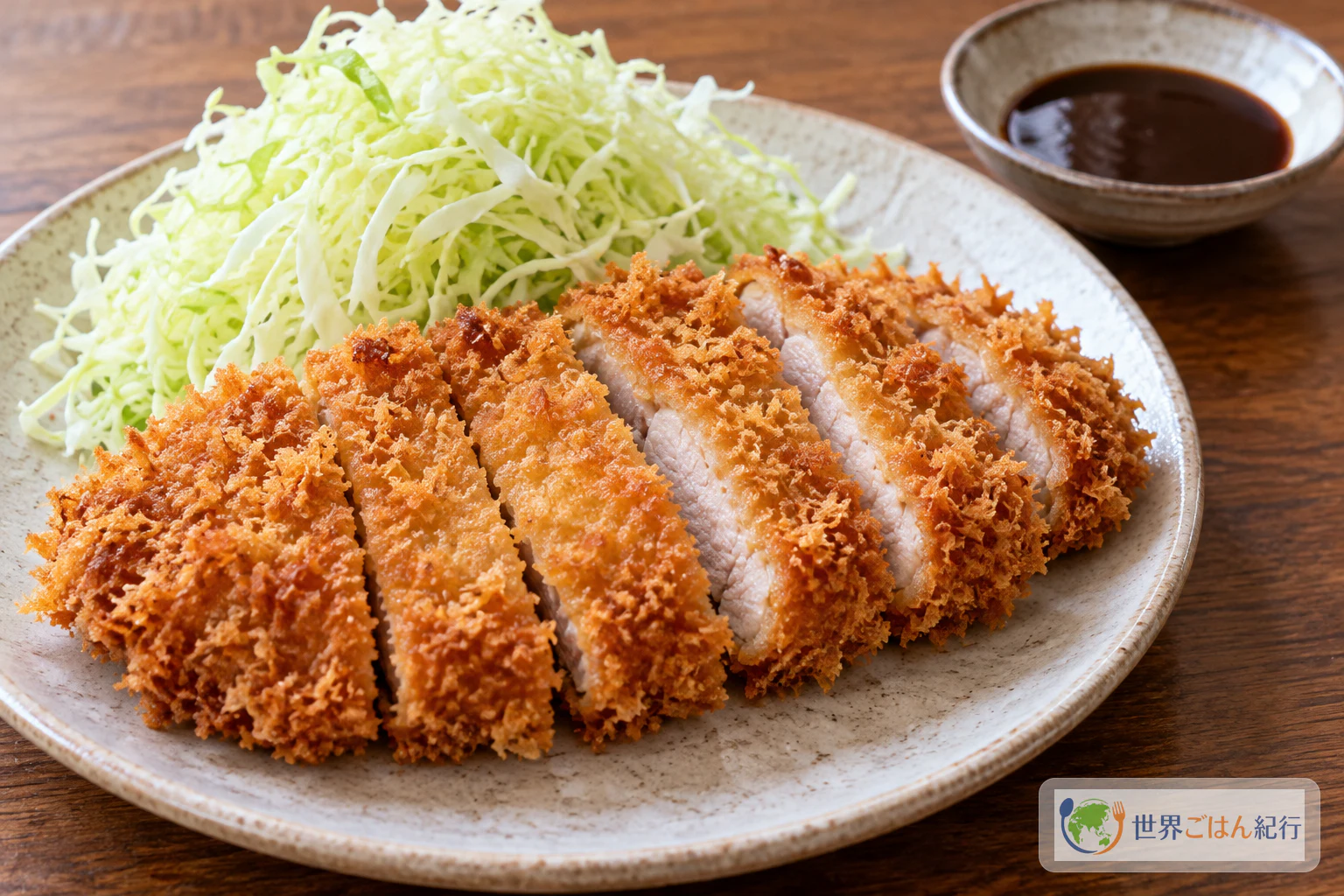
Picture a weeknight dinner in a Japanese home. A golden cutlet comes off the rack, the knife goes through the crust in one stroke, and the strips are laid next to a pile of finely shredded cabbage. A small dish of thick, fruity chuno sauce sits nearby, and rice and soup are often on the table too. Tonkatsu is pork loin coated in flour, egg and panko and deep-fried, and it is one of the most familiar dishes of Japanese home cooking.
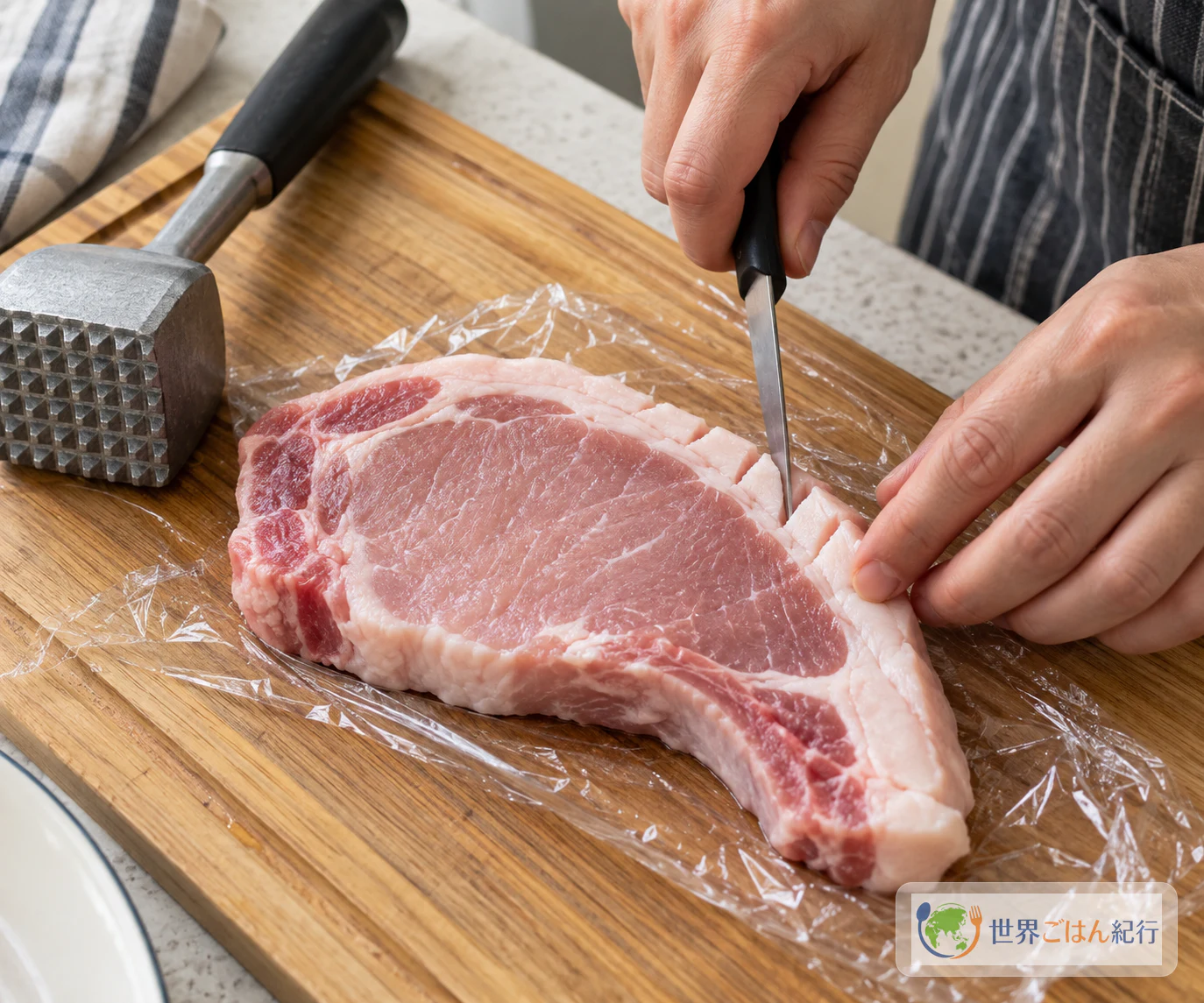
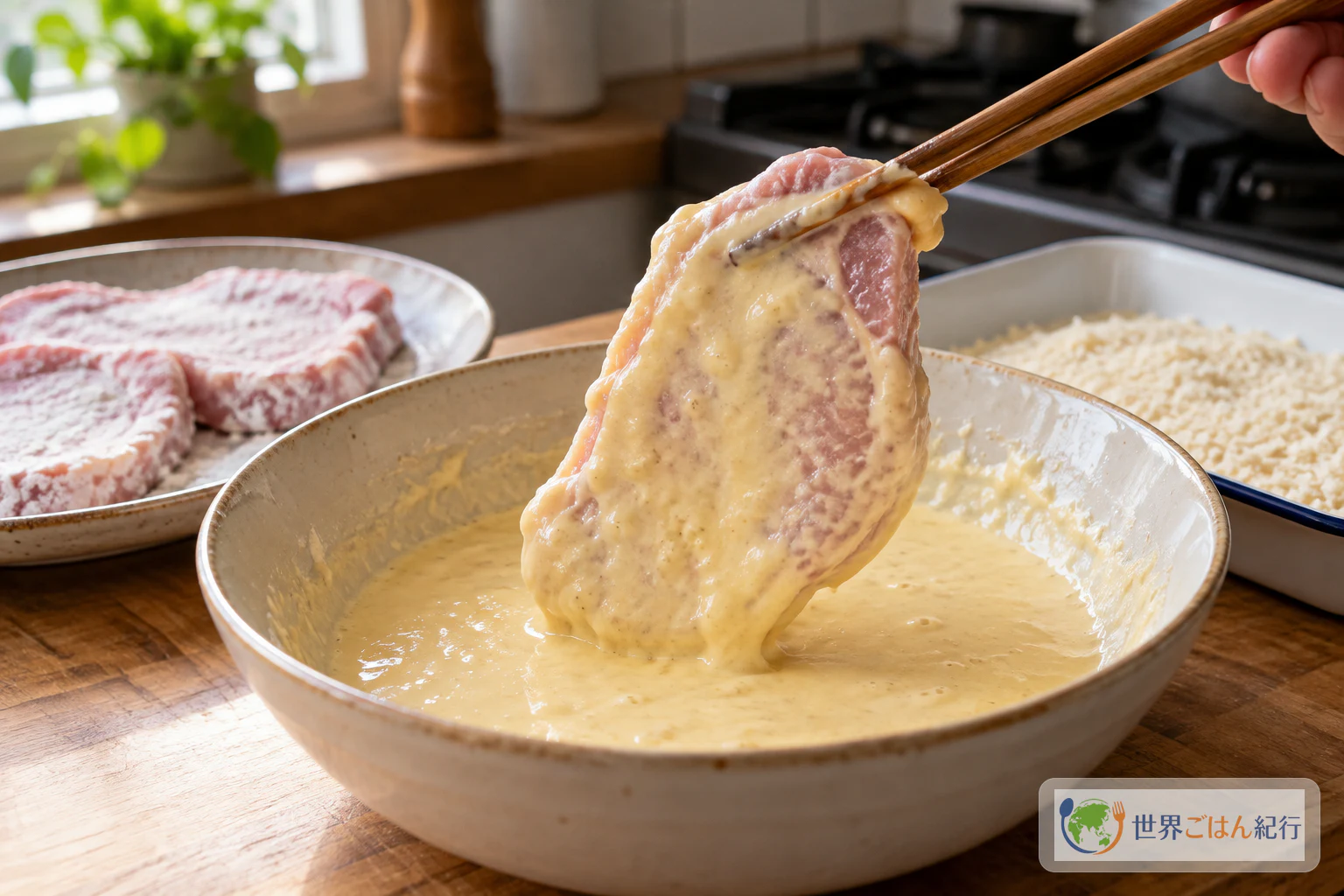
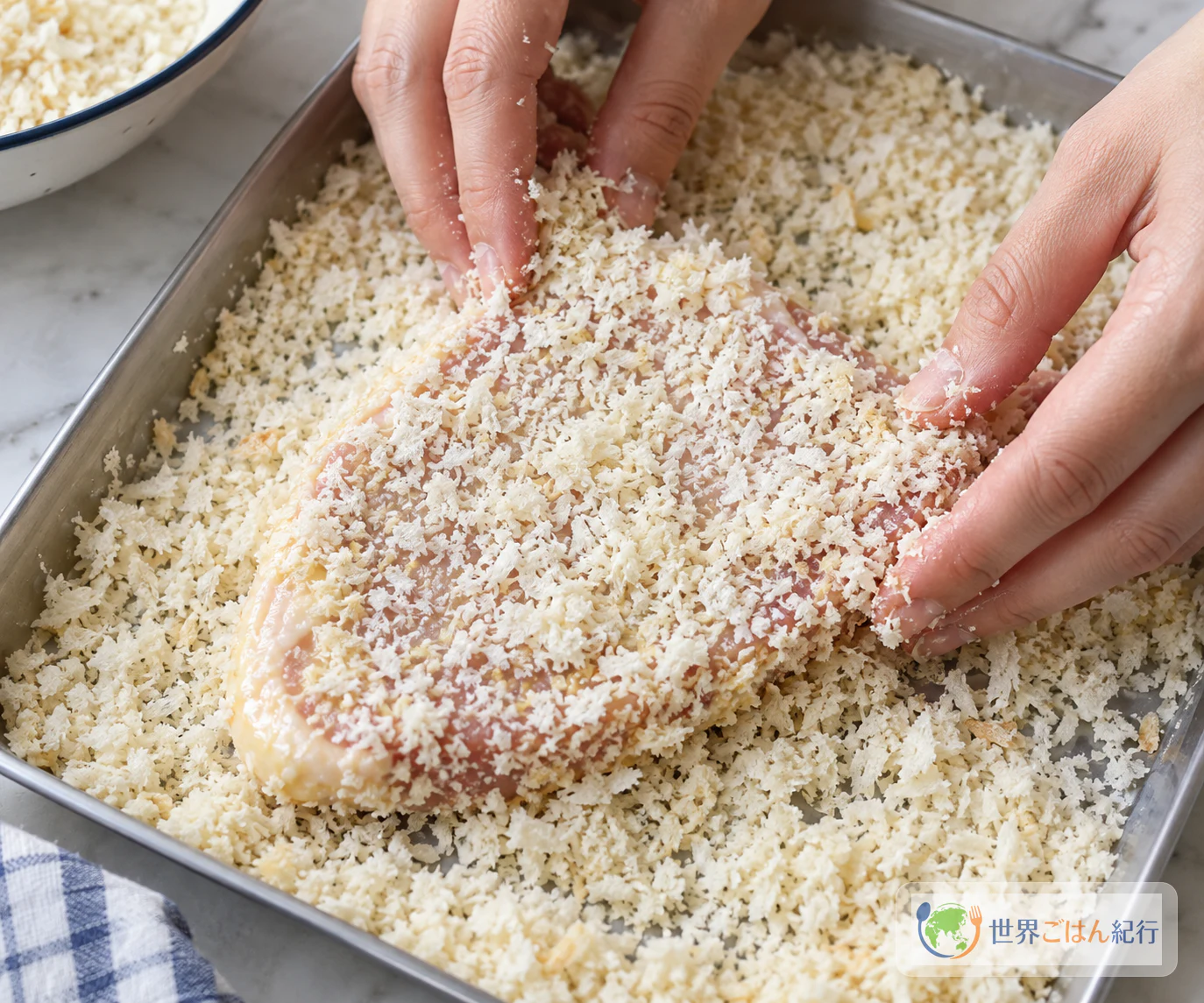
The recipe below is the basic home-style pork loin tonkatsu for 2 servings, following Kikkoman's Japanese recipe. Three things decide how it turns out: scoring and pounding the meat so it does not curl, building the coating in layers so it does not peel away, and cooking the pork all the way to the center. The frying time gives you a starting point, but the safety check is the temperature in the middle of the meat, so this article treats the two separately.
In Japanese it is written 豚カツ or とんかつ (tonkatsu). In English it is often called Japanese pork cutlet. For more dishes from the same country, see the Japan page.
What Tonkatsu Is: A Western-Style Dish Made for Rice
Tonkatsu is pork coated with flour, egg and panko and deep-fried, typically served with shredded cabbage and a thick sauce. Cutlets made with beef or chicken use a different main ingredient and are treated as separate dishes.
According to Japan's Ministry of Agriculture, Forestry and Fisheries, after restrictions on meat-eating were lifted in the Meiji era and Western food culture was taken in, Western dishes were adapted between the late Meiji and Taisho periods to go well with rice. These became yōshoku, Western-style dishes, and tonkatsu, croquettes and curry rice were called the three great yōshoku of that time. The same material describes a Japanese table built on rice, soup, side dishes and pickles, and tonkatsu fits into that frame as the main side dish. Specific founding restaurants and dates are often repeated, but they are not covered by the sources here, so this article does not name them.
Ingredients: Serves 2, Pork Loin With a Three-Layer Coating
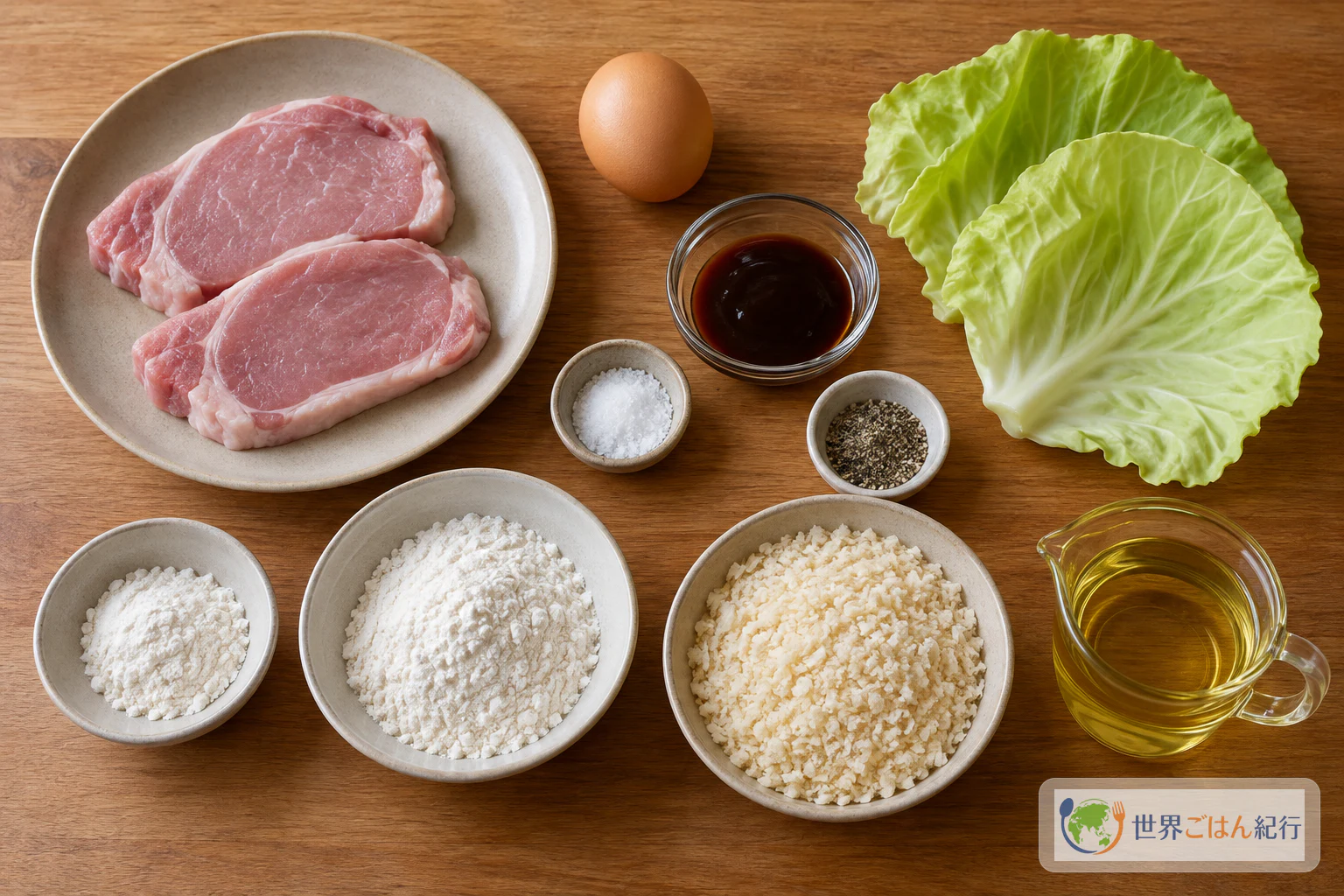
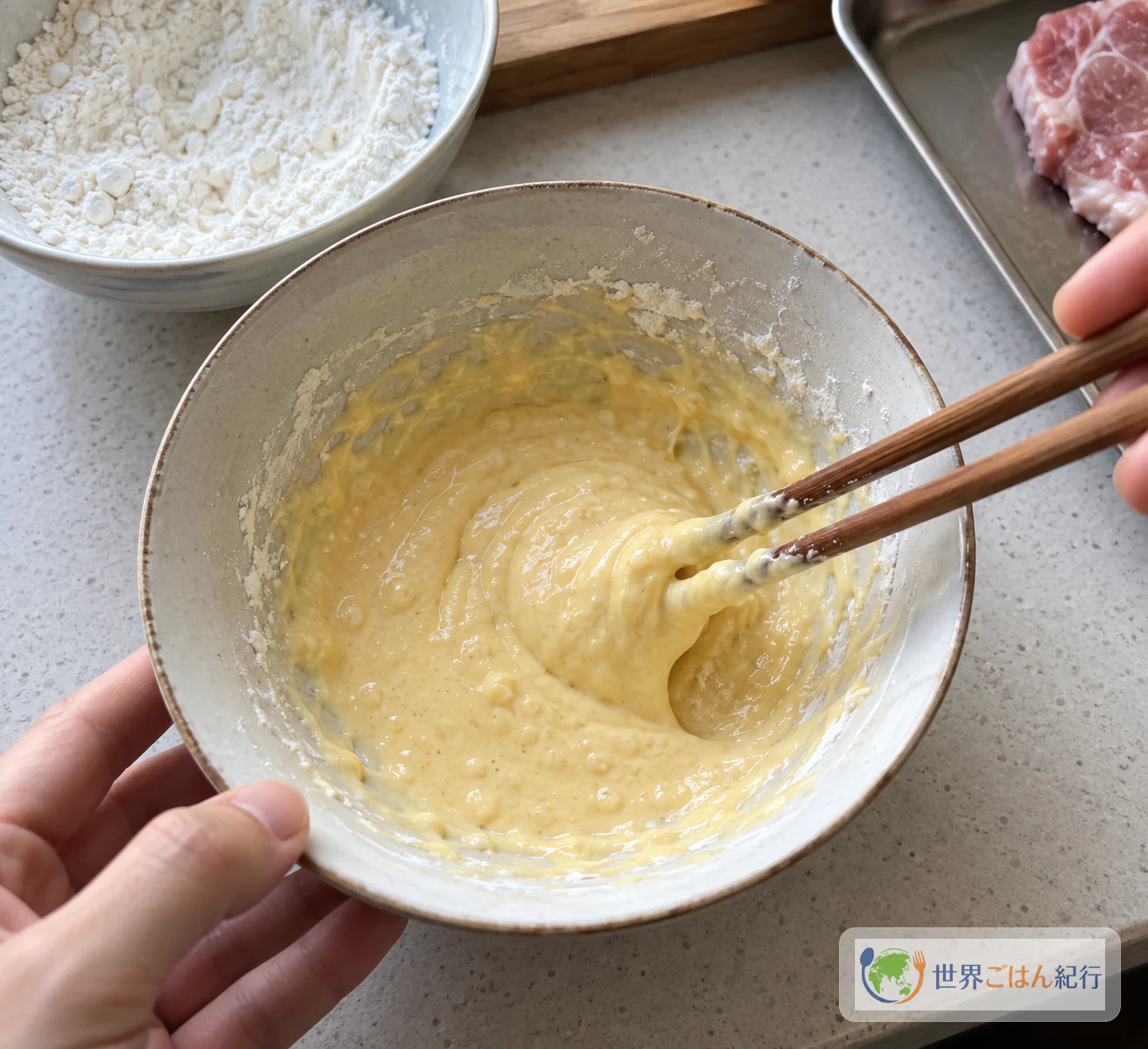
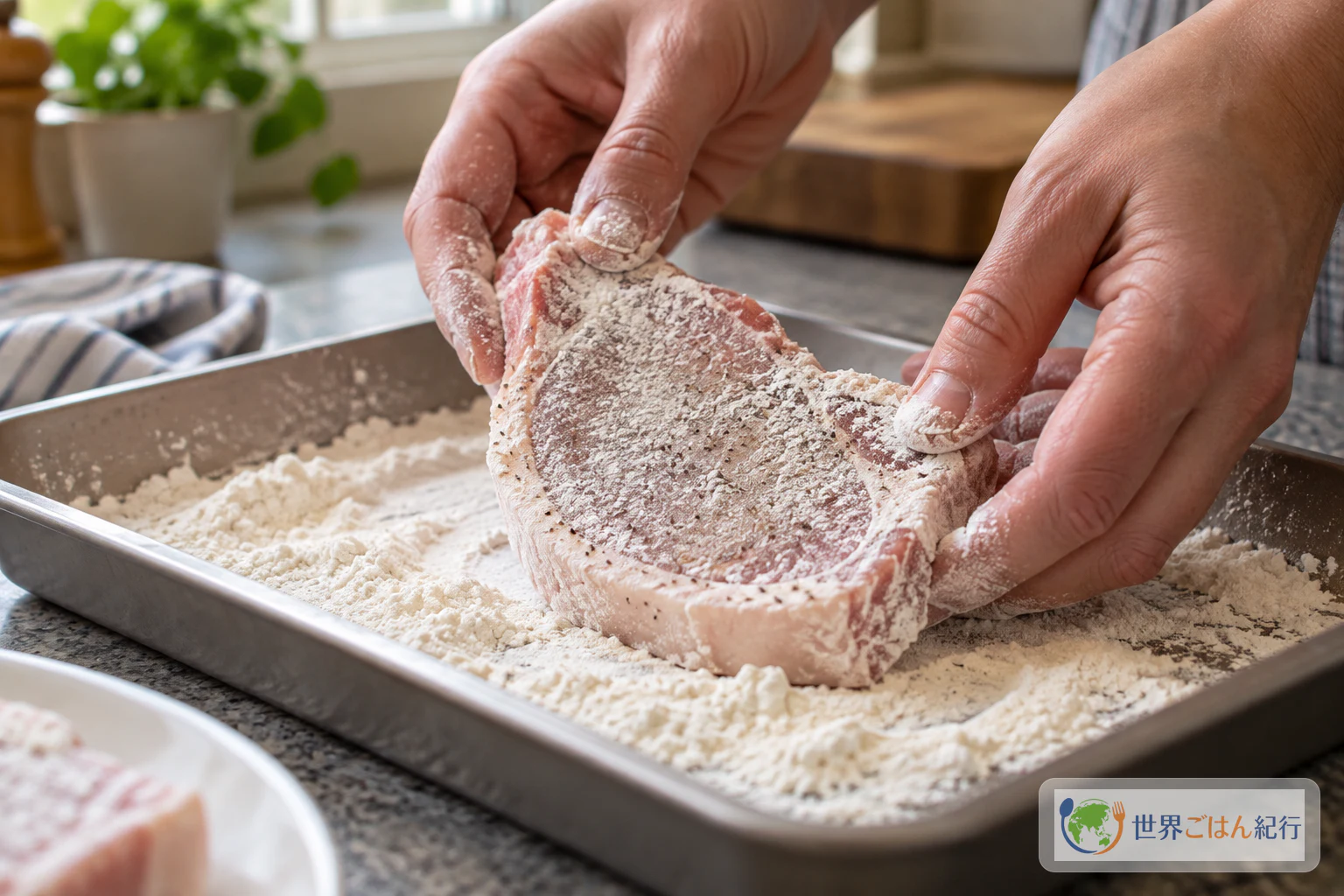
The flour appears twice with different jobs: 1 tbsp is dusted directly onto the meat, and 4 tbsp is mixed into the egg to make the batter. Keep them in separate dishes so you don't mix them up.
You will also need water for soaking the cabbage leaves. Use as much as it takes to submerge them; it is working water, not an ingredient, and it never goes into the batter.
This dish contains pork, egg and wheat (flour and panko). Store-bought chuno sauce can contain wheat, soy and other allergens, so check the label of the product you use. Use separate chopsticks, tongs and cutting boards for raw pork and for the cooked, ready-to-serve cutlet, and wash your hands after handling raw meat.
Equipment
- Meat mallet (a rolling pin or the back of a knife works too; never use the blade)
- Plastic wrap
- Deep pot or deep frying pan
- Deep-fry (oil) thermometer that can be secured safely to the side of the pot
- Probe thermometer with a thin tip, for checking the center of the pork
- Wire rack set over a tray
- Bamboo skewer or chopsticks for coating
- Separate tongs or chopsticks for raw and cooked meat
- Sharp knife and cutting board
Choosing the Pork, Panko and Sauce
Pork. Choose loin labeled for tonkatsu. The source recipe does not specify a thickness, so this article does not set one either. Pork fillet makes hirekatsu, a leaner cutlet with less of the richness that comes from loin fat. It is a different cut, so the frying times here should not be assumed to apply to it.
Panko. The source does not say whether to use fresh or dried panko. Fresh Japanese panko tends to give a larger, lighter crust; dried panko tends to be finer and crunchier. Because the two differ in how much fits in a cup, go by the 60 g weight rather than the 1 1/2 cup volume if you switch types.
Sauce. The original recipe names one brand of chuno sauce; this article generalizes it to store-bought chuno sauce, but flavors vary by product. Chuno sauce is thicker than Worcestershire sauce, and Worcestershire also tastes different, so it is not a one-to-one swap.
Flour. Ordinary all-purpose or Japanese soft flour is fine. Swapping in potato starch changes the character of the coating, so this recipe keeps wheat flour.
Method: Score, Coat in Three Layers, Fry, Then Check the Center
The cabbage appears at step 7 to match the plating, but it is easiest to soak and shred it before you start frying so the cutlet doesn't wait. Doing it earlier is only a change to the order of work; the cabbage method itself stays the same.
The source lists about 30 minutes as a guide for the whole recipe. Your preparation, the amount of oil and the thickness of the meat will move that up or down, and you also need time for the temperature check at the end.
Curling, Peeling, Greasy: Fixing Common Problems
| Problem | Likely cause | What to do |
|---|---|---|
| The cutlet curls in the oil | The cuts at the border of the lean and fat were too shallow | Before coating, check both sides and make sure the connective tissue is cut through |
| The crust peels away | Wet surface, too much flour, sides not covered, cutlet moved too soon | Lightly pat the meat dry before seasoning (an editorial prep suggestion, not in the source), shake off excess flour, coat the edges with batter, press the panko on gently and don't touch it until the crust sets |
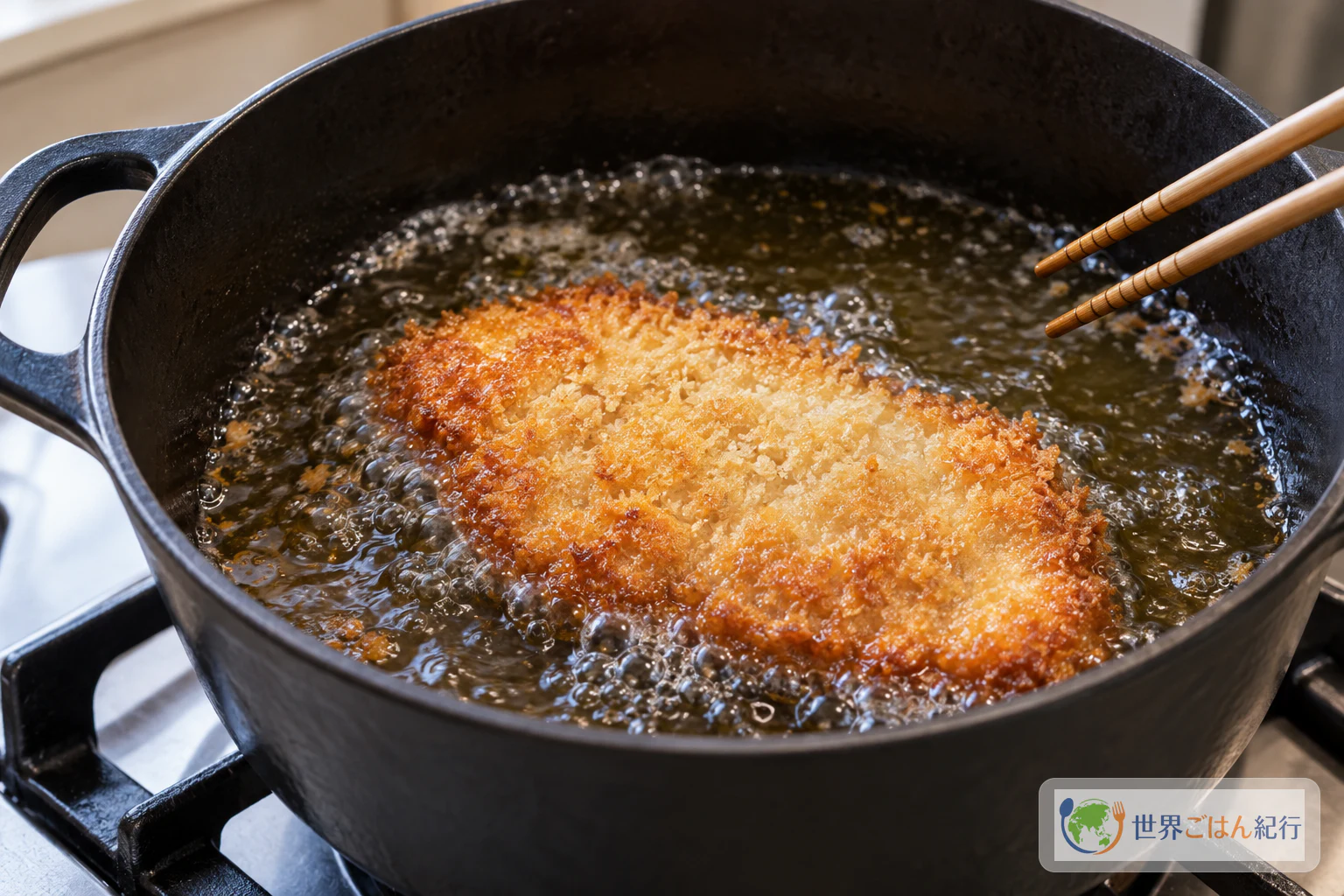
| Crust greasy or dark while the center is uncertain | Oil temperature dropped or was off; too many pieces at once | Check the oil temperature and the meat's center separately. Frying one piece at a time is editorial advice for home pots, not part of the source |
| The meat is tough | Pounded too thin; fried too long without checking | Stop pounding at about half the thickness. Use a thermometer rather than simply extending the frying time |
| The cabbage is watery | Not soaked first or not drained well | Soak the leaves before cutting and drain the shreds thoroughly |
The times in the method are a guide. Pork needs to be cooked through to the center regardless of how fresh it is, and the time that takes depends on the thickness of the meat, the pot and the amount of oil. That is why the thermometer check in step 4 is the deciding point.
Tonkatsu is meant to be eaten right after frying. If some is left over, put it in a clean container and refrigerate it promptly, and reheat it until it is hot all the way through. This article does not give a storage period.
Variations: Other Ways to Enjoy It
These are separate options, not part of the basic recipe above.
- Hirekatsu with pork fillet. Mostly lean meat, lighter than loin. Because the cut is different, don't assume the frying times above apply; check the center temperature in the same way.
- A larger pile of cabbage. Adds lightness to each bite. This goes beyond the 2 leaves in the ingredient list.
- Japanese mustard (karashi). An optional condiment, not in the source recipe, that sharpens the sweetness of the sauce.
- Grated daikon, lemon and soy sauce. A lighter way of eating tonkatsu shown in a recipe published by the Embassy of Japan in the United States. Use it instead of sauce if you like; it is not required alongside it.
- Katsudon or katsu sandwich. Kikkoman's English cookbook presents these as other ways to enjoy tonkatsu. Each has its own seasonings and method, so treat them as separate recipes.
Tonkatsu at the Japanese Table
The yōshoku of the late Meiji and Taisho periods were Western dishes reshaped to sit beside rice, and tonkatsu still plays that role at a home dinner: a crisp main dish served with rice, soup and something fresh on the side. The shredded cabbage and thick sauce are the most familiar accompaniments.
The same word also covers a family of related dishes, such as hirekatsu, miso katsu and katsudon. They share a name but are each their own preparation, so this article sticks to basic pork loin tonkatsu made at home and does not tie it to any particular region or shop. Grated daikon with lemon and soy sauce, introduced in an embassy recipe for readers abroad, shows how the same cutlet can be eaten more lightly.
Frequently Asked Questions
Should I use pork loin or pork fillet?
This recipe uses loin, whose fat gives richness. Fillet makes a leaner, lighter cutlet called hirekatsu. If you switch, treat it as a different version and check the center temperature rather than relying on the times here.
Why does the crust come off?
Usually because one of the layers didn't stick. Dust the flour thinly, coat the sides with batter as well as the faces, press the panko on gently, and don't move the cutlet in the oil until the crust has set. Cutting with a sawing motion can also pull the crust away, so slice with one downward push.
How many minutes do I fry it?
The source gives 5 to 6 minutes at 160°C over medium heat, then turning and raising the temperature for 1 to 2 minutes. Because thickness, pot and oil amount change the result, the safety standard is the center of the meat: 75°C or higher for 1 minute.
What if I don't have chuno sauce?
Serve it with a sauce you have on hand, such as Worcestershire sauce, knowing that it is thinner and tastes different. This article does not give a homemade blend to imitate chuno sauce.
Is the cabbage necessary?
It isn't essential, but it is the classic accompaniment. If you serve it, soak the leaves before shredding and drain them thoroughly so they stay crisp.
Sources
- Kikkoman Corporation, "基本のとんかつレシピ・つくり方" (Basic tonkatsu recipe). The main source for the ingredients and amounts for 2 servings, scoring and pounding the pork, the batter and panko coating, starting the fry at 160°C and raising the temperature after turning, the optional steam-release technique, slicing width, preparing shredded cabbage, and the guide time of about 30 minutes. https://www.kikkoman.co.jp/homecook/washoku/045/
- Ministry of Agriculture, Forestry and Fisheries of Japan, "和食としての米" (Rice as washoku). Background on the lifting of restrictions on meat-eating in the Meiji era, the adaptation of Western dishes to rice in the late Meiji and Taisho periods, tonkatsu as one of the three great yōshoku of that time, and the rice-centered table. https://www.maff.go.jp/j/syouan/keikaku/soukatu/okome_summary/07/environ_ment_03.html
- Ministry of Health, Labour and Welfare of Japan, "豚のお肉や内臓を生食するのは、やめましょう" (Do not eat raw pork or offal). Guidance that pork must be cooked through to the center regardless of freshness, the condition of 75°C for 1 minute or more, and avoiding cross-contamination between raw meat and cooked food. https://www.mhlw.go.jp/stf/seisakunitsuite/bunya/kenkou_iryou/shokuhin/syouhisya/121004/index.html
- Embassy of Japan in the United States, "Tonkatsu Recipe." A recipe for readers abroad showing tonkatsu with grated daikon, lemon and soy sauce as another way of eating it; its amounts and times are not used in the recipe above. https://www.us.emb-japan.go.jp/english/html/downloads/recipe-tonkatsu.pdf
- Kikkoman Corporation, "Tonkatsu (Japanese Pork Cutlet)." English description of tonkatsu as pork coated with flour, egg and panko and deep-fried, its typical serving with shredded cabbage and sauce, the texture of panko, and katsudon and katsu sandwich as other ways to enjoy it. From the same company as the main recipe source; its separate amounts and times are not used. https://www.kikkoman.com/en/cookbook/washoku/tonkatsu.html