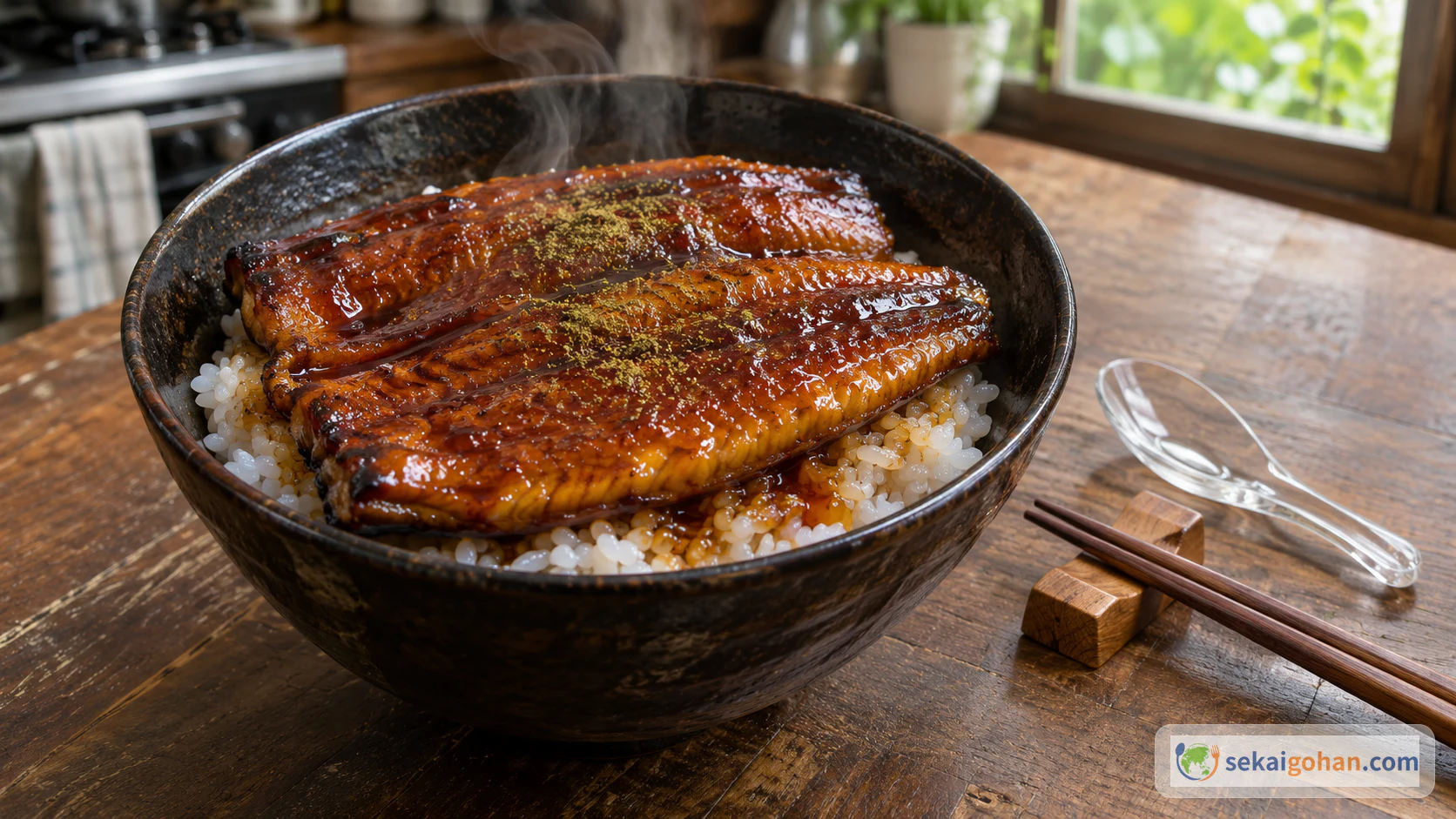
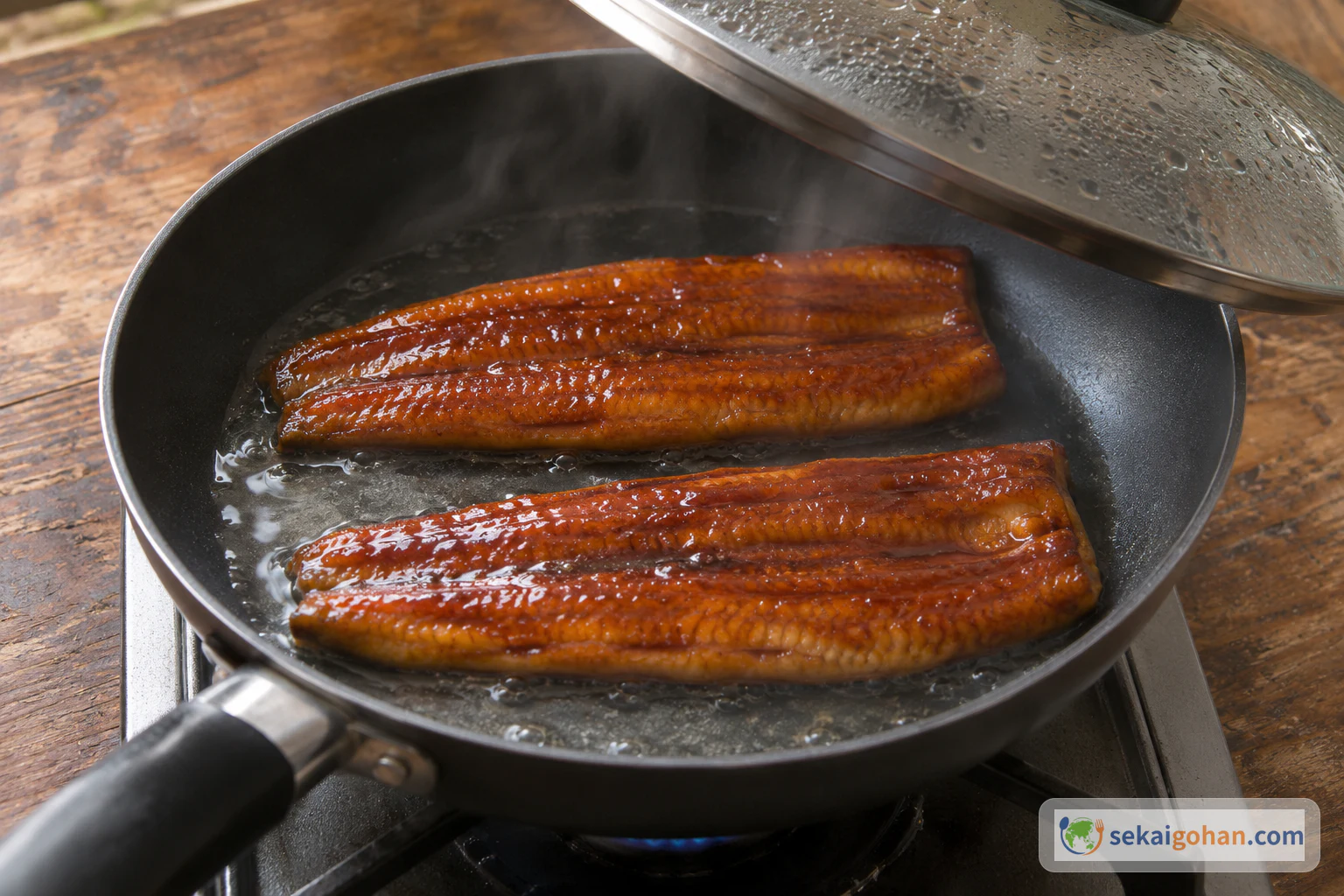
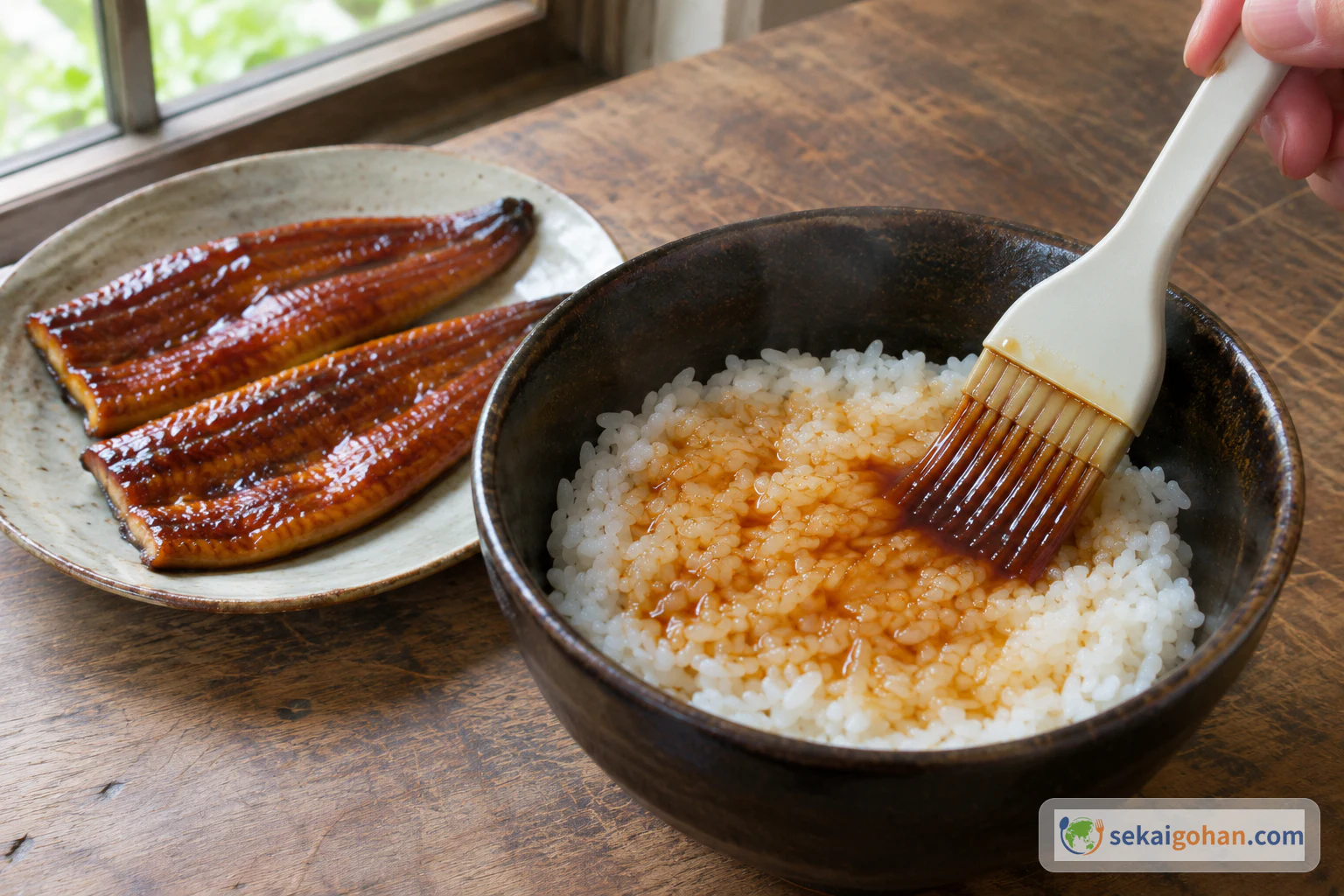
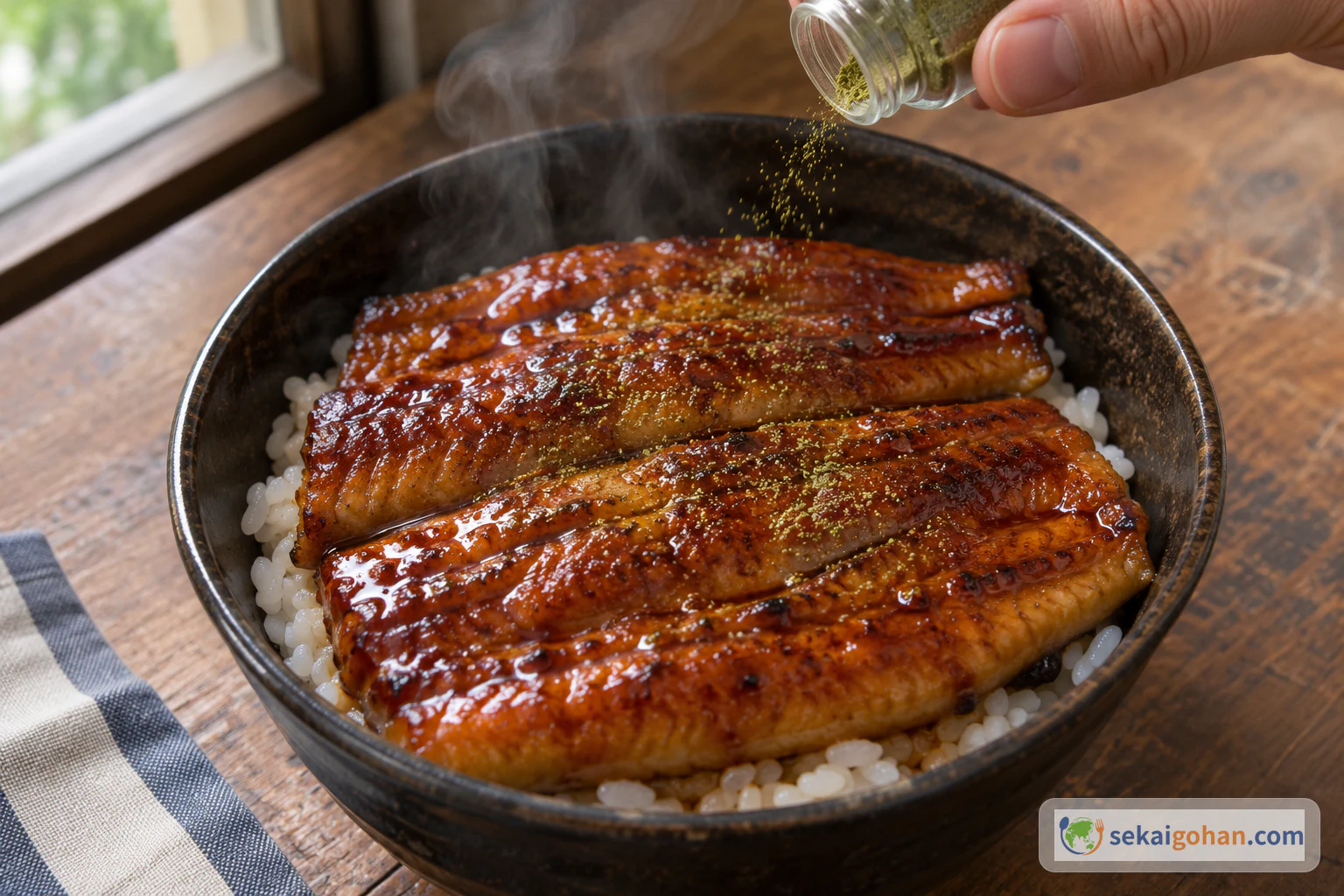
You lift the lid off the frying pan and a puff of sake steam rolls out. Underneath, two halves of eel lie skin side down, their dark glaze wet and shining again. A minute later they go onto a bowl of hot rice that has just been brushed with a sticky amber sauce, and the smell of soy, sugar and grilled fish rises with the steam. Unadon is grilled eel over rice, eaten in Japan from shops, station lunch boxes and home kitchens. It tastes sweet and salty at once, with soft, rich eel and rice that has soaked up the sauce from below.
From Edo Theatre Districts to the Home Kitchen
Eel rice in the playhouse quarter
In the Edo period this dish was called unagi meshi, eel rice, and it grew up around the kabuki theatres. The usual story begins with Okubo Imasuke, who started out selling hinawa (match cord) at the Nakamura-za theatre in Sakai-cho, made a fortune in moneylending, and became the theatre's backer. In 1807 he put up the money for the Edo run of the Osaka actor Utaemon III, the run was a hit, and the struggling theatre came back to life. Imasuke loved eel. So that his kabayaki would not go cold on the way, he had it tucked between layers of rice in a large bowl and delivered to the theatre.
Where it began is not settled. Around the same time, someone living in a back-street house in neighbouring Fukiya-cho, home of the Ichimura-za, sold eel rice made the same way, with the kabayaki hidden in the middle, and eel bowls may have been sold there even before Imasuke. Unadon is usually counted as the oldest of the donburi, dating to the Bunka era (1804–1818).
How the eel moved to the top
In the Meiji era, eel rice came to be called unagi donburi, soon shortened to unadon. Packed into a lacquered box, it became unaju, and for its looks the boxed version overtook the bowl in popularity. One explanation for why the eel now sits on top rather than inside: steaming the eel before saucing came into Tokyo cooking in the Meiji era and was settled by the Taisho era, and burying already-steamed eel in rice steamed it a second time, so the Tokyo sandwich style faded away. In Kansai the eel is not steamed and holds its shape, and the tucked-in style is said to have lasted there.
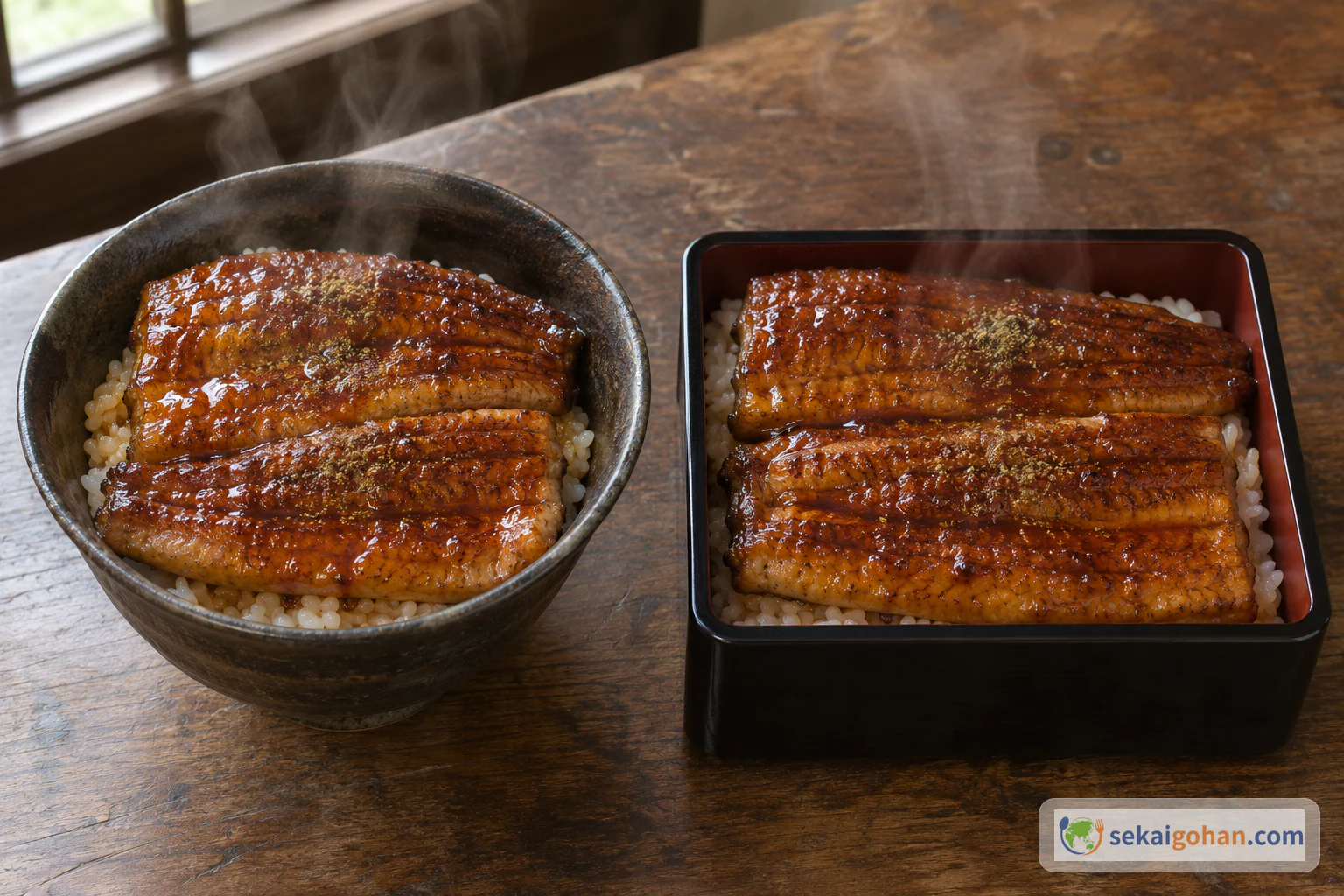
Unaju is short for unagi plus jubako, the lacquered box. The eel and the taste are the same as unadon; the box looks grander and unaju usually costs more. In Kyoto and Osaka, eel rice has also been recorded under the name mabushi. The "don" bowl is often a round lacquered bowl rather than ceramic.
Kabayaki, east and west
The eel on top is kabayaki, eel split, grilled and glazed. The name has three explanations: chunks on a skewer looked like the spike of a cattail (gama), the colour and shape of the grilled eel looked like birch (kaba), or the good smell reached the nose quickly, "kabaya". In Edo the eel was cut into rounds across the bone, skewered and grilled; today any split, opened eel grilled with a sweet, rich sauce is kabayaki.
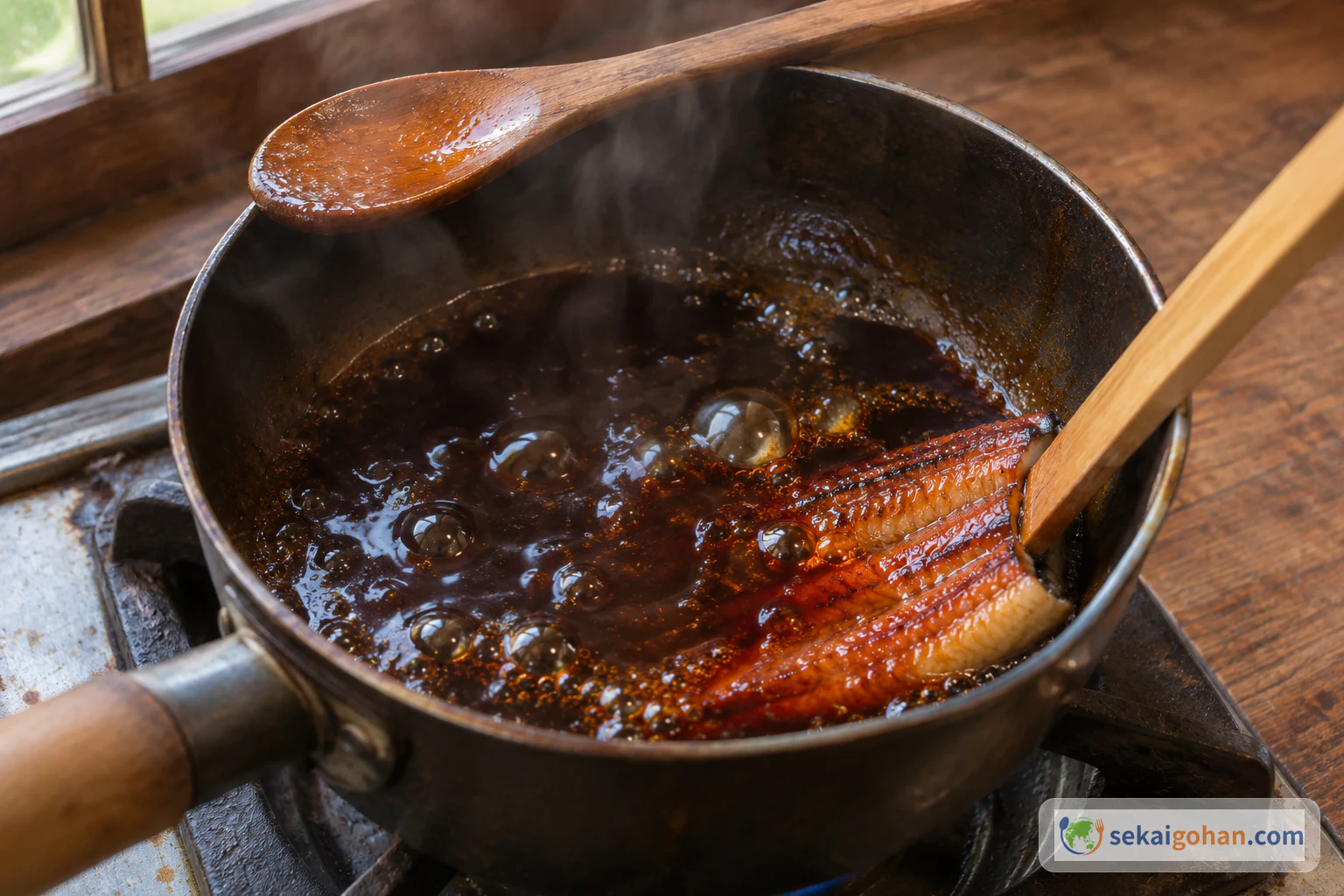
East and west split it differently. In the Kanto style the eel is opened along the back, skewered, grilled plain, steamed, then grilled again with sauce, and the steaming makes the flesh soft. In the Kansai style it is opened along the belly and grilled over charcoal with sauce, with no steaming. The word "Edomae" itself comes from eel: it first meant eel caught near the mouth of the Okawa, today's Sumida River. Seasoning moved from salt to soy sauce as soy spread, and once the sauce became soy, sugar and mirin, kabayaki became a craze among Edo townspeople. Eel shops keep their sauce going, topping it up little by little so that eel fat and the char of the grill deepen it into the shop's own flavour. At home you make a fresh small batch in minutes.
Eating eel on the Day of the Ox in midsummer was already a custom in the Edo period, often credited to an idea of Hiraga Gennai. The true season is autumn, when the eel fattens for winter and turns yellowish; the old word munagi, "yellow chest", is one guess at where the word unagi comes from. Most cooks in Japan buy their eel already grilled, as kabayaki or as plain-grilled shirayaki, and that is what this bowl uses. For more dishes from the same table, see Japan.
Ingredients (serves 1)
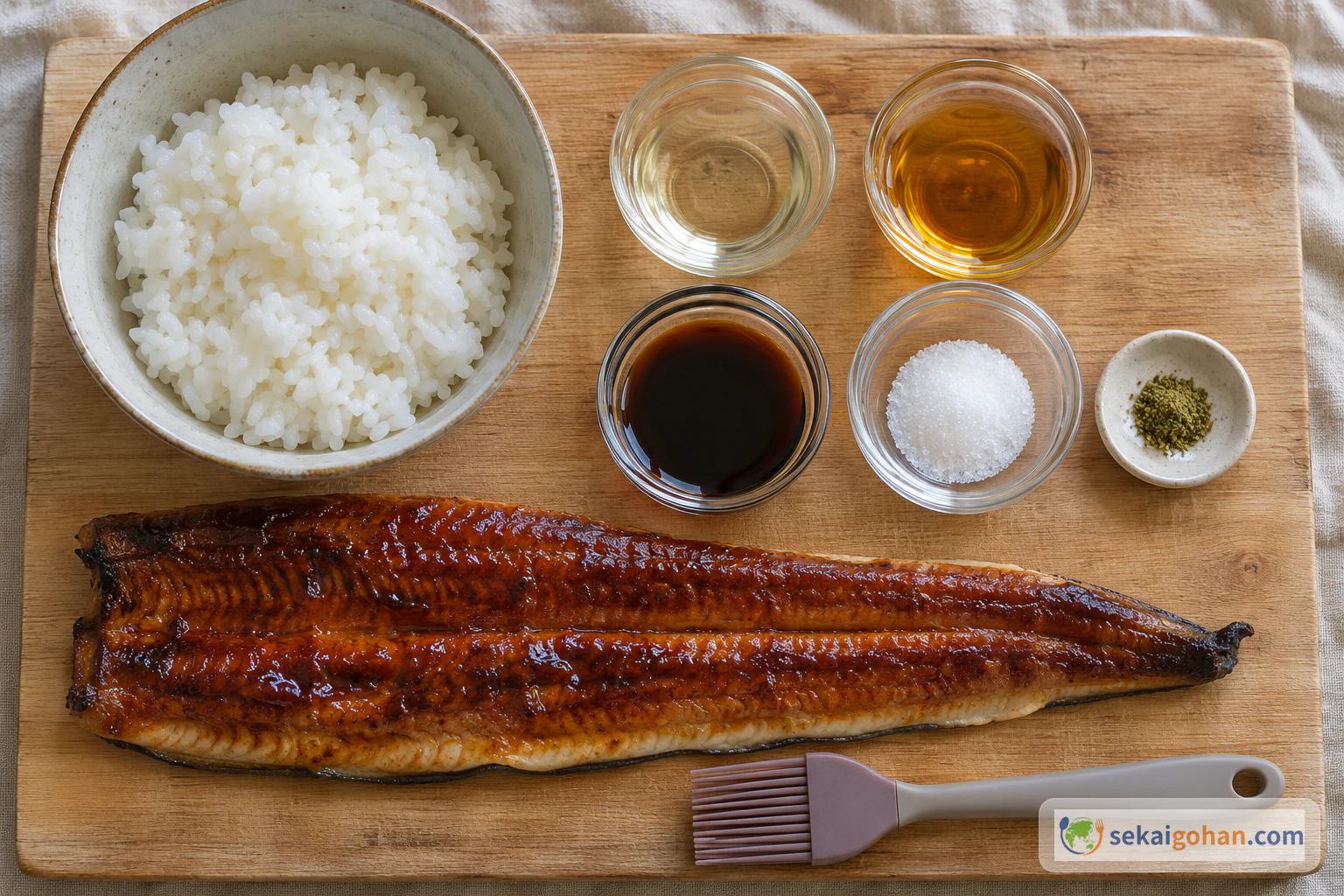
Set out the 1 tbsp for the tare and the 2 tbsp for steaming in separate cups. The steaming sake never goes into the sauce; it only makes vapour under the lid.
This bowl contains fish (eel). Soy sauce is widely made from soybeans and wheat. Check the labels on the kabayaki pack, the soy sauce, any sauce sachet and bottled tare for soy, wheat and other allergens.
Equipment
- Small saucepan, for the tare
- Nonstick frying pan with a lid
- Knife and cutting board
- Basting brush
- Deep donburi bowl
Choosing the Eel and the Sauce
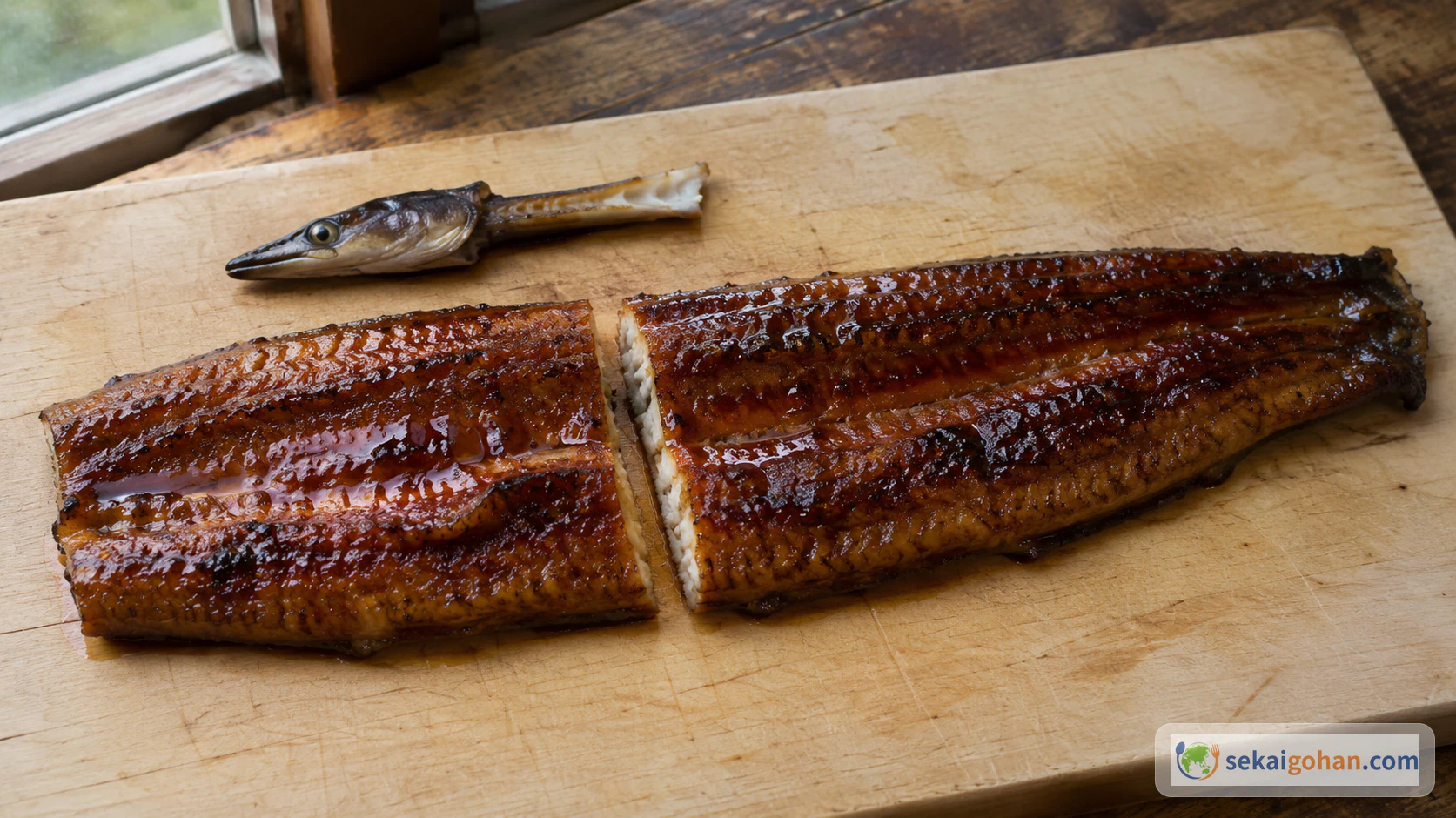
Look for cooked, vacuum-packed kabayaki in the chilled or frozen section of a Japanese or Asian grocery, or order it online. One pack usually weighs 4¼–5¼ oz (120–150 g), which is one bowl. Prices run wide: eel from Shimanto in Kochi is famous and expensive, while imported packs, such as those from China, cost far less. Both work for this bowl. Shirayaki, eel grilled with no sauce, is the other thing you will see on the shelf, and it can be glazed at home with a fresh tare.
For the tare, use hon-mirin and cooking sake from the Japanese aisle and the soy sauce you already have. Bottled kabayaki sauce works when you want to skip the saucepan; it is thicker and stronger than the homemade tare, so brush it on lightly. Many packs come with a small sachet of sauce, and some do not.
Sansho is the one thing you can let go of. What keeps the bowl tasting right is hot rice, softly warmed eel and a sauce that has been reduced rather than poured straight from the measuring spoons.
Method
Make the tare first so it has a few minutes to cool and thicken while you cut and warm the eel. Have the rice cooked and hot before the eel goes into the pan, because the eel needs to go straight from the lid to the bowl. From start to table it is about fifteen minutes.
Saucing the rice before the eel goes on is what gives every mouthful from the bottom of the bowl the same sweet-salty taste as the top. Do it on hot rice, which drinks the tare in.
When It Goes Wrong
| What you see | Why | What to do |
|---|---|---|
| The tare is runny in the pan | It is still hot | Let it cool for a few minutes; it thickens as it cools |
| The tare stays thin even after cooling | It came off the heat before the large bubbles appeared | Return it to low heat until the bubbles turn large and the volume is about half |
| The tare smells burnt or turns stiff | The heat was too high, or it reduced too far | Keep it on low and take it off as soon as the large bubbles appear |
| The pan is dry before the second side | The first spoonful of sake steamed off | Add the second tbsp of sake before covering again |
| The eel is charred or dry | It was grilled again over strong heat | Warm it with steam on low heat only; it is already cooked |
| The eel turns firm at the table | It cooled down | Warm the eel last, right before assembling, and eat it hot |
Serving, Variations and Storage
At the table
At eel shops, unadon and unaju often come with kimosui, a clear soup with thin slices of eel innards, mostly the stomach. One bowl uses the innards of three eels, which makes it a luxury, and the innards are hard to get at home, so it stays a shop pleasure. Sansho is part of the classic table. Eel is a river fish, rich and with a muddy edge, and sansho is the old way to eat it lighter and mask that muddiness. Farmed eel, the norm today, has little of it, so many shops put sansho in a separate pot, and tasting your first bites without it lets the eel itself come through.
Eel is also a classic of Japanese station lunch boxes, especially at Hamamatsu. Packed into a box, it is usually labelled unagi meshi or unagi bento.
Variations
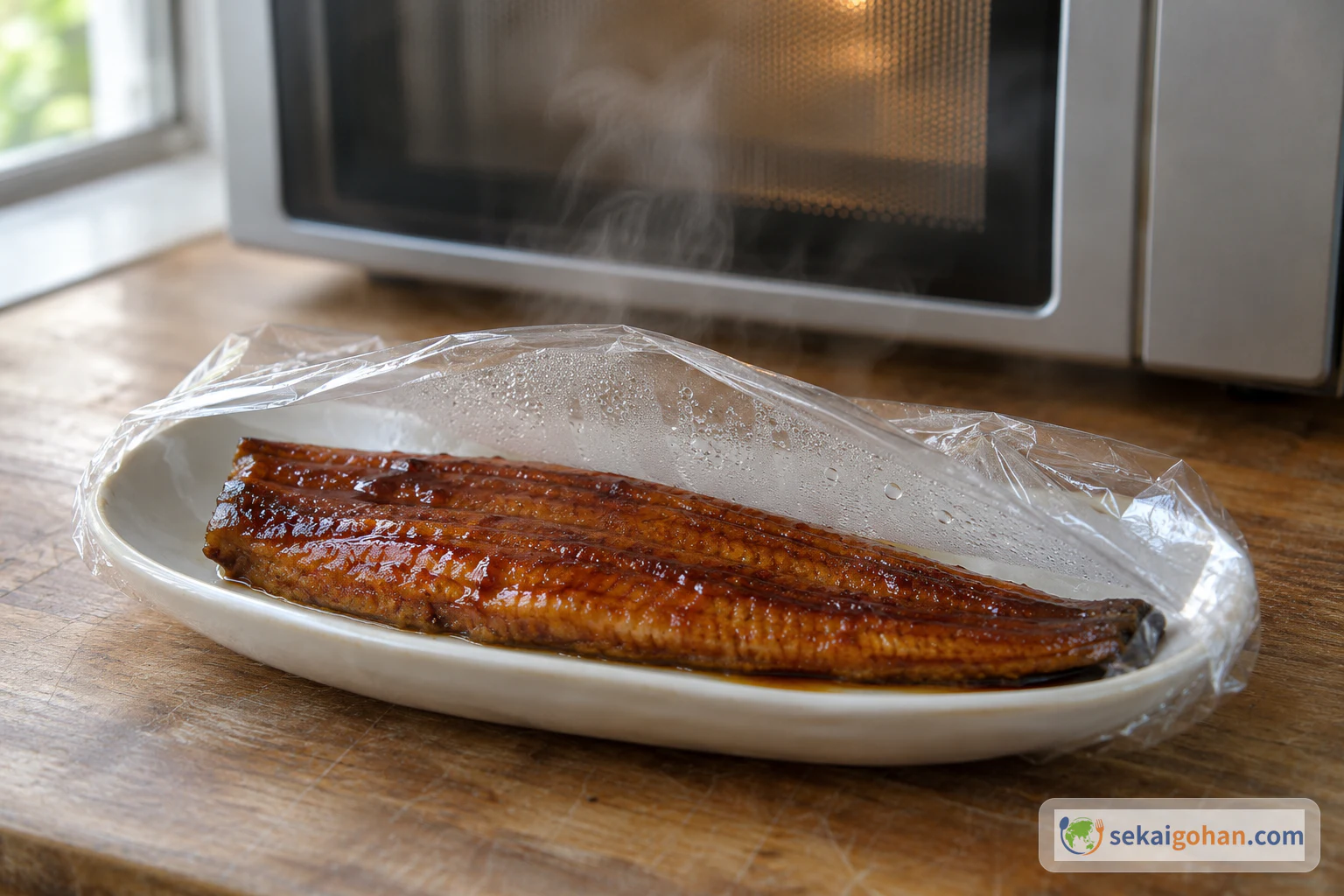
Other ways to warm the eel. Steaming with sake gives the softest result, and these routes warm a pack faster. Times are for 500 W and shift with your oven's wattage; if the eel is not hot enough, add 10 seconds at a time.
- Microwave: take the eel out of the bag, lay it skin side down on a heatproof plate and cover with plastic wrap. Chilled whole fillets take 2 minutes and frozen ones 2 minutes 30 seconds; whole fillets of about 6¾ oz (190 g) or more take 5–6 minutes from frozen, and cutting them first is better. A single cut piece takes 1 minute chilled or 1 minute 20 seconds frozen.
- Oven finish: after warming in the microwave or in its bag in hot water, lay the eel on foil and grill in an oven for about 2 minutes without letting it burn, then pour over the sauce from the pack. This brings back a toasty edge.
- Frying pan with water: oil a cold frying pan, lay the eel skin side down, sprinkle over a little water, cover and steam over low heat, about 4–4½ minutes for a whole fillet and 3½–4 minutes for a single cut piece.
Bottled tare. Skip the saucepan and brush on bottled kabayaki sauce. The bowl tastes heavier and saltier-sweet, so use less than you would of the homemade tare.
Serve it as unaju. Pack the rice into a lacquered box instead of a bowl and lay the eel the same way. Nothing in the method changes; the meal just looks grander.
Storage
Once a pack of kabayaki is opened, eat it soon, whatever the best-before date says. Do not refreeze eel that has been thawed; refreezing spoils its quality. The assembled bowl is meant to be eaten hot, straight away.
Frequently asked questions
Can I make unadon from shirayaki?
Yes. Make a tare by boiling sake to drive off the alcohol, then adding soy sauce and sugar and simmering over medium heat until it thickens. Spread a little of it in a hot frying pan, coat the shirayaki and grill it on both sides, turning before it scorches. Then assemble the bowl as in steps 6 and 7.
Should I use the sauce sachet that came with the pack?
You can. Warm the eel, then pour the sachet over it at the end, as in the oven finish above. The homemade tare gives you more sauce for brushing the rice, so you can use both, the sachet on the eel and the tare on the rice.
Why has eel become so expensive?
Eel is mostly farmed, and the farms start from wild-caught baby glass eels. The catch of glass eels has been falling, and eel prices have risen in recent years. Domestic Japanese eel is the most expensive, which is why many people think of an eel bowl as a high-end Japanese meal.
Does the eel have bones?
Kabayaki has small bones left in the flesh. Chew each bite well.