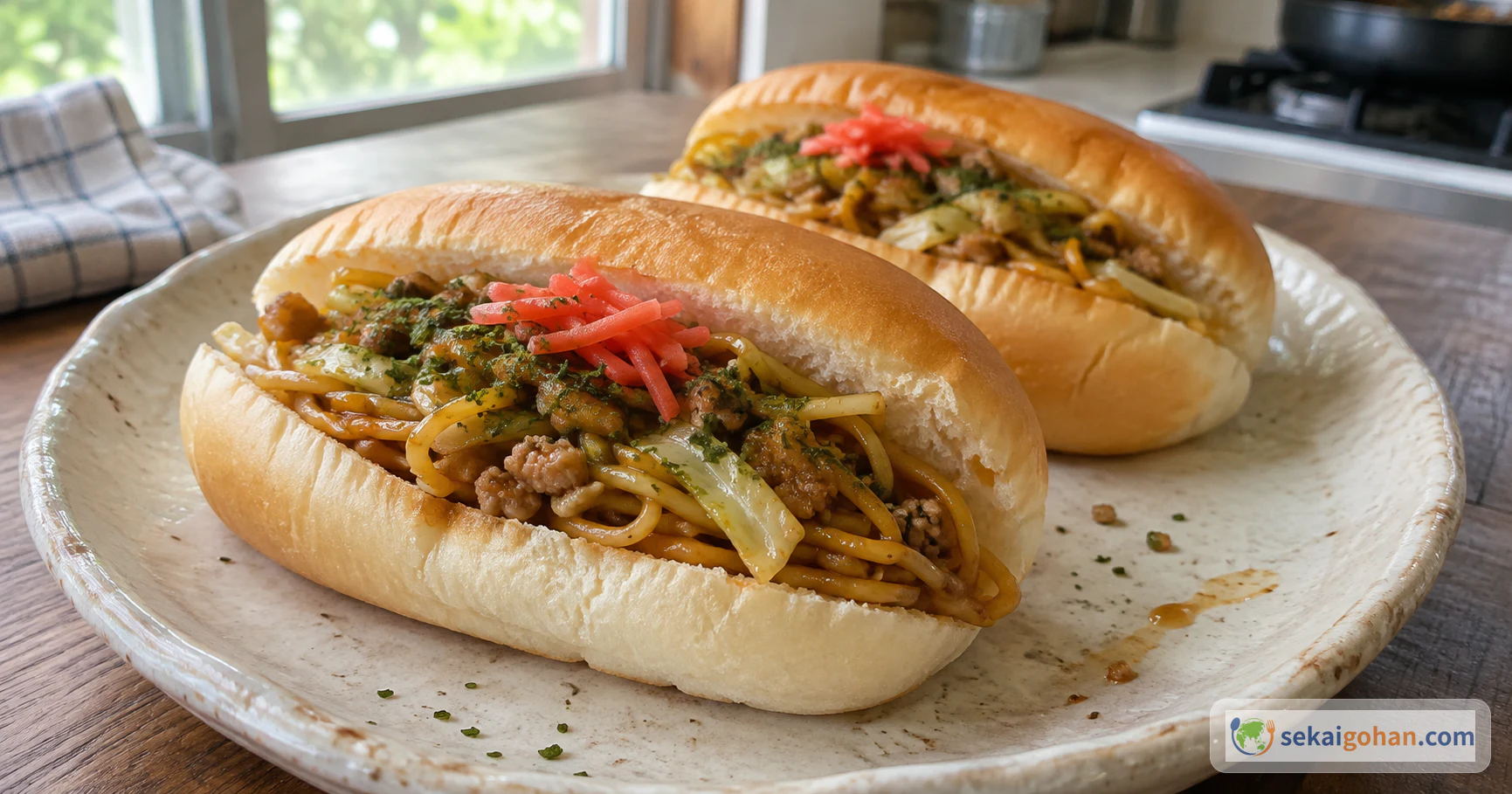
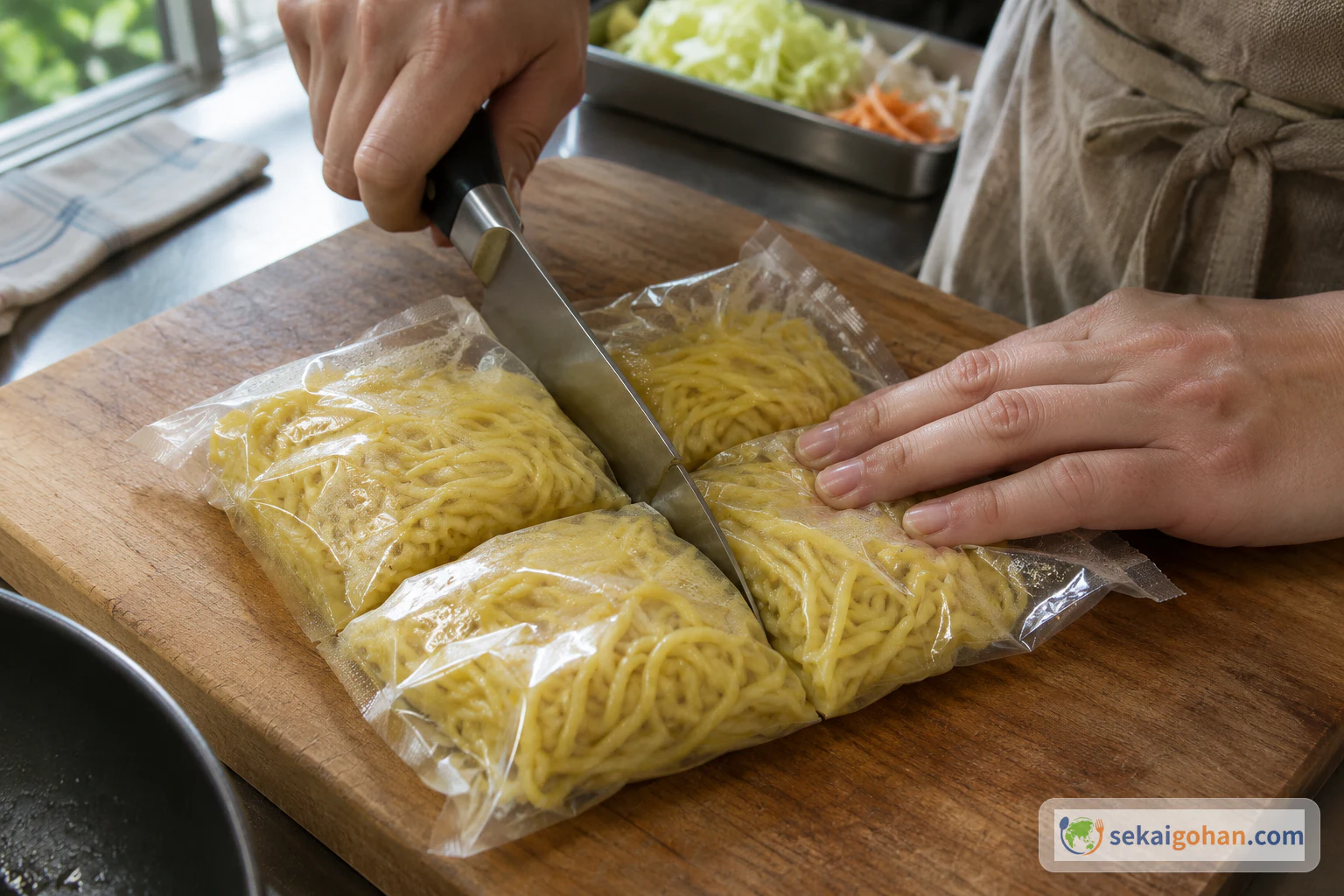
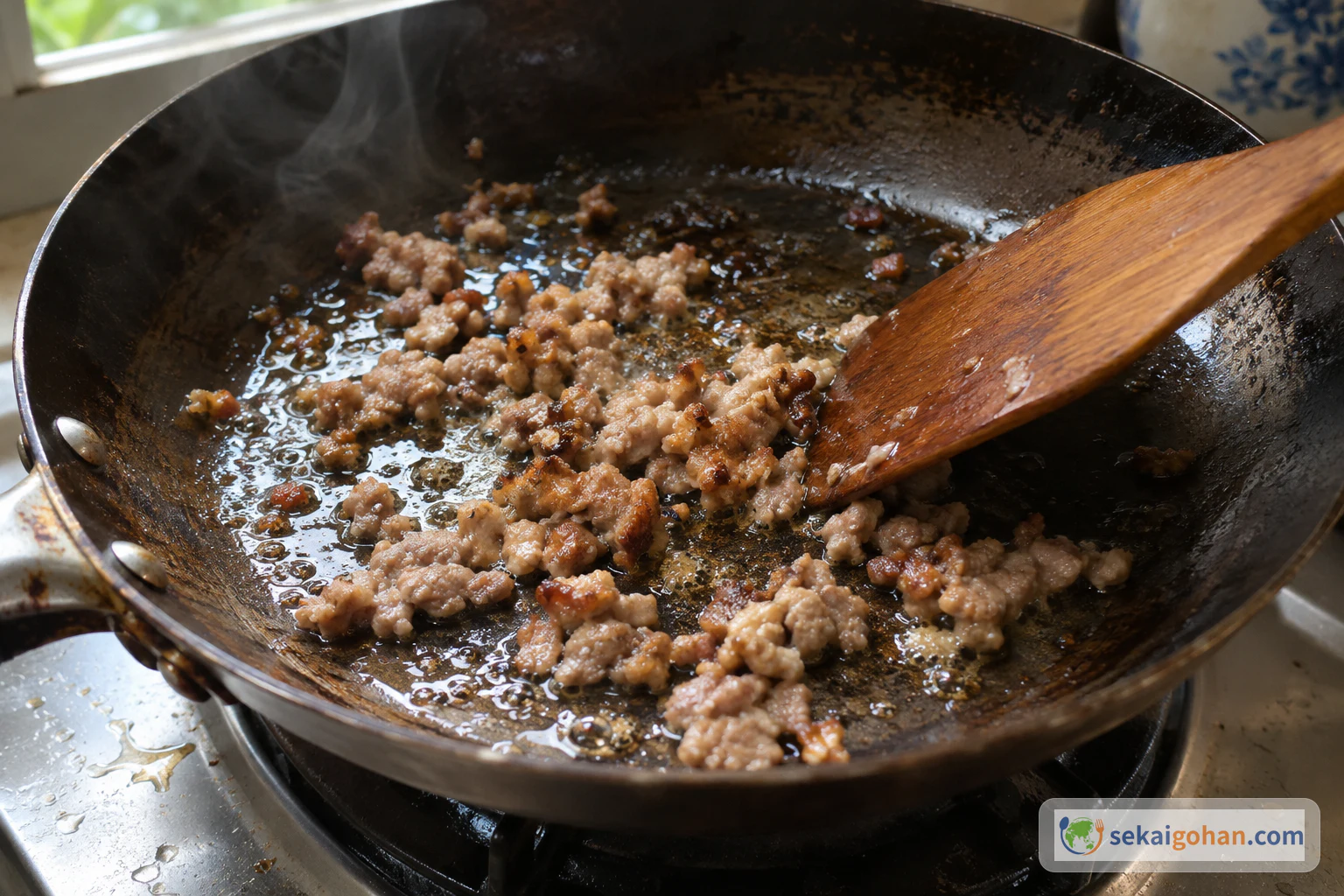
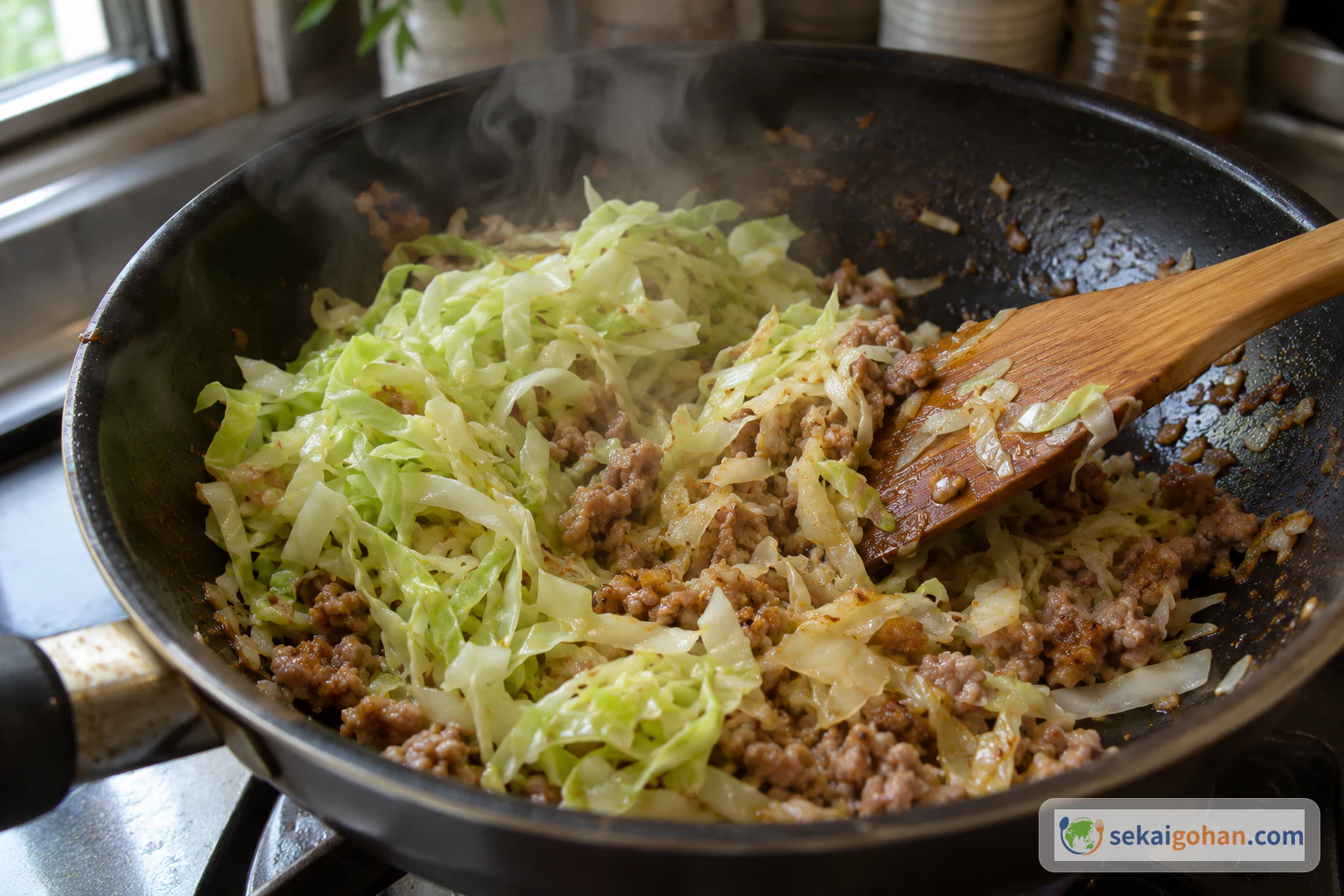
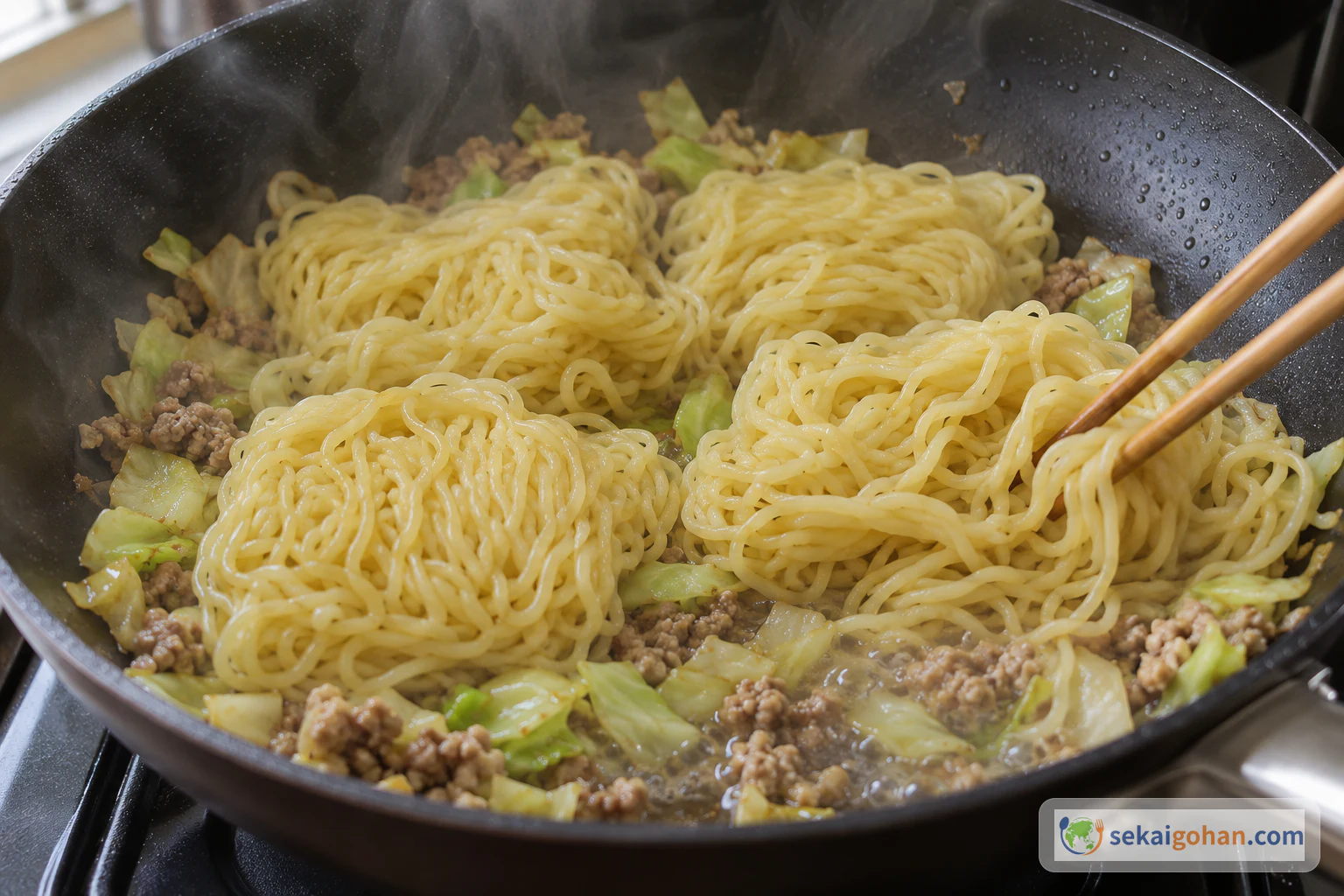
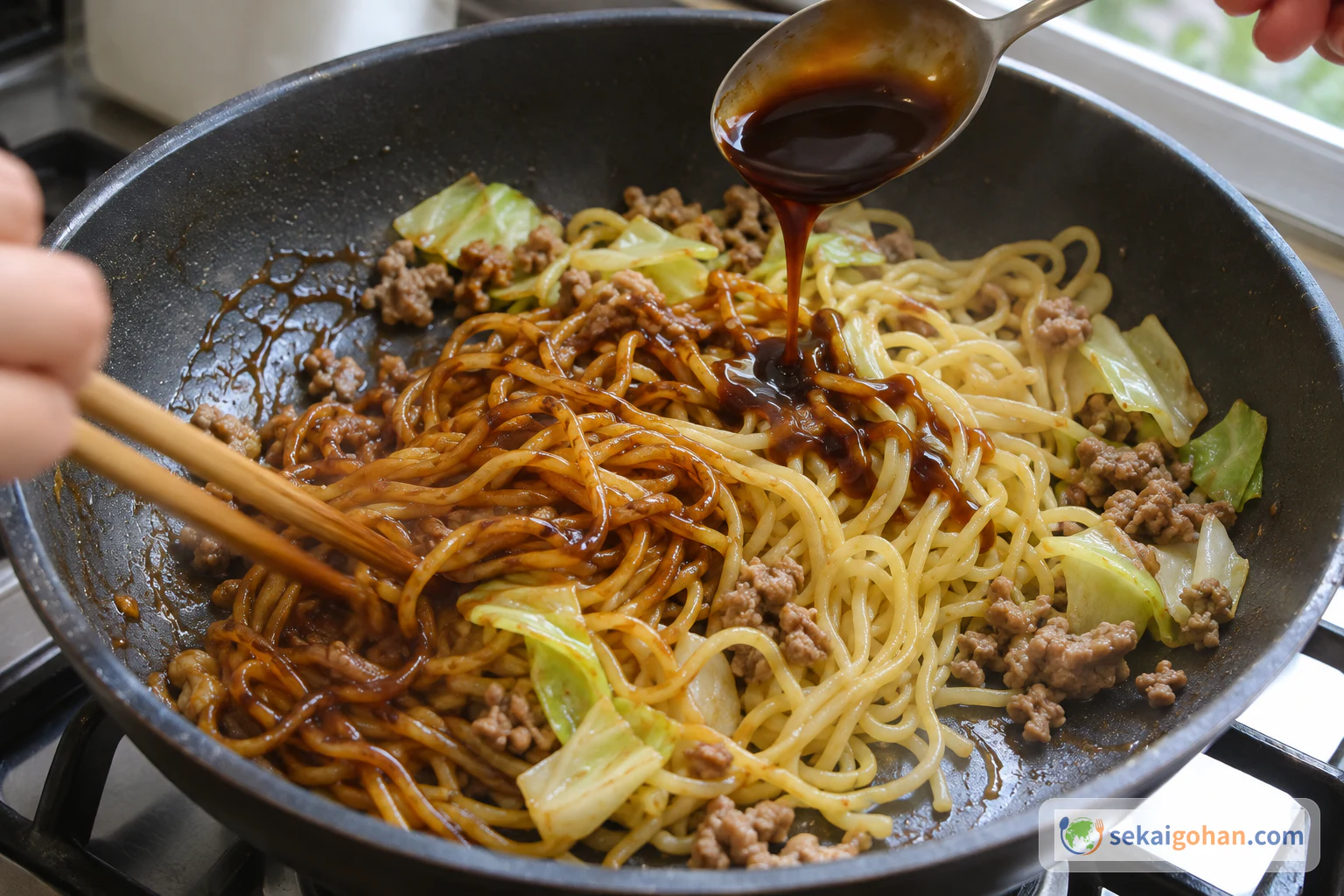
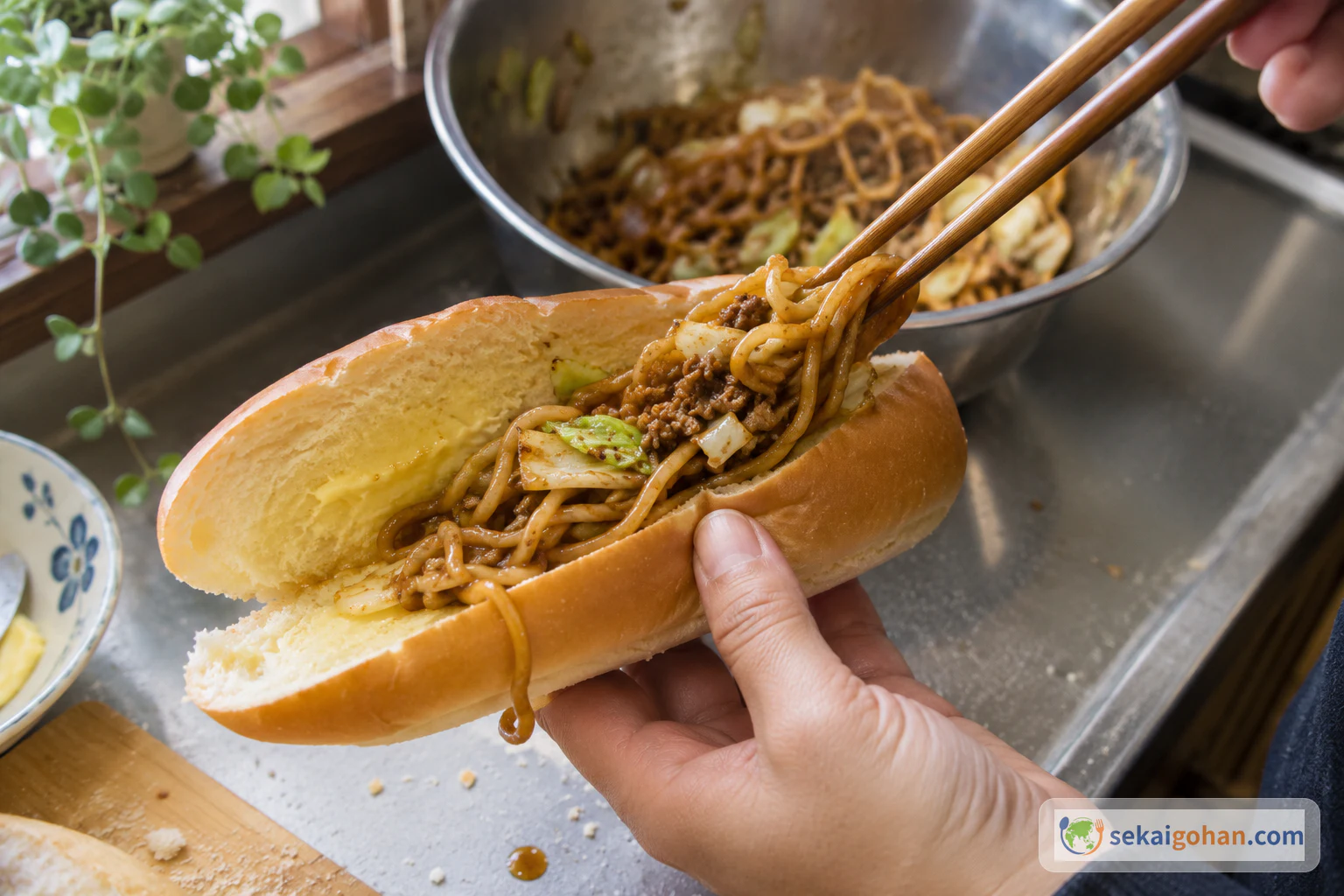
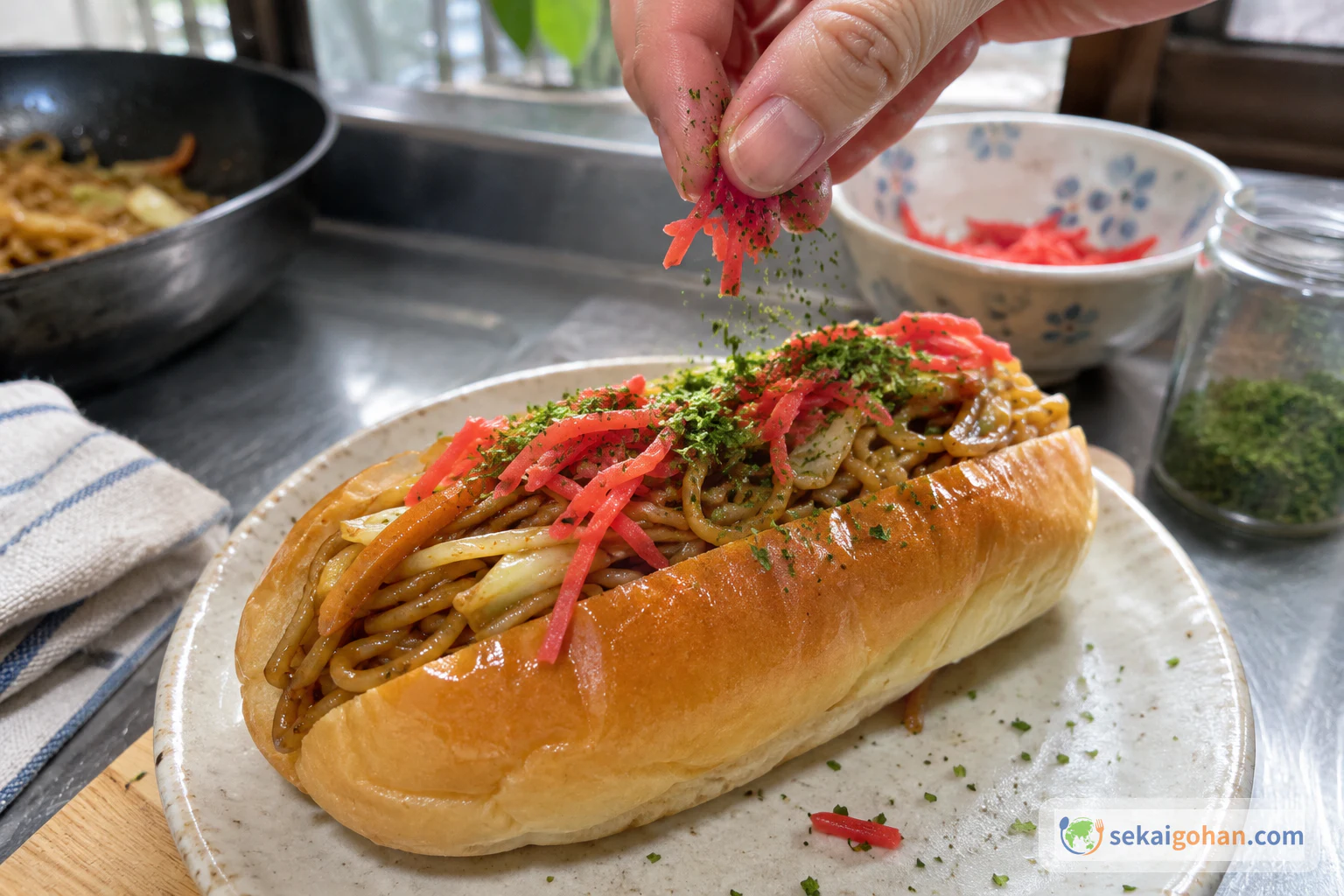
A splash of water hits the hot pan and the noodle blocks disappear in a cloud of steam. Then comes the one hard part: leave them alone until the hissing fades and the bottom of the pan is dry. The dark sauce goes on, its sweet, tangy smell fills the kitchen, and the noodles are pushed into a soft, buttered bun with a pinch of red pickled ginger and green aonori on top. Yakisoba-pan is a Japanese bakery favourite, sauce-fried noodles with cabbage and a little pork tucked into a split koppepan, a soft white roll. It tastes sweet and savoury, with the ginger cutting through the sauce and the seaweed adding a smell of the sea. It is eaten out of hand, at a school desk, from a paper bag, or straight off the kitchen counter.
Where Yakisoba-pan Comes From
From anpan to the school lunch roll
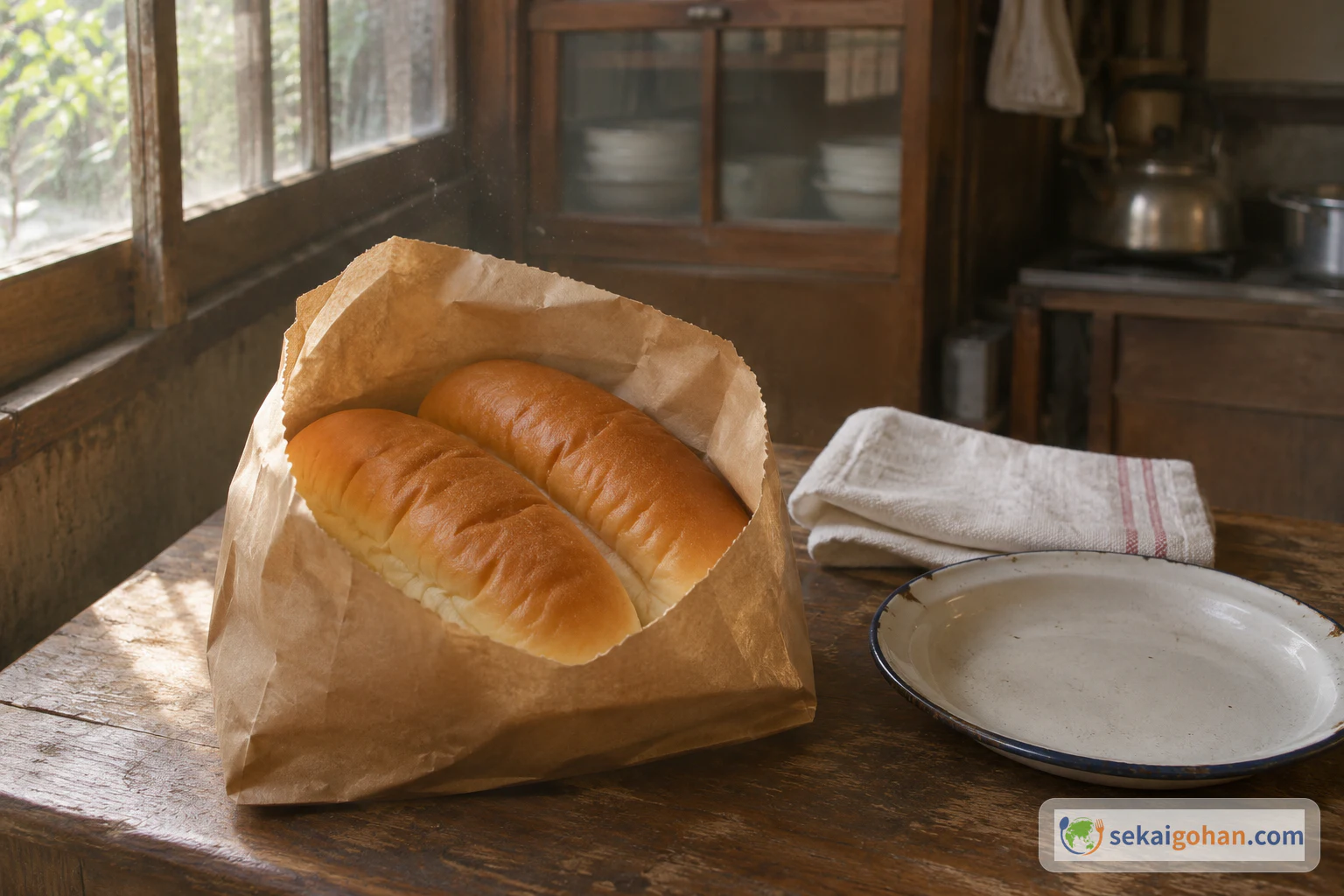
Japanese bakeries have been filling soft bread with something else for a long time. Anpan, the sweet bean bun of 1874, is usually counted as the starting point of Japan's own style of filled bread, and curry bread followed in 1927. The bigger turn came after the Second World War. With the School Lunch Act of 1954, the koppepan roll went onto elementary and junior high lunch trays across Japan, and bread settled into home kitchens. Yakisoba-pan and croquette bread are the classic dishes that grew out of that shift. What ties them together is the bread itself: a soft, light dough that gives way around whatever is inside it.
Japanese bakers use two words for savoury bread. Bread with a filling sandwiched into it, like a sandwich or a burger, is usually called chōri-pan. Bread where the filling is combined with the dough and then baked or fried is called sōzai-pan. Yakisoba-pan, a split bun filled after baking, sits on the chōri-pan side of that line.
A shop in Minami-Senju
Where yakisoba-pan was first made is not settled. The story most often told points to Nozawaya, a shop in Minami-Senju in Tokyo's Arakawa Ward that sold yakisoba and koppepan side by side. A customer, so the story goes, found buying both a bother and asked for the noodles to be put straight into the bread. The combination caught on and spread across Tokyo. The year is given as 1952, or more loosely as sometime in the 1950s. A bun sold for 15 yen, and the shop closed in 2010.
Lunch trays and the school store
For many people, yakisoba-pan means school. The picture of students scrambling for it at a high school store owes a lot to the manga Urusei Yatsura, which has a fight over yakisoba-pan, and children who have only seen it in comics still call it "the legendary yakisoba-pan" when it turns up at lunch. In school lunches, it often arrives in two parts: a split-top roll and a container of "yakisoba-pan filling", which the children put together at their desks just before eating. It is a treat that comes around about once a year. The toppings change from place to place as well. Pickled ginger, aonori, mayonnaise and parsley all appear, and some lunches serve the ginger on the side so that those who love it and those who cannot eat it both get their way.
Ingredients (serves 4)
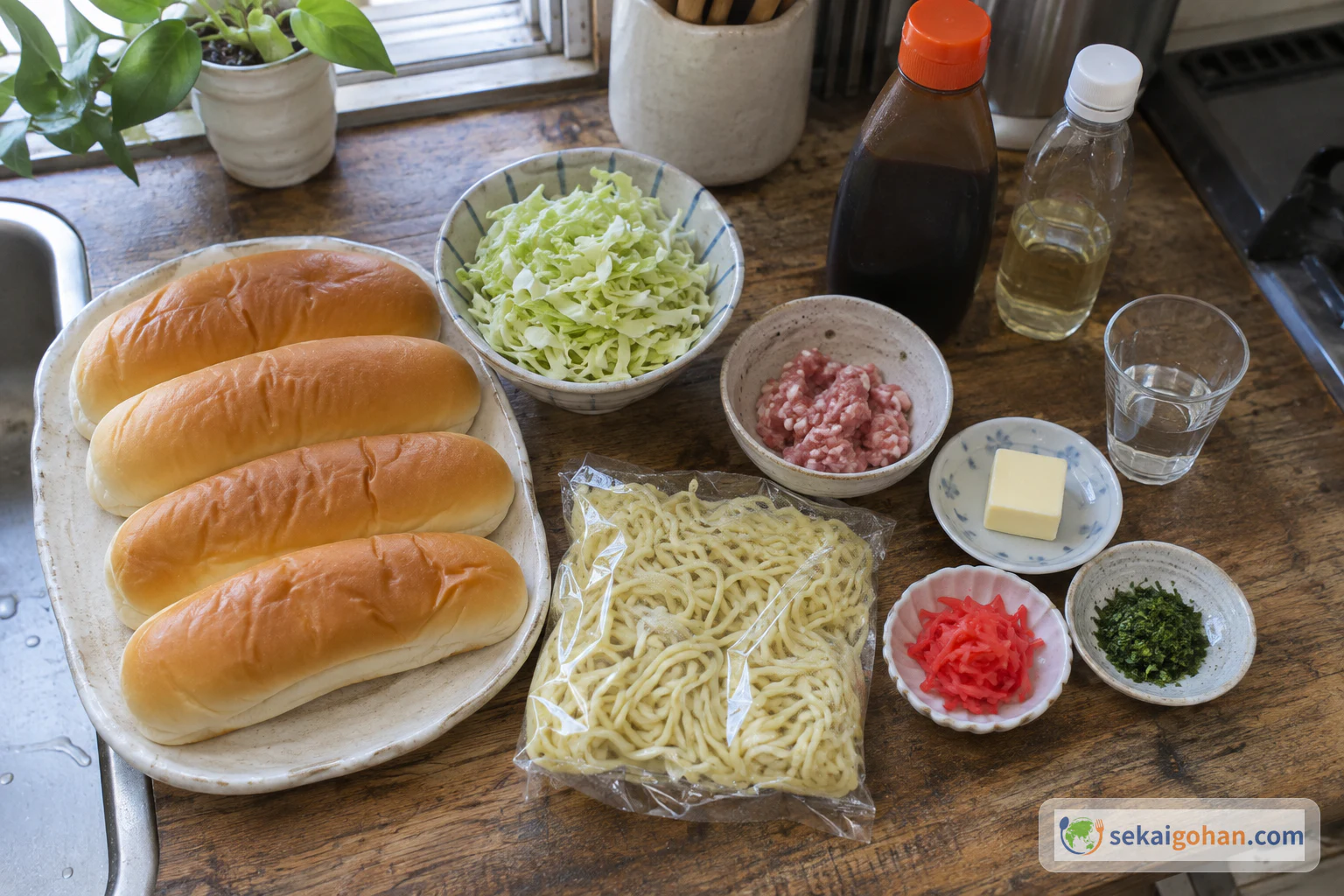
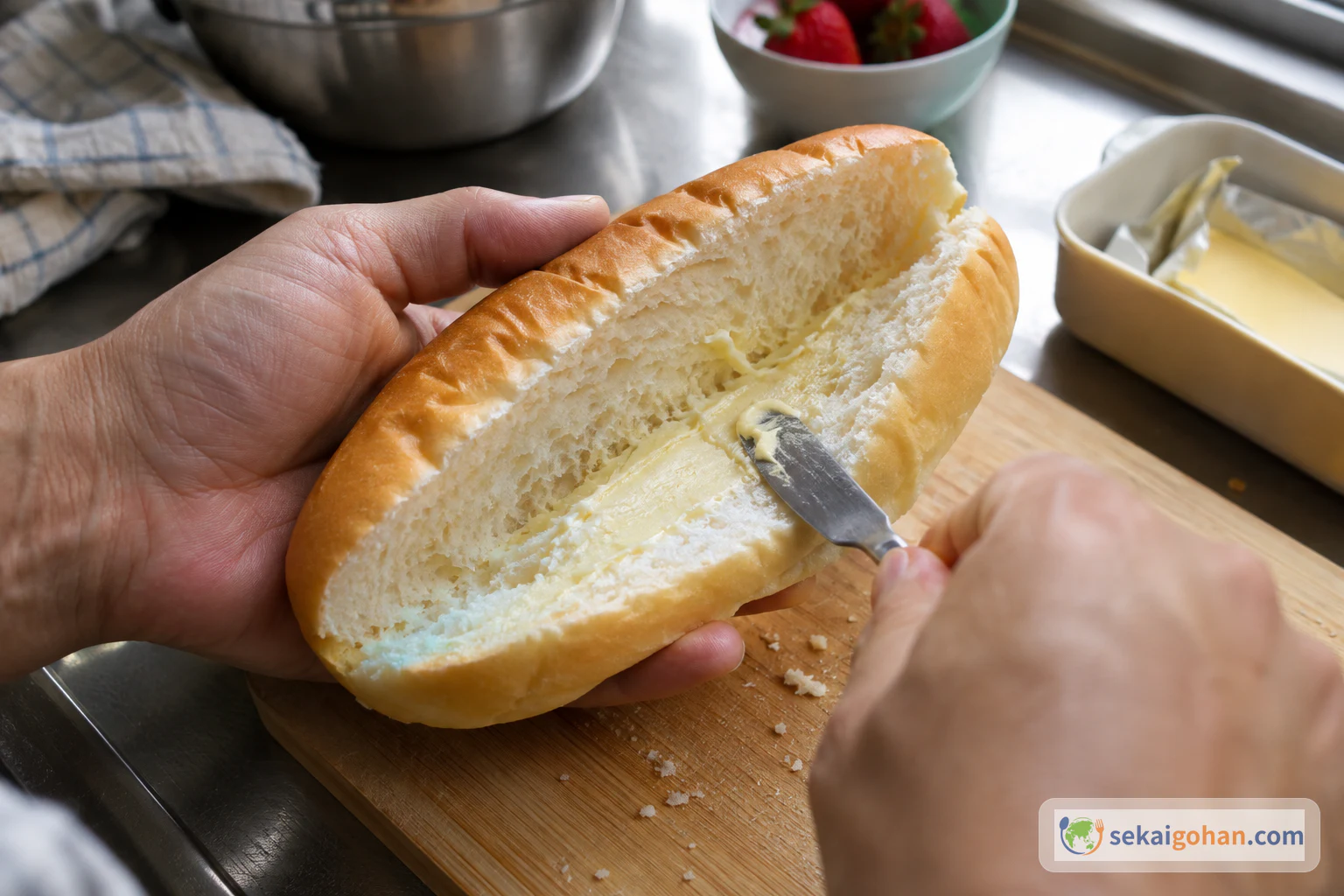
The butter in the cut does more than add flavour. A thin coat stops the noodles' moisture from soaking into the crumb, which is what turns a yakisoba-pan limp. Spread it right up to the edges of the cut.
The bread and noodles contain wheat, and some noodle brands also contain egg, milk or soy. Butter contains milk. Yakisoba sauce usually contains soy and wheat. The filling contains pork. Check the ingredient labels on each product you buy.
Equipment
- Frying pan, around 10 inches (26 cm)
- Heatproof spatula and cooking chopsticks
- Bread knife and a kitchen knife
- Cutting board and butter knife
- Toaster oven (for warming)
- Shallow storage containers
Choosing and Substituting
The taste that makes this dish Japanese comes from four things together: sweet-savoury yakisoba sauce, the fat from the pork, the sweetness of softened cabbage, and a soft bun, finished with the sourness of pickled ginger and the smell of aonori. Keep those, and the rest can bend to what your shops carry.
Noodles and sauce are the two things worth a trip to a Japanese or Asian grocer, or an order online. Steamed yakisoba noodles are sold in bags of several portions in the chilled noodle section; pickled ginger and aonori sit with the dried goods.
| If you can't find | Use | What changes |
|---|---|---|
| Koppepan | Split-top rolls or soft dinner rolls | Smaller rolls hold less, so a quarter of the noodles might not fit; fill to what the bun takes |
| Yakisoba sauce | Another brand of yakisoba sauce, chūnō (medium-thick) sauce mixed with Worcestershire, or okonomi sauce | Sweetness and thickness differ; add a little at a time and taste instead of pouring the full spoon |
| Butter | Margarine | The bread barrier still works; the flavour is flatter |
| Salad oil | Sesame oil | A stronger, nutty aroma through the noodles |
| Aonori | Aosa flakes or finely cut nori | The sea smell shifts and is less bright |
| Pickled ginger | Leave it out | The bun still works, but the sauce tastes heavier without the sour edge |
Skipping the butter altogether is the one change that costs you the texture: the bun turns sticky where the noodles touch it.
Method
Cut and butter the buns and divide the noodles before the pan goes on, because once the cooking starts it runs in one quick line with no stopping. The cooking takes about 15 minutes over medium heat. The only hands-off moment is after the water goes in, when the steam does the work and you wait.
When It Goes Wrong
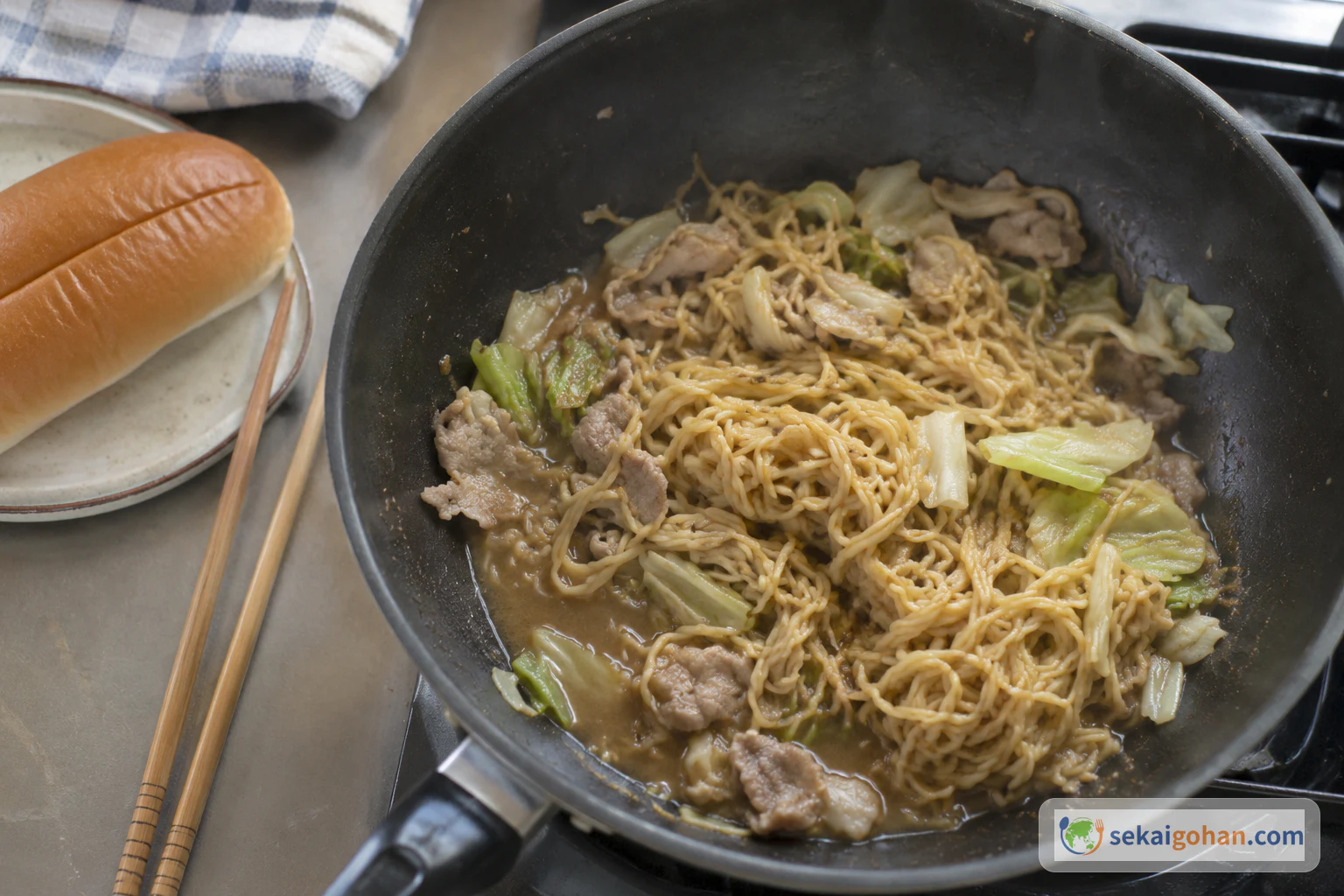
Almost every problem with yakisoba-pan comes back to water left in the pan or a bun filled too hard.
| What you see | Why | What to do |
|---|---|---|
| The bun goes soggy | The noodles were still wet, or the cut was not buttered | Cook the noodles until the pan is dry and butter the cut to the edges. To rescue a soggy bun, warm it in a toaster oven for 30 seconds to 1 minute to crisp the outside |
| The noodles break into short bits | They were stirred right after the water went in | Leave them until the water has steamed off, then loosen them |
| The flavour is thin | Water in the pan diluted the sauce, or a different sauce was used | Cook off the moisture first; with a different sauce, adjust by tasting |
| Filling drops out | The noodles were left long, or the bun was overfilled | Cut the noodles into quarters before cooking and fill only as much as the slit holds |
| The pork still has pink spots | The mince stayed in clumps | Break it into small crumbs and keep cooking until the colour has fully changed |
| The bun splits in two | The cut went through the bottom | Stop the knife before the base so the bun stays in one piece |
Serving, Variations and Storage
At the table
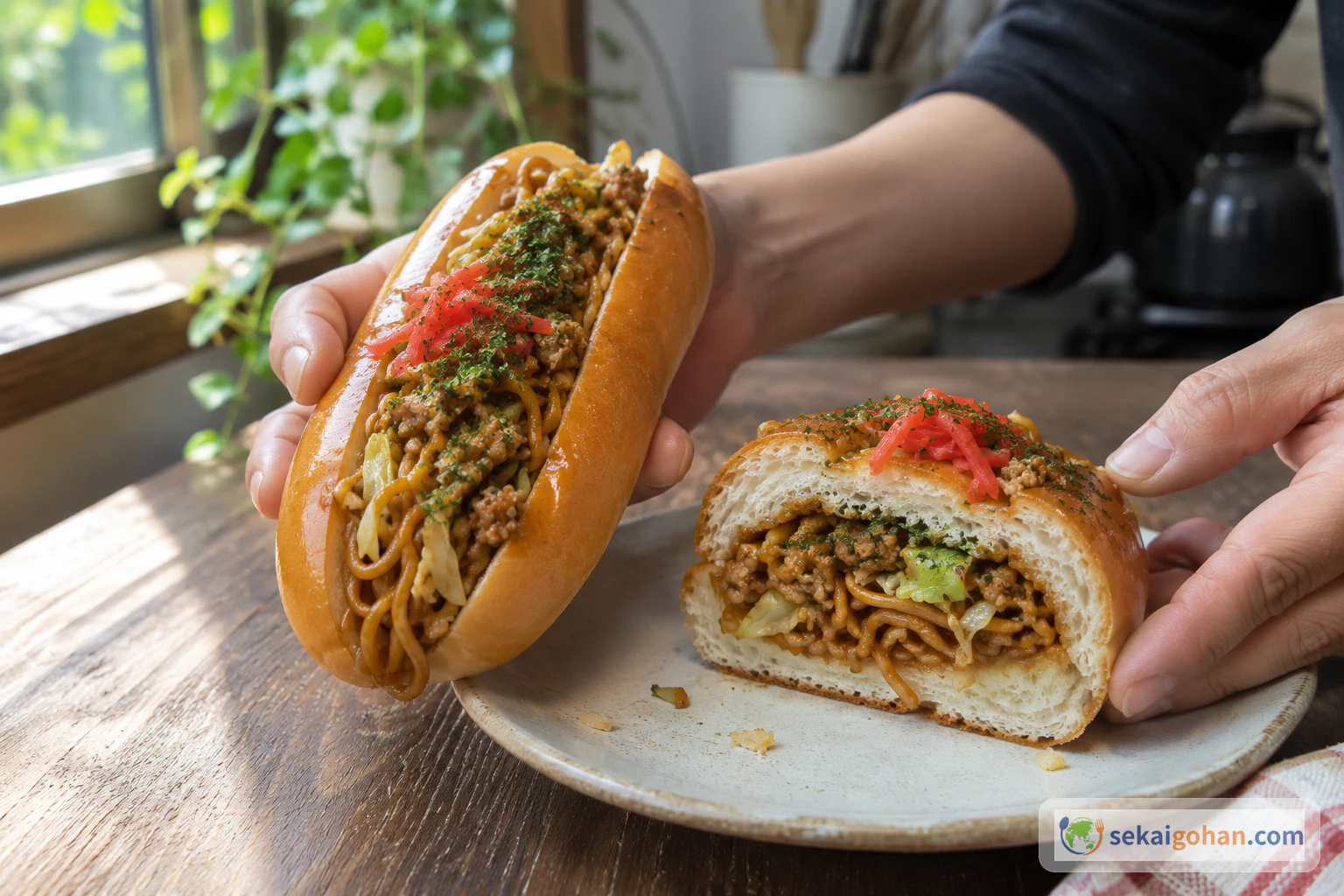
Yakisoba-pan is eaten in the hand, the way it is bought from a bakery shelf or handed out at lunch. At home it is at its best freshly filled, while the bread is soft and the noodles have not yet softened the crumb. For a crowd, borrow the school lunch approach: put the split buns on one plate and the warm noodles in a bowl, and let everyone fill their own.
Variations
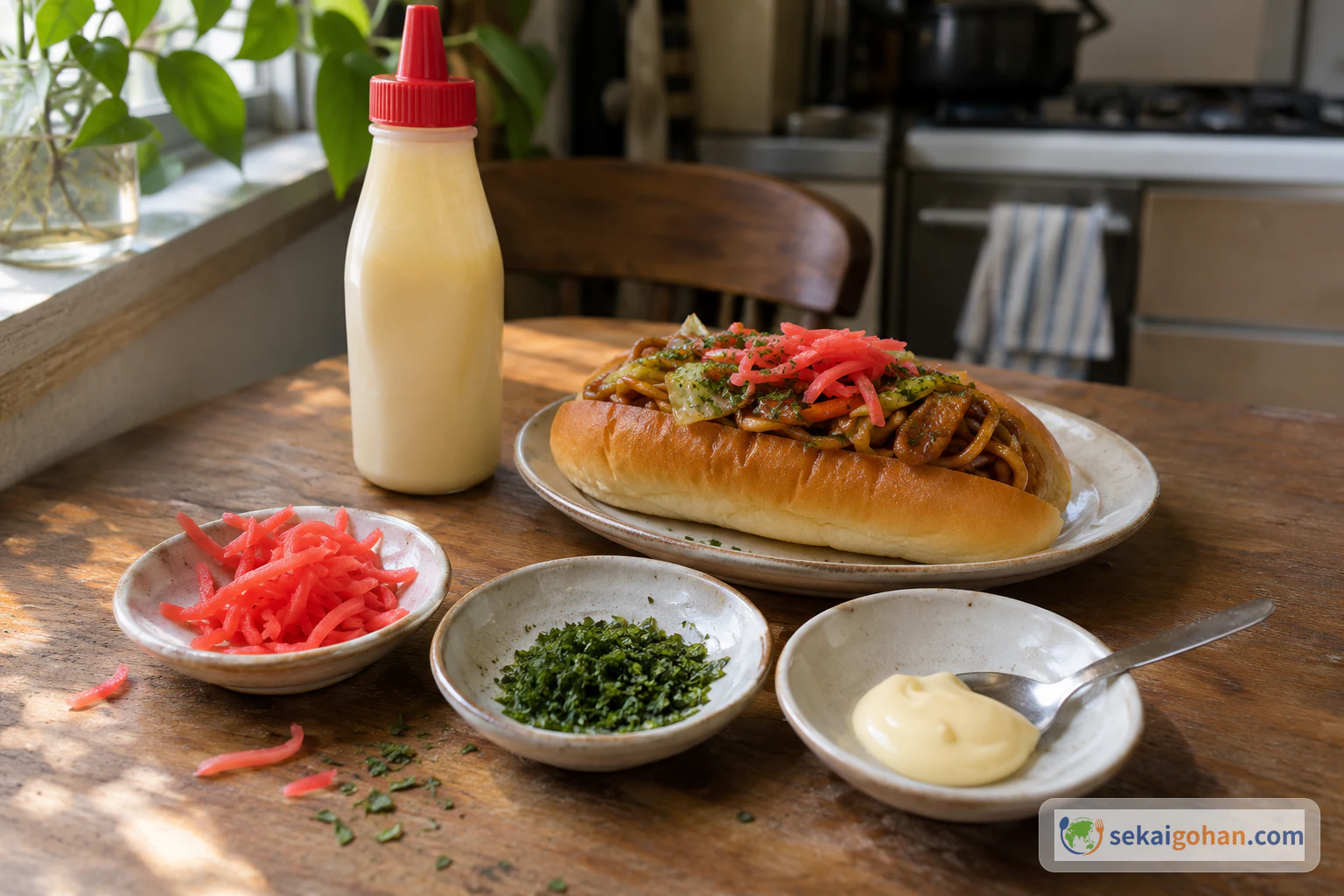
- Ginger cooked in. Stir half the pickled ginger in with the sauce and scatter the rest on top. The sourness runs through every bite instead of sitting on the surface.
- Mayonnaise. Pipe a thin line over the finished bun. It adds richness and softens the sharp edge of the sauce.
- Toasted finish. Put the filled buns in a toaster oven for 30 seconds to 1 minute. The outside turns crisp and the inside stays fluffy; watch closely, because the bread and noodles catch quickly.
- Pork belly and carrot. Use thinly sliced pork belly and add carrot, seasoning with the powdered sauce sachet that comes with some noodle packs. The meat has more chew and the flavour leans on the sachet.
Storage
Store the noodles and the buns apart and fill just before eating; a filled bun left to sit turns soggy. Divide leftover noodles into shallow containers so they cool quickly, cover, and refrigerate promptly. Keep the buns wrapped in a separate container. Do not leave the cooked noodles at room temperature for long, and throw them out if they have been kept too long.
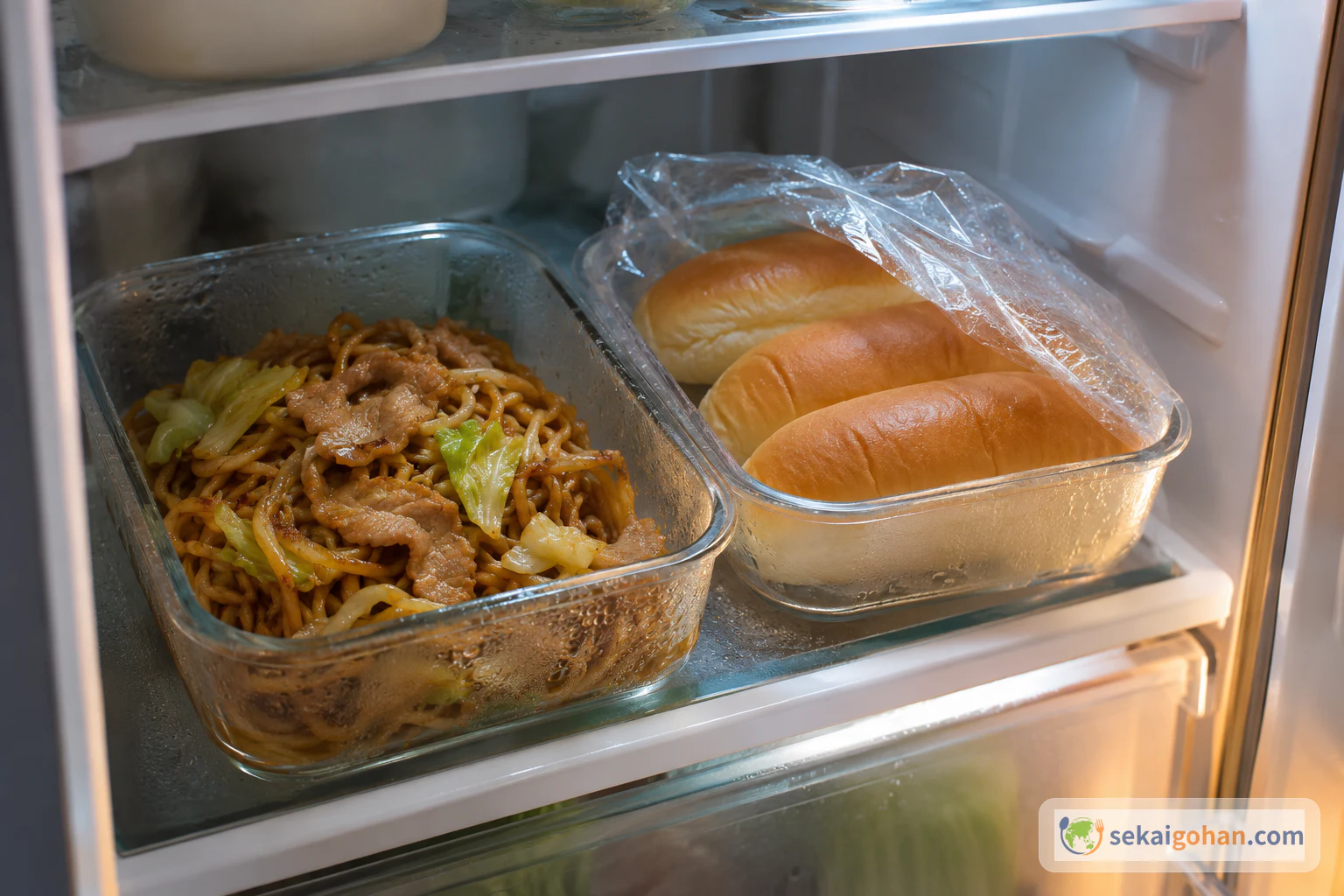
Reheat leftover noodles until they reach 167°F (75°C) or above. Keep hot food at 149°F (65°C) or above and chilled food at 50°F (10°C) or below. Warm the buns briefly in a toaster oven, watching so they do not burn, then fill.
Frequently Asked Questions
Is a quarter of a noodle portion enough for one bun?
It makes a neat bun that is easy to hold. Other builds put one pack of noodles into two or three buns for a fuller filling. If you want more, use fewer buns or more noodles, and adjust the sauce by tasting.
Why minced pork and not sliced?
Minced pork breaks into small crumbs that spread through the noodles and stay in the bun when you bite. Sliced pork belly gives more chew and more fat, which changes the texture rather than the flavour. Both work; mince keeps the filling tidy.
School kitchens fry the noodles first. Should I?
School kitchens deep-fry the noodles before stir-frying so that they do not stick to the huge kettles and take on the flavour evenly, even when the vegetables release water. That is a trick for cooking in bulk. In a home frying pan, steaming the noodles with a little water and cooking it off does the same job.