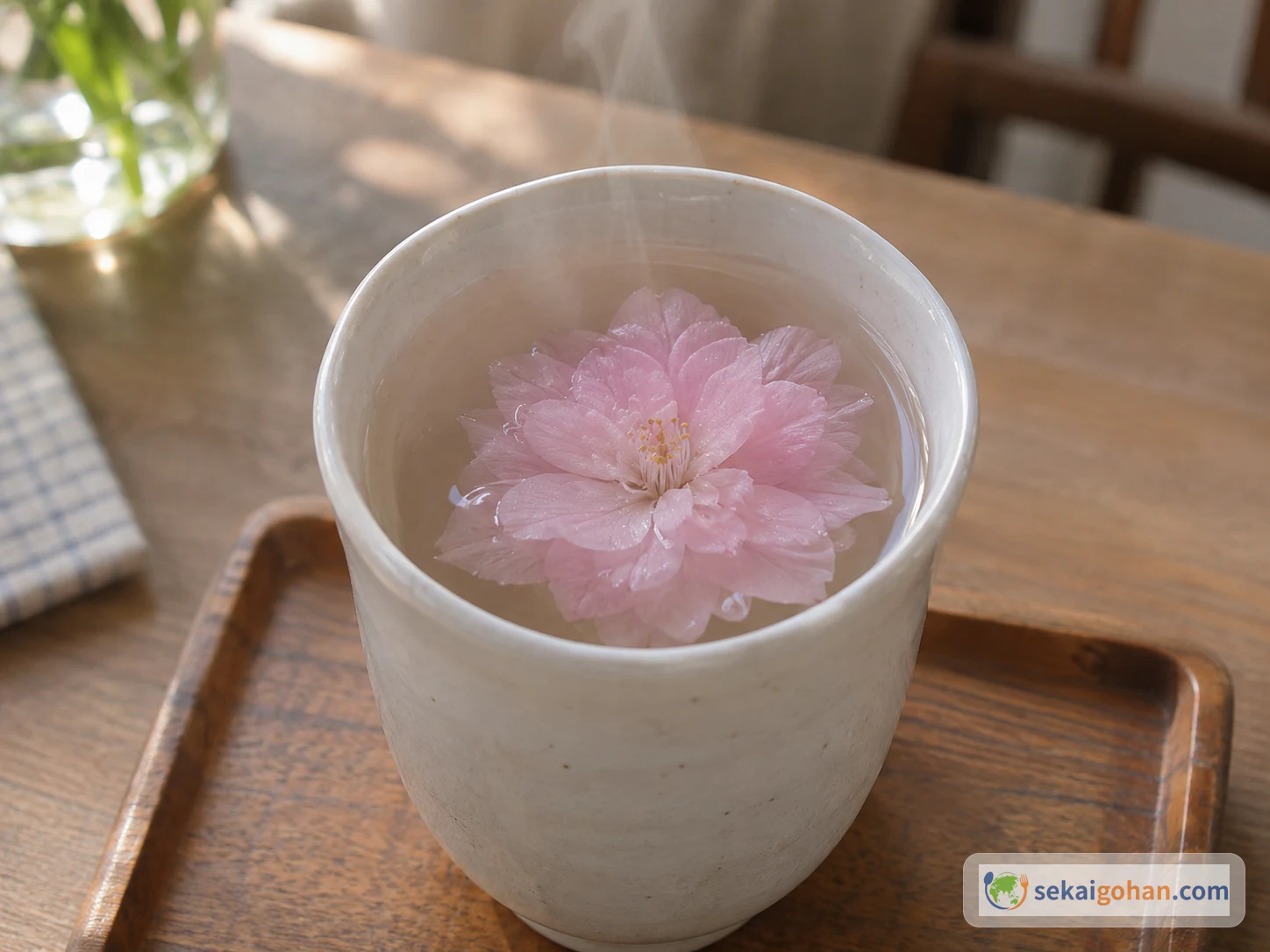
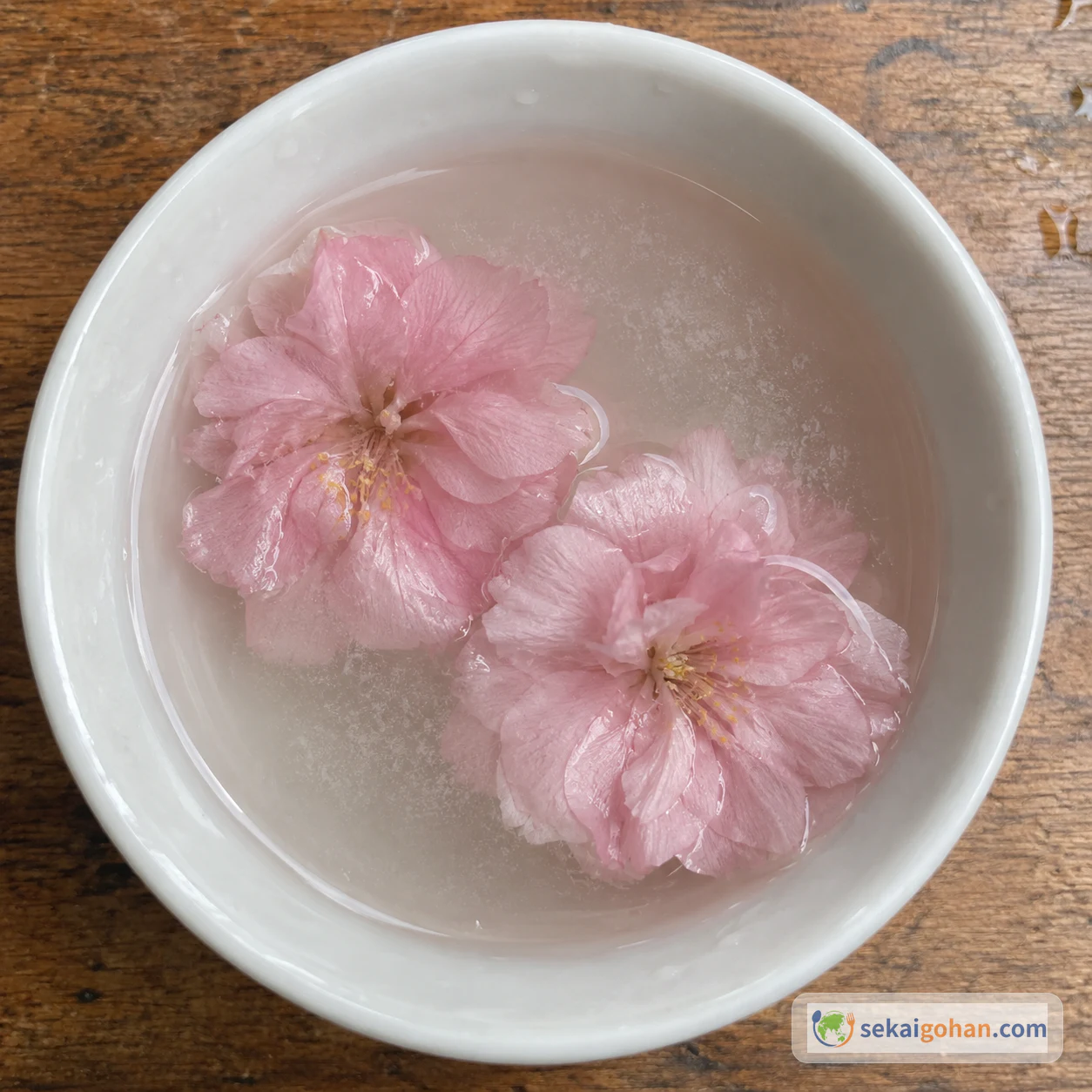
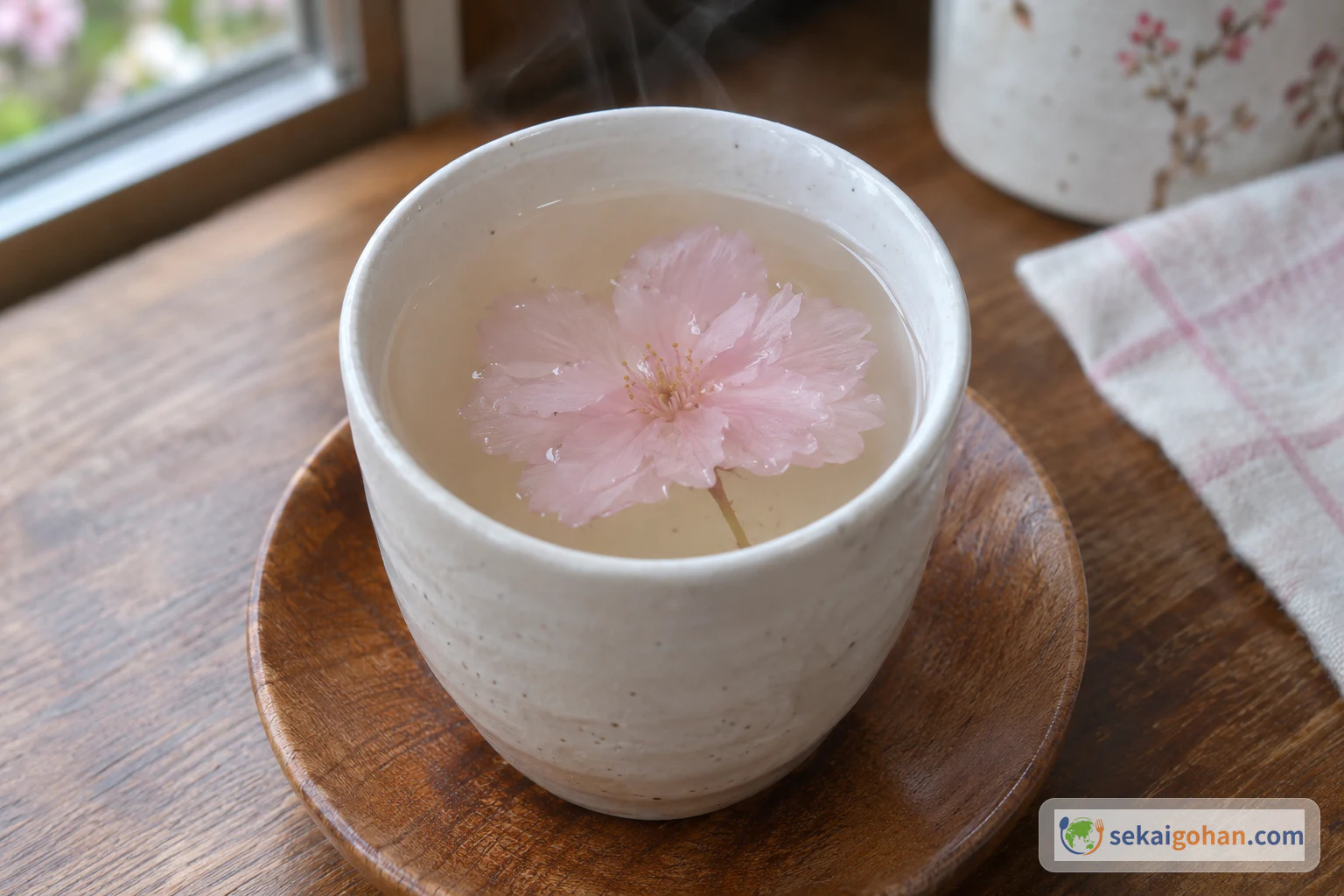
Hot water goes into a plain white cup, and at the bottom a small, wrinkled pink knot begins to stir. Layer by layer the petals loosen, until a whole double cherry blossom floats open as if it had bloomed in the cup. That is sakurayu, the "cherry blossom water" poured in Japan when there is something to celebrate. The taste is quiet: a faint salt, a whisper of sourness and the scent of cherry, carried by water that stays clear or turns the palest pink.
A Blossom Poured for Good News
Why it appears at celebrations
Sakurayu is set out at happy occasions in place of tea, most often at the formal engagement exchange between two families and at weddings and other celebrations. In Kanagawa, drinking sakurayu on festive days is a custom woven into everyday life. The meaning sits in the cup itself: the blossom opening in the water carries a wish that the couple's future will open in the same way. Guests watch it unfold before they drink, which makes the first minute at the table as much a part of the drink as the taste.
It belongs to a wider habit across Japan of bringing the season to the table in small, precise ways. Here it is a single flower, preserved in salt from spring so it can bloom again whenever a family has news.
The drink goes by both names: sakurayu ("cherry blossom hot water") and sakura-cha ("cherry blossom tea"). There is no tea leaf in it. It is also a different thing from the salted cherry leaves wrapped around sakura mochi: the drink uses the salted flower of the double-flowered yaezakura, while the leaves come from the Oshima cherry.
Where the blossoms come from
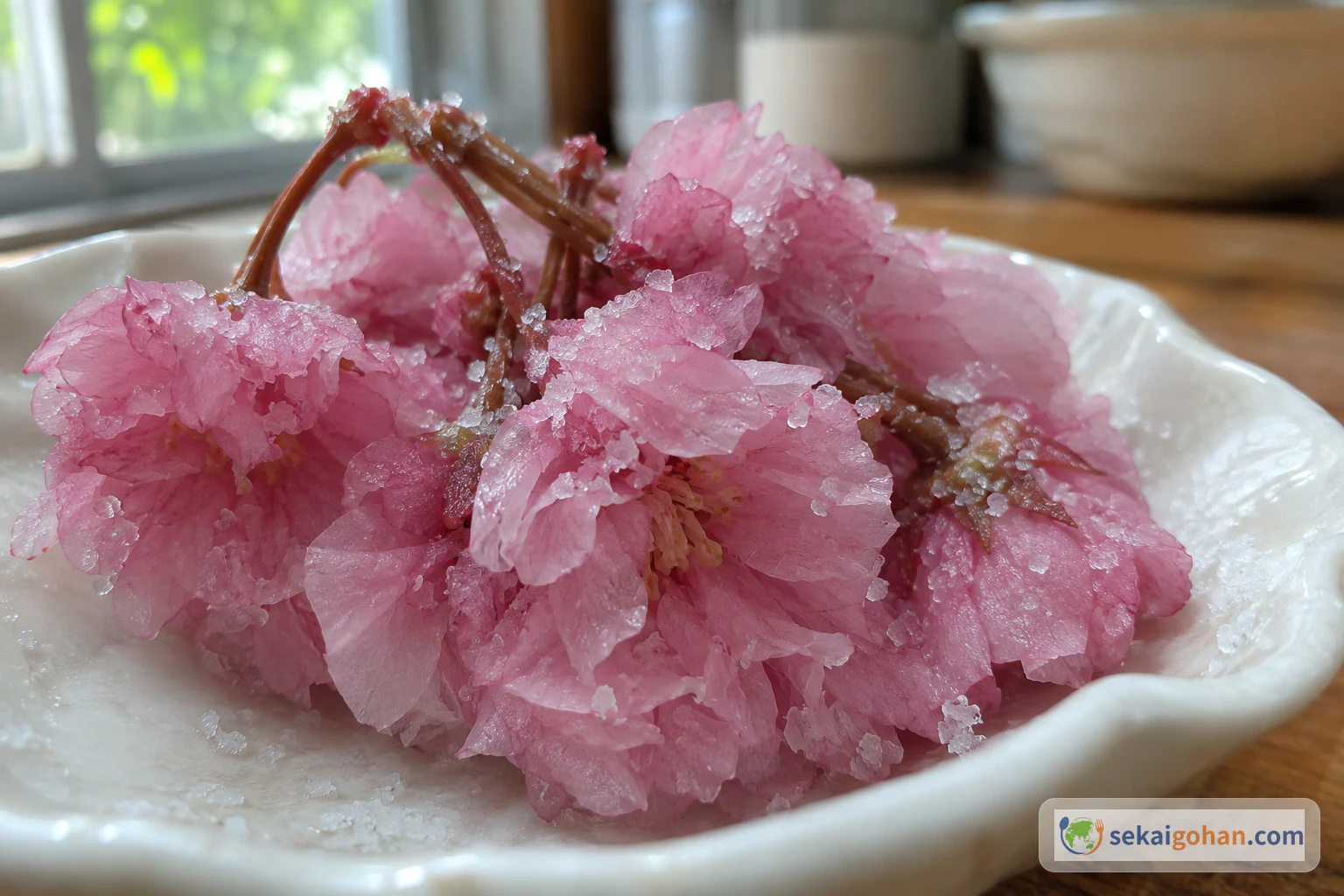
The country's edible double cherries grow mostly around Odawara and Hadano in Kanagawa, which together produce 80 to 90 percent of Japan's supply. The main variety is Kanzan, a late-flowering yaezakura. In Hadano's Senmura district, trees planted after the war turned the area into a "village of double cherries." The blossoms are picked before they open fully, at roughly half to seventy percent bloom, so that they open later in the cup.
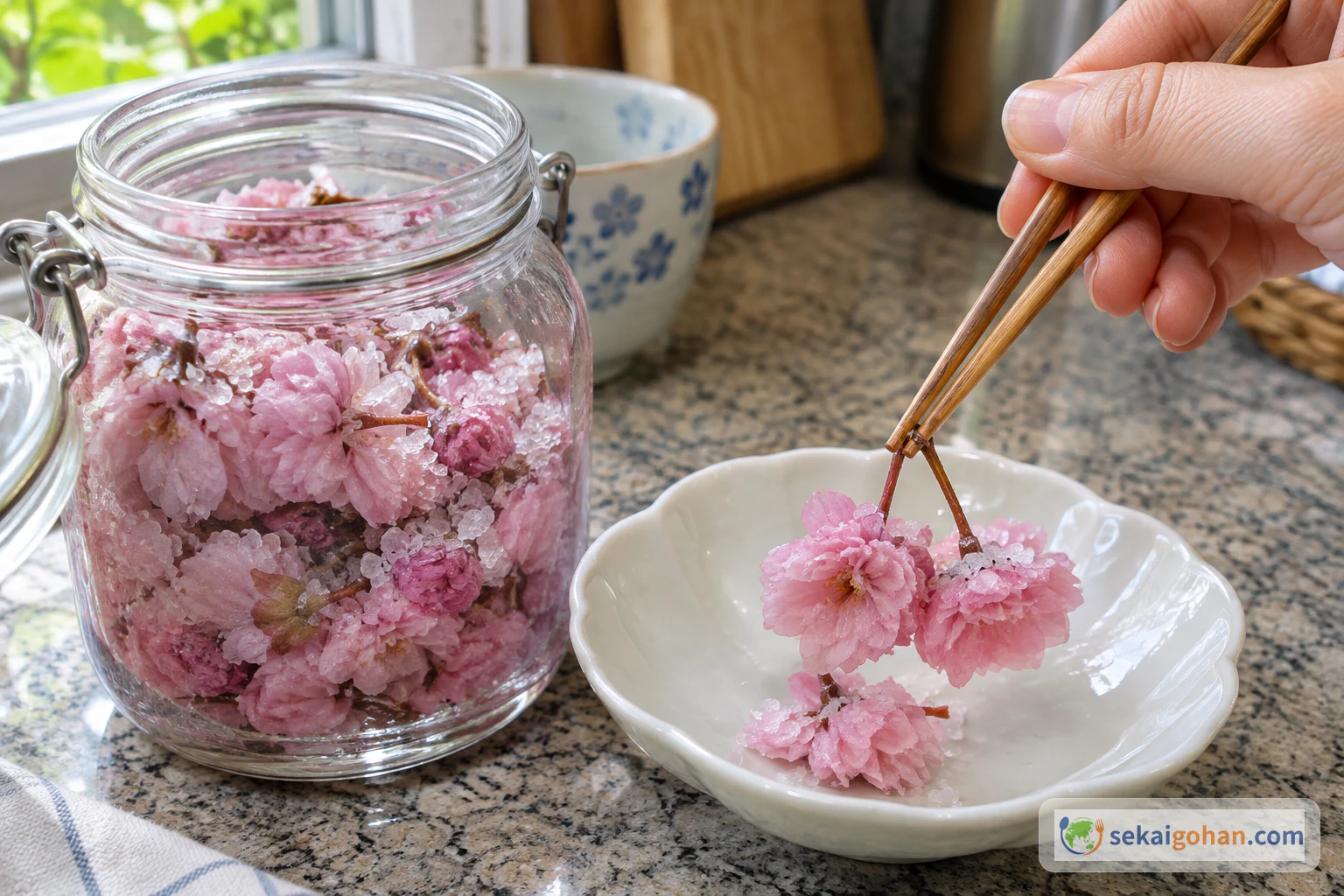
At the farms the flowers are layered with salt, white plum vinegar is poured over, and a weight goes on top for three weeks to a month. Partway through they are turned top to bottom. When liquid has come out, the blossoms are squeezed, dried in the shade and dusted with salt again. The plum vinegar keeps the pink colour and adds the faint sour note you taste in the cup. Salting the blossoms is usually dated to the end of the Edo period, and why the practice began is not settled.
Choose salted cherry blossoms sold as food. Blossoms from ornamental, garden or street trees are not for eating. If you salt your own, start only from flowers grown to be eaten and keep every bowl, weight and jar clean.
Ingredients (one cup)
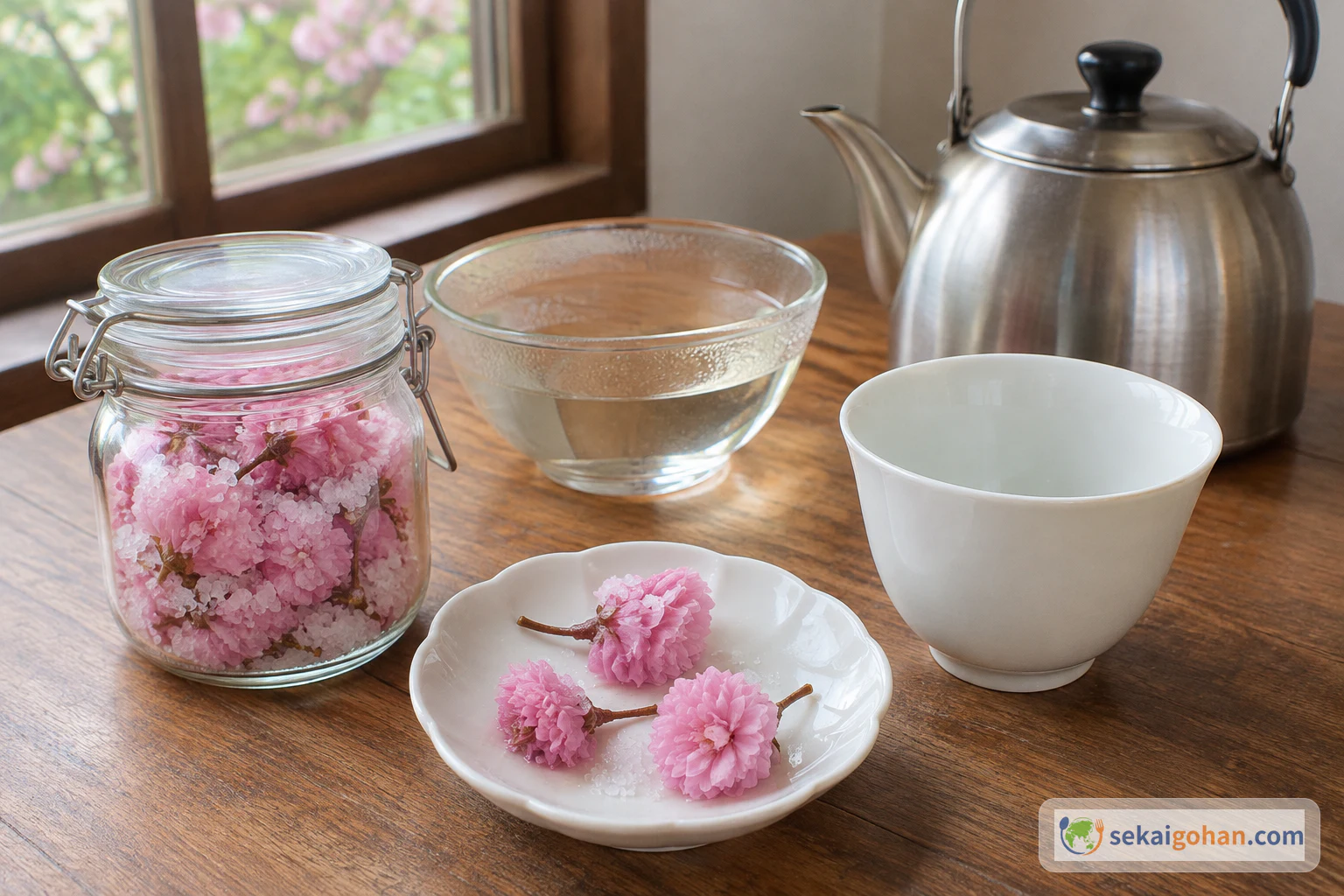
For several guests, set out one to two blossoms per cup. One blossom gives a lighter cup and a single clean flower to watch; two give more scent and a fuller look.
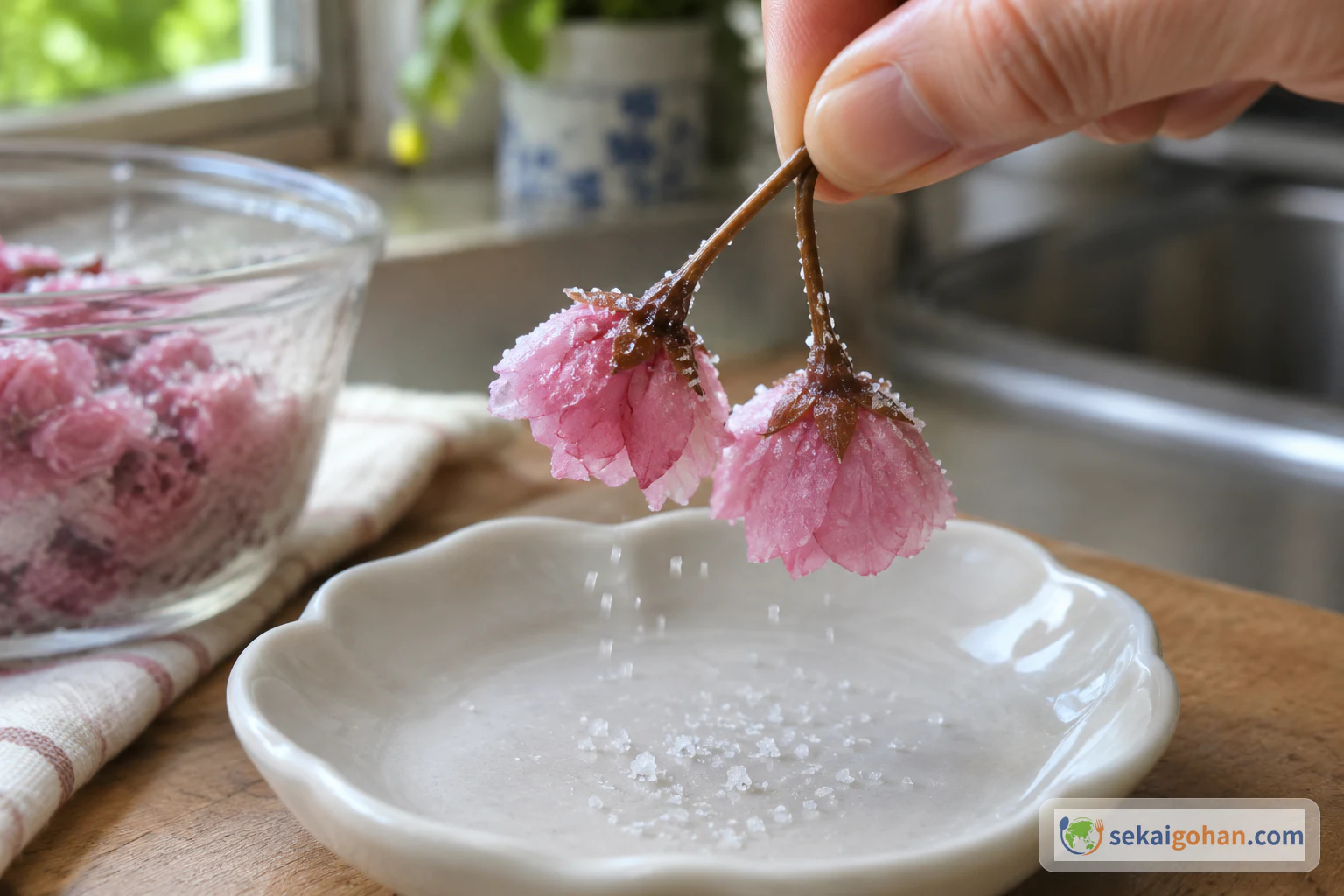
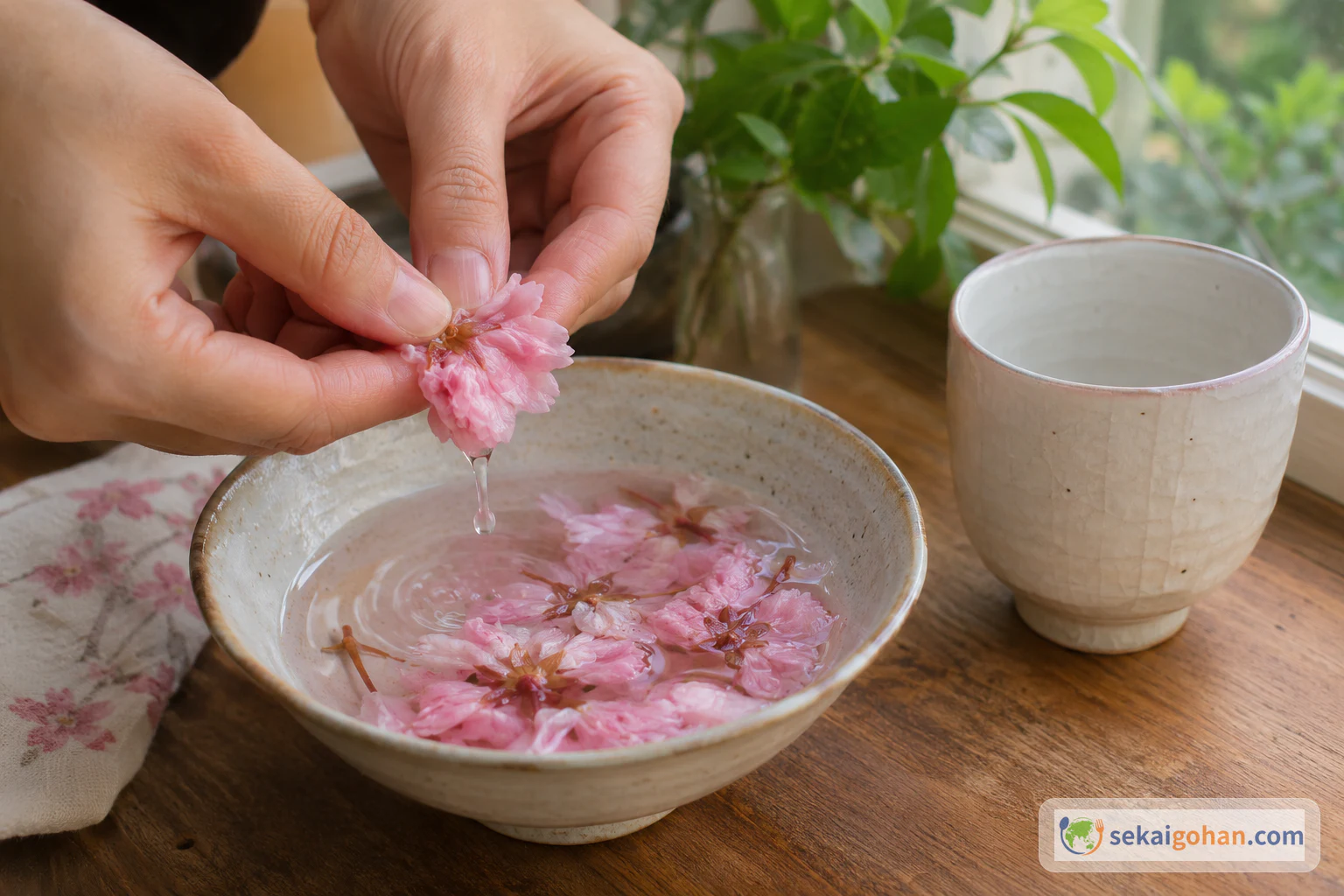
Once the hot water is in, the salt cannot be corrected. Make one cup with your jar of blossoms ahead of time and settle how long to rinse or soak them.
Check the product label of your salted blossoms for plum vinegar and any additives. Salted blossoms are high in salt; anyone on a salt-restricted diet should ask their doctor or dietitian before drinking.
Equipment
- Small white teacup (yunomi), plain inside
- Small dish
- Clean, dry chopsticks
- Small bowl for soaking
- Kettle
- Kaishi (folded paper for the table), optional
- Small tea strainer or slotted spoon, optional
Choosing and Substituting
Salted cherry blossoms are a specialty item. Look for them at Japanese grocers or online, labelled as salted cherry blossoms or sakura no shiozuke, and choose Japanese double cherry blossoms sold for eating. Small packs are sold for celebrations, which is all a home table needs.
There is no supermarket swap for the blossom. Salted cherry leaves are a different product and do not open in the cup. Powdered sakura tea and cherry extracts give a cherry flavour, but nothing blooms, so the moment at the table disappears. For the soak, plain water works as well as lukewarm water.
What must stay for the drink to taste right is the light salt and the cherry scent: the blossom rinsed just enough, never washed bare. A plain white cup is the other thing worth keeping, because it shows the pink and lets everyone see the flower open.
Method
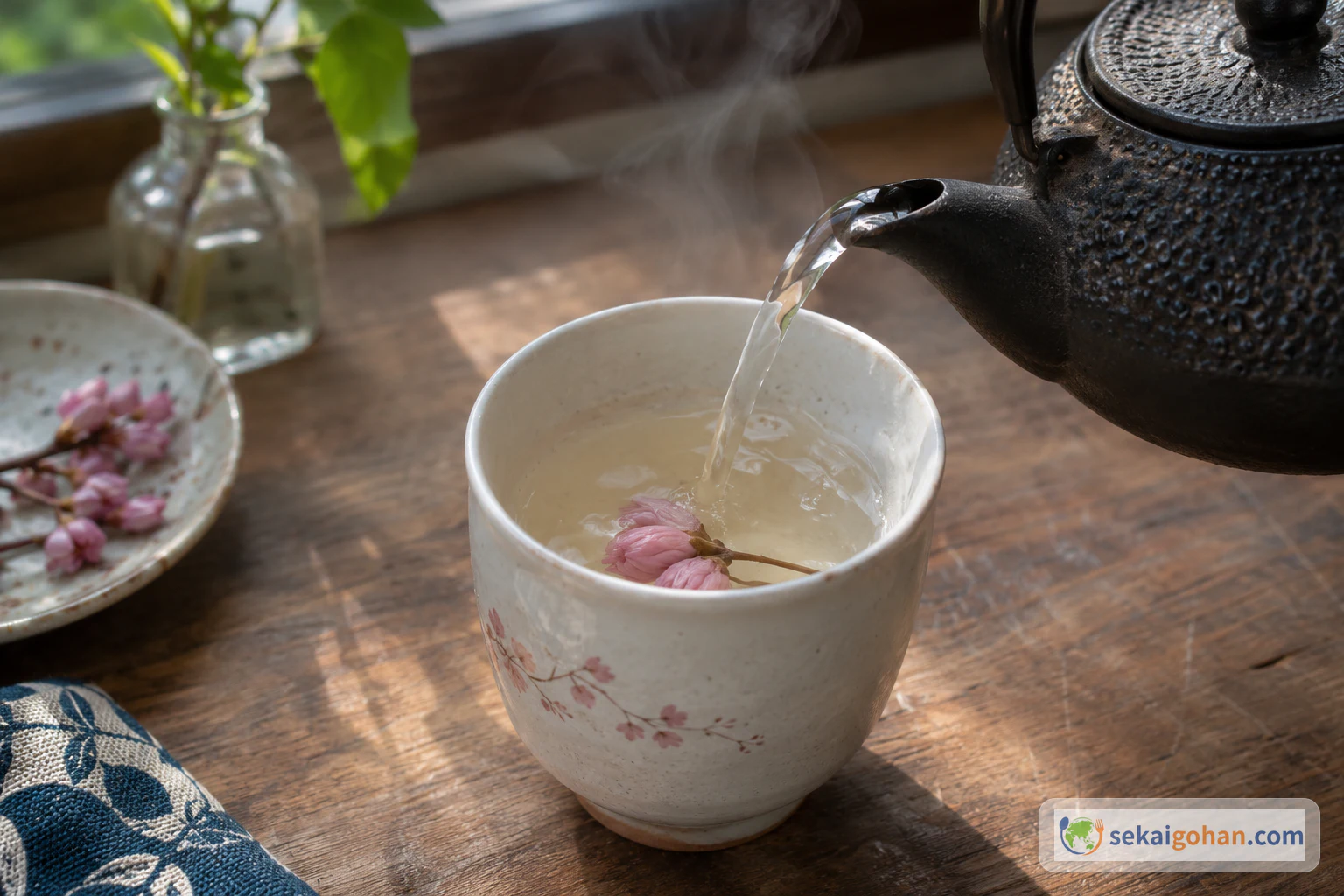
Everything moves in a short line from jar to cup. The only waiting is the optional soak, so have the cup, dish and bowl out and the kettle ready before you start.
When It Goes Wrong
| What you see | Why | What to do |
|---|---|---|
| The cup tastes sharply salty | Too little salt removed | Next time, soak the blossoms in lukewarm water for a few minutes before pouring |
| The cup tastes flat and has little scent | Washed too hard or soaked too long | Stir in 1 tsp of the soaking water; next time rinse lightly and soak for less time |
| The blossom tore or stayed bunched | Wrung too hard, or the water hit it too fast | Press the blossom gently and pour in a slow, thin stream |
| The water looks dark and strongly coloured | Too much salt and liquid left on the blossom | Shake off more surface salt and press out the soaking water before it goes in the cup |
| The guests' cups taste wrong and it is too late | Salt cannot be changed after pouring | Make a test cup from the same jar before the occasion |
Serving, Variations and Storage
On the table
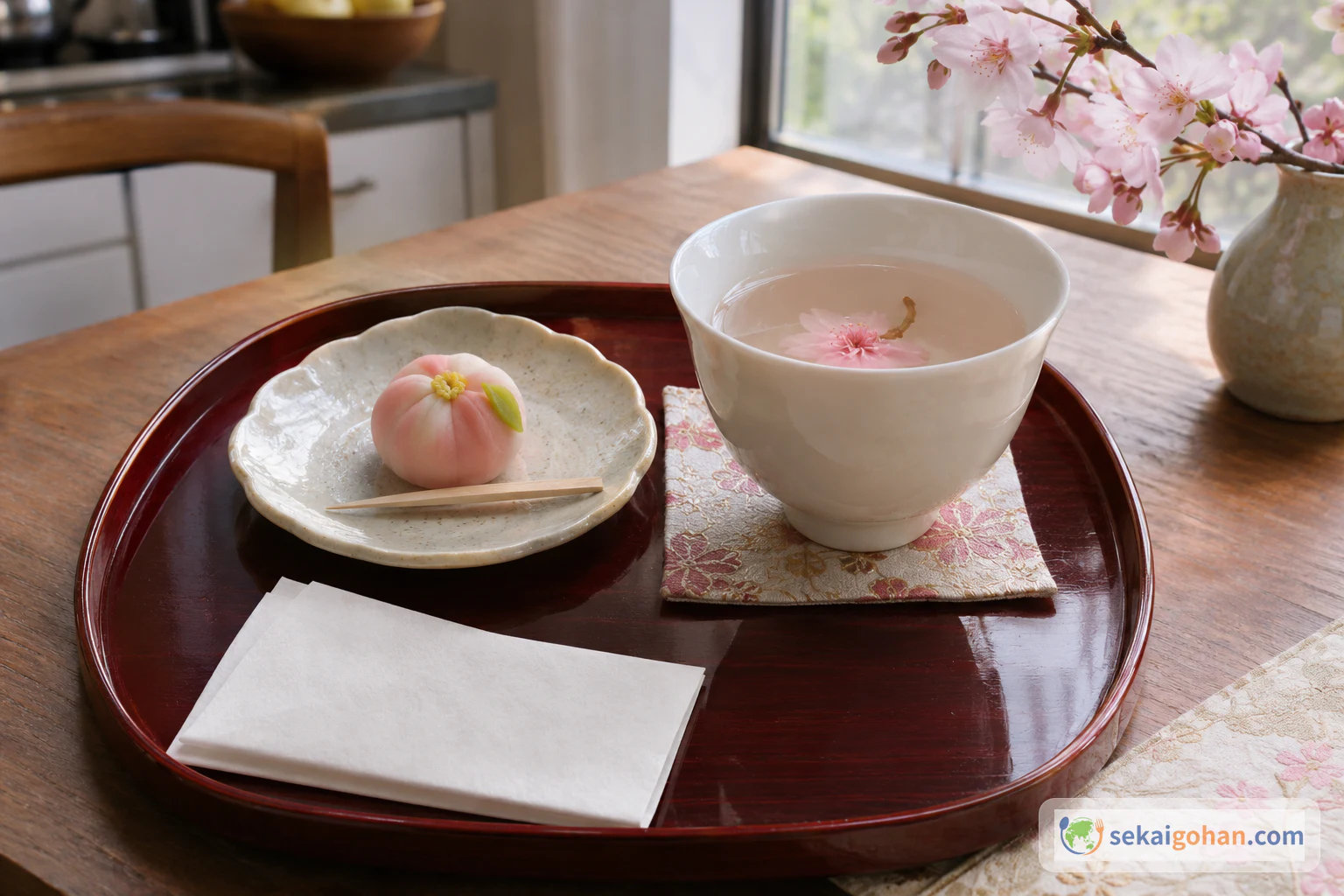
Sakurayu takes the place of tea on a celebration day, poured for guests as they sit down. A small Japanese sweet beside it suits the restrained, festive look. Watching the blossom open is part of serving it, so bring the cups out as soon as they are poured.
Other ways with salted blossoms
- Sakura rice: chop a few blossoms and mix them into warm rice. The salt seasons the rice and pink flecks run through it.
- Clear soup: float a rinsed blossom in a bowl of clear soup for a spring garnish with a mild salt edge.
- Vinegared dishes: add a chopped blossom to sunomono, where the plum-vinegar sourness meets the dressing.
- Sweets and bread: set a rinsed blossom on top of Japanese or Western sweets, or press one into the centre of an anpan, where its salt cuts the sweet bean paste.
Storage
Once the jar is open, keep it covered in the refrigerator, store the blossoms in a clean container, and follow the product label for how long they keep.
Frequently Asked Questions
Can I eat the blossom after drinking?
Yes, salted blossoms sold as food are edible, and at home you can eat it straight from the cup or chop leftovers into rice. At formal occasions customs differ: one custom when sakurayu is served at a restaurant is to leave the blossom uneaten, wrap it in kaishi and take it home. Follow the custom of the place you are in.
Can I use a glass cup instead of a white teacup?
A small heatproof glass cup works and lets you watch the blossom open from above and from the side. A plain white cup shows the pink more strongly from above. Either way, choose something small so the blossom is not lost in the water.
Can I make it with powdered sakura tea or cherry extract?
Those give a cherry flavour in hot water, but no flower opens in the cup. For a celebration, where the opening blossom carries the meaning, use whole salted blossoms.