Beef Chow Fun: Wide Noodles, a Hot Wok and No Sauce on the Plate
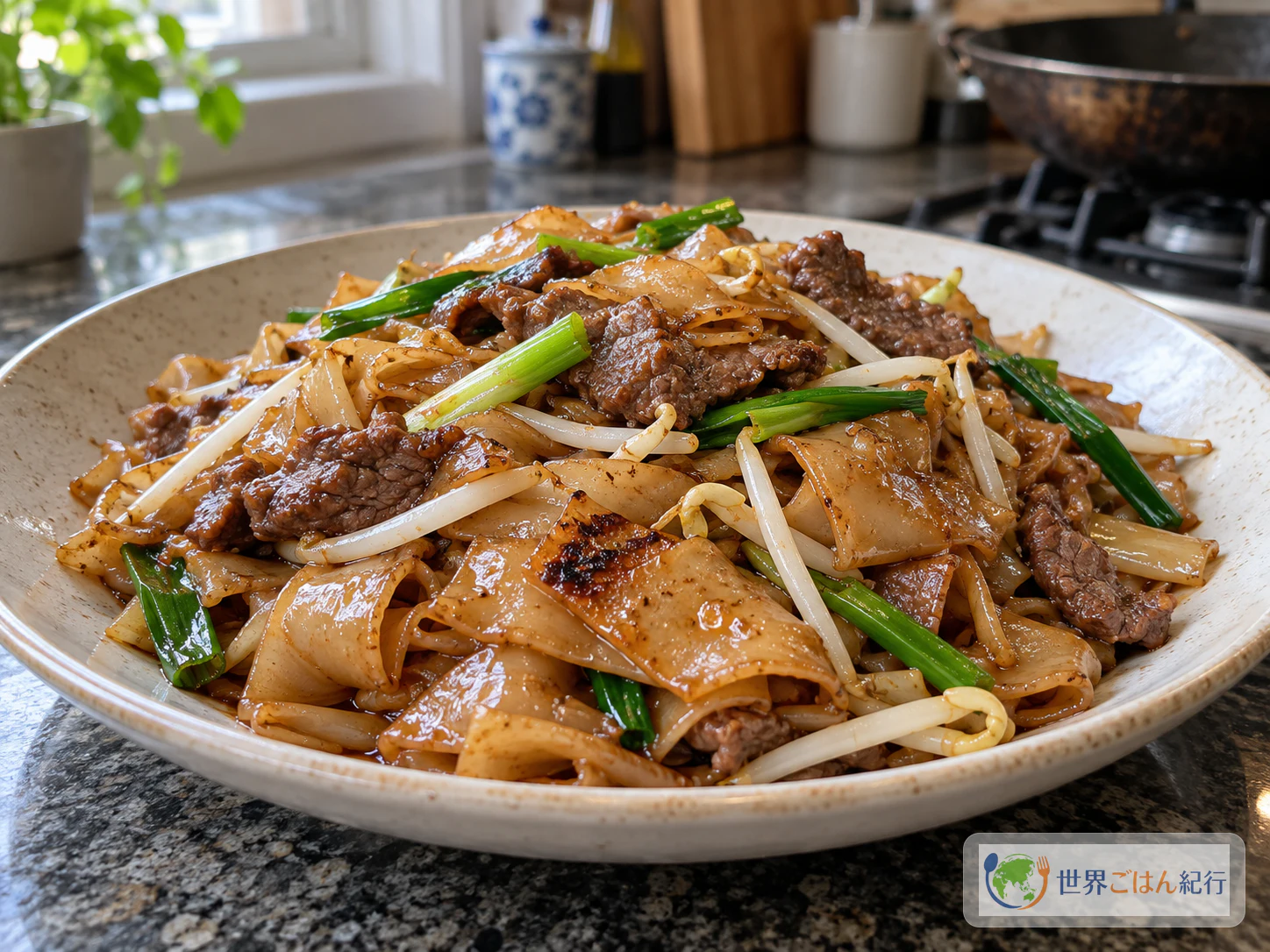
Keep the noodles long, the beef browned and the sprouts crisp. The sauce should coat the noodles rather than collect beneath them.
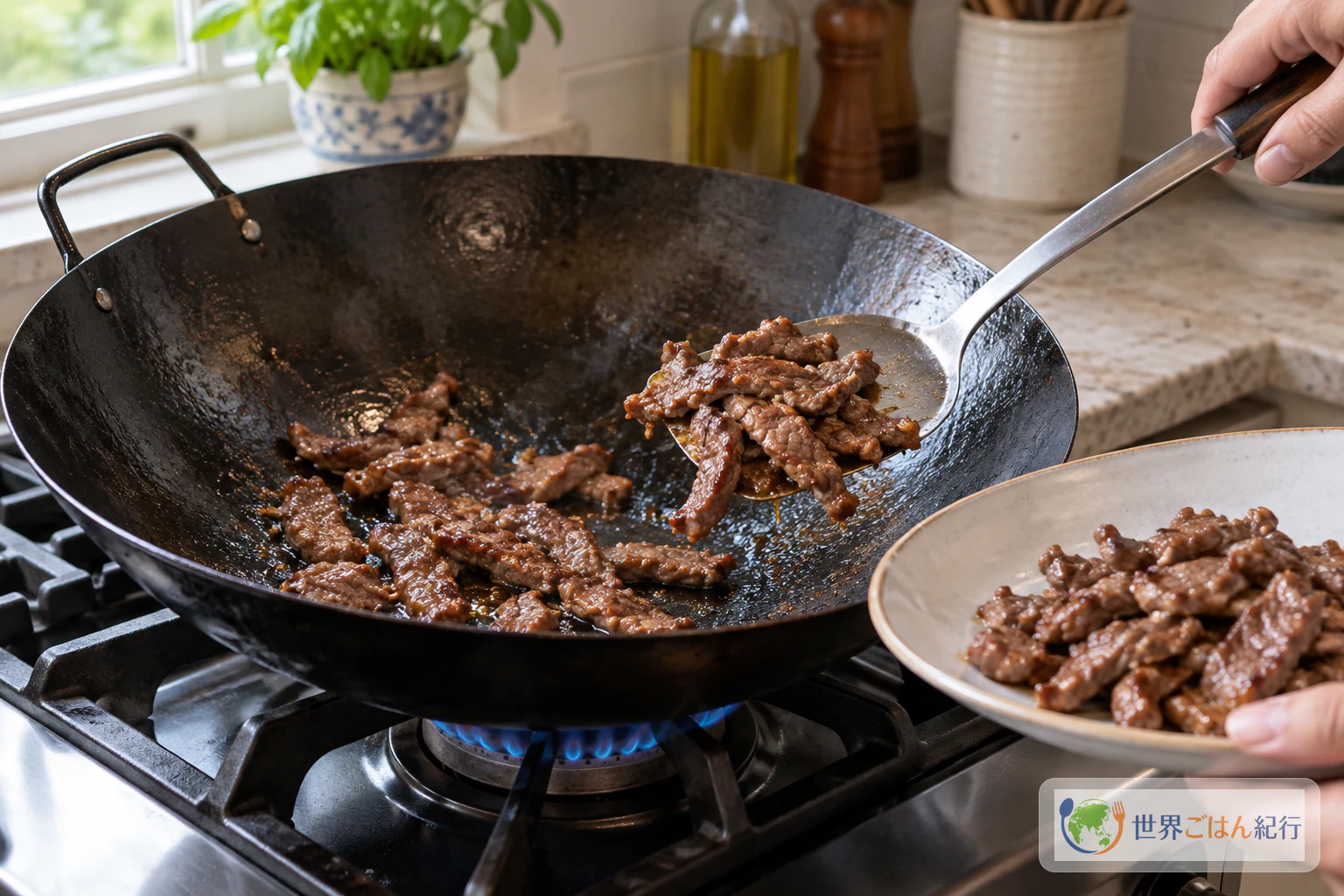
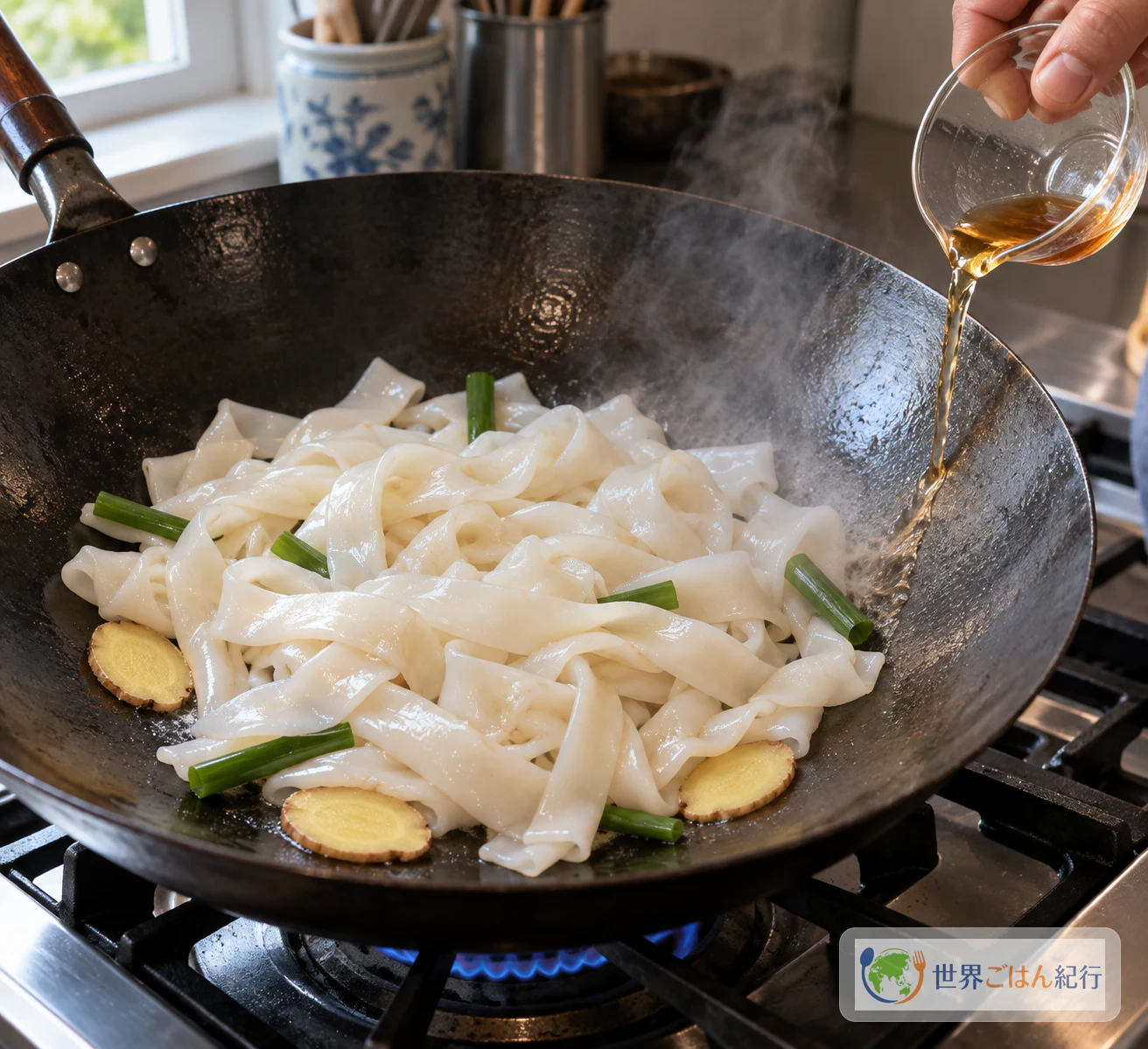
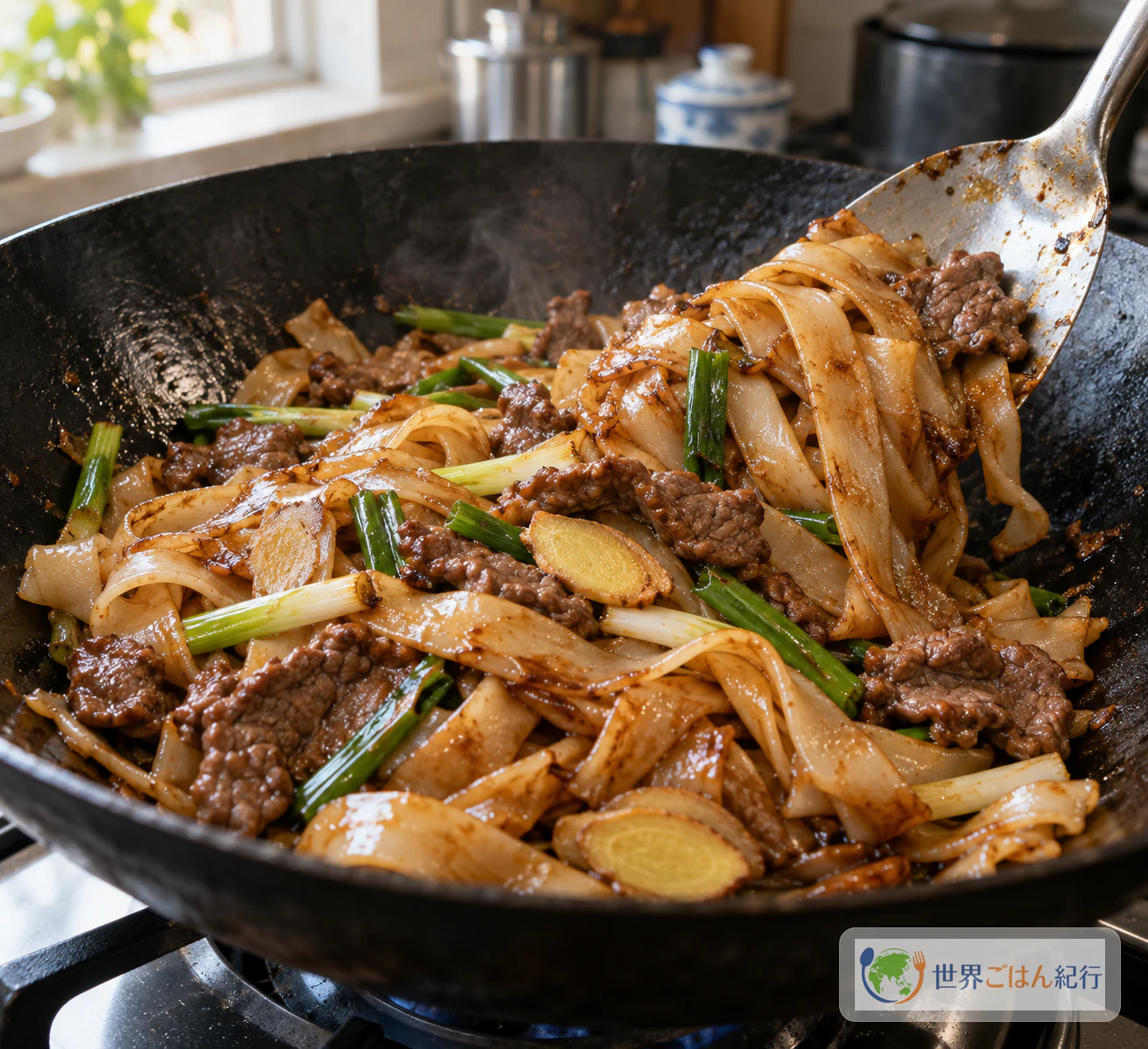
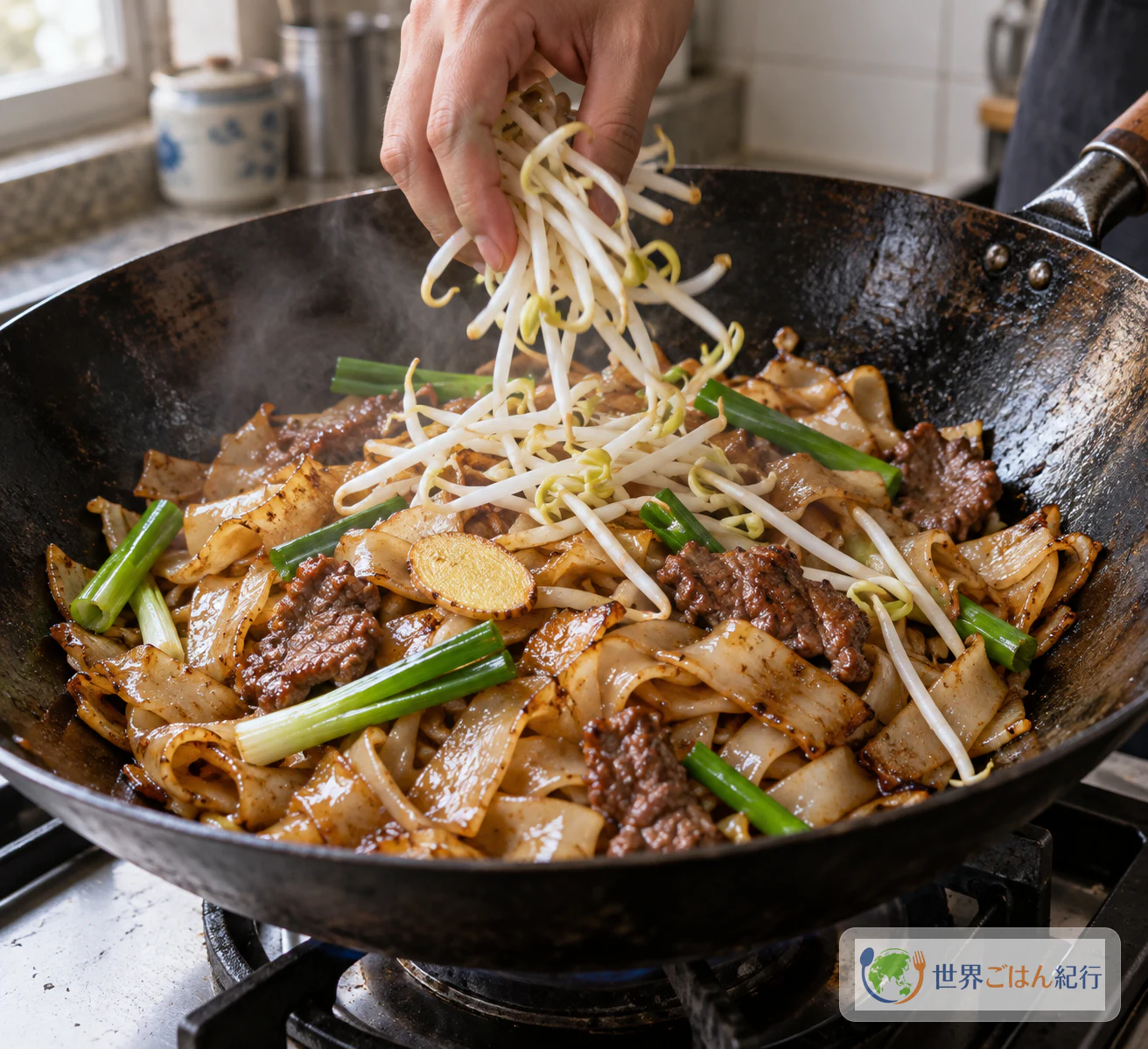
Flat rice noodles spread across a very hot wok. Shaoxing wine goes in around the rim, soy sauce follows, and the aroma rises as the seasonings meet the hot metal. The finished noodles are coated with soy sauce and mixed with scallion, beef and bean sprouts.
This is beef chow fun, or 乾炒牛河, a Cantonese stir-fry built on beef and wide rice noodles called he fen or ho fun (河粉). The word 乾 means "dry," and Made With Lau explains that this is not a dish with sauce pooling at the bottom of the plate. That sets it apart from noodles served under a thick gravy.
The Woks of Life describes wok hei (鑊氣) as the toasty aroma of food seared in a very hot wok, and home stoves struggle to match restaurant burners. This article cannot promise the same result as a restaurant wok. It aims for something more achievable: have everything ready, cook quickly over high heat, and bring the noodles closer to that toasted aroma without tearing them.
The amounts and method follow one recipe, from The Woks of Life, and they have not been kitchen-tested by Sekai Gohan. That recipe lists 45 minutes of preparation and 5 minutes of cooking; these are its published figures rather than measured home times, and the preparation time may include marinating. The Woks of Life's English text calls for 10 oz of flank steak and Made With Lau's separate recipe agrees, but the metric display on The Woks of Life's page shows 225g, which is about 8 oz, so this article uses 10 oz (about 283g, by our own unit conversion).
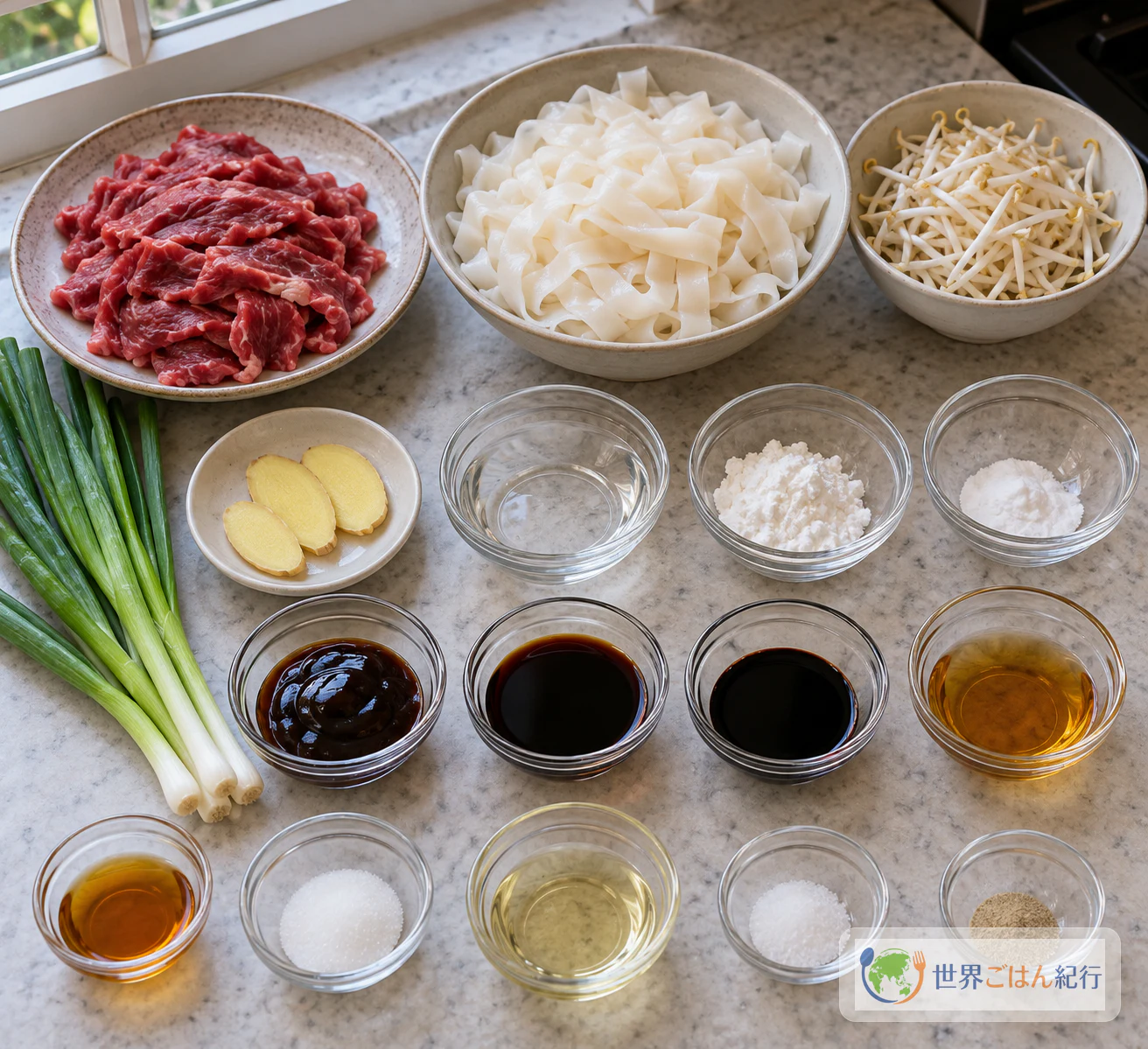
Ingredients: Serves 4
Equipment
- Wok, or a heavy skillet if you cook in smaller batches
- Wok spatula
- Sharp knife and a cutting board for the raw beef
- Bowl for marinating the beef
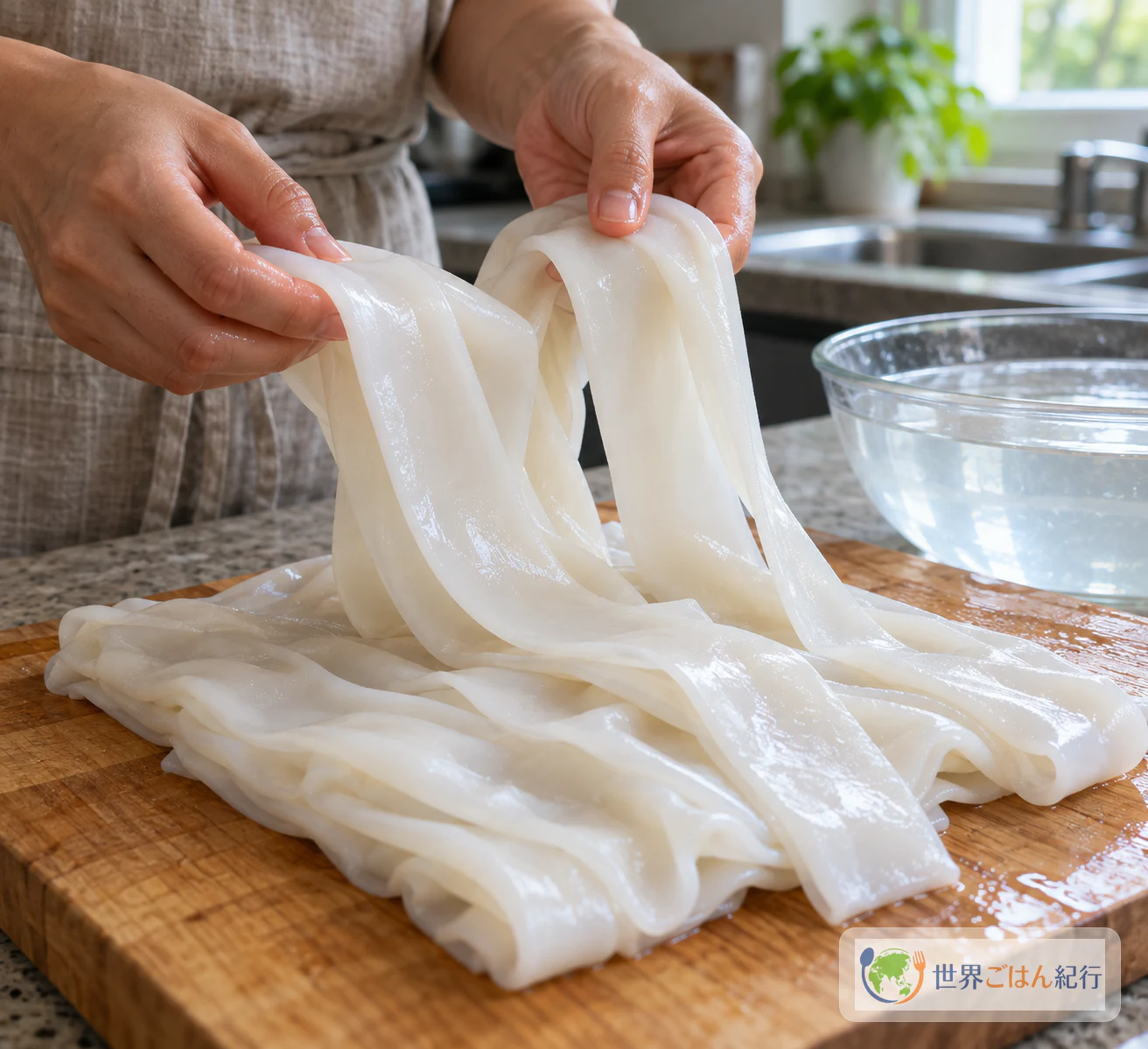
- Pot of boiling water, a bowl of cold water and a strainer, in case the noodles are stuck together
- Clean plate for the cooked beef
Choosing Noodles, Soy Sauce and Beef
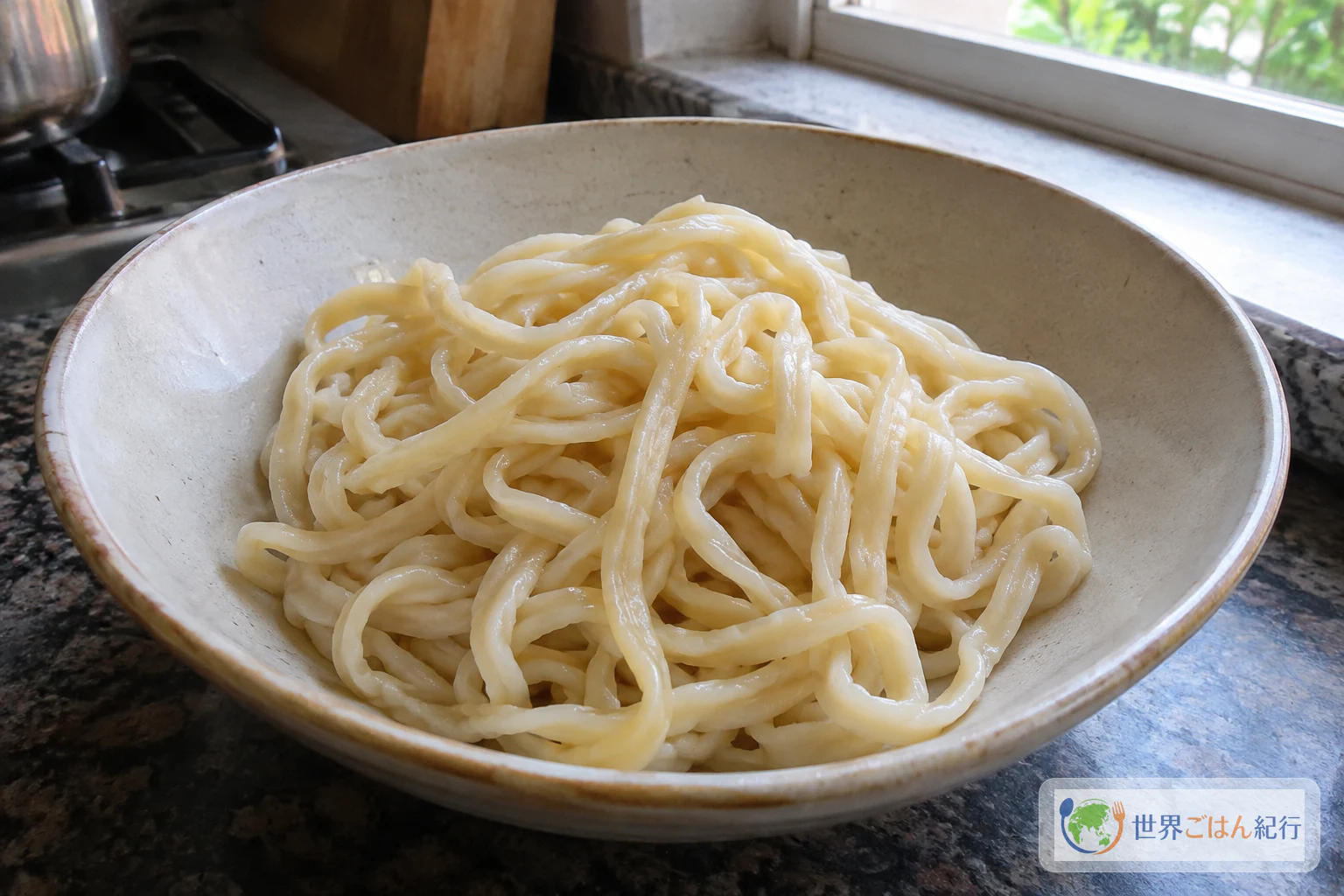
Noodles. Look for fresh wide rice noodles, since they do the most to shape the texture of the finished dish. Follow the storage and heating directions on the label. Dried wide rice noodles keep better, but they need rehydrating and won't match fresh noodles in texture or weight. Soak them in hot water for a few hours or in cold water overnight, giving priority to the directions on the bag. Don't swap them gram for gram with fresh noodles.
Soy sauces. Soy sauce and dark soy sauce do different jobs here, so they are not interchangeable. Japanese koikuchi soy sauce is not the same as Chinese dark soy sauce. It can stand in if necessary as an editorial choice, but expect a difference in color and sweetness. Using it in place of regular soy sauce will also change the saltiness and color.
Shaoxing wine. Japanese cooking sake will change the flavor. If you use it, treat it as our editorial option rather than an equivalent.
Beef. If flank steak is hard to find, another lean stir-fry cut such as beef round can work if you can slice it across the grain. This is our editorial suggestion. It isn't the same cut, so the texture will differ.
Cornstarch. Potato starch (katakuriko) is a different ingredient, so don't treat the two as identical.
This dish contains soy (soy sauce), oysters (oyster sauce) and sesame (sesame oil), and soy sauce, oyster sauce and Shaoxing wine products may contain wheat. Check the labels of the products you buy.
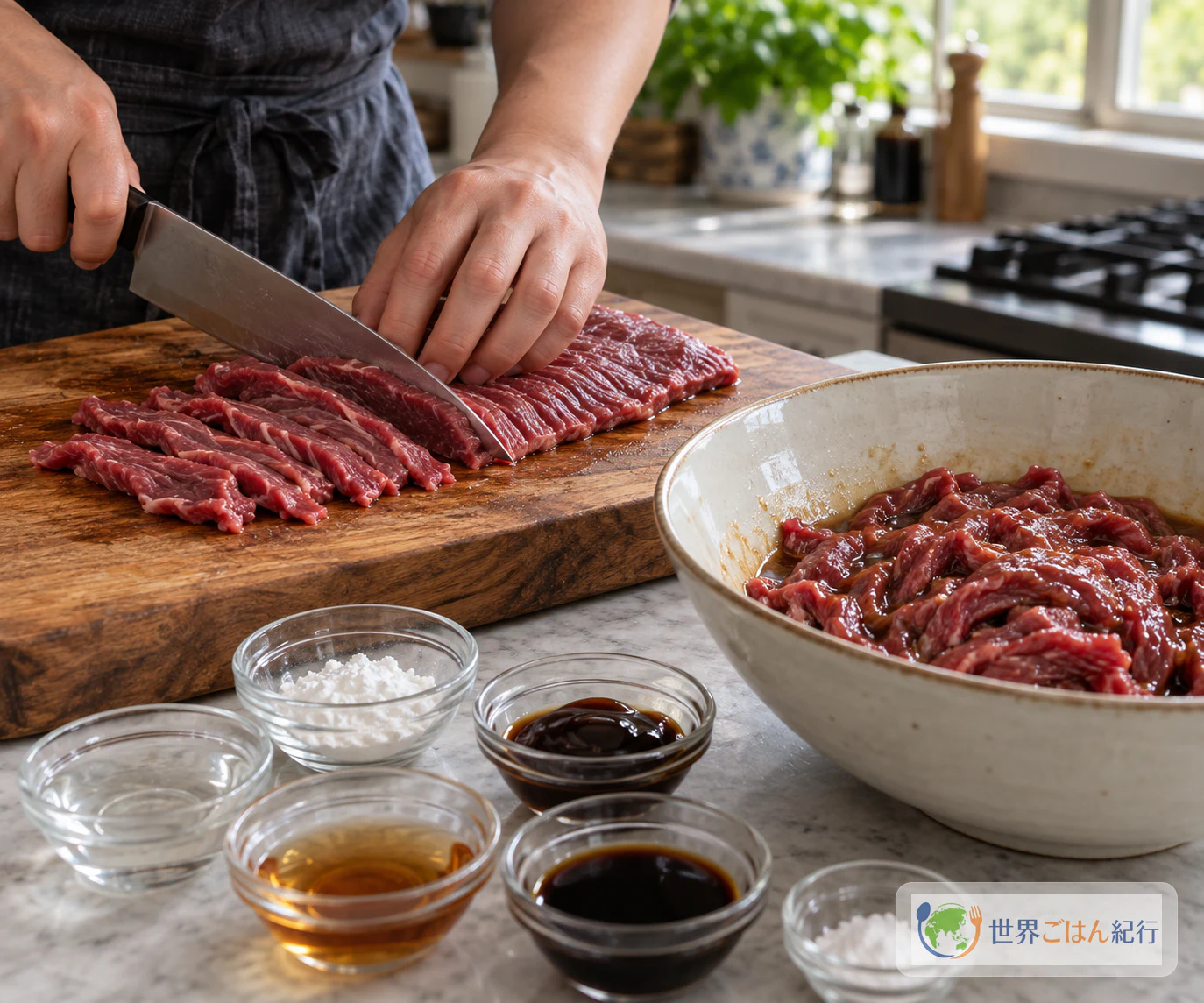
Marinate raw beef in the refrigerator, and don't reuse tools that touched raw beef for the cooked dish. This article does not give a safe internal temperature for the beef, so check your local food-safety authority's guidance.
Method: Prepare Everything, Then Cook Fast
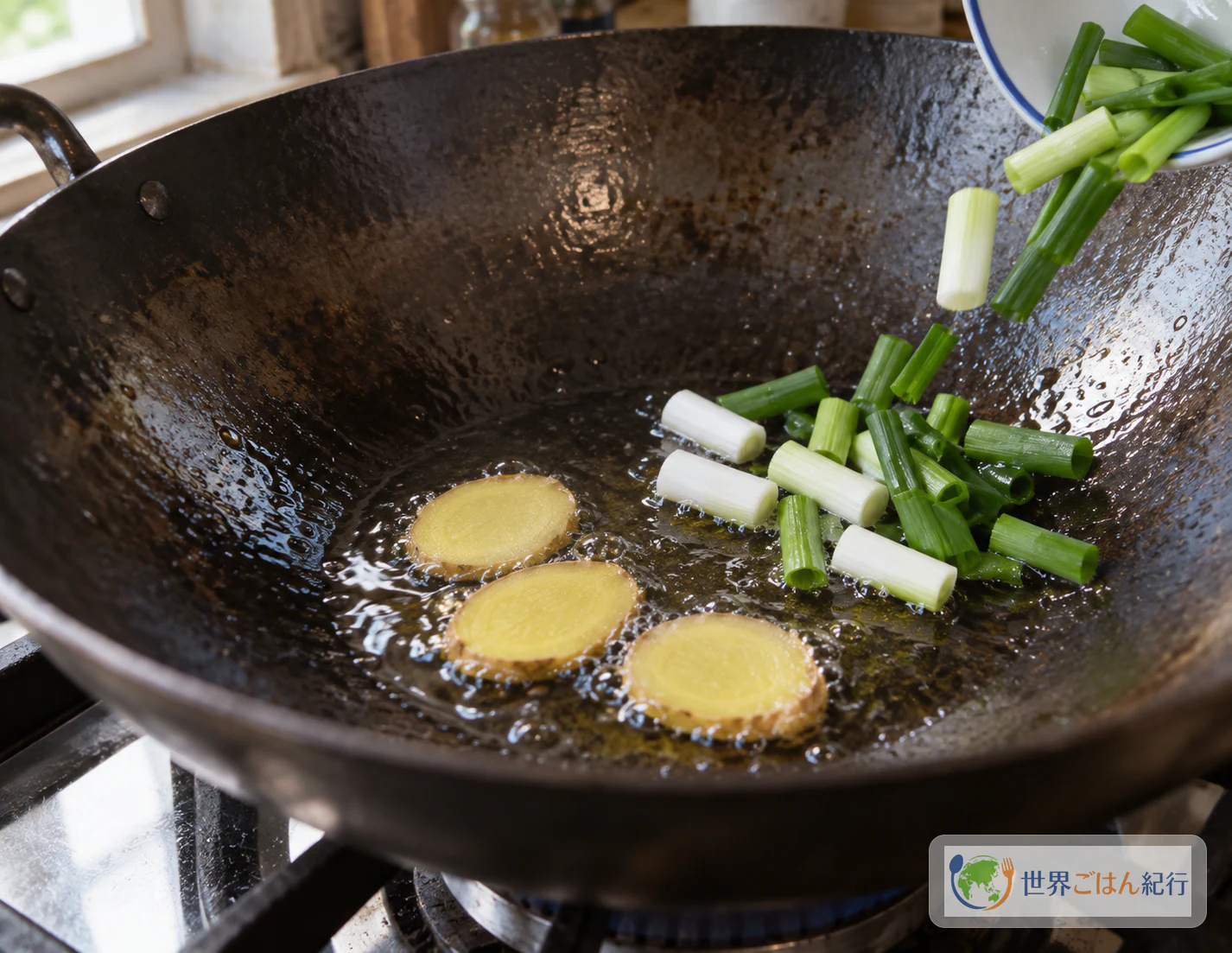
Line up the beef, noodles, scallions, ginger, sprouts and seasonings within reach before you heat the wok. Once the beef goes in, there is little time to stop and measure.
Serve It Right Away
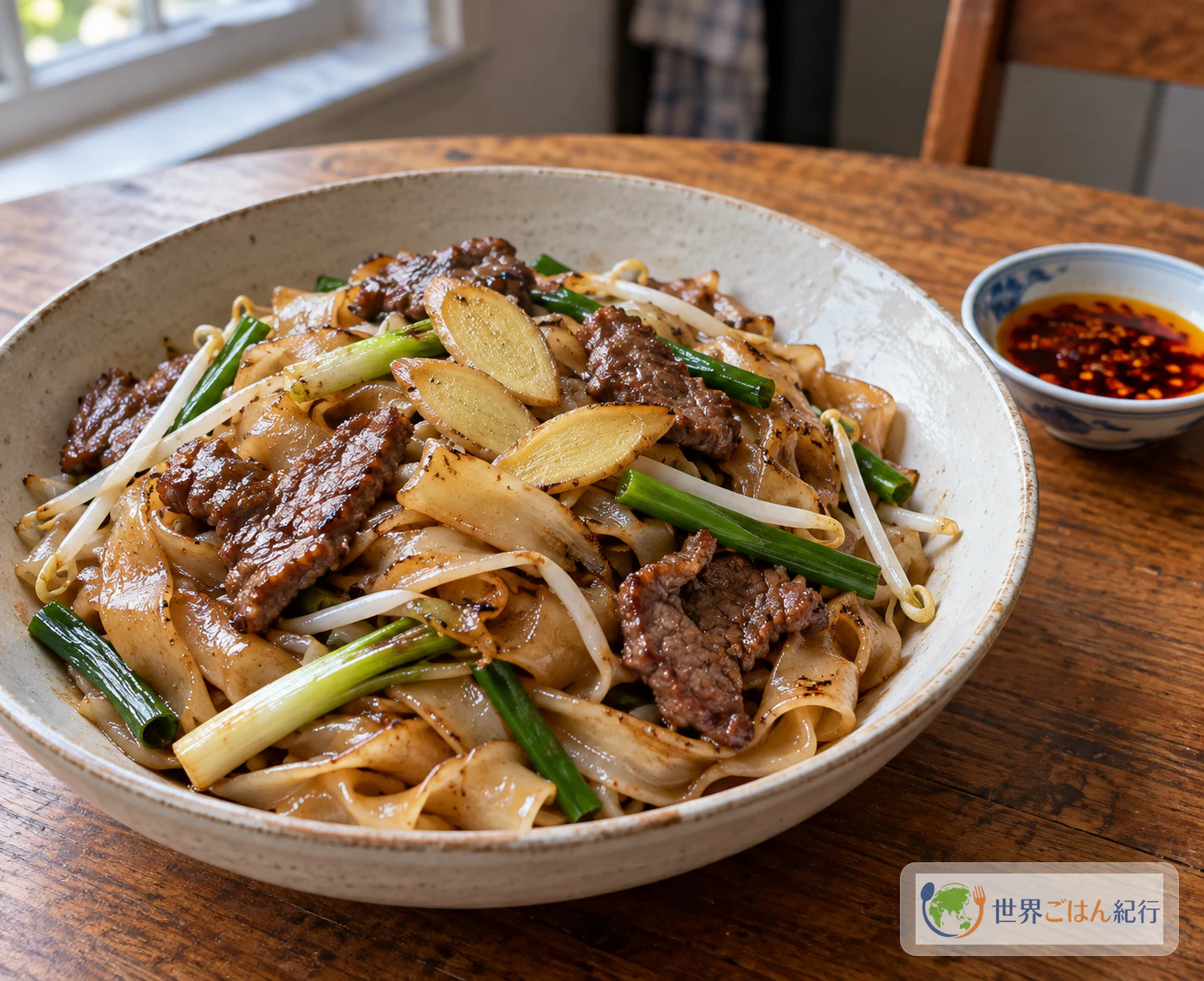
Beef chow fun is best eaten as soon as it leaves the wok, so bring it straight to the table. If you like heat, set out chili oil in a small dish instead of adding it to the wok.
Home Stove Fixes: Torn, Steamed or Wet Noodles
Three habits help most: separate the noodles before you start, match the amount in the pan to its surface area, and let the noodles sit long enough to pick up some browning before you turn them.
| Problem | Likely cause | What to do |
|---|---|---|
| Noodles tear as you separate them | They are cold and stiff, and you are pulling too hard | Let them come closer to room temperature, or loosen them in boiling water for about 30 seconds, then separate them gently |
| Noodles look steamed and saucy | The pan is overcrowded and has lost heat | Cook in smaller batches, dividing the oil so that you don't exceed the total amount |
| Noodles break into short pieces | They are being stirred too often | Wait for some browning, then turn them from underneath with the spatula |
| The wok turns wet at the end | Water on the sprouts is lowering the pan temperature | Drain the sprouts well and add them in stages if needed |
| Liquid collects on the plate | Too much sauce, or a wok that has cooled down | Don't add more sauce; next time, use smaller batches |
| The aroma is milder than at a restaurant | A home burner has limits | Keep the heat as high as you can ventilate safely. The result won't be identical to a restaurant's wok hei |
If you can't safely heat your wok until it smokes, turn the heat down to a level your ventilation can handle. Dealing with smoke and spattering oil comes before chasing aroma.
Variations Worth Considering
- Dried noodles: Rehydrate dried wide rice noodles according to the bag, and use a separate weight from the fresh noodles.
- Another beef cut: Use a lean cut you can slice across the grain, expecting a different texture.
- A small pan: Cook in several batches instead of reducing the ingredients, dividing the oil so the total stays the same.
- Yellow chives (韭黄): Some versions feature these instead of scallions, but that moves toward a different formula. We have no confirmed amount for this recipe, so treat it as a point of comparison.
- Heat: Serve chili oil on the side, keeping it out of the frying oil and seasoning.
Shahe, Guangzhou and the Meaning of "Dry-Fried"
Made With Lau gives the Cantonese pronunciation as gon1 caau2 ngau4 ho4 and breaks the name down: 乾 for dry, 炒 for stir-fried, 牛 for beef, and 河 for flat rice noodles. Taste of Asian Food writes the name as 干炒牛河. Made With Lau also introduces Shahe, in Guangzhou, as the place the flat rice noodles are named after. This is one site's account rather than a primary historical record, so we present it only as an origin that is sometimes told, and we make no claim about when or where the dish itself began.
The Woks of Life and Taste of Asian Food both place the dish in the Cantonese culinary world, with Taste of Asian Food describing it as a noodle dish loved at restaurants and street stalls and calling it a Hong Kong noodle dish in its title. Made With Lau's explanations draw on the restaurant experience of its cook, Daddy Lau. These voices share a focus on heat, timing and gentle handling, which helps explain why restraint with the sauce and care with the noodles matter so much at home.
The three recipes differ in useful ways. Made With Lau's version also uses 10 oz of flank steak but pairs it with 1 lb of fresh flat rice noodles and includes onion. Taste of Asian Food uses 200g of beef and 500g of ho fun, along with its own sauce, and discusses yellow chives alongside scallions as a stand-in. We mention these for comparison only; none of their ingredients or amounts are mixed into the recipe above.
Beef chow fun is also different from chow mein, which is made with thin wheat-and-egg noodles, and from biangbiang noodles, which are wide but made from wheat. You can explore more dishes from China.
Frequently Asked Questions
My fresh noodles went stiff in the refrigerator. What should I do?
Separate them slowly by hand. If they are still stiff, loosen them with a short dip in boiling water, about 30 seconds in The Woks of Life's method, then move them to cold water and drain well. Follow any directions on the label first. Taste of Asian Food's author also notes from experience that fresh ho fun tends to crack after refrigeration, so don't force them apart.
What if I can't find fresh wide rice noodles?
The Woks of Life offers dried wide rice noodles as a separate route, soaked in hot water for a few hours or in cold water overnight. The bag's directions come first, and the weight and texture won't match fresh noodles.
Do I need a wok?
No. A wok makes it easier to spread the noodles over high heat, but Taste of Asian Food says a heavy skillet can also work. On a home stove, smaller batches are easier to manage in either pan. Our suggestion to split this four-serving recipe into batches is editorial and hasn't been tested.
Which soy sauce should I use?
Use regular soy sauce and dark soy sauce, as listed. The Woks of Life's recipe says "soy sauce" without specifying a light soy sauce, so we don't label it as light. Japanese koikuchi soy sauce in place of dark soy sauce is our editorial substitution, and the flavor won't be the same.
Can I eat it the next day?
We have not confirmed a storage or reheating period for this dish, so we recommend eating it freshly cooked and don't suggest making it ahead.
Sources
- The Woks of Life, "Beef Chow Fun: The Traditional Cantonese Way!" The main recipe for this article: the ingredients, marinade and cooking order, the handling of fresh and dried rice noodles, and the explanation of wok hei and home-stove limits. https://thewoksoflife.com/beef-chow-fun-noodles/
- Made With Lau, "Dad's Beef Chow Fun: The Chinese Restaurant Way." Used for the name and its meaning, the "dry-fried" style, the Shahe origin it introduces, advice on handling noodles over home heat, and the 10 oz flank steak comparison. Its other ingredients are not part of this recipe. https://www.madewithlau.com/recipes/beef-chow-fun
- KP Kwan, Taste of Asian Food, "Beef chow fun 干炒牛河 – How to cook quick & easy Hong Kong noodles." Used for the dish's place at restaurants and stalls, the effect of bean sprout moisture on pan temperature, small-batch cooking, the author's experience with refrigerated noodles, and the yellow chive comparison. Its other ingredients are not part of this recipe. https://tasteasianfood.com/beef-chow-fun/