Ssuk Gaetteok: Green Rounds of Mugwort and Rice Flour, Steamed Flat
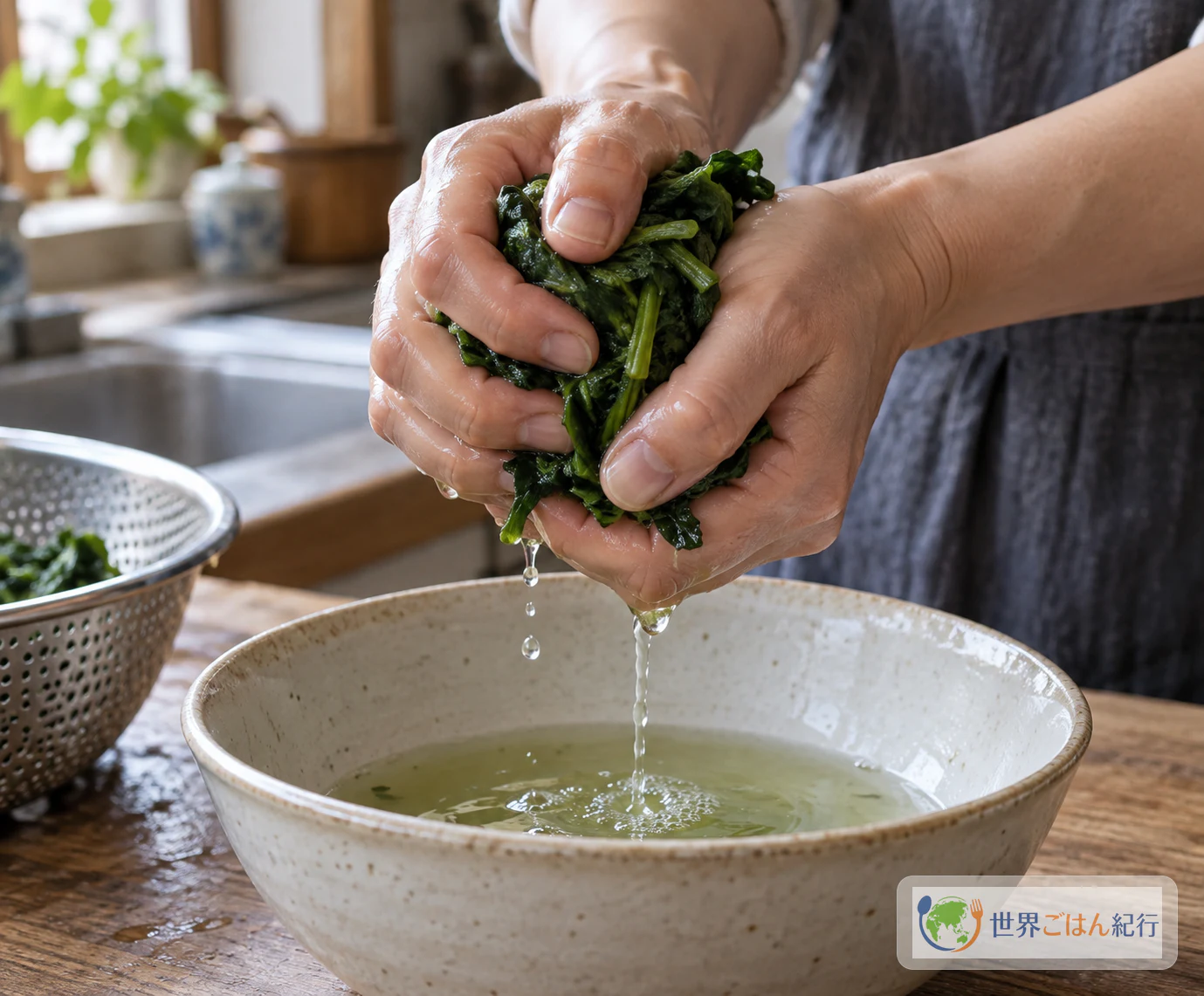
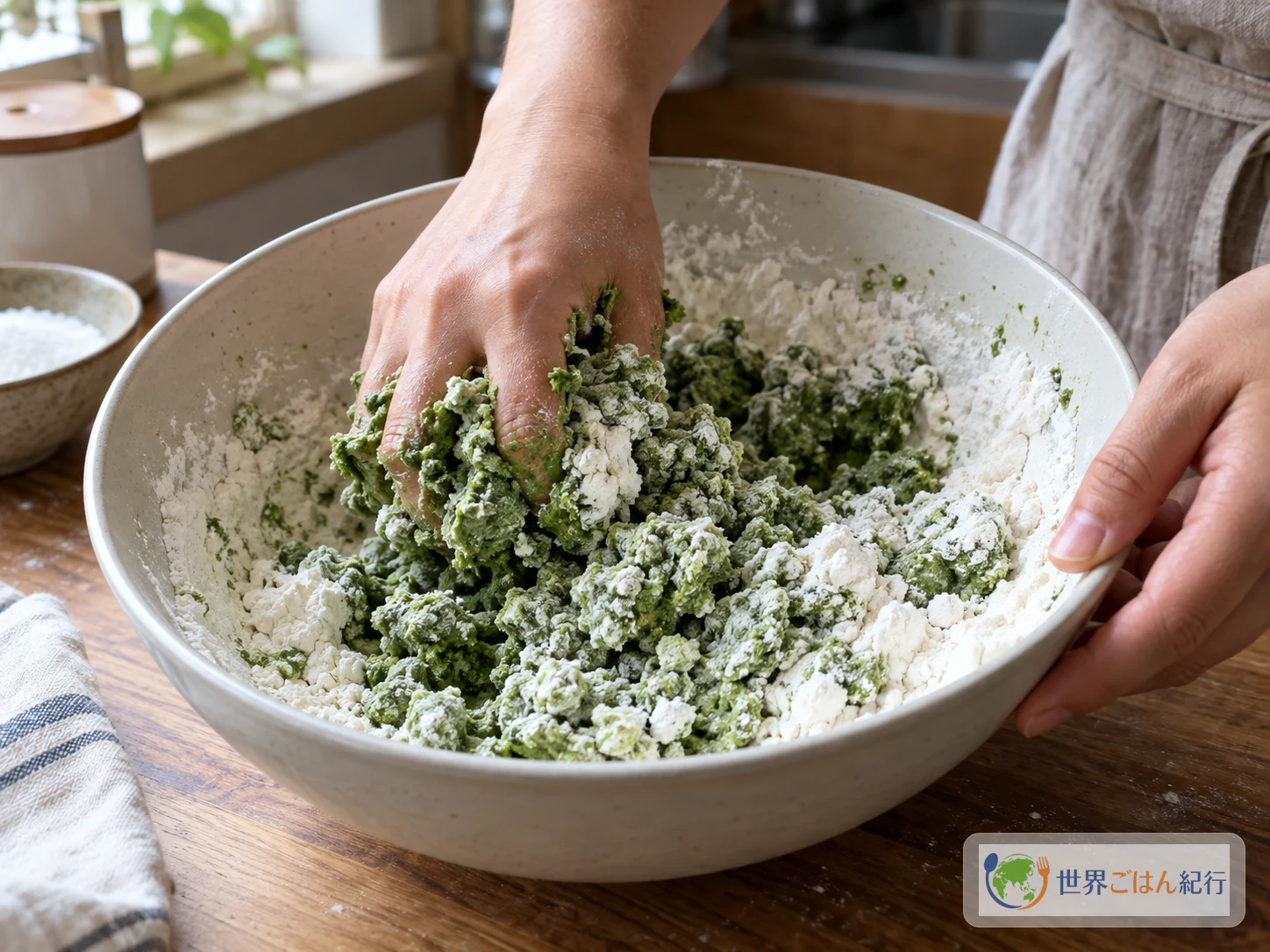
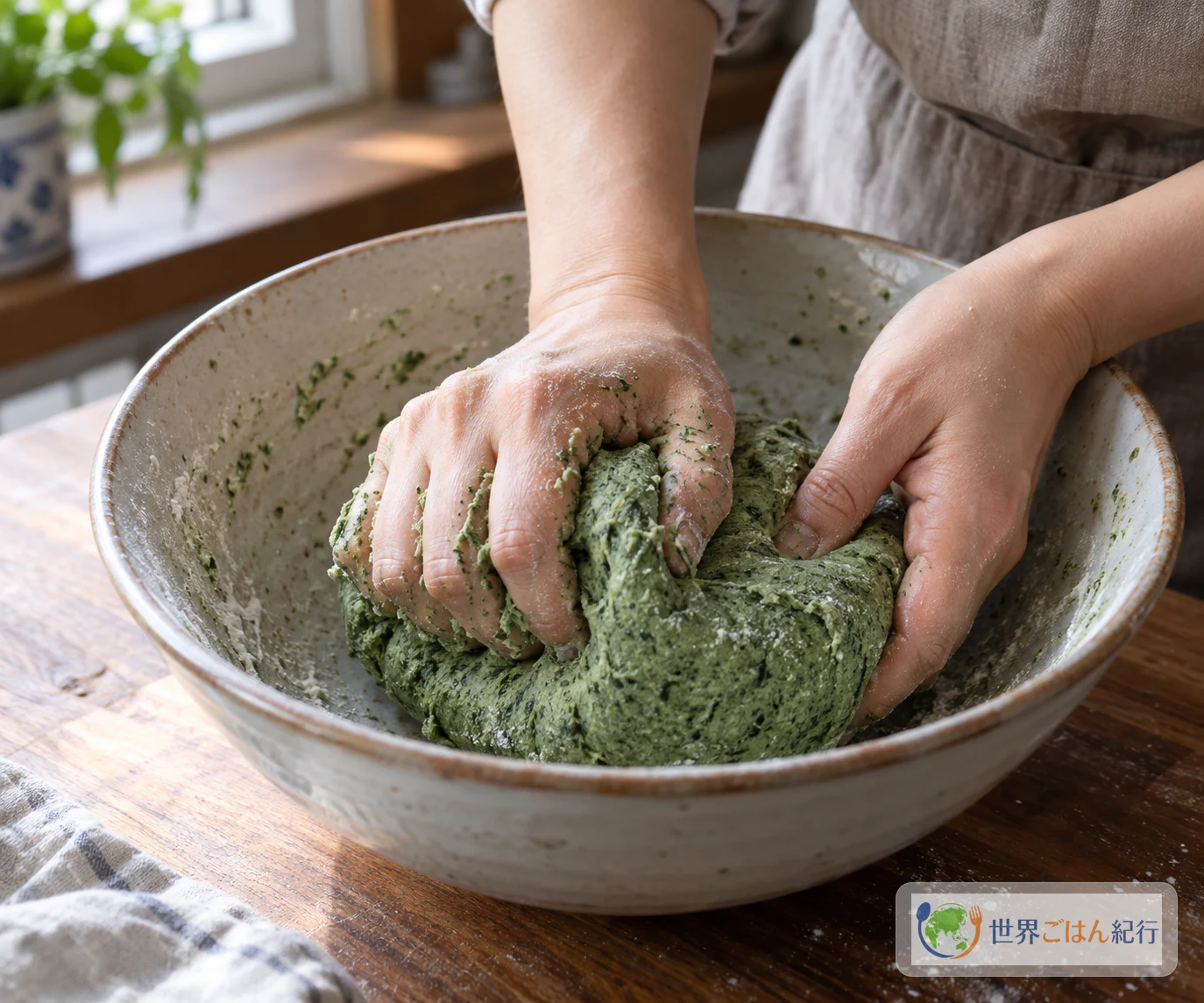
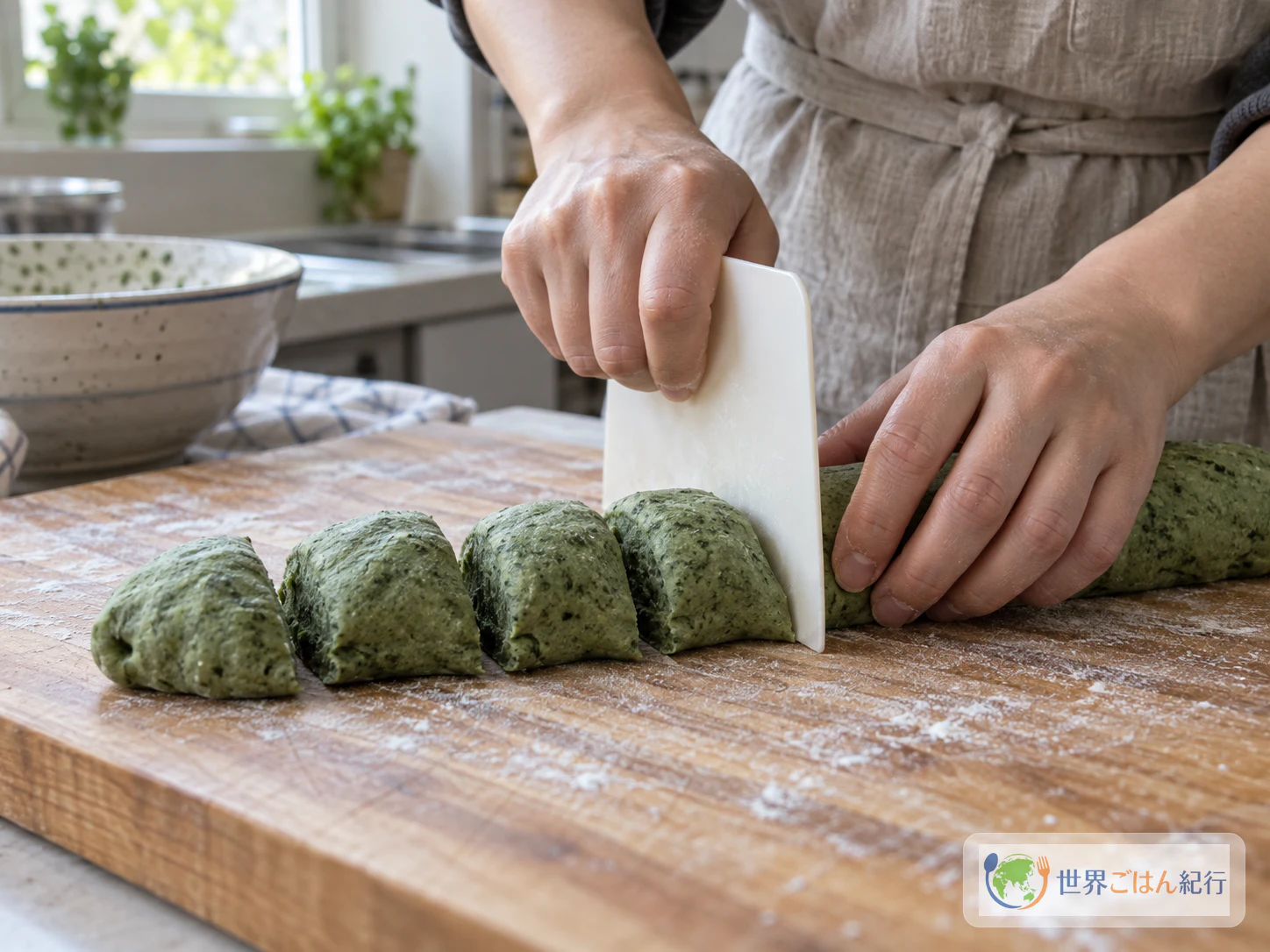
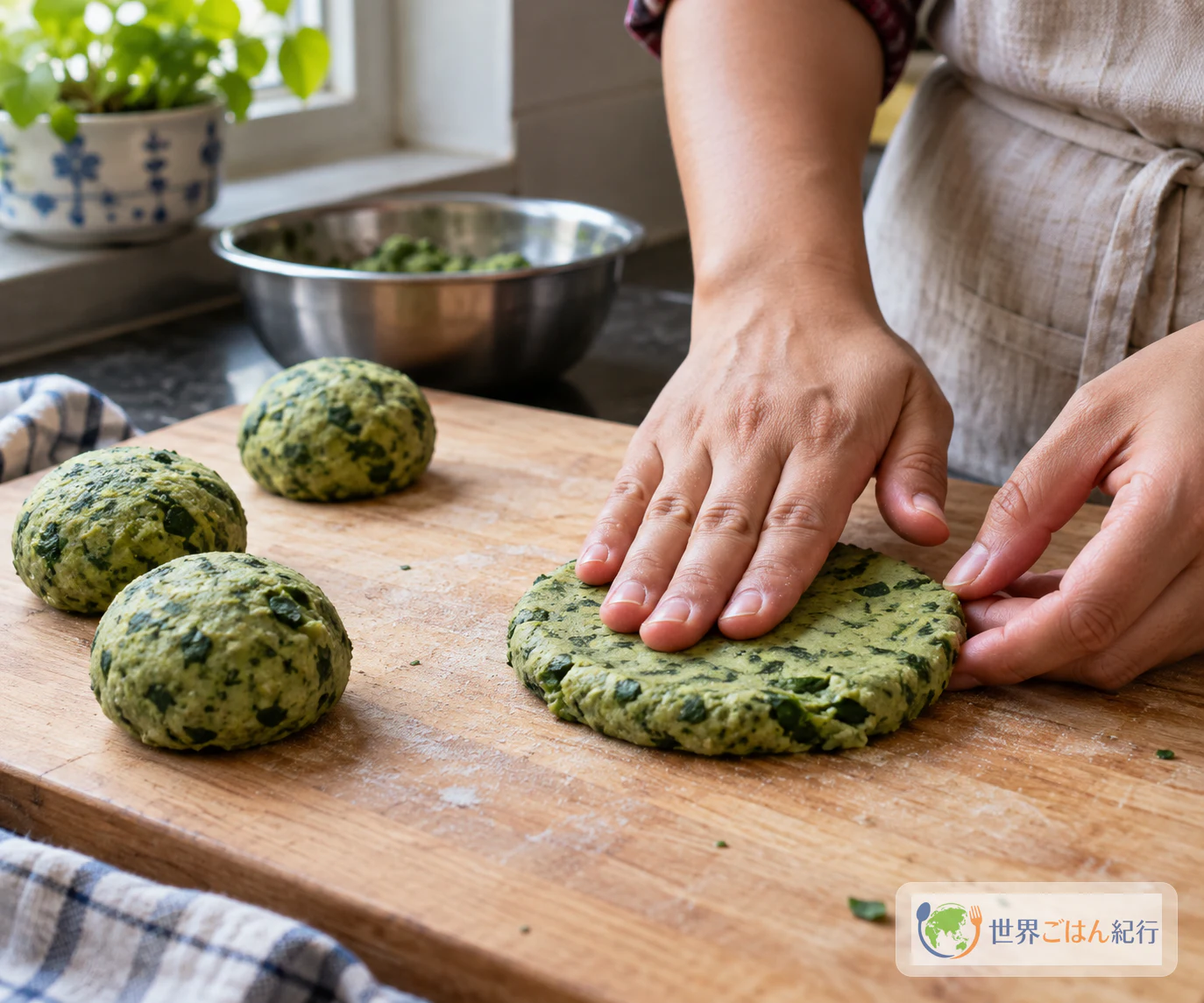
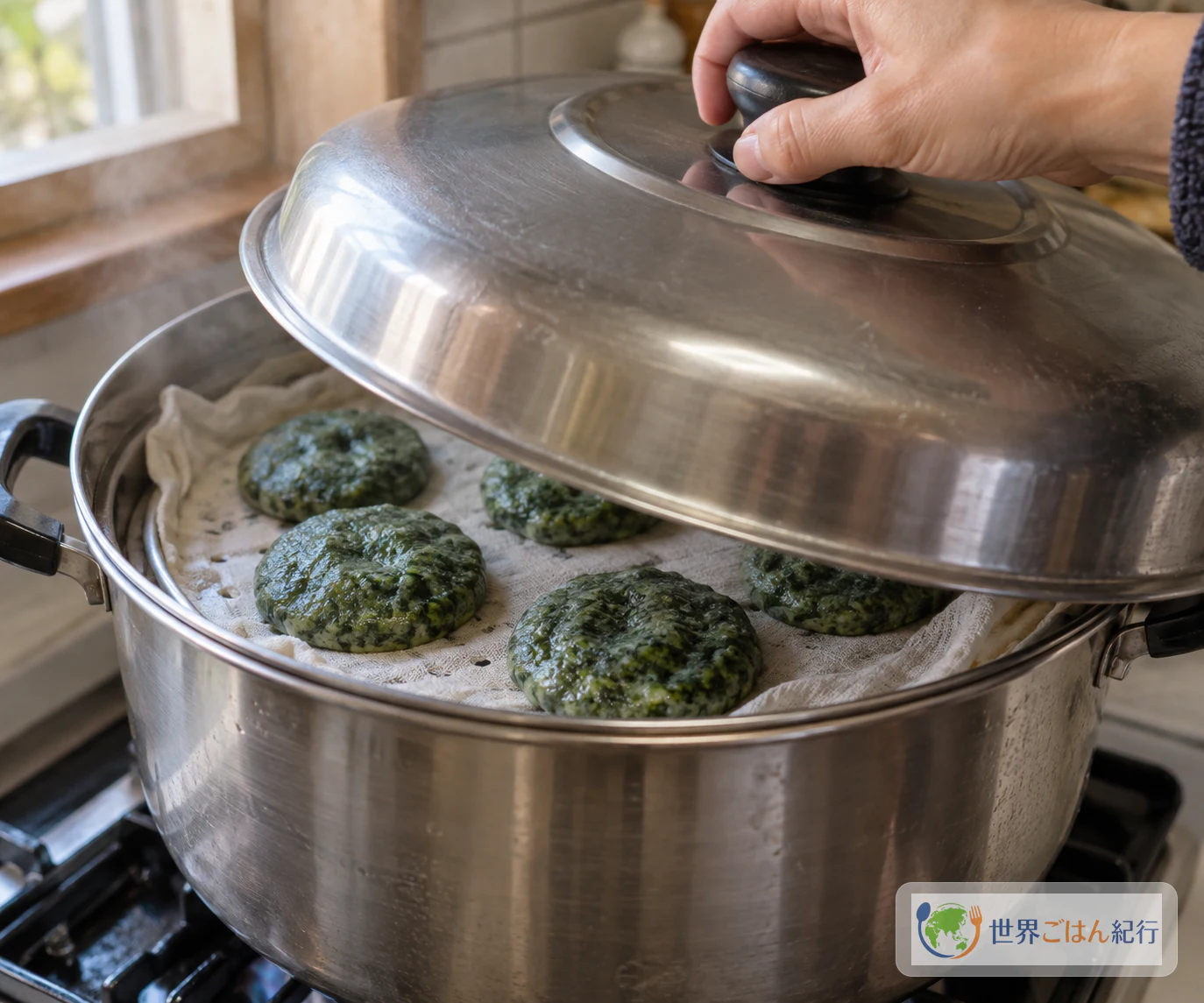
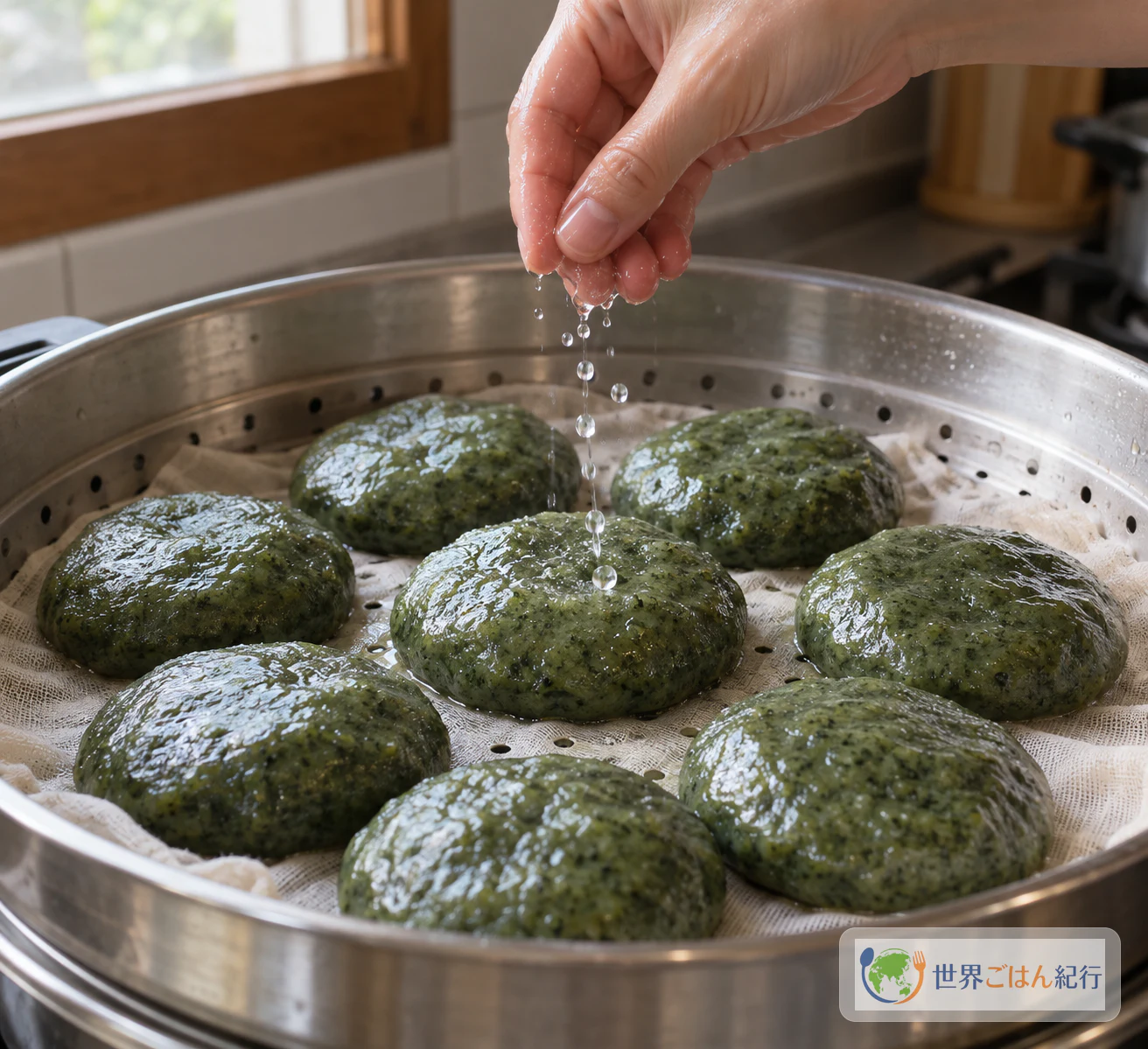
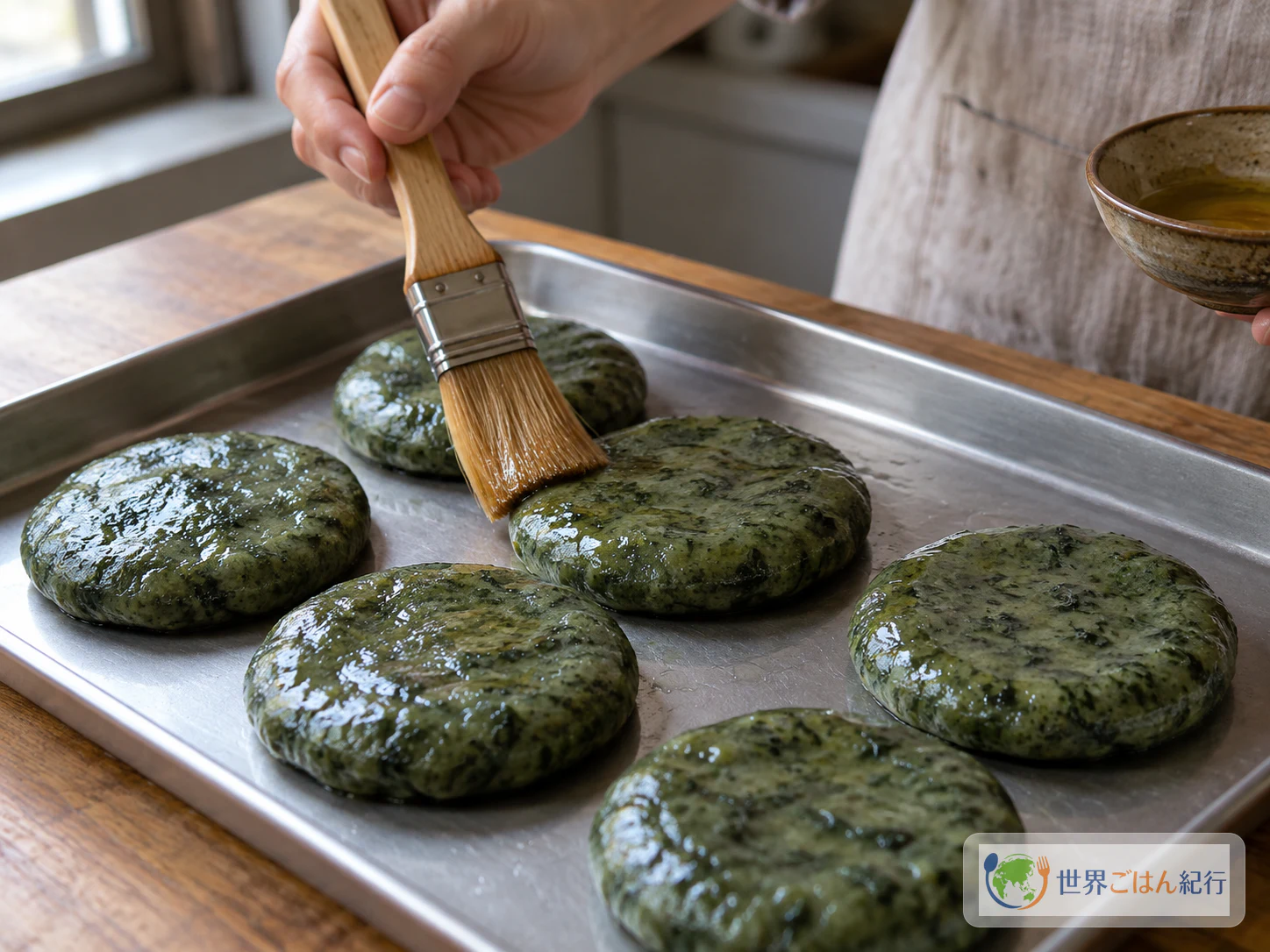
Keep the dough slightly firm so that it does not stick to your hands, press the cakes flat but not too thin, and steam until the thickest part is hot at the center. Cold water goes on while the cakes are hot, and sesame oil only after they have cooled a little.
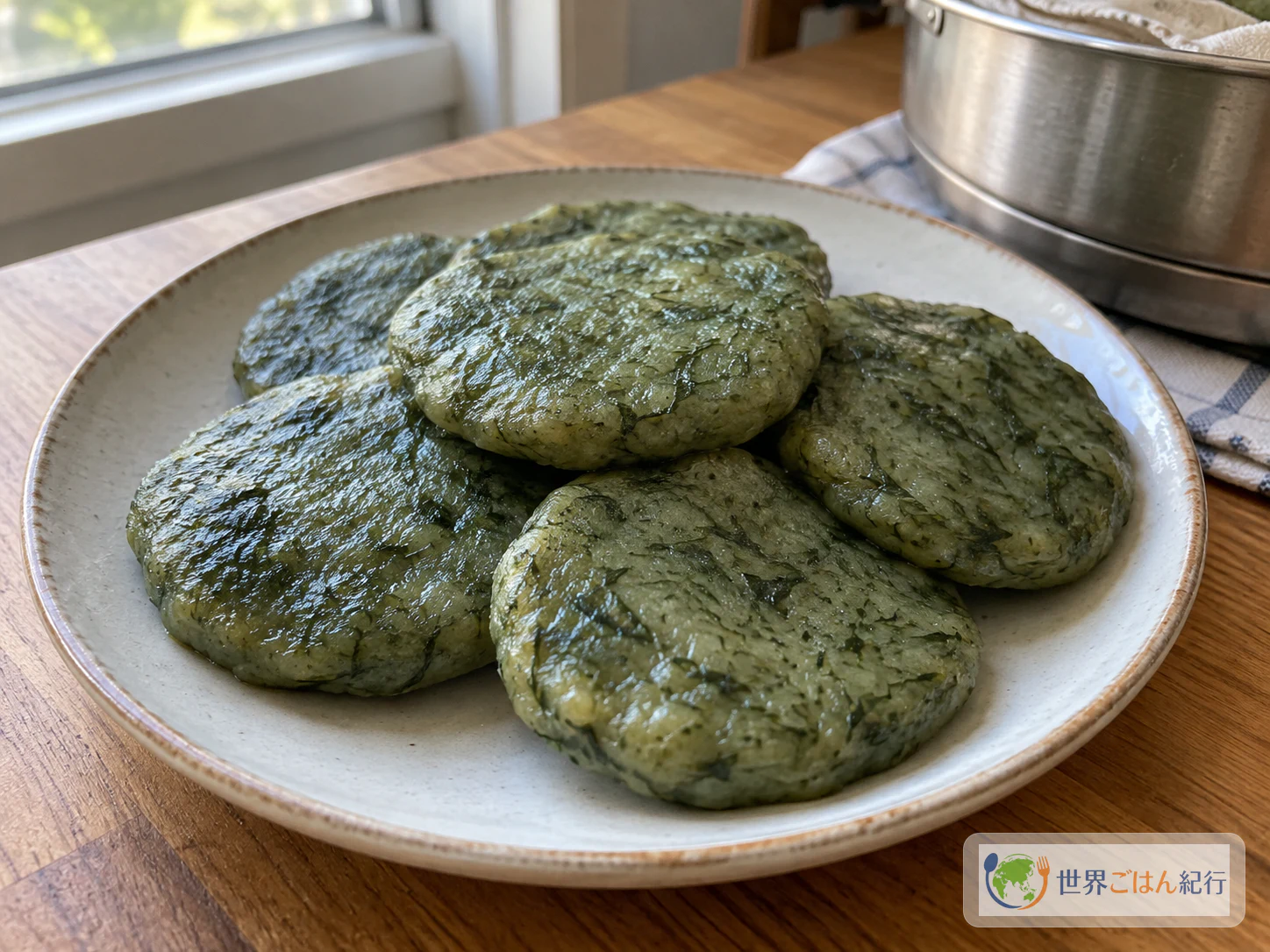
The water in the steamer is already boiling when the rounds of green dough go in. They are flecked with mugwort, pressed flat by hand, and have no filling to hide behind. When they come out, cold water goes over them while they are still hot, and a little sesame oil follows once they have cooled moderately.
Gaetteok (개떡) is a general name, and this article covers one mugwort version of it, ssuk gaetteok (쑥개떡). The recipe follows a single home cook's version, posted on the Korean recipe site 10000recipe by the author 곰배밥상, who describes themself as someone who enjoys home cooking. It starts from ready-made dry non-glutinous rice flour, which makes it a practical route for a home kitchen. It is not the one standard gaetteok, nor a representative recipe for any region of Korea.
The author lists it as 6 or more servings and within 30 minutes. Those are the author's own labels, not measured results, and the recipe gives no number of cakes or total weight.
Sekai Gohan has not kitchen-tested this recipe. The amounts and method come from the author's version, and the safety notes on buying mugwort, heating and storage were added from public food-safety guidance.
For more dishes from the same country, see Korean recipes.
Ingredients: Mugwort, Dry Rice Flour and Two Separate Portions of Salt
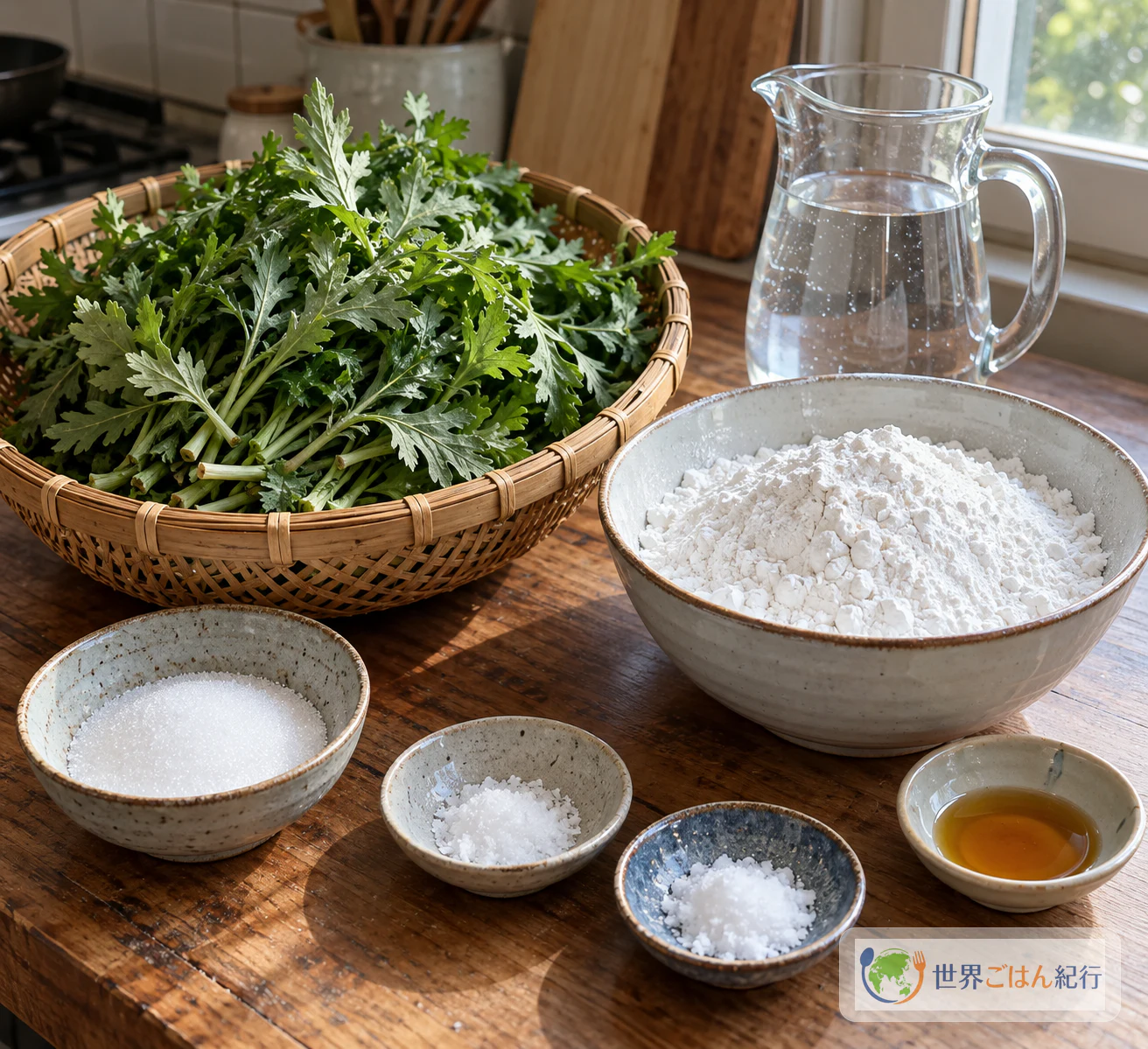
All of the mugwort, flour, sugar and dough salt go into the dough.
Choosing Mugwort and Flour
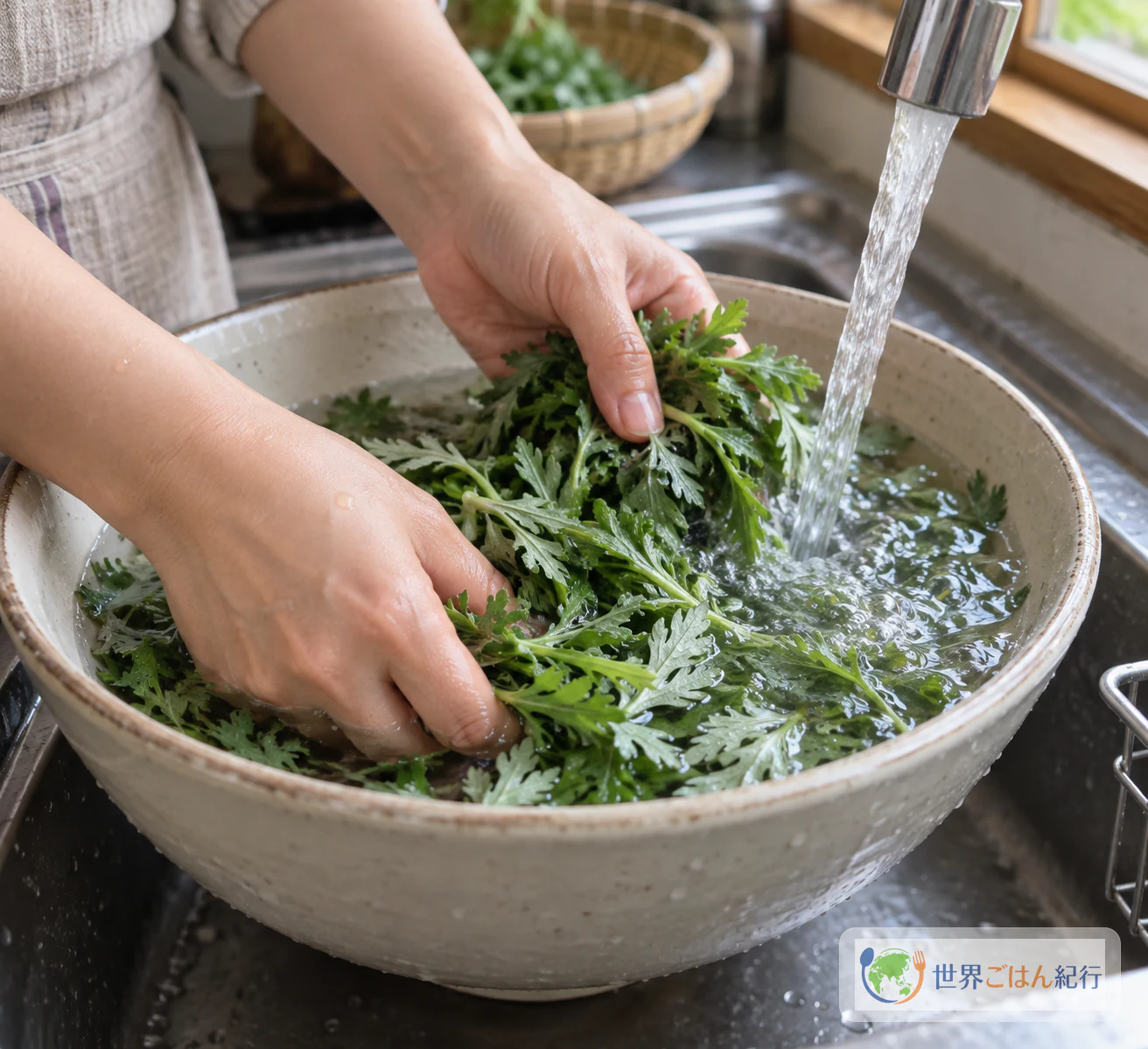
Mugwort: Buy mugwort sold for eating, whether fresh leaves, frozen, or a product labeled as food. Do not gather it yourself from fields or hillsides. Do not eat, or give to anyone, a plant you cannot be certain is edible. Toxic plants have occasionally been sold as vegetables or seedlings, so buy from a seller you trust and read the label. The photos in this article cannot identify a plant or confirm that it is edible.
Rice flour: Look for a label that says both dry and non-glutinous, and check the grain size and any additives. Rice flours differ in how much water they absorb, and no local flour has been verified as an equal replacement. Judge the dough by its feel rather than assuming it will behave the same.
This recipe uses sesame oil, so it is not suitable for anyone avoiding sesame. Check the labels of the products you buy, including any shared-facility or cross-contact statements. This article does not guarantee that the finished cakes are allergen-free or gluten-free.
Equipment
- Pot for blanching
- Blender
- Steamer with a lid
- Measuring spoons
- Colander
- Bowls
- Knife
- Cutting board
When the Dough or Steamer Misbehaves
| Problem | What to check | What to do |
|---|---|---|
| The dough is loose or sticks to your hands | Whether water went in all at once, or the mugwort was not squeezed well | Stop adding water. Next time, squeeze firmly and add warm water only a little at a time. This recipe has no set amount of extra flour for rescuing loose dough |
| The dough is dry and won't come together | Flour and mugwort vary in how much water they bring or absorb | Add warm water a little at a time, kneading between additions |
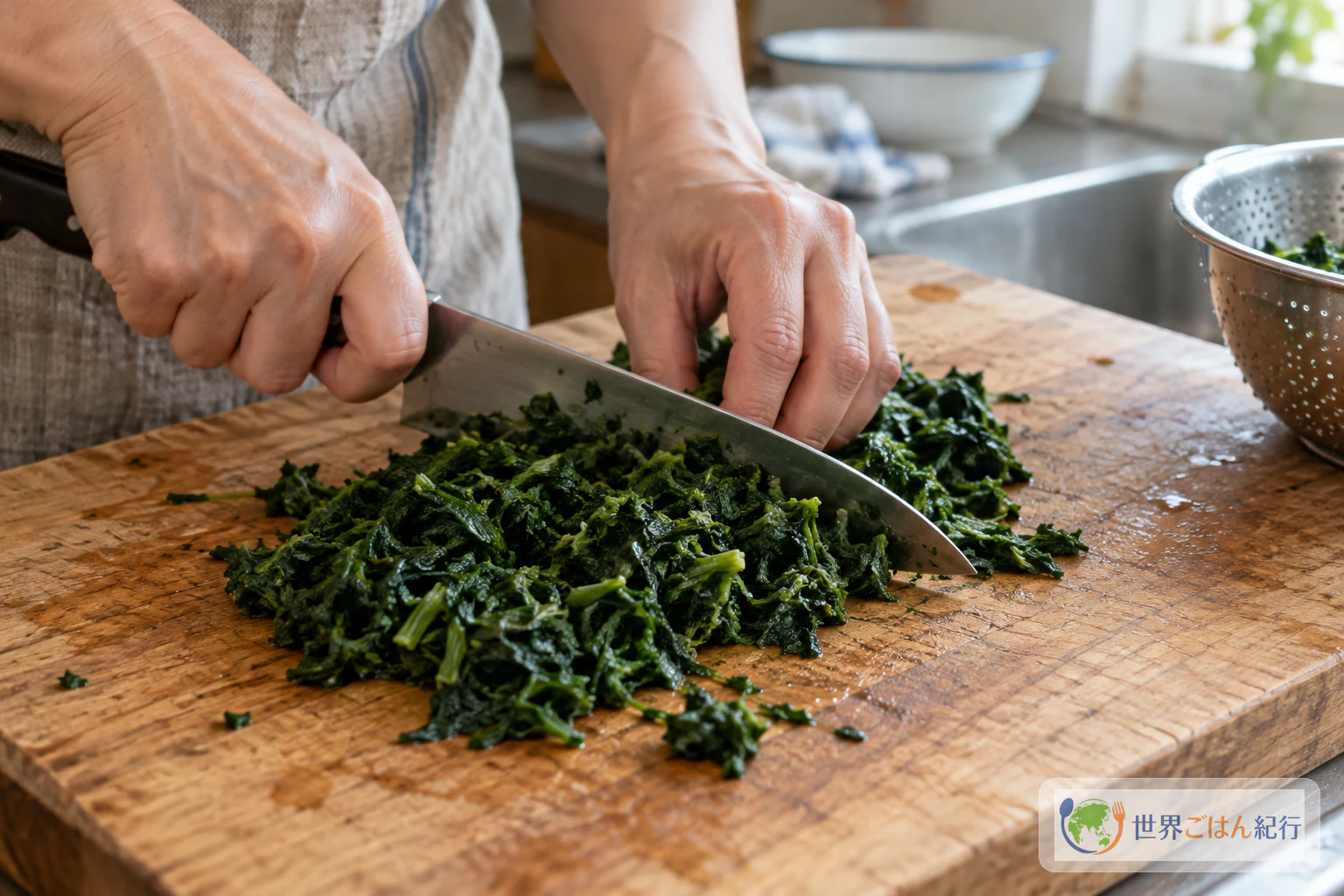
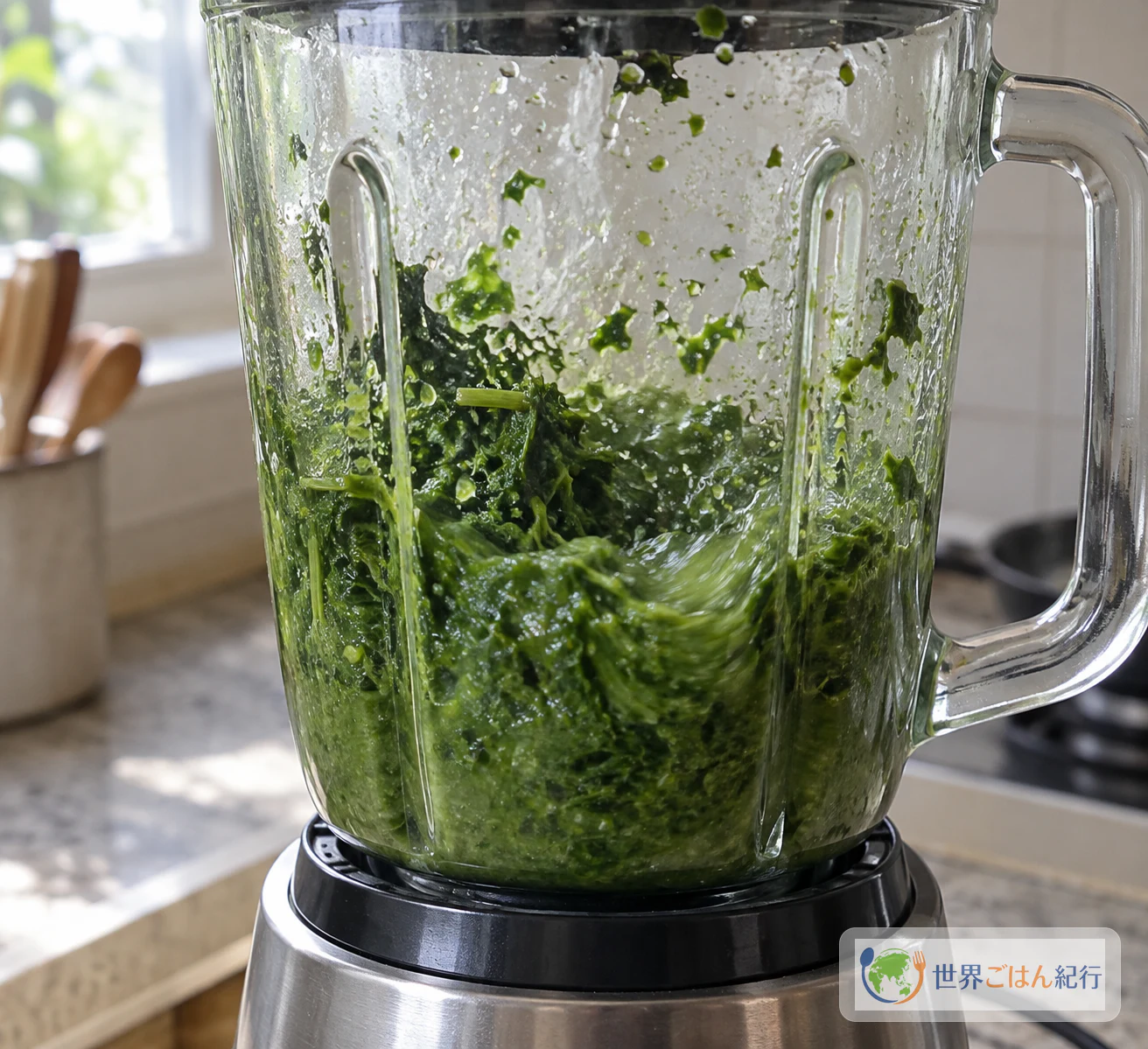
| The blender won't turn | Whether the mugwort was chopped finely enough | Chop it finer first, then add only the smallest amount of water that lets the blades turn |
| The center isn't hot after 8–10 minutes | Thicker cakes and different steamers heat differently | Close the lid and steam longer, then check the thick part again |
Storing and Reheating
Do not leave the steamed cakes at room temperature for long. Once any cakes you won't eat right away have cooled, refrigerate them (10°C or below) or freeze them (−15°C or below) without delay. Before eating, reheat them until the center reaches 75°C or higher.
There is no confirmed number of days these cakes will keep, so this article does not give one. The sesame oil on the surface is not a reason to expect them to keep longer.
Variations: What Can Change and What Stays Out
| Change | Status here | Why |
|---|---|---|
| Finer or coarser blended mugwort | Fine | The author's version allows either |
| Wet rice flour instead of dry | Not used | It changes water absorption and the balance of the recipe |
| Soaking and milling your own rice | A different version | It belongs to the Jeollabuk-do record described below, not to this method |
| Leaving out the sugar | Not used | The author's version does not offer this as an option |
| Glutinous rice flour, fillings, beans or a seed garnish | Not used | Nothing in the author's version supports them |
Gaetteok and Spring Mugwort: Where This Version Sits
Ssuk gaetteok also appears in a public record of Korean regional food. The Korean Traditional Knowledge Portal, in material provided by the Rural Development Administration, reprints an entry from a 2008 book on the traditional local foods of Jeollabuk-do. It presents the mugwort rice cake against a background of young spring mugwort and simple rice cakes. The portal describes its food database as built from literature, surveys and field research across nine regions. The entry is cited here from that reprint, not from the printed book.
That record and this recipe are different versions. The regional entry soaks and mills rice, uses the blanching water, gives a size of 8 cm, contains no sugar, and includes its own handling of dried leaves. The home cook's version starts from ready-made dry flour, adds sugar and gives no size. Each stands on its own, and none of the regional details have been mixed into the recipe above.
The regional record also doesn't show where this home version came from. The author's region is not known, and neither the record nor the recipe shows that one form stands for all of Korea.
Frequently Asked Questions
Which plant species is the mugwort?
The author's recipe says only 쑥 (mugwort) and does not name a botanical species. That is why this article relies on mugwort sold as food rather than on identifying a plant from a description or photo.
Can I pick mugwort myself?
This article does not recommend it and offers no foraging guidance. Japan's Ministry of Health, Labour and Welfare advises against picking, eating, selling or giving away any plant you cannot be certain is edible, and notes cases of toxic plants being sold as vegetables or seedlings. That notice is general advice and does not discuss mugwort specifically.
Is the 200g of mugwort weighed before or after washing and blanching?
The author does not say. A second home cook's version on the same site uses the same 1:2 ratio of mugwort to dry rice flour, and it doesn't say either. Treat 200g as the recipe's amount, and let the dough tell you the rest: slightly firm and not sticking to your hands.
How much water goes into the dough?
No total is given, and this article does not invent one. The author adds warm water a little at a time only when it is needed. The second version also adds warm water in small amounts and notes that the quantity changes with the type of flour and the moisture left in the mugwort.
Can I use glutinous rice flour or wet rice flour?
This version uses dry non-glutinous rice flour, and neither of the others is confirmed as a replacement.
How many cakes does this make, and how big should they be?
The author specifies neither. The instructions are to cut even pieces and press them into discs that are not too thin. The 8 cm size in the Jeollabuk-do record belongs to that different version.
Is 8–10 minutes of steaming enough?
That is the author's time, with the cakes going on once the water is boiling. It does not guarantee safety, and the author gives no internal temperature. Check that the thick part is hot at the center, using 75°C or higher as a guide. That figure comes from the Japanese ministry's guideline for reheating food. Steam longer if needed.
How many days will the cakes keep?
No source gives a number of days for this cake. The temperatures in the storage section are general home food-safety guidance from the Japanese ministry, not a shelf life for gaetteok.
Sources
- 곰배밥상 / 10000recipe (만개의레시피), "쑥개떡 [쑥떡] 만들기!" The home cook's recipe used for the amounts, method and listed servings and time. Posted March 30, 2021 and updated the next day. https://www.10000recipe.com/recipe/6956007
- Korean Traditional Knowledge Portal (provided by the Rural Development Administration), "쑥개떡," from 한국의 전통향토음식 6: 전라북도. Used for the Jeollabuk-do food record and the background of young spring mugwort and simple rice cakes. Cultural comparison only. https://koreantk.com/ktkp2014/food/food-view.view?foodCd=TF10000952&tempLang=ko
- Korean Traditional Knowledge Portal, food database features and reference list. Used for how the database was compiled and for the listing of the 2008 book. https://koreantk.com/m_about/about_07.jsp?about=7
- 심플민 / 10000recipe (만개의레시피), "쑥개떡." A second home cook's version, used only for comparison: the same mugwort-to-flour ratio, warm water added in small amounts, and an unstated weighing point for the mugwort. https://www.10000recipe.com/recipe/7050196
- Ministry of Health, Labour and Welfare (Japan), "家庭での食中毒予防ポイント" (Key points for preventing food poisoning at home). General guidance on room-temperature holding, refrigerator and freezer temperatures, and reheating temperature. https://www.mhlw.go.jp/www1/houdou/0903/h0331-1.html
- Food Safety Monitoring Division, Ministry of Health, Labour and Welfare (Japan), "有毒植物の誤食による食中毒防止の徹底について" (Notice on preventing food poisoning from accidentally eating toxic plants), March 27, 2025. General guidance on plants that cannot be confirmed as edible, and cases of toxic plants being sold as vegetables or seedlings. https://www.mhlw.go.jp/content/001476148.pdf