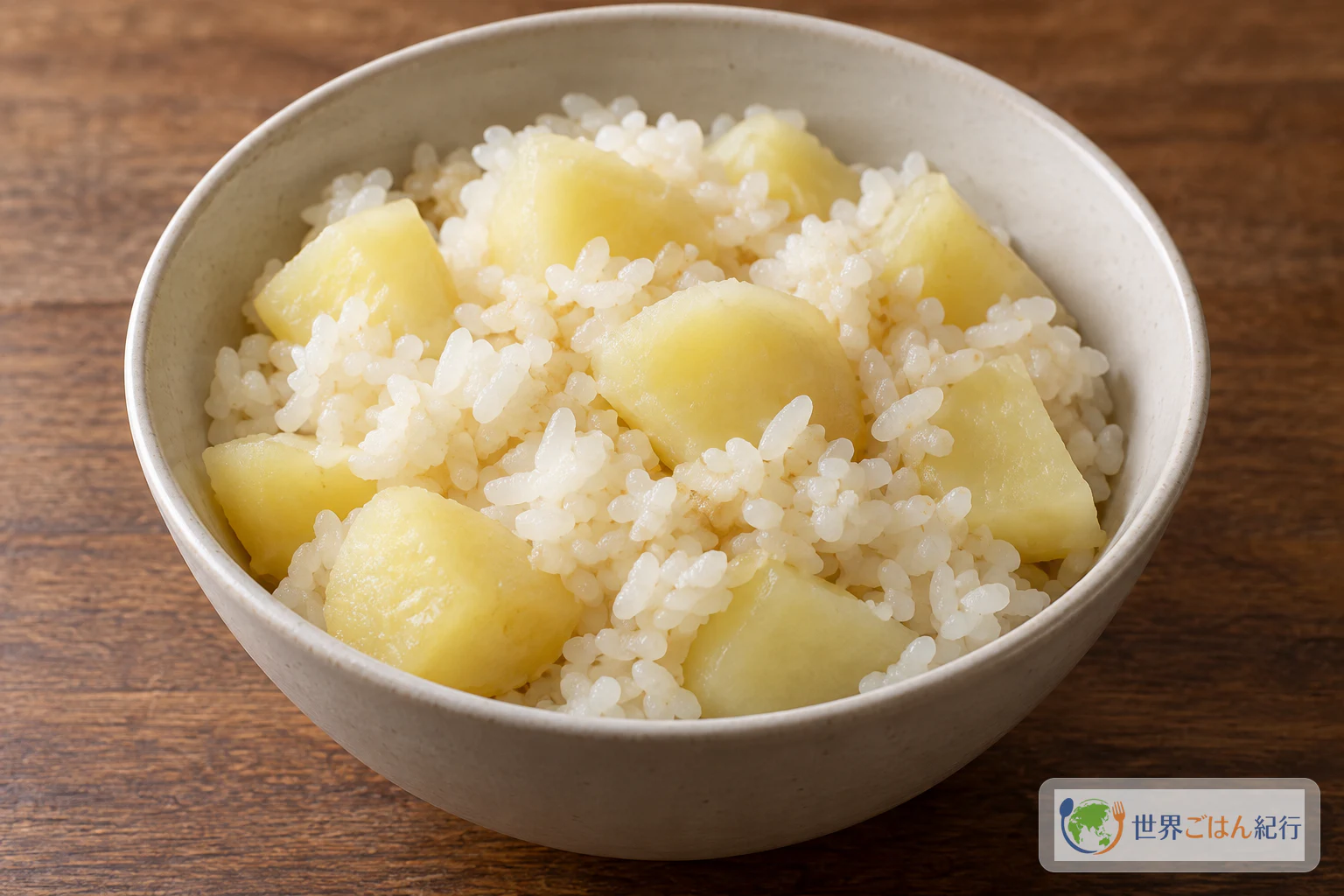
Gamjabap: Rice and Potato in the Same Pot
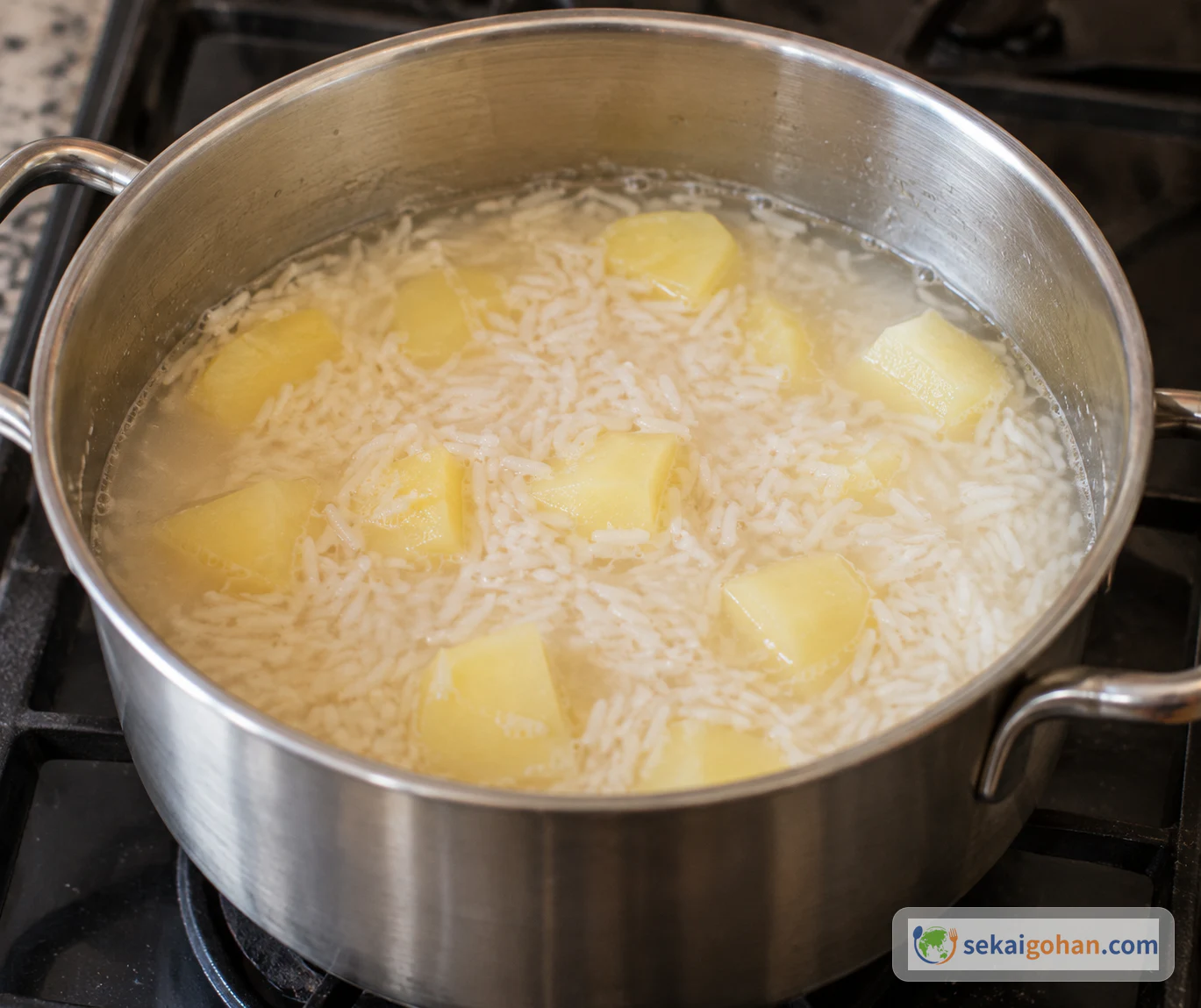
Rice, its soaking water and cut potato go into one pot. Any seasoning stays in its own small bowl on the side.
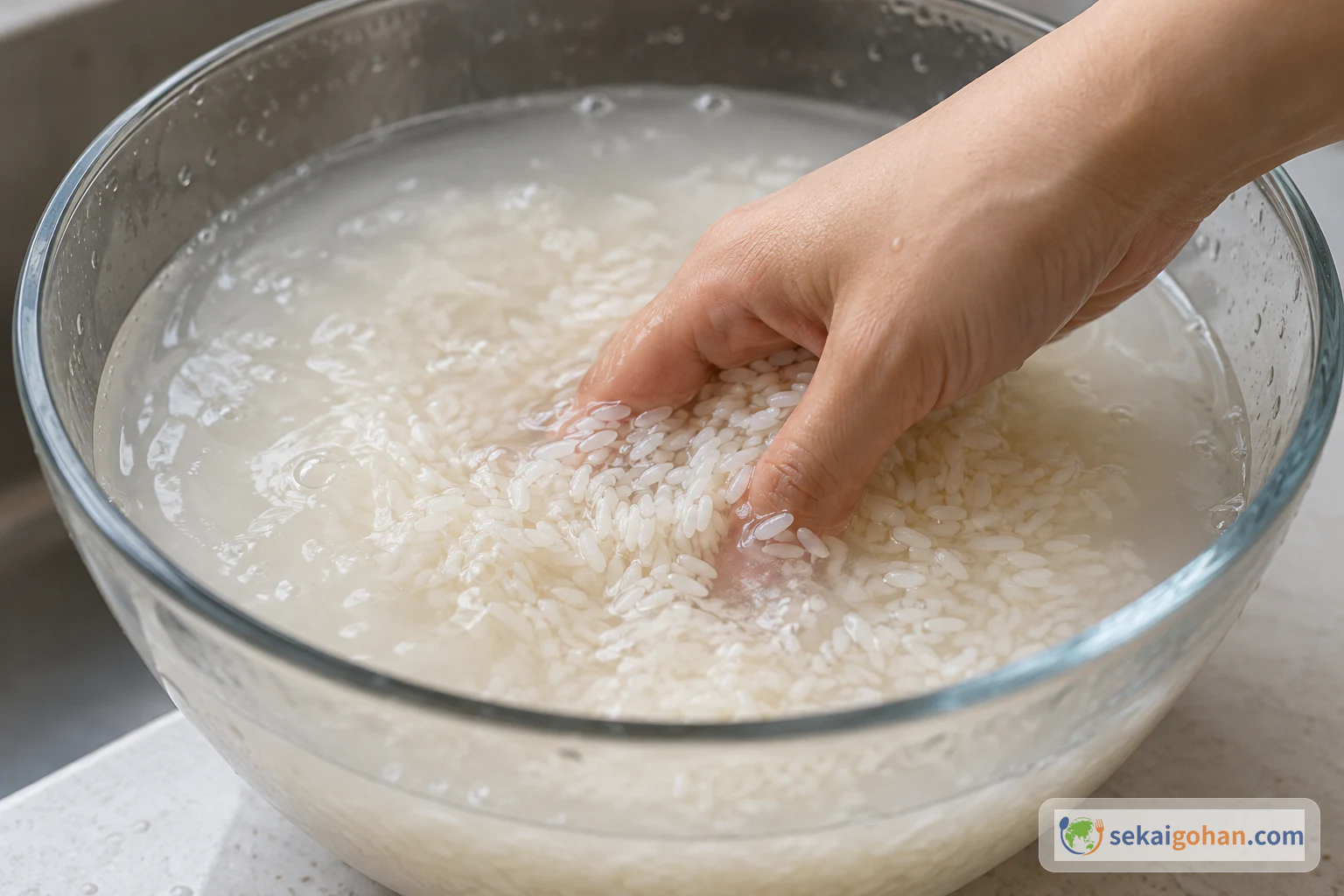
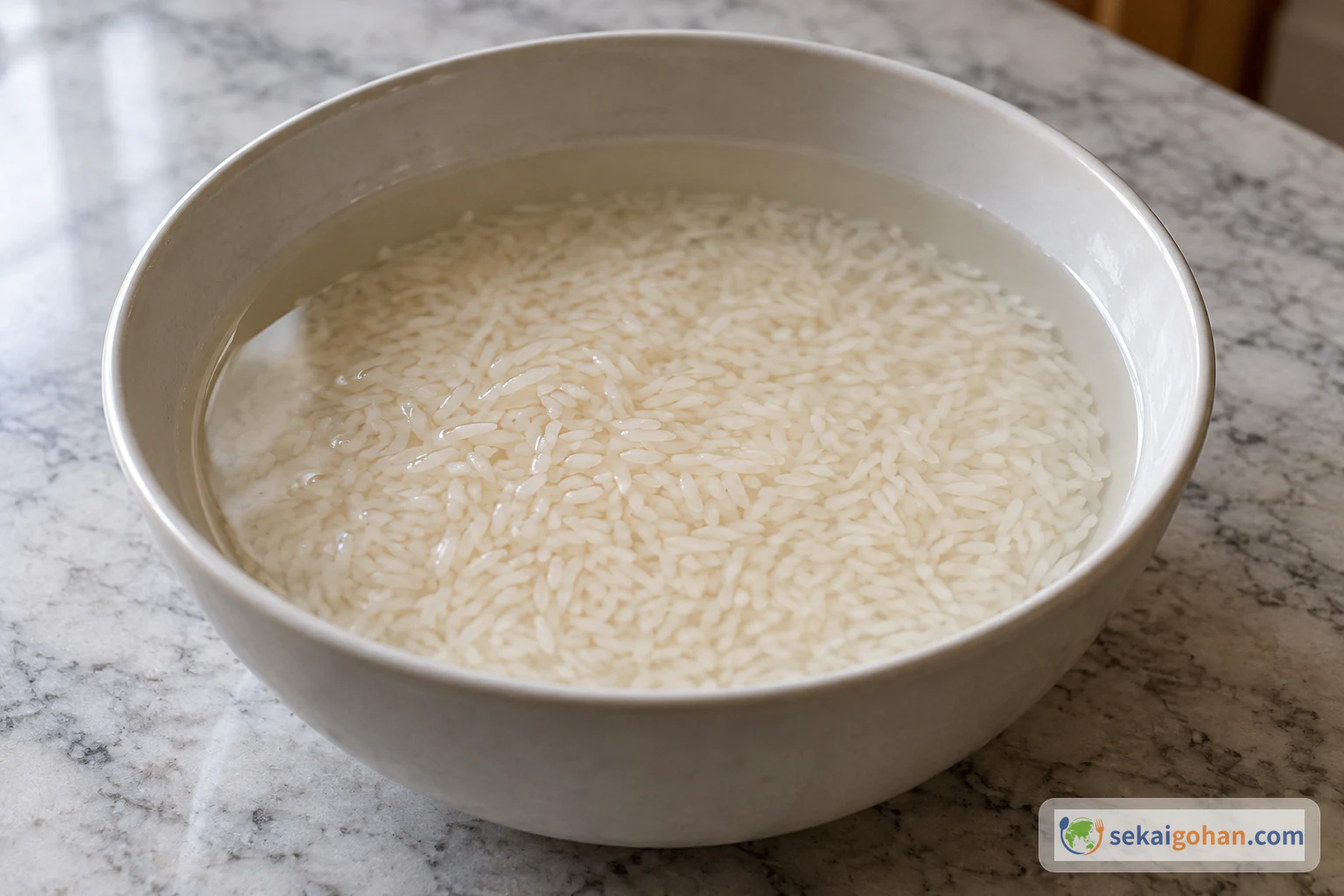
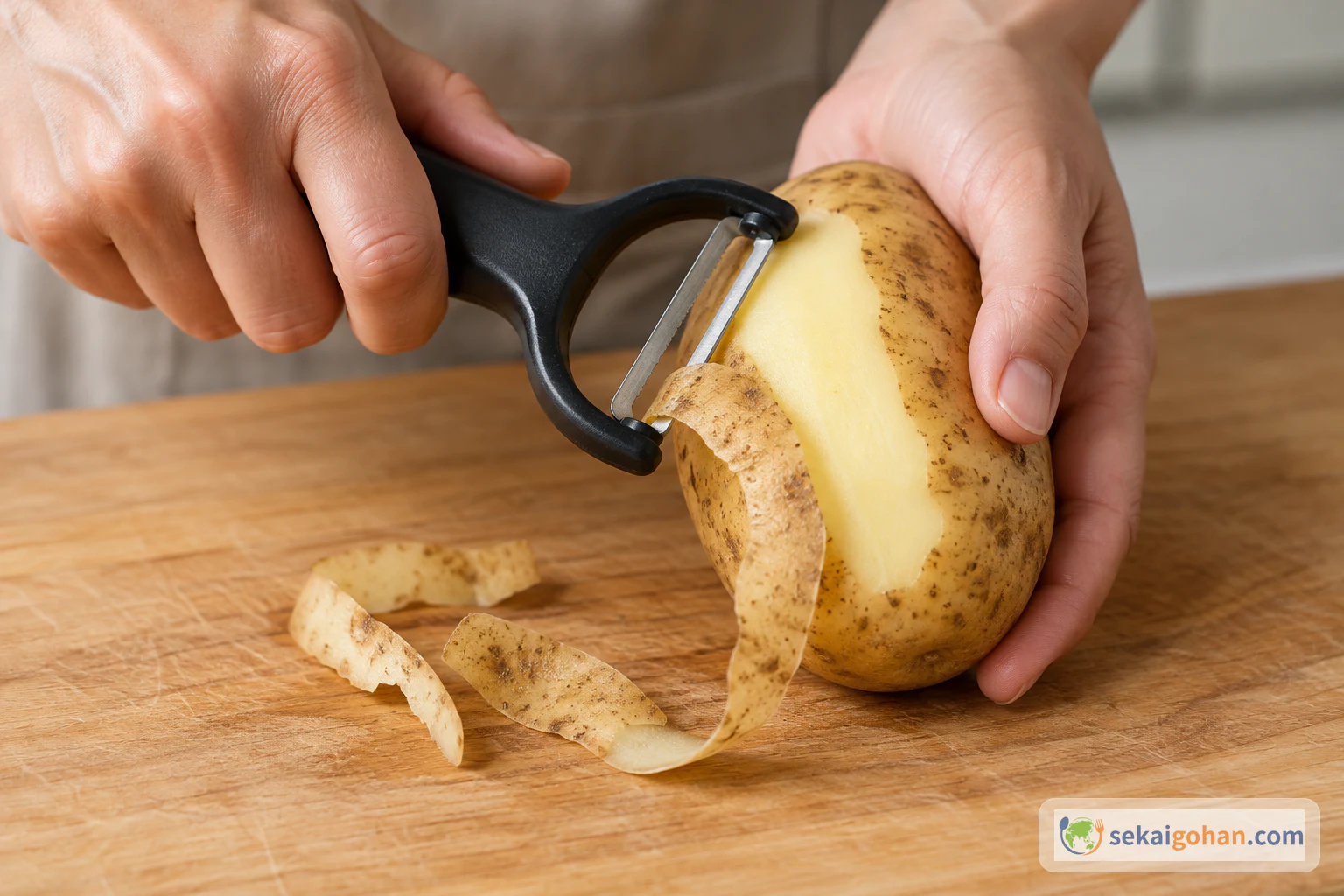
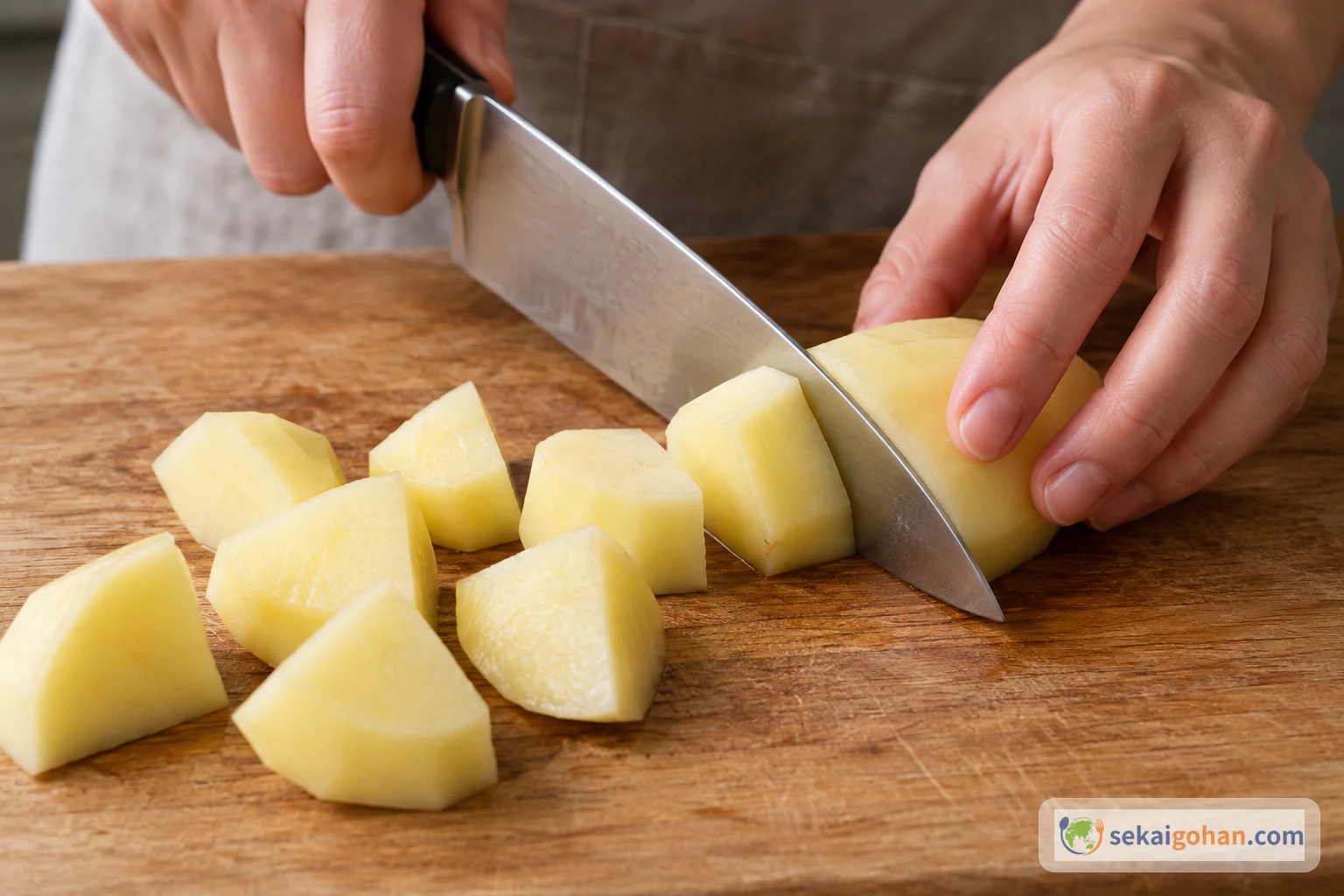
Rinsed rice sits in its measured water for 30 minutes. A peeled potato is cut into rough pieces about 2–3 cm across. Then the rice, the same water and the potato all go into a pot together. That is the whole structure of gamjabap (감자밥), the Korean dish of potato cooked with rice.
The recipe here is one specific version: 감자솥밥, published on April 21, 2022 by Semie Cooking Lab, part of the Korean food company Sempio. It serves 2. No individual author is named on the page, and it is not presented here as the only traditional method or as what every Korean household does. It is one clear, complete way to make the dish, and other records describe it differently, as you will see further down.
Sekai Gohan has not kitchen-tested this recipe. The amounts, order and times below follow the published version, and we have not added cues or adjustments of our own. For more dishes from the same country, browse our Korean recipes.
Ingredients for 2 Servings
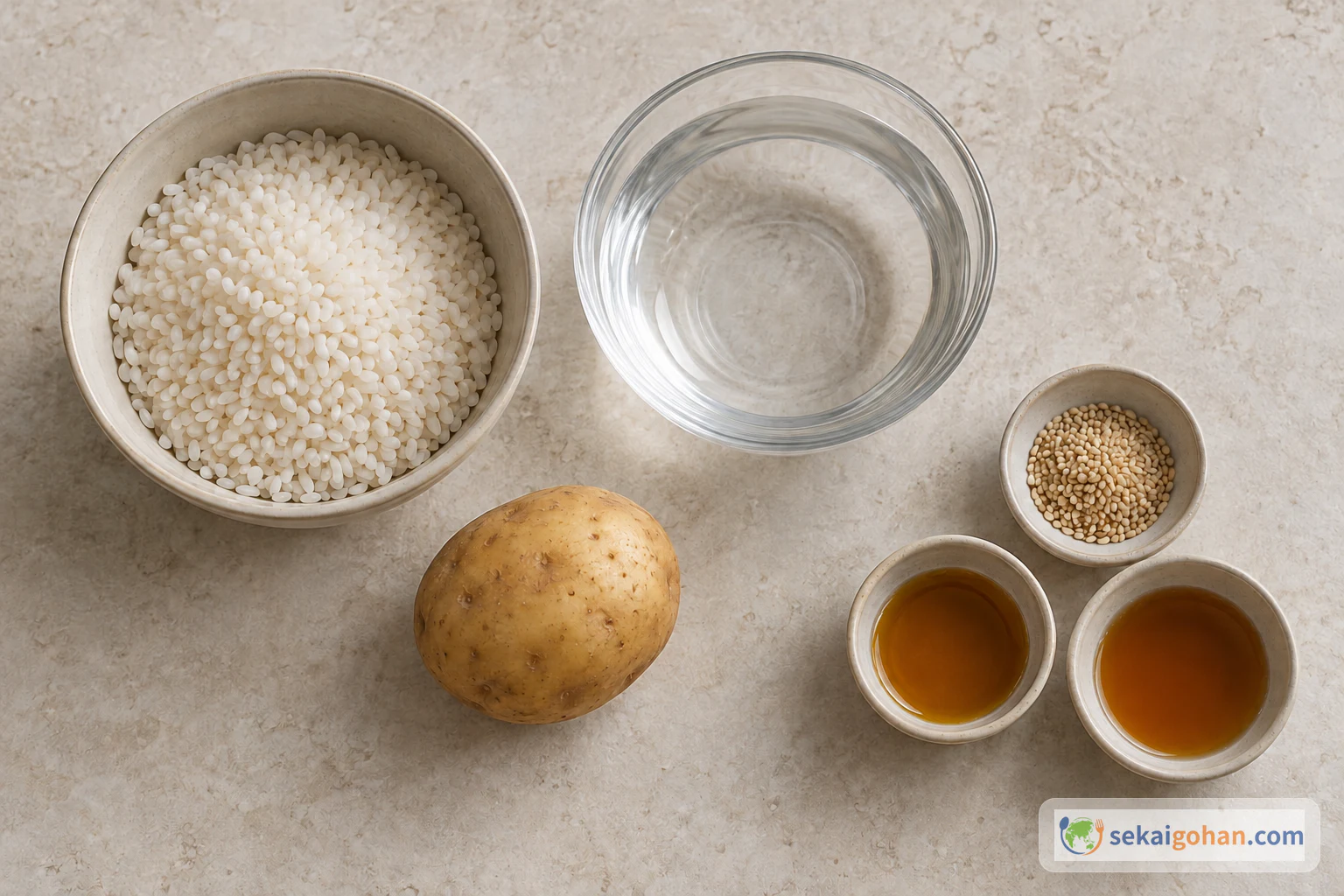
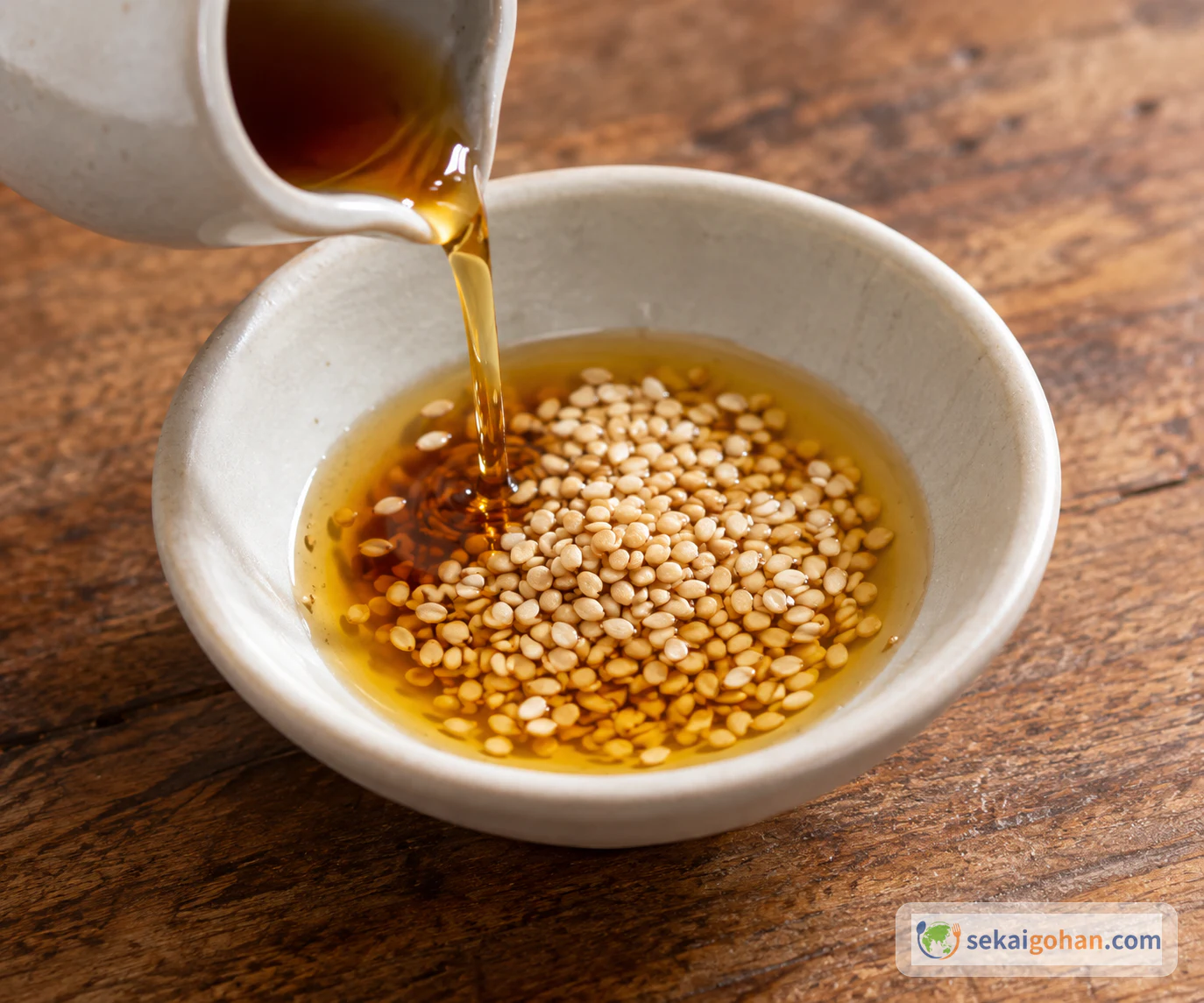
The last three ingredients are mixed together and served alongside the rice. They never go into the pot.
Choosing the Seasoning and Thinking About Swaps
Yeondu Soon is a Sempio product from the Yondu range, a fermented-soy liquid combined with vegetable-infused water. It is a liquid rather than a paste. It is used here as an optional seasoning, not as a required traditional ingredient.
No replacement is suggested. The seasoning is optional, so if you can't find Yeondu Soon, the rice and potato can be served without it.
The optional seasoning contains sesame seeds, sesame oil and a fermented-soy product. Leave it off if those ingredients are a problem for anyone at the table.
Equipment
- Bowl for rinsing and soaking the rice
- Vegetable peeler
- Knife and cutting board
- Pot
- Small bowl for the optional seasoning
Troubleshooting: Where the Recipe Helps and Where It Stops
The published recipe is short and gives no visual doneness cues or rescue steps. This table sticks to what it does settle and says plainly where it offers no answer.
| Question at the stove | What the recipe settles | What it leaves open |
|---|---|---|
| Should I drain the rice after soaking? | No. The soaked rice and its water go into the pot together | Nothing; this is clear |
| Should I add more water? | The only water listed is about 1 cup (220 ml) | It gives no guide for adjusting the amount, so we offer none |
| How should I wash the rice? | Lightly, with about three rinses and no hard scrubbing | The rice variety is not named |
| How big should the potato pieces be? | Rough, bite-size pieces about 2–3 cm across | Nothing further is given |
| Should the seasoning go into the rice? | No. Mix it separately and serve it alongside | Any other way of serving belongs to a different version |
| The rice or potato isn't how I expected. What now? | The times are 15 minutes on medium, then 10 minutes on low | No fix is given, and since we haven't tested the recipe, we won't guess at one |
Variations: Other Recorded Ways, Kept Separate
Gamjabap is not fixed to one set of amounts. The versions below show that range. They are for comparison, and their ingredients and amounts should not be folded into the recipe above.
| Version | What differs | How to treat it |
|---|---|---|
| Korean Traditional Knowledge Portal record | Rice 720 g, potatoes 300 g, water 870 ml and salt 1 tsp, with potato cut at 2 cm | A distinct recorded version, including salt, which the recipe above does not use |
| Korea Tourism Organization description | Potato pieces are crushed and mixed with soy sauce, seasoned sauce or seasoned soybean paste | A serving suggestion from a food description, with no amounts or method |
| Semie Cooking Lab recipe (above) | Rice, water and potato, with an optional separate seasoning of Yeondu Soon, sesame seeds and sesame oil | The version to cook from this page |
Background: What the Sources Can and Can't Tell Us
The Korea Tourism Organization describes gamjabap (감자밥) as potatoes cut into bite-size pieces and cooked with rice. That simple description is the common ground for this article.
The Korean Traditional Knowledge Portal, using data provided by the Rural Development Administration of Korea, classifies Gamja bap under traditional local food of Gangwon-do. Its record also soaks the rice for 30 minutes, which lines up with the timing used here. The same record lists two books under its original documents: Chosunyorijebub (1942) and Chosunmusangsinsikyorijebub (1943). We have not read those books ourselves, so we can only report that the portal cites them.
A regional catalog entry does not prove that the dish began in one place or that it is made the same way everywhere today. Our sources don't establish an exact origin, a date of creation, a link to hard times, a season, or how often it appears on modern Korean tables, so we make no claims on those points.
Frequently Asked Questions
Where our sources are silent, we say so rather than fill the gap with a guess.
Why soak the rice for 30 minutes?
That is the time given in the recipe's own soaking step and in its listed preparation time. The separate regional record also soaks for 30 minutes.
Can I convert the cup measures?
The recipe gives its cup amounts alongside grams and milliliters, and we keep both exactly as published. We haven't added conversions to other cup sizes or measuring systems.
Which rice should I use?
The recipe does not name a rice variety, and we can't confirm one from our sources.
Should the pot be covered?
The recipe does not say whether to use a lid, and it doesn't specify the pot's size or material either.
Can I make this in a rice cooker?
Our sources don't give a rice cooker method. The timing here applies only to cooking in a pot.
Can I double the recipe?
The recipe is written for 2 servings, and our sources don't confirm how the water or cooking times change for a larger batch.
Can I use soy sauce or doenjang instead of Yeondu Soon?
Not as a confirmed swap. The Korea Tourism Organization mentions soy sauce, seasoned sauce and seasoned soybean paste as ways to eat gamjabap, but that is a separate description rather than a replacement for Yeondu Soon in this recipe.
How do I store and reheat leftovers?
Our sources give no storage period or reheating method, so we can't offer a confirmed answer here.
What about nutrition?
Our sources give no nutrition information, so this article doesn't include any.
Sources
- Semie Cooking Lab (Sempio Food Co., Ltd.), "감자솥밥," April 21, 2022. The recipe basis for this article: serving count, ingredient amounts, the optional seasoning and the method. No individual author is named. https://www.semie.cooking/recipe-lab/archive/potato-rice
- Korean Traditional Knowledge Portal, "Gamja bap (Potato Rice)," record year 2008, database publication date February 12, 2010; data provided by the Rural Development Administration of Korea. Regional record and separate version, used for comparison and context only. https://koreantk.com/ktkp2014/food/food-view.view?foodCd=TF10003252
- Korea Tourism Organization (VISITKOREA), "Potato Rice (감자밥 / Gamjabap)," October 19, 2023. Official description of the dish's name, its basic form and serving suggestions; it gives no amounts or full recipe. https://english.visitkorea.or.kr/svc/contents/contentsView.do?vcontsId=179087
- Sempio, "순식물성 콩발효에센스 : 연두." Manufacturer's product page, used only to confirm that Yeondu Soon belongs to a liquid product range. https://www.sempio.com/product/yondu/02