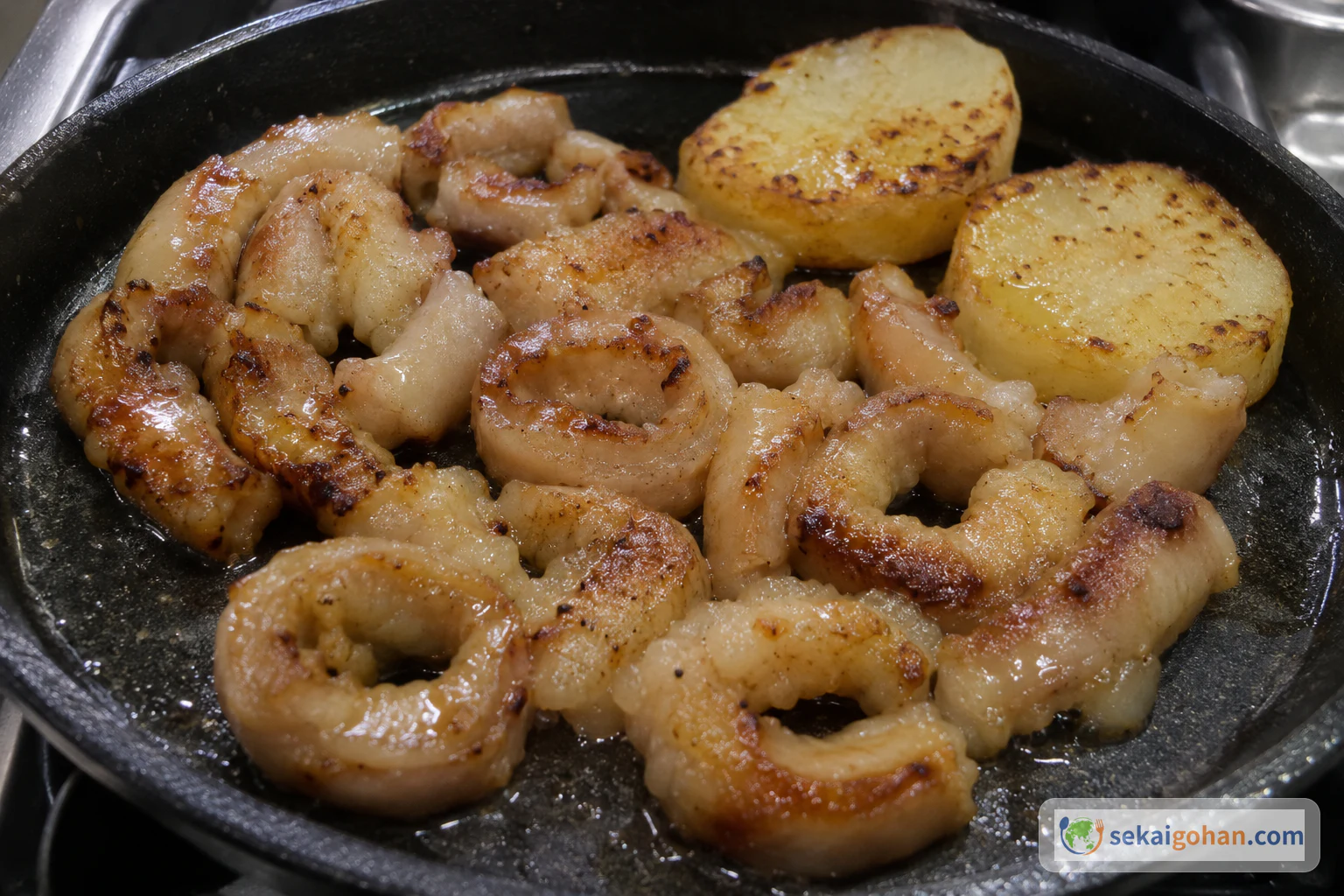
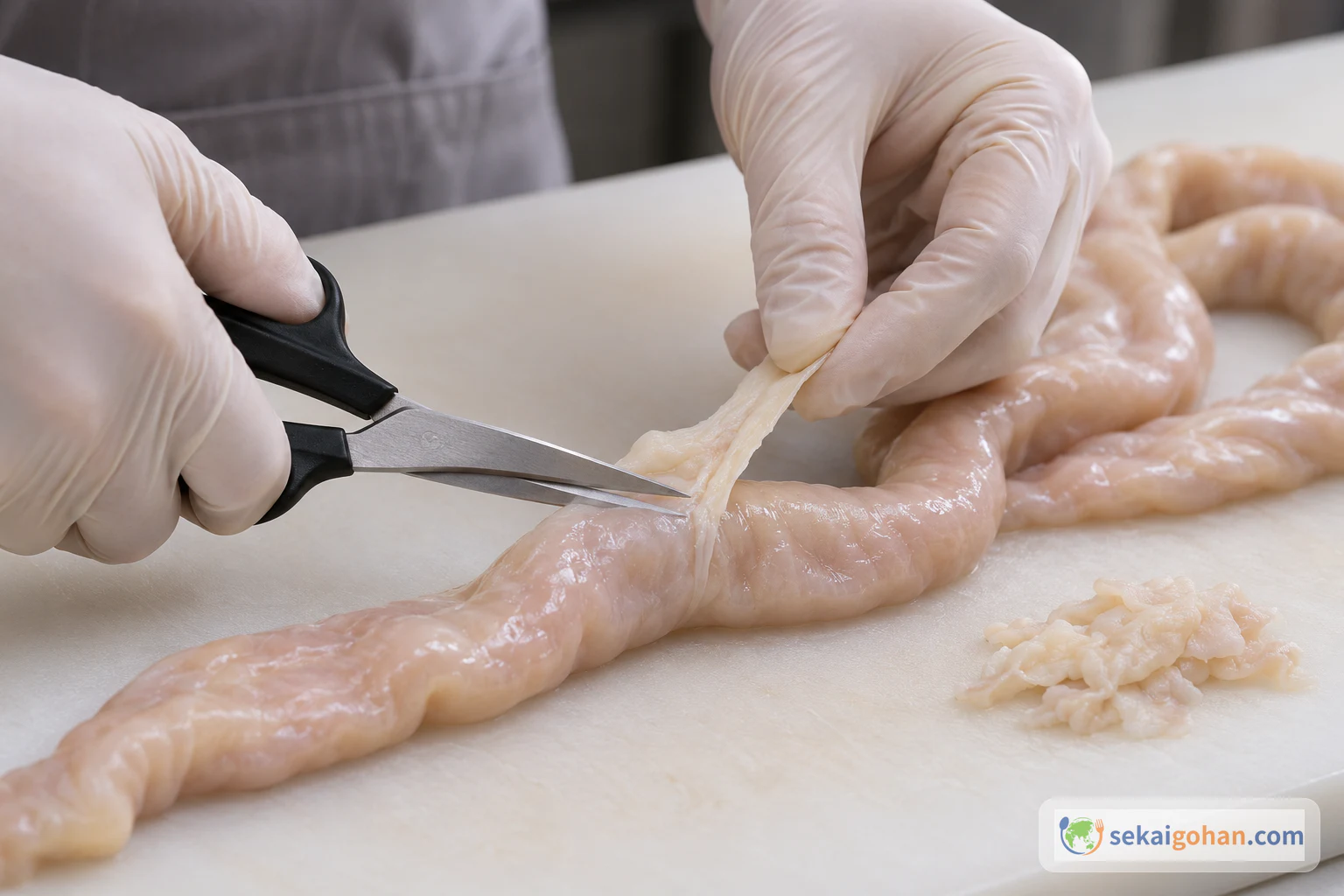
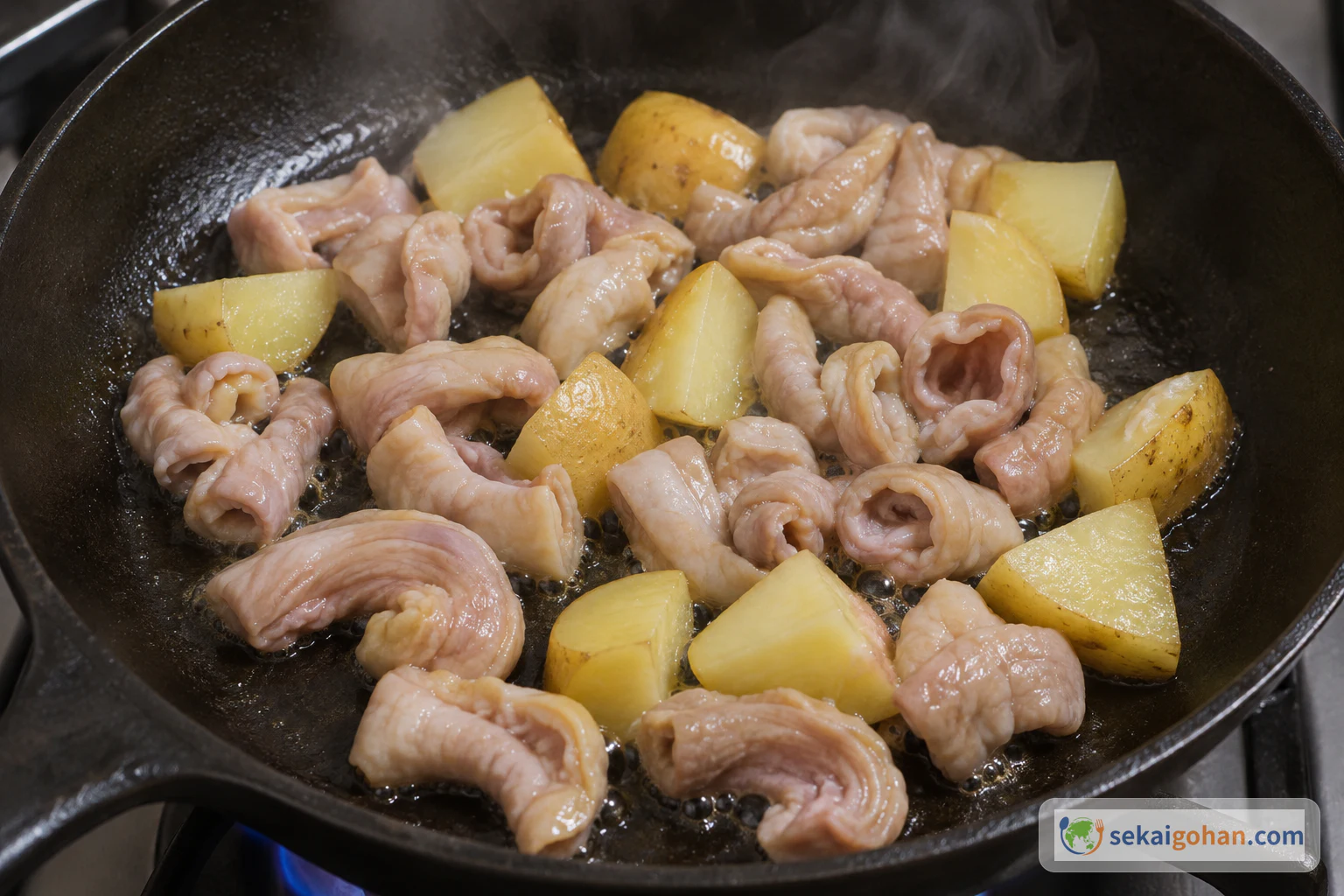
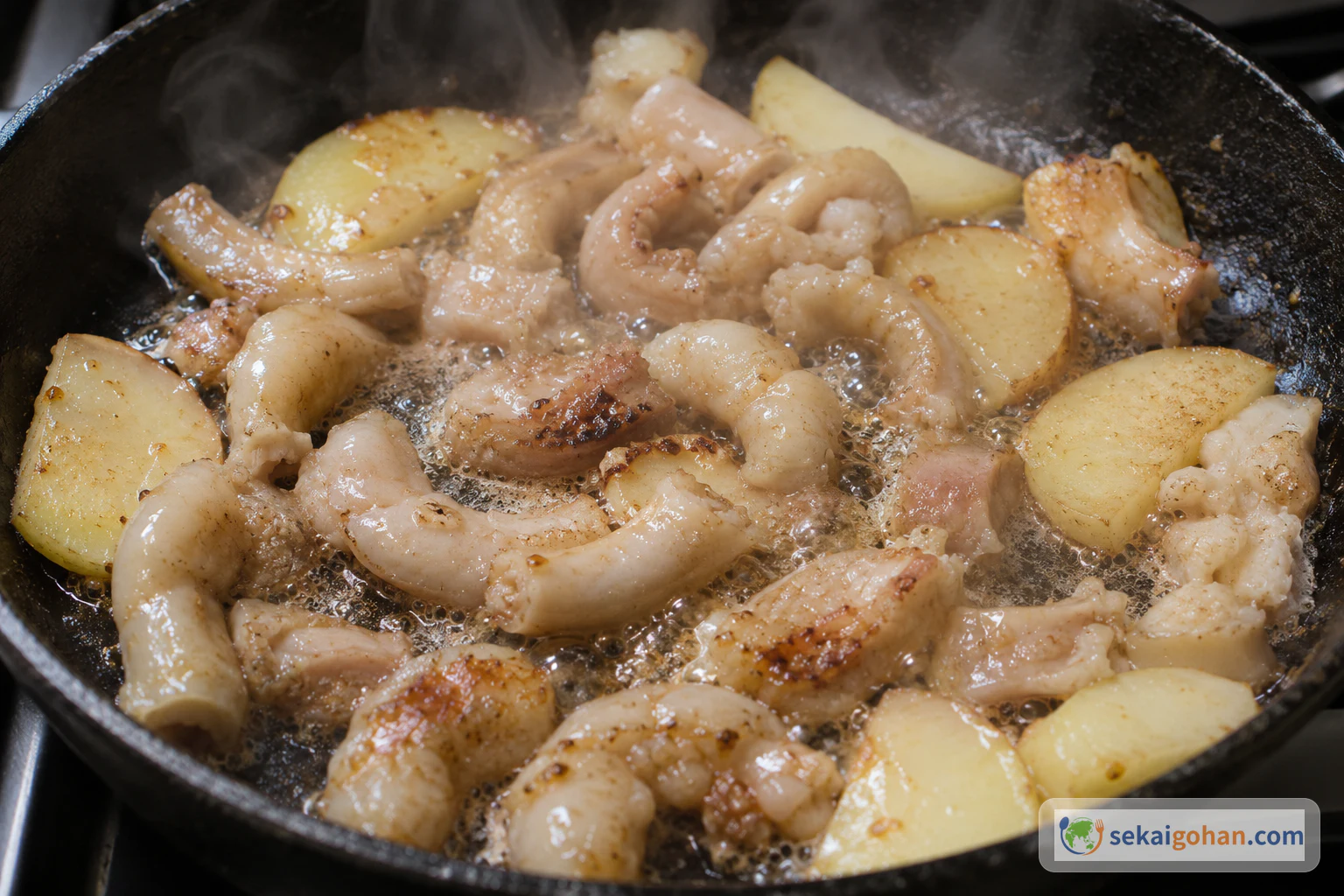
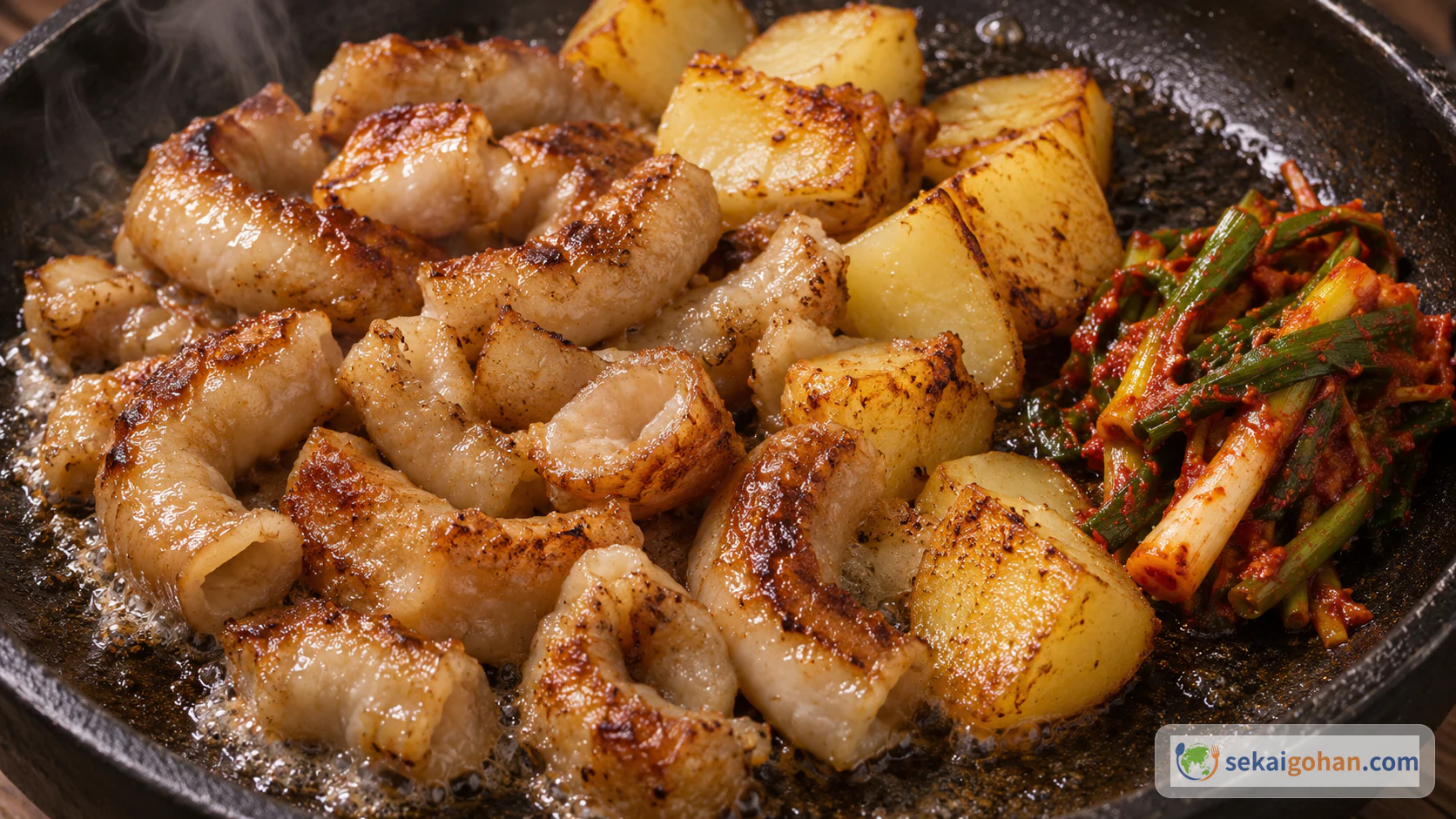
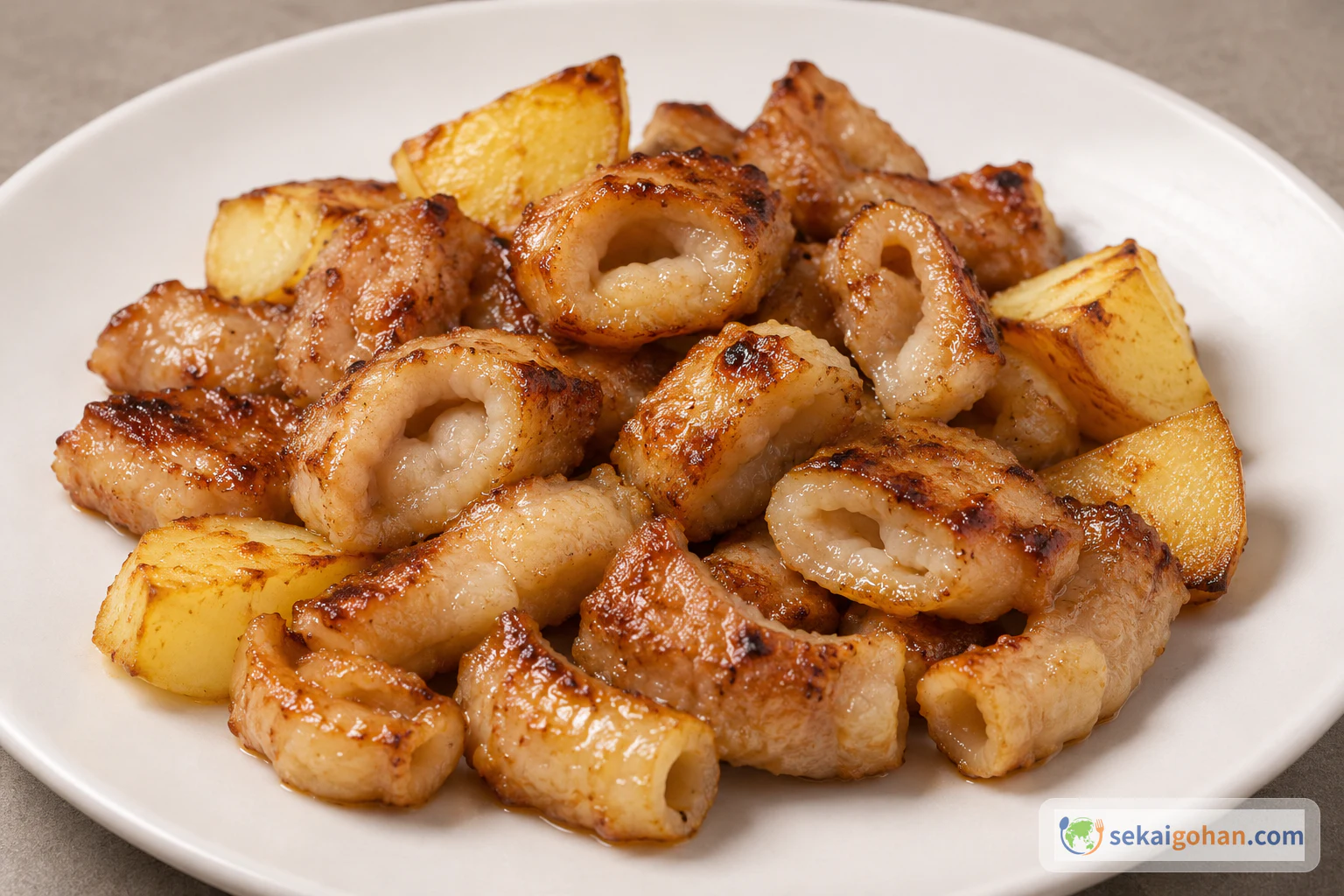
The first minutes in the pan are loud and wet. The coils of beef intestine let go of their water, the potatoes sit in it, and then the liquid boils away until the fat starts to spit and the pieces begin to tighten and brown. Soft, milky filling slips out of the cut ends, and you lift it aside with a spoon. Gobchang gui (소곱창구이) is grilled beef small intestine, a Korean dish of chew and crackle. This home version keeps it plain: the intestine, two potatoes, a spoonful of sesame oil, and green-onion kimchi charring at the edge of the pan.
Beef Small Intestine on a Hot Pan
The name reads in three parts. So (소) is beef, gopchang (곱창) is small intestine, and gui (구이) means grilled. The gop in gopchang is the soft, rich filling inside the tube, the same filling that escapes from the cut ends while it cooks. In English it is spelled both gobchang and gopchang.
At one gopchang restaurant in Seoul the menu splits the animal and the cut clearly: grilled beef small intestine is one dish, grilled pork small intestine is another, and beef reed tripe has its own line. That separation matters when you shop. Daechang (대창) is beef large intestine, makchang (막창) is the abomasum, and yang (양) is the rumen; each grills to a different texture. Gopchang jeongol (곱창전골) is a stew, and it belongs to another evening altogether. Where the grilled dish first took shape is not settled, and recipes and cleaning habits change from cook to cook across Korea.
When the cut pieces cook, the filling pushes out of the ends. In this home version it is scooped off and saved, and the green-onion kimchi and the saved gop go back into the pan with rice once the grilling is done.
What sets this version apart is its directness. The intestine goes into the pan raw, with no pre-boil, and the potatoes cook beside it from the start, soaking up the fat. It is cooked long and hard for chew and a crisp outside.
Ingredients (serves 4)
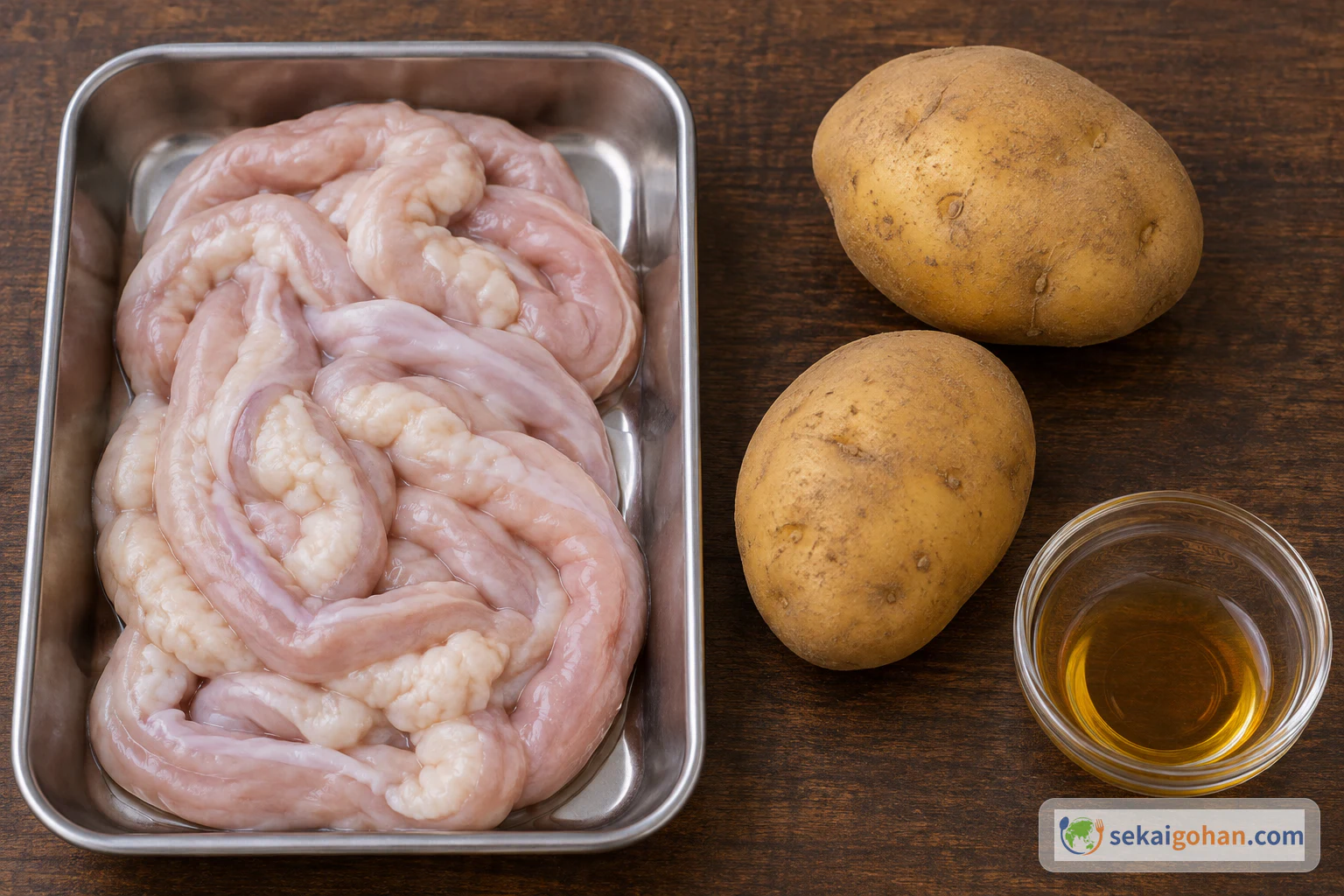
Sesame oil contains sesame. Kimchi is often made with fish sauce or salted seafood; check the label on a bought jar for fish, shellfish and other allergens.
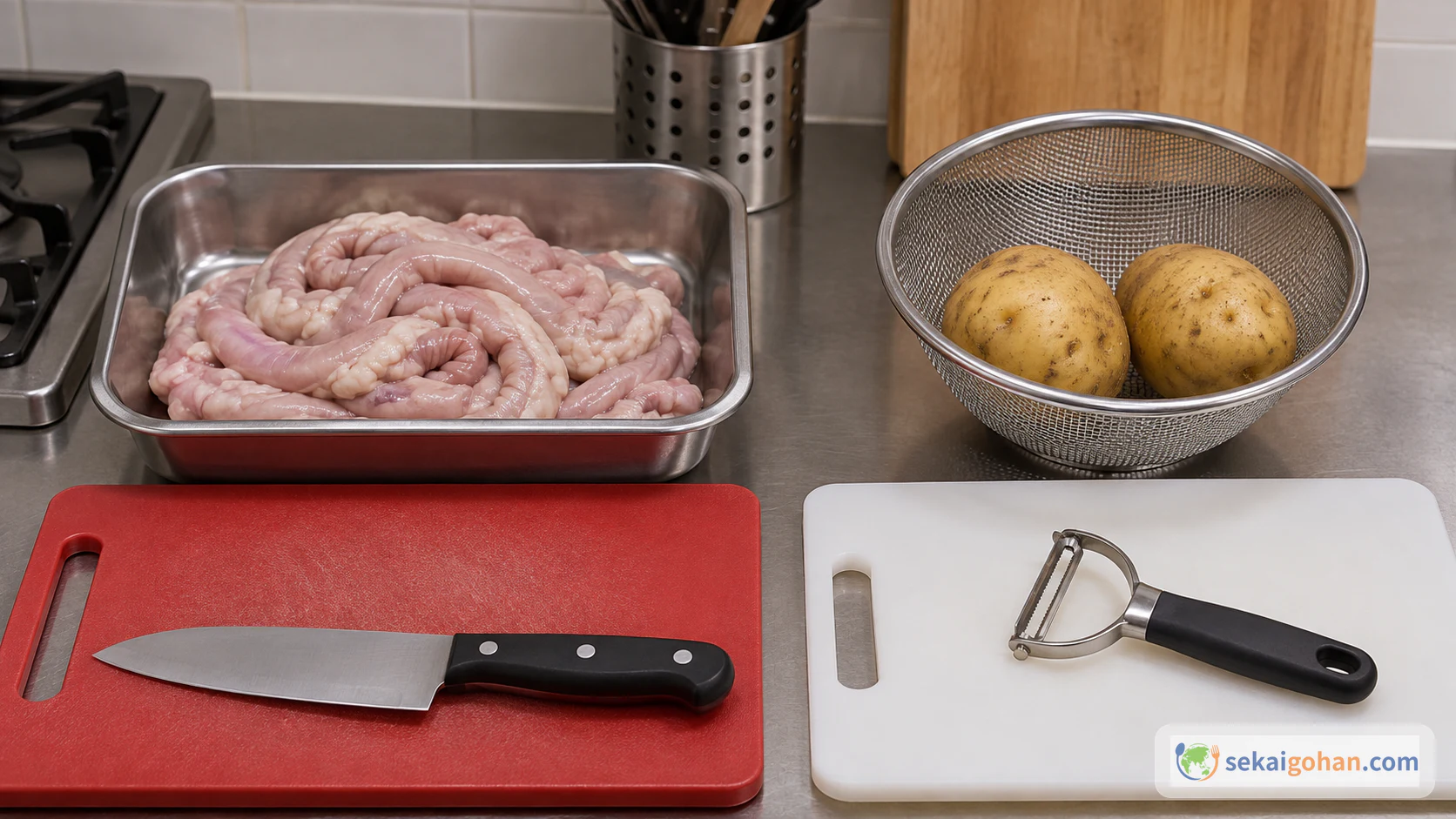
Equipment
- A large heavy skillet or grill pan
- Two cutting boards, one kept only for the raw intestine
- A sharp knife or kitchen scissors
- A tray and a mixing bowl for the raw intestine
- Tongs and a spoon
- A small dish for the saved filling
- A clean serving plate
Choosing and Substituting
Buy beef small intestine sold for cooking, from a Korean or Asian grocer or a butcher you trust. Look for the word gopchang or so-gopchang on the label, and ask for intestine that has already been cleaned where the shop offers it. Pork small intestine is a separate menu item and its own dish, so treat it as its own recipe. Daechang, makchang and yang are separate cuts and are not interchangeable here.
Use two everyday potatoes and Korean sesame oil (참기름). Green-onion kimchi can be found at Korean grocers; when you cannot find it, leave it out and the plate loses its sharp, sour counterpoint, while the intestine and potatoes stay the same.
The cut is the one thing to hold to. With beef small intestine, raw into the pan, and the potatoes sharing its fat, you have the dish; the kimchi is the part you can leave out.
Method
The work splits into a cold half and a hot half. Trim, rub and cut the intestine first, keeping everything raw on its own board, then wash up before the pan goes on. After that it is one long grill, with the potatoes in from the start and the kimchi added later at the edge.
Buy beef small intestine from a trusted butcher or grocer, keep it cold, and cook it the same day. Use a separate board and knife for it, keep it away from other food, and wash your hands, tools and surfaces after touching it. Never put the cooked pieces back on a plate that held raw intestine unless it has been washed. The soju rub is part of the preparation; it does not clean or disinfect the meat. Cook the intestine thoroughly, all the way through; colour and crispness show texture and are no proof of safety. Hot fat spits hard while the water cooks off, so keep your face and arms back from the pan.
The water that floods the pan is the intestine's own. Stirring constantly or tipping it away will not speed things up; steady heat cooks it off, and the browning starts only once the pan is dry.
When It Goes Wrong
| What you see | Why | What to do |
|---|---|---|
| The pan fills with liquid and nothing browns | The intestine is releasing its water | Keep cooking until it evaporates; browning begins when the pan is dry |
| Filling pours out of the pieces | The tube tore during trimming | Spoon the filling into the small dish and keep it for the end; trim more gently next time |
| The intestine is rubbery and pale | It came off the pan too early | Return it to the heat and keep grilling until browned and crisp on every side |
| Fat spits out of the pan | Water and hot fat meet as the liquid cooks off | Step back, use long tongs and keep the pan away from the edge of the stove |
Serving and Variations
At the table
Gobchang gui goes to the table hot, straight from the pan, with the grilled green-onion kimchi alongside to cut the fat. Eat it while the outside still crackles.
Variations
- Finish with fried rice. Once the grilling is done and everything is cooked, the green-onion kimchi and the saved gop go into the hot pan with rice. The rice picks up the fat and the richness of the filling, and the meal ends in the same pan.
- Skip the kimchi. The plate becomes plainer and richer, all fat, potato and chew, with nothing sour to break it up.
The filling you spoon aside is the richest part of the dish. Keep it in its dish next to the stove rather than letting it burn on the pan floor.
Frequently asked questions
Do I have to boil the intestine first?
This version goes into the pan raw with no pre-boil and cooks from start to finish in the skillet. The long grill is what cooks it through and gives it chew. Give it the full time in the pan, well past the first browning.
Does the soju clean the intestine?
The soju rub is part of the preparation, and it is not a way to clean or disinfect the meat. Safe handling comes from buying from a trusted butcher, keeping it cold, keeping it apart from other food and cooking it thoroughly.
Can I use daechang or pork intestine instead?
You can grill them, but you get a different dish. Daechang is beef large intestine and pork small intestine is another animal, and each has its own texture and its own place on a Korean menu. For gobchang gui, buy beef small intestine.
Where do I find beef small intestine outside Korea?
Try Korean or other Asian grocers or a butcher you trust. Look for gopchang or so-gopchang on the label and choose intestine that has already been cleaned where it is offered.