Hanabiramochi: A Half-Moon of White Gyuhi Hiding Pink, Ivory and Burdock
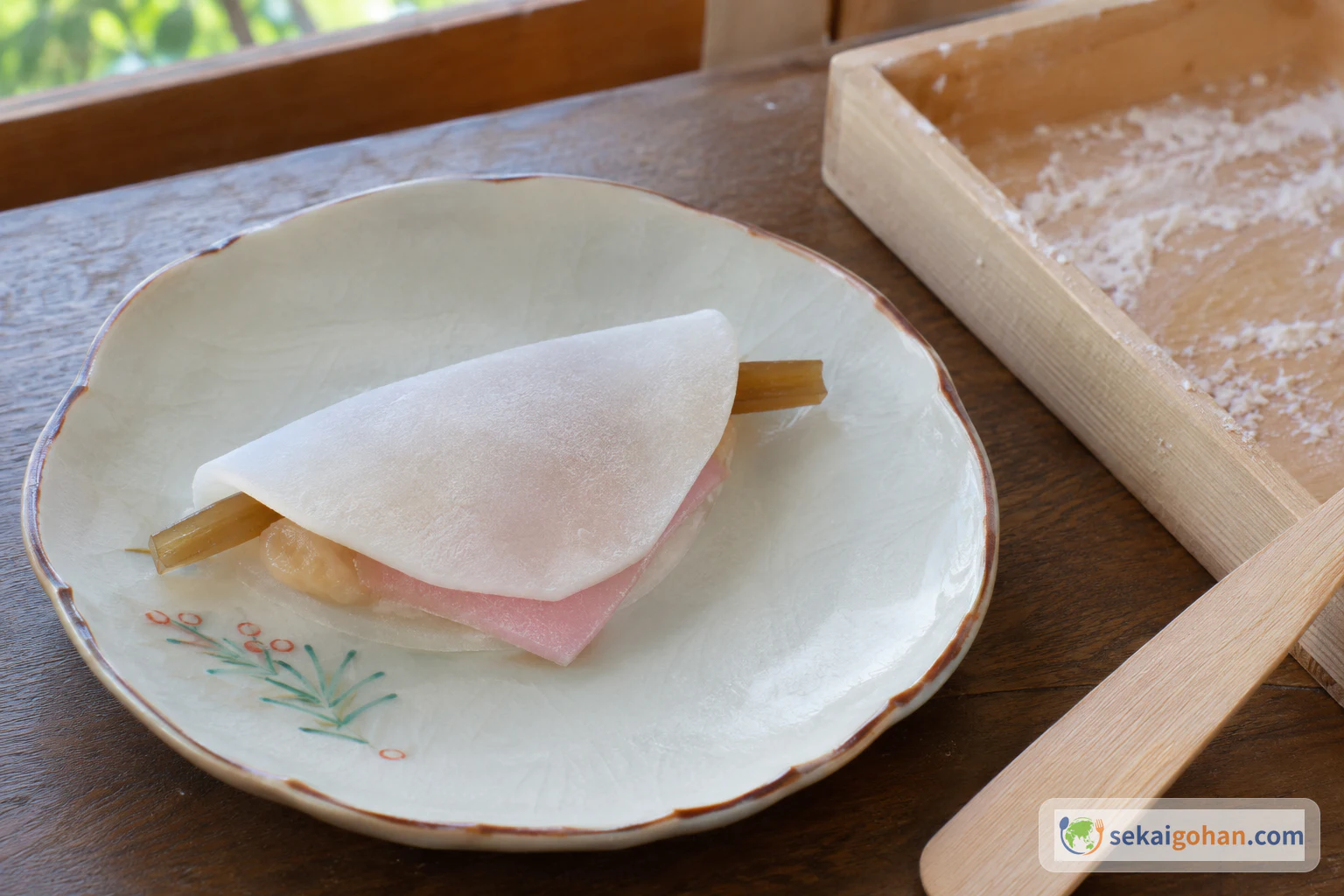
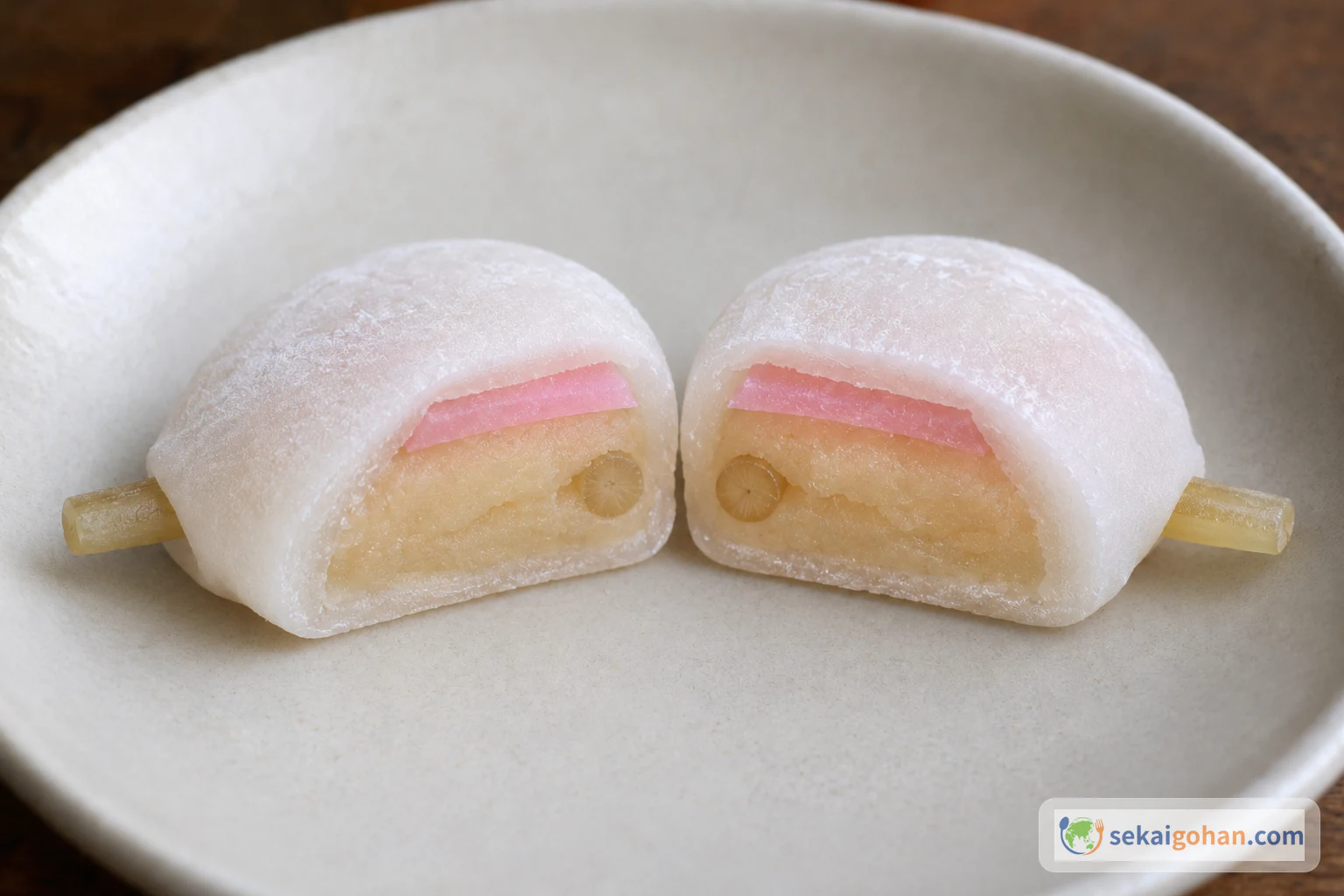
A soft white oval folded into a half-moon, a pale pink square showing through like a diamond, a sweet-salty white miso filling, and one slender strip of candied burdock running through the middle.
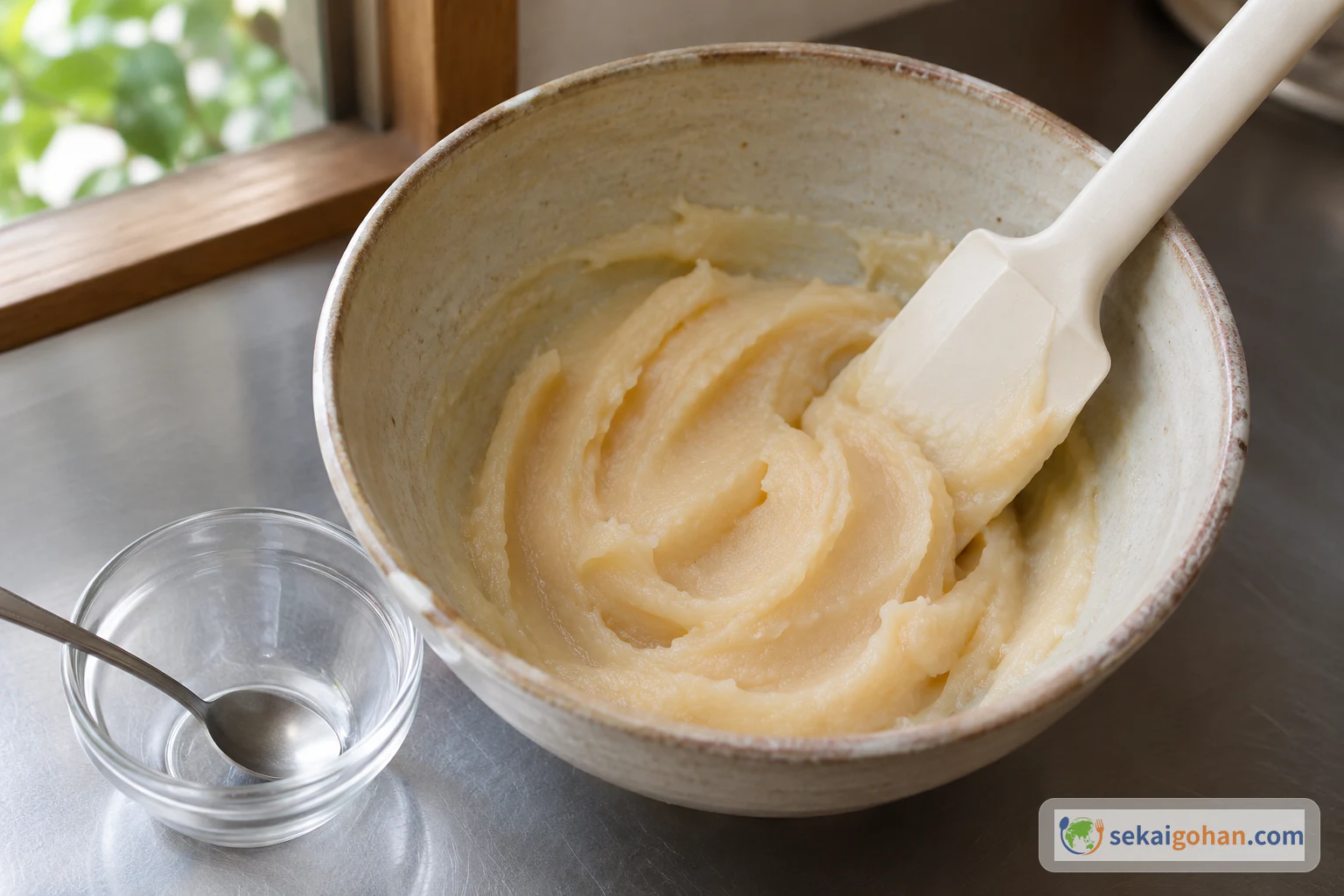
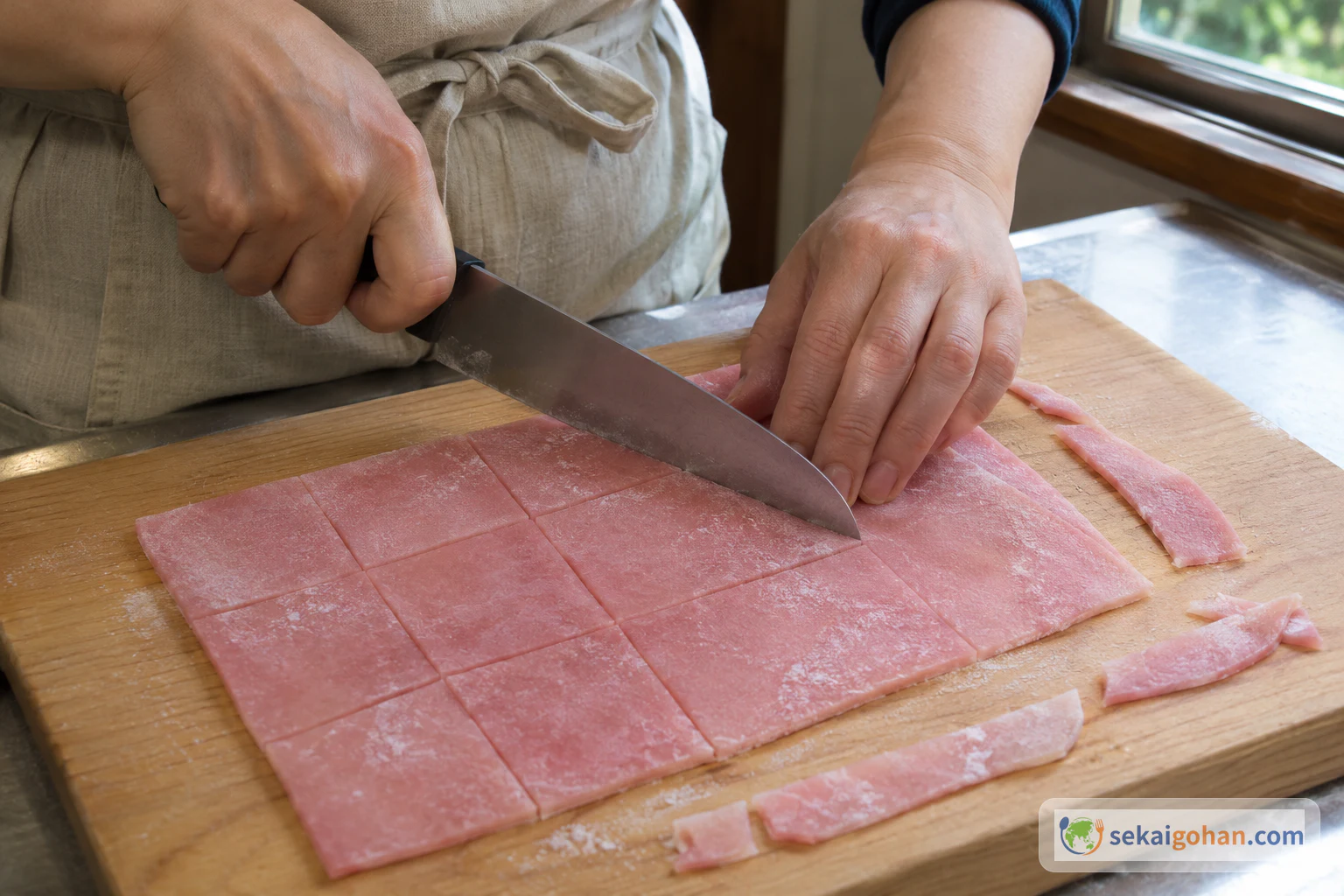
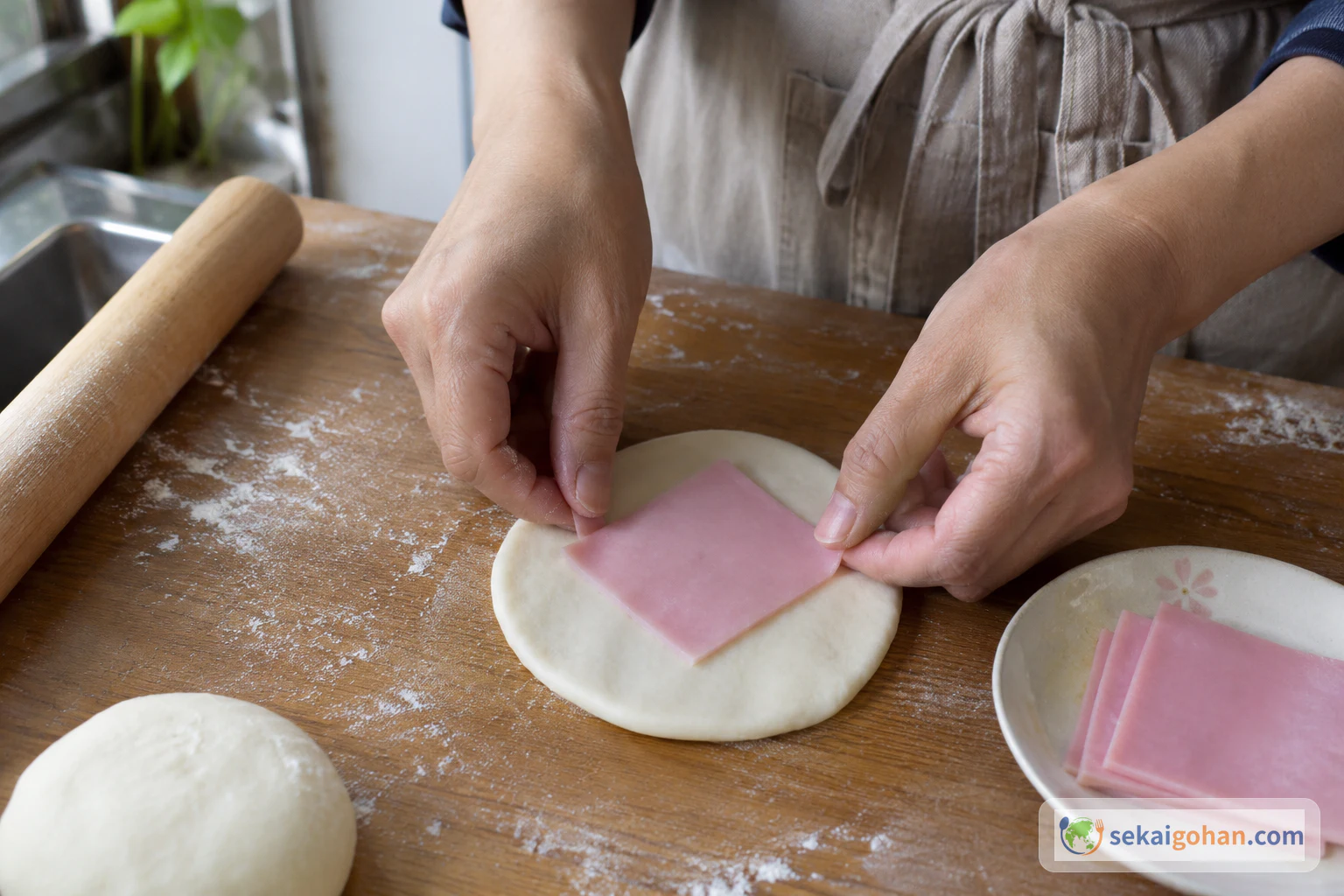
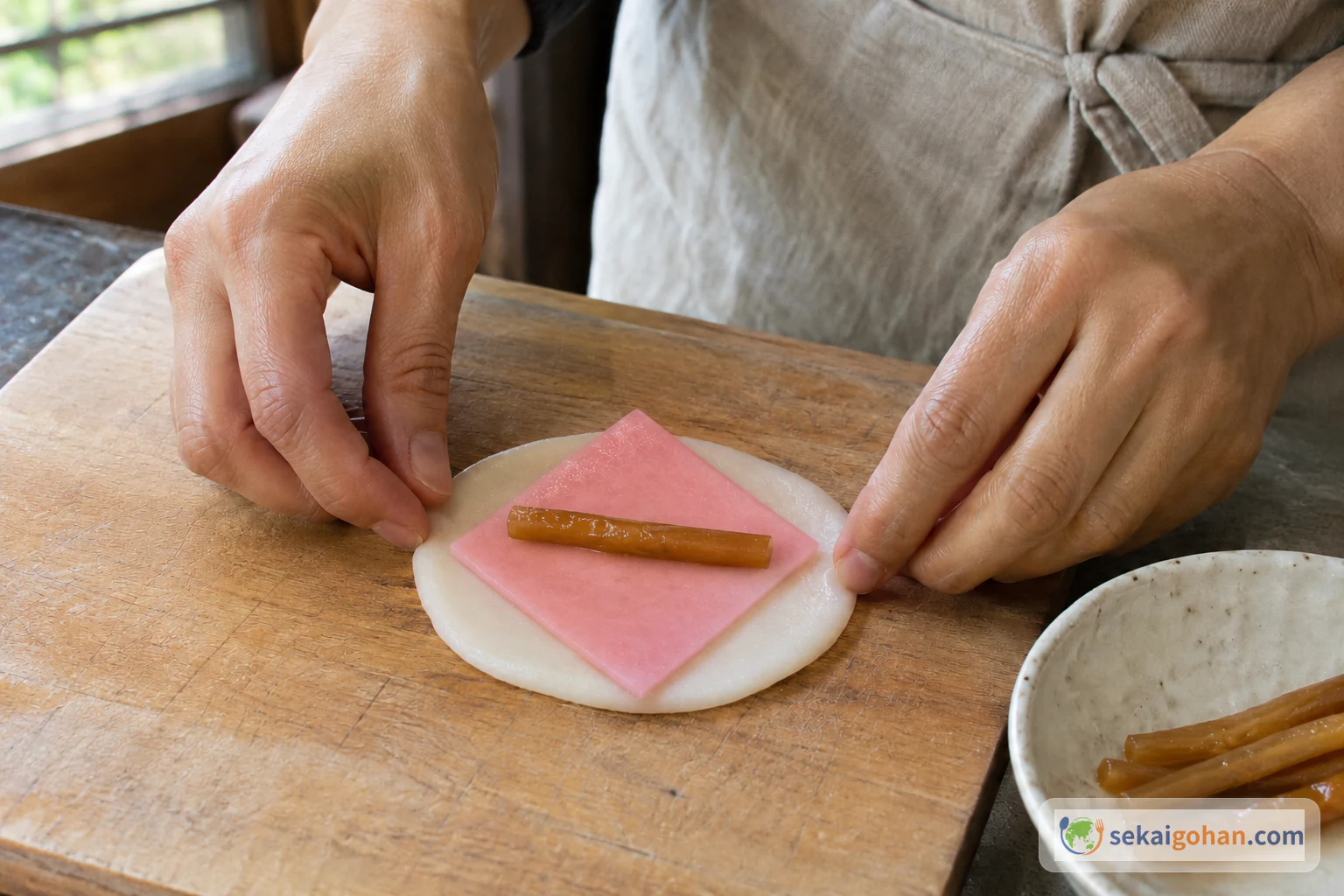
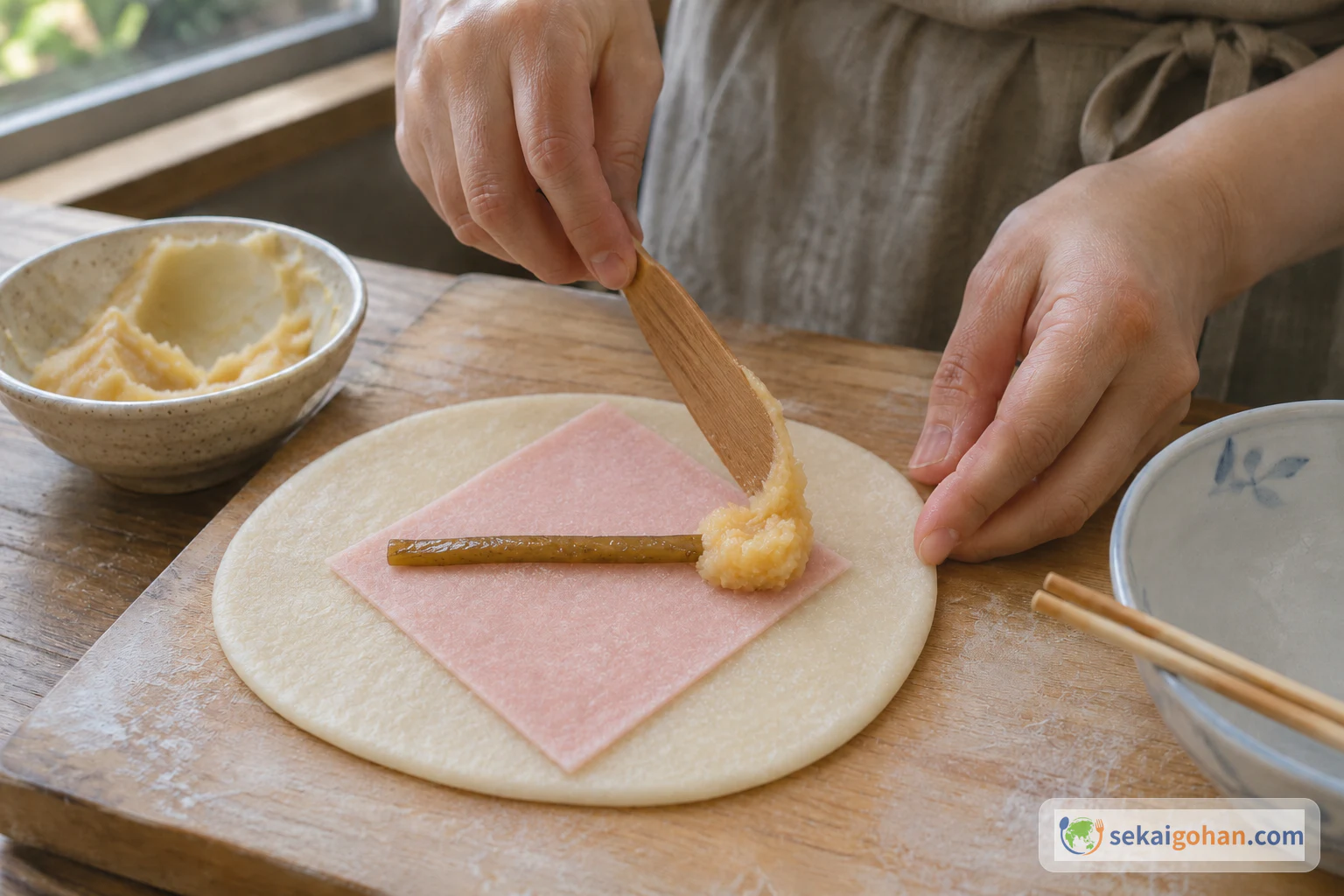
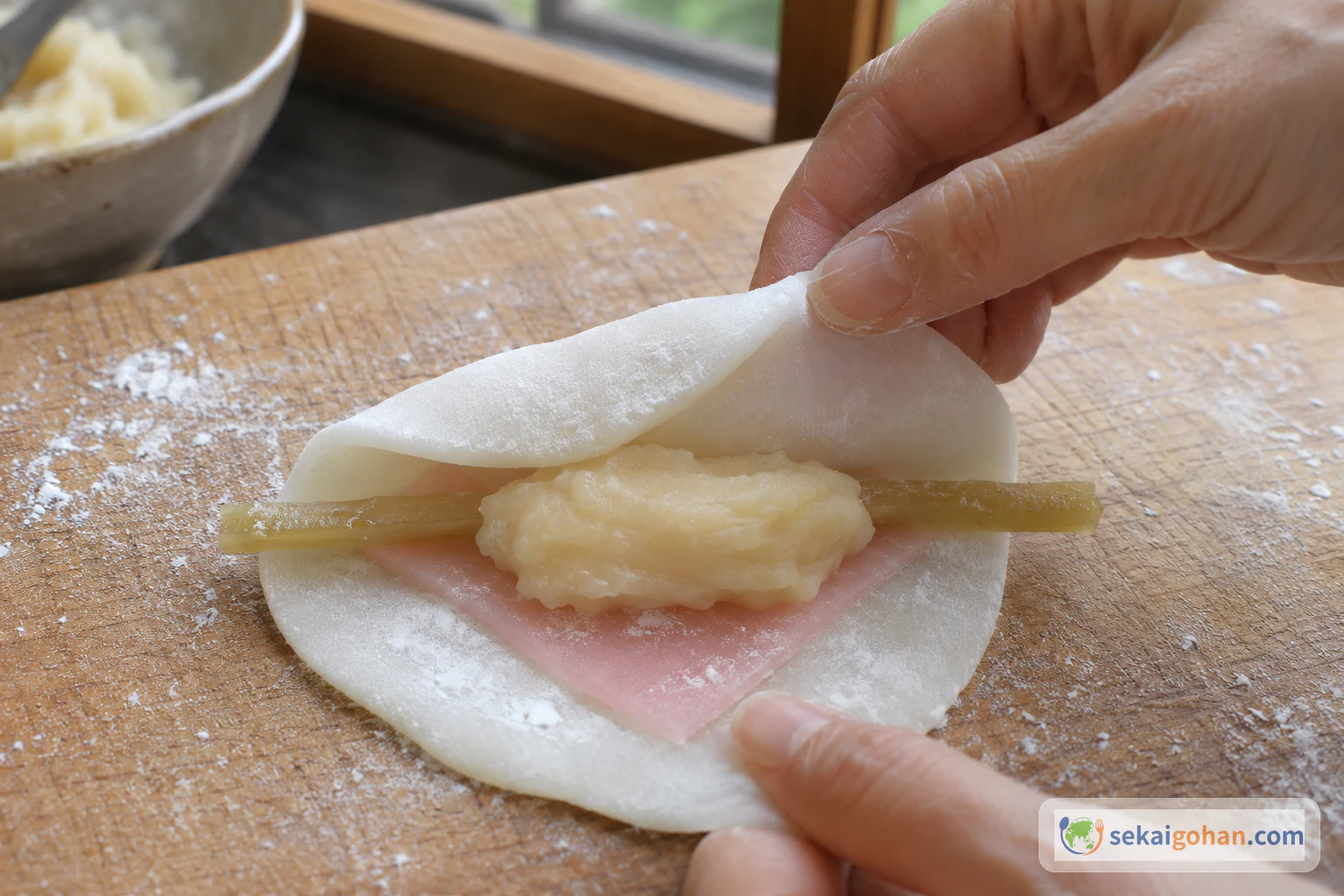
Hanabiramochi (花びら餅, "petal mochi") is a January sweet. A thin white oval of soft rice dough is folded in half over a pale pink layer, a mound of bean paste blended with white miso, and a strip of burdock root simmered in sugar syrup. Where the fold closes, the pink shows faintly through the white, and the ends of the burdock peek out on either side. The filling is sweet, with the gentle saltiness of white miso underneath.
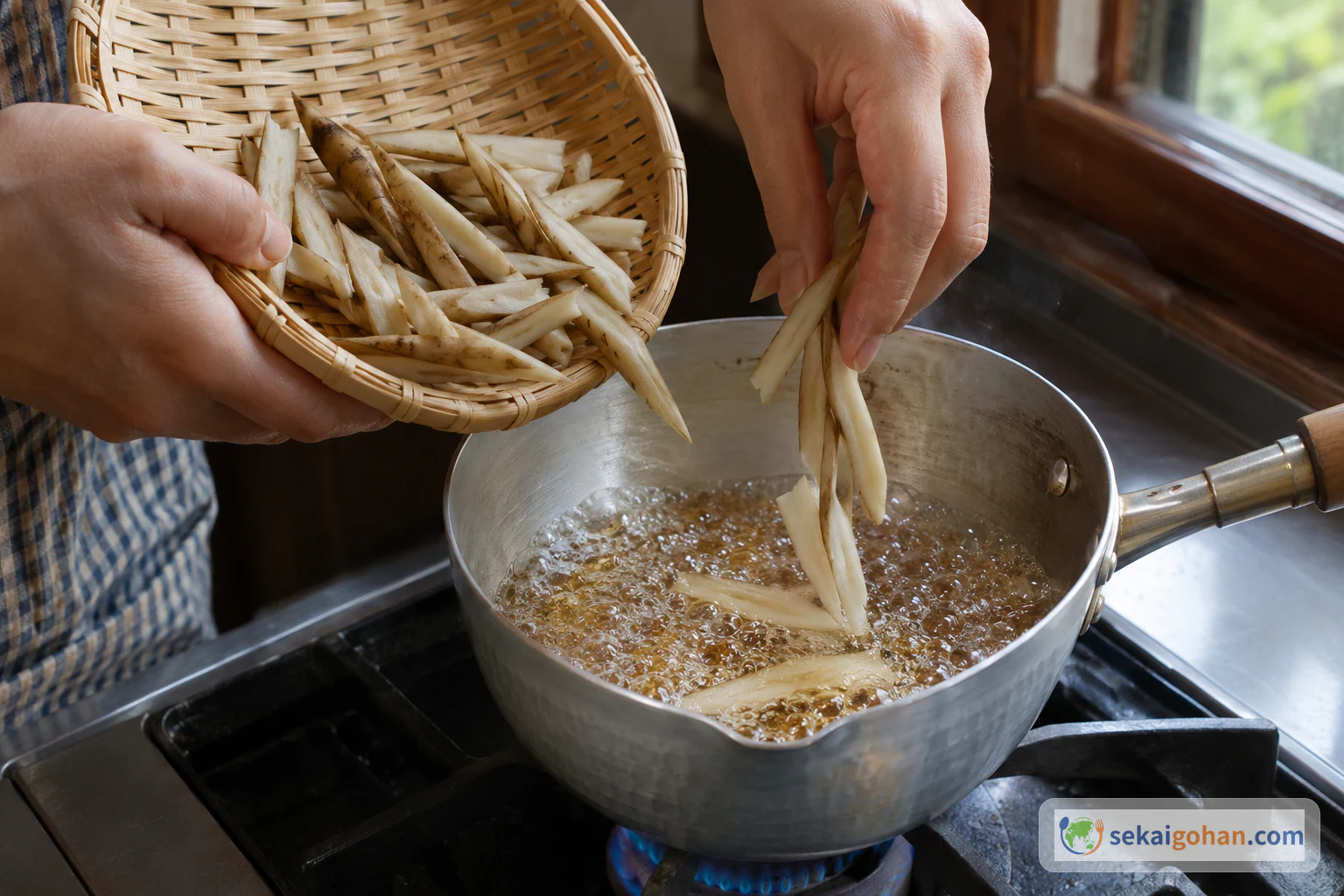
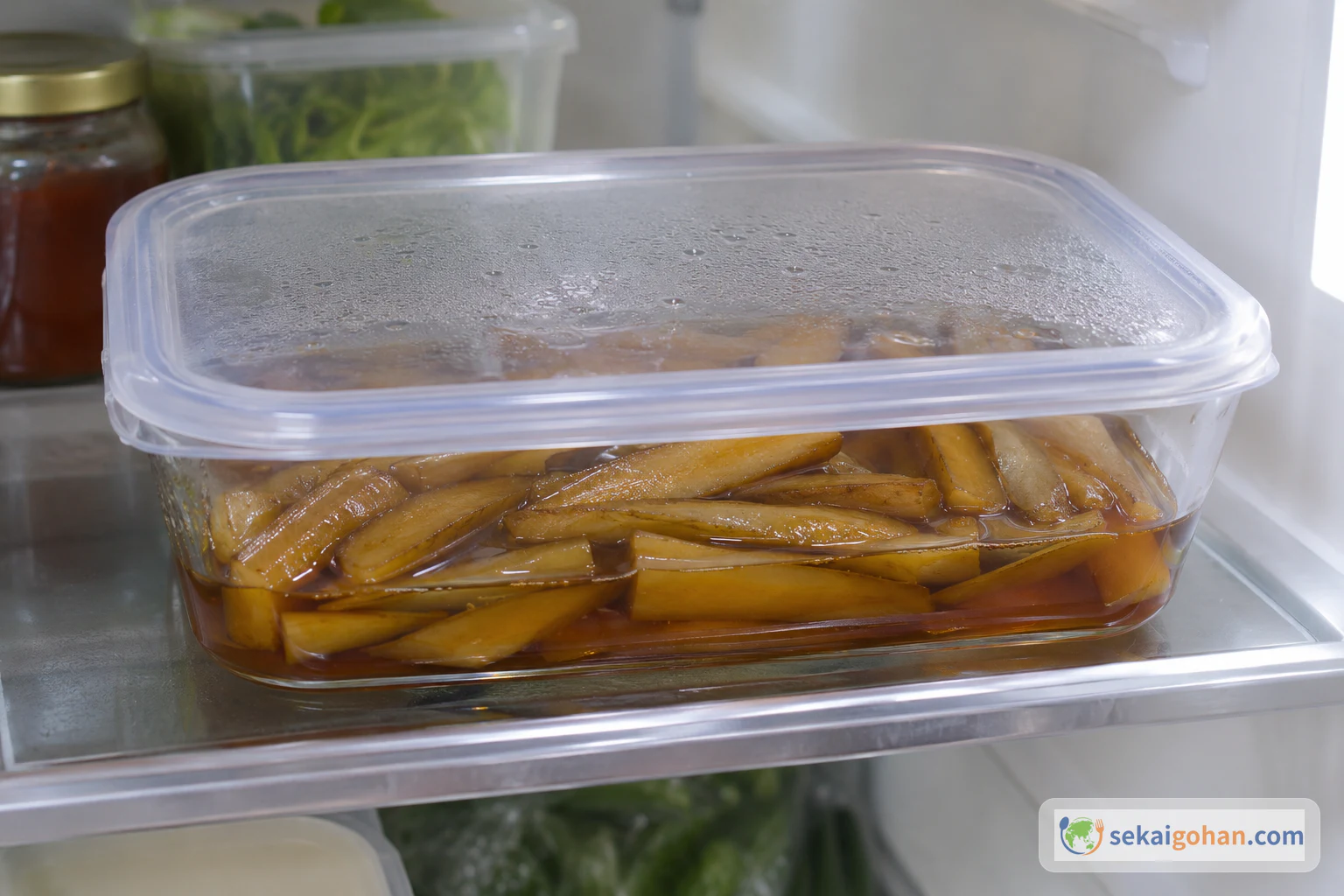
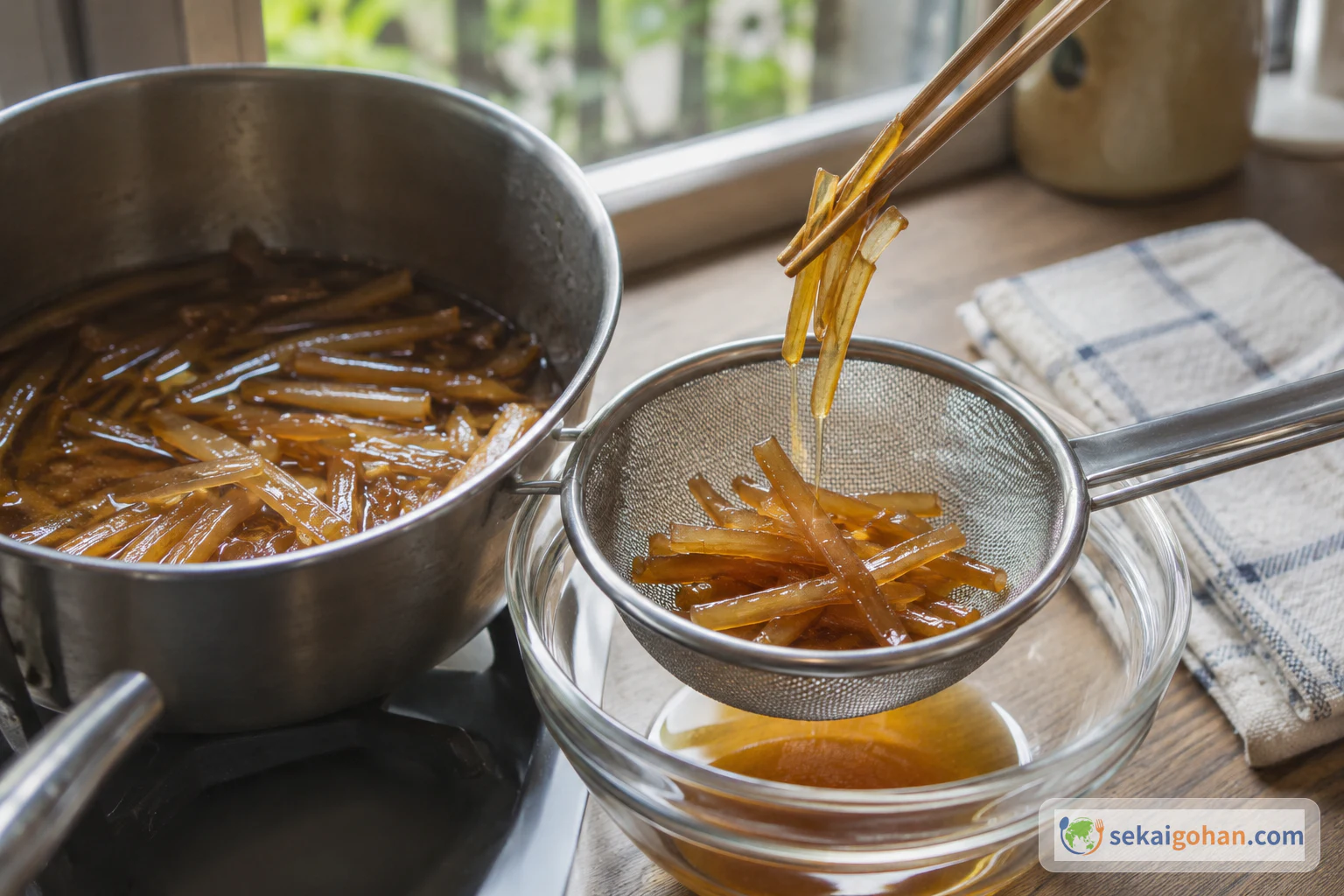
This article makes six pieces in the home-kitchen gyuhi style, with the dough cooked in a 500W microwave. It follows the six-piece hanabiramochi recipe by Chie Nishikawa published by Tomiz (富澤商店), a Japanese baking-supply retailer. Two editorial choices differ from that recipe as printed. The filling uses the white miso amount from the recipe page's own note (about 20g of white miso to 100g of white bean paste) rather than the 8g of miso listed in the basic ingredients. And the candied burdock, which steeps overnight, is cooled promptly, covered and refrigerated, following general food-safety guidance from Japan's Ministry of Agriculture, Forestry and Fisheries. The recipe page itself does not say how or where to keep the burdock overnight.
This recipe has not been kitchen-tested by Sekai Gohan.
Plan for two days. The burdock goes into its syrup the day before, and the filling, dough and assembly happen on the day you serve.
This is a recipe for six pieces, not six servings. Measure the two 60g portions of sugar separately: one is for the burdock syrup and one is for the dough.
Hanabiramochi Belongs to New Year and the First Tea of the Year
According to the City of Kyoto's page on Kyoto confectionery culture, hanabiramochi takes its form from food served at New Year ceremonies of the imperial court. It is a January sweet of miso bean paste and sugar-simmered burdock enclosed in white mochi. It is used at hatsugama (初釜), the first tea gathering of the year in the tea ceremony, and after the Second World War it spread more widely as a New Year sweet.
The confectioner Toraya describes its hanabiramochi as modeled on the court's hishihanabira (菱葩), and lists its parts as a round sheet of mochi, an azuki-colored diamond of mochi, burdock cooked in syrup, and miso bean paste. Toraya's own products also show a regional split: in the Kanto and Chubu regions they make it with mochi, and in the Kinki region with gyuhi, a softer cooked rice-flour dough. This recipe makes one home version of the gyuhi style. It is not the only form, and shops and regions make it differently. The details of the court ceremonies and an exact date of origin are not settled here.
For more dishes from the same country, see Japan.
Ingredients for 6 Pieces
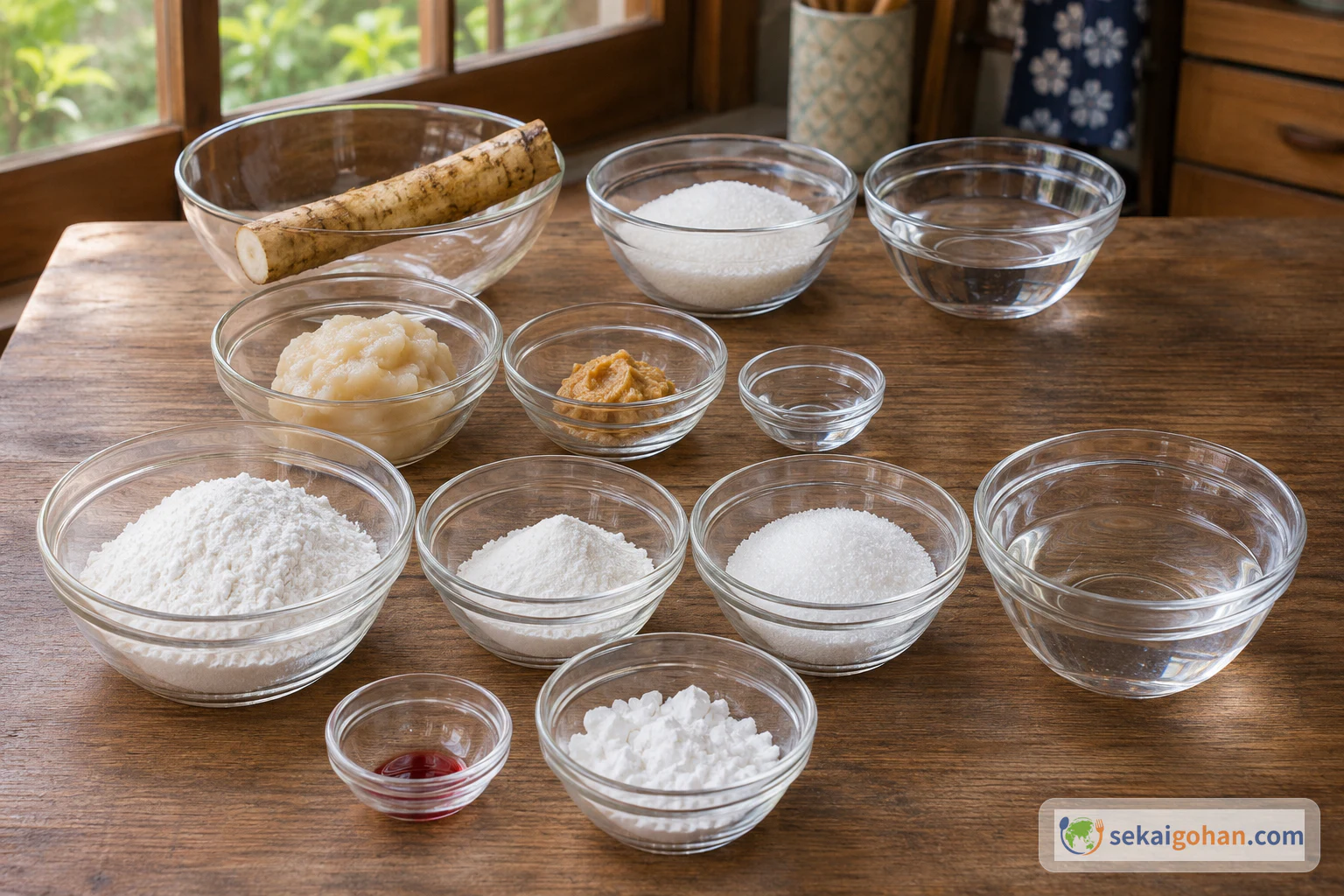
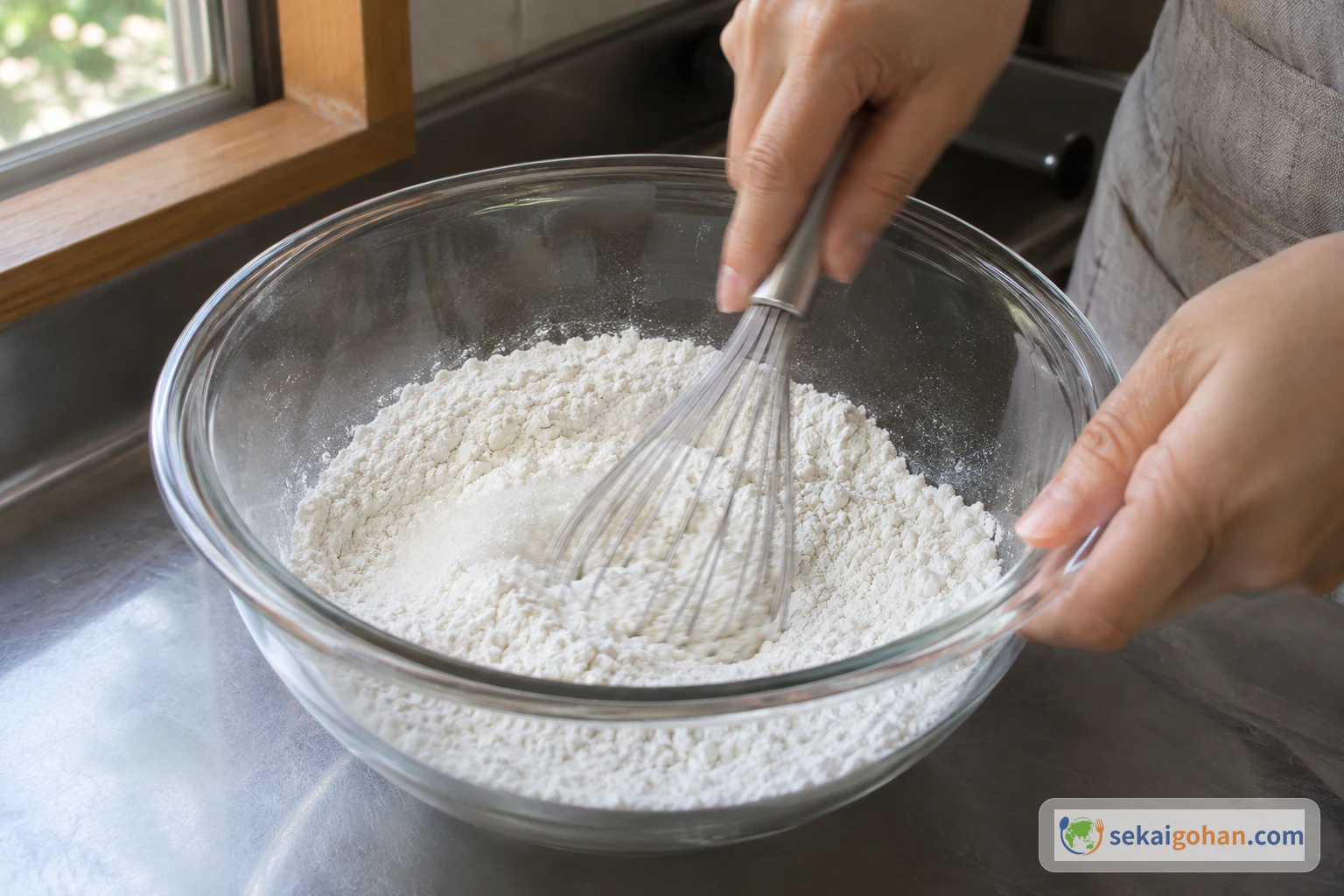
The ingredients fall into three parts: the candied burdock, the white miso filling and the gyuhi dough.
Equipment
- Microwave with a 500W setting
- Heat-safe bowls
- Rubber spatula or wooden spatula
- Small saucepan for boiling the burdock and making the syrup
- Clean, shallow container with a lid, or plastic wrap
- Small strainer
- Cutting board and knife
- Rolling pin
- Pastry brush
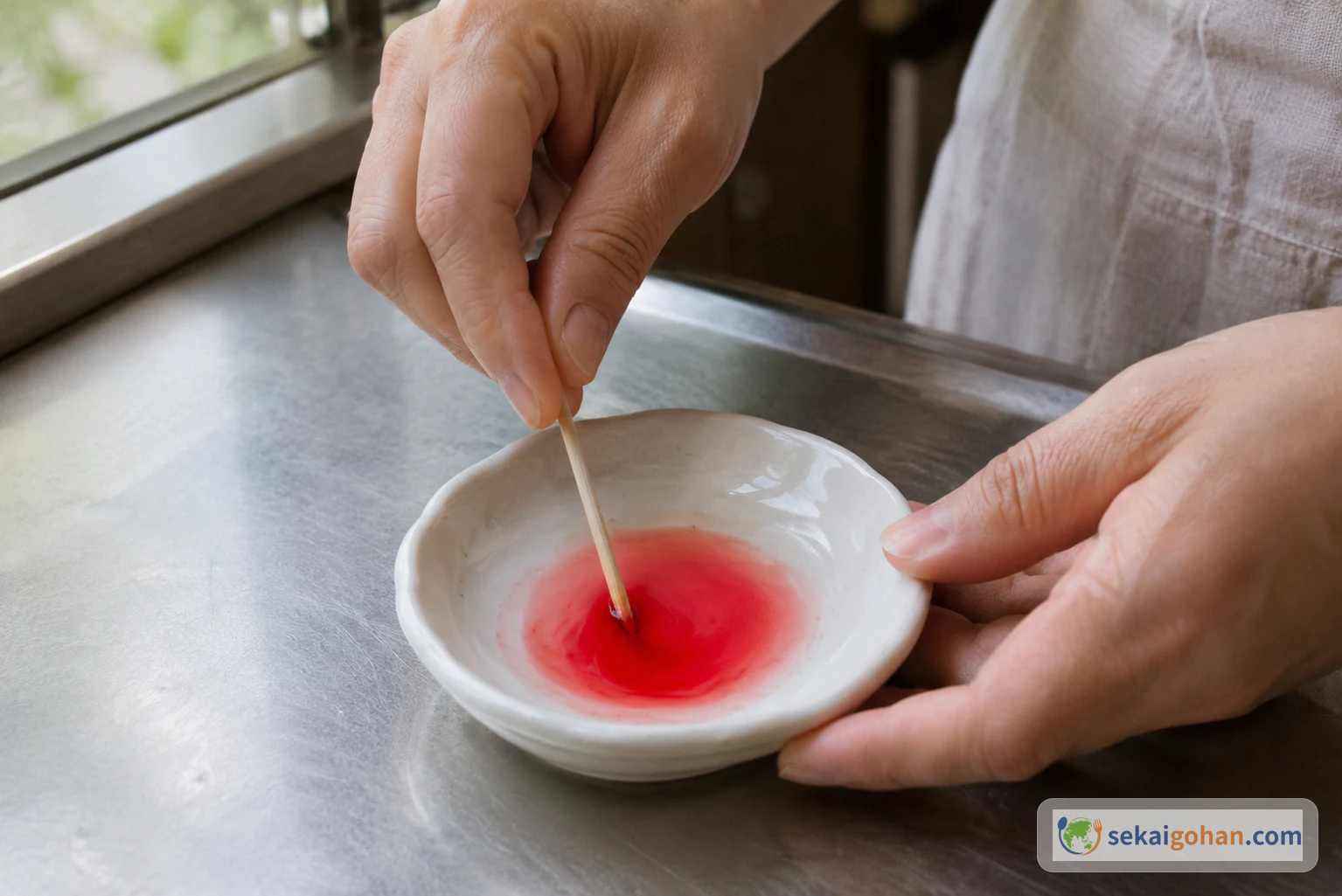
- Small dish for dissolving the coloring
Choosing and Substituting
Hiyoku mochiko is a type of glutinous rice flour. Products differ in name and grain size, so it should not be quietly swapped for shiratamako. If you cannot find it, general glutinous rice flour (mochiko) is the closest candidate to look for. However, grain size and how much water it absorbs can differ, and an equal-weight swap has not been tested. The same goes for shiratamako: an equal-weight swap is not established.
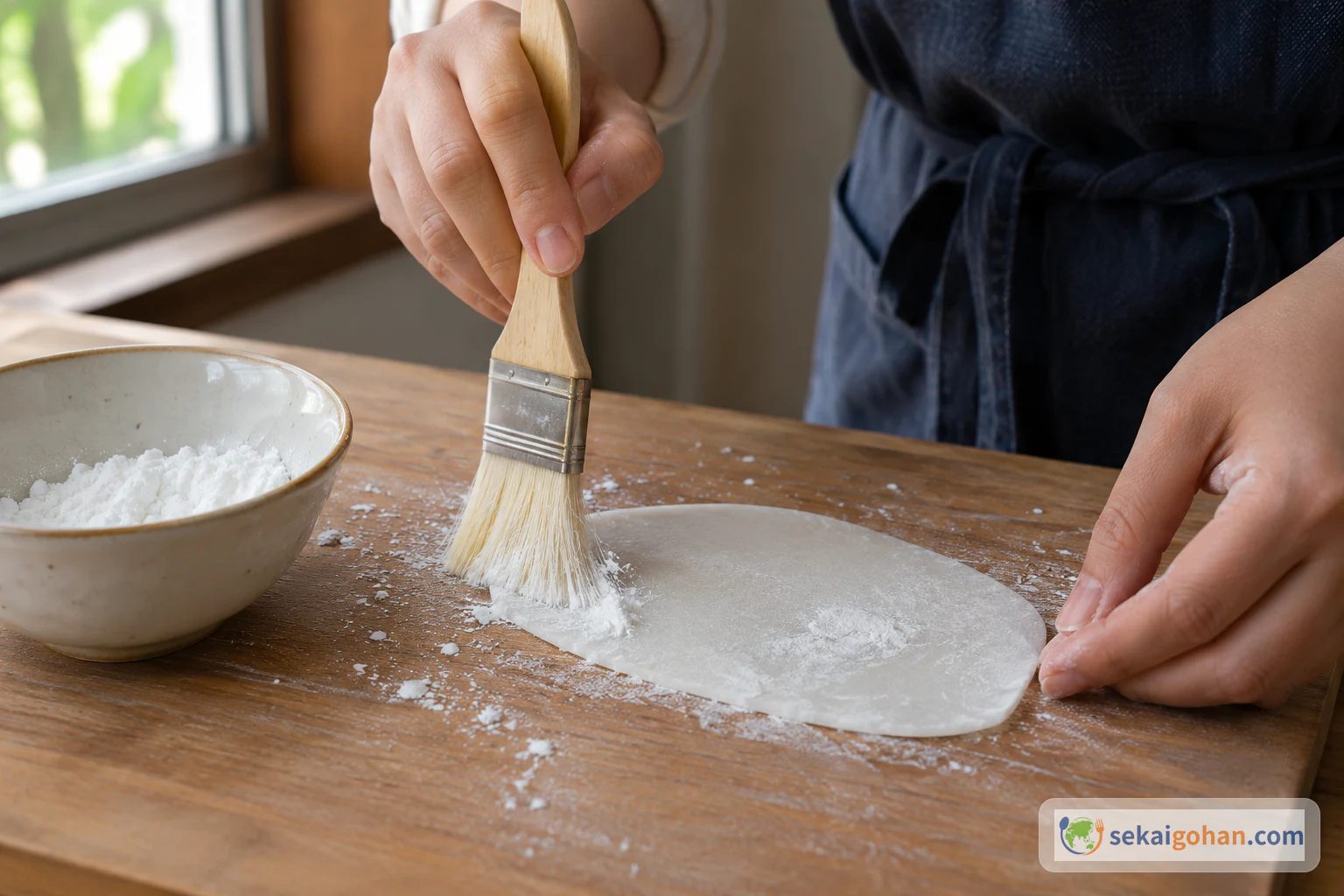
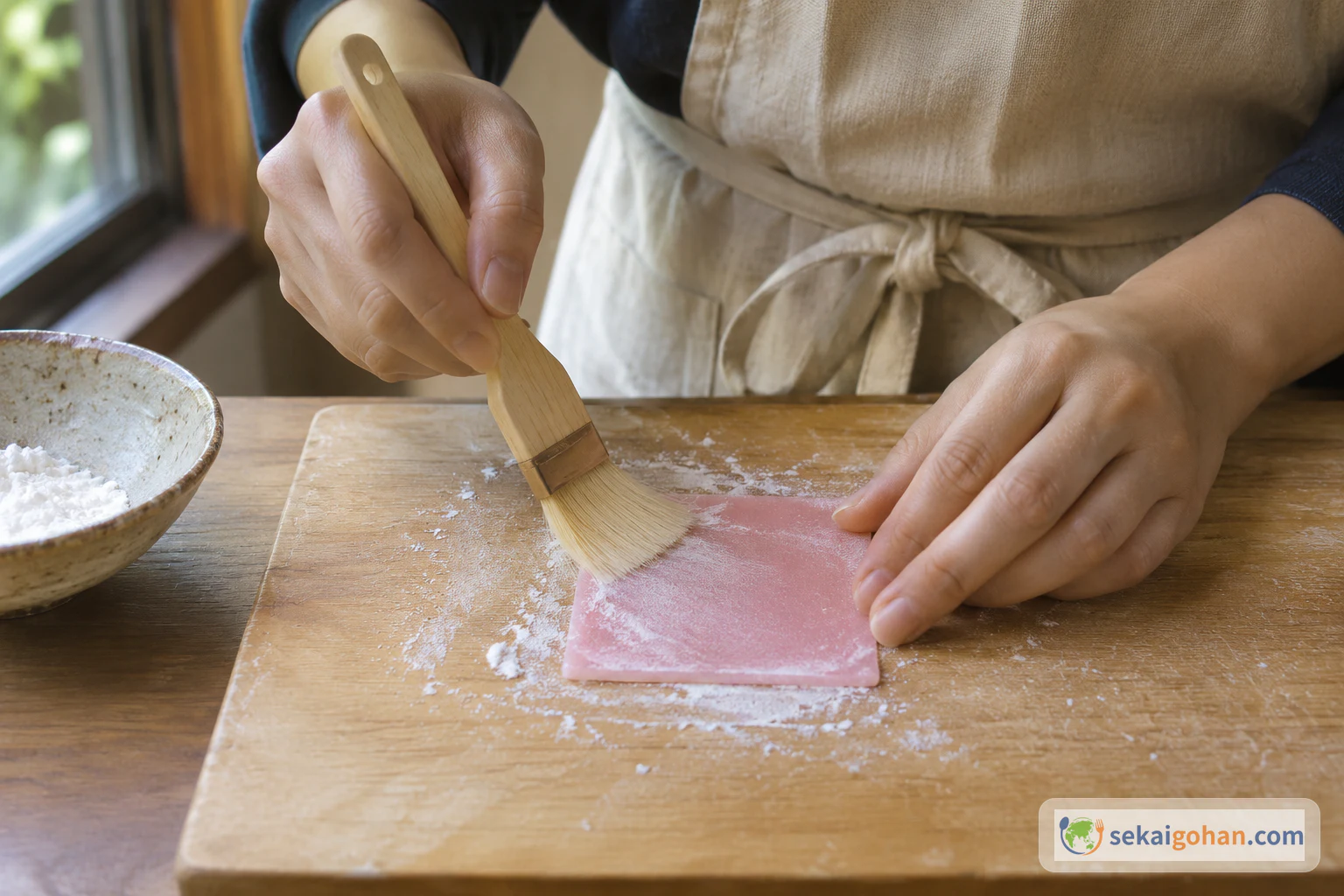
Joshinko is non-glutinous rice flour. White bean paste is smooth paste made from white beans. Products differ in sweetness, so no specific brand is recommended. White miso should be a sweet, pale white miso; Saikyo-style white miso is close. Potato starch is for dusting only and is brushed off before shaping. Use a red coloring sold for food, and follow its label.
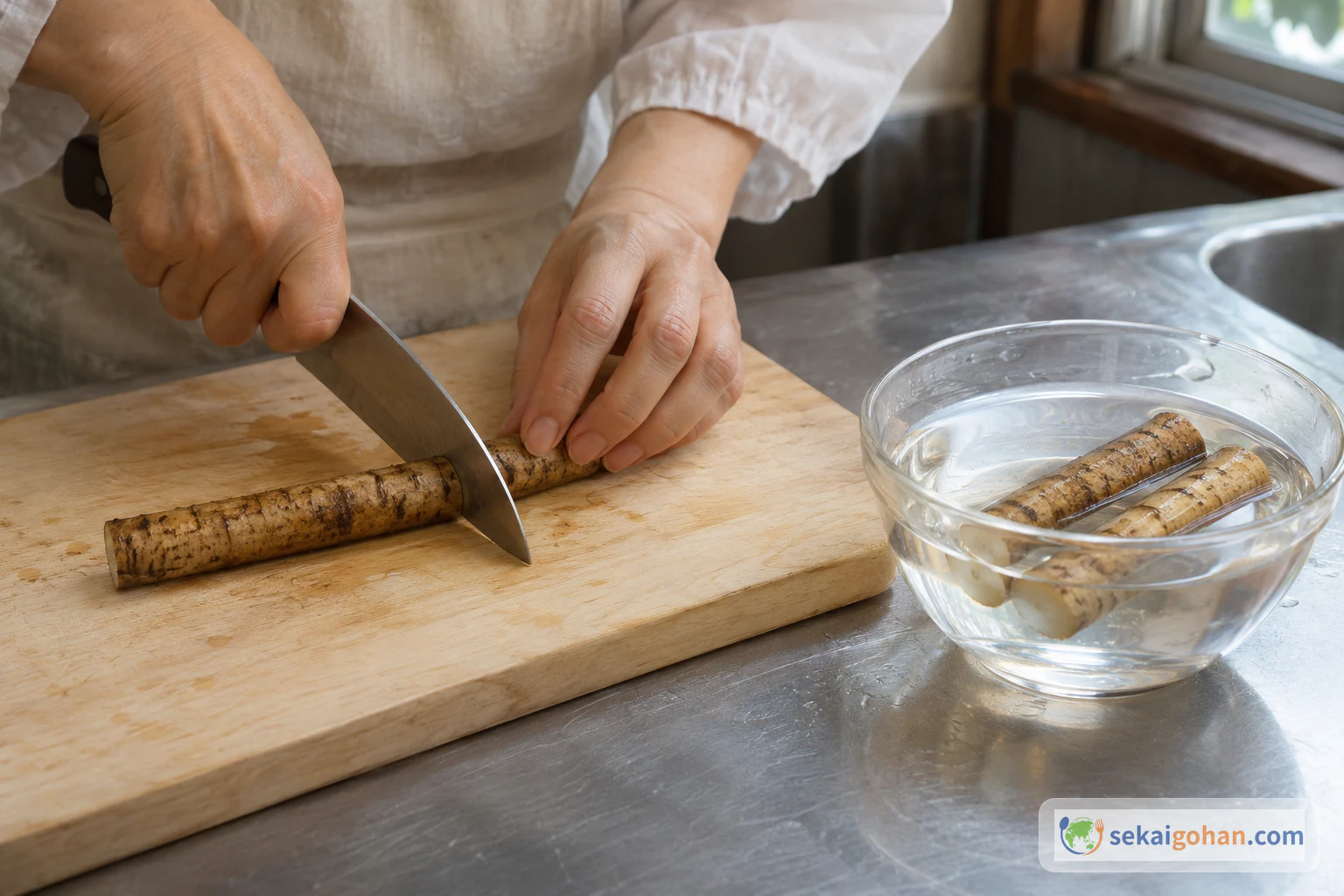
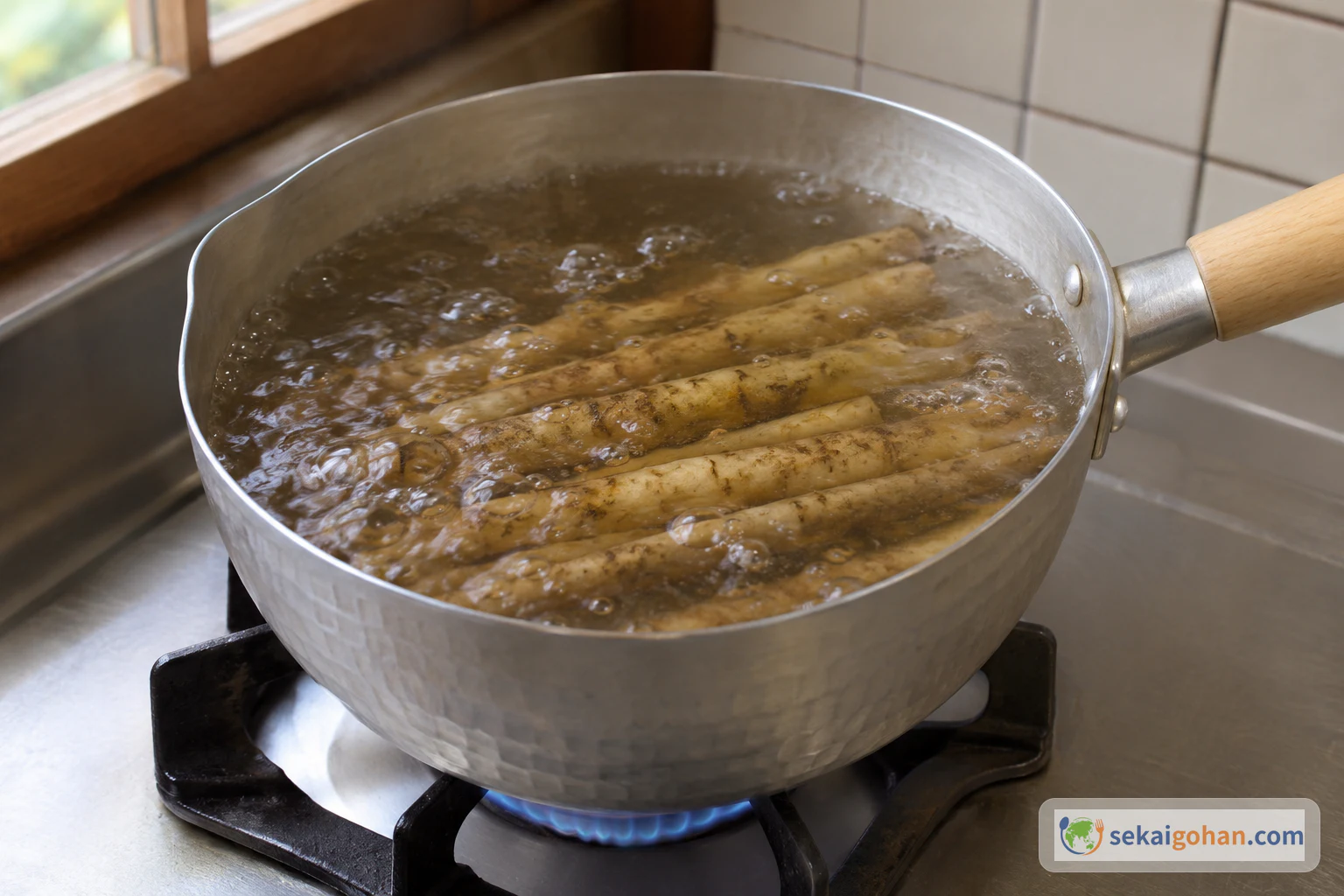
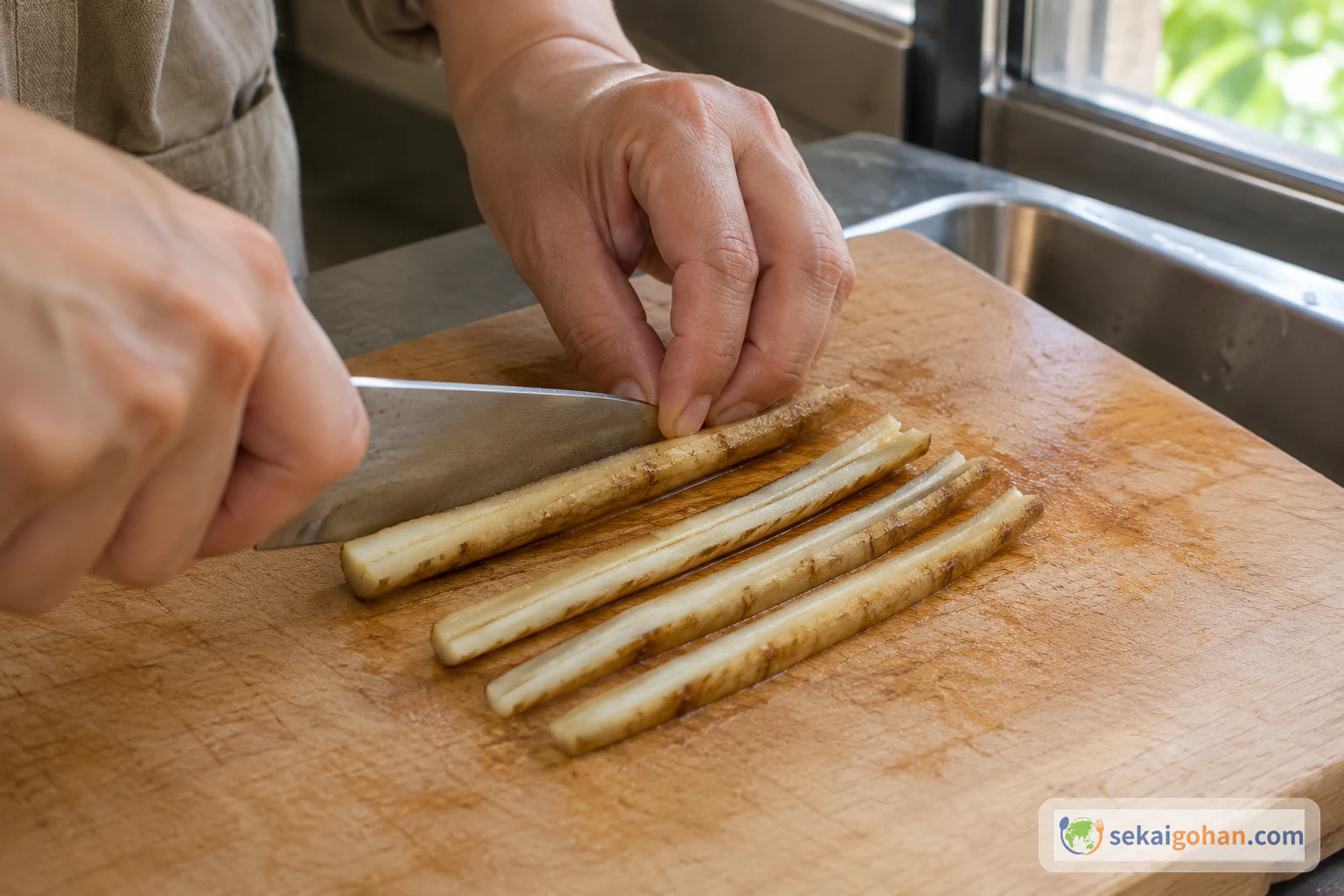
Method: Candied Burdock the Day Before, Filling and Dough on the Day
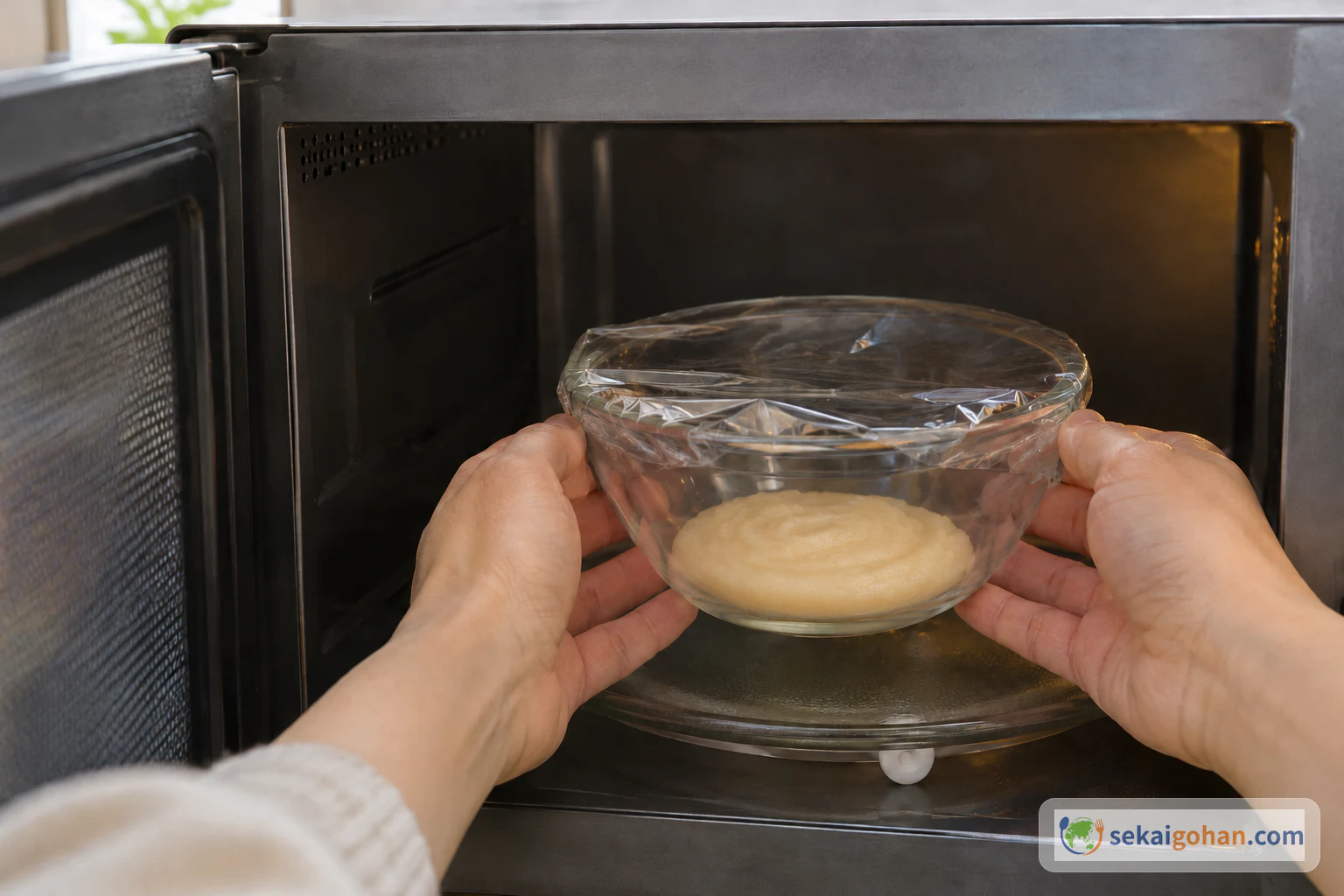
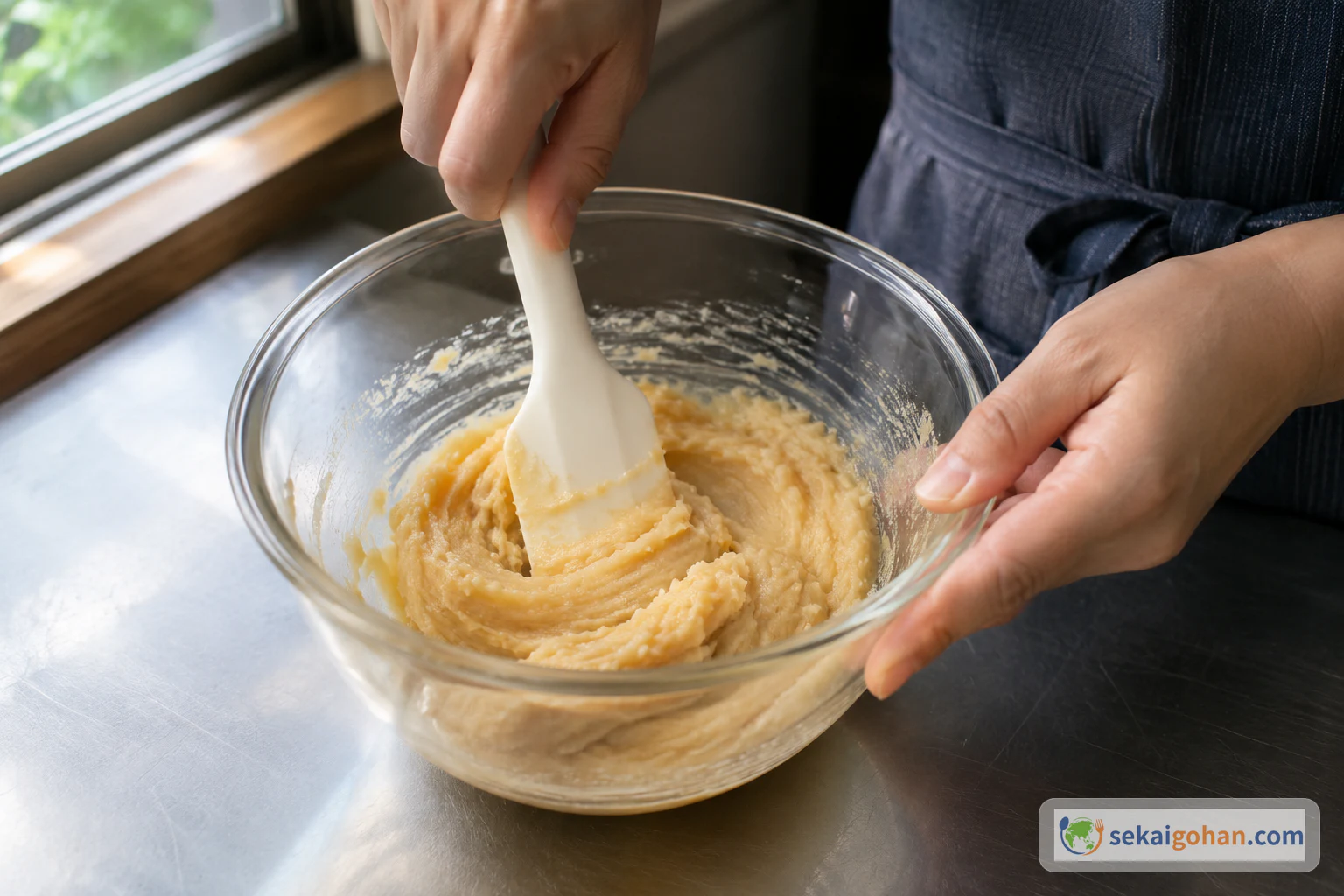
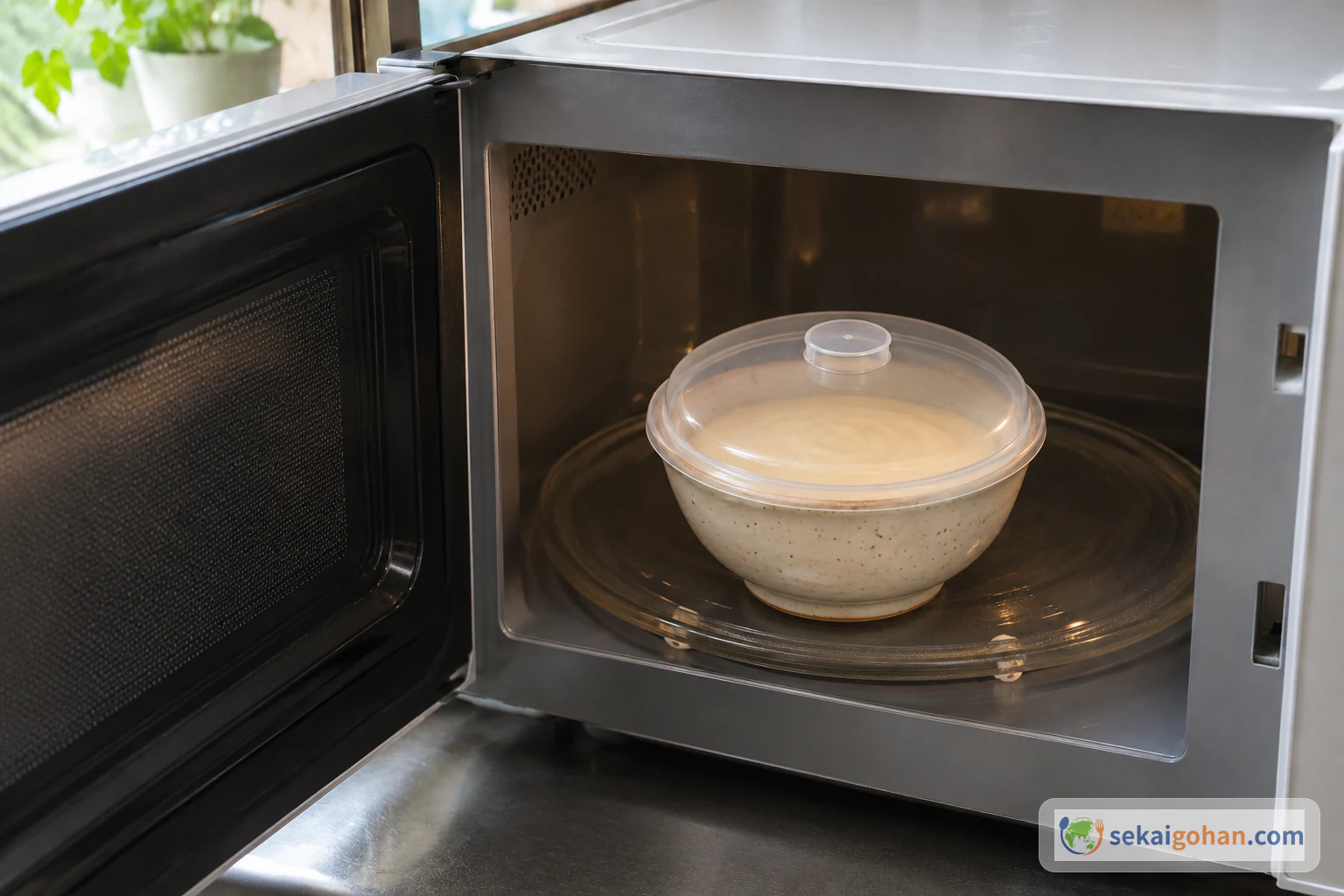
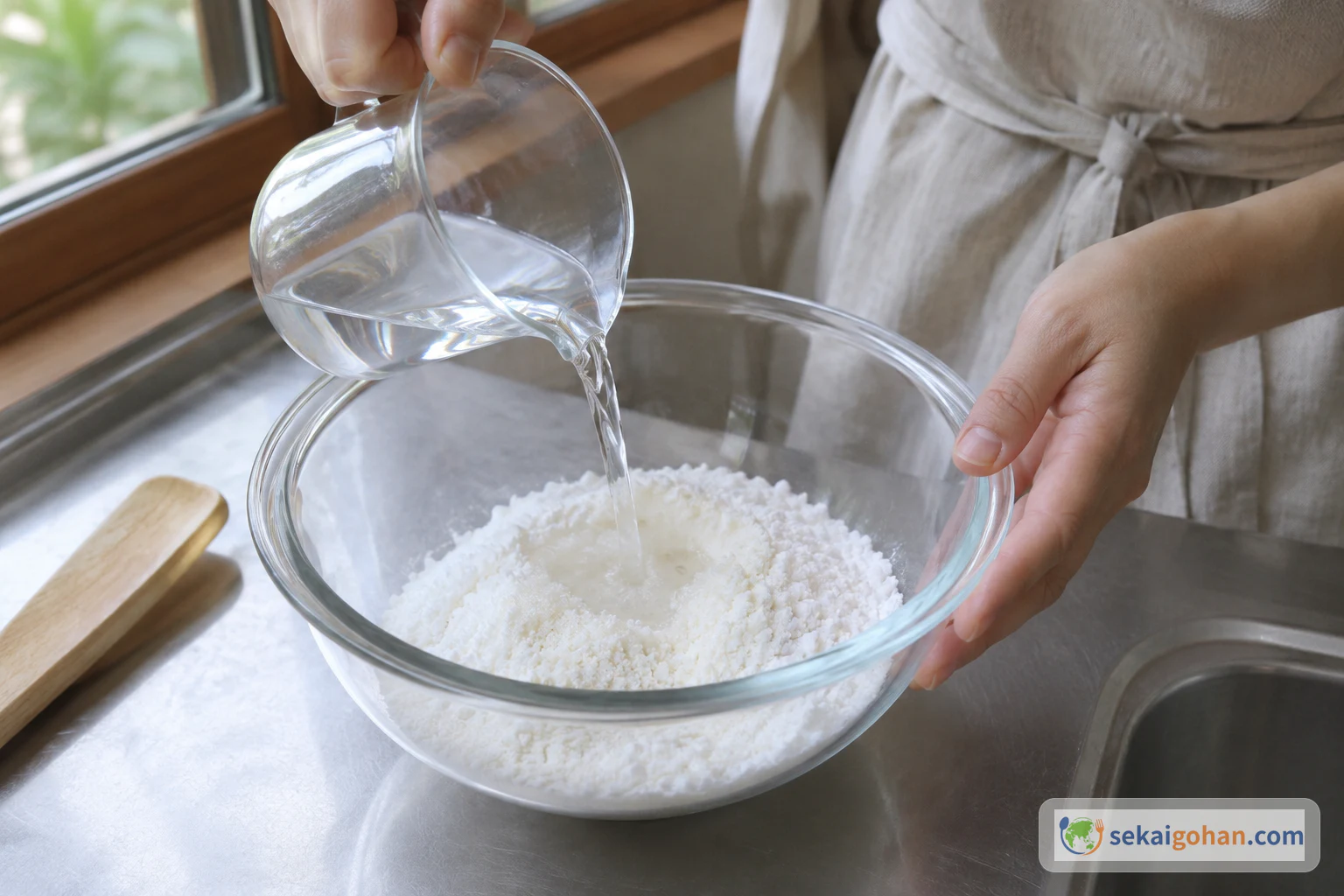
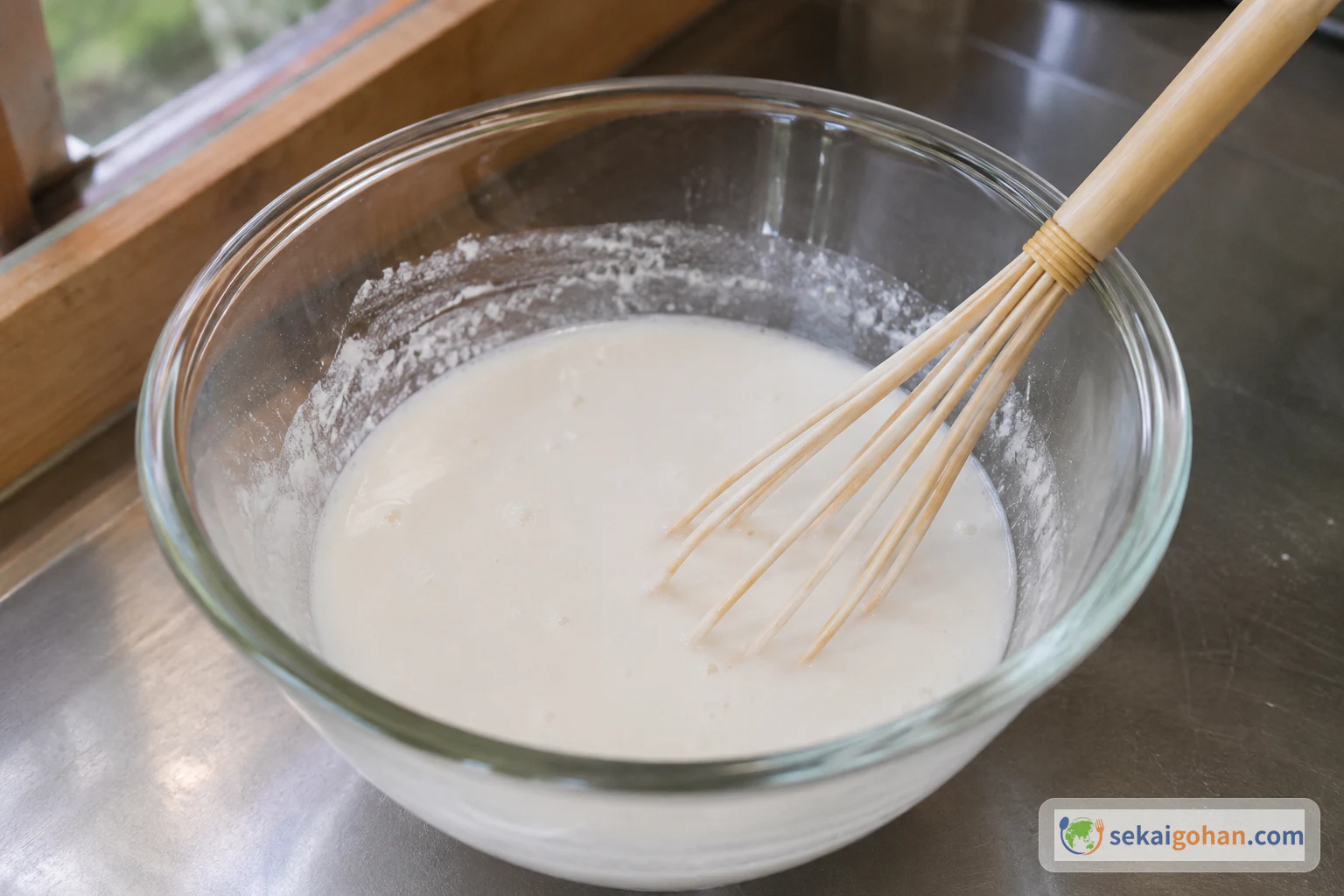
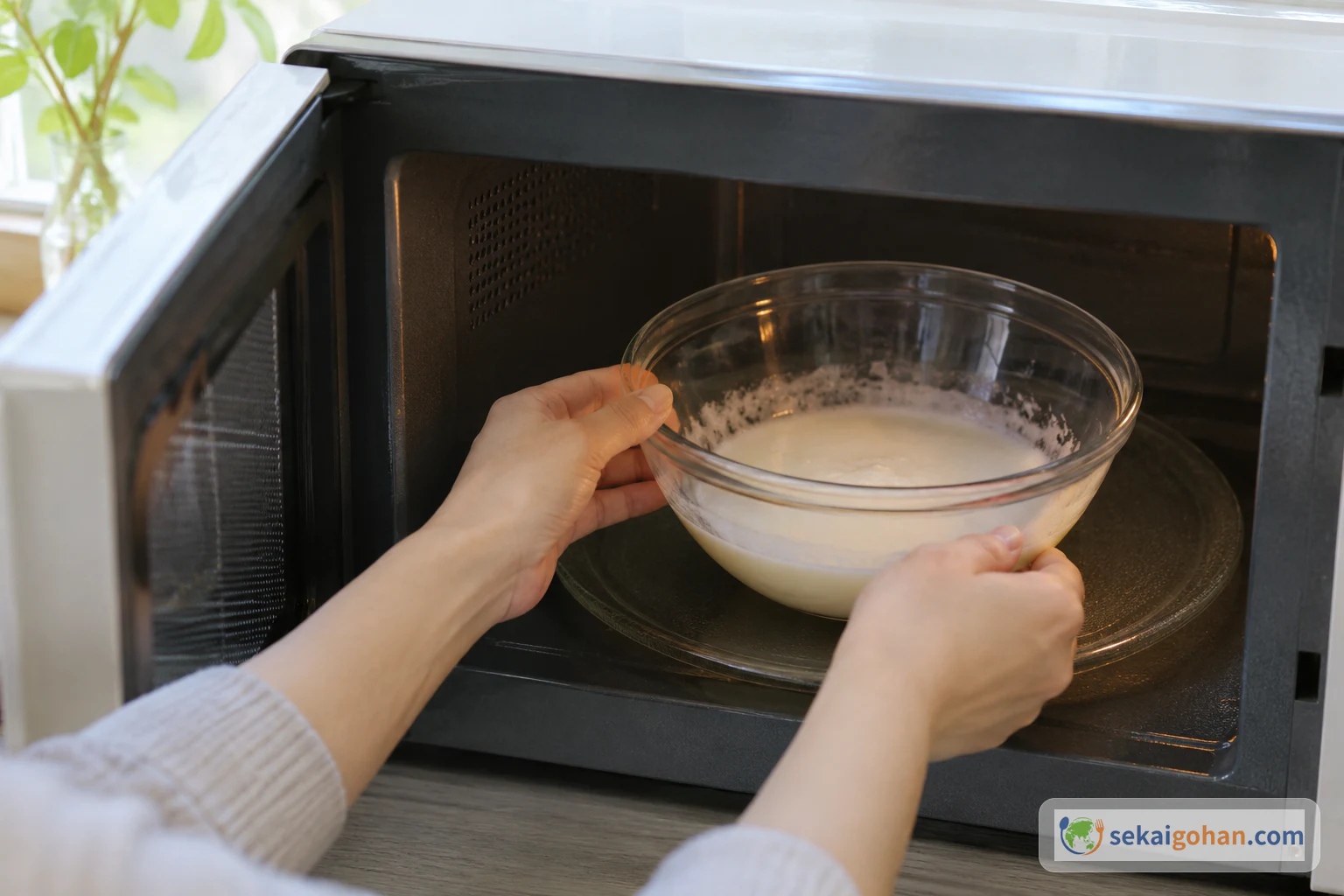
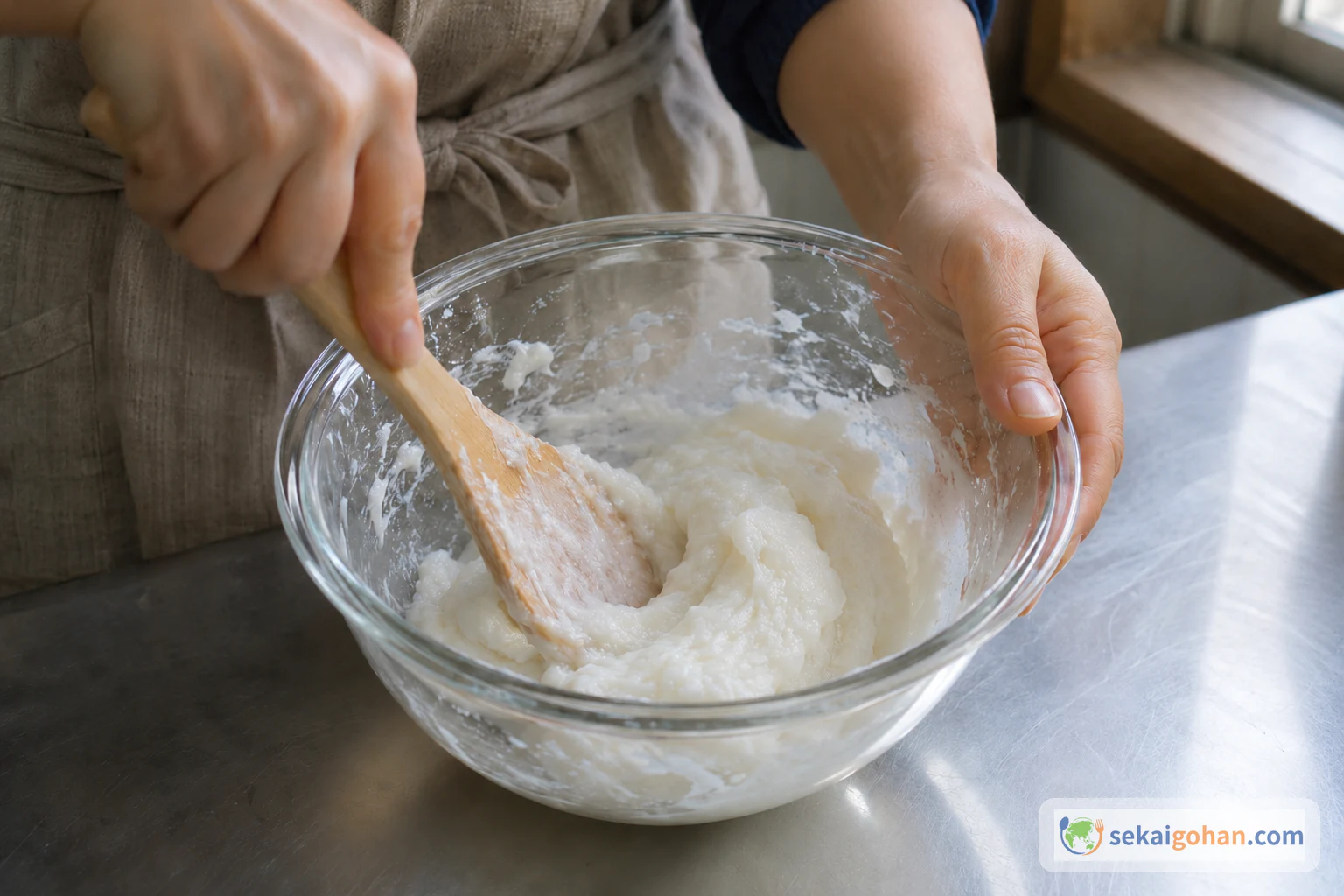
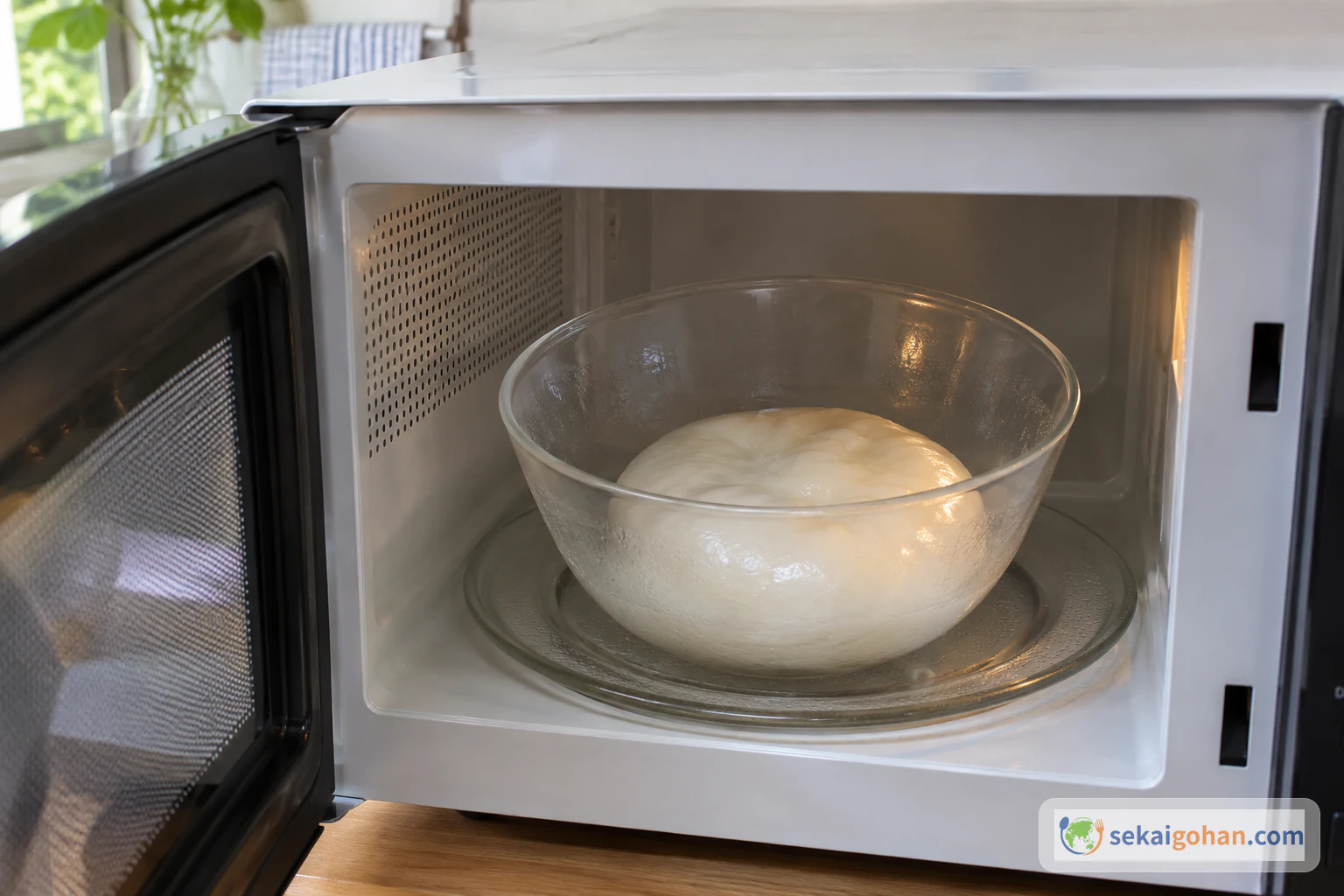
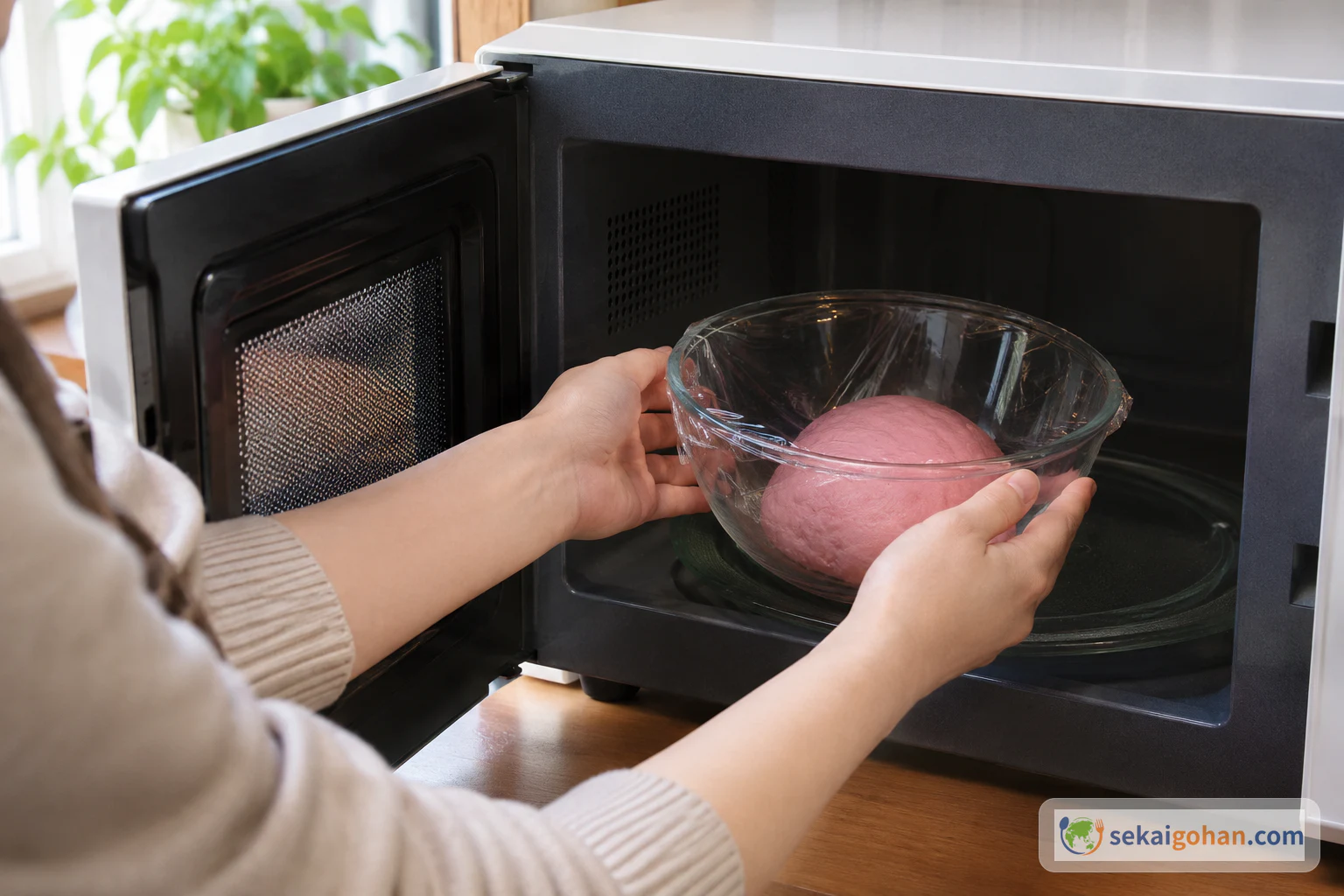
Microwave times are for 500W and are a guide. Microwaves vary, so judge the filling by being heated all the way through and still soft, and the dough by being glossy and cooked throughout.
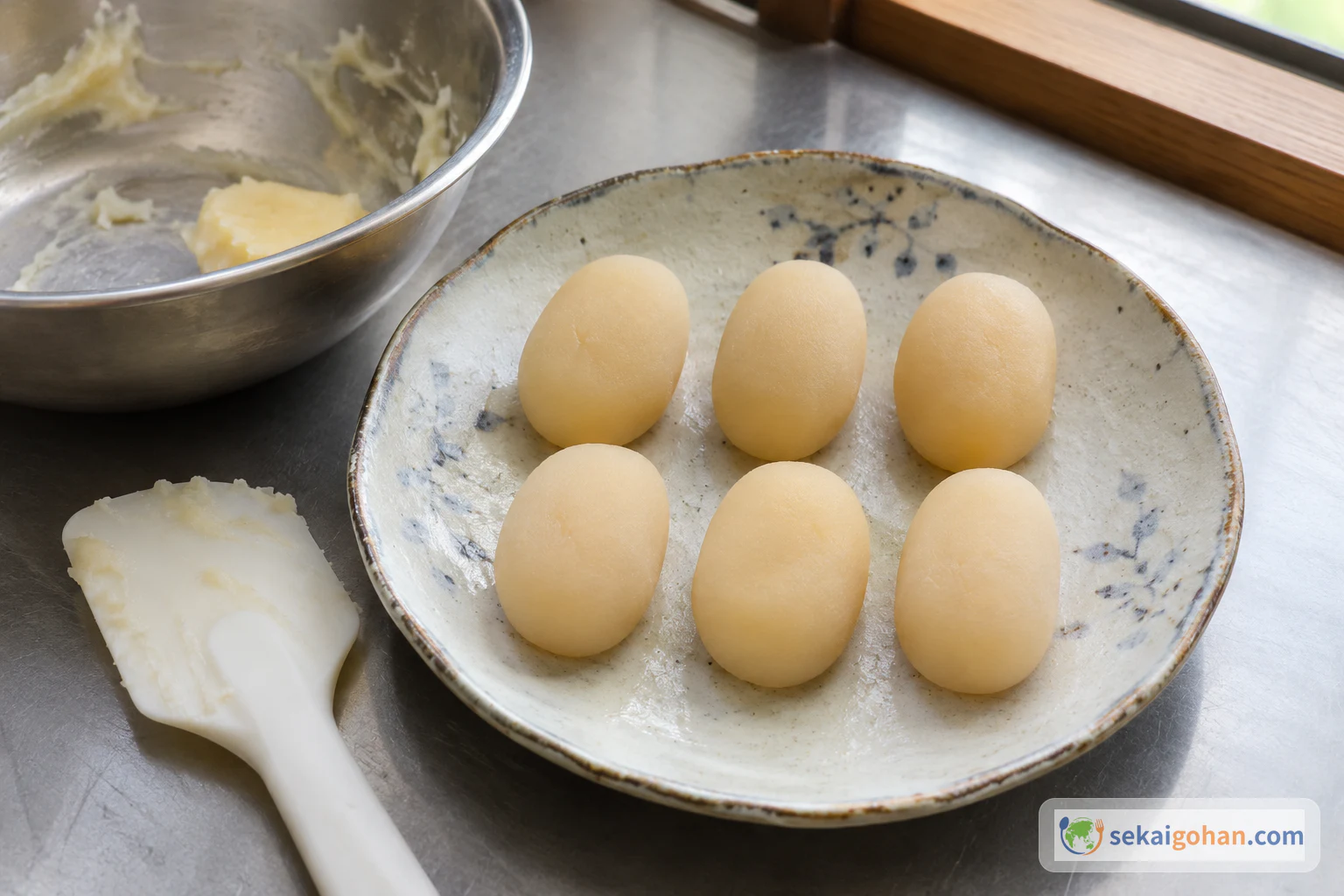
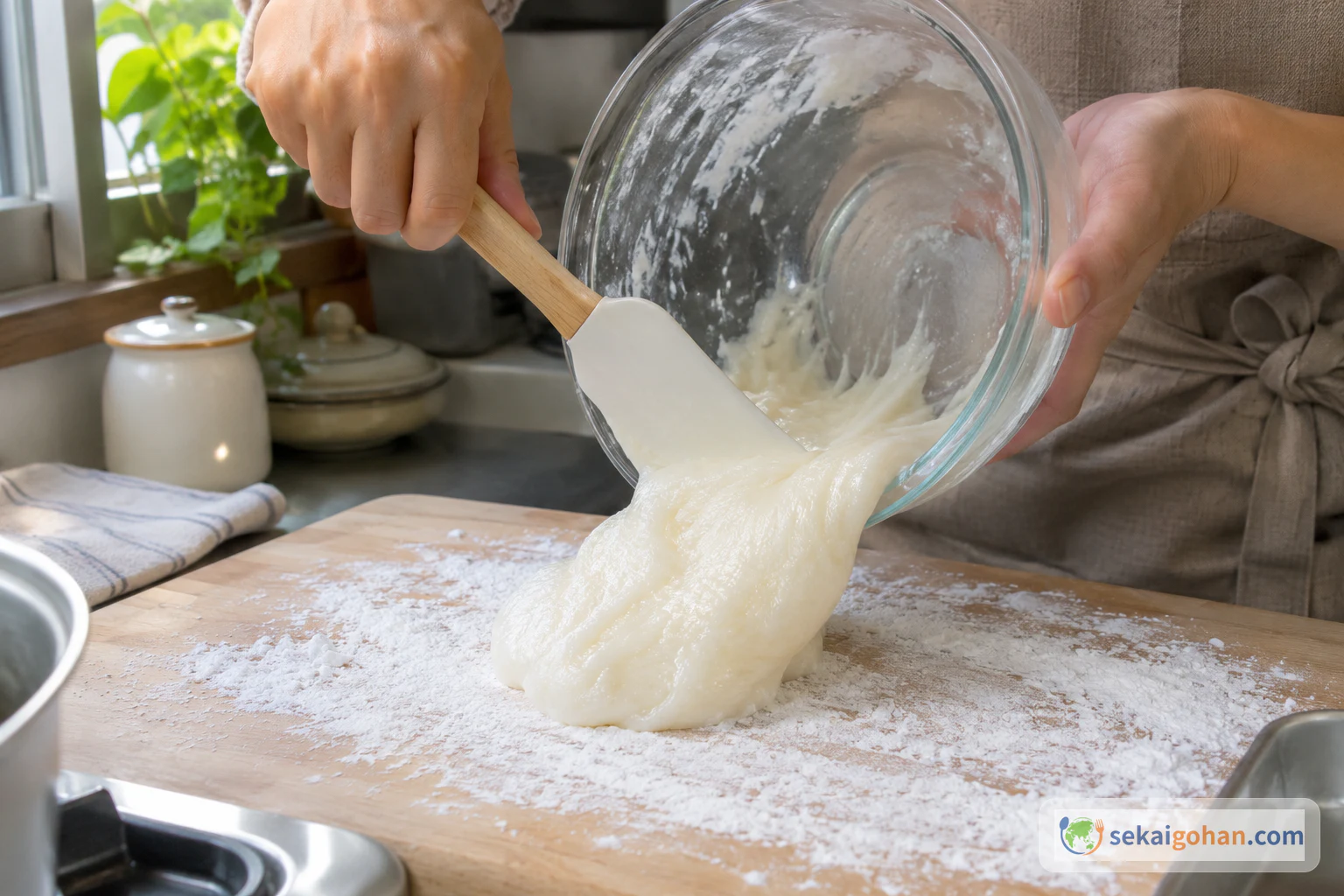
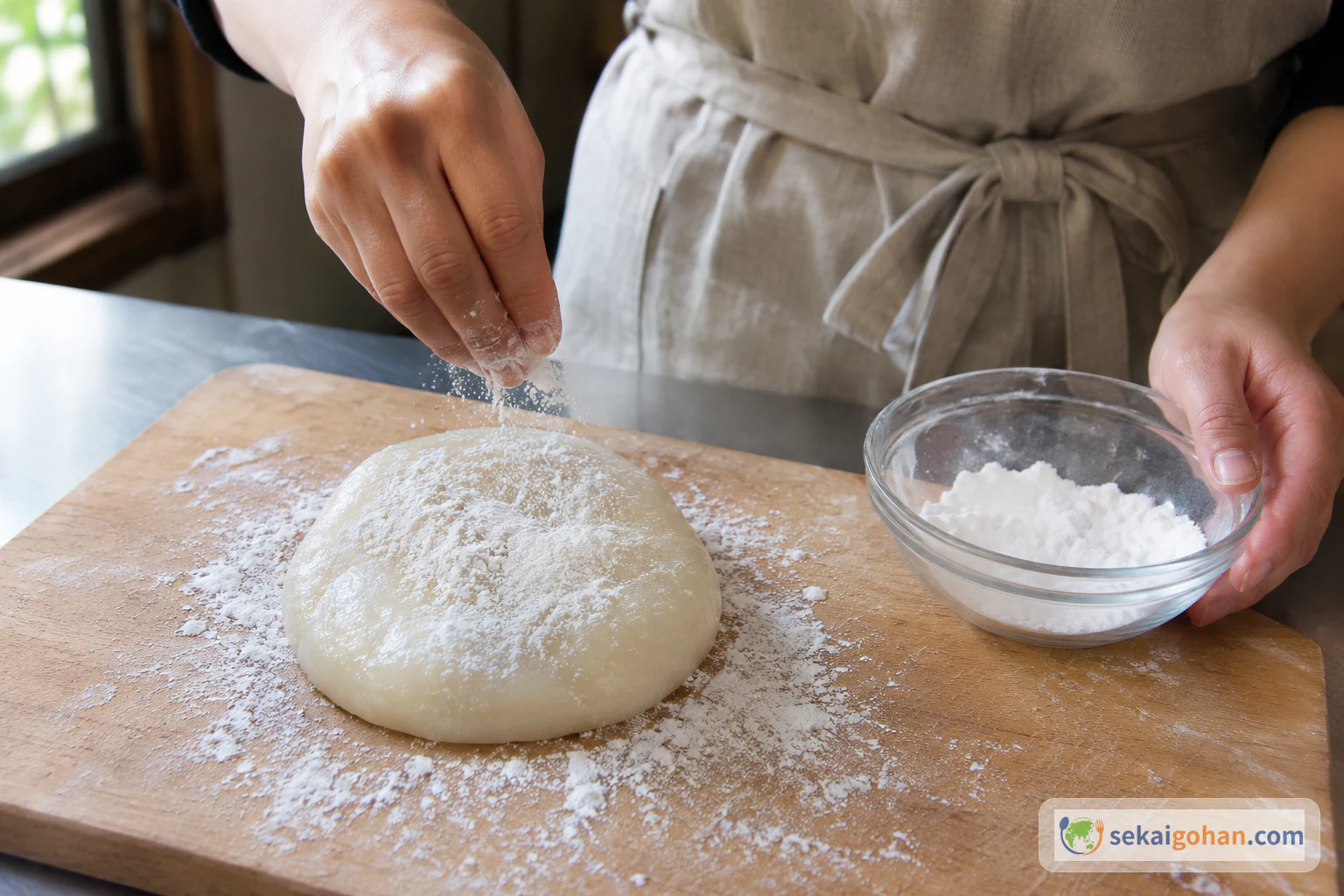
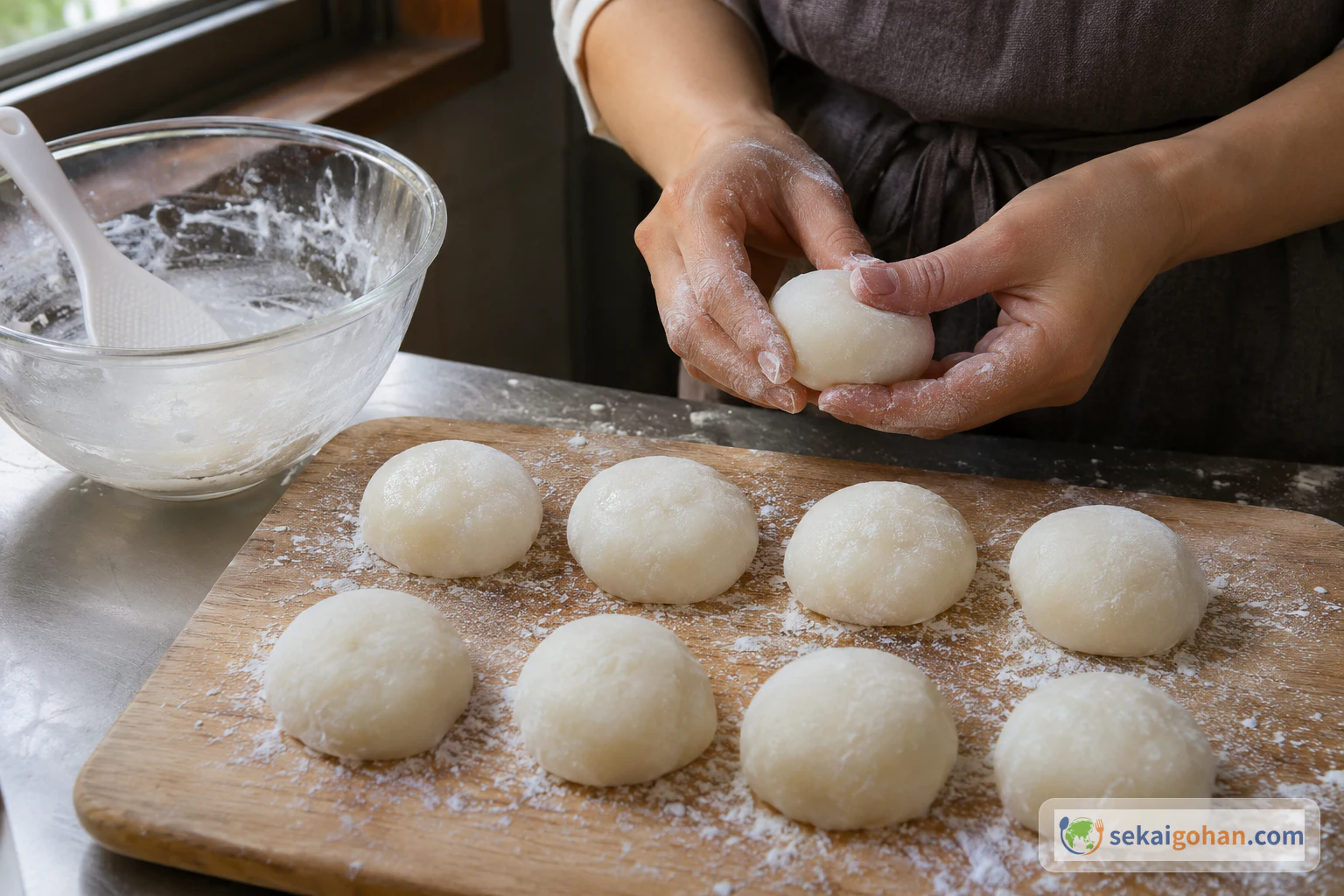
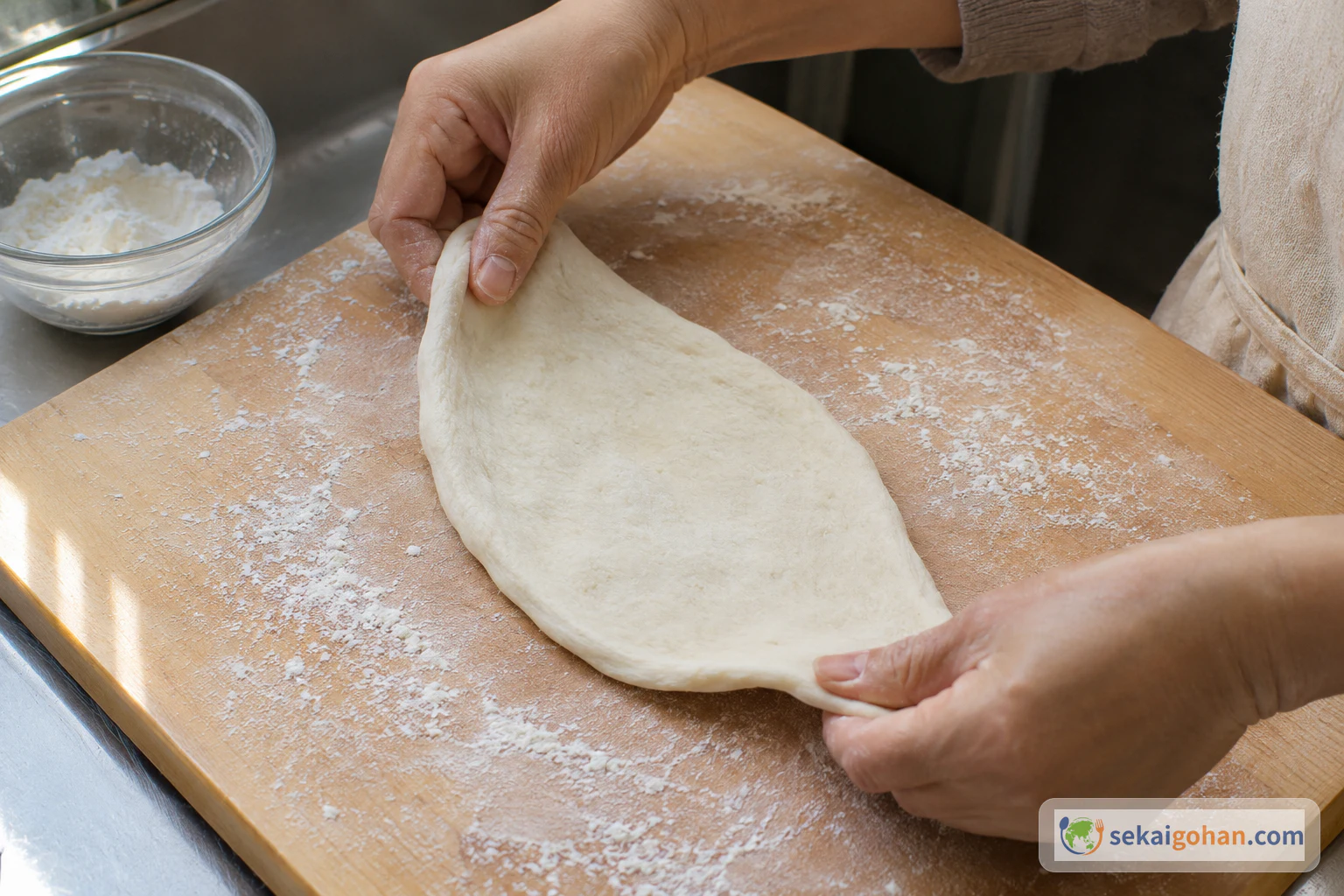
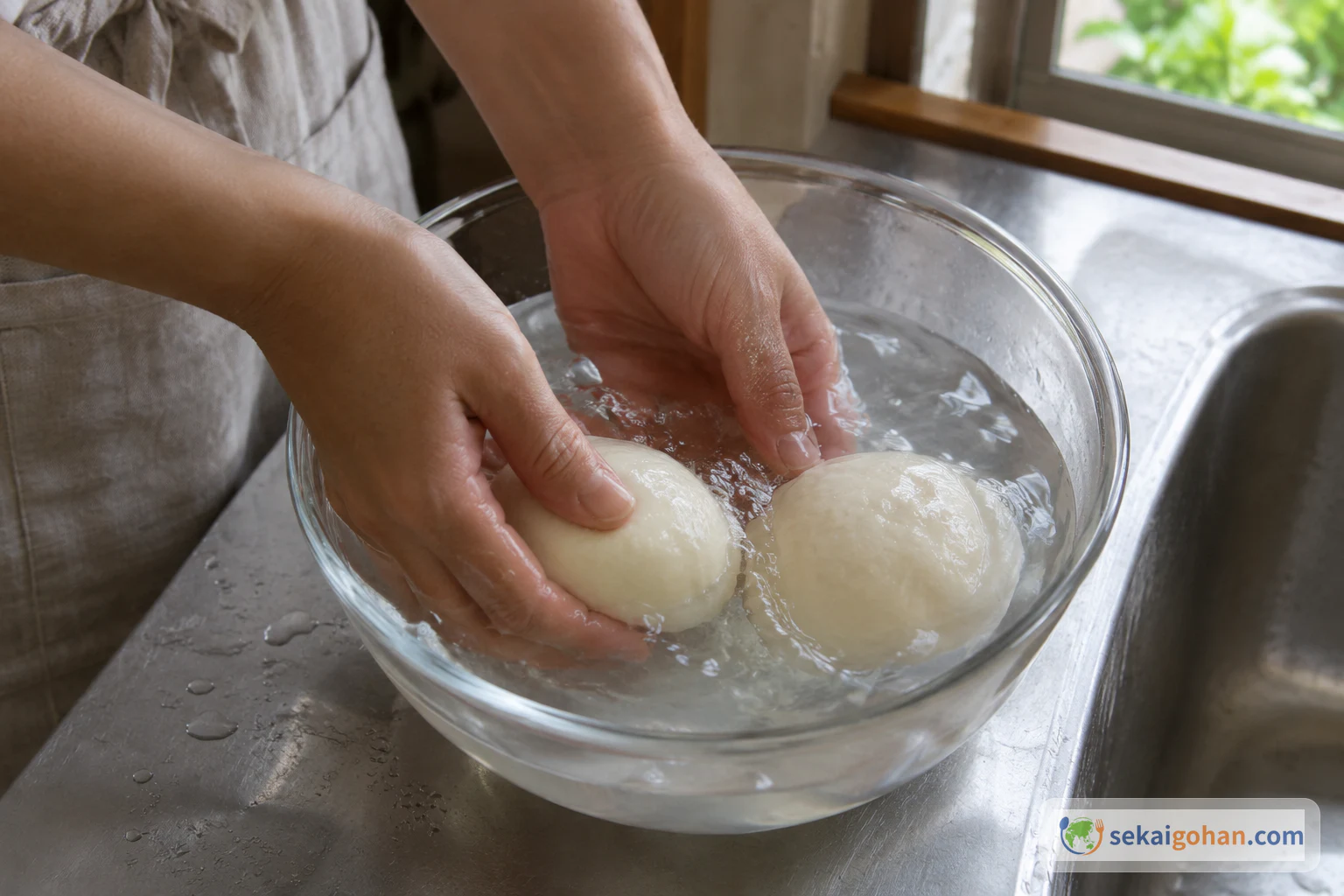
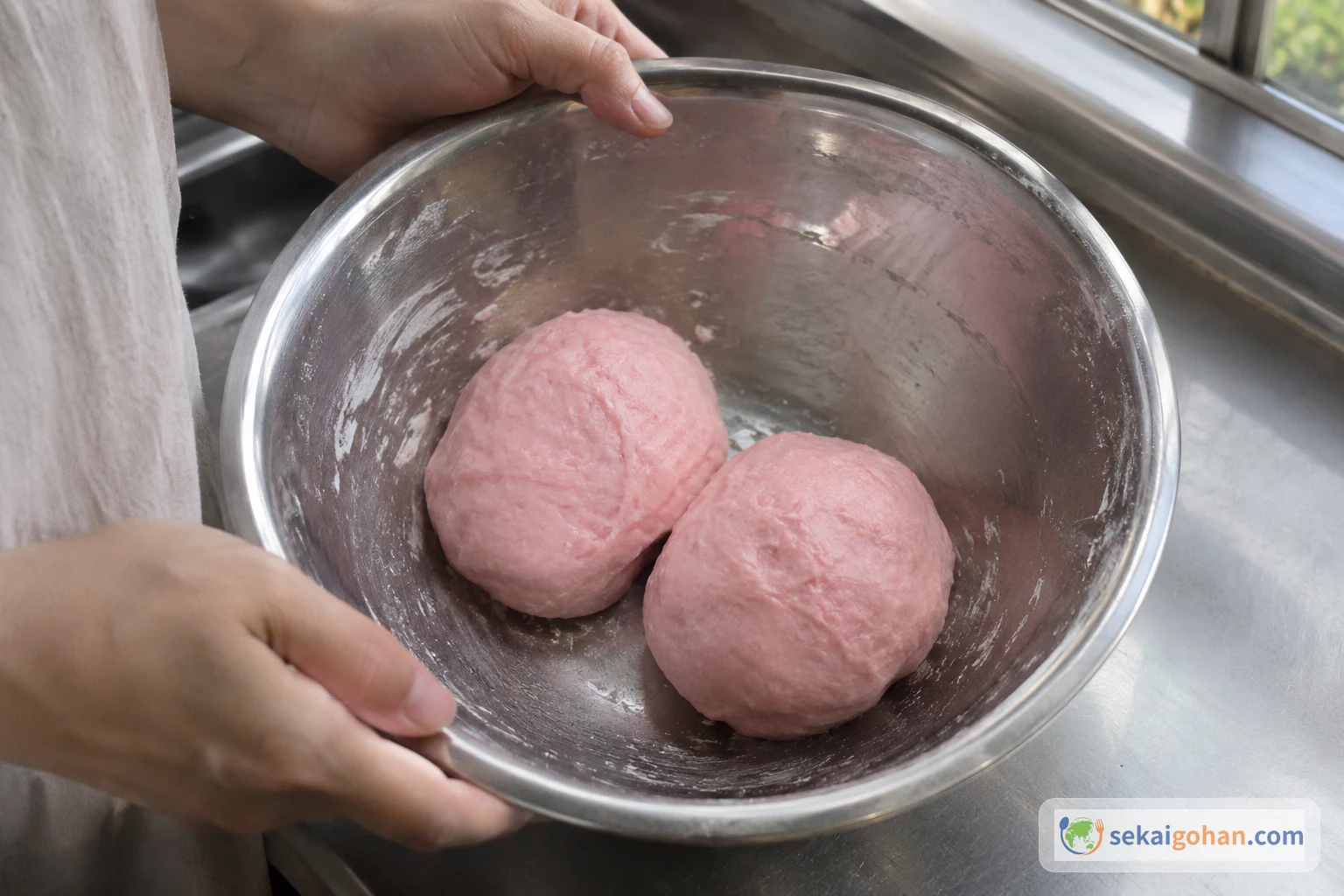
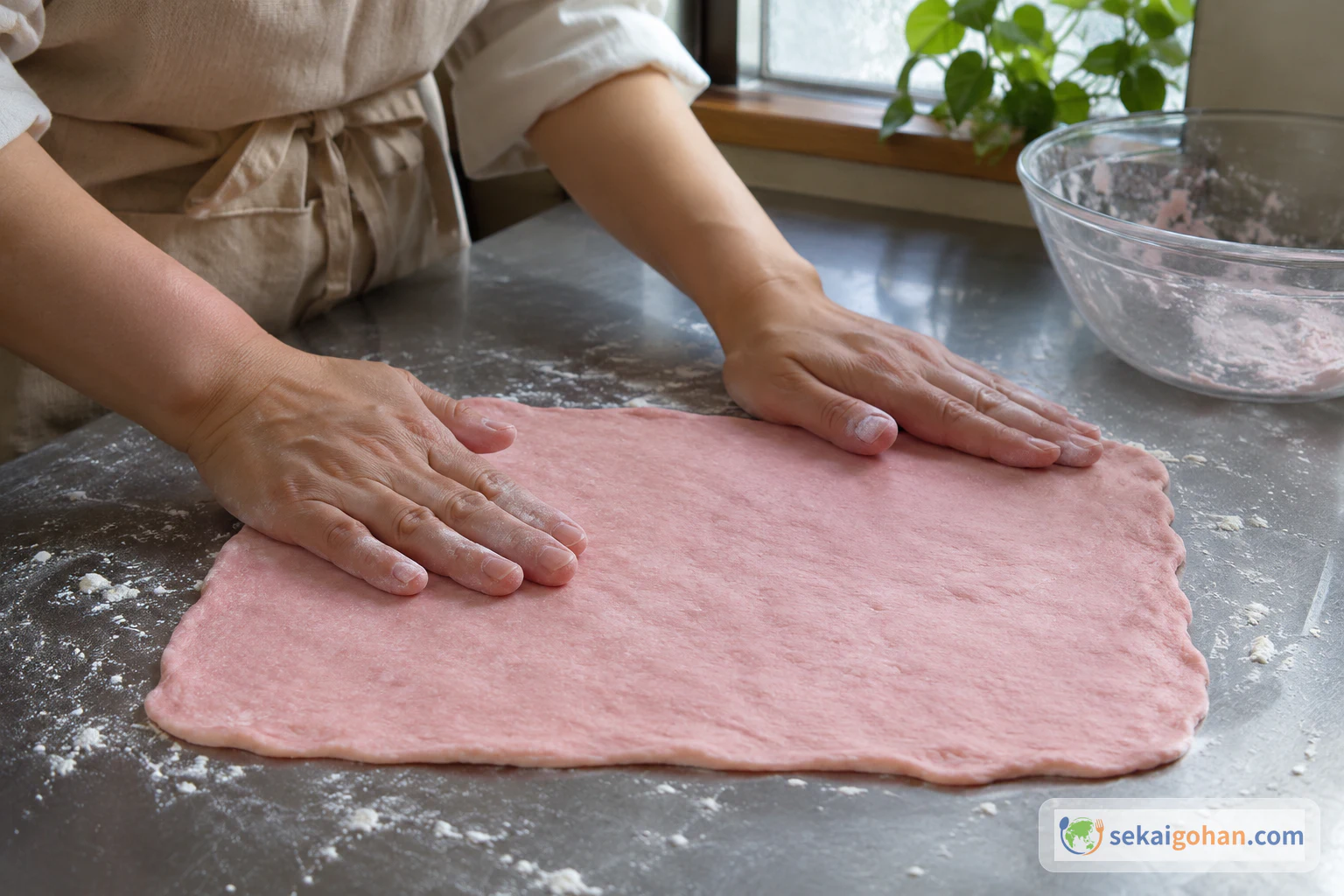
Steps 1–5 are done the day before. Steps 6 onward are done on the day you serve. Shape the dough while it is still warm, because it becomes harder to stretch as it cools.
Dough straight from the microwave is hot and very sticky. Handle it on a well-dusted board, and take care when you lift it out of the bowl.
When Things Go Wrong
| What you see | What to check | What to do |
|---|---|---|
| The filling is stiff once cool | It firms up as it cools | Next time, stop heating while it is still on the soft side |
| The dough is dull or uneven | It may not be cooked through yet | Heat 1 minute more at 500W and stir well; repeat until glossy throughout |
| Your microwave is not 500W | The times here are for 500W | Treat the times as a guide and go by the look of the filling and dough |
| The pink is too strong | Too much coloring at once | Add coloring a little at a time and keep it pale |
| Starch shows on the sweet | Dusting was not brushed off | Brush the white ovals and pink squares before assembling |
| Syrup wets the dough | Burdock not drained enough | Drain the strips well in a strainer before placing them |
Variations Across Kitchens and Regions
Miso amount. The basic ingredient list in the Tomiz recipe gives 1/2 tbsp (8g) of miso for 100g white bean paste. A note on the same page says that with white miso, about 20g per 100g white bean paste is right. This article takes the white miso option throughout; the two amounts belong to different versions and are not mixed.
Mochi or gyuhi. Toraya makes its hanabiramochi with mochi in the Kanto and Chubu regions and with gyuhi in the Kinki region. The microwave gyuhi here is closer to the Kinki style. Toraya also describes the inner diamond as azuki-colored, while this recipe uses a pale pink square.
A different dough and filling. The Tsuji Culinary Institute's hanabiramochi, a 30-piece recipe, uses an uiro dough made from jōyōko (上用粉) rice flour, sugar, ukiko starch and water, and a white bean paste recooked with water, colored pink and mixed with white miso. It is a separate formula, not a variation of the amounts here, but it shows how the dough, filling and burdock structure differs from kitchen to kitchen.
Storage
For the candied burdock, the general guidance from Japan's Ministry of Agriculture, Forestry and Fisheries applies: once home-cooked food has lost its initial heat, cover it in a sealed container or with plastic wrap and refrigerate it promptly. Dividing food into shallow containers helps it cool faster. That is general food-safety guidance, not a tested shelf life for this burdock. No storage period is established here for the candied burdock or for the finished sweets.
Frequently Asked Questions
How much white miso goes in the filling?
20g of white miso with 100g white bean paste and 1 tsp water. This comes from the Tomiz recipe page's note on using white miso. The 8g in its basic ingredient list is for ordinary miso and is not combined with the 20g here.
How much filling goes in each piece?
Divide all the cooked filling into six equal portions. The Tomiz recipe gives about 15g per piece for its basic 8g miso version. That figure was not measured for the 20g white miso version, so treat it only as a rough reference, not a target weight.
Do I use all the burdock?
The 20cm burdock gives 8 strips. With one strip per piece, six pieces could leave two strips over. The recipe does not say whether every strip must be used.
Can the burdock sit at room temperature overnight?
This article does not recommend it. The Tomiz recipe says to leave the burdock in the syrup overnight but does not say where. Here it is cooled promptly, covered and refrigerated, in line with general guidance from Japan's Ministry of Agriculture, Forestry and Fisheries.
How many people does this serve?
The recipe makes six pieces. It is not written as six servings.
Can I use shiratamako instead of hiyoku mochiko?
An equal-weight swap is not established. General glutinous rice flour (mochiko) is the closest candidate, but grain size and water absorption differ, and the result has not been tested.
Sources
- Tomiz (富澤商店), recipe supervised by Chie Nishikawa, "花びら餅" (Hanabiramochi). Main recipe: six-piece amounts, day-before candied burdock, microwave times at 500W, the white miso note, dough division and sizes, and assembly. https://tomiz.com/recipe/pro/detail/20221207040316
- City of Kyoto, "菓子のある風景 | 京の菓子文化" (Kyoto confectionery culture). Hanabiramochi as a January sweet modeled on imperial New Year food, its miso filling, burdock and white mochi, use at hatsugama, and its postwar spread as a New Year sweet. https://kyo-tsunagu.city.kyoto.lg.jp/kashi/fuukei/
- Tsuji Culinary Institute (辻調グループ), "花びら餅" (Hanabiramochi). A separate 30-piece recipe with uiro dough and white miso filling, used only to show how the structure varies. https://www.tsuji.ac.jp/oishii/recipe/o07003_recipe.html
- Toraya (虎屋), "花びら餅 | とらやの和菓子". The hishihanabira model and parts of the sweet, and the regional mochi and gyuhi versions in Toraya's products. https://www.toraya-group.co.jp/products/event-hanabiramochi
- Ministry of Agriculture, Forestry and Fisheries of Japan, "冷蔵庫のかしこい使い方~食品の保存~" (Using the refrigerator wisely). General guidance on cooling, covering and promptly refrigerating home-cooked food, and on shallow containers. https://www.maff.go.jp/j/syouan/seisaku/foodpoisoning/frige.html