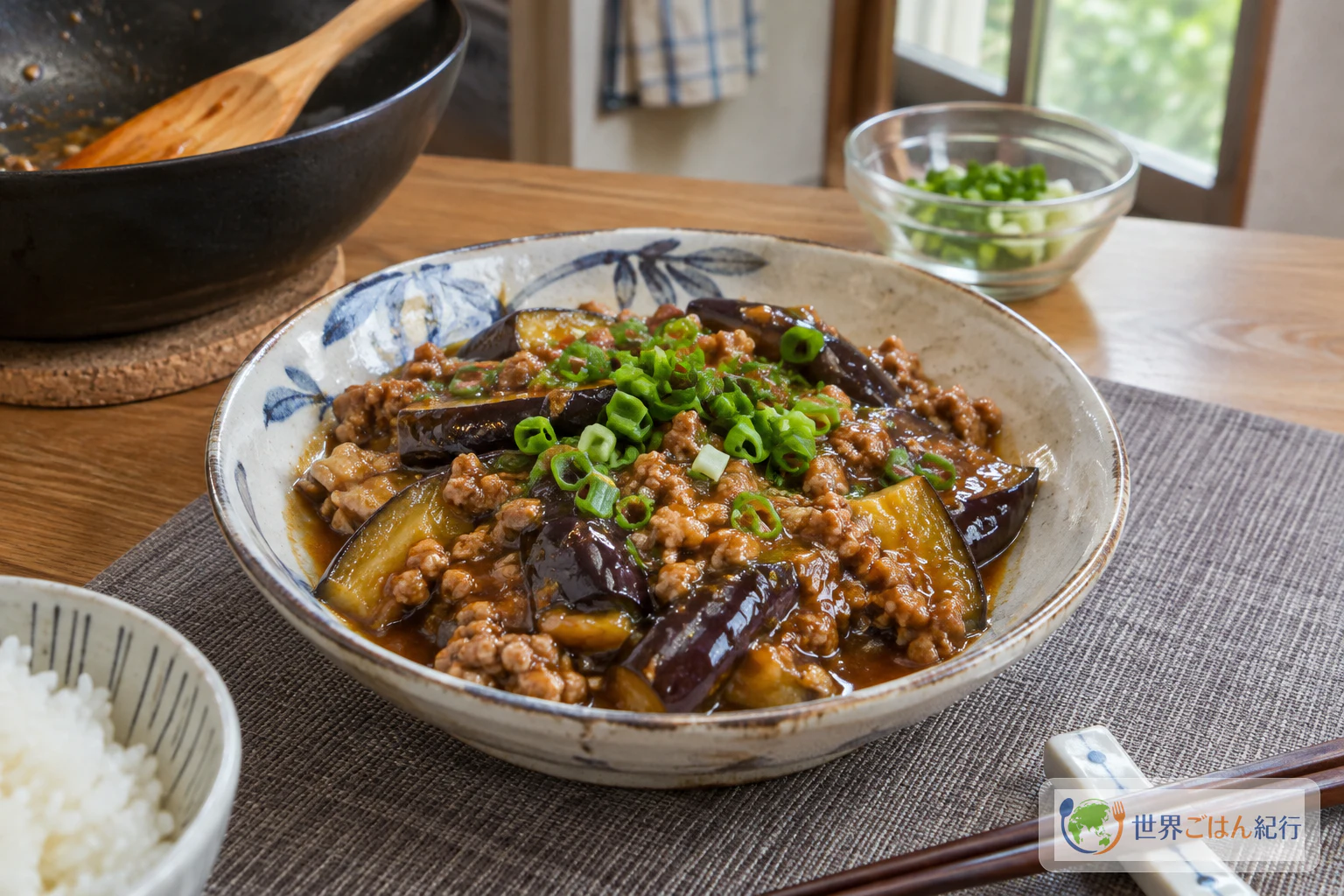
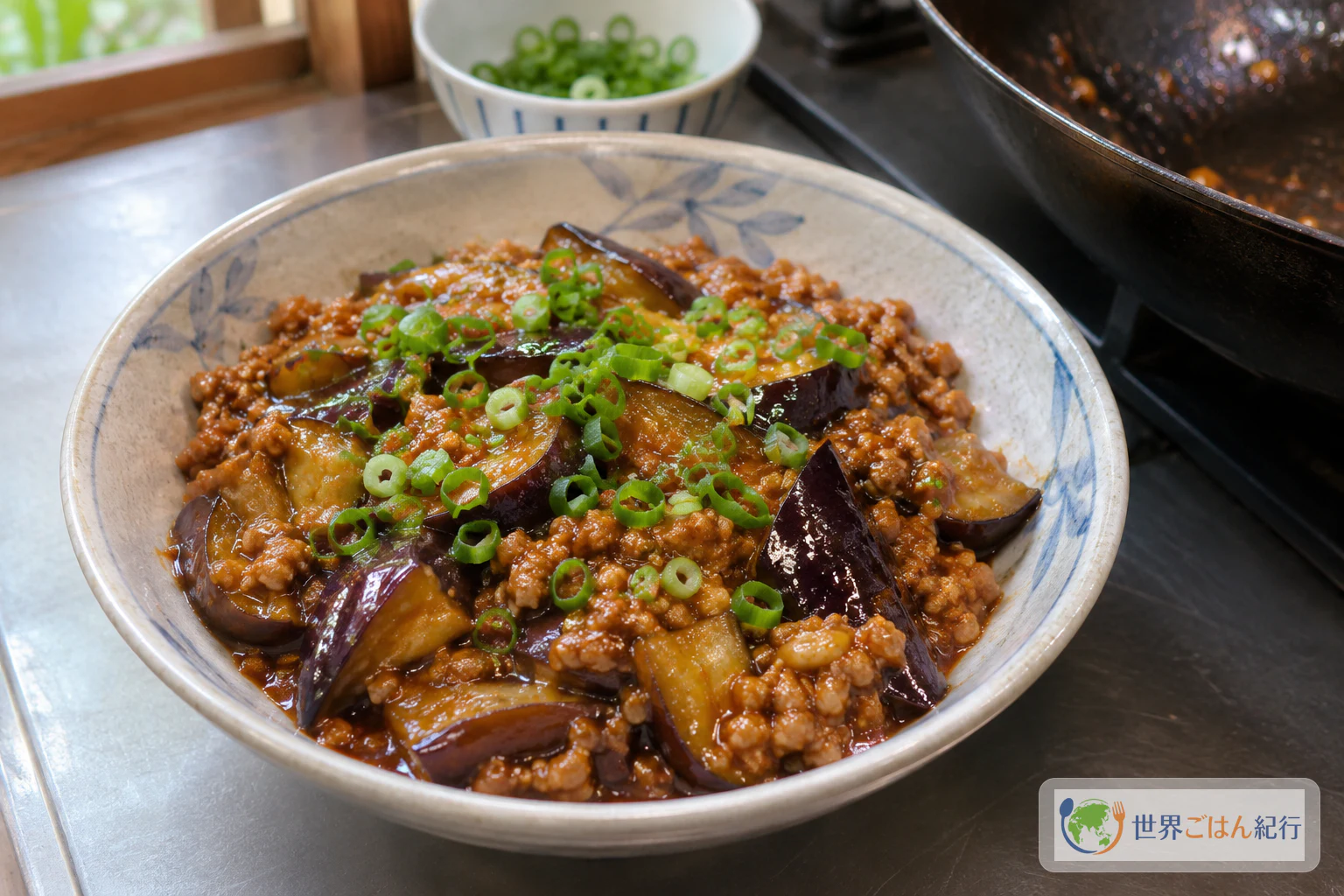
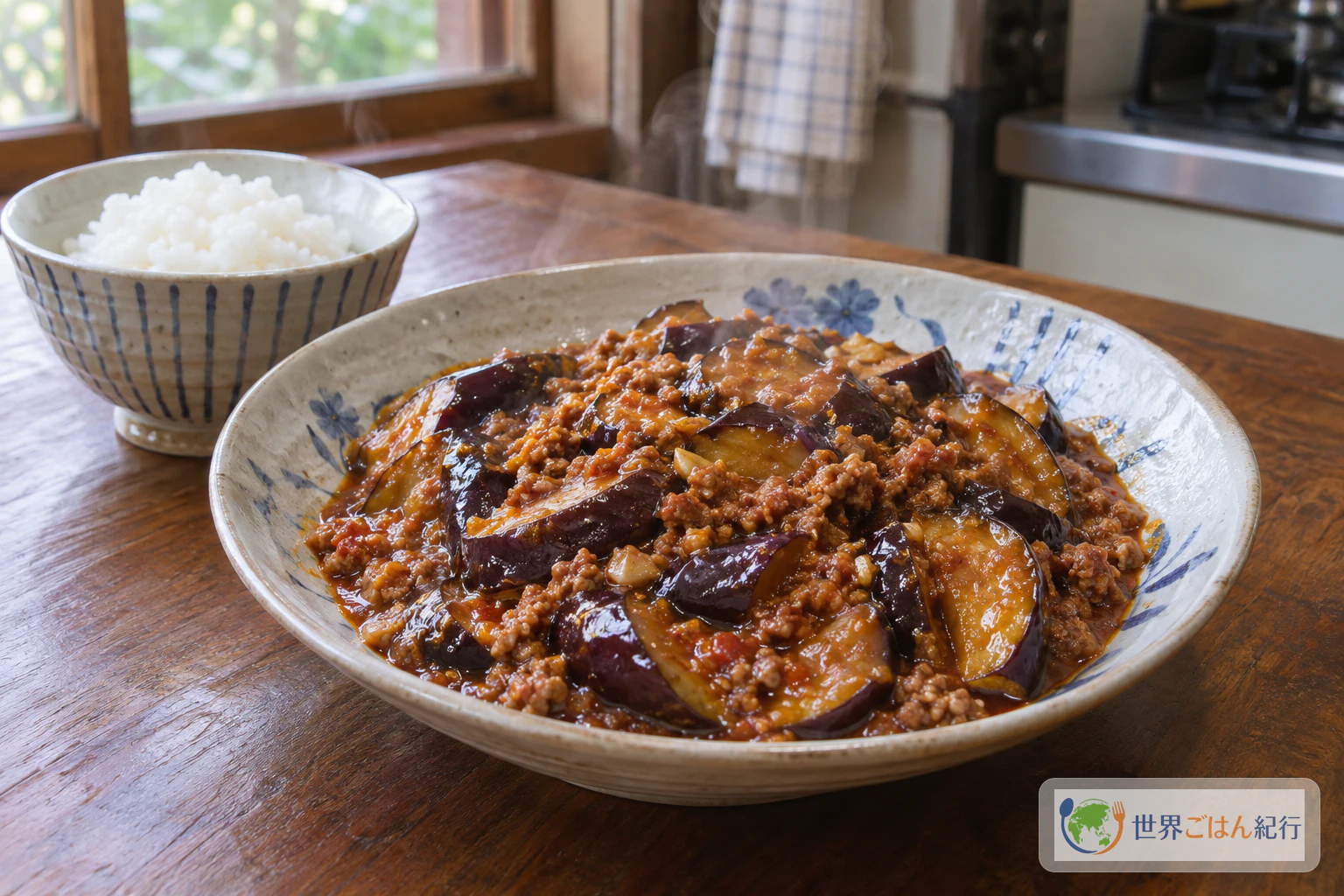
Mabo Nasu: Soft Eggplant in a Glossy Pork Sauce, Without Deep-Frying
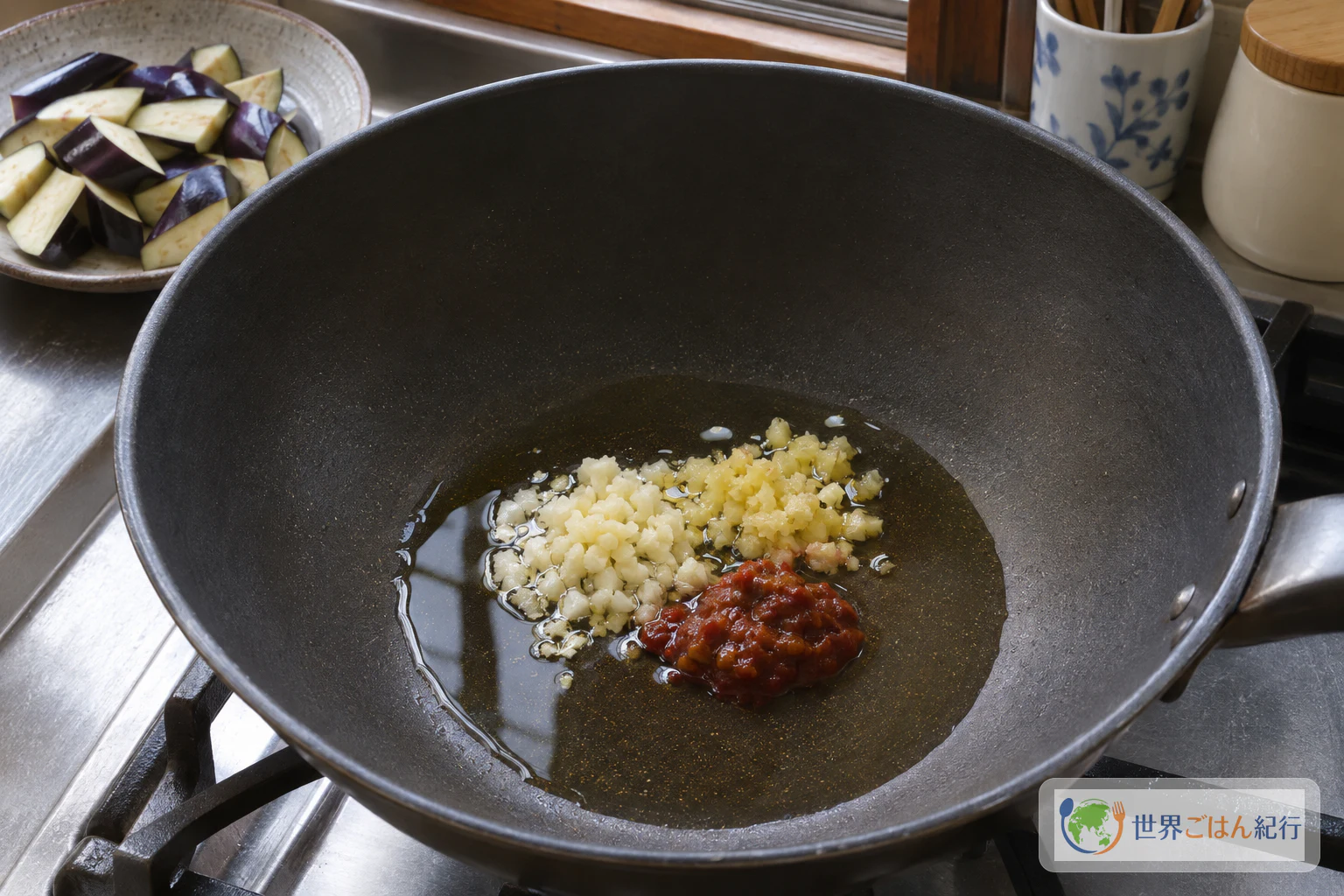
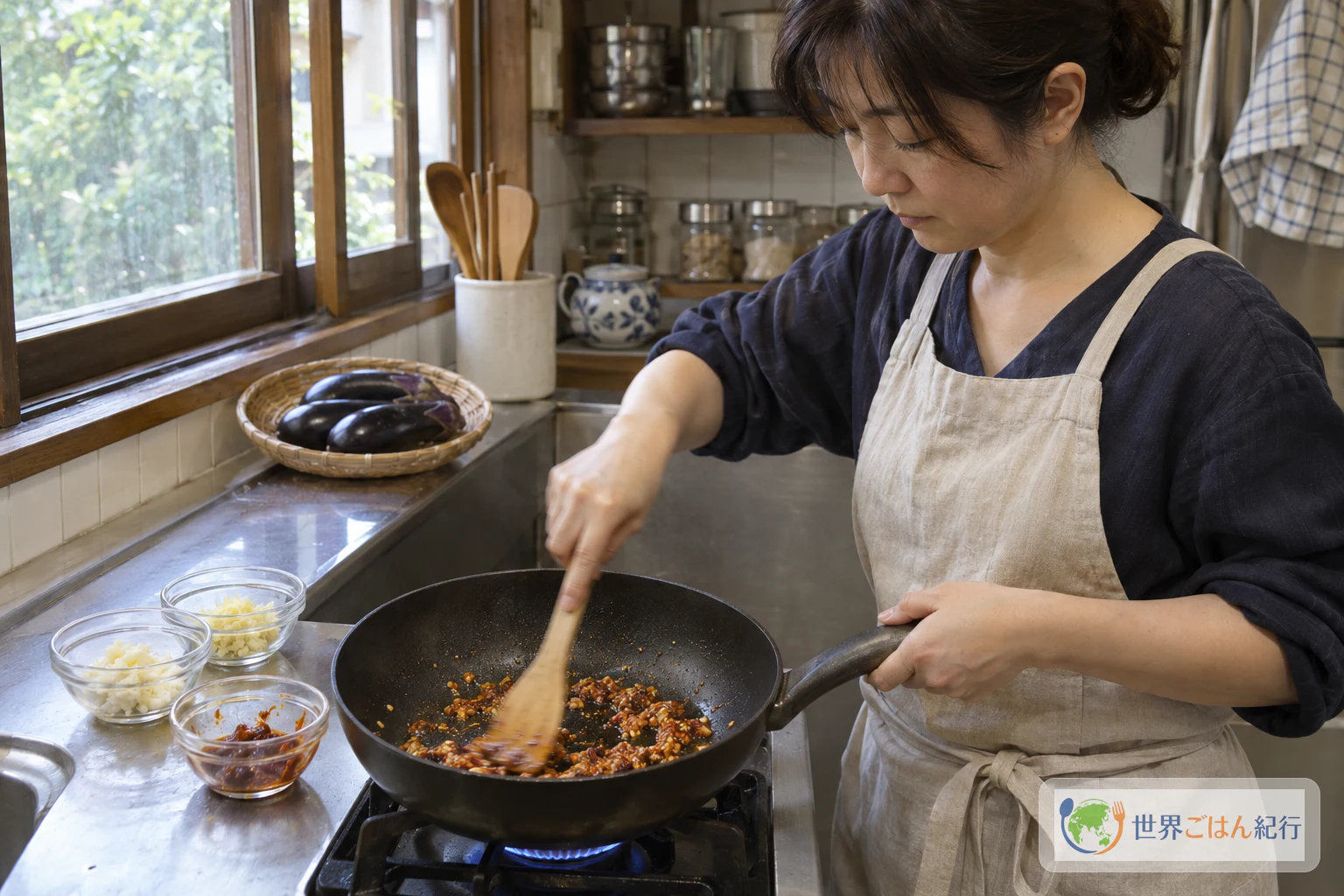
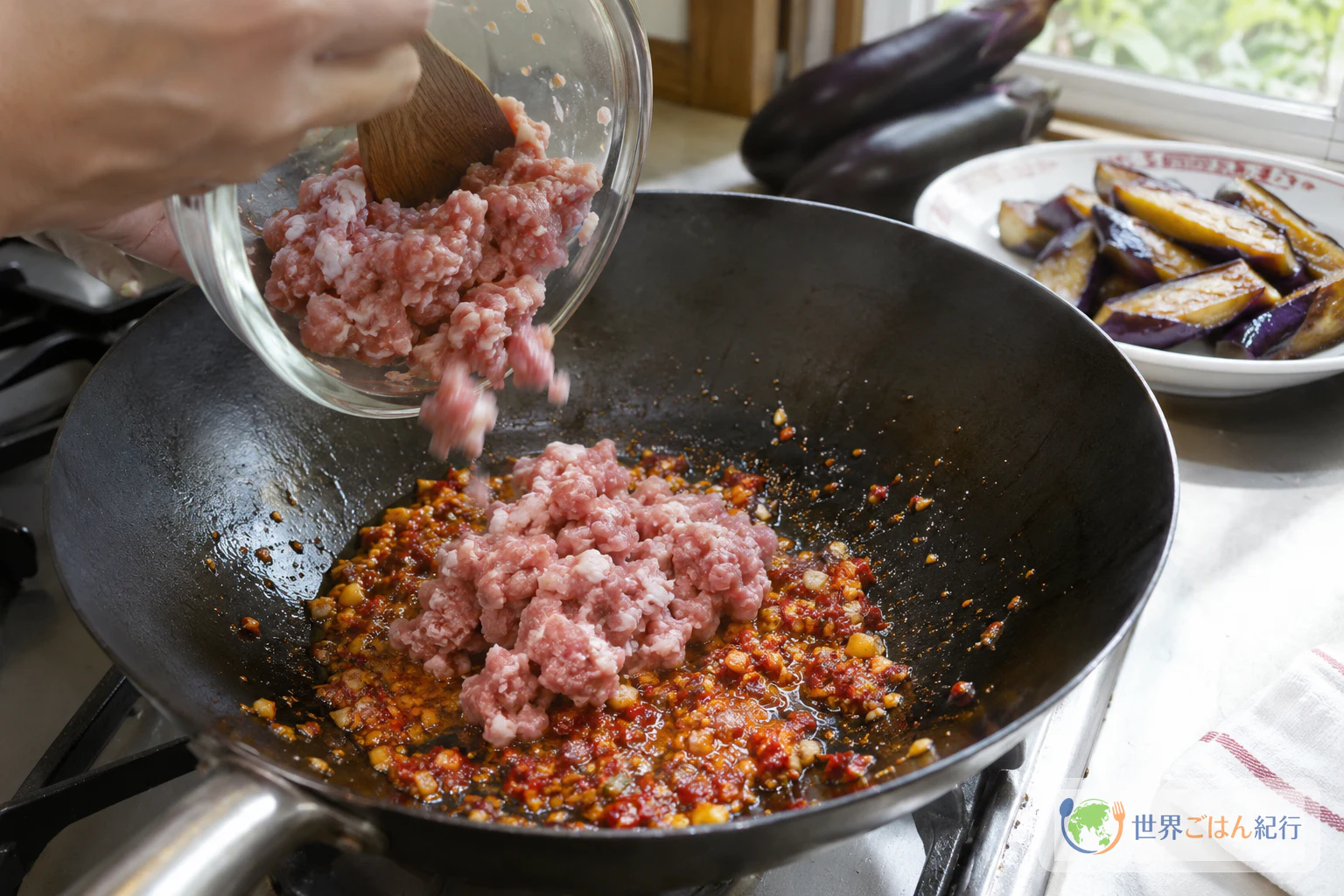
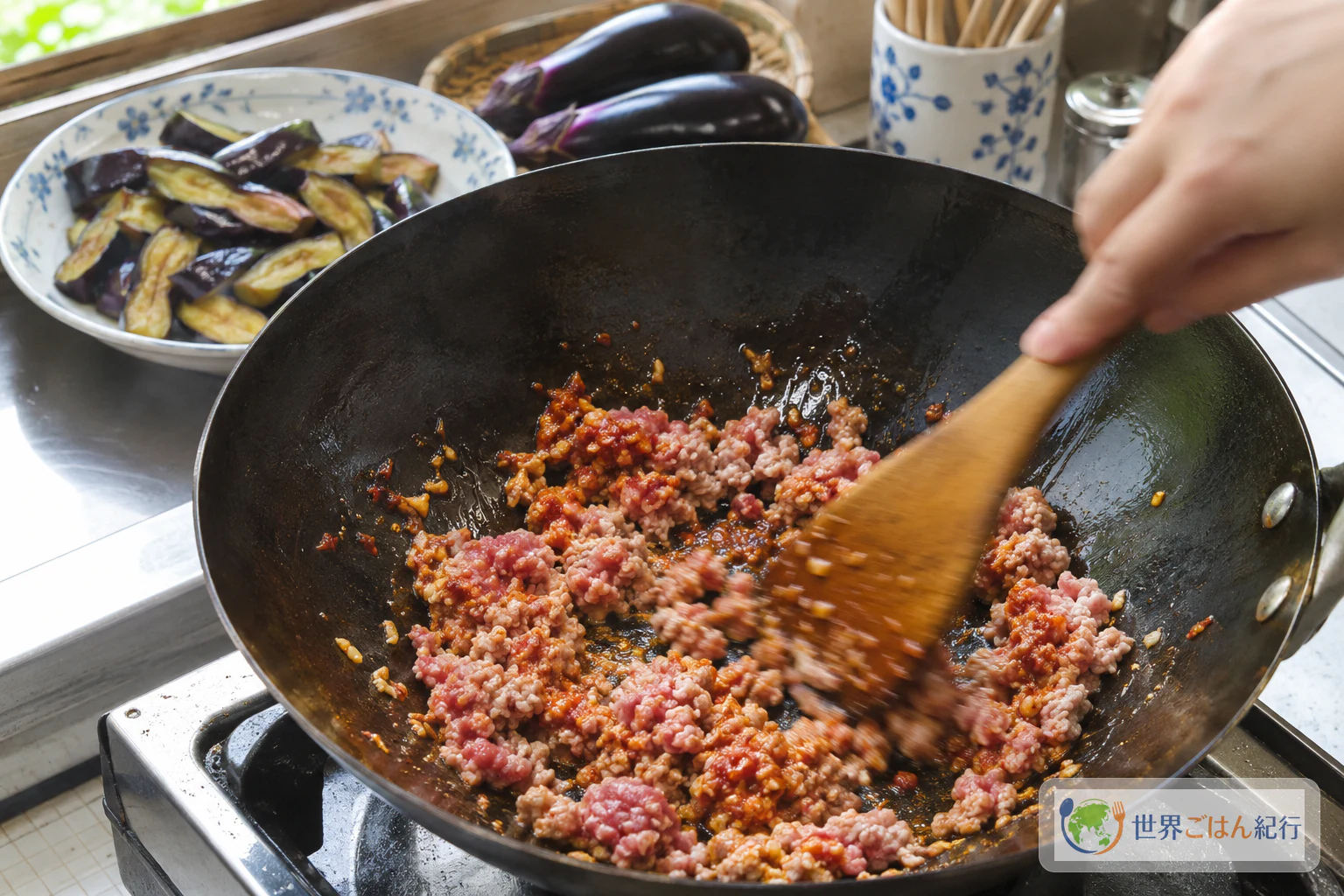
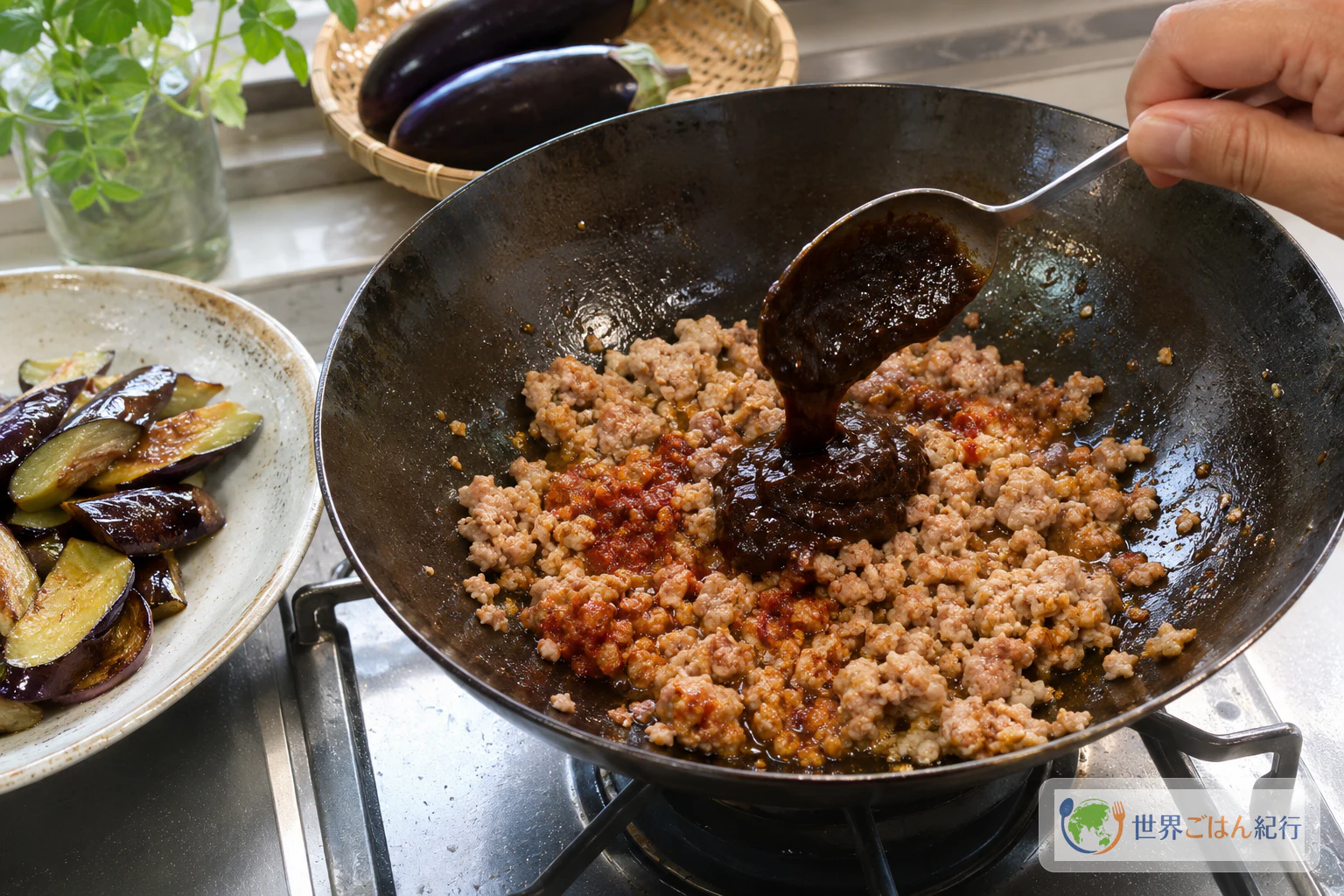
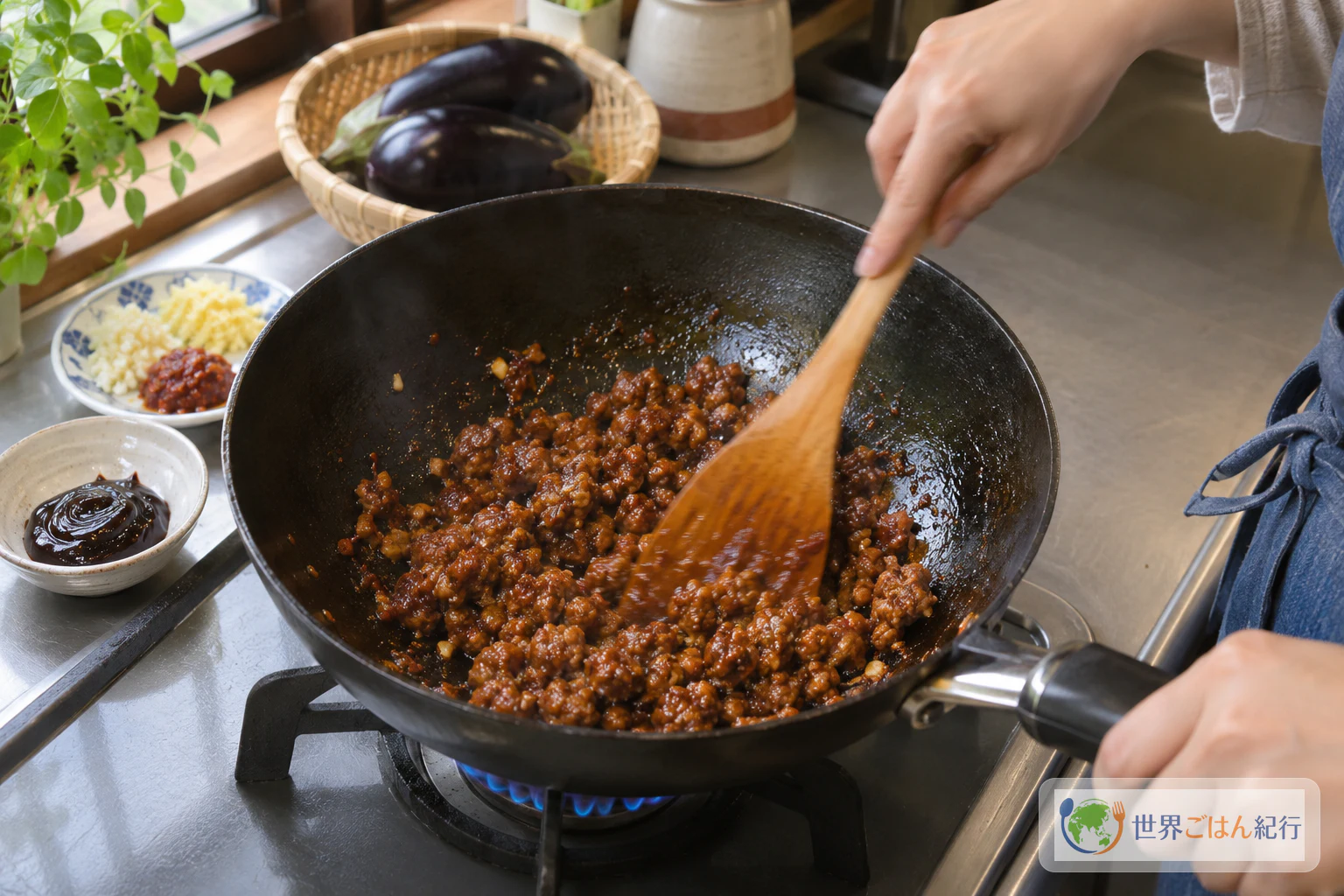
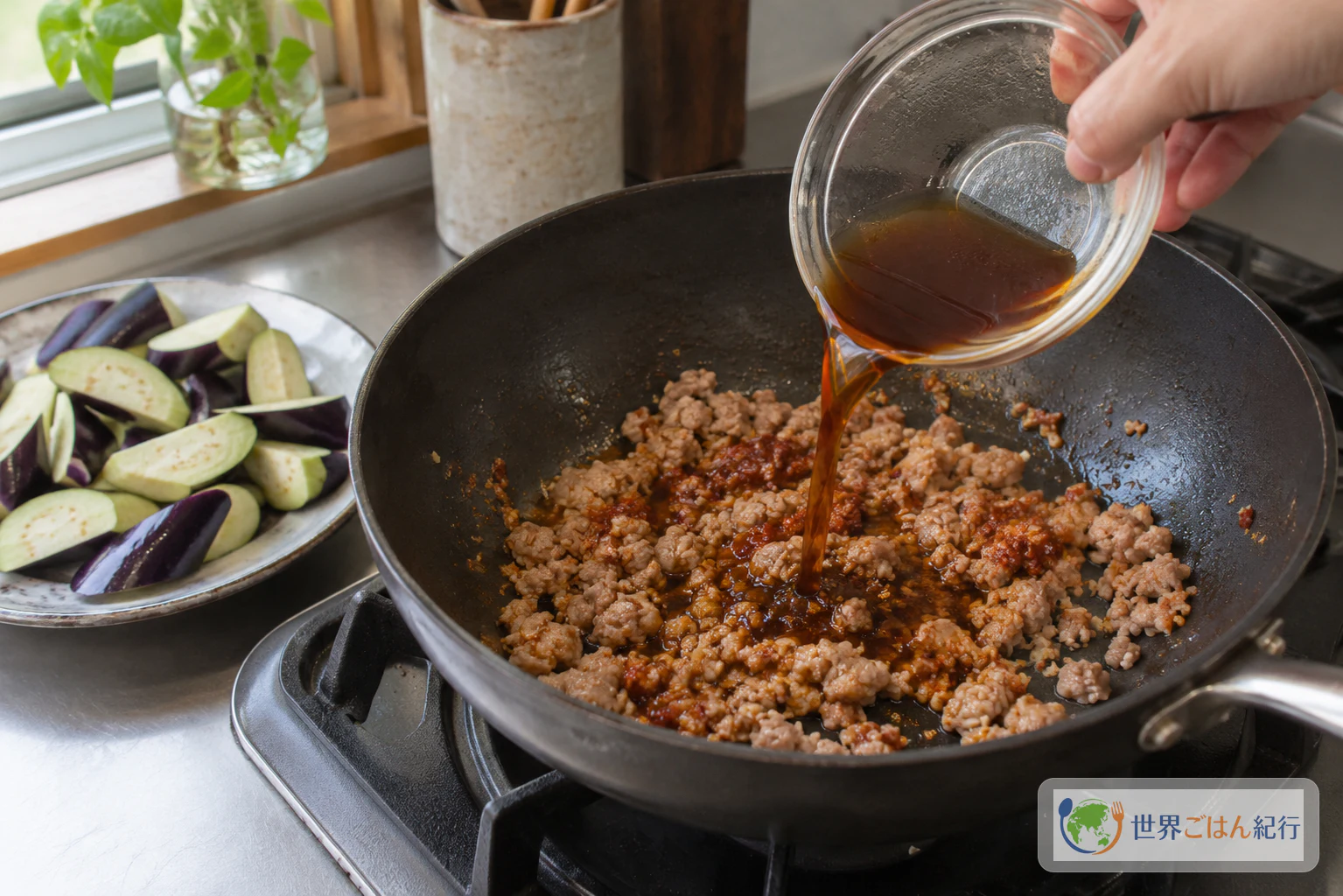
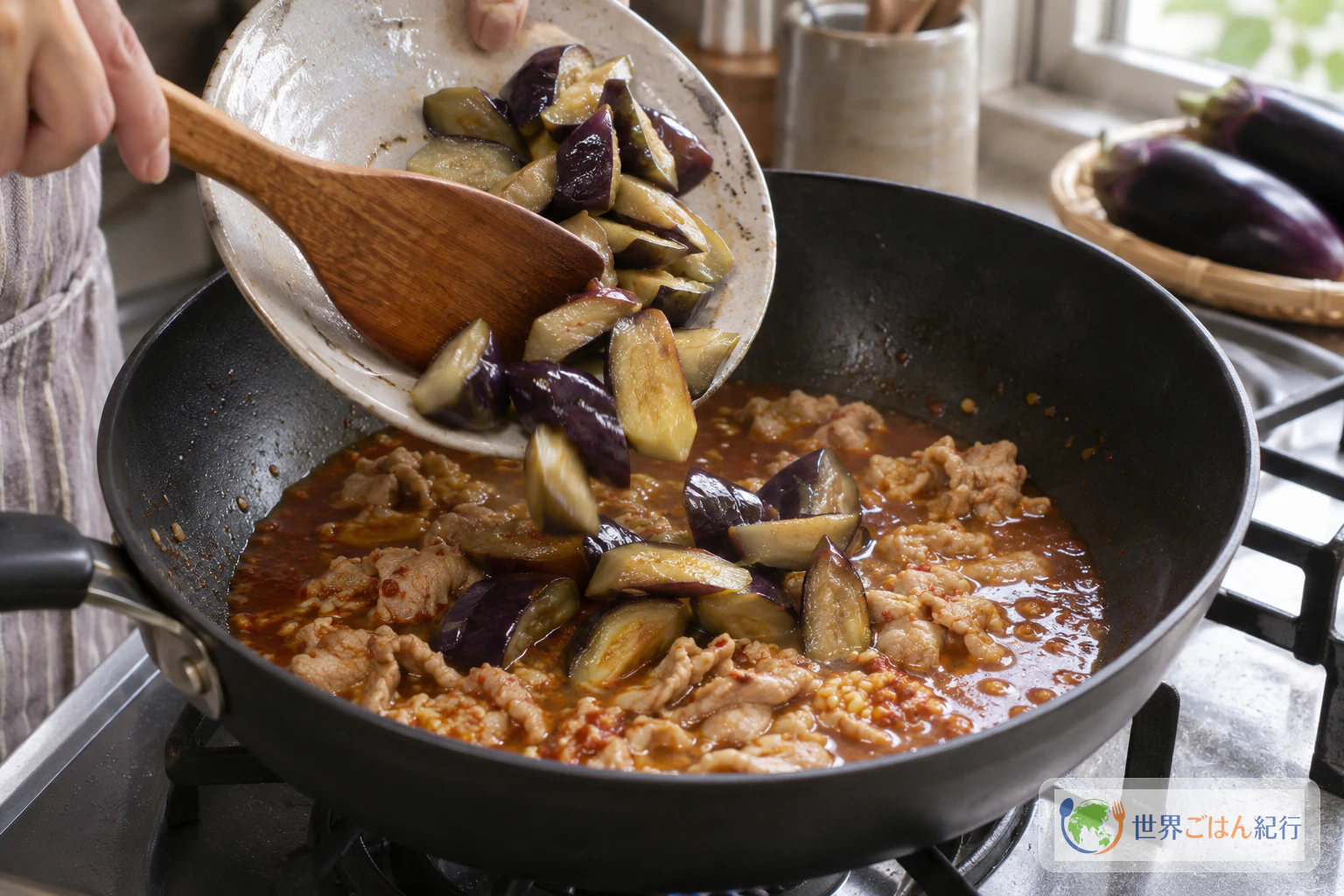
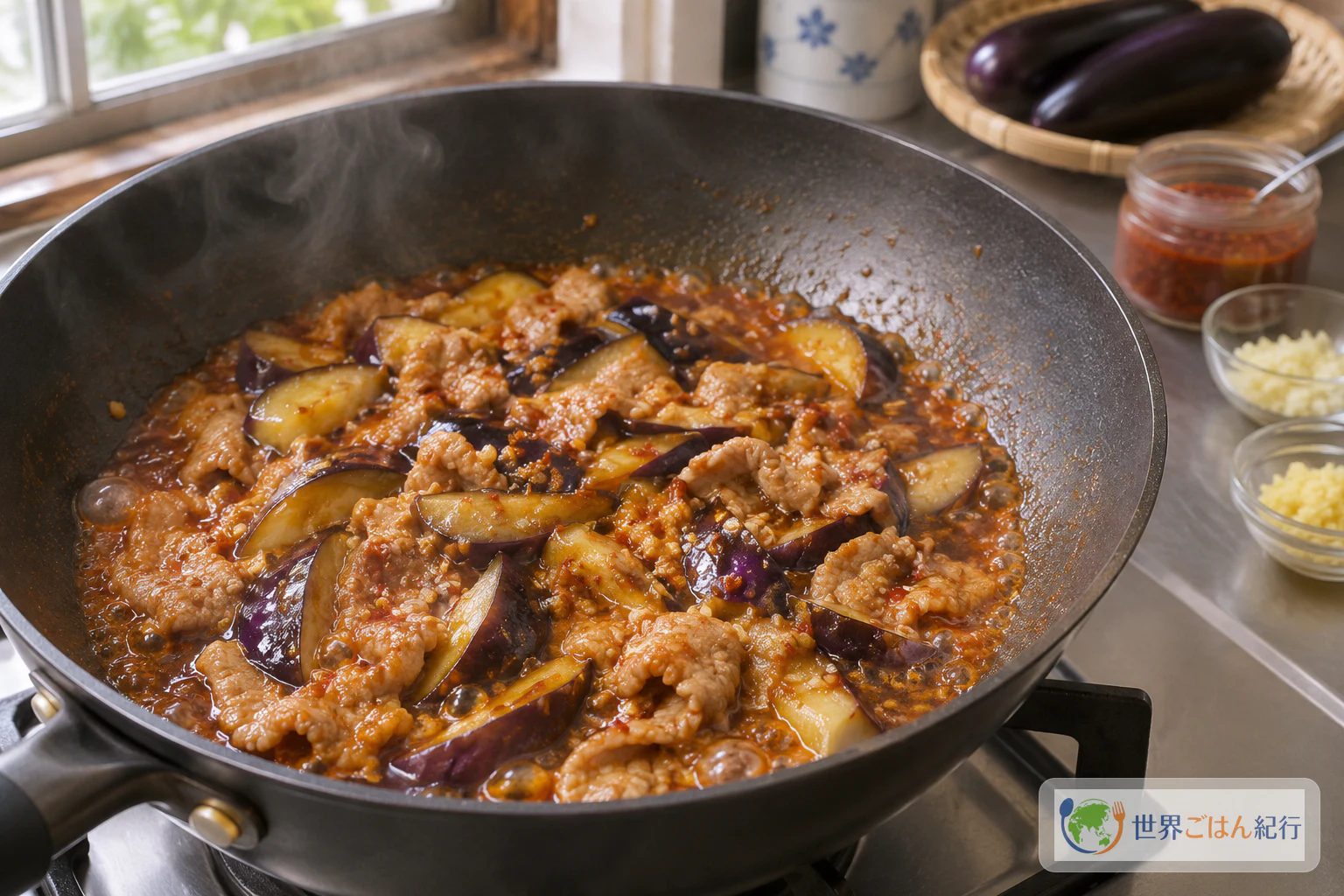
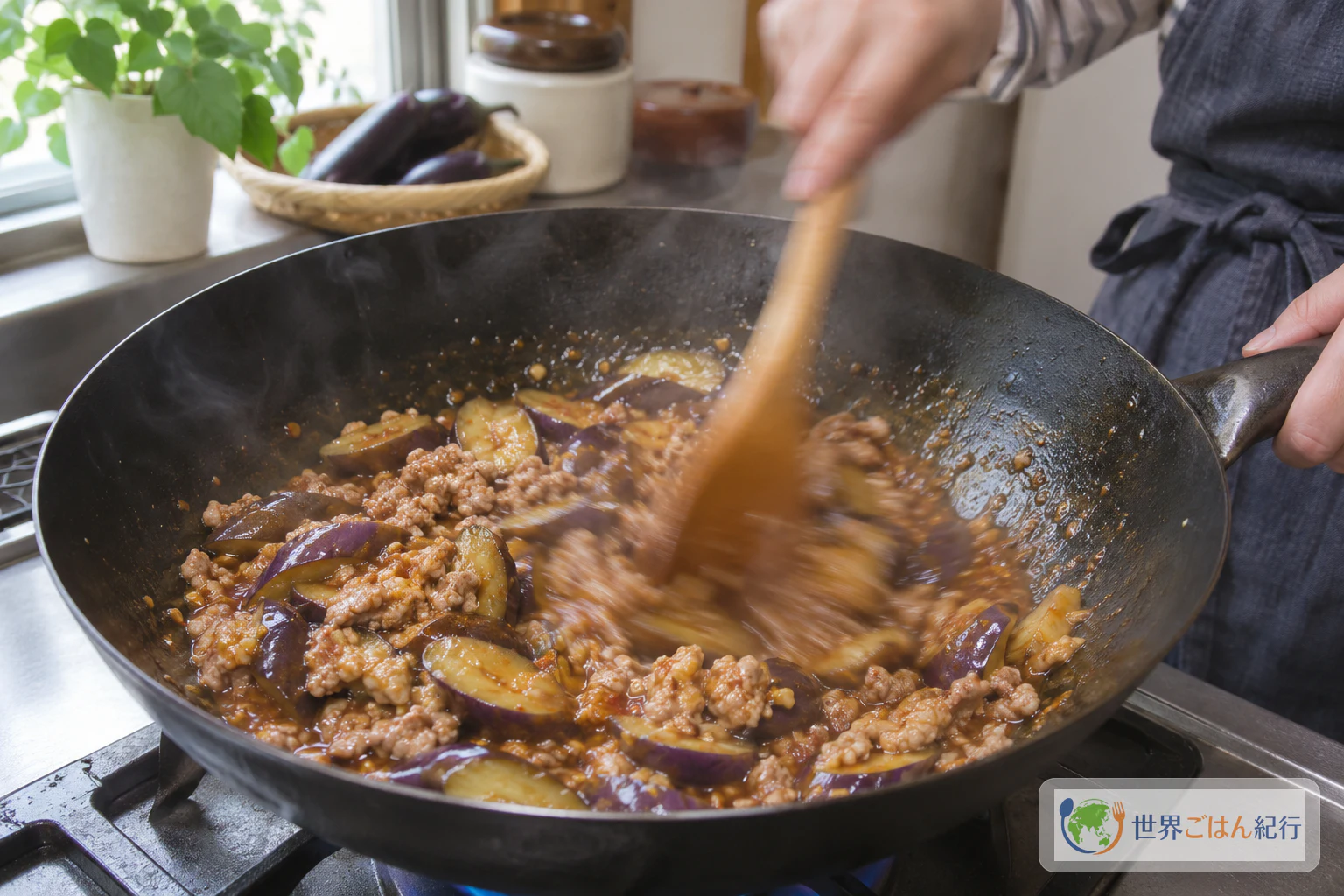
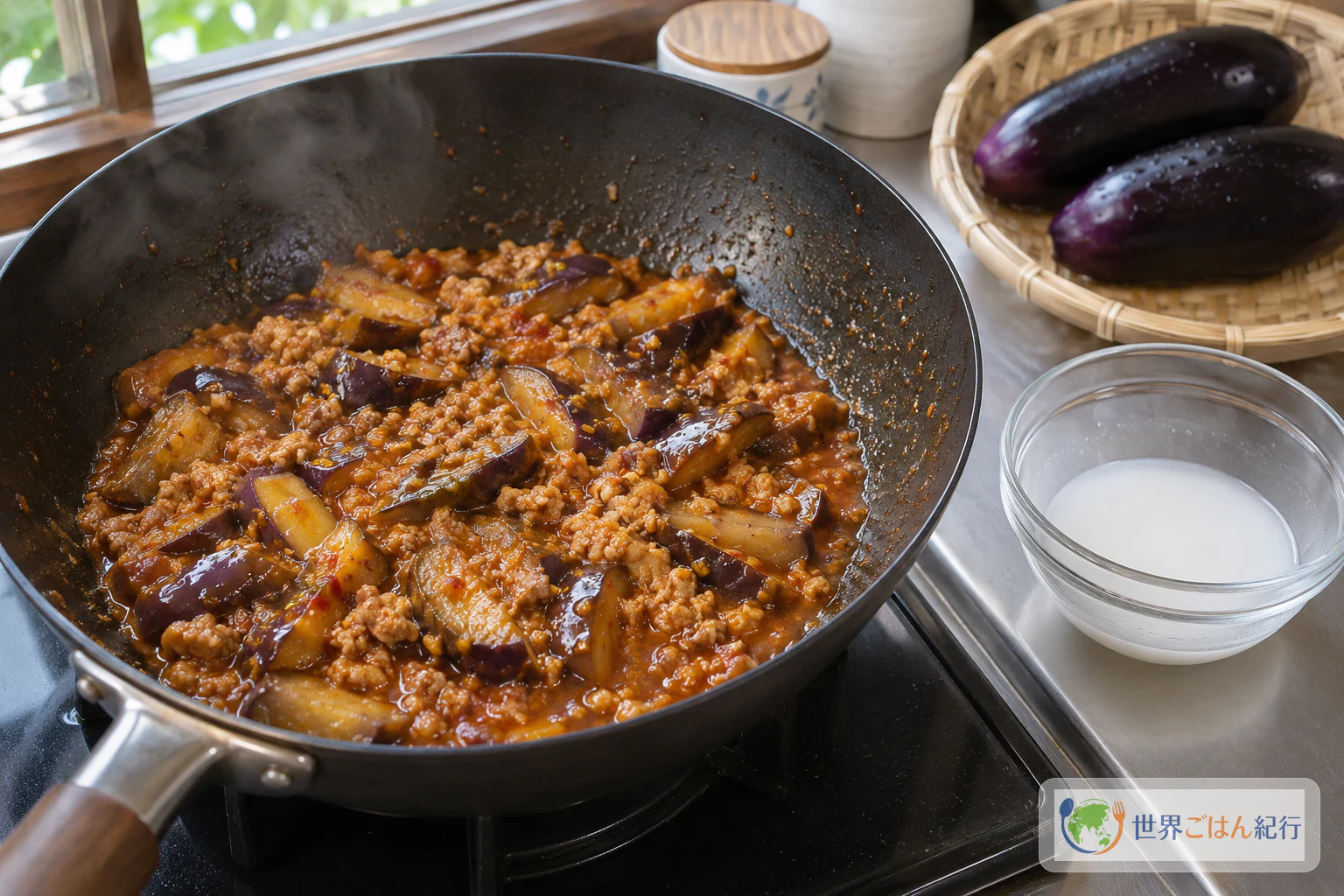
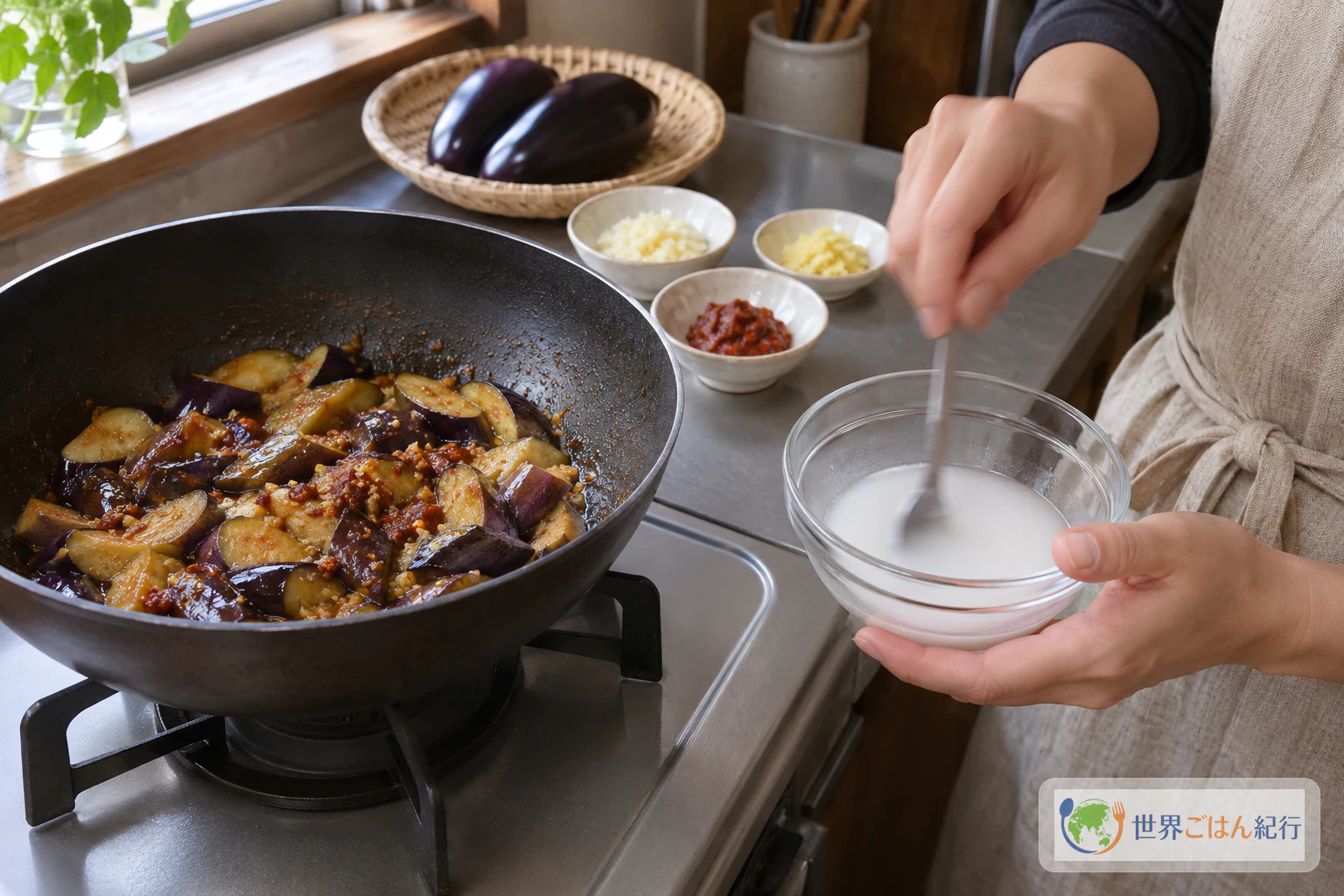
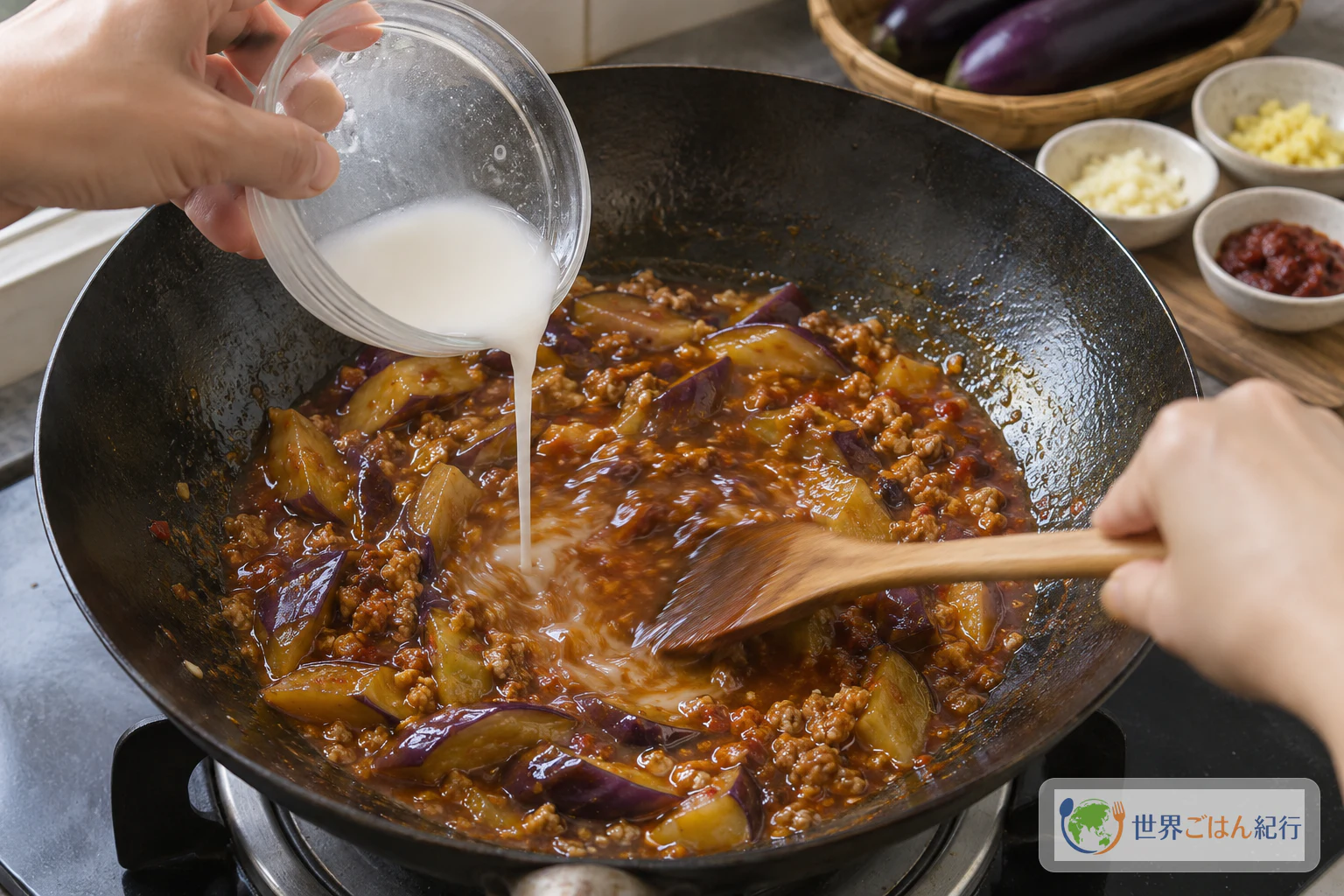
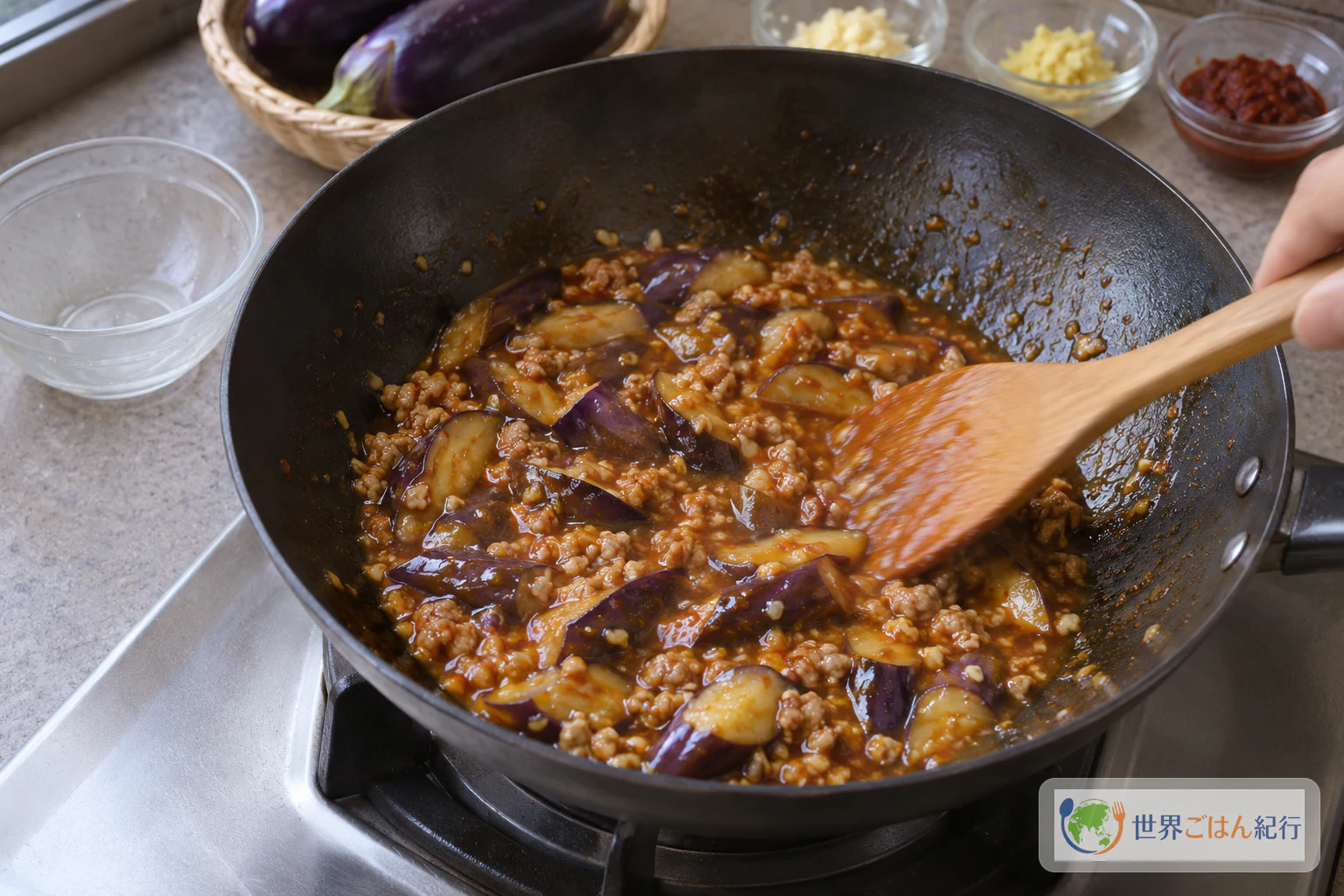
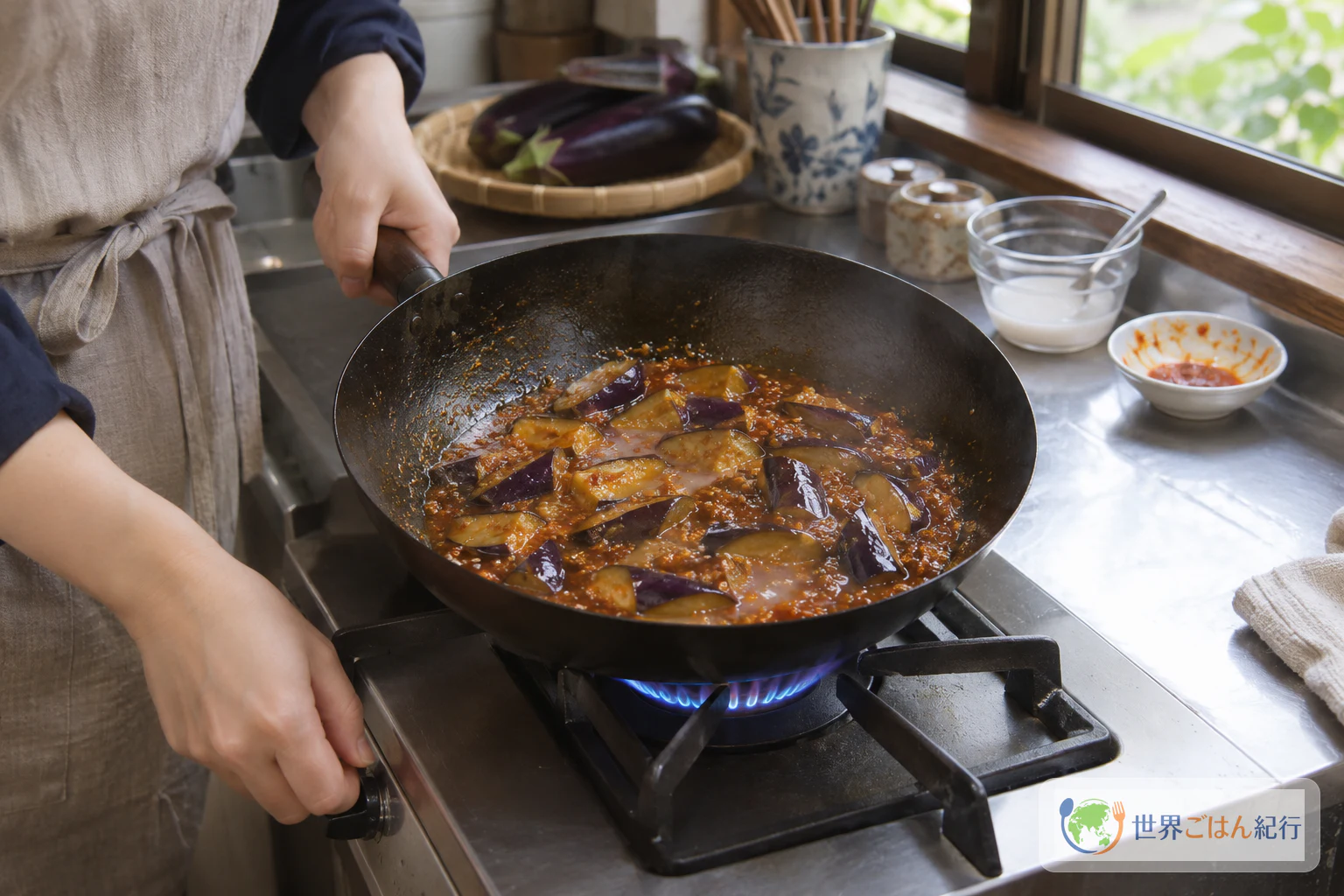
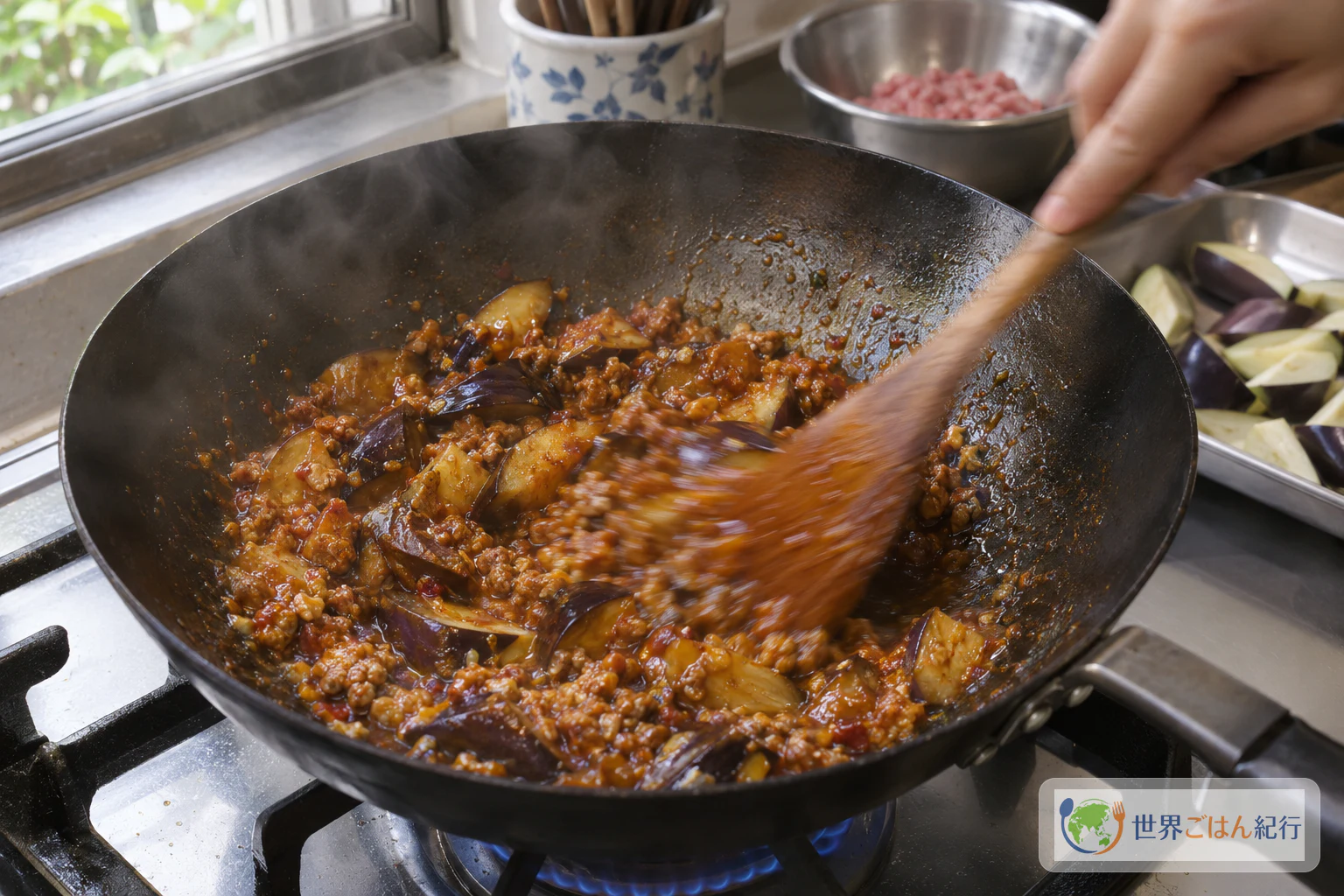
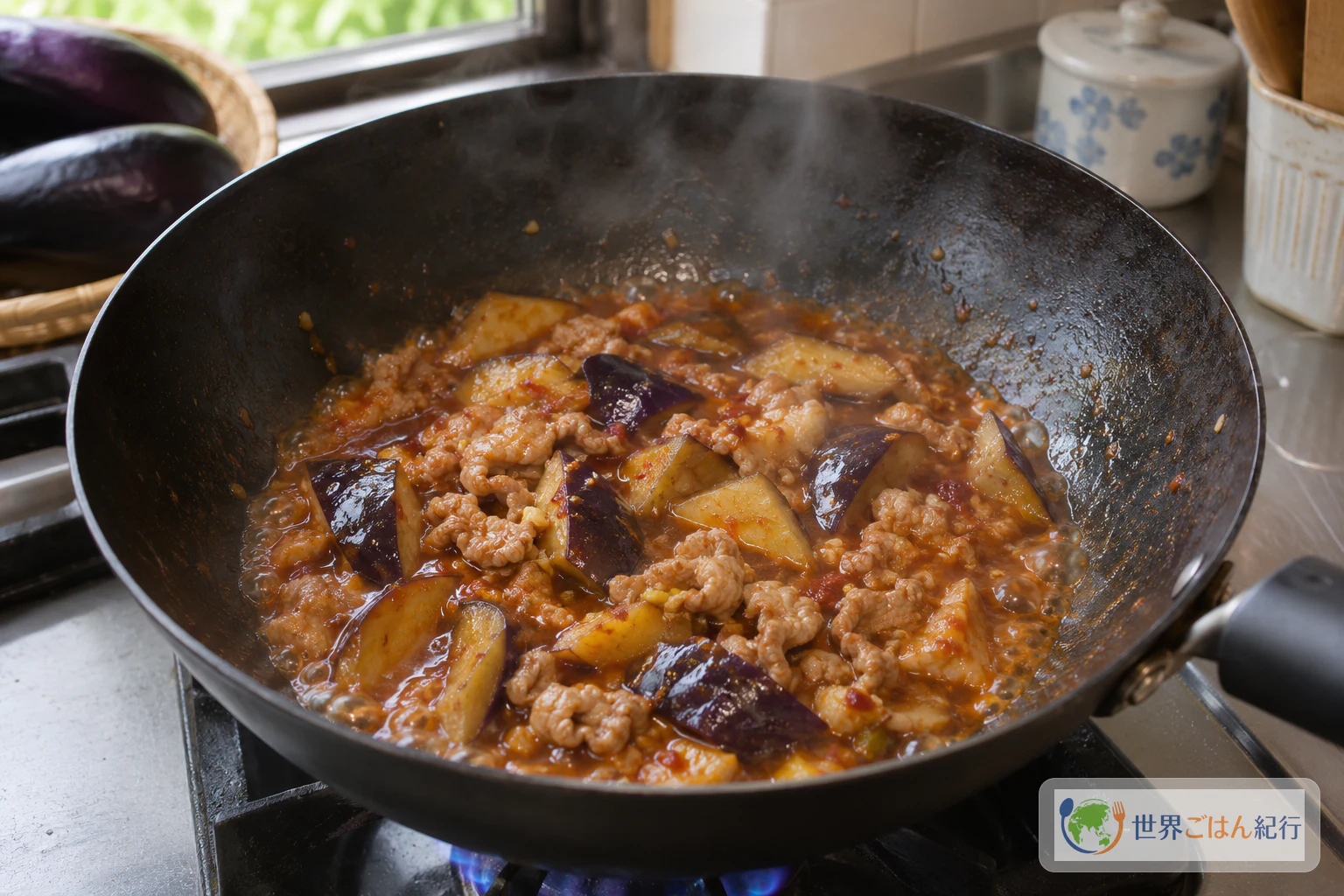
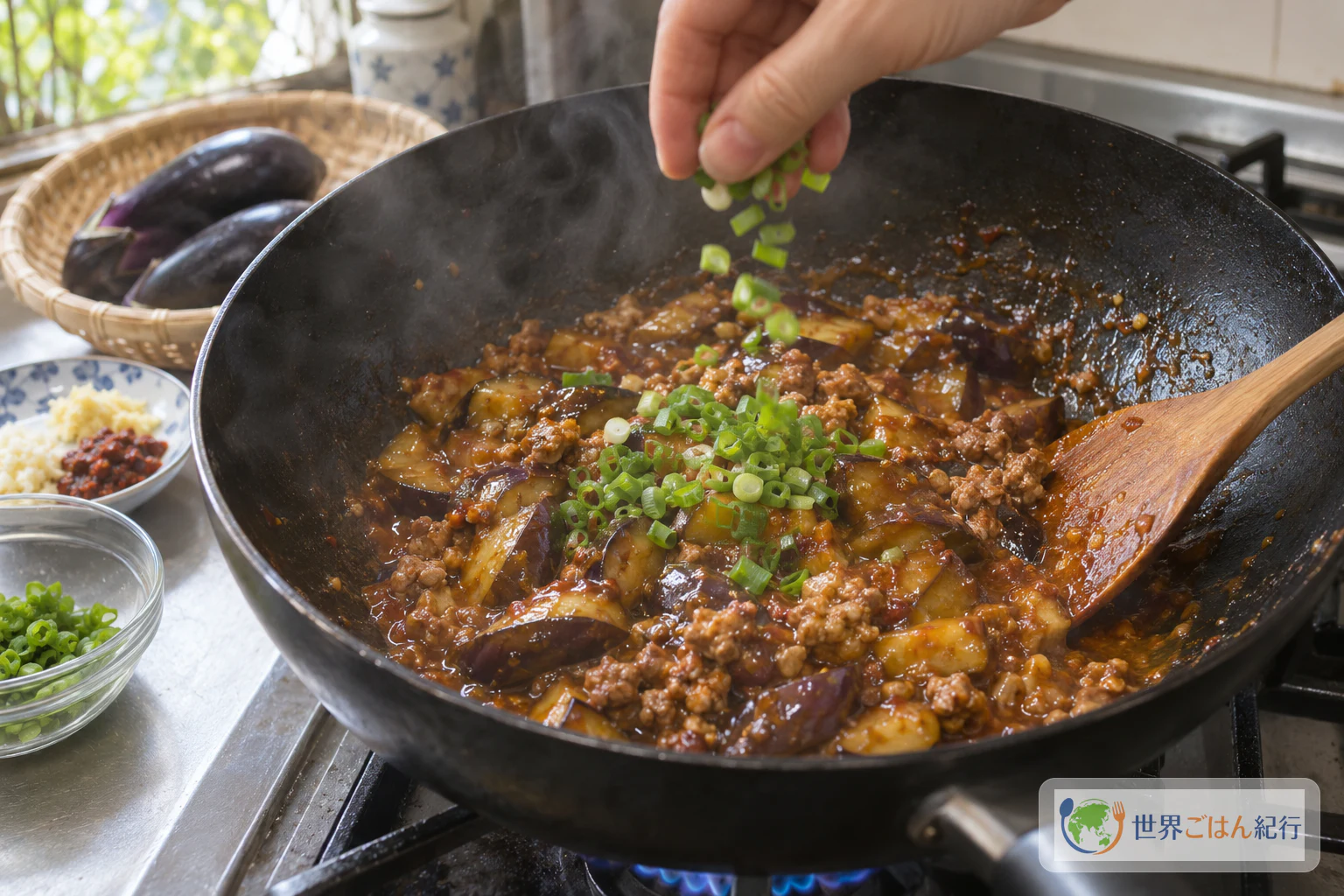
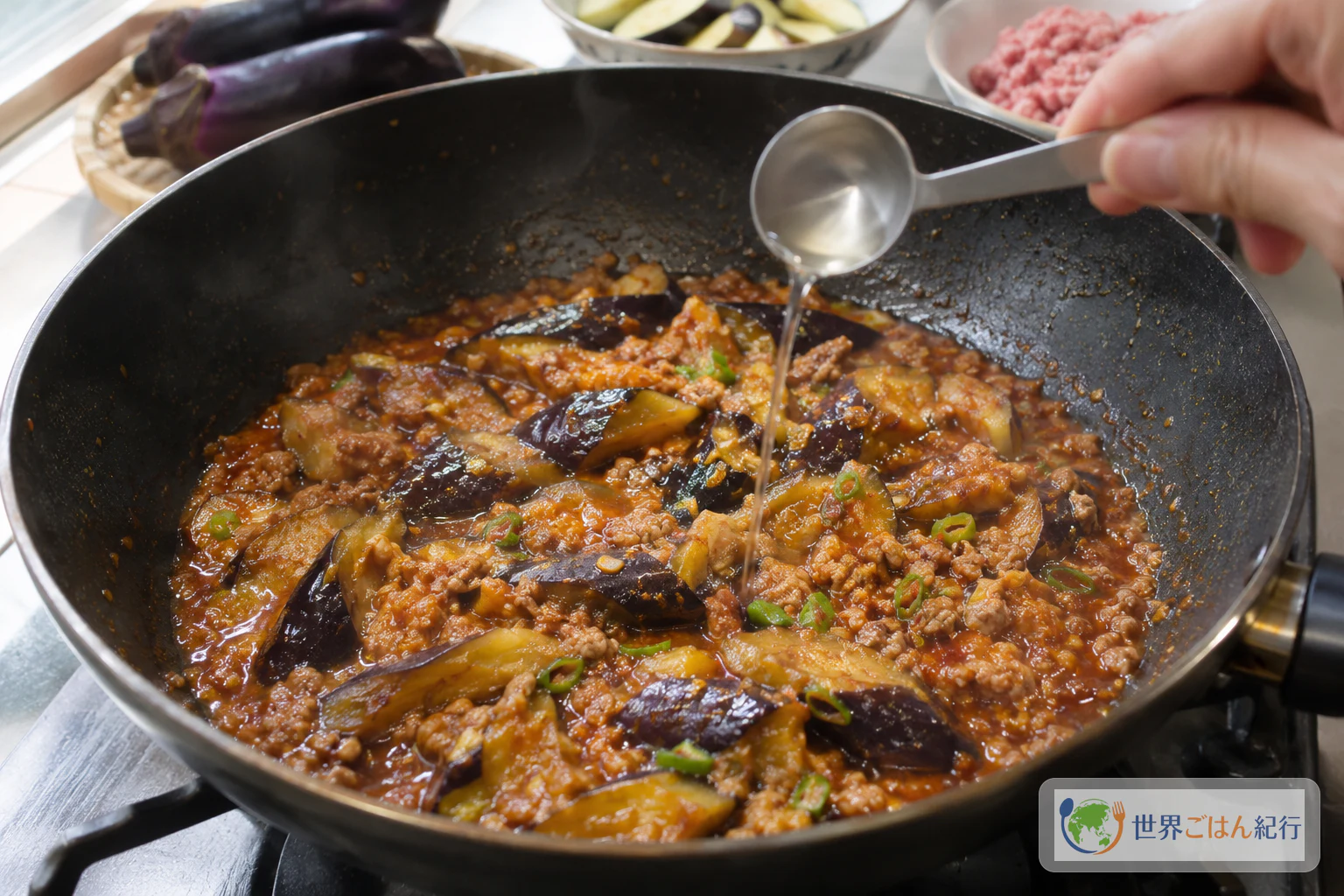
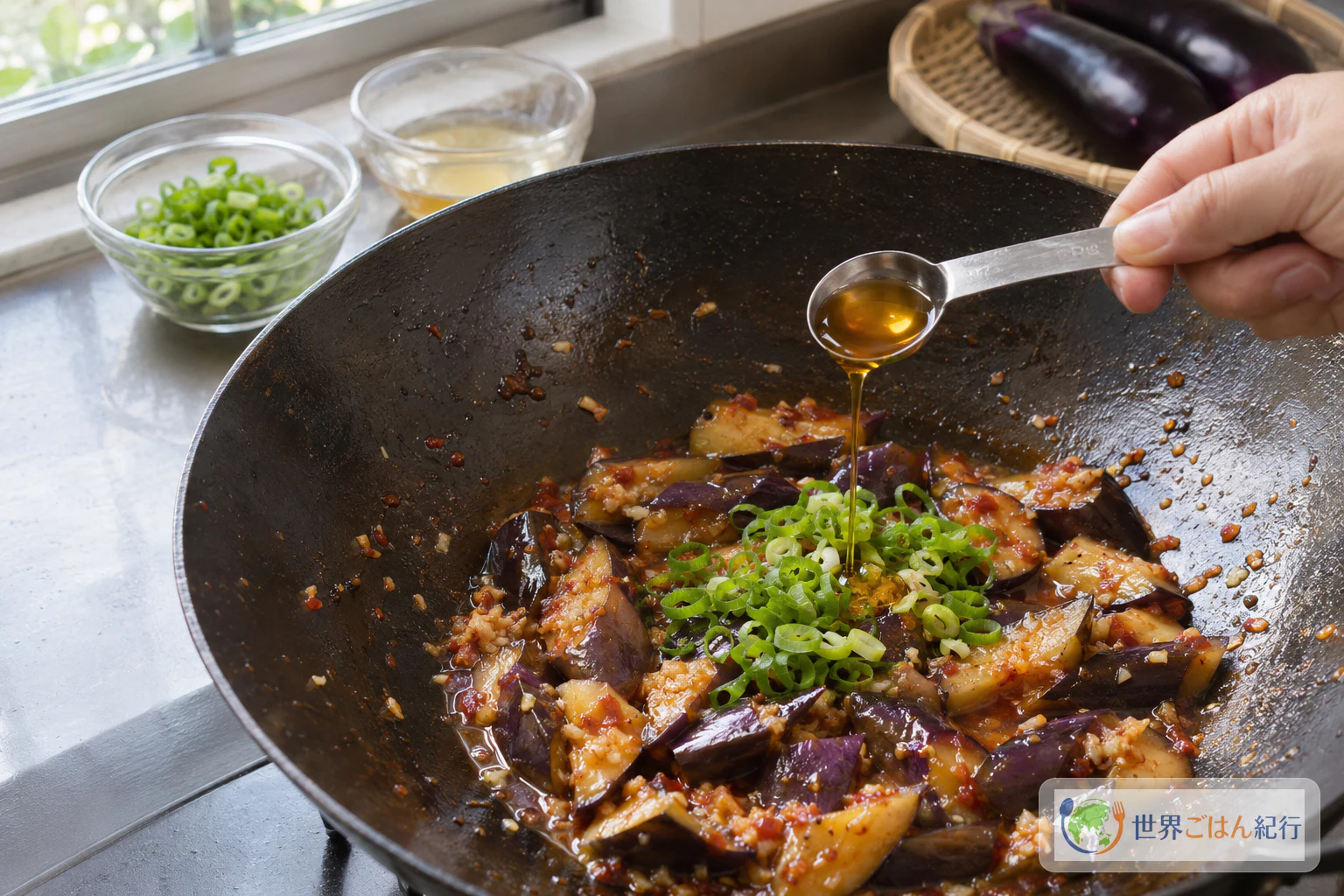
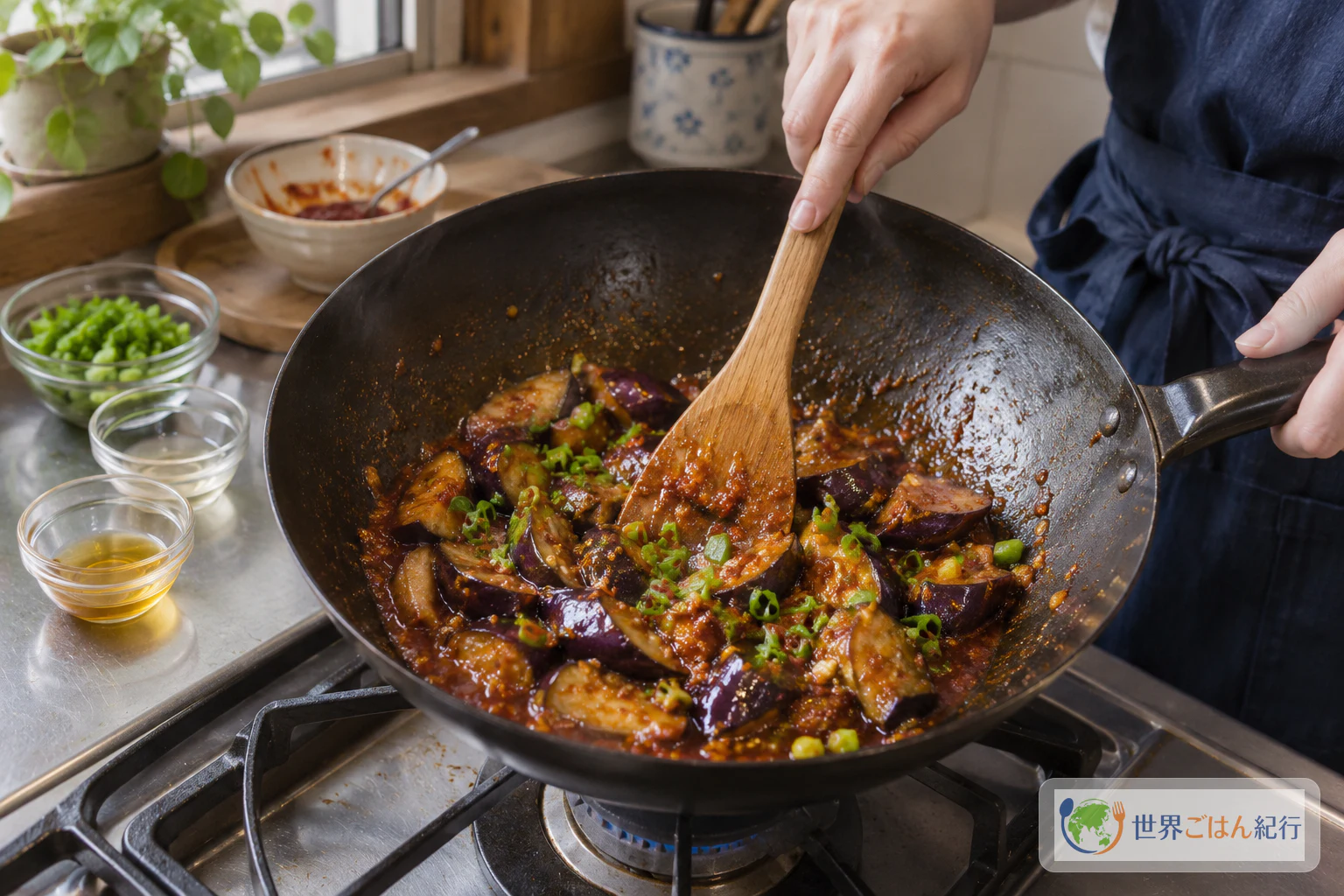
Cook the eggplant first in sesame oil under a lid, take it out, build the pork sauce in the same pan, then bring the two together. Thicken with the heat off, relight the burner, and finish with green onion, vinegar and a last spoonful of sesame oil.
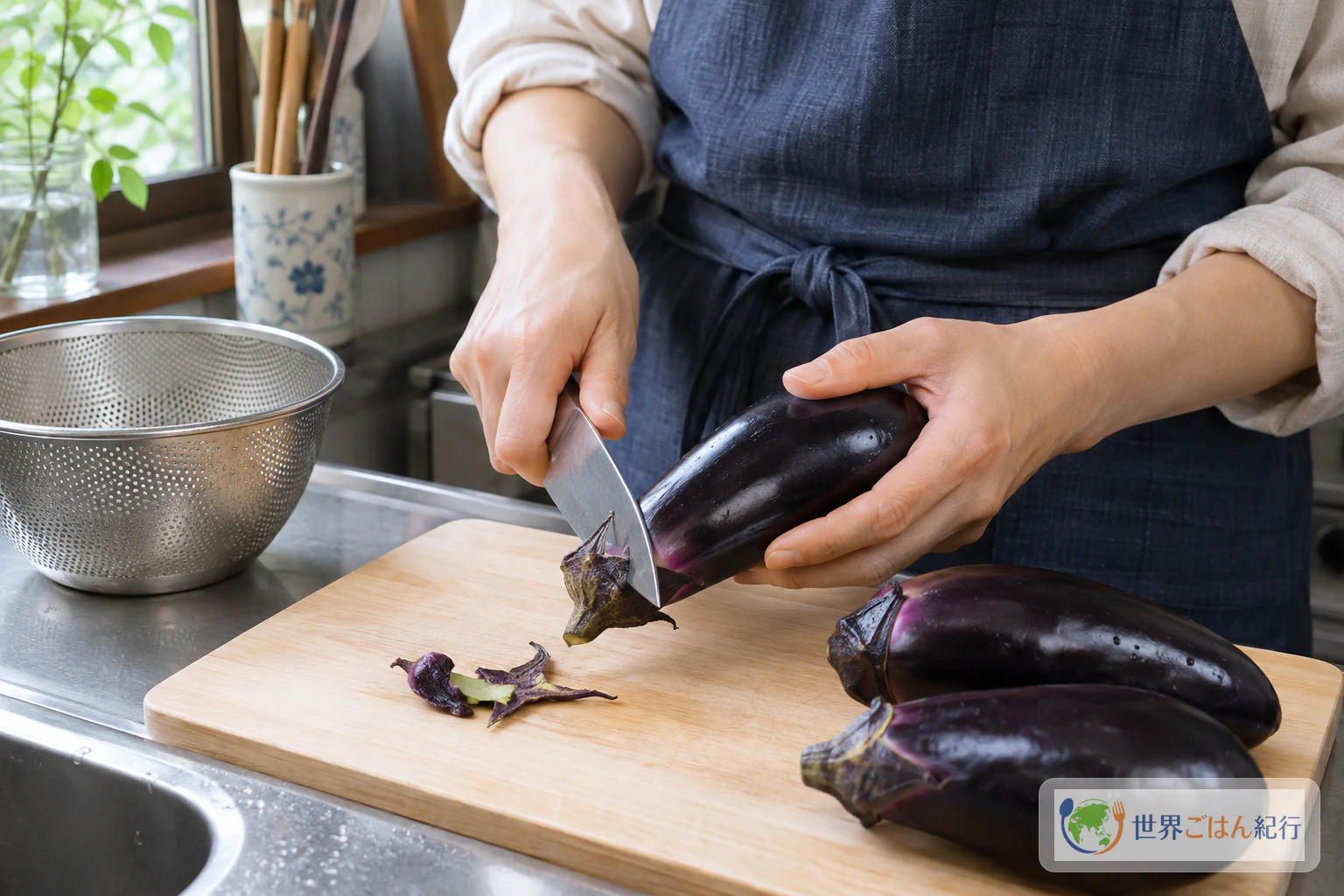
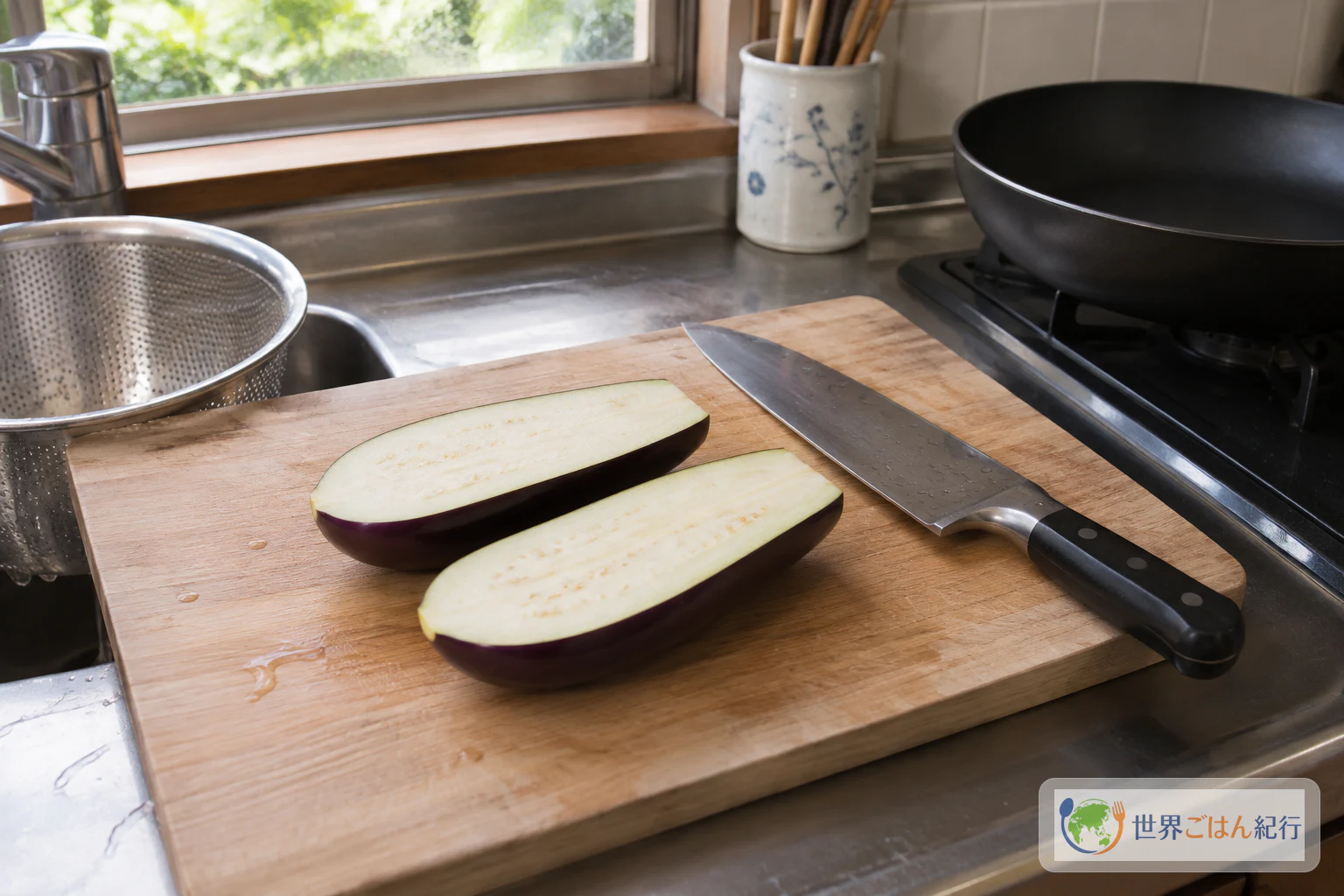
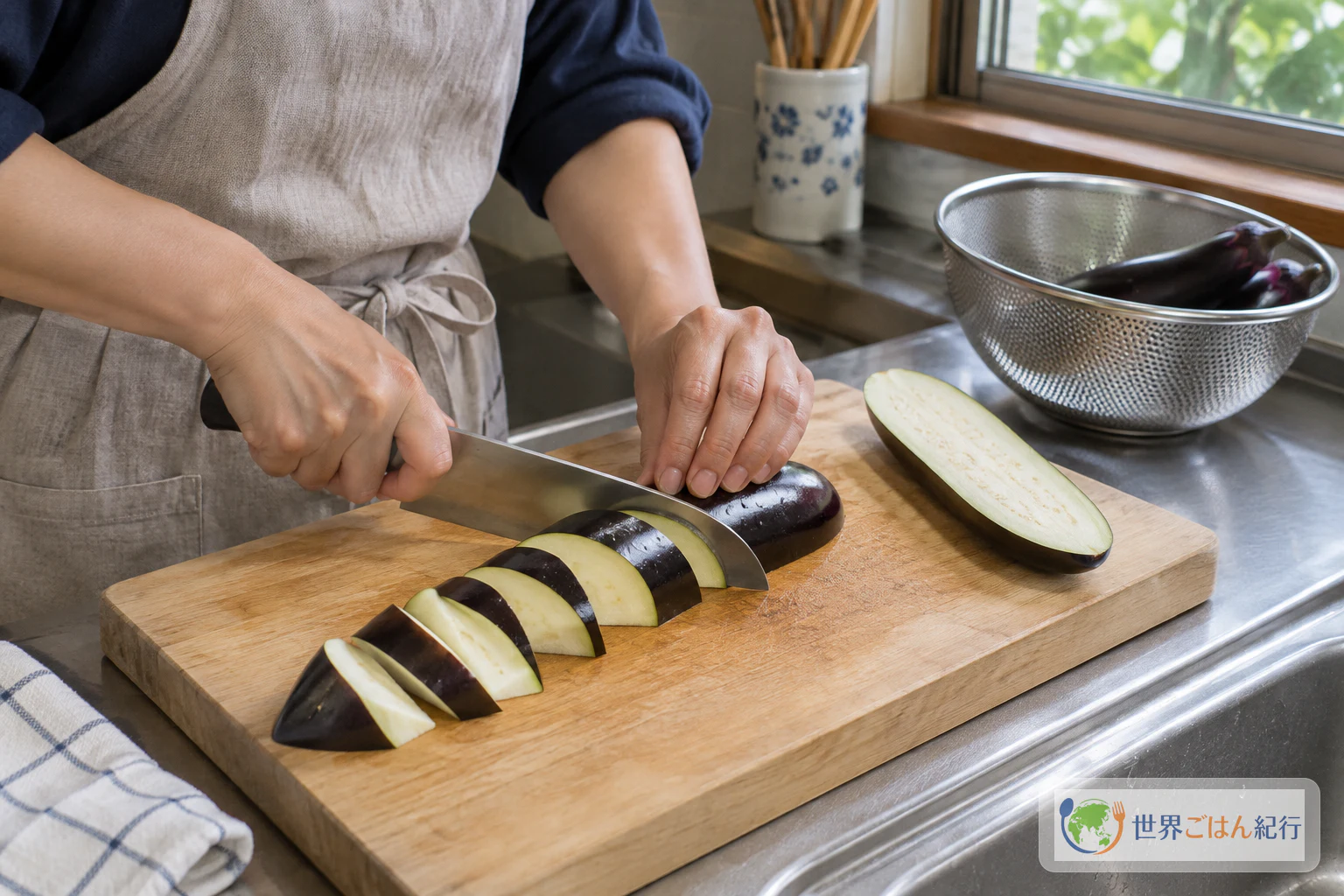
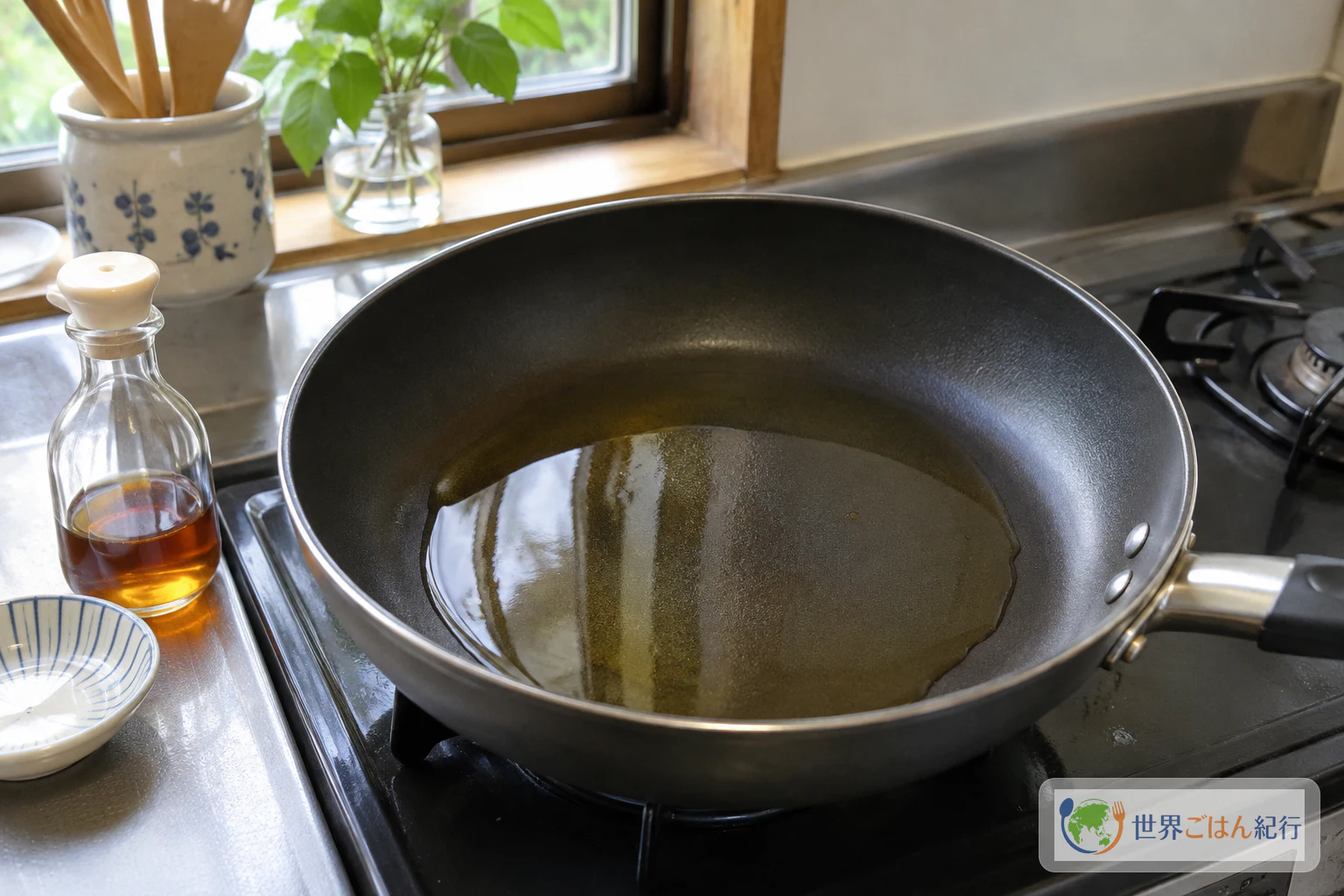
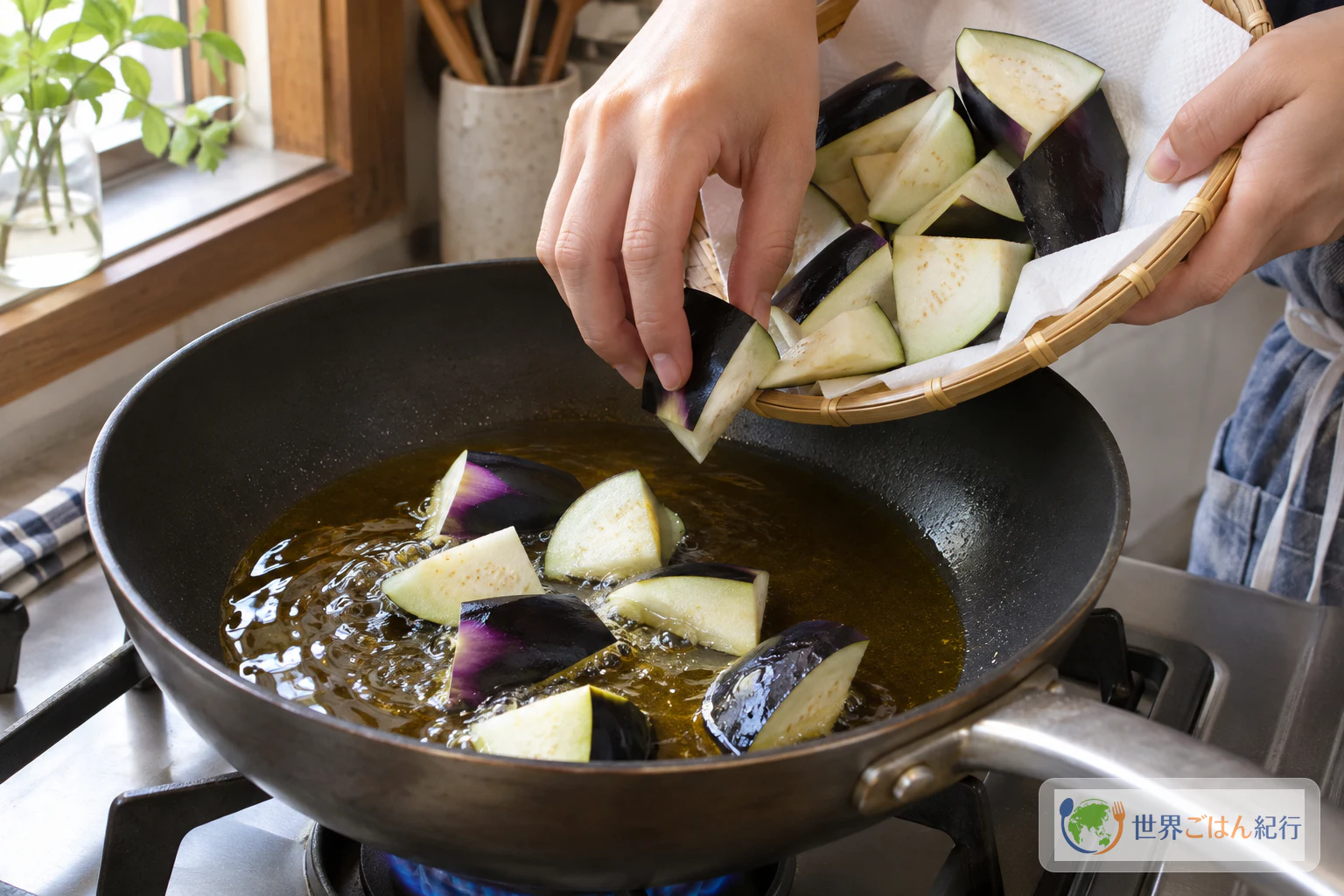
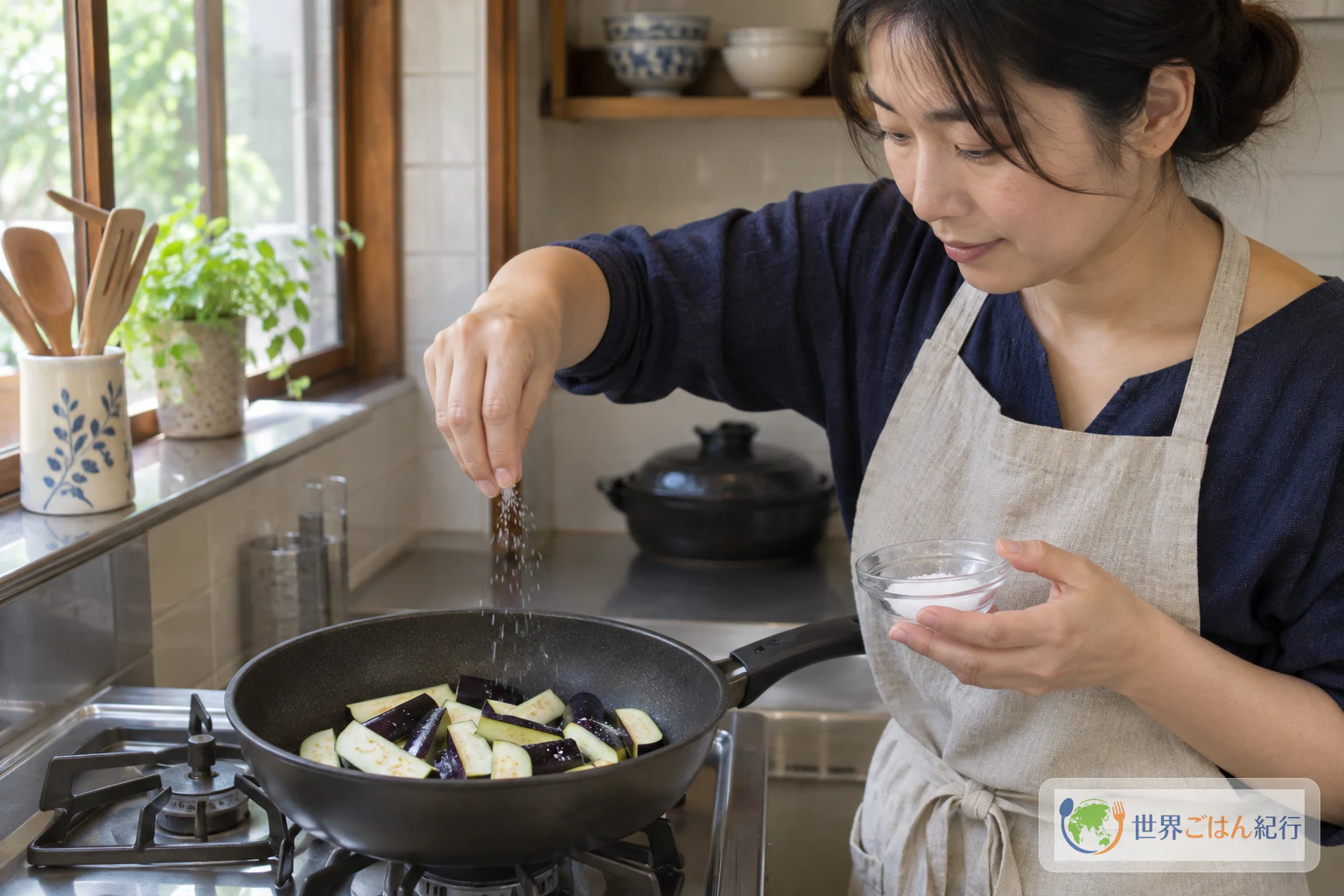
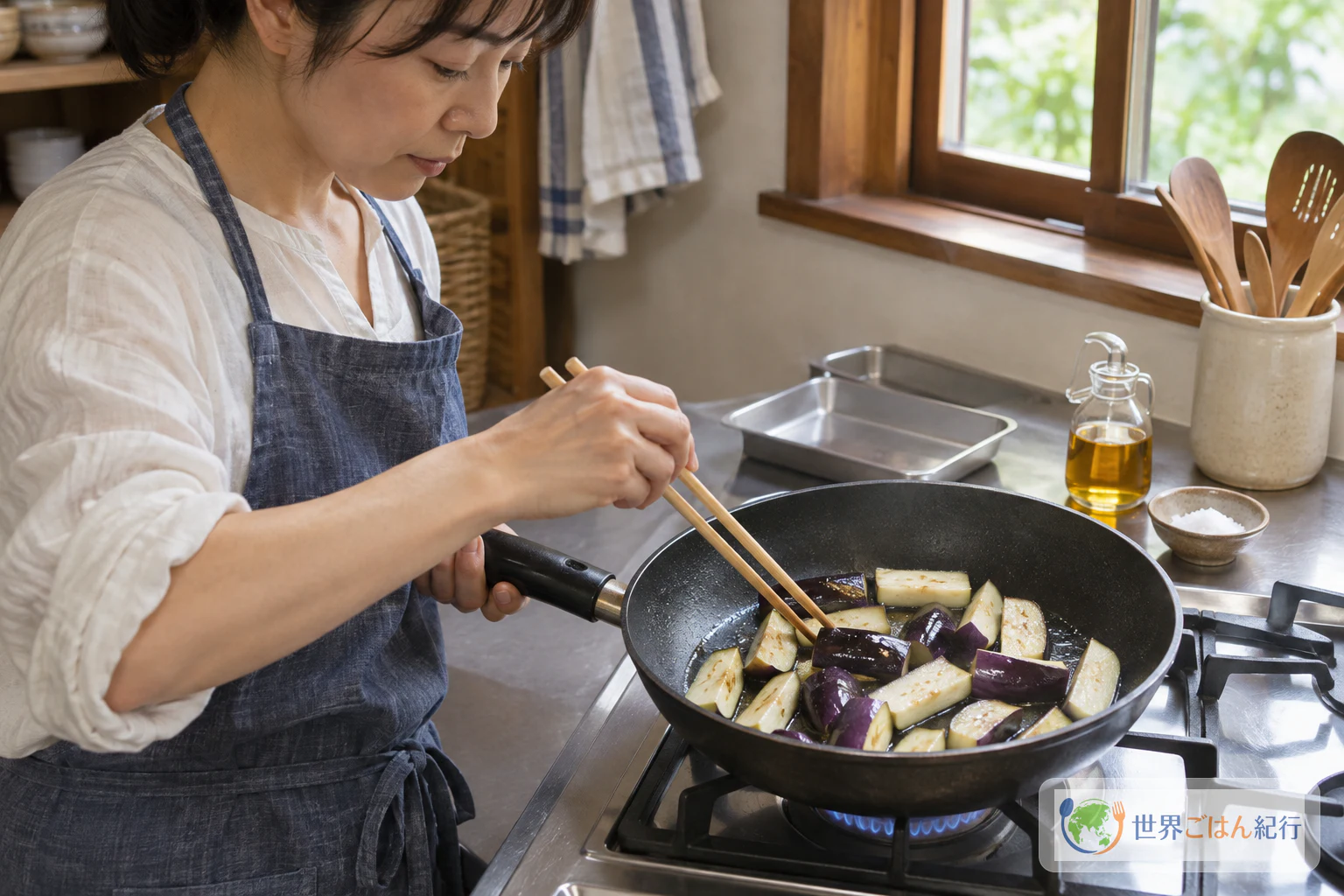
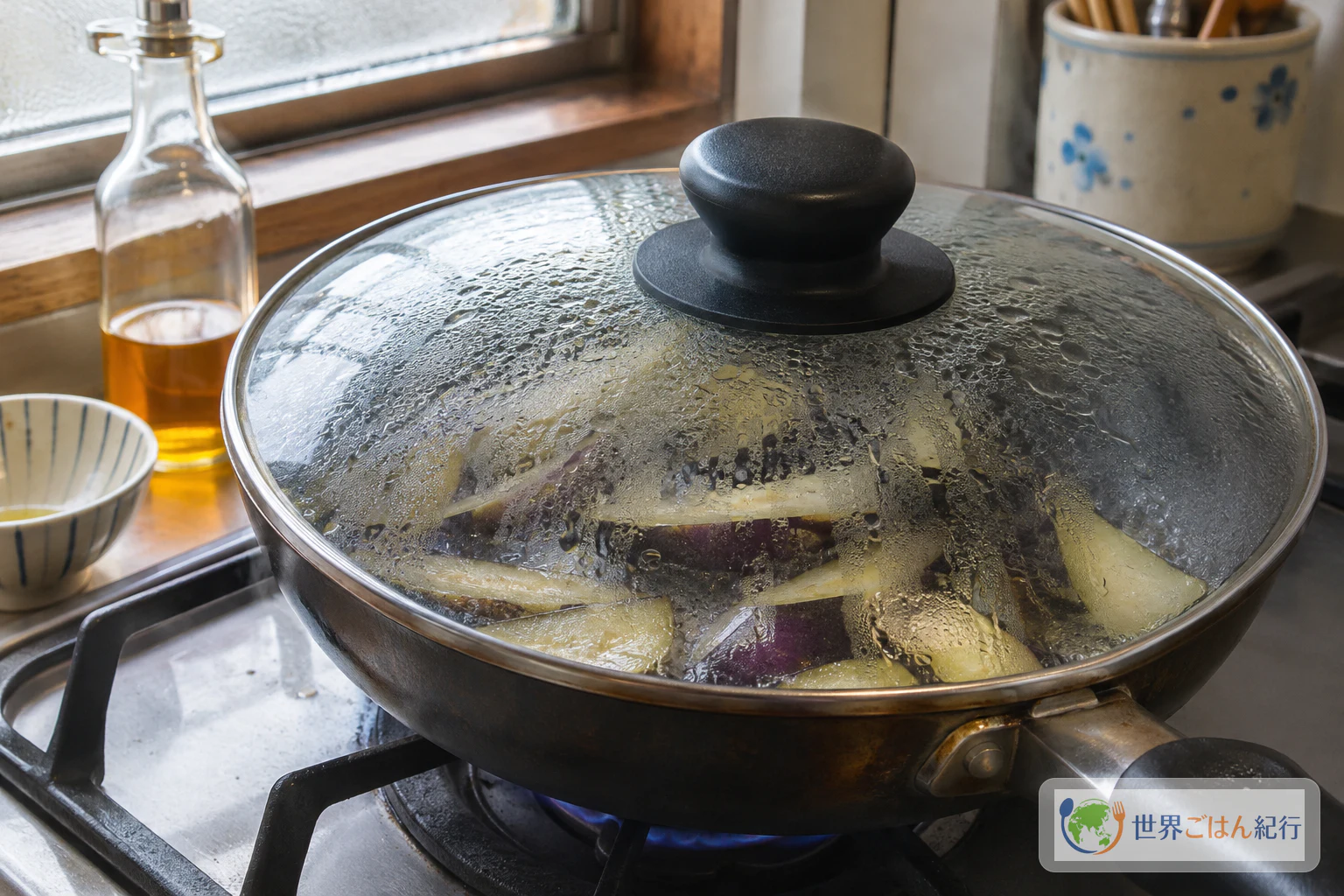
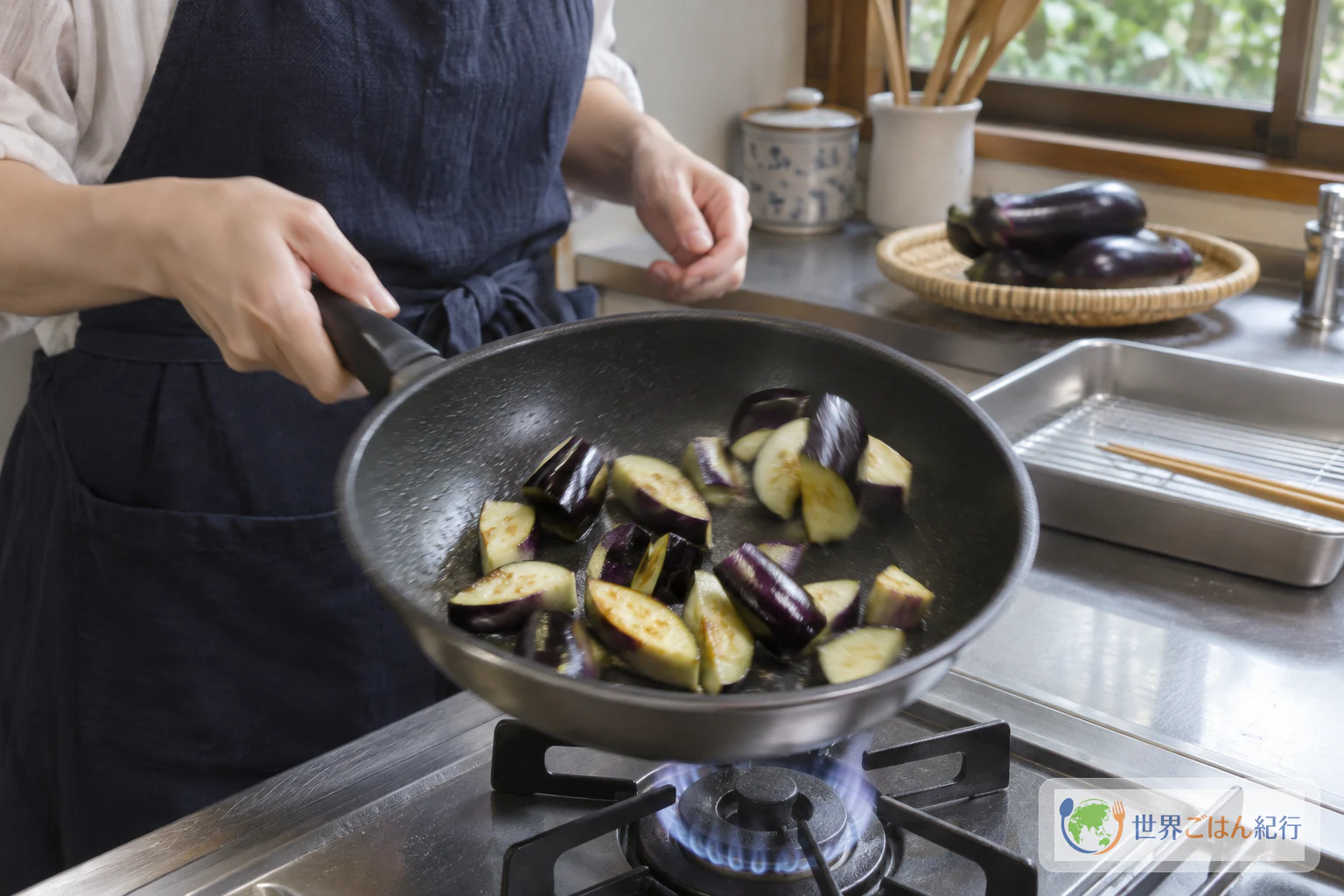
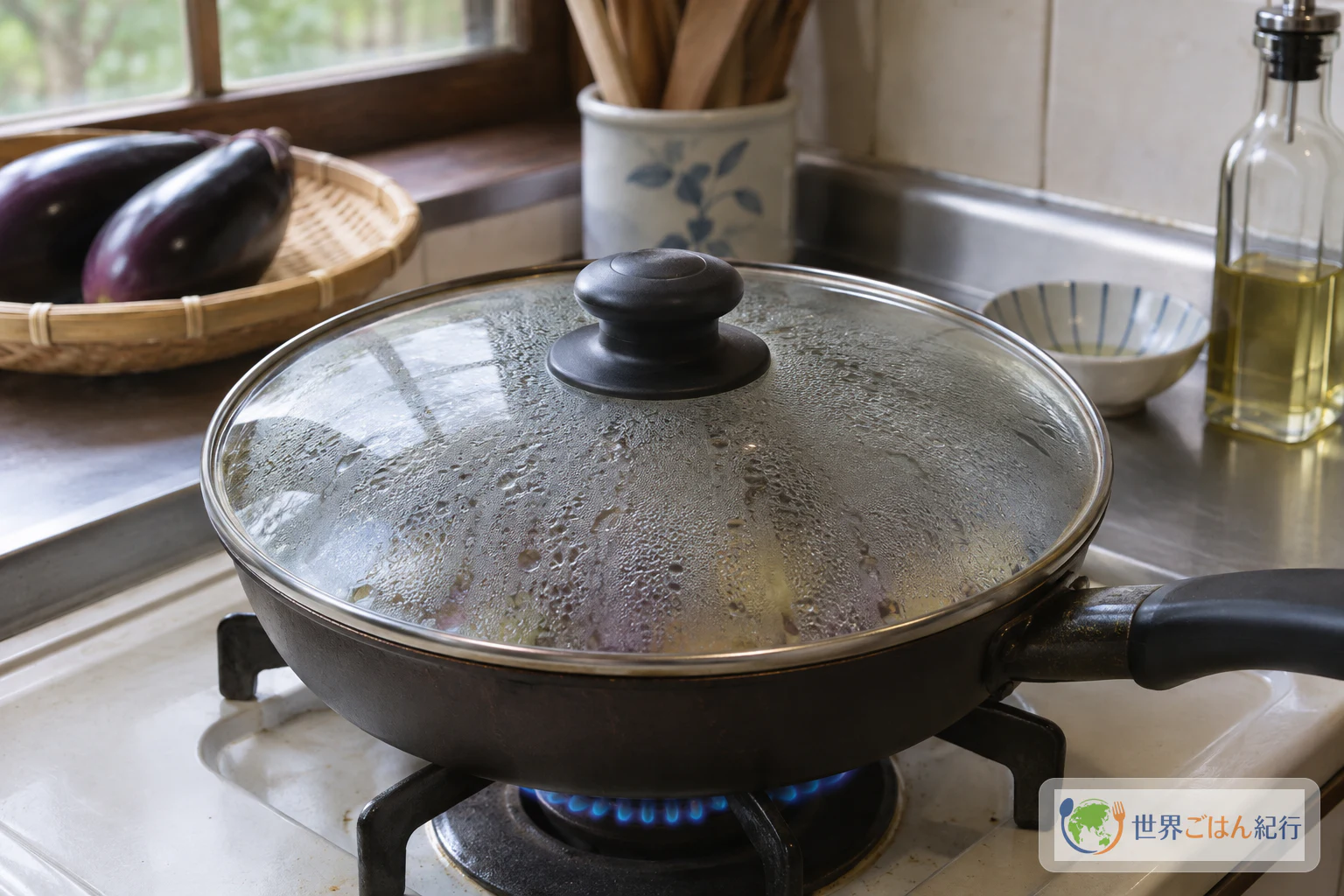
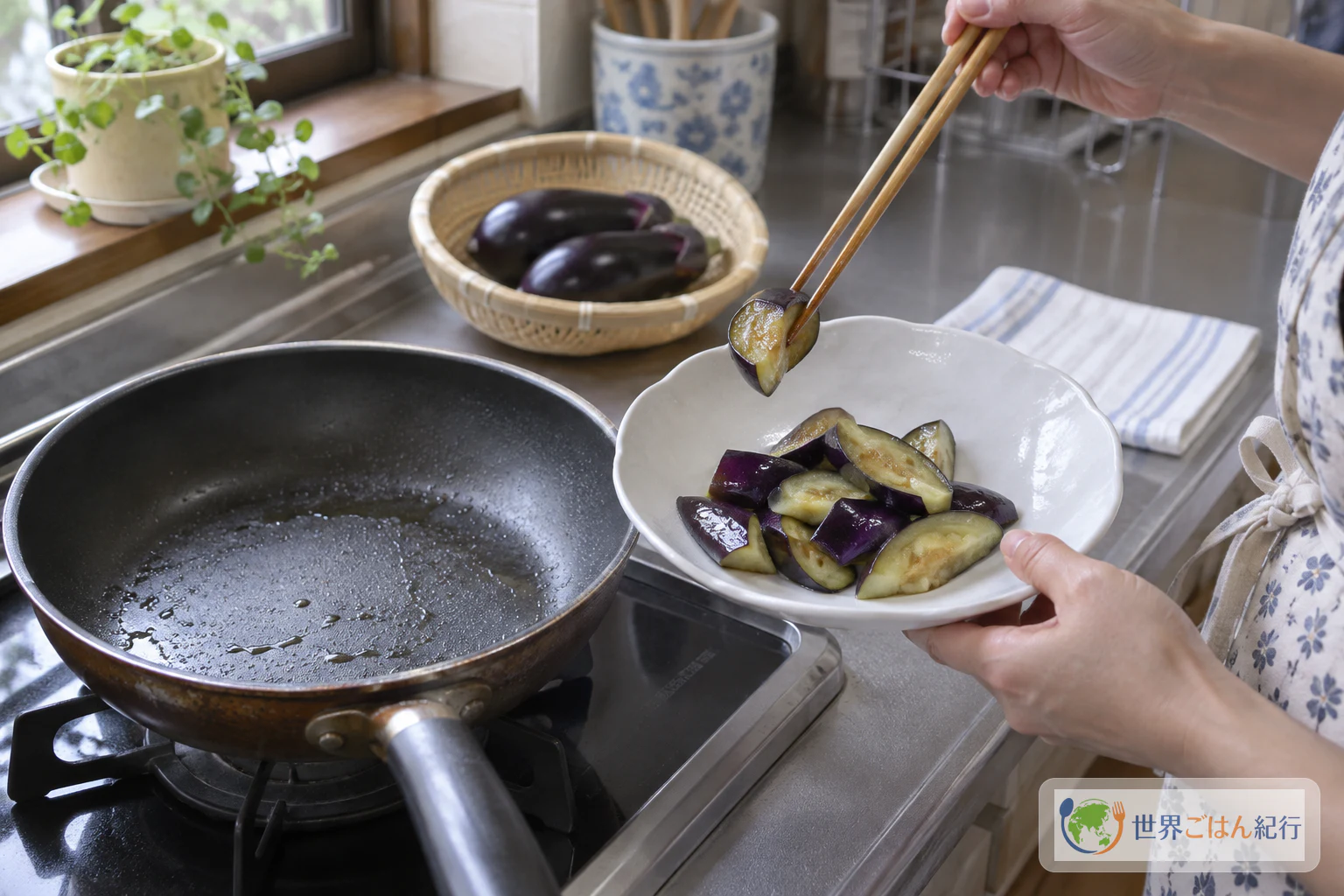
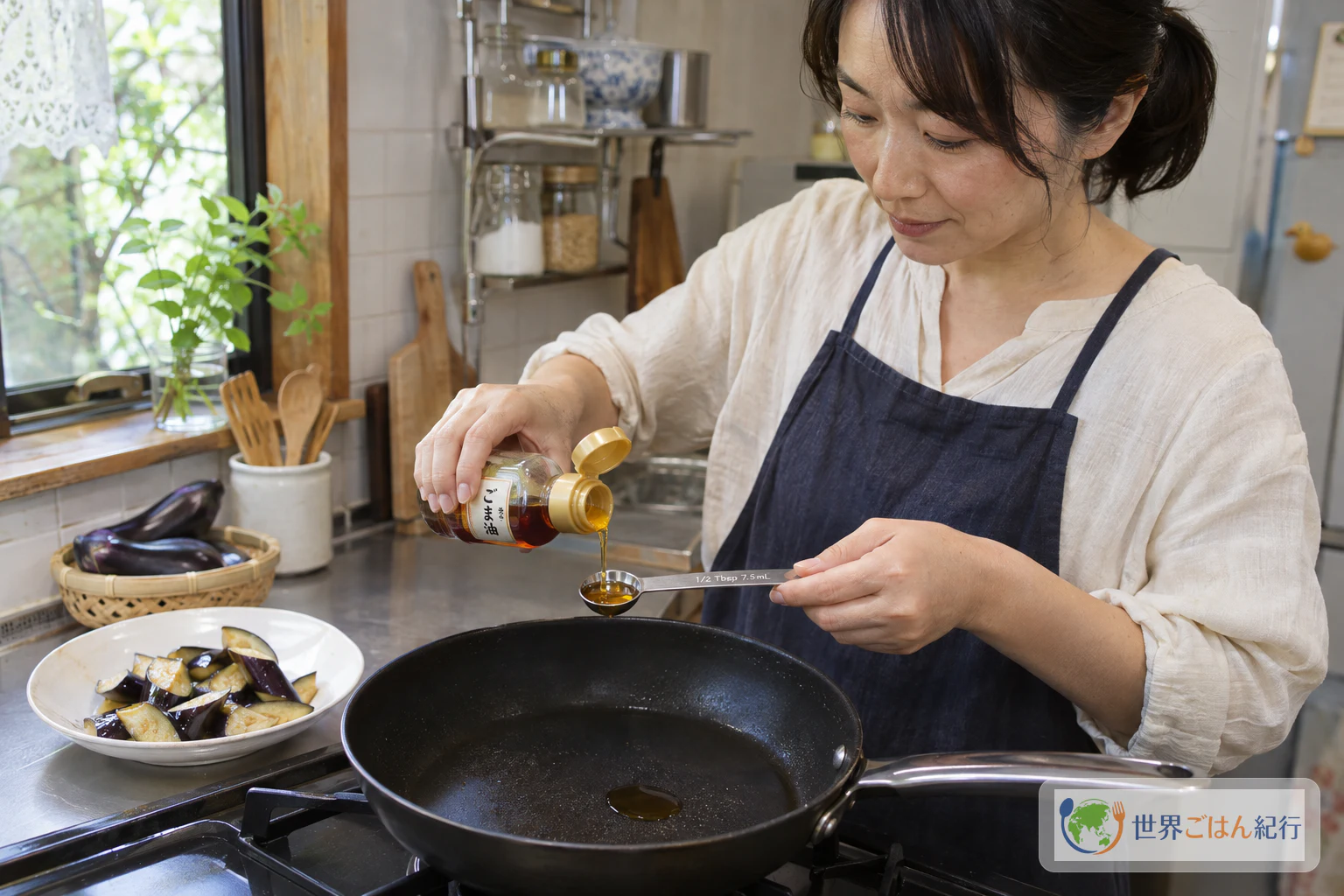
Cut eggplant goes into hot sesame oil with a little salt. The lid comes down, the heat stays low, and steam gathers under the lid. Three minutes or so later, with one shake of the pan in between, the pieces have softened and are ready to set aside. Mabo nasu (麻婆茄子) starts here, in an ordinary home frying pan and with no pot of deep-frying oil.
This article follows one version only: the two-serving Japanese home recipe published by Nisshin OilliO, with 300g of eggplant and 150g of ground pork. It is not presented as the one true mabo nasu, or as a Sichuan original. Other published Japanese recipes differ, and an Ajinomoto developer interviewed by the company describes the dish as Chinese food developed in Japan, with a seasoning different from Sichuan's yuxiang eggplant (魚香茄子). More on that appears after the recipe.
Sekai Gohan has not kitchen-tested this recipe. Nisshin OilliO's page lists a cooking time of 15 minutes, which is the published figure and not a time measured for this article. The page does not state a cup standard for the hot water, a number for "a little" salt or pepper, or a type of vinegar, so none has been added here.
Ingredients (2 Servings)
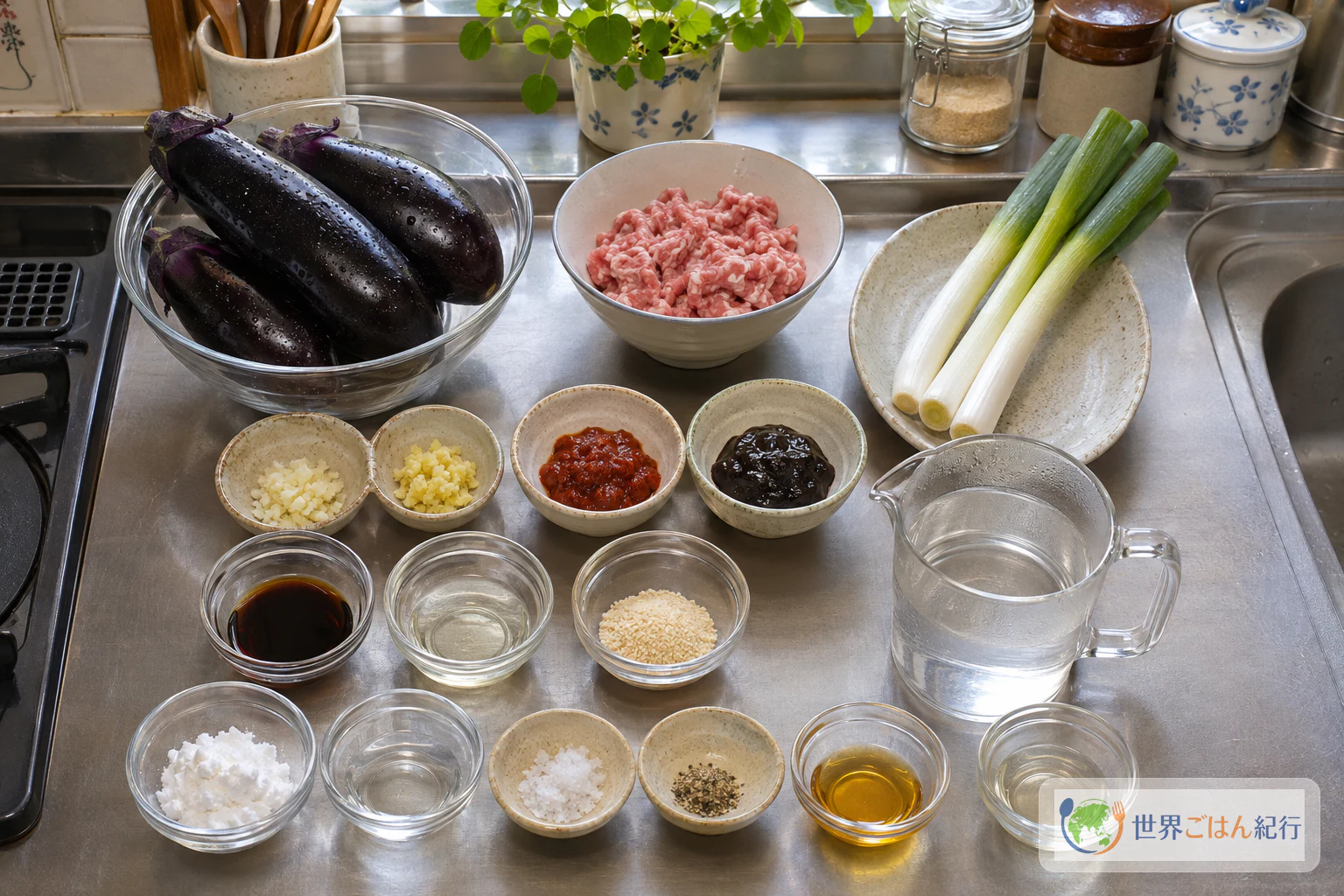
The letters A, B and C mark the three groups you prepare ahead and add together during cooking.
Choosing What to Buy: Two Pastes That Are Not Interchangeable
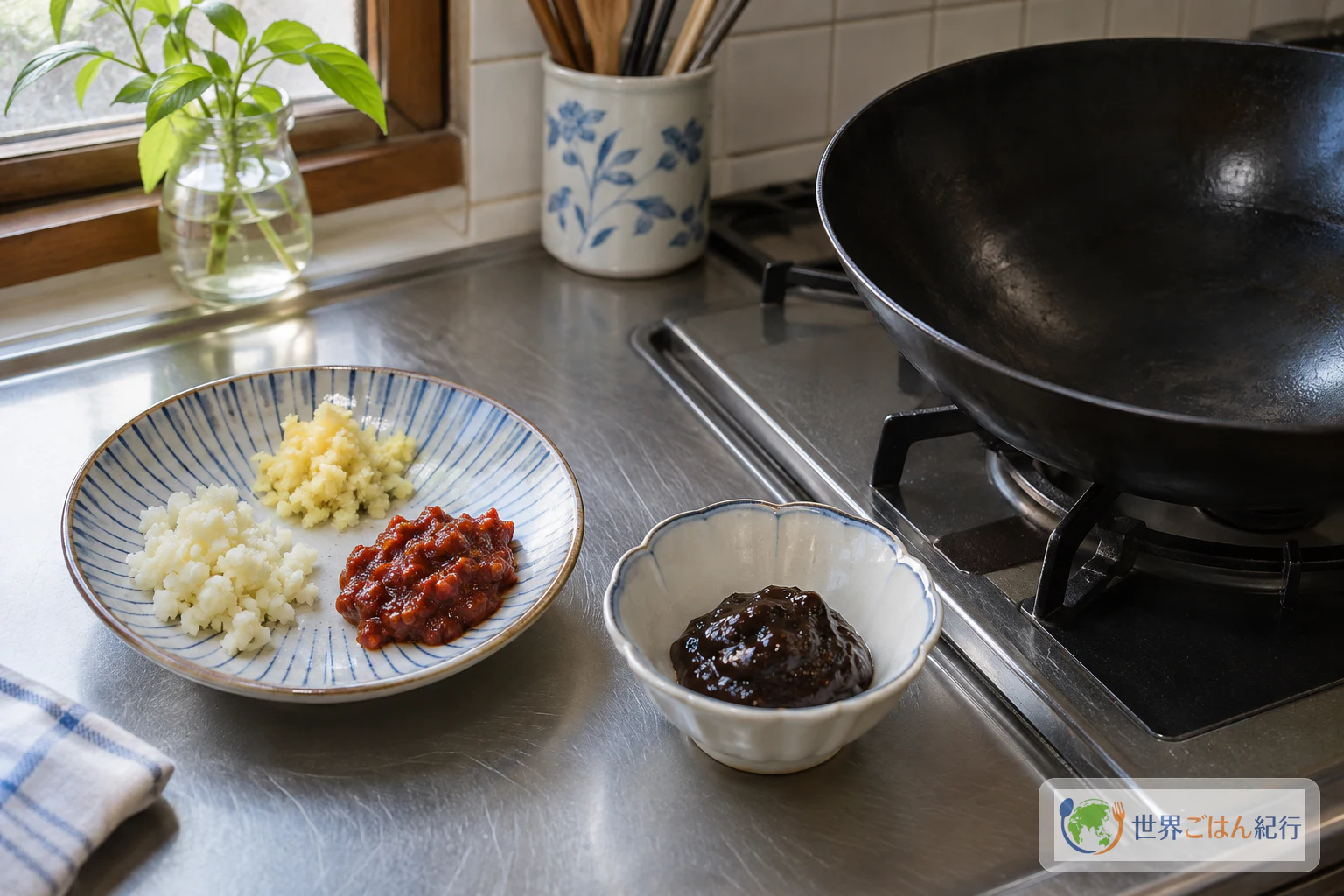
Doubanjiang and tianmianjiang are different things. Look for both under those generic names in the Chinese-ingredients section of a grocery store or online. Saltiness and heat vary by maker, so the same spoonful of doubanjiang can taste different from one jar to the next.
Tianmianjiang is not red miso, and it is not the same as a blended miso containing tianmianjiang. There is no tested ratio for replacing it here, so this recipe doesn't offer one.
- Eggplant: Ordinary long Japanese eggplant works. Thickness varies by variety, so go by the 300g weight rather than the count.
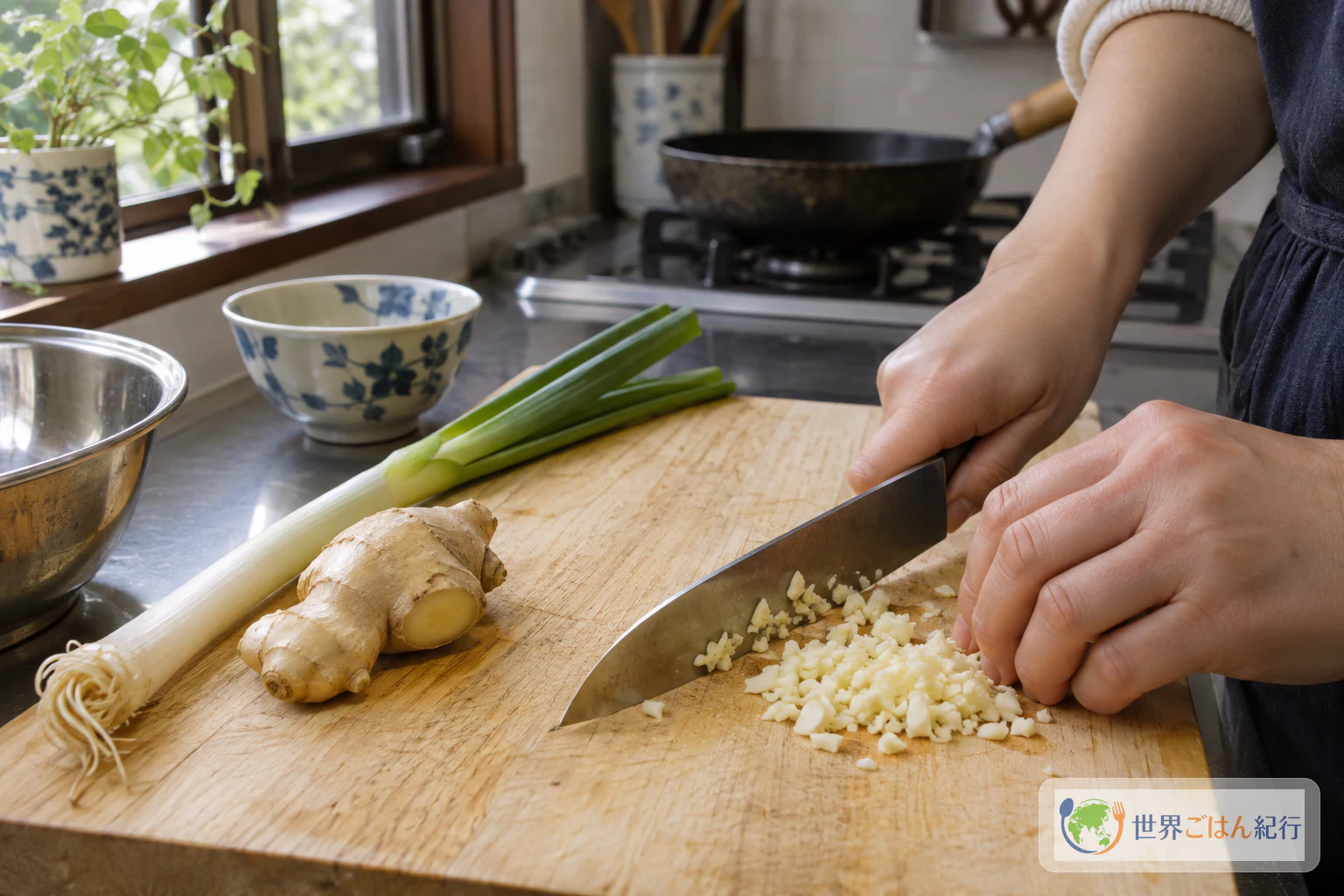
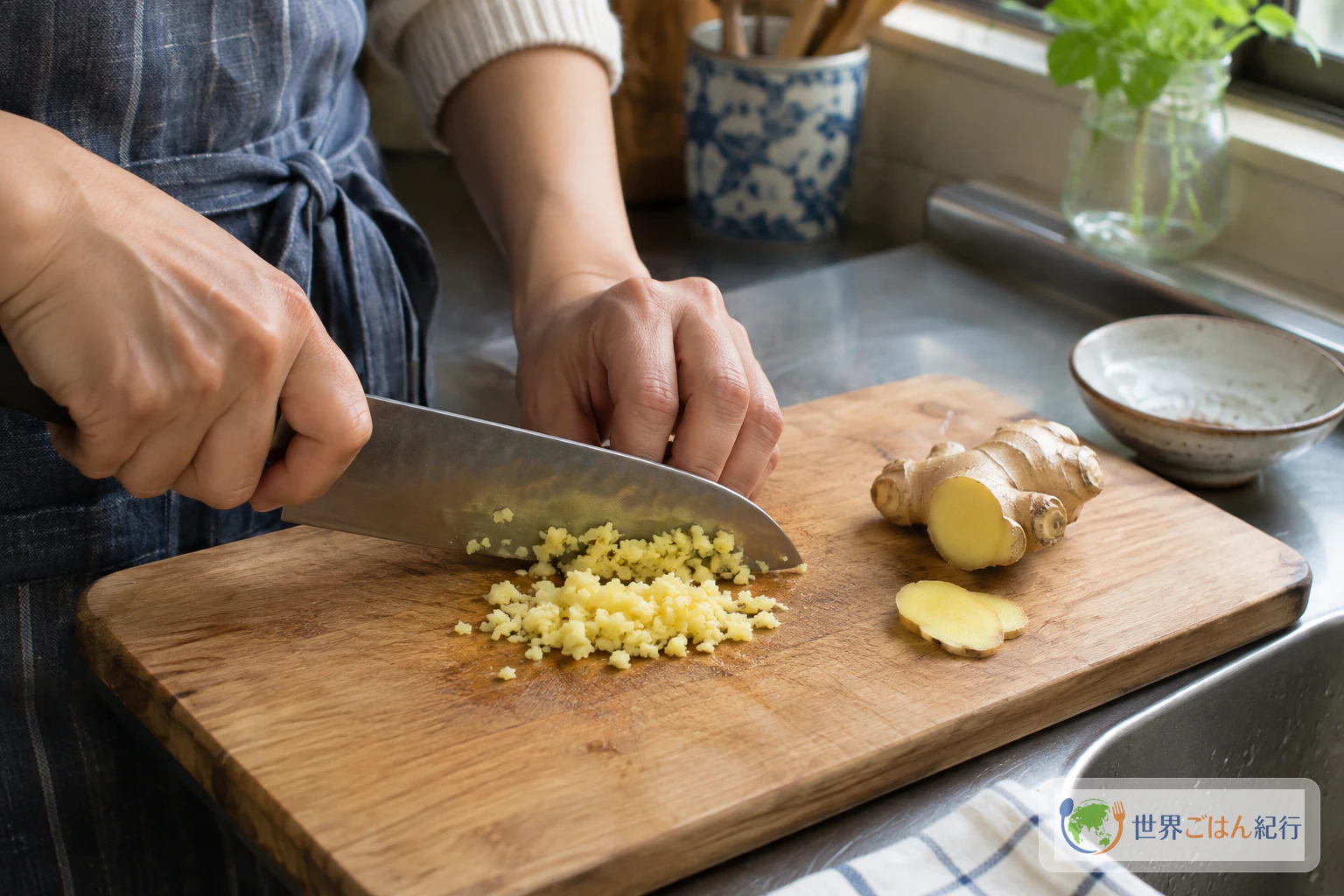
- Garlic and ginger: Use fresh and mince them yourself. Tube pastes differ in aroma and moisture, so they are not treated as an equal swap.
- Sake: Use Japanese sake for cooking. Shaoxing wine would be a change to the dish.
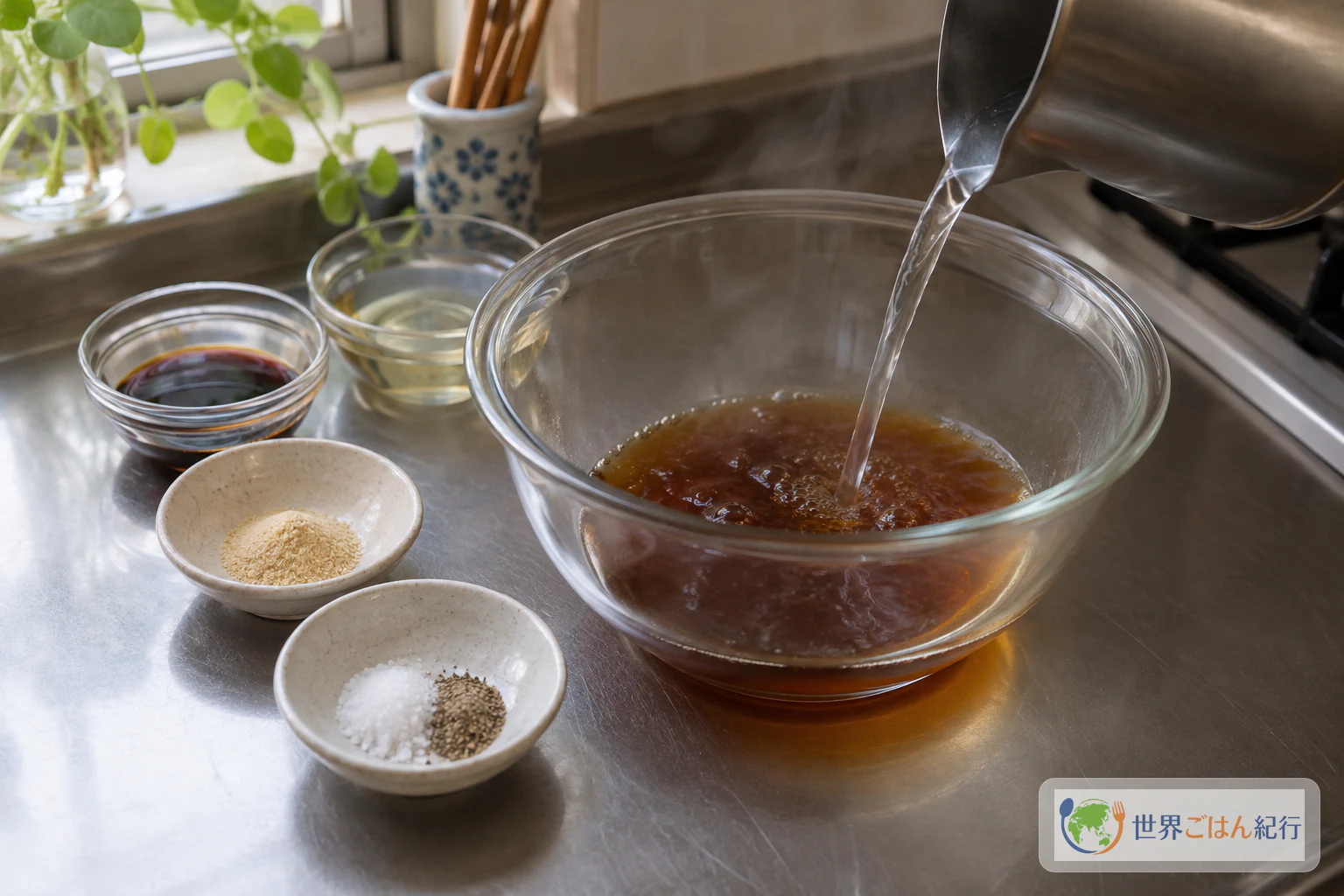
- Chicken stock powder: Any common granulated type will do, though salt levels differ between makers.
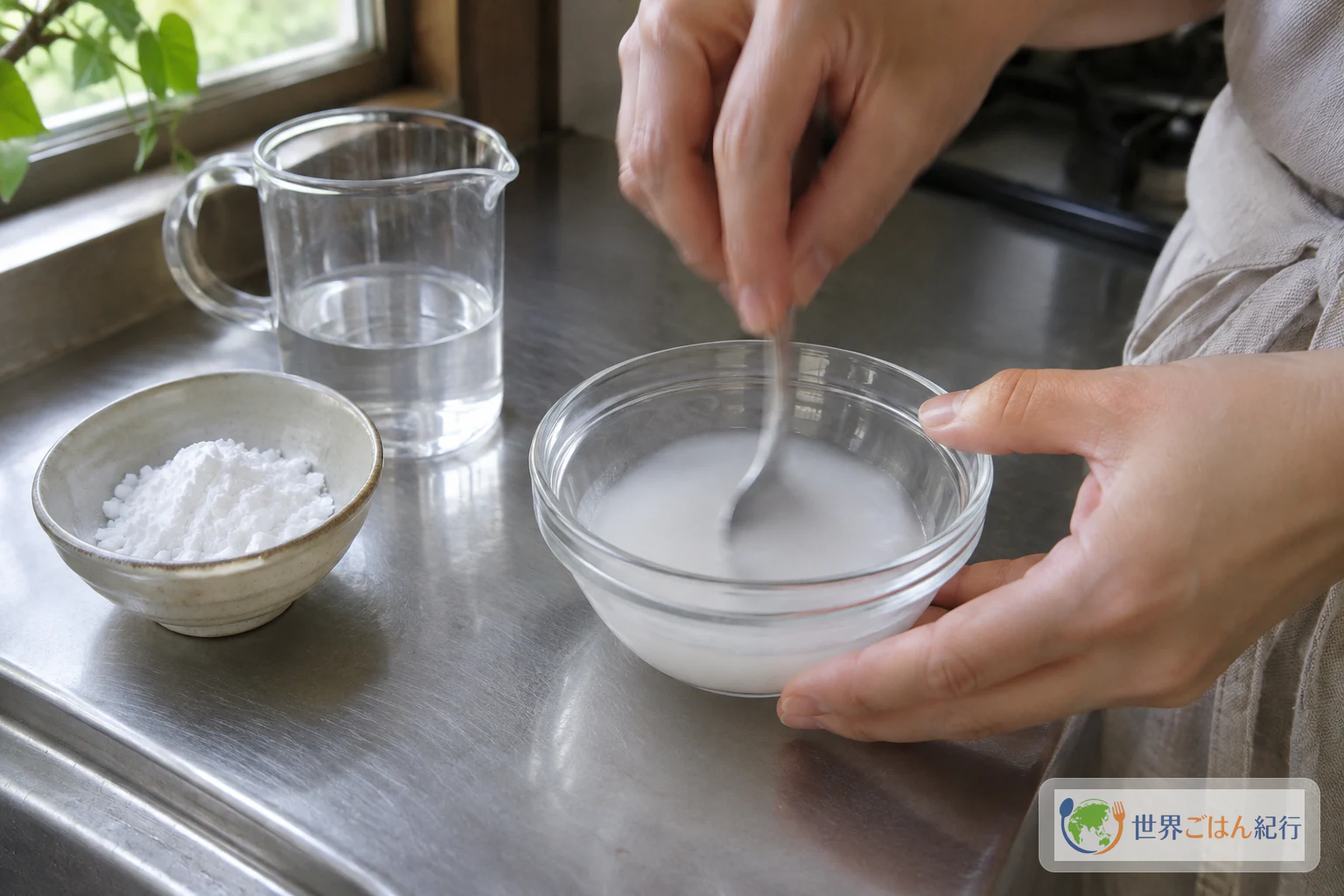
- Potato starch: Use katakuriko. Cornstarch is not treated as the same thing.
- Vinegar: A common grain vinegar can be used, but acidity varies between vinegars.
Equipment
- Wide frying pan with a lid
- Knife and cutting board
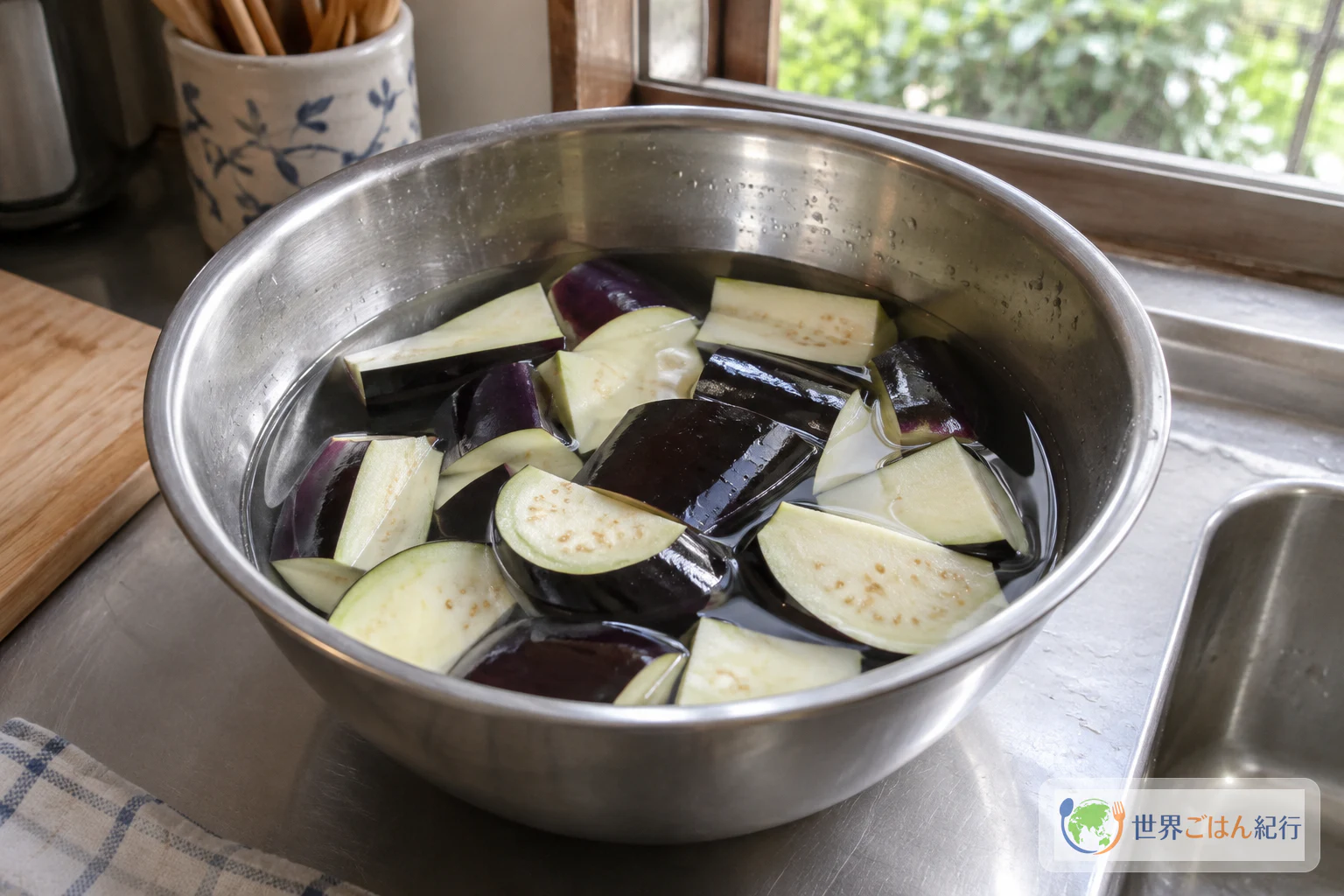
- Bowl for soaking the eggplant
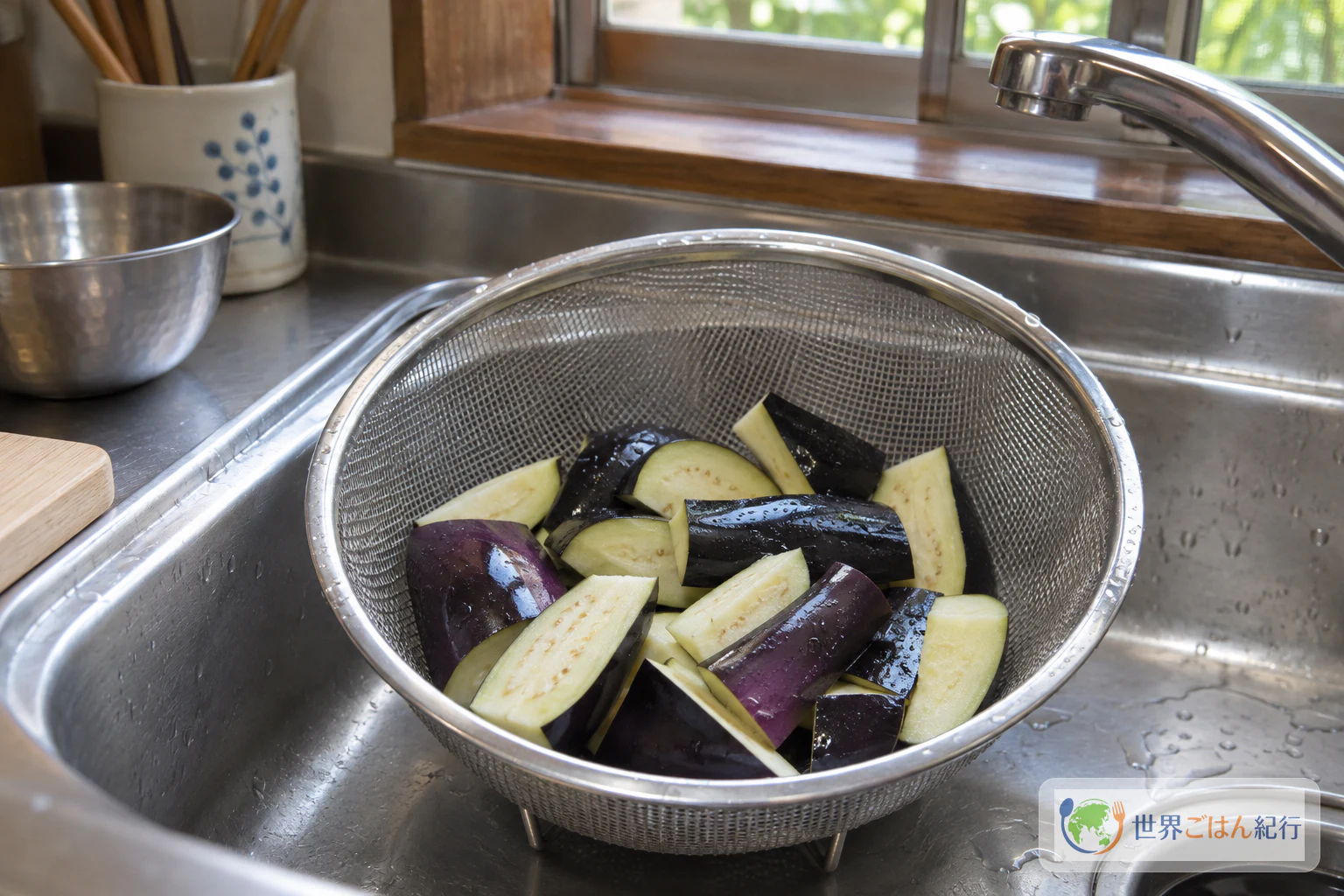
- Colander
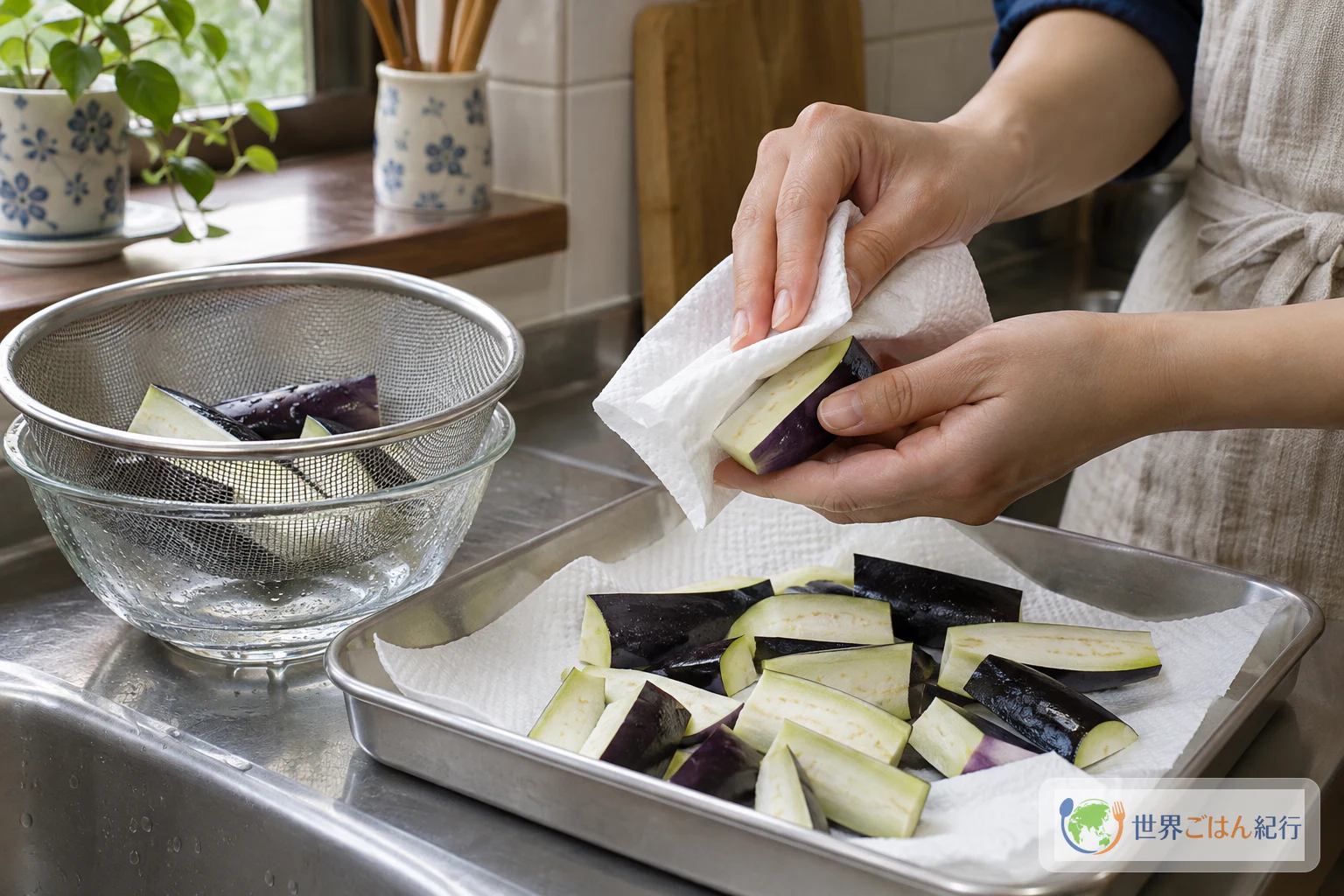
- Paper towels
- Small prep bowls
- Plate for holding the cooked eggplant
- Measuring spoons and a measuring cup
- Spatula or cooking chopsticks
- Serving bowls
- Food thermometer, if you have one
Method: Eggplant First, Sauce Second, Thickening Last
Pork: Heat ground pork to 75°C at the center for at least 1 minute, or an equivalent. A color change alone does not confirm this, and neither do the cooking times in this recipe. Without a thermometer, stir the whole pan well and keep heating until no raw or red meat remains.
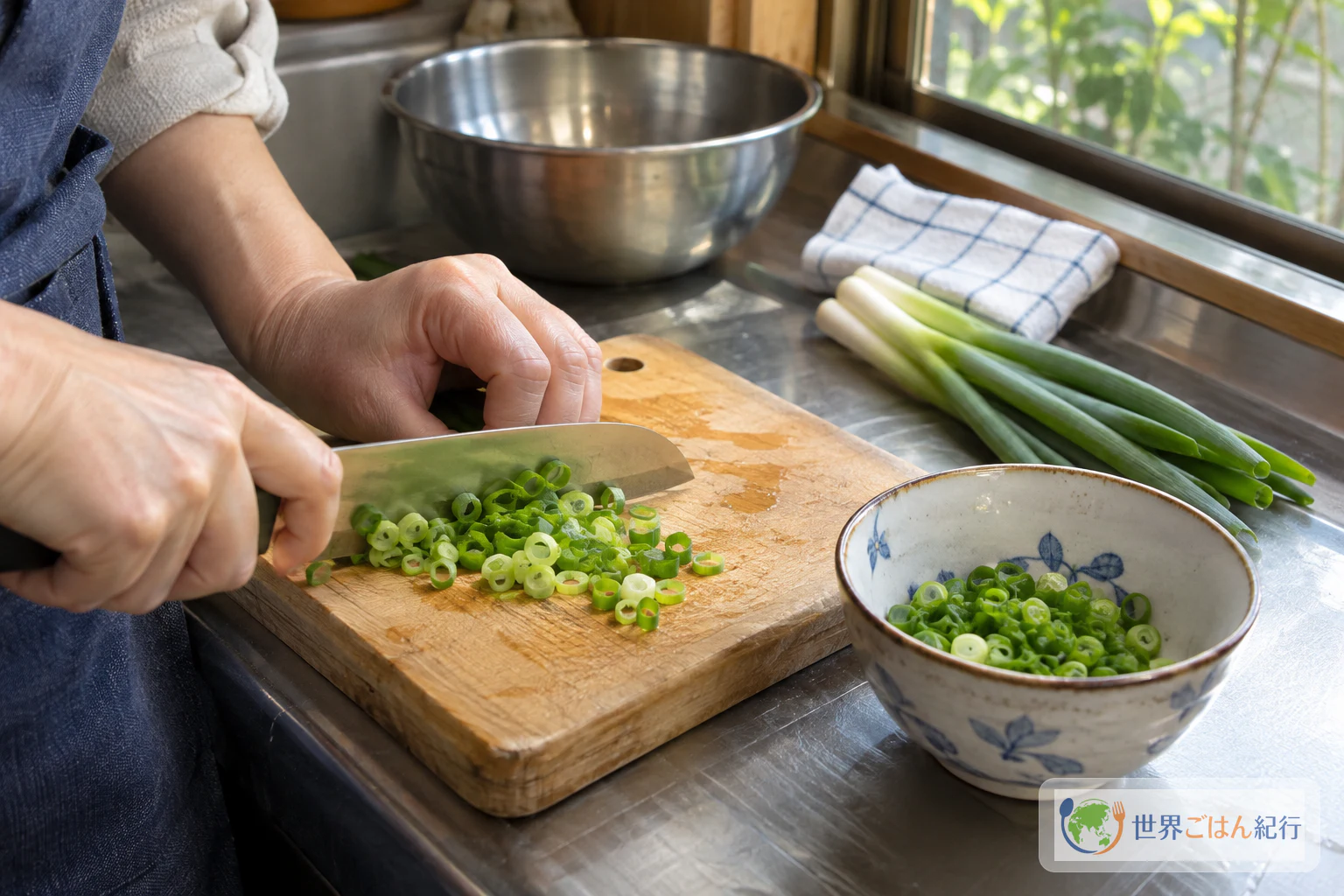
Green onion: The green onion goes in near the end as a raw finishing garnish, so wash it well under running water. Mixing it into hot sauce should not be taken as making it safe. Before handling it, wash your hands and any cutting board, knife or chopsticks that touched raw pork, or use separate tools.
Each step below is a single action, so the list is long but the cooking is simple. Steps 1–12 are prep, 13–21 cook the eggplant, 22–32 build the sauce, 33–39 thicken it, and 40–45 finish and serve.
When the Pan Goes Off Course
The advice on heat and visual cues below is general cooking guidance, and the fixes have not been kitchen-tested for this recipe.
| Problem | What to look at | What to do |
|---|---|---|
| The eggplant is about to scorch | Heat too high during the covered cook | Lower the heat. Don't add more oil than the 2 tbsp |
| The eggplant feels heavy with oil | Extra oil added beyond the measure | Keep to 2 tbsp next time, and rely on the lid and low heat to soften it |
| The sauce is watery | Stoves and pans differ, so 2–3 minutes may not be enough | Judge by the pan rather than the clock: simmer until the liquid has cooked away before moving on to the thickening |
| The thickened sauce has lumps | Settled starch, or too little stirring | Next time, re-stir the slurry, add it with the heat off while stirring, and keep stirring after you relight the burner |
| The dish is too salty or too hot | Doubanjiang and stock powder differ by maker | Note how your brands taste and adjust next time. There is no tested reduced amount for this recipe |
| You can't tell if the pork is done | Color alone doesn't settle it | Aim for 75°C at the center for at least 1 minute, or an equivalent. Without a thermometer, stir well and keep heating until no raw or red meat remains |
Variations: What Changes the Dish
None of these is a tested version of this recipe, so treat each one as your own adjustment.
- Less doubanjiang: The dish will be less spicy. There is no tested amount, so adjust by eye and taste.
- A different eggplant variety: Keep the 300g weight as your guide rather than counting eggplants.
- A different meat: This is possible, but the result is no longer the same recipe, and the pork guidance here shouldn't be assumed to cover other meats.
- Miso in place of tianmianjiang: This makes a different flavor and needs your own ratio. No proportion is offered here.
- Plain rice at the table: This is an editorial suggestion for eating the dish. It isn't one of the ingredients and doesn't change the cooking.
Where Mabo Nasu Sits: A Japanese Home Dish with a Shared Name
The name suggests a close link to Sichuan's mapo tofu, but this recipe should not be read as Sichuan mapo tofu with eggplant. In an interview on Ajinomoto's site about developing its Cook Do® products, company staff describe mabo nasu as a Chinese dish developed in Japan and an adaptation of Sichuan's yuxiang eggplant (魚香茄子). The developer recalls eating yuxiang eggplant in Shanghai and describes it as sweet, sour and spicy, and different from mabo nasu. That is one company's account from people who work on the dish, not an independent history. It doesn't settle where the dish began, or whether similarly named dishes exist elsewhere.
Japanese home recipes for the dish also vary. Nisshin OilliO's two-serving version, used here, relies on tianmianjiang and finishes with vinegar, green onion and sesame oil. S&B Foods publishes a four-serving recipe with red miso, sugar and chili, and fries the eggplant in vegetable oil before returning it to the sauce. Neither can be called the national standard. The two are not blended here, and no S&B ingredients or amounts appear in this recipe.
It is tempting to bring in Chen Kenmin (陳建民). Sichuan Hanten's own history says he came to Japan in 1952, opened the restaurant in Tamuracho, Tokyo, in autumn 1958, and spread Sichuan cooking through its cooking school, successors and branches. That history doesn't say who created mabo nasu or when, so this article makes no such link.
For more of the country's food, see the Japan recipes page.
Frequently Asked Questions
What can I use if I can't find tianmianjiang?
Nisshin OilliO's recipe gives no ratio for an equivalent substitute, so there isn't an exact replacement to offer. Swapping in miso makes a different flavor and requires your own amounts. S&B's red miso recipe is built on different proportions, so its numbers can't be dropped into this one.
Do I have to deep-fry the eggplant?
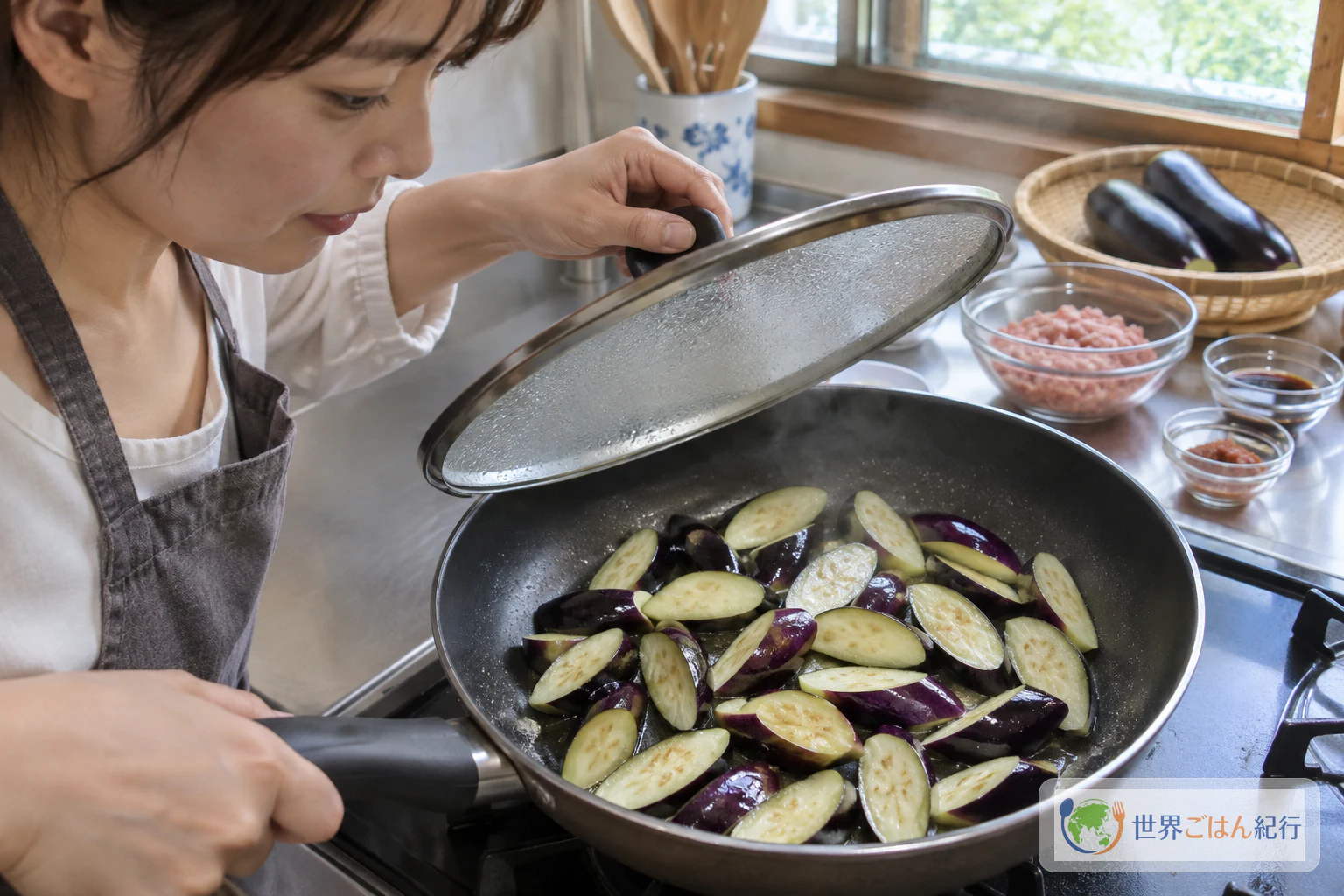
Not for this version. The eggplant is coated in 2 tbsp sesame oil with a little salt, then cooked under a lid over low heat for about 2 minutes, shaken, and covered again for about 1 minute.
How many milliliters is the hot water?
Nisshin OilliO lists 1/2–2/3 cup without saying which cup standard it means. This article keeps that range and doesn't convert it to a milliliter figure.
How much is "a little" salt or pepper?
Nisshin OilliO gives no number, so this article doesn't invent one in grams or spoons. Salt appears in two separate places, once on the eggplant and once in group B, so don't measure it out as a single amount.
Is the pork safe once it changes color?
Nisshin OilliO's recipe says to stir-fry the pork until its color changes, but that is a cooking cue and not a safety standard. Japan's Ministry of Health, Labour and Welfare gives 75°C at the center for at least 1 minute as a heating guide for many pathogens, and says ground meat products should be heated through to the center. That guidance was not written for this dish, so don't assume the recipe's times alone will reach it. Without a thermometer, stir well and keep heating until no raw or red meat remains.
Can I use cornstarch instead of potato starch?
This recipe calls for potato starch (katakuriko) and doesn't treat cornstarch as the same thing. Using cornstarch would be your own adjustment.
Can I make it ahead?
This article is written for serving right after cooking and doesn't set a storage period or reheating method.
Does it have to be served with rice?
No. Rice is an editorial suggestion for the table and not part of Nisshin OilliO's ingredient list.
Sources
- Nisshin OilliO Group, "麻婆なす" (Mabo Nasu). The only basis for this article's ingredients, amounts, two-serving yield, order of steps, stated times and the listed 15-minute cooking time. https://www.nisshin-oillio.com/recipe/detail.html?id=7572
- S&B Foods, "麻婆茄子" (Mabo Nasu). Used only as a comparison showing another published Japanese recipe with different ingredients and four servings. https://www.sbfoods.co.jp/recipe/detail/00504.html
- Ajinomoto Co., Inc. (Ajinomoto Park), "「Cook Do®」極シリーズ新商品の開発秘話を担当者に聞きました!" Used for the company staff's description of mabo nasu as a Chinese dish developed in Japan, and its difference from yuxiang eggplant. https://park.ajinomoto.co.jp/contents/magazine/card/337551/
- Ministry of Health, Labour and Welfare (Japan), "お肉はよく焼いて食べよう." Used for the heating guide of 75°C at the center for at least 1 minute, and for heating ground meat through to the center. https://www.mhlw.go.jp/stf/seisakunitsuite/bunya/0000049964.html
- Sichuan Hanten (四川飯店), "ヒストリー HISTORY." Used for the restaurant's own account of Chen Kenmin's arrival in Japan, its founding and the spread of Sichuan cooking. It says nothing about the origin of mabo nasu. https://www.sisen.jp/history/