Jjamppong: Red Pepper Oil, Anchovy Stock and a Wok Full of Seafood
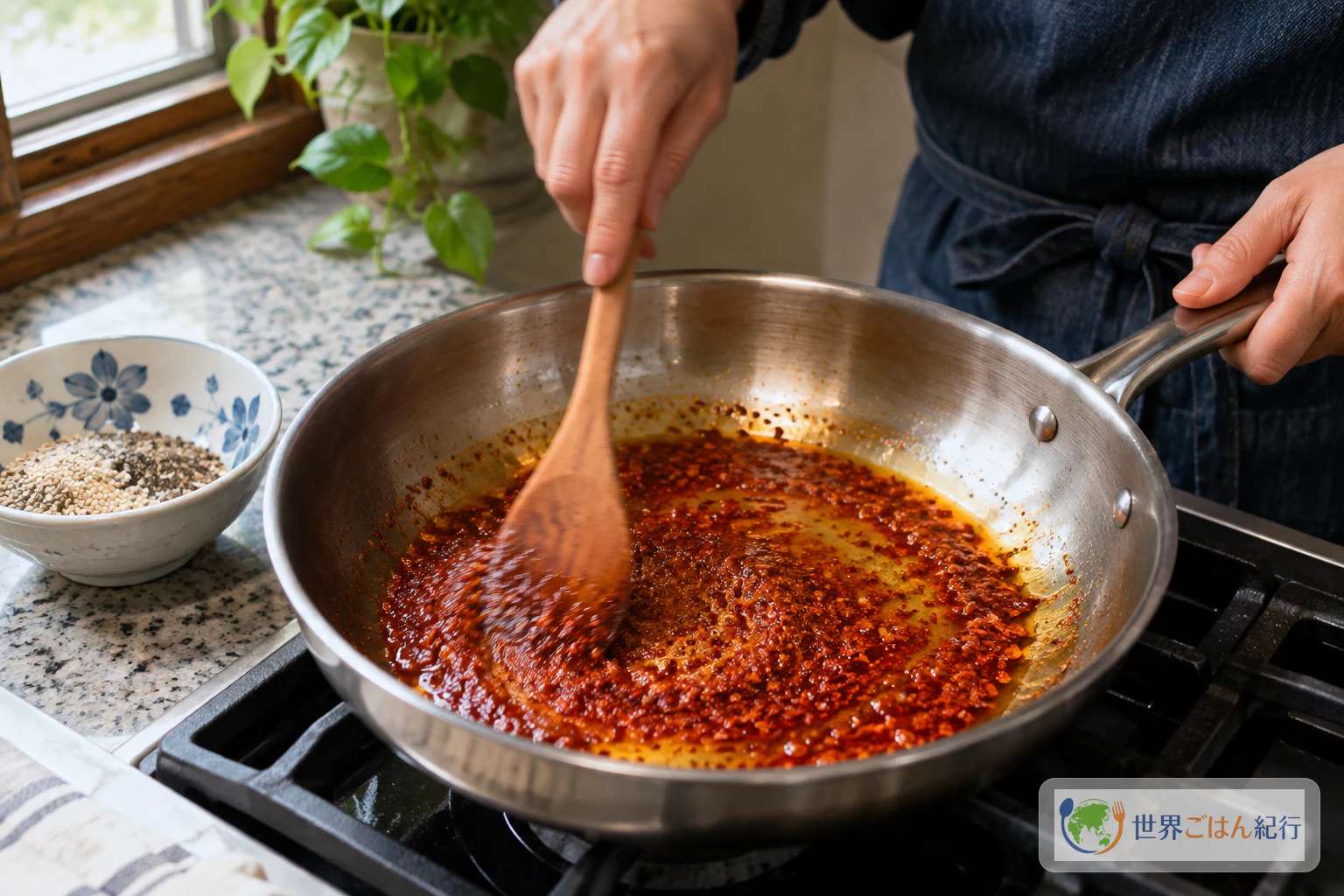
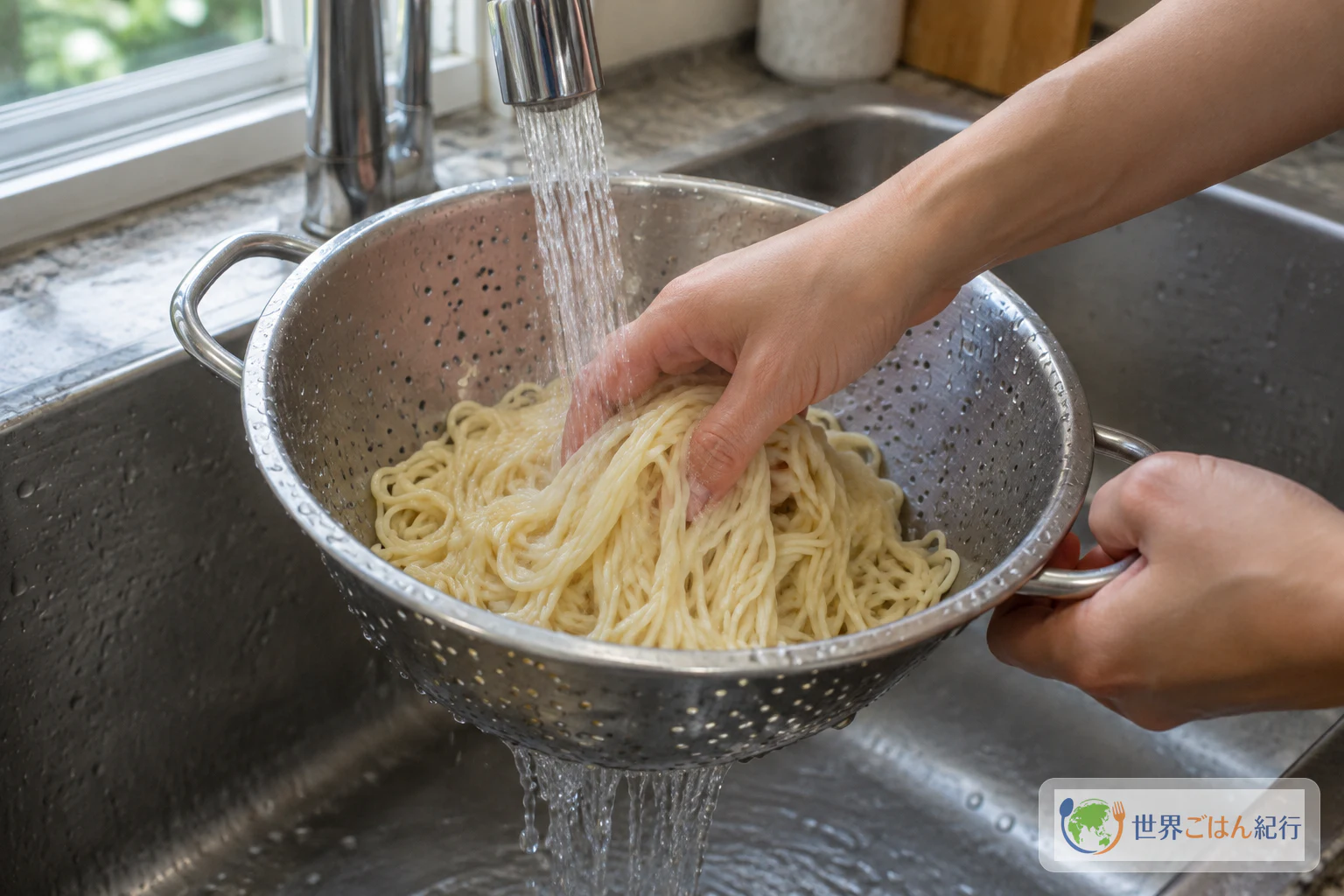
Bloom the gochugaru in hot oil without letting it burn. Build the soup on a clean anchovy-kelp stock. Cook the shellfish and beef all the way through, and serve the soup over springy noodles that were rinsed in cold water.
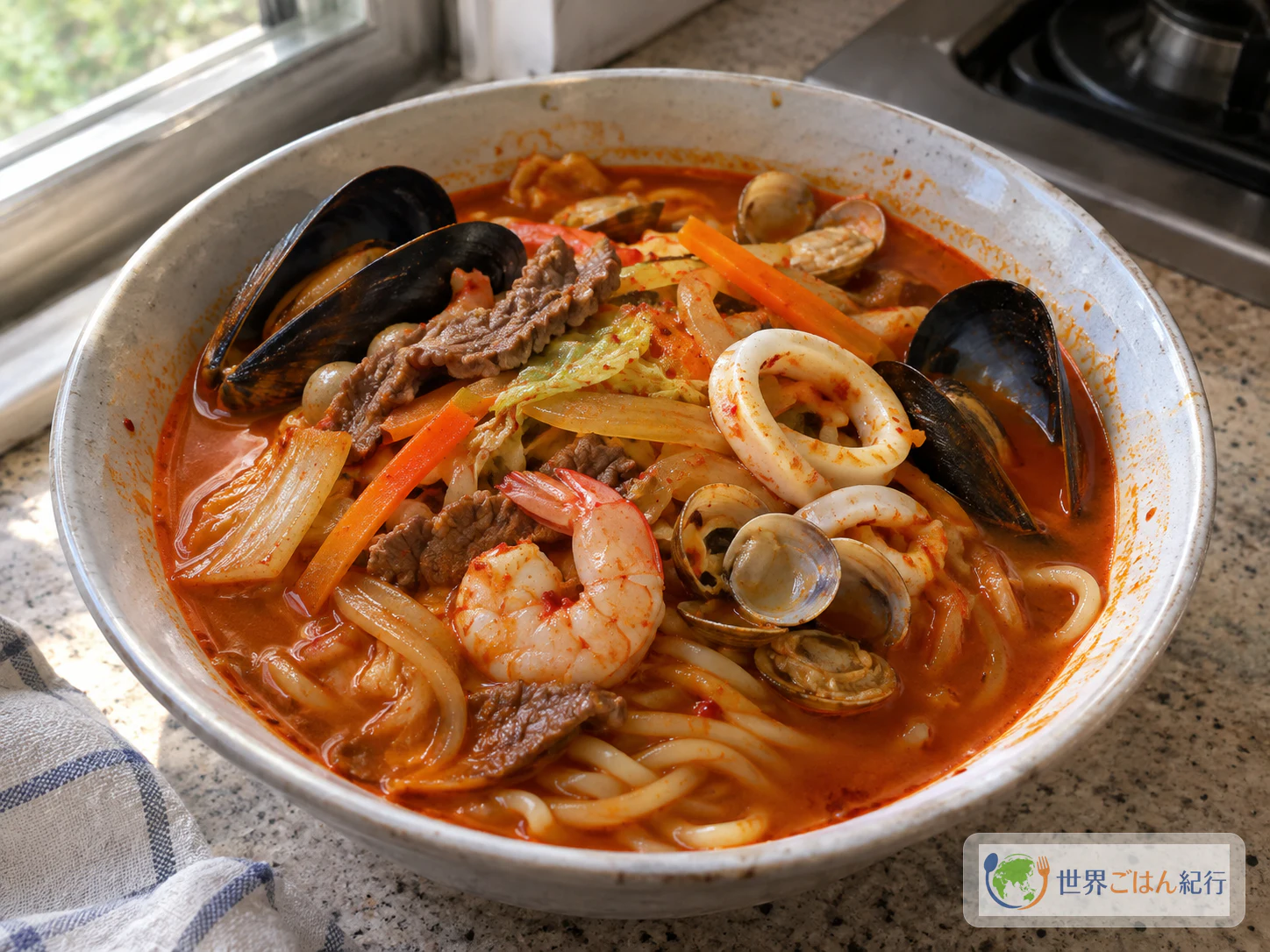
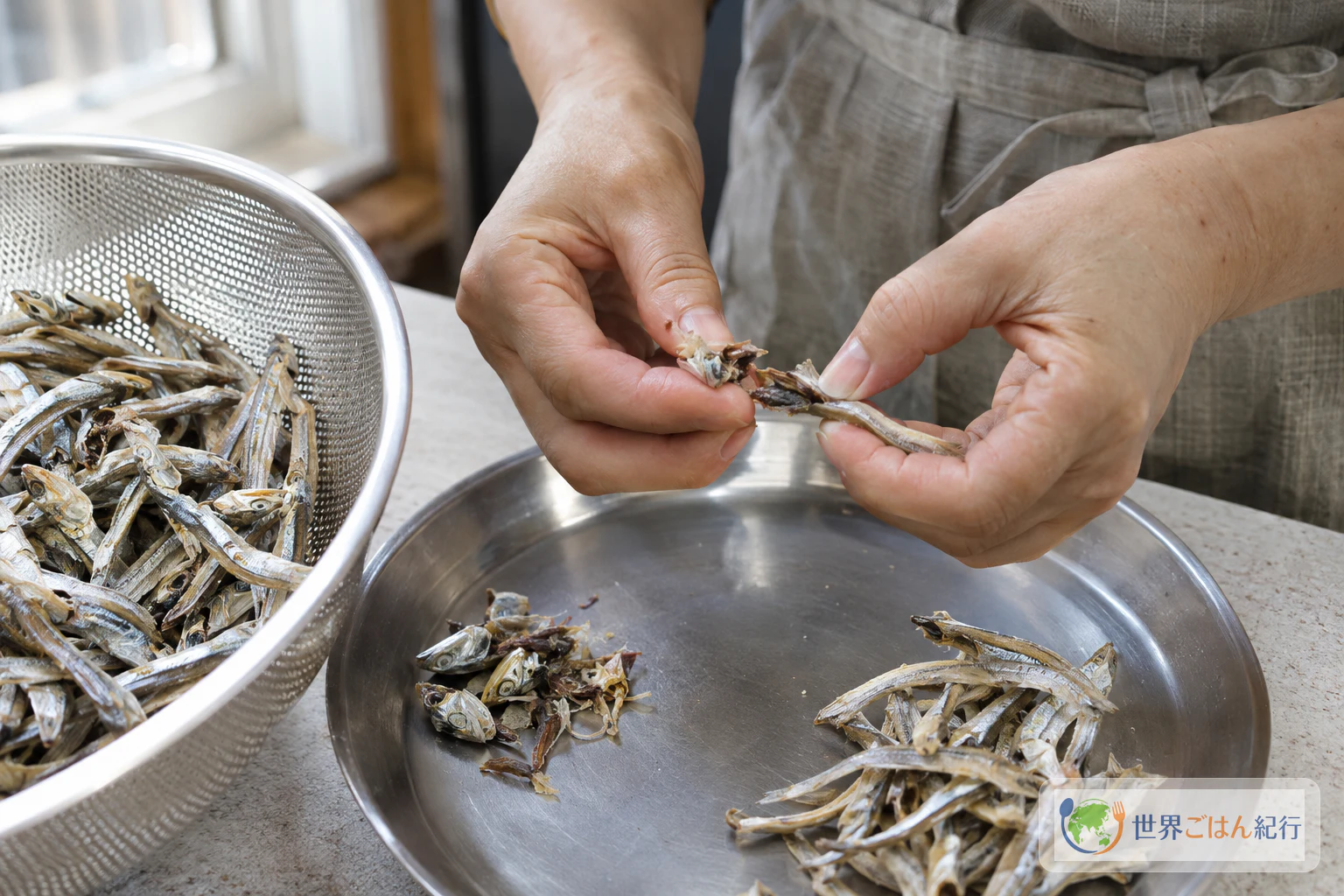
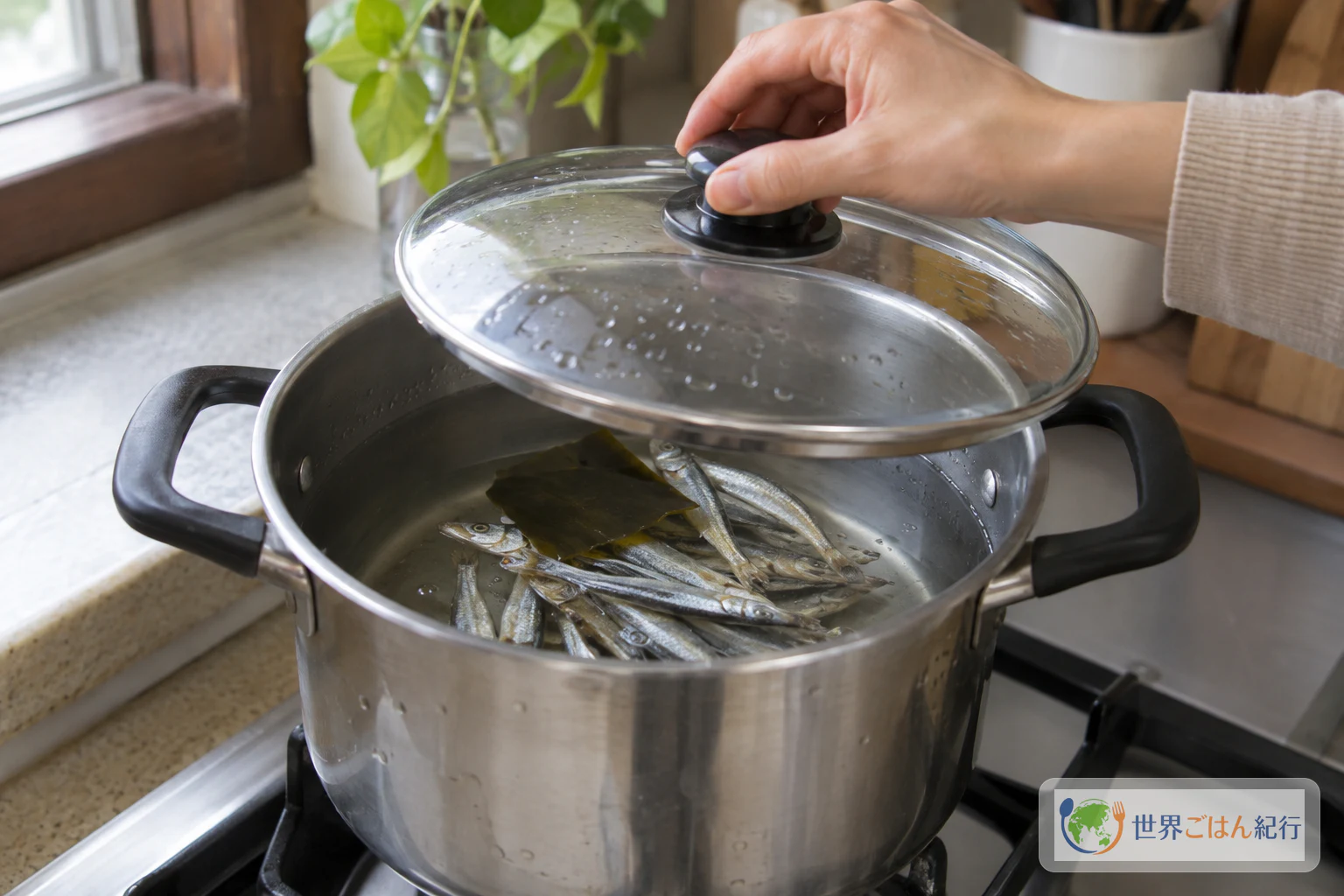
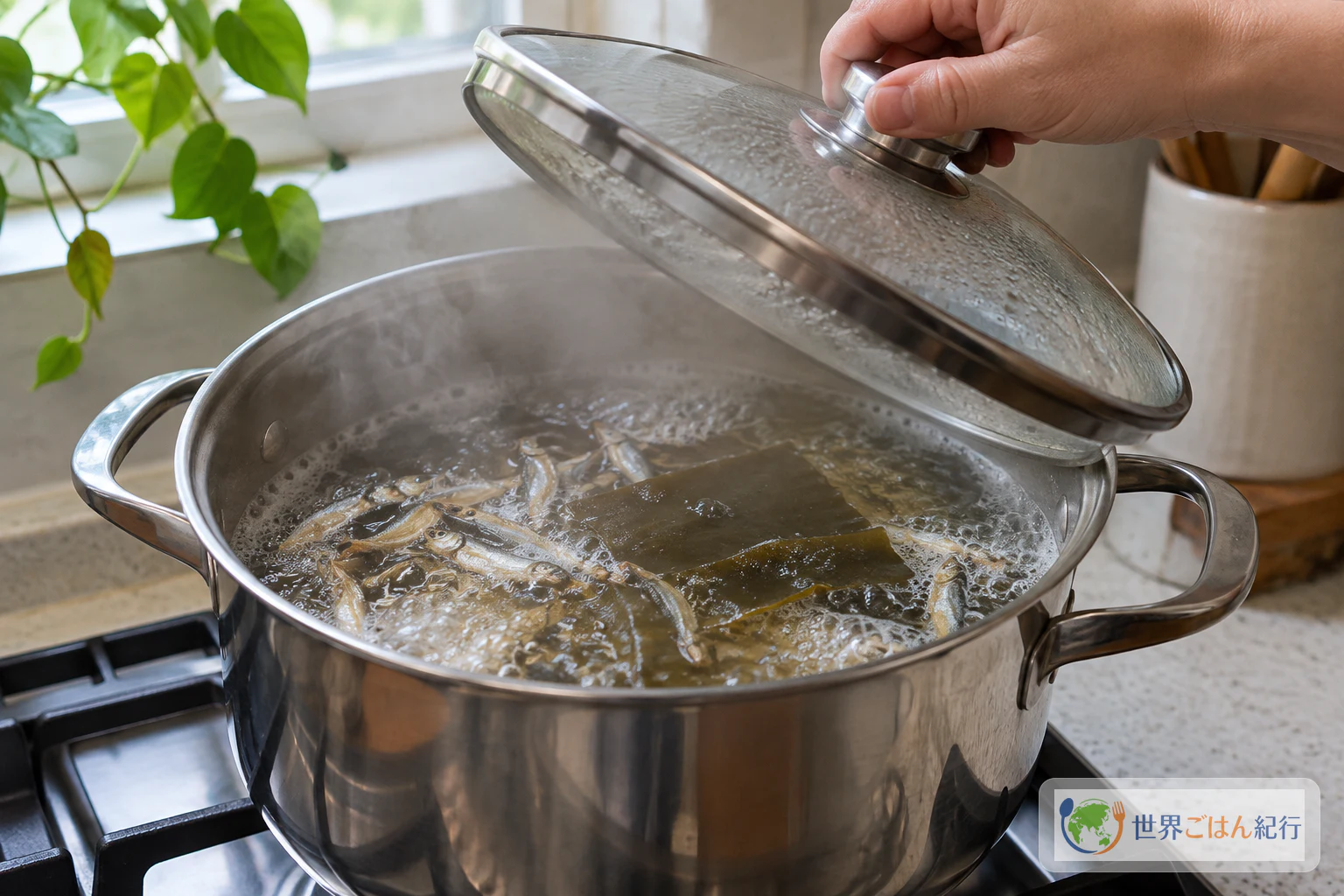
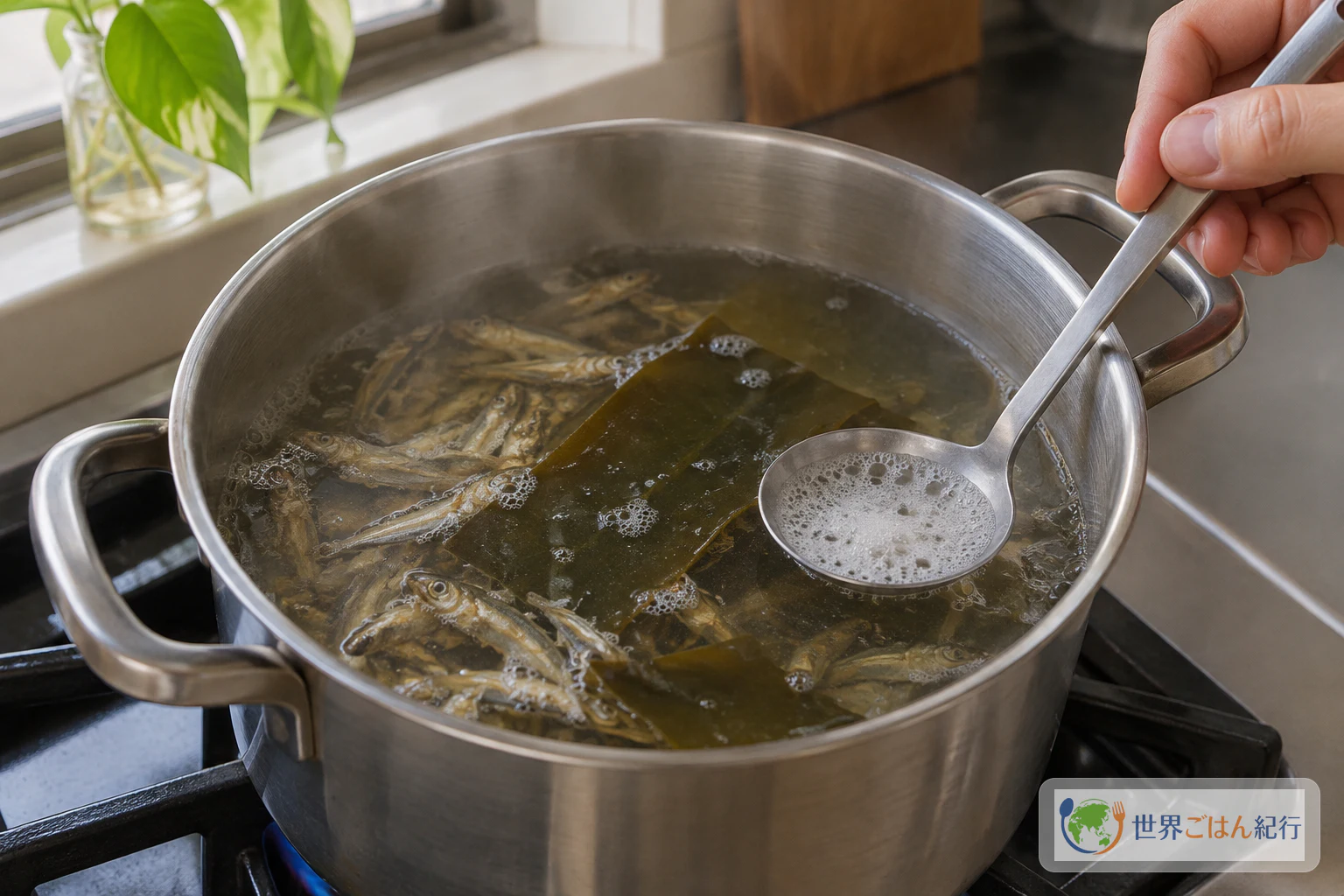
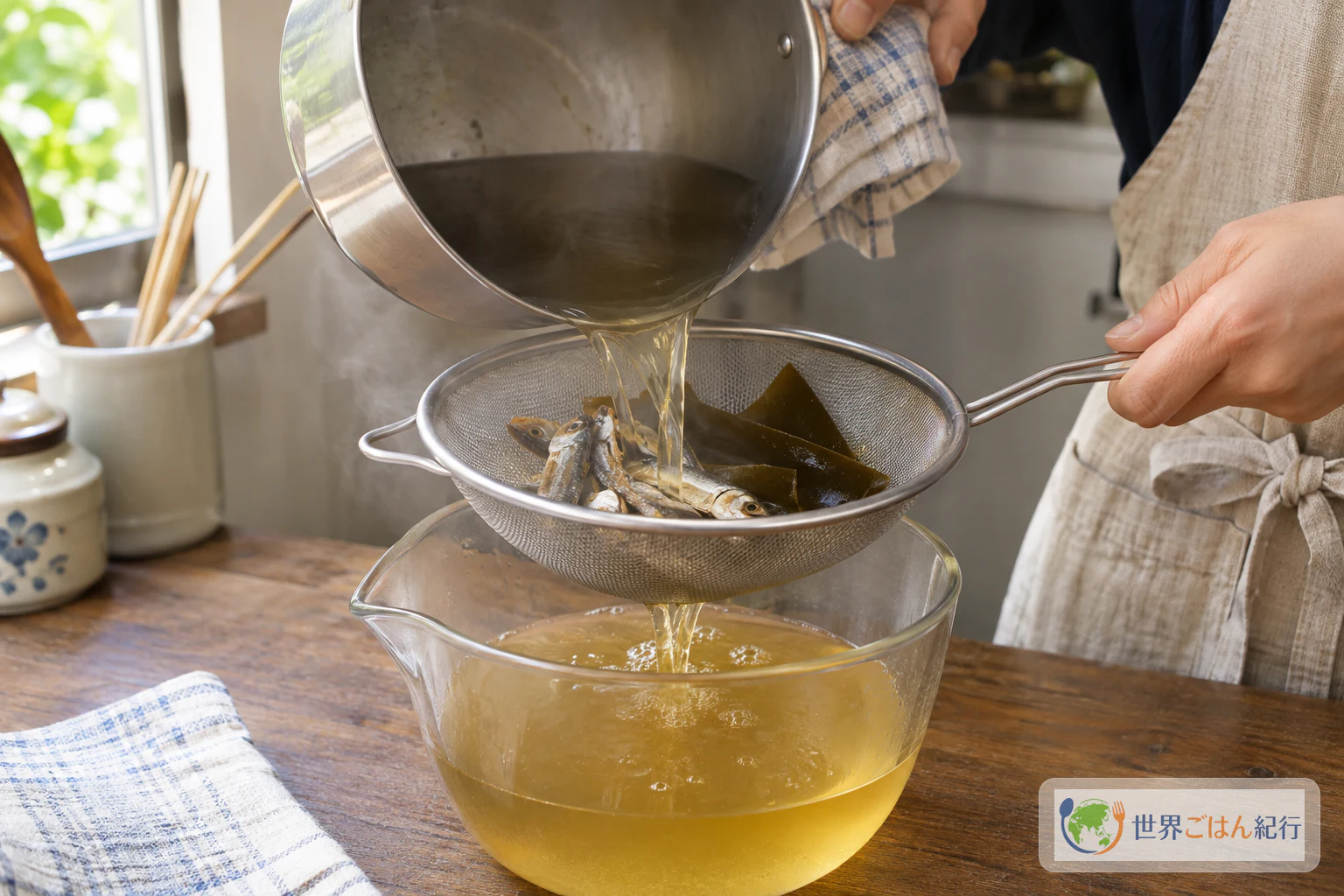
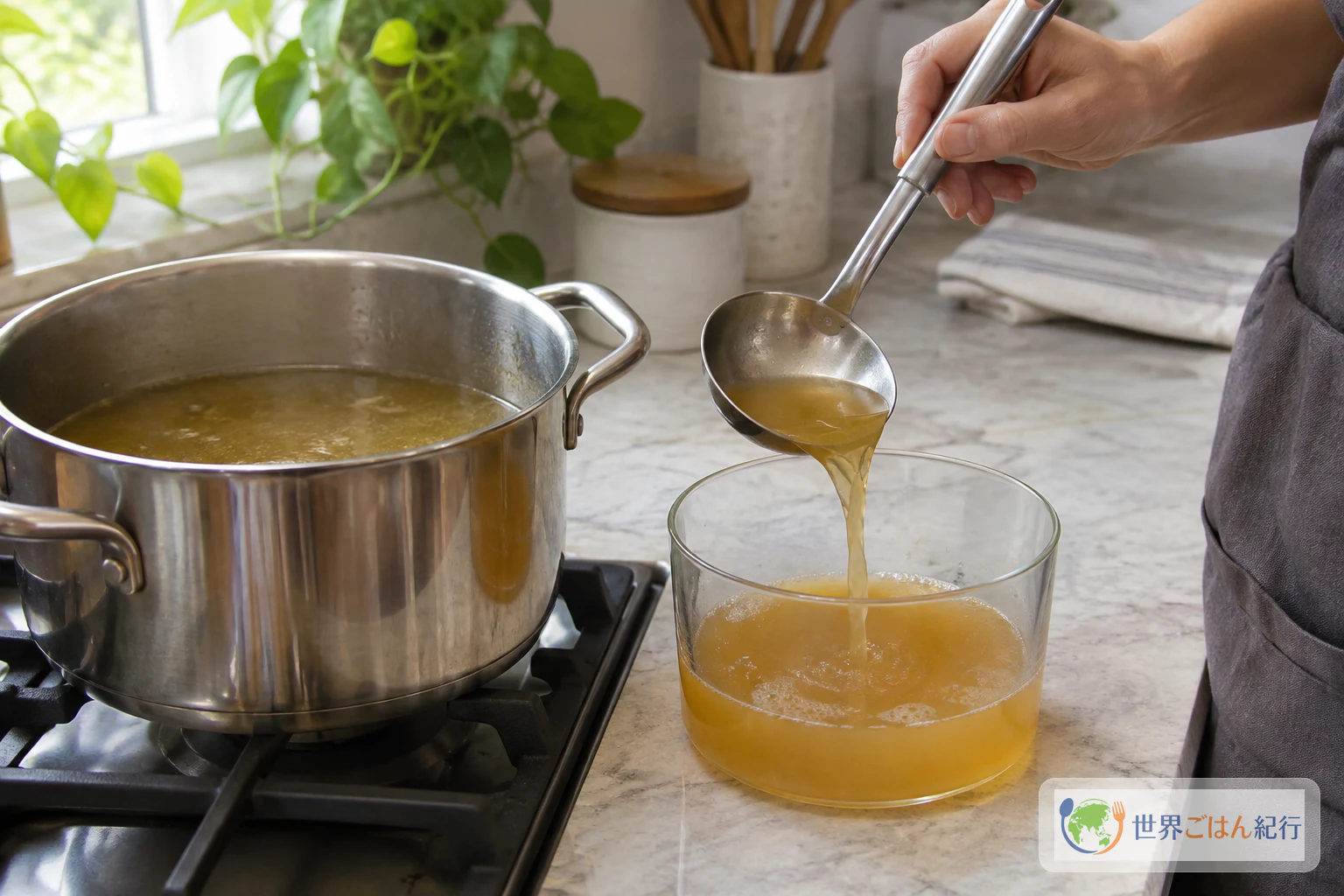
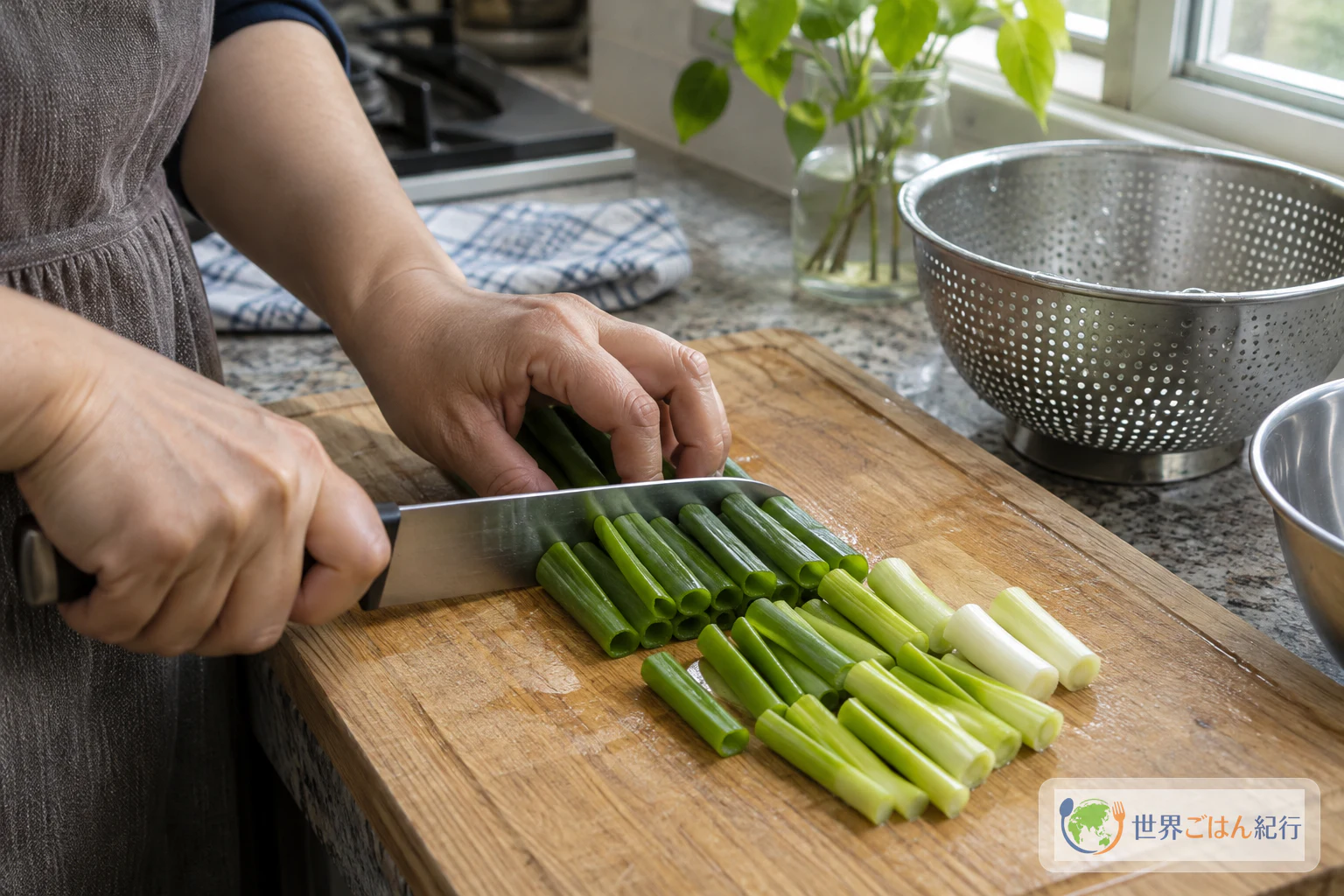
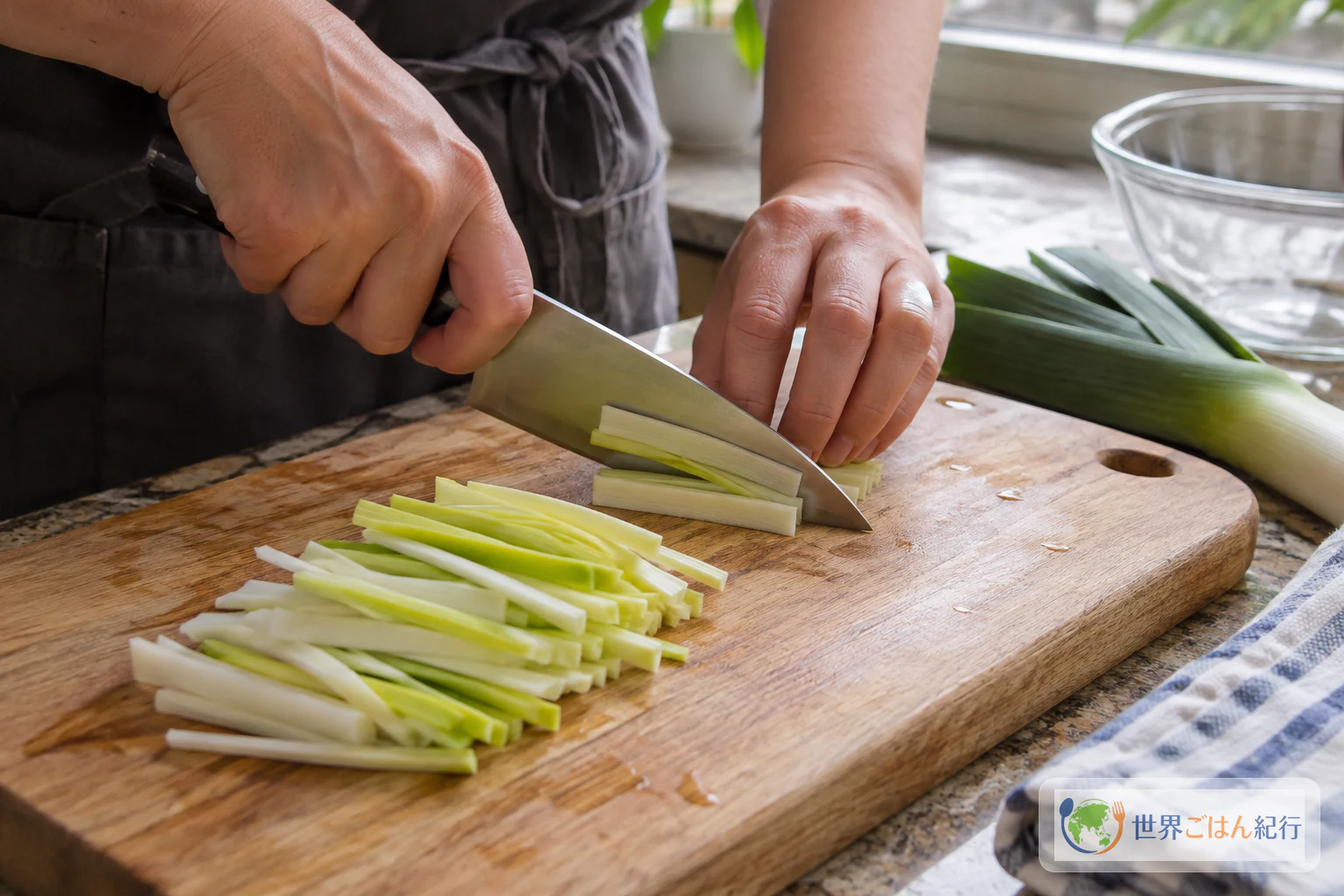
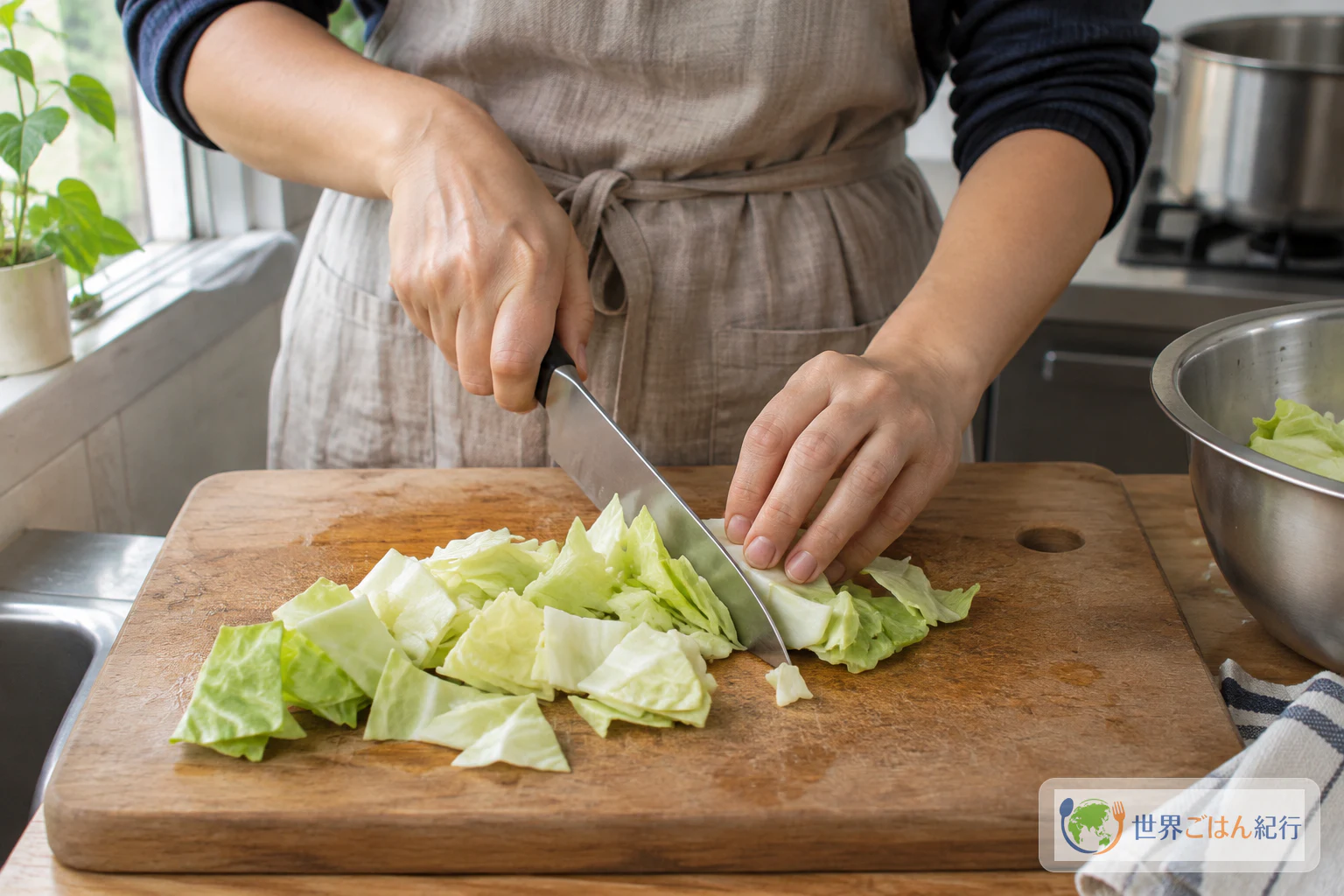
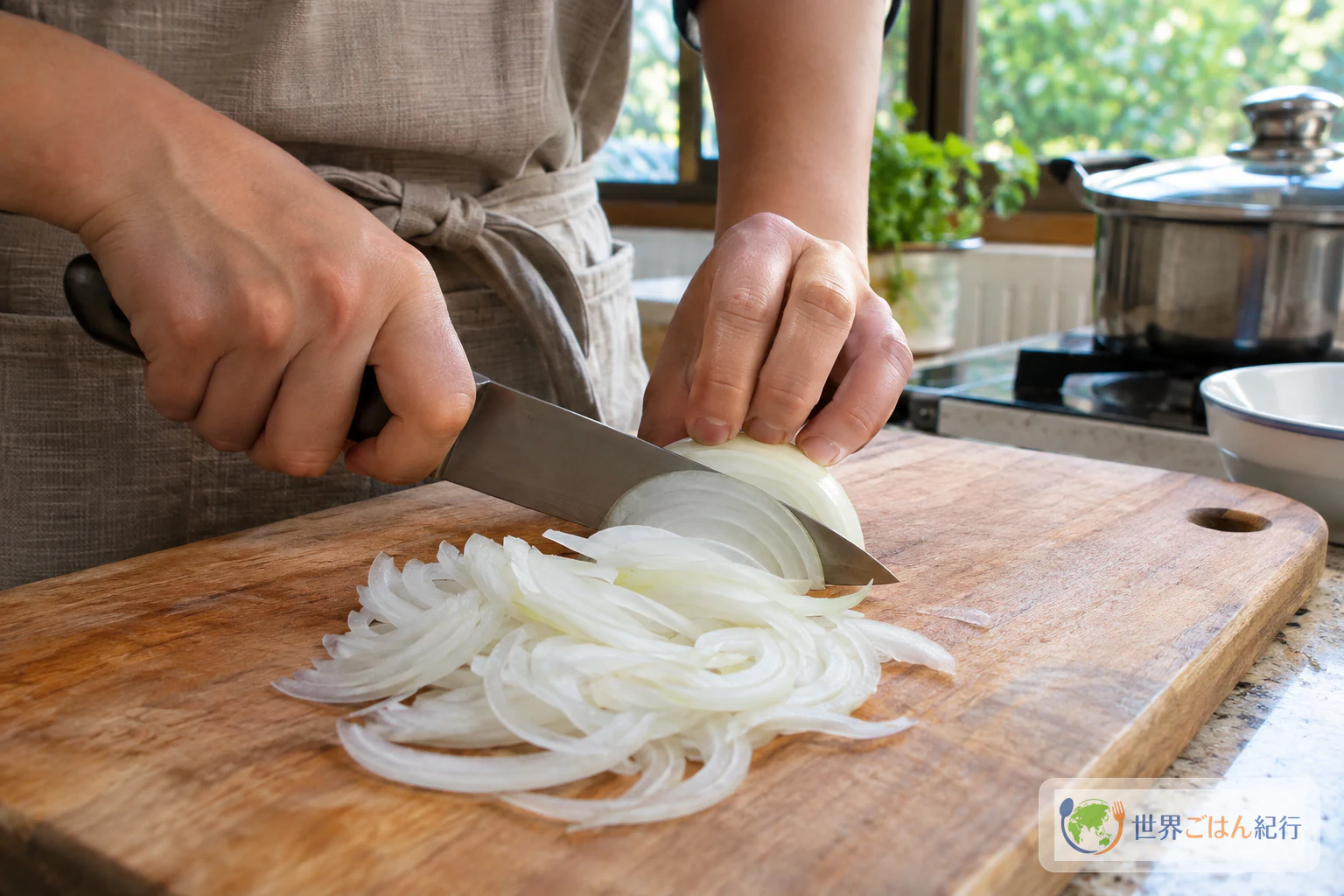
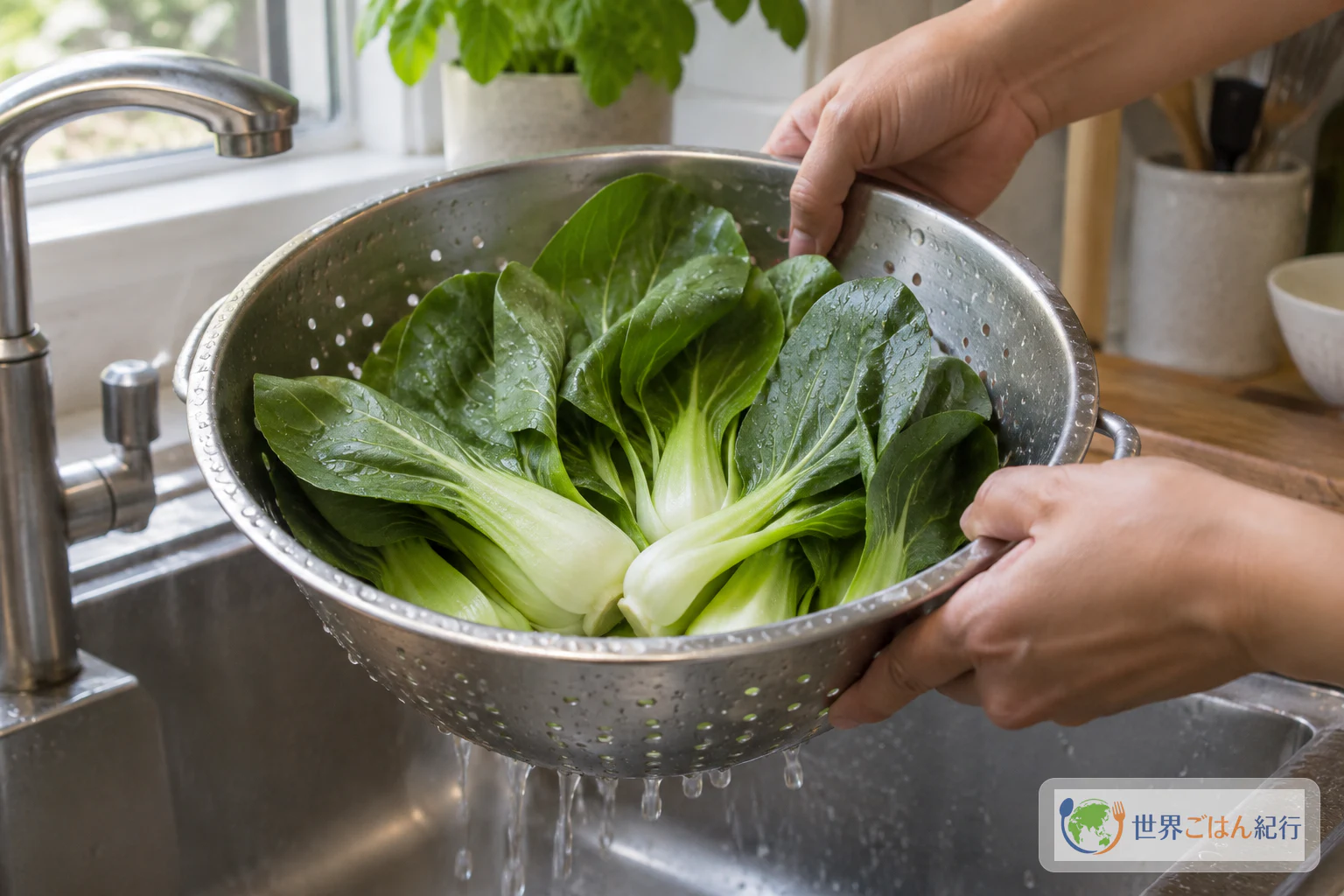
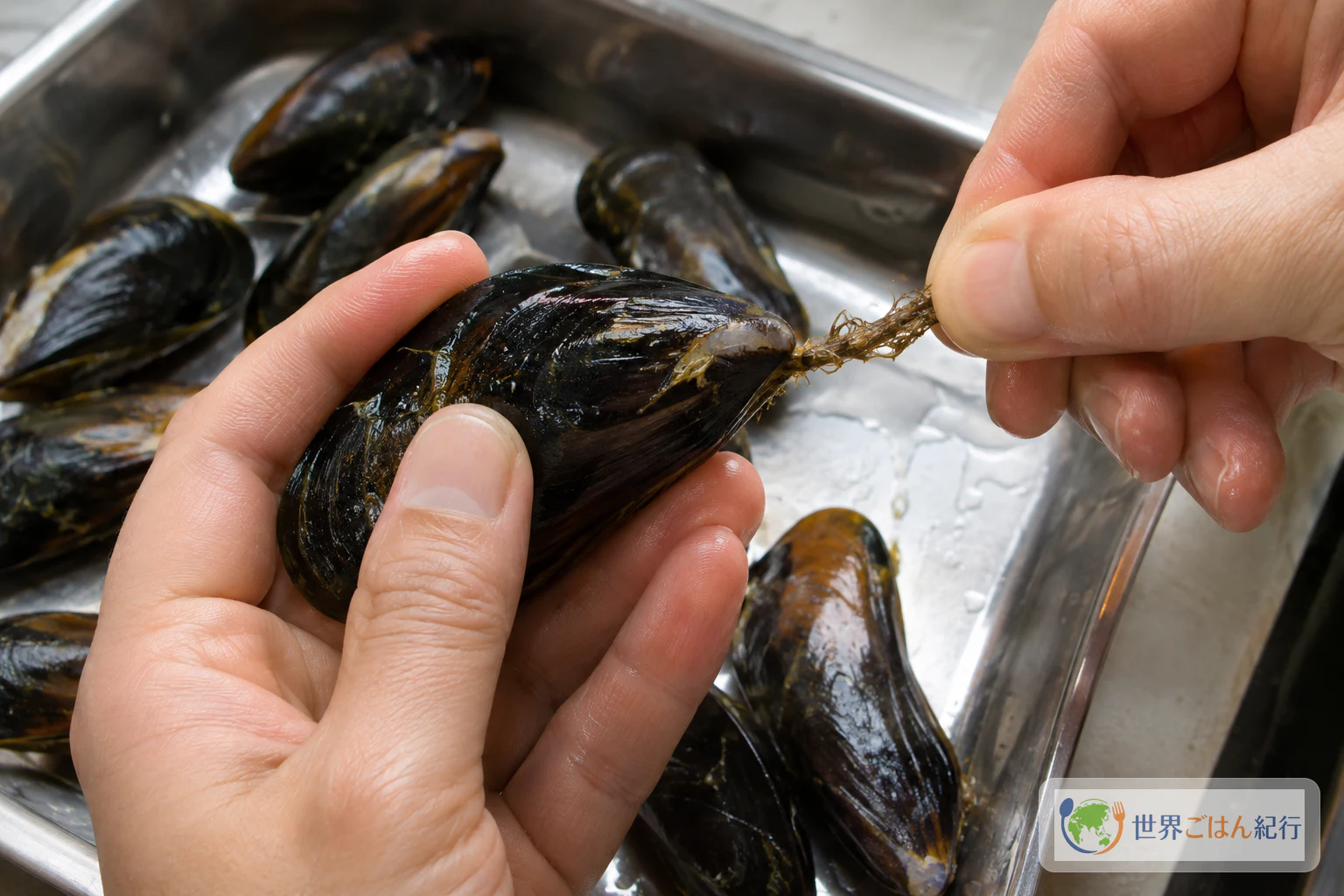
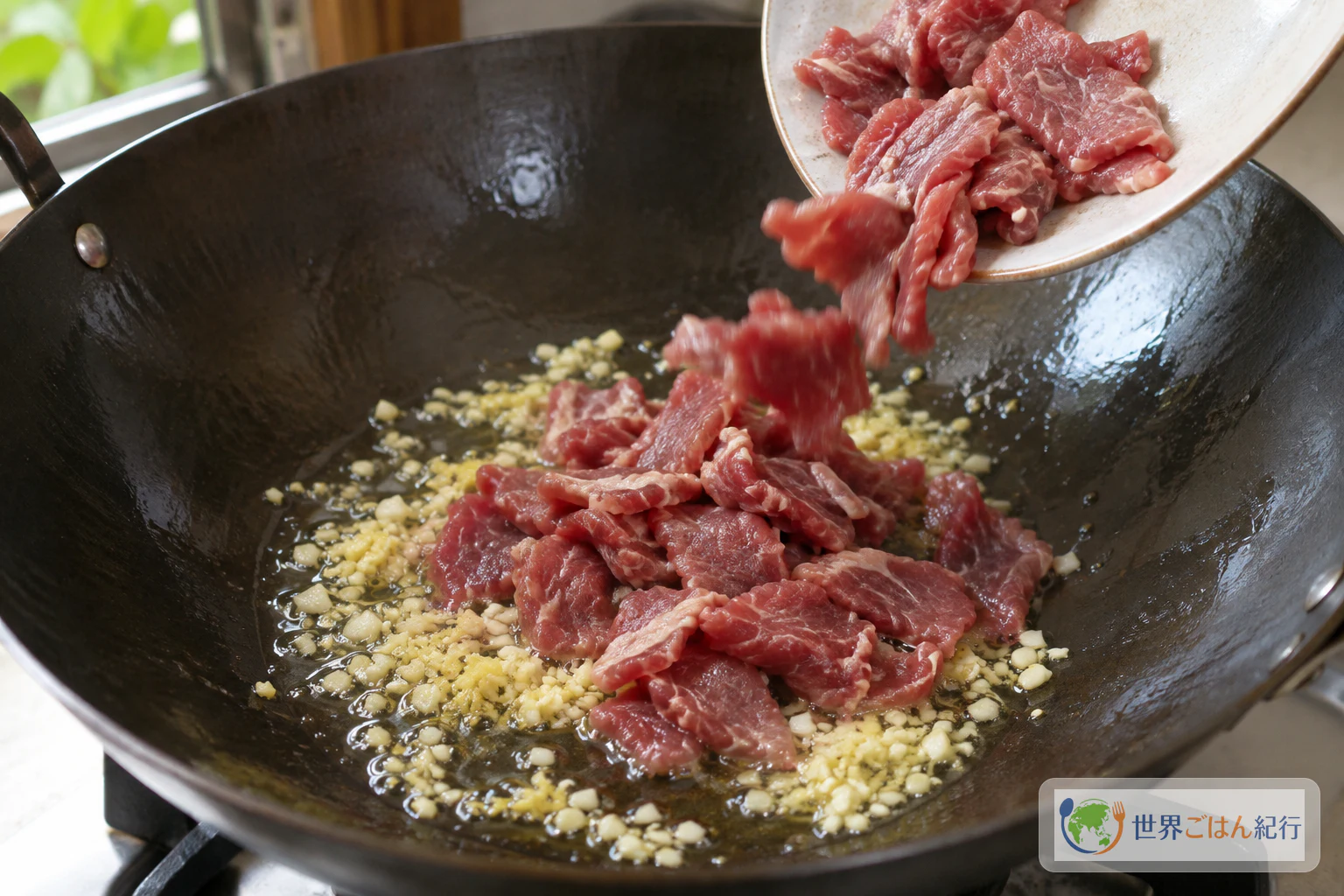
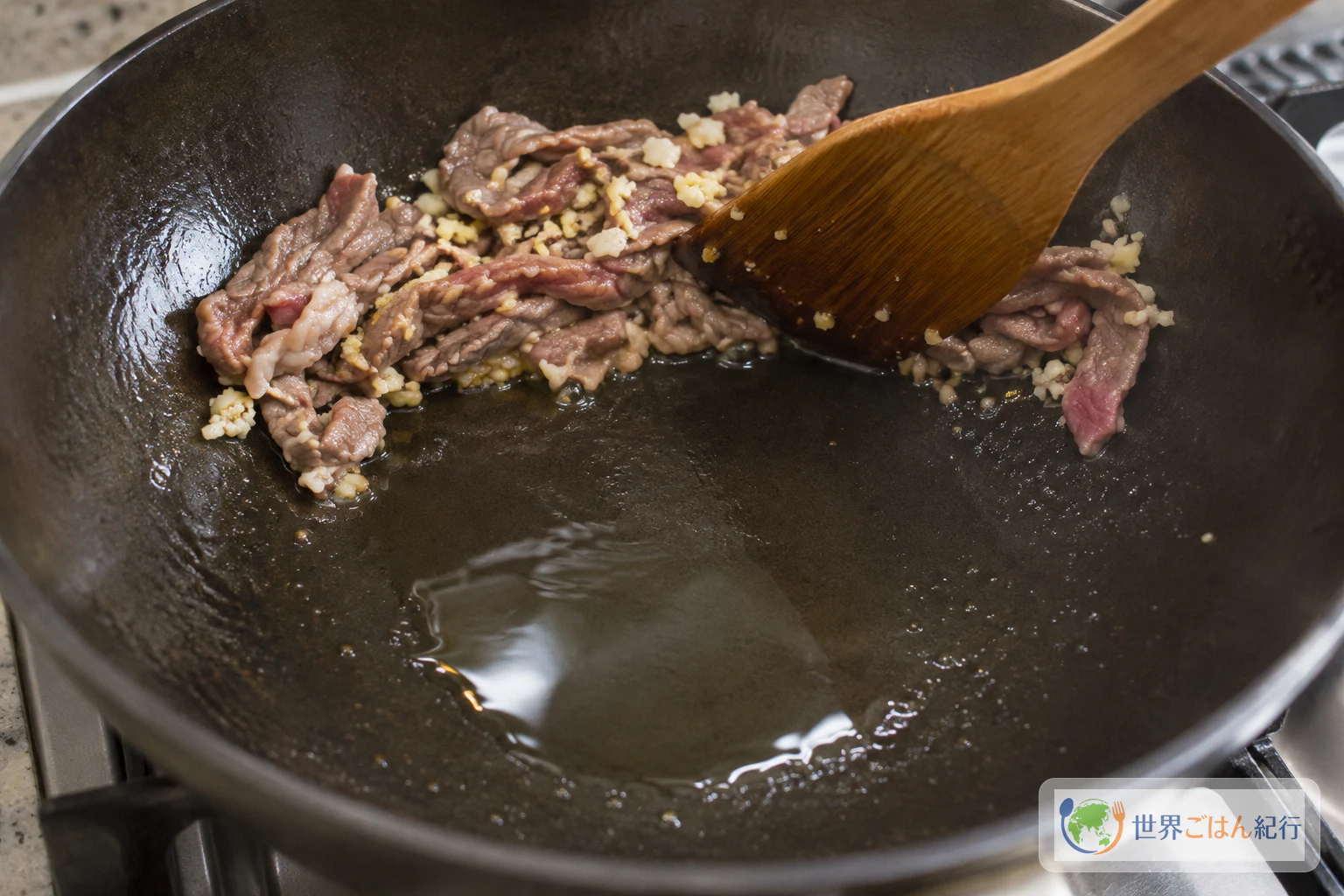
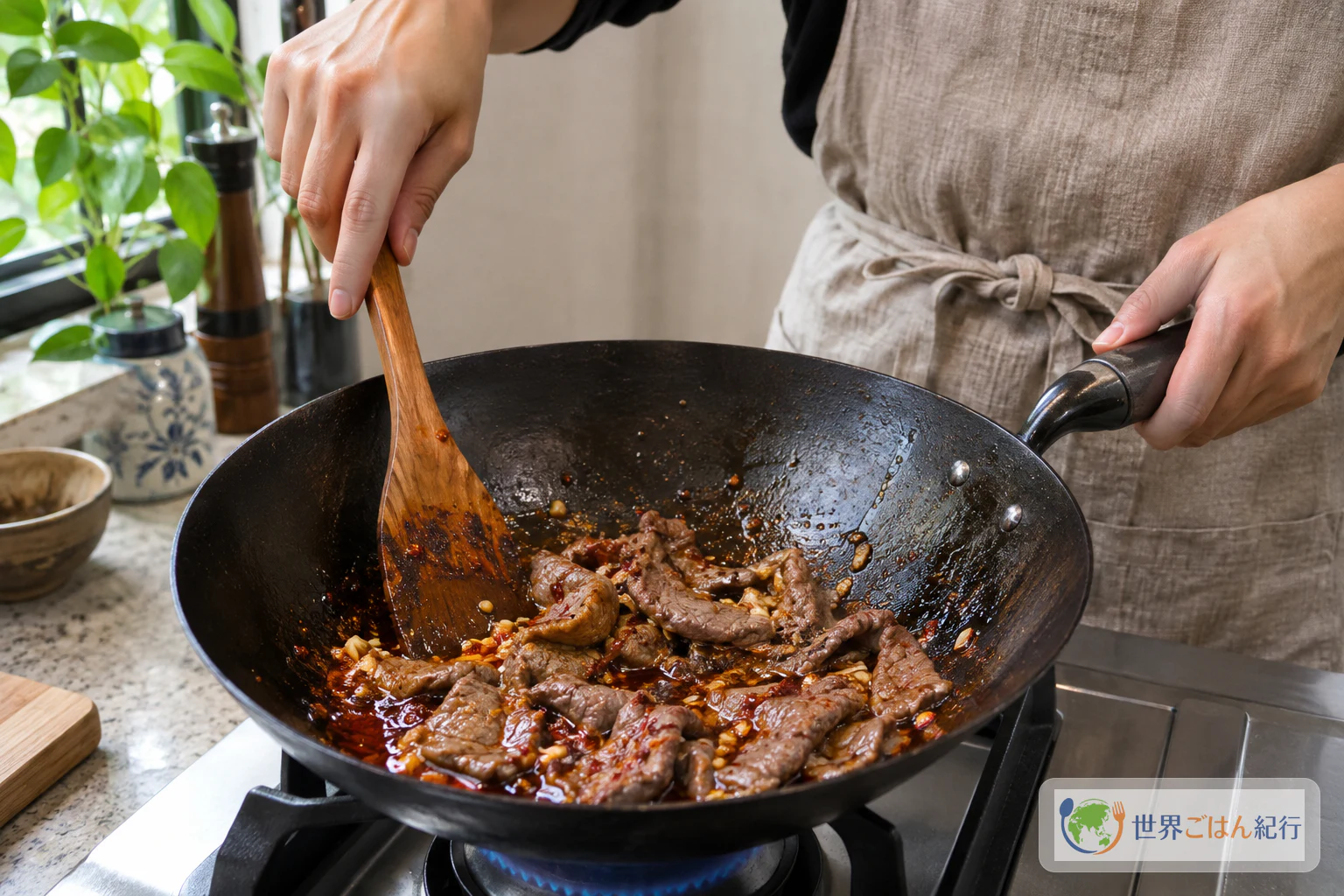
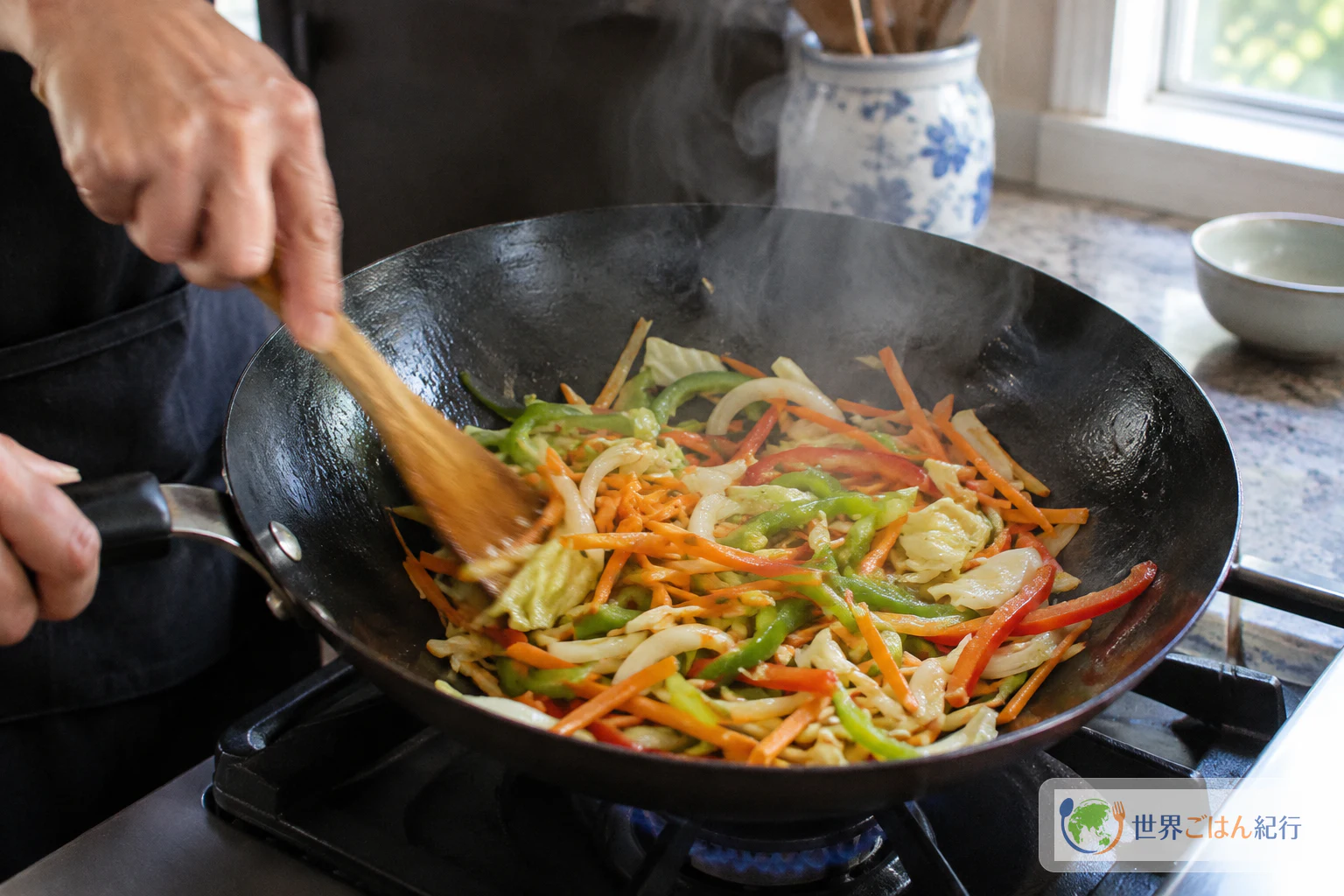
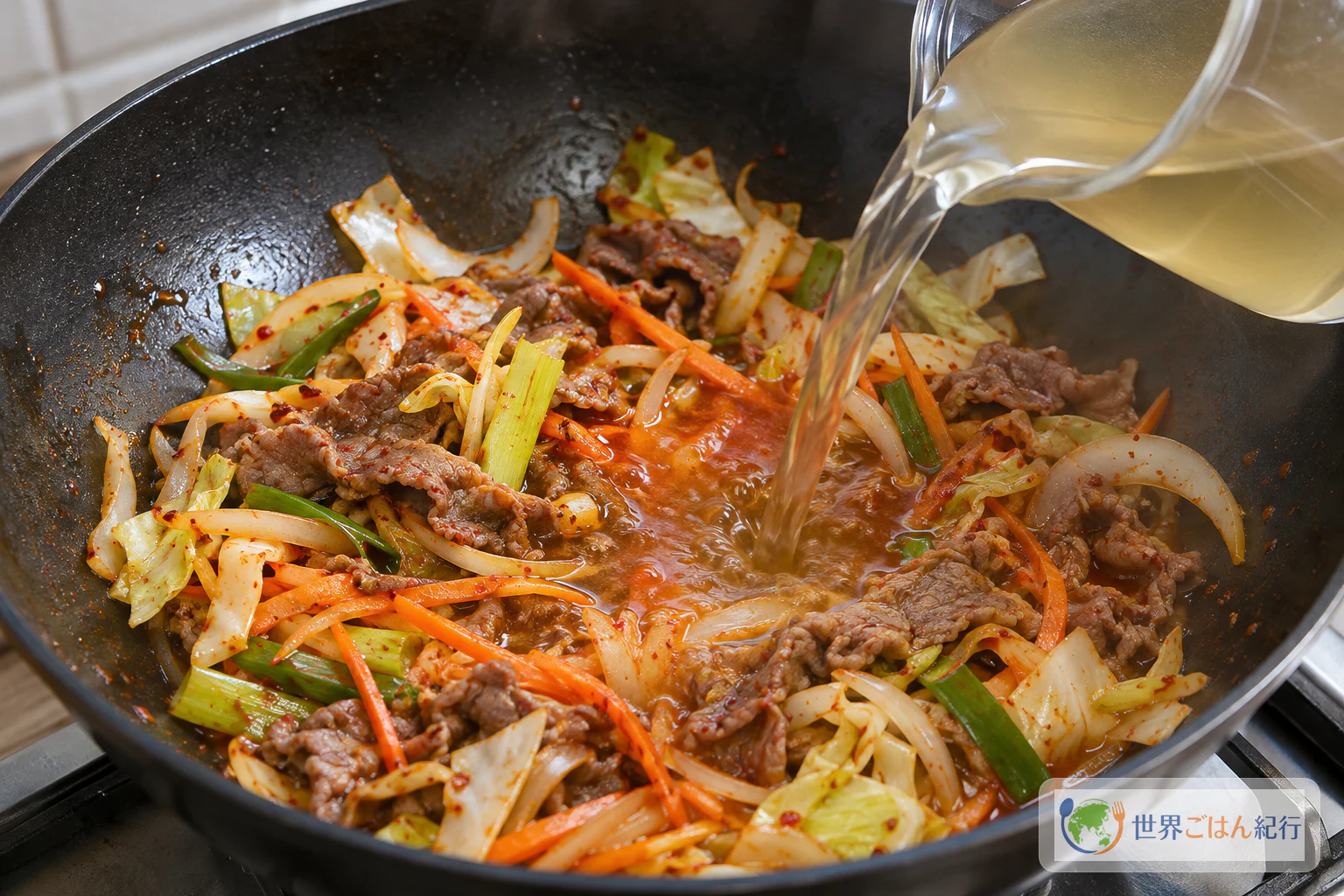
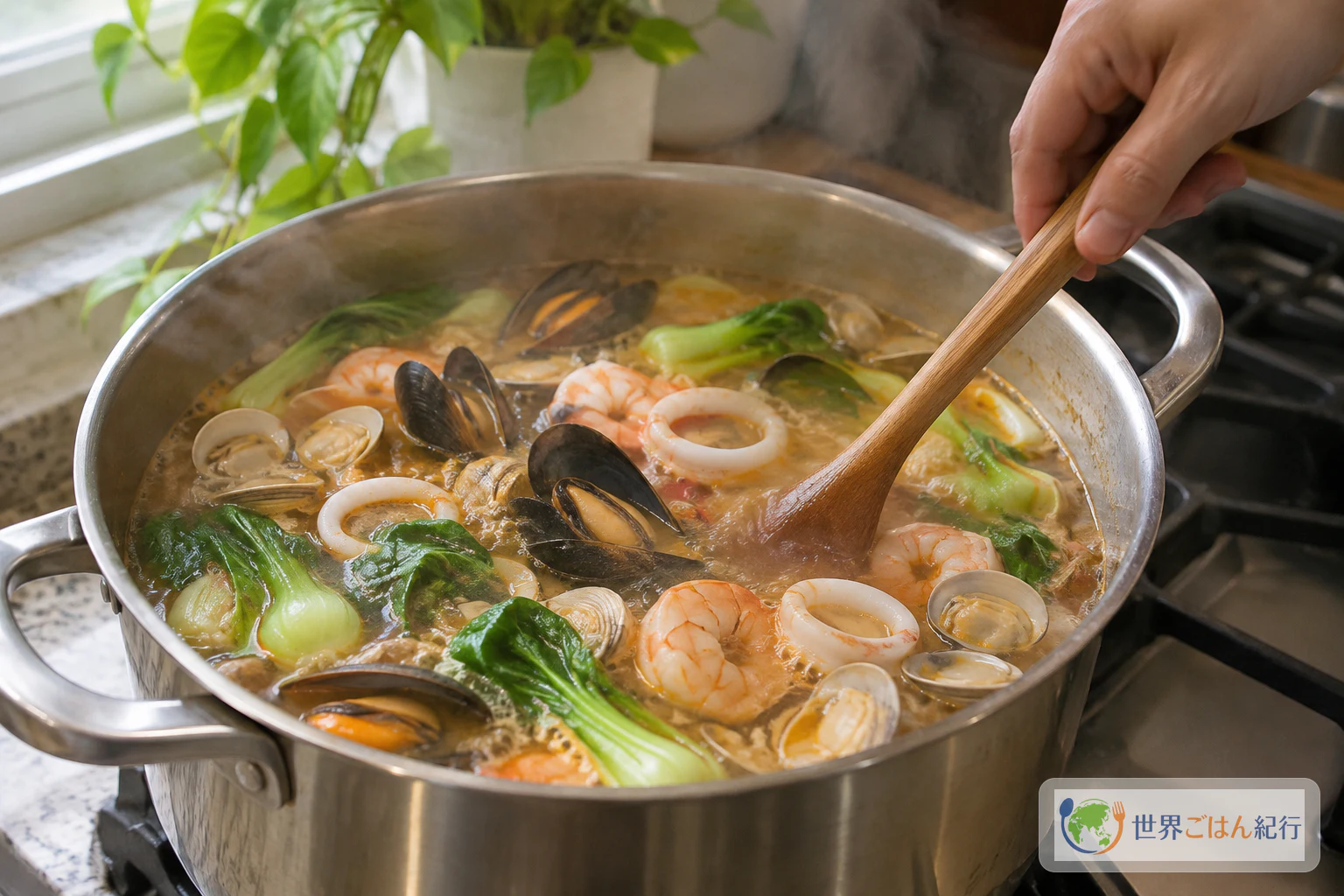
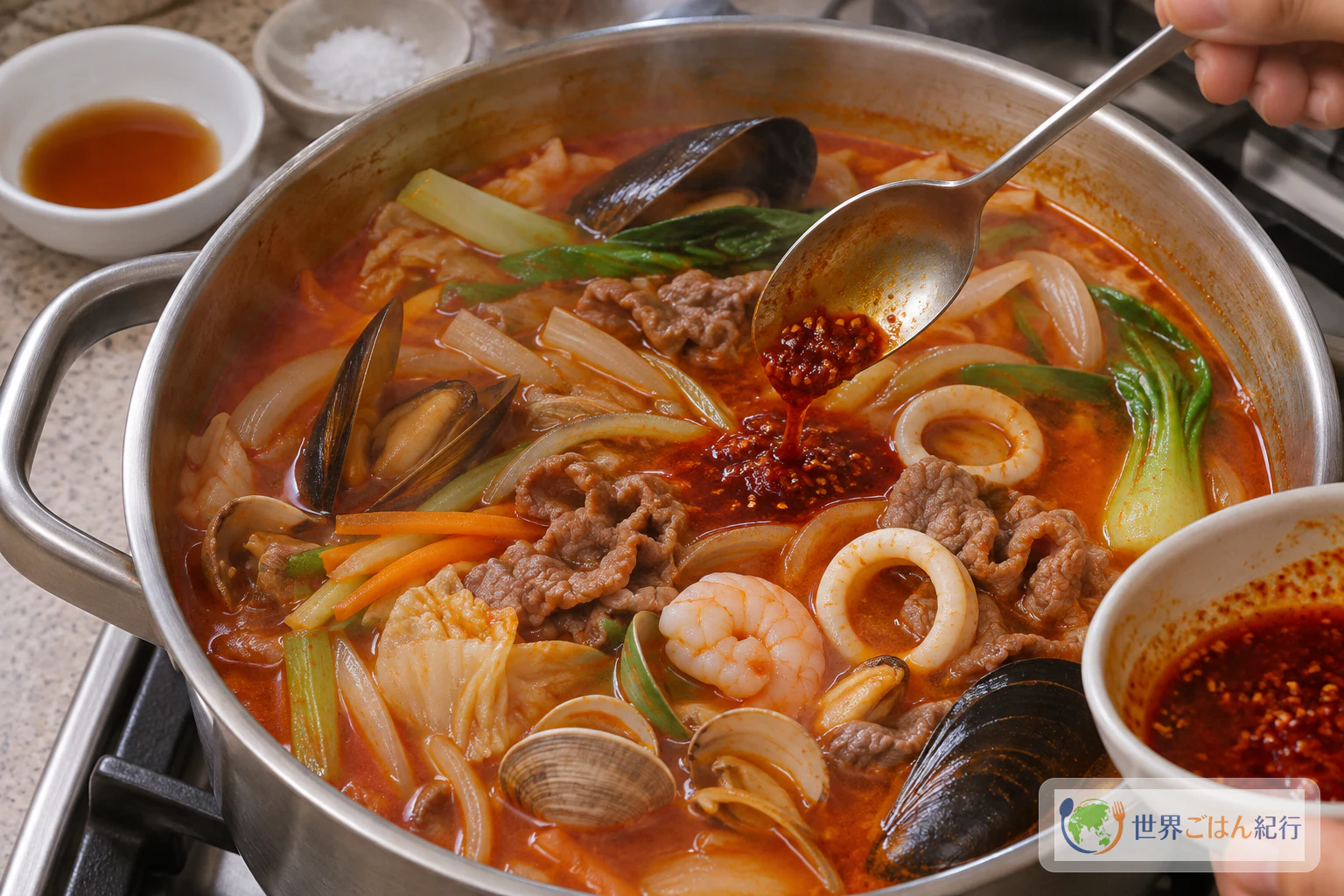
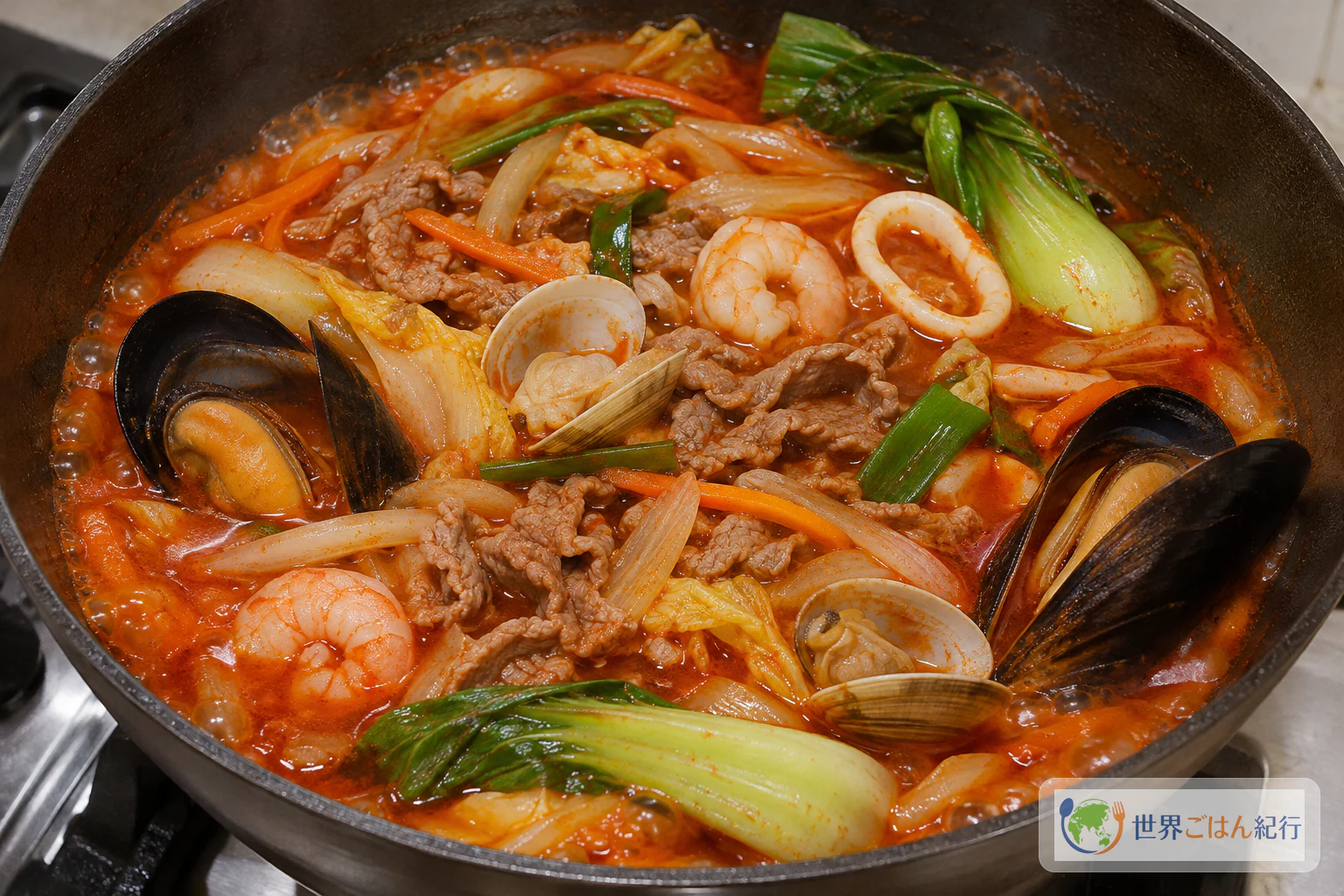
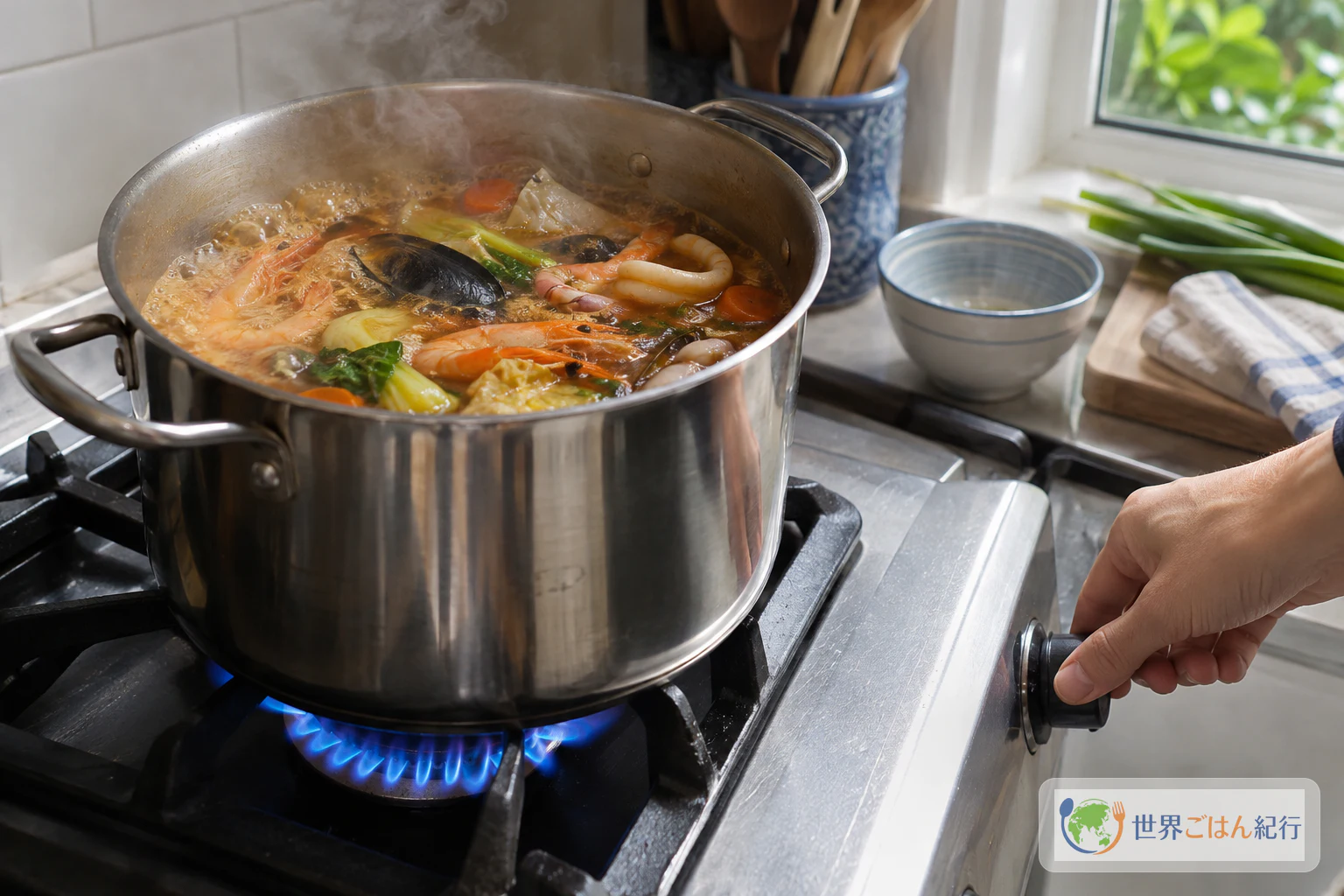
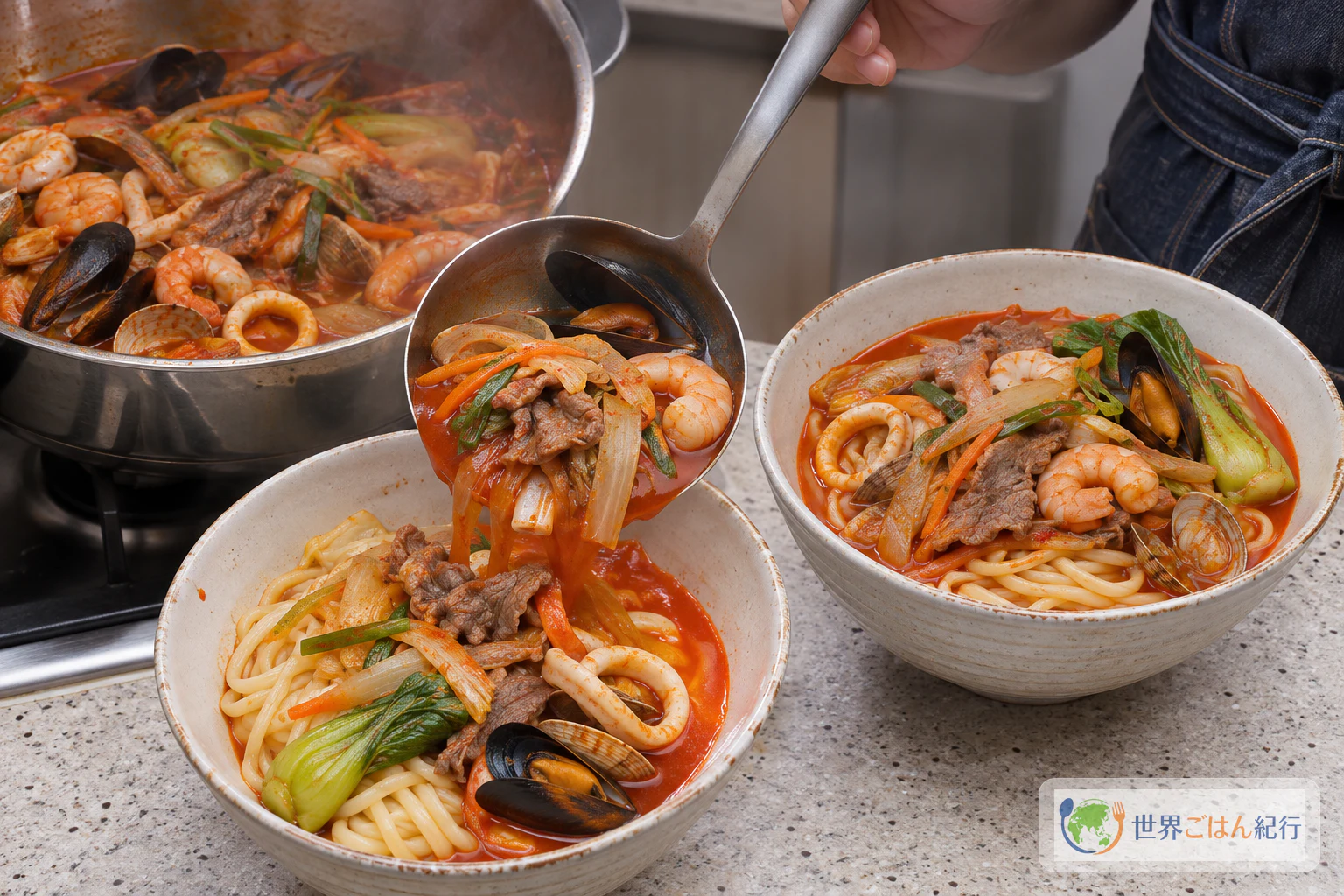
Korean red pepper flakes are fried in a pool of hot oil for about a minute. Green onions, leek, cabbage and onion are stir-fried in that red pepper oil. Then stock made from dried anchovies and kelp goes into the wok, followed by mussels, small clams, shrimp, squid rings and bok choy. The finished soup is ladled over wheat noodles. That is jjamppong (짬뽕), the spicy seafood noodle soup of Korean-Chinese restaurants.
Maangchi describes jjamppong as a red, spicy Korean-Chinese noodle dish that sits alongside jjajangmyeon, the black-bean-sauce noodles, on the menus of Korean Chinese restaurants. Korean Bapsang frames it the same way. When diners choose between the two, jjamppong is the fiery, brothy option and jjajangmyeon is the dark, saucy one.
This article follows the two-serving web version of Maangchi's recipe. It keeps her US cup, ounce and inch measures. Sekai Gohan has not kitchen-tested this recipe as a whole. If you want to place the dish within the wider table, see our guide to Korean food.
In Korean the dish is written 짬뽕, and in English it appears as jjamppong, jjampong or jjambbong. The name sounds close to Nagasaki's champon, but this article treats jjamppong as a Korean-Chinese dish on its own terms and does not claim the two are the same dish.
Where Jjamppong Comes From, Within What the Sources Say
The Korea Tourism Organization (VISITKOREA) describes jjamppong as a noodle dish in which pork, vegetables and seafood are stir-fried and then simmered in a chicken or pork-bone broth. It also states that red pepper powder and chili oil were added later to suit Korean tastes. The agency gives no date or documentary source for that change, so this article uses it only as the agency's own account. It does not offer an estimated year, a founding restaurant, or a single line of descent from Nagasaki champon.
Maangchi's page says the dish was developed by Chinese immigrants in Incheon and adapted to Korean tastes. That is her explanation, and it is presented here as hers. She also writes that she learned her stock and method from the owner of a Korean grocery store, and that the online version is a slightly simplified form of the version in her book. This article uses the online version only.
Her recipe differs from the broth described by VISITKOREA. Maangchi builds the soup on an anchovy-kelp stock and uses beef, with pork or chicken offered as alternatives. Korean Bapsang shows that home recipes vary in their meat, seafood, vegetables and chili oil. Its recipe is a separate formula, and none of its amounts are mixed into this one.
One editorial change: where the carrot goes
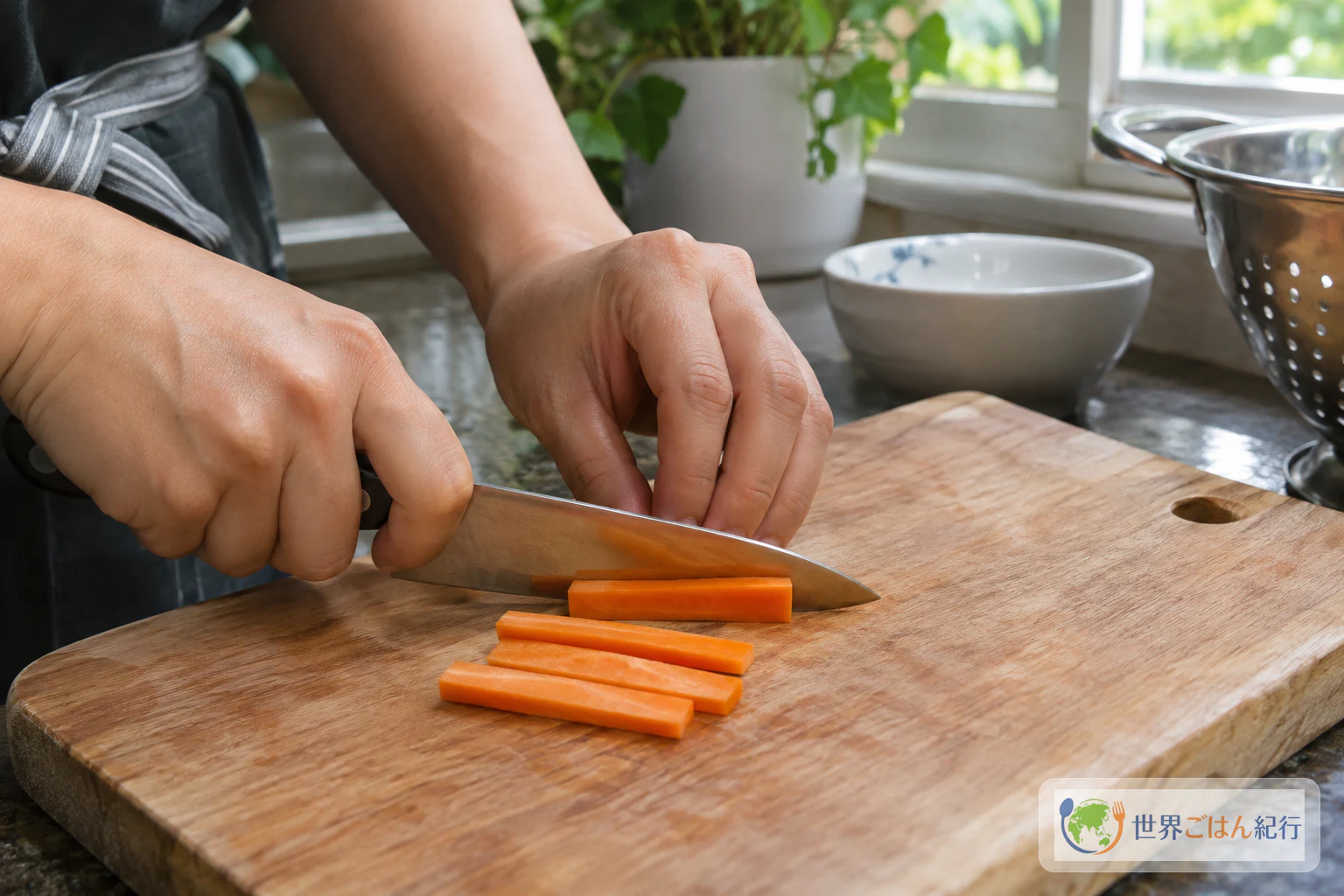
Maangchi's ingredient list includes one small carrot, peeled and cut into 2-inch strips. However, the stir-fry step in her method names only green onion, leek, cabbage and onion, and never says when to add the carrot. Rather than drop an ingredient from the list, our editors add the carrot together with those four vegetables and stir-fry them all for the same 3–4 minutes. This placement is our editorial decision. It is not an instruction written by Maangchi.
Ingredients for 2 Servings
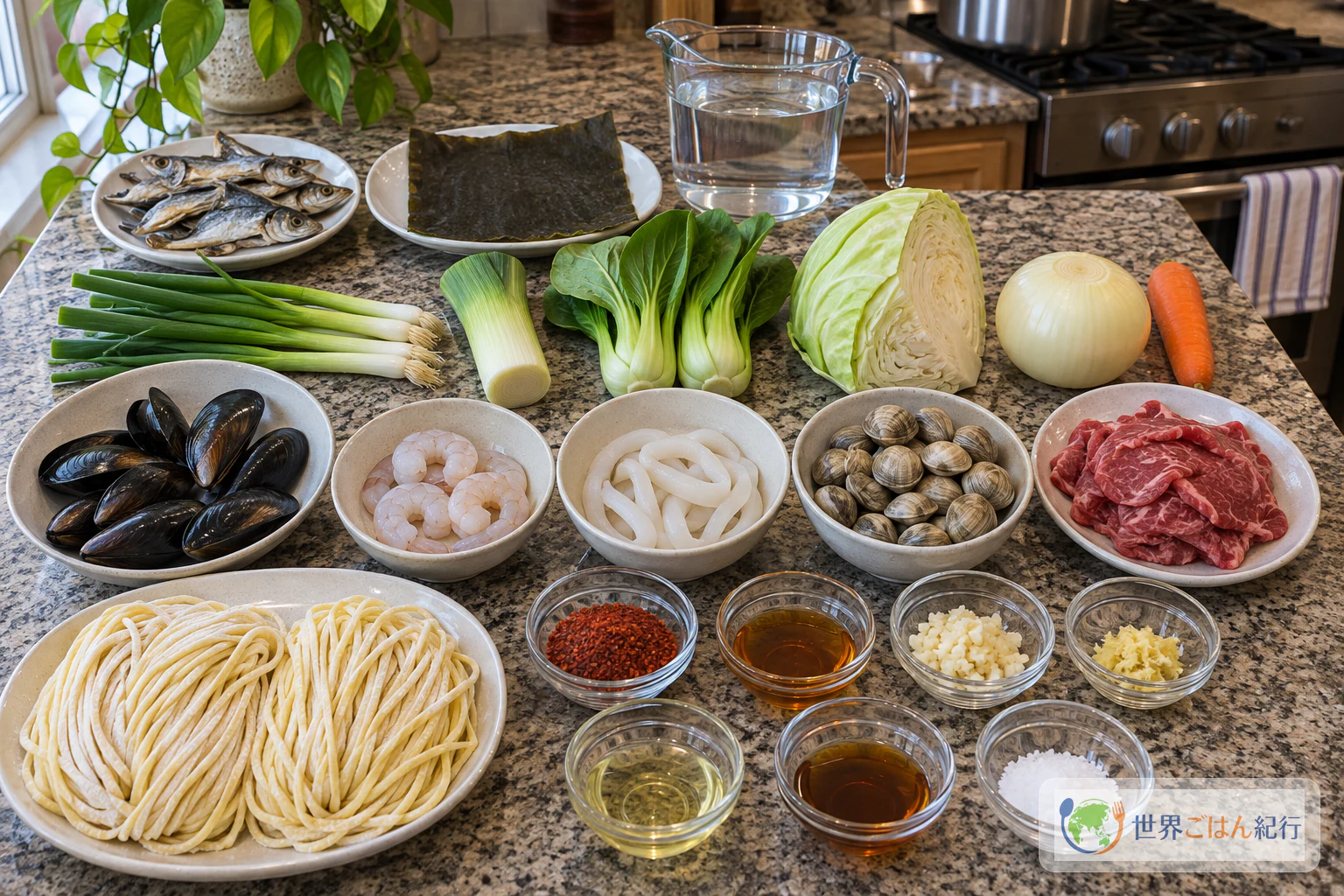
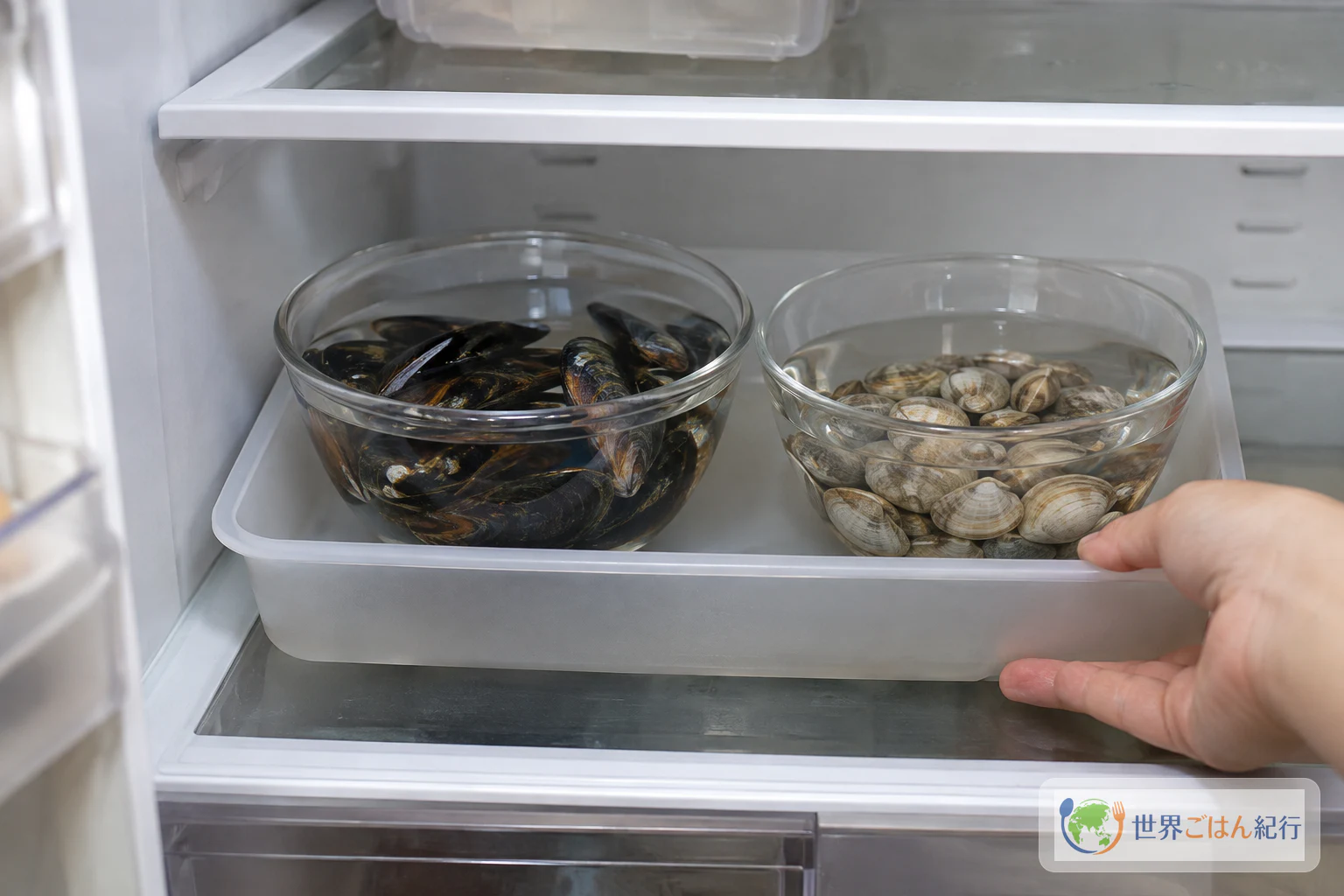
Buy mussels and clams sold as food at a fishmonger or supermarket, and keep them and the other raw seafood and beef refrigerated until you prepare them.
Equipment
- Large stockpot with a lid
- Fine-mesh strainer and a heatproof bowl or pot
- Liquid measuring cup
- Cutting boards and knives, with one board kept for raw seafood and beef
- Vegetable peeler
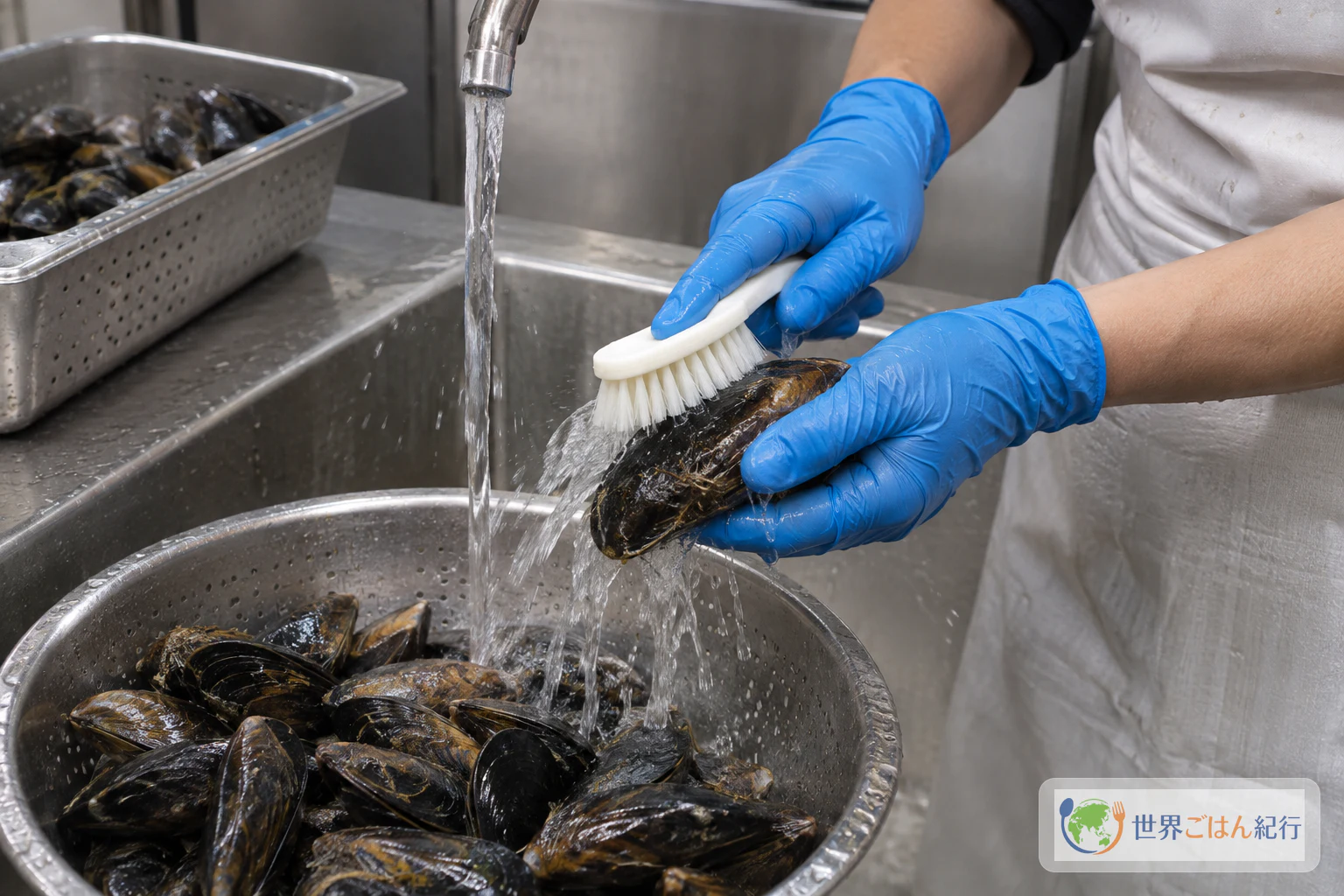
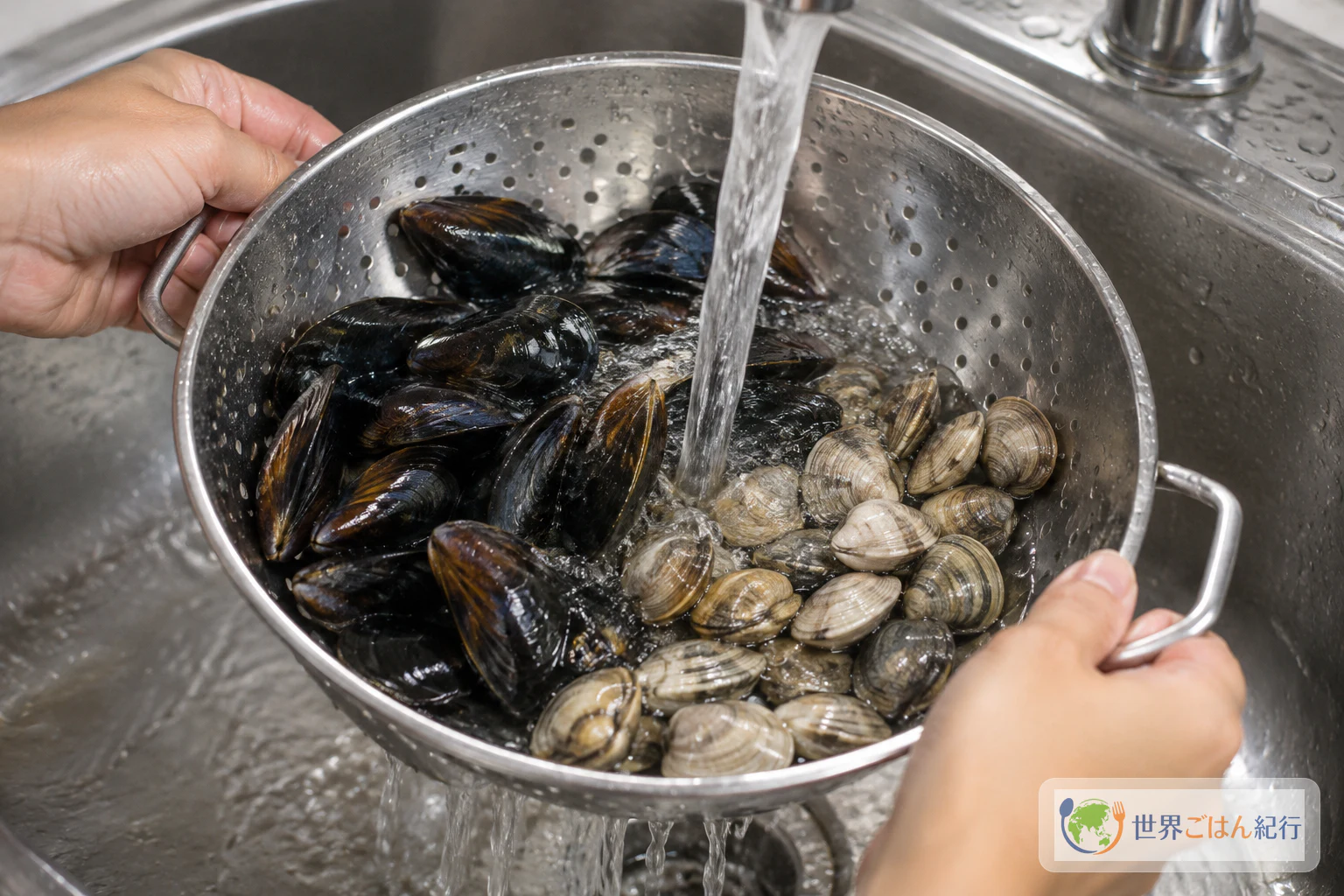
- Scrub brush for the mussels
- Two bowls for soaking the mussels and clams separately
- Colanders
- Small bowl for the reserved pepper mixture
- Wok, or a large pot, with a lid
- Spatula
- Separate pot for the noodles
- Chopsticks or tongs
- Food thermometer
- Ladle
- Two serving bowls
Choosing and Swapping: Onions, Shellfish, Noodles
Green onions. This recipe uses four green onions. A single large Korean green onion (daepa) can take the place of the four green onions.
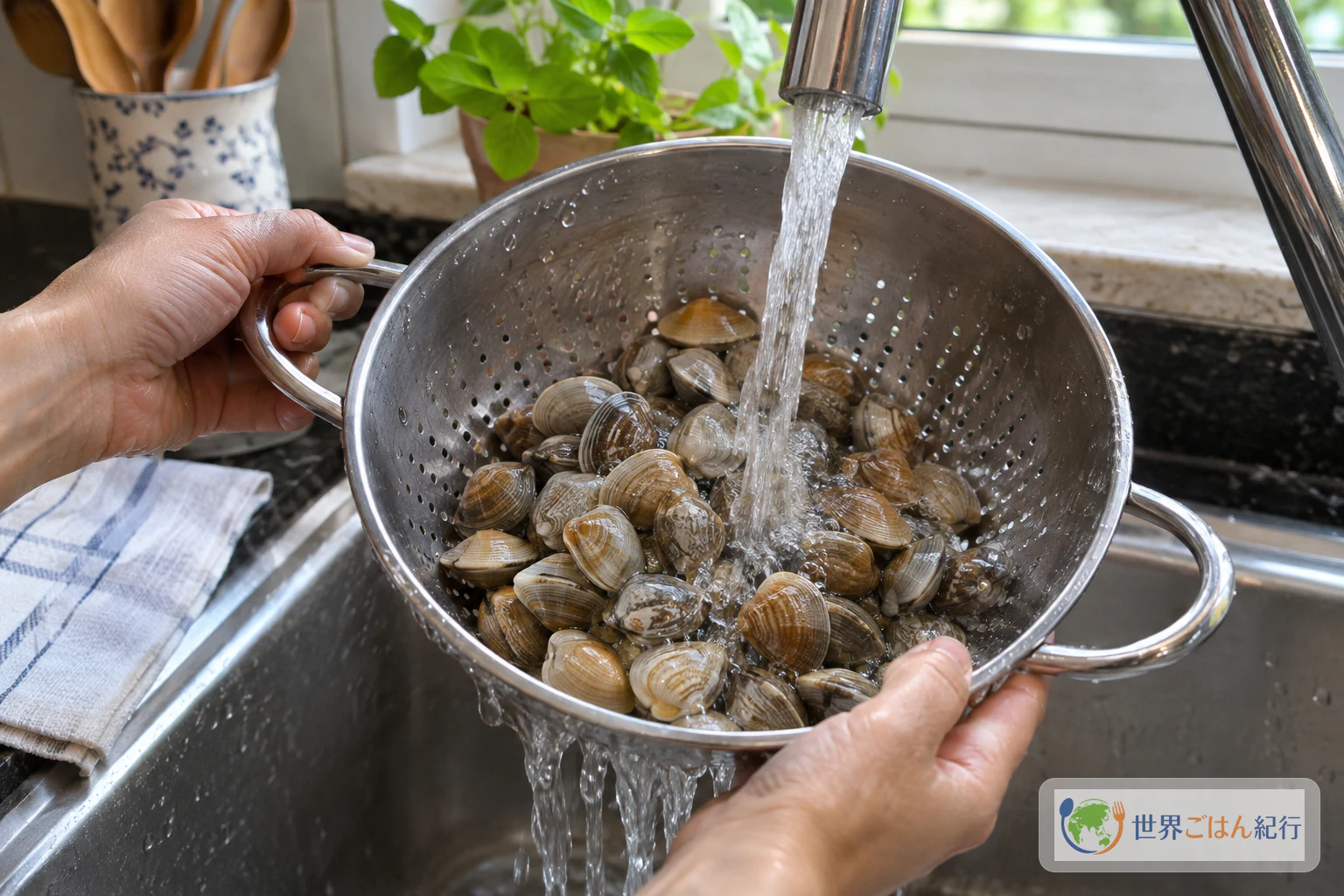
Shellfish. The clams are optional. If you leave them out, the soup is still complete with the mussels, shrimp and squid. Whatever you buy, choose shellfish sold for eating, and discard any with cracked or broken shells.
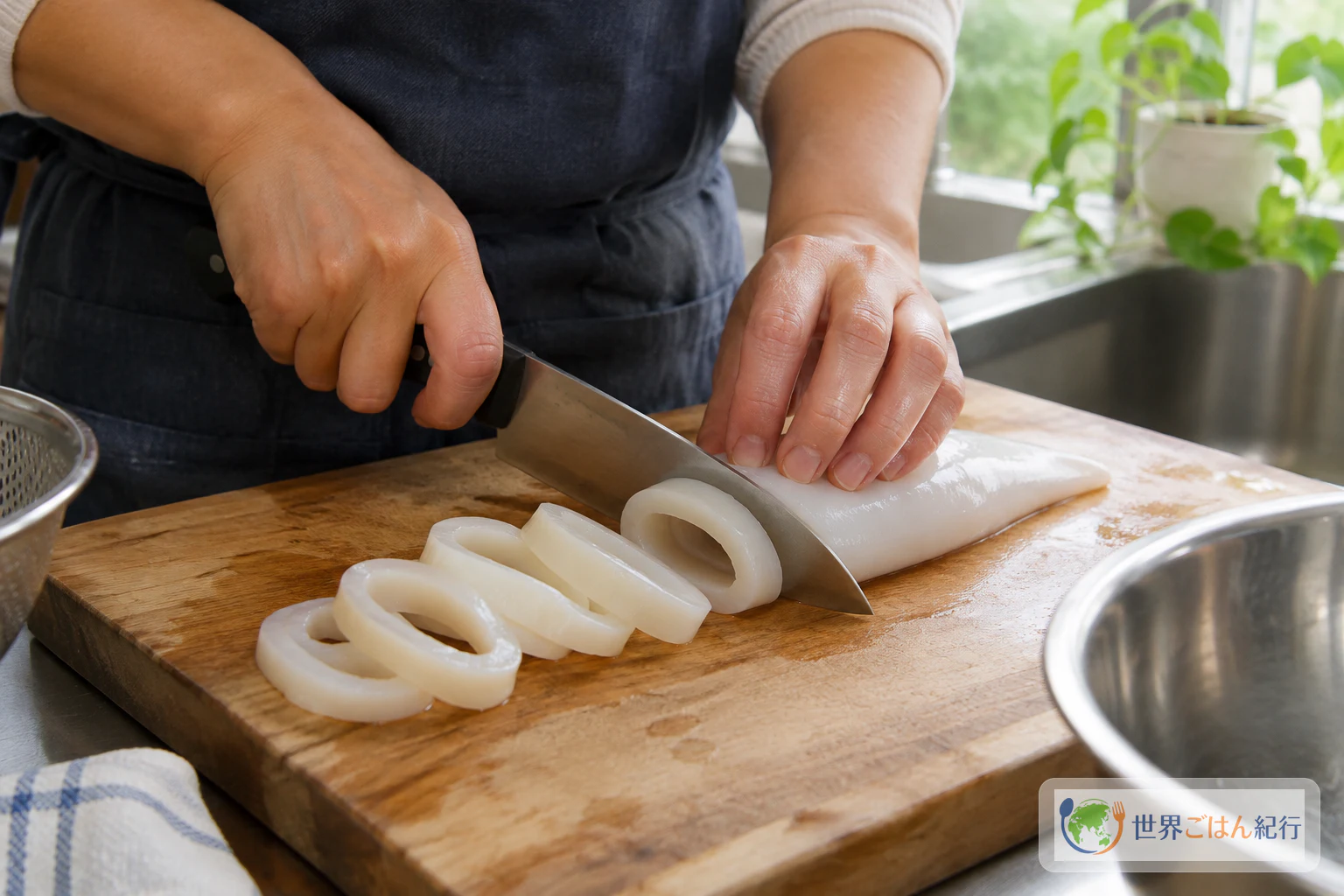
Squid. Use only the cleaned body, cut into rings. Leave the guts out of the pot.
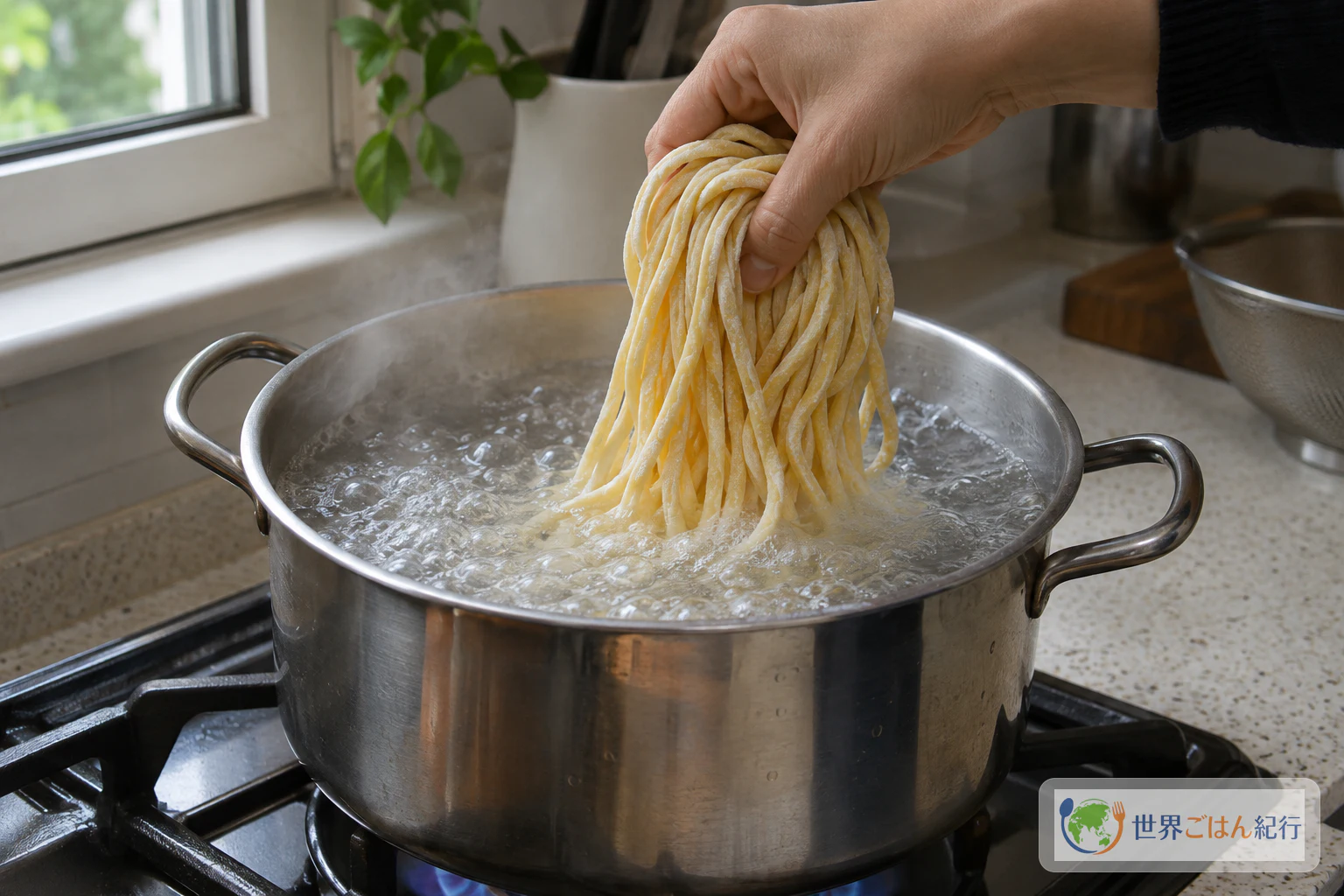
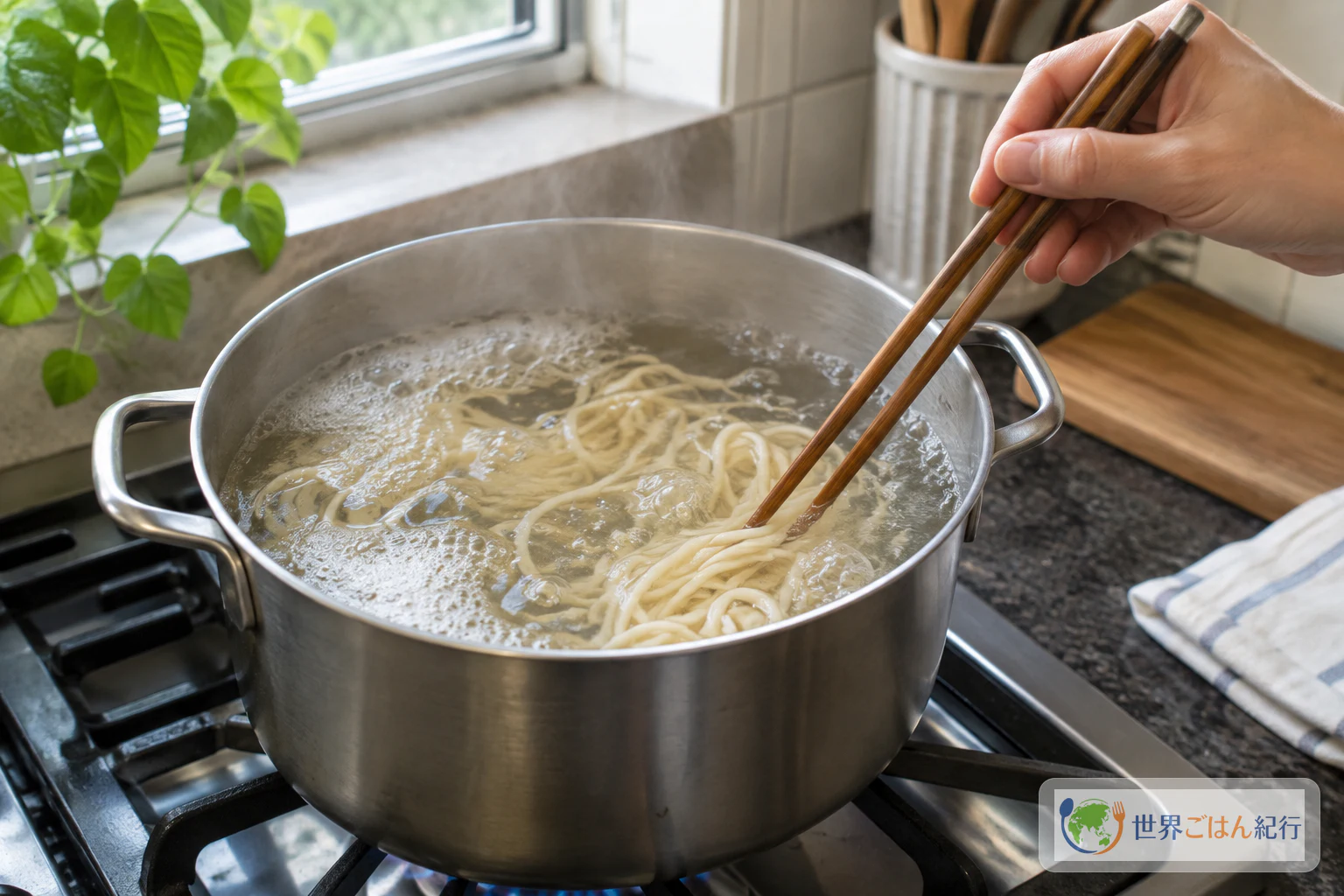
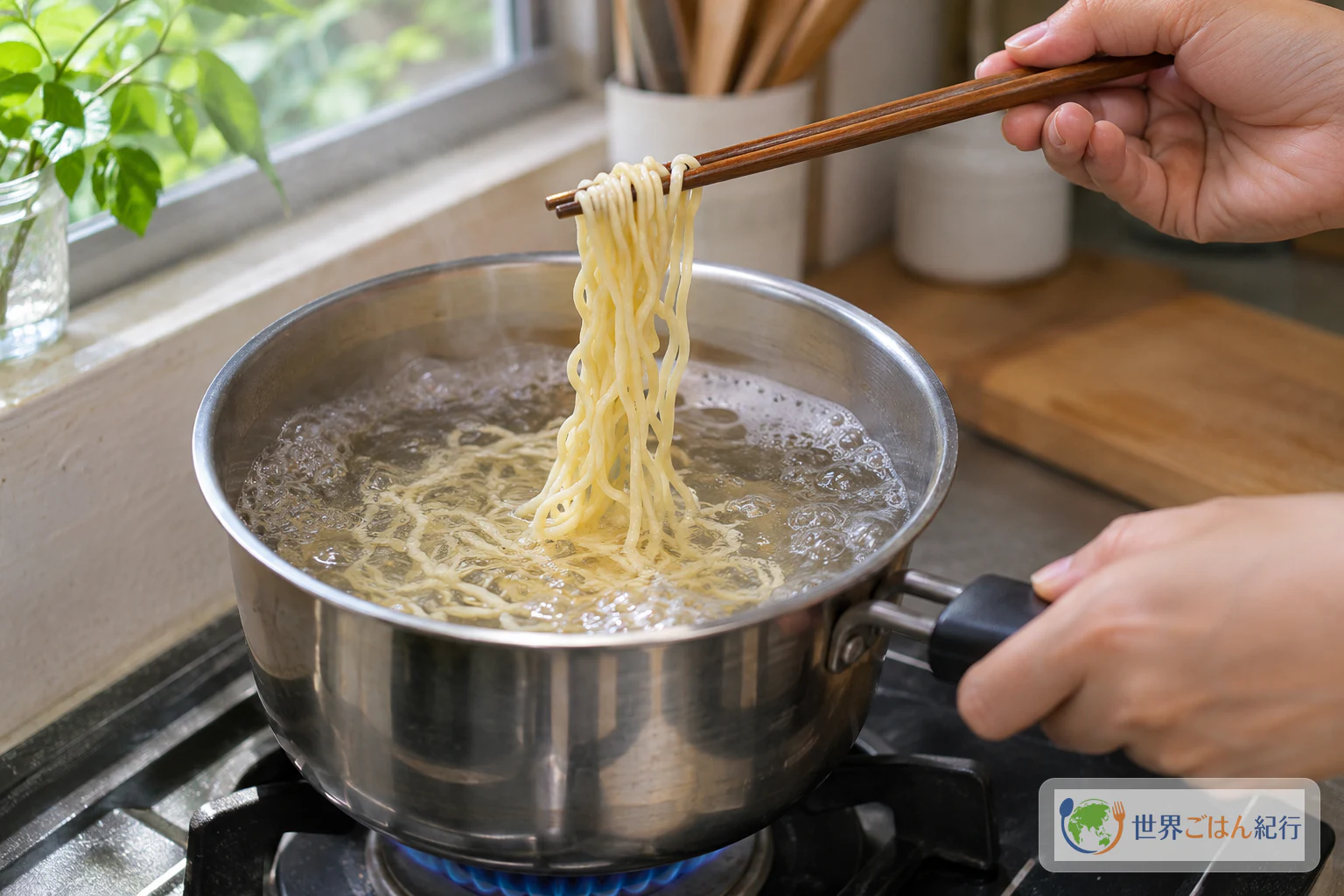
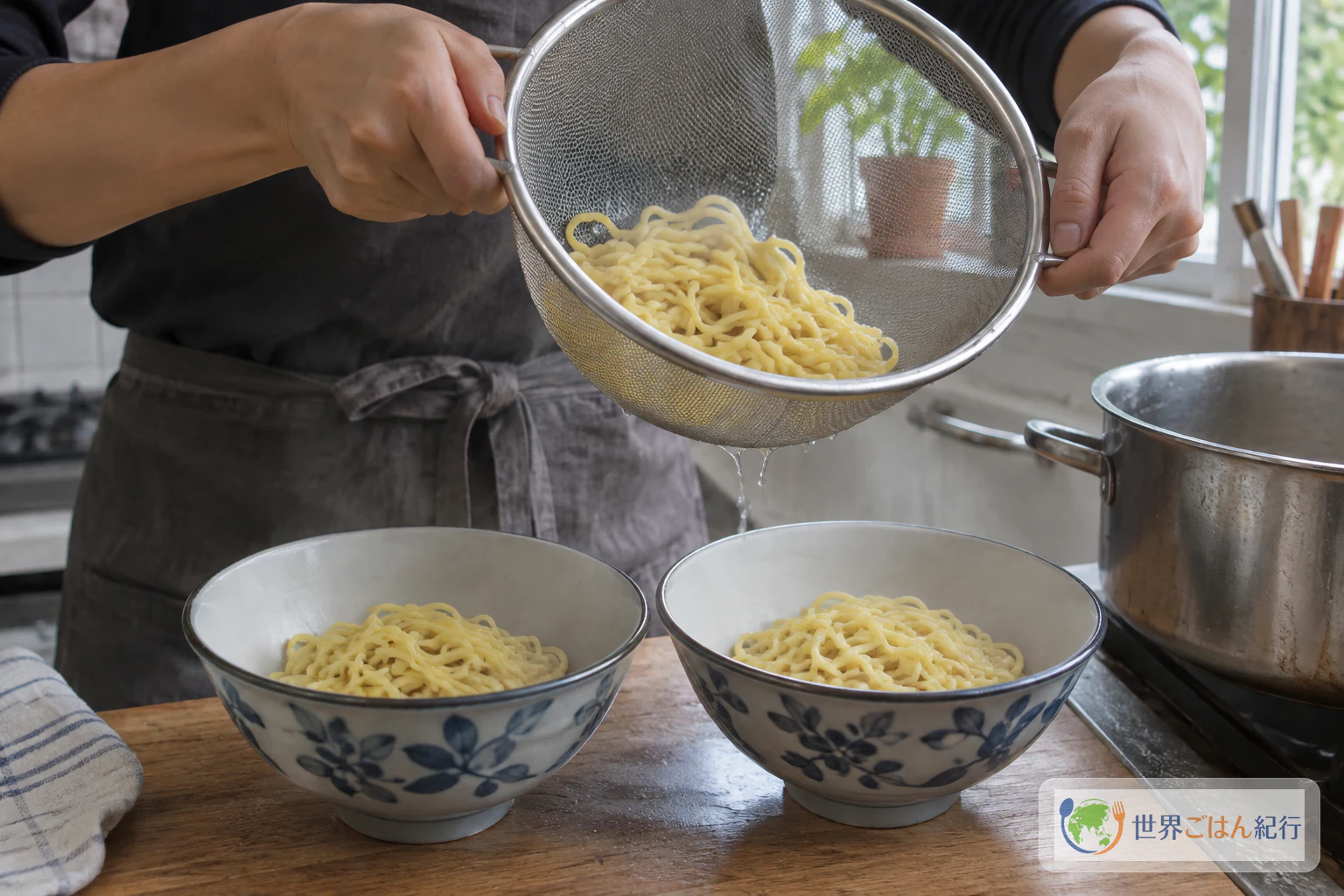
Noodles. Jjajangmyeon noodles are wheat noodles sold fresh or frozen. If they are frozen, thaw them and pull the strands apart before boiling. For other noodle options, see the FAQ.
Food Safety Alongside the Recipe Times
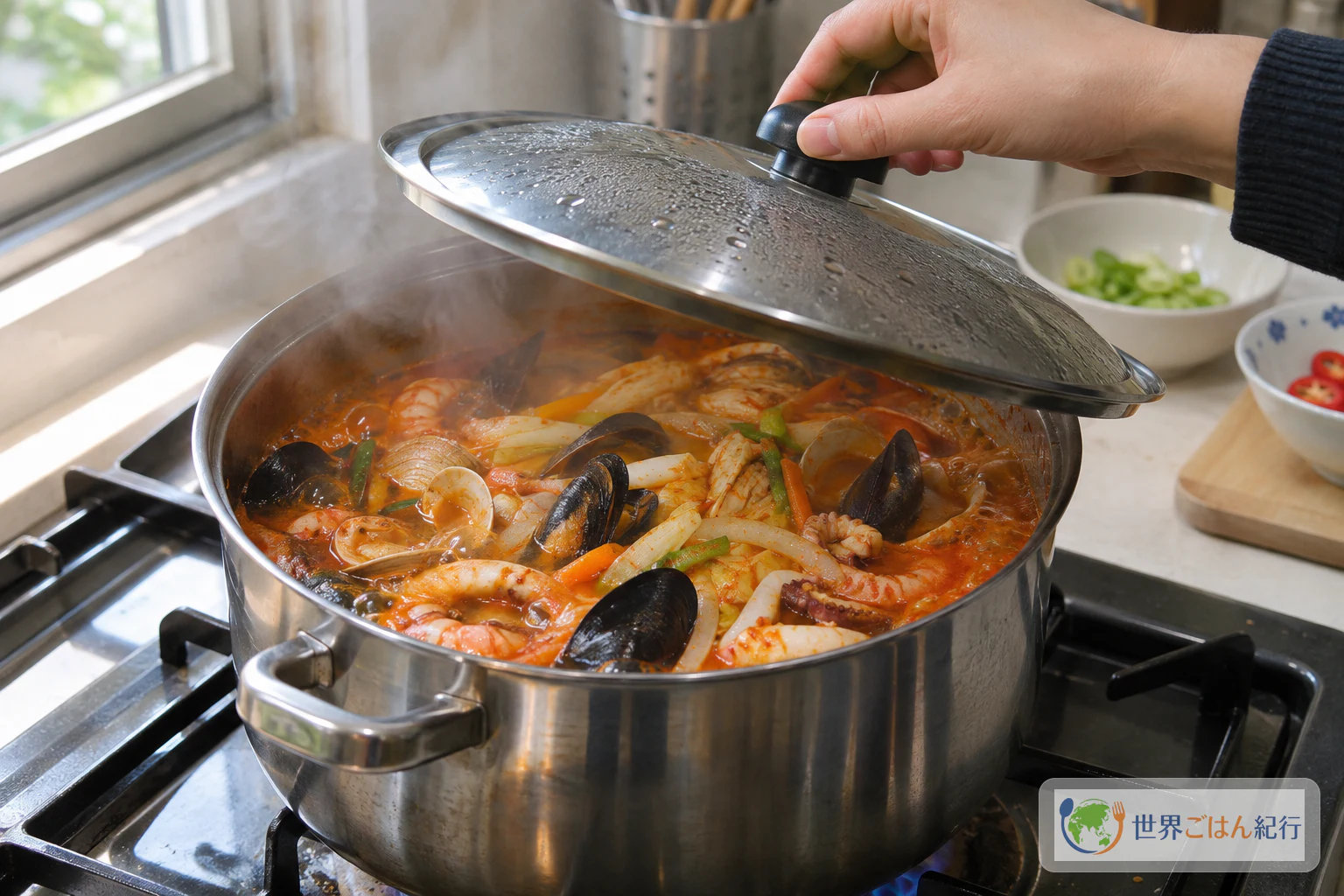
The 7–8 minutes of covered cooking in step 31 is a cooking guide, not a safety guarantee. Japan's Ministry of Health, Labour and Welfare advises that bivalve shellfish that may be contaminated with norovirus be heated until the center reaches 85–90°C for at least 90 seconds. Its home food-poisoning guidance gives a center temperature of 75°C for at least 1 minute as the guide for cooking meat. Use a food thermometer to confirm these conditions. Shells opening and shrimp turning opaque are useful things to watch for, but they do not prove that the food is safe.
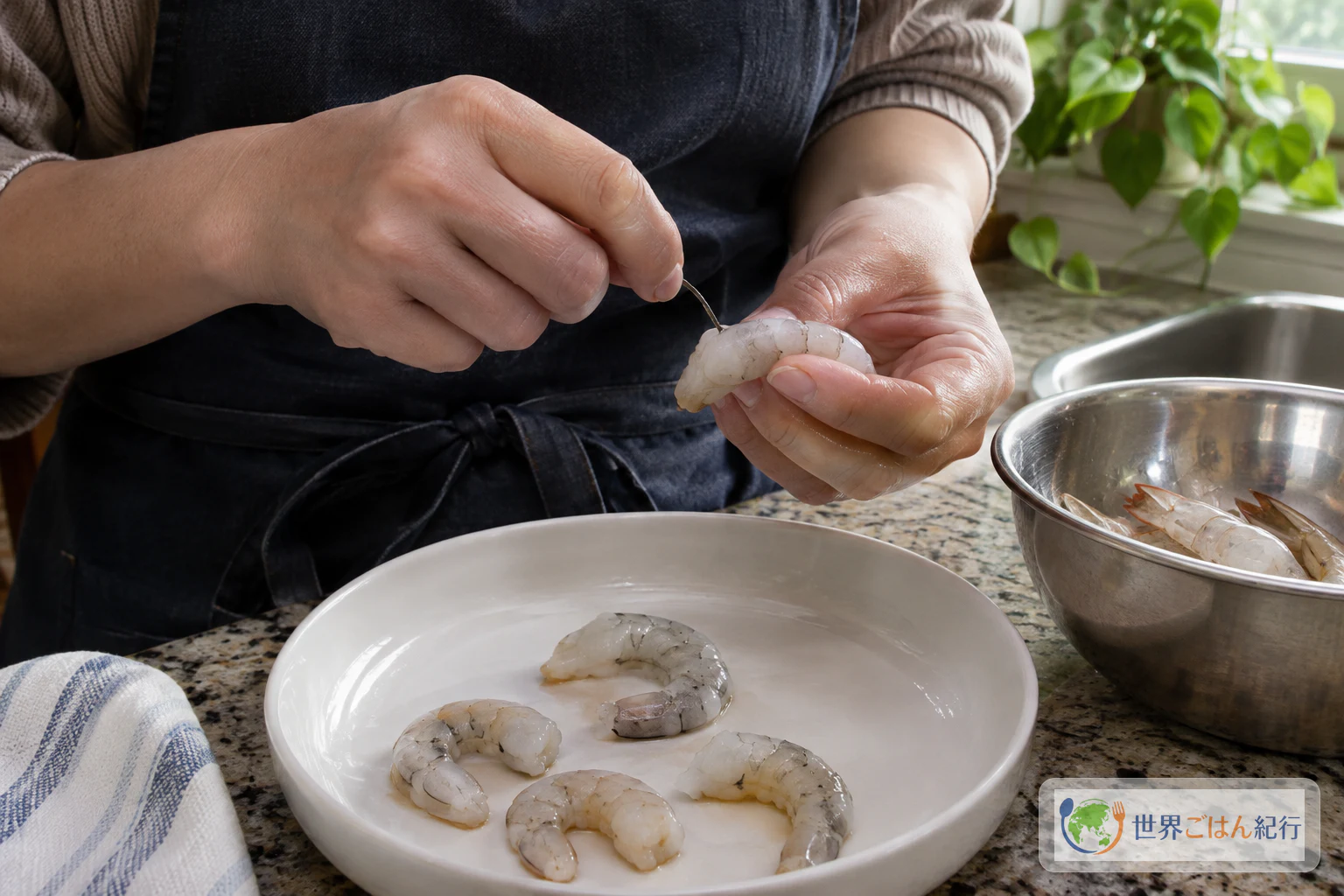
Use only shellfish sold commercially for eating. Do not use wild-gathered shellfish or shellfish you have tried to purge yourself. The US FDA advises discarding shellfish with cracked or broken shells, and discarding any that stay closed after cooking. It also advises cooking shrimp until the flesh is pearly and opaque. Keep the shellfish refrigerated during the salt-water soak and handle them according to the product label. Keep raw seafood and raw beef apart from other foods and from the cooked noodles, and wash your hands, boards and tools after touching them.
Method: Stock, Pepper Oil, Seafood and Noodles
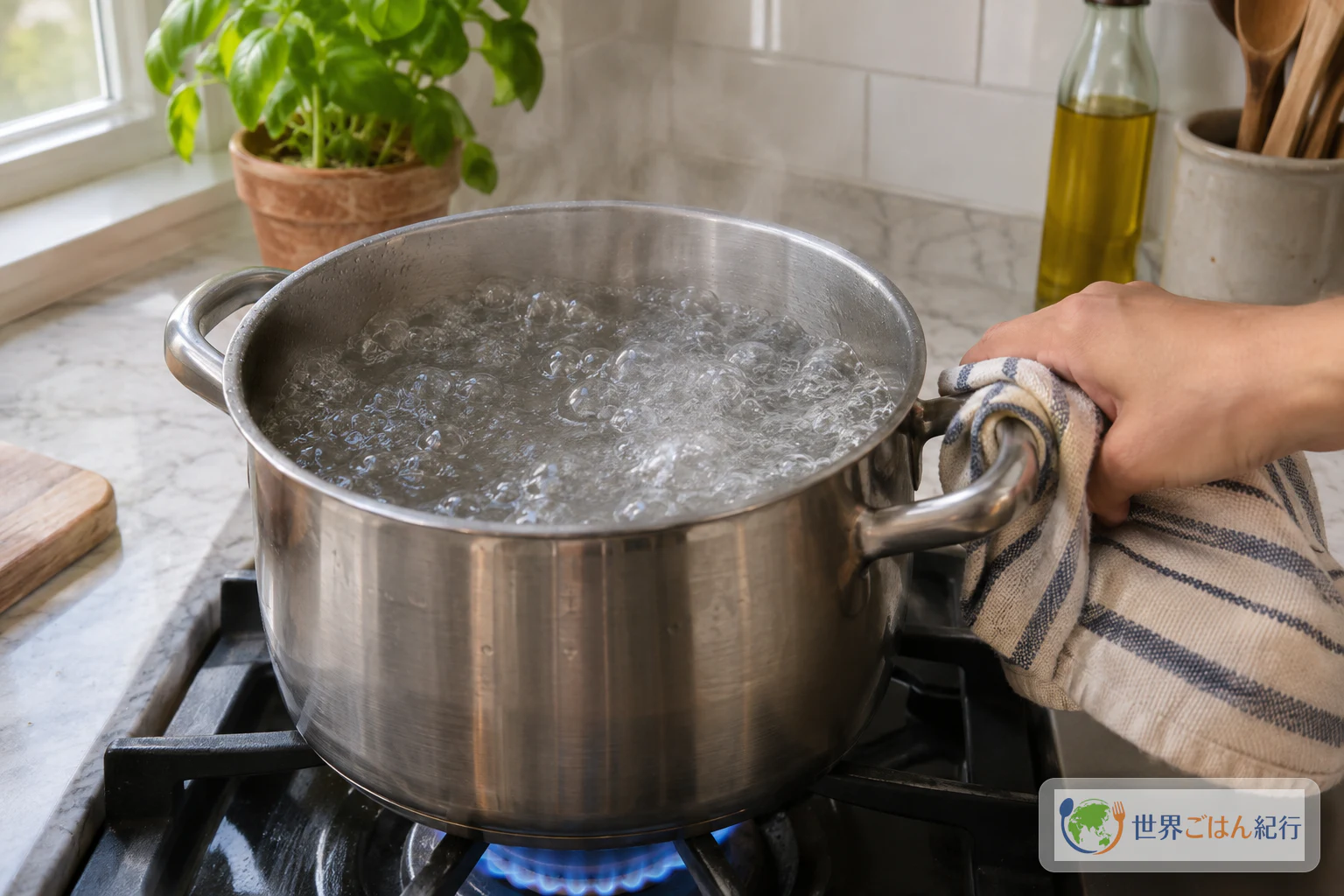
Make the stock and prepare all the vegetables, shellfish and beef first. Once the wok is hot, the steps move quickly. Cook the noodles in a separate pot while the soup simmers.
What to Watch For in the Wok
| What you notice | What it means | What to do |
|---|---|---|
| The pepper flakes are darkening fast | The gochugaru is close to burning | Keep stirring, and move on at about 1 minute |
| A mussel or clam shell is cracked before cooking | The shell is damaged | Discard it |
| A mussel or clam stays closed after cooking | It did not open in the heat | Discard it |
| The seafood looks done but the thermometer is below the target | Appearance is not proof of safe cooking | Keep heating until the shellfish center holds 85–90°C for 90 seconds or more, and the beef holds 75°C for 1 minute or more |
| The noodles are clumping in the pot | Frozen noodles weren't separated, or they weren't stirred | Thaw and separate the strands before boiling, and stir occasionally |
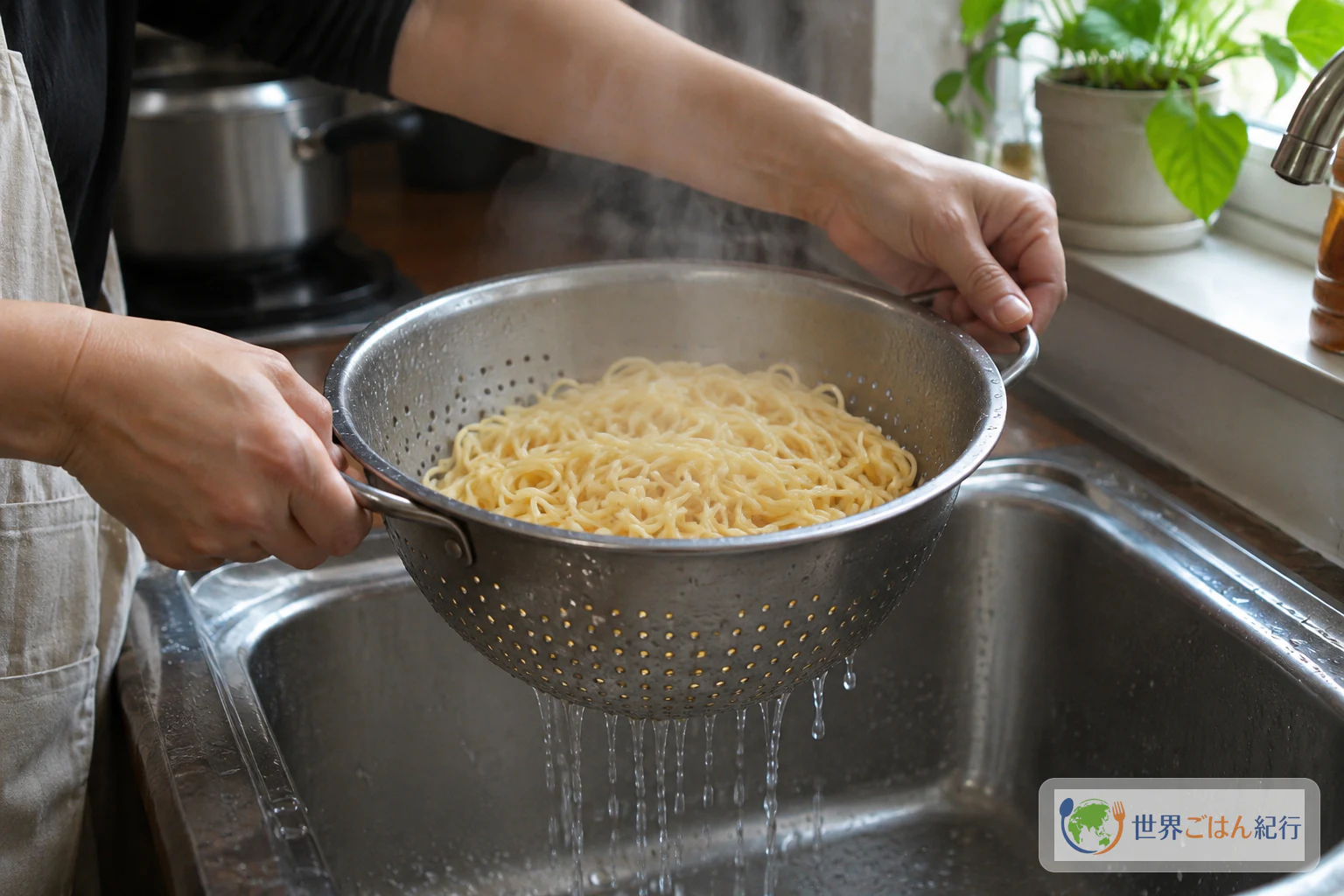
| The noodles feel soft and starchy in the bowl | They weren't rinsed after draining | Rinse under cold running water until they are springy |
How the Bowl Varies
Maangchi offers beef, pork or chicken for the 4 oz of thinly sliced meat. This version uses beef throughout. She lists the clams as optional, and she allows one daepa in place of the four green onions. VISITKOREA describes a version built on pork with a chicken or pork-bone broth. Korean Bapsang shows that households vary in their meat, seafood, vegetables and chili oil.
Those are real variations in the dish, but each one is a separate formula. If you want to try another version, cook it from its own recipe rather than mixing amounts from several recipes into this one.
Frequently Asked Questions
Is jjamppong the same as Nagasaki champon?
The names sound alike, but this article does not treat them as the same dish, and it does not claim a direct line of descent between them. Neither the Korea Tourism Organization nor the other references used here document a single shared origin. Here, jjamppong is the red, gochugaru-spiced Korean-Chinese noodle soup.
Can I use pork or chicken instead of beef?
Maangchi's recipe gives pork or chicken as alternatives to beef. This version is written for beef. Whatever meat you use, cook it in the soup until the center reaches 75°C for at least 1 minute, following Japan's Ministry of Health, Labour and Welfare guidance.
Can I leave out the clams?
Yes. Maangchi marks the 24 small clams as optional. This version includes them, but the soup still works with the mussels, shrimp and squid alone.
What if I can't find jjajangmyeon noodles?
Korean Bapsang notes that fresh Chinese-style wheat noodles are the standard choice and suggests dried noodles or spaghetti as home substitutes. Cook any noodle according to its package, then rinse it in cold water.
Why make so much stock and use only 6 cups?
Maangchi's stock recipe starts with 12 cups of water and yields 8–10 cups after straining, of which the soup uses 6. This recipe keeps those amounts as they are.
Is 7–8 minutes of covered cooking enough to make the shellfish safe?
That time is a cooking guide only. Japan's Ministry of Health, Labour and Welfare advises heating bivalves that may carry norovirus until the center reaches 85–90°C for at least 90 seconds. Use a thermometer and keep heating if needed. Opened shells and opaque shrimp are useful signs, but they are not proof of safety.
Where did the carrot come from, since it isn't in Maangchi's stir-fry step?
Maangchi's ingredient list includes a small carrot, but her method doesn't say when to add it. Our editors add it with the other stir-fried vegetables in step 28. That placement is our editorial choice, not her instruction.
Can I make it ahead or keep leftovers?
The references used for this recipe give no storage period. This recipe makes two servings meant to be eaten right after the soup is ladled over the noodles. Keep raw seafood and beef refrigerated until you cook them.
Sources
- Maangchi, "Spicy mixed-up seafood noodle soup (Jjamppong 짬뽕)." The two-serving recipe used here: ingredients, amounts, US units, stock yield and the 6 cups used, step order and times. Also the description of jjamppong as a red, spicy Korean-Chinese noodle dish served alongside jjajangmyeon, the author's account of learning the method from a Korean grocery store owner, and her note that the online version is simplified from her book. Her ingredient list includes a carrot that her method does not place; its placement in this article is an editorial decision. https://www.maangchi.com/recipe/jjamppong
- Korea Tourism Organization (VISITKOREA), "Spicy Seafood Noodle Soup (짬뽕 / Jjamppong)." The agency's description of a noodle dish of stir-fried pork, vegetables and seafood simmered in chicken or pork-bone broth, and its statement that red pepper powder and chili oil were added later to suit Korean tastes. No dates or single origin are drawn from it. https://english.visitkorea.or.kr/svc/contents/contentsView.do?vcontsId=179704
- Korean Bapsang, "Jjamppong (Spicy Seafood Noodle Soup)." Used for the dish's place on the Korean-Chinese table alongside jjajangmyeon, fresh wheat noodles as the standard choice with dried noodles or spaghetti as home substitutes, and household variation. Its amounts and steps are not used in this recipe. https://www.koreanbapsang.com/jjam-bbong-korean-chinese-spicy-noodle/
- U.S. Food and Drug Administration, "Selecting and Serving Fresh and Frozen Seafood Safely." Used for discarding cracked shellfish and shellfish that stay closed after cooking, cooking shrimp until pearly and opaque, and keeping raw seafood away from cooked foods. https://www.fda.gov/food/buy-store-serve-safe-food/selecting-and-serving-fresh-and-frozen-seafood-safely?os=win
- Ministry of Health, Labour and Welfare (Japan), "Q&A on Norovirus," Q15. Used for heating bivalve shellfish that may be contaminated with norovirus until the center reaches 85–90°C for at least 90 seconds. https://www.mhlw.go.jp/stf/seisakunitsuite/bunya/kenkou_iryou/shokuhin/syokuchu/kanren/yobou/040204-1.html
- Ministry of Health, Labour and Welfare (Japan), "Six Points for Preventing Food Poisoning at Home." Used for the guide of heating meat until the center reaches 75°C for at least 1 minute, and for keeping raw meat and seafood apart from other foods and washing hands and tools. https://www.mhlw.go.jp/topics/syokuchu/dl/point0709.pdf