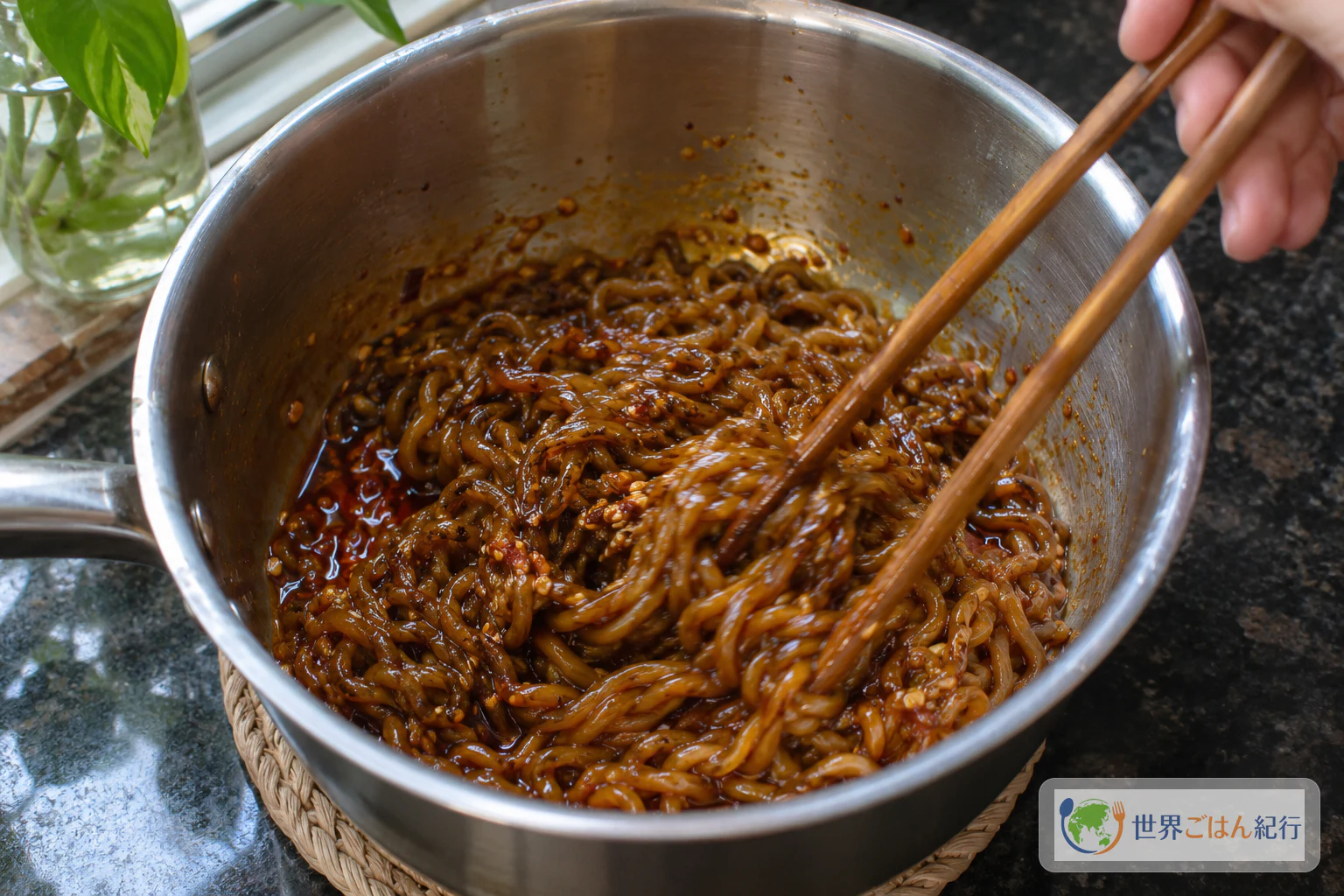
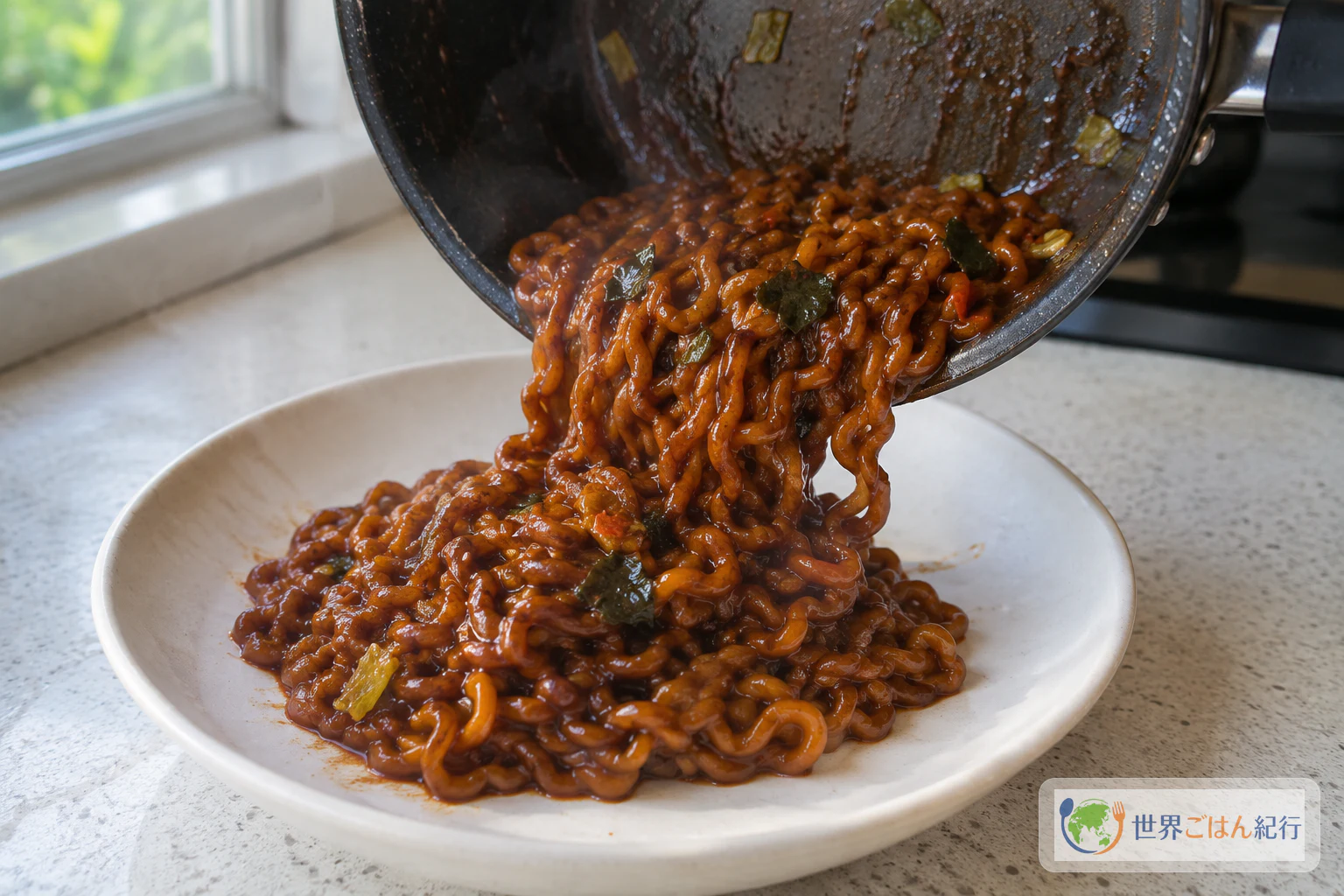
Jjapaguri: Two Instant Noodles, One Pot, One Glossy Black Sauce
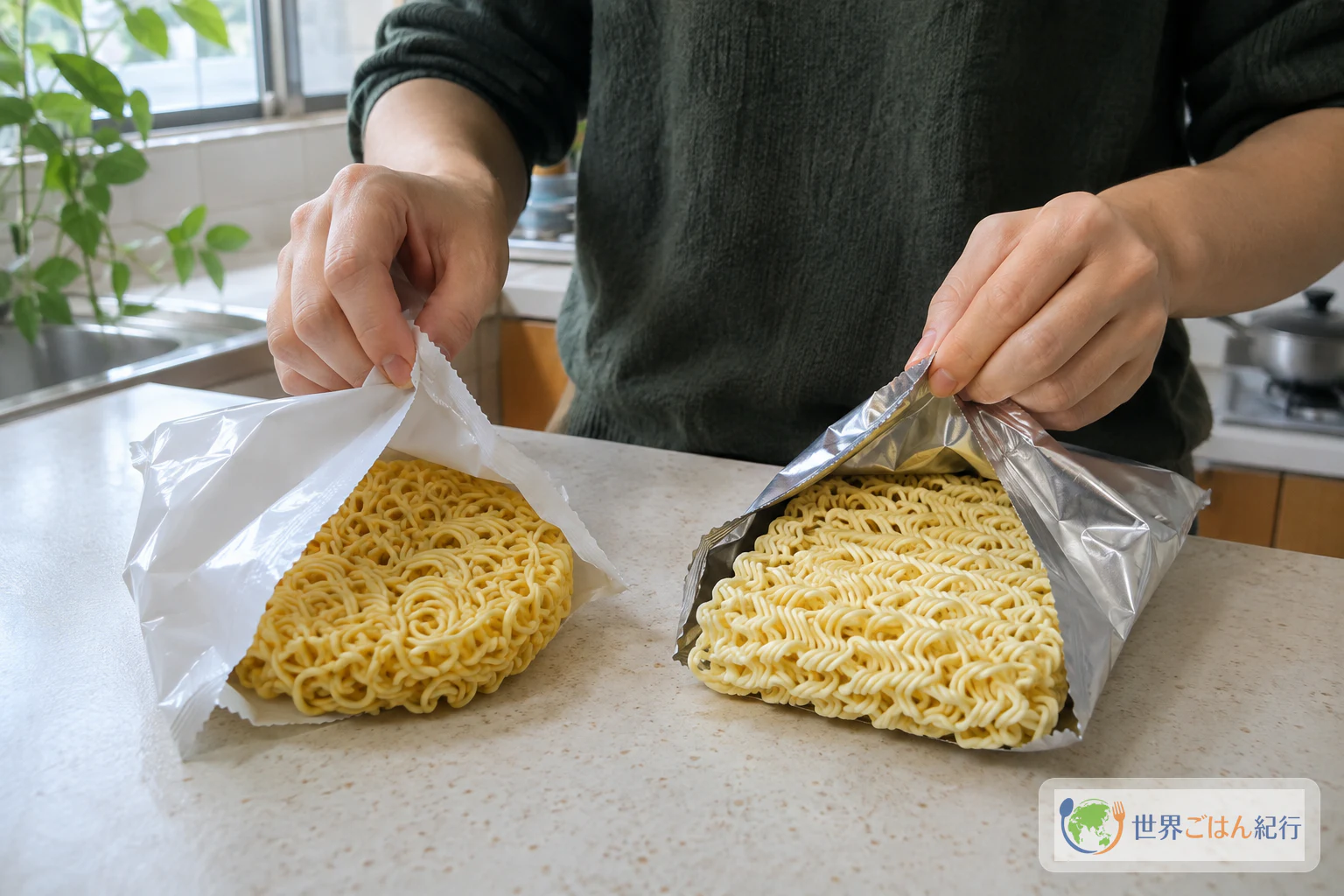
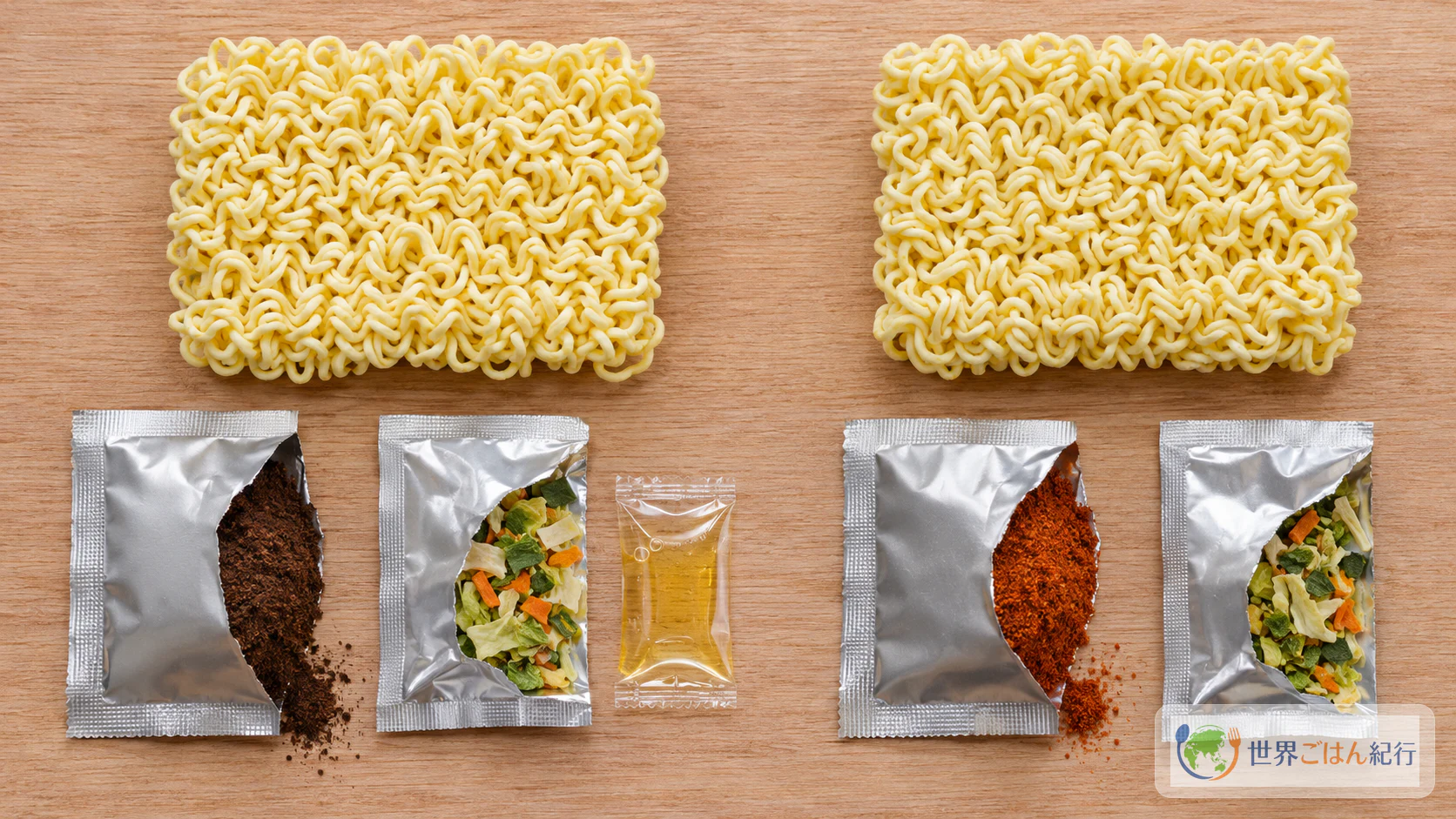
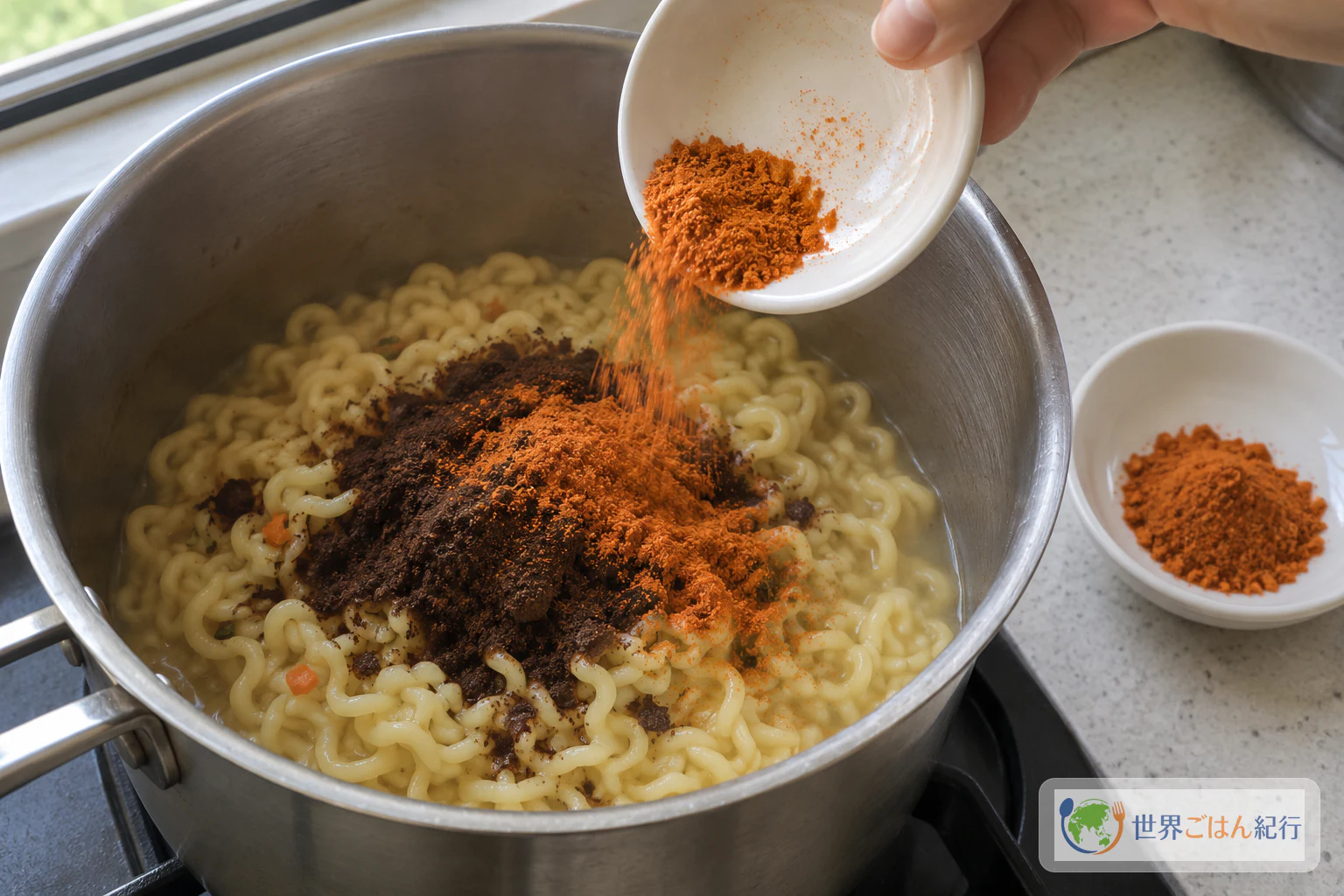
Use one package each of Chapagetti and Neoguri. Use all of the Chapagetti black sauce powder and only half of the Neoguri spicy powder. Keep some of the noodle water for the sauce, and add the seasoning oil only after the pot is off the heat.
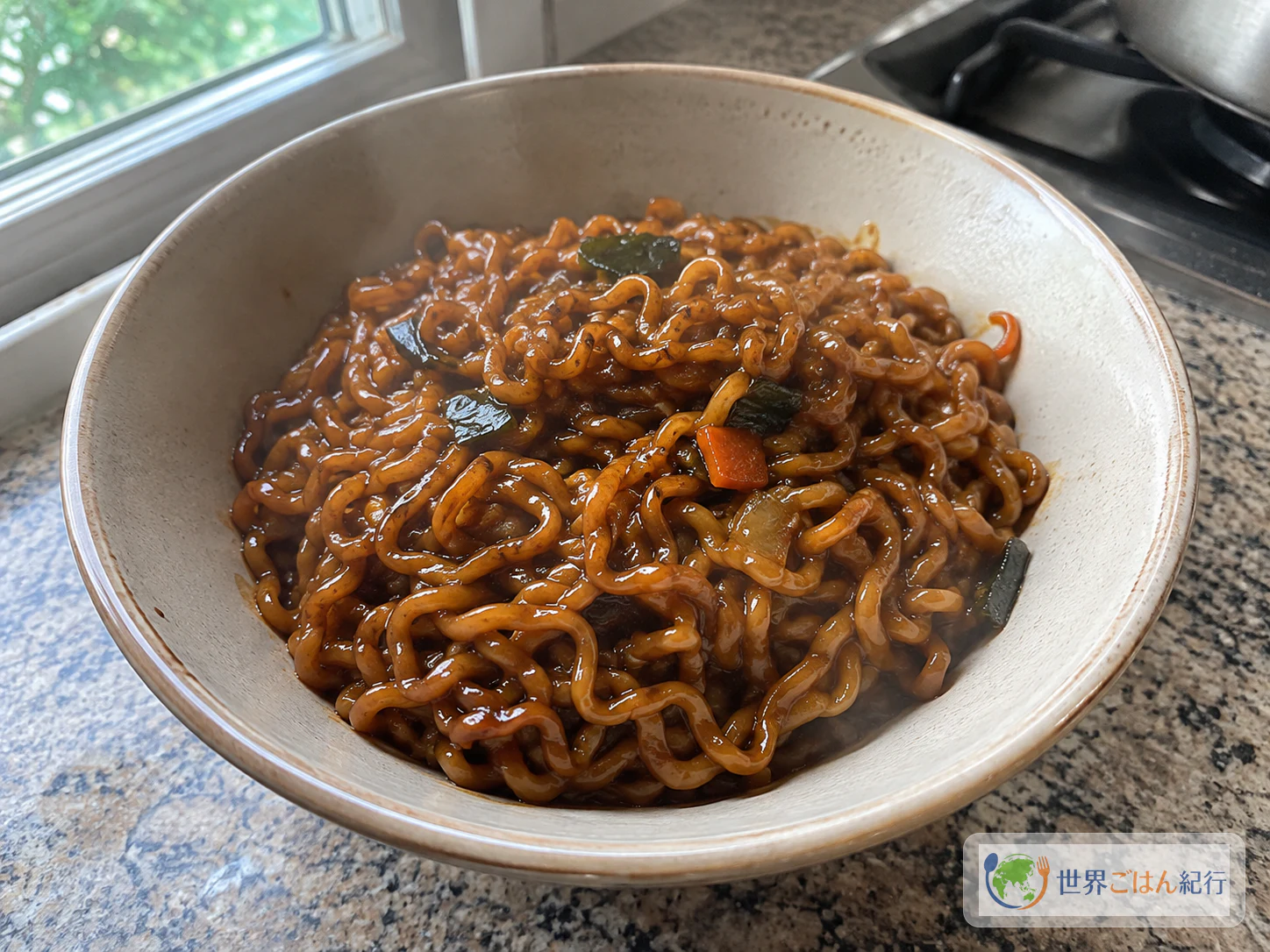
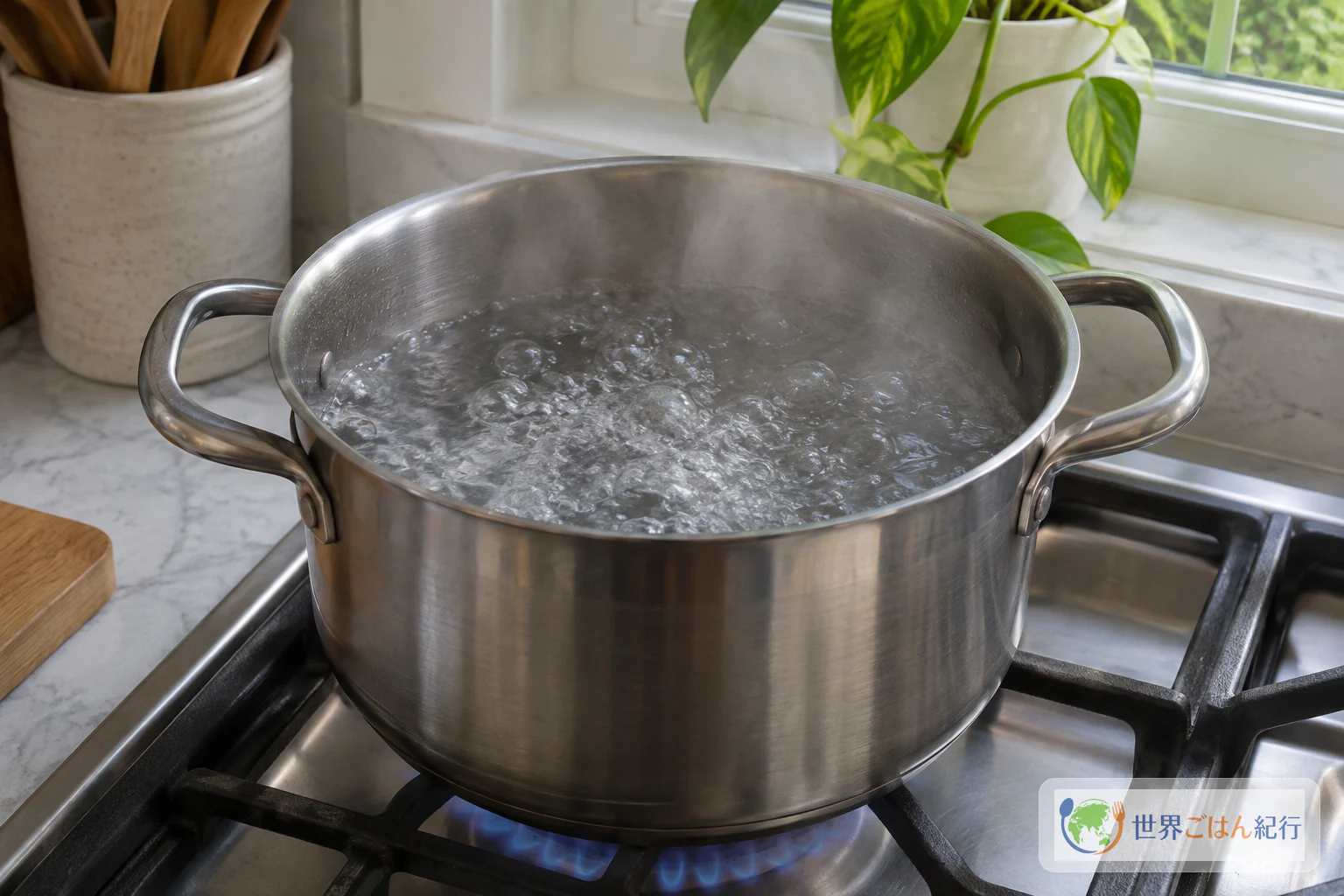
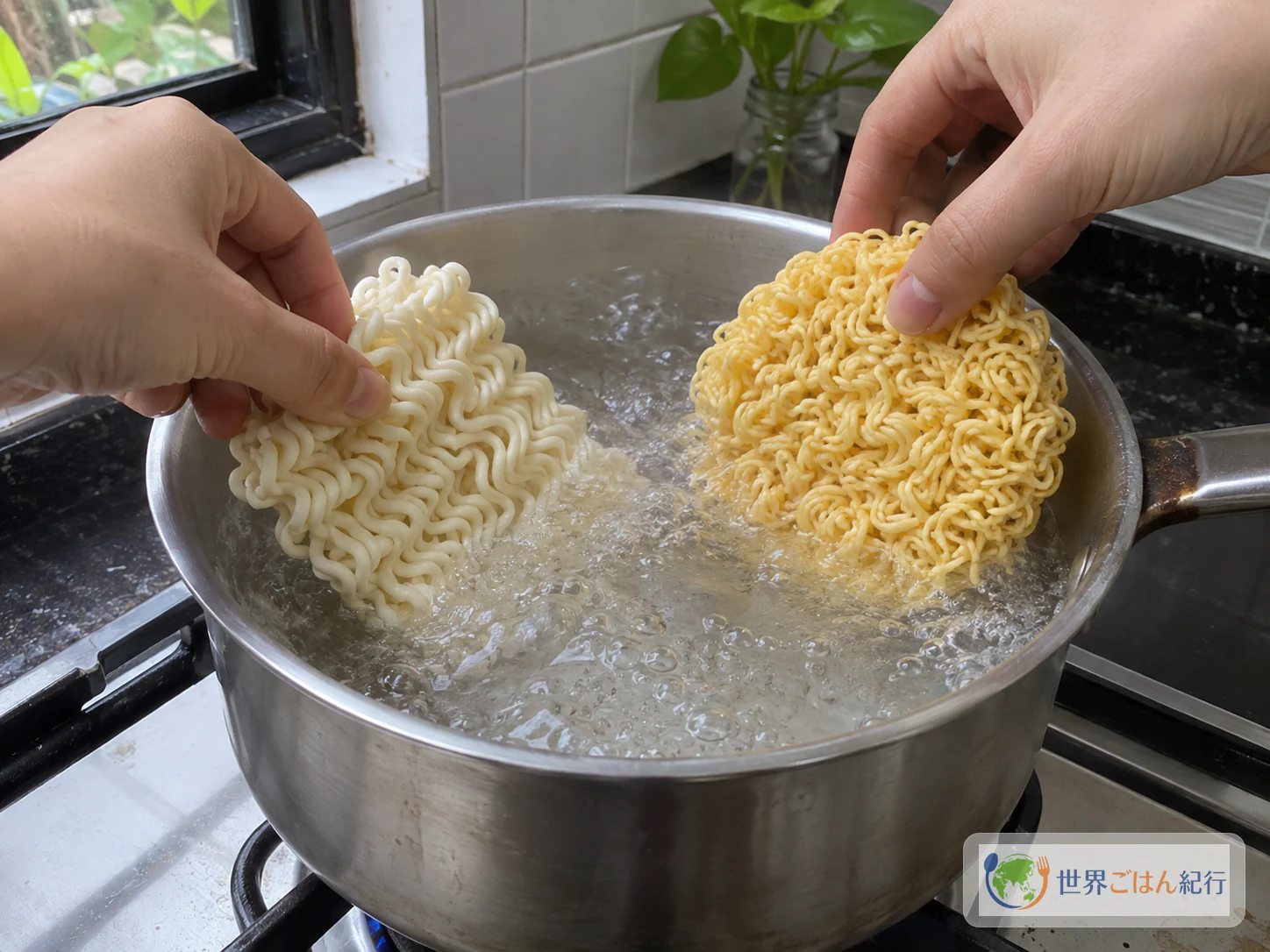
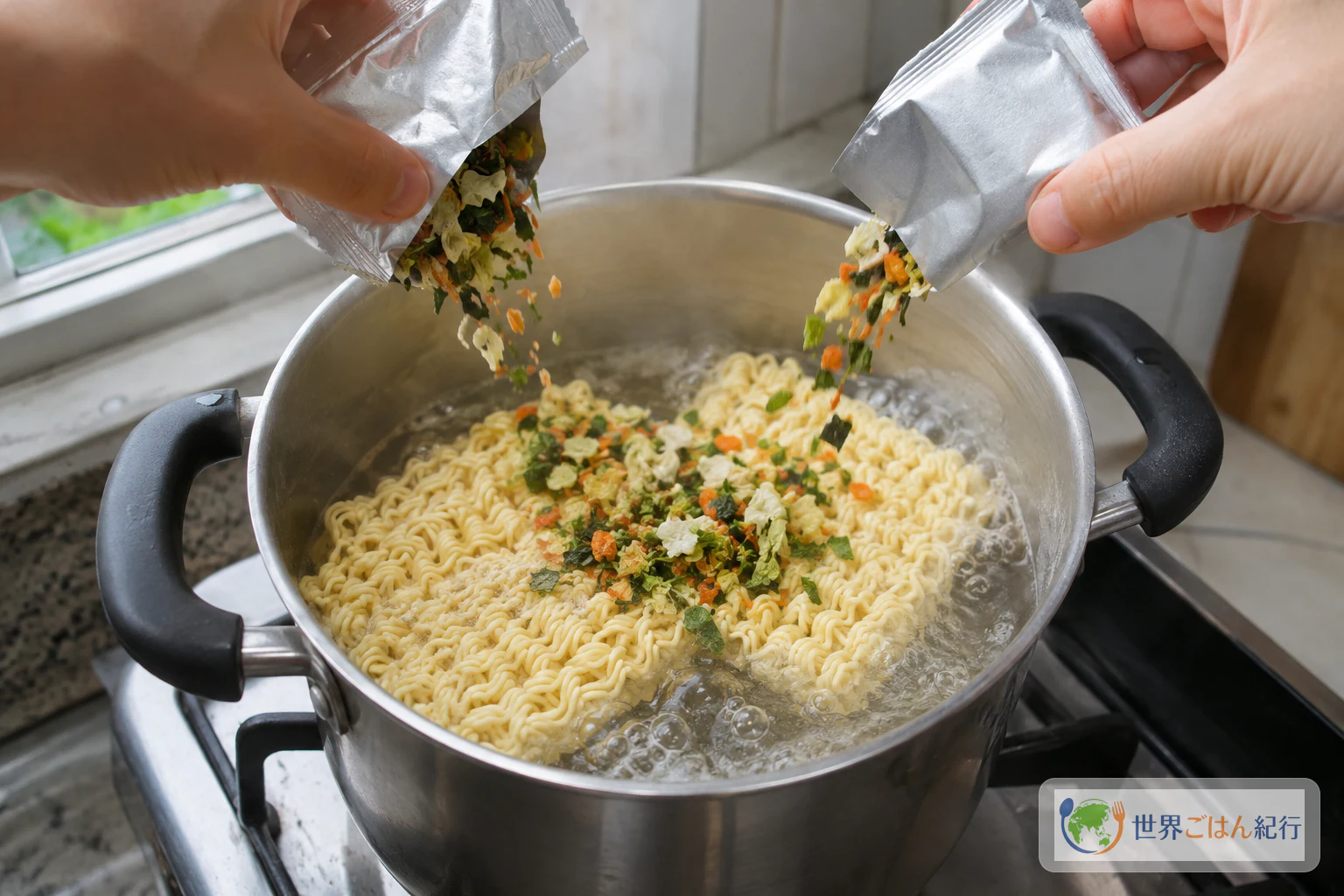
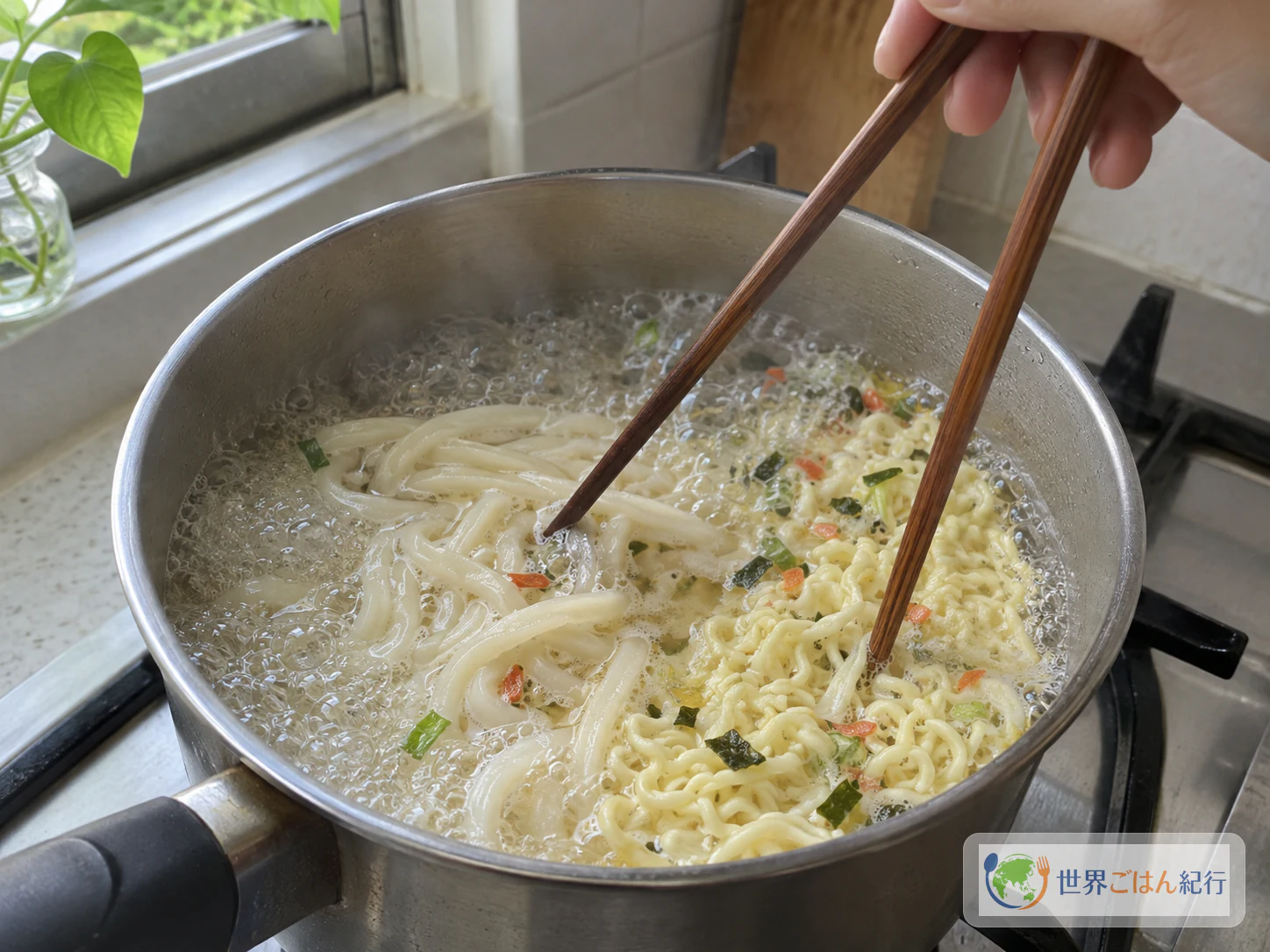
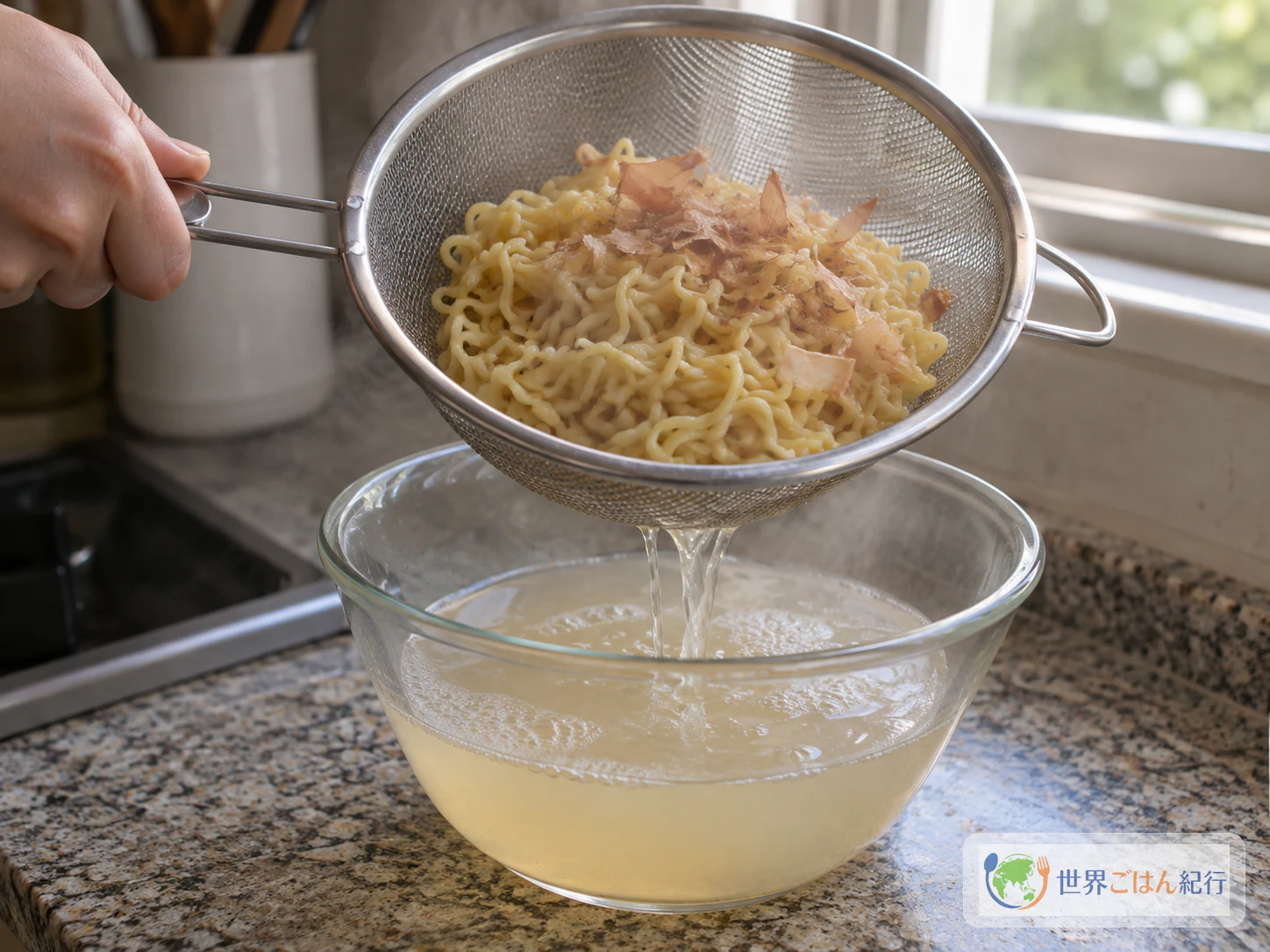
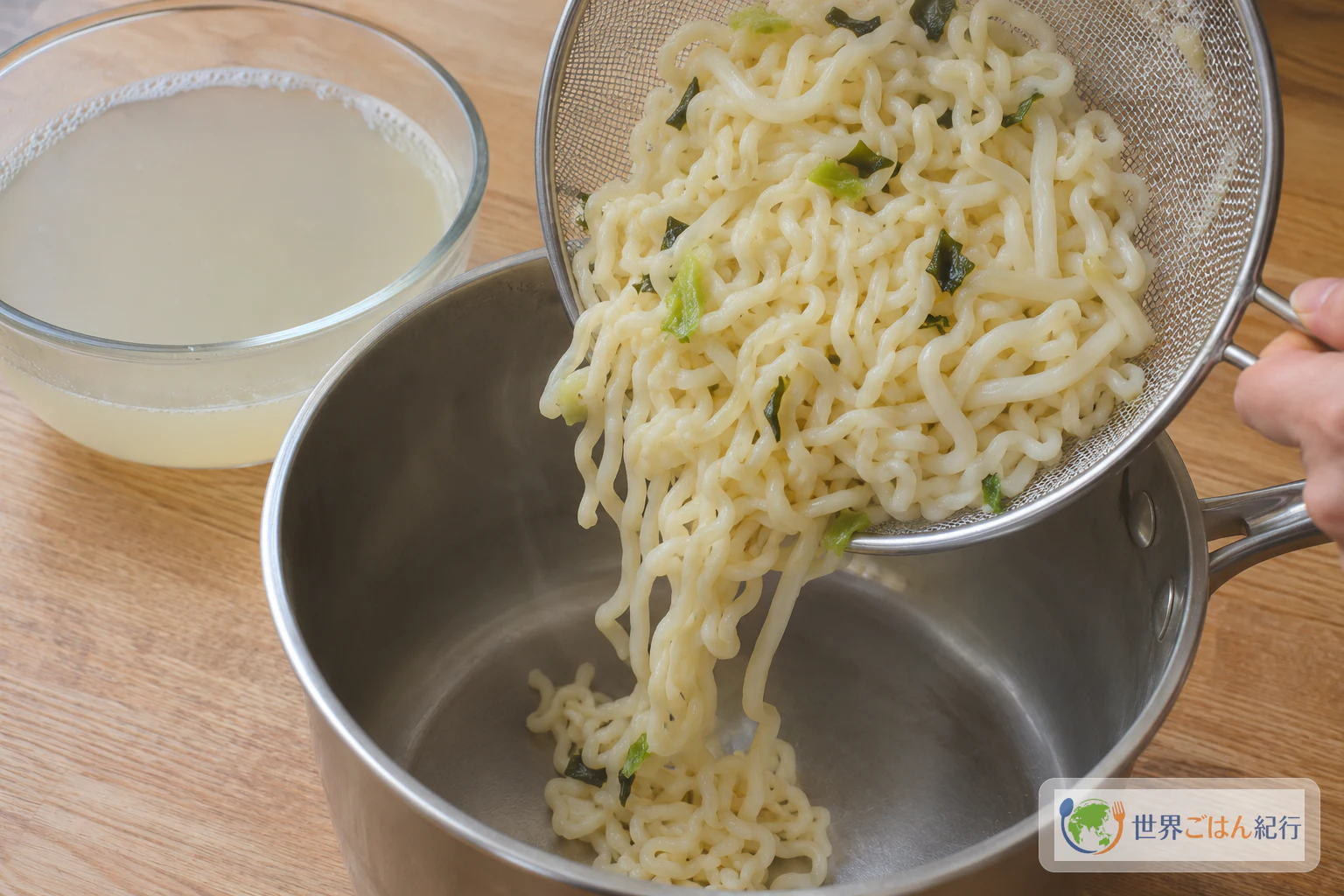
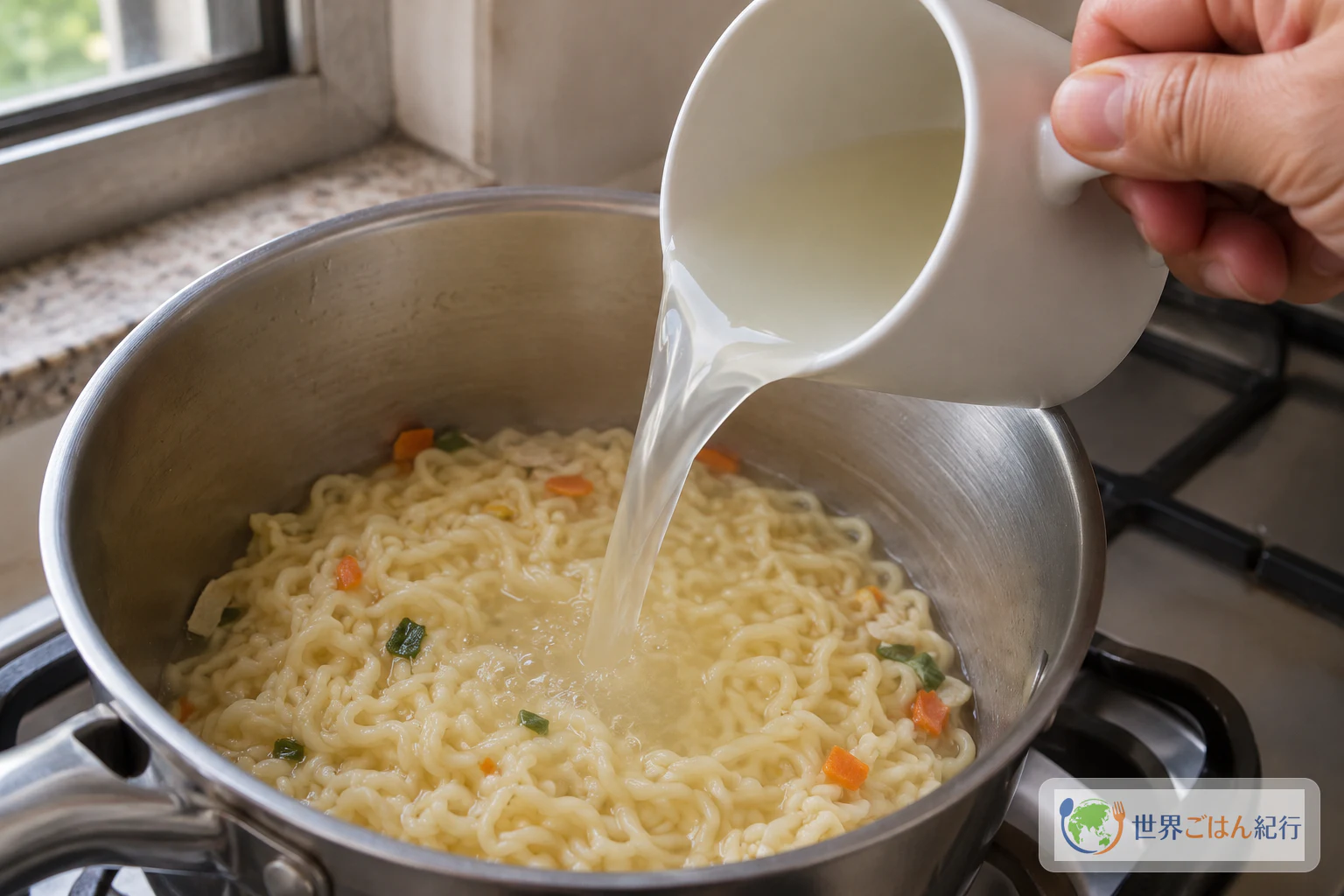
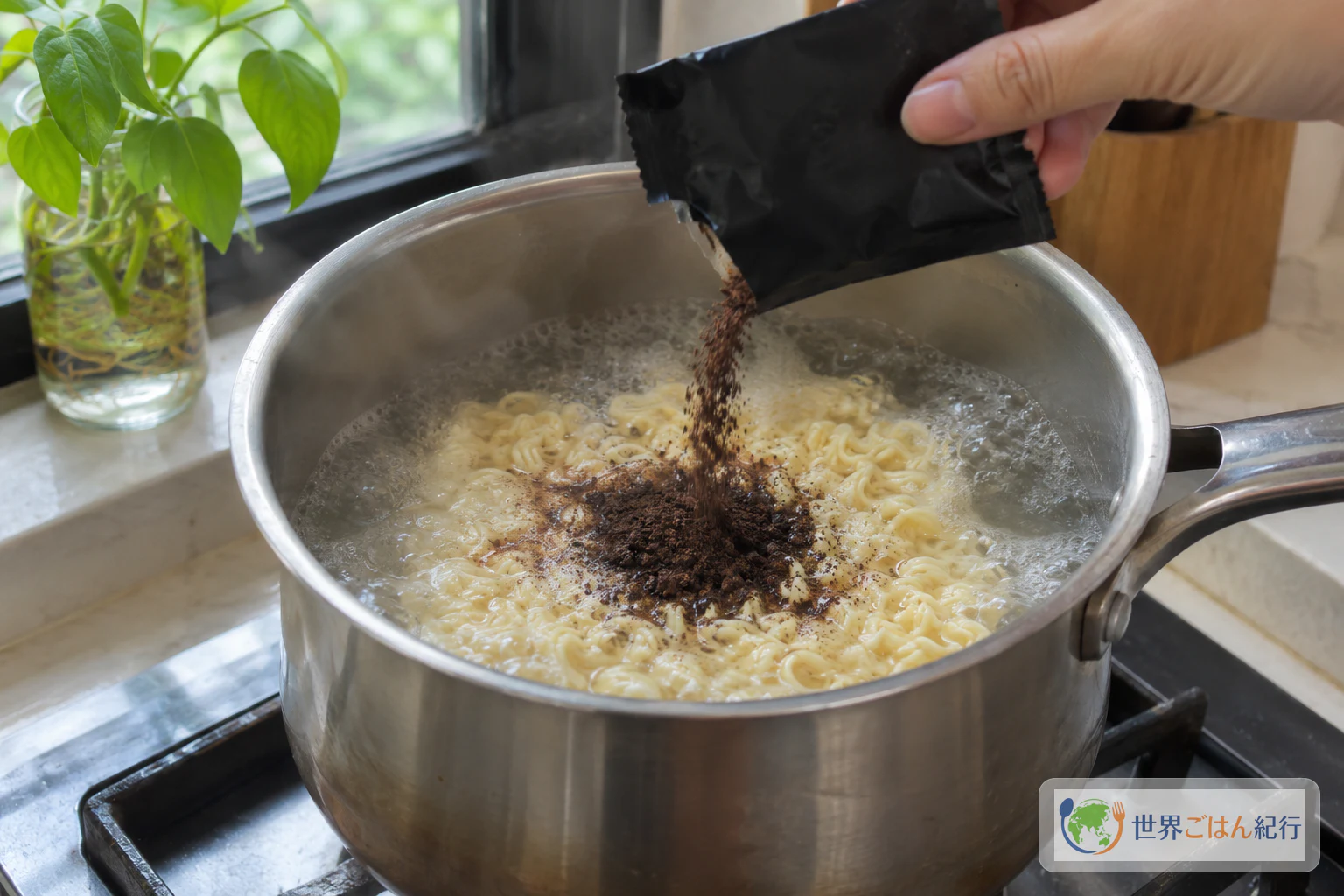
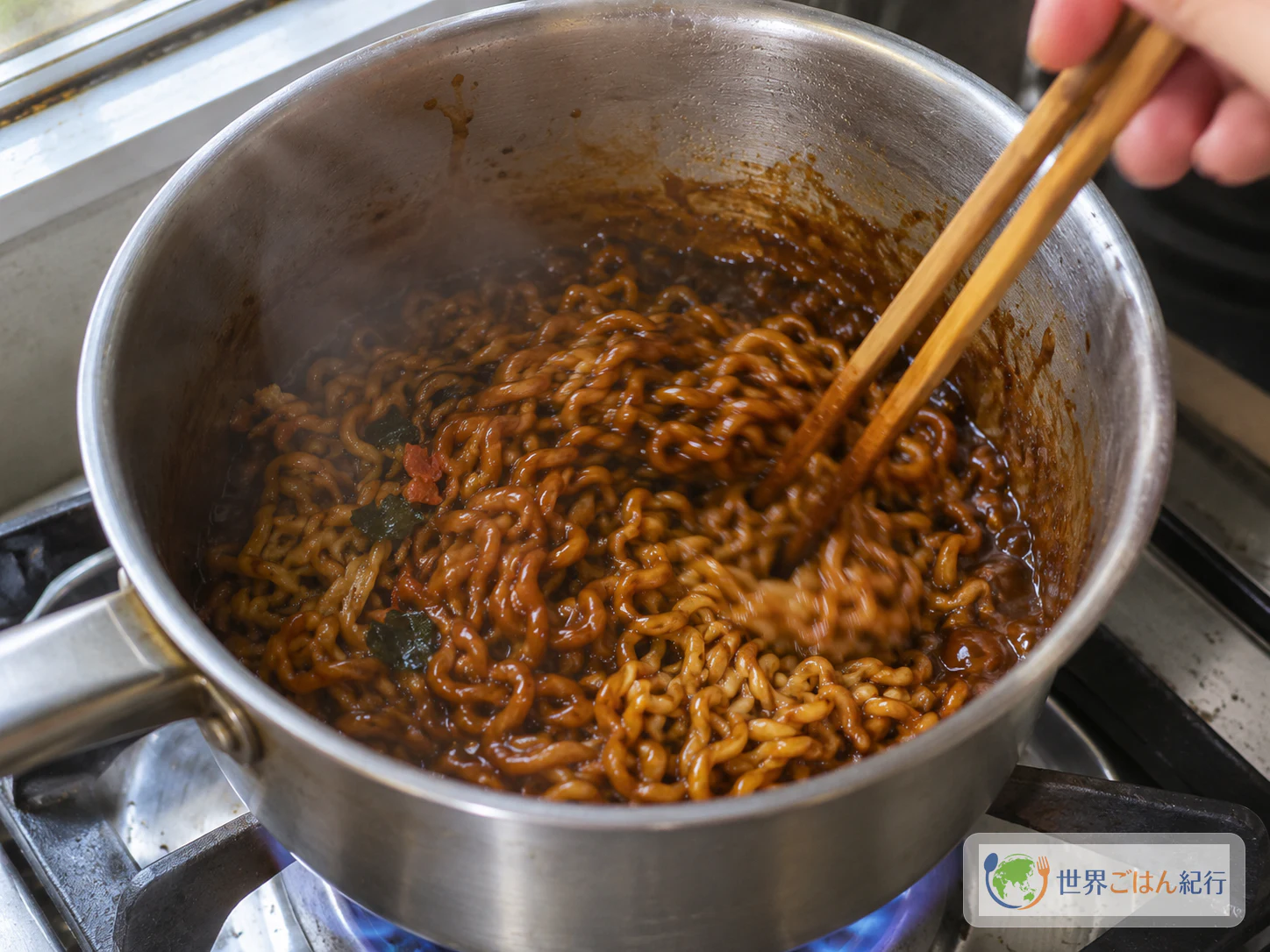
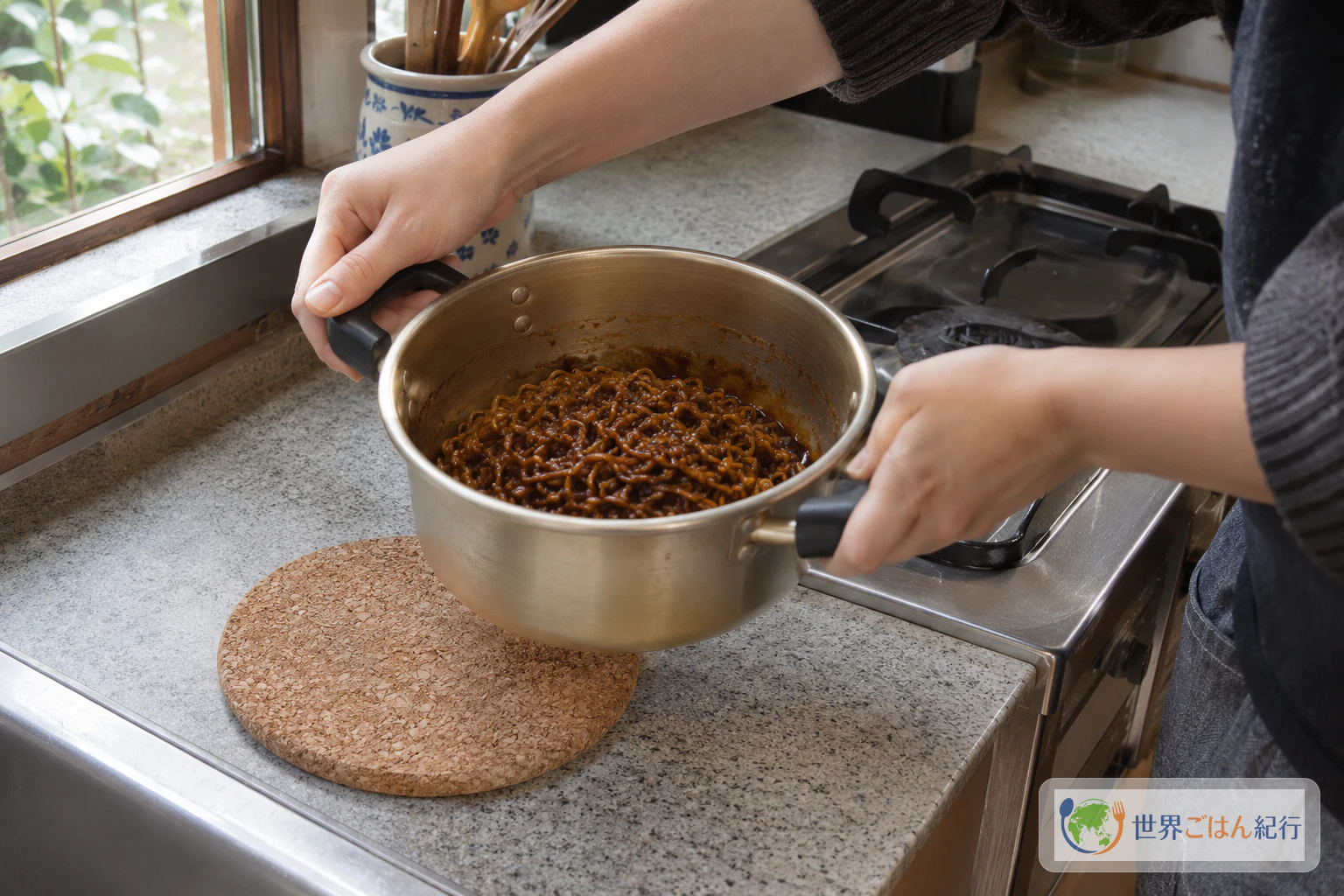
Two different blocks of instant noodles go into the same pot of boiling water, along with the dried vegetable flakes from both packages. A few minutes later, the drained noodles go back into the pot with a cup of their own cooking water, and the dark black-bean sauce powder turns everything glossy and nearly black, with a thread of heat from the spicy powder underneath. That is jjapaguri (짜파구리), also spelled chapaguri: a dish made by combining two ready-made Korean instant noodle products.
Nongshim, the maker of both noodles, describes chapaguri as a "DIY ramyun" that pairs one bag of Chapagetti with one bag of Neoguri. It contrasts Chapagetti's tangy-sweet black-bean character with Neoguri's spicy seafood taste. The method on this page follows the written recipe by the Korean cooking teacher Maangchi. Her recipe offers steak as an option, and this page uses the version without it: only the two packages, water, and the sachets that come inside them. No beef, butter, extra oil, egg, fresh vegetables or garnish.
Maangchi describes her recipe as serving two people, or one very hungry person. Treat that as her guide, not a tested yield. This recipe as a whole has not been kitchen-tested by Sekai Gohan. The amounts below are kept in her cup measures and are not converted to millilitres. Sachet contents, net weights and allergen labeling can differ by market and product version, so read the packages you actually buy. For more dishes from the same country, see Korean food.
The dish is written 짜파구리 in Korean and romanized as Jjapaguri or Chapaguri. The noodle sold as Chapagetti in English-language packaging is also romanized as Jjapagetti. "Ram-don" is the English subtitle name used in the film Parasite, not a general Korean name for the dish.
Ingredients: One Package of Each Noodle
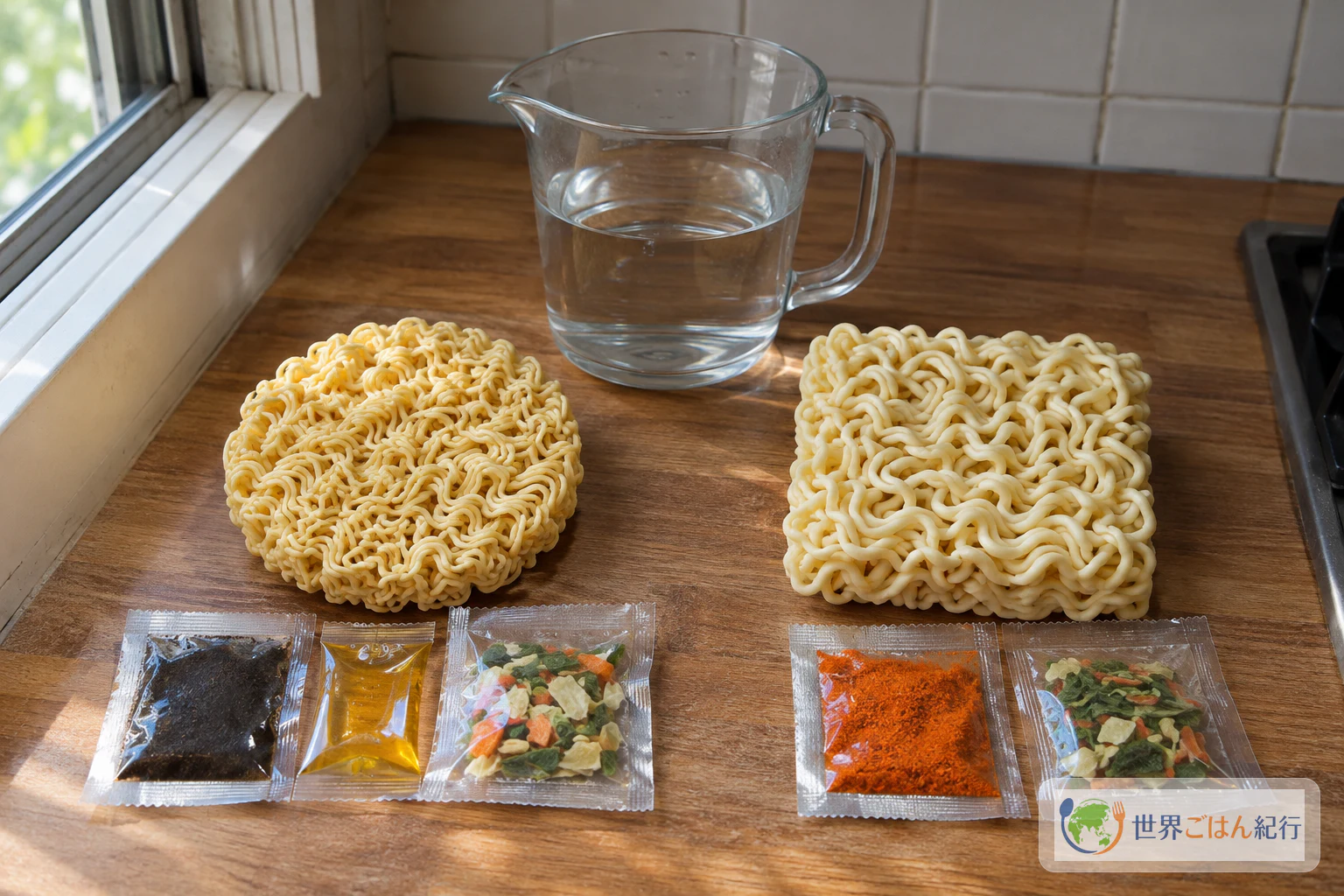
Equipment
- Medium pot
- Tongs or long cooking chopsticks
- Strainer
- Medium heat-proof bowl to catch the noodle water
- Measuring cup
- Large serving plate
Choosing the Packages and What Stays Out
The flavor comes from the two specific products and their own sachets. If you use other brands of noodles, a different black-bean seasoning, or a seafood stock in their place, the taste and the dish change. That can be a good meal, but it is not the same recipe.
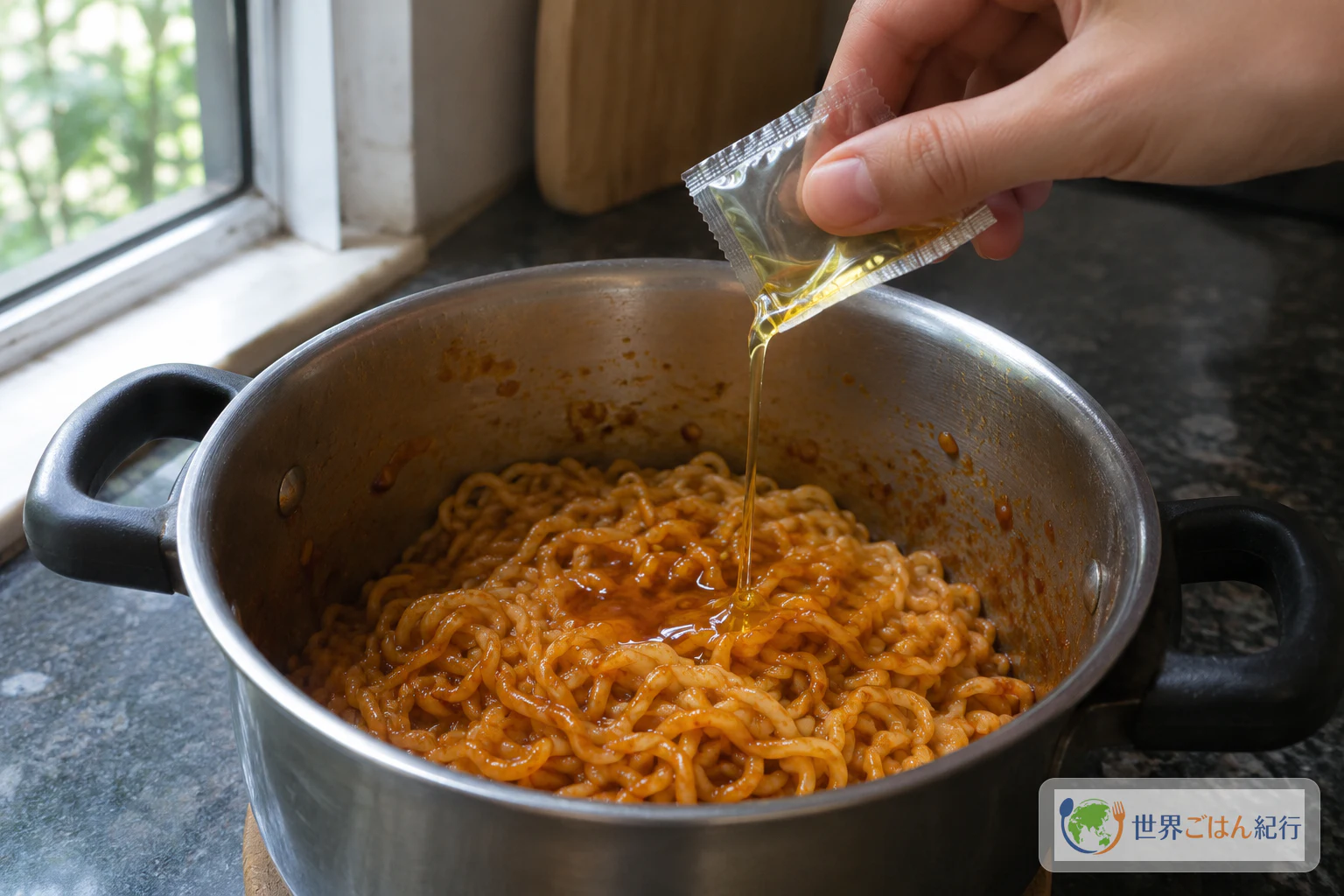
Use the seasoning oil sachet from the Chapagetti package. Don't mix it up with a bottle of salad oil from your cupboard. Beef, butter, salt, black pepper, an extra oil, egg, kimchi and fresh vegetables are not part of this version.
Read allergens and ingredients on the bag version you bought. Don't copy them from a cup-noodle version of the same brand, because the products and sachets can differ.
You strain boiling noodle water into a bowl and then measure it, so set a stable, heat-proof bowl under the strainer before you start pouring. Handle the measuring cup and the pot with care to avoid burns.
Method: Short Boil First, Then Mix the Sauce
There are two timed stages: 2–3 minutes of boiling, then 1–2 minutes of mixing after the sauce goes in. In between, you strain the noodles and return some of the water. The oil goes in last, off the heat.
When Something Goes Off: What to Check
| What happened | What to check |
|---|---|
| No water left for the sauce | The 1 cup comes from the strained noodle water. Always strain over a bowl rather than straight into the sink |
| The noodles cooked unevenly or stuck together | Separate the two kinds with tongs or chopsticks during the 2–3 minute boil |
| Hotter or saltier than expected | Only half of the Neoguri spicy powder goes in. Adding the rest changes the heat and saltiness, so make the half-powder version first |
| The finish tastes different | Use the oil sachet from the Chapagetti package, not a bottled oil, and add it after the pot is off the heat |
| The sachets don't match this description | Product versions differ by market. Read your packages, and remember you are working with a different product version |
Other Ways People Make It
Each version below has its own amounts and timings. Make one version as written rather than mixing steps from different recipes.
The steak version. Maangchi separates the easy, everyday jjapaguri from an upgraded version modeled on the film Parasite, where Korean hanwoo beef is added. She makes the steak optional and suggests top-quality ribeye as a close equivalent in the United States. That is her own substitution for hanwoo, not a claim that ribeye is hanwoo. Her steak branch also uses butter. If you want that version, follow her page as a whole. This page leaves it out entirely.
Nongshim's own method. The noodle maker publishes a different chapaguri recipe with its own water amount, boiling time, amount of water kept back, and mixing time. It adds the oil together with the soup base rather than after the pot leaves the heat. It is a complete recipe in its own right, so follow it from Nongshim's page as a separate method, not as a tweak to this one.
Other brands or added toppings. Swapping in other noodles or adding vegetables, egg or kimchi gives you a different dish. Enjoy it as your own variation, not as this recipe.
Two Packages and a Subtitle: Where the Name Comes From
Jjapaguri rests on a simple idea: two products from the same maker, one sweet-savory and black-bean based, one spicy with a seafood character, cooked together. Nongshim itself presents the combination as a do-it-yourself ramyun and publishes a recipe for it. The name joins the start of Jjapagetti with the end of Neoguri.
Many English-speaking readers first met the dish through Parasite. According to the Los Angeles Times, the English subtitles call it "ram-don," a word coined by combining "ramen" and "udon." In the film the noodles are served with beef. Maangchi's recipe draws the same line: plain jjapaguri made from the two packages, and an optional upgraded version with steak.
The sources here do not establish who first combined the two noodles, when, or how the habit spread. This page does not claim an inventor, a single standard version, or one custom shared by every household.
Frequently Asked Questions
Do I really need two different instant noodles?
Yes. Both the Nongshim and Maangchi recipes use one package of Chapagetti and one package of Neoguri. The contrast between the two is the point of the dish.
Why only half of the Neoguri spicy powder?
Half is the amount used in this recipe, and Nongshim's own recipe also adds half of the Neoguri soup base. Adding all of it makes the dish spicier and saltier. Make it with half first.
Why not drain all the water?
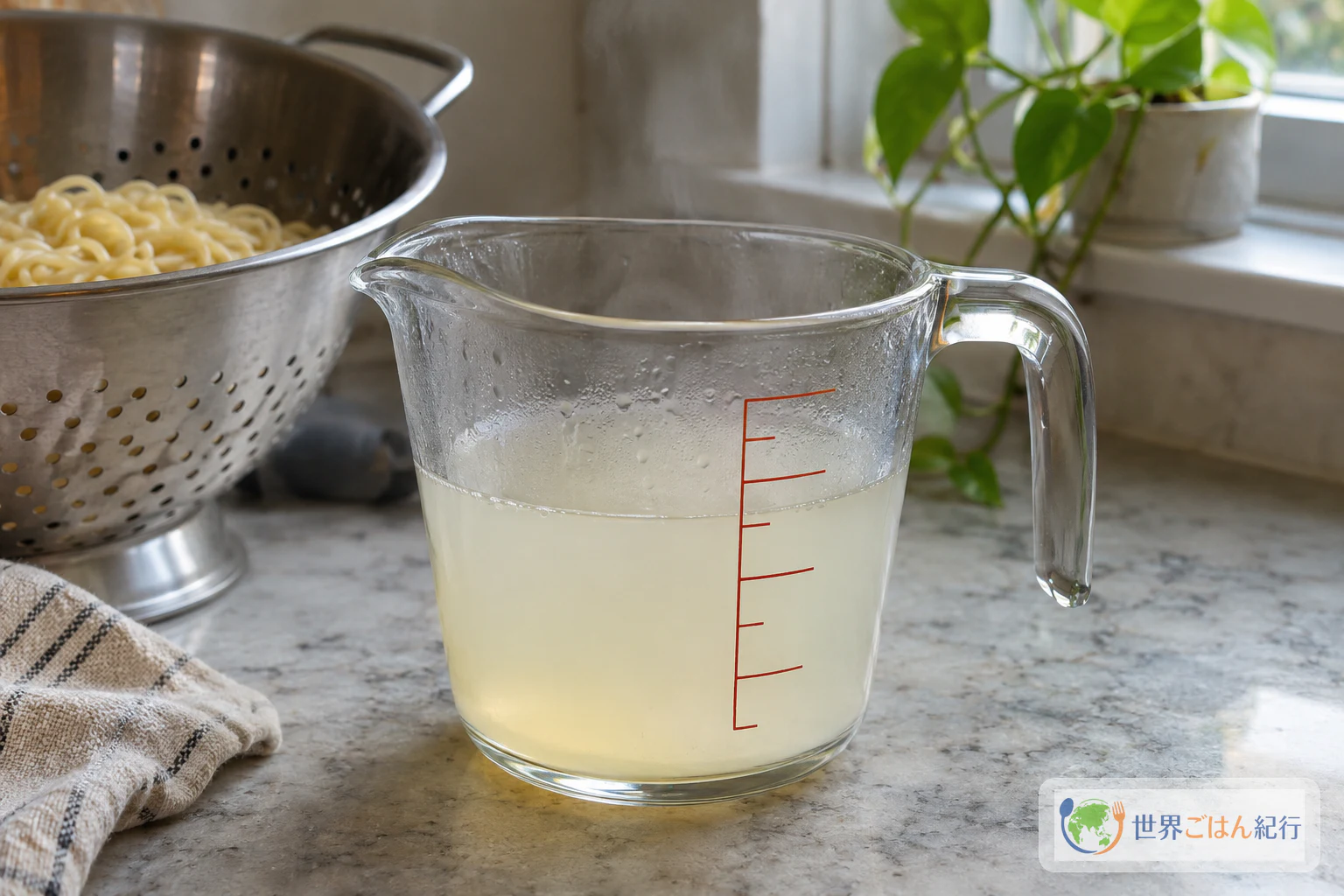
You need 1 cup of the strained noodle water back in the pot. It turns the powders into a sauce that coats the noodles during the 1–2 minutes of mixing.
Why add the oil after taking the pot off the heat?
That is the order in Maangchi's recipe: mix the powders on the heat, remove the pot from the heat, then add the seasoning oil and mix.
Is the steak essential?
No. Maangchi lists the steak as optional and describes it as an upgrade inspired by the film. This page uses the version without steak, and Nongshim's base recipe contains no beef.
Can I convert the cups to millilitres?
Maangchi's recipe uses cups, and this page keeps her measures as they are. Nongshim's separate recipe pairs "6 cups" with "1,100 mL" without saying which cup standard it means. For that reason, neither recipe's cups are converted here, and the two recipes' numbers should not be combined.
How many people does it serve?
Maangchi says two people, or one very hungry person. That is her guide, not a tested yield.
Is "ram-don" the Korean name?
No. The Los Angeles Times reports it as a word made for the film's English subtitles, combining "ramen" and "udon." The Korean name is 짜파구리 (jjapaguri).
Sources
- Maangchi, "Jjapaguri with steak (짜파구리) aka 'Ram-don'." The main recipe on this page, made without the optional steak. Supports one package each of Jjapagetti and Neoguri, 3 cups water, the 2–3 minute boil with the flakes, returning 1 cup of strained noodle water, the 1–2 minute mixing with the powders, adding the seasoning oil off the heat, and her guide of two servings or one very hungry person. Also supports the distinction between everyday jjapaguri and the optional steak version, and her suggestion of ribeye as a US stand-in for hanwoo. https://www.maangchi.com/recipe/jjapaguri
- Nongshim, "Chapaguri" (official recipe). Supports chapaguri as a DIY ramyun combining one bag each of Chapagetti and Neoguri, the contrast between Chapagetti's tangy-sweet character and Neoguri's spicy seafood taste, and the company's own separate method, including the use of half the Neoguri soup base. https://eng.nongshim.com/recipe/recipe_view?recipeId=117
- Margy Rochlin, "How steak and 'ramdon' illustrate class tensions in Bong Joon Ho's 'Parasite'," Los Angeles Times. Cited only for the fact that the film's English subtitle term "ram-don" was coined by combining "ramen" and "udon." https://www.latimes.com/food/story/2019-10-19/parasite-ramdon-bong-joon-ho-ramen-udon-jjapaguri