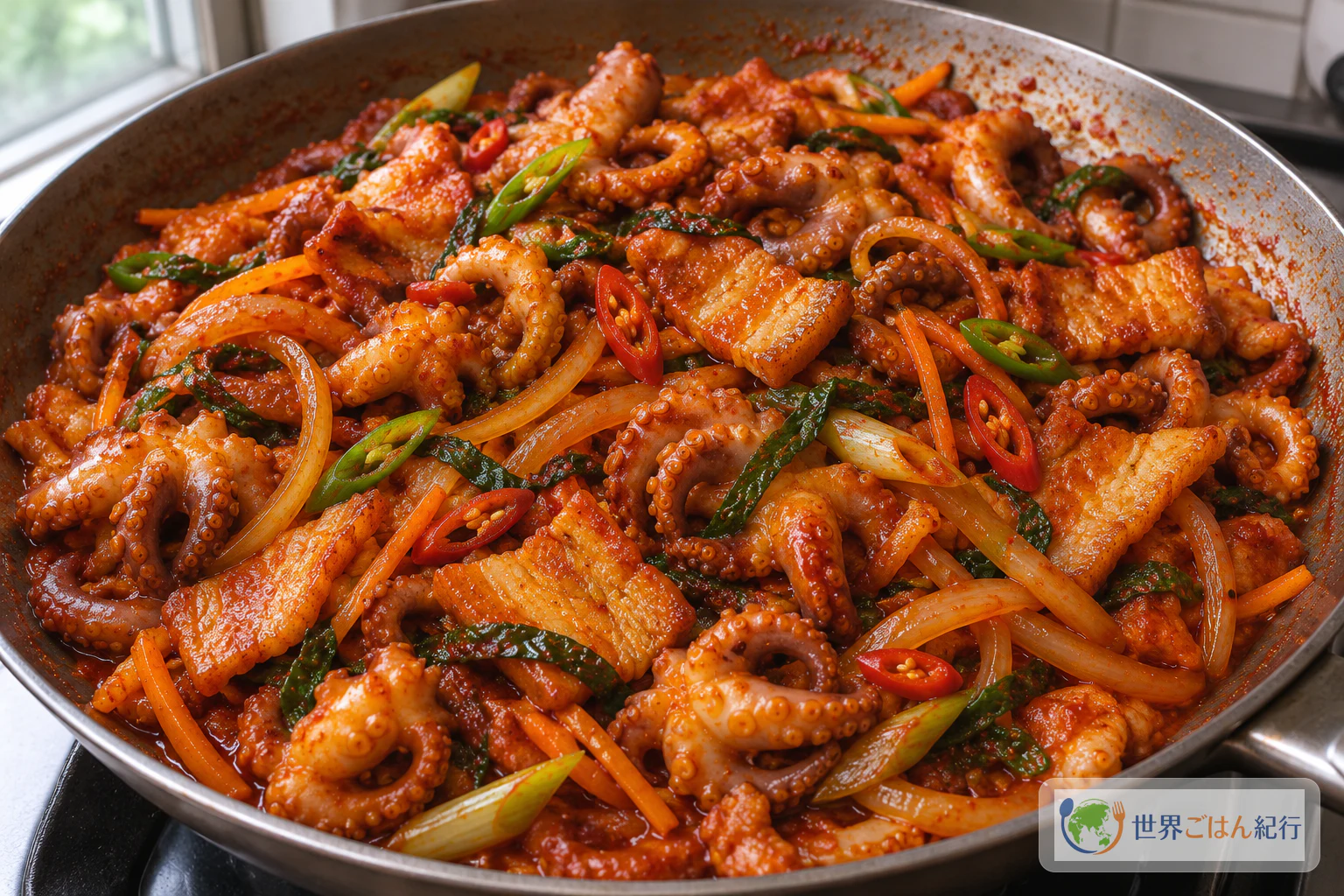
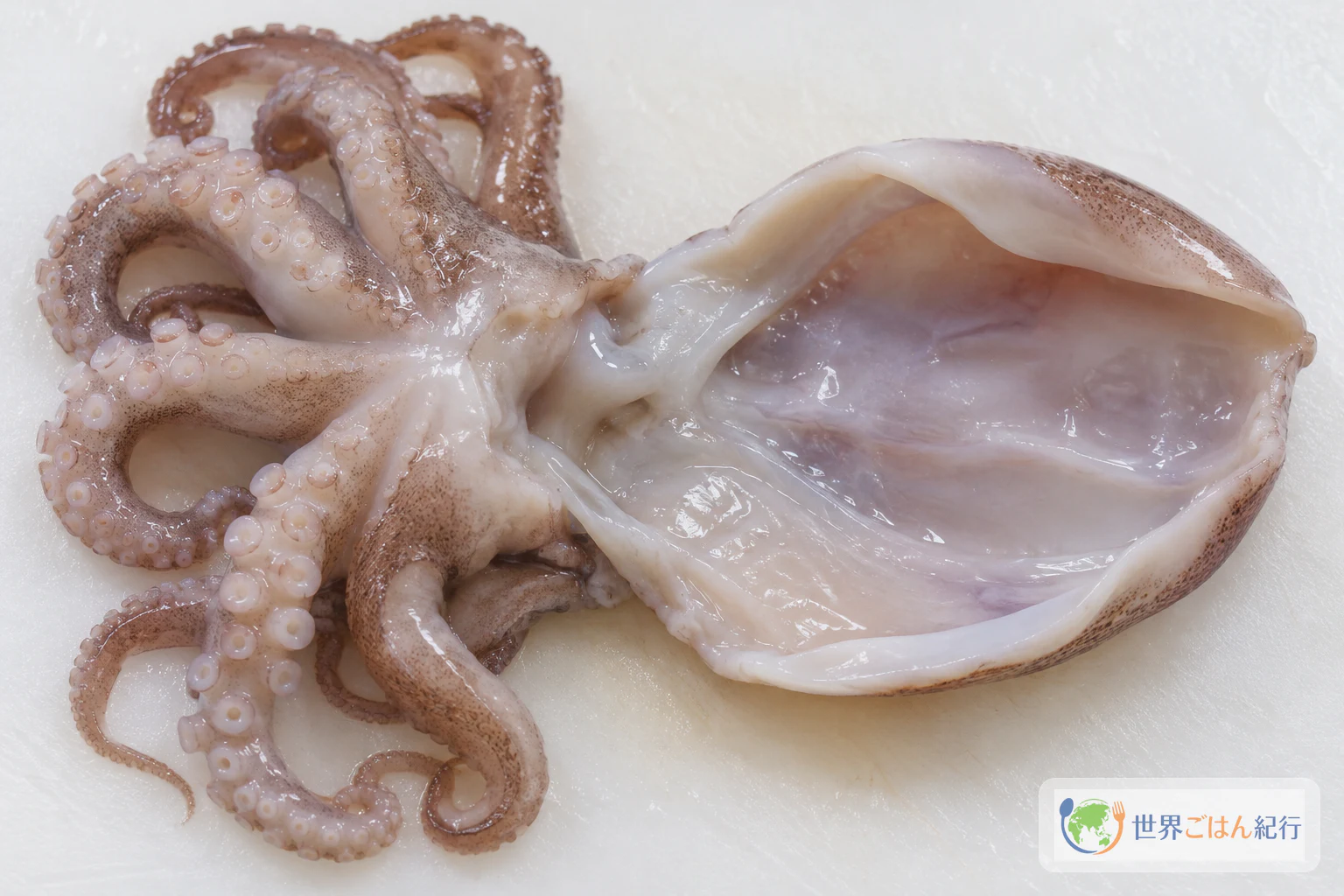
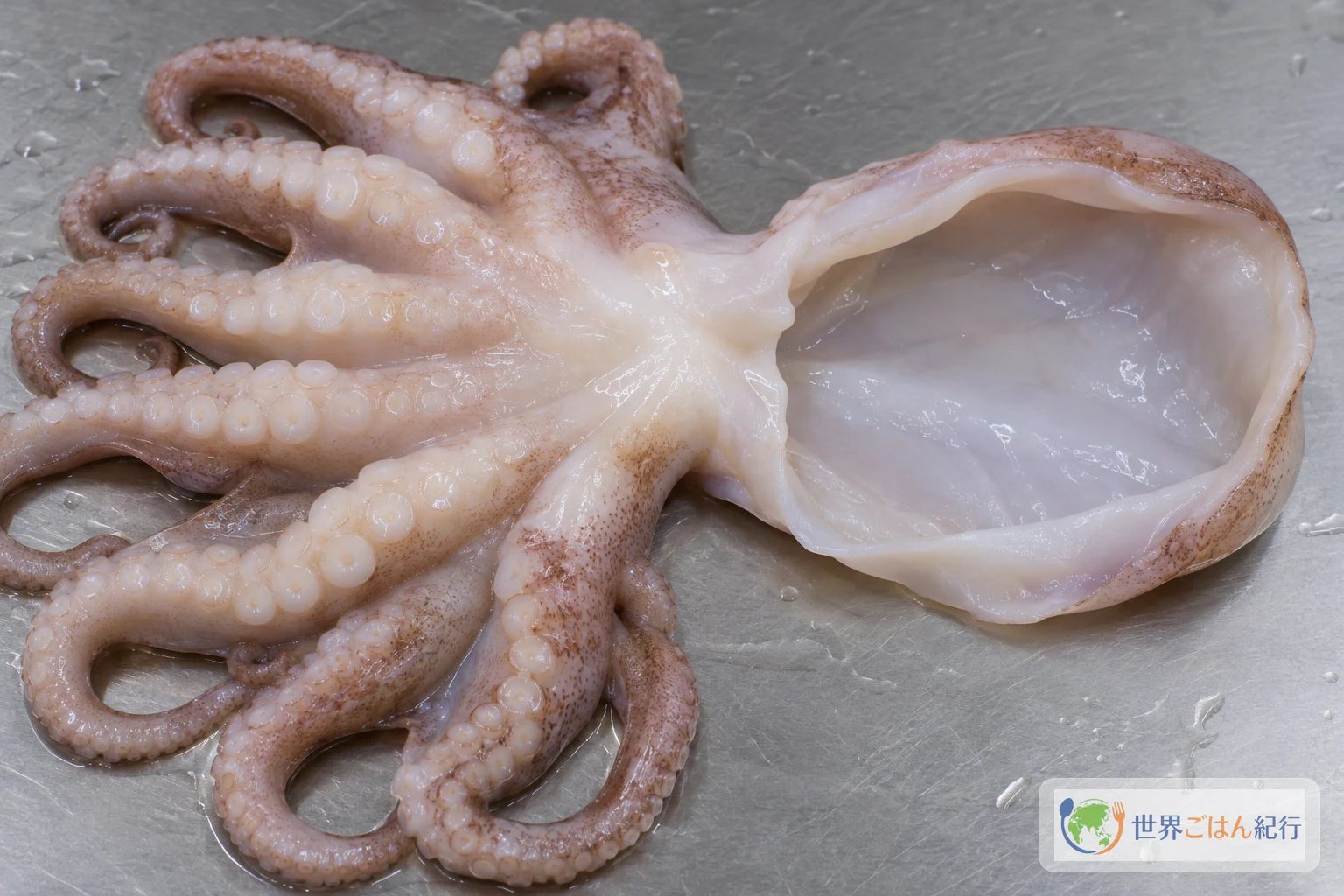
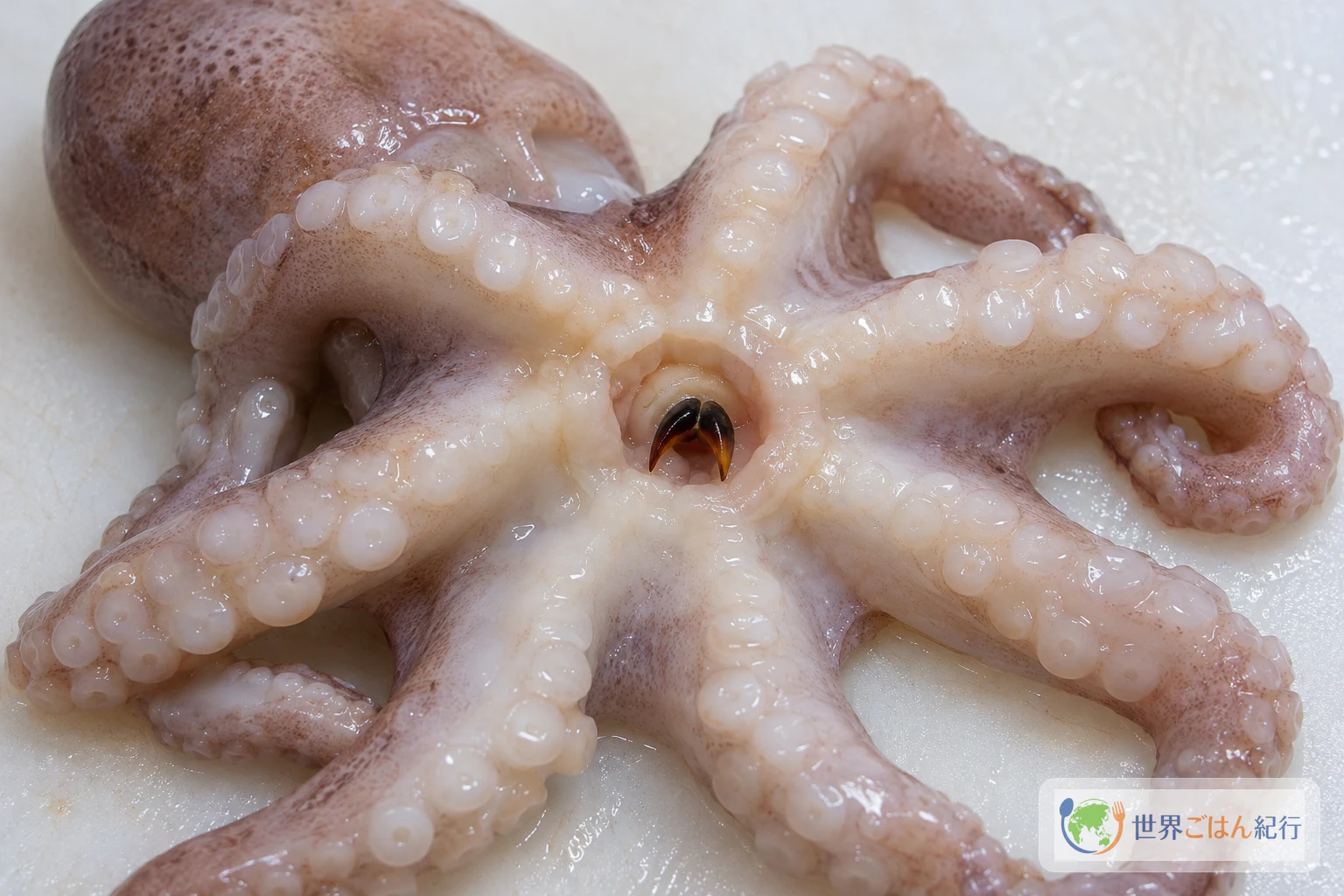
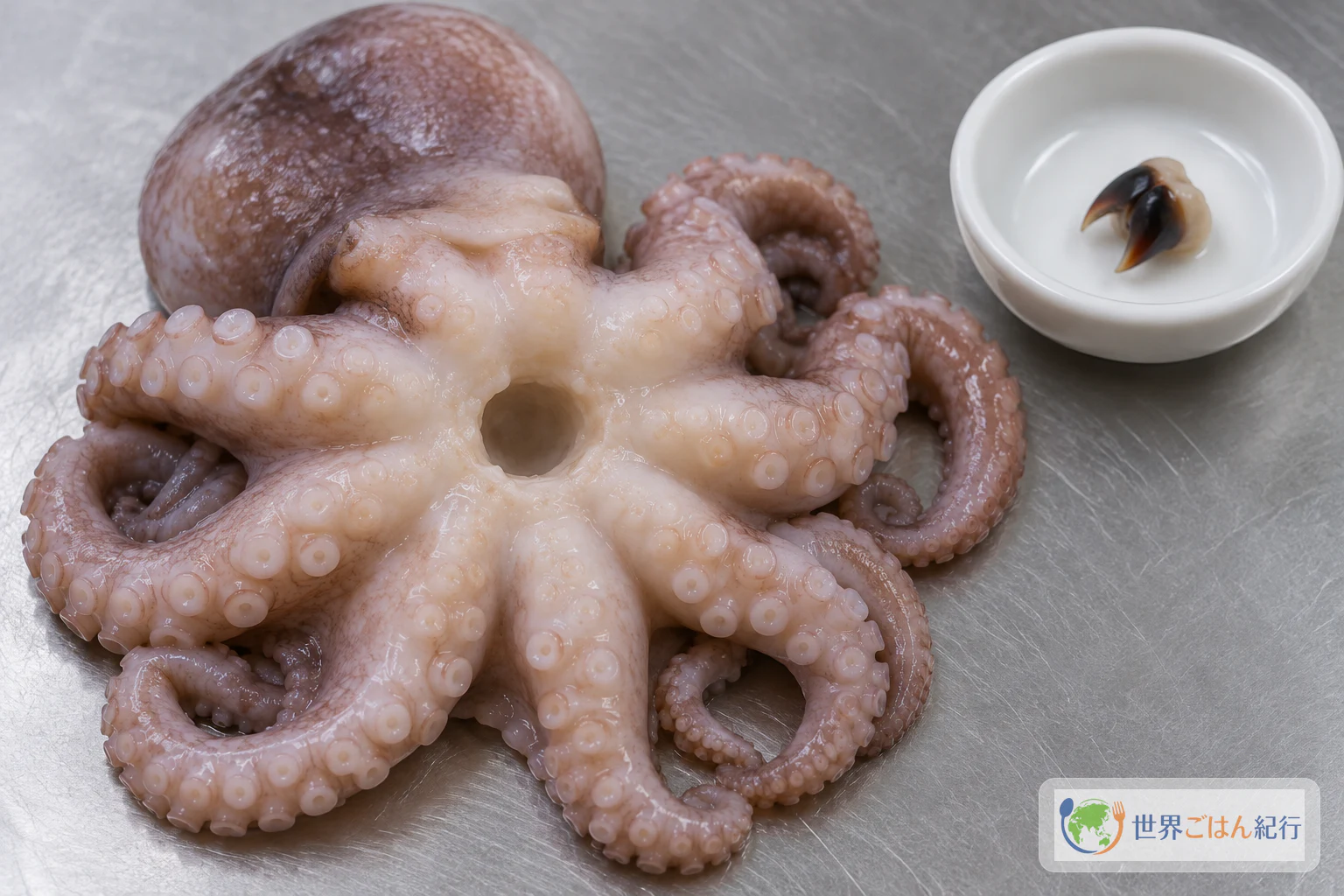
Jukkumisamgyeopsal: Red Sauce Fried in Pork Fat, Then Small Octopus
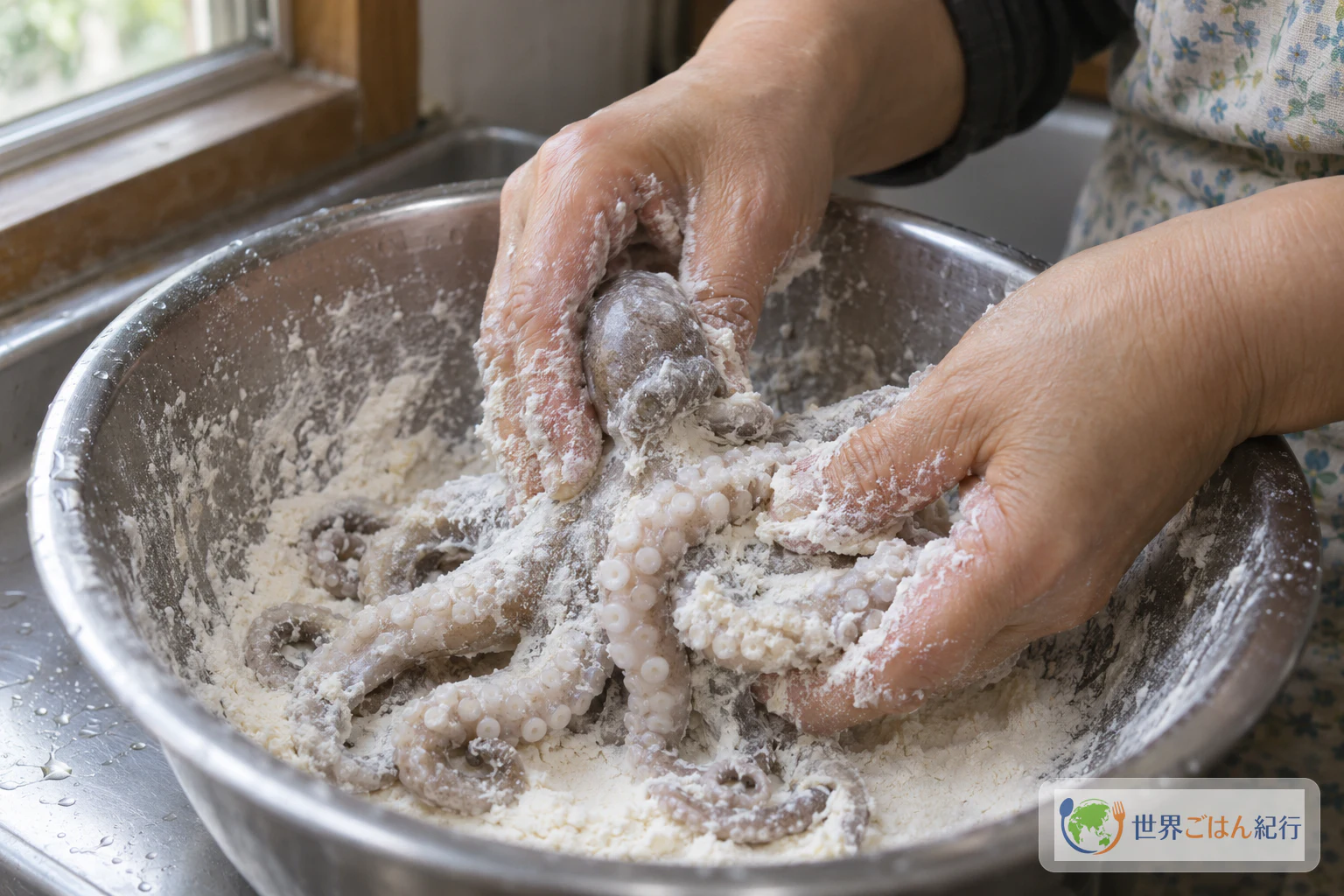
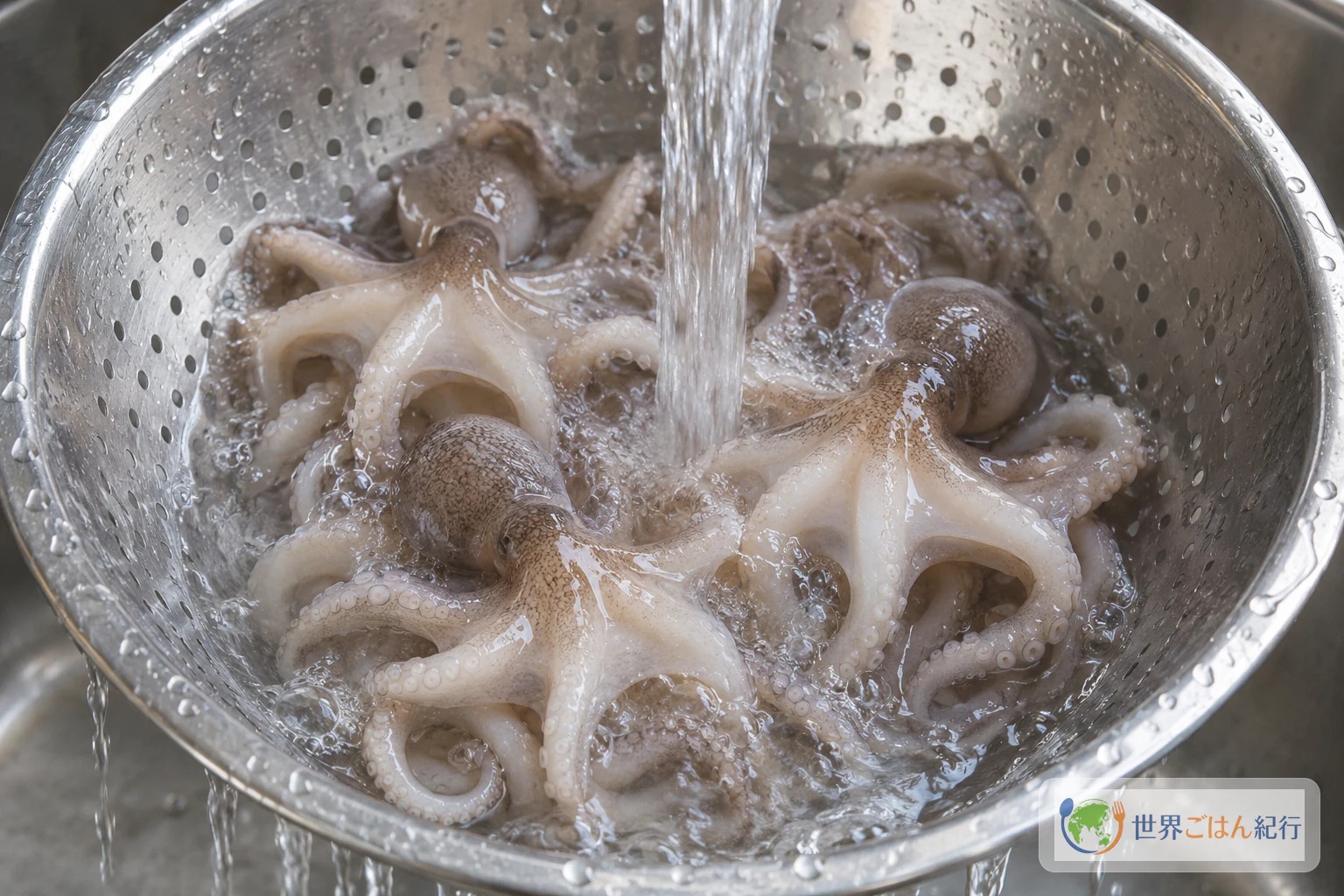
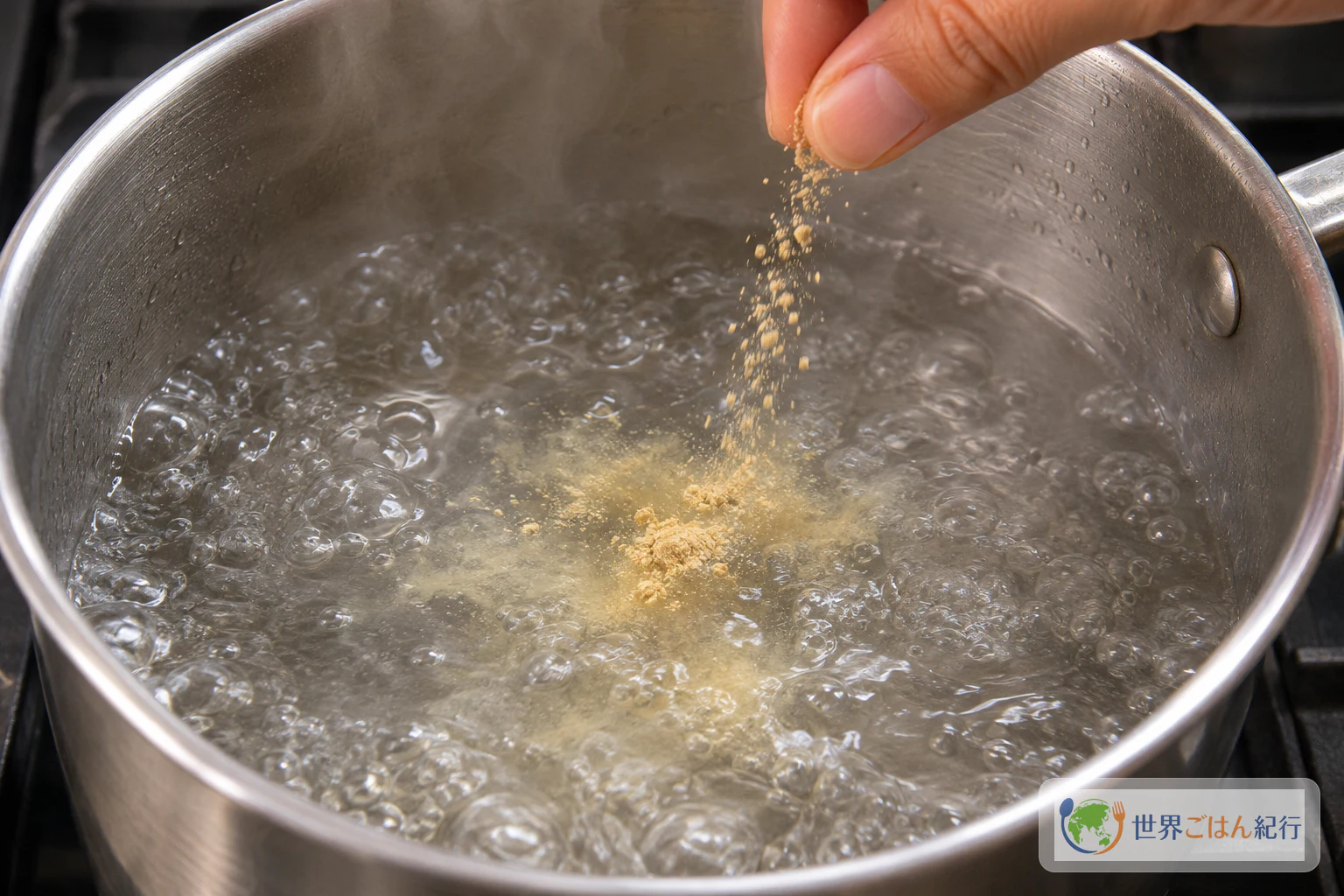
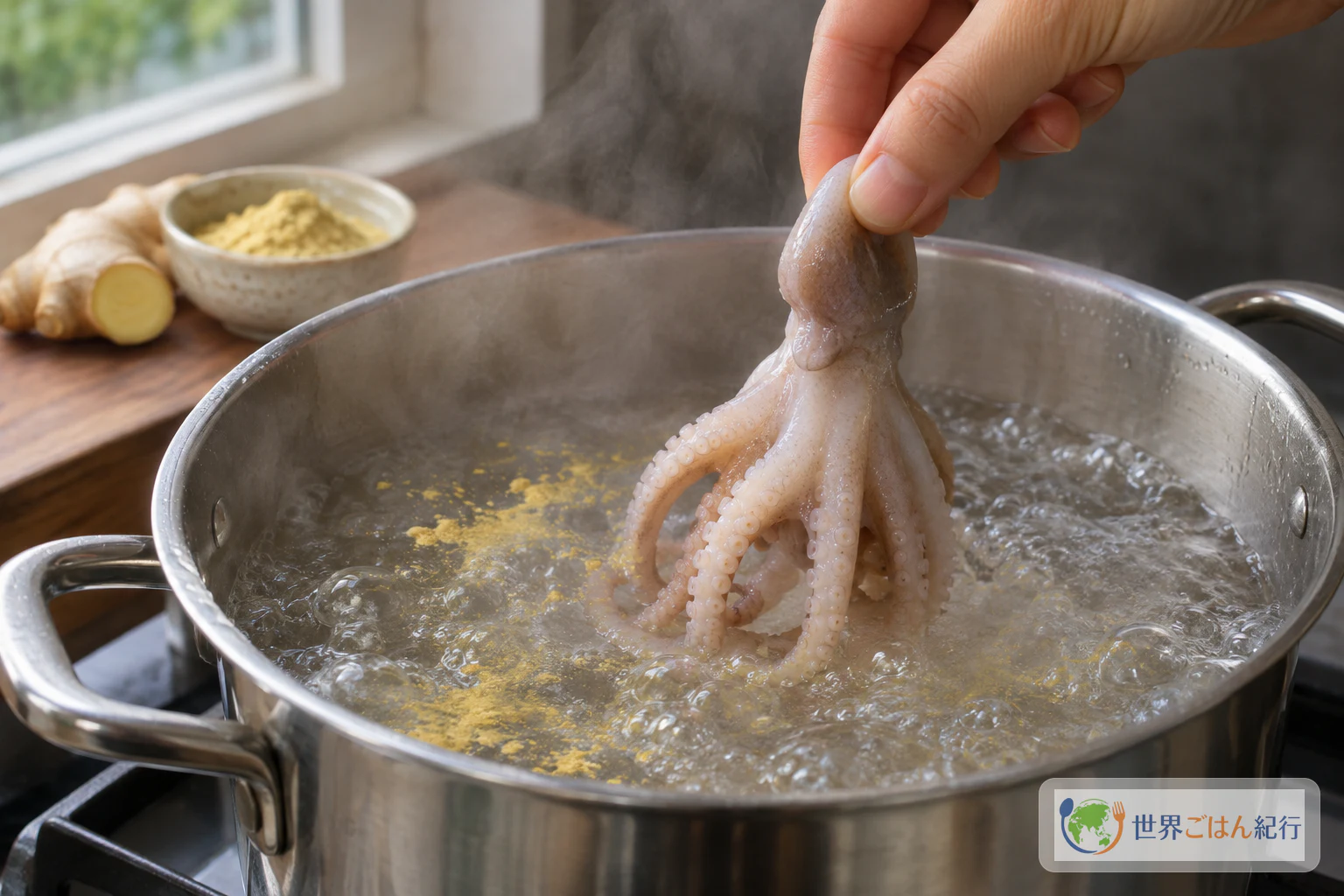
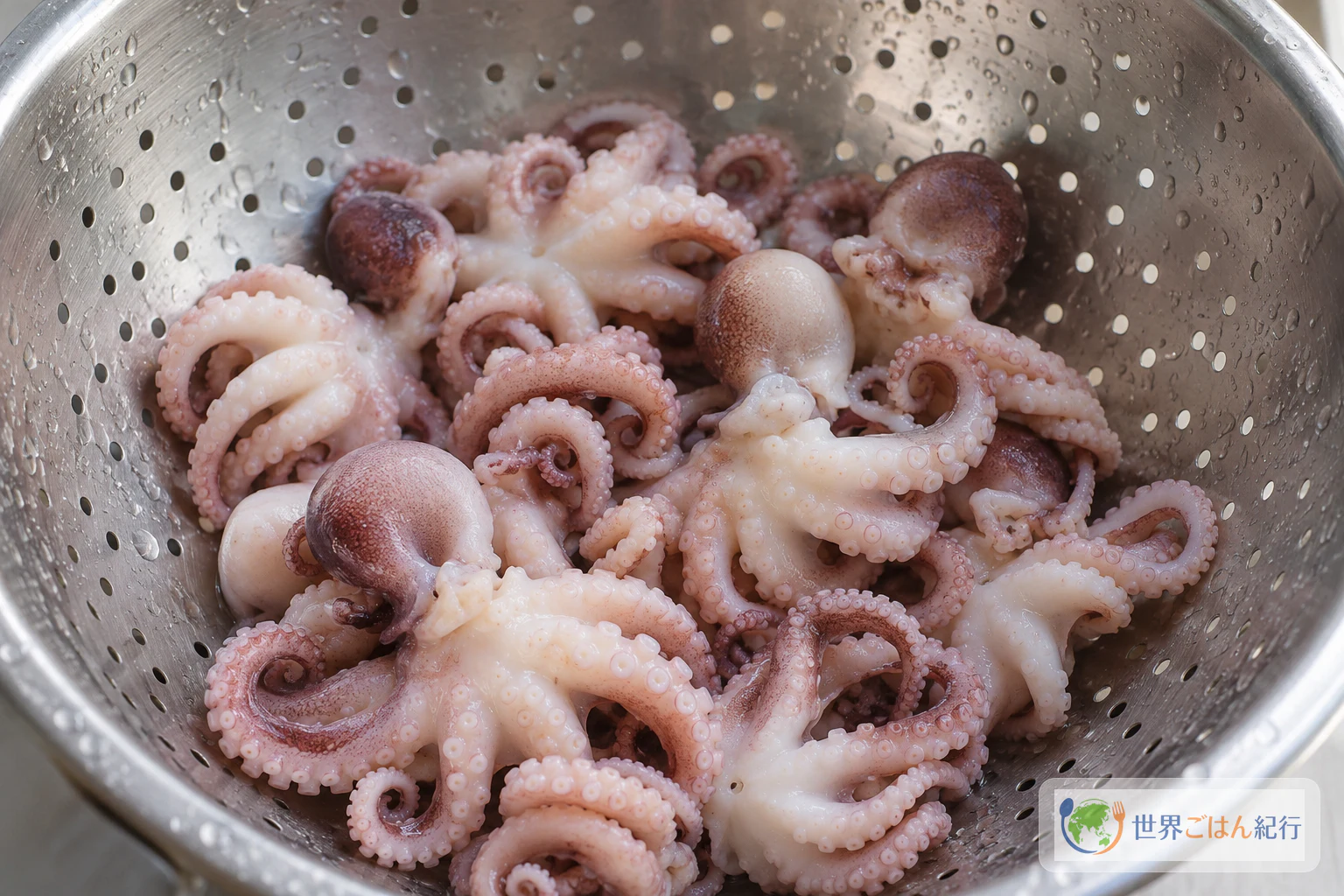
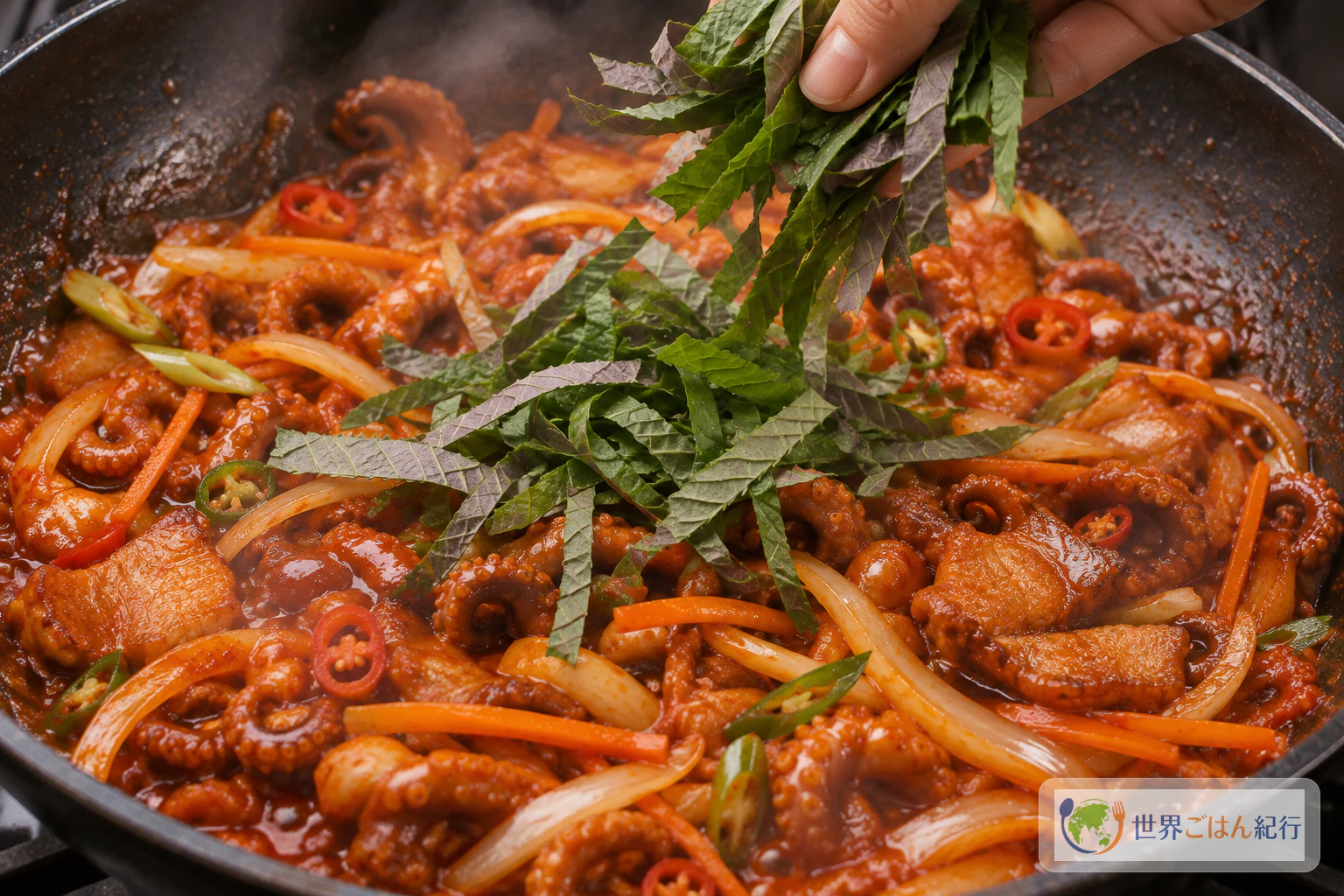
Clean the octopus well, blanch it only briefly, and let the pork fat do the early work. The sauce goes in stages, and the perilla goes in last.
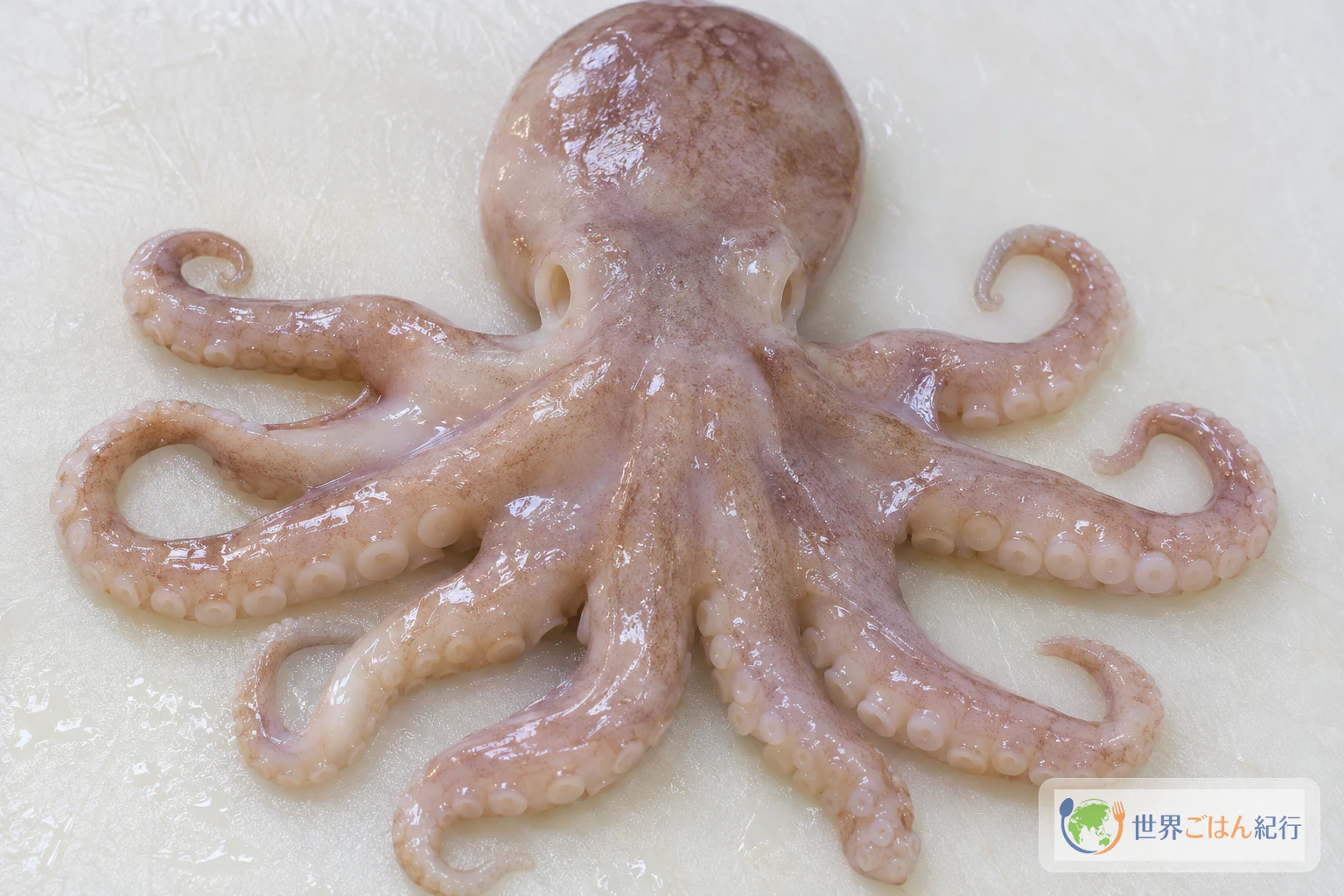
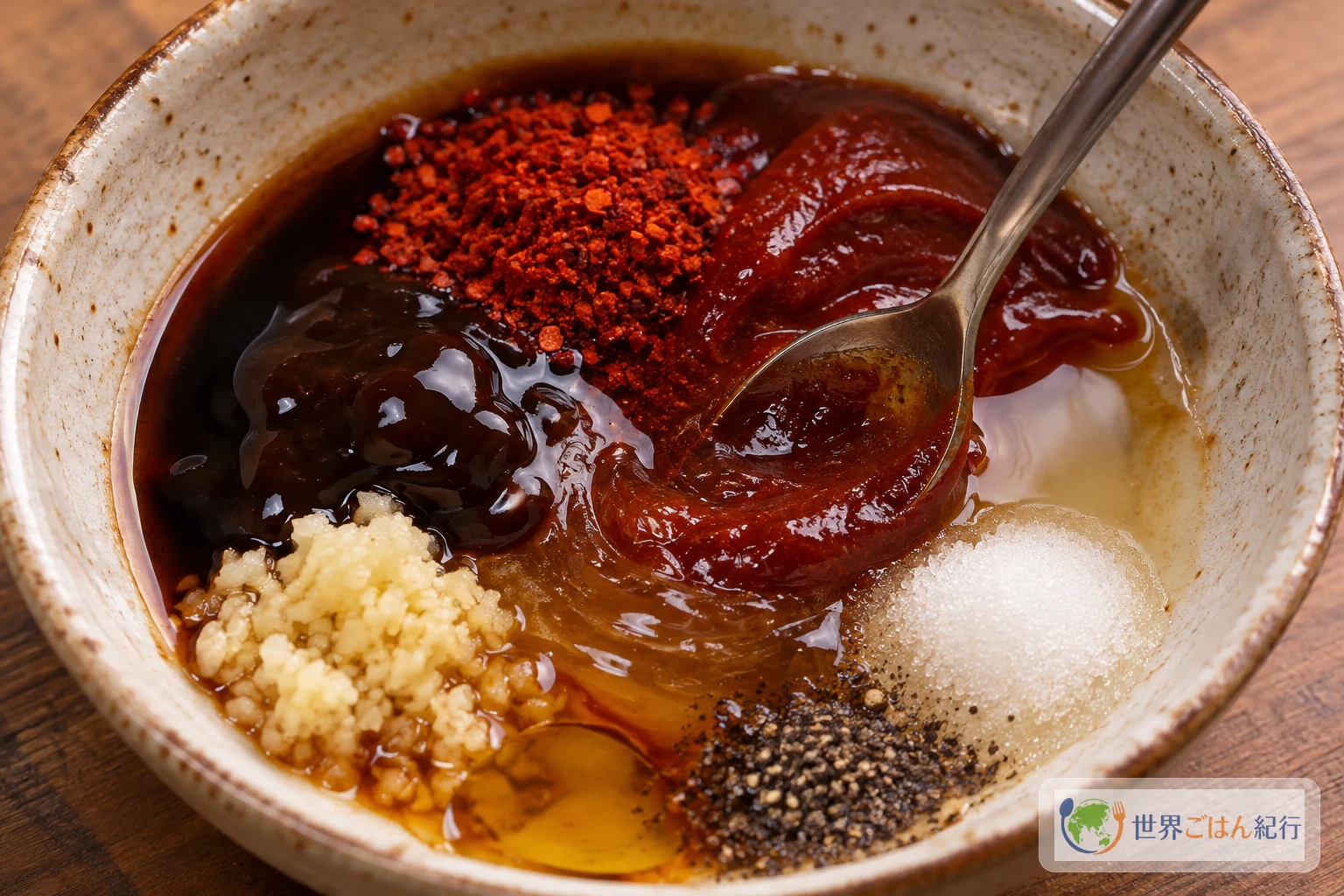
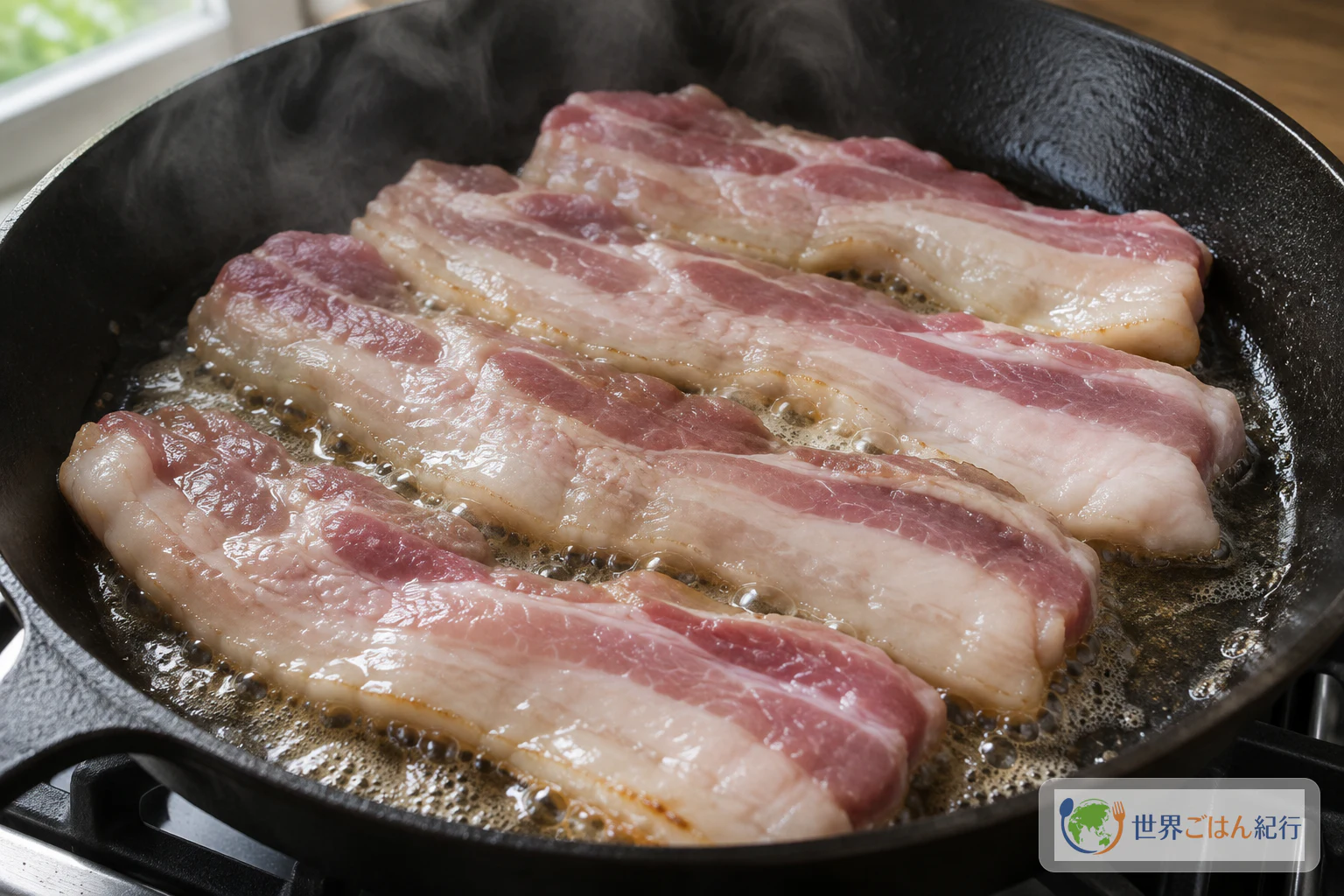
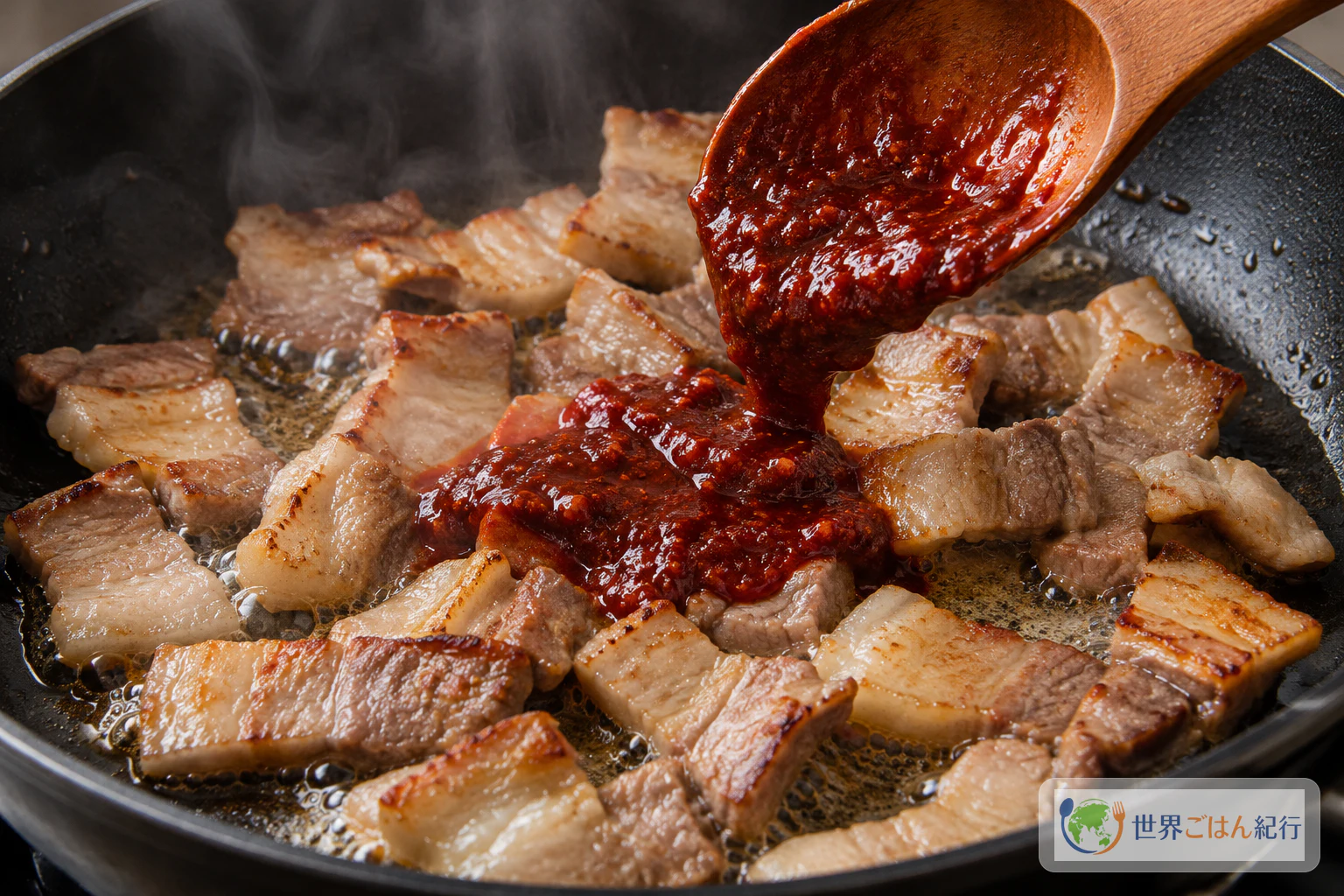
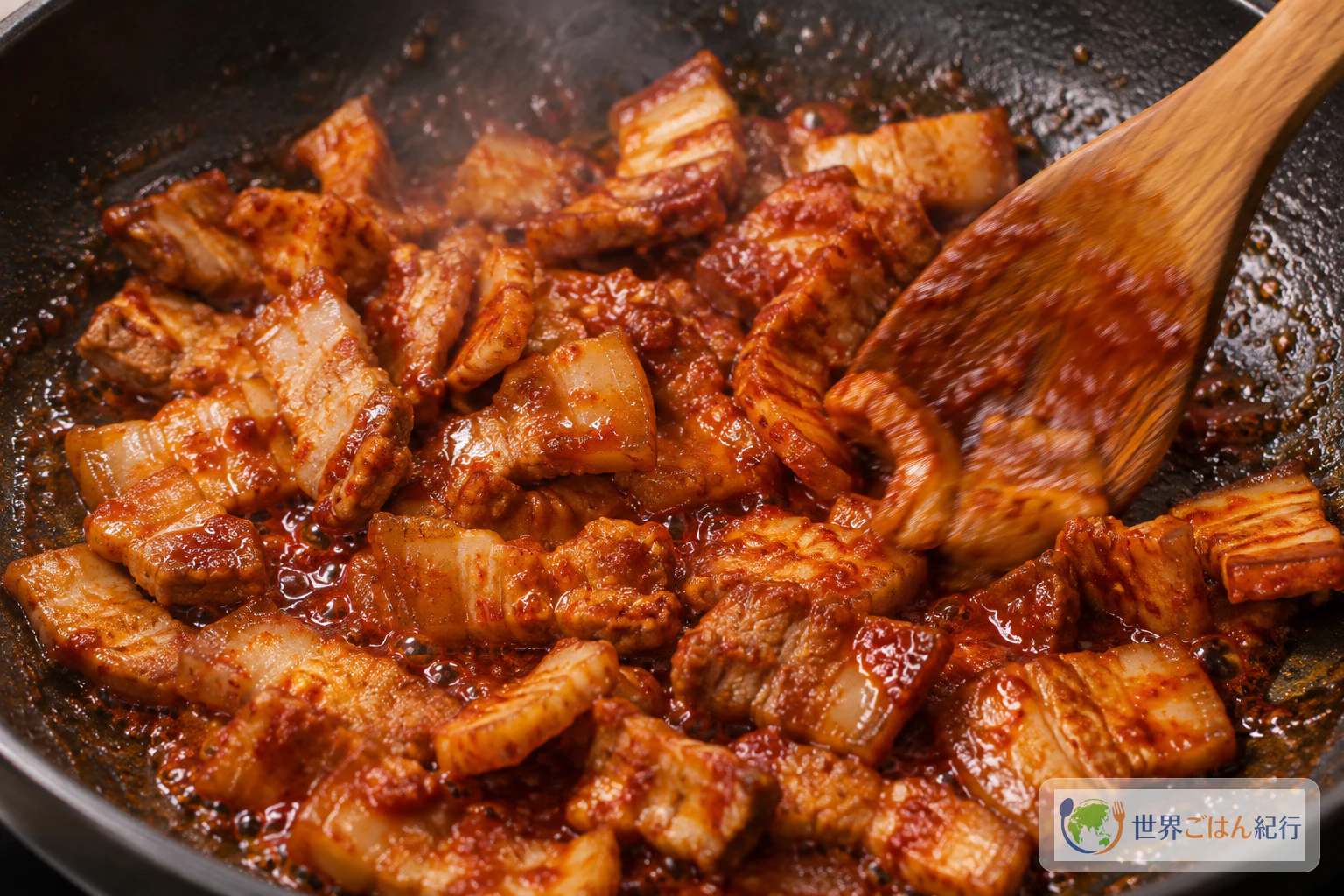
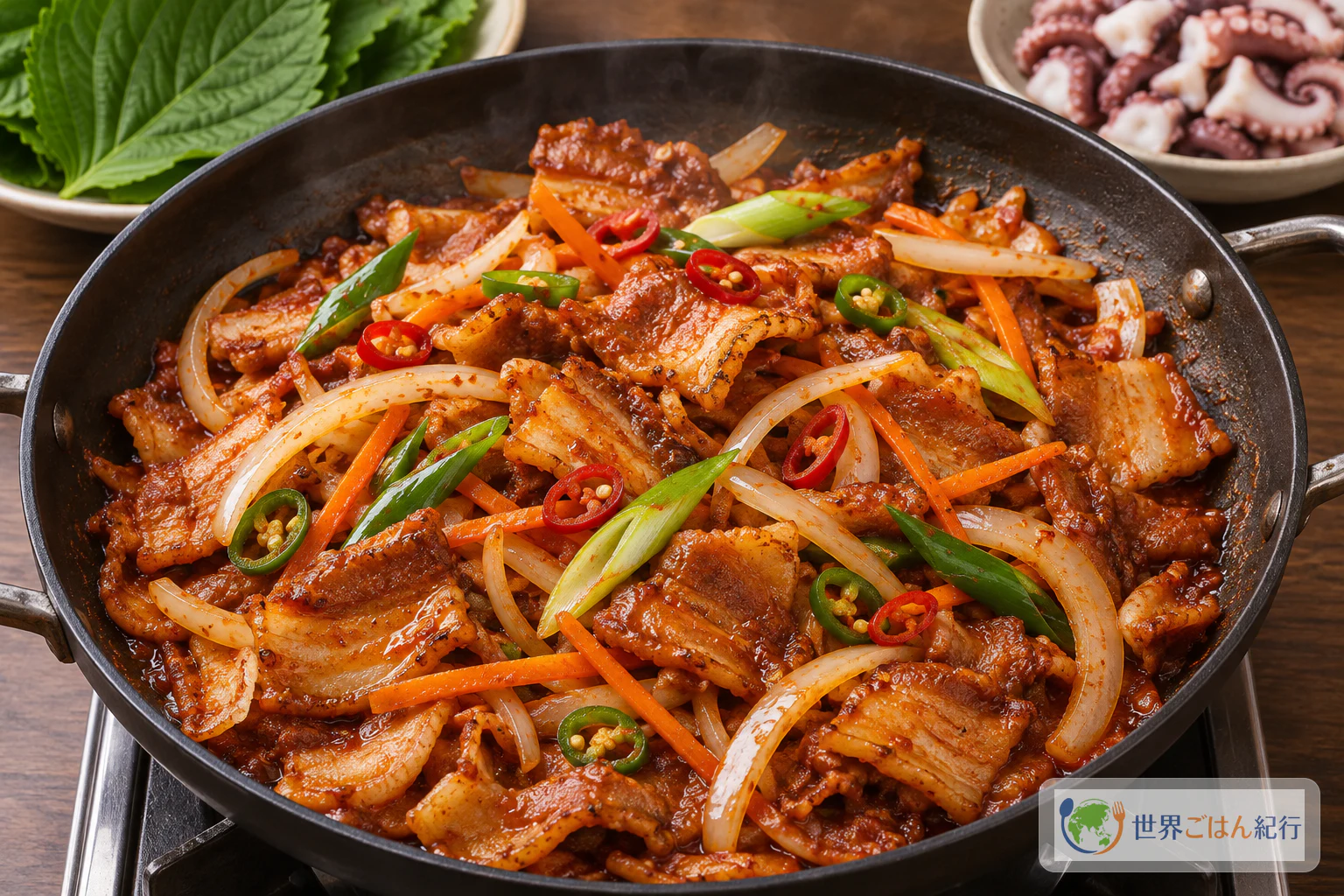
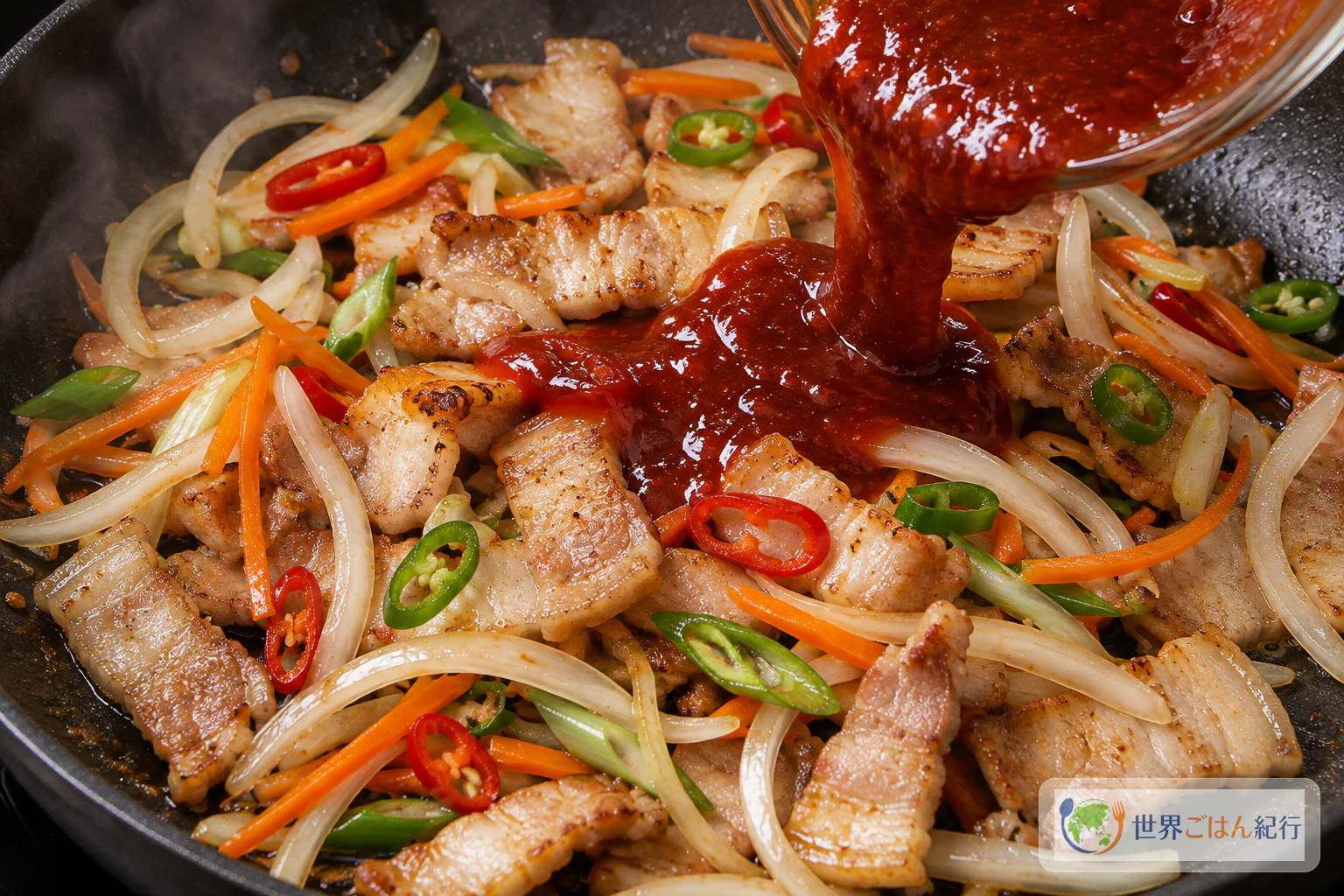
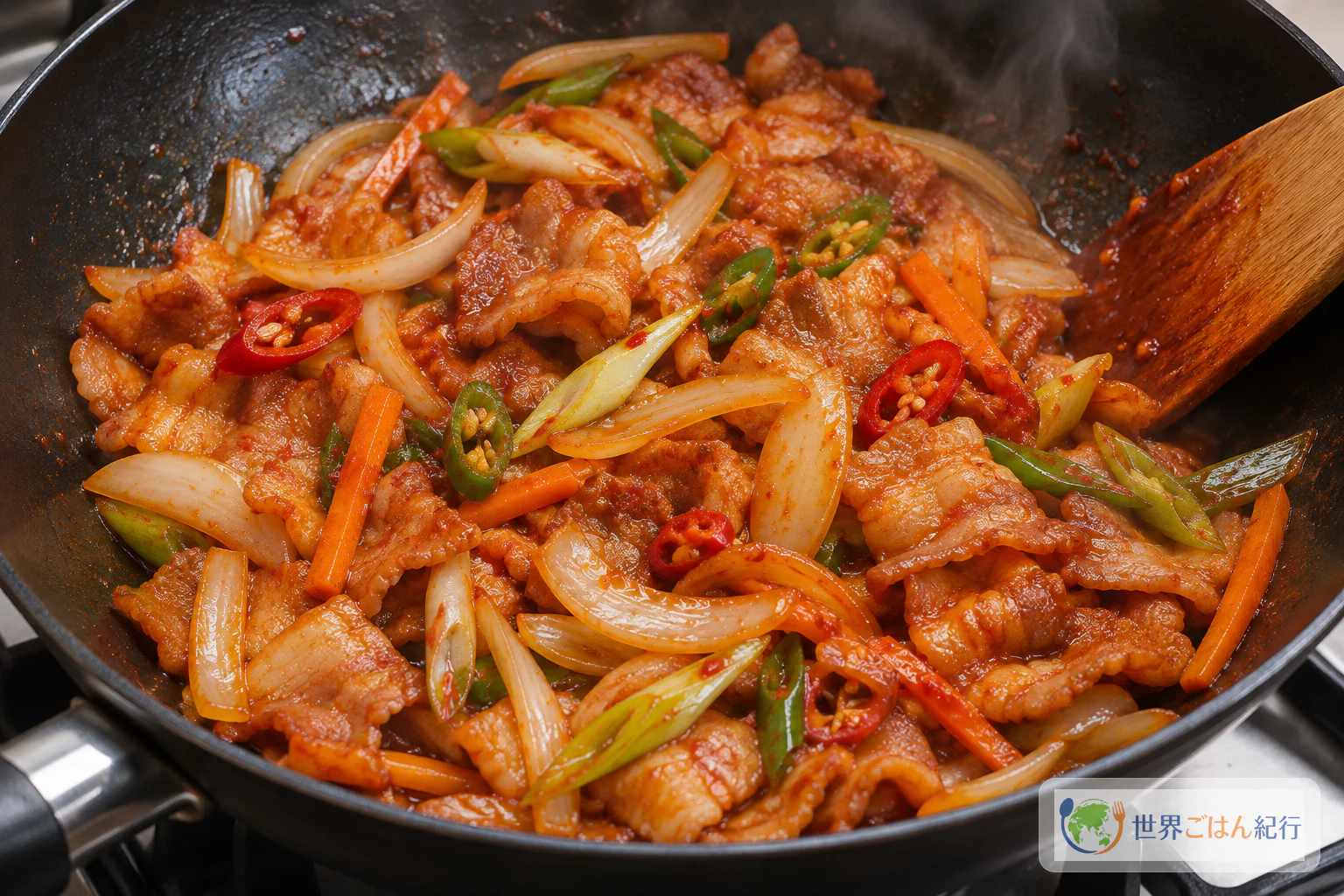
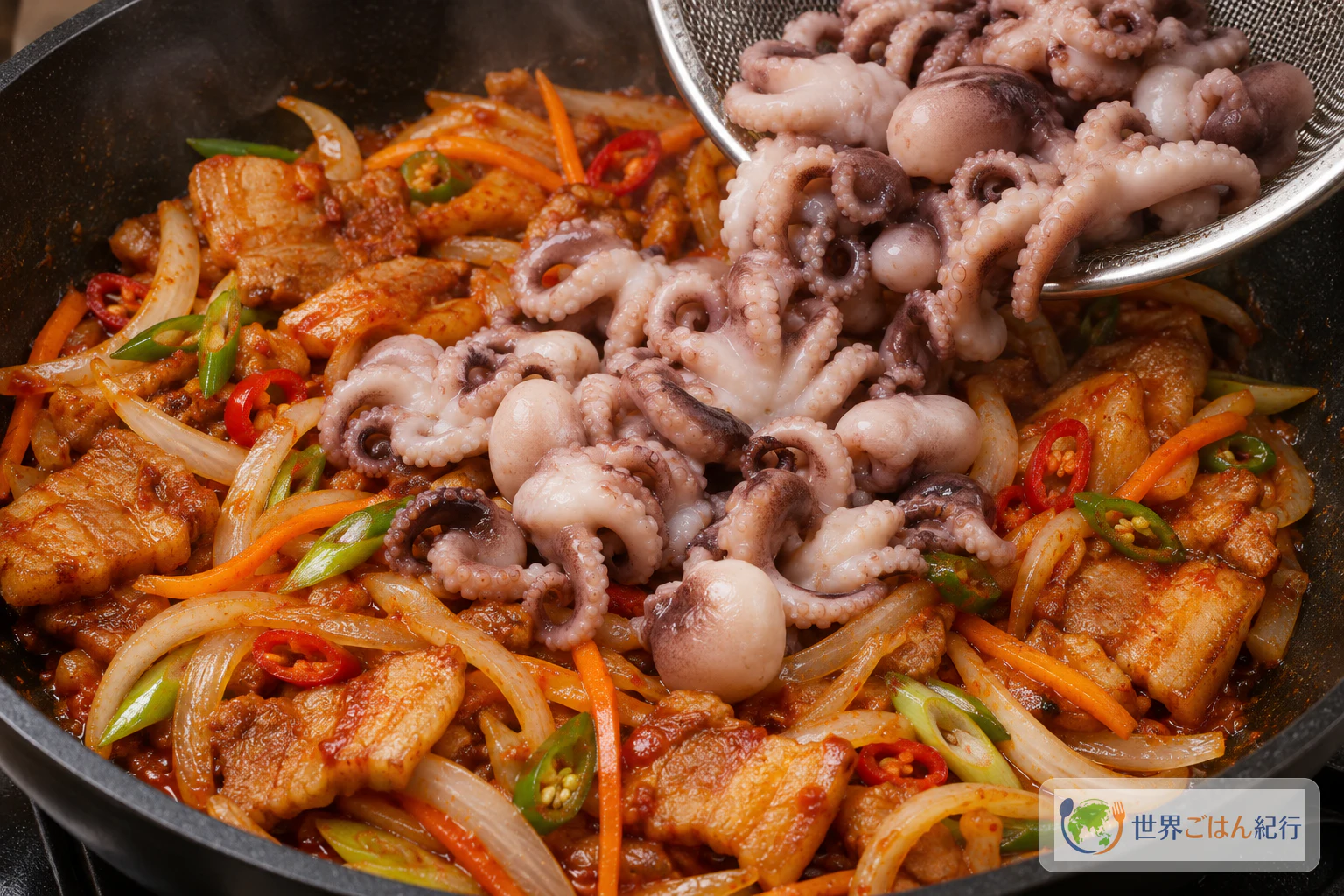
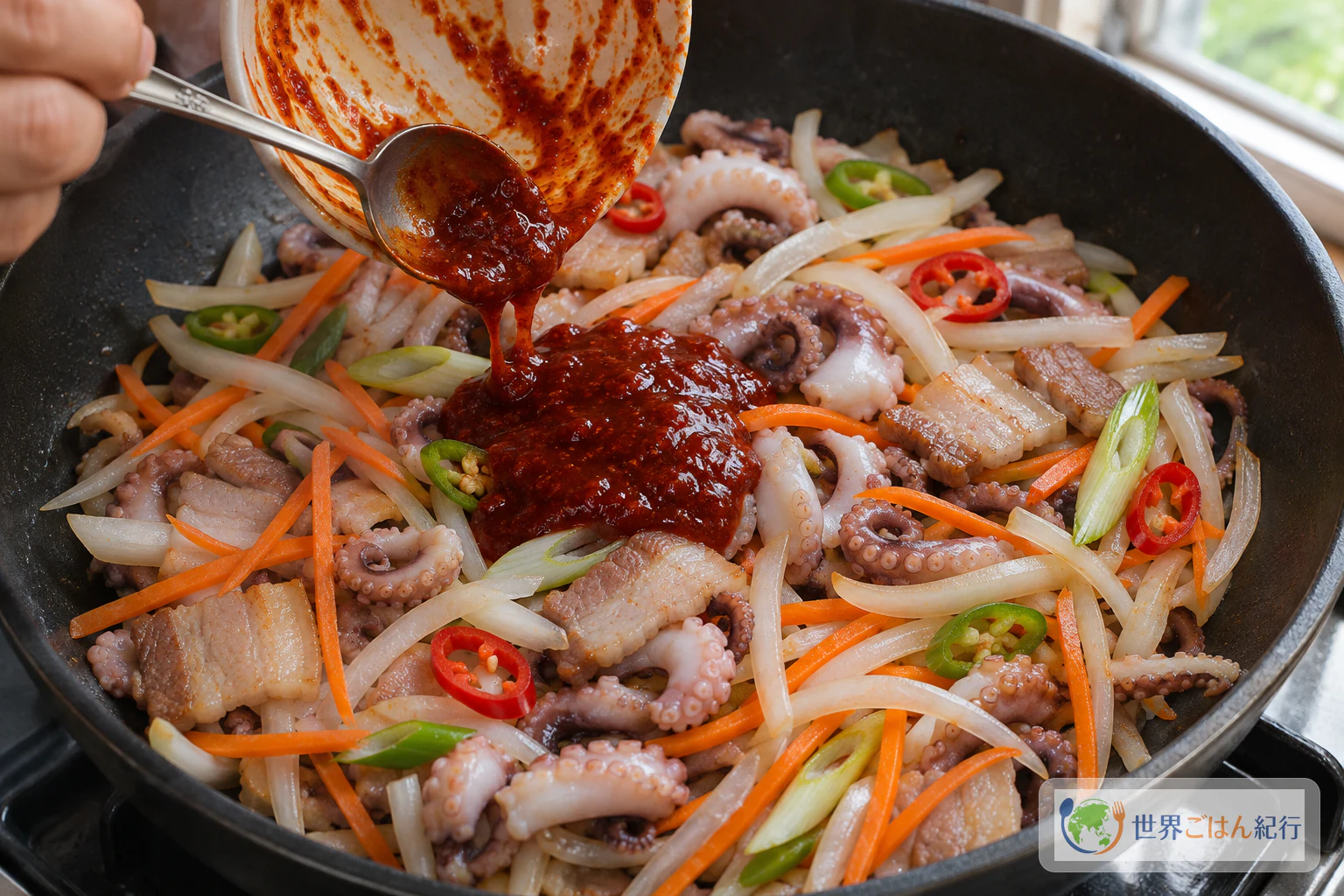
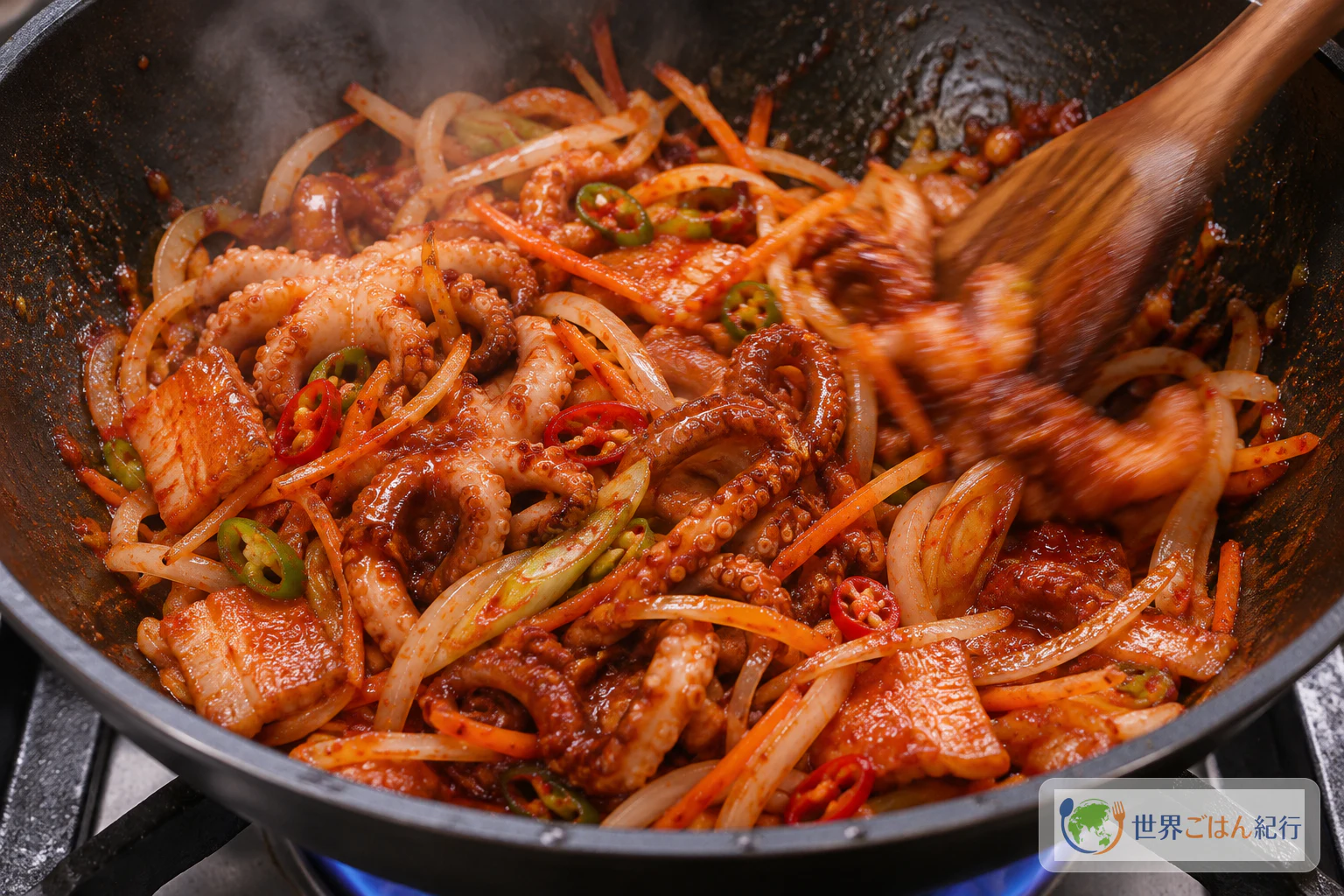
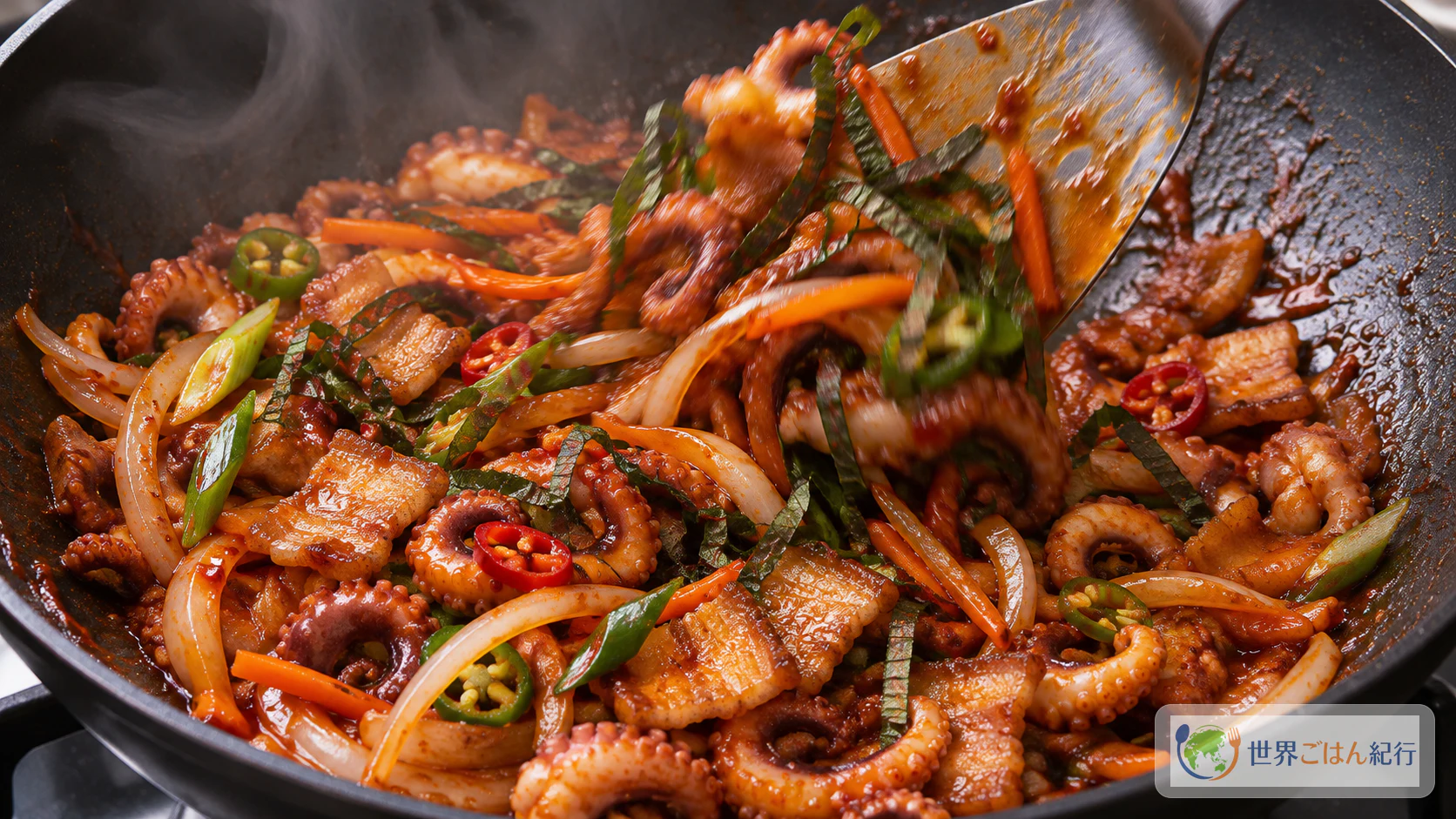
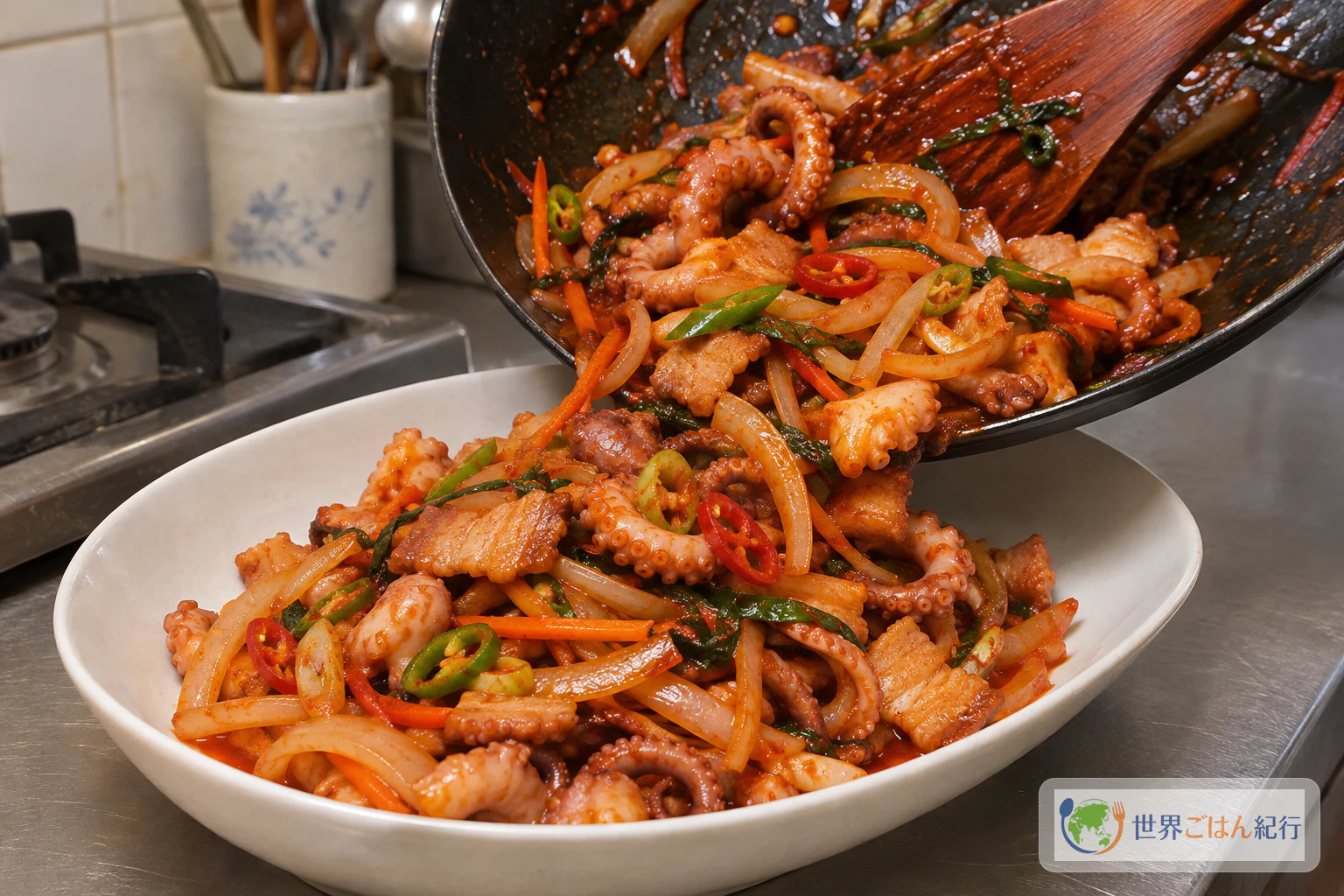
Pork belly goes into the pan first and gives up its fat. Red sauce loosens in that fat, the vegetables follow, and only when the onion turns translucent does the small octopus join them over high heat. Jukkumisamgyeopsal (쭈꾸미삼겹살볶음, also written 주꾸미삼겹살볶음 and known as 쭈삼불고기) joins two words: jukkumi (주꾸미), a small octopus, and samgyeopsal (삼겹살), pork belly.
This recipe uses one formula from a home cook's post on the Korean recipe site 10000recipe, by 춤추는루나. It serves 3, and the post lists a time of within 60 minutes. Its spoon measures are rice spoons (밥숟가락), and they are kept here rather than converted. Sekai Gohan has not kitchen-tested this version, so use the visual cues in the steps along with the amounts.
This is a stir-fry in a chili sauce. It is not samgyeopsal-gui, plain pork belly grilled without seasoning, and it is not an octopus-only stir-fry. It is also different from the jukkumi shabu-shabu of Incheon's Manseok-dong.
For more from this cuisine, see Korean recipes on Sekai Gohan.
Ingredients: 3 Servings, Measured with One Spoon
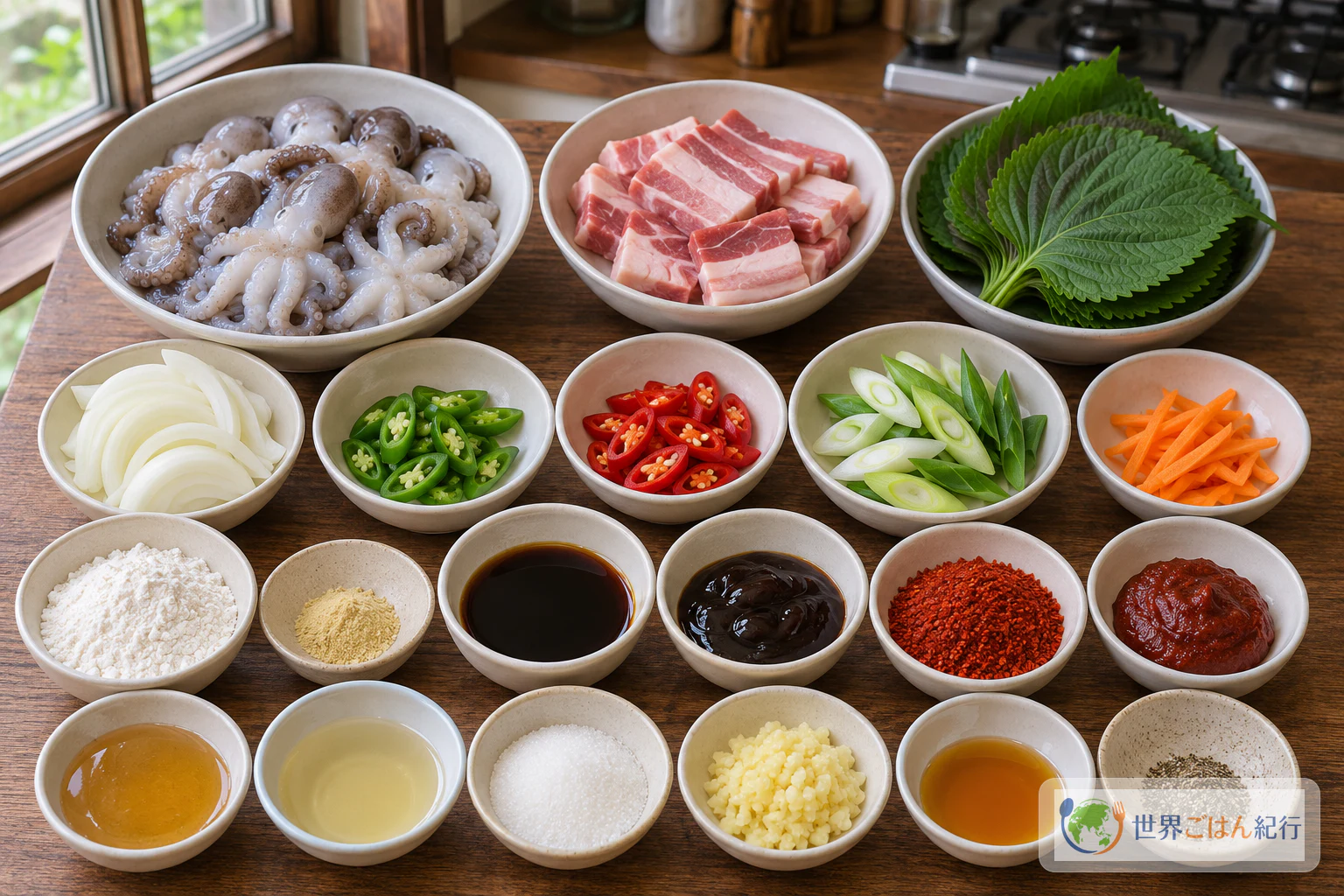
Use the same spoon for every seasoning to keep the proportions steady.
Equipment
- Prep bowl
- Colander
- Kitchen scissors
- Cutting board and knife
- Saucepan
- Small bowl and spoon for the sauce
- Frying pan and spatula
- Clean food thermometer
- Separate utensils for raw and cooked food
- Serving dish
Choosing and Substituting: What Changes When You Swap
Every swap below changes the dish.
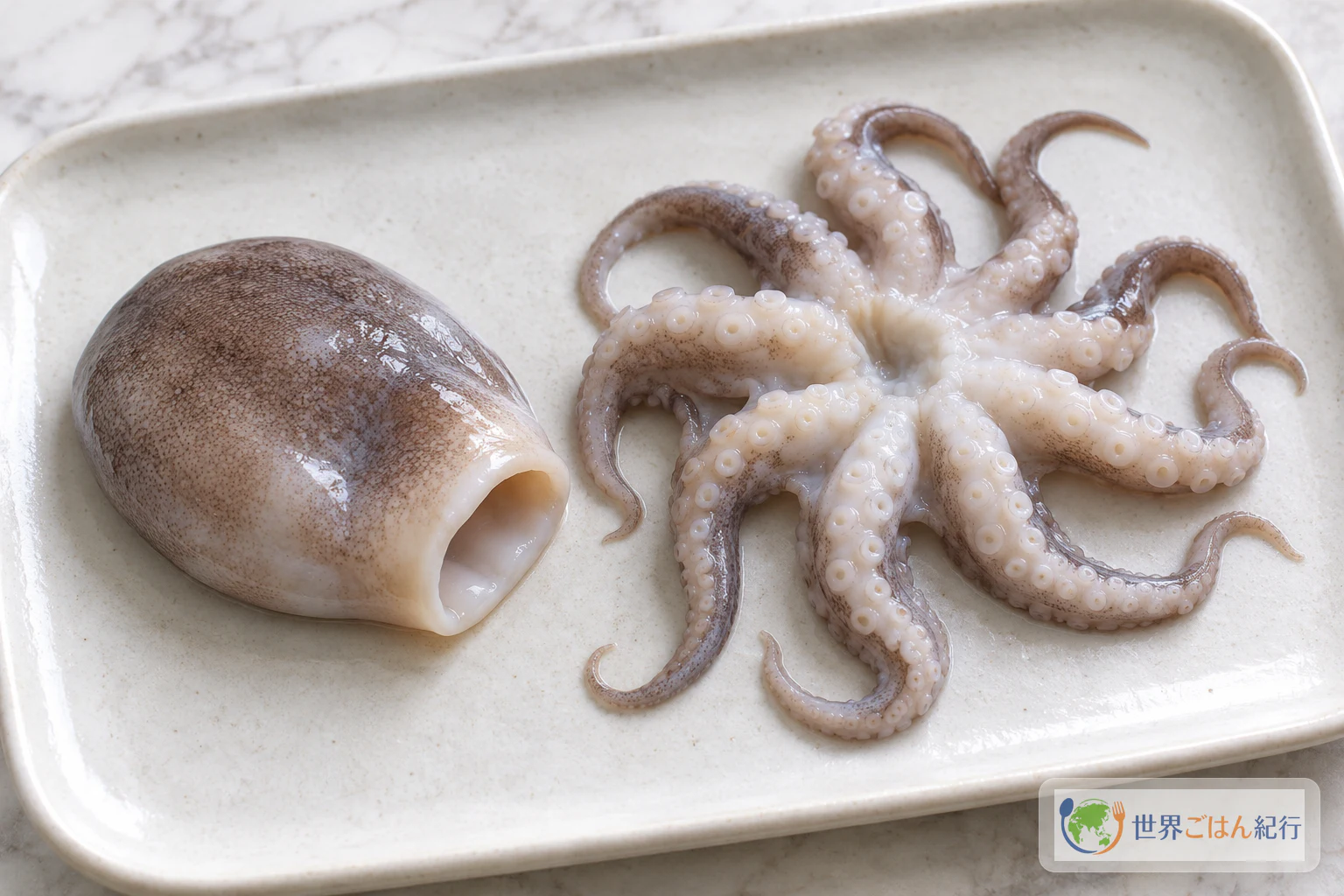
Small octopus. Use octopus sold as food at a shop or by mail order, labeled 주꾸미 or, in Japanese, iidako (イイダコ). Frozen and properly thawed is fine. It can be hard to find and expensive. Retail names may not always match the exact species, and this article cannot guarantee the legal status of any product or advise on catching or importing it.
| Ingredient | Possible swap | What changes |
|---|---|---|
| 주꾸미 | Small common octopus (madako) | Size and texture differ, and the blanching time here is not verified for another species. A large octopus cut into small pieces is a different dish |
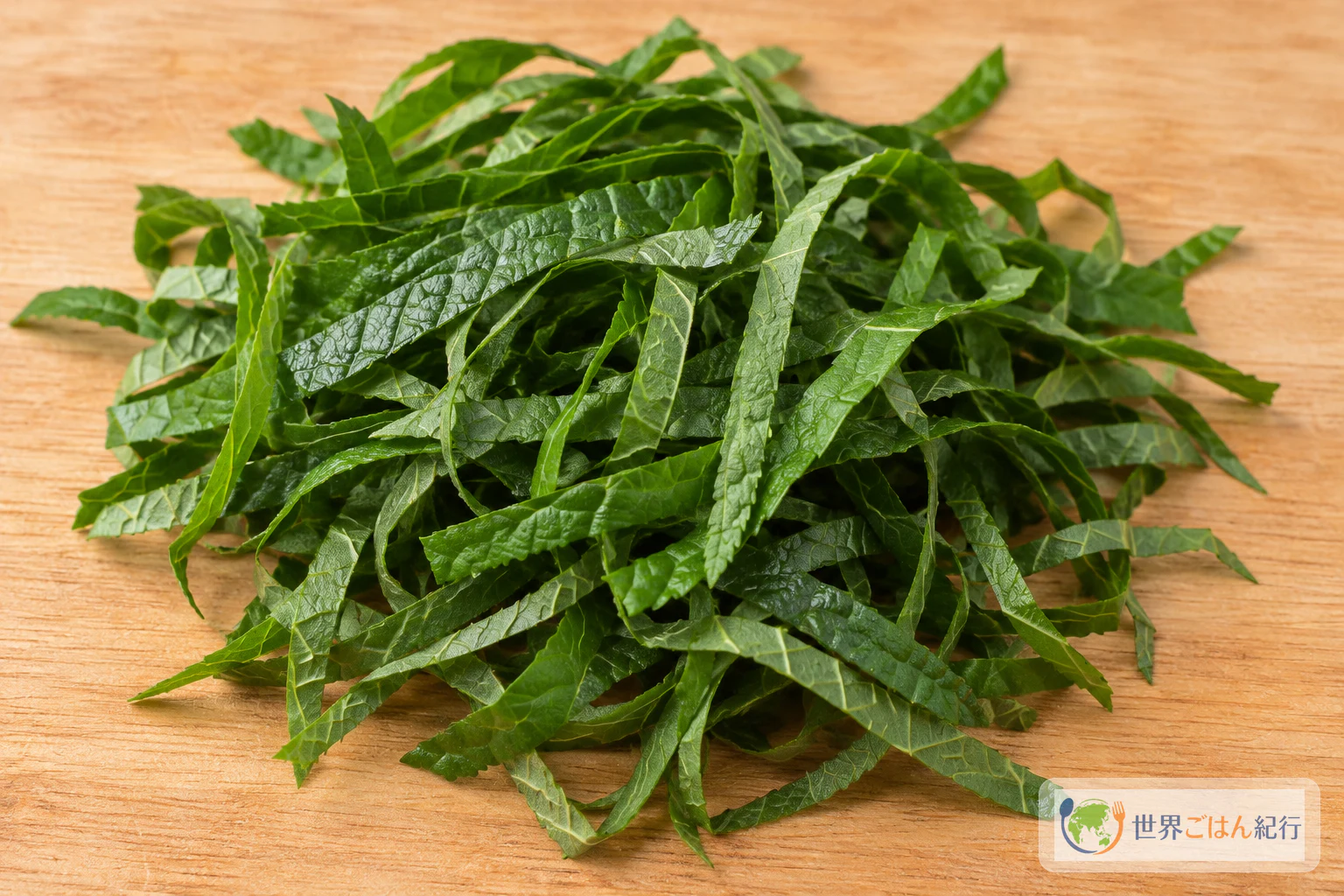
| 깻잎 (perilla) | Shiso (ōba) | The aroma changes, and shiso is not the same leaf |
| 진간장 | Japanese koikuchi soy sauce | Saltiness, sweetness and other flavors shift, so taste as you go |
| 맛술 and 물엿 | Japanese cooking sake, mirin or honey | These are not the same products. Sweetness and flavor differ, so treat the result as a different sauce |
This dish uses octopus, pork, wheat flour, soy sauce, oyster sauce and sesame oil. Check the labels on your seasonings.
Method: Clean, Blanch, Then Build the Pan in Order
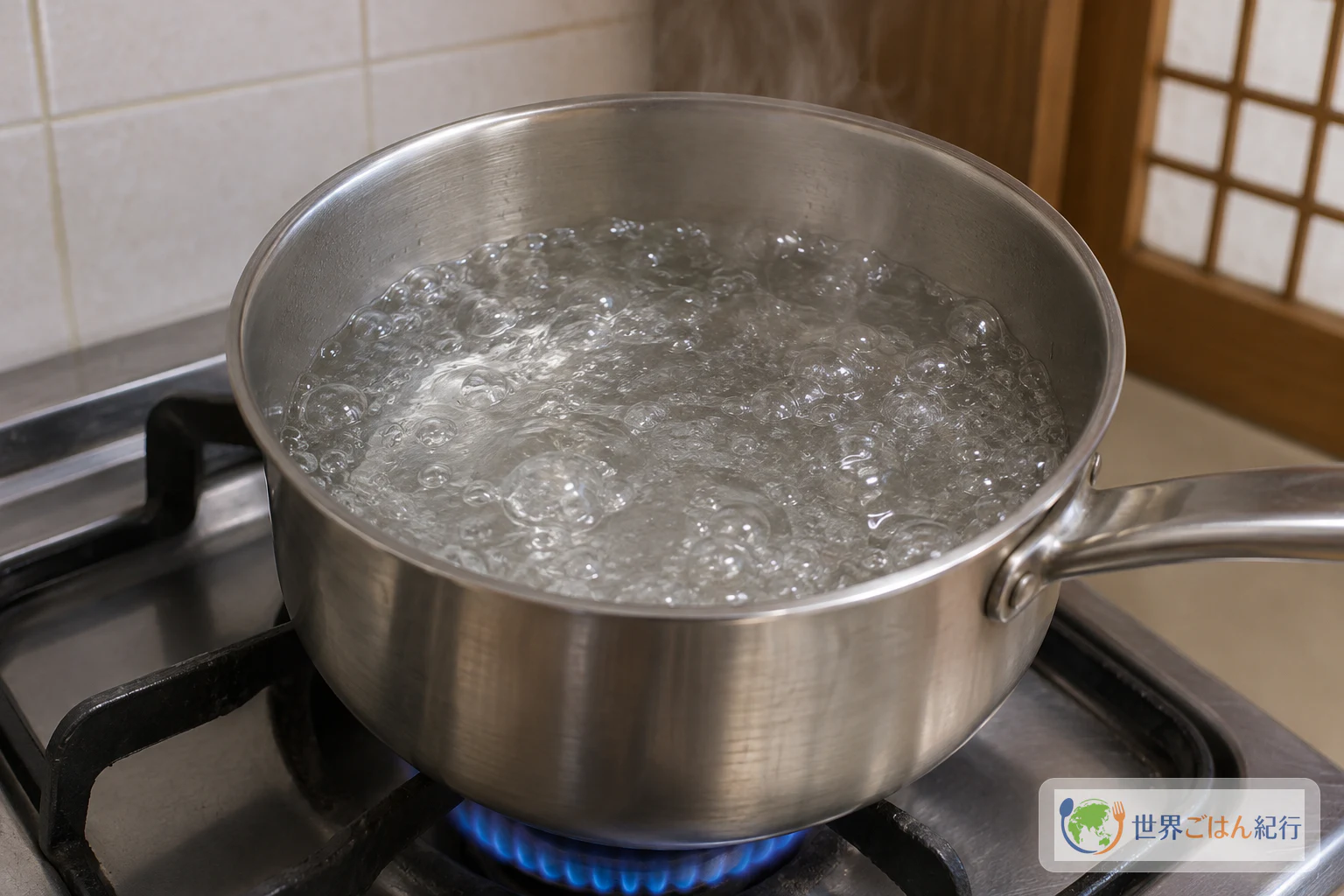
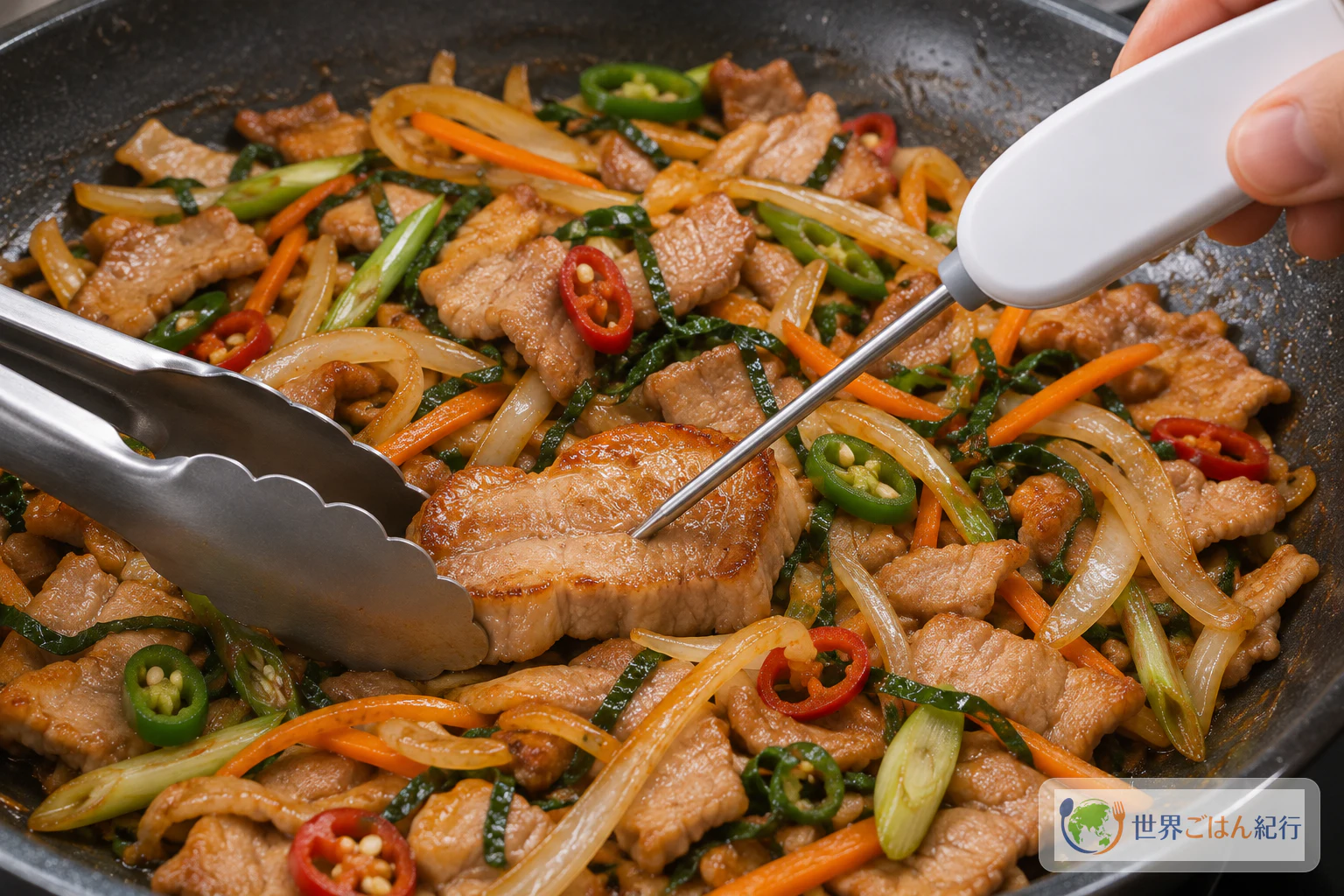
The short blanch comes before stir-frying and does not make the pork or seafood safe to eat. Japan's Ministry of Health, Labour and Welfare gives general advice for meat: heat the center to 75°C for at least 1 minute, keep it refrigerated, and stop raw juices from reaching other food. That guidance is separate from this recipe's timings and does not validate them. Use separate utensils for raw and cooked food.
When Something Looks Off in the Pan
| What you see | Likely reason | What to do |
|---|---|---|
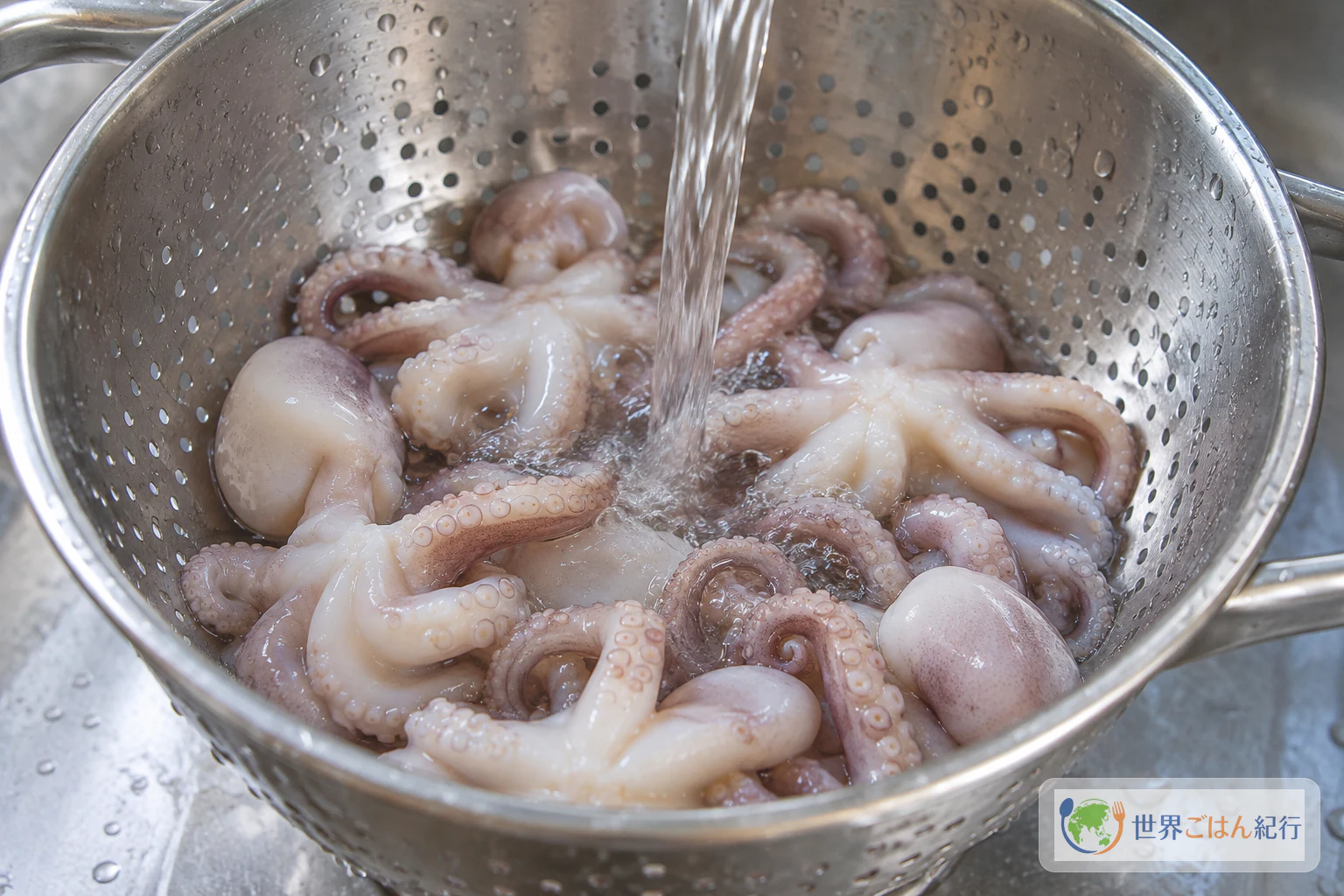
| The octopus still feels slimy or floury | It needs more rinsing | Rinse again under running water before cutting or blanching |
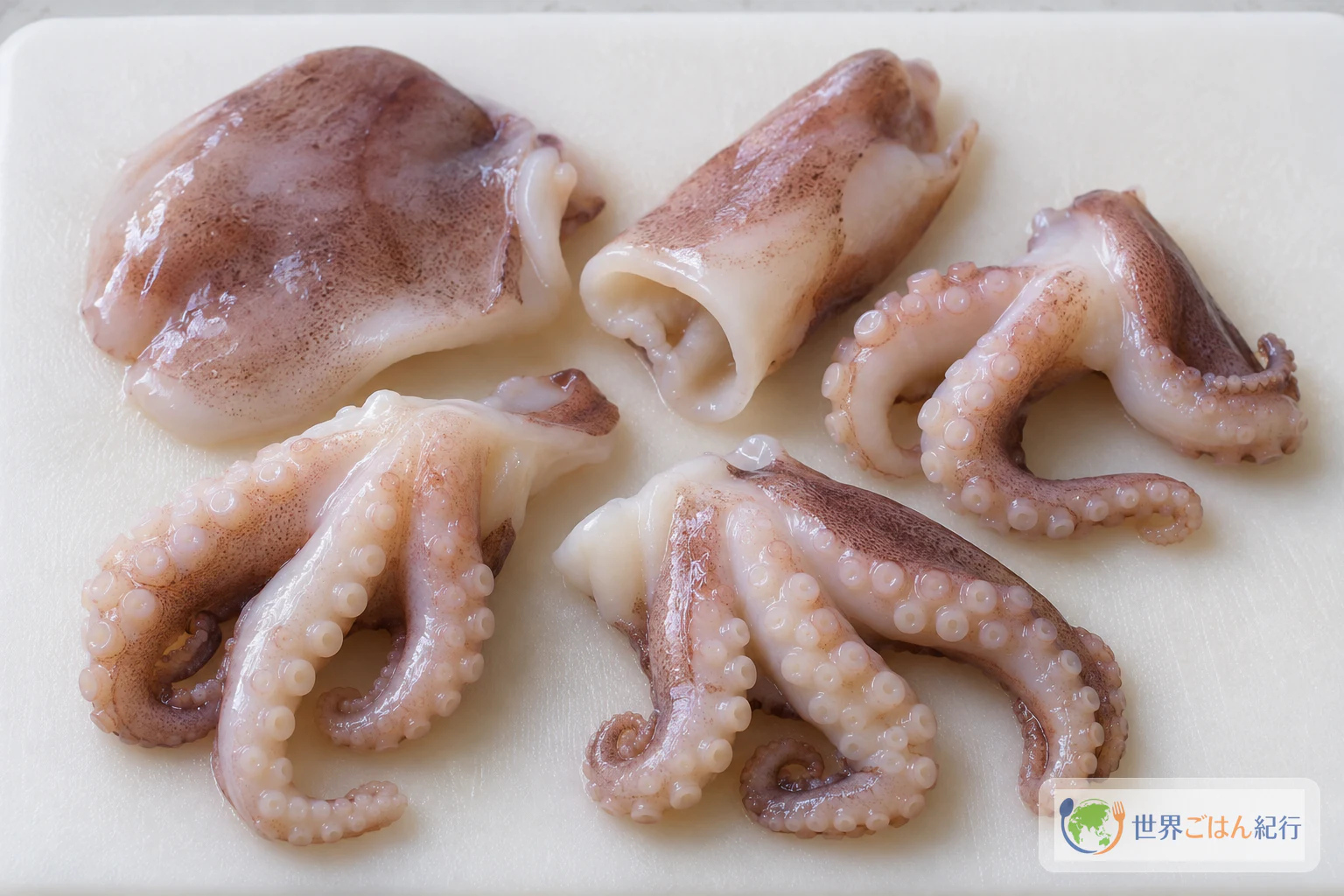
| The octopus pieces came out very small | They shrink when boiled | Next time, cut only the large ones and keep the pieces generous |
| The sauce seems to run out too soon, or too much is left | Spoons vary from home to home | Use one spoon throughout, and add whatever remains in step 14 |
| The onion is still opaque | It needs more time in the pan | Keep stir-frying before adding the octopus |
| The pork center is below 75°C, or you are unsure about the octopus | The dish needs more heat | Keep cooking, then check again with a clean thermometer |
Variations: Related Dishes and Where Each One Differs
The Korea Tourism Organization's Japanese-language page on jukkumi-gui also describes small octopus stir-fried with pork belly, scallion and onion, so the combination is not unique to this post. Its quantities are not used here, and neither are the raw, roe or charcoal-grilled versions it mentions.
| Dish | How it differs |
|---|---|
| Samgyeopsal-gui (삼겹살구이) | Unseasoned pork belly grilled, with no octopus or stir-fried sauce |
| Octopus-only stir-fry | No pork belly, so no rendered fat to fry the sauce in |
| Jukkumi shabu-shabu (주꾸미 샤부샤부) | The spring dish featured in Incheon's Manseok-dong, a different type of dish |
Background: Table, Region and the Small Octopus Itself
No source we found establishes where jukkumisamgyeopsal began, so this article does not name a birthplace.
The Korea Tourism Organization describes Korean meals built from rice, soup and side dishes, with variety across regions and households. It also describes eating samgyeopsal out, wrapped in leaves with ssamjang. That is general background for Korean food. The recipe here does not require any particular side dish or way of serving.
Incheon's city magazine has featured Manseok-dong's jukkumi alley and a spring shabu-shabu passed down from local restaurant owners. That shows one place's relationship with this octopus, but it does not explain the origin of this stir-fry.
Korea's National Institute of Fisheries Science (NIFS) lists 주꾸미 as Amphioctopus fangsiao. Its species entry marks the octopus under capture control and shows a dash in the separate marine-protected column. A NIFS table gives the Korean seasonal capture restriction as May 11 to August 31. These are not a year-round ban or an endangered listing, and they are not a guide to retail or import law.
In Japan, a Kagawa Prefecture fisheries report describes iidako as an important catch for small bottom trawlers in the Bisan Strait, handled as a seafood item at Takamatsu's central wholesale market. Another prefectural document reports catches at six local fisheries cooperatives falling from about 200 tonnes in 2002 to about 2 tonnes in recent years. It also notes a rise in the Tōsan area from about 1 tonne in 2021 to about 1.9 tonnes in 2024. Its conservation measures are releasing caught octopus and asking anglers to cooperate on fishing seasons and hours. These figures cover one prefecture, not all of Japan.
Frequently Asked Questions
Is a rice spoon the same as a tablespoon?
Do not assume so. The post's measuring note says 밥숟가락, and spoons differ between households. Use the same spoon for all the seasonings so the proportions hold.
How much sauce goes in at each stage?
The post says 2 spoonfuls with the pork, 2 more with the vegetables, and the rest with the octopus. It does not map those additions exactly onto the total, so this article does not calculate a split.
Can I use a large octopus cut into small pieces?
That would be a different dish. The recipe is built around small jukkumi, and its blanching time is not verified for other species. A small common octopus is possible as an editorial swap, with the differences noted above.
Does the 30-second to 1-minute blanch make the octopus safe?
No. The blanch is a preparation step before the stir-fry. Cook the finished dish thoroughly and check a thick piece of pork as described in step 15.
Can the octopus be served raw, or with the innards left in?
Not in this recipe. It removes the innards, beak and eyes and cooks the octopus thoroughly. It does not cover raw serving.
Is jukkumi endangered or banned?
Do not read the NIFS listing that way. It shows seasonal capture management, with marine-protected status shown separately as a dash. That listing says nothing about any particular product, so buy octopus sold as food. This article gives no legal assurance and no advice on catching or importing it.
Sources
- 춤추는루나, 만개의레시피 (10000recipe), "쭈꾸미 삼겹살 레시피 쭈삼불고기 쭈꾸미 손질법." The main recipe: 3 servings, listed within 60 minutes, ingredients, cleaning, sauce and staged stir-fry. https://www.10000recipe.com/recipe/7023389
- Korea Tourism Organization, "About Korean Food – VISITKOREA." General background on Korean meals and regional and household variety; not a recipe or origin claim for this dish. https://english.visitkorea.or.kr/svc/contents/contentsView.do?menuSn=903&vcontsId=229195
- Incheon Metropolitan City, Good Morning Incheon, "인천 오감 레시피 ④ '만석동' 주꾸미 샤부샤부." Manseok-dong's jukkumi alley and its spring shabu-shabu; a different dish from this one. https://www.incheon.go.kr/goodmorning/GOOD010101/view?curPage=1&nttNo=2041815&srchCategoryCode=&srchKey=&srchPblicteIssnoCode=202304&srchWord=
- Ministry of Health, Labour and Welfare (Japan), "食中毒予防:お肉はよく加熱して食べよう." General meat guidance: 75°C at the center for at least 1 minute, refrigeration, and preventing cross-contamination from meat juices. It does not validate this recipe's blanch. https://www.mhlw.go.jp/stf/web_magazine/closeup/08.html
- Korea Tourism Organization, "チュクミグイ(イイダコ焼き)(주꾸미구이)." The Japanese name iidako for 주꾸미, and an example of stir-frying it with pork belly, scallion and onion. https://japanese.visitkorea.or.kr/svc/contents/contentsView.do?vcontsId=178788
- National Institute of Fisheries Science (Korea), species information for Amphioctopus fangsiao (주꾸미). The Korean and scientific names, and the separate capture-control and marine-protected columns. https://www.nifs.go.kr/portal/bt/frctA/actionSpeciesSearchView.do?taxonId=9661
- National Institute of Fisheries Science (Korea), table of capture-restriction periods and sizes for fisheries resources. The May 11 to August 31 seasonal period listed for 주꾸미. https://nifs.go.kr/portal/pcon0000298/systA/actionConts.do
- Kagawa Prefectural Fisheries Experimental Station, "高松市中央卸売市場におけるイイダコの取扱重量と単価の長期変動." Iidako as a small-trawl catch handled as seafood at Takamatsu's central wholesale market; not a measure of national distribution or retail stock. https://www.pref.kagawa.lg.jp/documents/22230/05.pdf
- Kagawa Prefecture Fisheries Division, "香川県におけるイイダコ資源保護の取組み." Conservation measures and catch figures in Kagawa; not a comprehensive guide to national law or retail legality. https://www.pref.kagawa.lg.jp/documents/19778/iidako_shigenkanri.pdf