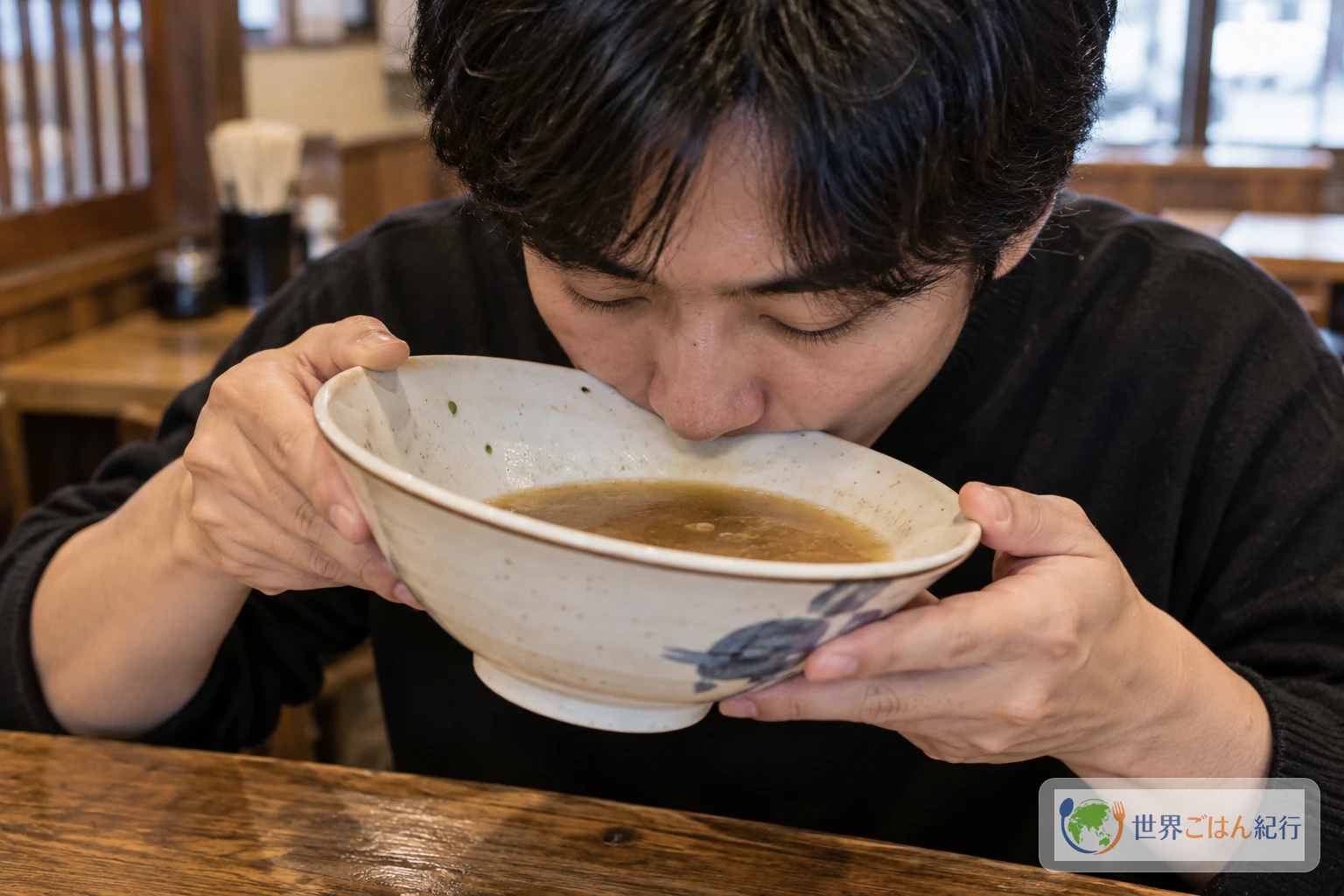
Crossing the Bridge Noodles: A Bowl Built First, Then Covered with Boiling Stock
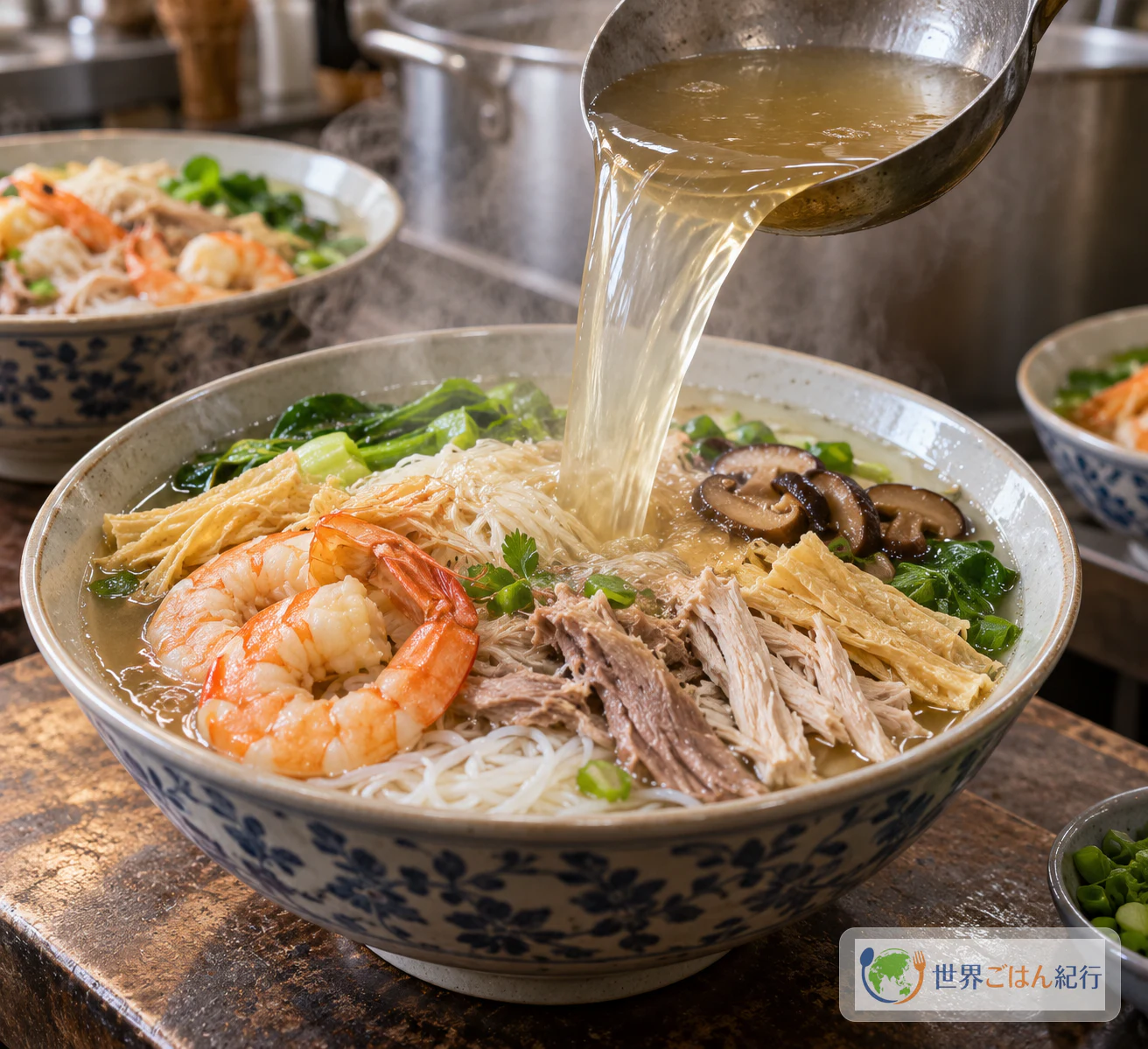
Every solid in the bowl is already cooked before the stock goes in: the rice vermicelli, the simmered and shredded pork and chicken, and the tiger prawns. The final pour of freshly reboiled stock brings it all together. It is not a method for cooking raw meat or fish in the bowl.
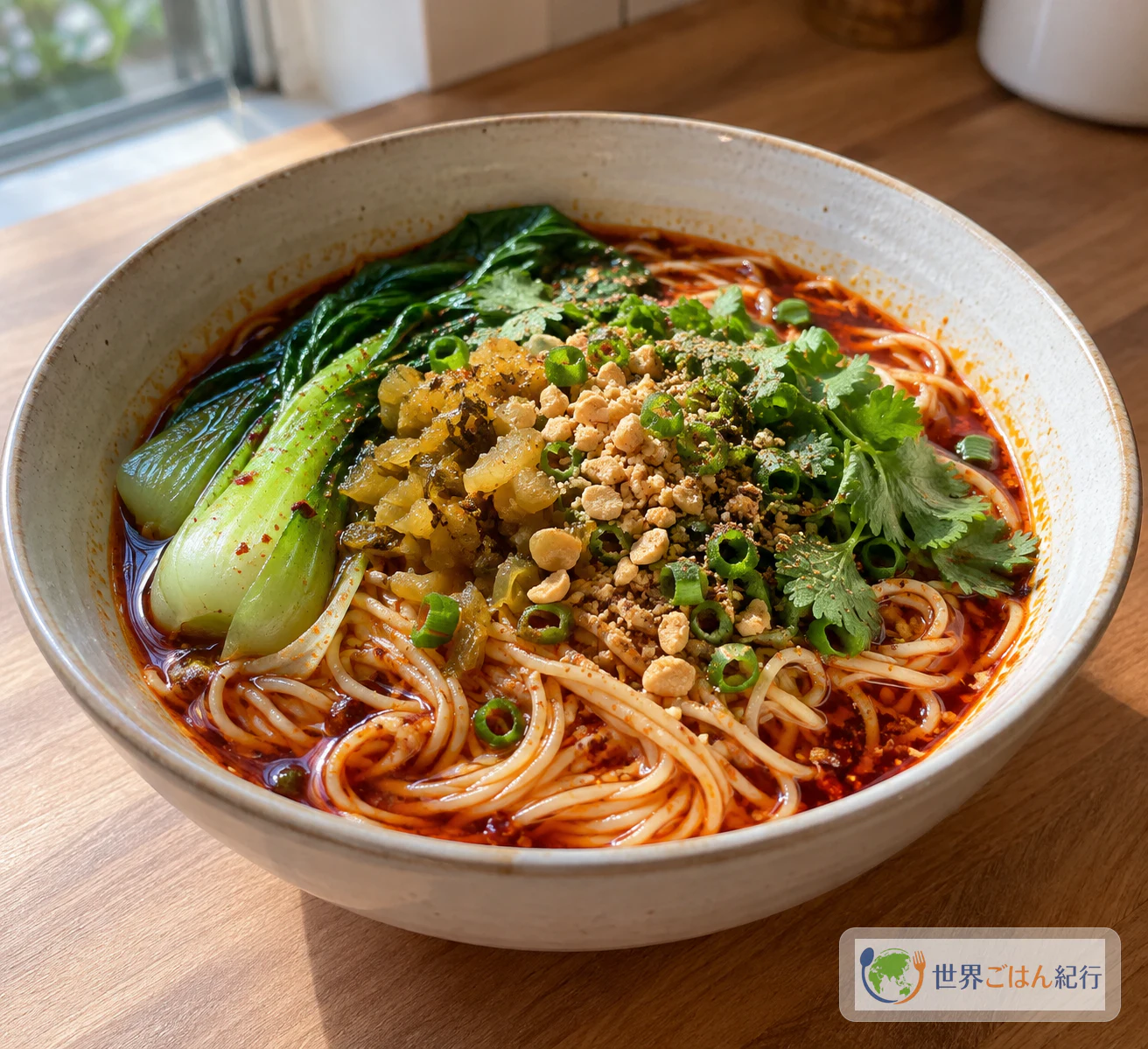
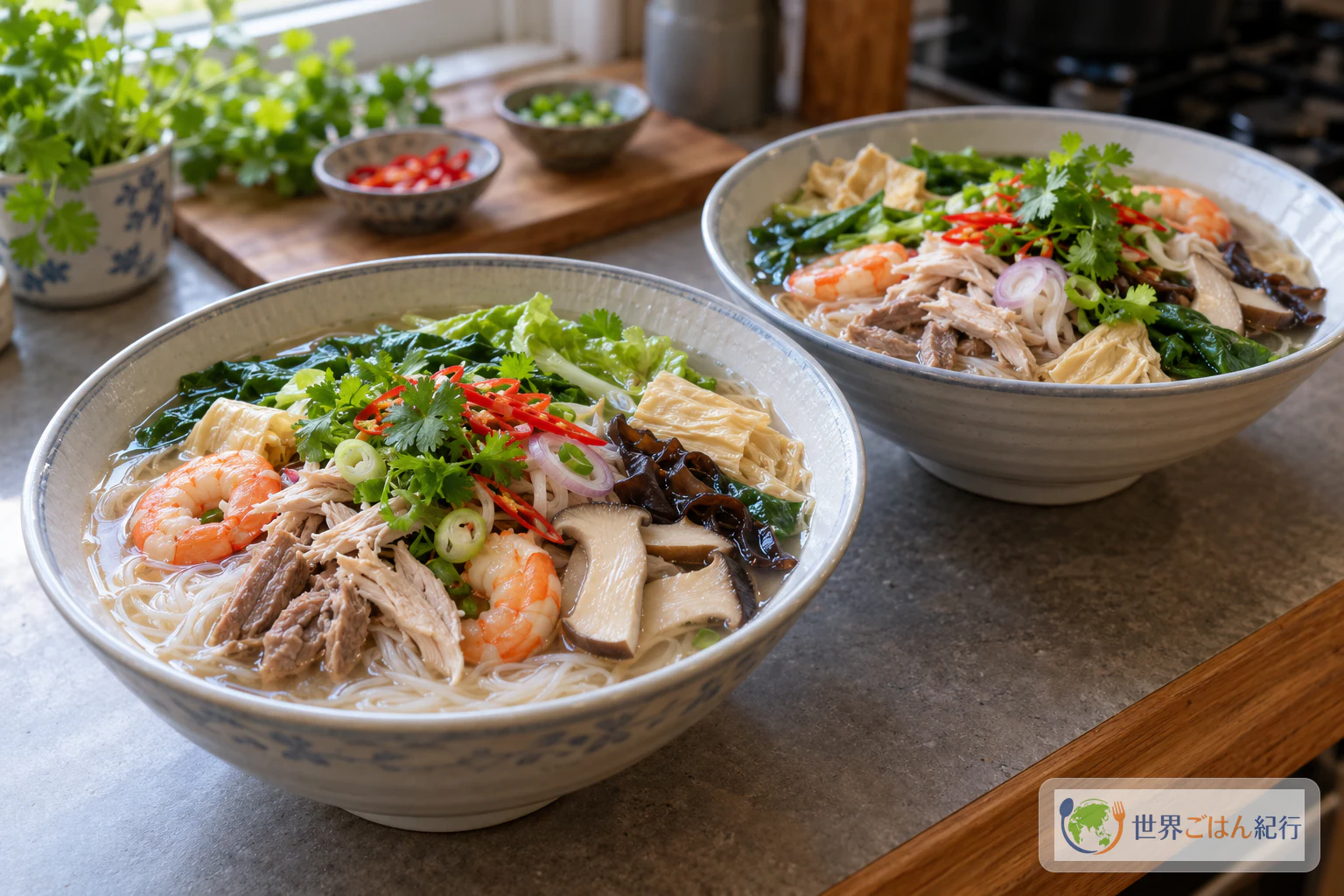
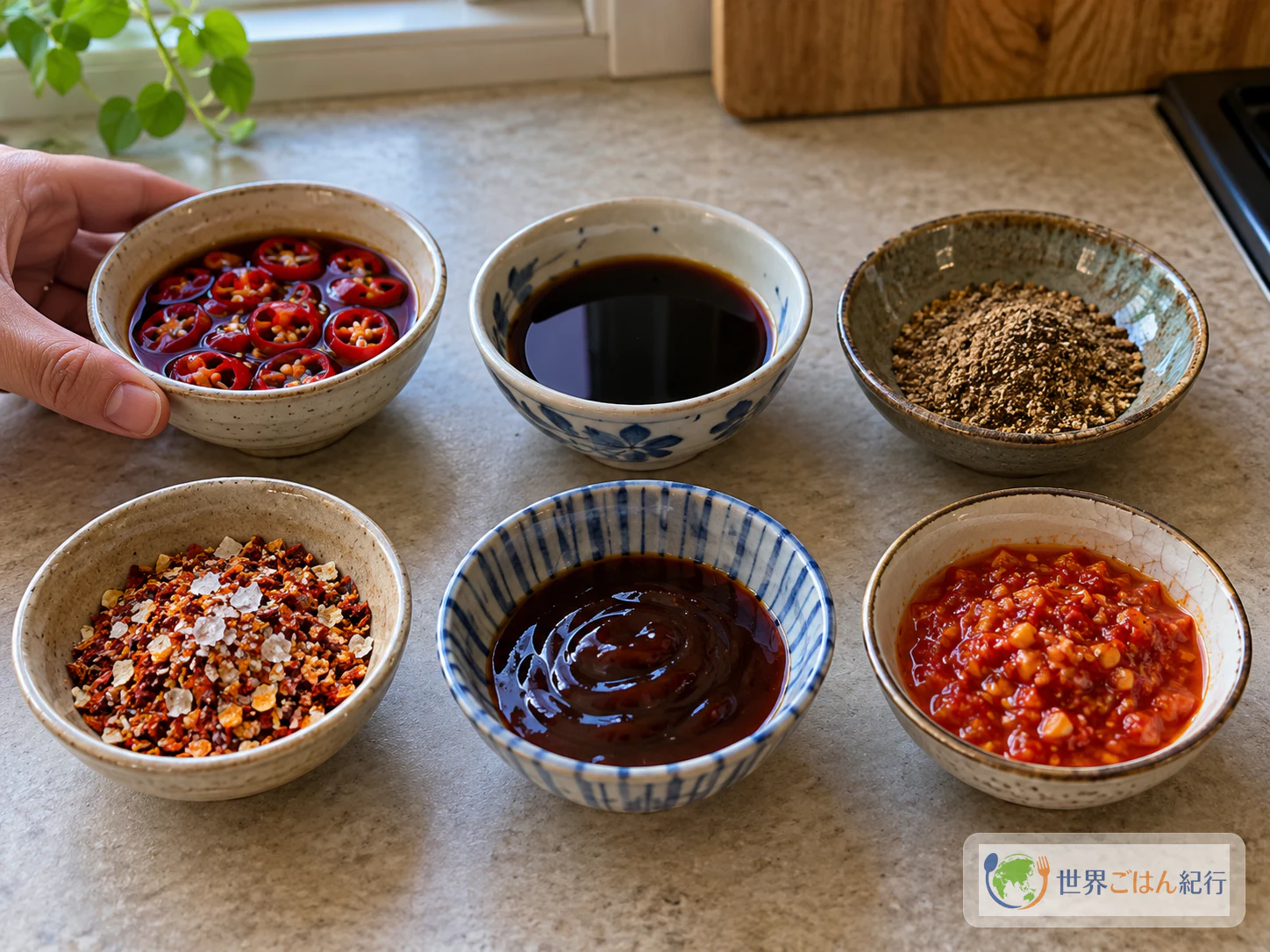
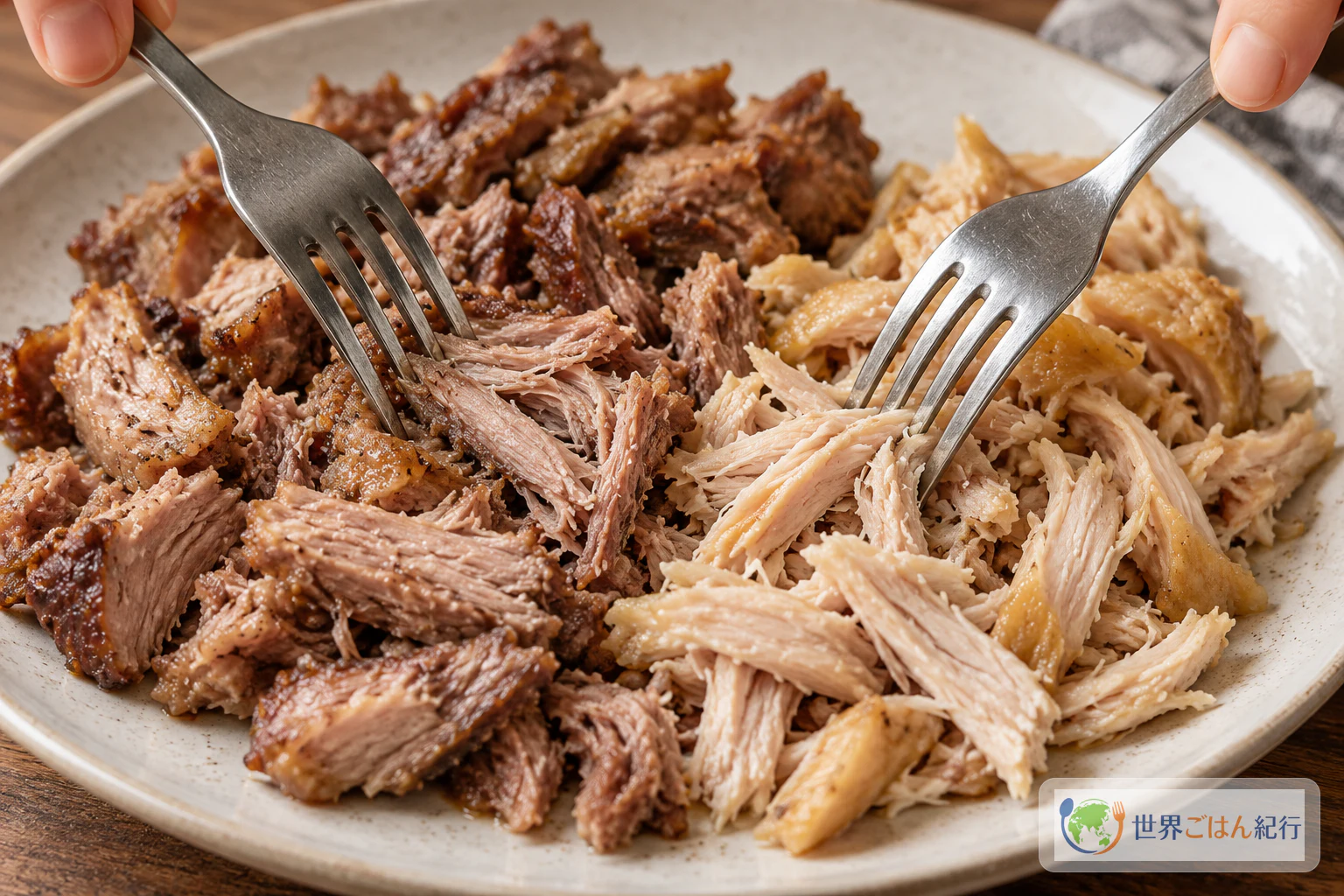
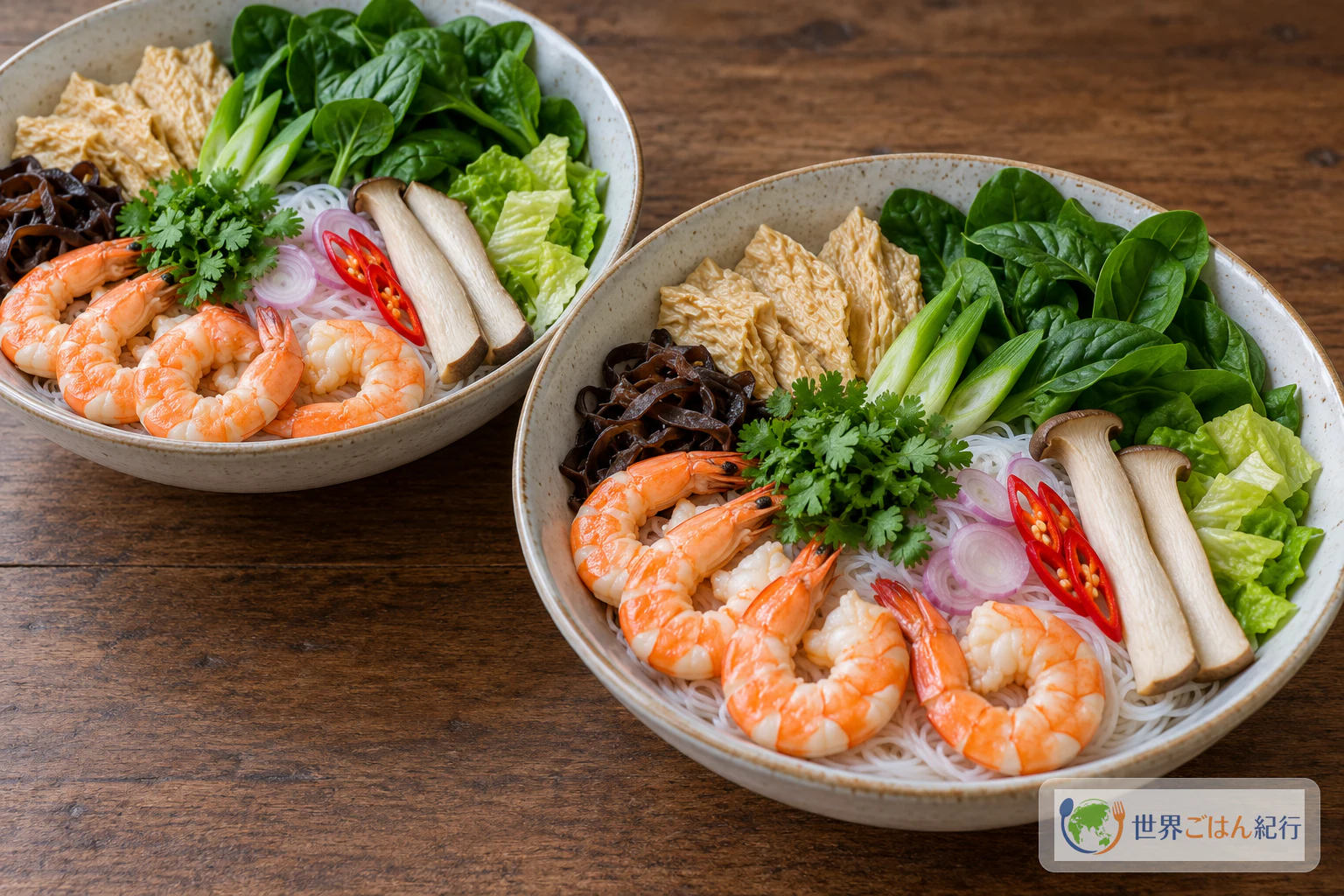
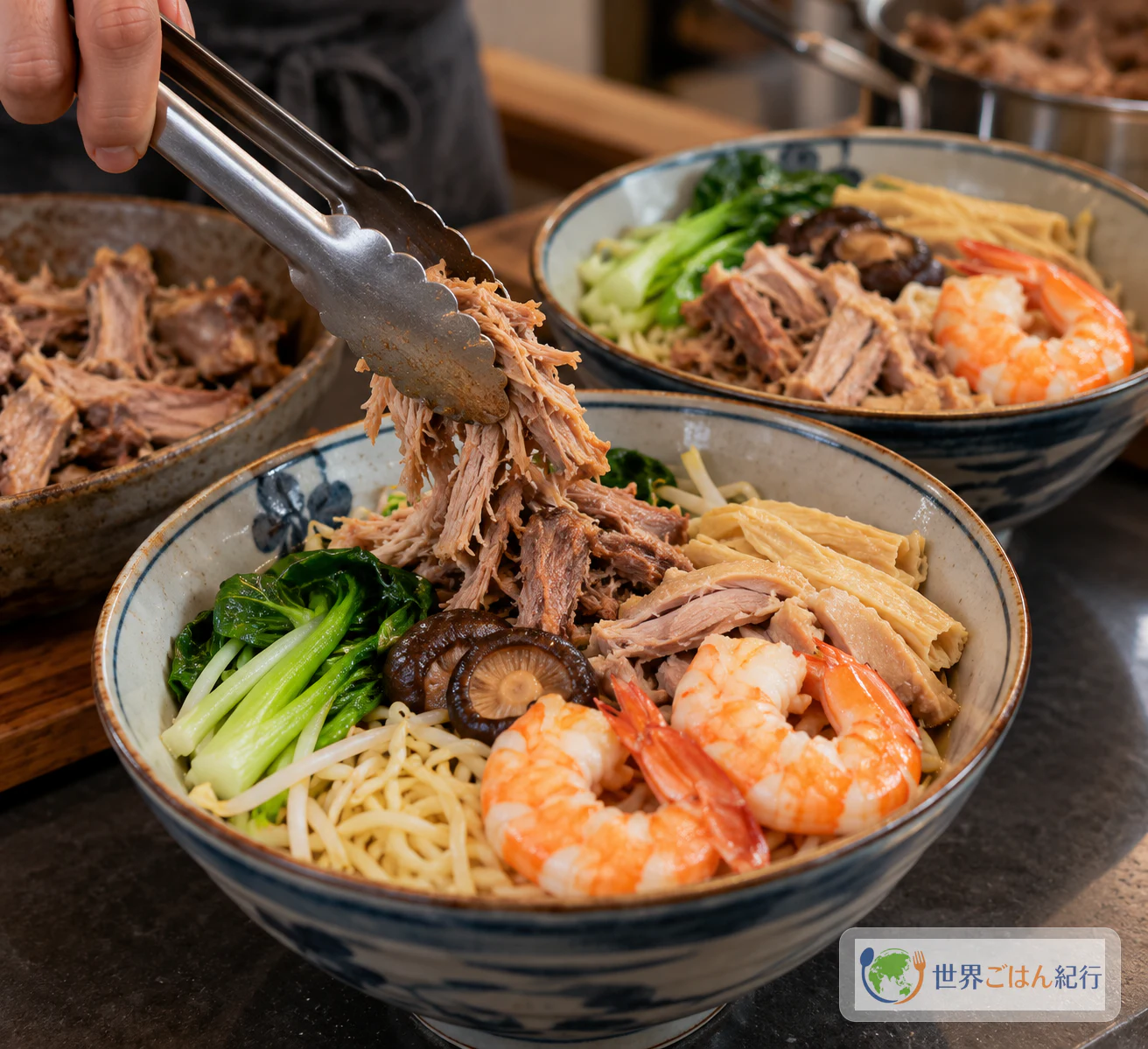
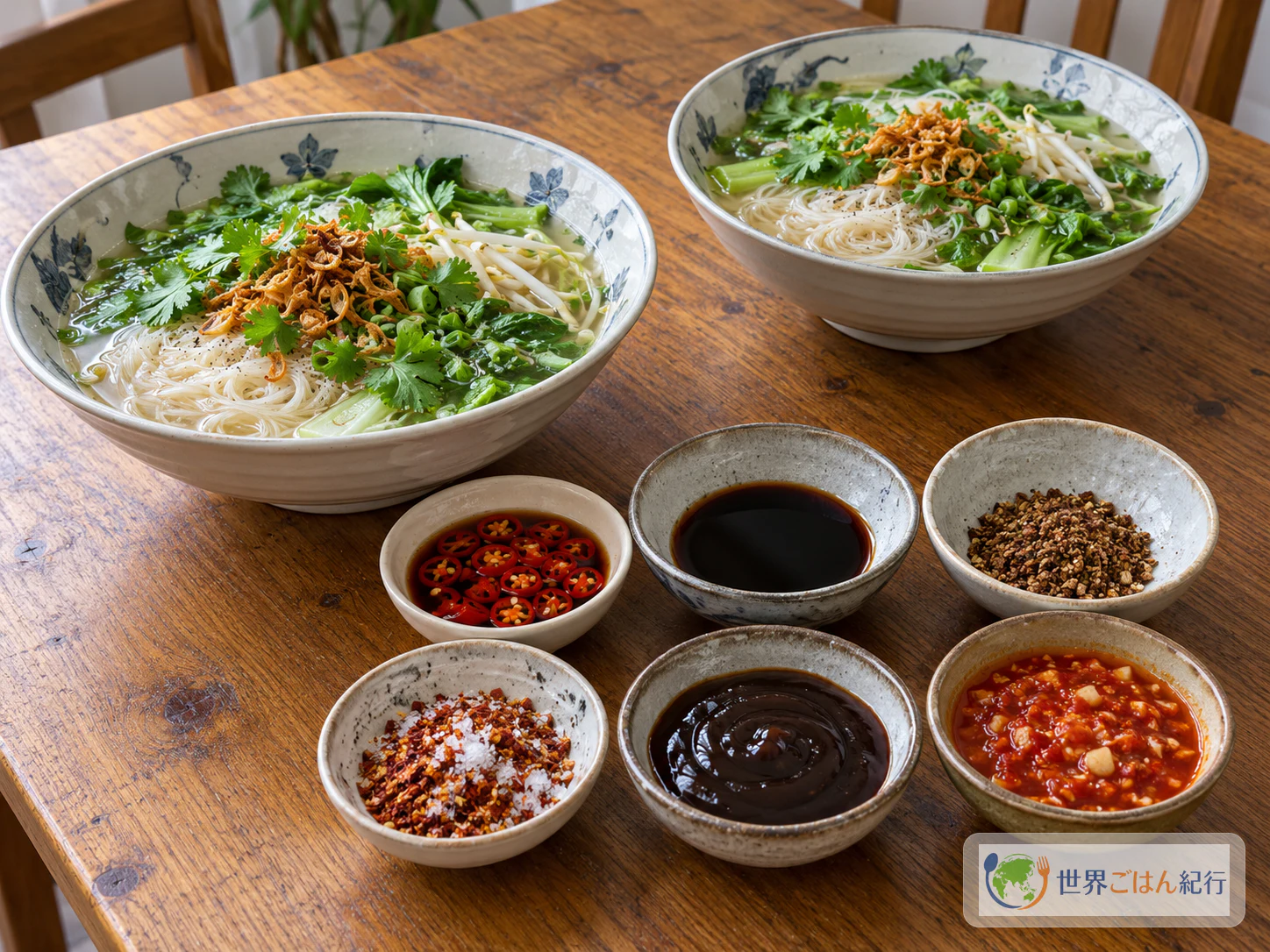
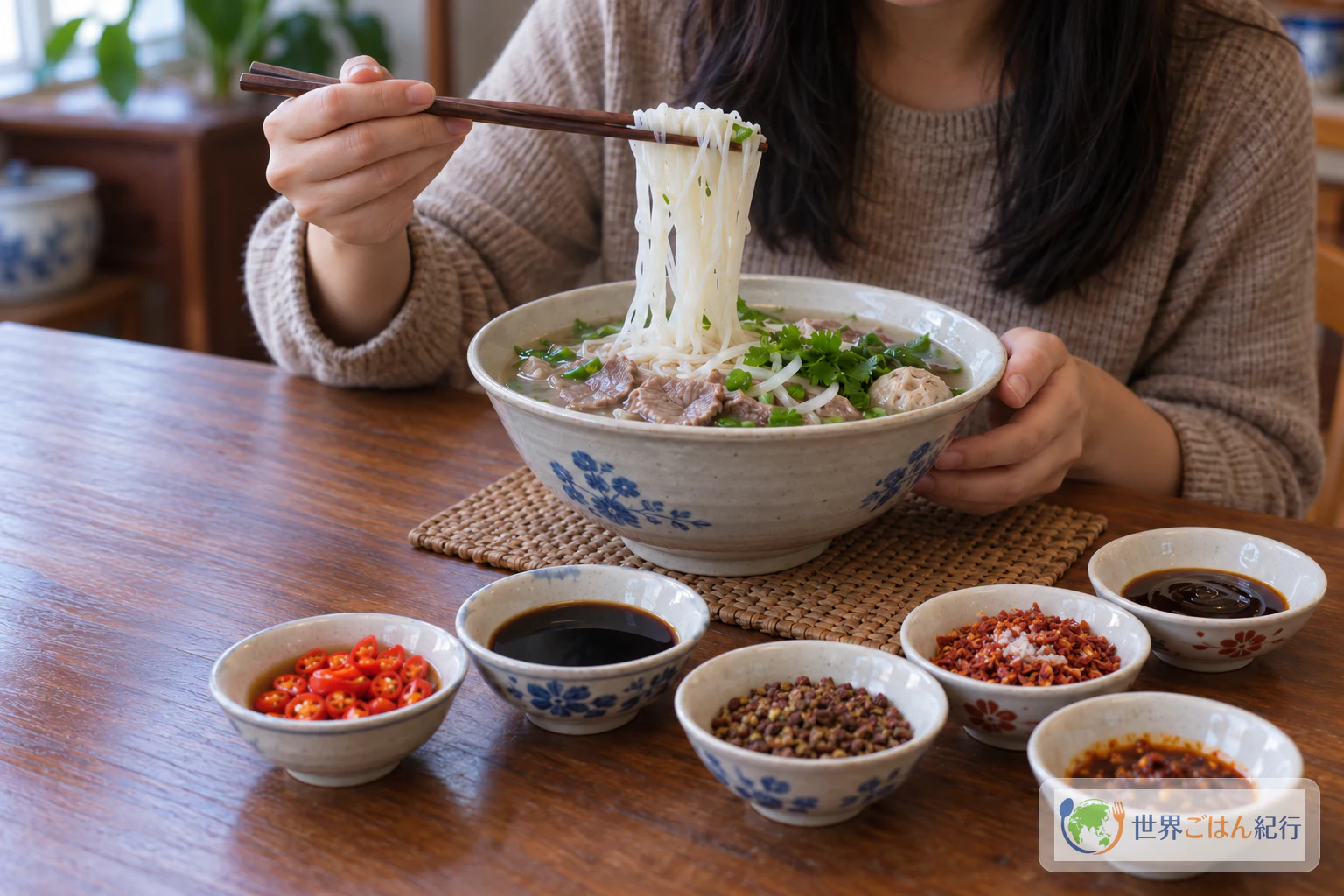
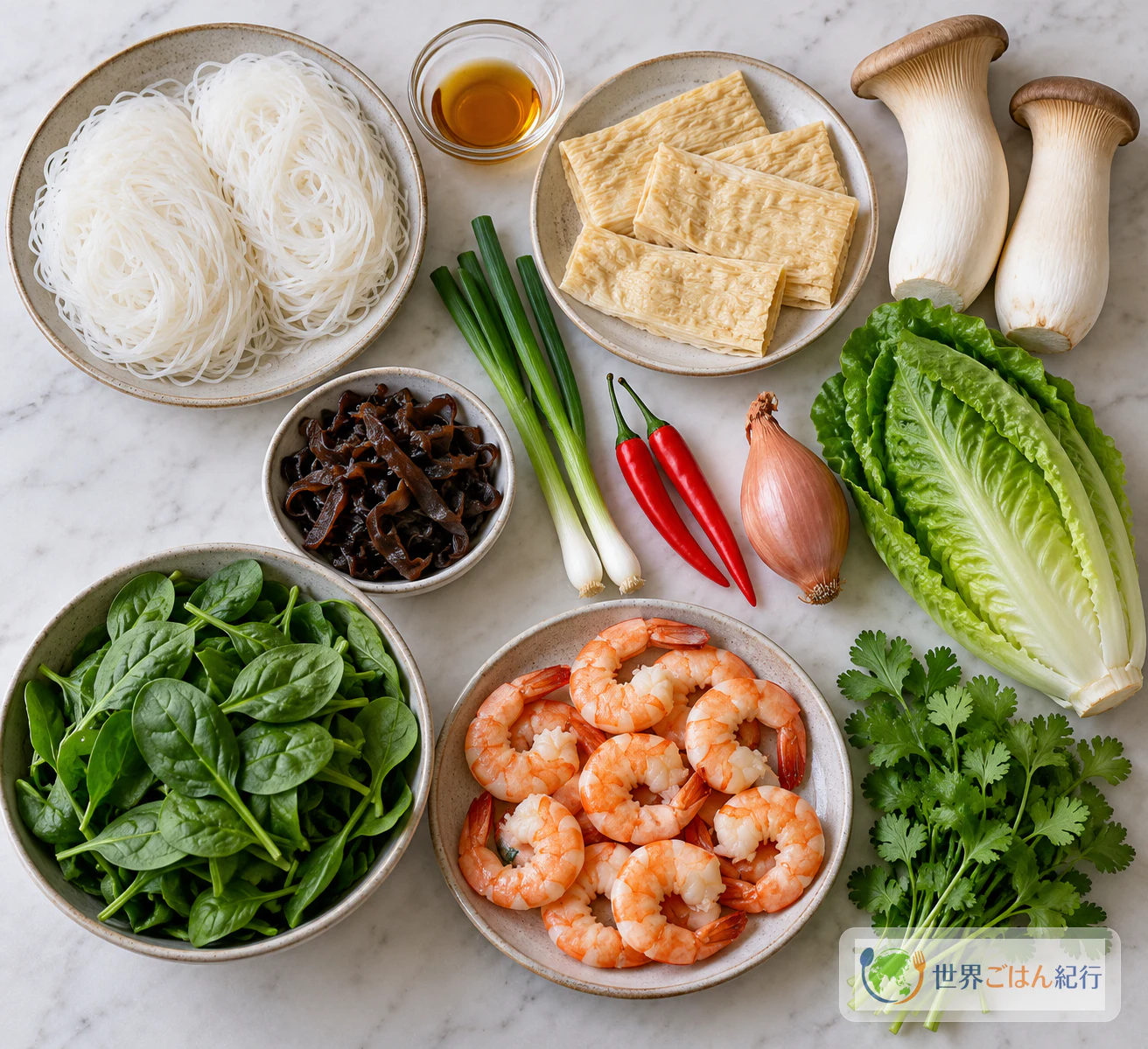
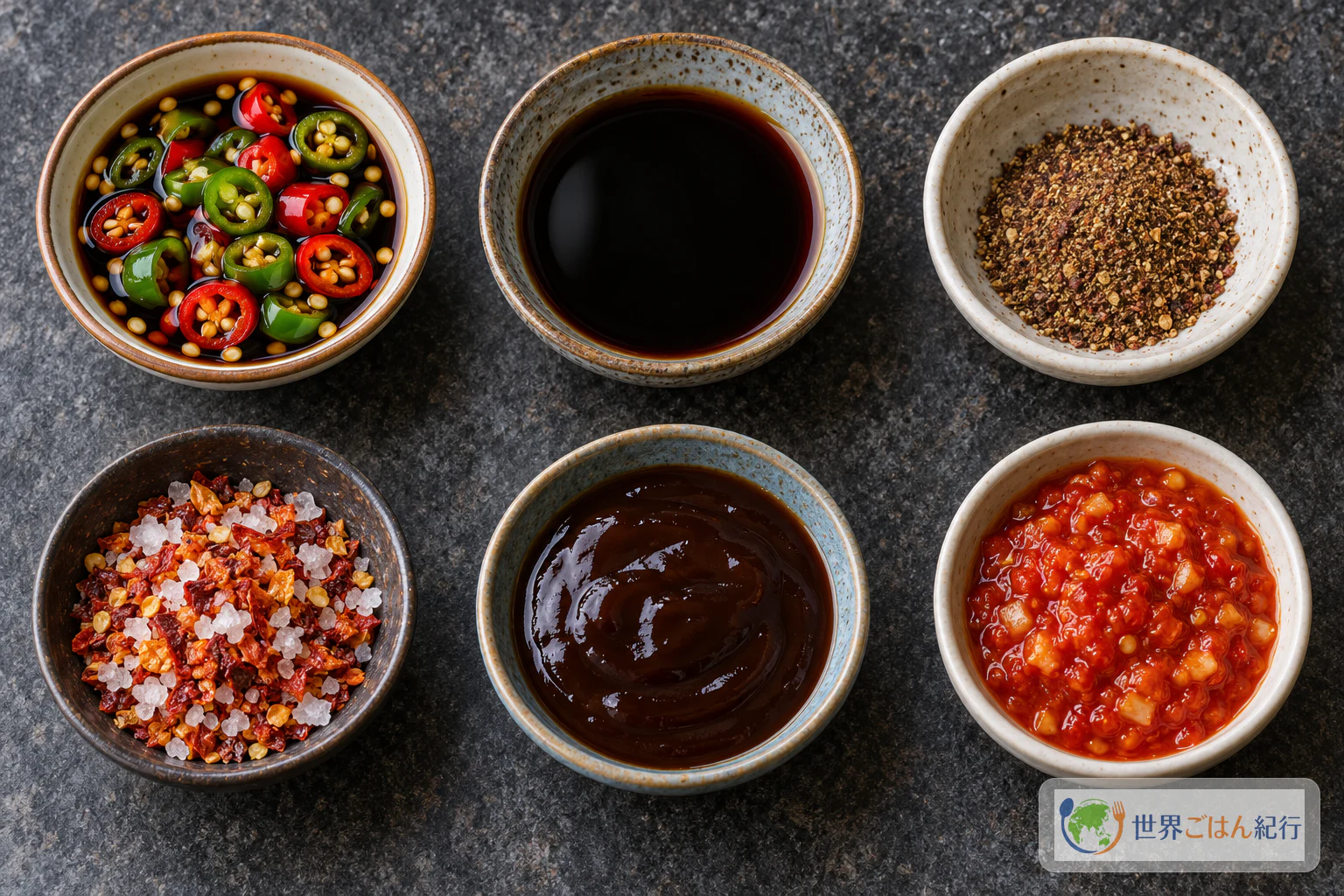
Two wide bowls hold nests of cooked rice vermicelli. Around them sit sliced king oyster mushrooms, dark strips of wood ear, pieces of bean curd skin, Romaine, baby spinach, shallot, spring onion, fine slices of red chilli, coriander, cooked tiger prawns and a pile of pork and chicken pulled apart with two forks. Stock that has just been brought back to a boil is ladled over everything. Six small bowls of condiments wait alongside, so each person can season their own bowl, eat the noodles, and drink the broth at the end.
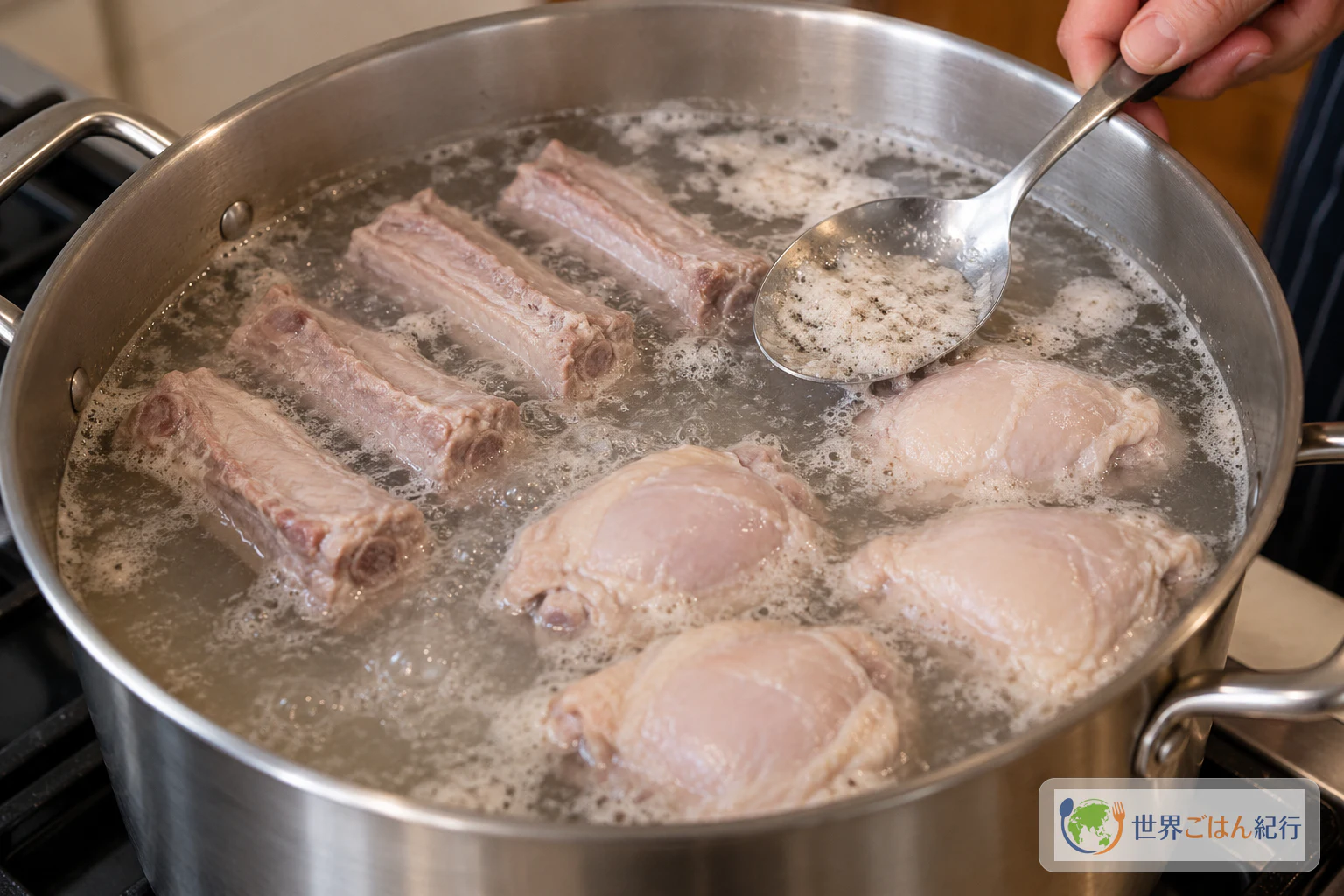
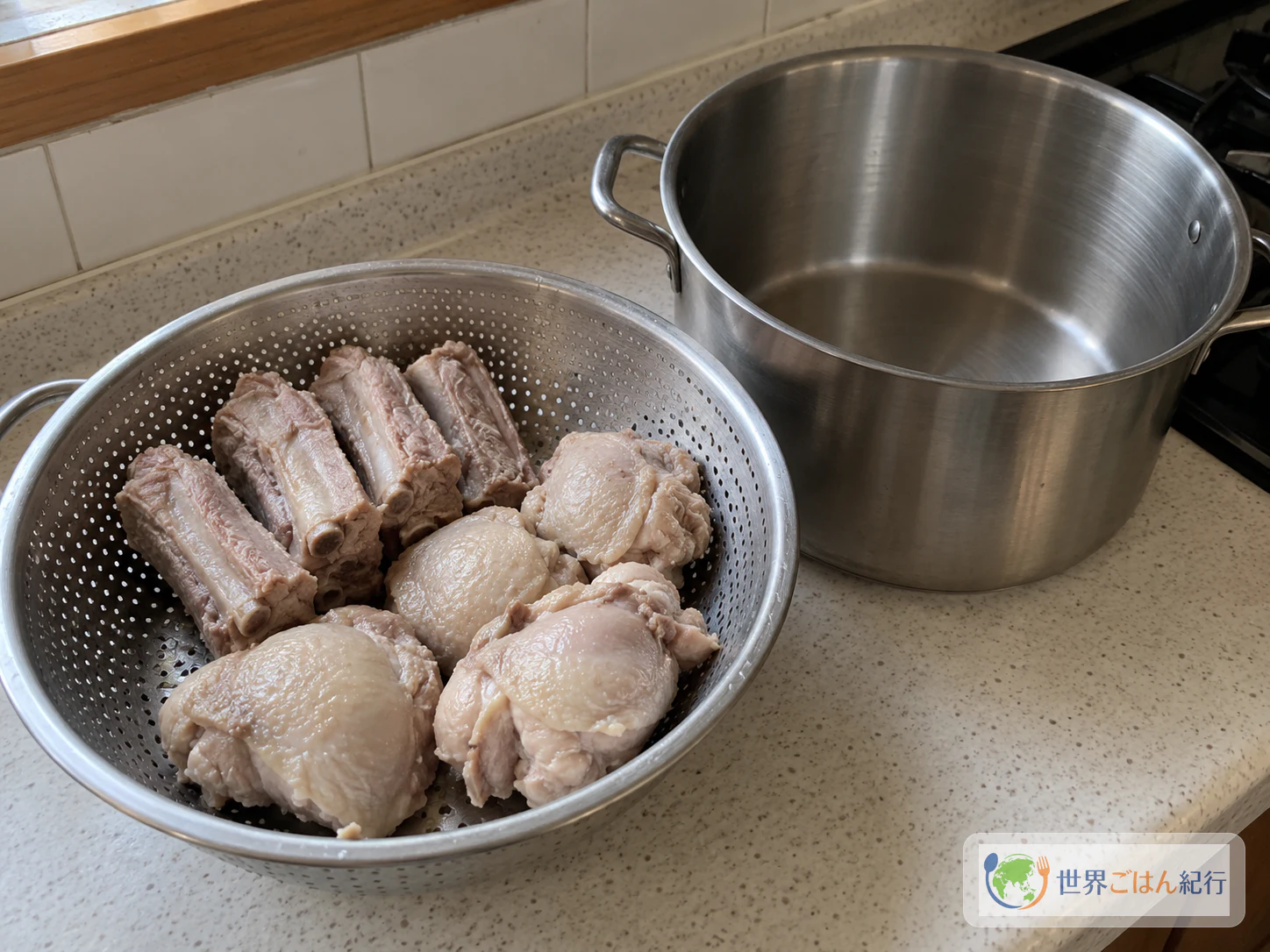
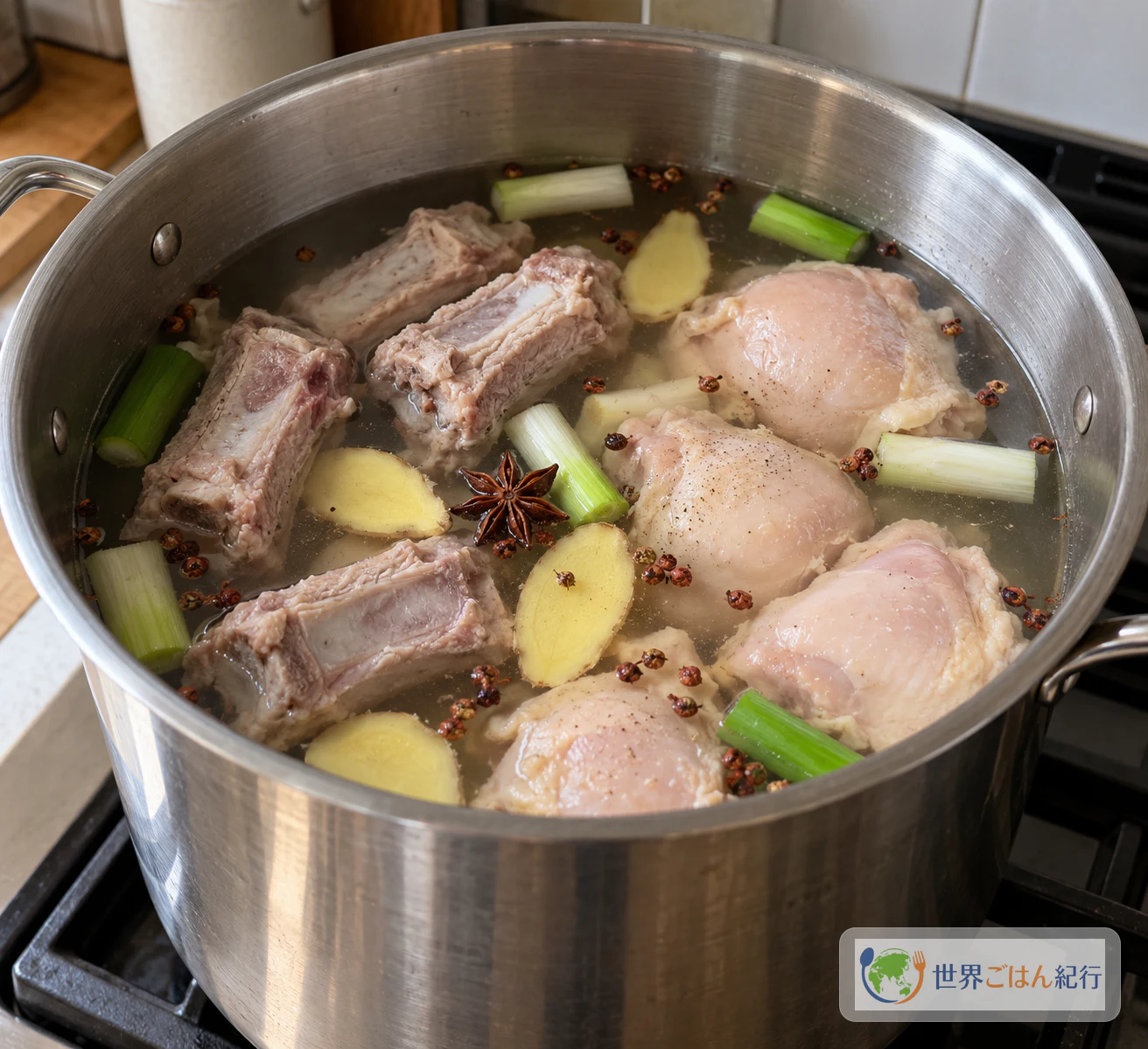
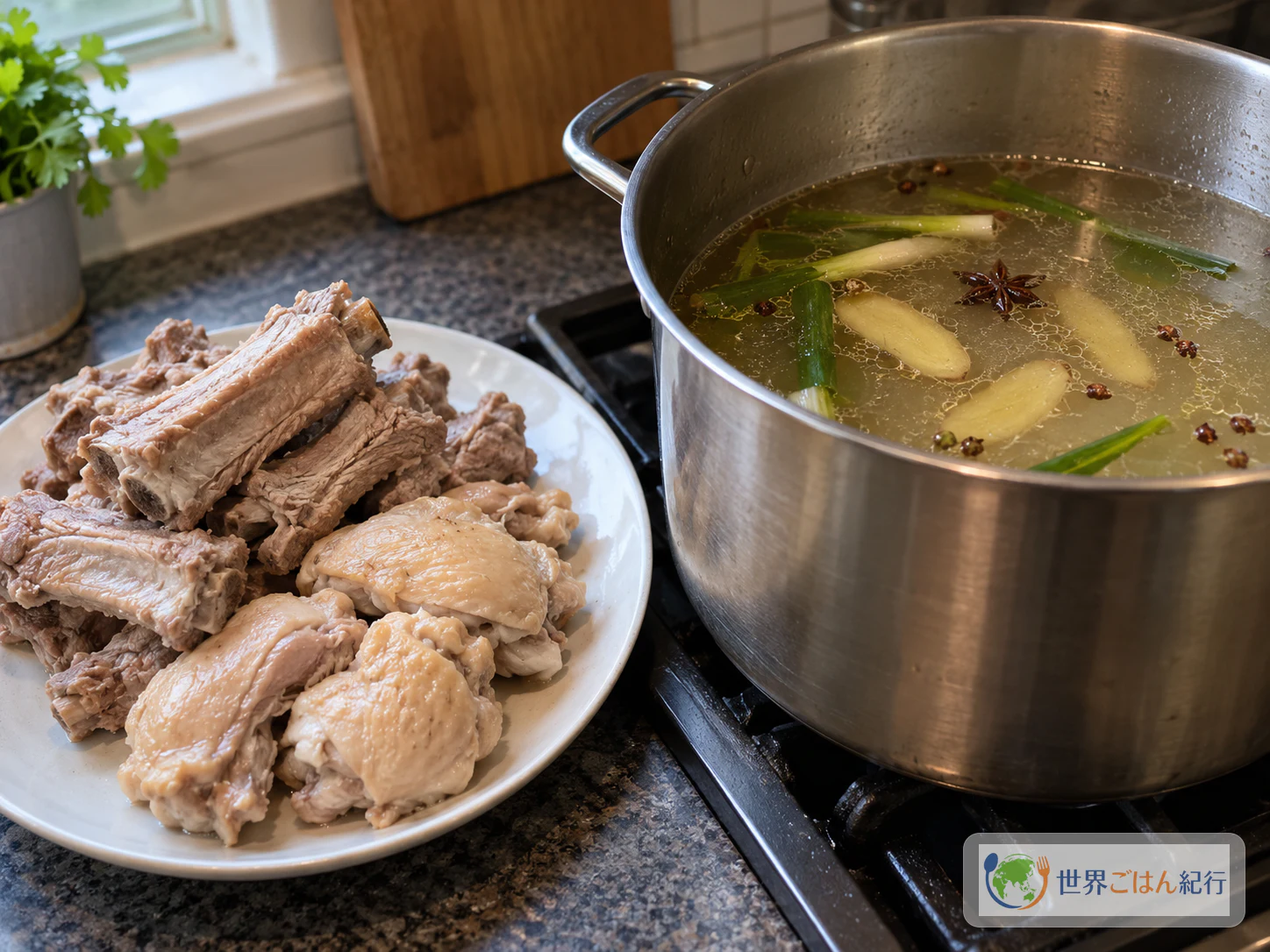
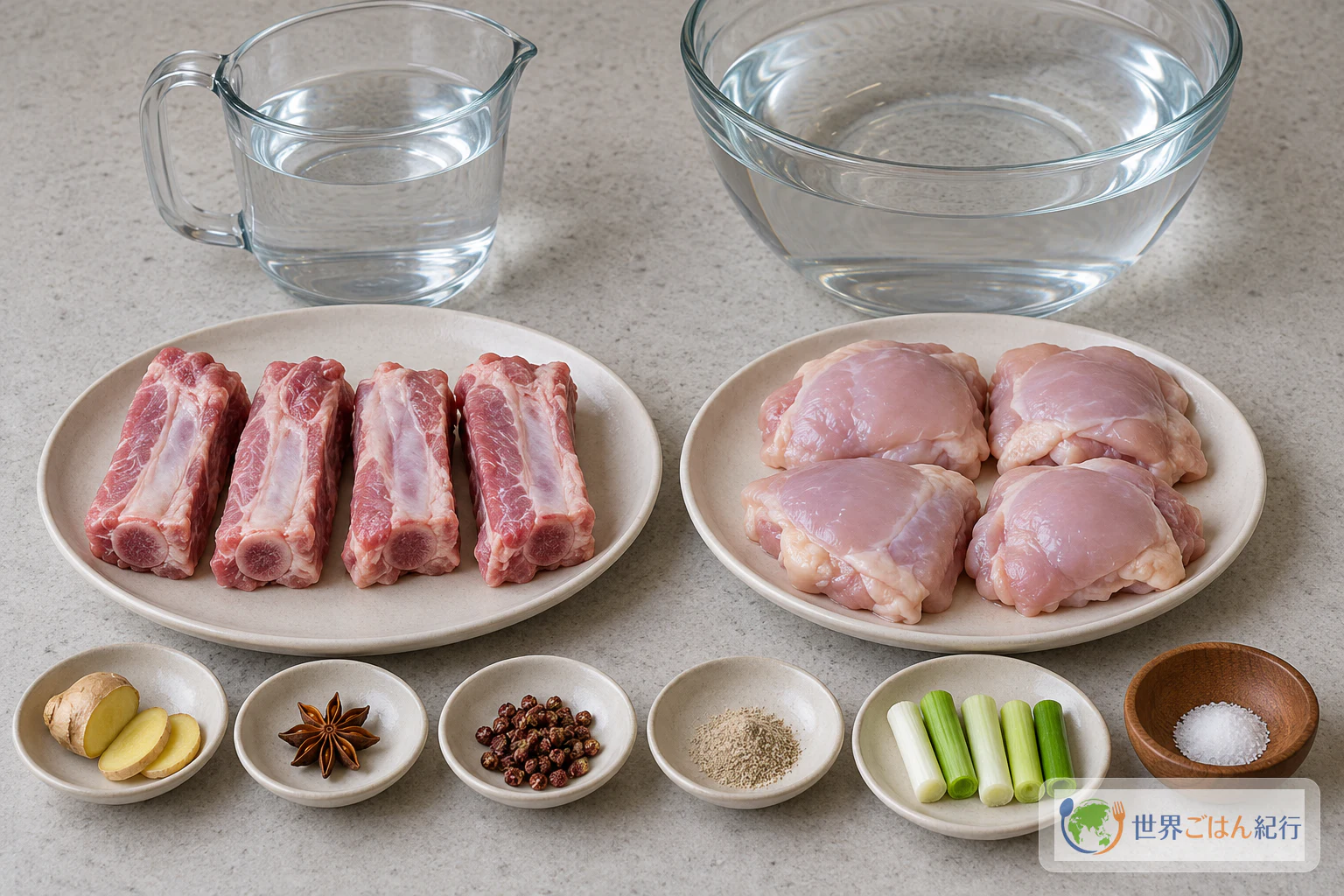
This is crossing the bridge noodles, 過橋米線 (simplified 过桥米线, pinyin guò qiáo mǐxiàn), a rice noodle soup associated with Yunnan in southwest China. Many versions exist. This article follows a single named recipe: Ching-He Huang's version published by BBC Good Food, which serves 2. Its defining feature is a stock built in two water stages. The ribs and skinless chicken thighs are first blanched in 1 litre of boiling water that is thrown away. They then go back into a clean pot with 2 litres of fresh water and aromatics, simmer for an hour, and are shredded before the bowls are assembled.
The BBC Good Food page shows 40 minutes of preparation and 1 hour 20 minutes of cooking, with no total time. Its method names a 15-minute first simmer and a 1-hour covered stock simmer. We have not kitchen-tested this recipe, so the times and results here come from that published recipe, not from our own trial. For more dishes from the same country, see our China page.
Ingredients for 2 Servings: Stock, Bowl Toppings and Six Condiments
Choosing and Buying: Noodles, Bean Curd Skin, Soy Sauce and Vinegar
Rice vermicelli. Start with 2 nests of rice vermicelli that are already cooked. If yours are sold dried, cook them as the package directs before you start assembling. Don't swap in the thick round rice noodles some other versions use.
Bean curd skin. Use 4 pieces. Follow the instructions on the product you buy, and don't assume dried and fresh sheets behave the same way.
Wood ear. Use strips that are already rehydrated. If you start from dried, follow the package.
Low-salt light soy sauce. Keep to light soy sauce in its reduced-salt form. Other soy sauces differ in saltiness and flavour and are not equivalent.
Chinkiang black rice vinegar. This dark Chinese vinegar is a named ingredient here. Ordinary rice vinegar is not a stand-in for it.
Hoisin sauce(海鮮醤)and chilli garlic sauce. Both are bottled sauces; use them as they come.
Tiger prawns. Buy them cooked. The hot stock poured at the end is not a step for cooking raw seafood.
Meat. The amounts are counts, not weights: 4 pork spare ribs and 4 chicken thighs with the skin removed. Don't replace them with raw sliced meat, because the method depends on simmering and shredding.
Equipment
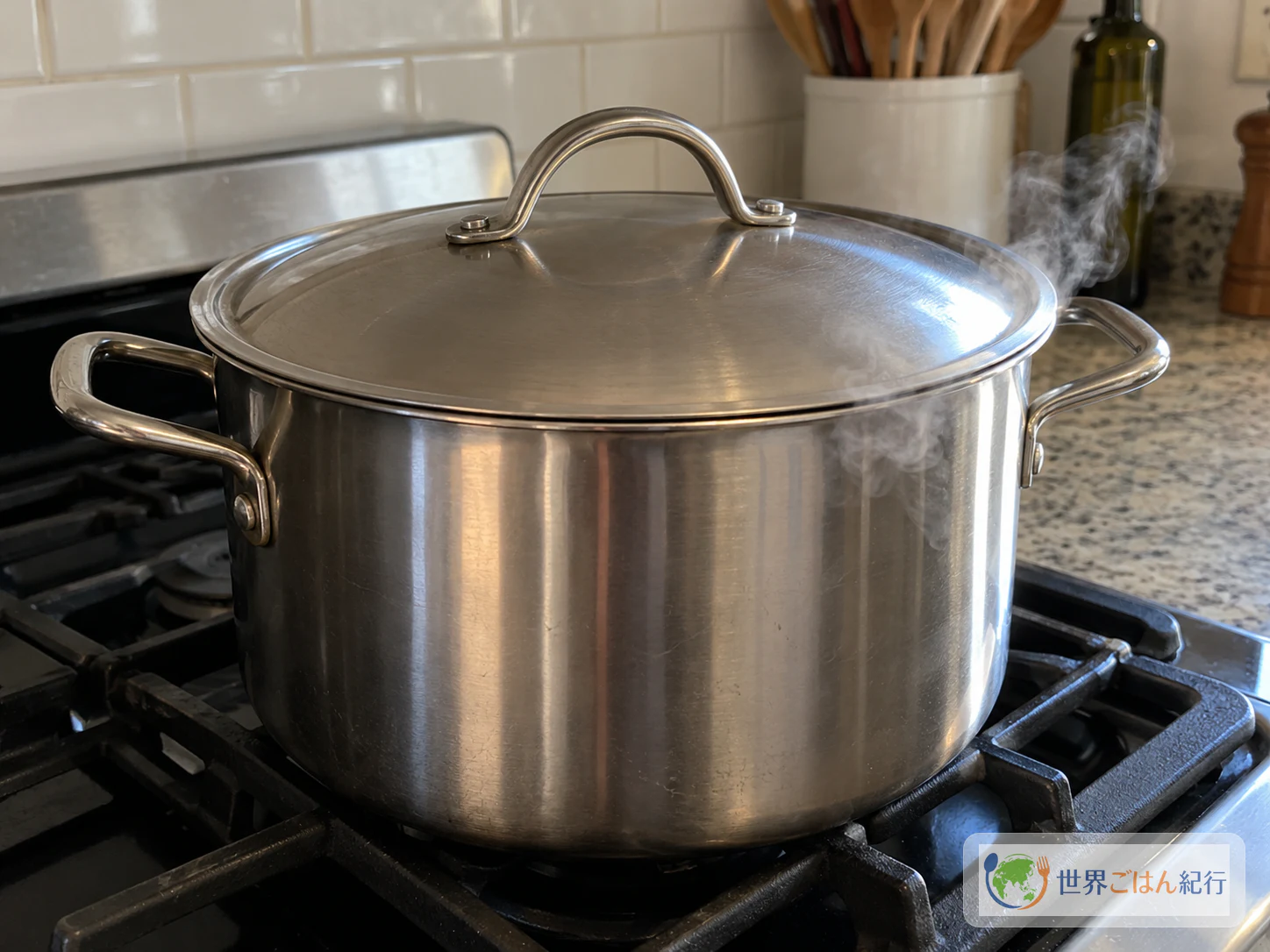
- Large stockpot with a lid
- Colander, for draining the blanched meat
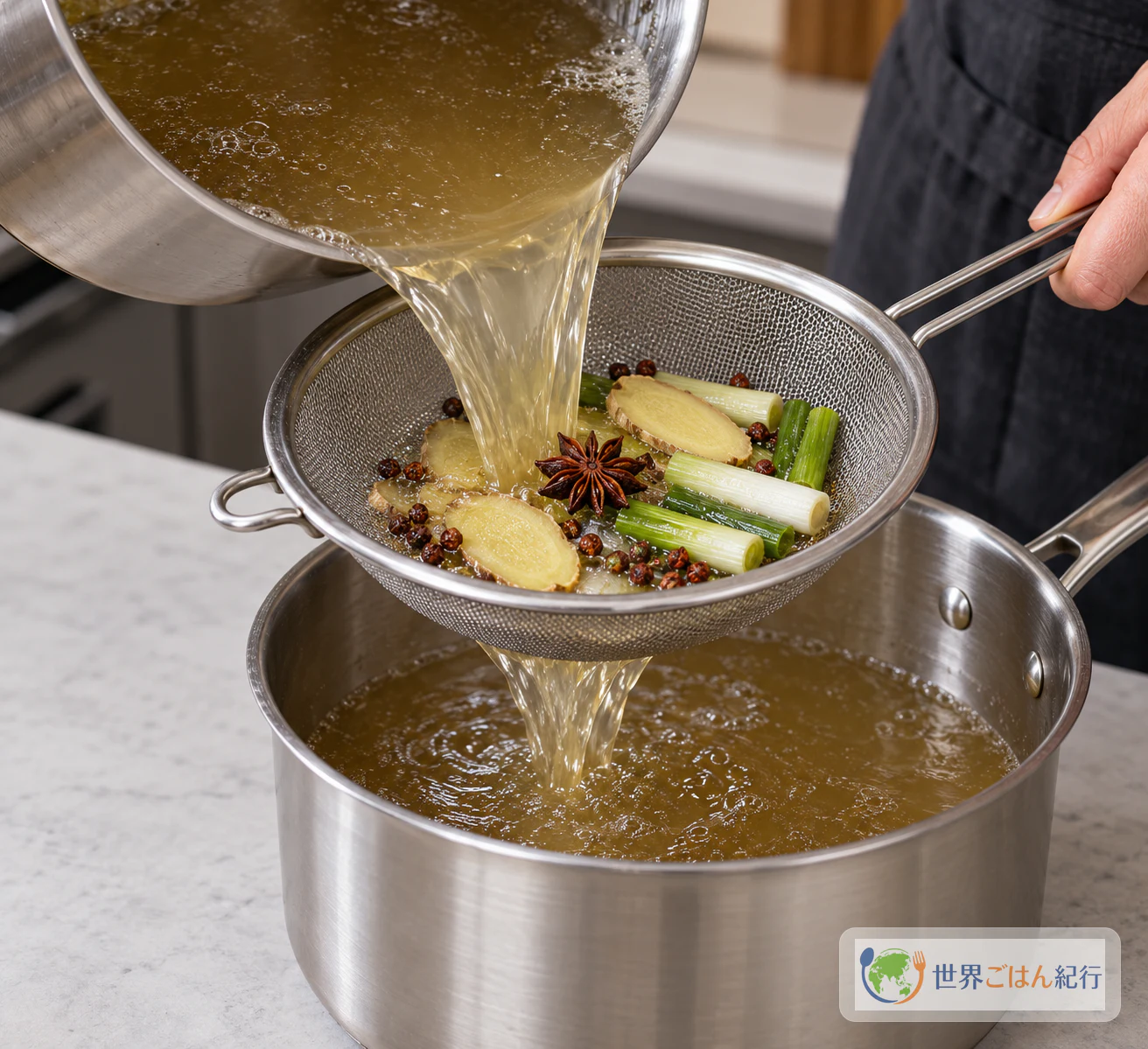
- Sieve, plus a clean pan to strain the stock into and reboil it
- Two forks, for shredding
- Ladle
- 2 large wide bowls
- 6 small dipping bowls
Method: Two Waters, One Clear Stock, Then the Pour
The first 1 litre of water is only for blanching and is thrown away. The stock is made with 2 litres of fresh water in a clean pot. Removing the meat, shredding it, straining the stock and reboiling it are four separate actions.
In this version the meat is simmered for an hour and shredded before it reaches the bowl, and the prawns are bought cooked. Poured stock is not a way to cook raw meat, fish or egg, so don't use the final pour to cook raw proteins.
Easy Mix-ups and How to Keep the Stages Straight
This recipe has many ingredients that look alike at different stages. Most problems come from merging two of them.
| Mix-up | What happens | How to keep it straight |
|---|---|---|
| Using the blanching water as stock | The two-water method collapses into one pot | Discard the 1 litre, clean the pot, and start the stock with 2 fresh litres |
| Topping spring onions go into the stock | The bowls lose their fresh spring onion | Cut the 4 stock onions into 2.5 cm pieces; keep the 2 angled ones aside for the bowls |
| Whole peppercorns end up in the condiment, or ground pepper in the stock | Both stages lose their intended form | Whole peppercorns go in the stock and get strained out; the roasted ground pepper is a condiment only |
| Topping chillies used for the chilli soy | One of the two chilli preparations goes missing | Keep the 2 deseeded topping chillies separate from the 2 tbsp sliced chillies in the soy |
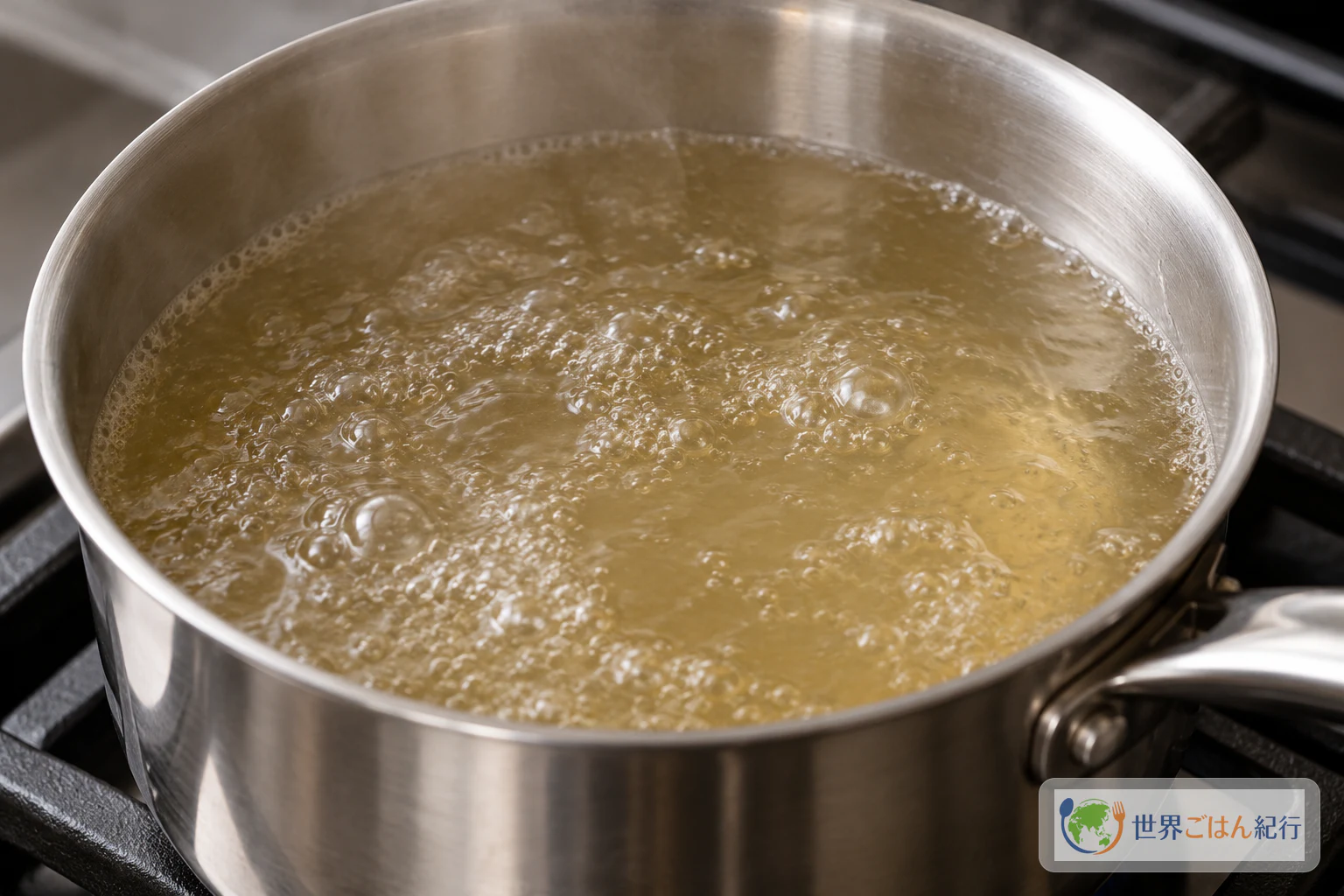
| Pouring the stock before it reboils | The pour is no longer a fresh boil | Strain first, then bring the strained stock back to a boil before ladling |
| Raw prawns or raw meat added to the bowl | The pour is being asked to cook something this recipe never asks it to cook | Use cooked prawns and the simmered, shredded meat only |
| Some condiments dropped | The bowl is served with less than the recipe sets out | Set out all six; each diner chooses what to use |
Other Versions: Table-Side Bowls and Thin-Sliced Toppings
Crossing the bridge noodles appears in quite different forms, and the recipes below are separate dishes from the one above. Their ingredients and timings should not be mixed into it.
| Version | Noodles | Proteins and how they go in | Notes |
|---|---|---|---|
| Ching-He Huang, BBC Good Food (this article) | 2 nests cooked rice vermicelli | Ribs and chicken thighs simmered and shredded first; cooked prawns | Serves 2; six condiments on the side |
| Guo Duomi, GoKunming | Thick round rice noodles, described as traditional for that version; dried rice noodles cooked before assembly | A few small slices of several toppings, added to hot soup at the table | Starts from a large pot of chicken stock; amounts are loose |
| Tony Tan, Gourmet Traveller | Its own noodle preparation | Paper-thin chicken, pork and fish, plus quail eggs, under boiling stock | Serves 4; stock simmered low for 2 to 3 hours |
The GoKunming page says its table-side ingredients cook in the soup within a few minutes, but gives no time, temperature or doneness check. The Gourmet Traveller recipe ladles boiling stock over thin-sliced raw meats and fish without an explicit doneness check. Neither gives a way to confirm those proteins are cooked, which is one more reason this article keeps to the cooked-protein BBC Good Food version.
The Name and the Yunnan Connection
The Chinese name is written 過橋米線 in traditional characters and 过桥米线 in simplified, read guò qiáo mǐxiàn. Mǐxiàn means rice noodles, and the English title is a direct translation. GoKunming, a Kunming-based site, and the Australian magazine Gourmet Traveller both tie the dish to Yunnan. The GoKunming contributor also notes that restaurant portions and prices vary.
Both of those pages repeat a story about how the dish got its name. Recipe pages are not enough to establish that story as history, so we leave it out rather than retell it as fact. What the sources do show clearly is that one name covers several distinct ways of building the bowl.
Frequently Asked Questions
Can I put raw meat or fish in the bowl and let the hot stock cook it?
Not with this recipe. Here the pork and chicken are simmered for an hour and shredded before they reach the bowl, and the prawns are bought cooked. No internal temperature is given, and nothing in the recipe shows that the pour cooks raw proteins. Some other versions do add thin raw slices to boiling stock, but those are different recipes, and the pages that describe them give no doneness check.
Why two separate amounts of water?
The 1 litre is only for the first 15-minute blanch, while you skim the surface. It is then poured away, the meat is drained and the pot is cleaned. The 2 litres of fresh water become the stock that simmers with the aromatics for an hour. Don't reuse the first water.
What noodles should I use, and how long do I cook them?
Use 2 nests of rice vermicelli, already cooked when you start assembling. The recipe gives no dry weight, thickness or cooking time. If yours are sold dried, cook them as the package directs. Thick round rice noodles belong to other versions of the dish.
Is the ground white pepper strained out with the other spices?
The recipe says to strain the stock and discard the spices, spring onions and ginger. It does not say how much of the ground white pepper stays in the stock afterwards, so we can't tell you either way.
Are all six condiments really needed?
They are all part of this recipe, and all six are set out in separate bowls. Each diner seasons their bowl with their favourites. Which ones you use at the table is up to you, but prepare them all.
When should the sesame oil go on?
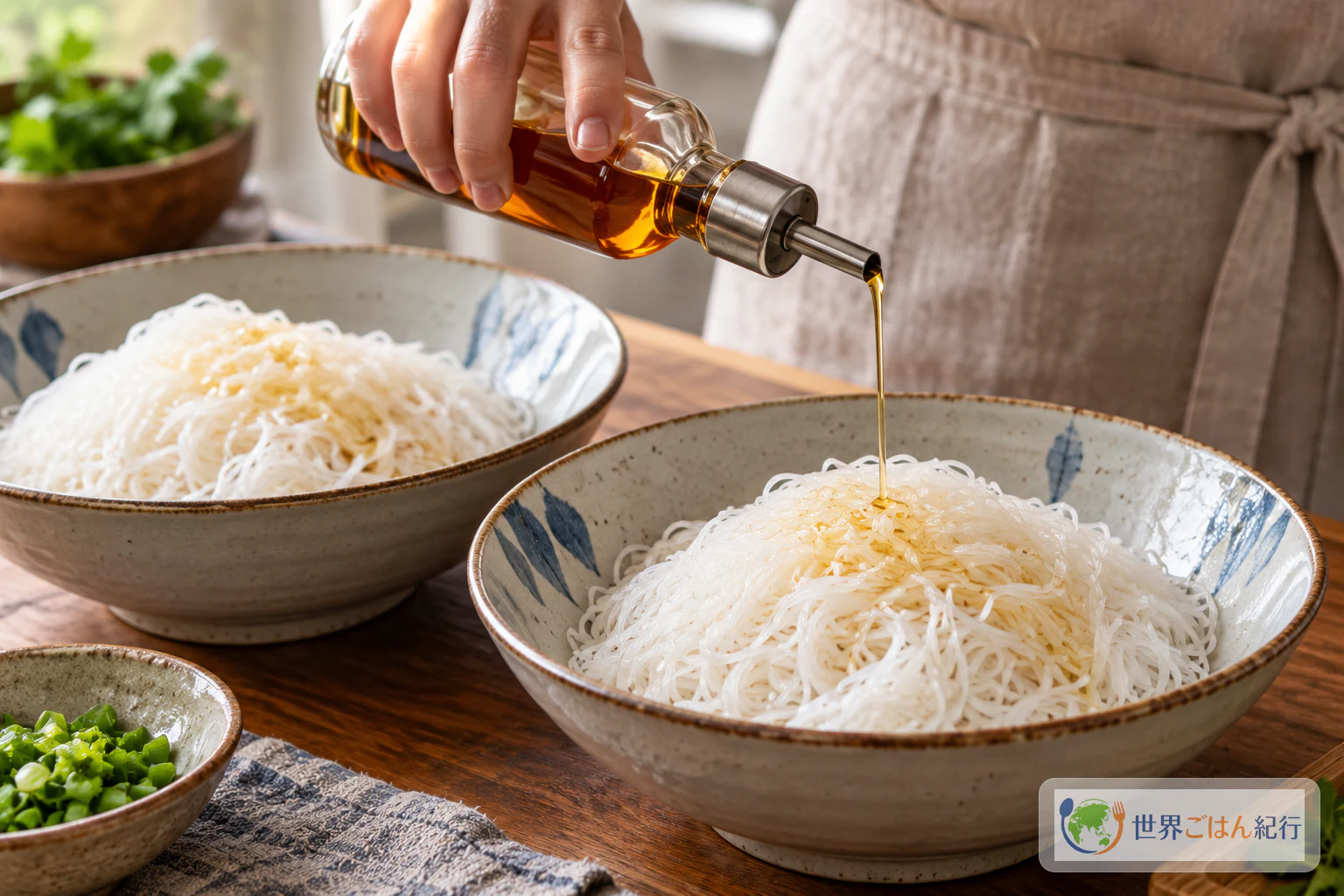
The recipe drizzles toasted sesame oil over the cooked noodles but does not give an amount or say whether that happens before or after the noodles are divided. Either order works with the rest of the method; use a little.
Why does the recipe page list different times from the method?
The BBC Good Food page shows 40 minutes of preparation and 1 hour 20 minutes of cooking. Its method names a 15-minute blanch and a 1-hour covered simmer. The page shows no total, and we have not combined these figures into one.
Sources
- Ching-He Huang, "Crossing the bridge noodles," BBC Good Food. The recipe followed in this article: serves 2; the displayed 40-minute preparation and 1 hour 20 minute cooking estimates; all ingredients and quantities, including the six condiments; the 1 litre blanch for 15 minutes, discarding that water and cleaning the pot, the fresh 2 litre stock, the covered 1-hour simmer, shredding, straining and reboiling; the cooked rice vermicelli, unmeasured toasted sesame oil and cooked tiger prawns; and the serving order of noodles first, broth last. Read on the publisher's tollbit subdomain because the main www address returned an error. https://tollbit.bbcgoodfood.com/recipes/crossing-the-bridge-noodles
- Guo Duomi, "Recipe: Across the bridge noodles," GoKunming, 2009-02-18. Used only for the dish's association with Yunnan, the name Guoqiao mixian (过桥米线), variation in restaurant portions and prices, and a separate table-side version with thick round rice noodles. Not used for any quantity or step in this recipe. https://www.gokunming.com/cn/blog/item/798/recipe-across-the-bridge-noodles
- Tony Tan, "Crossing the bridge noodles (Guo qiao mi xian)," Gourmet Traveller, 2012-09-27. Used only for the dish's association with Yunnan and as a separate serves-4 version with a 2 to 3 hour low-simmered stock and paper-thin chicken, pork and fish under boiling stock. Not used for any quantity or step in this recipe. https://www.gourmettraveller.com.au/recipe/mains/crossing-the-bridge-noodles-guo-qiao-mi-xian-11247/