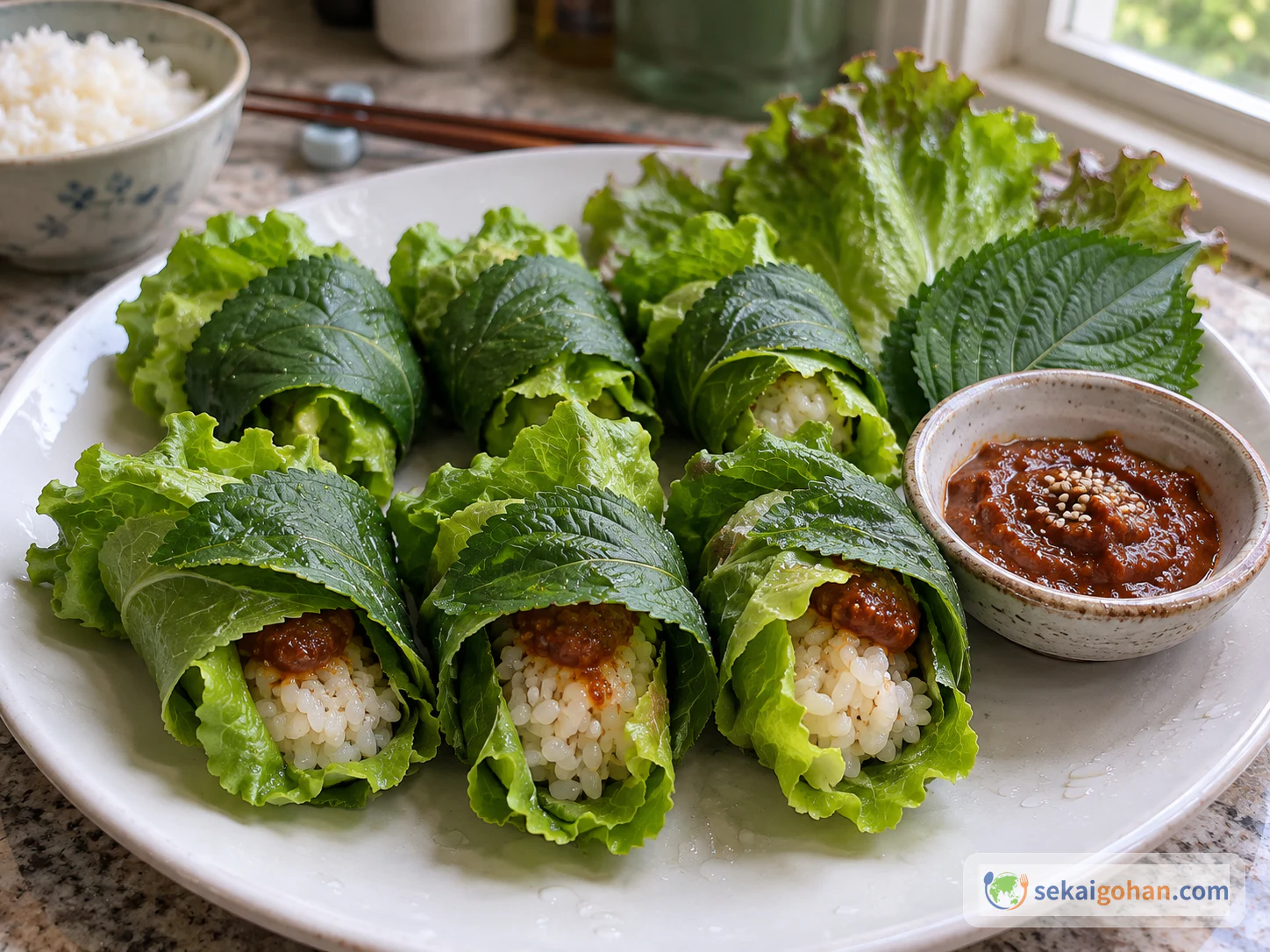
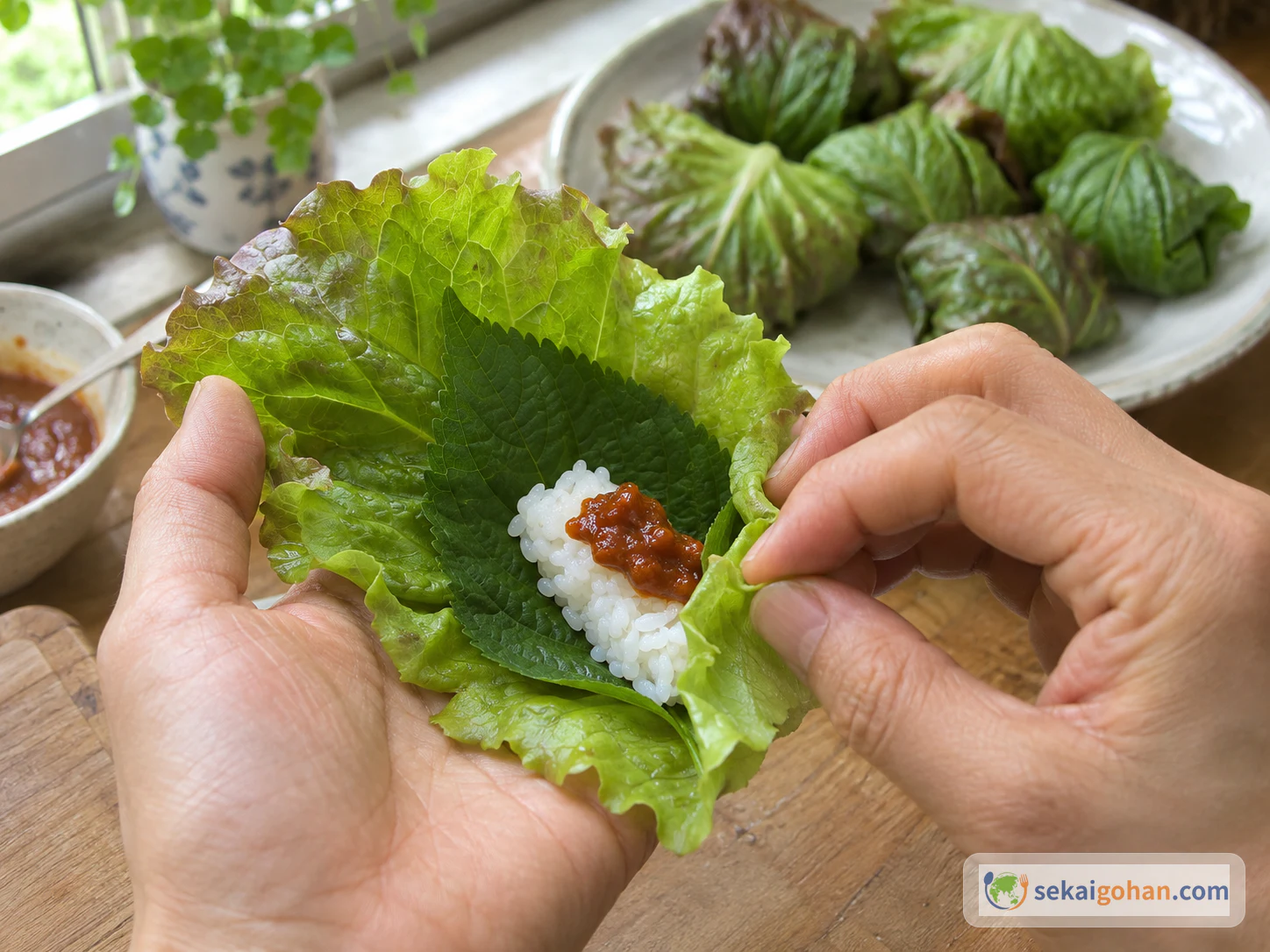
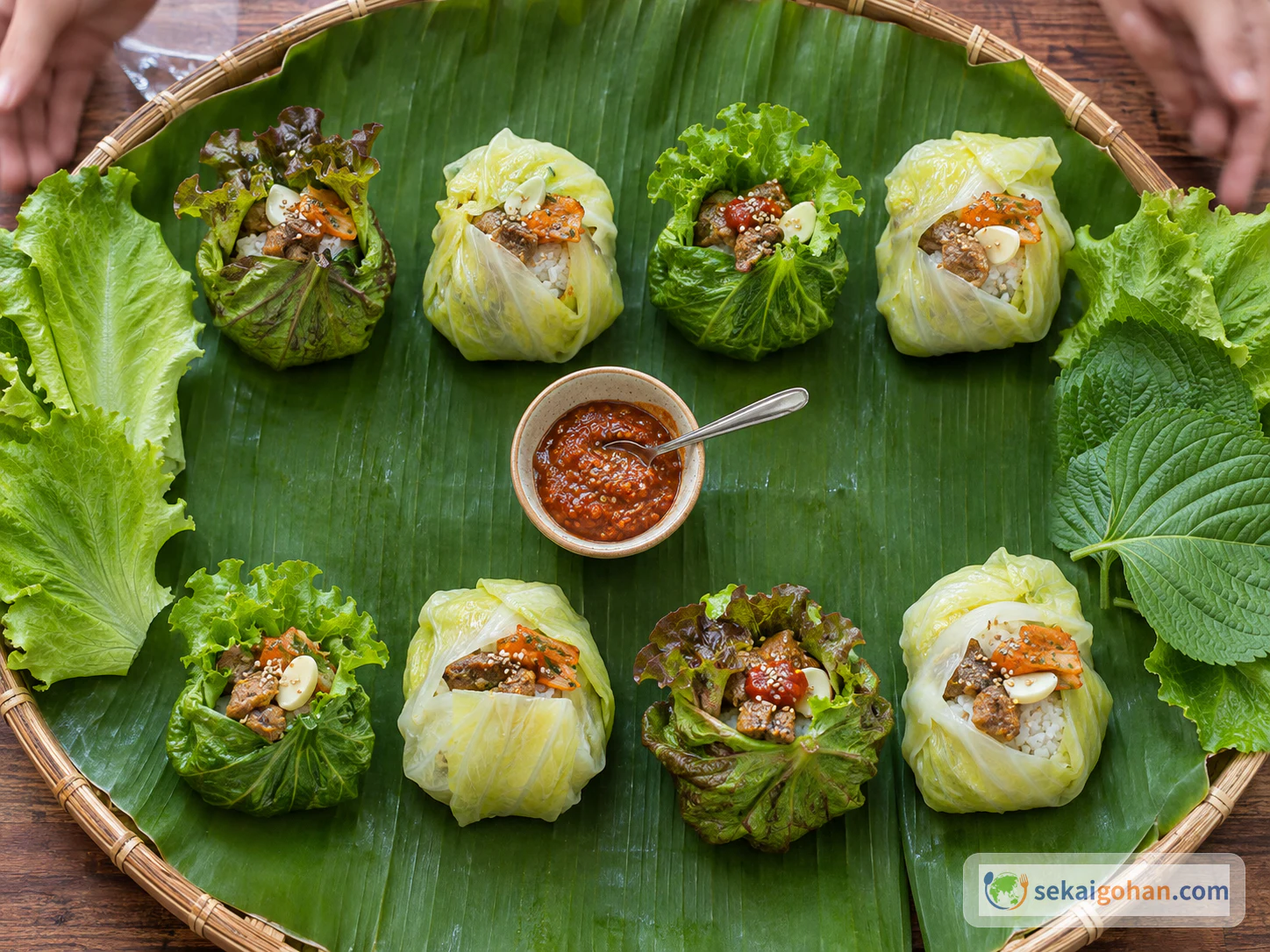
A lettuce leaf lies flat on the palm. A darker, jagged perilla leaf goes on top, then a small log of rice glossy with sesame oil and a dab of thick red-brown ssamjang. Fold, lift, and the whole thing goes into the mouth in one bite: the cool snap of the leaf, the sharp green scent of perilla, salty-sweet heat from the paste and mild seasoned rice underneath. Ssambap (쌈밥) is ssam, a wrap, plus bap, rice. In Korea people eat ssam on ordinary days whether or not there is meat on the grill, and ssambap is the version where rice is the filling, wrapped ahead of time or rolled by hand at the table.
Ssam, Bap and a Leaf Eaten Raw
A word that names a way of eating
Ssam comes from ssada, to wrap, and the one word covers both the act and the food. Most Korean dish names pair an ingredient with a cooking method. Ssam names what your hands do at the table, which is why English-language writing sometimes keeps the Korean word instead of calling it a wrap. Burritos and spring rolls close a filling in a skin made from grain, and dolmades cook the leaf around the filling. Ssam takes a raw leaf, fills it at the table and goes straight into the mouth.
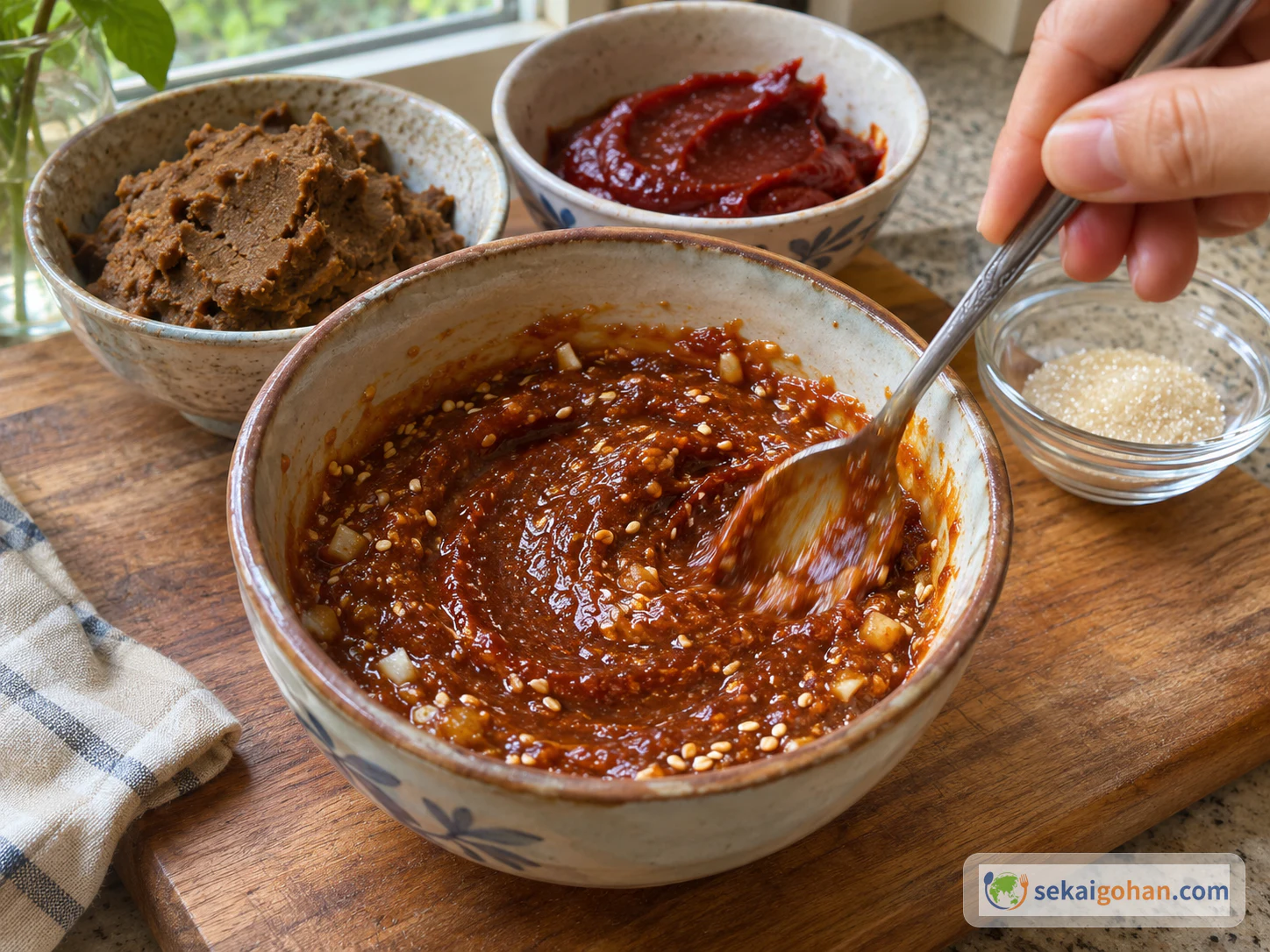
Its neighbours are easy to mix up. Bossam (보쌈) is boiled pork wrapped in leaves, a meat dish, while in ssambap the rice is the point. Bibimbap mixes rice and toppings together in the bowl and is never wrapped. Ssamjang (쌈장) is the sauce that goes into the leaf with either one, a thick blend of doenjang soybean paste and gochujang chili paste. It belongs at the table with many of the dishes of Korea.
Two thousand years of lettuce
Lettuce has been eaten on the Korean peninsula since the Three Kingdoms period, and the habit of wrapping food in leaves is usually traced back about two thousand years. A Qing-era Chinese text, the Tianlu Shiyu (天祿識餘), records that lettuce seed carried from the peninsula by envoys was called the "thousand-gold vegetable". Another story tells of Korean women sent to the Yuan court who made lettuce wraps fashionable there, until the price of lettuce seed rose.
The Joseon period left more traces. The Seungjeongwon Ilgi, the royal secretariat's daily record, notes that under King Sukjong an attendant was punished for a mistake involving the lettuce on the Grand Queen Dowager's table. The farming song cycle Nongga Wollyeongga and Kim Ryeo's Sangwon-rigok both mention bokssam, wraps of lettuce or gomchwi leaves, and Yu Deuk-gong, an official under King Jeongjo, compared a lettuce wrap to flowers and lotus in a poem. Manners came into it too. In the late Joseon period, Yi Deok-mu's conduct book Sasojeol called it unbecoming to eat an oversized lettuce wrap. Winter had its own version: when fresh greens ran out, rice was wrapped in dried namul and gim (laver).
At the palace under Gojong and Sunjong, a lettuce-ssam meal came with its own dishes. There was jeolmi doenjang jochi, a thick doenjang stew of beef and shiitake, along with pomfret gamjeong, stir-fried dried shrimp and yak-gochujang, a seasoned chili paste. Home ssambap has always been simpler than that.
On Daeboreum, the first full moon of the lunar new year, families keep the custom of bokssam-meokgi. Rice is folded into large wraps of napa cabbage leaves and raw gim. Bok means good fortune, and the big wrap is read as a wish to fold luck into the coming year.
From the home table to the restaurant alley
Ssam vegetables boomed in the 1960s, when pig farming for export to Japan spread samgyeopsal, grilled pork belly, across Korea. In 2023 Korea ranked first among OECD countries for fruit and vegetable intake, and ssambap specialty restaurants and ssam platters are now a genre of their own. Shops in Korea also sell ssambap packed for lunch.
The best-known restaurant cluster is the ssambap alley around Daereungwon, the royal tomb park in Gyeongju. There, ssambap jeongsik is a full set meal: fish, meat, a doenjang jjigae made with the house's own doenjang, side dishes and a heap of different ssam leaves, with menus that change from shop to shop, such as gridiron-grilled bulgogi ssambap or beef bulgogi ssambap. A home version is smaller. It needs whatever leaves and banchan are on hand that day, and which leaves count as normal changes by region. The recipe below is that home version: seasoned rice, raw and steamed leaves, and a no-cook ssamjang.
Ingredients (makes 20 rolls)
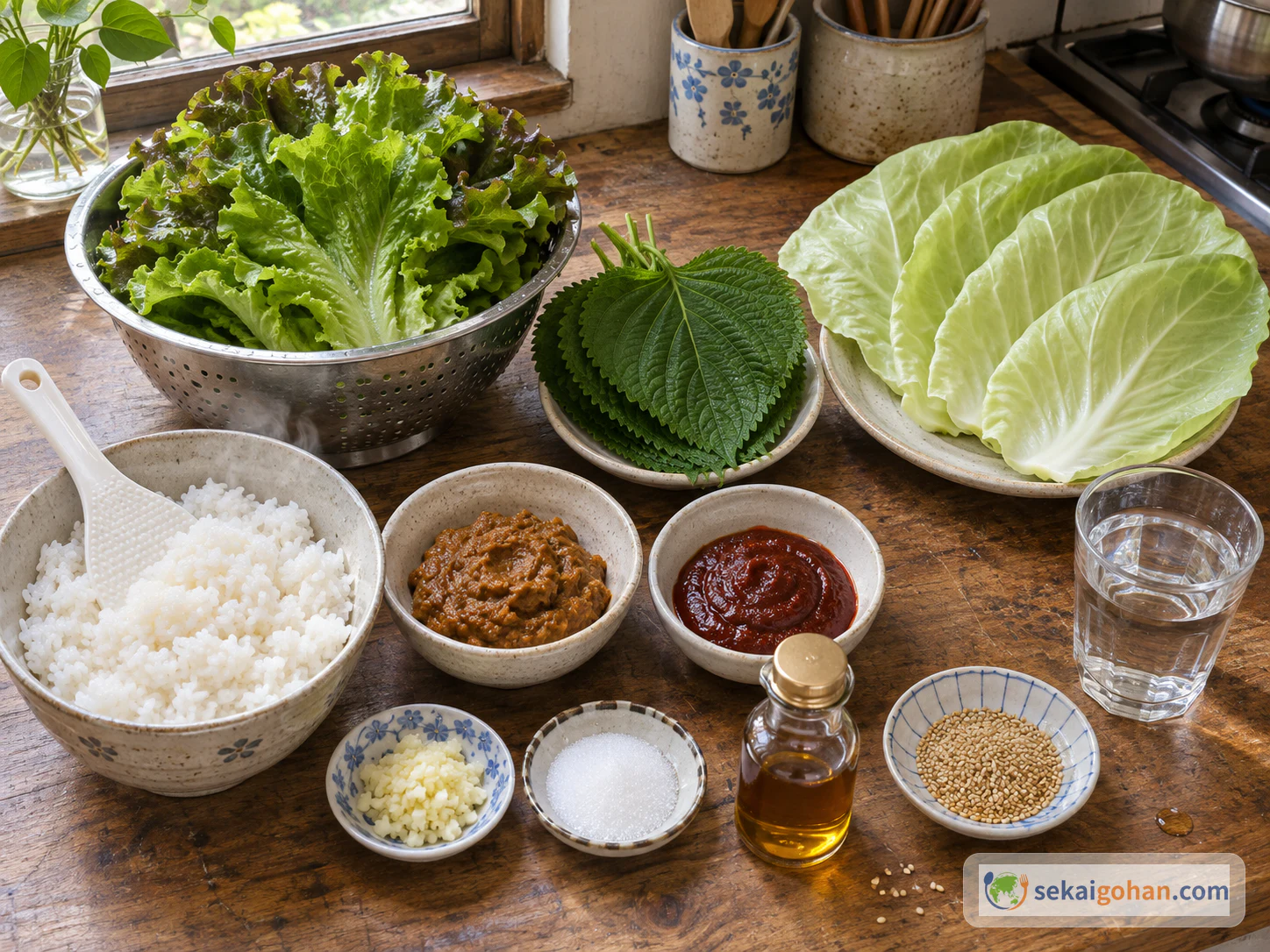
Doenjang and gochujang contain soy. Sesame oil and sesame seeds are sesame. Some gochujang is made with wheat flour or barley, so read the label if anyone at the table avoids wheat or gluten. The optional tuna-mayo filling adds egg (mayonnaise) and fish (tuna). Check the ingredient list on every paste and canned product you buy, including any shared-facility statement.
Gochujang brands differ a lot in heat and sweetness. The first time you make this sauce with a new tub, start with about two-thirds of the gochujang, taste it on a leaf and add the rest only if you want more heat.
Equipment
- Rice cooker or heavy pot
- Steamer (or a pot with a colander set over it)
- Large bowl for washing leaves, and a colander
- Bowl of ice water
- Large bowl and rice paddle for seasoning the rice
- Small bowl and spoon for the ssamjang
- Disposable gloves or plastic wrap
- Wide serving plate
Buying and Swapping: Pastes, Leaves and What They Change
Korean doenjang is the one thing to track down. It is sold at Korean grocers and online, usually on the shelf next to gochujang. Japanese miso can stand in, but its saltiness, sweetness and texture are different, and the sauce turns into a different sauce. The ratio here is two parts doenjang to one part gochujang, which keeps savoriness and heat in balance. Some ssamjang leans harder on doenjang, close to three to one. Either is ssamjang. The sugar can be swapped for honey or Korean oligosaccharide syrup (oligodang), and the water for rice wine.
For leaves, Korean sangchu is the classic. Green leaf or red leaf lettuce handles the same way, while a tight head of lettuce tears when you fold it. Perilla leaves turn up at Korean and Asian grocers. Shiso is a different herb with a different scent: it makes a good wrap, but the taste moves away from Korea. Thin, tender spring cabbage cooks faster than a dense winter head, so you will stop steaming it sooner.
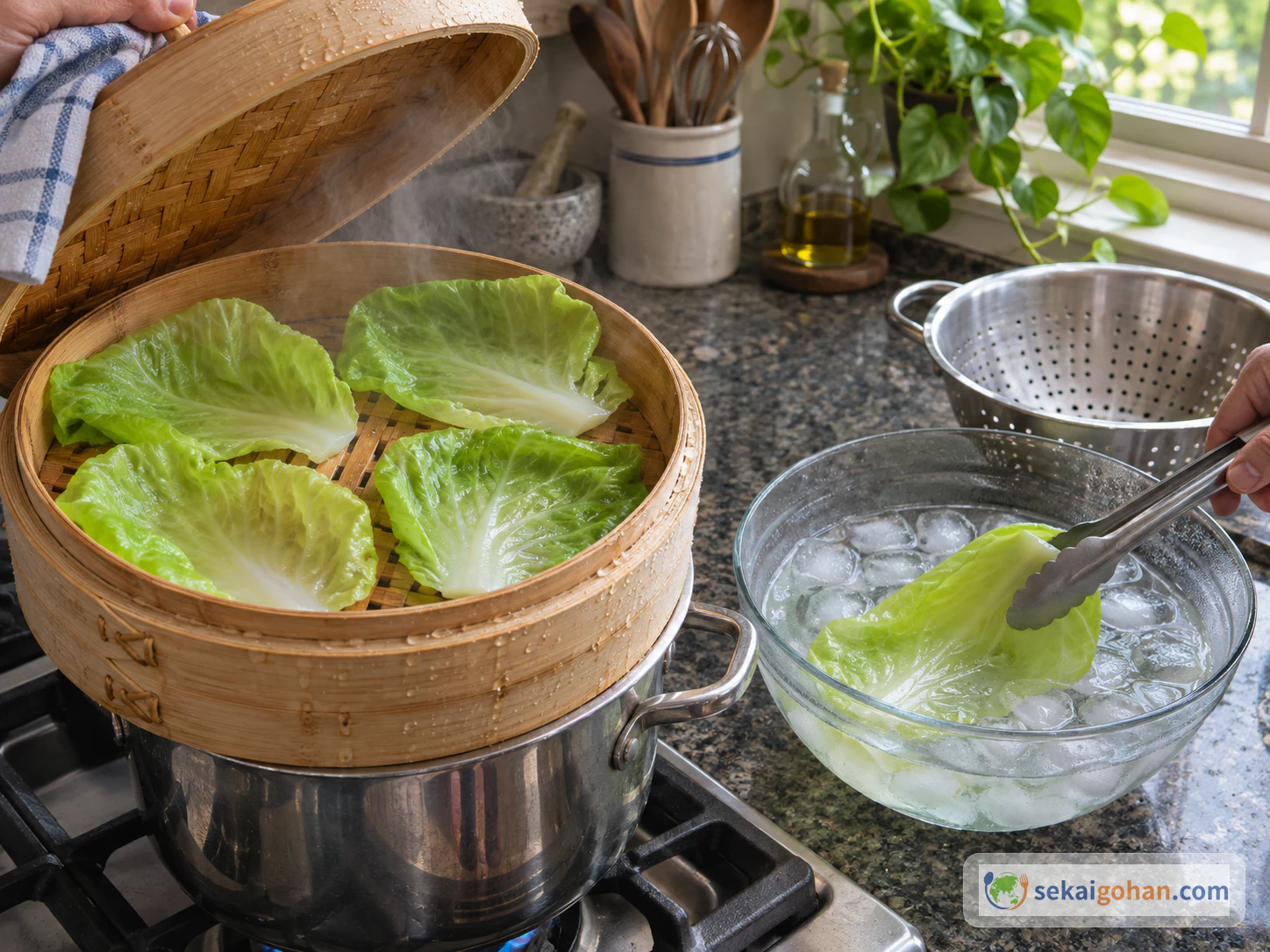
Other leaves widen the platter: kale, bok choy, napa cabbage, squash leaves (hobak-ip) and beet greens. Kale and perilla can be blanched for 2 to 3 seconds when you want them softer, and squash leaves for 3 minutes. Cool any blanched leaf in ice water and drain it well before wrapping.
Method: Rice First, Leaves While It Cooks
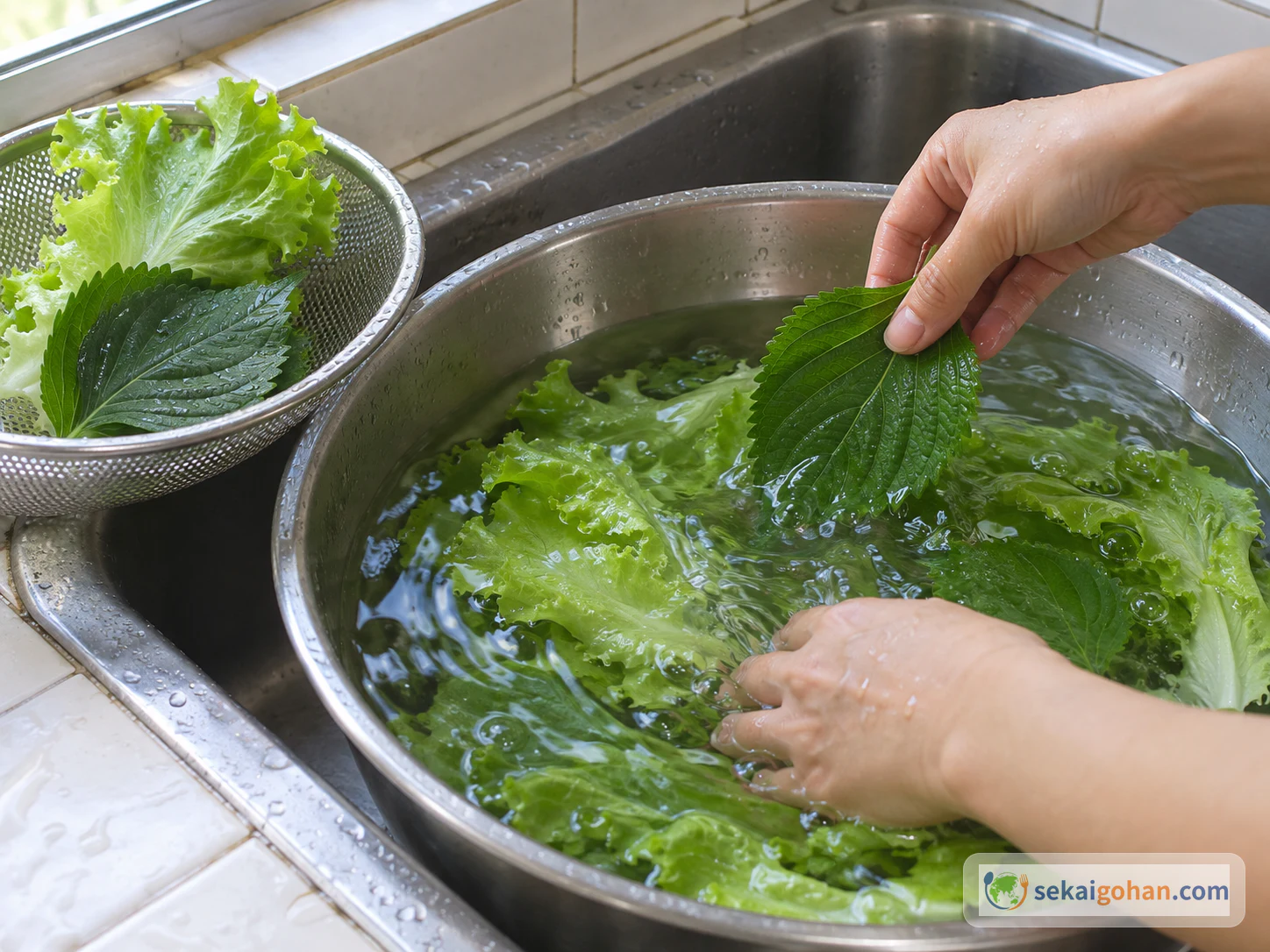
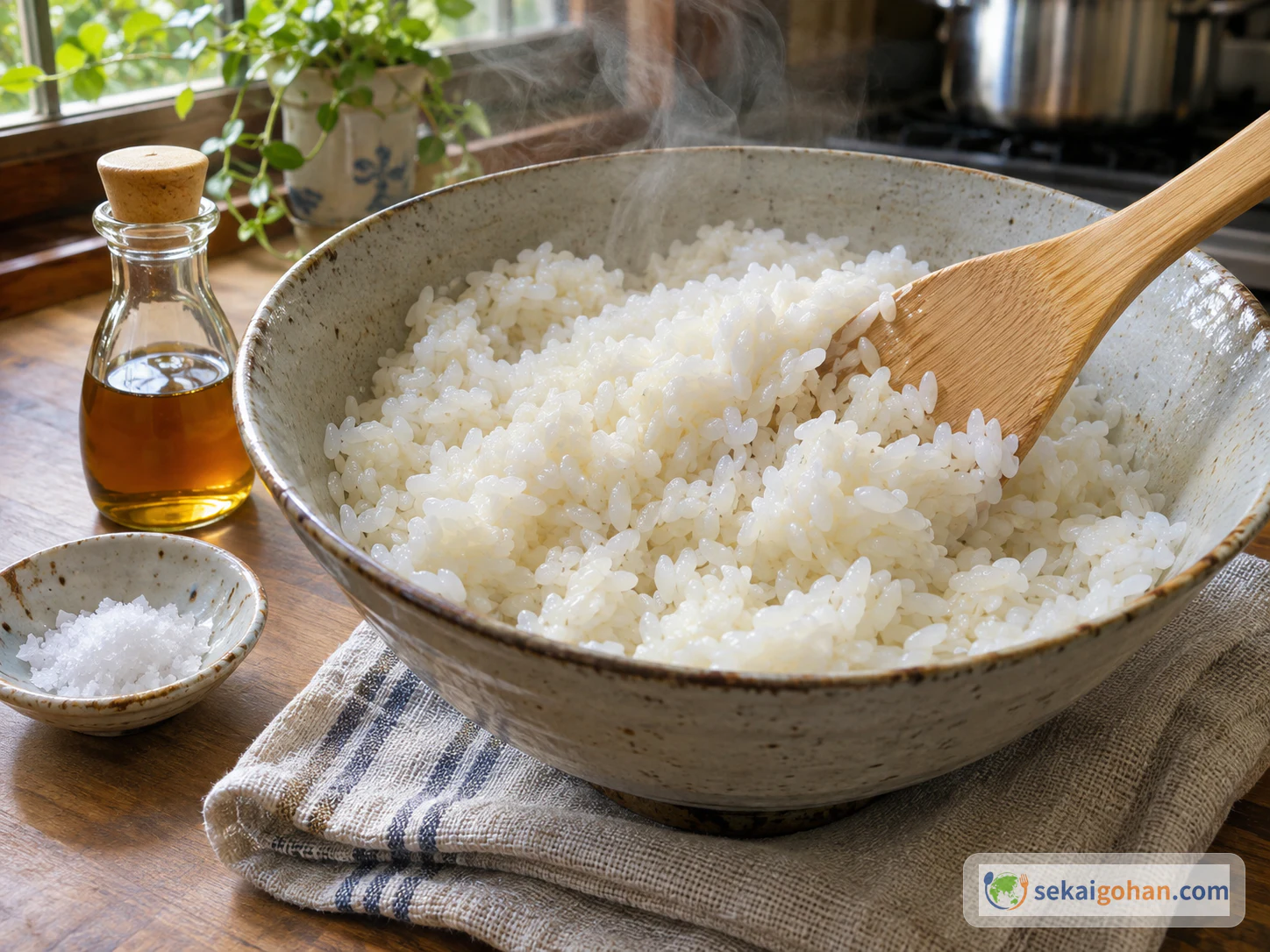
Start the rice before anything else and cook it as your cooker or pot directs. While it cooks, wash the lettuce and perilla and steam the cabbage. Season the rice as soon as it is done. While it cools to hand temperature, which is the only real wait, mix the ssamjang. Shaping and wrapping come last, as close to eating time as you can manage.
When It Goes Wrong
| What you see | Why | What to do |
|---|---|---|
| The leaf tears and rice spills out | Wet leaves, too much filling, or cabbage steamed too long | Drain the leaves well, use a baton instead of a ball, and stop the cabbage when the rib turns translucent |
| The ssamjang is too hot | Too much gochujang, or a hotter brand | Stir in more doenjang; next time start with less gochujang |
| The ssamjang is too sweet | A sweet gochujang plus the full sugar | Cut back the sugar; adding more gochujang only makes it sweeter |
| The ssamjang is too salty | Doenjang is strong | Loosen it with a little water or sesame oil |
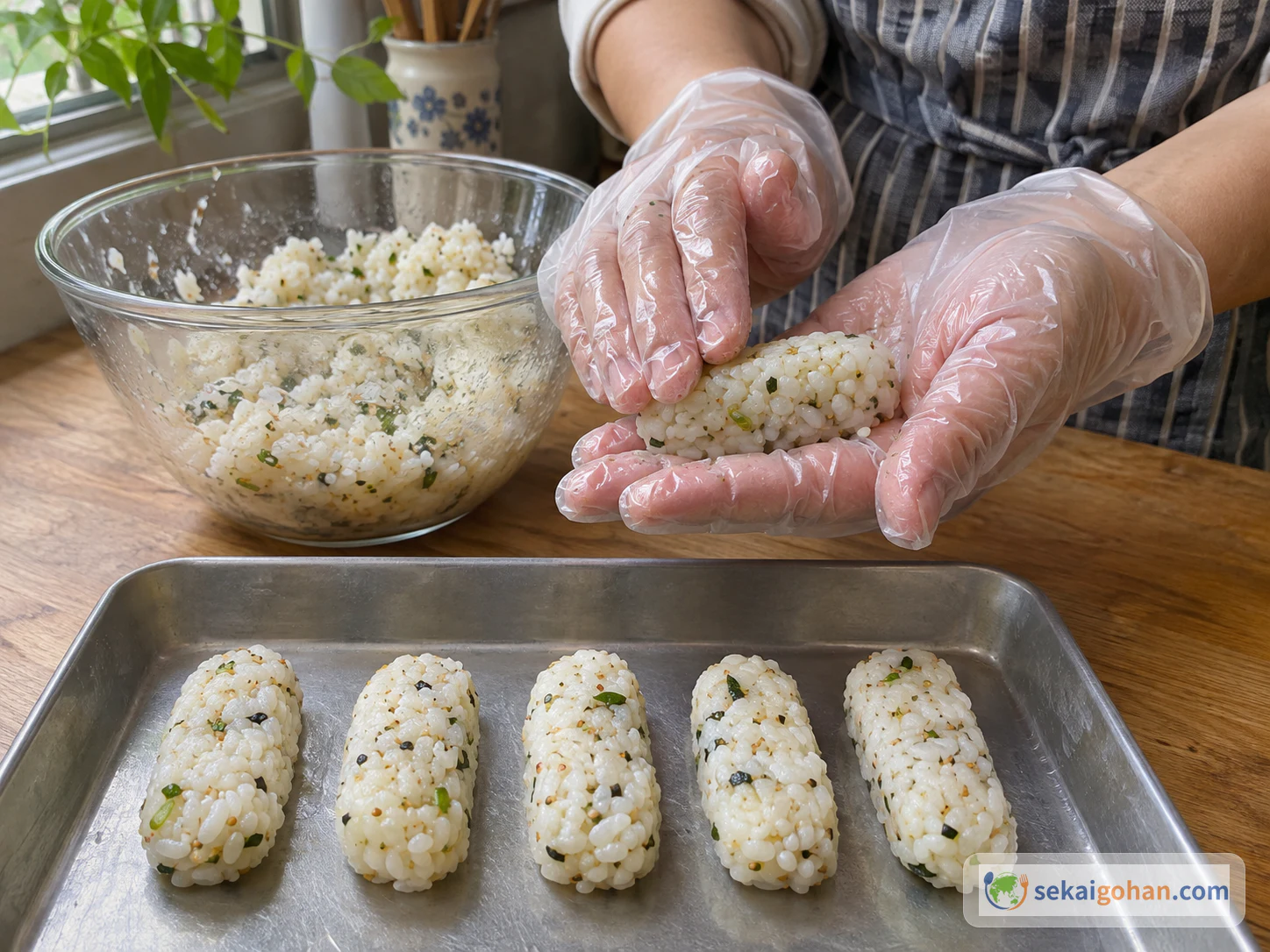
| The rice crumbles when shaped | It was seasoned after cooling | Season straight from the pot and shape once it reaches hand temperature |
| The wraps smell grassy or stale | Leaves not washed thoroughly, or tired perilla | Wash as in step 1 and discard any leaves with dark spots |
Serving, Variations and Storage
At the table
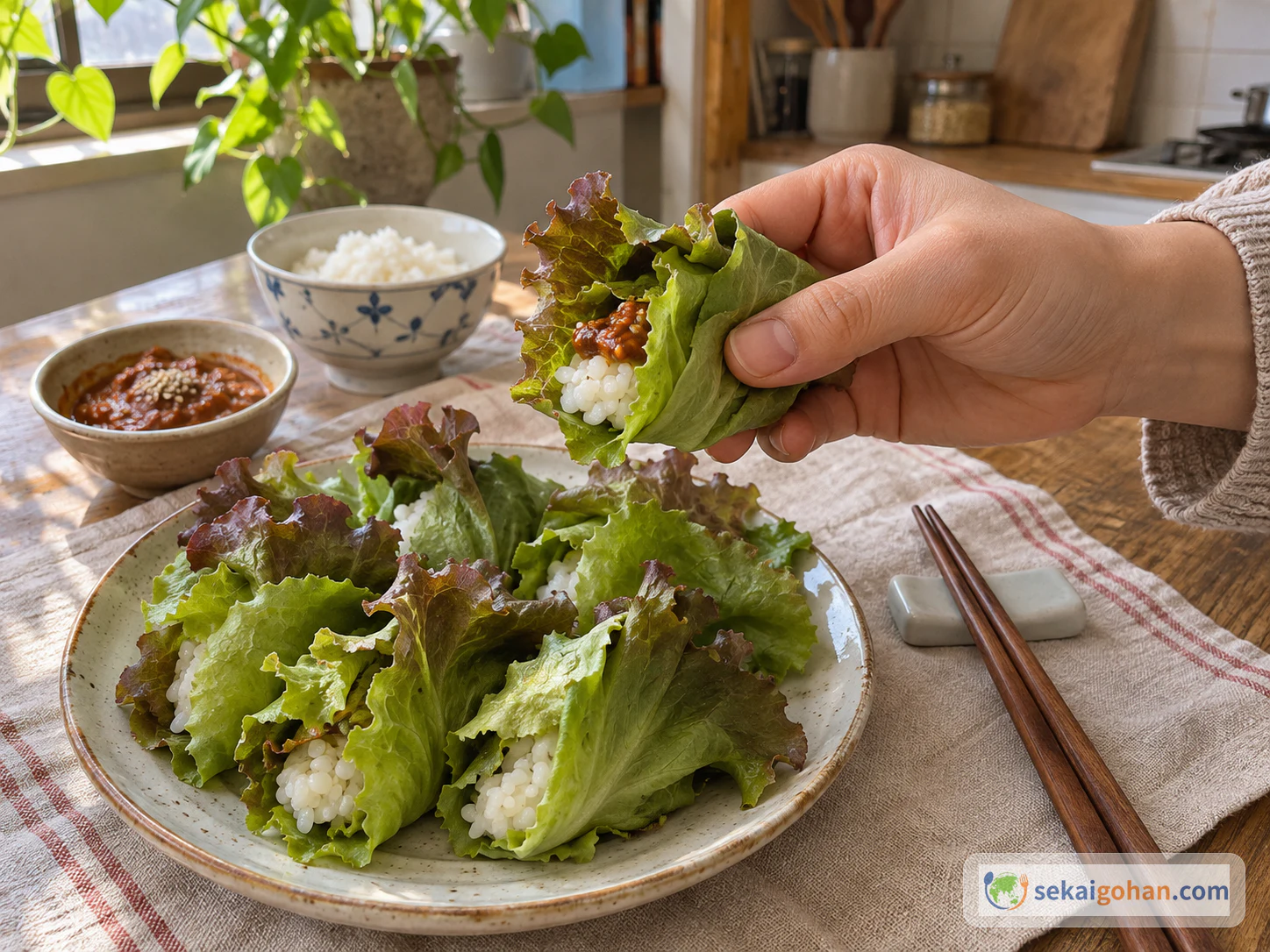
Ssambap carries a casual meal on its own, and it works just as well next to grilled meat. Put a plate of bulgogi beside it and let people tuck a slice into a wrap. Grilled or braised fish, canned tuna and tofu all suit ssam too. Keep the loose leaves and the ssamjang bowl in reach so people can make another wrap whenever they like. Whatever goes on the plate, cut back the ssamjang as the filling gets saltier.
Variations
- Steamed-cabbage rolls. Use only the cabbage from step 2 and roll each baton up fully. The soft, sweet leaf grips the rice firmly, which makes these the sturdiest wraps for a lunchbox.
- Tuna-mayo ssambap. Mix the optional tuna, mayonnaise, relish, salt and pepper and spoon a little onto each baton in place of ssamjang. It is mild, with no chili. Serve it on its own plate and keep the ssamjang light alongside, because the two together make the bite too salty.
- With grilled fish. Flake a salt-grilled mackerel or similar fish and set it beside the platter instead of mixing it into the rice. Each person adds a little to a wrap, so the ssamjang dab gets smaller.
- Winter wraps in gim. This follows the old winter habit of wrapping rice in dried greens and laver. Wrap the rice in a sheet of gim with a little rehydrated gosari or siraegi, soaked as the package directs. It gives a deeper, earthier bite than fresh leaves.
Storage and lunchboxes
Store the parts separately and wrap only what you will eat, because wrapped ssambap goes limp as it sits. Cool leftover rice, then refrigerate it in an airtight container. The ssamjang batch is generous. Spoon what is left into a clean jar, refrigerate it, and use it for the next round of ssam or on grilled vegetables. Keep unwrapped leaves in a sealed container or bag in the refrigerator at 5°C or below, with the vegetable drawer no more than about two-thirds full so cold air can circulate.
For a lunchbox, do not hold the rice warm for a long time. Pack the leaves and the ssamjang in separate containers and wrap just before eating, and keep them away from any meat or fish in the box.
Frequently asked questions
Is ready-made ssamjang worth buying?
Jars of ready-mixed ssamjang sit next to the doenjang and gochujang in Korean markets, and they are fine for a quick plate. Buying the two pastes and mixing your own lets you set the heat and sweetness. Both tubs also get used in other dishes, doenjang especially in stews. The most basic ssamjang of all is a dab of plain doenjang or gochujang.
Should I wrap everything ahead or let people wrap at the table?
At a Korean table each person usually wraps their own, with leaves, rice and ssamjang within reach. Pre-wrapped ssambap is the way to serve it on a platter or pack it for lunch. For a mixed group, wrap half and leave the rest of the leaves loose on the plate.
What if someone can't eat any chili?
Leave the gochujang out of their sauce and give them plain doenjang, the simplest ssamjang there is. The tuna-mayo filling is another mild option, though it adds egg and fish.
Which rice works best?
Short-grain white rice, Korean or the Japanese style sold for sushi, holds together in a baton. Cook it slightly on the firm side so the grains stay distinct when you fold in the oil. Rice cooked with beans, such as kongbap, makes a heartier filling.