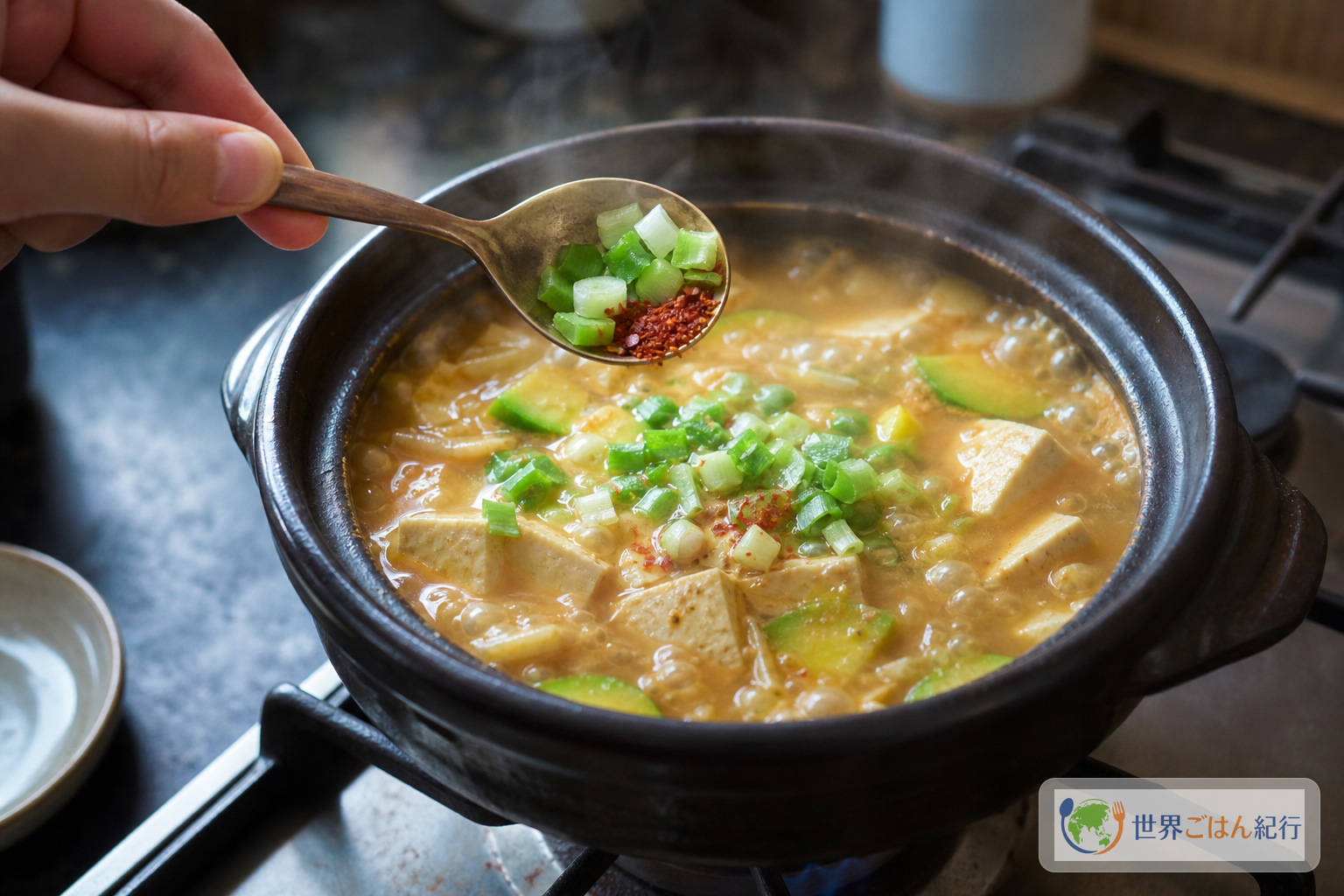
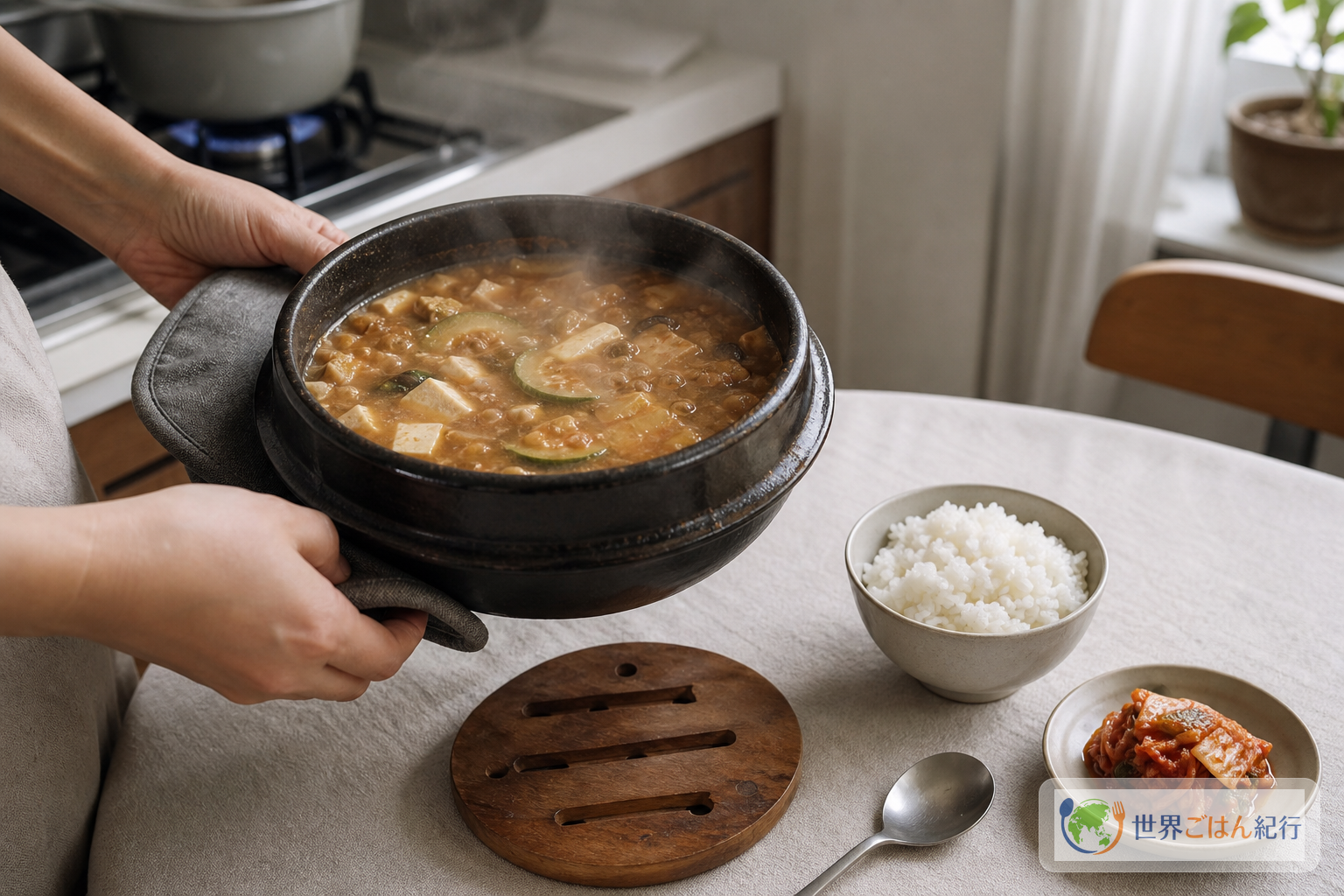
The story of doenjang jjigae: the smell of soybean paste behind the steam
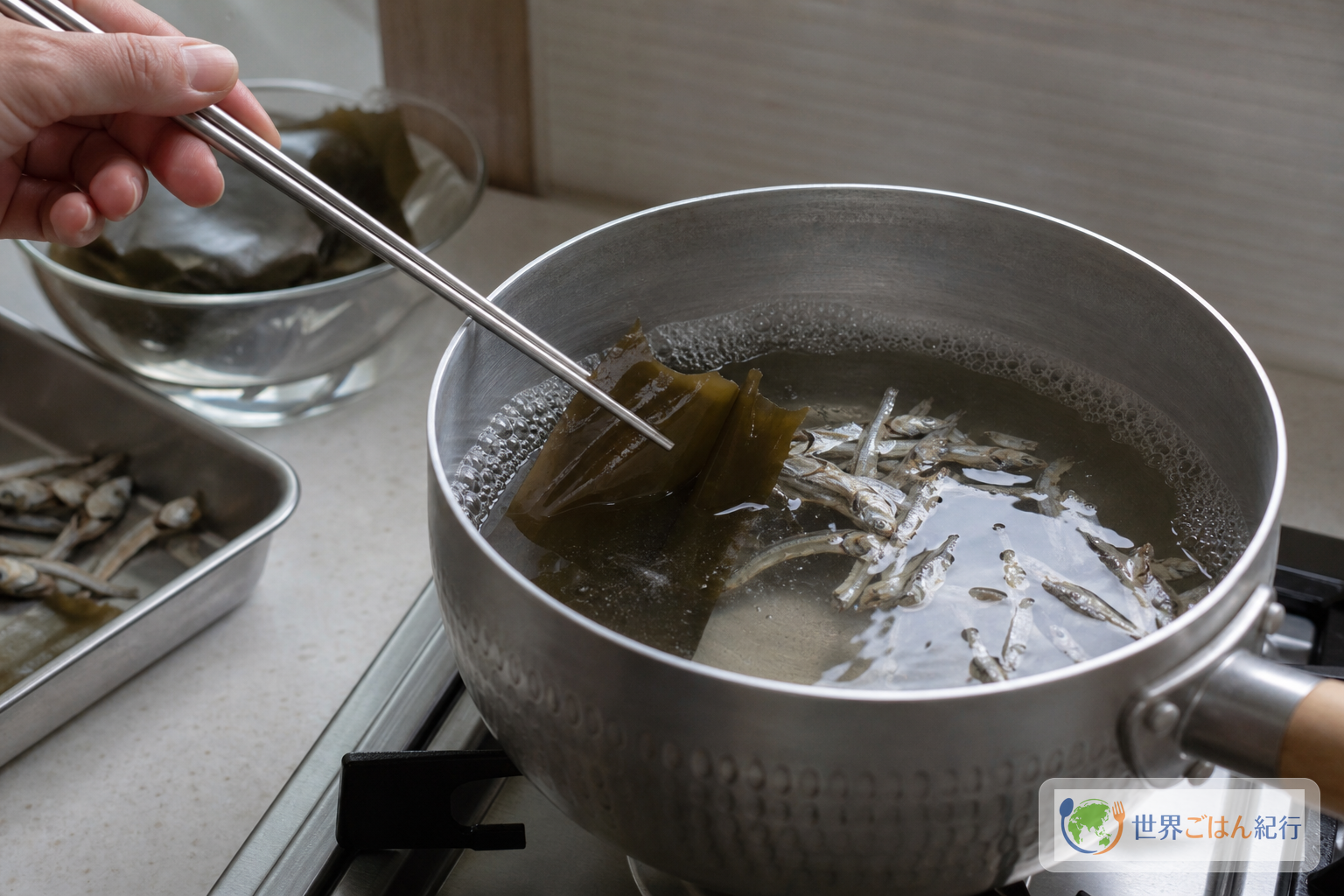
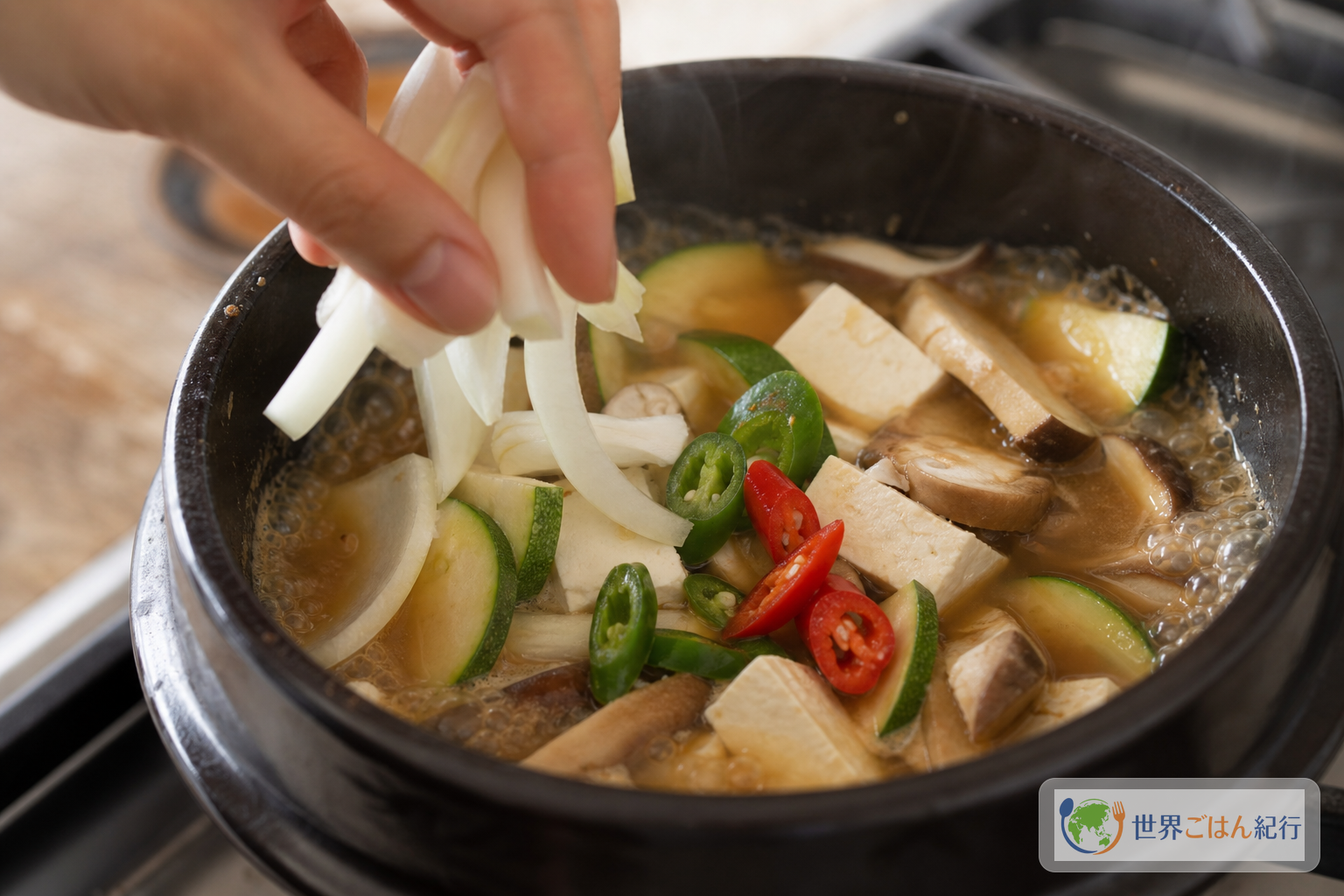
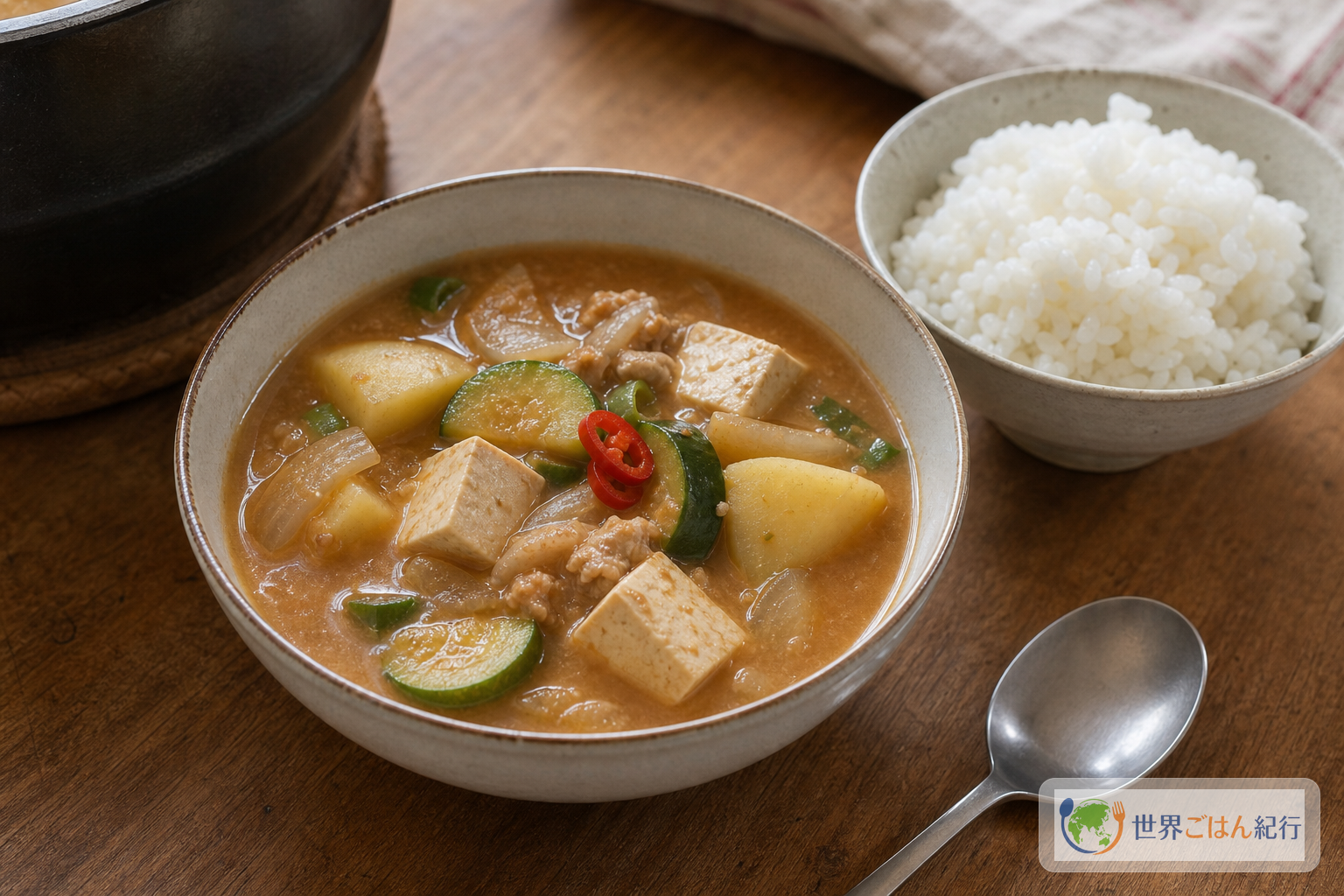
In the evening, when you set a pot of dried anchovies and kelp over the heat, the kitchen fills with an aroma a little different from miso soup. You stir doenjang into the gently trembling broth and sink in potatoes, tofu and zucchini. Add scallions and chiles at the end, and the steam makes you want to scoop the white rice before anything else. Doenjang jjigae isn't a showy dish. But the moment a small pot lands in the middle of the table, everyone's spoons drift toward it. It is Korean home cooking at its most everyday.
Doenjang jjigae (된장찌개) is a stew built on doenjang, Korea's fermented soybean paste. A jjigae is thicker than a soup, and it's the kind of dish you share at the table and eat with rice. Rather than ladling it into individual bowls the way you would miso soup, you gather around a pot or an earthenware ttukbaegi and break off pieces of hot tofu a little at a time.
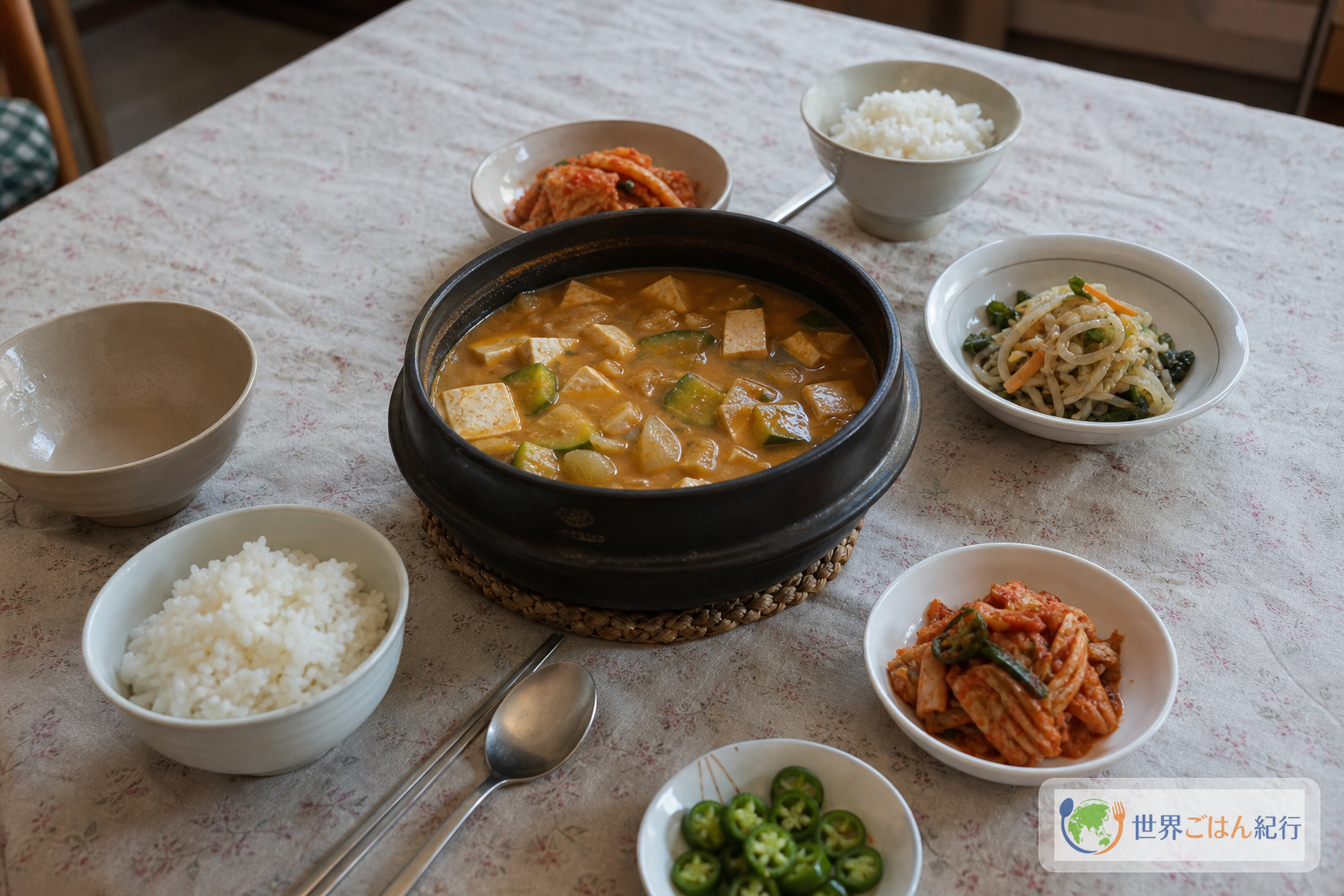
Doenjang is a seasoning with a long history on the Korean Peninsula, made by fermenting meju, blocks of cooked and pressed soybeans. What goes into the jjigae varies from family to family: some add seafood, some beef or pork, and some make it with vegetables only.
The first question most cooks face is whether to buy doenjang or simply use Japanese miso. The short answer: if this is your first time, doenjang is worth buying once. It has a strong soybean aroma and pronounced saltiness, a coarse texture, and its fragrance holds up even when simmered. Made with rice miso alone, you'll get a mellow, tasty miso stew, but it will lack the earthy, rustic edge of a true Korean jjigae.
It pairs well as the soup alongside bibimbap (in Japanese), and if you like tofu dishes such as mapo tofu (in Japanese), the combination of a fermented seasoning and tofu will feel familiar. Among Korean jjigae, compared with kimchi jjigae (in Japanese), which turns red with the sourness of aged kimchi, doenjang jjigae is all about soybean aroma and a deep broth. Unlike heat-forward khao soi (in Japanese) or tangy tom kha gai (in Japanese), the challenge here is how to simmer without muddying the paste's aroma.
How doenjang differs from Japanese miso
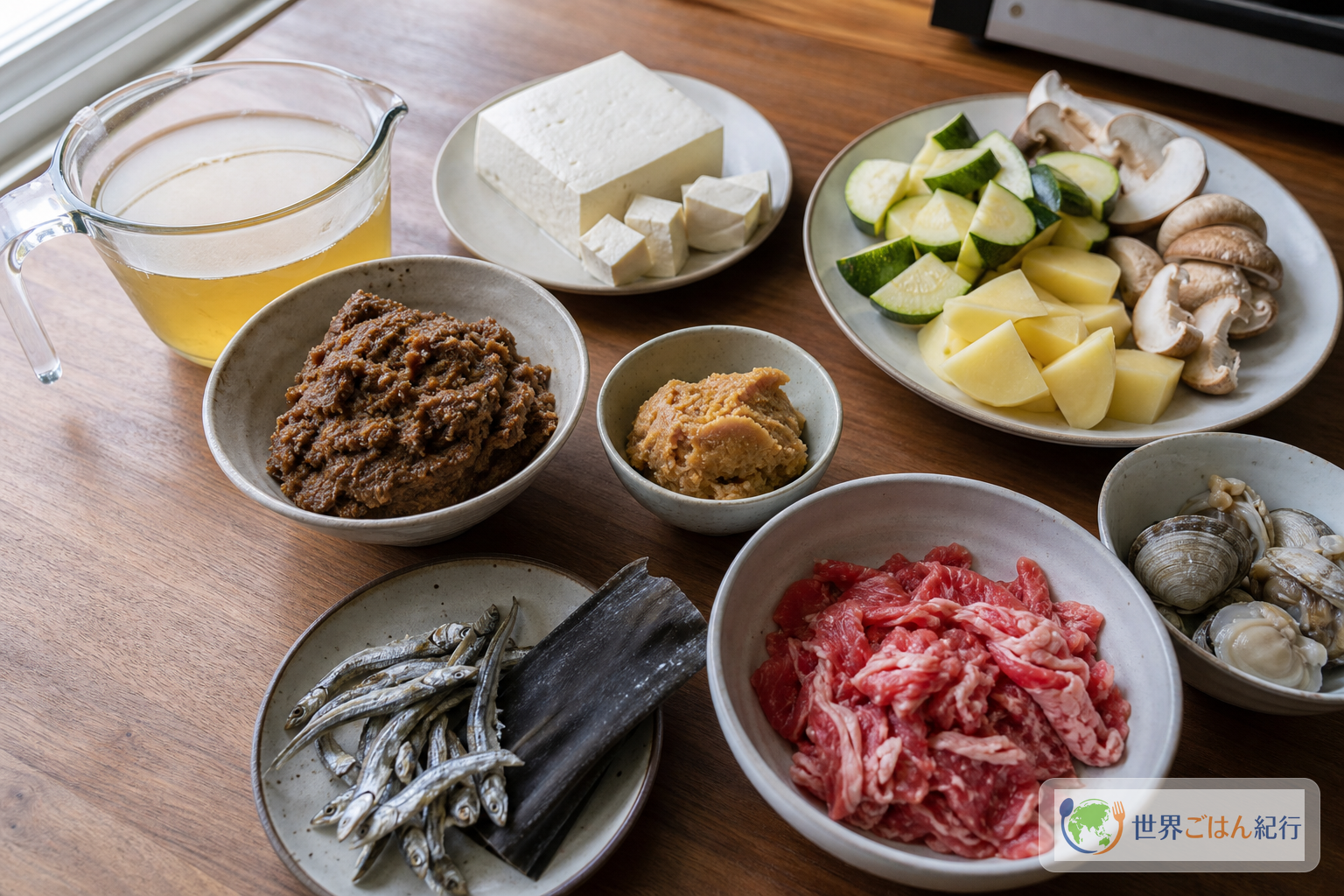
Doenjang is Korean fermented soybean paste. Its aroma is bolder than Japanese rice or barley miso, and its saltiness is more pronounced. Depending on the brand it stays somewhat chunky and never dissolves completely smooth in the pot. That coarseness is exactly what tastes so good clinging to tofu and potatoes.
| Point of comparison | Doenjang | Japanese miso |
|---|---|---|
| Aroma | Soybean, fermentation and earthiness come forward | Sweetness from rice or barley koji tends to show |
| Simmering | Aroma holds up even at a boil | Aroma fades with long simmering |
| Saltiness | Most brands are on the salty side | Ranges widely from sweet to salty |
| Texture | Coarse; bits of bean may remain | Most brands dissolve smoothly |
| When substituting | Can carry the dish on its own | Use a little less and support it with anchovy broth and mushrooms |
To make it with Japanese miso, combine 2 tbsp red miso and 1 tbsp rice miso and use that in place of 60 g doenjang. Miso loses its aroma if kept at a boil, so it comes together better if you dissolve half after the root vegetables have cooked and add the rest at the end. Using a bit more anchovy, kelp and mushrooms brings it closer to the heft of Korean soybean paste.
Doenjang jjigae doesn't take much gochujang. If you want a spicy red stew, that's a different dish. Add heat lightly with gochugaru and green and red chiles, keeping it to an amount that doesn't bury the doenjang. If you do use gochujang, stop at 1/2 tsp. It adds sweetness, and too much pushes the pot from a soybean paste stew toward a sweet-and-spicy one.
Ingredients (serves 4)
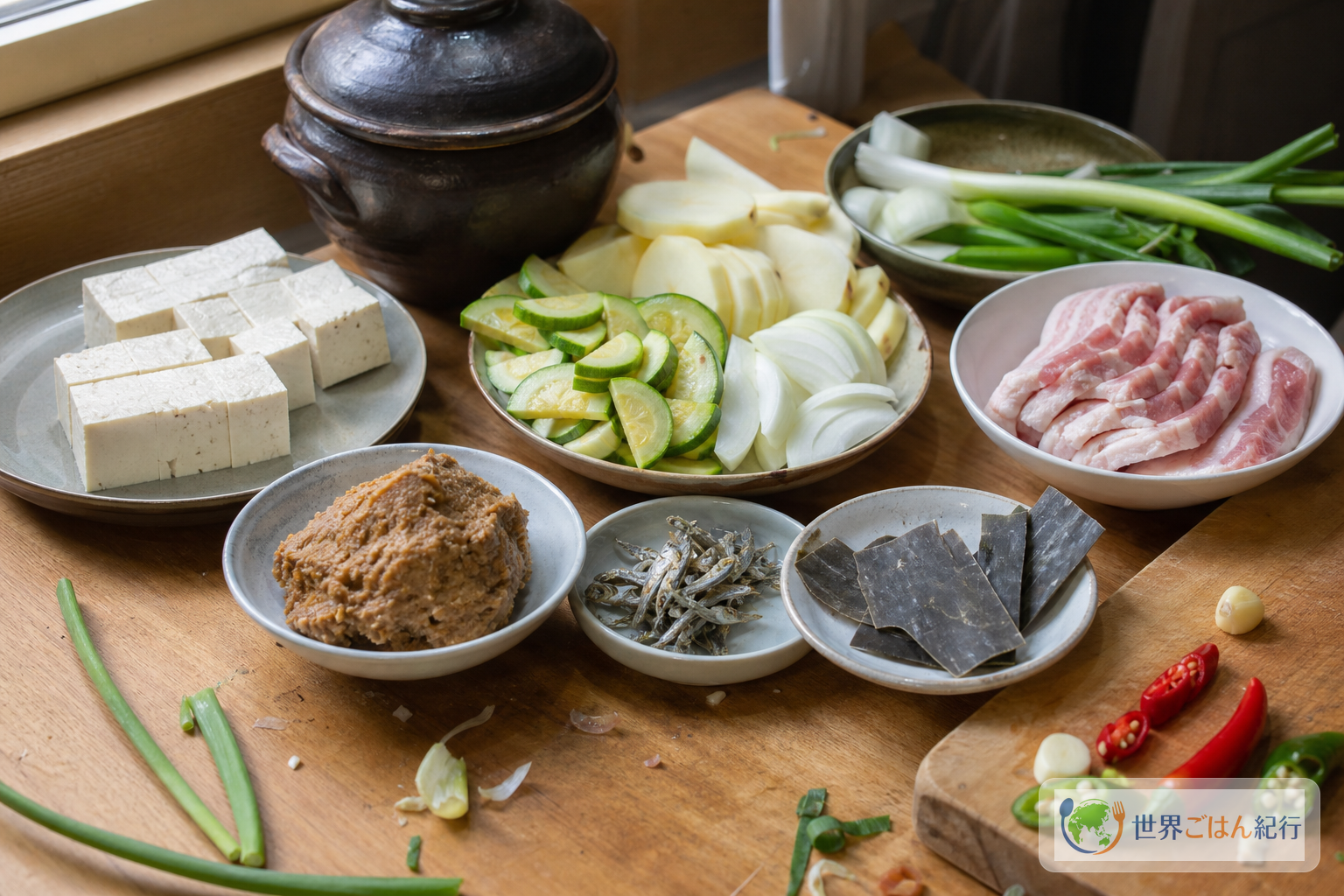
This makes 4 servings. If you cook 2 servings at a time in a small earthenware pot, halve the ingredients and reduce the broth to 400 ml. A heavy pot about 18 cm (7 inches) across, a small stovetop-safe pot, or a small earthenware pot works well. Thin aluminum pots tend to scorch the paste, so keep the heat a little lower if that's what you have.
This recipe uses soy (doenjang, tofu), fish (dried anchovies), pork and sesame. If you make it with clams, shellfish is added too. Some store-bought doenjang and gochugaru contain wheat, so anyone with food allergies should check the ingredient label.
What to buy: the items people hesitate over
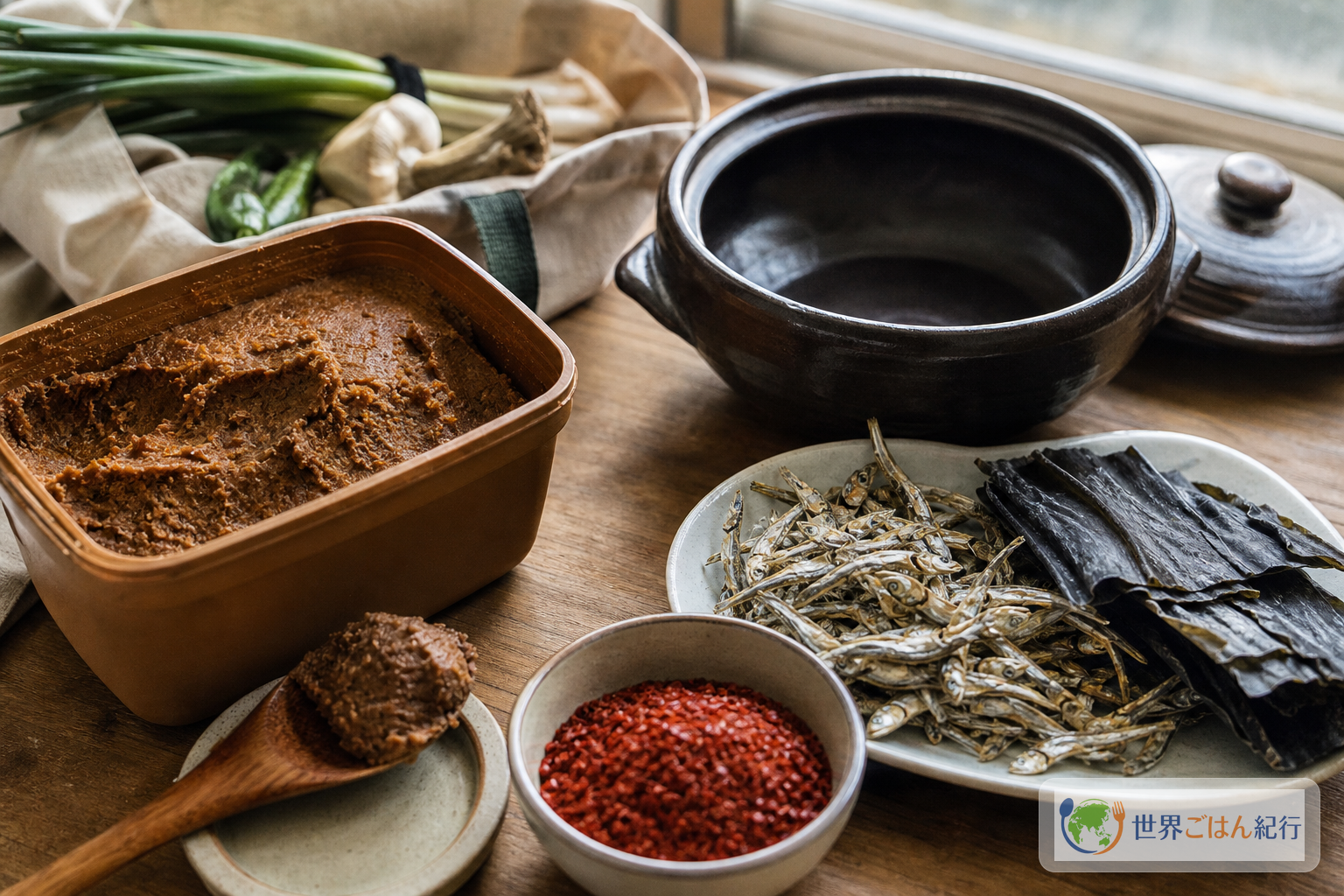
In order of priority, the things worth seeking out are doenjang, gochugaru, dried anchovies and a small pot that can go over direct heat. Tofu, potatoes, onions and mushrooms from your regular grocery store are fine. Pick up just the specialty items and get the everyday ones on your usual shopping trip, and this becomes a stew you'll keep making.
| Item | Priority | Why |
|---|---|---|
| Doenjang | High | With Japanese miso alone, the aroma and saltiness come out differently |
| Gochugaru | Medium | More for aroma and color than heat. Useful for making kimchi too |
| Dried anchovies | Medium | Support the umami under the paste. Also useful in Japanese cooking |
| Stovetop pot | Medium | Keeps the stew piping hot at the table. For people who make Korean stews often |
| Korean sesame oil | Low | Regular sesame oil works, but a freshly opened bottle makes a noticeable difference in aroma |
Doenjang varies widely from product to product, and saltiness and fermented aroma differ too, so you are less likely to go wrong if you start with a small tub from a Korean or international grocery store. If you buy online, check the ingredients, net weight, best-by date, and whether it needs refrigeration.
A small stovetop pot isn't essential. It earns its keep, though, if you want to bring the stew to the table bubbling hot, or if you also plan to make bibimbap or sundubu jjigae. Make it once in a heavy pot you already own, and buy one only if you find yourself wanting to keep making Korean stews.
To lift the aroma, a freshly opened bottle of sesame oil is worth it. Even the first teaspoon used to fry the doenjang smells noticeably better than old oil. You'll also use it in namul and bibimbap, so it's easy to finish if you keep cooking Korean food.
If you want a little more heat, you can use just 1/2 tsp gochujang. Doenjang is the star of this stew, so rather than adding a lot as a sweet-spicy sauce, it's easier to stir a little into individual portions after serving.
Method
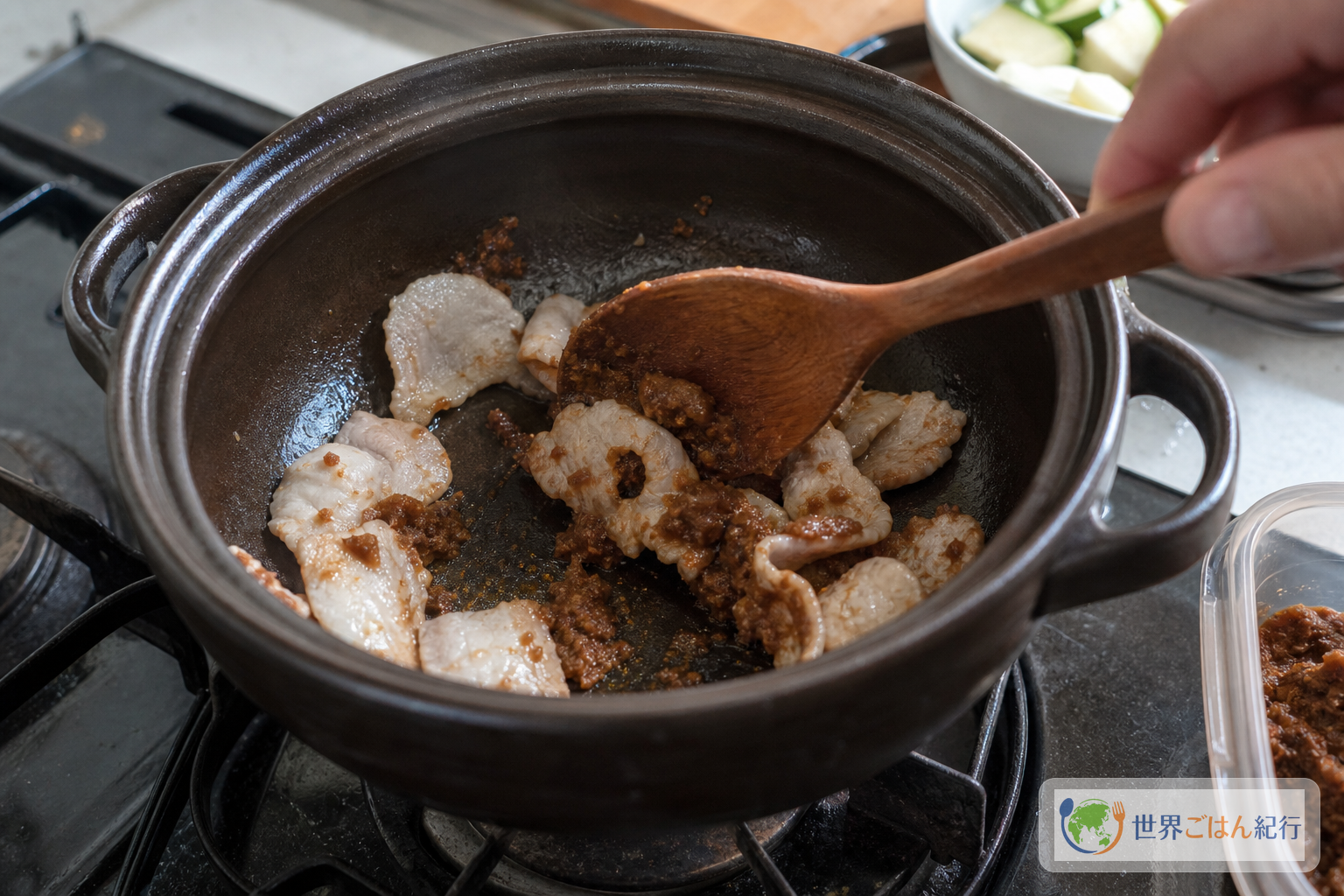
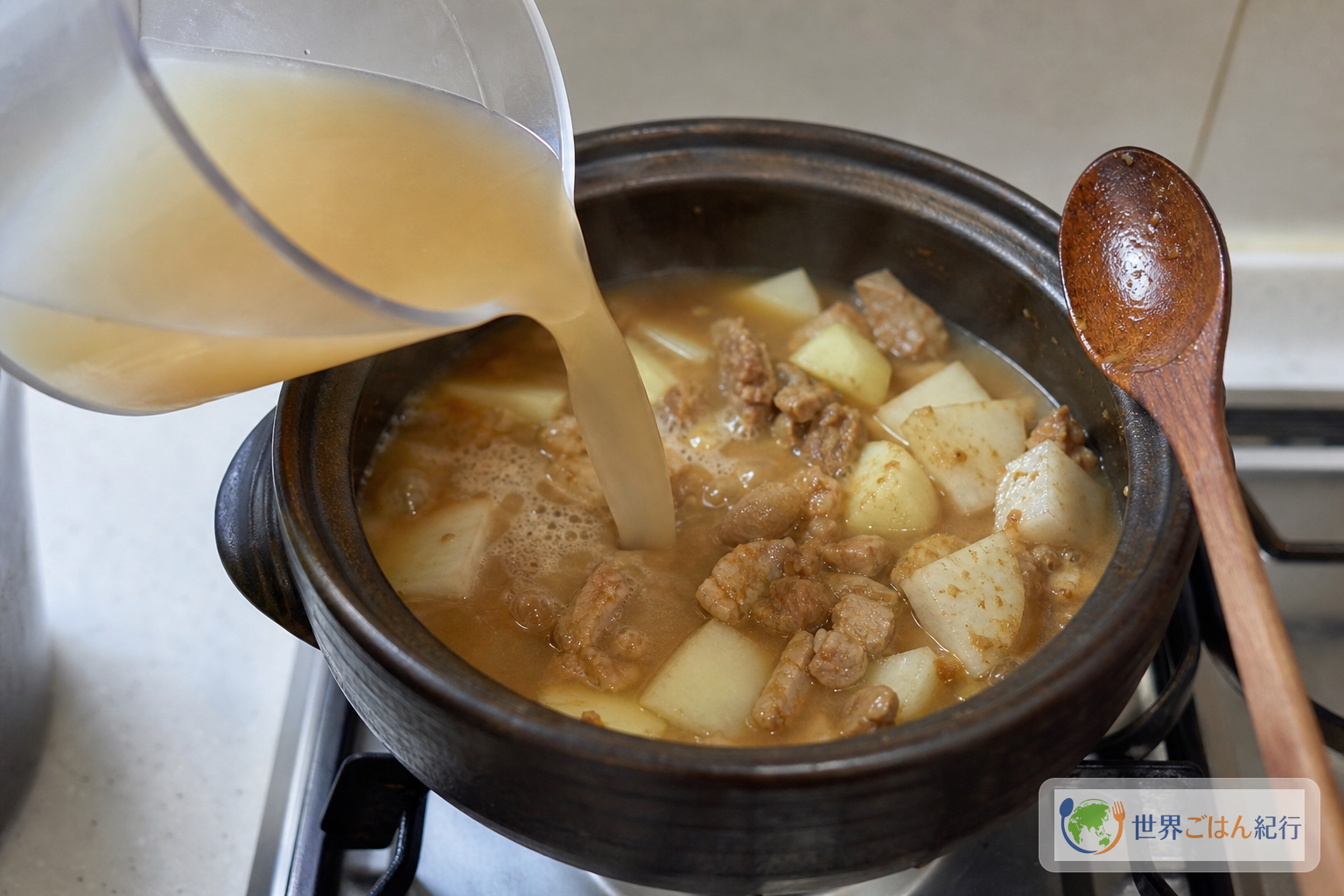
Doenjang jjigae comes together quickly, but how you handle the broth and paste at the start changes the flavor. Build the base with anchovies and kelp, wake up the doenjang briefly with pork and sesame oil, then pour in the broth. Holding a gentle simmer rather than a hard boil keeps both the tofu and vegetables neat.
Stir-fry the doenjang briefly in oil with the pork before pouring in the broth and it picks up a toasty depth. Boiling it too hard drives off the fermented aroma, so keep it at a quiet, gentle simmer.
Troubleshooting: too bland, too salty, too cloudy
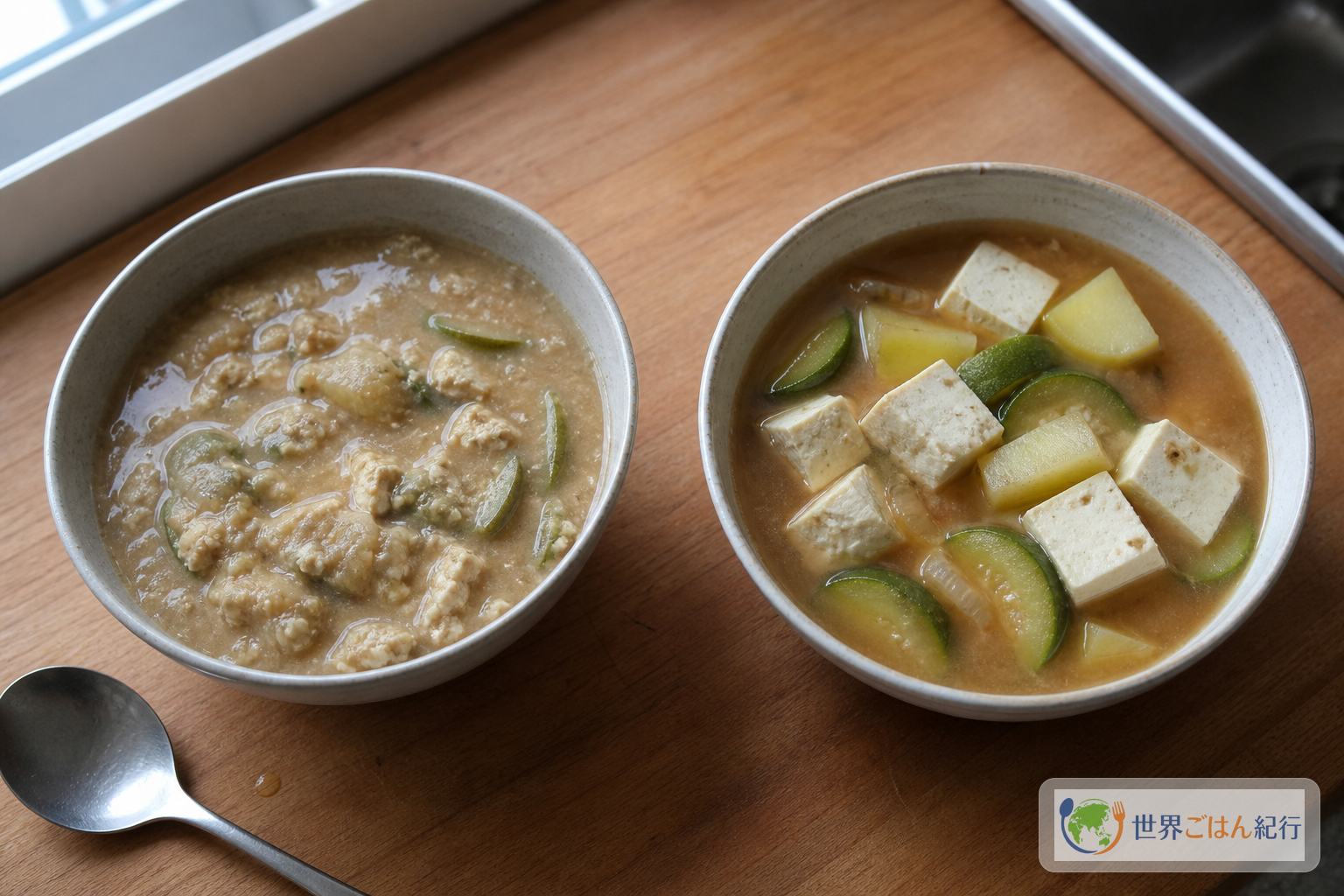
If it tastes bland, check the broth before adding more doenjang. If the anchovy broth is weak, more paste only makes it saltier. For a weak broth, warm 100 ml water, 5 g dried anchovies and 3 g kelp in a separate pot for 7 minutes to make a concentrated broth, and add it. If you add paste, do it 1 tsp at a time. Instead of dropping it straight into the pot, dissolve it in 1 tbsp hot broth first so it doesn't clump.
If it's too salty, diluting with water alone also dilutes the aroma. Add 100 ml water, 100 g tofu and 50 g mushrooms and warm over low heat for 4 minutes. If it's still too salty eaten with rice, add another 100 g potatoes and simmer for 8 minutes to round off the sharp edge of the salt. Sugar brings a different kind of sweetness, so with doenjang jjigae, correct it first with more ingredients and broth.
If it turns too cloudy, the heat is too high. Doenjang jjigae isn't a clear broth, but boiling it until the tofu crumbles and the paste scorches onto the sides of the pot makes it heavy. Once the tofu is in, use medium-low heat, and finish on low. Keep fine bubbles at the edge of the pot rather than a vigorous boil across the whole surface.
If it tastes sweet when made with Japanese miso, the sweetness of rice koji is coming forward. Increase the proportion of red miso, make the anchovy broth a little stronger, and add 1/4 tsp gochugaru to bring back definition. Even so, the soybean aroma of doenjang can't be fully reproduced. Think of the substitute as "a similar miso stew," and on days you want something closer to the real thing, reaching for doenjang is the quicker route.
Storage and menu: thin it a little the next day
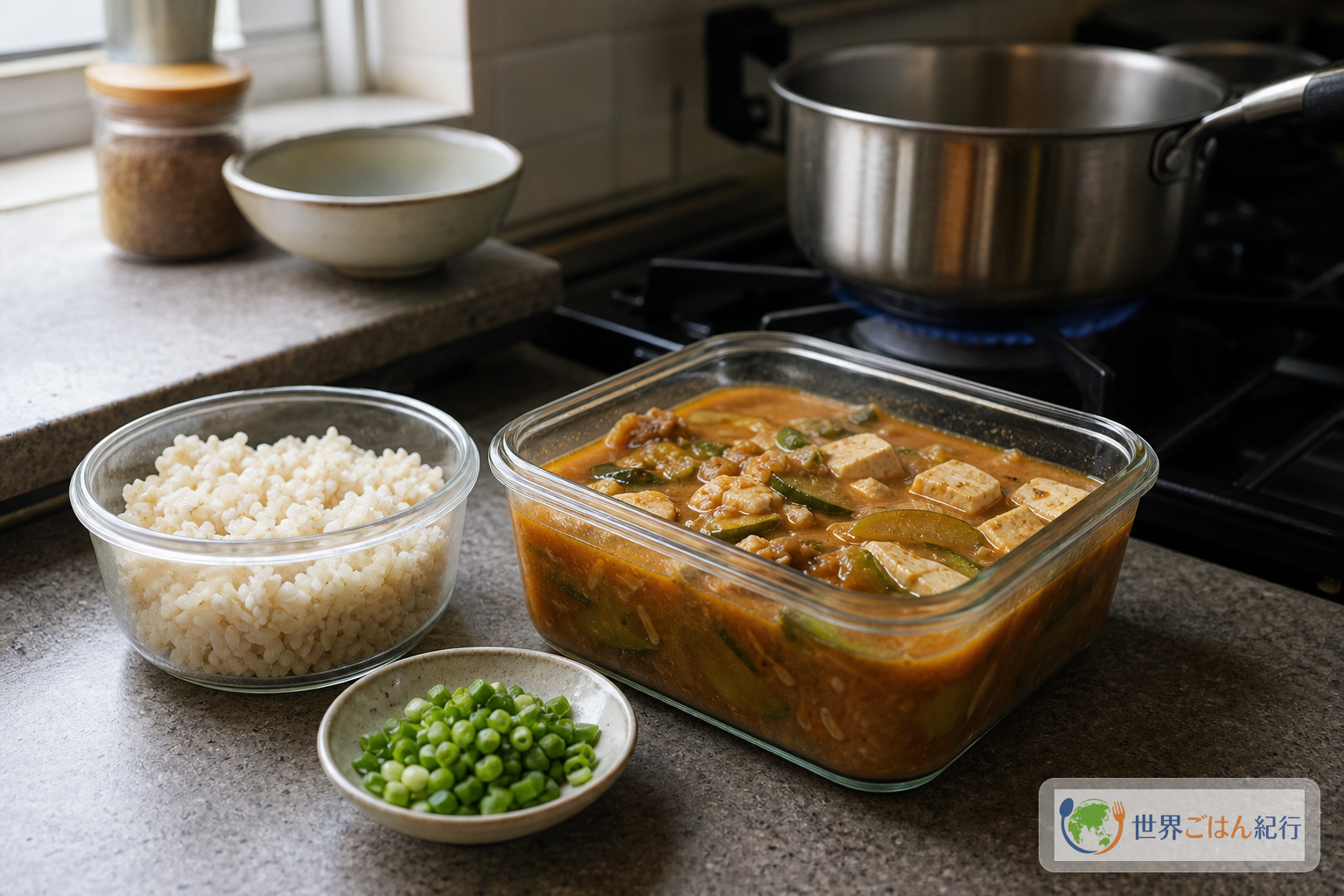
Doenjang jjigae is most fragrant freshly made. To store it, let it cool slightly, transfer to an airtight container within 2 hours and refrigerate. It keeps about 2 days in the refrigerator. Because it contains tofu and potatoes, freezing isn't recommended: the tofu turns spongy and full of holes when thawed, and the potatoes go mealy.
A pot is best for reheating. Add 2 tbsp water per serving and warm over medium-low heat for 5 minutes. When it starts to bubble, lower the heat and stop once the tofu is hot to the center. In the microwave, put it in a deep microwave-safe container, cover loosely with plastic wrap, and heat at 600 W for 2 minutes, stir, then 1 minute more. Turn it over gently from the bottom so the tofu doesn't break up too much.
There's no need to overthink the menu. White rice, kimchi, seasoned greens (namul) and toasted seaweed sheets get you very close to a Korean home meal. On days the jjigae has meat in it, a lighter main dish is still satisfying. If you're having bibimbap, take a sip of the jjigae before mixing the bibimbap, and the sweet-spicy gochujang sauce won't feel heavy.
To add more vegetables, you can swap the zucchini for 150 g eggplant, the mushrooms for 4 shiitake, or skip the pork and use 200 g clams. If using clams, buy them already purged of sand, add them in the last 5 minutes, and turn off the heat as soon as the shells open. Clams cooked too long shrink and tend to make the broth bitter.
Frequently asked questions
Can I make it with Japanese miso only?
Yes. The soybean aroma and coarse texture unique to doenjang will be weaker, though. Combine 2 tbsp red miso and 1 tbsp rice miso, and add half after the root vegetables have cooked and half at the end so the aroma stays. Using a stronger anchovy broth and plenty of mushrooms makes up for what's missing.
Do I have to use anchovy broth?
Anchovy and kelp broth is the easiest base. If you want to avoid a fishy aroma, use a cold-steeped broth of 10 g kelp and 2 dried shiitake in 900 ml water, left in the refrigerator for 6 hours. With meat in the stew it's plenty tasty, but it moves a little further from Korean home cooking than anchovy broth does.
Can I make it vegetarian?
Leave out the pork and make the broth with kelp and dried shiitake. Lightly fry the doenjang in 2 tsp sesame oil and increase the mushrooms to 200 g for more body. Without anchovies, the salt tends to stand out on its own, so start with 50 g doenjang and adjust at the end.
Can I make it not spicy?
Yes. Leave out the green chile, red chile and gochugaru, and use more scallions. If it tastes flat without heat, a small pinch of black pepper gives it definition. If you're serving children, ladle their portion into a small pot before adding any heat, and add gochugaru only to the adults' pot.
Should I add gochujang?
It isn't necessary. Doenjang jjigae is about the aroma of the soybean paste, so a lot of gochujang takes it in a sweet-and-spicy direction. If you use it, keep it to 1/2 tsp, and rather than mixing it into the whole pot, it's safer to let anyone who wants heat stir a little into their own portion.
Can I make it ahead?
Yes, plan on about 2 days in the refrigerator. Tofu and potatoes break up easily when reheated, so turning off the heat while they're still a little firm on the first day keeps them pleasant the next day. Avoid freezing, as it ruins the texture of the tofu and potatoes.
Sources
- Korean Bapsang, "Doenjang Jjigae": checked for the home-style approach using doenjang, anchovy broth, vegetables and tofu, and how the ingredients are chosen.
- Maangchi, "Doenjang-jjigae": checked for the basic ingredients, broth, how tofu and vegetables are added, and the dish's place in Korean home cooking.
- VisitKorea, "Korean Food": checked for Korean food culture and how jjigae, side dishes and rice are set out together.