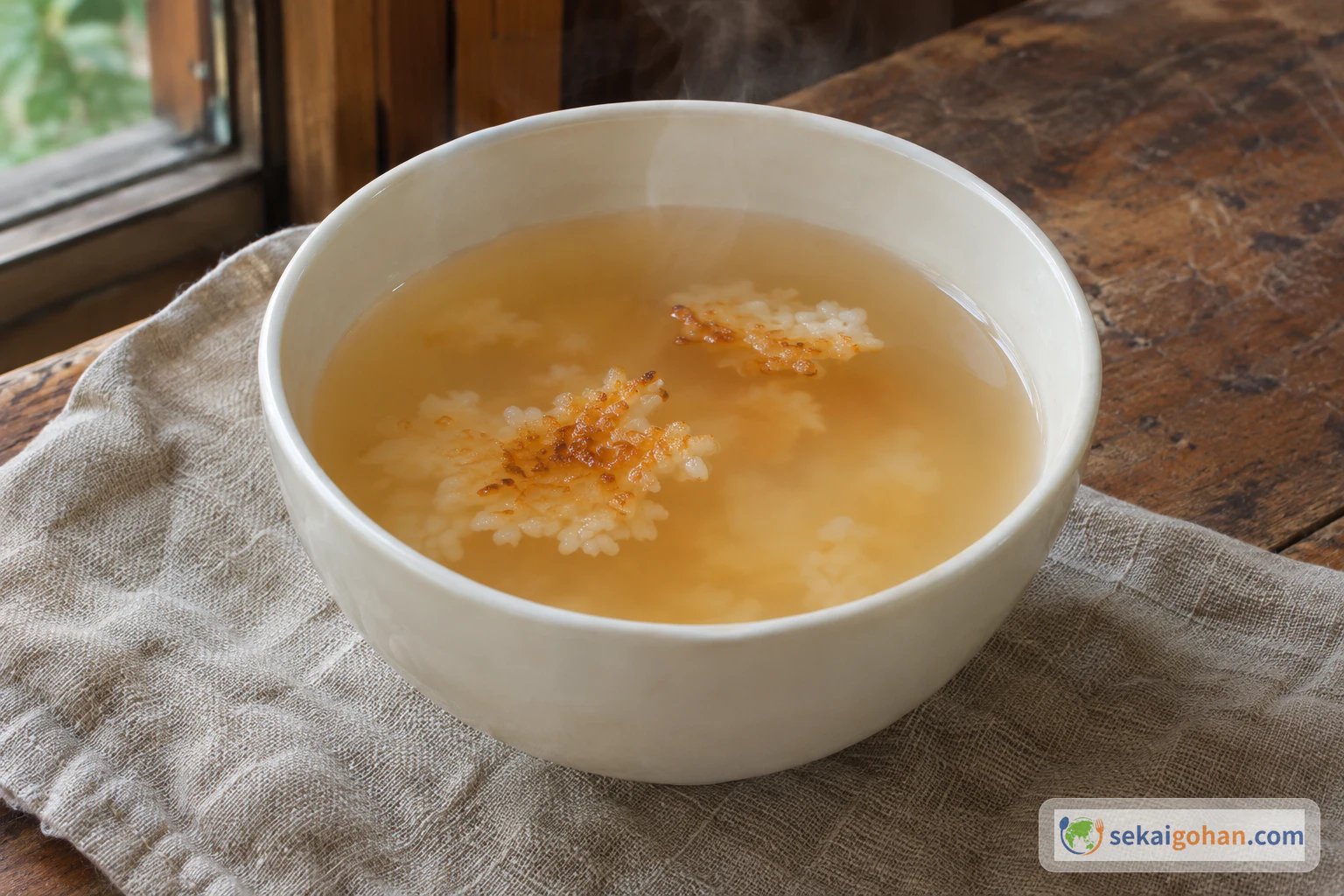
The last spoonful of rice is gone and the stone pot is still hissing. Someone pours water over the brown crust stuck to its bottom, and a cloud of steam carries up a toasty smell of rice. That cloudy, pale golden liquid is sungnyung (숭늉). Koreans drink it at the end of a meal. It is made from rice crust and water and nothing else, so it carries no salt and no sweetness. What it has is a warm, nutty, toasted-grain flavour that Koreans call gusuhada, and a soft, comforting quality they call pugeunhada. At home you can make it in a frying pan in under ten minutes from a single bowl of cooked rice.
Water Poured on the Crust: Where Sungnyung Comes From
A drink from the bottom of the pot
When rice is cooked in a pot until all the water is gone, a thin golden layer forms where the grains touch the hot metal. That layer is nurungji, the scorched rice. It is crisp enough to scrape off and eat as it is. These days it is also made on purpose and eaten as a snack. Pour water over it and bring it briefly to a boil, and you have sungnyung. Koreans treat the two as separate things. Nurungji is the food and sungnyung is the drink, and this pot is about the drink.
The flavour comes from what happens in the pot. Once the water is used up, the bottom of the pot gets very hot. The rice there browns, and part of its starch breaks down into glucose and the compounds that give the crust its toasty smell. Hot water pulls that flavour out of the crust and into the cup.
Sungnyung also goes by bantang (飯湯, "rice water") and chwitang (炊湯, "cooking water"). An old encyclopedia of country life, the Imwon gyeongje-ji, calls it suksu (熟水), "cooked water". A much earlier record of the Korean language, the Gyerim yusa, writes down a Korean word for suksu, and from that entry the drink is usually traced back to the early or middle Goryeo period. That date is an inference and is not settled.
Why it stayed in Korea
Rice is cooked across East Asia, but this drink is Korean. In China, rice was boiled in plenty of water, the water was poured off, and the rice was steamed, so no crust formed to make a drink from. Korean cooks put a set amount of water in with the rice and cooked it until all the water was gone. That method leaves a crust every time.
Japanese cooks make rice the same way, yet they never took up the drink. One explanation is the kitchen itself. In a Korean house the cooking pot sat fixed over the fire hole of the buttumak hearth, which also heated the ondol floor. A fixed pot is hard to scrub. Pouring water onto the crust and boiling it gave the family something to drink, and it also cleaned the pot.
Its place at the table
After the rice, people drank sungnyung, or they soaked the last of their rice in it. Either one marked the end of the meal. In homes that cooked in a big iron gamasot, the crust was scraped up first. Then more water went over what was left on the bottom and simmered well, and when the spoons went down, everyone drank. A full meal in a stone pot follows the same order: fluffy rice, then sauce and toppings, then the golden, crisp crust, and last the warm sungnyung. That is why restaurants serving dolsot rice, the family of dishes that includes stone-pot bibimbap, still let you pour water into the hot pot once you have eaten. After a red, salty table of sundubu-jjigae and banchan, this plain, warm drink settles the mouth.
The habit faded as kitchens changed. Iron pots gave way to other metal pots and then to electric rice cookers, which leave no crust. Barley tea took over as the everyday drink, and many restaurants began offering coffee after meals instead. The frying-pan method below brings the crust back for cooks who only own a rice cooker. For more Korean dishes, start from the Korea country page.
Ingredients (serves 1)
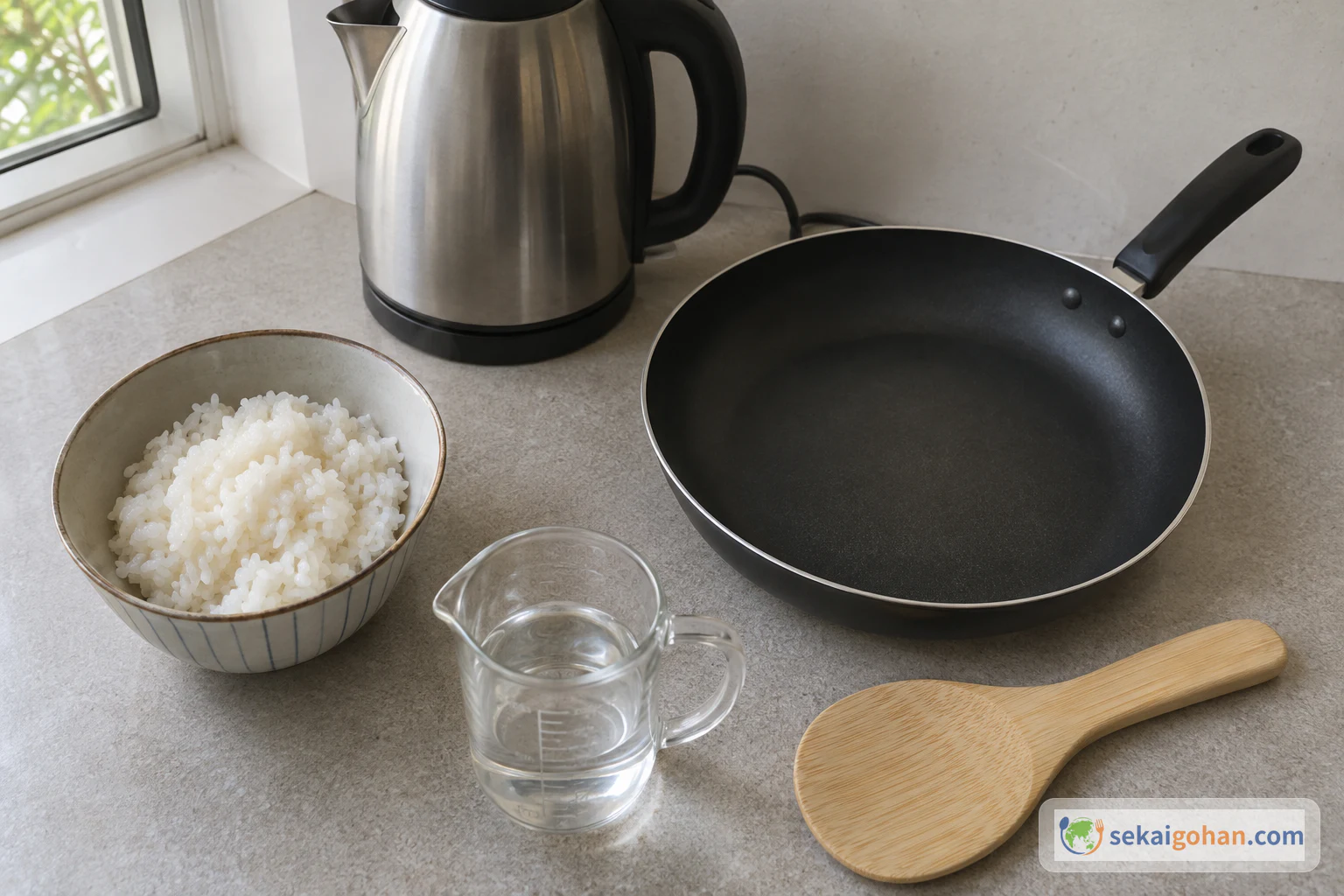
Rice and water are the whole list. Salt, sugar and tea leaves do not go in.
The only ingredients are rice and water. If anyone at the table has a food allergy, make sure the pan, paddle and bowl are clean and have not just been used for other food.
Equipment
- Frying pan, preferably nonstick
- Rice paddle
- Heatproof bowl (stainless steel works well)
- Electric kettle
Choosing the Rice and the Pan
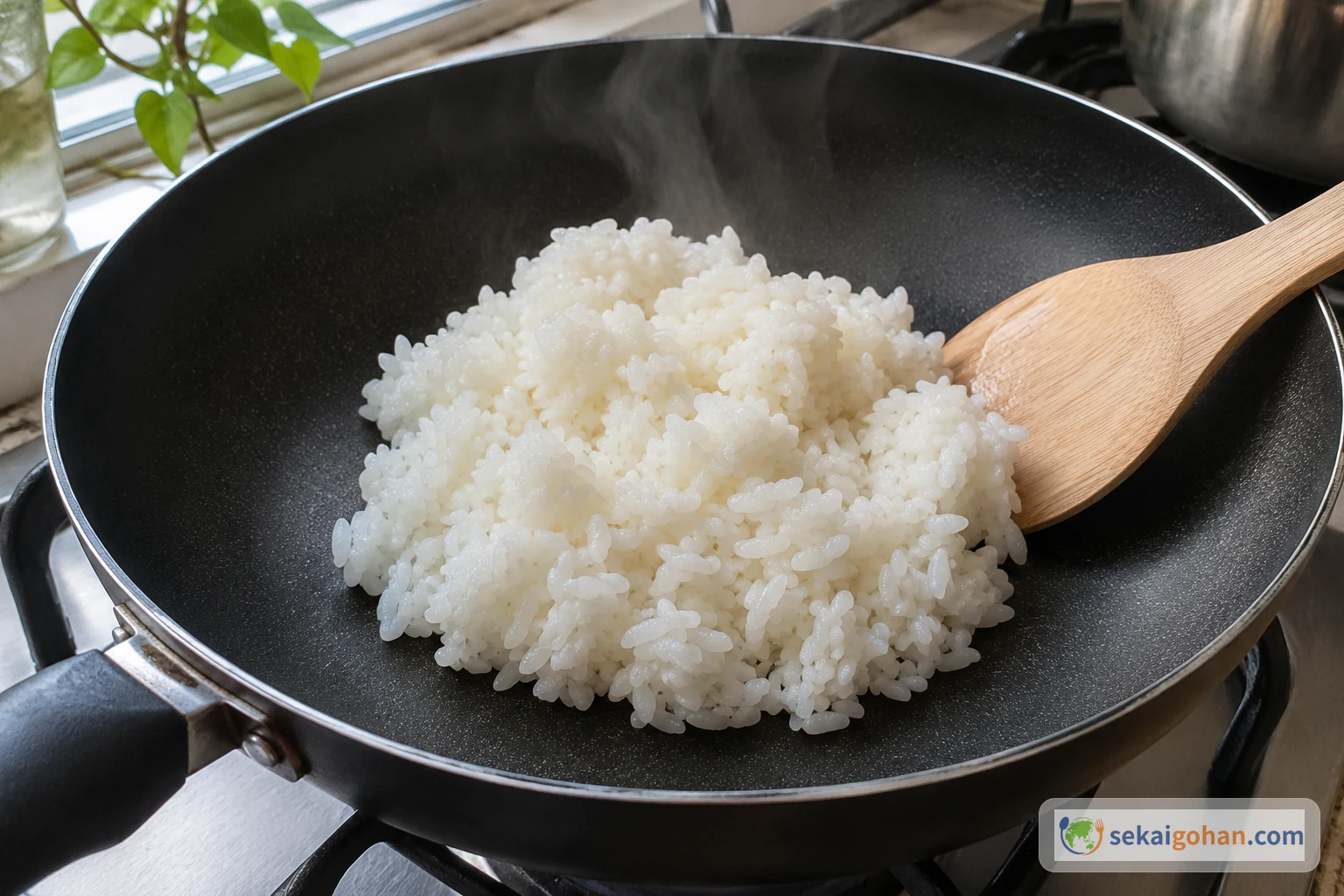
Any plain cooked white rice works, and you do not have to buy anything special. If your rice has been in the fridge and has firmed up, break the clumps apart with the paddle before it goes into the pan.
Leftover rice is fine to use as long as it was stored properly. Cooked rice should be cooled quickly, refrigerated, and eaten within 24 hours. Raw rice can carry spores of Bacillus cereus, and the risk comes from how cooked rice is kept before it is heated again. Never use rice that has been sitting out at room temperature.
Use only rice that was cooled quickly and kept in the fridge, and use it within 24 hours. Keep cooked food out of the 41–140°F (5–60°C) range. Leftovers should be reheated until steaming hot all the way through, reaching at least 165°F (74°C) at the center. That is the same temperature as when the rice was first cooked.
For a version with no pan work, Korean grocers and online shops sell dried nurungji, labelled 누룽지. It comes in white rice, brown rice and mixed grain types. Packaged crust gives you a measured, hands-off drink, and the method is in the variations below. Roasted Solomon's seal tea (둥굴레차, dunggulle-cha) is sold in tea bags in the same shops. It is an optional extra for the packaged version and does not belong in the pan version.
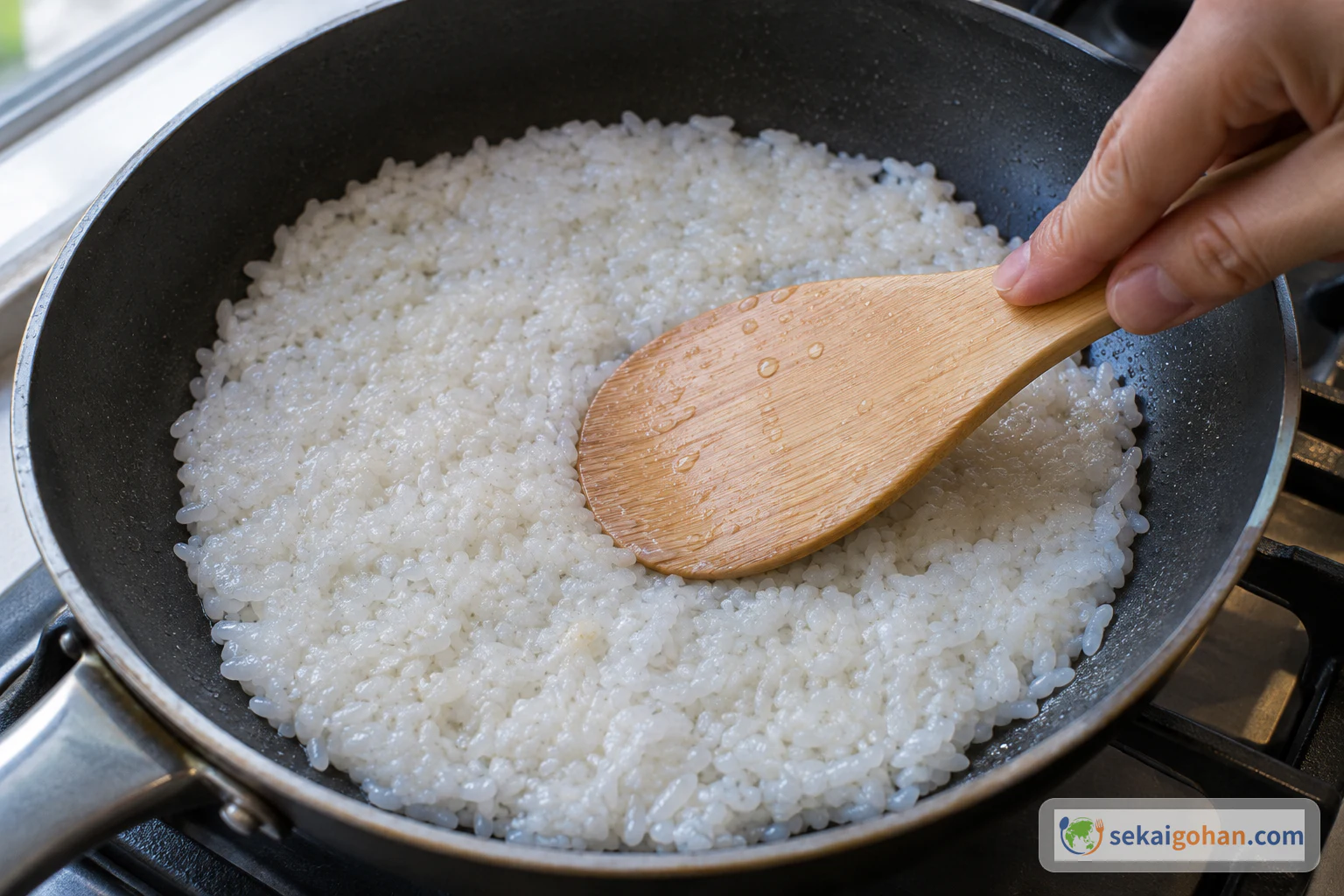
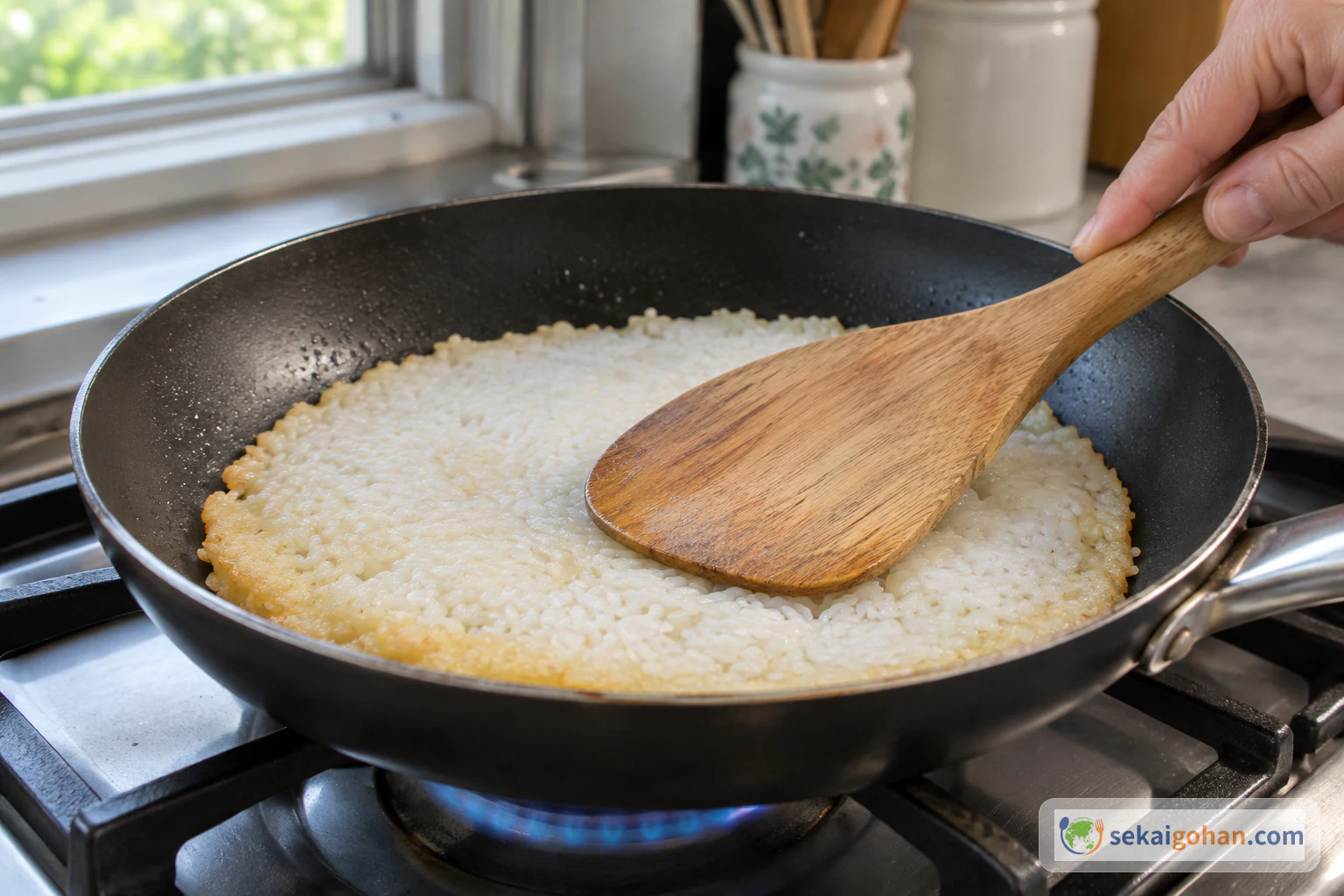
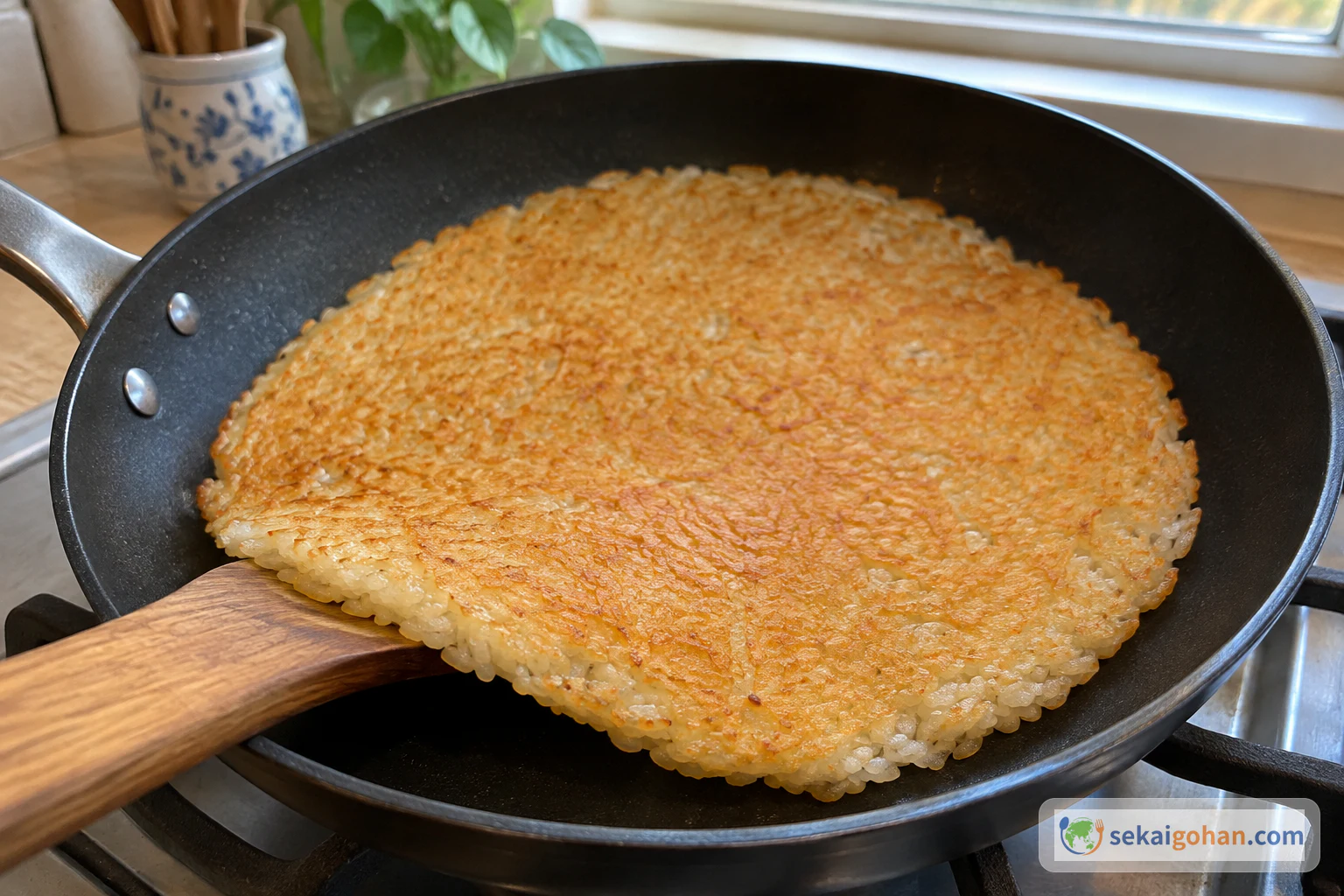
A nonstick pan lets the pressed rice set and lift as one sheet, so you can flip it whole instead of scraping it off in shreds.
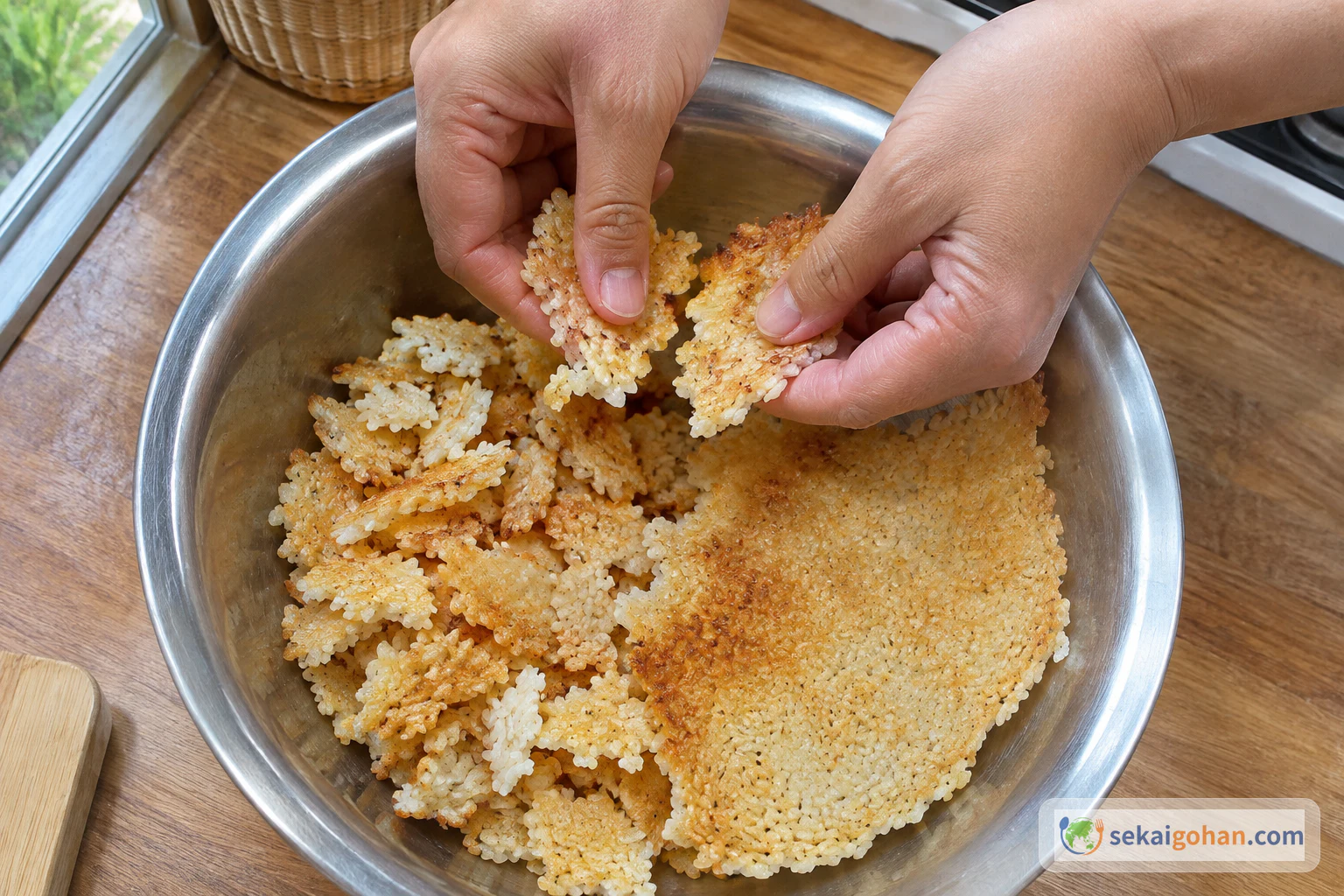
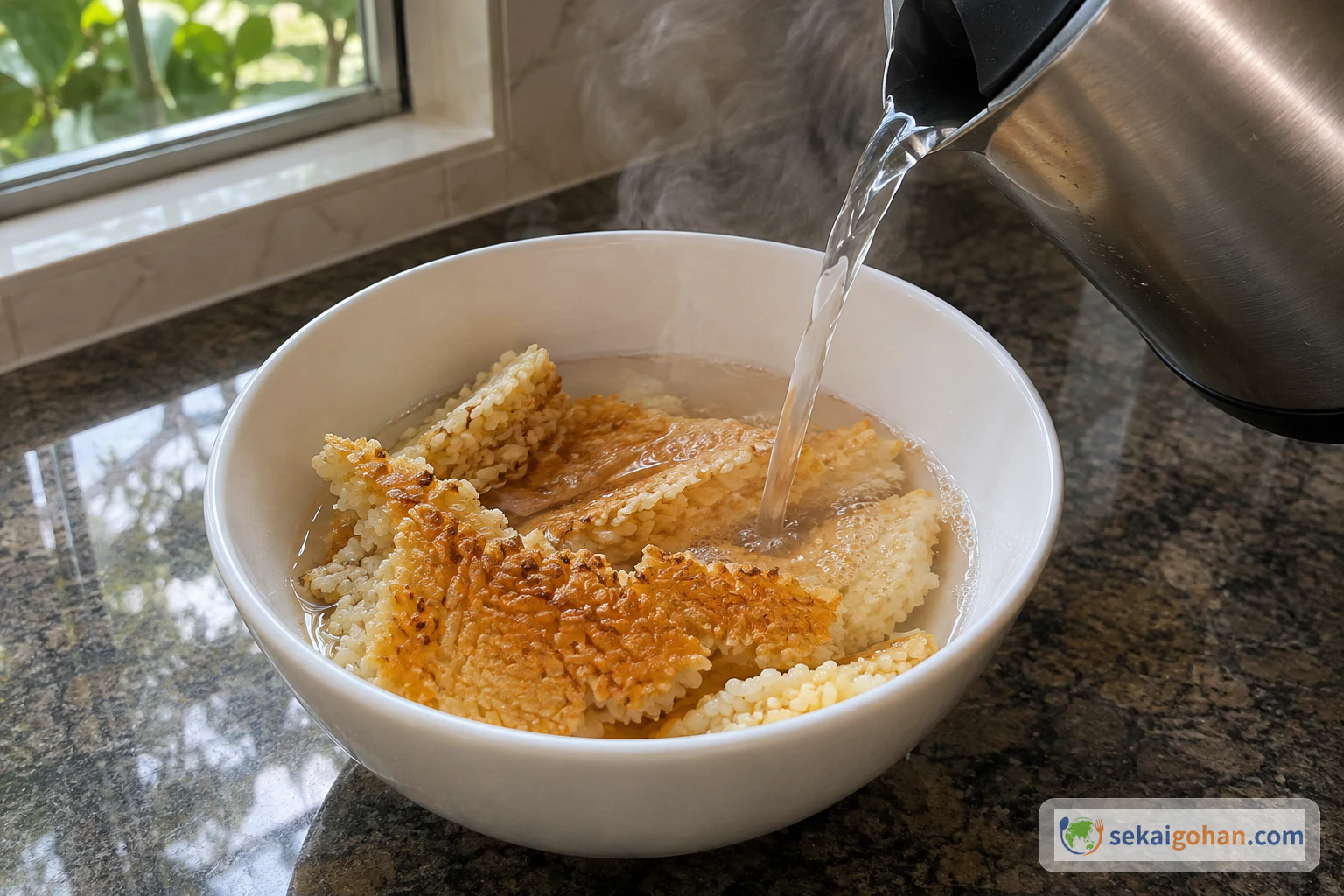
Method: Press, Flip, Break, Pour
The work is quick and goes in one direction. Have the rice, the measured water and a bowl next to the stove before you start. The only hands-off time is at the very end, while the crust softens in the hot water. Fill the kettle first so the water is boiling when the crust comes out of the pan.
Pouring boiling water is a job for an adult, not for children. The crust comes out of the pan hot, so use the paddle to move it if your fingers cannot take the heat.
When It Goes Wrong
| What you see | Why | What to do |
|---|---|---|
| Black spots, bitter taste | The heat was too high, or the flip came too late | Keep the heat at medium and flip as soon as the underside holds together |
| The crust bends and never crisps | The rice layer was too thick | Next time spread it thinner. A thicker layer always gives a softer middle |
| The sheet sticks and tears when you lift it | The first side has not set, or the pan grips the rice | Give it a little longer on medium heat and use a nonstick pan. If it still tears, lift what comes free and break it straight into the bowl |
| The drink tastes thin | Too much water for the amount of crust | Pour less water next time. |
| The drink tastes too heavy | Too little water | Add hot water a little at a time and taste |
Serving and Other Ways to Make It
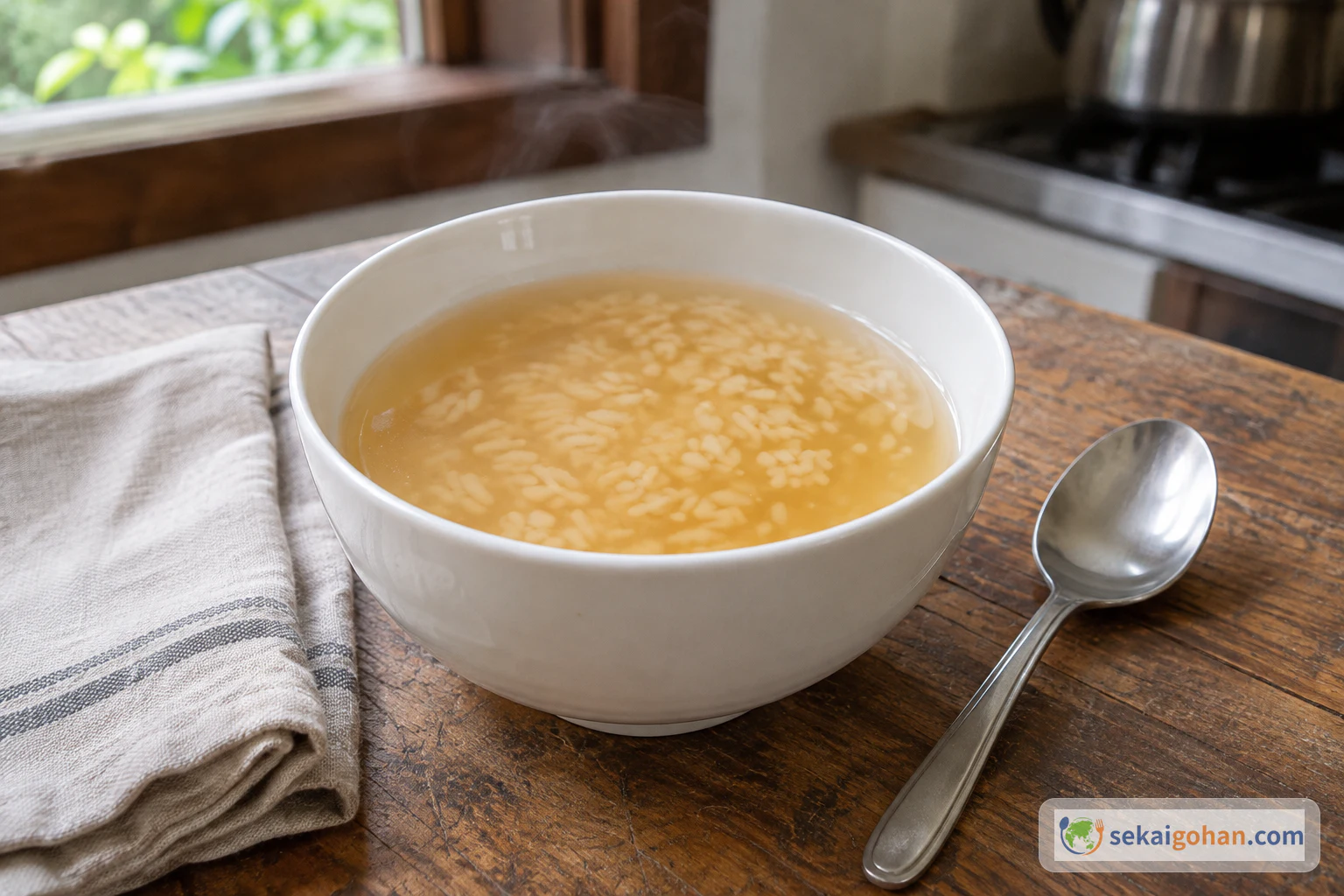
At the table
Serve sungnyung after the meal, in a bowl, with a spoon for the softened grains. Drink the warm liquid and spoon up the rice. You can also do what Korean households did and drop the last of your rice into it to finish the meal. Make it just before you drink it.
Drinks hotter than 149°F (65°C) are classed as probably carcinogenic and are linked to cancer of the oesophagus. Let the bowl stand for a moment until it is hot but no longer scalding before you drink.
Straight from the pot
If you cook rice in a pot on the stove, you can make sungnyung the old way. Serve the rice, then pour water over the crust while the pot is still hot. If no crust has formed, spread rice so it touches the bottom of the hot pot and set it over the lowest heat. On a strong flame it burns almost at once. A rice cooker alone rarely makes a crust, so this version needs a pot.
Dolsot rice
At a Korean restaurant, after rice cooked in a stone pot, pour water into the still-hot pot and drink the sungnyung as the last part of the meal. The water goes in while the pot is still hot.
Packaged nurungji
Bring 2 to 2½ cups (500–600 ml) of water to a boil. Add two packs of dried brown-rice nurungji, 2.3 oz (66 g) in all, and simmer on medium heat. Use up to about 1 quart (1 L) of water if you like it thinner. Simmer 5–6 minutes if you want the crust to keep some chew, or 10 minutes for soft. Thicker crust needs more time, and homemade crust works the same way. For a stronger roasted aroma, steep one Solomon's seal tea bag in the pot for 3–5 minutes and then take it out. This makes a fuller, more porridge-like drink than the pan version.
Frequently asked questions
Is sungnyung a tea, and does it have caffeine?
In English it is often called toasted rice tea, but no tea leaves go into it. The drink is rice crust steeped in hot water. With nothing from the tea plant in it, it makes a plain after-dinner drink for any time of day.
I only have a rice cooker. Can I still make it?
Yes. The frying-pan method in this article works without a pot. Cook your rice in the rice cooker, then press-toast one bowl of it in a pan to make the crust.
Can children drink it?
The ingredients are rice and water. An adult should pour the boiling water, and the bowl should cool until it is warm rather than scalding before a child drinks from it.
Can I add salt, sugar or honey?
Sungnyung is drunk plain. Its toasted-grain flavour is the point, and it is what makes the drink a clean finish after a salty, spicy meal. To make the flavour deeper, toast the crust evenly without burning it instead of seasoning the water.