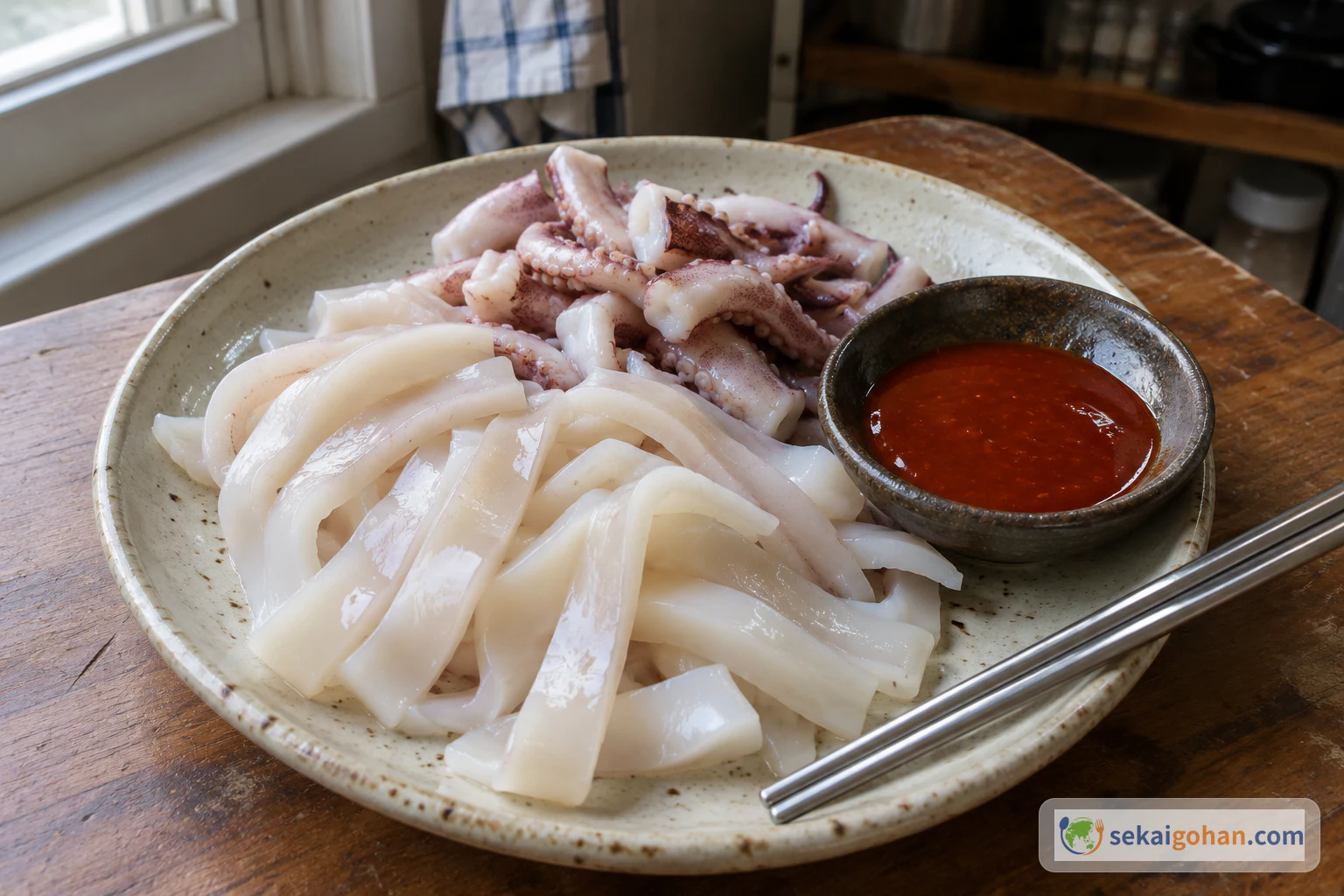
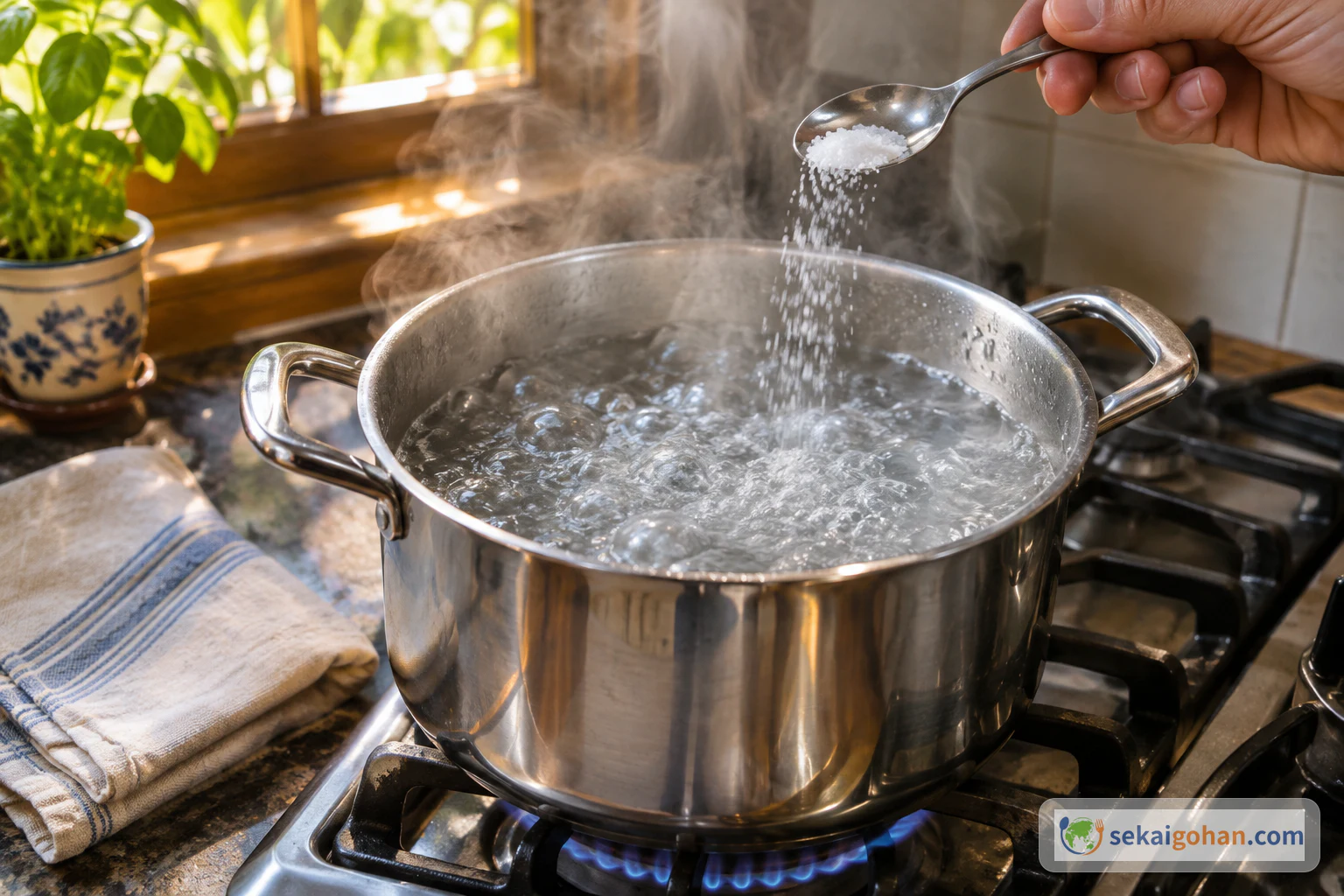
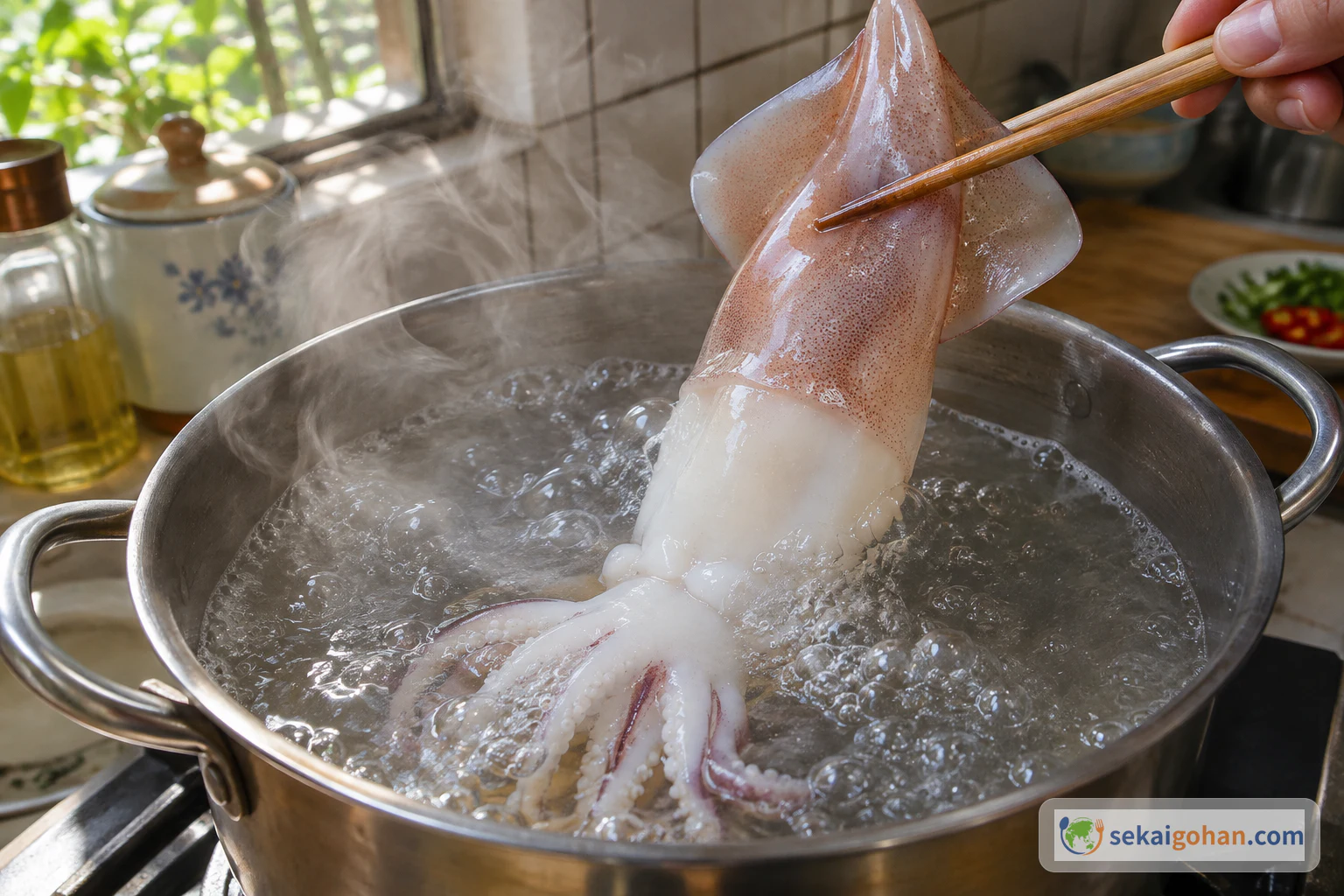
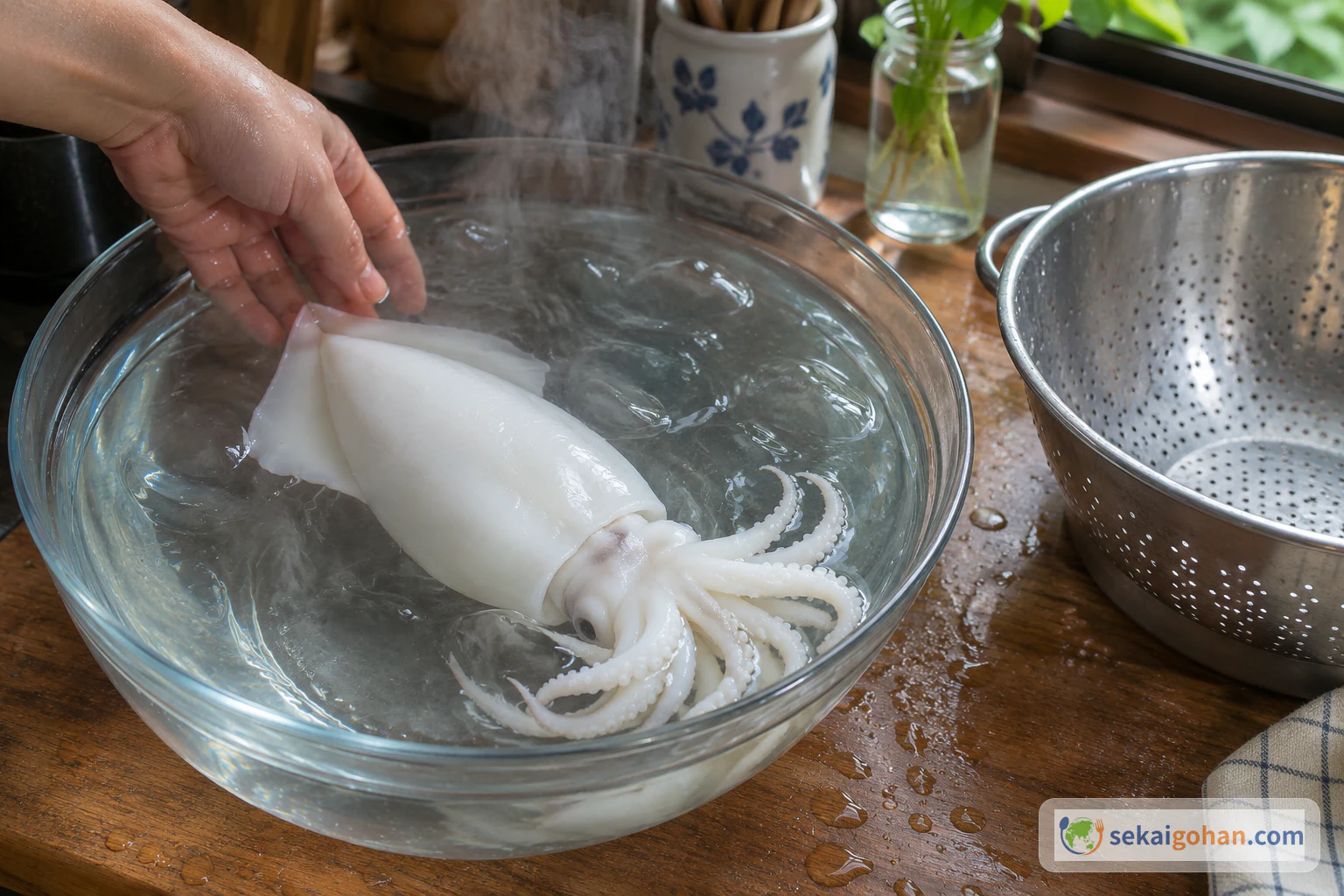
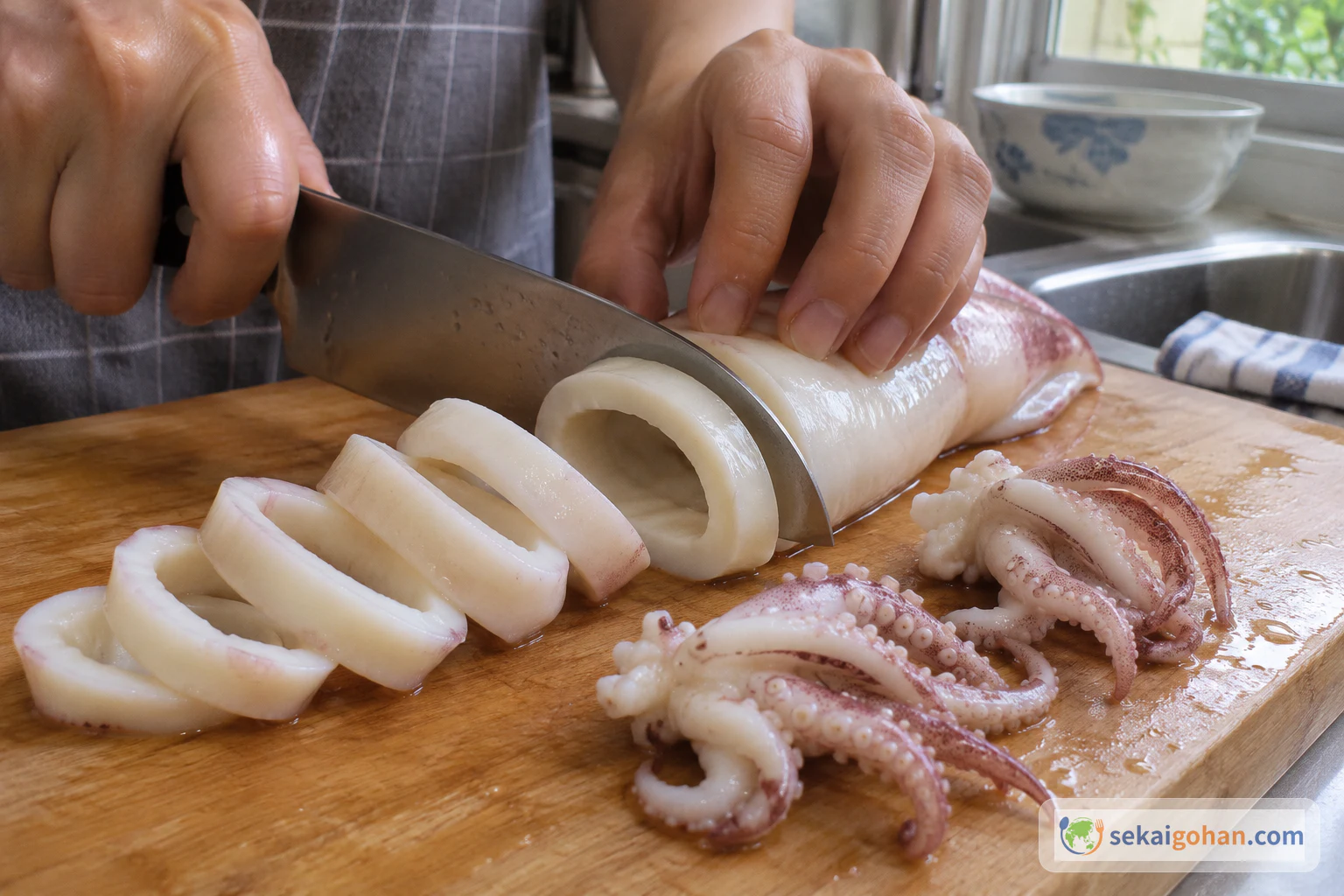
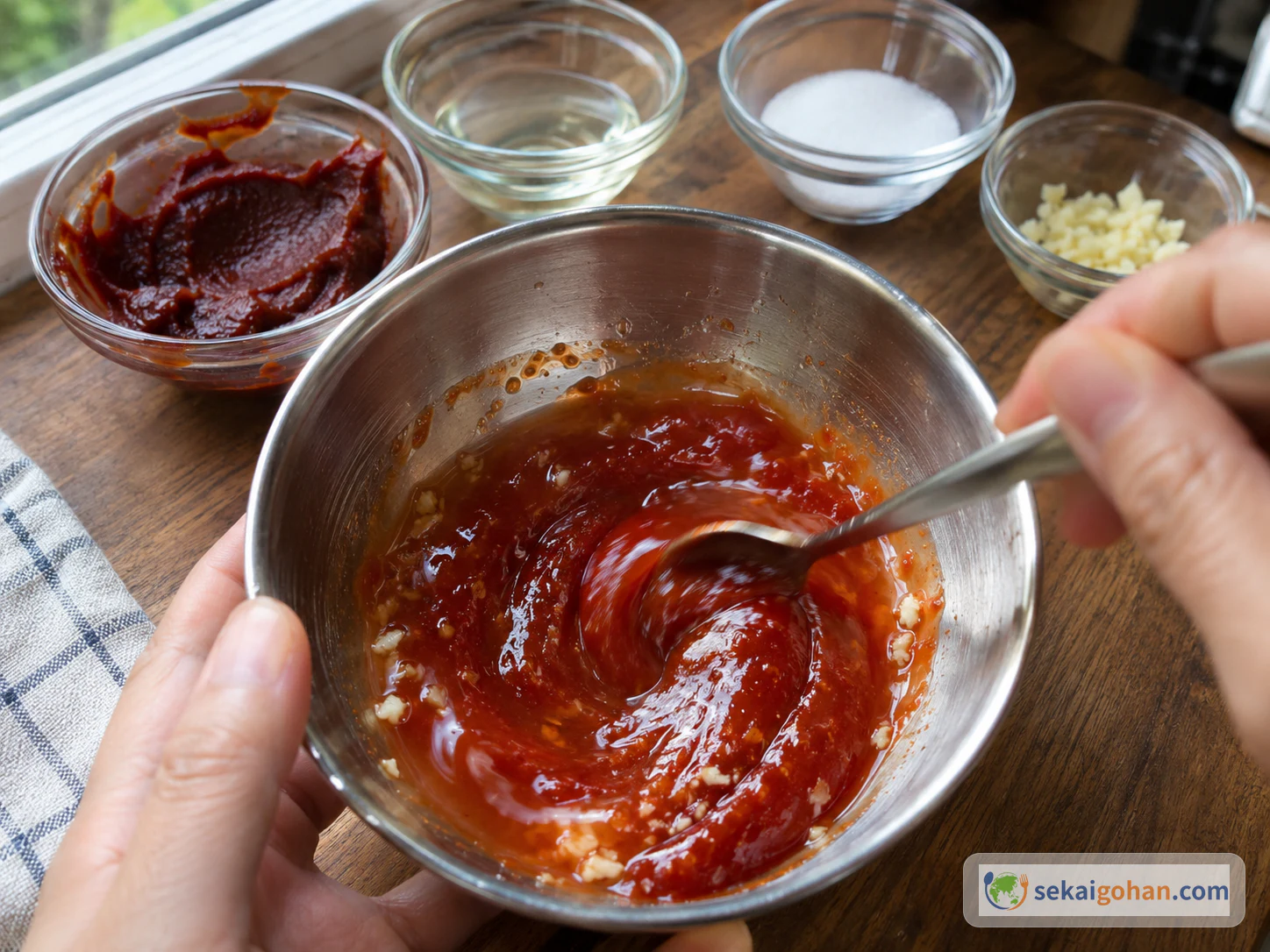
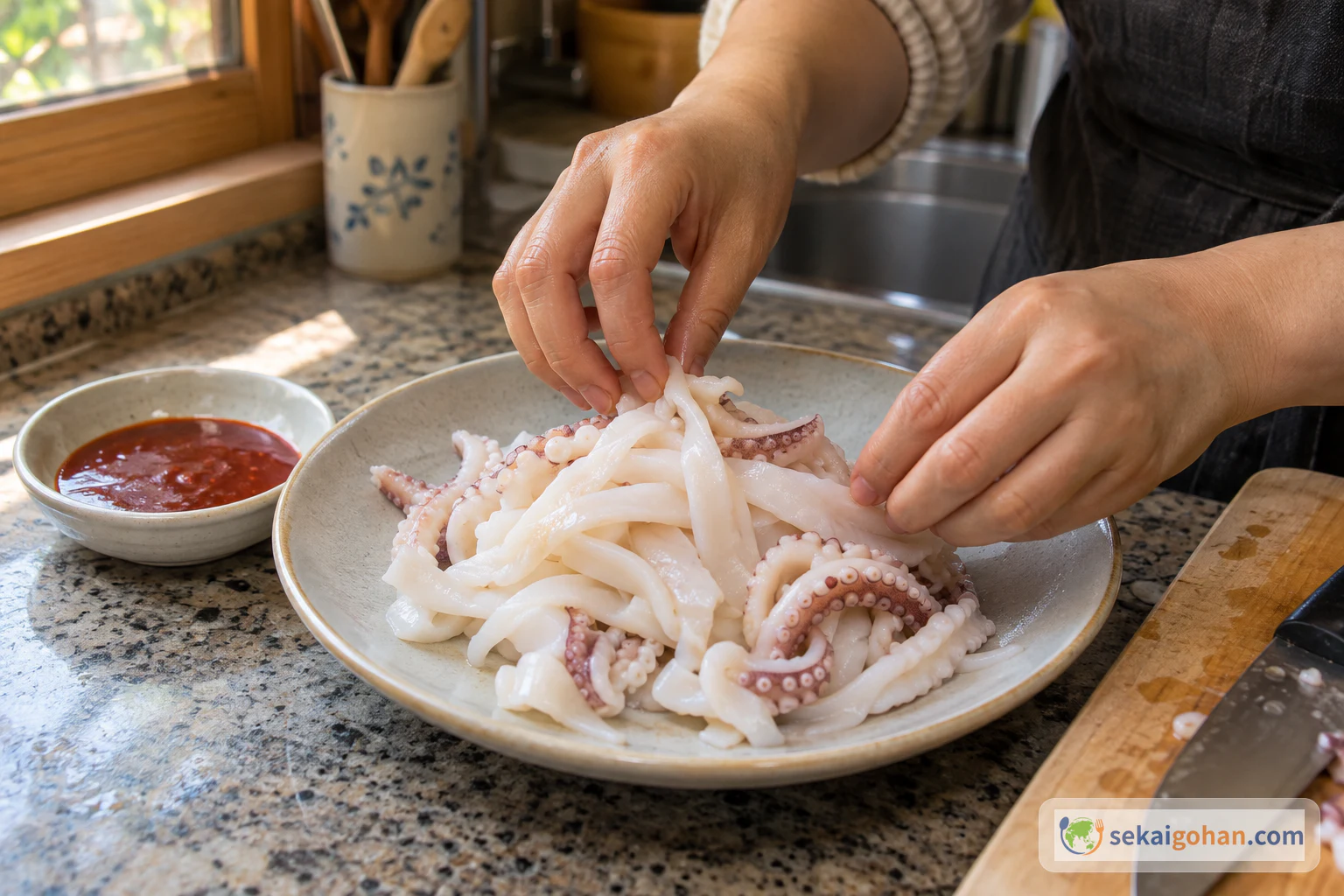
The squid goes into the salted water pale and glassy. Almost at once, the part under the surface turns milky white and stiffens. Lift it out once the whole body is white and springy, plunge it into cold water, and the kitchen smells of the sea for a moment. Cut into ivory rings with the tentacles in short pieces, it goes on a plate next to a small dish of chojang (초고추장), a red sauce of gochujang thinned with vinegar, sugar and garlic. This is ojingeo-sukhoe (오징어숙회), Korean blanched squid. It is tender with a pleasant chew that brings out the squid's sweetness and nutty savor, and the sauce gives each piece a sour-sweet heat.
Sukhoe, the Cooked Side of Korean Hoe
In Korea, hoe (회) is the word for sliced raw fish or meat, and saenghoe (생회) spells out that it is raw. Sukhoe (숙회) is hoe that has been cooked briefly in hot water: meat, seafood or vegetables plunged in, cooked through lightly, then sliced and eaten with a sauce. In older Korean usage, hoe meant raw fish or meat in principle, yet things boiled or blanched and then cut were counted as hoe too. In the Joseon period people ate meat and seafood raw, and they also ate organ meats and fish blanched as sukhoe. Where the Korean habit of eating hoe began is not settled. One view links it to the late Goryeo period and Mongol influence.
Sukhoe is a whole family of dishes. Scallions, minari (water dropwort), dureup shoots and bamboo shoots were boiled and eaten as hoe. An older dish called eochae (어채) takes fish sliced like hoe, coats it in starch and blanches it, then plates it with blanched innards, large shrimp, abalone and vegetables. Squid is the easiest way into this family for a home cook. One small squid, a pot of boiling water and a bowl of sauce are all it takes.
Sukhoe is written 熟膾 in Chinese characters. Suk means cooked, set against saeng, raw. In English, ojingeo-sukhoe is called Parboiled Squid. In Korean food classification it sits among side dishes, under hoe, as a cooked hoe made from seafood.
How it differs from its neighbours
Three dishes have similar names and are easy to mix up. Plain hoe is raw. Mulhoe (물회) is a cold dish of hoe with water added. Ganghoe (강회) wraps fillings in blanched greens, so it is built differently. Sukhoe is the cooked one, and the cook's main judgment is how far to take the squid. Blanch it just until it is white and firm all the way through. Any longer and the tenderness goes.
On a Korean table it is a side dish, set out alongside rice and other plates. It works well in a spread with japchae or before a bowl of bibimbap. If you like how gochujang tastes when it is mixed raw with vinegar, cook tteokbokki or kimchi jjigae to see the same chili depth simmered in a pot. More dishes from the same kitchen are on the Korea page.
Ingredients
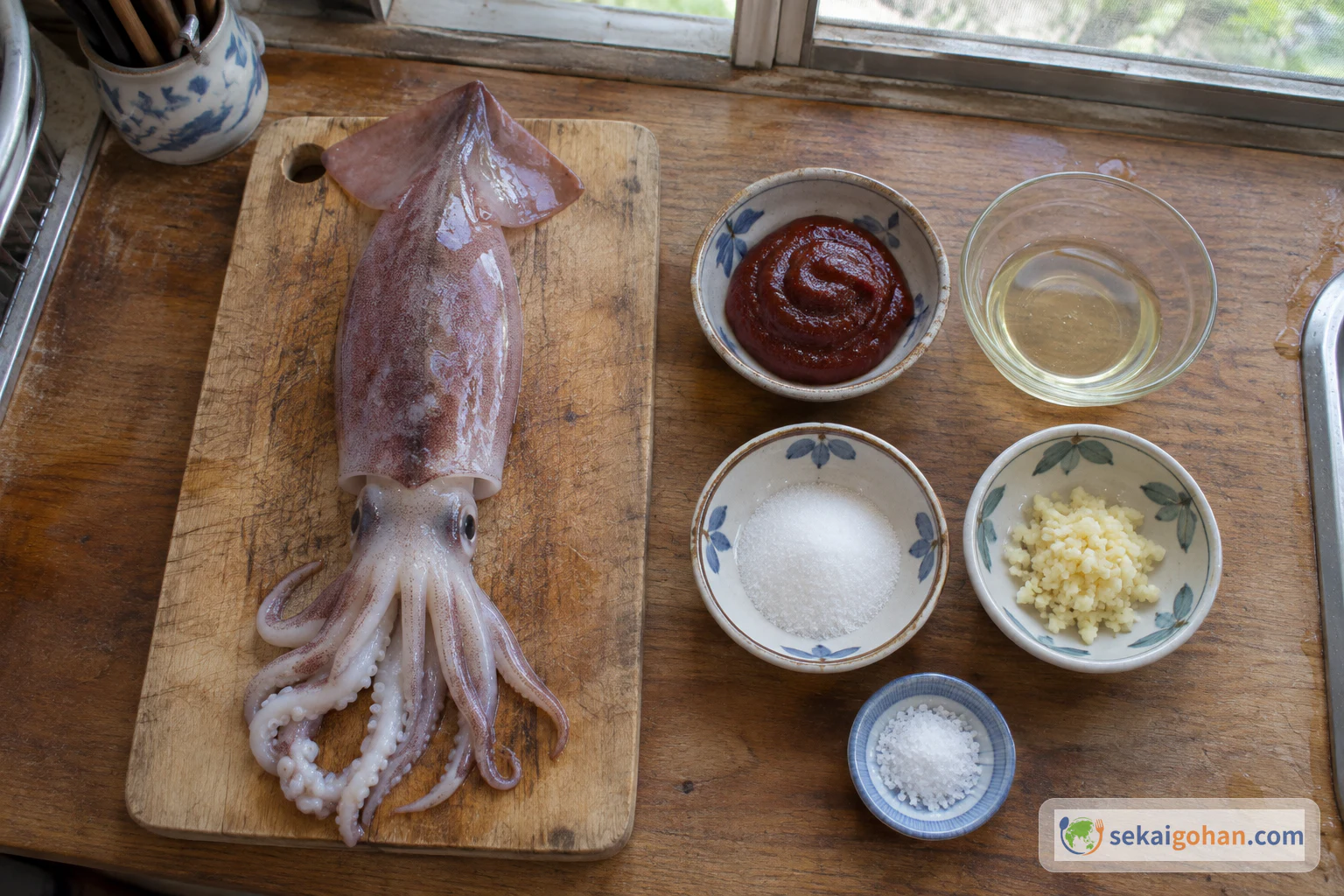
Pick a fresh, small squid. It cooks through evenly in a short blanch and stays tender. Keep it in the refrigerator at 41°F (5°C) or below from the moment you bring it home.
Squid is a mollusk. Gochujang often contains wheat and soy, so read the label on the tub. If you add sesame oil, scallions or other extras, check those labels as well.
Equipment
- Deep pot, big enough for the squid to sit fully under the water
- Colander
- Bowl of cold water
- Paper towels
- Kitchen scissors
- Two cutting boards and two knives, or one set washed and sanitized between raw and cooked squid
- Small bowl and spoon for the sauce
- Serving plate and a small dipping dish
Choosing and Substituting
The squid decides the dish. Body thickness varies a lot by species and size. A squid with a thick body takes longer to turn white than a slender one, so judge every squid by its color and firmness, not by a time that worked for a different one. Frozen squid works too: thaw it and pat it dry before cleaning.
Gochujang is the one ingredient to buy at a Korean grocery or online. Sweetness, thickness and heat differ from brand to brand, and a tub labeled gochujang gives the familiar taste. Doubanjiang or other chili pastes change the result. They bring a different sweetness and thickness and a different fermented aroma, and the sauce moves away from Korean chojang.
The rest comes from any supermarket. Plain grain vinegar or rice vinegar both work. Rice vinegar is a little softer. Fresh garlic, minced or grated finely, gives the cleanest bite. Jarred minced garlic sometimes contains salt, so taste the sauce before adding salt anywhere else.
The chojang tastes Korean as long as real gochujang is the base. Vinegar type and garlic form can follow what is in your cupboard.
Method
Clean the squid first and set the cold-water bowl by the stove before the water boils. Once the squid goes into the pot, everything happens quickly. Your only waiting time is while the water comes to a boil, and you can wash the raw board and your hands then. The sauce is mixed last, while the chilled squid rests on the board.
When It Goes Wrong
| What you see | Why | What to do |
|---|---|---|
| The squid is rubbery and squeaks between your teeth | It stayed in the boiling water too long | Next time lift it the moment it is white throughout. Do not boil it again; that only firms it more |
| The center of a cut piece is still glassy grey | It came out too early, or the body was thick | Return those pieces to boiling water until white right through. They will be firmer, so open thick squid flat before blanching next time |
| The tentacles are white but the body edge is still translucent | A large squid cooks unevenly when left whole | Cut the body open flat or into pieces before it goes into the pot |
| Water pools on the plate and the sauce turns pink and thin | The squid was not dried after chilling | Pat every piece dry with paper towels and keep the sauce in its own dish |
| The sauce feels gritty | The sugar has not dissolved | Keep stirring. Next time stir the sugar into the vinegar before adding the gochujang |
| The sauce is too hot | Gochujang heat varies by brand | Use less gochujang and keep the vinegar and sugar the same; changing their balance gives a different sauce |
Heat, Parasites and a Clean Kitchen
A quick blanch firms the squid and keeps it tender. It is a lighter cook than the full seafood standard of 185°F (85°C) at the center for at least 1 minute. Squid can carry anisakis larvae. These worms move from the innards into the flesh, which is why the innards come out completely in the first steps. The larvae die when the squid is heated to 158°F (70°C) or above, or held at 140°F (60°C) for 1 minute, or frozen at −4°F (−20°C) for 24 hours or more. Blanch until the flesh is opaque white right through to the center and springs back when pressed. Cut a thick or large squid open before it goes in so the heat reaches its center.
The vinegar in chojang is there for flavor. Vinegar, salt, soy sauce and wasabi do not kill anisakis larvae. Only heating or freezing does.
For children, older adults, pregnant people, and anyone with weakened immunity or liver disease, cook the squid through to the center. Cut it into thin strips and boil it longer, until every piece is white and firm all the way through, or choose a fully cooked squid dish. If someone has sudden, severe stomach pain after eating squid, see a doctor promptly.
Keep raw squid in the refrigerator at 41°F (5°C) or below until you clean it. Use separate knives and cutting boards for raw and cooked seafood, and wash and sanitize them after use. Wash your hands under running water with soap for at least 30 seconds before you start and after handling the raw squid. Eat cooked food within 2 hours of making it.
Serving, Variations and Leftovers
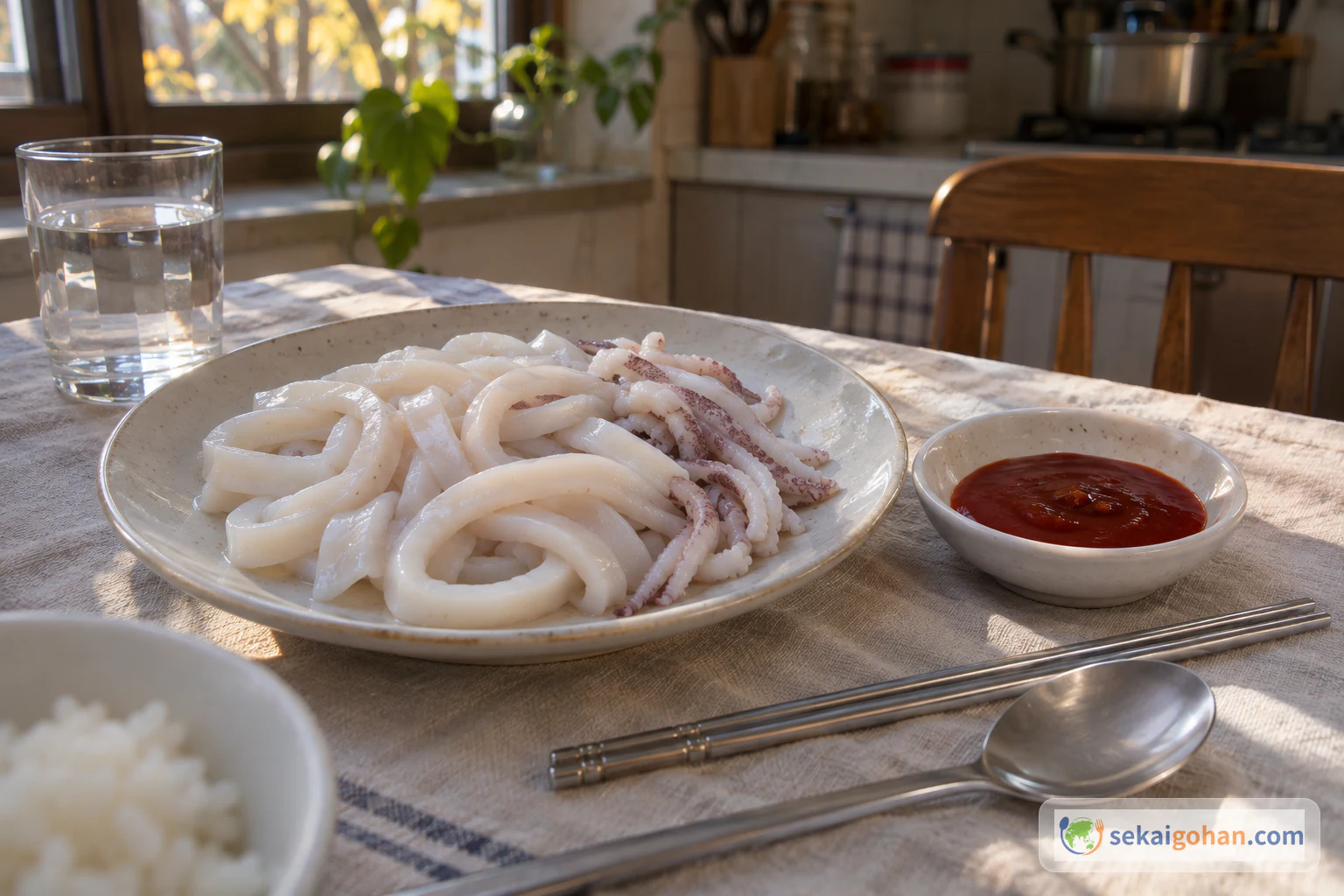
Ojingeo-sukhoe goes on the table as a side dish with rice, soup and a few other plates. It is served cool, so it fits next to hot, rich dishes. Set it out last, right after cutting, so the pieces are still moist and the sauce is thick when people reach for them.
Variations
- Chili-flake chojang. Stir coarse gochugaru (Korean chili flakes) into the sauce. The color deepens and the heat turns sharper and more grainy.
- Sesame-scallion chojang. Add sesame oil, chopped scallion and more garlic to the sauce. It becomes nuttier and more savory, and clings more to the squid.
- Raw garnishes. Wash Korean chives, sliced garlic and cheongyang chili well under running water, then serve them beside the plate. Each bite gets extra crunch and a hotter, greener edge.
Vegetable sukhoe, such as scallions, minari or bamboo shoots, uses the same idea. Blanch, cut and serve with chojang.
Leftovers
Blanch only what you will eat at that meal. Squid gets firmer every time it is heated. Eat cooked squid within 2 hours of making it. Keep the chojang in its own dish, separate from the squid.
Frequently Asked Questions
Do I need to peel the skin off the squid?
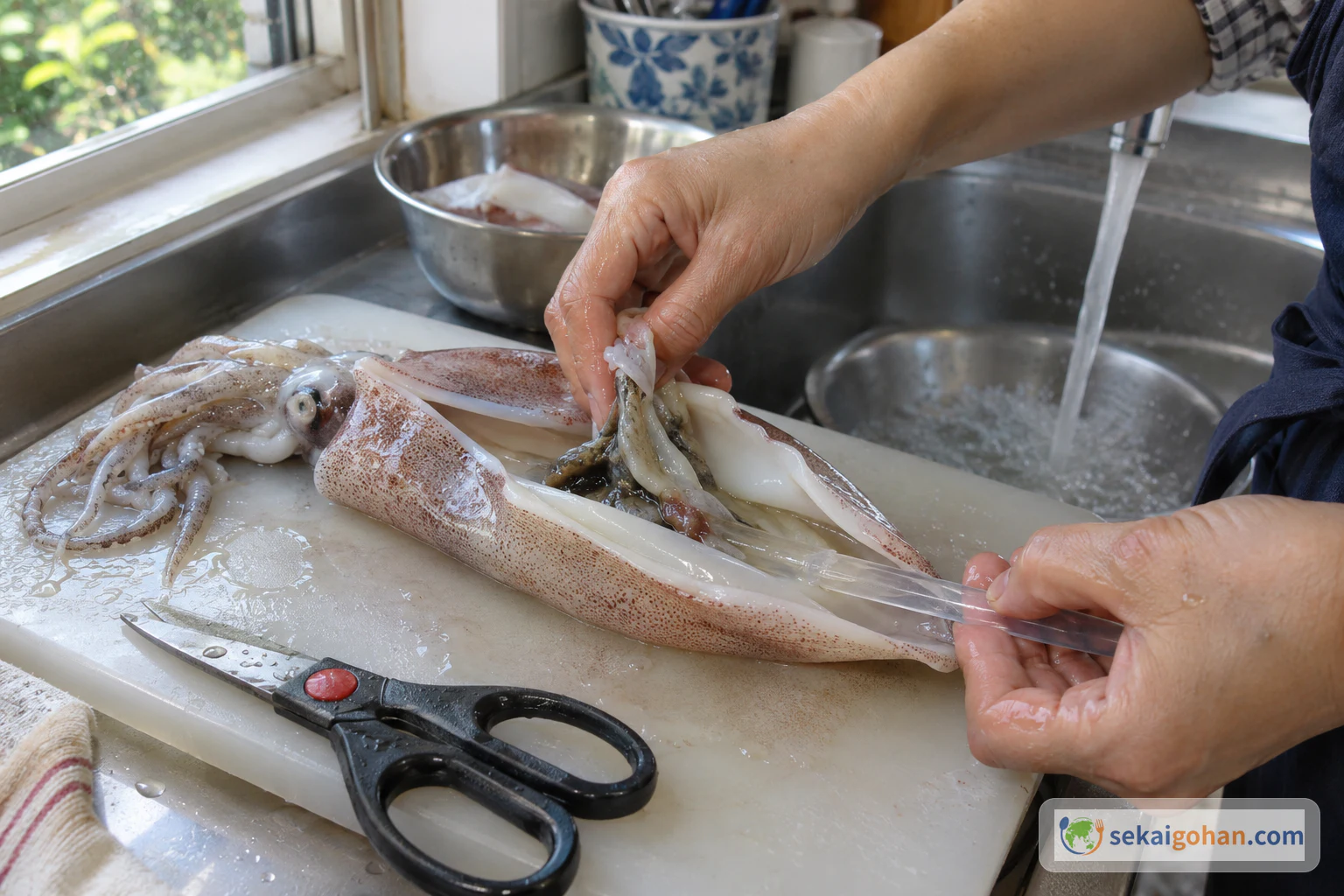
No peeling step is needed. Cleaning is done once the innards, quill, eyes and beak are out and the suckers are scraped.
Why salt the water if the sauce already tastes salty?
The salt lightly seasons the squid itself, so a piece tastes good even before it touches the sauce. Gochujang is already salty, so add only a little salt to the water and let the chojang season the dish.
Can I mix the chojang ahead of time?
Yes. Make it before you start the squid if that is easier, cover it and keep it in the refrigerator. Stir it again just before serving, because it settles as it stands.