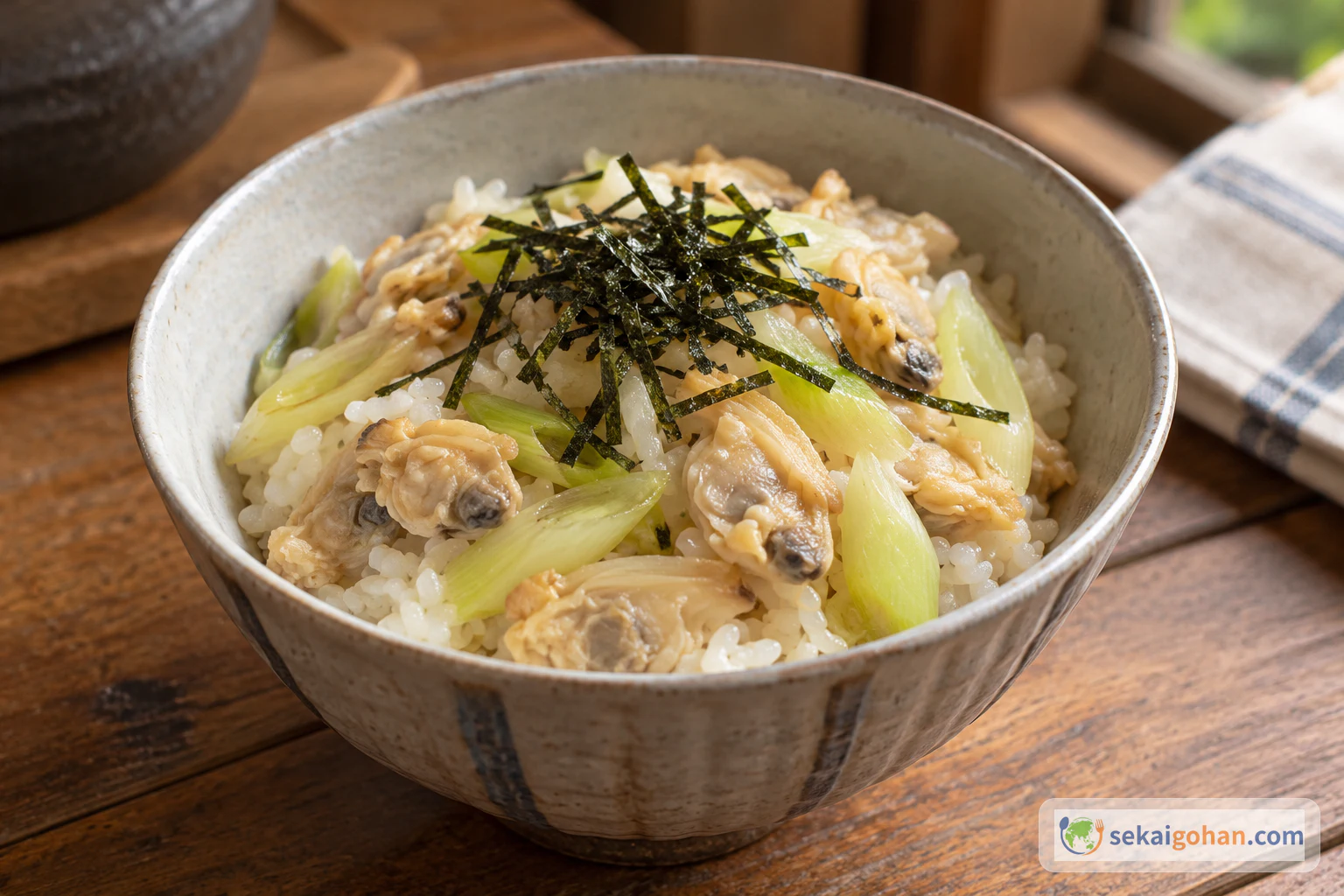
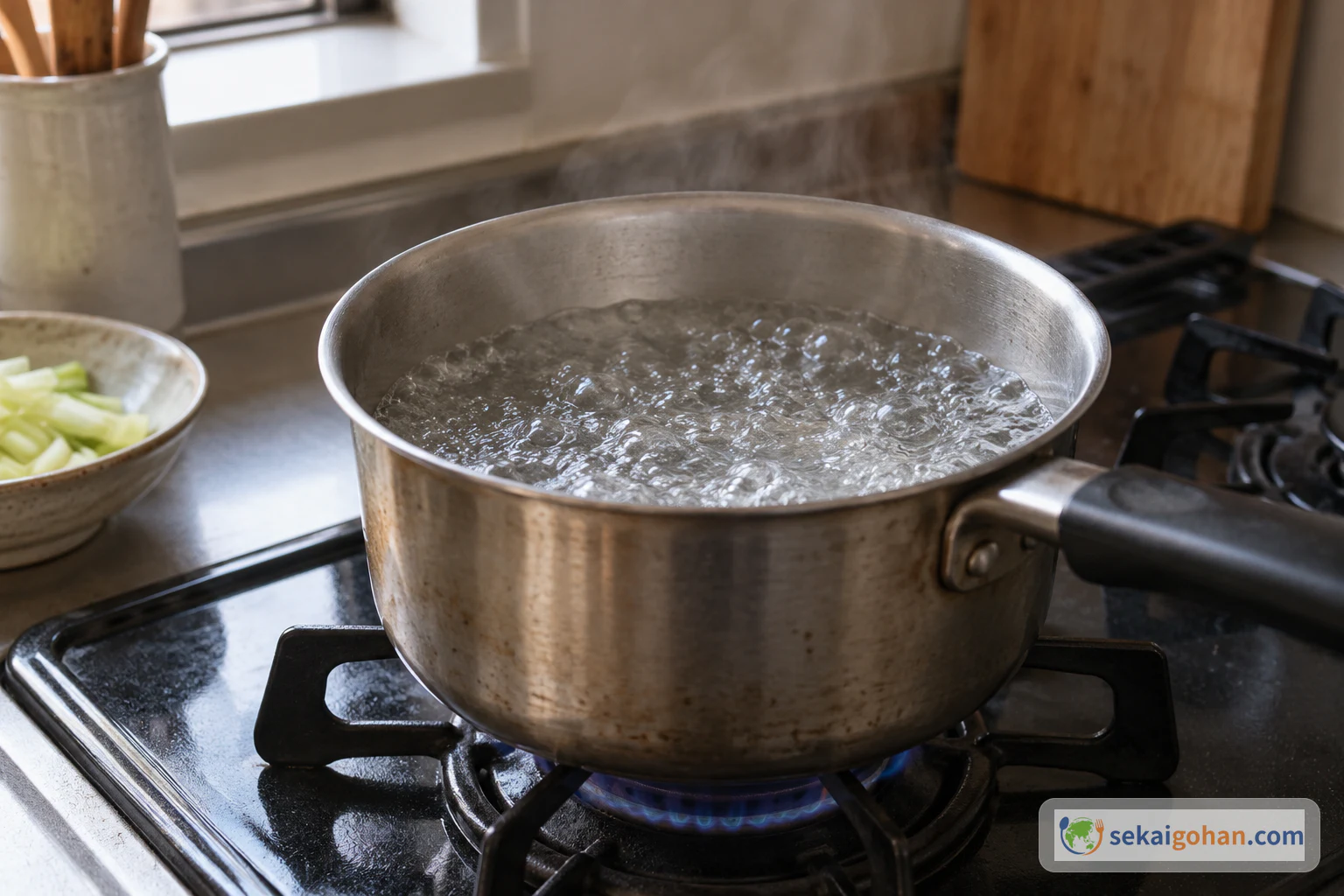
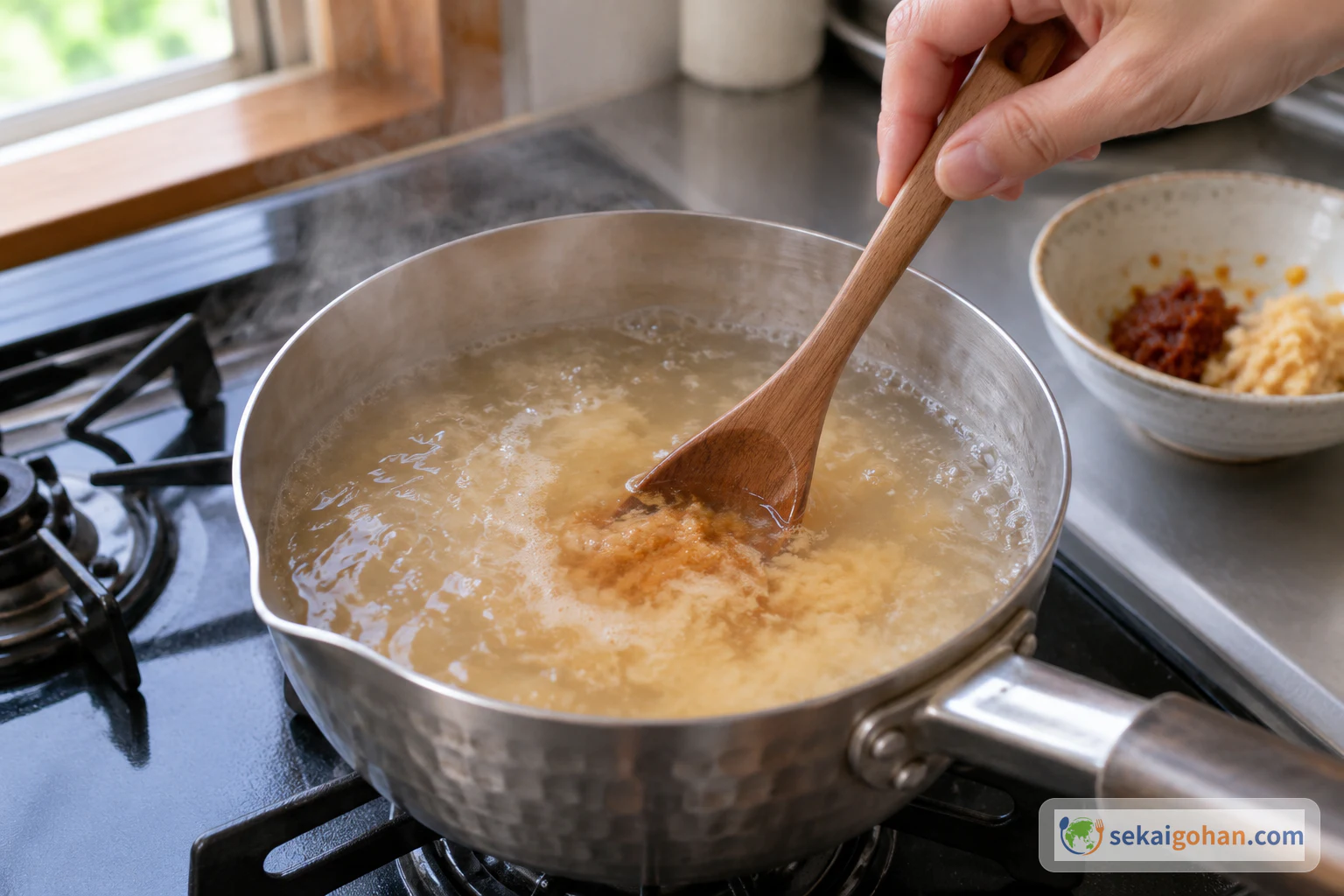
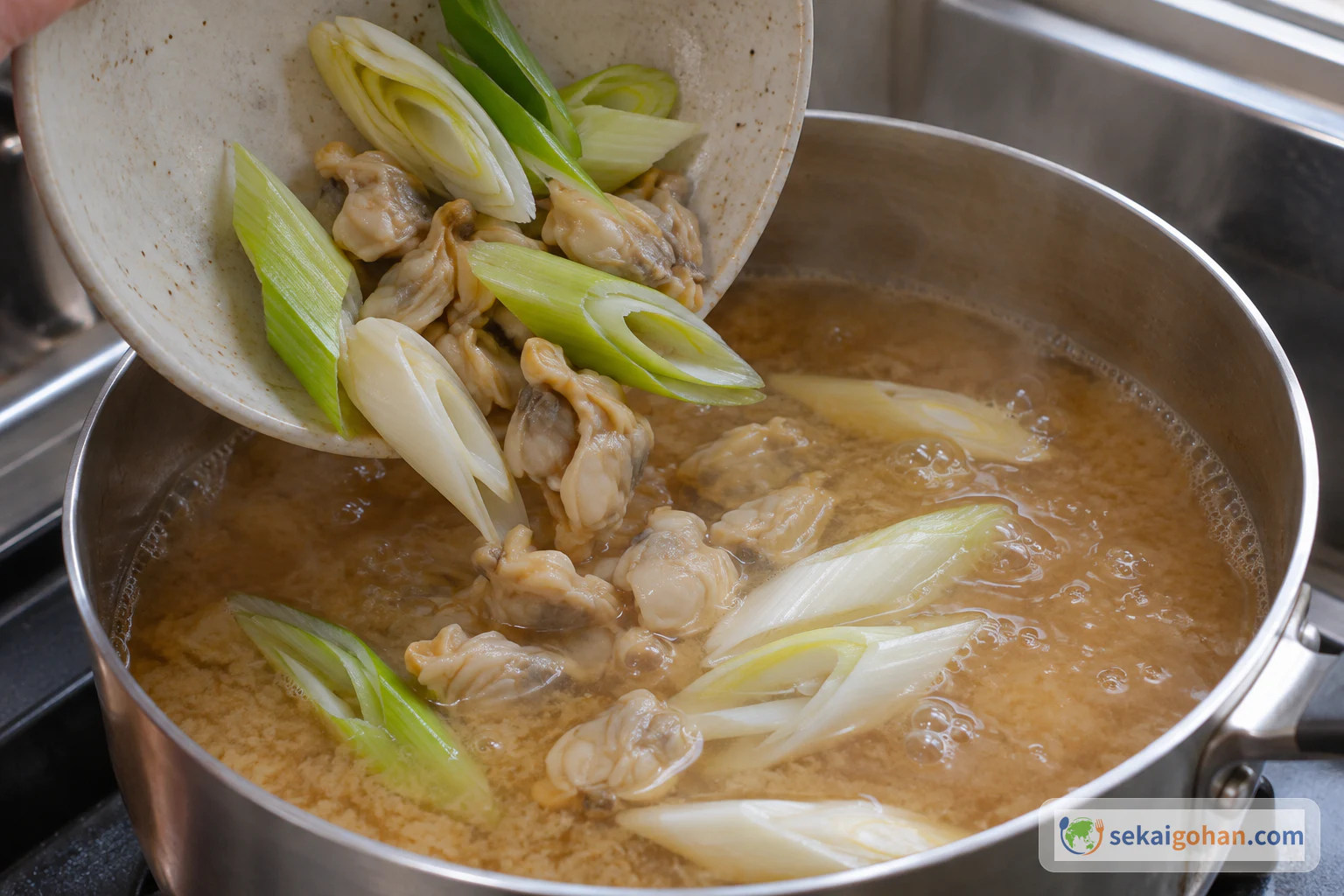
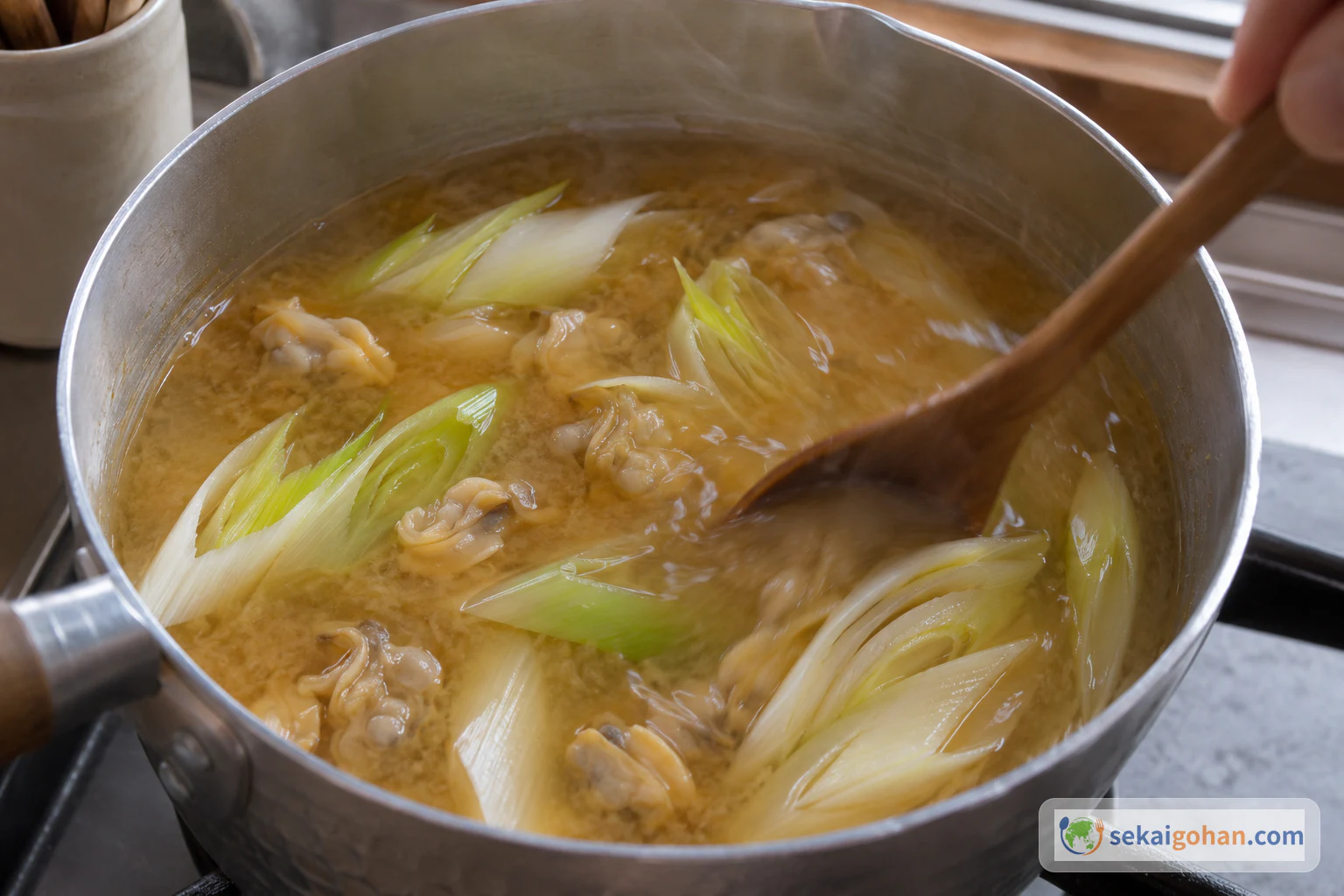
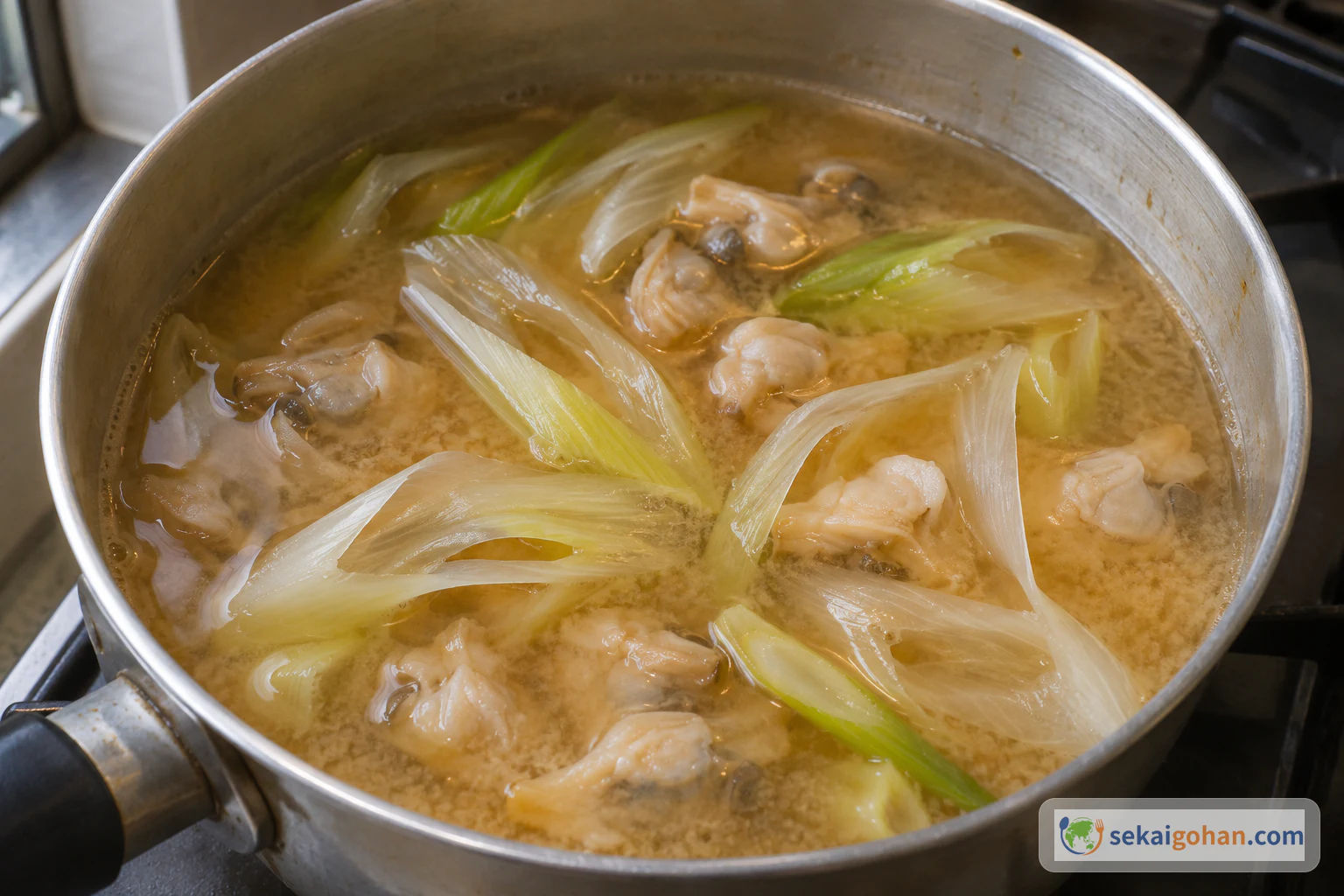
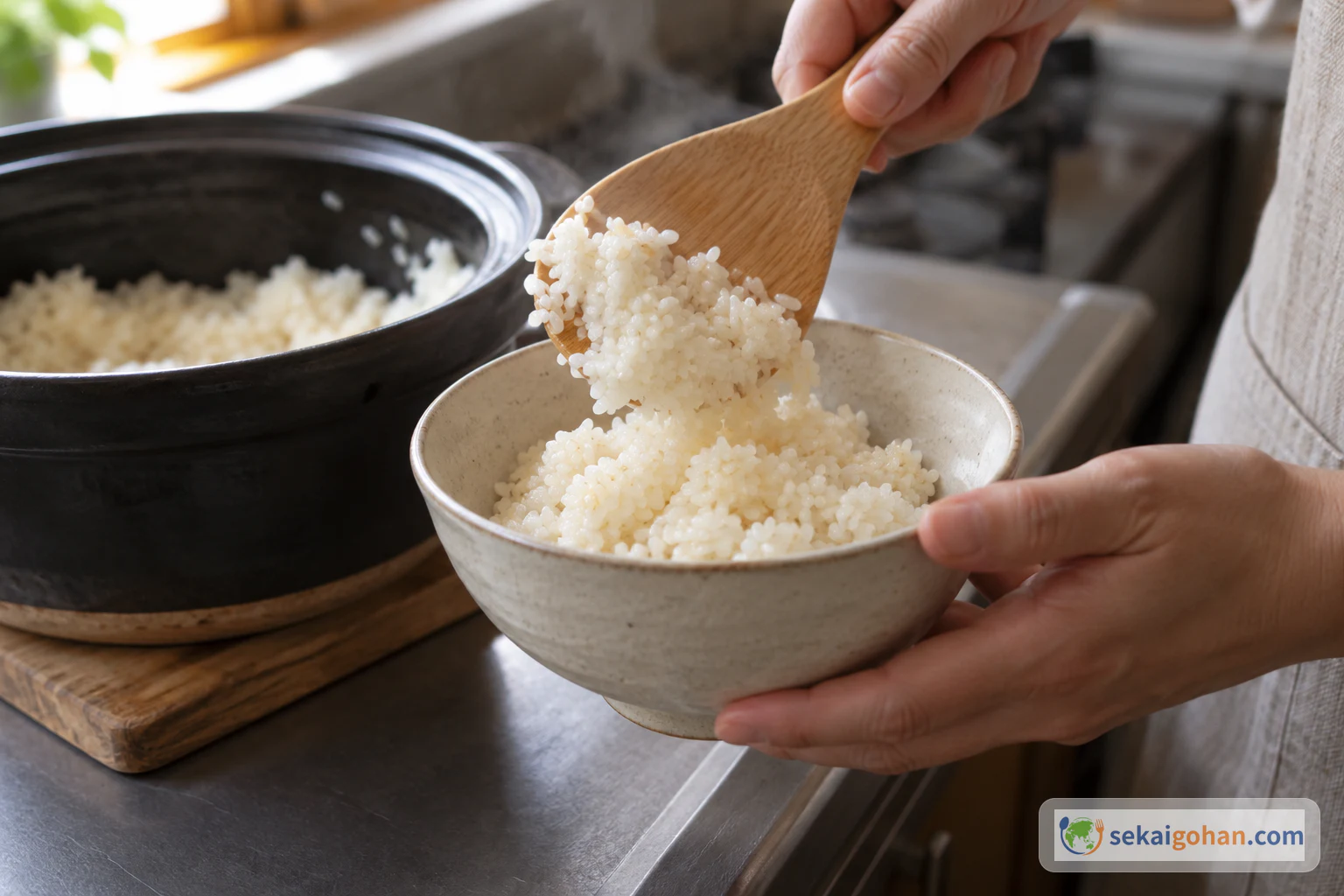
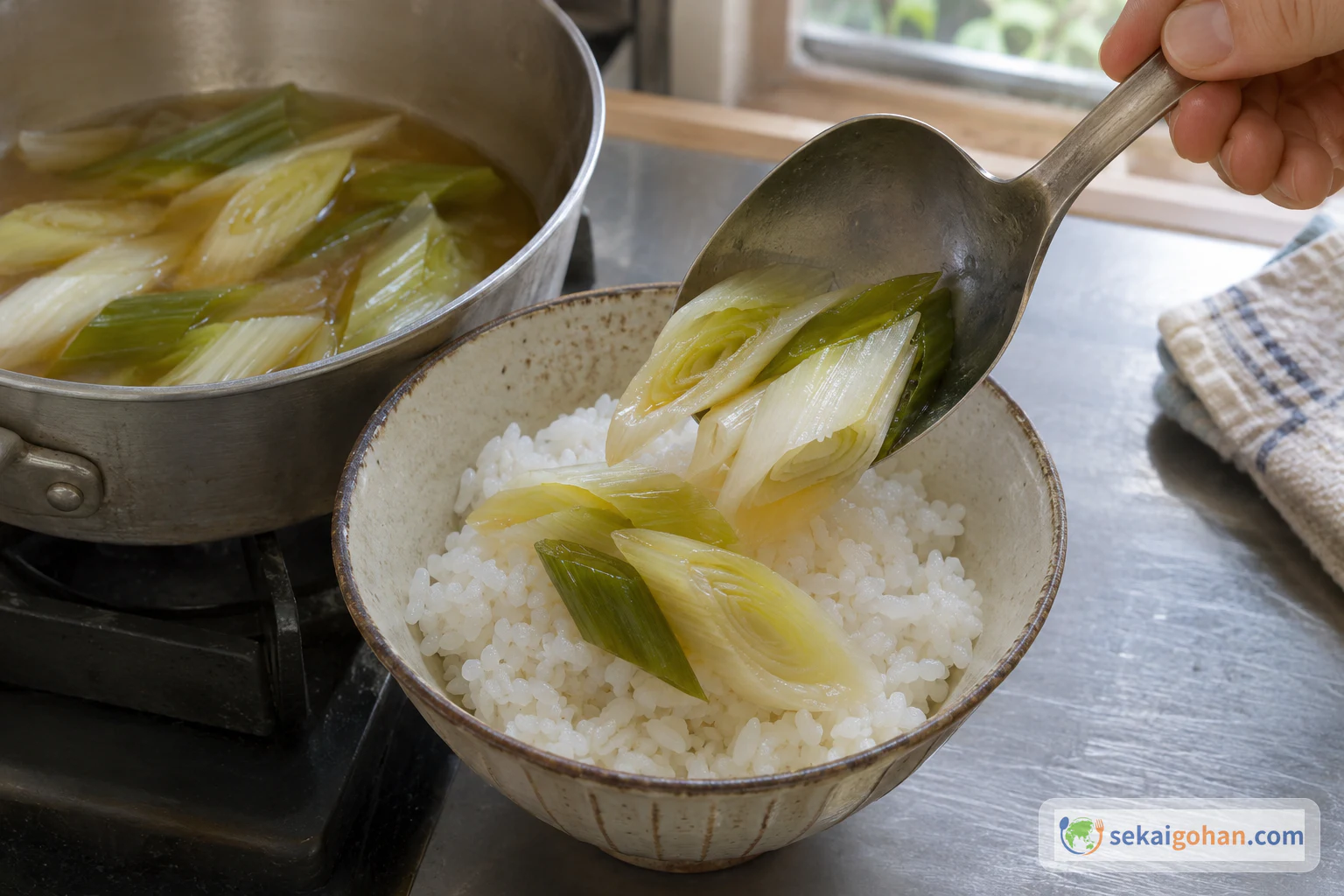
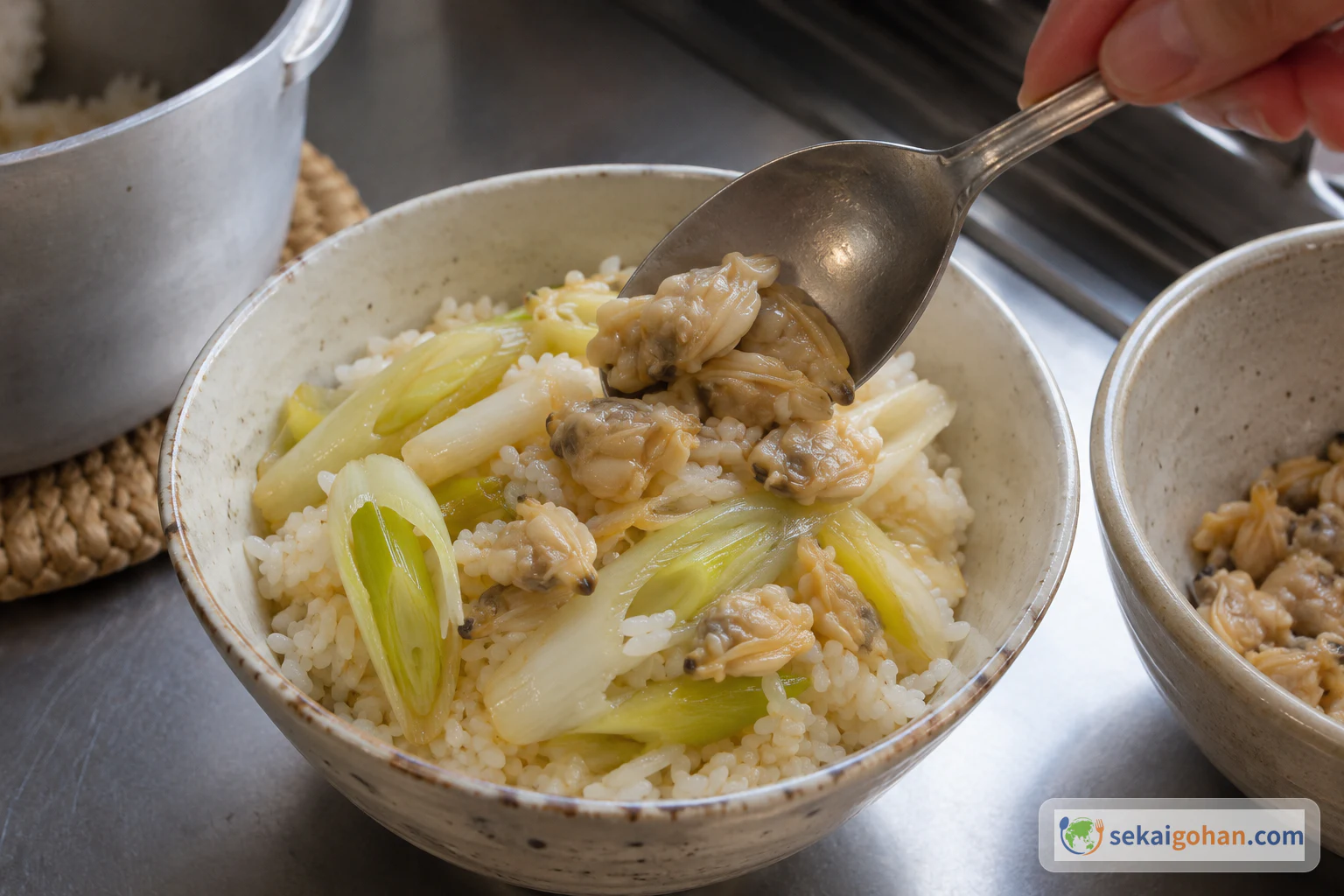
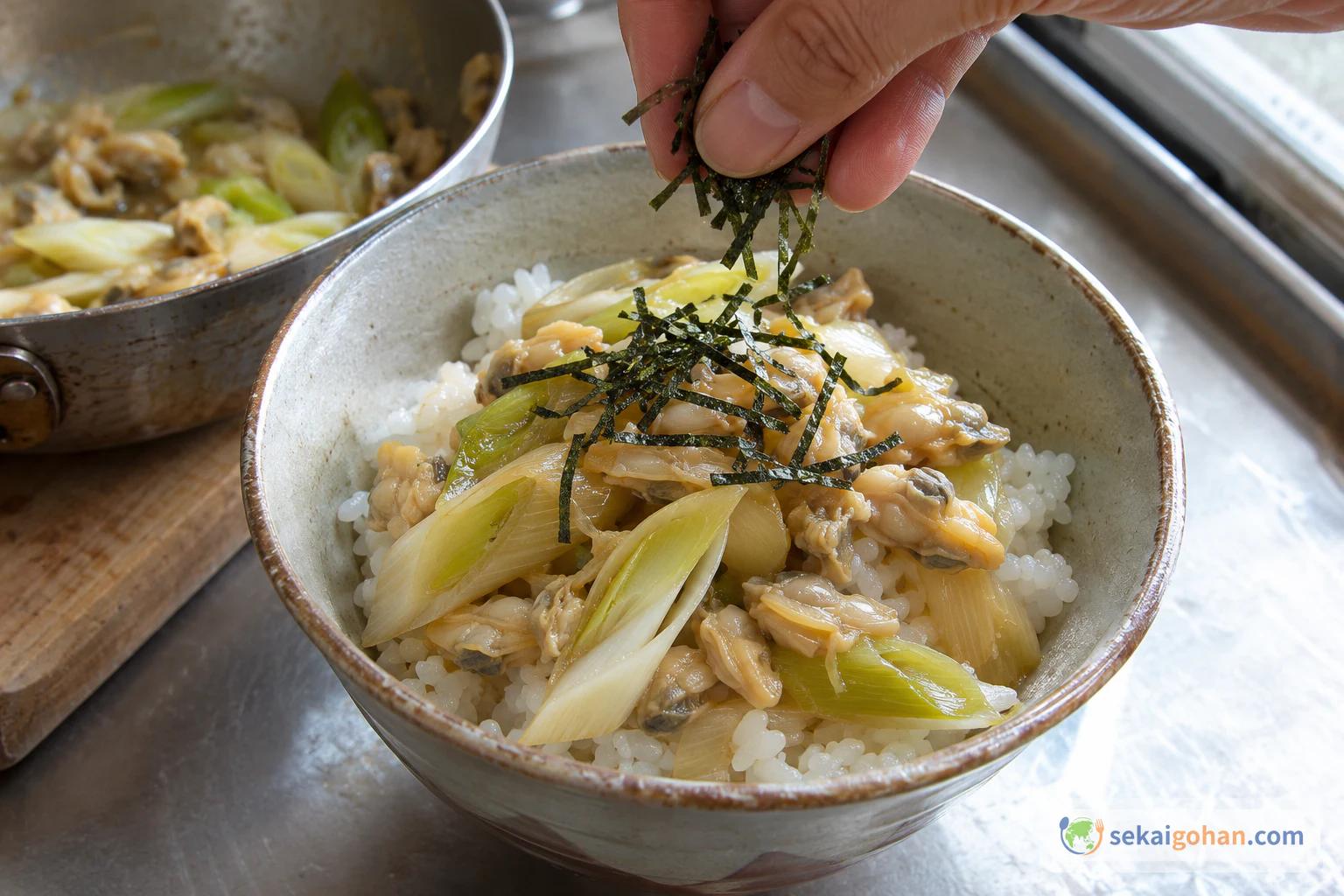
The miso broth comes back to a boil, the clams and leek go in, and the heat goes up. You give the pot one quick stir and watch the white parts of the leek. When they turn glassy and clear, the heat goes off. Fukagawa-meshi is that pot spooned over a bowl of rice: soft leek first, then the small clams, then a pinch of chopped nori. It comes from Tokyo's eastern waterfront. It tastes of the sea and of two misos mixed together, salty, savory and rounded, and it is soaked up by plain white rice.
From the Fishing Boats of Fukagawa to a Tokyo Bowl
Fukagawa sits in what is now Koto ward, the east side of Tokyo along the water, and Koto is the area most closely tied to this dish. Today the name covers two quite different bowls. One is the poured style: clams cooked briefly in miso, then spooned over rice with their broth. The other is a cooked-in style, where the clams are seasoned with soy sauce and the rice is cooked with them, so the flavor is inside every grain. Restaurants in the neighborhood serve one or both. Households and local cooks have their own versions, and newer restaurants add twists of their own.
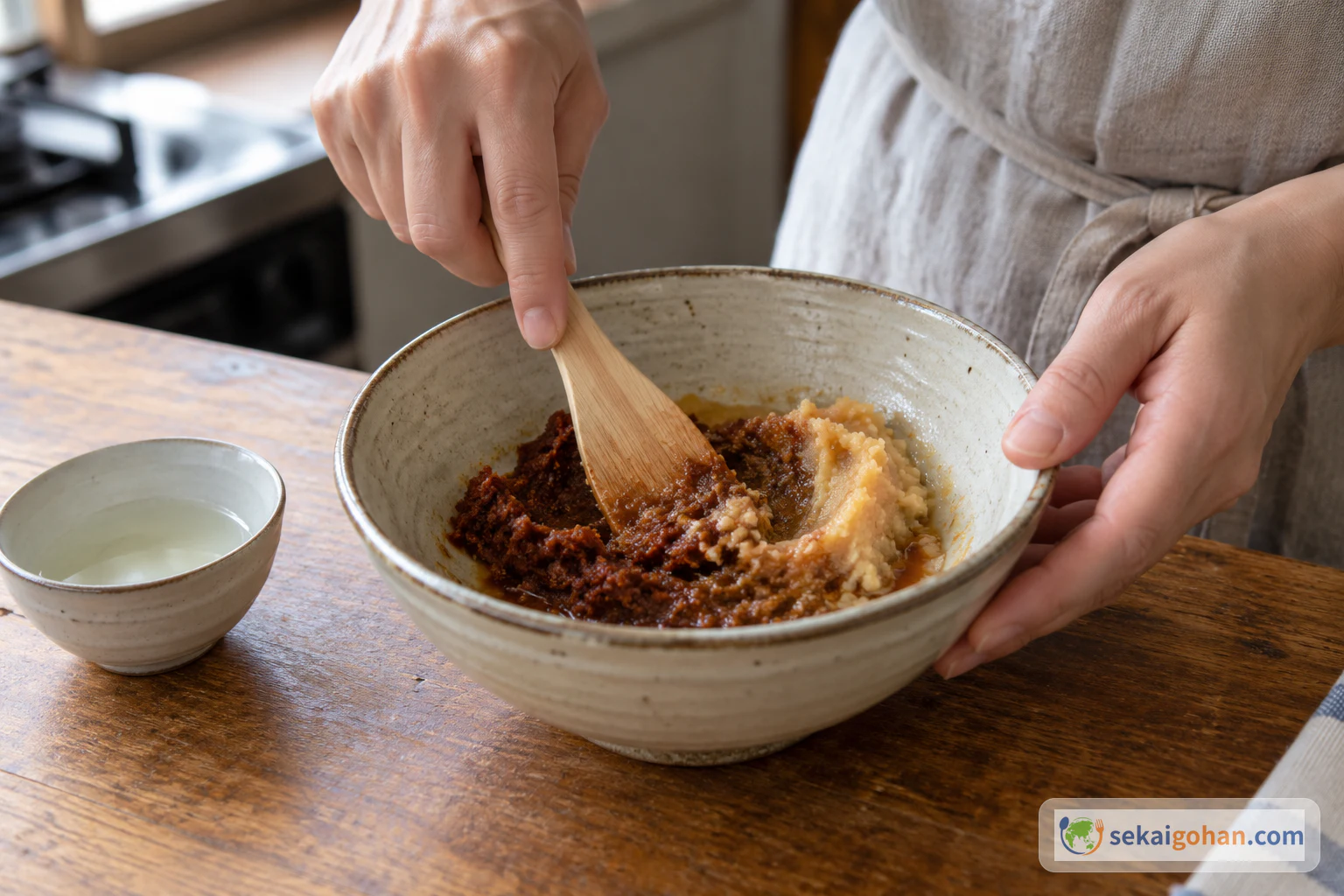
The bowl here is the miso one, and it is built on order and timing more than on long cooking. Red and white miso are blended with a little sake before they go near the pot. The clams are shucked meat and only get a short time in the broth. On the rice, the leek goes down first and the clams on top, so each spoonful gets a layer of sweet leek with the clams above it.
The usual story is that today's Fukagawa-meshi grew out of bukkake-meshi, a staff meal eaten by Fukagawa fishermen. On the boats, the story goes, they poured a soup of shellfish, leek and tofu over cold rice. It is told as local lore, and where the dish really began is not settled. The picture of a quick shellfish soup over rice still matches the bowl on the table today.
For more dishes from across the country, see the Japan country page.
Ingredients (serves 1)
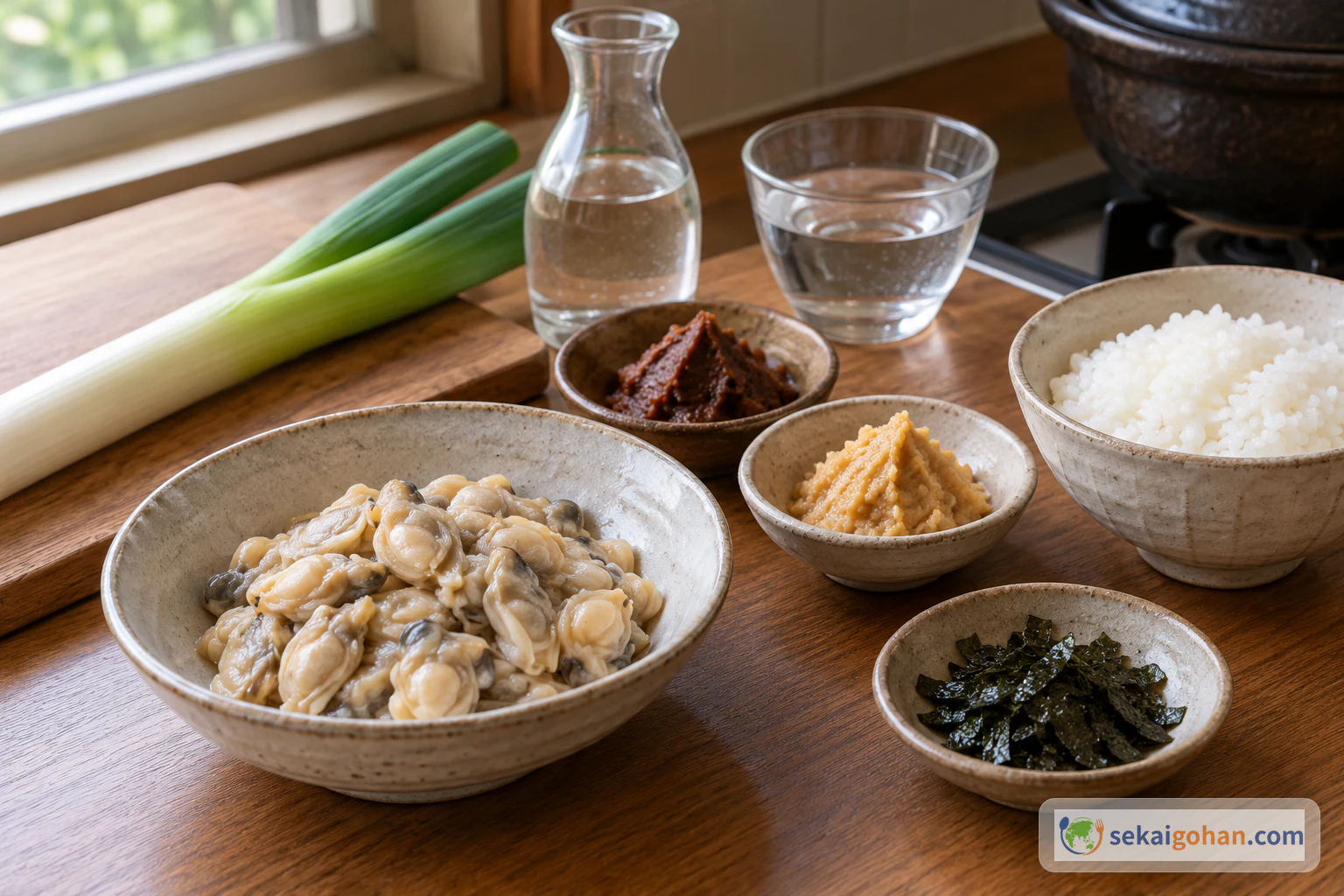
Stir the red miso, white miso and sake into one smooth paste in a small bowl first. A loose, even paste melts into boiling water quickly, so the broth is ready by the time the clams go in and they don't sit waiting.
This bowl contains shellfish (clams) and soy (miso), plus sake. Check your miso labels for any other grains or additives, and check the nori pack as well.
Equipment
- Small bowl and spoon or spatula for blending the miso
- Second bowl for washing the clams
- Knife and cutting board (keep a separate board, or wash it well, for the clams)
- Small pot
- Wooden spoon
- Rice paddle
- Serving bowl
Buying the Clams, Miso and Leek
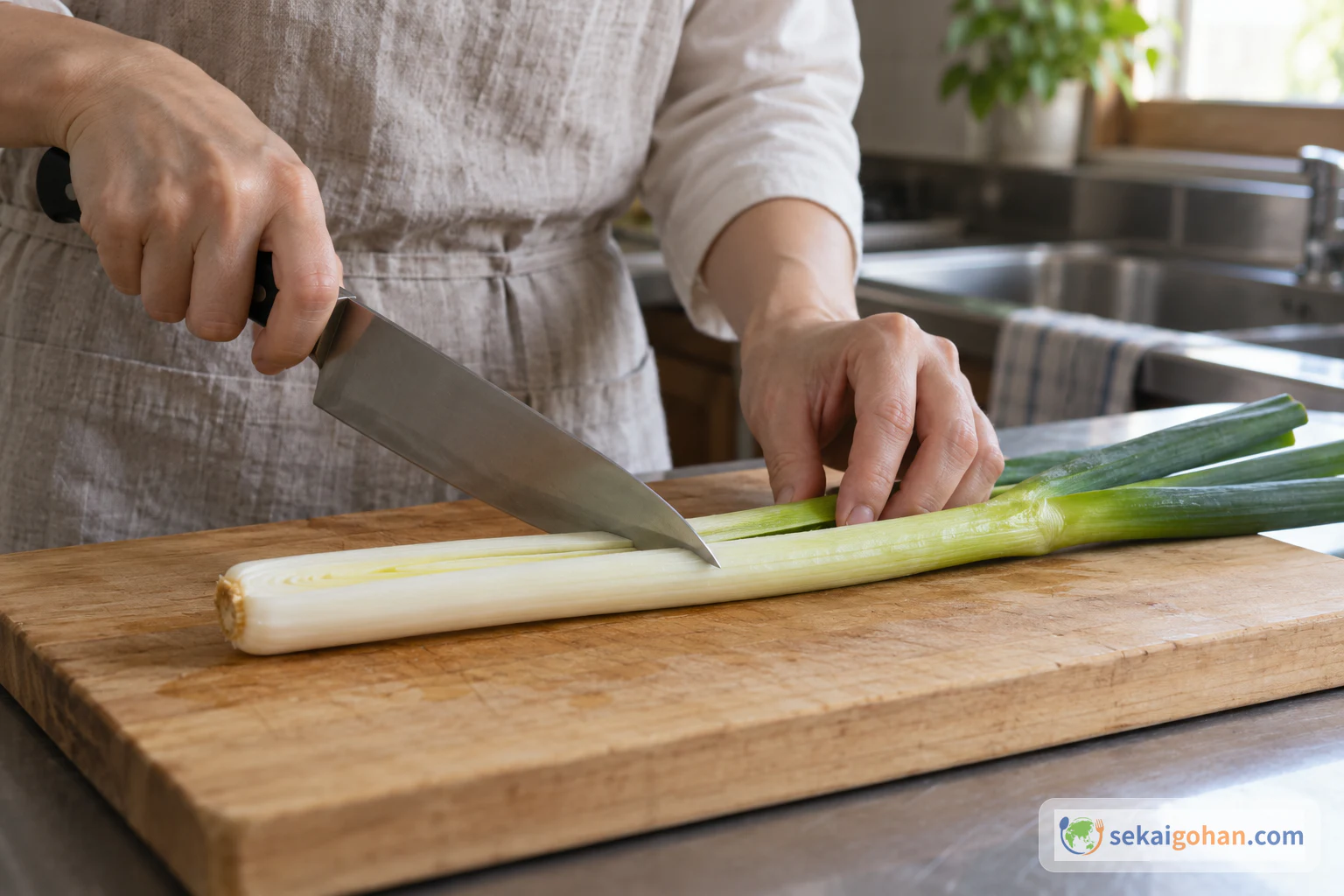
Shucked clam meat is the item to track down. Look for asari mukimi at a Japanese grocer, a trusted fishmonger, or the chilled or frozen seafood case of a large Asian grocer. Buy meat sold for cooking and eating, keep it cold on the way home, and cook it the same day. Long leek (naga-negi) is sold at Japanese and many Asian grocers, and it is a thick, straight stalk with a long white section. That white section is what you watch in the pot, so choose a stalk with plenty of it.
Red and white miso are separate products, and you need both, in equal weights. Japanese grocers and online shops carry both, often next to each other. Plain drinking sake works for the teaspoon you need. Chopped nori is sold in small bags ready to scatter; you can also cut a sheet of toasted nori into thin strips with scissors.
Method
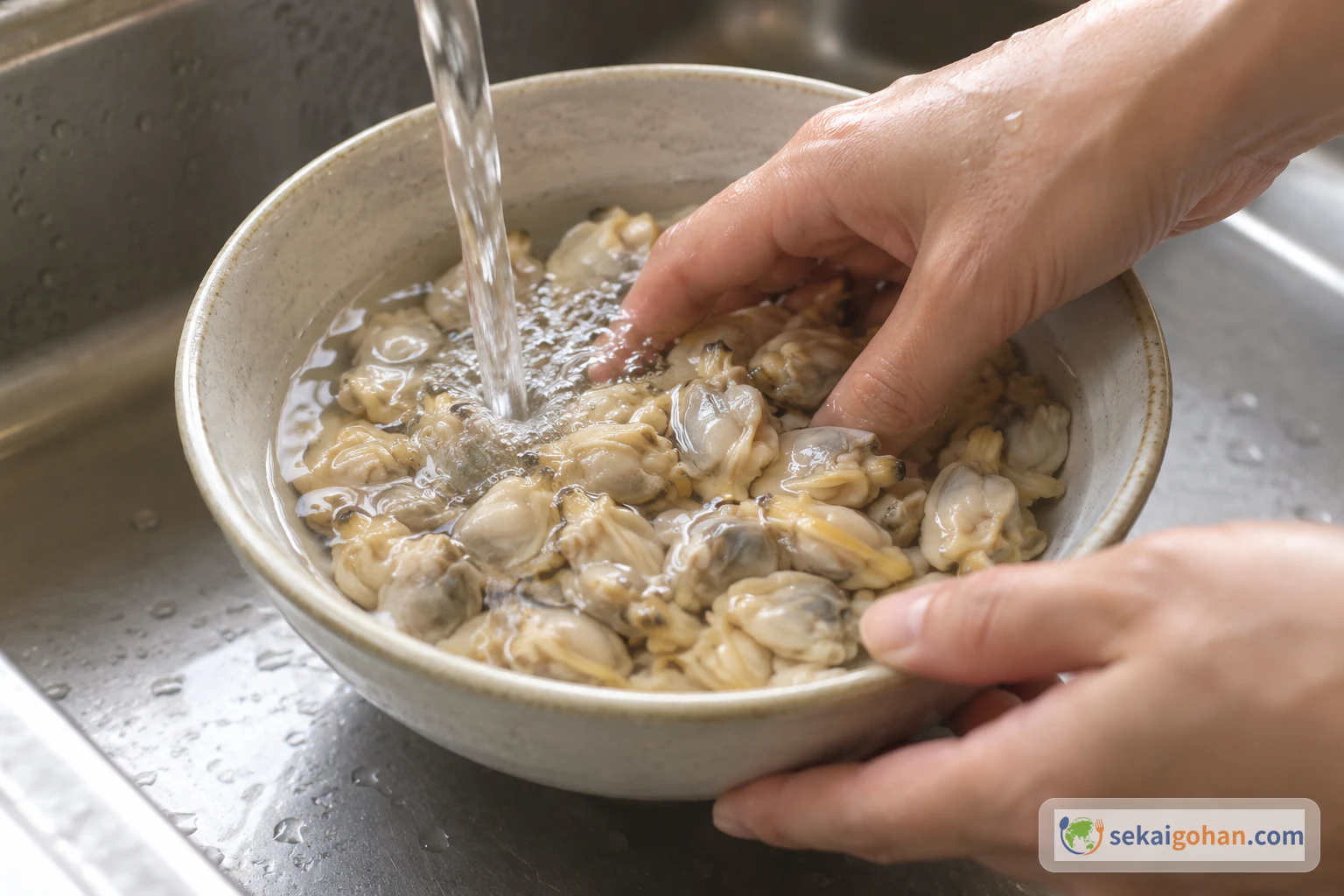
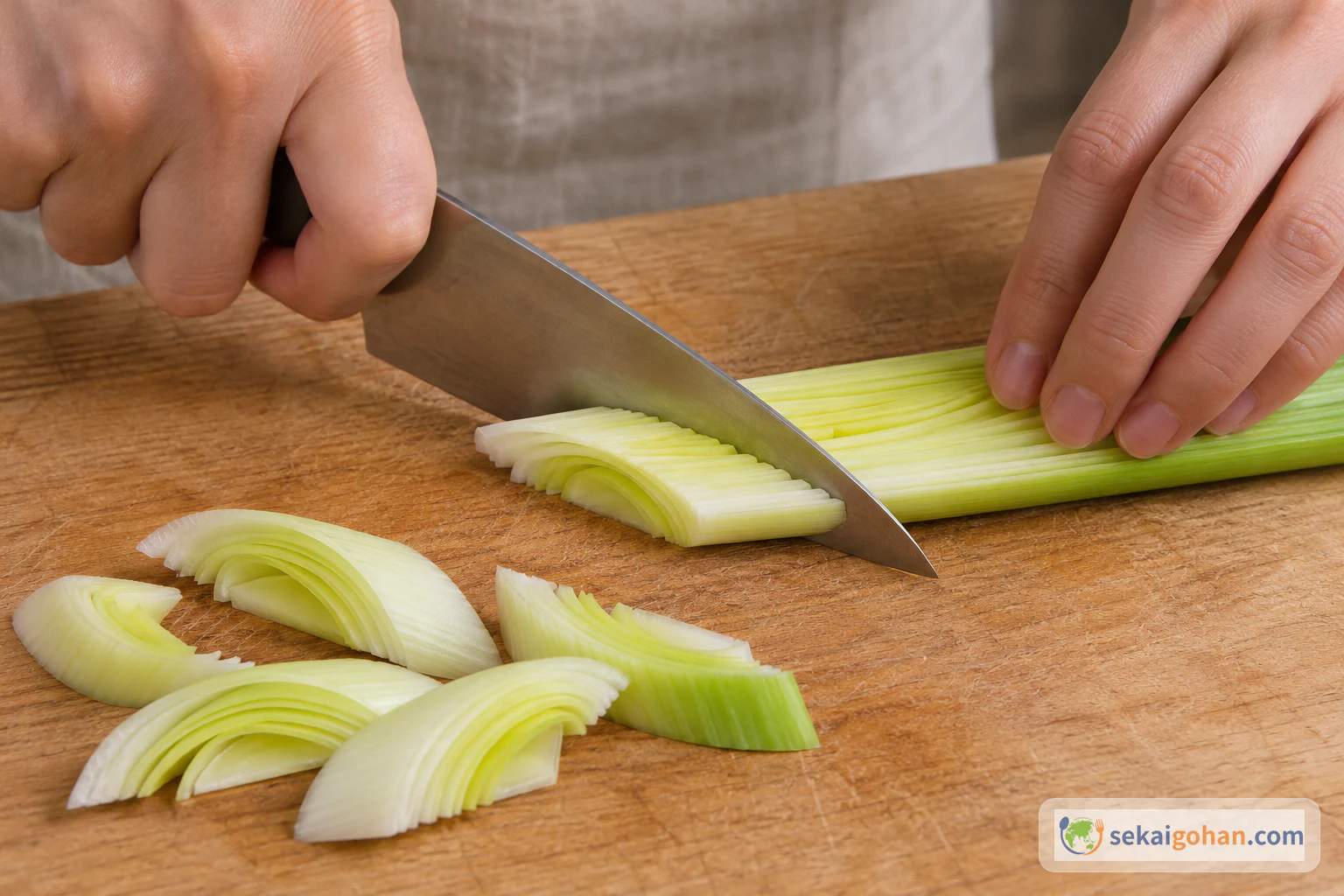
Get everything prepared before the pot goes on: the miso paste blended, the clams washed and drained, the leek cut. After that the cooking takes only a few minutes and you can't step away from the stove, so have the cooked rice and the bowl next to the stove before you start.
Turn off the heat when the white parts of the leek turn translucent. If your leek is a tough one, give it a head start over the heat so it softens before the clams overcook. This order keeps the clams from getting firm.
Buy clam meat from a trusted fishmonger or grocer, keep it cold and cook it the same day. Use a board and tools just for the clams, or wash and sanitize them after each use, so nothing passes to other food. For shellfish that may carry norovirus, heating the center to 185–194°F (85–90°C) for at least 90 seconds is recommended. No exact cut-off is fixed, and more than time and temperature affects the result. The leek cue in step 6 is not a temperature reading. People who are pregnant, elderly or very young, or who have weakened immunity, should keep the clams at a boil until they reach that point, even though they will be firmer.
When It Goes Wrong
| What you see | Why | What to do |
|---|---|---|
| Grit between your teeth | The clams were not washed well enough | Next time, swish them in a fresh bowl of water and lift them out so the grit stays behind |
| Lumps of miso in the broth | The miso went in as a stiff paste, or the two misos were not fully blended | Press the lumps against the pot wall with the spoon before adding the clams; next time blend the paste until smooth |
| Clams small and firm | They stayed on the heat too long while the leek caught up | Next time, start the leek on the heat a little earlier and add the clams after it |
| Leek still stiff and opaque | The pieces were cut too thick, or the heat was too low | Cut on a sharp diagonal to the given width and keep the heat high once the clams and leek are in |
| Broth foaming up and splashing | The boil was too strong after the heat went to high | Lower the heat a little; keep it bubbling, not churning |
Frequently asked questions
Can I use clams in the shell instead of shucked meat?
This bowl is built on shucked clam meat, and the weight is for meat alone. Clams in the shell would weigh much more for the same amount of meat, and shells don't belong in this bowl. Buy the meat already shucked.
How much rice should I use?
Use as much as you would normally eat in one bowl. The toppings sit on top, so choose a bowl wide enough for the leek and clams to cover the rice.
Can I use only red miso or only white?
Use both. They are separate ingredients in equal amounts, and the bowl's flavor comes from the blend. If you can only find one, buy the other online before you cook, rather than doubling the one you have.