Chapssaltteok: A Soft Rice Wrapper Around Dark Red Bean Paste
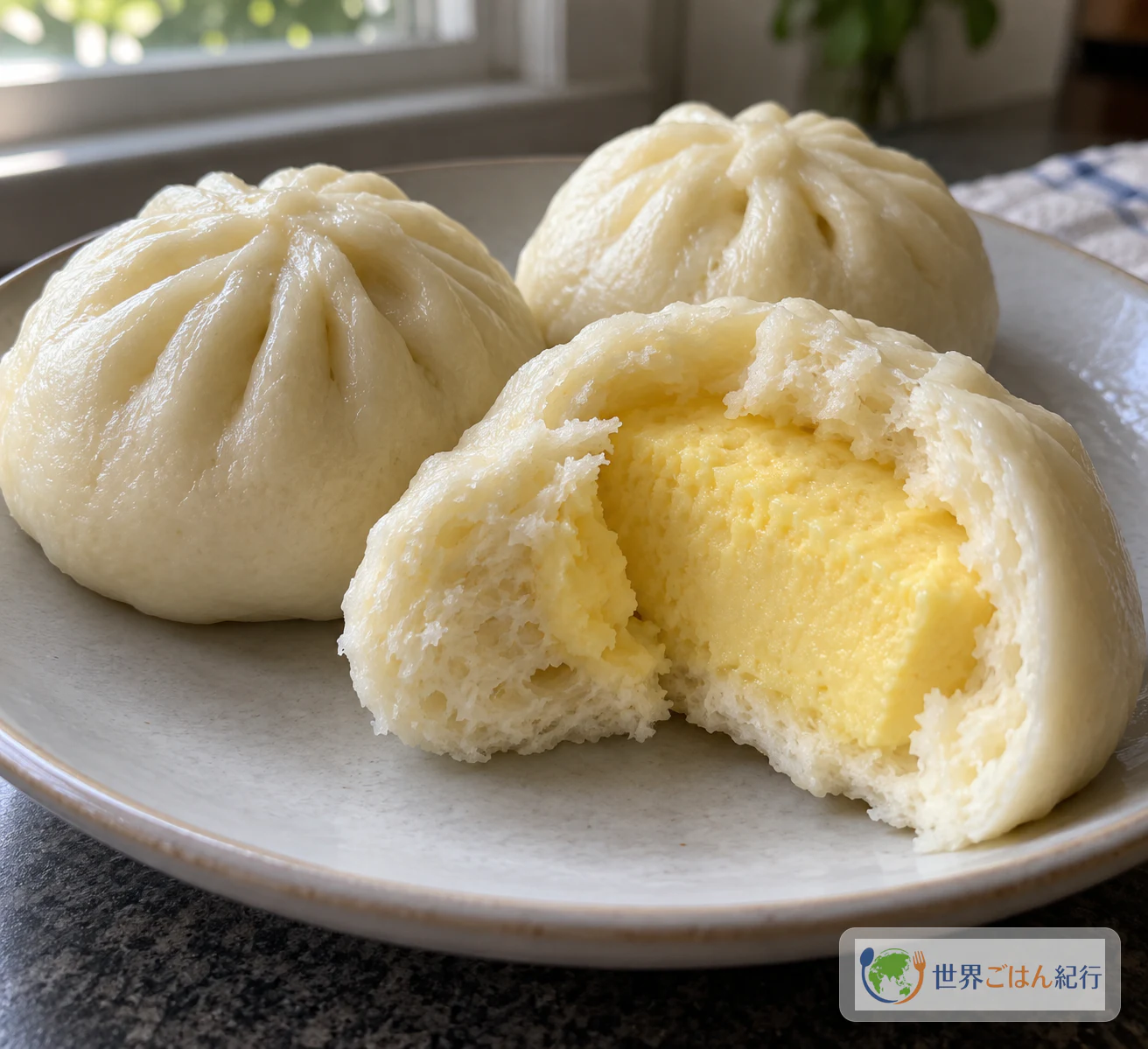
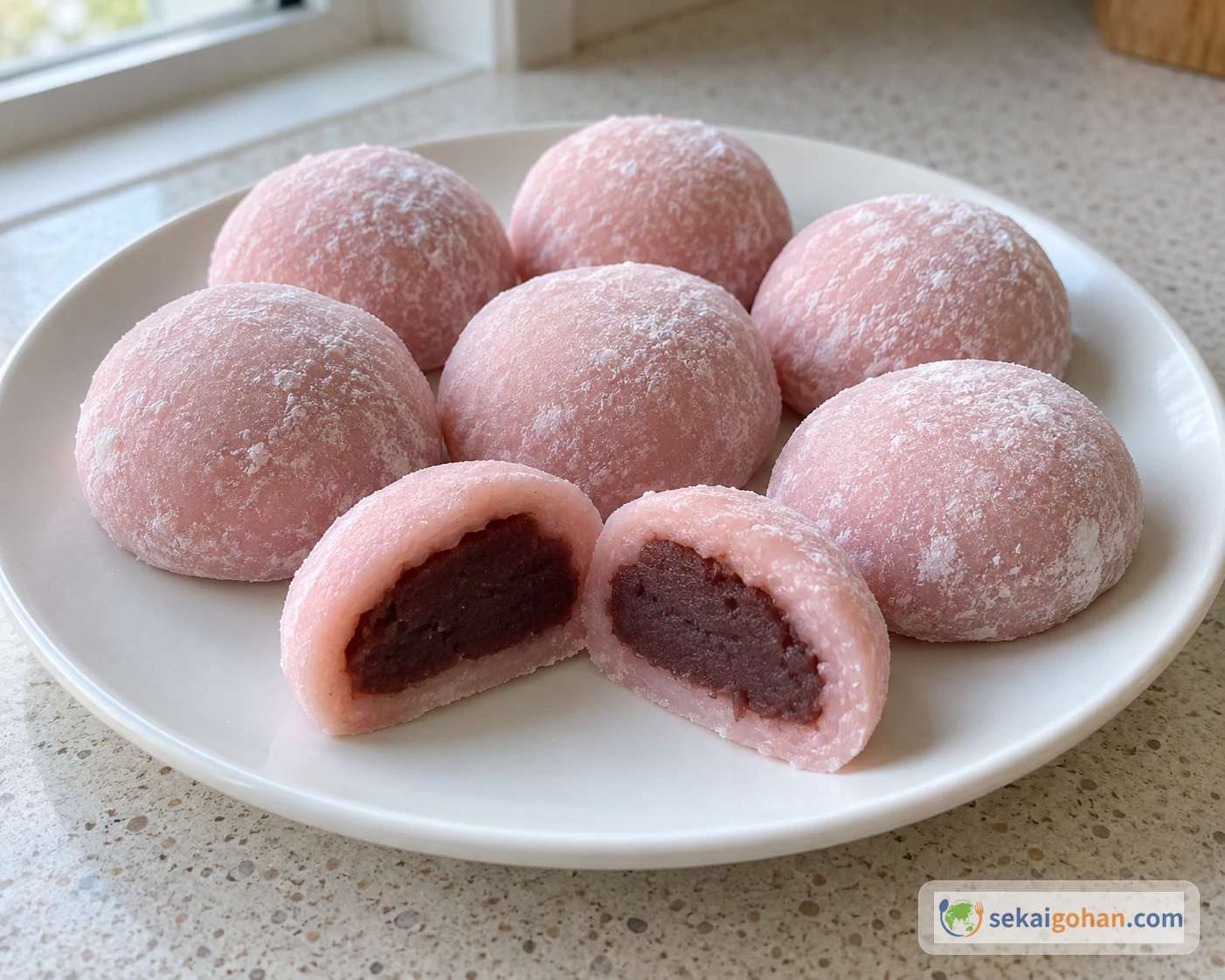
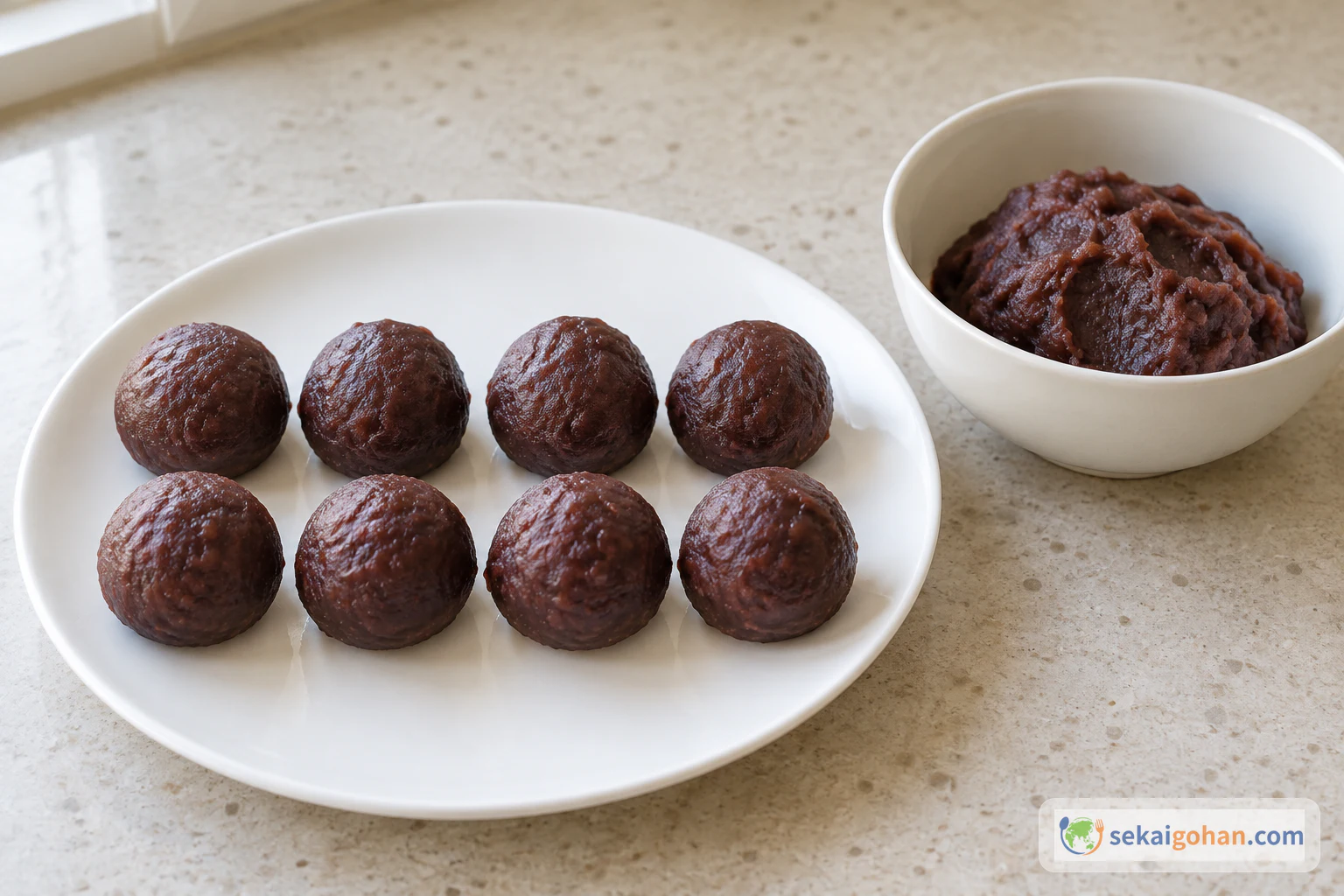
A tender, pale-pink wrapper made from dry sweet rice flour, and a smooth, dark red filling made from dried azuki beans. Eight rice cakes from one batch of dough.
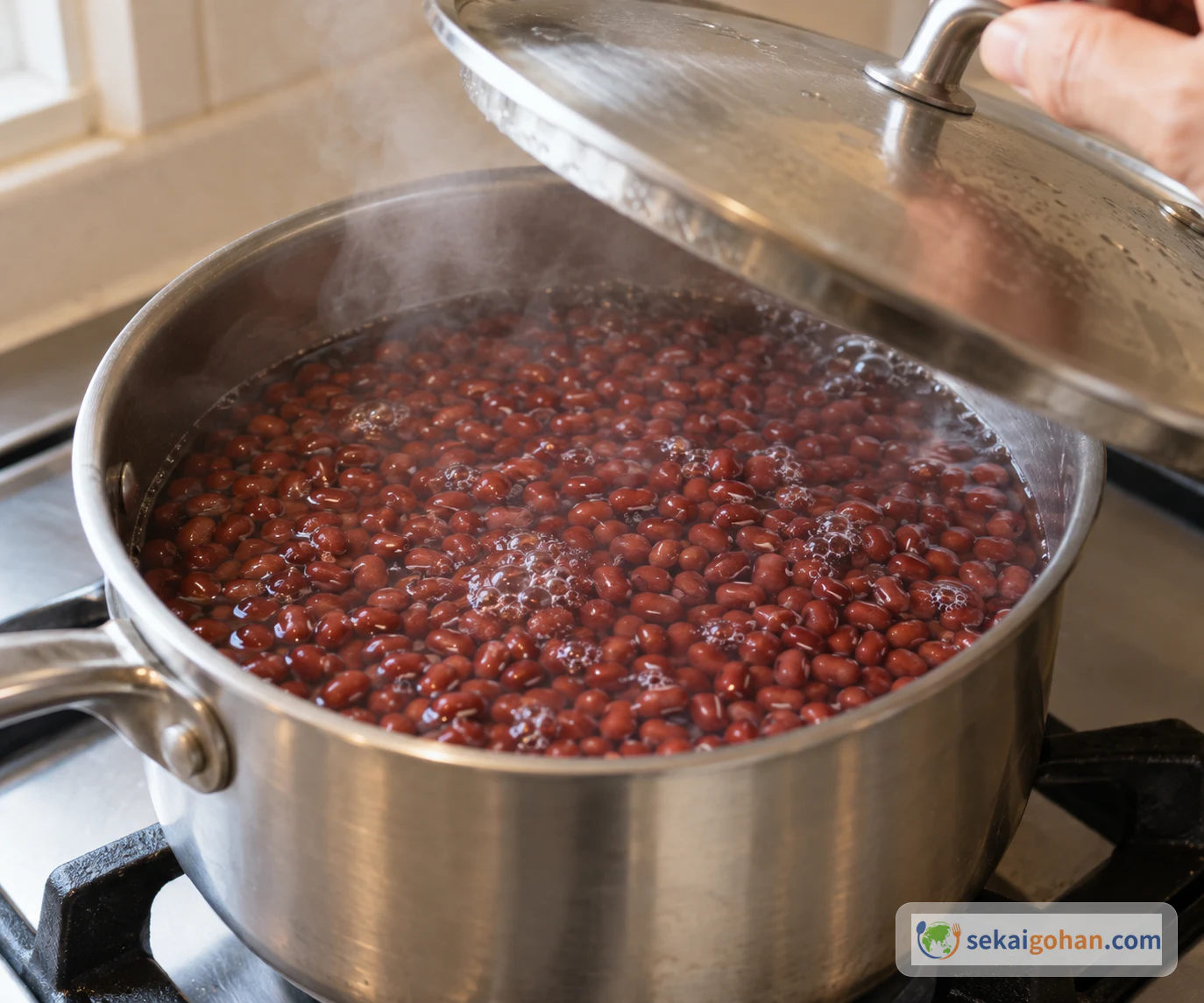
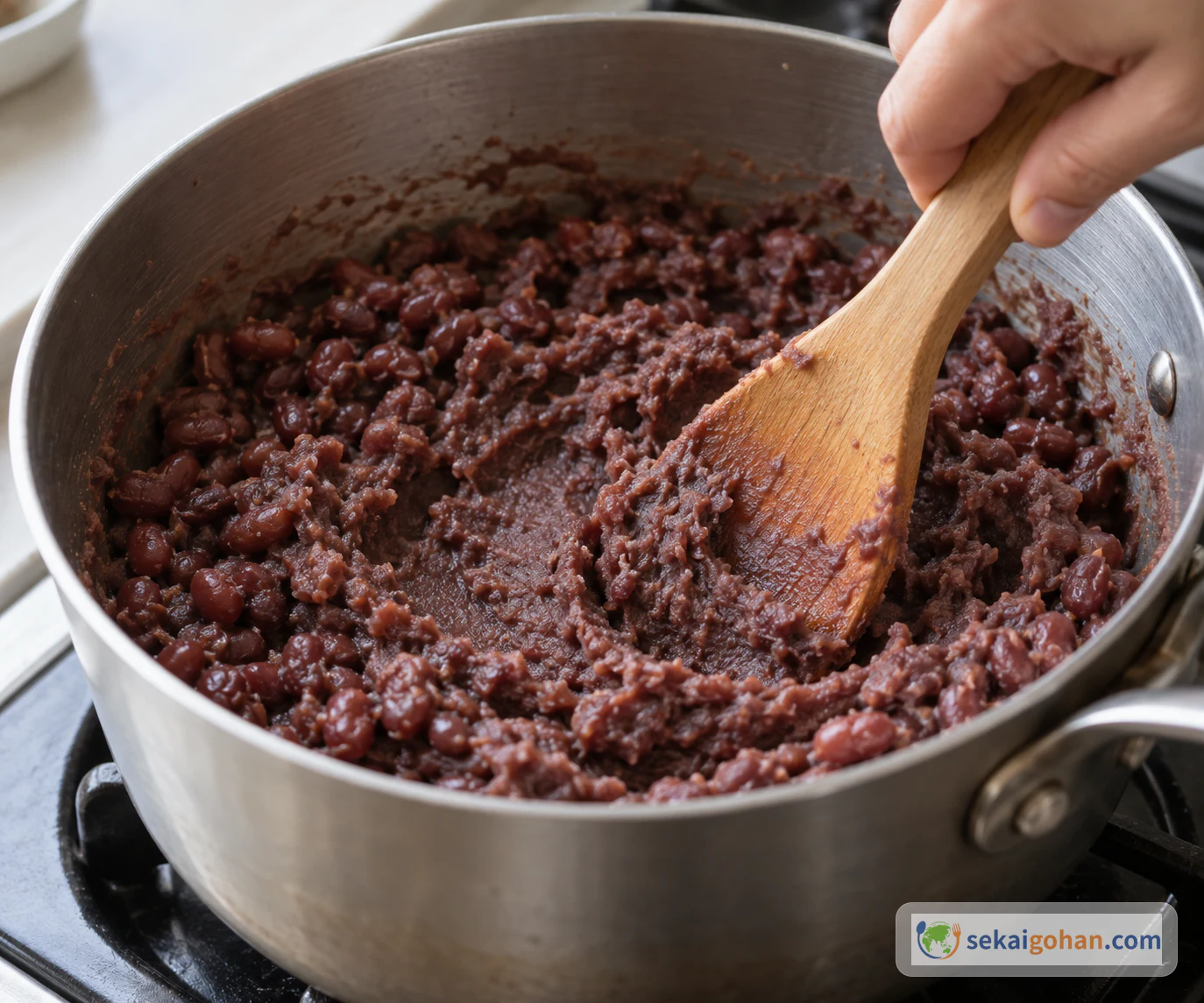
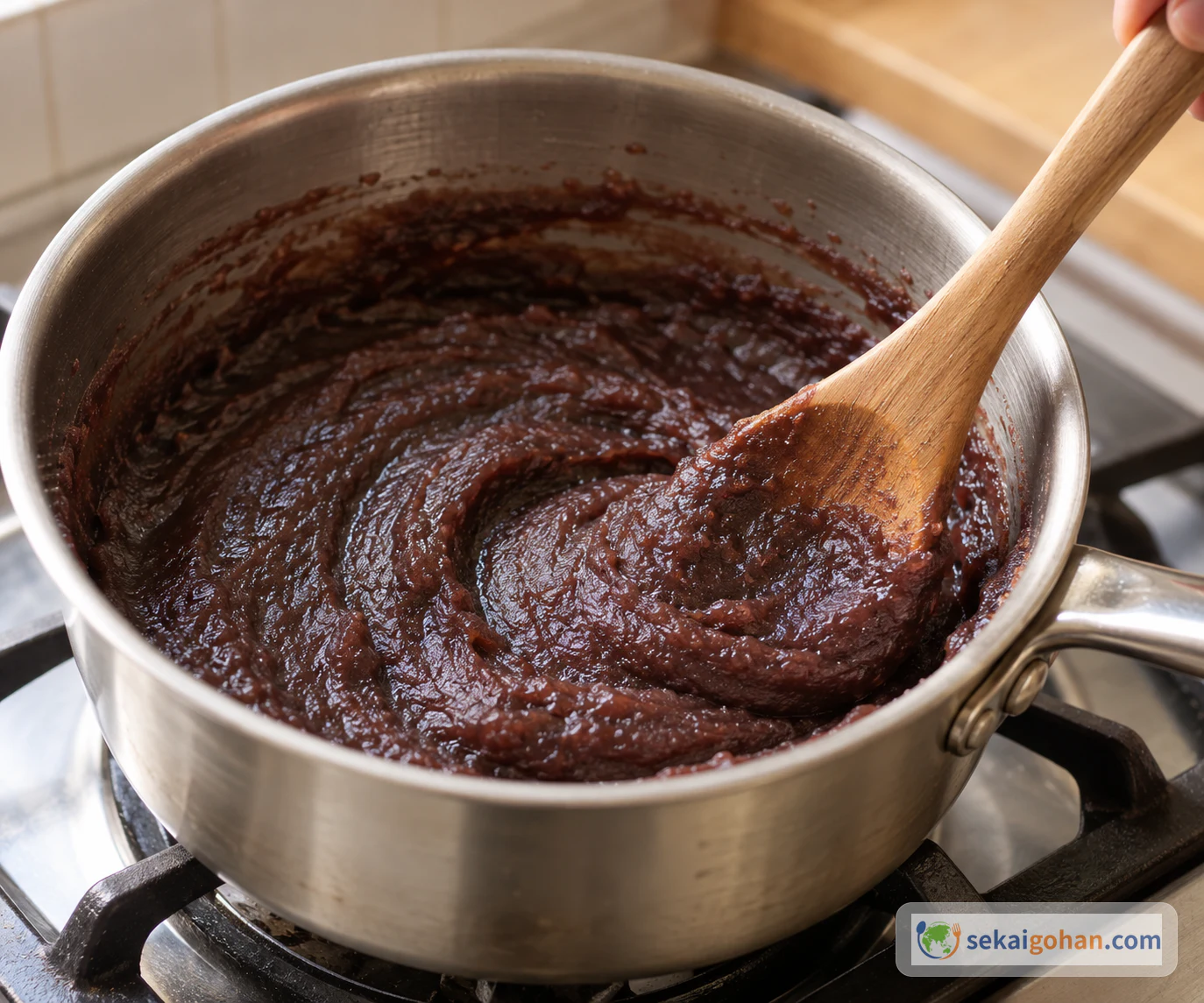
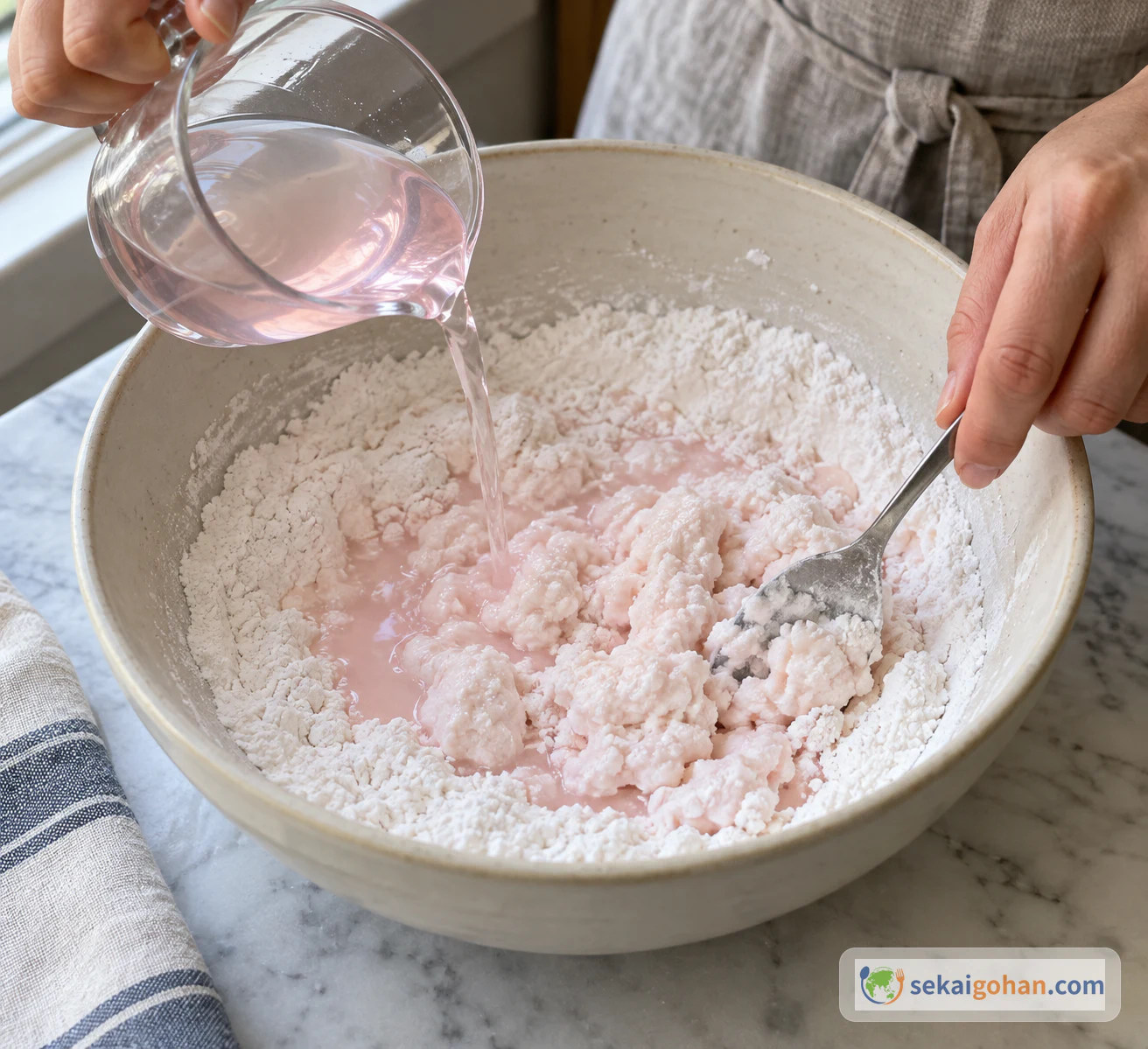
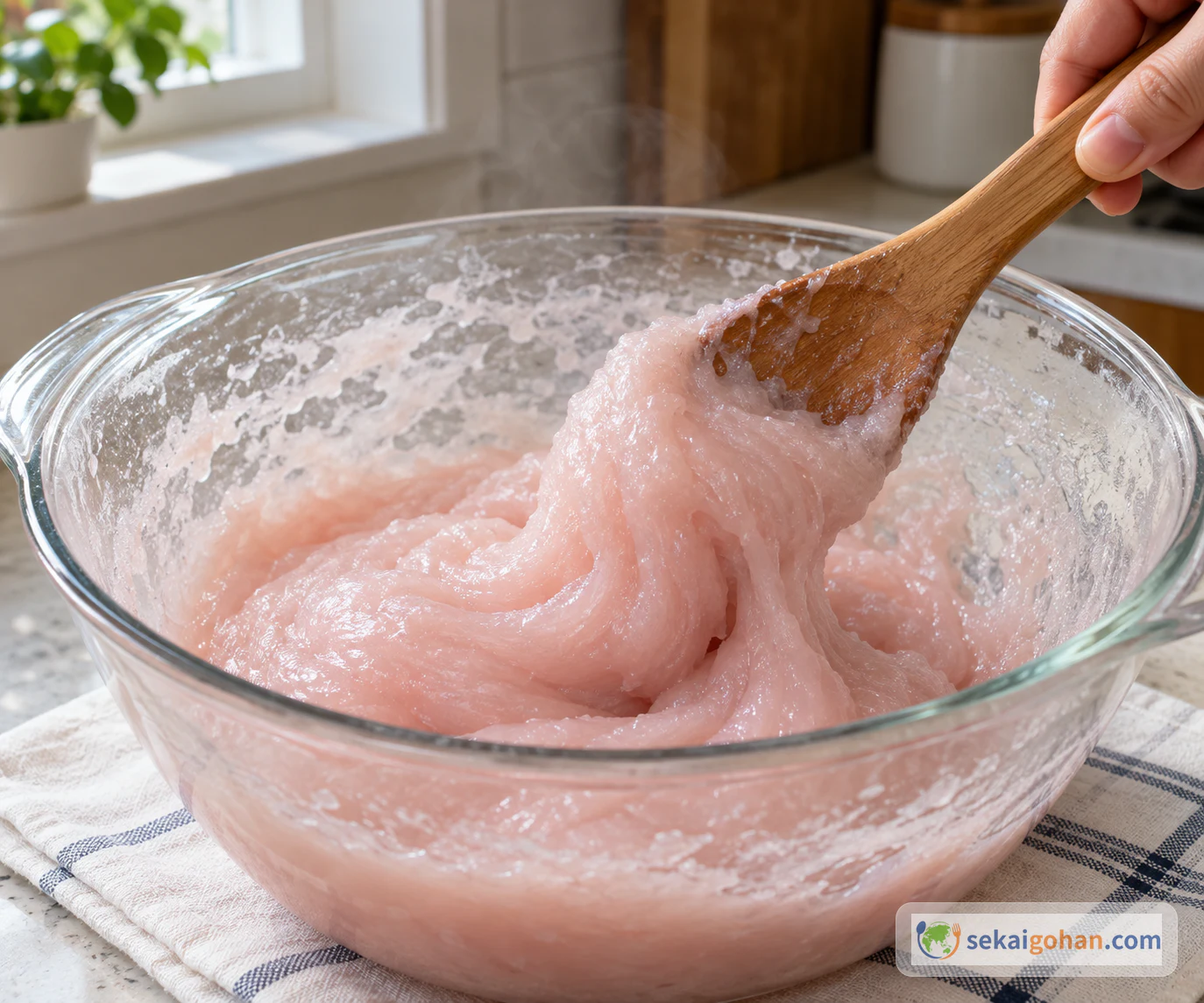
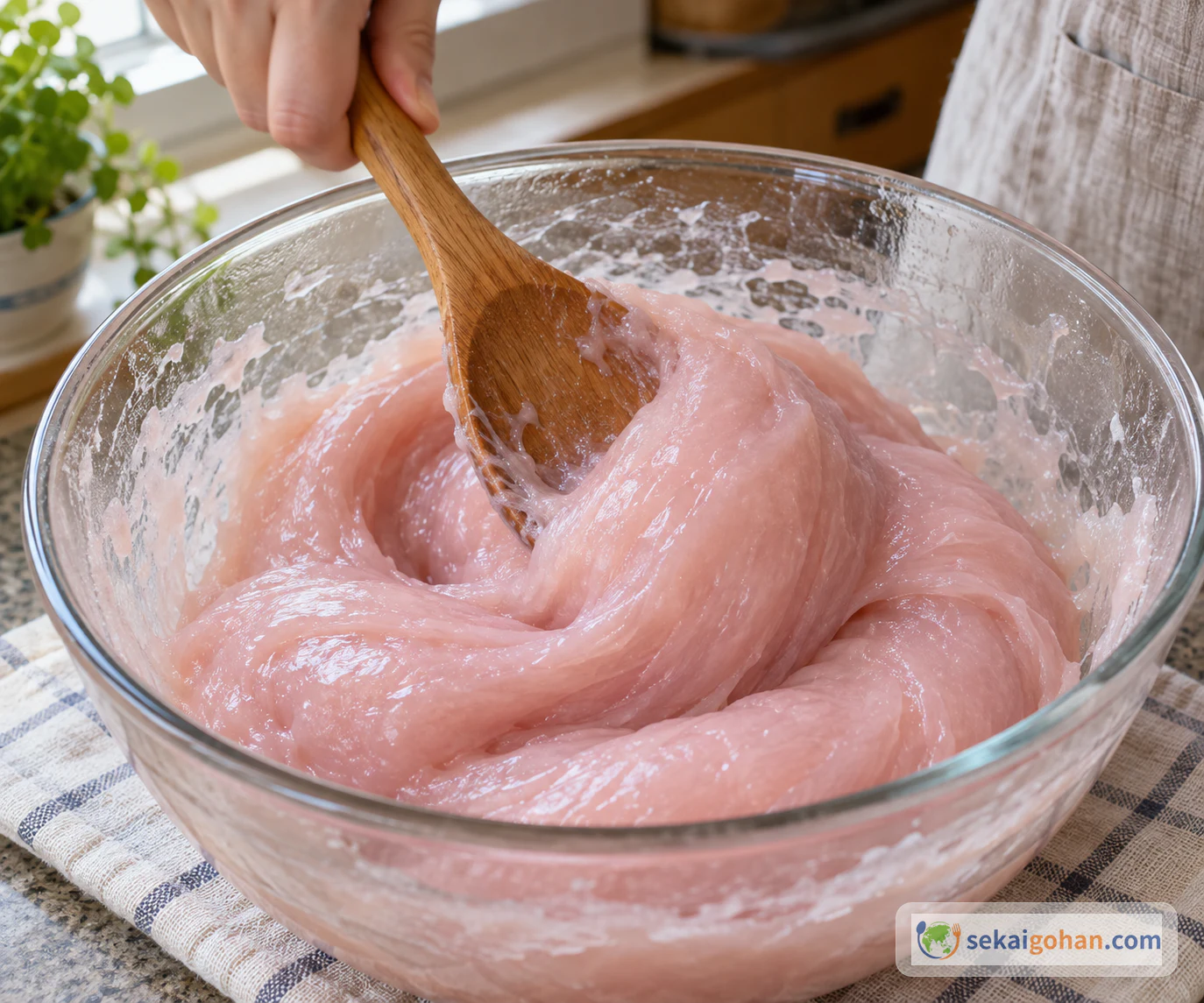
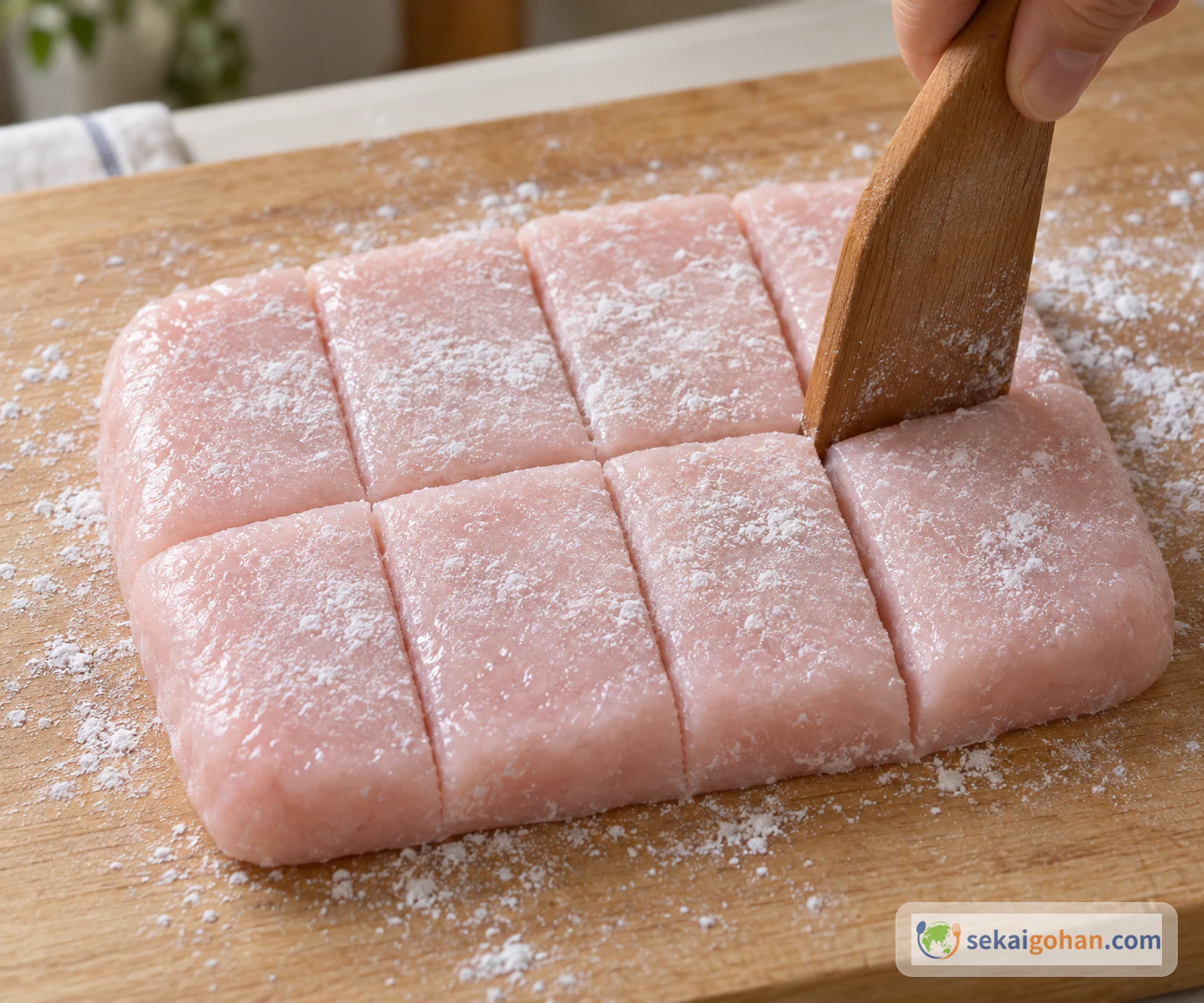
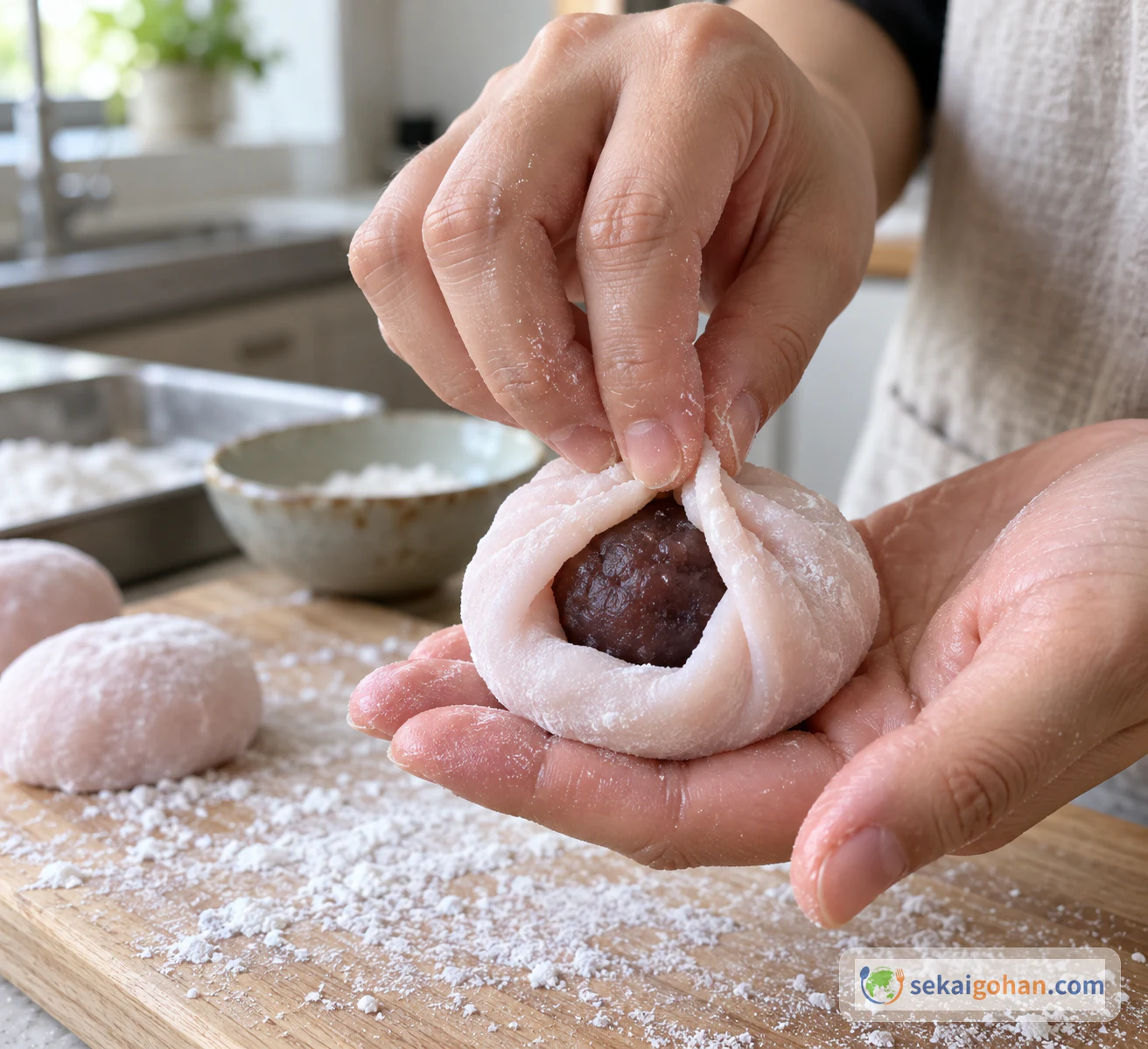
Dried azuki beans simmer slowly in a heavy pot until they are soft enough to crush, then are mashed and stirred with brown sugar, a little salt, vanilla and rice syrup until the paste turns faintly glossy. In a separate bowl, sweet rice flour mixed with pale pink water goes into the microwave and is then worked in circles with a wooden spoon. The dough is then cut into eight pieces, and each piece is wrapped around a ball of bean paste.
That is chapssaltteok (찹쌀떡), a Korean rice cake made by wrapping sweet red bean paste in a glutinous rice dough. This article follows one complete written recipe, the pink version published in English by Maangchi, and makes the filling from scratch rather than from a can or tub. If you are exploring more of the country's cooking, see our South Korea page.
Sekai Gohan has not kitchen-tested this recipe. The amounts, order and microwave intervals below follow Maangchi's published recipe, and its US cup and spoon measures are kept as written, without gram conversions. The microwave times are given for "high" with no wattage stated, so we cannot promise the same result in every microwave.
Ingredients for 8 Rice Cakes
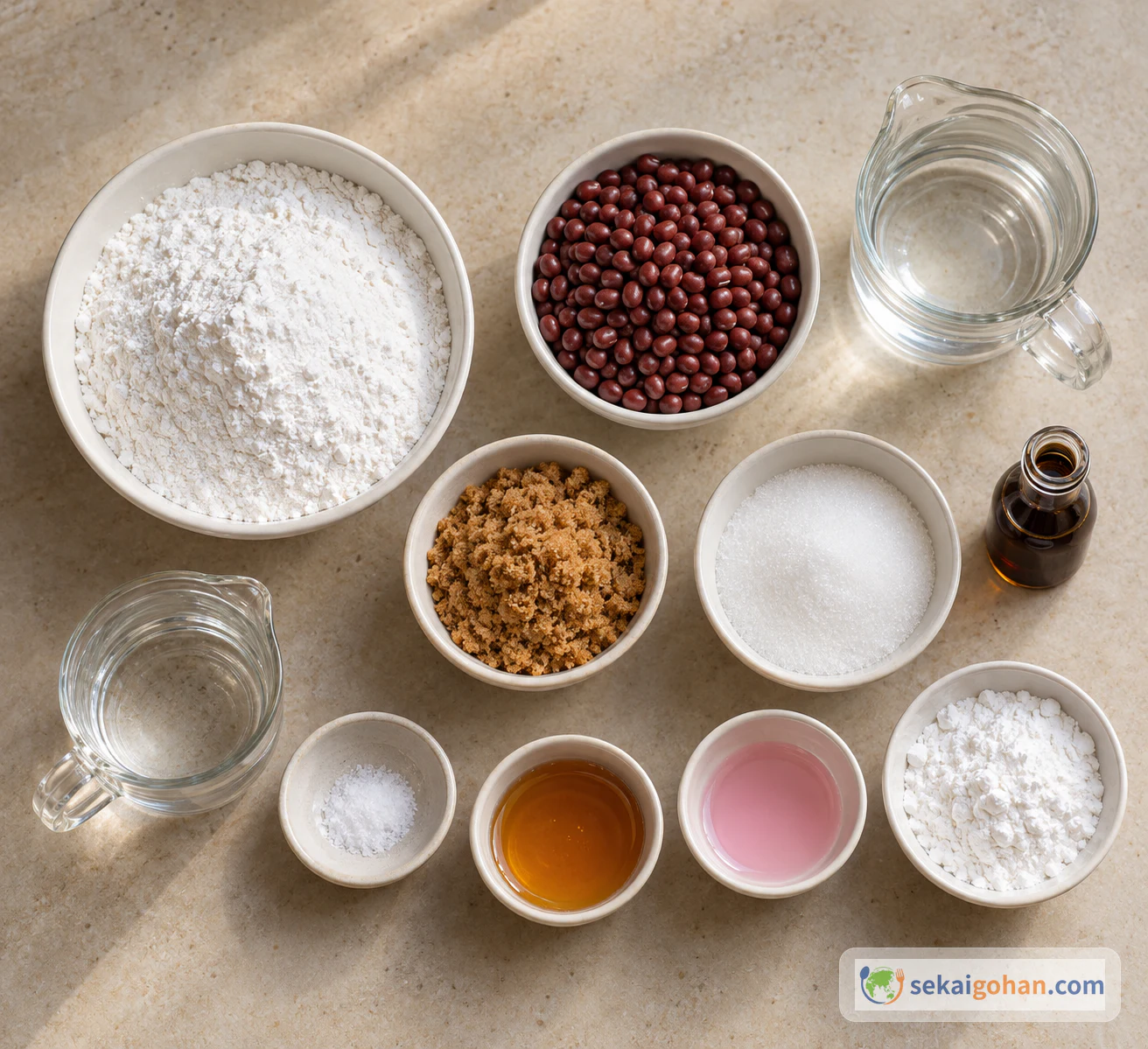
Equipment
- Heavy-bottomed pot with a lid
- Wooden spoon (or a food processor for mashing the beans)
- Microwave-safe bowl
- Spoon for mixing
- Plastic wrap
- Microwave
- Board for shaping
- Wooden knife or spatula for cutting
Choosing the Flour: Look for Glutinous Rice
The single most important purchase is the flour. This recipe uses sweet rice flour, also sold as Mochiko. Sweet rice flour is the same thing as glutinous rice flour: flour made from glutinous rice. Its Korean name is chapssalgaru. When shopping, look for "sweet rice," "glutinous rice" or "Mochiko" on the label. A bag that says only "rice flour" may be ordinary, non-glutinous rice flour, which is a different product.
This recipe uses dry sweet rice flour. Wet, frozen sweet rice flour is also used for Korean rice cakes, but it has not been shown to work in this dry-flour microwave method, so if you cannot find dry sweet rice flour, this recipe cannot be made as written. Likewise, other flours such as shiratamako have not been confirmed as equivalent, so we do not suggest them here.
The filling uses rice syrup alongside brown sugar, and the board is dusted with potato starch.
The dough is cooked on "high" for 3 minutes, then 1 more minute. Follow the sequence below and watch the dough; we cannot offer adjusted times for your particular microwave.
Method: From Dried Beans to Eight Rice Cakes
Steps 1 to 4 make the bean paste, which takes the longest. Steps 5 to 9 make the dough and shape the rice cakes. Have the filling balls ready before you start the dough.
Troubleshooting: What to Check Along the Way
| Situation | What to check | What to do |
|---|---|---|
| The beans aren't mashable after about 1½ hours | Whether the beans crush easily | Add more water and keep cooking over low heat until they mash easily |
| You can only find a bag labeled "rice flour" | Whether it says sweet, glutinous or Mochiko | Look for flour made from glutinous rice; plain rice flour is a different product |
| You can only find frozen, wet sweet rice flour | The recipe uses dry flour | This method has not been shown to work with wet flour, so don't swap it in |
| Your microwave's power is very different | No wattage is given for "high" | Follow the 3-minute, stir, 1-minute sequence; we can't supply adjusted times |
| Cut pieces dry out while you work | Whether the pieces are covered | Keep the waiting pieces under plastic wrap |
| Paste is left over after 8 cakes | The paste batch is double what the dough needs | This is expected. Refrigerate or freeze the spare half rather than overfilling the cakes |
Other Recipes and Related Dishes
Chapssaltteok recipes differ from author to author, and this article keeps to one. My Korean Kitchen publishes a chapssaltteok made with store-bought sweet red bean paste, six cakes per batch and its own flour, water and microwave instructions. Aeri's Kitchen publishes an eight-piece version with canned red bean paste, a different flour, sugar and water ratio, and a longer stirring stage after microwaving. Both are complete recipes in their own right; their amounts and times are not mixed into the method above. Maangchi's Korean-language page also describes a differently colored version, which is not used here.
Several dishes are easy to confuse with chapssaltteok:
- Japanese daifuku and generic "mochi." English descriptions often call chapssaltteok "Korean-style mochi," and the look is similar, but this article treats chapssaltteok as its own Korean dish rather than a version of daifuku.
- Youngyang chaltteok. Korean Bapsang notes that wet, frozen sweet rice flour is used in several Korean rice cakes, including red bean chapssaltteok, but its own recipe with that flour is youngyang chaltteok, made with beans, nuts and dried fruit and steamed, a different rice cake altogether.
- Chapssal buggumi. The Korean Traditional Knowledge Portal records this separately named rice cake from Seoul and Gyeonggi, filled with chestnut and honey and pan-fried.
- Tteokbokki and hotteok. Other Korean dishes that share the "rice cake" or dough idea in English but differ in ingredients, shape and cooking method.
About the Name and the Dish
Maangchi writes the name as Chapssaltteok 찹쌀떡 and presents it as a Korean-style rice cake: a sweet rice flour dough wrapped around sweet red bean paste. You may also see it spelled chapssal-tteok. The flour itself she calls chapssalgaru, sweet rice flour made from glutinous rice.
The microwave method is a home-kitchen approach. Maangchi mentions that she saw rice cakes made this way in Korean households in the United States; that is her personal recollection, not a documented history of the technique. She also suggests packing the finished cakes in a small box as a gift, which is her own idea rather than evidence of a general custom. The materials behind this article do not establish where chapssaltteok originated or how it relates historically to Japanese daifuku, so we make no claims about either.
Frequently Asked Questions
Can I use store-bought red bean paste?
Other authors, such as My Korean Kitchen and Aeri's Kitchen, write chapssaltteok recipes around ready-made red bean paste, with their own amounts and cooking steps. This article makes the paste from dried azuki beans and does not combine those recipes with this one. If you want the ready-made route, follow one of those recipes as written.
What microwave wattage should I use?
Maangchi's recipe says "high" without a wattage. The 1250 W figure in My Korean Kitchen's recipe applies to that author's different formula, so it is not borrowed here. Follow the sequence of 3 minutes, a stir of about 20 seconds, then 1 more minute.
Why does the paste make more than I need?
The full paste batch is enough for 16 balls, while one batch of dough makes 8 rice cakes. Maangchi instructs saving half of the paste. The yield of rice cakes stays at 8.
How should I store leftovers?
Keep the spare half of the bean paste in the refrigerator or freezer. The materials for this article give no storage guidance for the finished rice cakes, so we don't offer a storage period for them.
Is chapssaltteok the same as daifuku?
They look alike and both wrap a filling in glutinous rice dough, but they are separate dishes with their own names. This article covers the Korean chapssaltteok only.
Sources
- Maangchi, "Chapssaltteok (Korean-style mochi rice cake)." The recipe followed in this article: the dish name and identity, the pink version's ingredients and amounts, making the bean paste from dried azuki beans, the microwave sequence, shaping, the yield of 8 rice cakes, and keeping the spare paste refrigerated or frozen. https://www.maangchi.com/recipe/chapssaltteok
- Maangchi, "Sweet rice flour (Chapssalgaru)." Ingredient explainer showing that sweet rice flour, glutinous rice flour and Mochiko name flour made from glutinous rice, and linking it to chapssaltteok. https://www.maangchi.com/ingredient/sweet-rice-flour
- Sue Pressey, "Chapssaltteok (Red Bean Mochi)," My Korean Kitchen. A separate complete recipe using store-bought red bean paste, a six-piece yield and its own microwave instructions; used for comparison only. https://mykoreankitchen.com/chapssaltteok-red-bean-mochi/
- Aeri Lee, "Sweet Rice & Red Bean Rice Cake 1," Aeri's Kitchen. A separate eight-piece recipe using canned red bean paste with a different ratio and cooking sequence; used for comparison only. https://www.aeriskitchen.com/2008/10/sweet-rice-cake-with-red-bean-paste-chap_ssal_ddeok-2/
- Hyosun, "Youngyang Chaltteok (Healthy Sweet Rice Cake)," Korean Bapsang. Describes wet, frozen sweet rice flour and a different steamed rice cake; used to explain the difference between wet and dry flour. https://www.koreanbapsang.com/youngyang-chaltteok-healthy-sweet-rice-cake/
- Korean Traditional Knowledge Portal / Rural Development Administration of Korea, "Chapssal buggumi." Records a separately named pan-fried rice cake with a chestnut-and-honey filling; used only to distinguish it from chapssaltteok. https://koreantk.com/ktkp2014/food/food-view.view?foodCd=TF10001350&tempLang=en