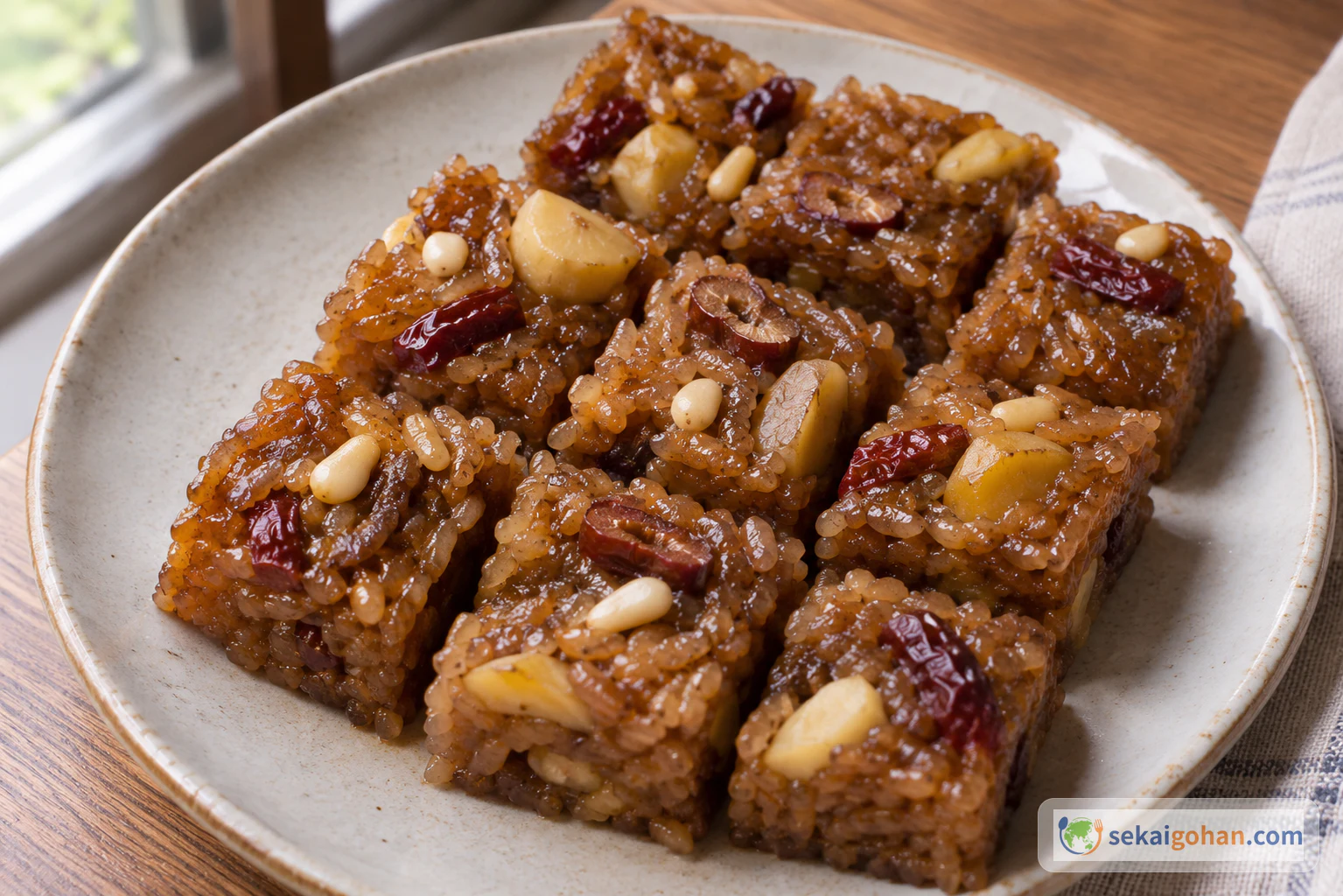
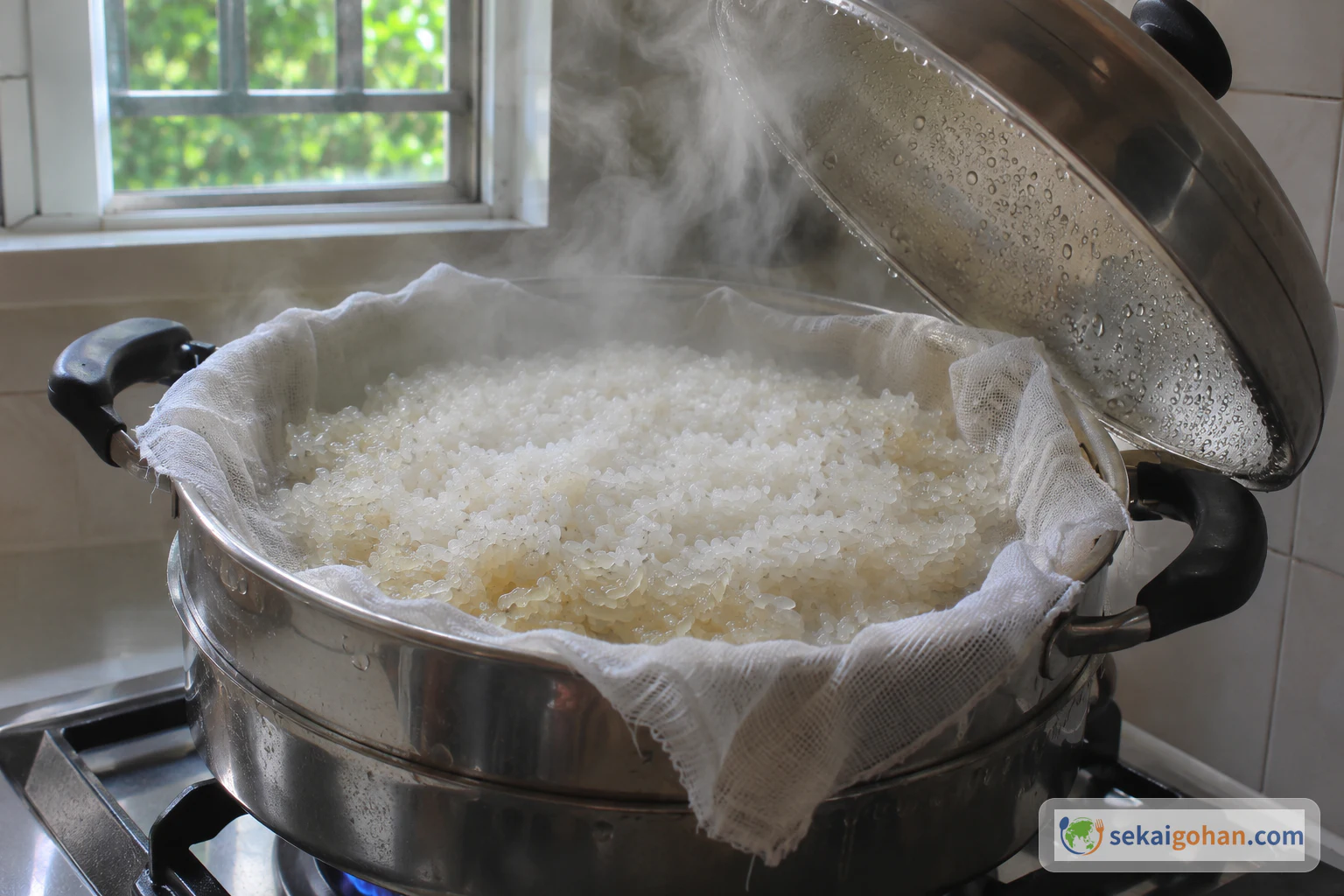
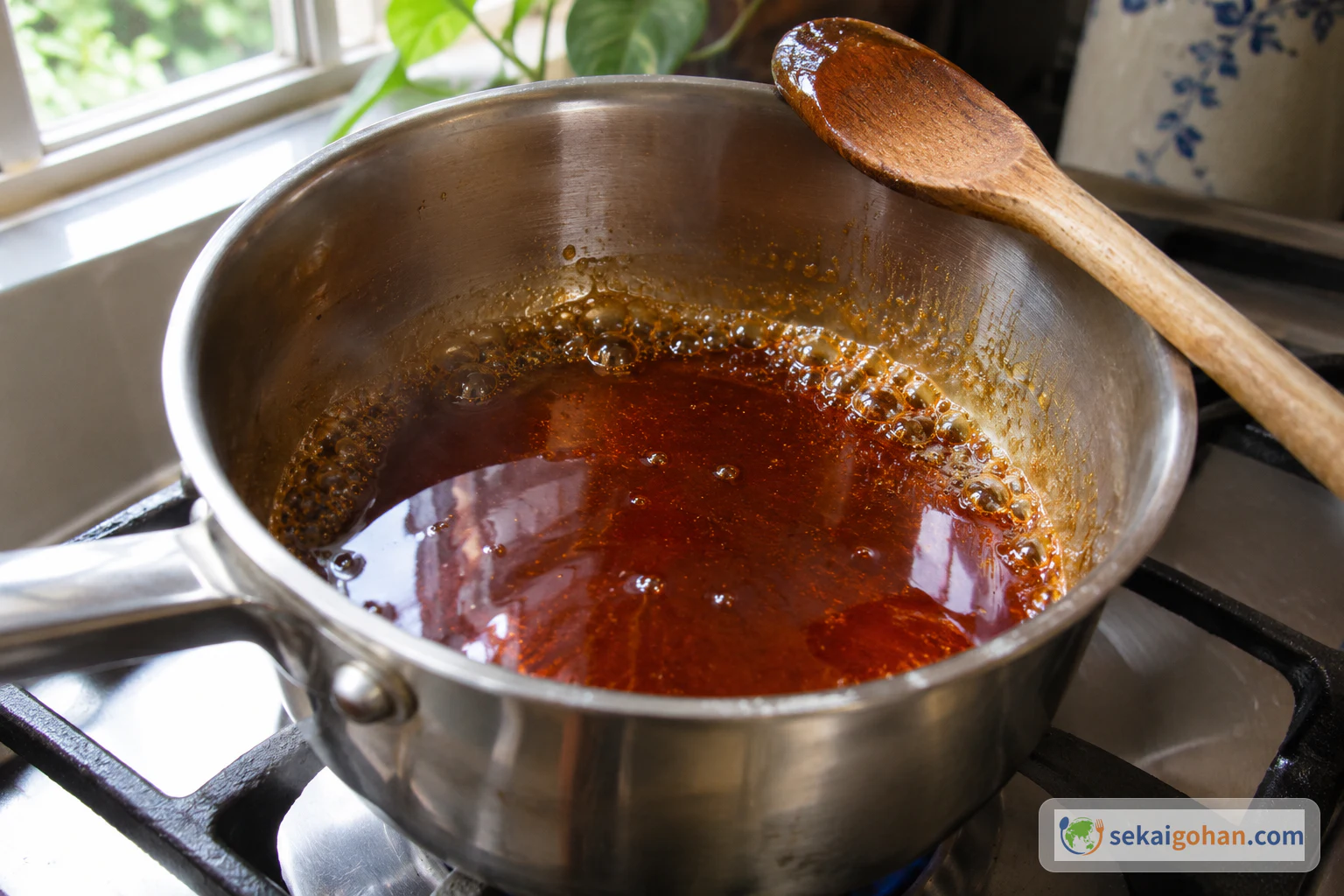
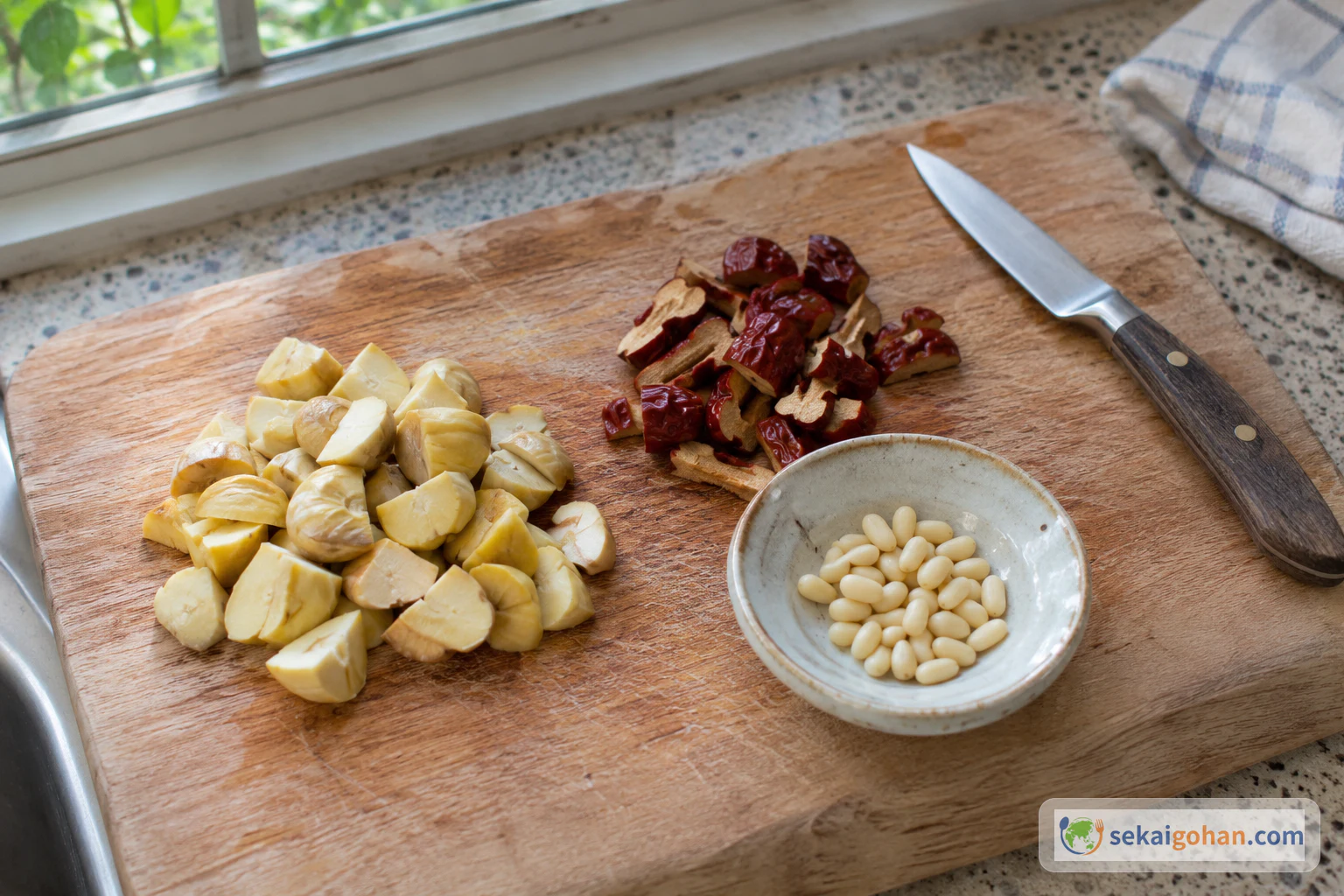
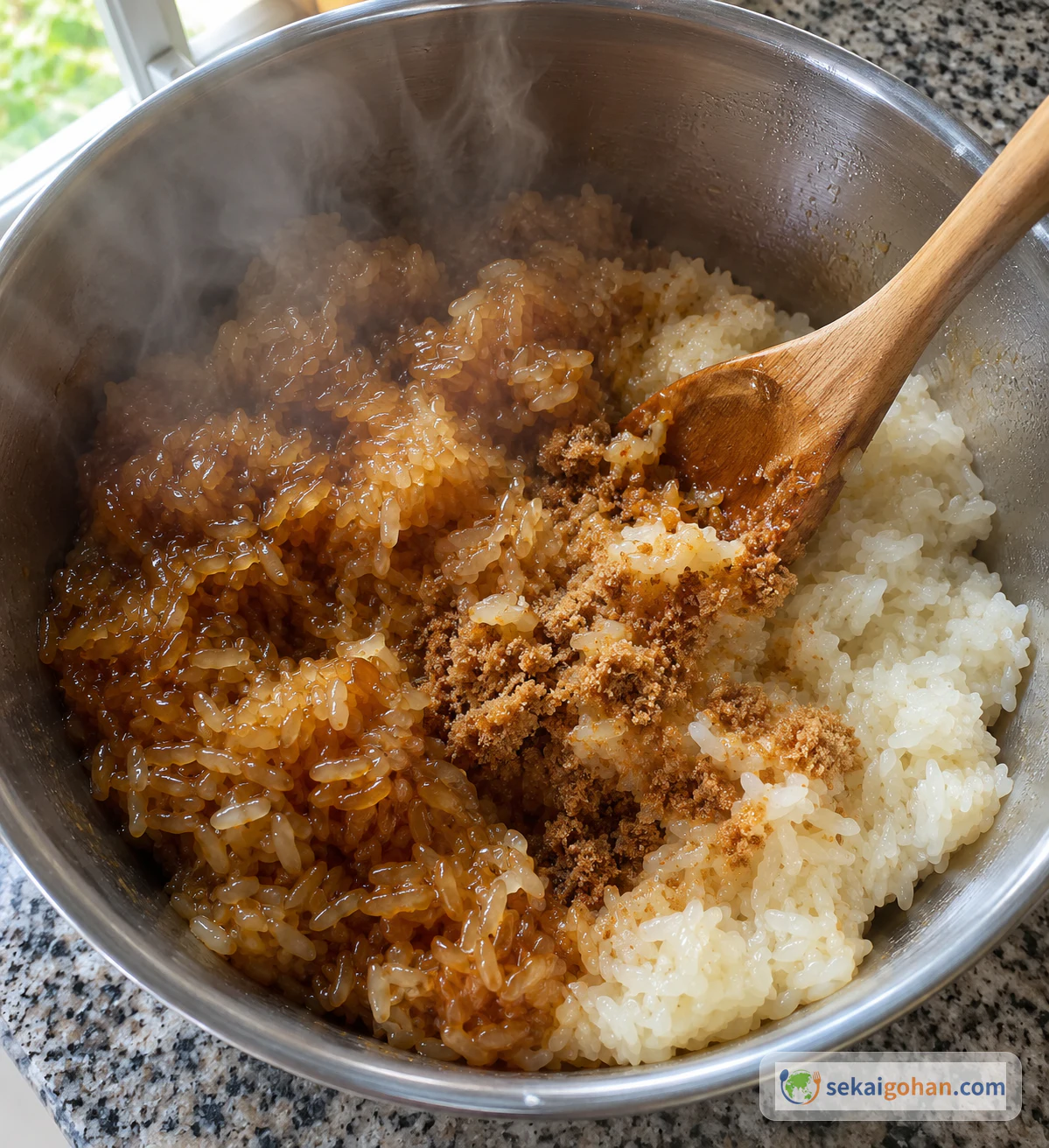
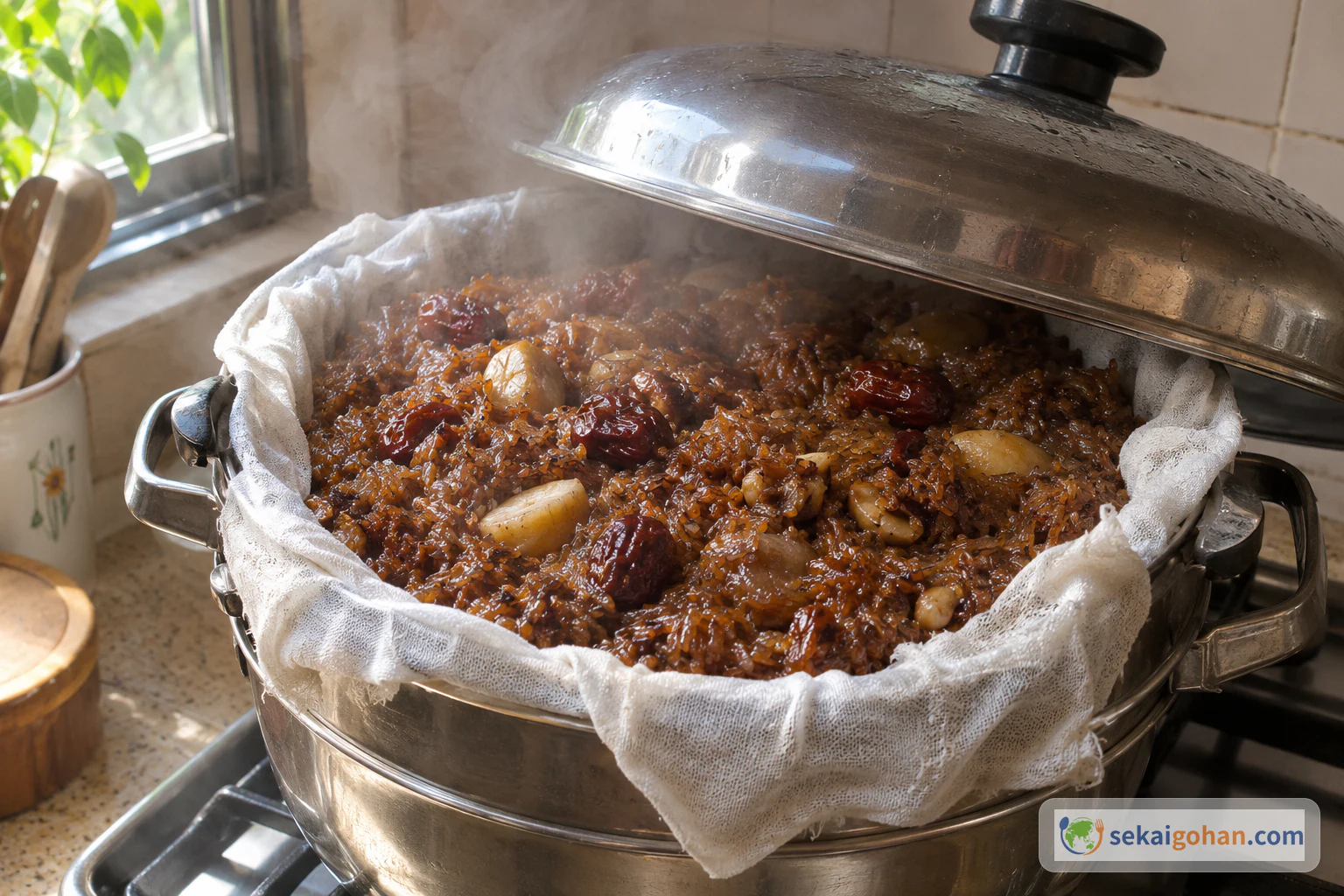
When you lift the steamer lid the second time, the rice under it has turned a deep, glossy brown, close to black. Red flecks of jujube, pale yellow chunks of chestnut and small white pine nuts sit in it, and the steam smells of toasted sesame and cinnamon. That dark shine comes from caramelized sugar and soy sauce. They soak into every grain of sticky rice during a long rest between two steamings.
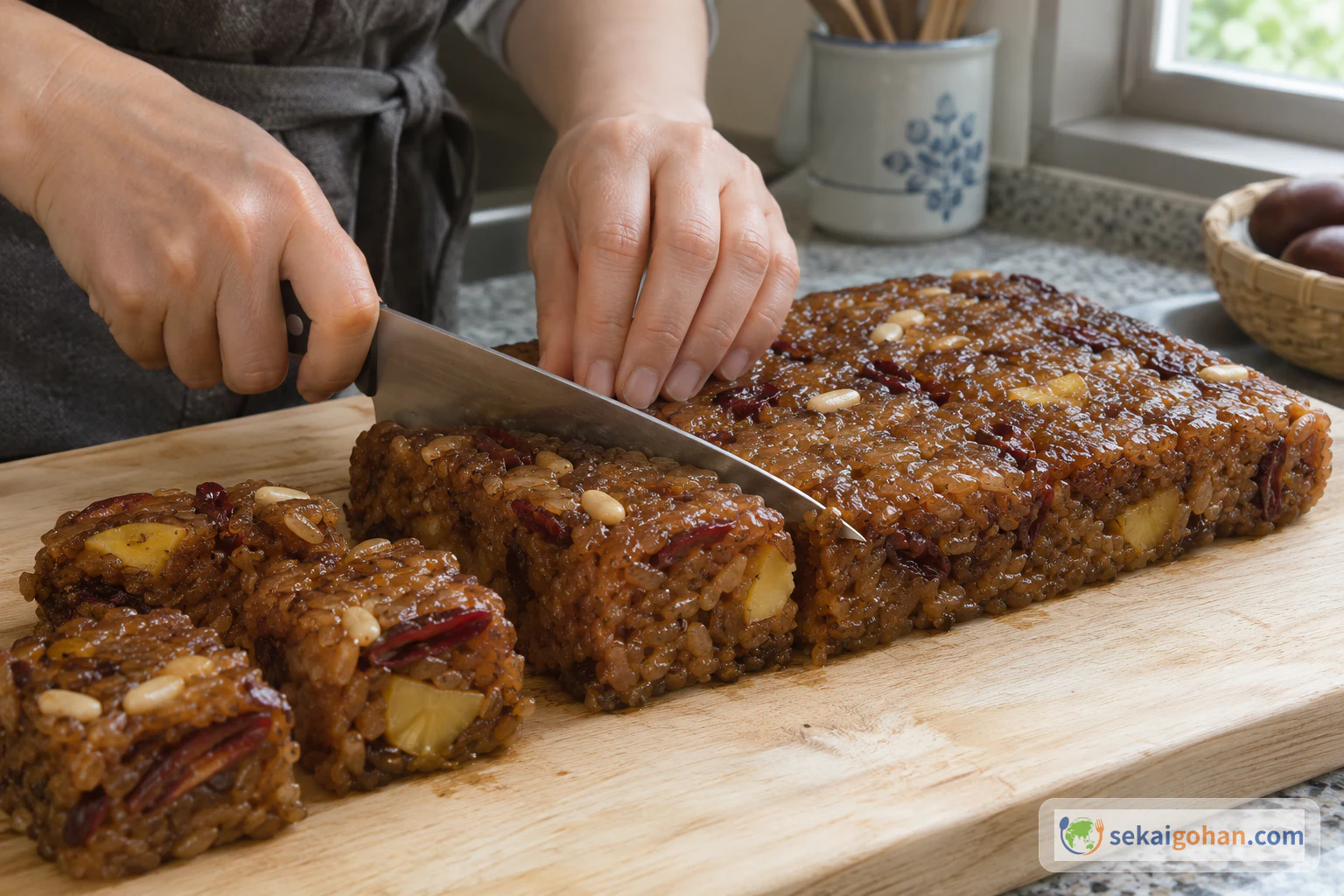
Yaksik is a Korean sweet made from glutinous rice. It is pressed, cooled and cut into chewy squares. It tastes gently sweet with a faint saltiness underneath, and each bite has a soft chestnut, a sticky-sweet jujube or a pine nut in it. It belongs to the first full moon of the lunar new year, though Koreans also eat it on ordinary days, the same way they eat rice cakes.
Medicine, a Crow and the First Full Moon
The dish is called 약식 (yaksik, 藥食) and also 약밥 (yakbap) or 약반 (yakban, 藥飯). Yak means medicine, and bap and ban mean cooked rice. Both spellings refer to the same sweet, so a search under either name finds it.
The name looks odd at first. Why would a sweet be called "medicine rice"? The usual explanation is that Koreans once called honey yak, medicine. From that habit came a whole family of words. Honey wine became yakju, honey rice became yakban, and honey cakes became yakgwa. This explains the word only, not when the dish began.
The other surprise is bap. Bap is the everyday word for cooked rice, the staple of every Korean meal, yet yaksik is never eaten as a meal. It is a snack and a festive sweet. It has long appeared on banquet tables, and it is made for Jeongwol Daeboreum, the first full moon of the lunar year, as well as for large celebrations such as sixtieth birthdays and weddings. Today you also find it pressed into molds and sliced next to tteok and other traditional Korean confections. You can read more about the wider table on our Korea page.
The crow that warned a king
The story told about yaksik's beginnings is set in the kingdom of Silla, in the tenth year of King Soji, 488, during the first month of the year. At a pavilion, the king was warned of danger and told to shoot the zither case in the palace. Inside the case he found a monk and a palace lady who were plotting against him. After that, the fifteenth day of the first month became a day to honor the crow with an offering of sticky rice. Some records give the sixteenth day instead.
The story is lovely, but how it connects to the dish is far from settled. Why the crow was repaid with rice, and how food for a crow became a full-moon dish for people, are questions that historians still leave open. One long-held view says the two customs have separate roots, so that eating yakbap at the full moon and feeding rice to crows are unrelated, and yakbap is food for people, not for crows. Linking the rice's dark color to the crow's black feathers is also only a guess.
From honey and oil to a Joseon feast
The written record is firmer. During the Goryeo period, the sticky rice was mixed with oil and honey, and pine nuts, chestnuts and jujubes were added, which gives the shape the dish still has. A poem from that time describes mixing the rice with oil and honey, folding in nuts and fruit, and sending it to many households, until the crows wake startled at dawn. In the Joseon period, many books of seasonal customs mention it. It was offered at the first full moon and at ancestral rites, served to guests and shared with neighbors. After a rite, ordinary people ate it too.
Yaksik was also well liked beyond Korea. People in China were said to admire it and learn to make it, and they called it "Goryeo rice". There is also a record of Korean envoys making yaksik on the fifteenth day of the first month, and the nobles of Beijing being delighted with it.
Recipes have shifted over time. Older styles sweeten the rice mainly with honey and dark sugar and add the sesame oil last. Modern recipes such as this one use brown sugar, a dark caramel and corn syrup, with cinnamon for aroma. This recipe follows that modern method with two full steamings.
Ingredients (serves 4)
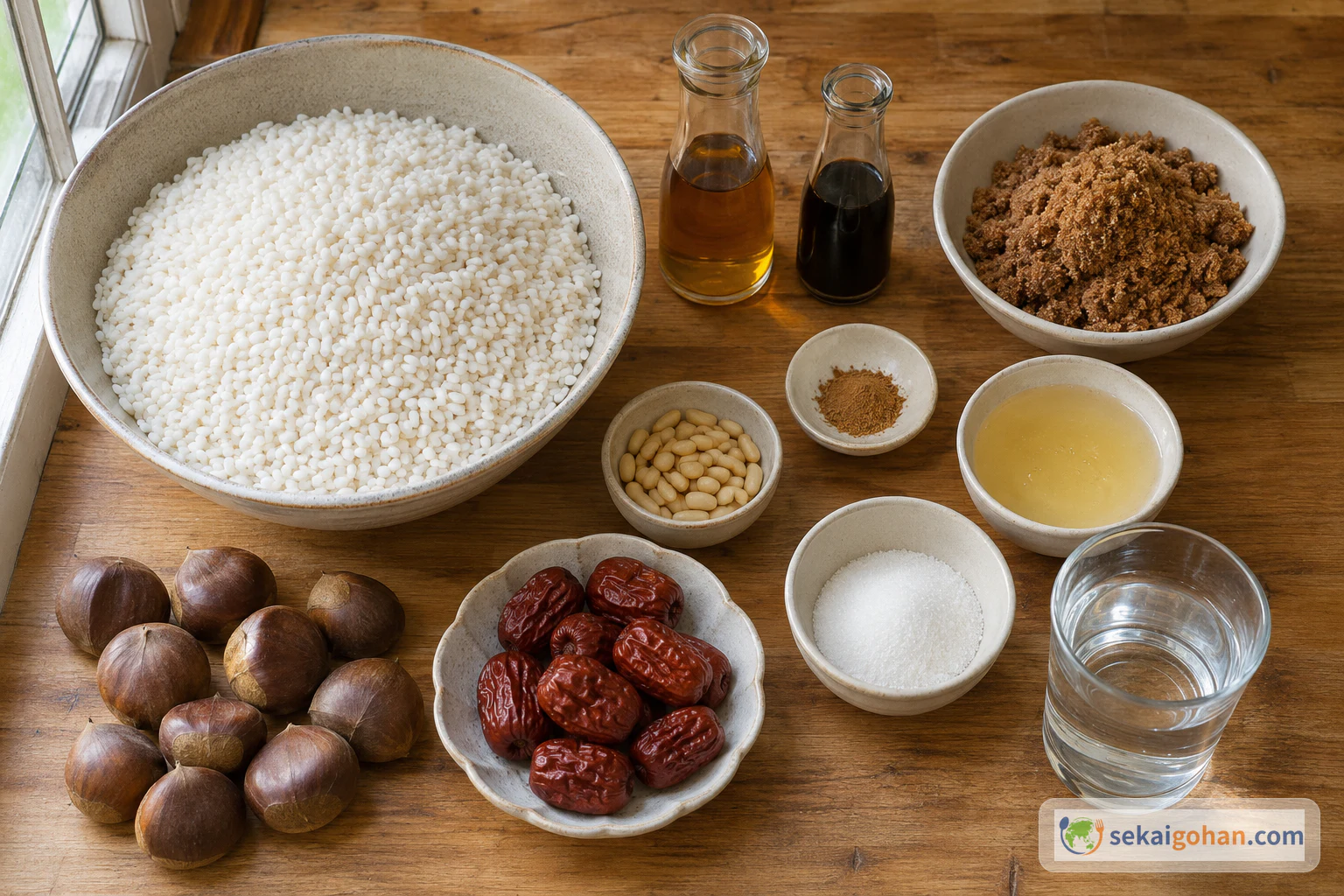
This makes a generous batch. With 1¾ lb of dry rice it fills a large steamer and gives plenty of pieces to share.
The dark color comes from the brown sugar and from caramel cooked to a deep brown. Pale sugar or caramel taken off the heat too early gives tan rice. Adding more soy sauce to fix the color only makes the rice salty.
Yaksik contains sesame (sesame oil), soy (soy sauce) and pine nuts, which are a tree nut. It also contains chestnuts and jujubes. Check the labels on soy sauce and corn syrup for other allergens.
Equipment
- Large steamer, big enough for the soaked rice in an even layer
- Thin cotton steaming cloth, dampened, to line the steamer (used twice)
- Large mixing bowl
- Colander
- Small saucepan for the caramel
- Wooden spoon or rice paddle
- Cutting board and paring knife
- Clean cotton cloth to cover the bowl during the rest
- Plate or shallow dish for cooling and shaping
- Instant-read thermometer (optional)
Choosing and Substituting
Glutinous rice is the one thing you cannot swap. Sold as sweet rice, sticky rice or chapssal, it is the only rice that steams into chewy, clinging grains. Ordinary rice stays loose and gives you a different, crumbly sweet.
Dried jujubes are sold at Korean and Chinese grocers, often as red dates. Semi-dried ones are fleshier and work well. If you leave them out, the red color and fruity aroma go with them and only the sugar's sweetness is left. For chestnuts, use fresh ones in season or vacuum-packed peeled chestnuts the rest of the year. Candied or syrup-packed chestnuts bring extra sugar and moisture and make the batch too sweet.
| Ingredient | Best choice | What a swap changes |
|---|---|---|
| Brown sugar | Brown sugar | White or light sugars give paler rice |
| Sesame oil | Korean toasted sesame oil | A light, untoasted sesame oil works the same but loses the roasted smell |
| Soy sauce | Korean brewed soy sauce | A darker, saltier soy sauce shifts the color and salt |
| Corn syrup | Korean mulyeot or rice syrup | Japanese mizuame gives much the same gloss and softness |
| Cinnamon | Either kind | Cassia smells stronger than Ceylon, and the full teaspoon will stand out |
| Pine nuts | Korean jat | Any pine nut gives a close flavor |
Method
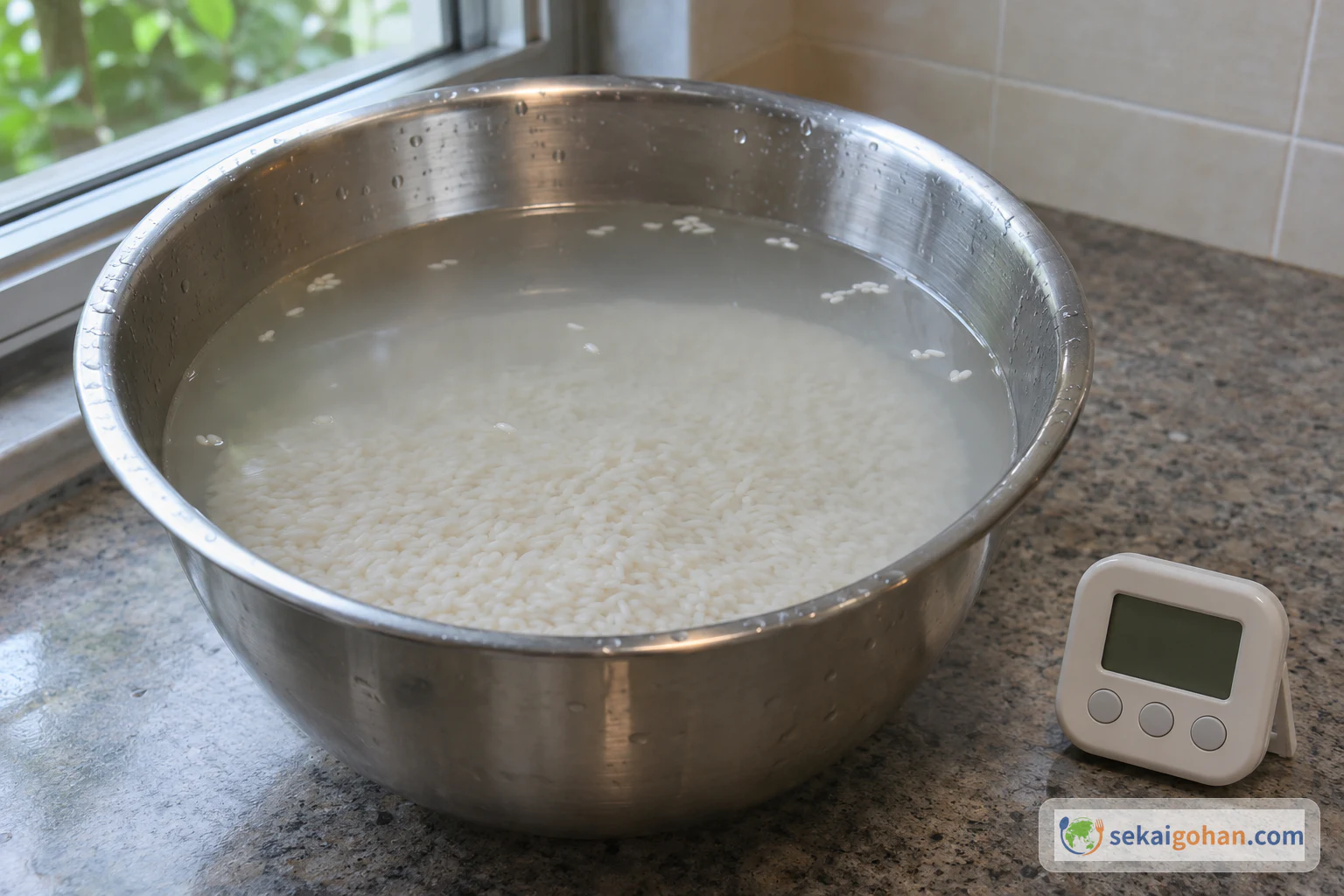
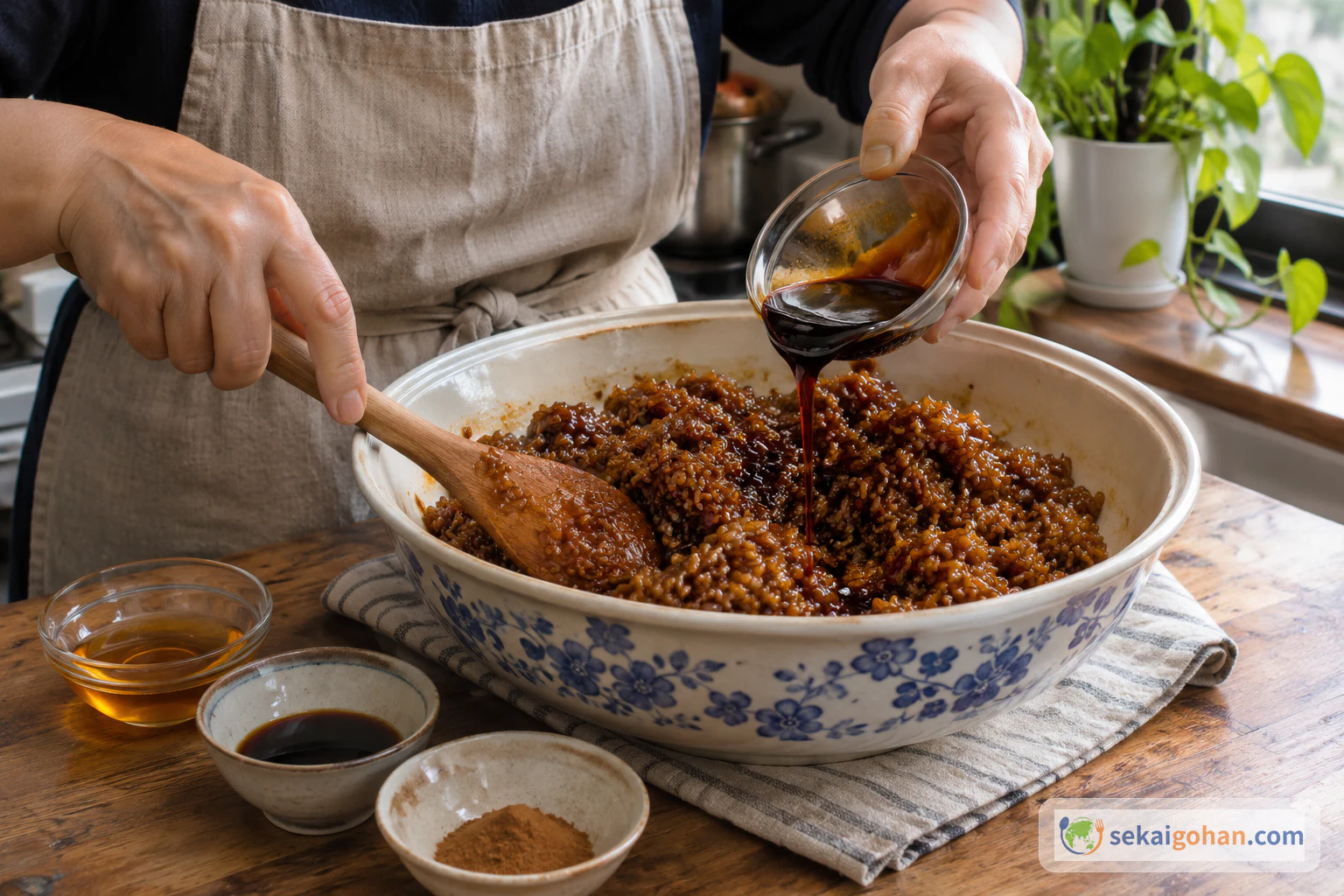
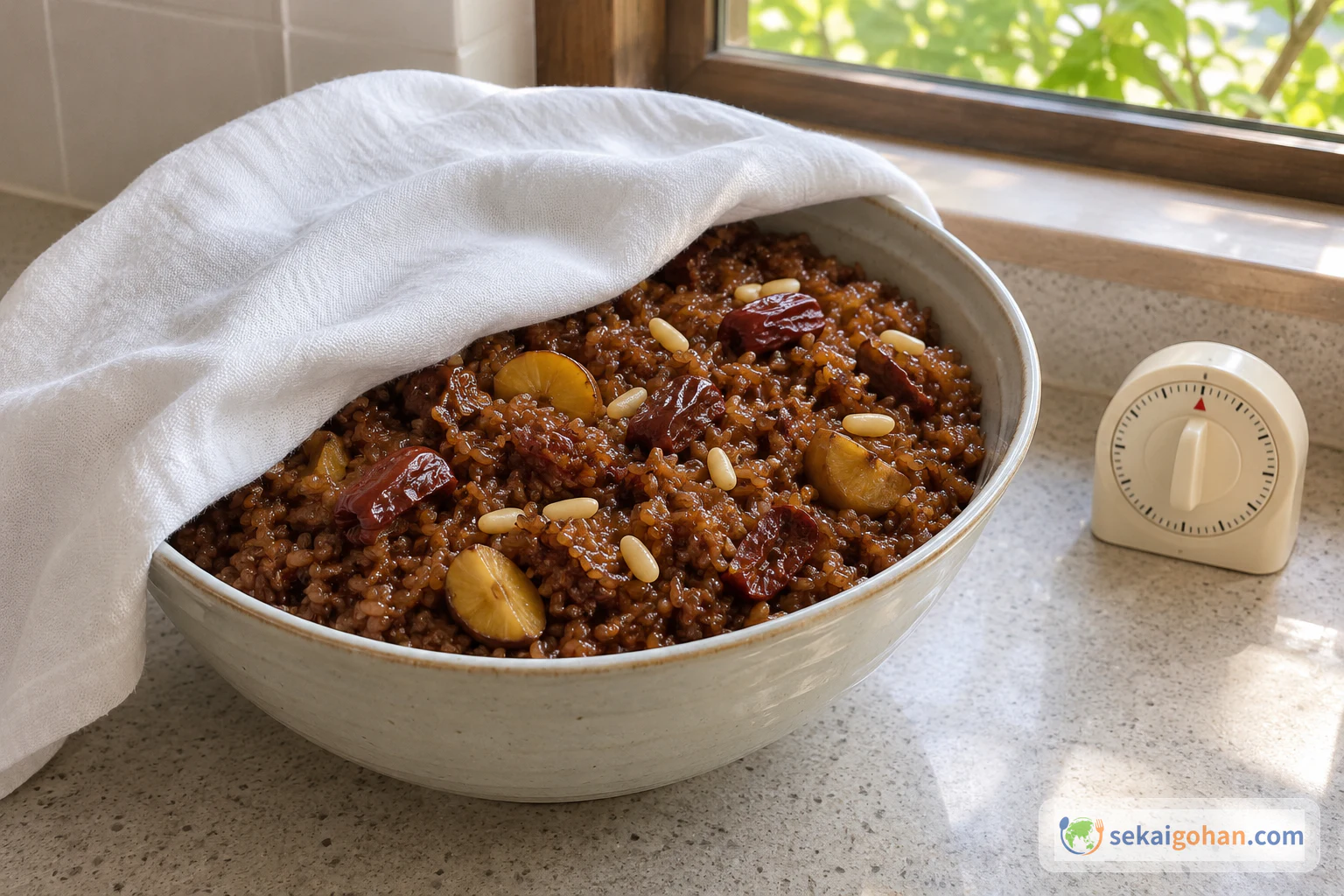
The rice soaks first. While it soaks or steams, make the caramel and prepare the nuts, so that everything is ready the moment the rice comes off the heat. The sugar goes in while the rice is still hot, and that is the one step where timing matters. The rest and the second steam are mostly hands-off. You are done when the cooled slab cuts into clean squares.
When It Goes Wrong
| What you see | Why | What to do |
|---|---|---|
| Hard grains with a chalky center | Short soak, too little steaming or an overcrowded steamer | Steam another 10 minutes. Next time soak the full 2 hours and leave room in the steamer |
| Tan, pale rice | Pale sugar in place of brown, or caramel taken off too early | Next time use brown sugar and cook the caramel to a deep brown. Extra soy sauce only adds salt |
| Too sweet | Candied chestnuts, or a large cup for the brown sugar | Cut smaller pieces and serve with plain nuts or unsweetened rice crackers. Use less sugar next time |
| Mushy, sticky lumps | Over-steaming or heavy stirring | Fold with cutting strokes and fewer turns. Cut with a wet knife |
| Tough jujubes or chestnuts | Very dry jujubes, or chestnuts that went in raw | Soak the jujubes in hot water for about 20 minutes, and simmer the chestnuts before cutting |
| Sour smell or slimy threads | Too long a rest in a warm room, or poor refrigeration | Throw it away. Next time keep the rest to 2 hours and refrigerate the finished yaksik at 41°F (5°C) or below |
Serving, Variations and Storage
At the table
Yaksik is a snack and a celebration sweet. Serve the squares on a plate at room temperature for the first full moon, for a family gathering, or with tea in the afternoon. Because it slices cleanly, it travels well as a gift. That fits with how it was once sent around to neighbors.
Variations
- Add walnuts. Many households fold in walnut pieces with the other nuts. They add a toasty depth, and you can use fewer pine nuts.
- Mold individual portions. Press the warm rice into muffin tins instead of one dish. Each piece comes out ready to hand round, and you skip cutting altogether.
- Spoon it from a bowl. Serve it unpressed from a bowl. Everyone gets some fruit and nuts in each spoonful.
- Plump the jujubes first. Soak very dry jujubes in hot water for about 20 minutes before cutting them. Their texture then matches the chestnuts.
Change one thing at a time so you can taste what it does.
Storage and reheating
Eat yaksik within two hours of making it, or put it away. Divide it into small covered containers, let it cool, and refrigerate promptly at 41°F (5°C) or below. It keeps for several days and no more than four. Before eating, check that it smells clean and shows no slimy threads. Chilled yaksik firms up. Steam it gently until it is hot right through, to 167°F (75°C), and the softness comes back. You can also microwave it in 10-second bursts.
Frequently Asked Questions
What if I can't find jujubes?
Look in the dried-fruit section of any Korean or Chinese grocer, where they are often labeled red dates. Without them the dish loses its red color and its fruity, almost caramel-like aroma, and the sweetness turns flat. Swapping in raisins or other dried fruit pulls the flavor away from yaksik, so wait until you can get jujubes.
Can I make it less sweet?
Cutting the brown sugar also weakens the color, because the sugar colors the rice as well as sweetening it. The better way is to keep the full amount and cut smaller pieces. A small square with tea tastes balanced.
Can I make yaksik in a pressure cooker?
Yes. Pressure-cooker versions soak the rice for 1 hour and cook it under pressure for 12 minutes. They use their own proportions, with water and honey and no caramel, so these steamer amounts cannot simply go into a pressure cooker. The grains also come out differently from steamed rice, with less of the distinct, standing-up texture a steamer gives.
Can I rest it longer than 2 hours for more flavor?
No. Two hours is the limit for leaving the cooked rice out. If your day needs more time, rest the bowl in the refrigerator, then go straight to the 40-minute steam so the rice is heated through again.