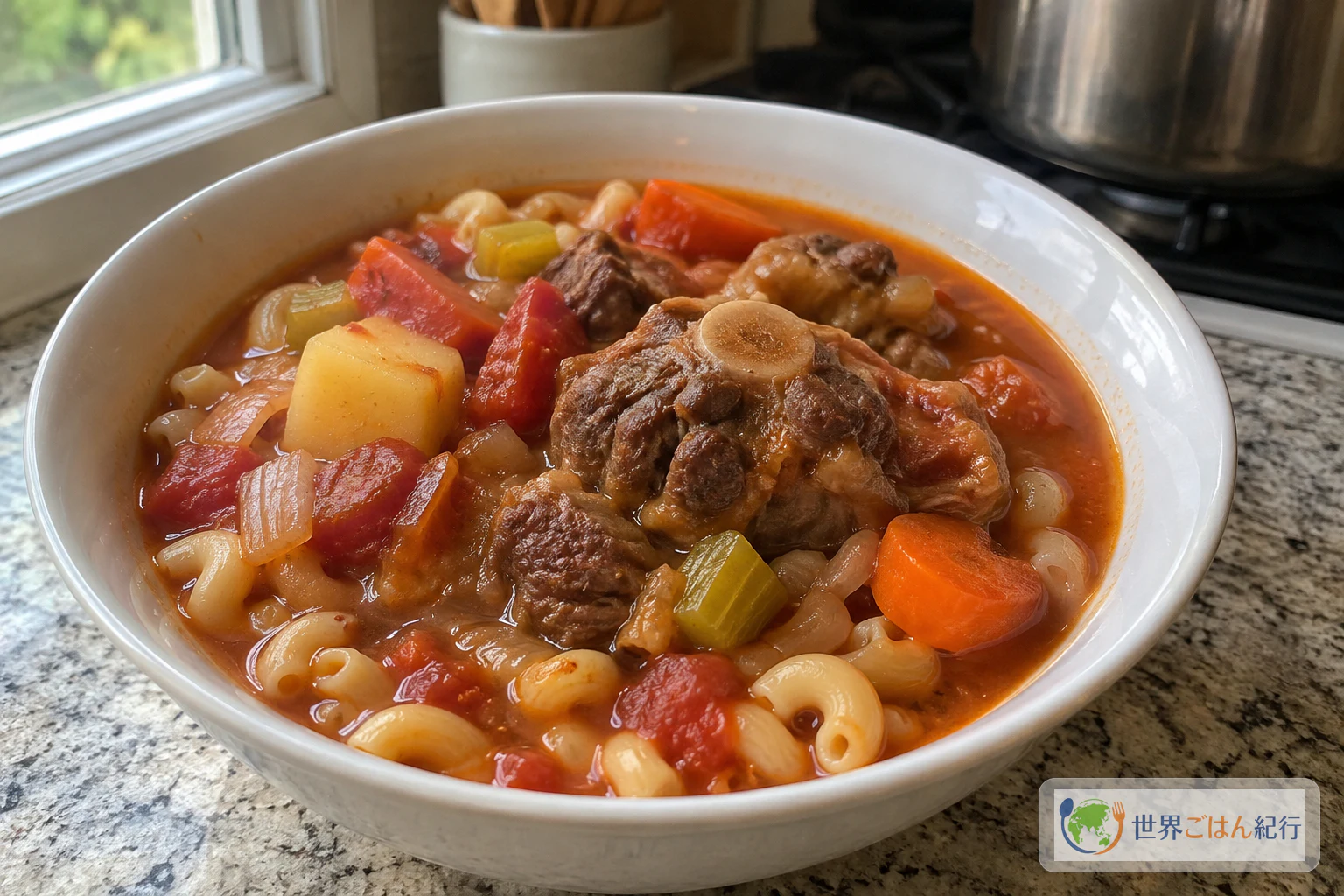
Macaroni in Oxtail Tomato Soup: A Long-Simmered Soup Poured over Separately Cooked Macaroni
Simmer the oxtail low until the meat comes away from the bone. Cook the macaroni in its own pot, and bring the two together only in the bowl.
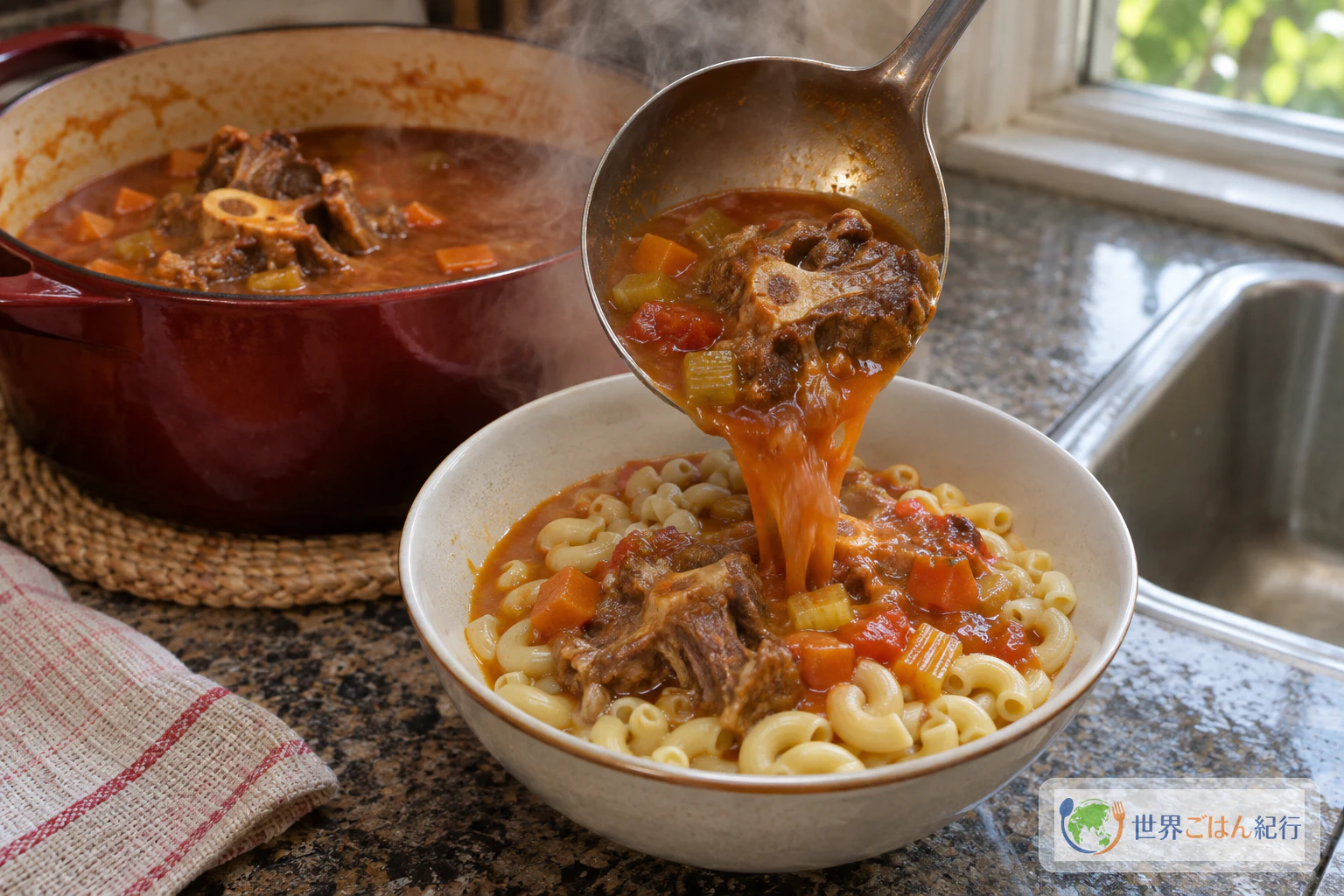
The Macao Government Tourism Office describes macaroni in oxtail tomato soup as a favorite local breakfast and a common item on restaurant menus in Macau. The idea of the bowl is simple: oxtail and vegetables cook for hours into a tomato soup with gentle acidity and sweetness, and that soup is poured over macaroni that has already been cooked.
There is no single fixed version. The tourism office notes that ingredients differ from shop to shop, and names oxtail, carrot, onion, tomato, celery and cabbage as the common ones. The measured recipe on this page is a different thing: a home version by food writer and home cook Lydia Wong, who writes that she ate this soup with macaroni at cafés and restaurants in Macau. Her version serves 4–5 and uses potatoes, bay leaves, fresh thyme and dried basil, and it does not include cabbage. This page follows her home version as written and keeps it separate from the general shop description, rather than blending the two.
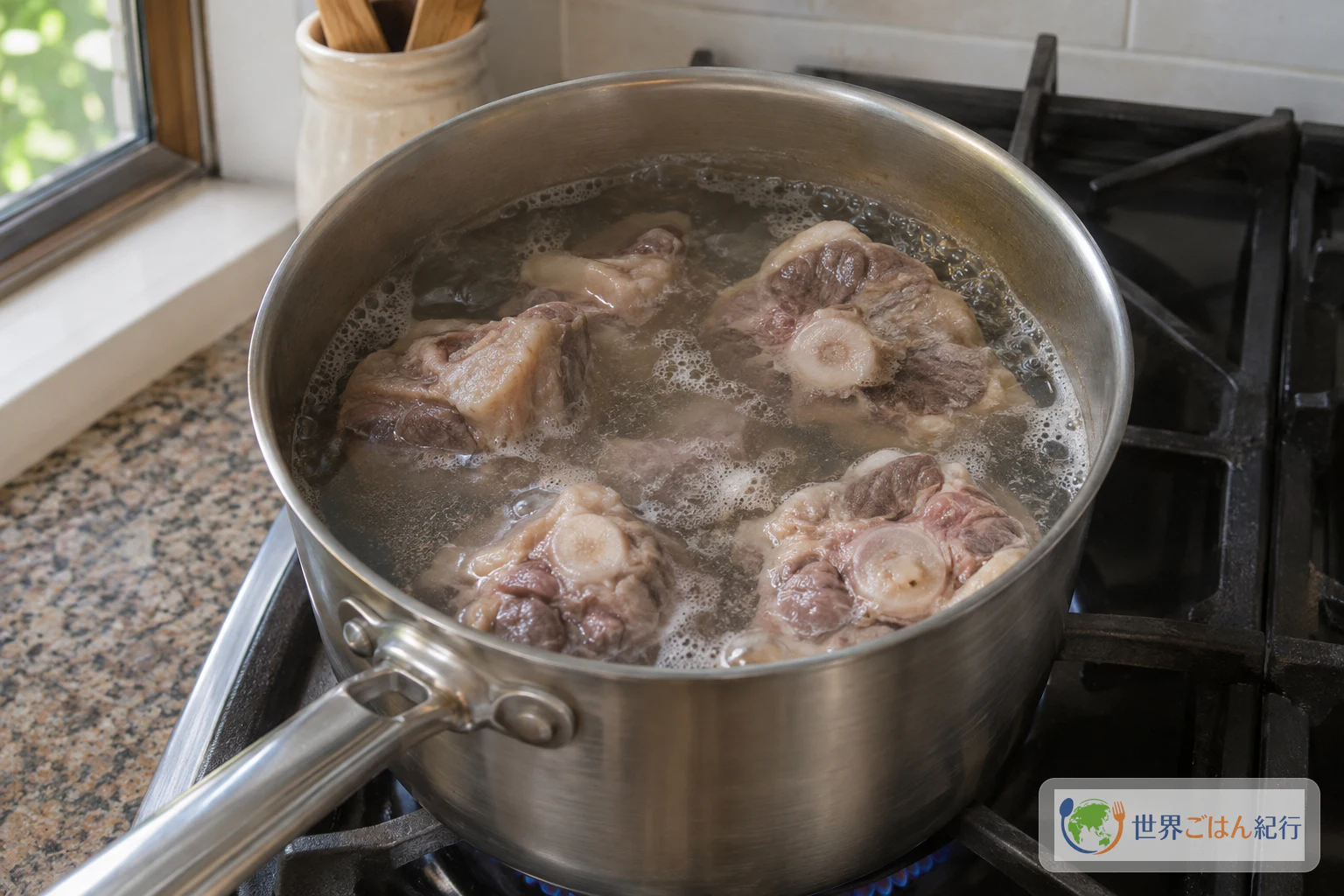
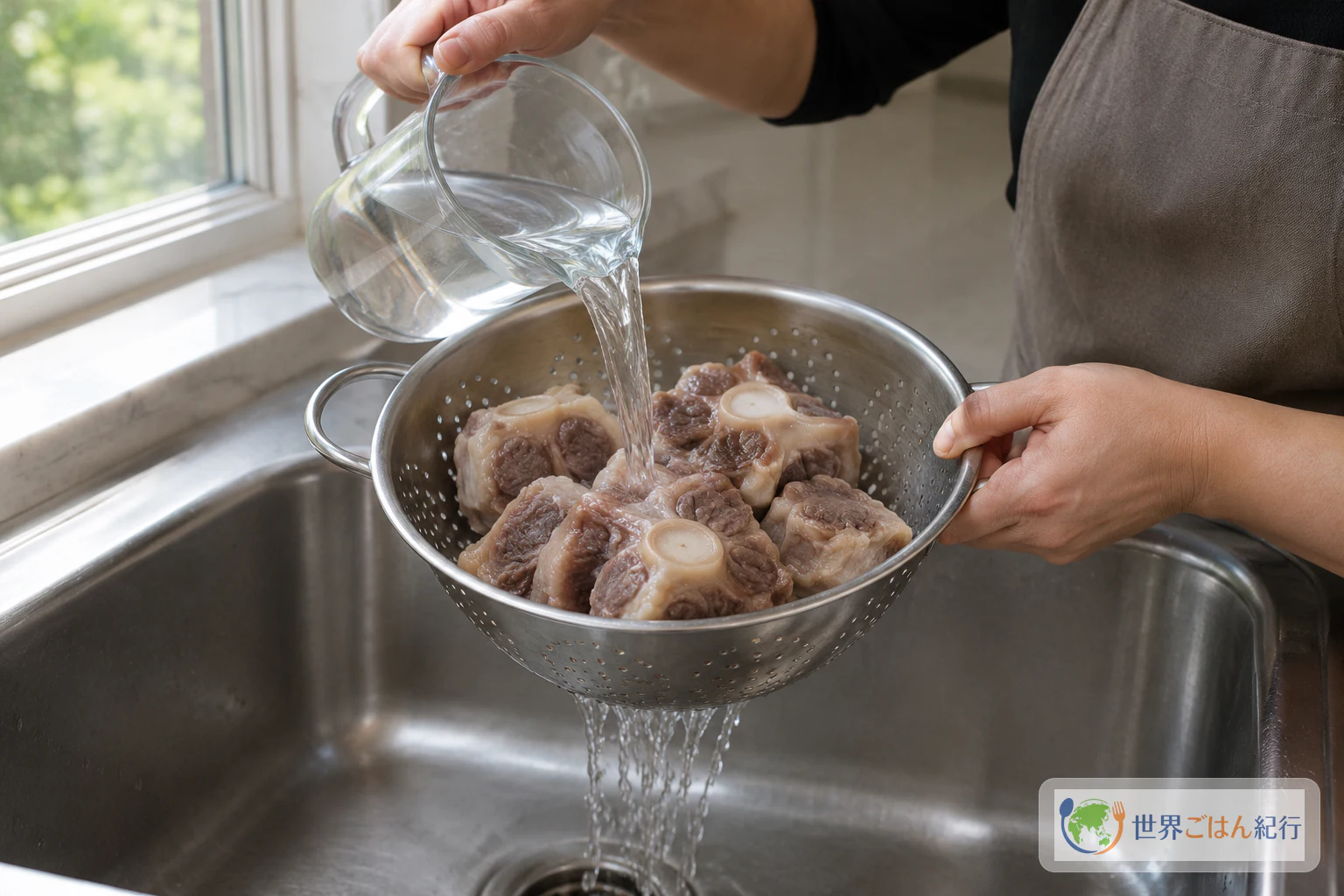
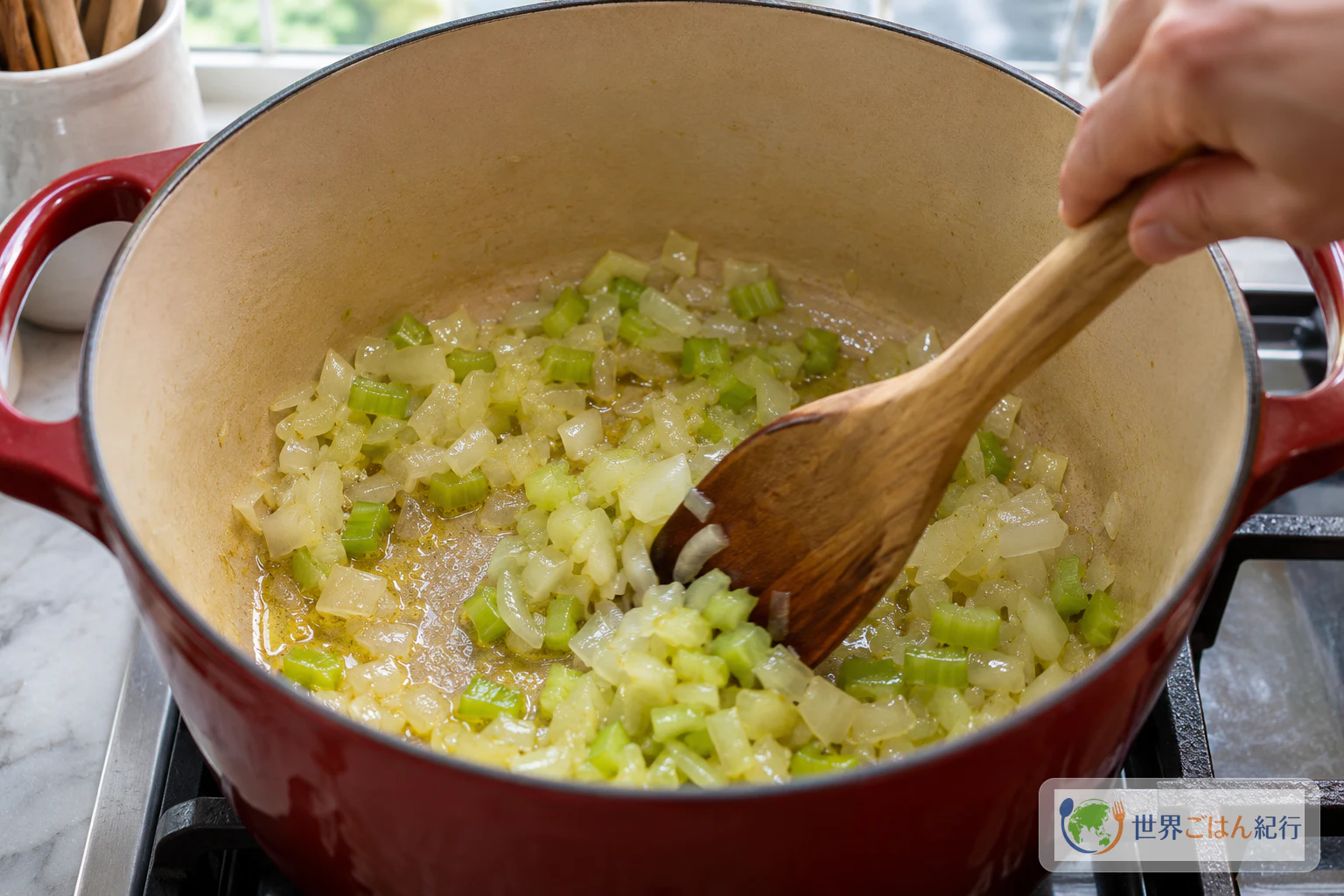
Lydia Wong's method is written as running text without numbered steps. The ten steps below are a division made here for easier cooking; the order follows hers. This recipe has not been kitchen-tested by Sekai Gohan.
Why the Macaroni Stays Out of the Soup Pot
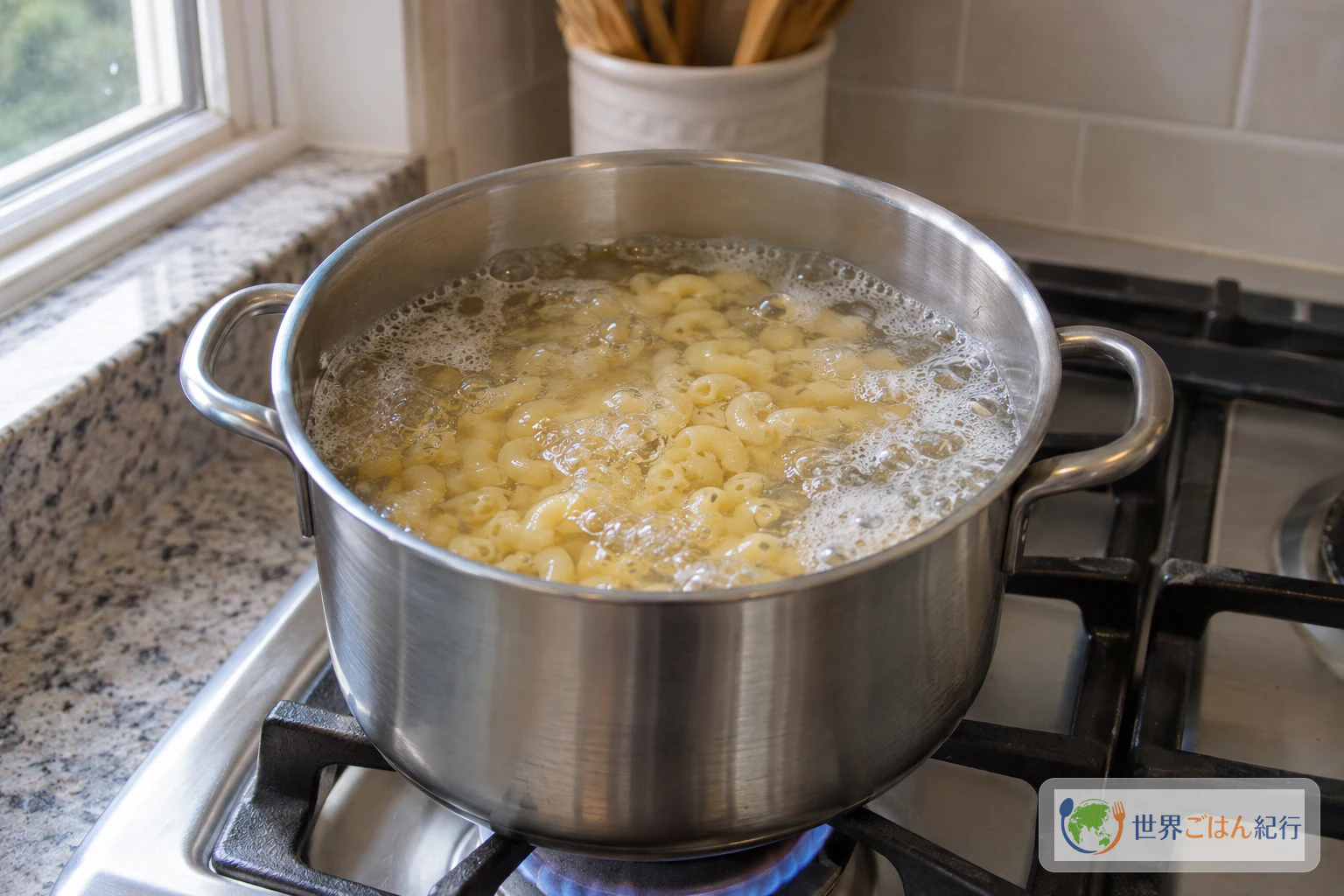
The tourism office's description and the home recipe agree on the structure. The soup is cooked for a long time, and the macaroni is cooked beforehand and only meets the soup when it is served. The home recipe cooks the pasta separately according to its pack, divides it into bowls and pours the hot soup over it. The macaroni does not simmer in the soup pot.
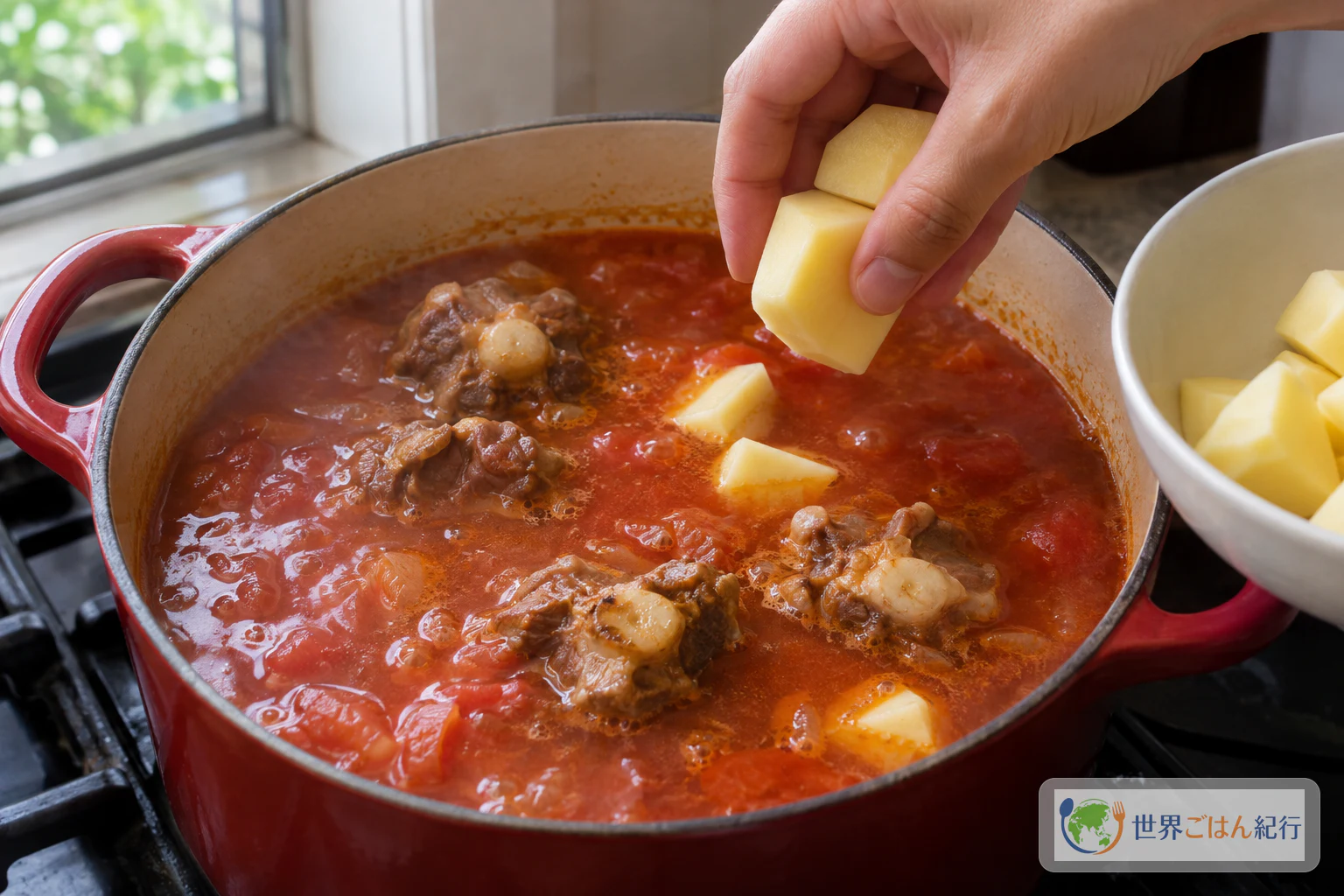
The flavor comes from two directions. The tourism office describes the soup as moderately sour and sweet, and in the home version the tomato side comes from fresh tomatoes and a little tomato puree, and the meaty side from bone-in oxtail and beef stock. Carrots, onion and celery fill out the soup, and the potatoes go in near the end.
A neighboring dish is easy to mix up with this one. In Hong Kong, a tomato beef macaroni soup is made with sliced beef rather than oxtail, and the recipe published by HK01 also uses seasonings such as ketchup, soy sauce and oyster sauce. It also cooks the macaroni separately, but it is a distinct dish. None of its ingredients or amounts are used here. The same goes for other oxtail and tomato dishes, such as Jamaican oxtail stew, Taiwanese beef noodle soup and Ukrainian borscht: they are separate dishes with their own cuts, spices and structures.
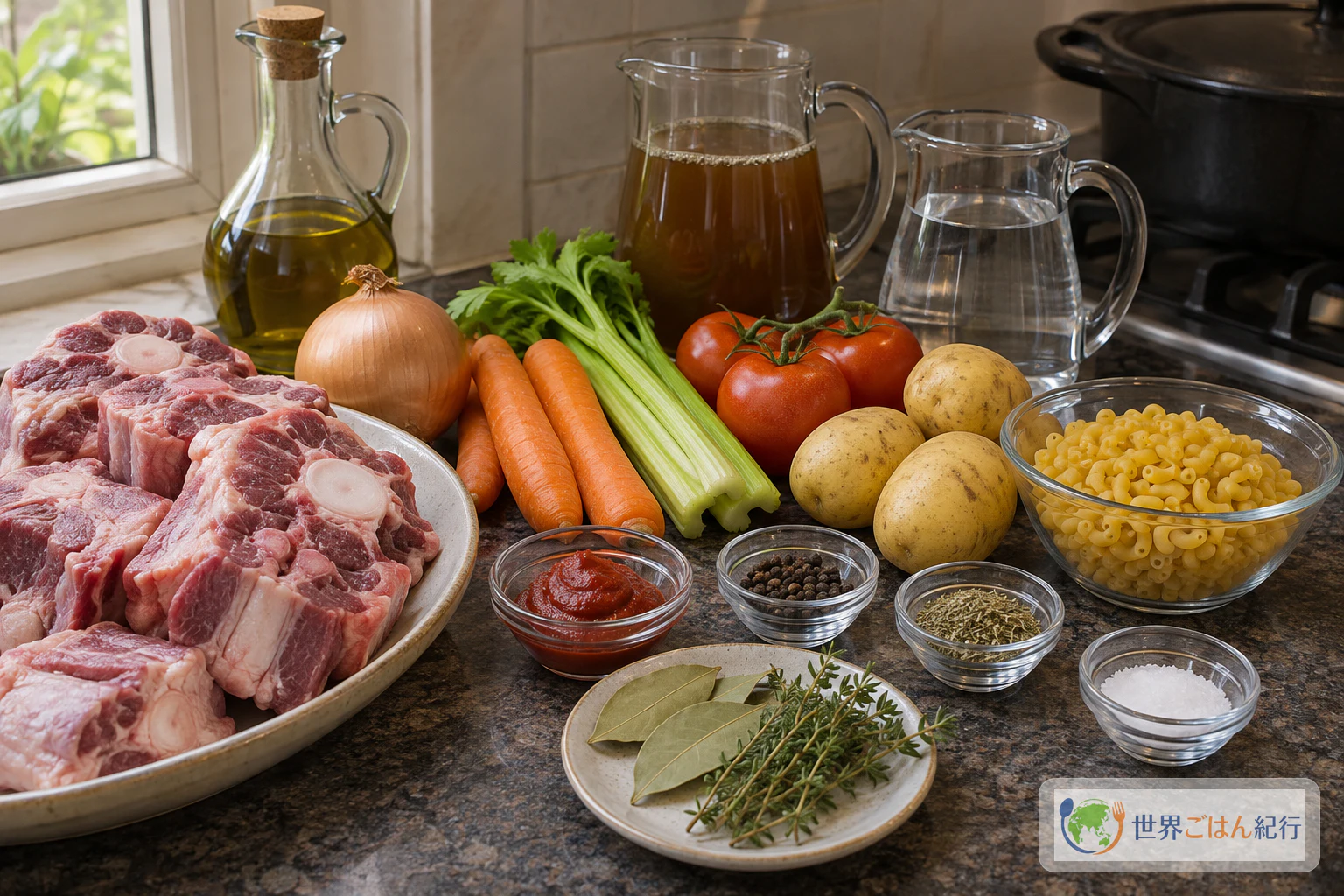
Ingredients (4–5 servings)
Equipment
- A saucepan for blanching the oxtail
- A colander
- A large, heavy pot for the soup
- A separate pot for the macaroni
- A spatula
- A ladle
- A teaspoon
- Serving bowls
Choosing the Oxtail, Stock, Tomato Puree and Macaroni
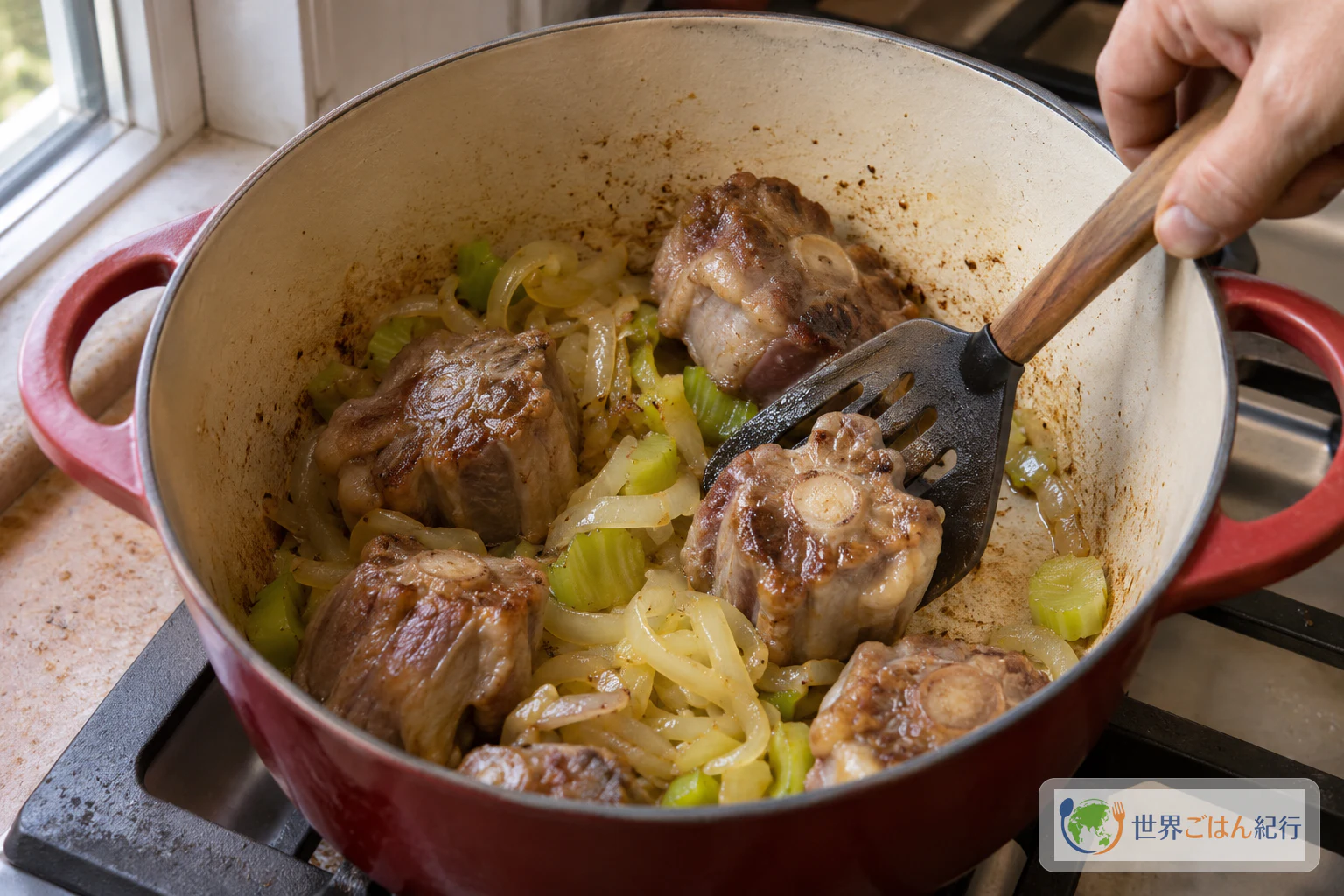
Oxtail. Buy 1 kg of jointed bone-in oxtail. Use the pieces with their bones, rather than weighing out 1 kg of trimmed meat.
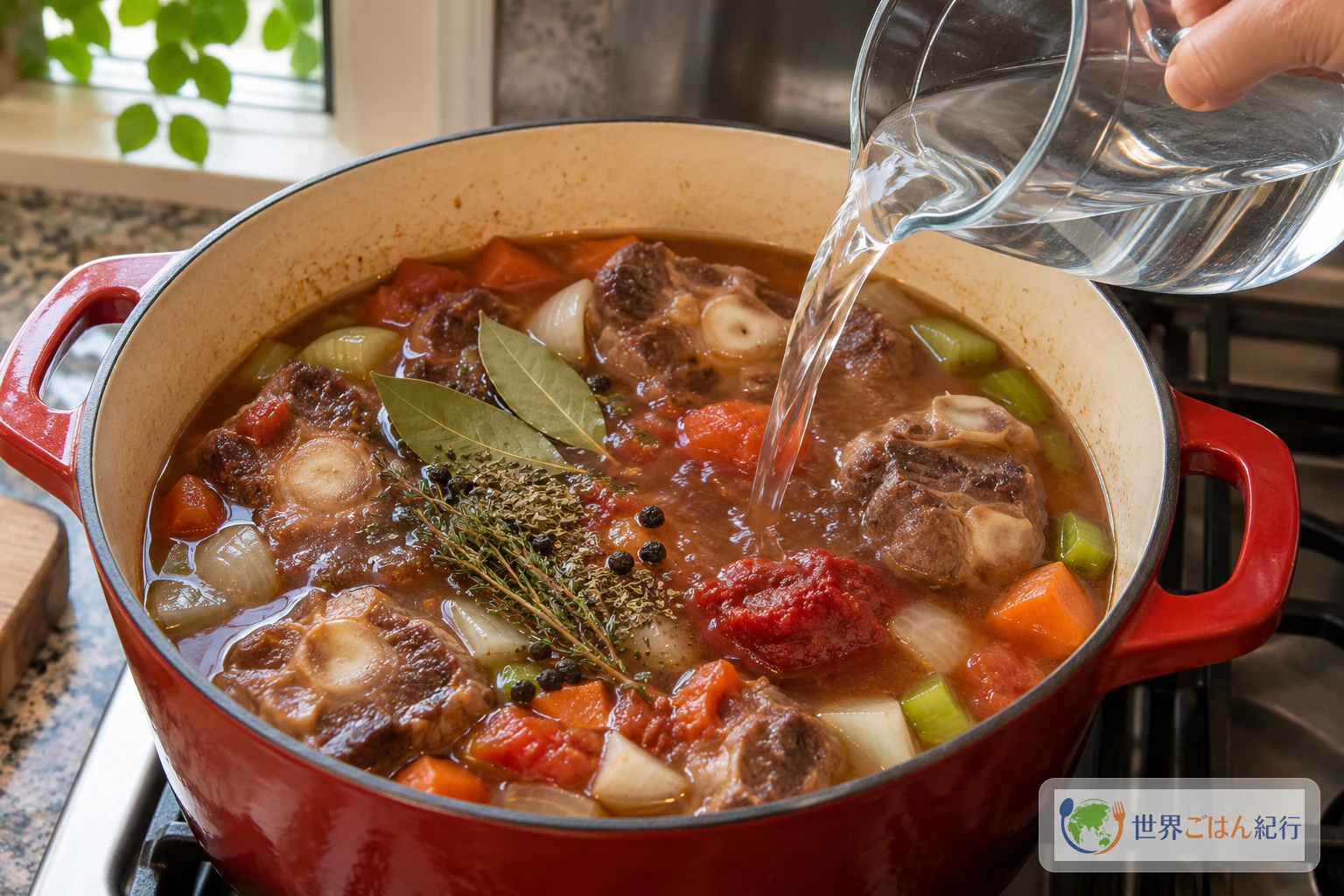
Beef stock and salt. Use 1 L organic beef stock. Shop-bought stocks vary in saltiness and strength, so taste the finished soup before adding any salt. Add enough water to cover the meat and vegetables; the total amount of liquid depends on your pot and your pieces of oxtail.
Tomato puree. Use 2 tbsp tomato puree. Ketchup or other sauces are not part of this version.
Herbs. Keep to bay leaves, fresh thyme and dried basil. Fresh basil as a garnish is not part of this version.
Macaroni. Ordinary dried short macaroni from the supermarket is a practical choice. If you use a different pasta shape, think of it as your own change. The 150 g is the amount for the whole batch, not a single bowl.
Cabbage. This version uses potatoes and leaves out cabbage. If you want to try cabbage, see the variations below; it is not part of the method here.
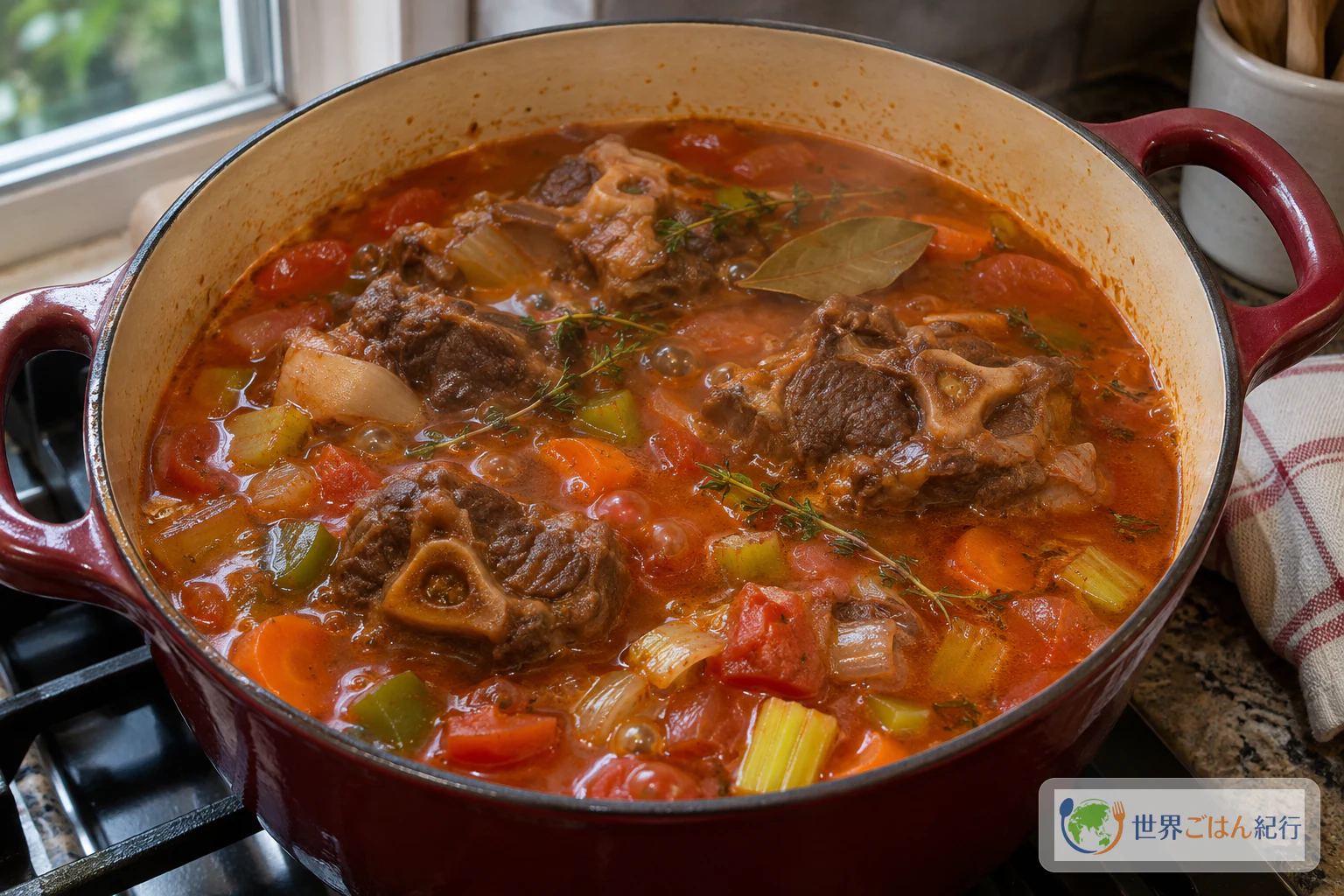
Method: Blanch, Simmer Low, Cook the Macaroni Apart
The simmer time is a guide. The real endpoint is meat that comes away from the bone. Oxtail pieces differ in size, so watch the meat rather than the clock.
Getting It Right: Fixing Problems in the Pot
The two points to judge are the meat, which should come away from the bone, and the salt, which depends on your stock. Neither the home recipe nor the tourism office gives a cooking temperature; the guide is a low, gentle simmer.
| Problem | Likely cause | What to do |
|---|---|---|
| The meat still clings to the bone after 2–3 hours | Larger pieces, or the simmer hasn't reached its endpoint | Keep simmering on the same low heat and check the meat again. Go by its state, not the clock |
| The soup is bubbling hard | Heat too high | Turn it down to a gentle simmer |
| The potatoes are breaking down | Added too early, or cooked too long | Add them only for the last 15 minutes |
| The soup tastes too salty | Salty stock, or salt added before tasting | Next time, taste the finished soup before adding any salt |
| The soup tastes flat | Not enough salt for your stock | Add salt a little at a time and taste again |
| The macaroni is soft and swollen | Cooked in the soup, or left sitting in it | Cook it in a separate pot and pour the soup over it just before serving |
Leftovers: Refrigerate Quickly and Reheat Thoroughly
The home recipe gives no storage guidance, so this section follows the Macao Municipal Affairs Bureau's food safety leaflet on leftovers. Refrigerate leftovers within two hours of serving. Eat them as soon as possible. When you reheat them, heat the whole portion completely to above 75°C. No storage period is given, so none is suggested here. The 75°C figure is for reheating leftovers only; it is not a temperature for the first long simmer.
Variations: Kept Separate from the Main Recipe
The recipe above is the home version as written. The ideas below are departures from it, so treat them as your own changes, not part of the method.
| Idea | How to approach it |
|---|---|
| A salty stock | Hold back on salt and adjust only after tasting at the end. This is the same adjustment as step 7 |
| Heat at the table | If you want spice, let each person add a chili condiment to their own bowl. This is an optional addition outside the recipe |
| More macaroni | Treat a larger amount of pasta as a separate choice, and keep cooking it in its own pot |
| Cabbage | Cabbage is among the common shop ingredients named by the tourism office. Adding it makes a different variant from this home version |
Keep the herbs as they are: bay leaves, fresh thyme and dried basil.
Frequently Asked Questions
Is cabbage supposed to go in?
The Macao Government Tourism Office lists cabbage among the common ingredients and notes that shops differ. Lydia Wong's home recipe, which this page follows, does not use cabbage. Both are part of the picture of this dish, but they are different versions and are not combined here.
Should the macaroni be cooked in the soup?
No. In the home recipe the macaroni is cooked separately following its pack, divided into bowls, and the hot soup is poured over it. The tourism office also describes the soup being added to macaroni that has already been cooked.
What if the oxtail still isn't coming off the bone?
The simmer hasn't reached its endpoint yet. The 2–3 hours is a guide; the real signal is meat that comes away from the bone. Keep simmering on the same low heat and check again.
How much water and salt should I use?
The home recipe gives no fixed amounts. Add enough water to cover the meat and vegetables on top of the 1 L stock, and salt to taste after checking how salty your stock is.
Is the 1 kg of oxtail the weight of the meat alone?
The recipe lists 1 kg of jointed oxtail without defining whether the weight includes bone. Read it as jointed bone-in oxtail as bought, not 1 kg of meat trimmed from the bone.
How long do leftovers keep?
No storage period is given, so none is stated here. Following the Macao Municipal Affairs Bureau's food safety leaflet: refrigerate within two hours of serving, eat as soon as possible, and reheat the whole portion completely to above 75°C.
Sources
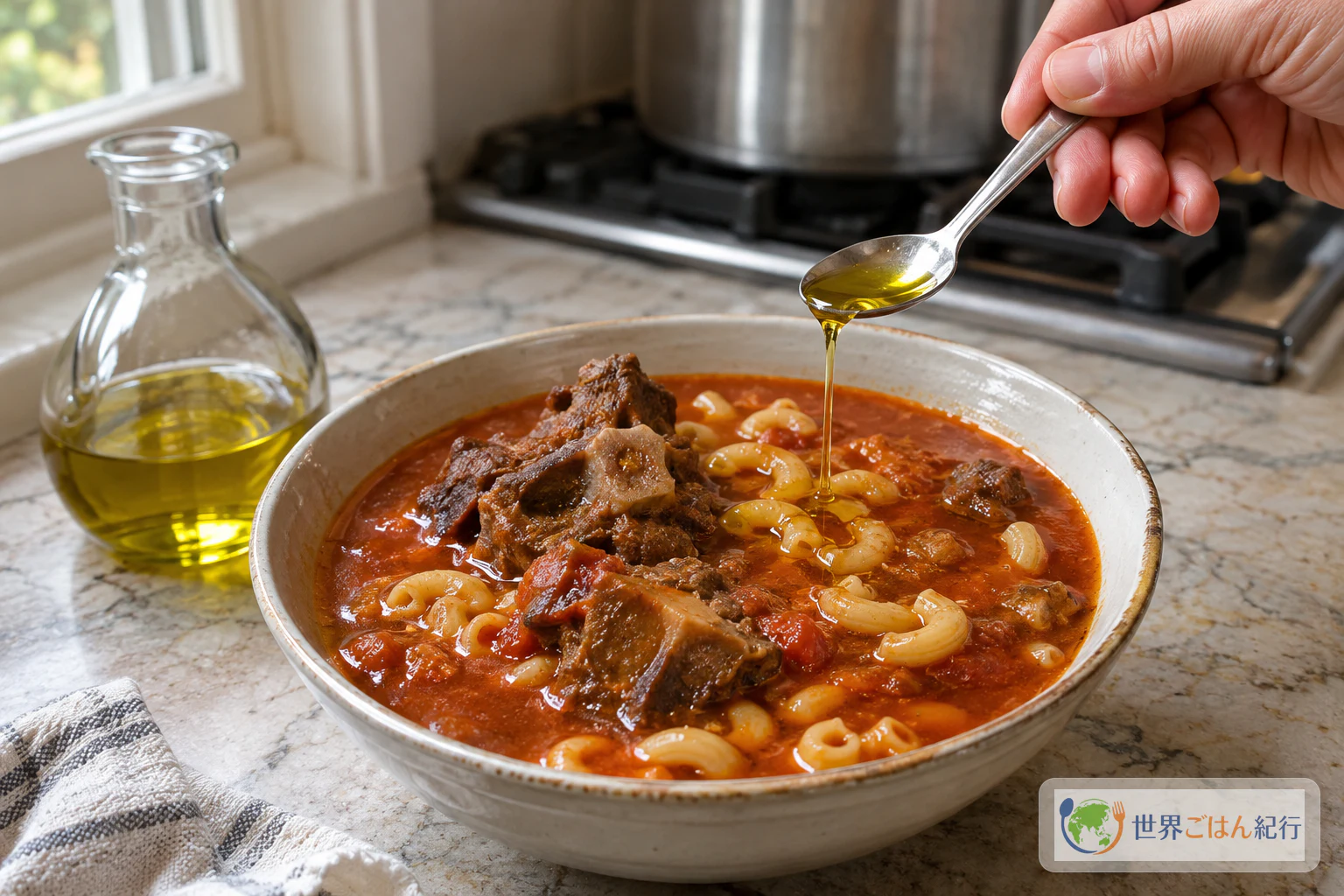
- Lydia Wong, "Oxtail soup," ginger & chorizo, 2012. A home recipe by a food writer and home cook who describes eating this soup with macaroni at cafés and restaurants in Macau. Basis for the 4–5 serving yield, all ingredient amounts and units including 150 g macaroni and 1 tsp olive oil per bowl, the order of steps, the 5-minute blanch, the 2–3 hour low simmer until the meat comes away from the bone, potatoes for the last 15 minutes, and the separately cooked macaroni. It is a home version, not an official or restaurant recipe. https://gingerandchorizo.wordpress.com/2012/09/06/oxtail-soup/
- Macao Government Tourism Office, "15 Must-eat Delicacies and 2 Recipes." Describes macaroni in oxtail tomato soup as a favorite local breakfast and a common restaurant menu item in Macao, notes that ingredients differ between shops, lists oxtail, carrot, onion, tomato, celery and cabbage as common ingredients, and describes a soup cooked for hours, moderately sour and sweet, combined with pre-cooked macaroni. No measured recipe. https://content.macaotourism.gov.mo/uploads/mgto_brochures/b7eb53ee99f74d5c12f217686889efc54fefbb90.pdf
- HK01, "〖茄牛通食譜〗番茄通粉湯底健康清新 牛肉如何做到嫩滑不韌?" Used only to show that Hong Kong tomato beef macaroni, made with sliced beef and seasonings such as ketchup, soy sauce and oyster sauce, is a related but distinct dish. None of its ingredients or amounts are used in this recipe. https://www.hk01.com/%E6%95%99%E7%85%AE/137249/%E8%8C%84%E7%89%9B%E9%80%9A%E9%A3%9F%E8%AD%9C-%E7%95%AA%E8%8C%84%E9%80%9A%E7%B2%89%E6%B9%AF%E5%BA%95%E5%81%A5%E5%BA%B7%E6%B8%85%E6%96%B0-%E7%89%9B%E8%82%89%E5%A6%82%E4%BD%95%E5%81%9A%E5%88%B0%E5%AB%A9%E6%BB%91%E4%B8%8D%E9%9F%8C
- Macao Municipal Affairs Bureau, Department of Food Safety, "Food Safety for Dining Out." Basis for the leftover guidance: refrigerate within two hours of serving, eat as soon as possible, and reheat completely to above 75°C. Applied to leftovers only, not to the cooking of the soup. https://www.iam.gov.mo/foodsafety/file?p=foodsafetyinfo%2Fdocleaflet%2F637547045798148.pdf