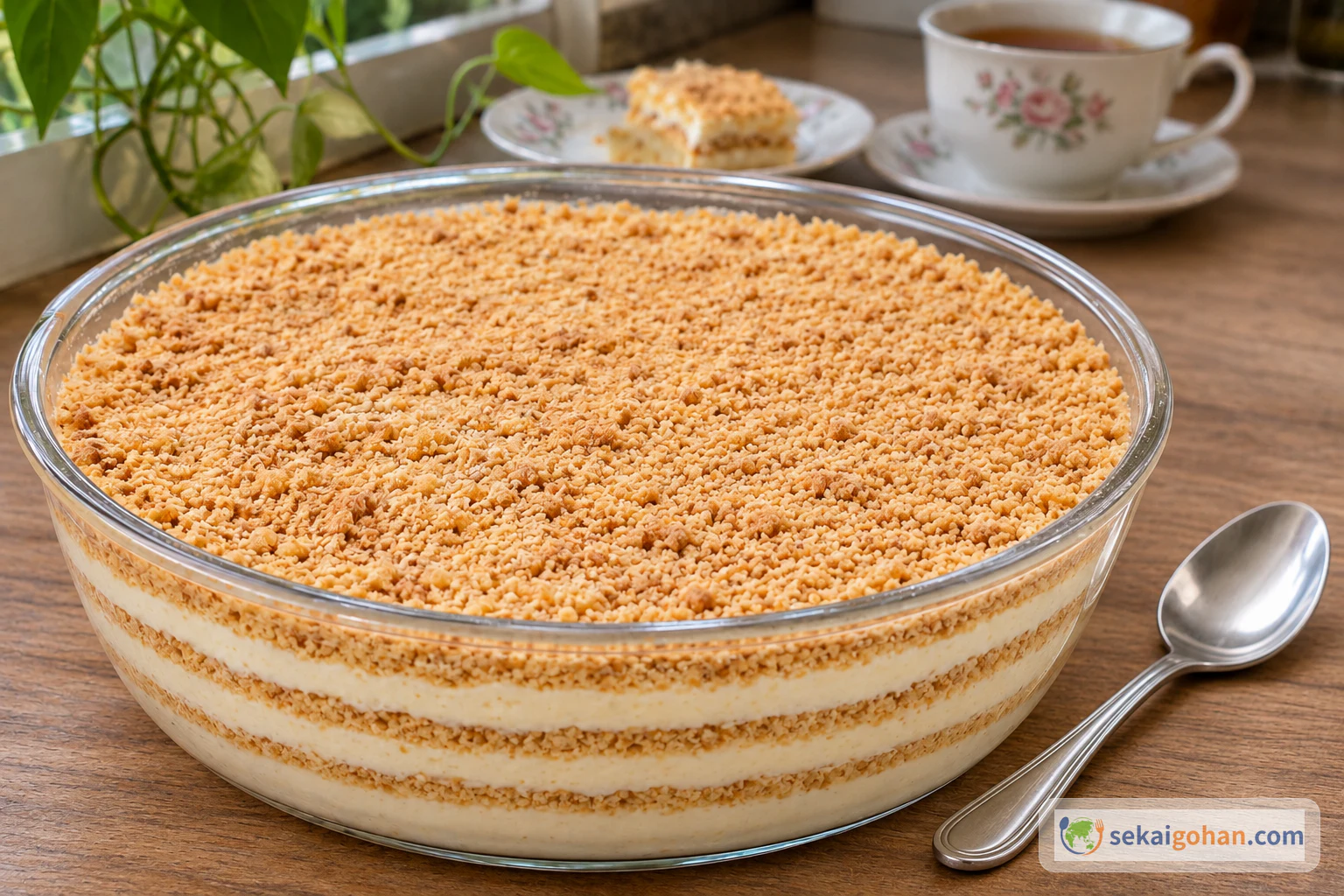
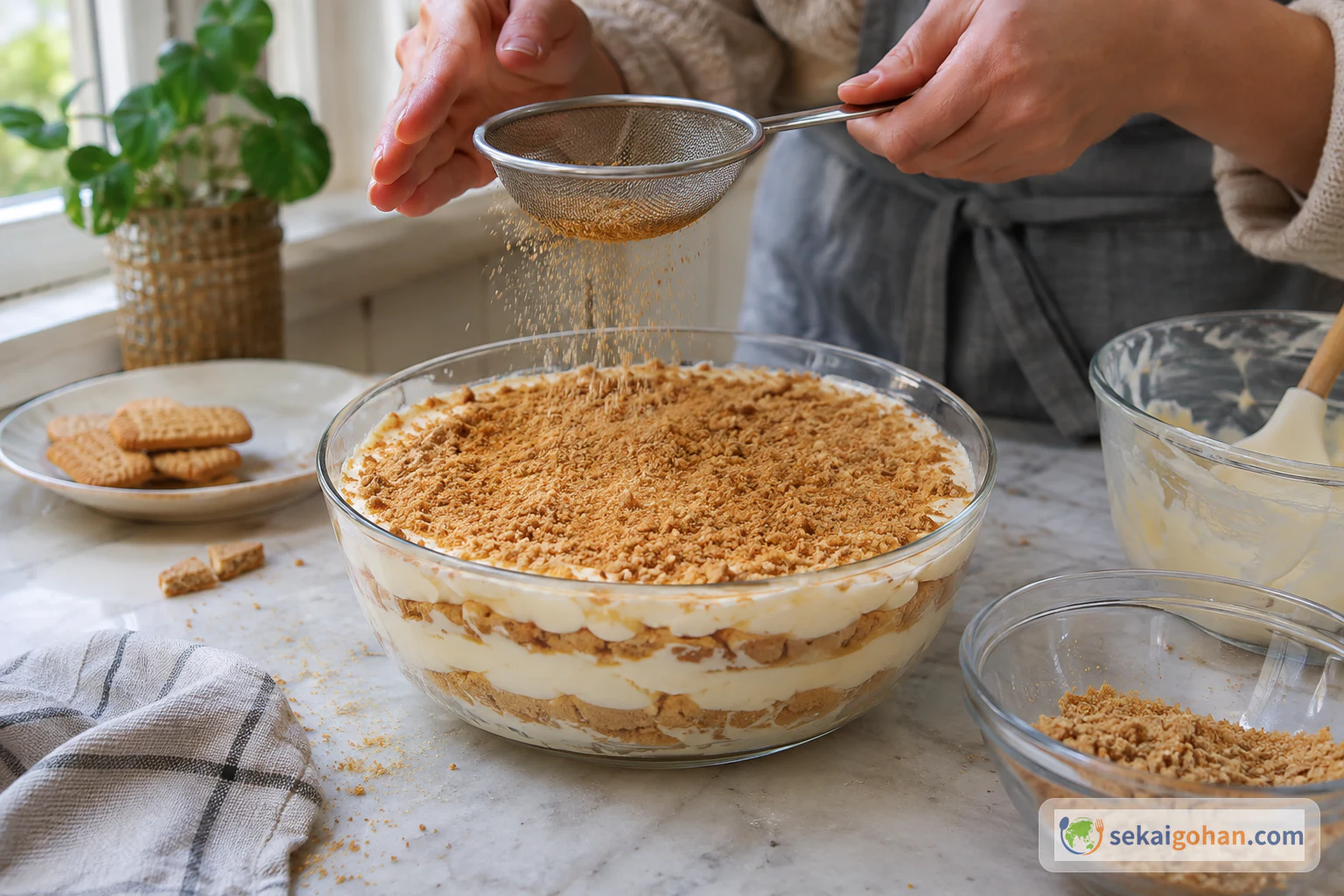
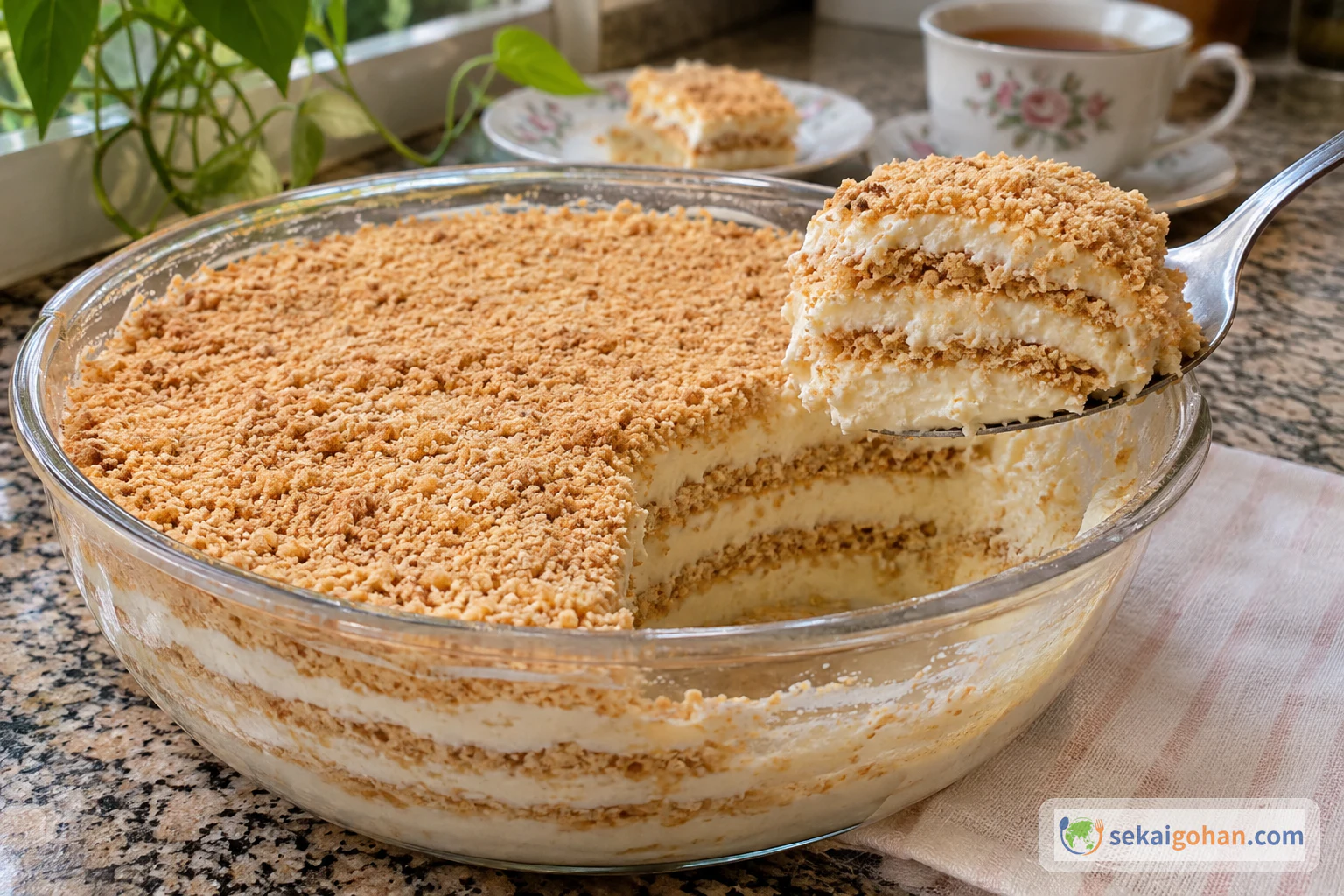
The spoon goes in through a dry, sandy dusting of golden crumbs and then meets cold cream, and when it comes out you can see the stripes: pale cream, a thin band of biscuit, pale cream again. Serradura is made of almost nothing: whipped cream sweetened with condensed milk, a little vanilla, and Marie biscuits crushed to a powder. In Macau it sits beside the egg tart as one of the desserts people know the city by. It tastes like milky caramel and plain tea biscuits, cold and soft, with crumbs that soak up just enough cream to turn tender at the edges.
Why a Dessert Is Named After Sawdust
Serradura is the Portuguese word for sawdust. There is no wood anywhere near it. The name comes from the look and feel of the crumbs, biscuits ground so fine that they pile up like the dust under a carpenter's bench. In English it is often simply called sawdust pudding, and in Chinese it goes by 木糠布丁 or 木糠布甸, which carries the same sawdust image into a new language.
The dessert is usually traced to Portugal, and the common account is that it reached Macau during the centuries of Portuguese rule and became famous there. How it was first made, and by whom, is not settled. What is clear is where it lives now. In Macau it is one of the best-known desserts on the menu of Macanese and Portuguese cooking, named in the same breath as pastéis de nata. It also turns up in Hong Kong and in Goa, the other places where Portuguese and local kitchens met.
What decides a good one
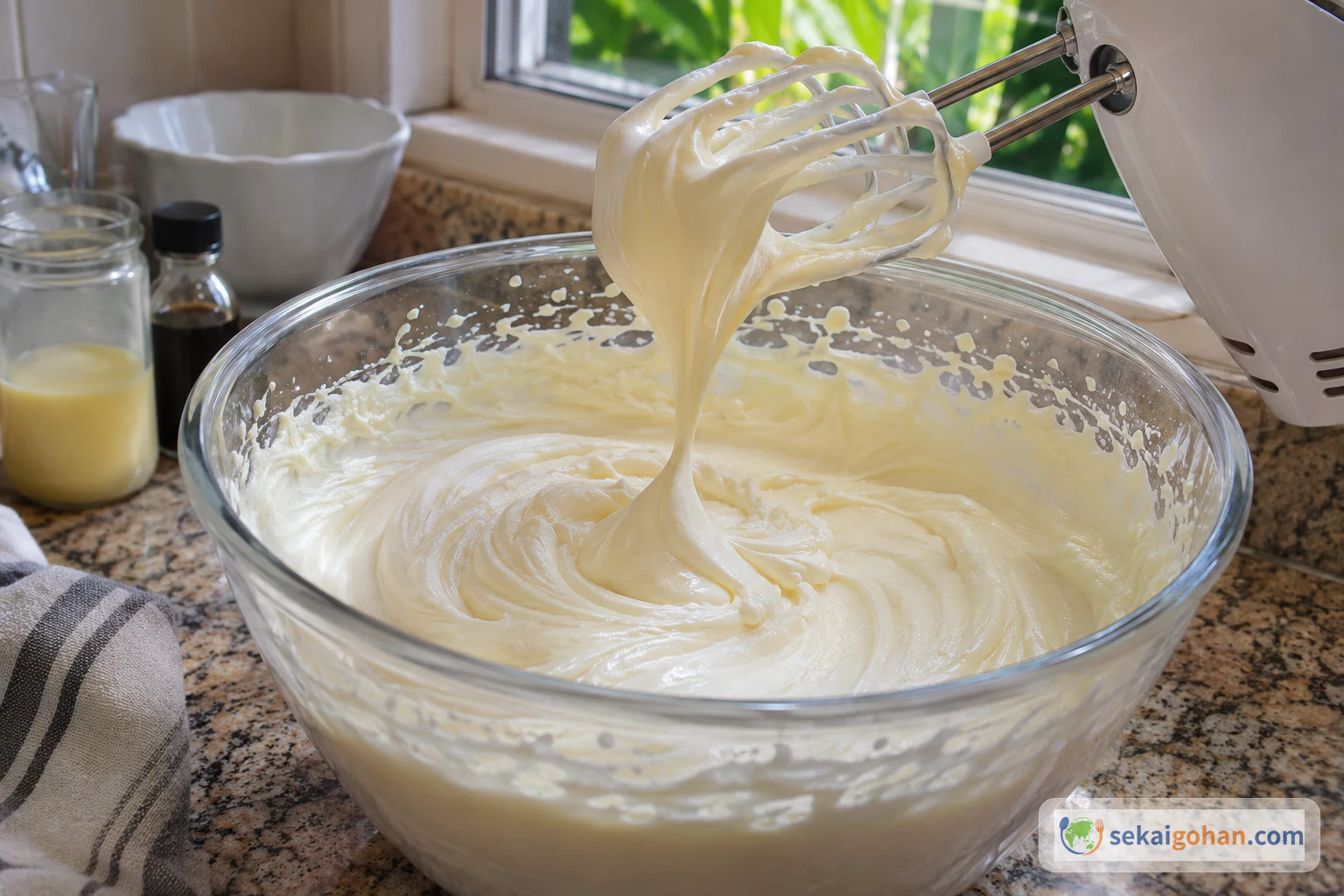
Serradura is eaten with a spoon, straight from a glass or a small bowl, and the whole flavour rides on the texture of the cream. Whipped too little, it slumps and drowns the crumbs. Whipped too far, it turns grainy and tastes of butter. The crumbs matter just as much: the finer they are, the more the dessert looks like its name and the more evenly each spoonful carries biscuit. The version here is the simple home method, four ingredients and a short spell in the freezer. You can find Macau's other dishes on the Macau country page.
Serradura comes in two textures. Frozen firmer, it holds its shape like a slice of cake; kept softer, it is spooned like a pudding. The short freeze in this recipe sets it cold and just firm enough to keep clean layers.
Ingredients (serves 4)
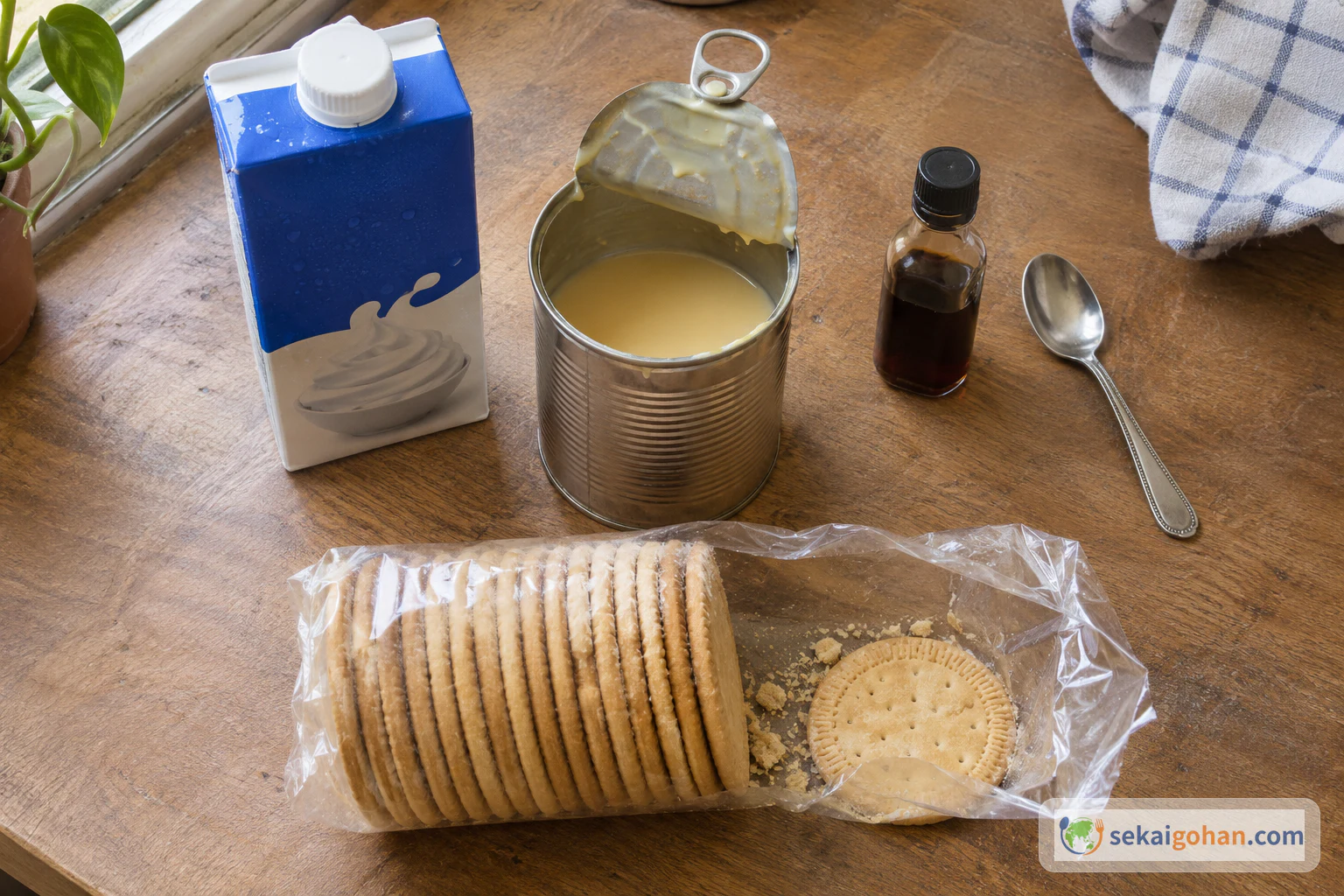
This dessert contains milk (cream and condensed milk) and wheat (biscuits). Biscuits can also contain egg, soy and other allergens, so read the pack label. Cream desserts belong in the cold: keep the cream and the finished serradura in the refrigerator or freezer and do not leave them out at room temperature.
Equipment
- Large mixing bowl
- Electric hand mixer, or a balloon whisk
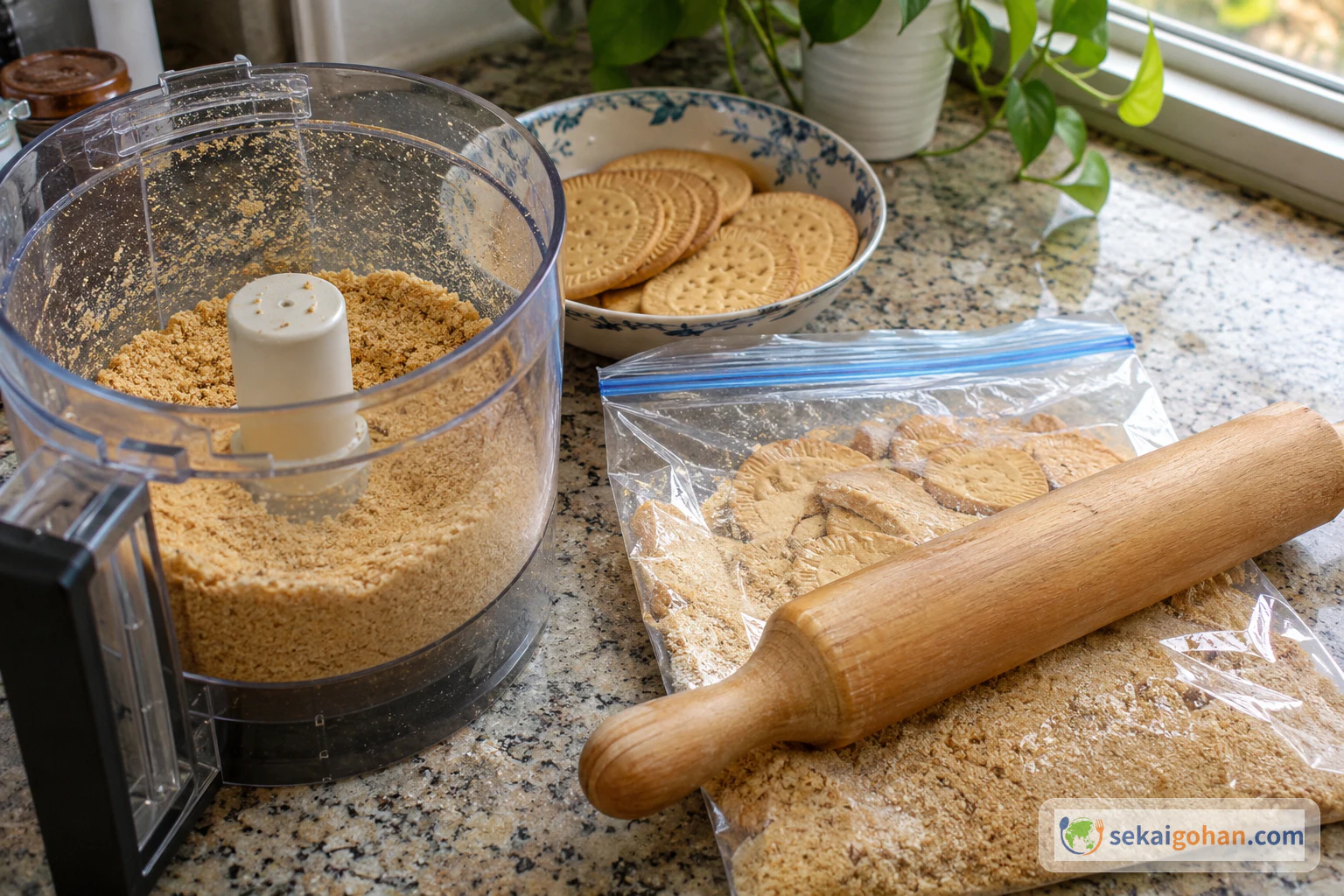
- Food processor, or a zip-top bag and a rolling pin
- Small bowl for the reserved crumbs
- One clear glass serving bowl, or small glasses
- Spoon or small spatula for layering
- Small sieve or tea strainer
- Plastic wrap
Choosing and Substituting
Everything here is on an ordinary supermarket shelf, so the choices are about texture and sweetness. Use real dairy heavy cream. Non-dairy whipped topping is a different product: it whips differently and loses the clean milky taste that the whole dessert depends on. Buy it cold and keep it cold until the moment you whip.
Condensed milk comes in different can and tube sizes. Measure out half of a 14-oz (395 g) can's worth, whip it in, and taste the cream before adding any more; the biscuits bring their own sweetness once layered. For vanilla, extract is the one to use. Imitation vanilla essence varies a lot in strength, so if that is what you have, go easy with it.
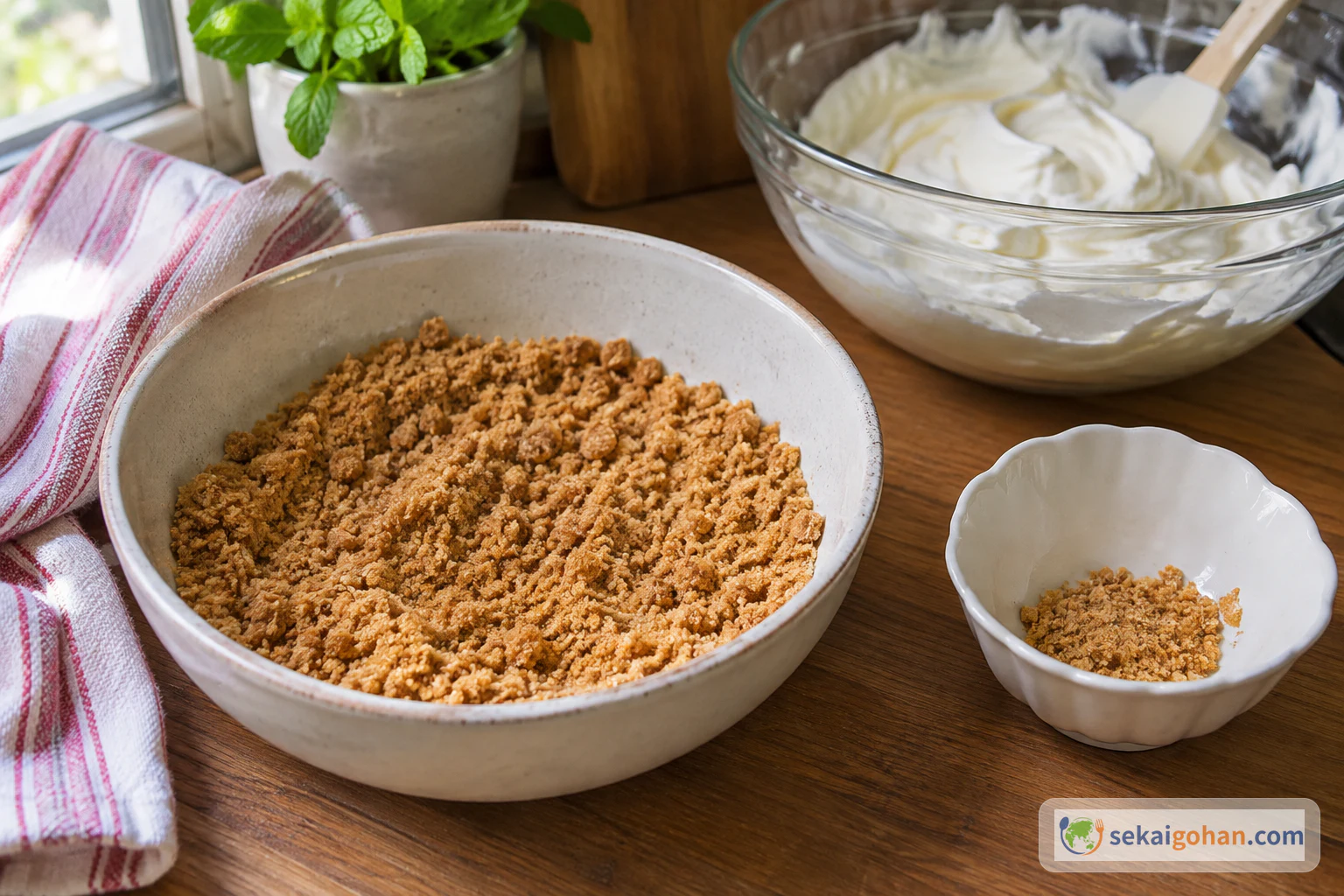
Marie biscuits are the classic choice for their pale gold colour and plain, lightly toasted flavour, and they crush to a fine, dry powder. Plain butter biscuits work in their place and give a richer, more buttery crumb. Chocolate biscuits change the dessert into something darker and more bitter-sweet, covered under variations below.
Method
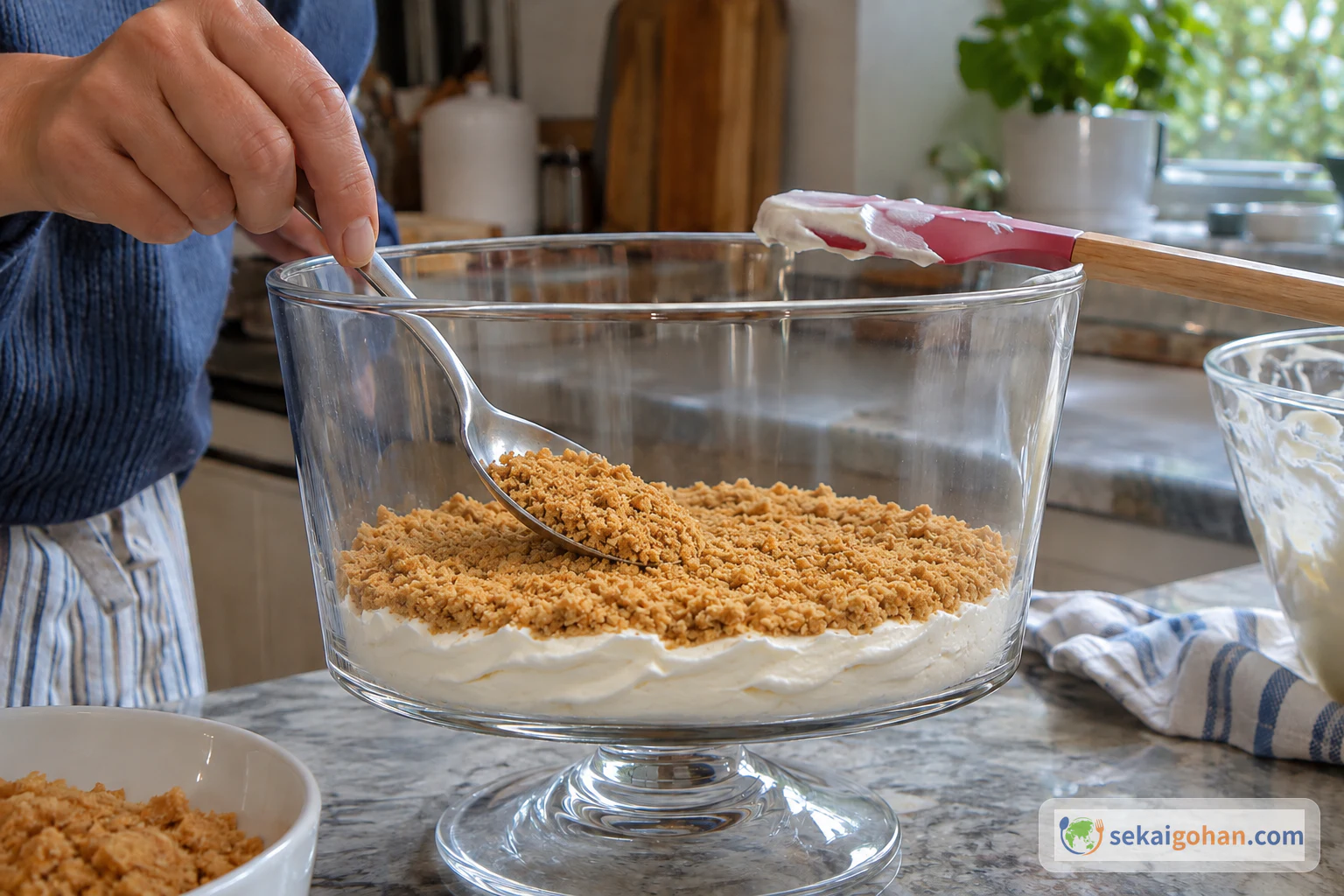
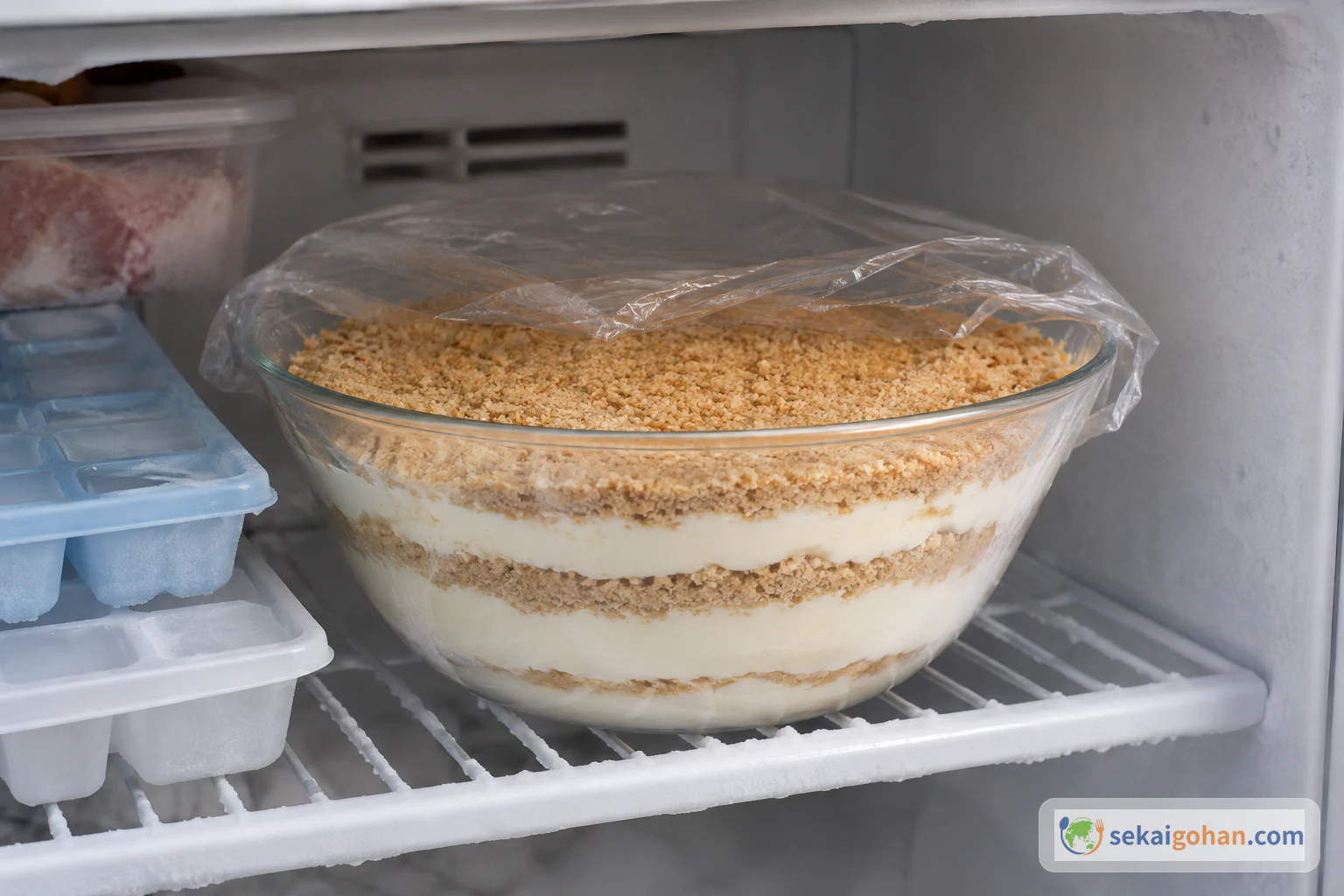
The work goes in one direction and moves fast: crush the biscuits first so they are ready, then whip the cream, set aside the topping, layer, and freeze. The only hands-off time is 30 minutes in the freezer at the end, so start with the biscuits and keep the cream in the refrigerator until you whip it.
When It Goes Wrong
| What you see | Why | What to do |
|---|---|---|
| The cream slumps and the layers run together | The cream was not whipped far enough, or it warmed up | Whip a little longer until it holds soft folds; keep the bowl cold while you layer |
| The cream looks grainy or curdled and tastes buttery | It was whipped too far | Start the next batch with fresh cold cream and stop at the soft-ribbon stage |
| The crumb layers turn soggy and grey | Loose cream soaked into the crumbs | Whip the cream thicker before layering, and sprinkle the crumbs instead of pressing them in |
| The dessert looks gritty instead of like fine sawdust | The biscuits were crushed too coarsely | Crush longer, until no pieces remain and the powder feels like fine sand |
| It is frozen hard and the spoon will not go in | It stayed in the freezer too long | Move it to the refrigerator until a spoon goes through, rather than leaving it on the counter |
Serving, Variations and Storage
At the table
Bring the bowl to the table and serve with a spoon, digging straight down so each portion carries every band of cream and crumb. Small plates and a cup of tea suit it well; the plain, sweet milkiness goes with something hot and slightly bitter. As a finale after Macanese or Portuguese dishes, it closes the meal on something cold and light next to richer food.
Variations
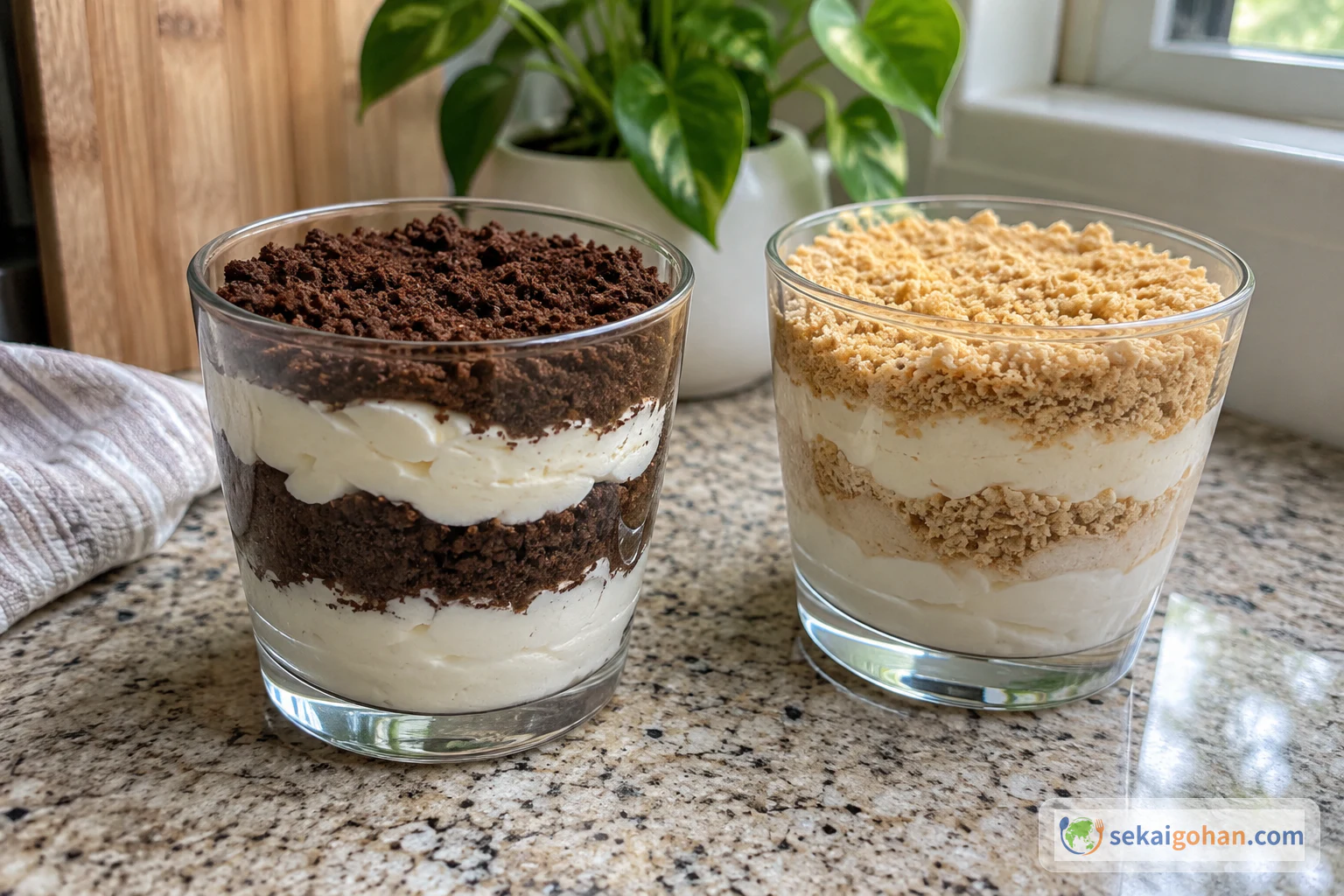
Chocolate biscuits in place of Marie biscuits turn the crumb layers dark and give a cocoa bitterness against the white cream, so the dessert reads as two contrasting flavours instead of one gentle one. Crushed Oreo-style sandwich biscuits go further in the same direction and add a sweeter, more cocoa-heavy crumb. Coffee brings a roasted edge that cuts the condensed milk's sweetness, and green tea gives a grassy, slightly bitter finish and a pale green colour.
Keeping it cold
The 30 minutes in the freezer sets the dessert; it is not a way to keep it for long. Serve it cold from the freezer, and do not leave it at room temperature on the table longer than the meal needs. Any left over goes back in the cold right away: cover it and return it to the refrigerator or freezer quickly.
Frequently Asked Questions
Do I need an electric hand mixer?
No. A balloon whisk does the same job; it just takes longer and a steadier arm. Whisking by hand also makes it easier to stop exactly at the soft-ribbon stage, because the cream thickens more slowly under the whisk.
Can I make it in individual glasses?
Yes. Divide the cream and crumbs between four small glasses and layer each one the same way, starting with cream and finishing with the sifted crumb top. Small glasses get cold through faster than one large bowl, so check them with a spoon toward the end of the freeze.
Should it be firm like ice cream or soft like pudding?
Both exist. A longer freeze makes it firm enough to cut like a cake, while a softer set spoons like a pudding. Some make it in the refrigerator, chilling for about 6 hours, which gives the softer pudding texture; after 30 minutes in the freezer you get a cold, just-set dessert in between.
Why use only half a can of condensed milk?
Half a can is the amount this recipe uses, and the biscuits add sweetness of their own once layered. Taste the whipped cream and add more only if you want it sweeter.