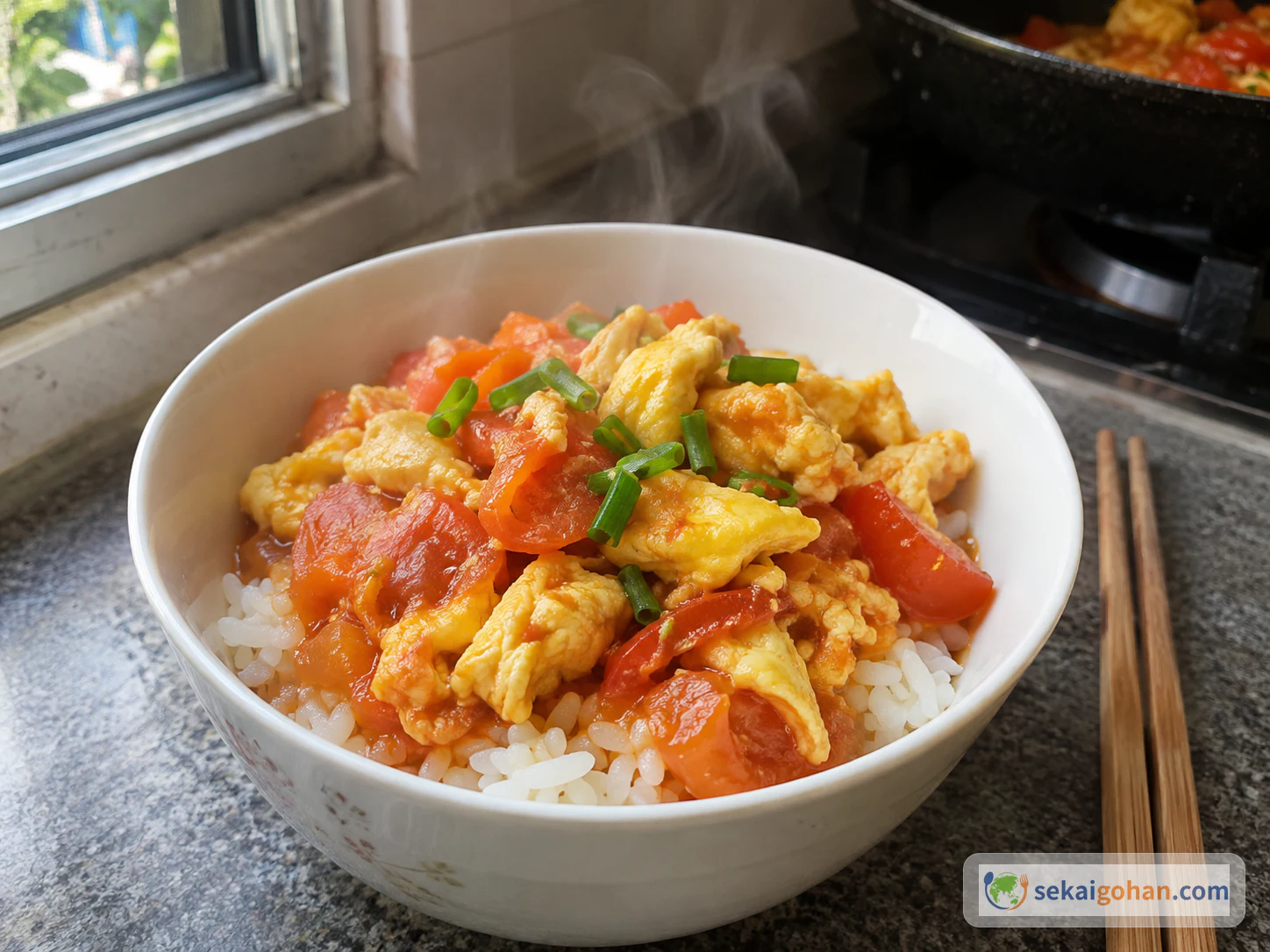
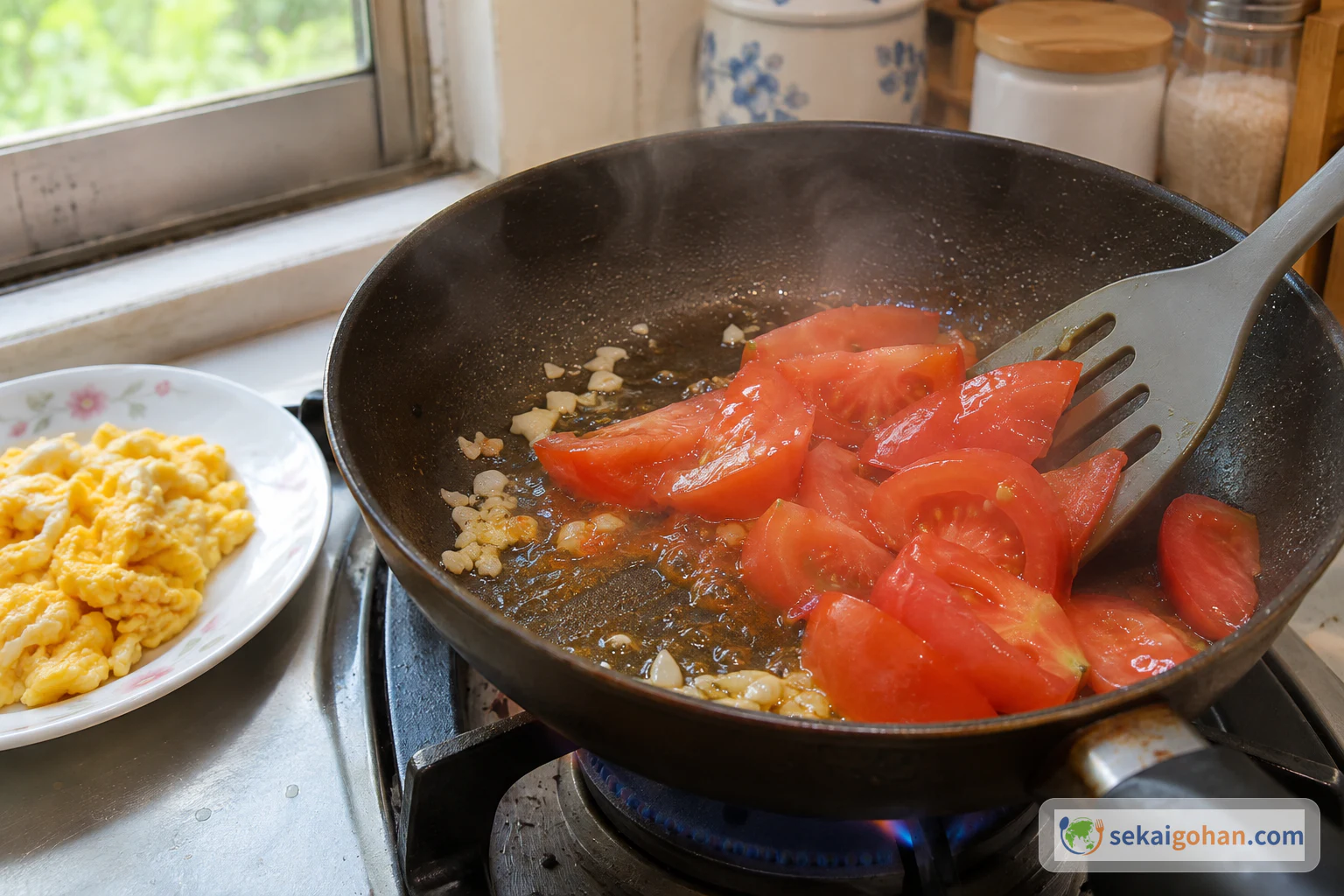
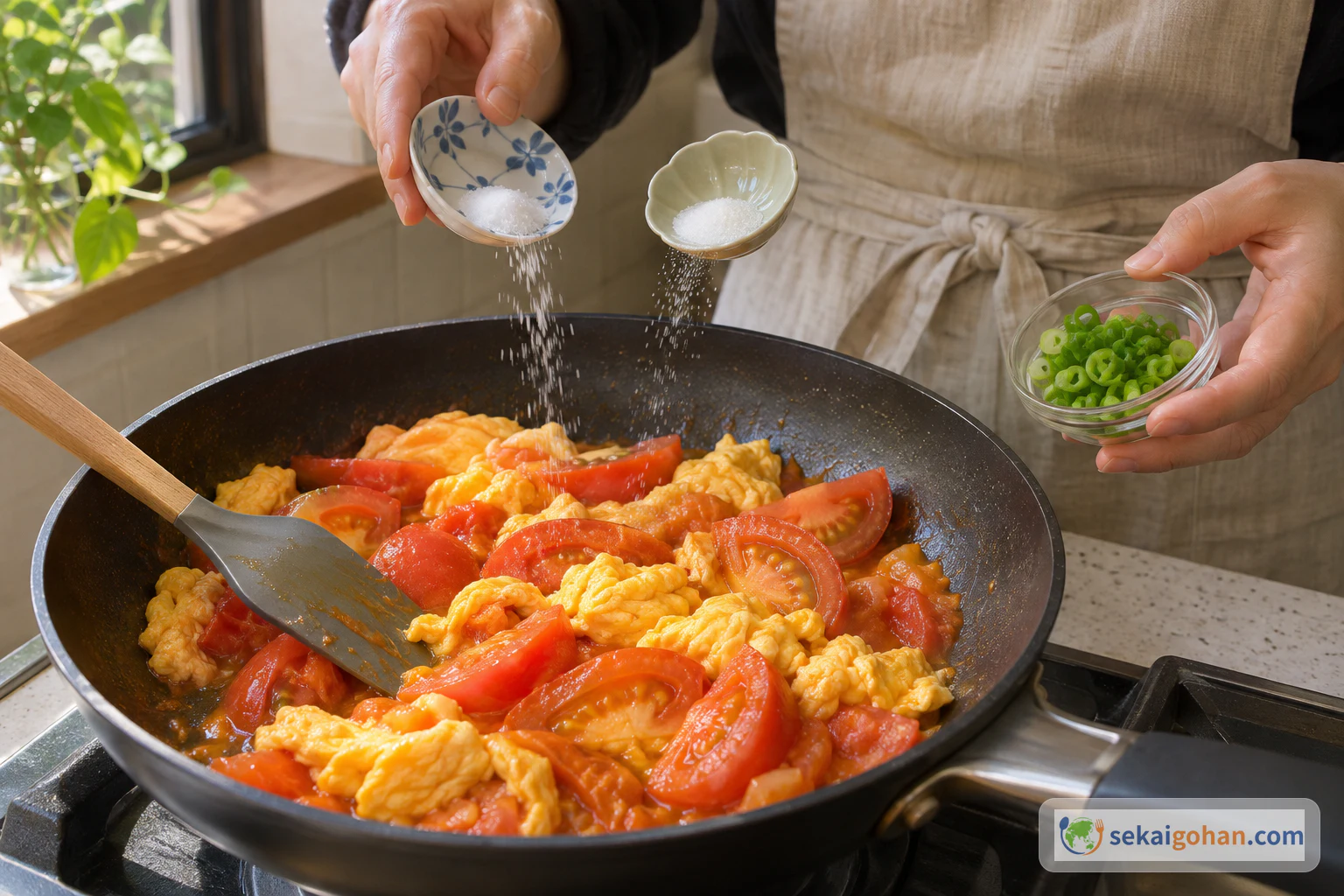
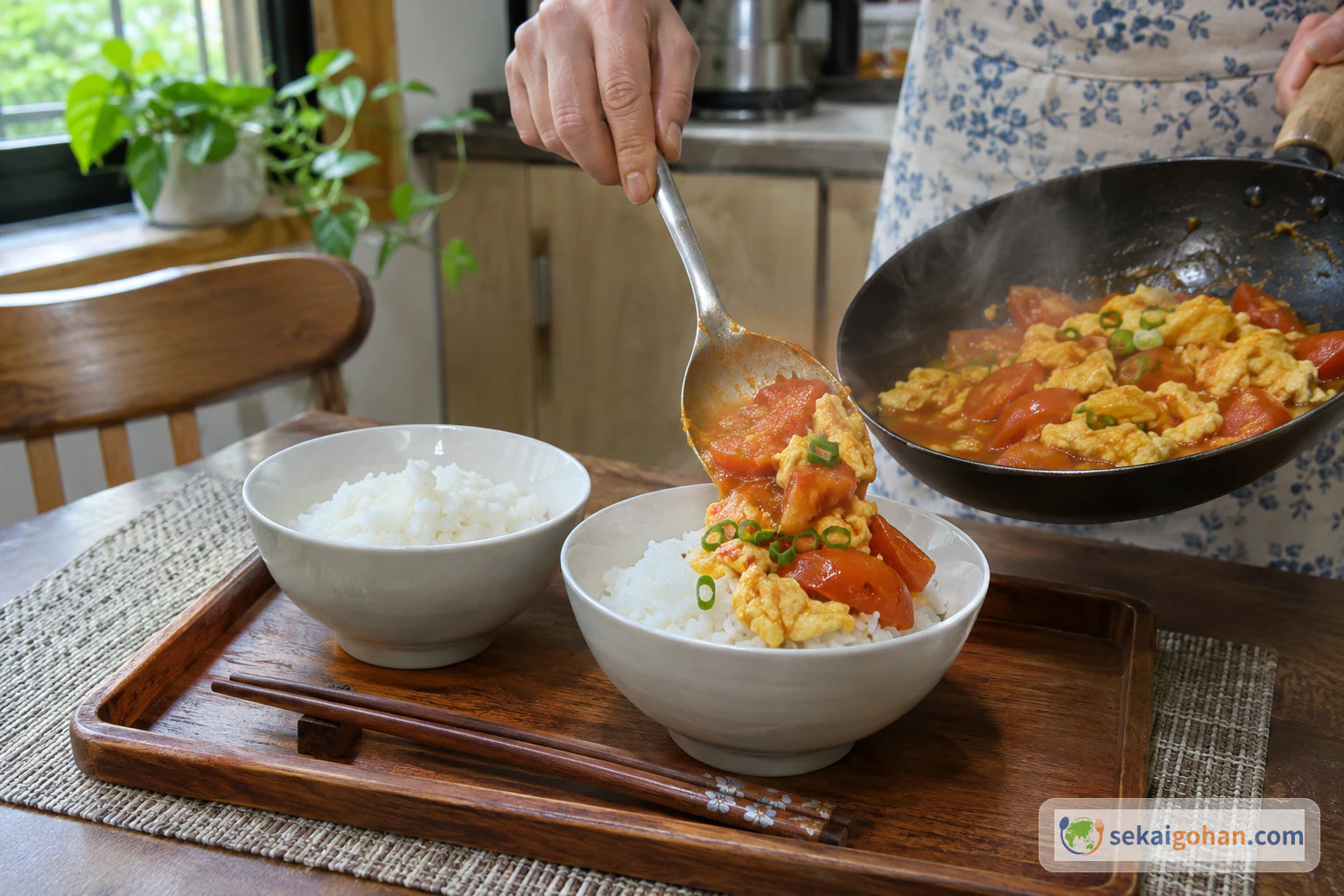
Beaten egg hits hot oil and puffs up at the edges within seconds, golden underneath and still wet on top. You break it into soft curds, slide them onto a plate, and the pan goes straight back to work on garlic and tomato wedges that slump and bleed pink juice. When the eggs go back in, that juice coats every curd, and the whole pan is spooned hot over a bowl of rice. Fanqie chao dan, stir-fried tomato with eggs, is the dish Chinese home cooks make without thinking about it: sweet and sour from the tomato, soft and rich from the egg, salty enough to season the rice beneath it.
A Twentieth-Century Dish That Became the Default
Tomato and egg feels as if it must be ancient, but it is a young dish. The tomato reached China around the end of the Ming and the start of the Qing dynasty, and for a long time almost nobody ate it. How it arrived is not settled. One account traces three routes at once, through south China, through Taiwan by way of the Dutch, and overland from Siberia into the north. Whatever the path, the tomato only became an everyday food in the twentieth century.
Restaurants came first. In the late Qing and early Republican years, places cooking with Western ingredients began using tomatoes, and tomato and egg was being sold in restaurants through the 1920s and 1930s. Not everyone was won over. In the 1930s the writer Lao She published a piece in Qingdao mocking the tomato's look and smell, and he called foods like it a cultural invasion of the mouth. Records of families stir-frying tomato and egg in their own kitchens appear from around the 1940s, and from there it spread until it became the default home dish, so common in Chinese kitchens that it is like air: always there, hardly noticed. By 2013, China was the world's largest producer and consumer of tomatoes.
The usual name is 番茄炒蛋 (fānqié chǎo dàn; in Cantonese Yale, fāan kèh cháau dáan). It is also called 西红柿炒鸡蛋 (xīhóngshì chǎo jīdàn). The tomato's own name shifts with the map: 番茄 in the south, 西红柿 in Beijing and the north, and 洋柿子 in the northeast.
Every household argues about the order
It is eaten as a main dish over rice or as one plate among several, and every family has opinions about how to make it. The biggest split is the order. Cooking the eggs first, pulling them out, then cooking the tomatoes and folding the eggs back in, keeps the curds tender. Others start with the tomatoes, salting them and cooking them for about 2 minutes before the eggs go in. Beyond that, households divide over water, Shaoxing wine, sesame oil and white pepper. The recipe below is the plainest form, with no water at all: the tomatoes make all the sauce. From the outside it can look like a cousin of shakshuka, since both are tomatoes and eggs in one pan, but shakshuka simmers eggs in a spiced sauce, while this is a fast stir-fry with nothing but garlic, salt and a little sugar. More dishes from the same kitchens are gathered under Chinese recipes.
Ingredients (serves 2 to 4)
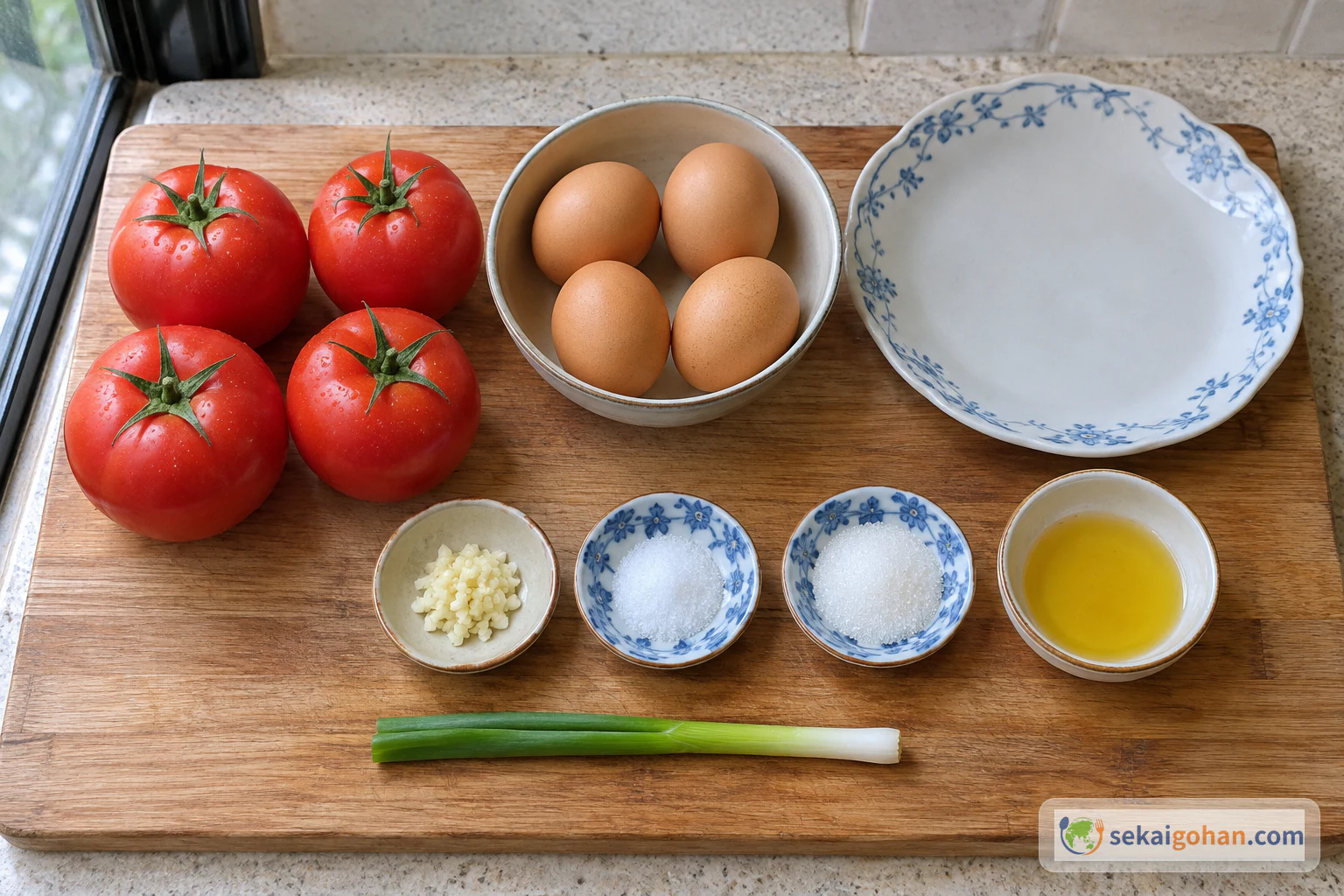
This dish contains egg. Peanut oil is a peanut product; for anyone with a peanut allergy, use vegetable oil instead.
Equipment
- Nonstick skillet, 9 to 10 inches (22–26 cm)
- Flat silicone spatula
- Cutting board and knife
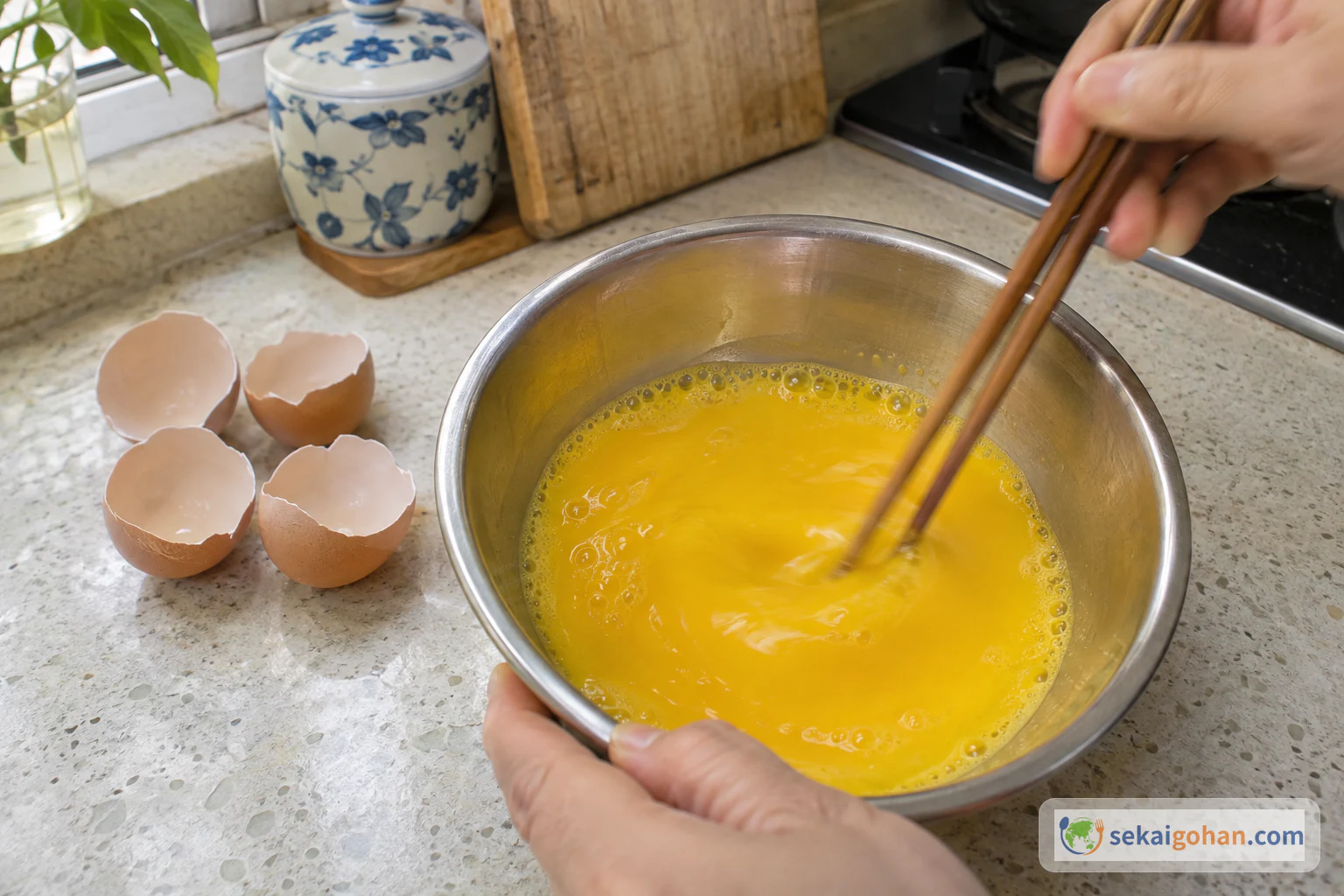
- Bowl and chopsticks or a fork for beating the eggs
- Plate for holding the cooked eggs
Choosing the Tomatoes and the Oil
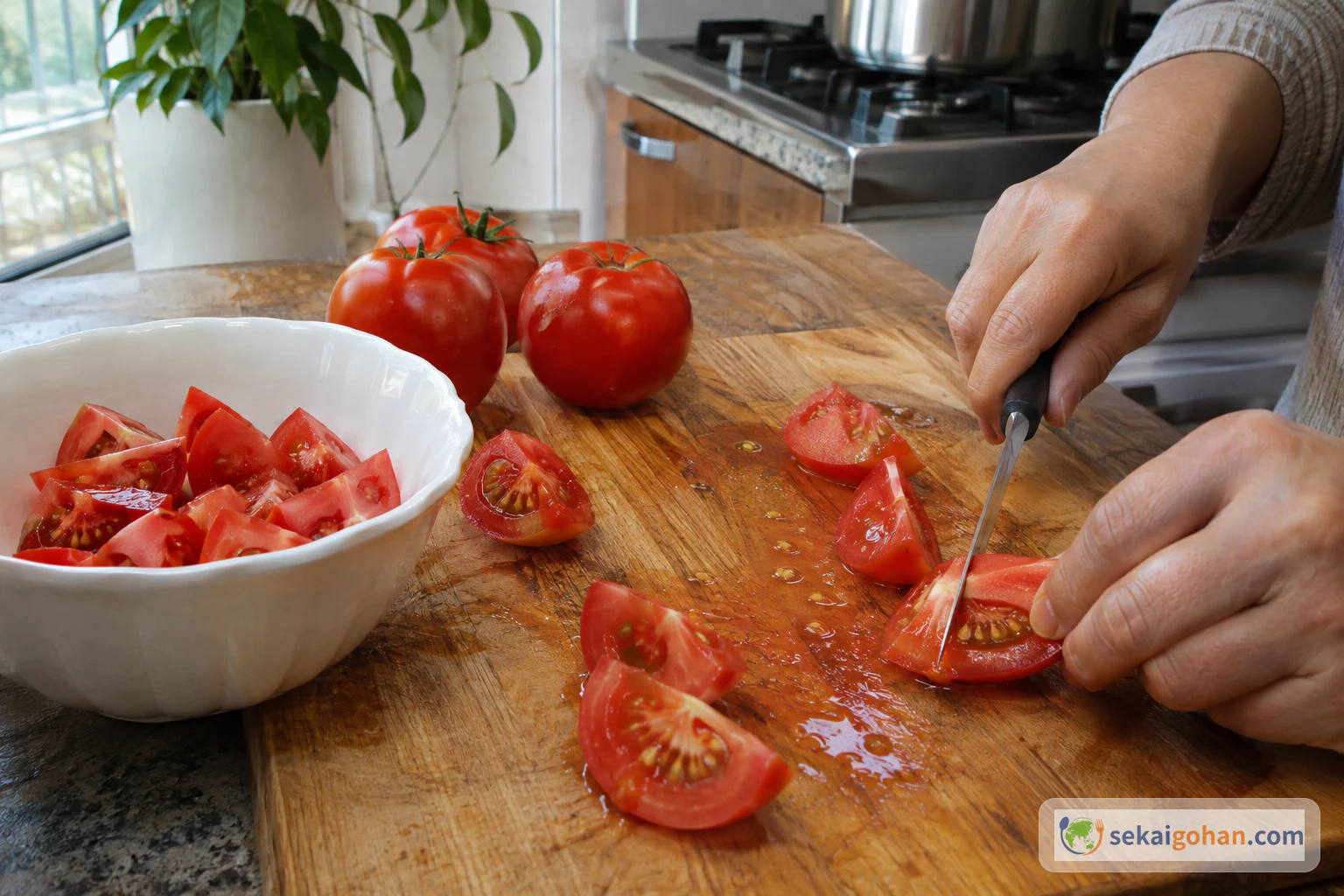
Everything here comes from an ordinary supermarket; the one thing worth being choosy about is the tomato. The tomatoes decide the dish, because with no water added, their ripeness and juice are the entire sauce. Beefsteak and vine-ripened tomatoes work best. Roma tomatoes work but bring slightly thicker skins into the pan. Cherry tomatoes are too much skin and too little flesh, so leave them for salads.
| Choice | What it changes |
|---|---|
| Peanut oil | The usual choice; it holds up well to medium-high heat |
| Vegetable oil | Works in the same amount; the peanut oil's aroma is gone |
| Deep red, fully ripe tomatoes | Plenty of juice and sweetness; the sugar can shrink to a pinch |
| Pale, out-of-season tomatoes | Less juice and more sourness; a little ketchup helps (see Variations) |
| Green onion left out | The dish still works; you lose the green color and fresh bite on top |
Cut the tomatoes on a board with a rim or straight over a bowl, and scrape the seeds and juice in with the wedges. That liquid is what turns into the glossy sauce over the rice.
Method
The work is about five minutes of cutting and beating, then five minutes at the stove, and the stove part moves fast. Have the tomatoes cut, the garlic minced, the eggs beaten, and a plate waiting beside the burner before any oil goes in the pan. The eggs cook twice, briefly each time, so the first trip into the pan stops well before they look done.
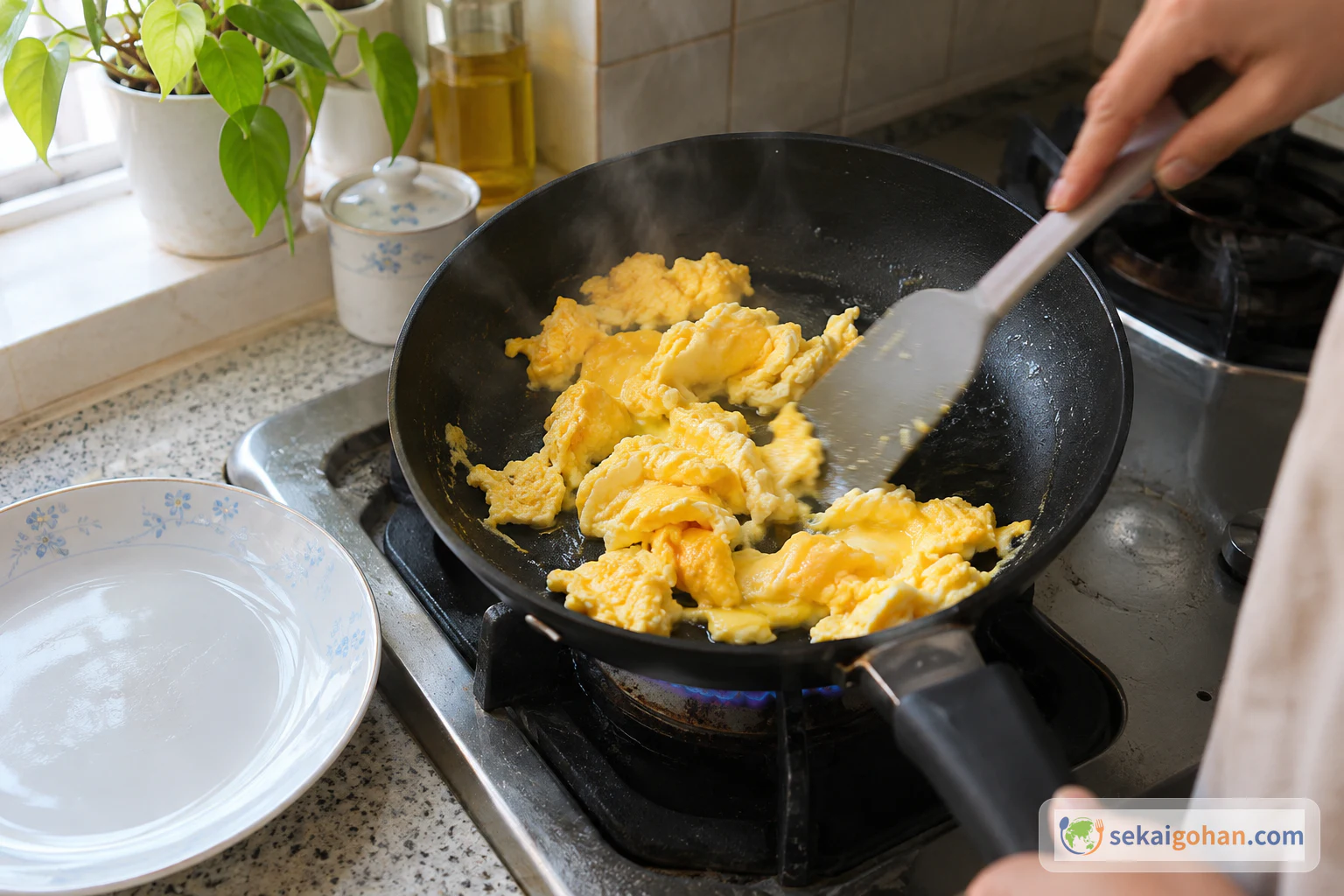
The eggs go back into a hot pan in step 5 and keep cooking there. Take them out as soon as they are just cooked in step 3, and they finish soft instead of dry and rubbery.
Medium-high heat makes the oil spit when the eggs and the wet tomatoes go in. Add them close to the pan surface, away from you, and keep the handle turned in from the edge of the stove. The eggs are cooked through in this dish before it is served.
When It Goes Wrong
| What you see | Why | What to do |
|---|---|---|
| Eggs are tough and dry | They stayed in the pan too long in step 3 | Start breaking them up about 30 seconds in, and move them out as soon as they are just cooked |
| Eggs stick to the pan | The pan or oil was not hot enough, or the pan grabs | A nonstick skillet is the easiest; in a wok, heat it well first and use enough oil |
| Too sour | The tomatoes are not very sweet | Add a little more sugar, up to 2 tsp |
| Little juice, dry pan | Underripe or pale tomatoes | Use fully ripe tomatoes and keep all their juice; for a saucier result, use the water version in Variations |
| Flat, pale tomato flavor | Out-of-season tomatoes | Stir in a little ketchup with the tomatoes |
Serving, Variations and Leftovers
At the table
This dish belongs with plain steamed rice, and the juice is half the reason: it runs into the rice and seasons it. As a main dish it makes a quick dinner on its own. As a side, it sits among other plates and everyone spoons some over their own bowl. It also works over noodles.
Variations
- Saucier, with water. Add ¼ to ½ cup (60–120 ml) of water with the tomatoes. After the eggs go back in, cover the pan for 1 to 2 minutes until the tomatoes are fully soft, then uncover and boil down the juice over high heat. You get more sauce to soak the rice and a looser, wetter texture.
- Tomatoes first. Cook the tomatoes with salt for about 2 minutes before the eggs go in. The tomatoes break down further and the eggs set in their juice, so the curds come out smaller and more stained with red.
- Seasoned eggs. Beat 1 tsp Shaoxing wine, ½ tsp sesame oil and ¼ tsp white pepper into the eggs. The dish takes on a deeper, more restaurant-style aroma.
- Ketchup for pale tomatoes. A little ketchup brings back the color and sweetness of out-of-season tomatoes. Some cooks also thicken the sauce with a little cornstarch slurry for a glossier finish.
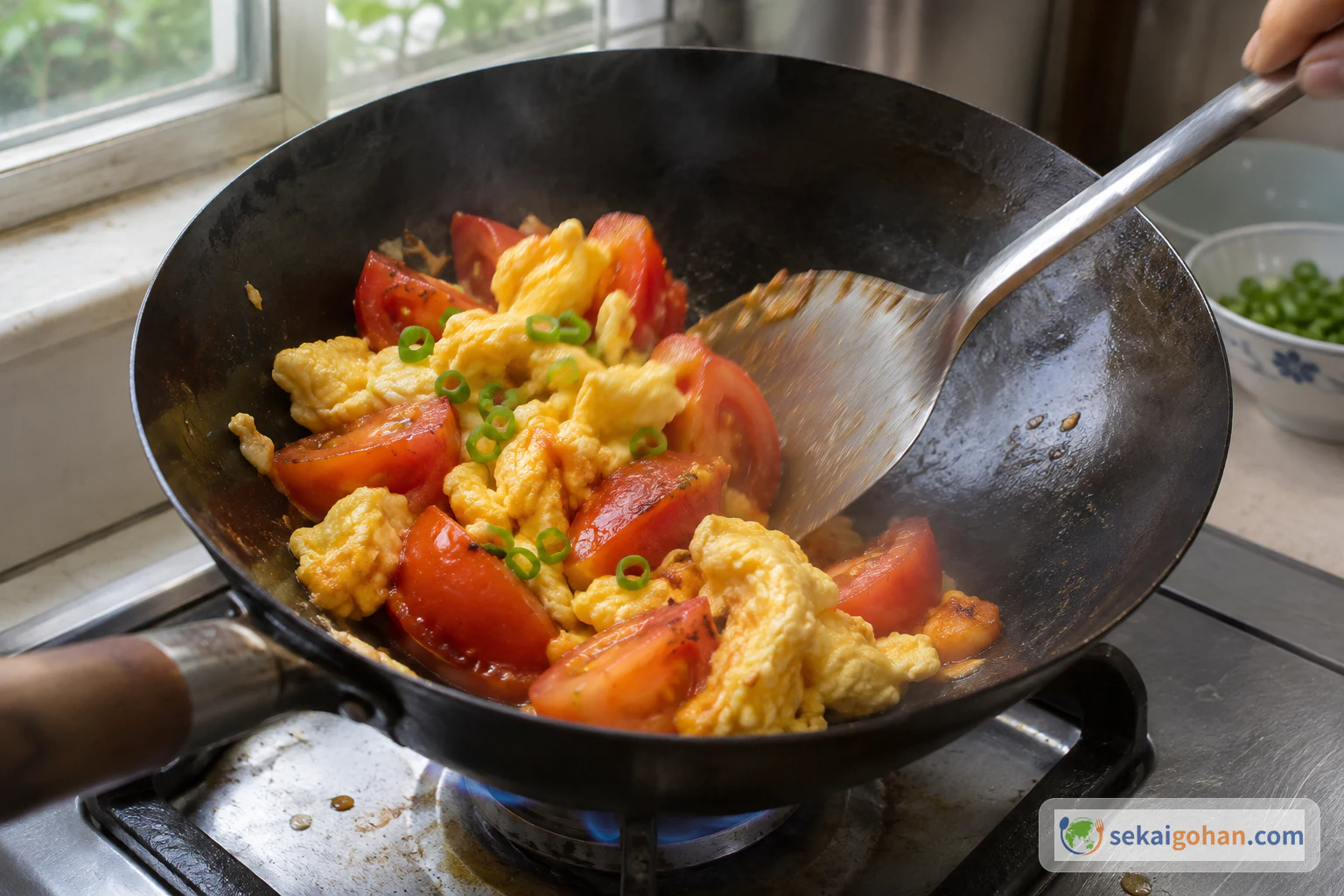
- In a carbon steel wok. A small carbon steel wok gives the smoky edge called wok hei. Heat the wok until it just starts to smoke, add the oil and the eggs immediately, and cook them only briefly before taking them out. Use a little more oil than in a skillet so nothing sticks. The tomato edges brown slightly and the dish tastes toastier.
Leftovers
Cool the leftovers, then refrigerate them promptly in a covered container. Reheat in the microwave until hot throughout before eating.
Frequently asked questions
Do I have to add sugar?
The sugar is there to balance the tomatoes' acidity. With very ripe, sweet tomatoes, a pinch is enough. If you like the dish sweeter, go up to 2 tsp.
Should I peel the tomatoes?
The skins can stay on. They soften in the pan and loosen from the flesh, which most people find perfectly fine over rice. If loose skins bother you, peel the tomatoes before cutting them; the rest of the method stays the same.
How is this different from shakshuka?
Shakshuka simmers eggs whole in a spiced tomato sauce until they poach. Fanqie chao dan scrambles the eggs first, stir-fries the tomatoes quickly, and seasons with only garlic, salt and sugar, so the egg stays in soft curds and the tomato tastes fresh rather than stewed.
Can I serve it over noodles?
Yes. It makes a good noodle topping, with the juice working as a light sauce. The saucier water version in Variations gives the noodles more to cling to.