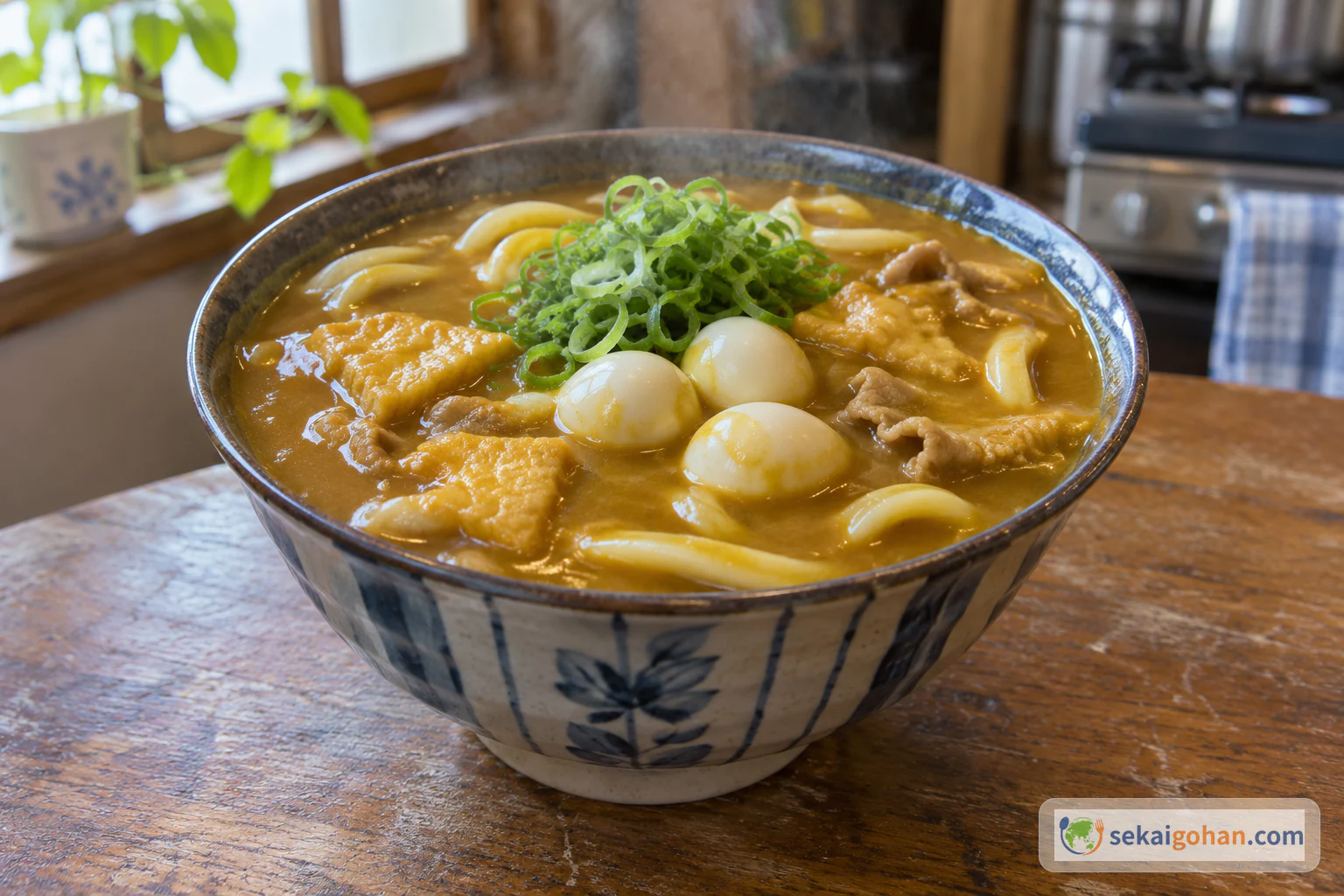
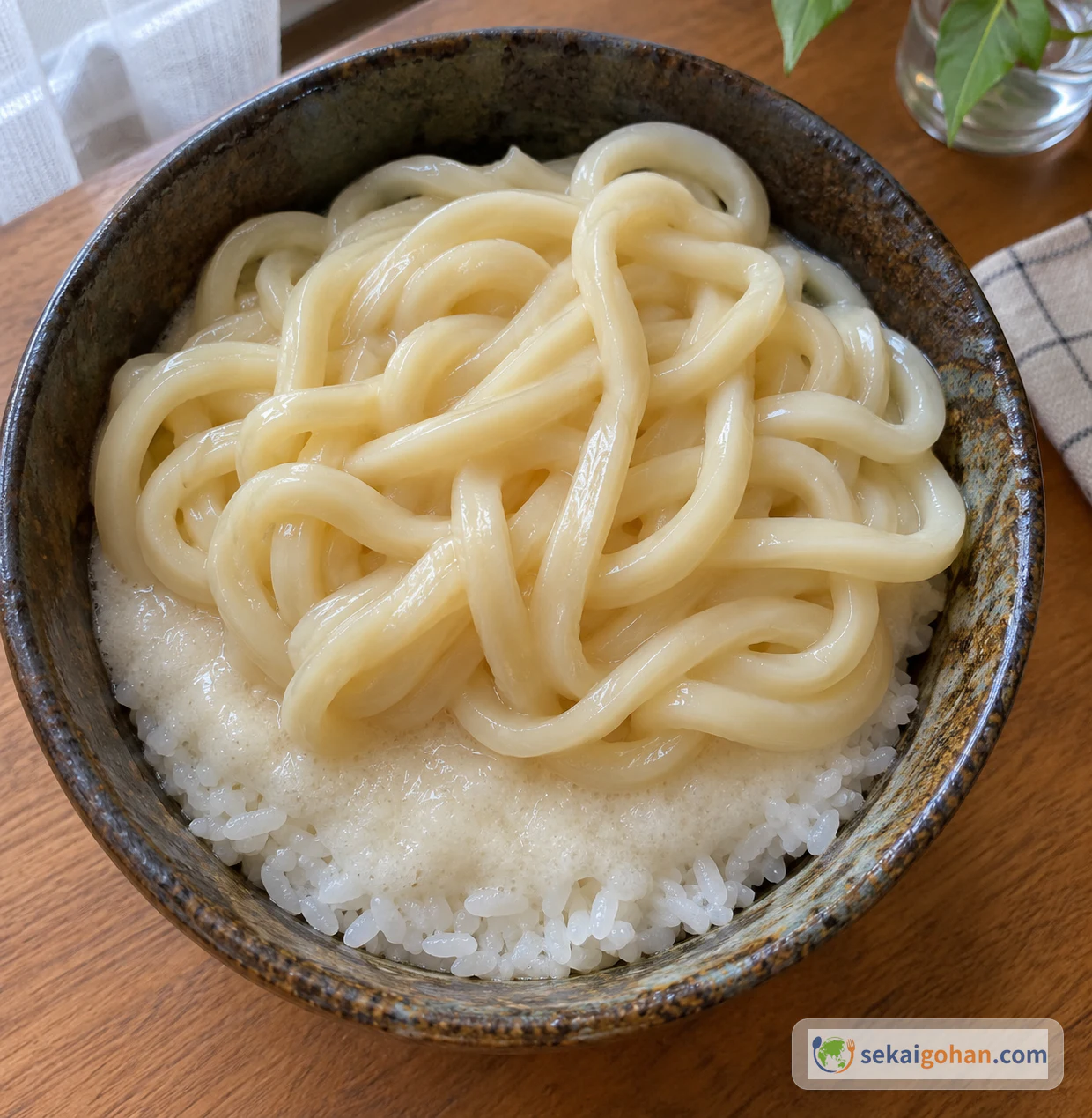
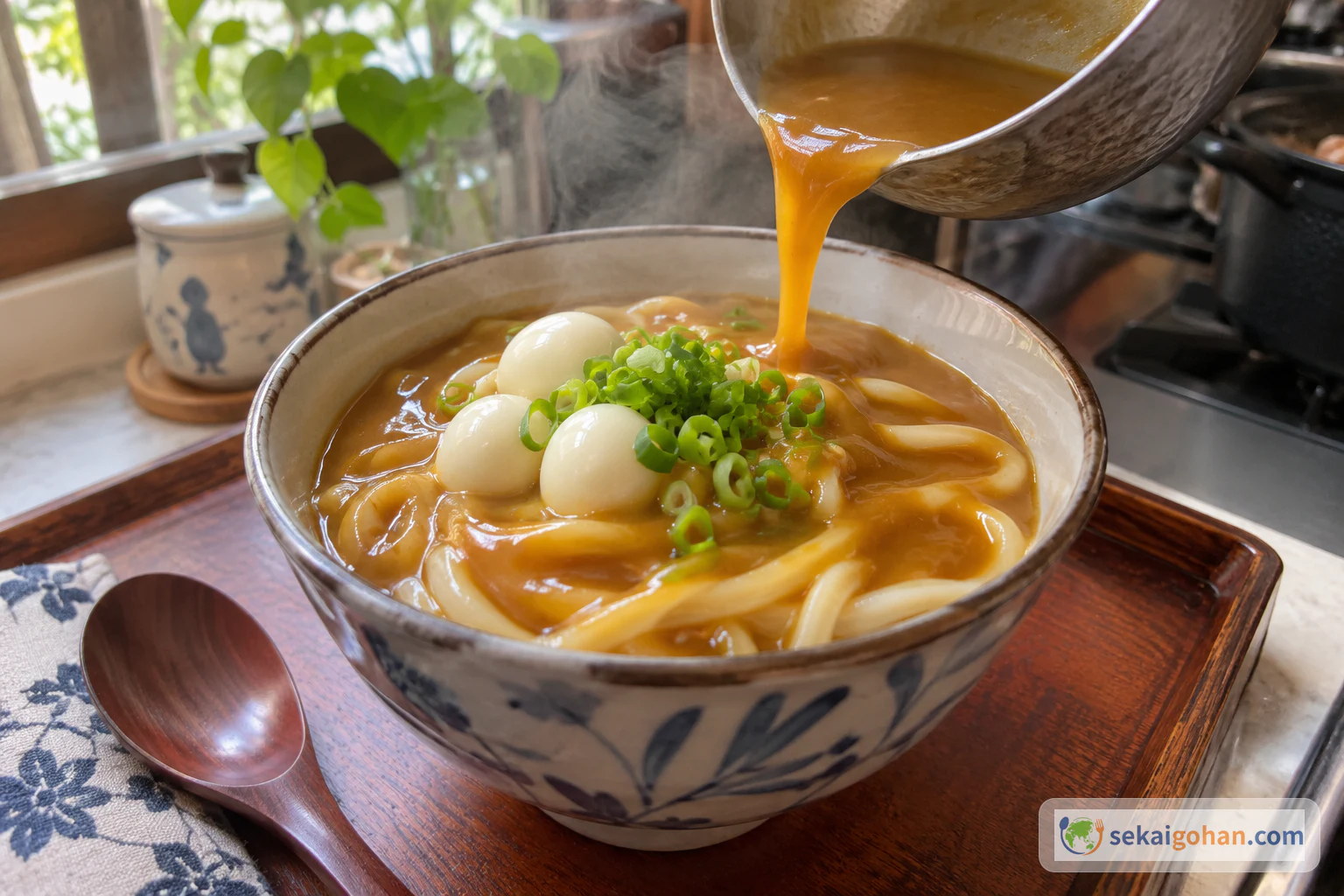
The bowl comes to the table thick and glossy, a deep amber-yellow. Three small quail eggs and some green scallion sit on top, and pieces of pork and fried tofu show just under the surface. You eat the udon from the top down and leave the bottom of the bowl alone. When the noodles run out, your spoon finds something soft under the curry: white rice under a pale sheet of grated raw yam, ready for the curry left in the bowl. This is Toyohashi curry udon, from the city of Toyohashi in Aichi Prefecture. The broth tastes as much of bonito-and-kelp dashi, mirin and soy as of curry, the heat is gentle, and the bowl is built so you eat it twice.
One Bowl, Two Meals: How Toyohashi Built Its Curry Udon
Toyohashi's udon shops make all of their own noodles. Their curry udon had one problem that every curry udon has: the thick curry sauce tends to get left in the bowl after the noodles are gone. The answer was to put something in the bottom of the bowl so the last of the curry gets eaten too. The dish was created as a new food for "udon town Toyohashi" and went on sale in April 2010. It reached one million servings in 4 years and 11 months.
The idea behind the layers is easy to follow at the table. Leftover curry makes you want to stir in rice and turn it into a rice porridge. If rice and udon mix in the bowl, though, both suffer. So the rice is covered with grated mountain yam, laid over it like a sheet. While you eat the noodles, the tororo keeps the curry away from the rice. Once the noodles are gone, the same tororo ties the curry and rice together, and one bowl gives you two different meals.
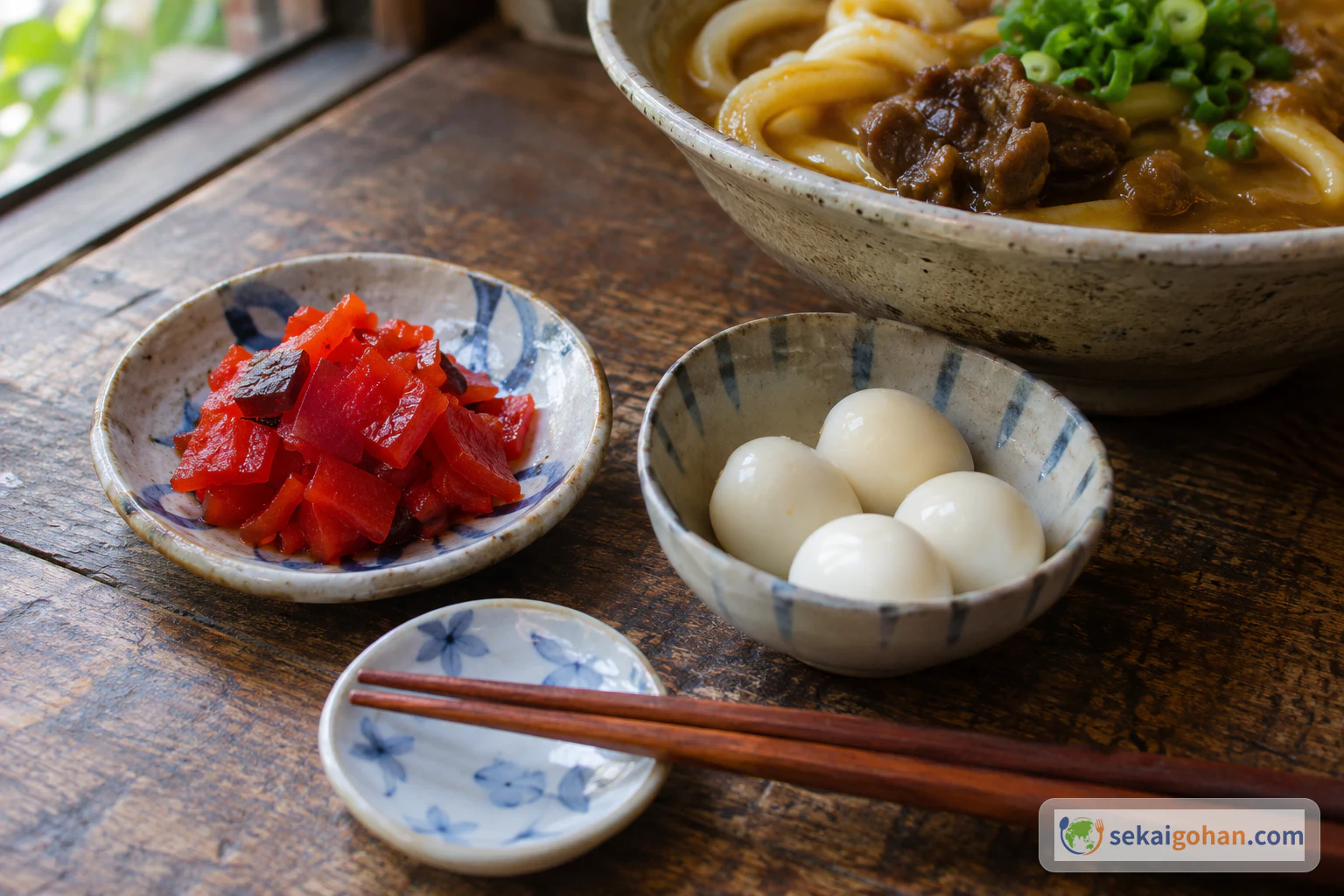
Only shops inside Toyohashi city may sell a bowl under this name. A shop has to belong to the city's noodle-makers' union and also to Team Karei, the group of shops that serve the dish. Every bowl they serve follows five rules, and two of them tie it to the city itself. Toyohashi raises more quail than anywhere else in Japan, so quail eggs are one of its local specialties. The red pickles on the side are the same kind of relish that sits next to Japanese curry rice.
- The noodles are made in-house.
- From the bottom of the bowl up, it goes rice, tororo, then curry udon.
- The eggs are Toyohashi quail eggs.
- It comes with fukujinzuke, or with tsubozuke pickles or red pickled ginger.
- It is made with love.
A home kitchen can keep the layers, the pickles and the love. Homemade noodles and quail eggs from Toyohashi are what make a bowl in the city the real thing.
Every shop pours its own curry
Outside the five rules, each shop does what it likes, so no two bowls in town are the same. At Tamagawa Udon the curry is thick and heavy. Nazare Udon builds its curry on a pork-bone and chicken-bone stock. Tokachian serves a white curry topped with espuma foam. The fillings change from shop to shop as well. The bowl here sits closer to the classic Japanese noodle shop. It uses a dashi broth seasoned with mirin and soy, a curry base of toasted curry powder and flour, and a little pork and fried tofu. If you are working through the regional dishes on our Japan page, this one pairs naturally with a noodle bowl such as tonkotsu ramen.
Ingredients (serves 1)
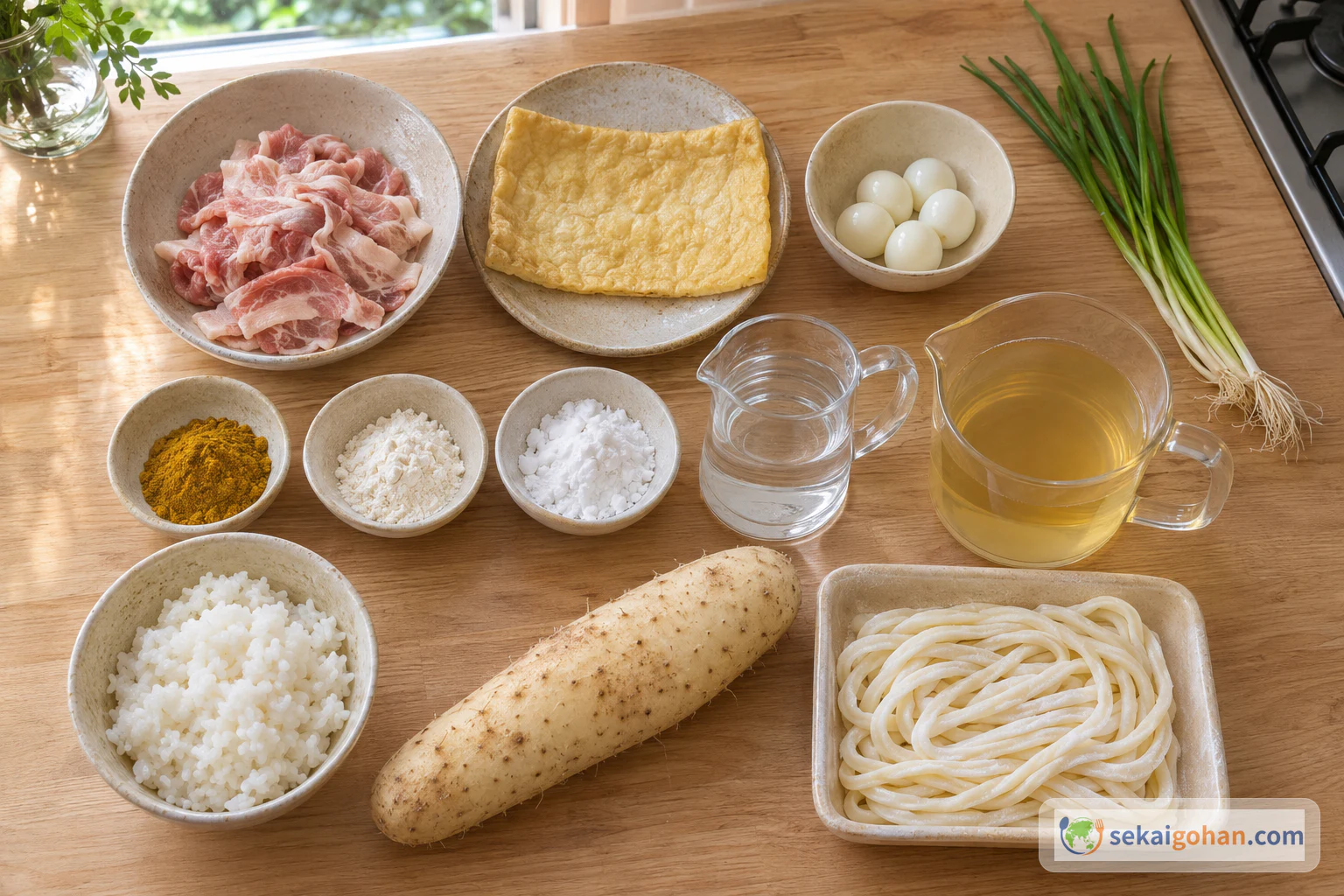
This bowl contains wheat (flour, udon, curry roux), egg (quail eggs), pork, and soy (abura-age, soy sauce). Bonito dashi contains fish. Check the labels on curry powder, curry roux, dashi products and pickles. Peeling and grating raw yam can make your hands itch, so wear gloves or hold the yam in a paper towel if your skin is sensitive.
Equipment
- Frying pan, for toasting the roux
- Whisk or wooden spatula
- Small saucepan, for the broth
- Fine sieve, for rescuing a lumpy roux
- Grater (or a suribachi mortar) for the tororo
- Cutting board and knife
- Deep, sturdy donburi bowl
Choosing and Substituting
The deep bowl matters more than anything you buy. The rice and tororo have to stay hidden under the noodles and curry, and a shallow bowl lets the layers show and run together. Everything else comes down to a few items from a Japanese or Asian grocer.
- Yam for the tororo: yamaimo or nagaimo, grated raw. Nagaimo is easier to find abroad and grates into a looser, more watery tororo. Yamaimo grates thicker and holds a firmer sheet over the rice.
- Dashi: bonito and kelp dashi from a dashi pack, granules or your own stock all work. Granules are the quickest, but they taste saltier, so add the soy a little at a time.
- Quail eggs: canned or vacuum-packed boiled quail eggs save a step.
- Udon: frozen, pre-boiled and fresh udon all sit well in the bowl. Frozen udon keeps the most bite.
- Pickles: fukujinzuke is the usual choice. Tsubozuke pickles or red pickled ginger are also correct by the five rules and give a sharper, saltier contrast.
- Thickener: katakuriko is potato starch. Cornstarch can stand in, but it is not the same product as katakuriko, so add the slurry in small amounts and judge by thickness.
Method
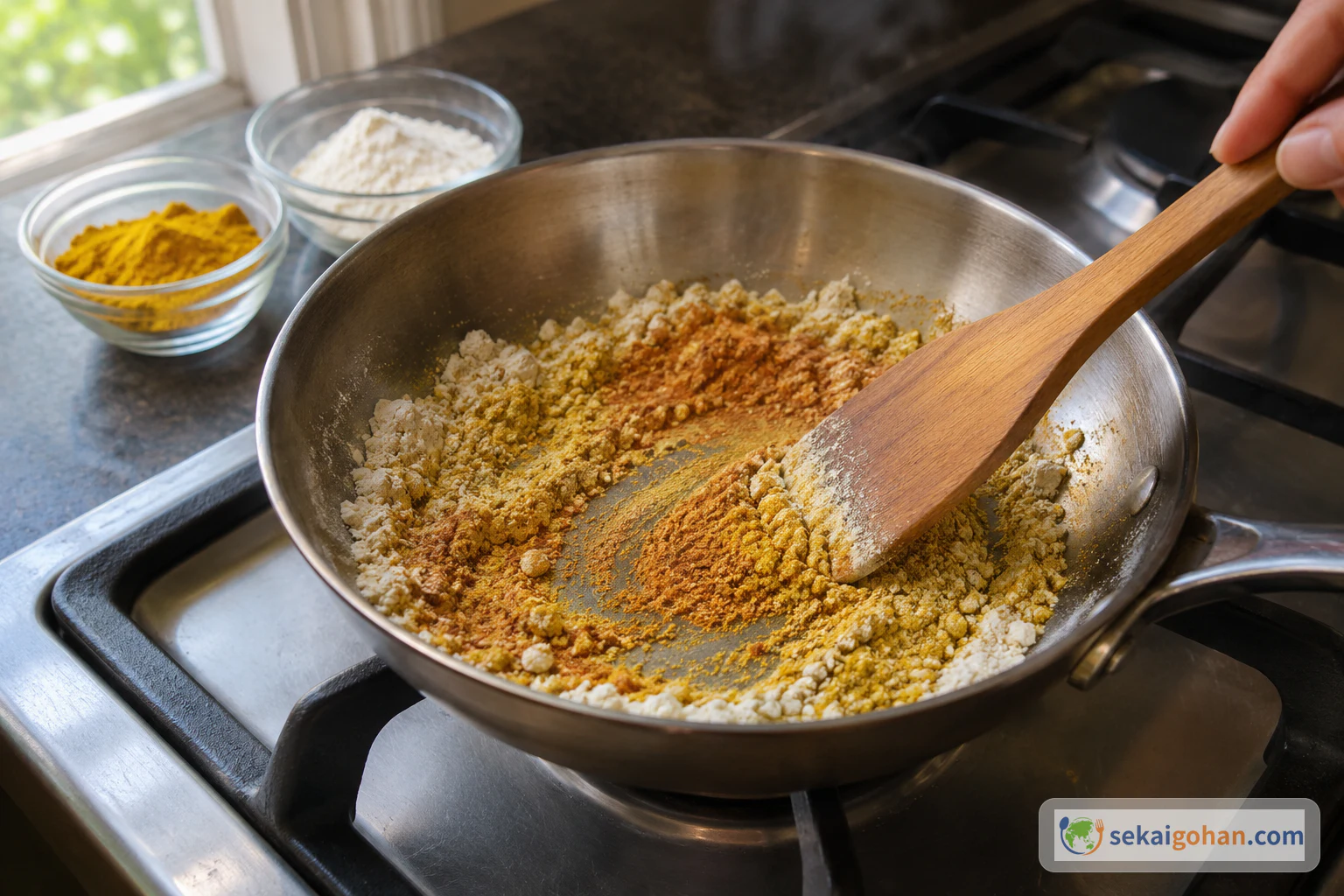
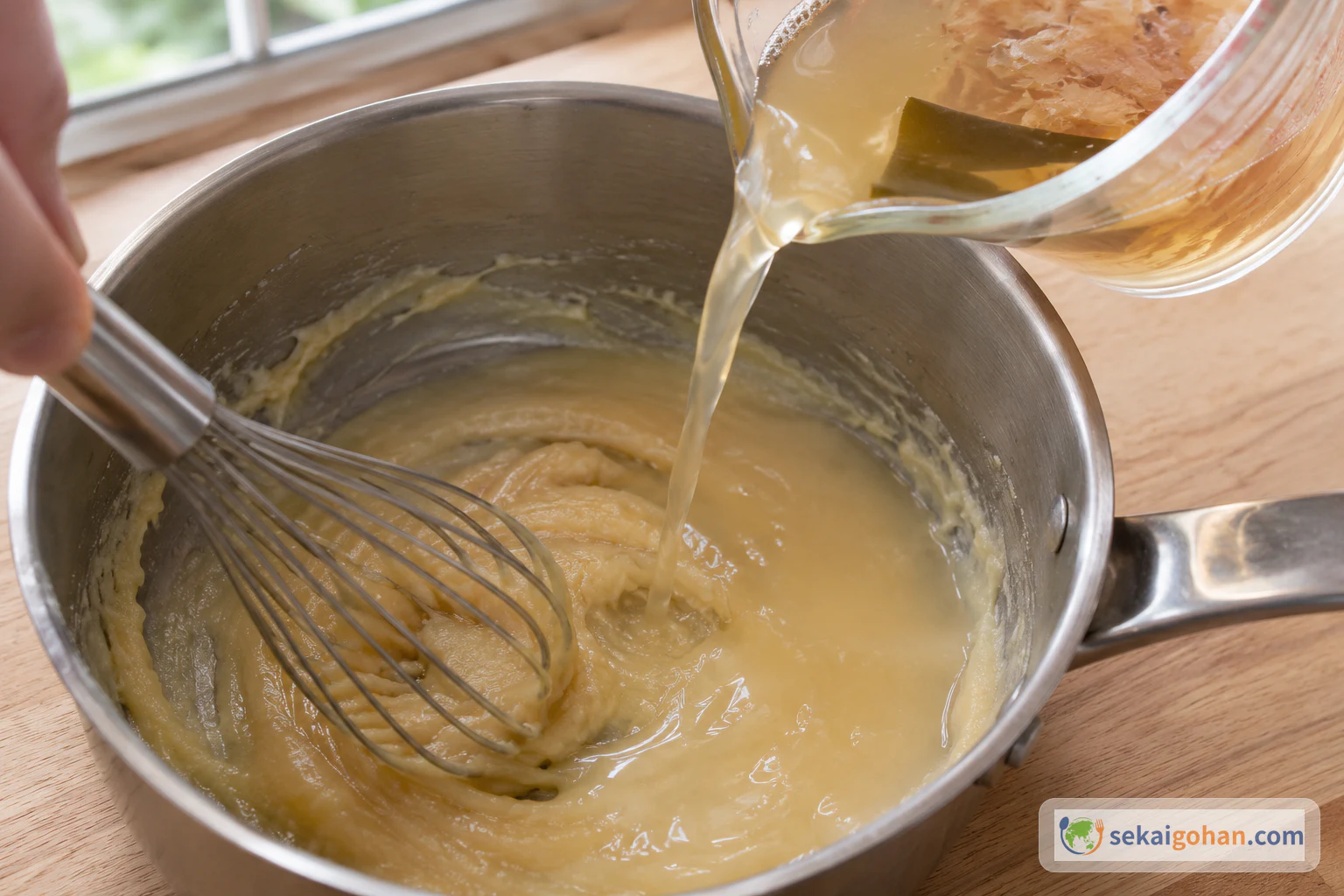
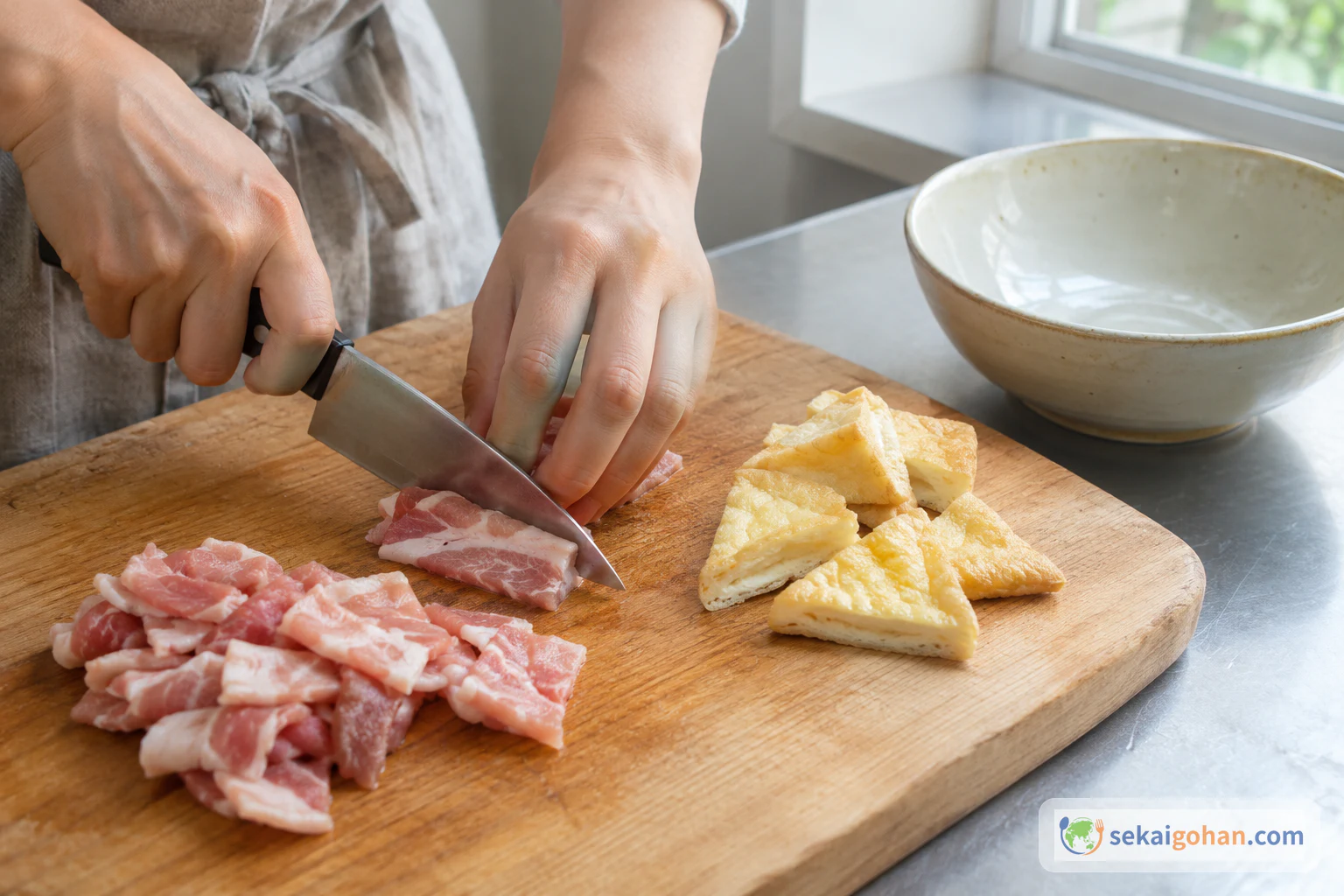
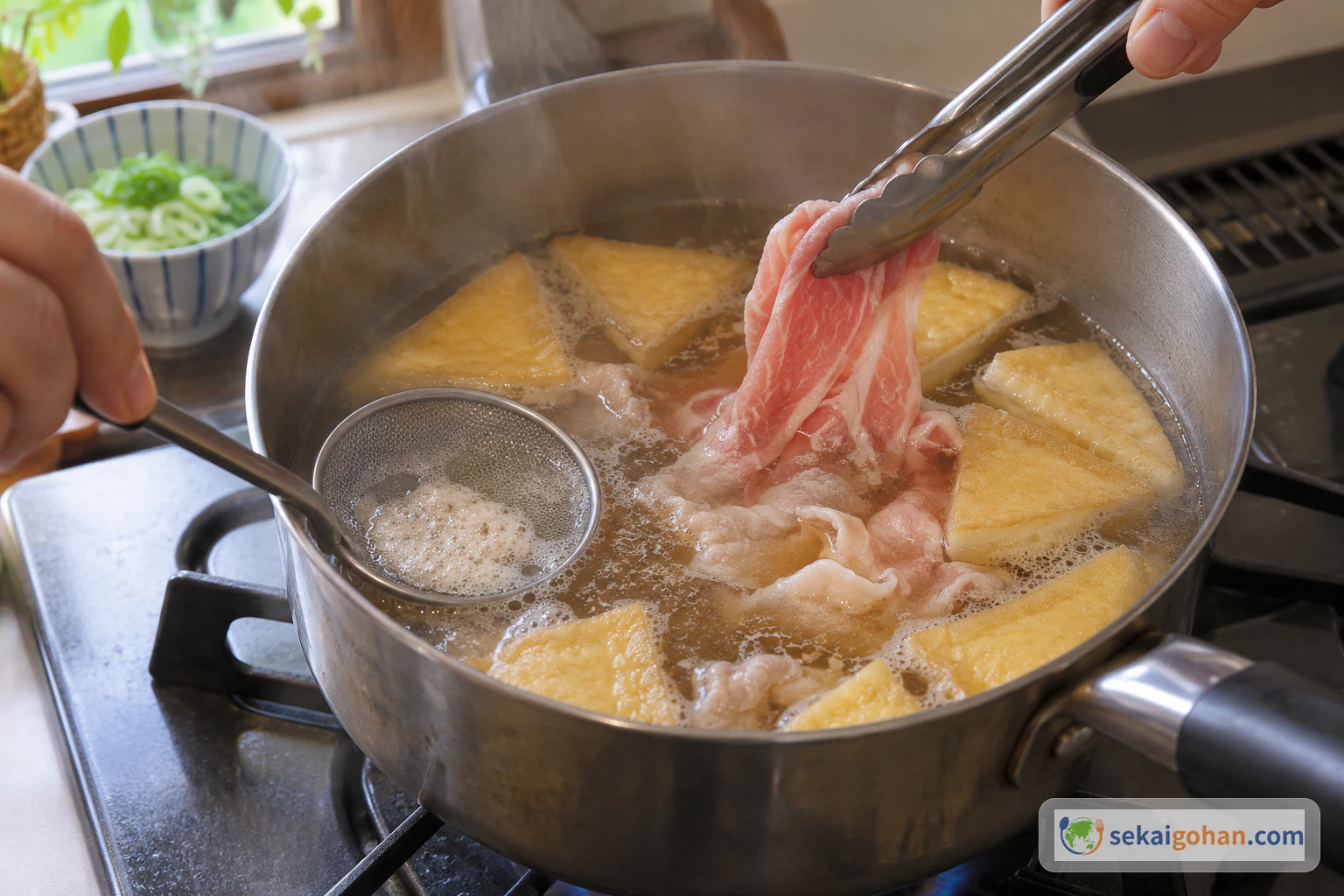
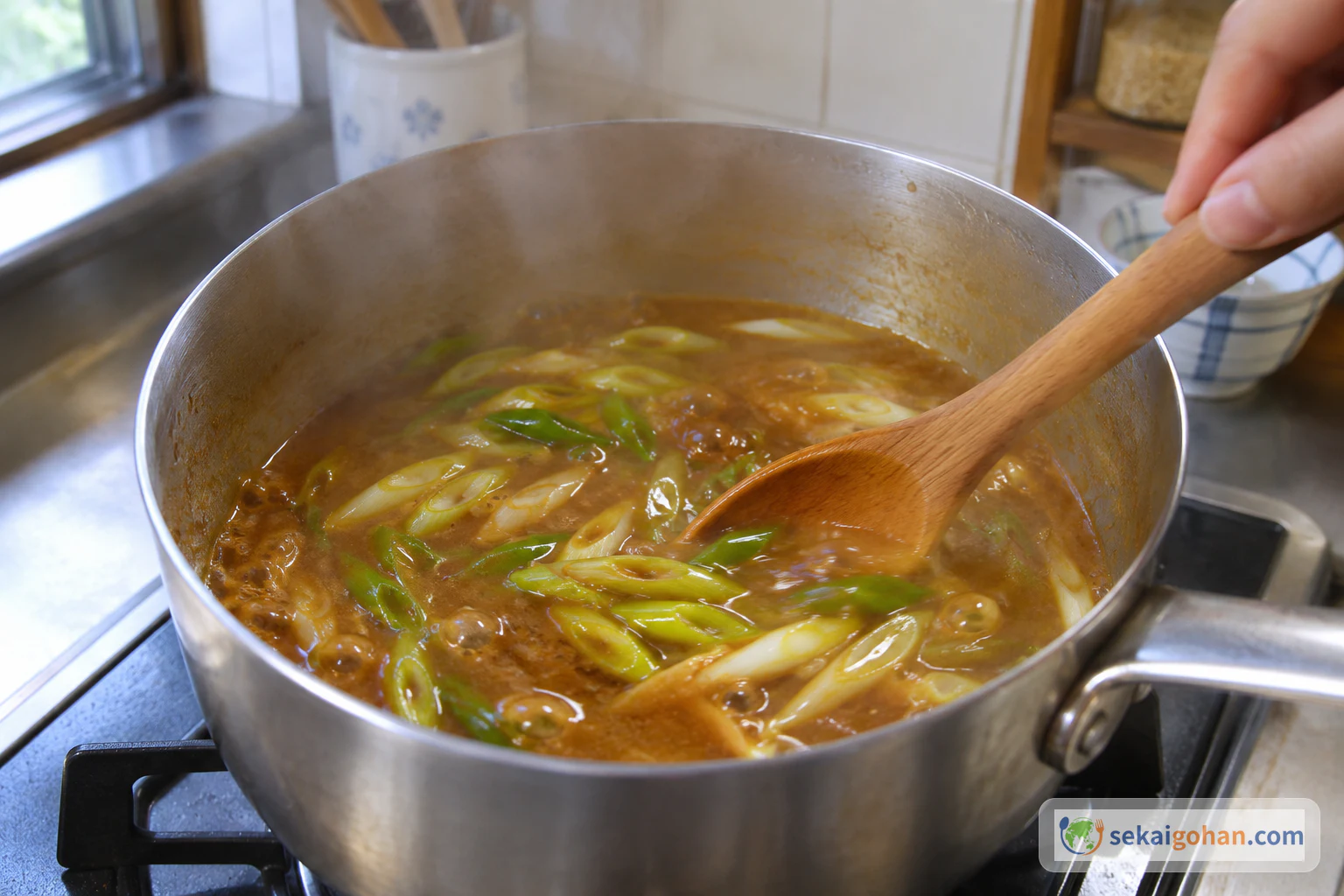
The roux comes first, in a dry frying pan, while nothing else is on the stove. Cut the fillings next, then build the broth in a saucepan. Grate the tororo and warm the udon just before you assemble the bowl, so the yam stays thick and the noodles go in hot. The bowl is put together at the very end, and the curry goes on last.
When It Goes Wrong
| What you see | Why | What to do |
|---|---|---|
| Lumps in the roux | The dashi went in too fast or was not chilled | Push the liquid through a fine sieve, pressing the lumps through, and add it to the broth |
| The roux smells sharp and bitter | The powder scorched during toasting | Start the roux again over gentler heat; the bitterness carries into the whole bowl |
| The broth is thin and runs off the noodles | Not enough slurry yet | Re-stir the slurry and add it a little at a time until the broth coats a spoon |
| Curry has soaked into the rice | The tororo sheet broke, or someone mixed from the bottom | Grate the tororo just before assembly, cover the rice fully, pour the broth over the noodles, and eat from the top down |
Serving and Eating
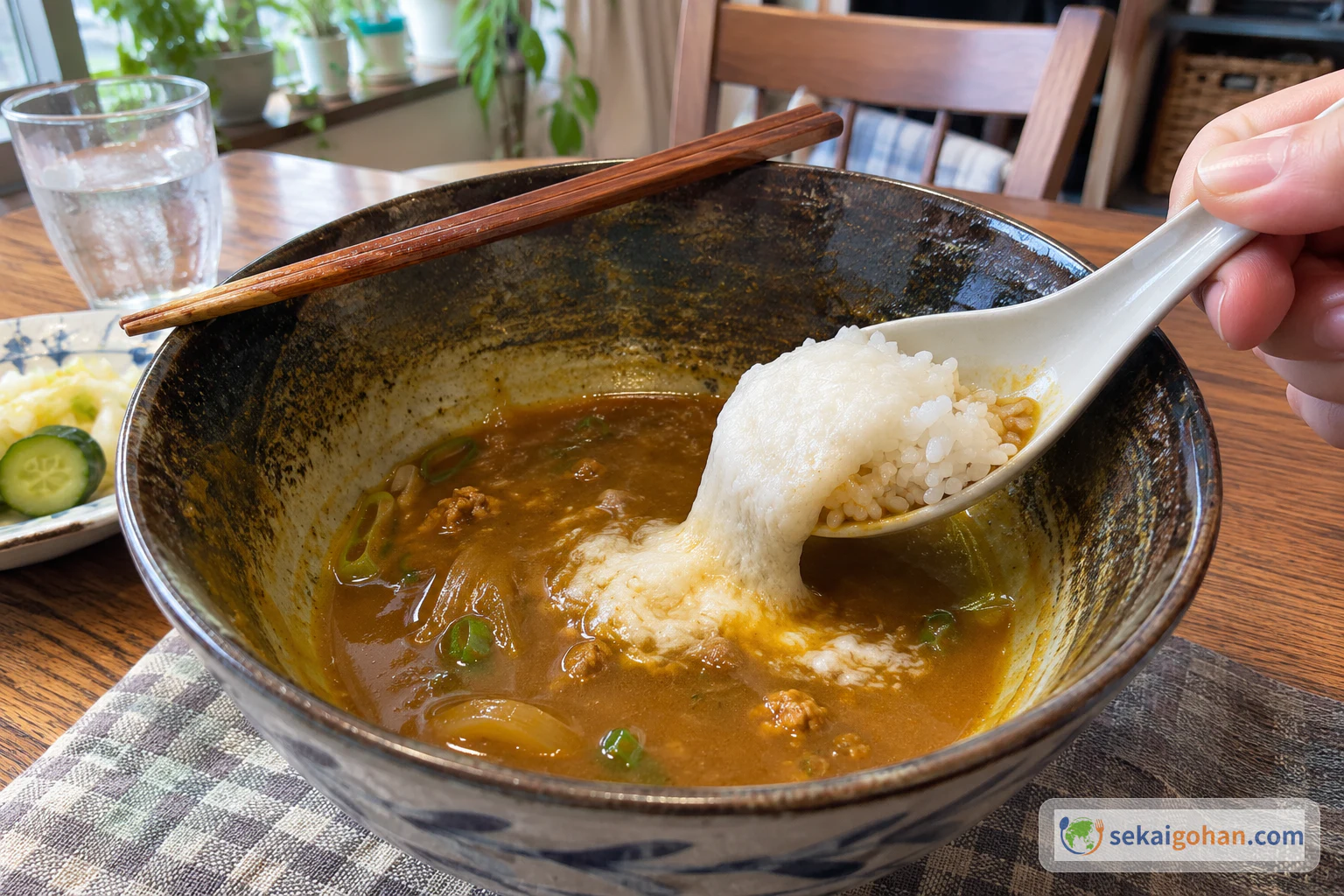
Eat it in order. Start with the curry udon on top, just as it comes, and do not push your chopsticks down to the bottom to mix. Once the noodles are gone, the tororo rice comes up from underneath. Fold it into the remaining curry for a second, different bowl: softer and rounder, with the sticky yam holding the rice and curry together. Partway through, add fukujinzuke from the side dish to change the flavor. Its crunch and sweet-salty bite cut through the thick curry.
The bowl is a full meal for one, and it is best eaten the moment it is ready, while the curry is hot and the layers are still separate. In Toyohashi you can eat one at shops across the city, including at the station building just outside the ticket gates.
Frequently Asked Questions
Is Toyohashi curry udon spicy?
No, the heat is gentle. The broth is built on dashi, mirin and soy, so it tastes like a Japanese noodle-shop broth with curry folded into it more than like a hot curry. Fukujinzuke or red pickled ginger on the side adds sharpness.
Can I leave out the tororo?
You can, but then you have curry udon with rice under it. The rice soaks up curry from the start and turns soft before you reach it. The tororo sheet is what keeps the two meals apart and then joins them in the second half.
Does the rice need to be hot?
Warm rice works best, because the curry goes on last and nothing in the bowl is heated again. Freshly cooked or reheated rice and warmed udon keep the whole bowl hot down to the bottom layer.
How do I eat it with chopsticks and a spoon?
Use chopsticks for the noodles, pork and fried tofu on top, and pick up the spoon when the rice appears. The spoon is the easiest way to scoop the tororo rice through the curry left in the bowl.