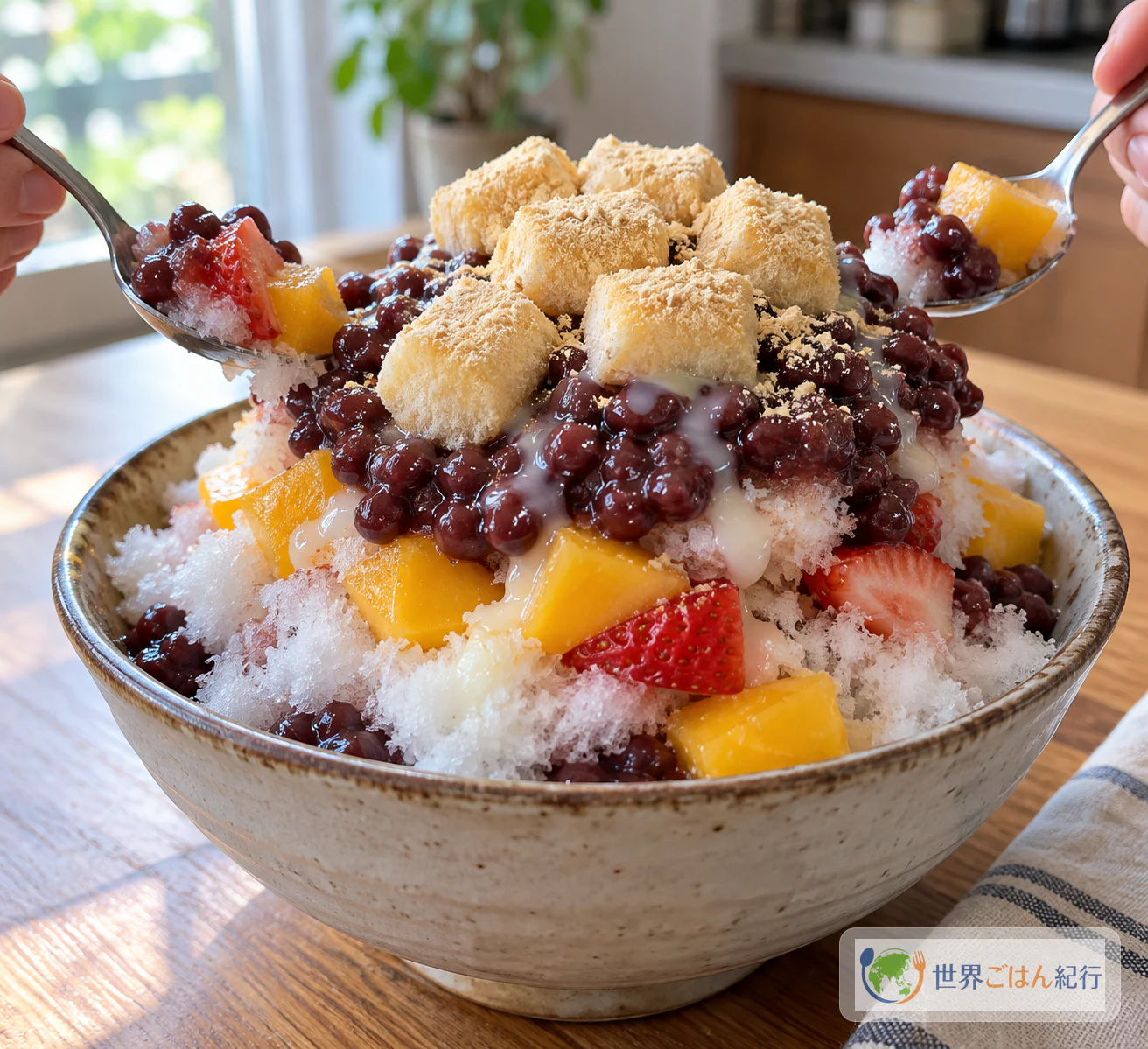
Patbingsu: Red Beans and Shaved Ice Layered for a Korean Summer
Fine, cold shaved ice, sweet red beans that still hold their shape, and chewy injeolmi. The fruit can follow the season, but if the red beans go, it becomes a different kind of bingsu.
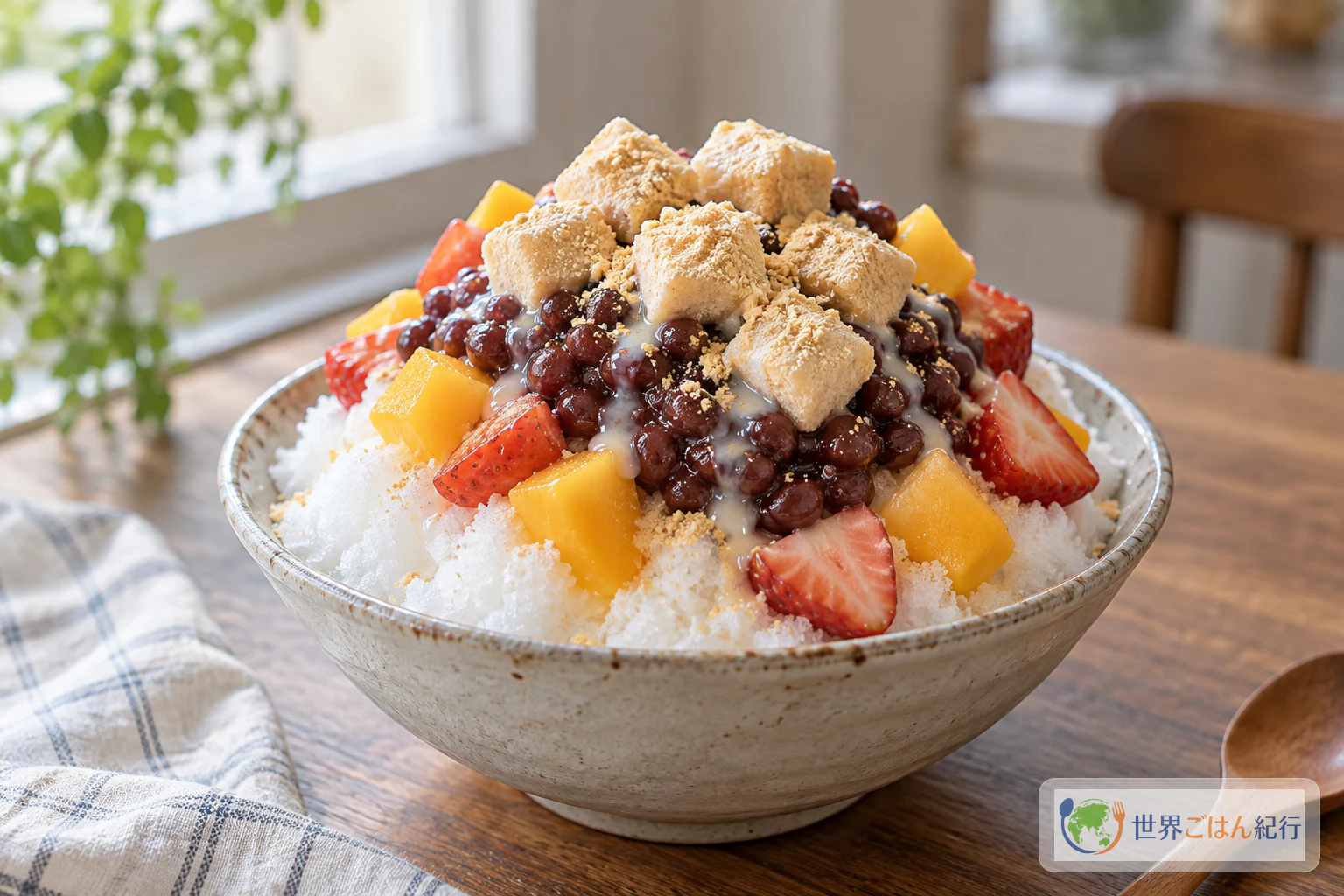
On a hot Korean summer day, a big bowl of shaved ice lands in the middle of the table, and several spoons go in at once. The ice starts to soften at the edges almost immediately, so everyone digs in, breaking down the neat layers and mixing beans, milk and fruit into the ice as they eat. A Korean government culture feature on bingsu describes exactly this: a summer dessert shared from one bowl, and one that a shop owner jokes you have to eat quickly before it melts.
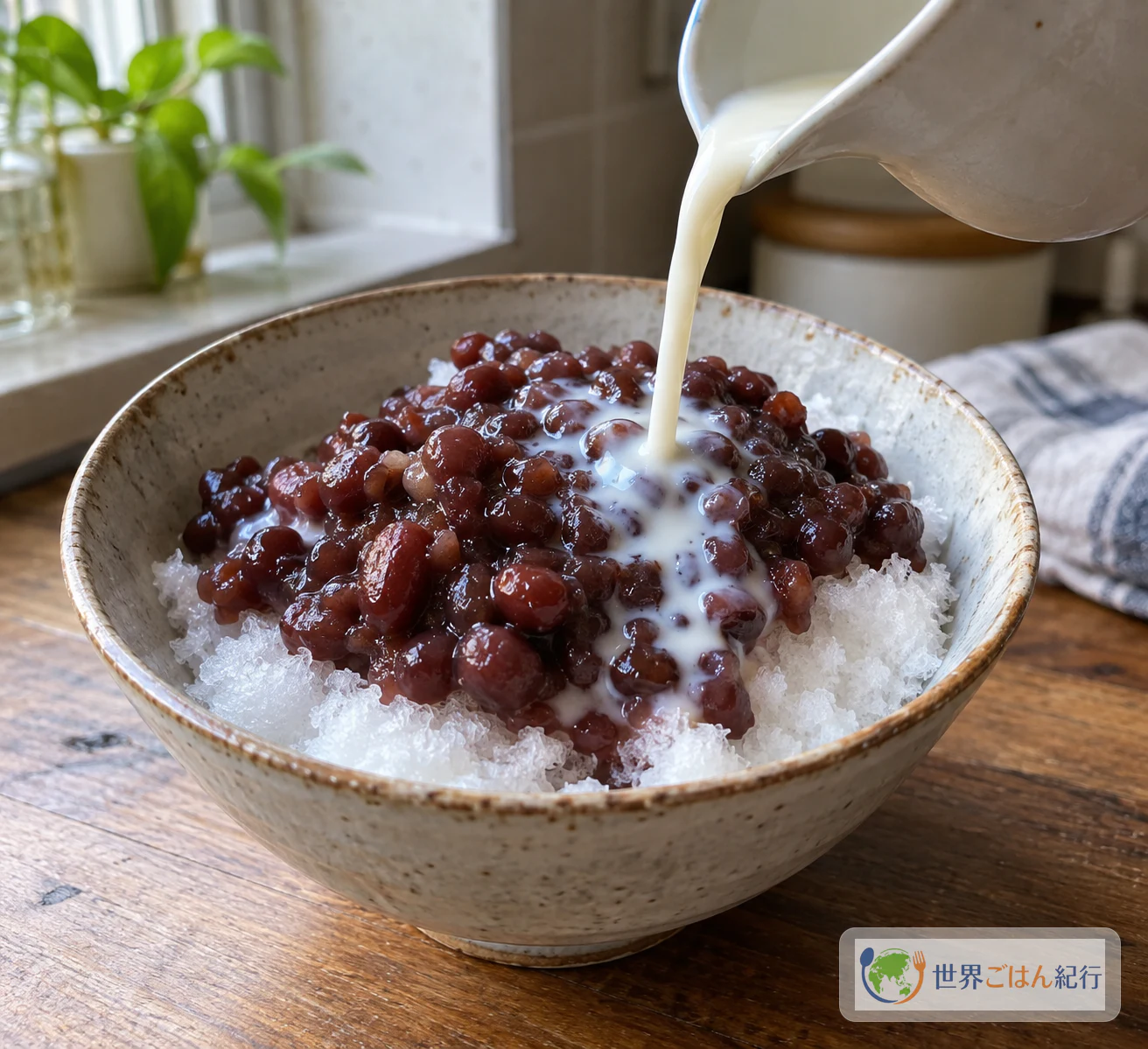
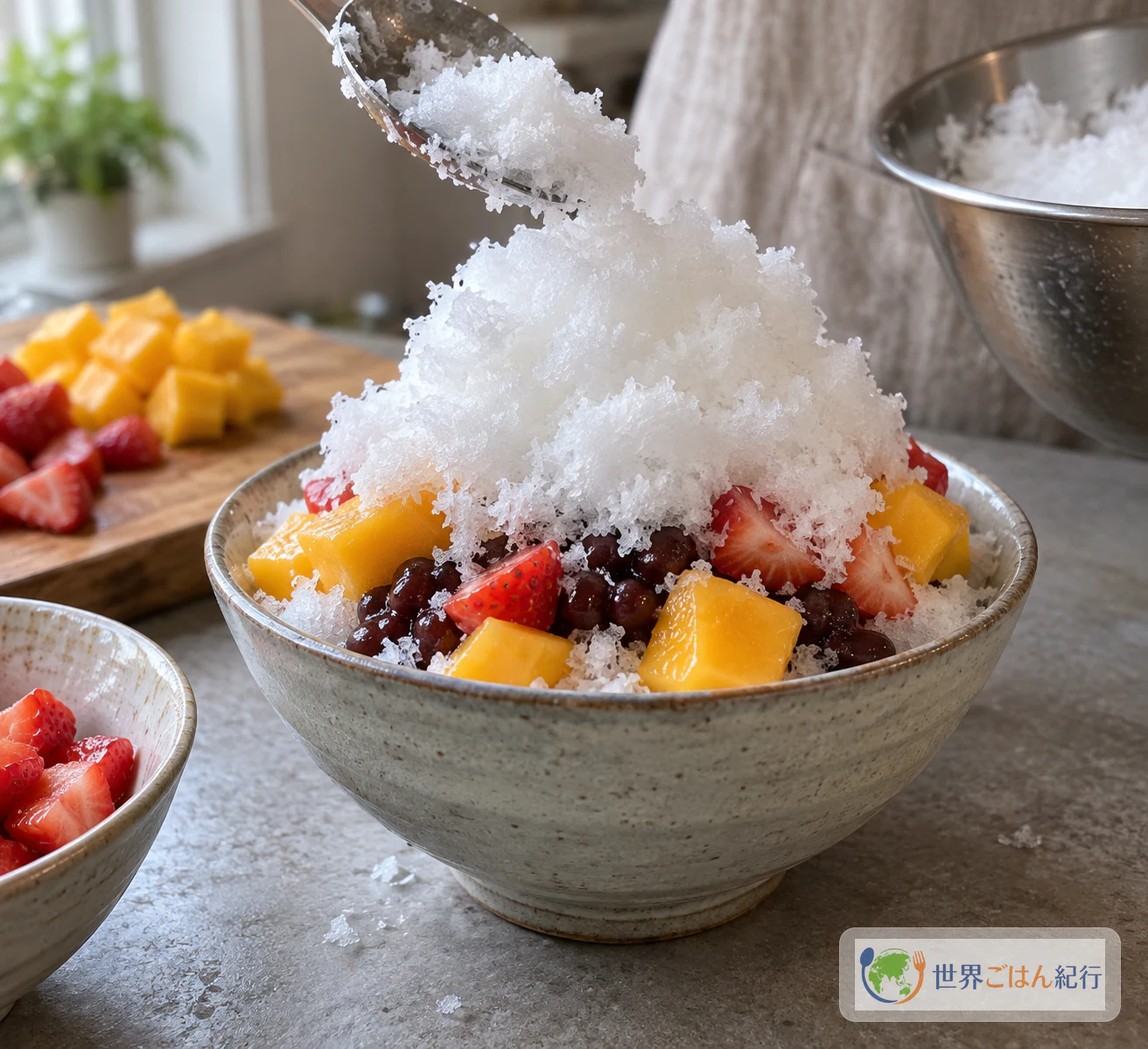
The name tells you what is in it. In patbingsu (팥빙수), pat means red beans and bingsu means shaved ice. Bingsu on its own is the broader word, and modern Korean bingsu comes in many forms, including fruit-centered versions; not every bingsu contains red beans. This article covers one home version of patbingsu, where sweet red beans are the star, with mango, strawberries, milk, injeolmi rice cake and sweetened condensed milk layered around them.
The recipe follows Maangchi's patbingsu for one to two servings, with the amounts kept exactly as written in US cups and tablespoons. It has not been kitchen-tested by us, and microwaves and ice shavers vary by model, so judge each stage by how it looks and feels.
Ingredients for One to Two Servings
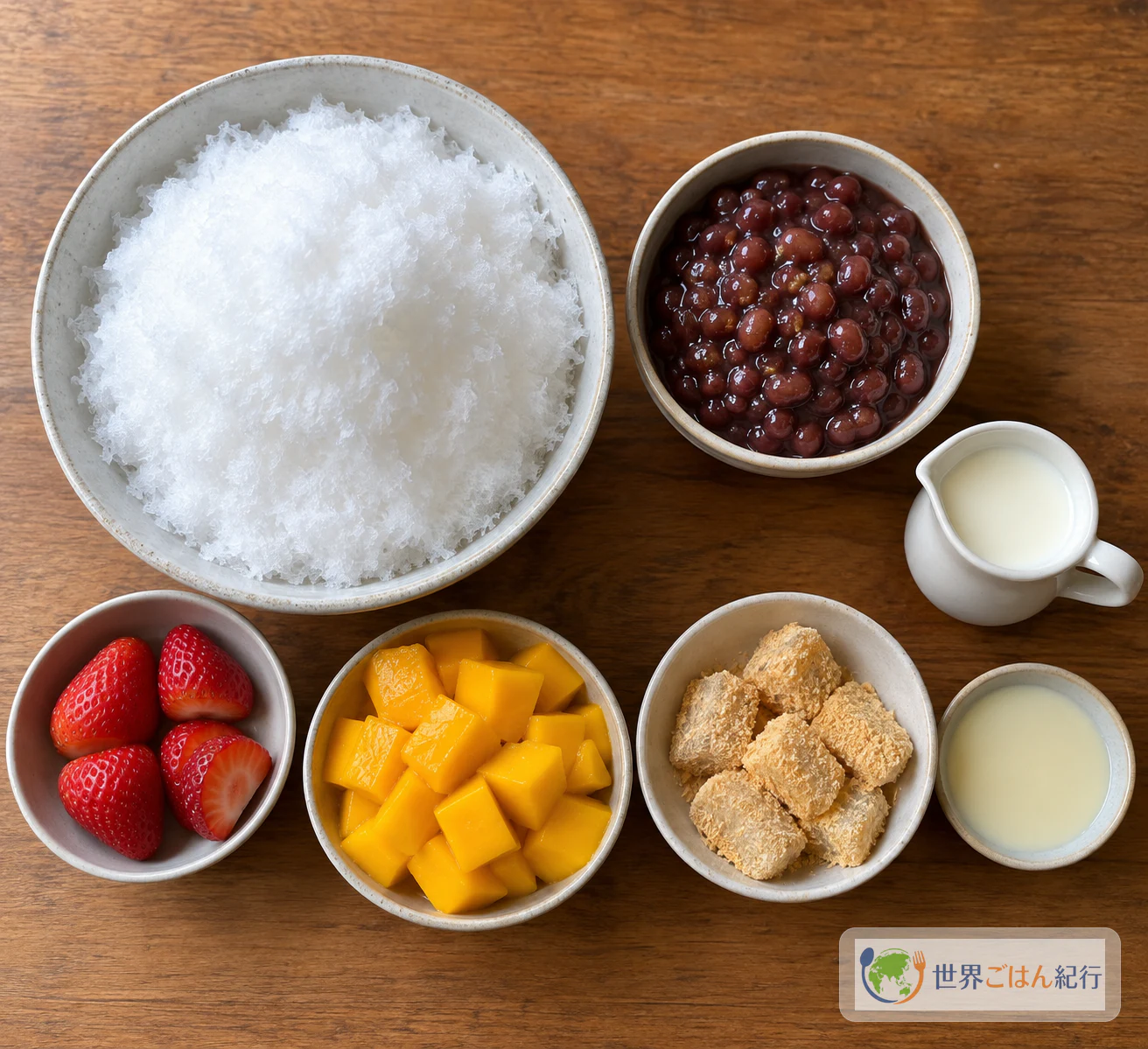
The first table is all you need if you buy sweet red beans and injeolmi ready-made. The second and third tables are optional, for making the beans and the rice cake yourself. The homemade beans make a little more than 2 cups, but only 1 cup goes into this bowl.
This dessert contains milk (whole milk and sweetened condensed milk), soy (roasted soybean powder) and glutinous rice. If you use store-bought sweet red beans or injeolmi, check the label for allergens and shared-facility statements. Nutrition values have not been calculated for this recipe.
Equipment
- Ice shaver (if you use a blender's ice-crushing function, follow its manual, as models differ)
- Serving bowl that holds 2–3 cups
- Saucepan (for homemade beans)
- Microwave-safe bowl, plastic wrap and a microwave (for homemade injeolmi)
- Wooden spoon
- Cutting board and knife
Choosing and Swapping Ingredients
Sweet red beans: buy or make. Canned or pouched sweet red beans save the long simmer entirely. Check that they are the sweetened kind, and don't add the sugar step on top of them. Plain boiled red beans with little or no sugar will not give the same sweetness; if you choose them, treat that as your own adjustment and balance with the condensed milk. If you make beans from dried, the recipe yields a little more than 2 cups. Use 1 cup for the bowl and keep the rest in a separate container.
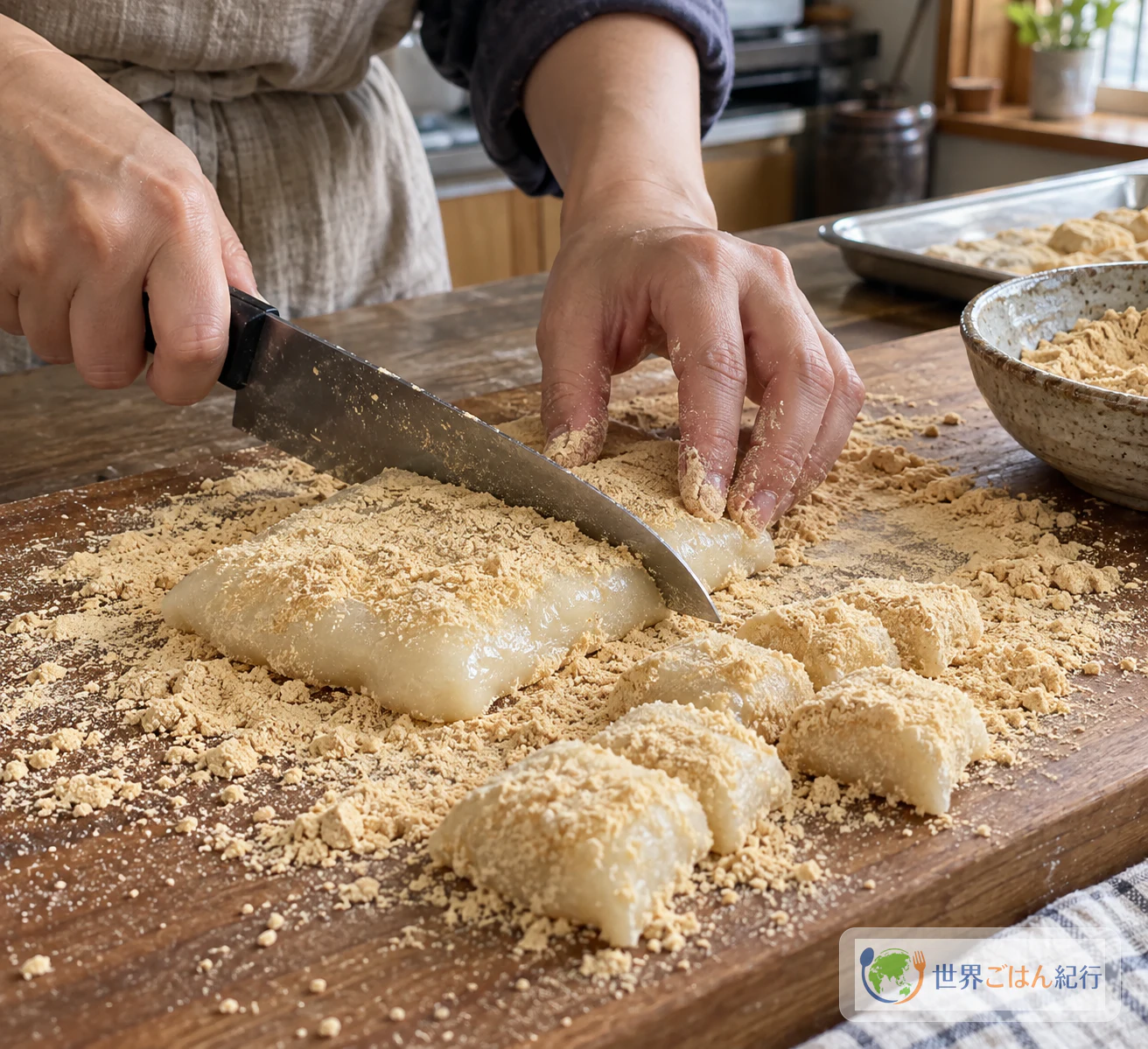
Injeolmi. Store-bought injeolmi lets you skip the rice-cake steps. For homemade, use glutinous rice flour. Other rice flours such as shiratamako differ in grind and water needs, so the same ratio and method can't be assumed to work.
Fruit. Strawberries and mango can be swapped for fruit in season. That is a home adjustment, not a regional variation, and the sweetness, tartness and juiciness will change.
Milk. Soy milk or another alternative changes the flavor; it is not part of the original recipe.
Method: Beans, Rice Cake, Then the Layers
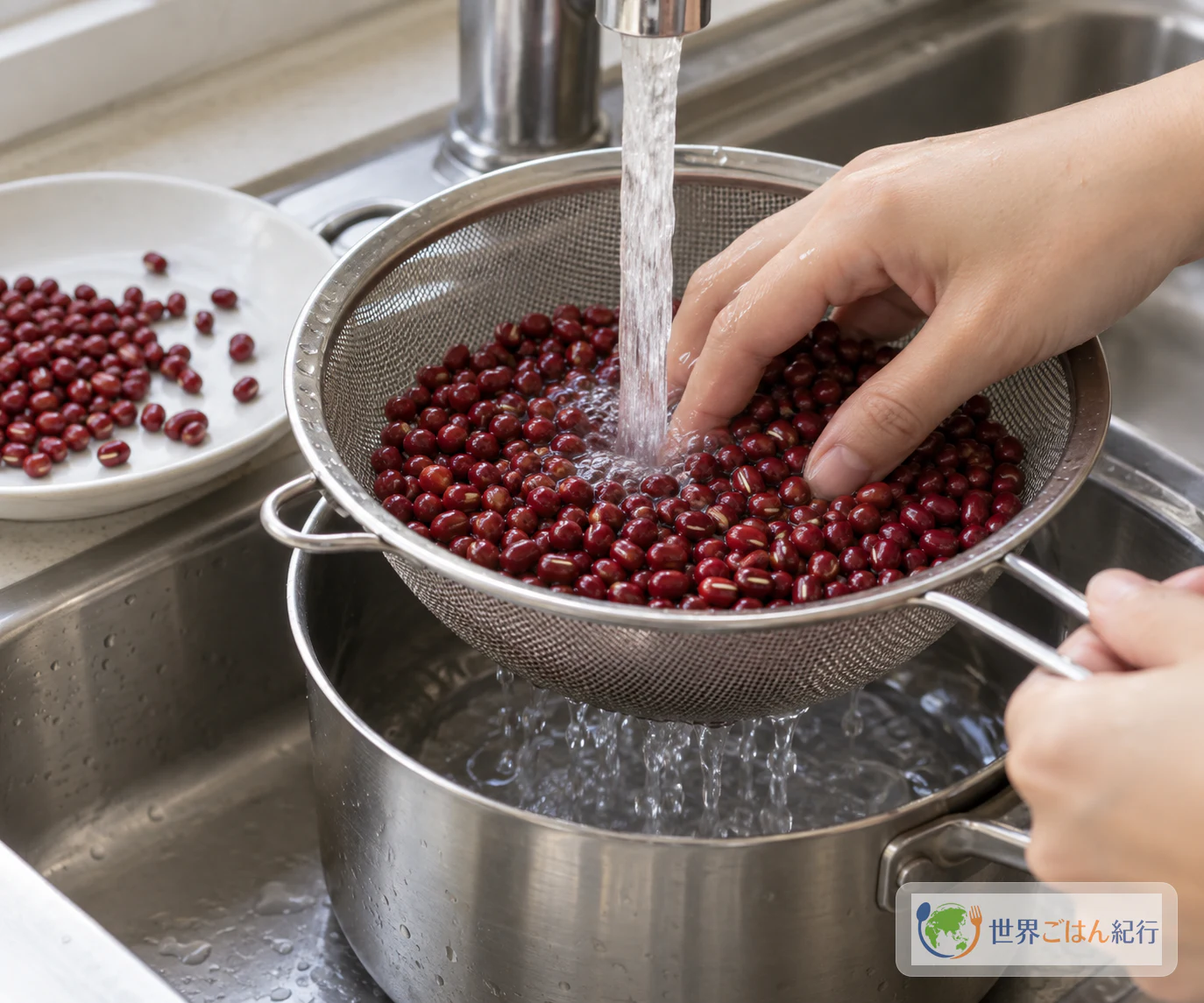
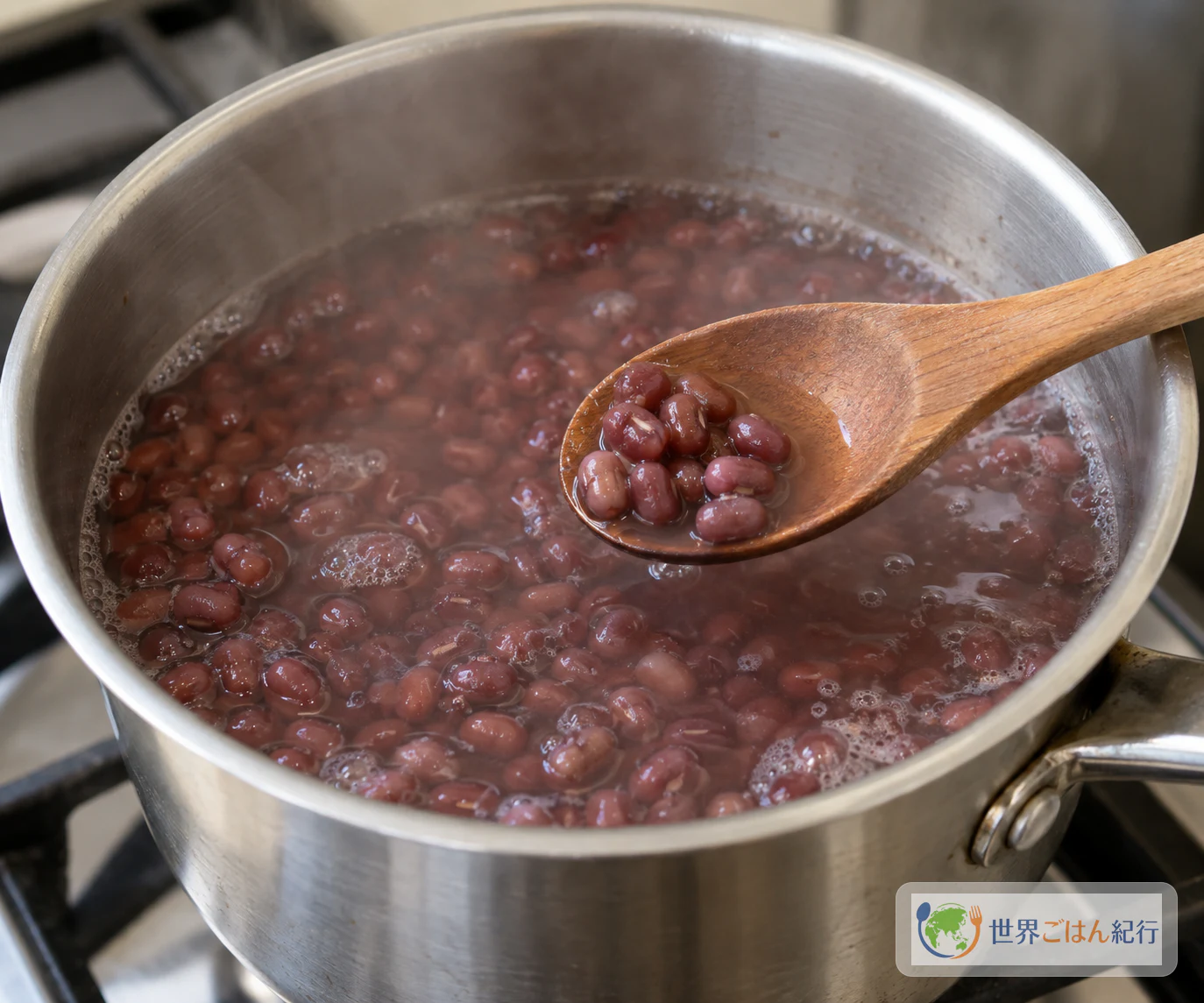
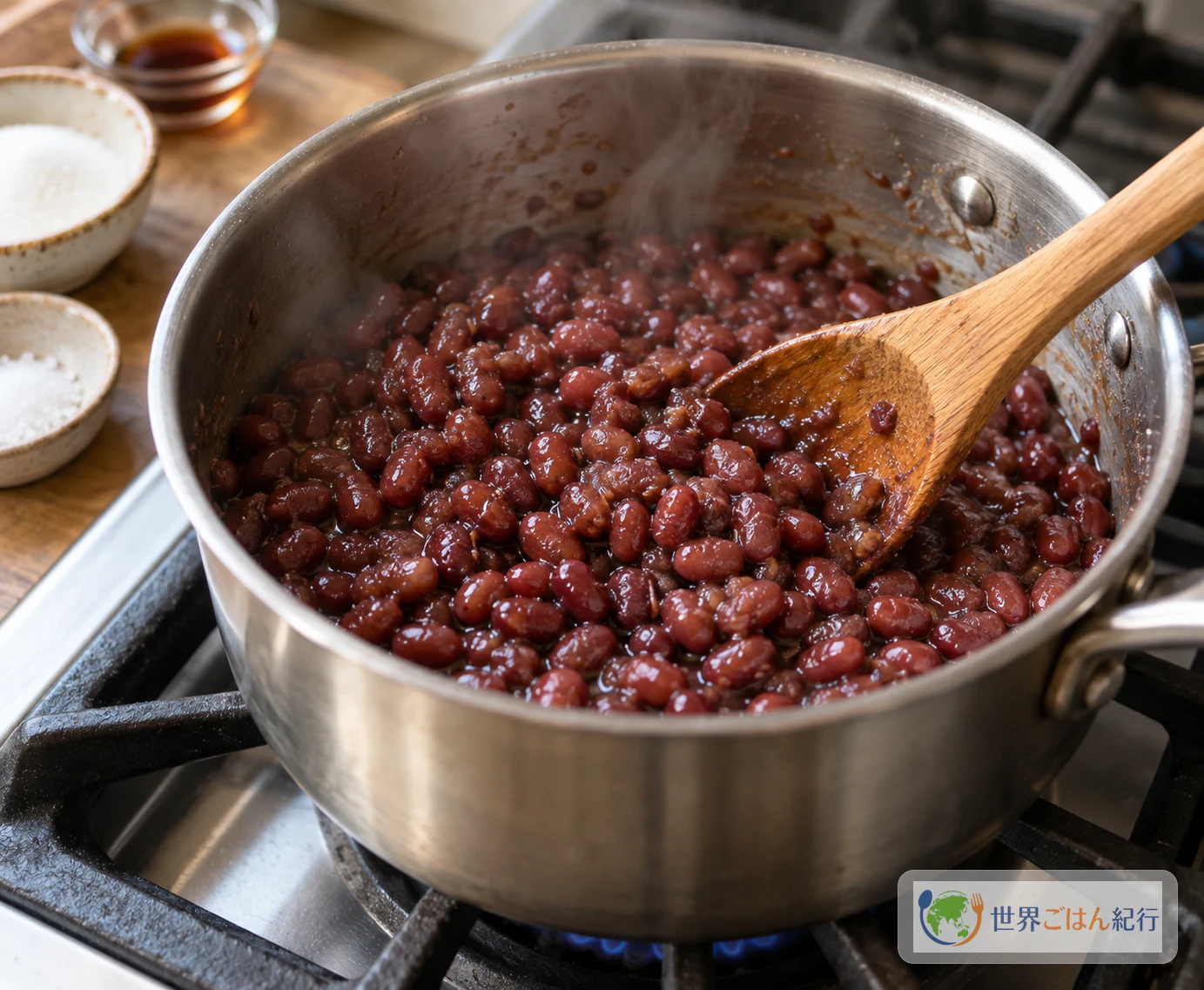
Steps 1–3 are only for homemade red beans, and steps 4–5 only for homemade injeolmi. With store-bought beans and injeolmi, go straight to step 6.
Getting It Right: Common Problems
| Problem | Likely cause | What to do |
|---|---|---|
| The ice melts before it reaches the table | Warm bowl, or ice shaved too early | Chill the bowl, shave the ice just before assembling, and serve immediately |
| The beans are mushy | Cooked or stirred too hard | Judge by "tender but not mushy" and stir gently when sweetening |
| Too sweet with canned beans | Sugar added to beans that were already sweet | Skip the sugar step with sweetened store-bought beans, and add condensed milk a little at a time |
| Not sweet enough with plain boiled beans | Unsweetened beans used in place of sweet red beans | Expect a different sweetness; adjust with the condensed milk |
| The rice cake isn't elastic | Microwave models vary | Make sure the dough is hot through and turns elastic when kneaded; the stated time alone isn't proof |
| The layers blur together | Fruit, beans and rice cake piled in one place | Keep each component in its own layer, as in steps 6–8 |
Bingsu in Korea, and Making It Your Own
From crushed ice to today's bowls
According to the National Folk Museum of Korea, people in the Joseon era crushed ice and enjoyed it as hwachae (화채). In the modern period, bingsu shops (빙수점) appeared, selling a simple treat of ice, sugar and milk, and frozen desserts kept changing with the times. That history is about ice treats in general; it does not mean today's patbingsu, with red beans and rice cake, has existed in the same form since the Joseon era.
Today, bingsu is a fixture of Korean summers. The government culture feature, drawing on shop owners and dessert makers, describes a move from the traditional red-bean style toward many newer versions, including fruit-centered ones, with a bowl often shared between several people.
Variations that keep the core
These are separate adjustments, not changes to the base method above.
- Seasonal fruit: Replace the strawberries and mango with fruit in season. Tartness and juiciness will change.
- Keep the beans whole: Leave the red beans as whole beans rather than turning them into a smooth paste; the texture is part of the dish.
- Condensed milk to taste: Add it a little at a time, treating 3 tbsp as the upper reference.
- Store-bought injeolmi: Skip steps 4–5.
- One portion: Scale every ingredient down by the same ratio and fit it to your bowl.
As long as the shaved ice, sweet red beans and chewy rice cake remain, the bowl stays close to basic patbingsu. For a separate savory Korean recipe, see dakgalbi.
Frequently Asked Questions
What's the difference between bingsu and patbingsu?
Bingsu means shaved ice and covers many styles, including fruit-based ones. Patbingsu is the style built on sweet red beans (pat).
Can I use store-bought sweet red beans?
Yes. Use 1 cup of sweetened red beans and skip steps 1–3. Don't add extra sugar to them.
What can I use instead of injeolmi?
Store-bought injeolmi is the simplest swap. Other rice flours, such as shiratamako, need different water amounts, so the method here isn't recommended for them as written.
What if I don't have mango?
Use fruit in season. The sweet-tart balance will change, but the red beans, ice and rice cake keep the dish recognizable.
Can I make it for one person?
The recipe already serves one to two. For a smaller bowl, reduce every ingredient by the same ratio and match it to your bowl's size.
Sources
- Maangchi, "Shaved ice with sweet red beans and fruit (Patbingsu)." The recipe, amounts and assembly order for one to two servings; the homemade sweet red bean and microwave injeolmi methods; the note on refrigerating leftover beans; and the meaning of pat and bingsu. https://www.maangchi.com/recipe/patbingsu
- Ministry of Culture, Sports and Tourism / Korea Here & Now, "Bingsu: chill out while you can." Bingsu as a widely eaten Korean summer dessert shared from one bowl, and the shift from traditional red-bean bingsu to varied modern styles, based on shop owners and dessert makers. https://www.mcst.go.kr/english/policy/kocis/newsView.jsp?pSeq=174
- National Folk Museum of Korea webzine, "빙과류 변천사" (A history of frozen desserts). Crushed ice eaten as hwachae in the Joseon era, the appearance of bingsu shops selling simple ice, sugar and milk treats in the modern period, and how frozen desserts changed over time. https://webzine.nfm.go.kr/2021/07/30/%EB%B9%99%EA%B3%BC%EB%A5%98-%EB%B3%80%EC%B2%9C%EC%82%AC/