Cheese Tteokbokki: Mozzarella Melting Over a Red Sauce
Simmer the rice cakes until soft in a red sauce that has thickened, then let shredded mozzarella melt over the top under a lid. The cheese sits on the sauce. It is not stuffed inside the rice cakes.
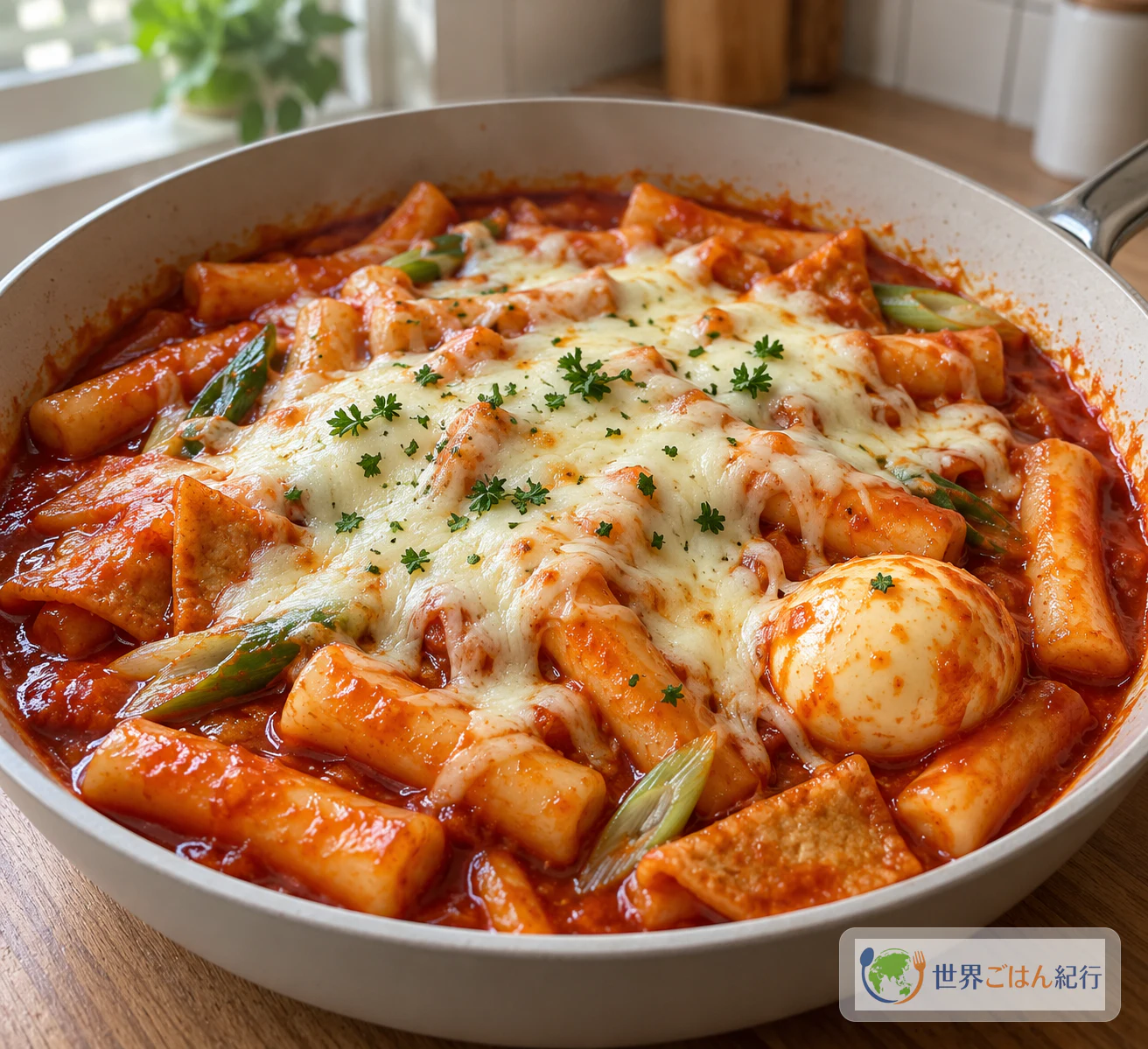
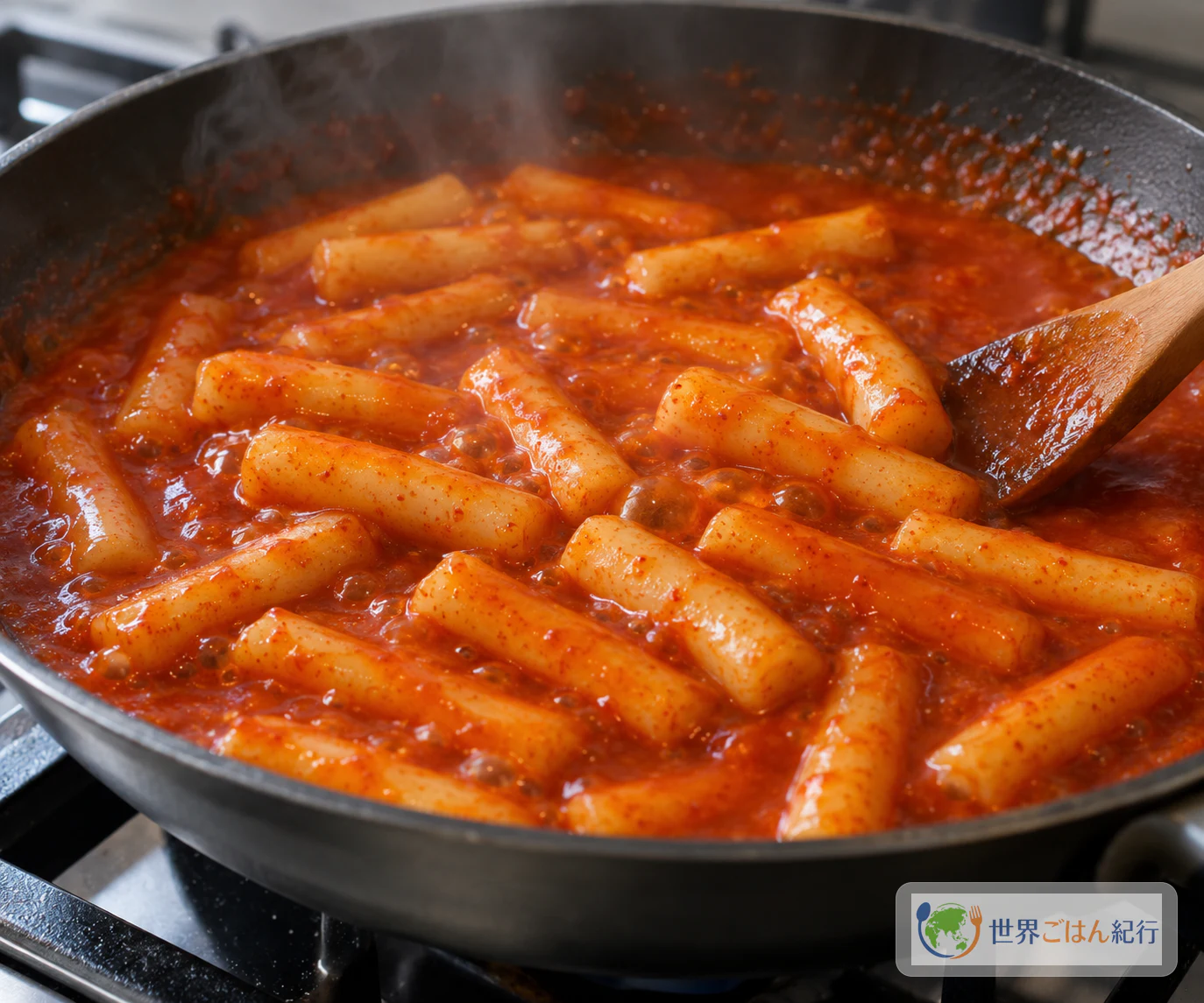
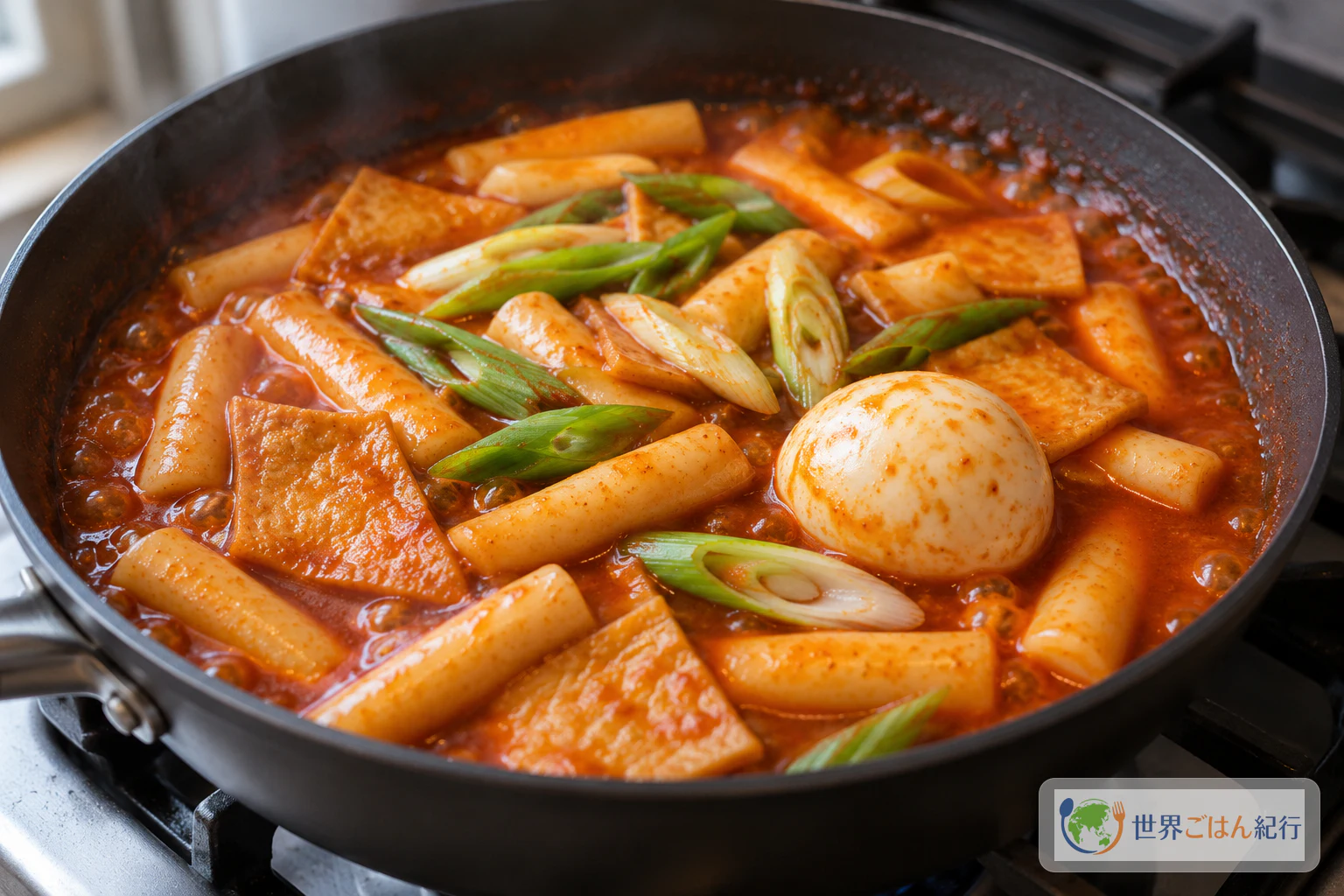
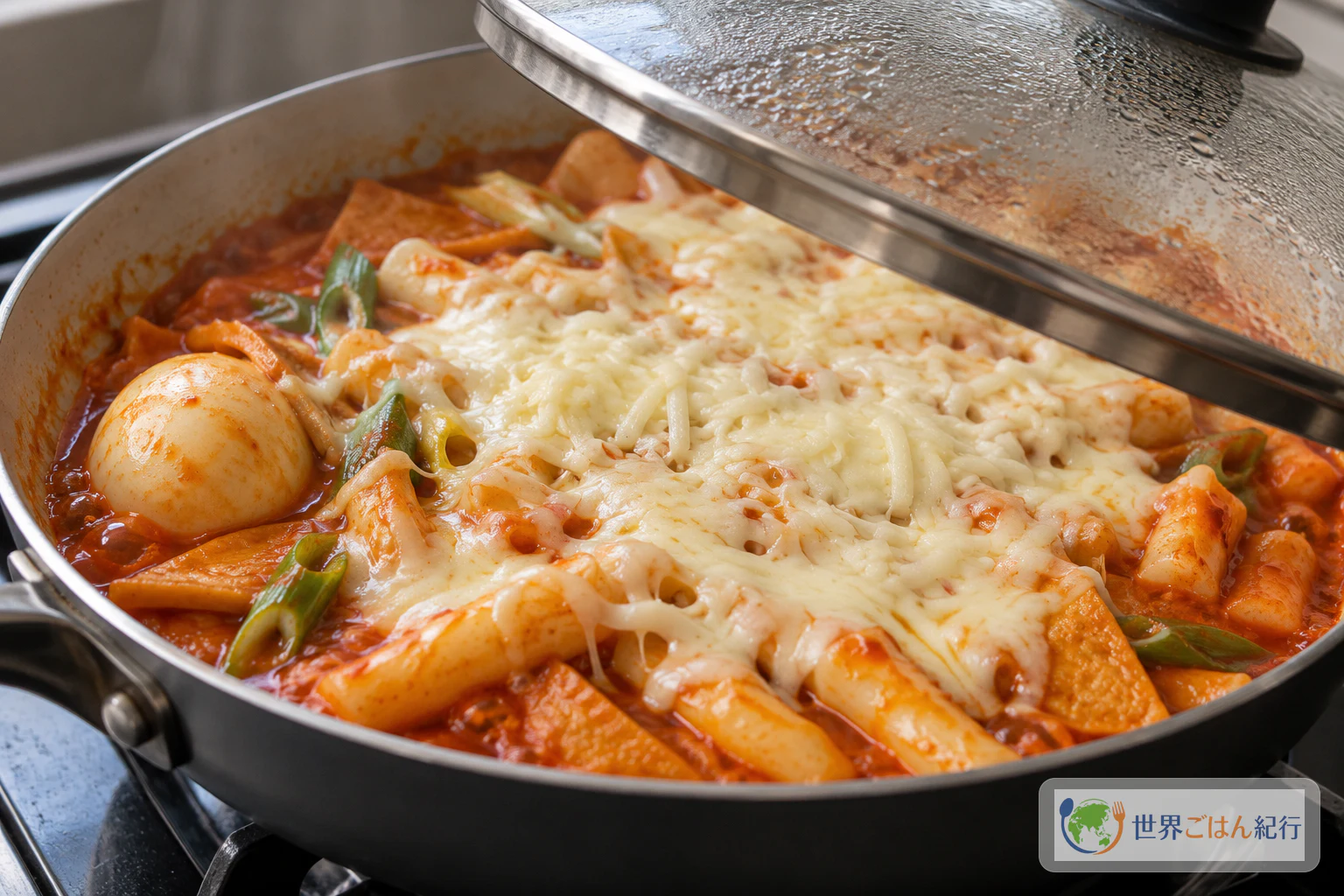
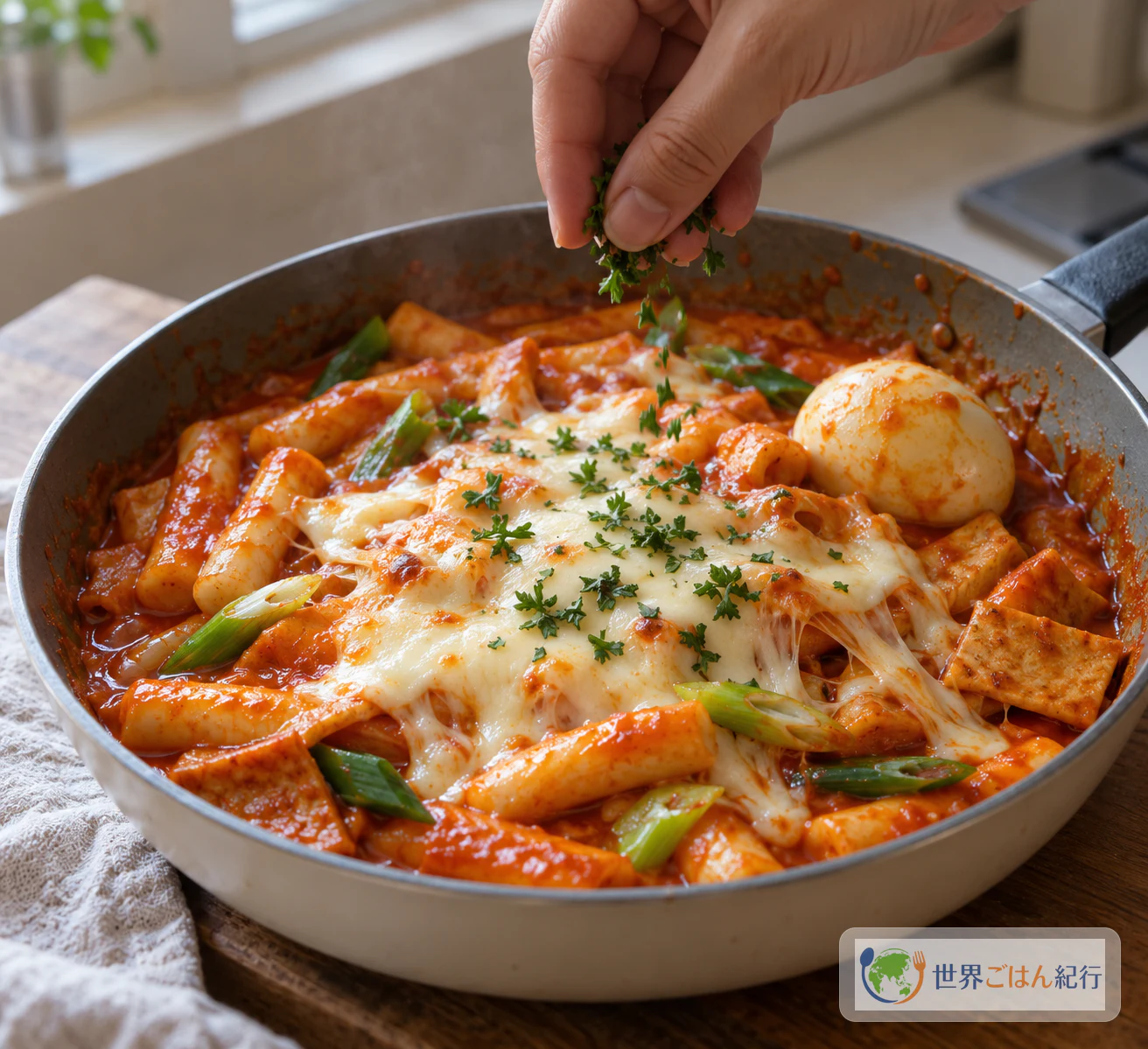
Cylindrical rice cakes simmer in a sauce of gochujang and chili. Flat pieces of fish cake and diagonal slices of green onion go in next, along with a single boiled egg. Once the sauce has turned thick, a handful of shredded mozzarella goes over everything, the lid goes on, and the cheese softens into a white layer over the red. That contrast is what cheese tteokbokki (치즈 떡볶이) is about: tteokbokki finished with melted cheese.
This page follows one published recipe from start to finish, a Cheese Tteokbokki recipe by ณัฐณิชา ทวีมาก on KRUA.CO, with the same amounts, units and order. Recipes from other sources, whether basic tteokbokki or other cheese versions, have not been mixed in. The source gives two times: a 20-minute soak for the rice cakes and about 5 minutes of simmering them in the sauce. Every later stage is judged by what you see in the pan. Sekai Gohan has not kitchen-tested this recipe as a whole; it is presented as the source writes it.
For more dishes from the same country, see our South Korean recipes.
What Cheese Tteokbokki Is: A Modern Variation on a Street-Food Favorite
Tteokbokki itself appears in the Korea Tourism Organization's street-food listings as a representative spicy Korean dish and a popular street food. The rice cakes are cooked with red chili paste and vegetables, and thin fish cake is often added. The same page notes that younger generations add a generous amount of cheese.
The Korean Cultural Center New York lists cheese among several modern kinds of tteokbokki, alongside curry, jajang and rosé. It also describes a modern preparation served with mozzarella to temper the spiciness. The Korean cooking writer Maangchi, presenting a classic basic tteokbokki, likewise mentions that people add variations such as cheese, and that mozzarella seems to be popular.
Taken together, these sources describe cheese tteokbokki as one of several contemporary ways to eat tteokbokki. They do not give a year of origin, an inventor, a first shop, or a single nationwide formula, so none is claimed here. The recipe on this page is one home version of the dish. It does not stand for every stall or household in Korea.
This is the red-sauce version with mozzarella melted on top. Rice cakes with cheese wrapped inside, cheese rice-cake skewers, rosé (cream) tteokbokki and rice-paper stand-ins are different dishes and are not covered here.
Ingredients (Serves 2–3)
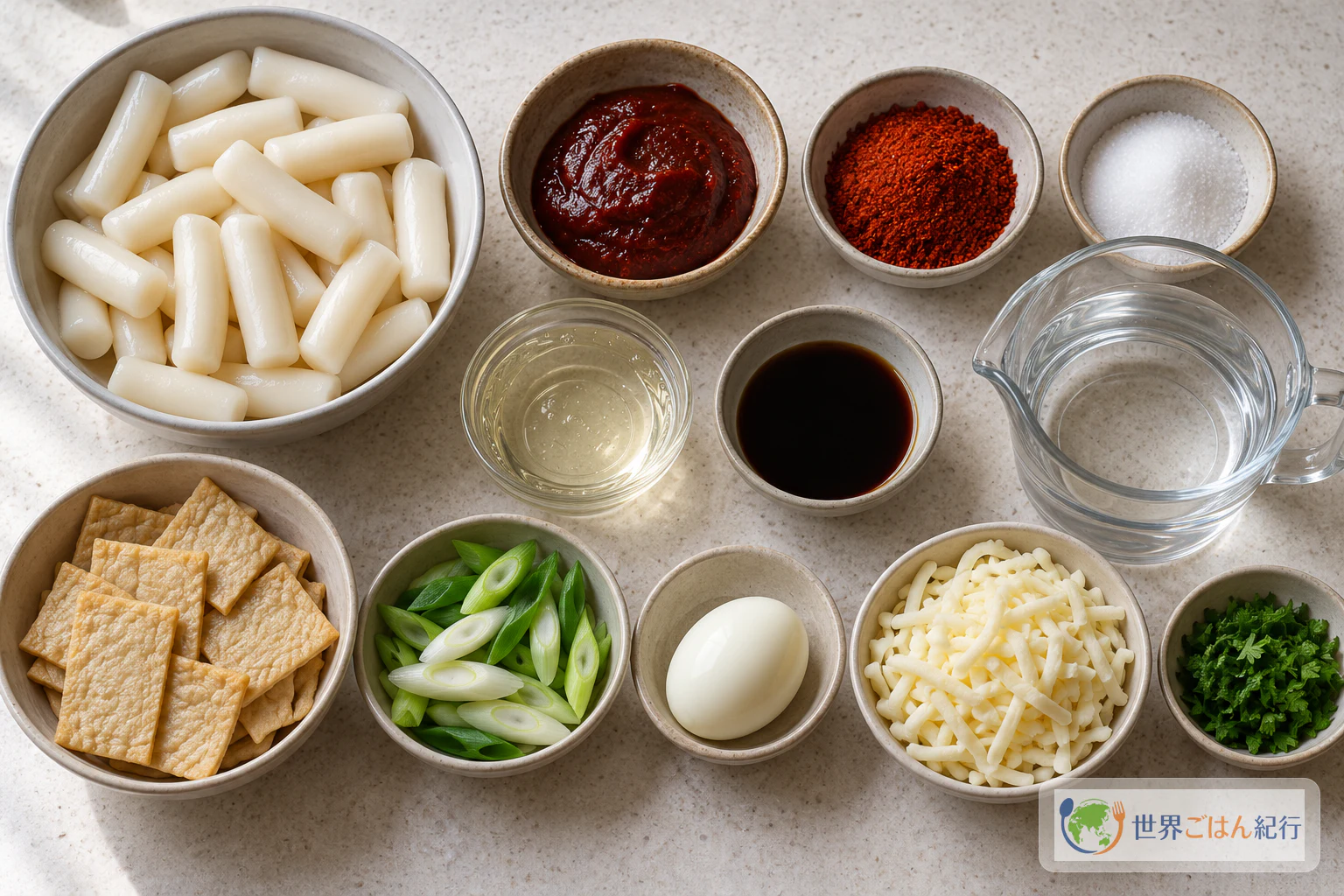
Amounts are given in the source's own units. The source does not say what size of cup it uses, so the cup amounts appear exactly as written and have not been converted to milliliters. Parsley has no stated amount; it is a finishing garnish.
Equipment
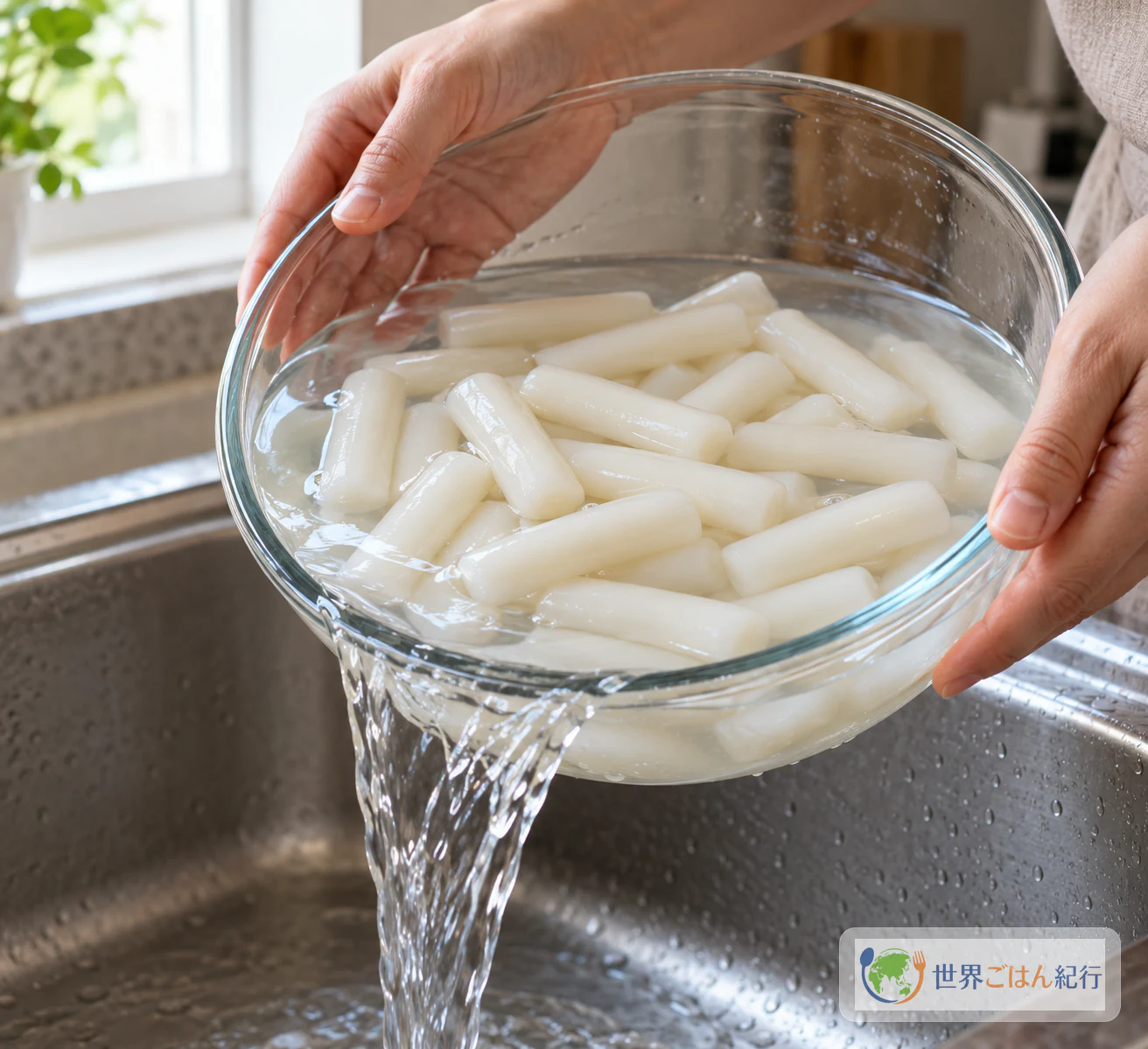
- A bowl for soaking the rice cakes in cold water
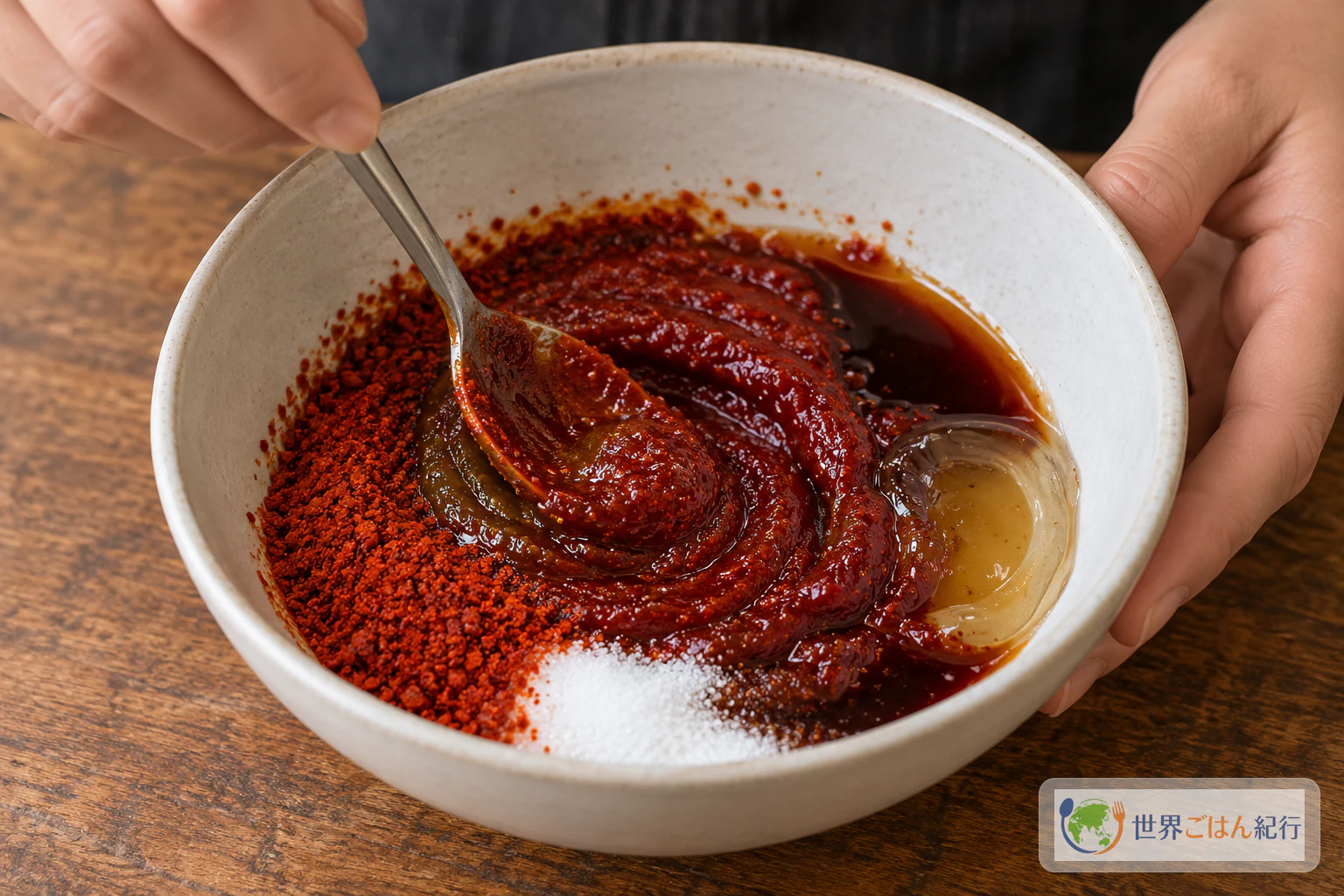
- A small bowl and spoon for mixing the seasonings
- A frying pan with a lid
Shopping and Choosing: Reading Labels at a Korean Grocer
The ingredients that need care are the Korean rice cakes for tteokbokki, gochujang, Korean chili powder and flat Korean fish-cake sheets. At a Korean or Asian grocer, check both the product name and the ingredient label so you pick up the item the recipe means. The rice cakes should be the cylindrical kind sold for tteokbokki, and the fish cake should be the thin, flat sheets that can be cut into bite-size pieces.
A few points keep this version faithful to its source:
- Soy sauce: the source specifies Japanese soy sauce. This page keeps it rather than switching to Korean soy sauce.
- Syrup: the source uses corn syrup, not rice syrup.
- Cheese: the source uses shredded mozzarella only. It does not call for a blend or a different cheese.
- Nothing extra: there is no oil, stock, garlic, cabbage or sesame in this recipe.
The sources give no substitution ratios for any of these ingredients, so none are offered here.
Method: From Cold Soak to Melted Cheese
The source gives two times: 20 minutes for the cold-water soak and about 5 minutes for simmering the rice cakes. After that, move on when you see the right state: the sauce thickening, then the cheese melted.
Troubleshooting: Reading the Pan
The source judges each later stage by the state of the pan, so most fixes come down to waiting for that state.
| What you see | What the recipe is waiting for | What to do |
|---|---|---|
| The rice cakes are still firm after about 5 minutes | Soft rice cakes, with the sauce just starting to thicken | Keep simmering until they are soft before adding the fish cake, green onion and egg |
| The sauce is still thin after adding the fish cake | A sauce that has thickened | Keep cooking and stirring until it thickens. Add the cheese only after that |
| The cheese hasn't melted | Fully melted mozzarella | Keep the lid on until it melts, and turn off the heat only after that |
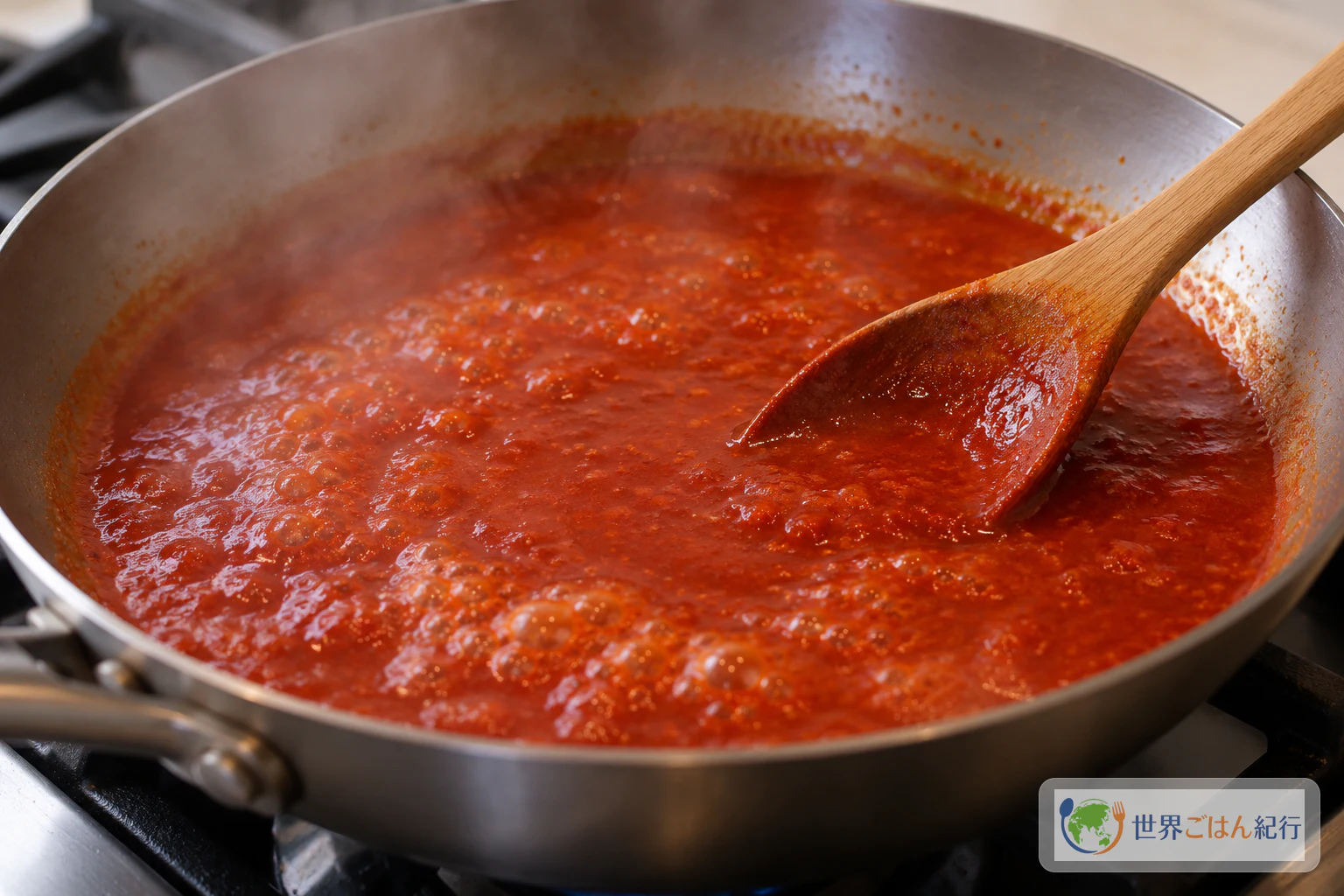
| The seasoning paste is in lumps | Seasonings fully dissolved in the boiling water | Stir until dissolved, and let the sauce return to a boil before adding the rice cakes |
The cheese goes on last, after the sauce has thickened. If it goes in earlier, it is no longer the covered melt on a finished red sauce that this recipe describes.
Variations: Where Cheese Fits Among Modern Tteokbokki
The Korean Cultural Center New York presents cheese as one modern direction among several. Its list includes royal-court-style and gochujang-flavored tteokbokki, as well as curry, jajang and rosé versions. Each is a separate preparation, and this page does not give recipes for them.
Within this recipe, the meaningful choice is whether to add the cheese at all. Without step 6, you have a red-sauce tteokbokki with fish cake, green onion and egg. With it, you have the cheese version this page is about. The source does not give guidance on other cheeses, adjusting the heat level, or adding other ingredients, so those are left out here.
Frequently Asked Questions
At each stage, check the rice cakes for softness and the sauce for thickness. Most questions about this dish come back to those two signs.
Is the cheese inside the rice cakes?
No. In this version, shredded mozzarella is spread over the finished red sauce and melted under a lid. Rice cakes with cheese wrapped inside are a different dish.
How much is "2 cups" of water in milliliters?
The source does not say what size of cup it uses, so it has not been converted here. The water, fish cake, green onion and mozzarella are all given in the source's cup units.
Can I use Korean soy sauce instead?
The source specifically calls for Japanese soy sauce, and this page keeps that. It does not give guidance for swapping in a different soy sauce.
How long does the cheese take to melt?
The source gives no time. Cover the pan, wait until the mozzarella has melted, and then turn off the heat.
Does the mozzarella make the dish less spicy?
The Korean Cultural Center New York describes a modern tteokbokki served with mozzarella to temper the spiciness. That is a description of a different preparation, not a measured effect, and this recipe's source does not say how spicy the finished dish is.
Can I reheat leftovers?
The source gives no storage or reheating guidance, so none is offered here.
Sources
- ณัฐณิชา ทวีมาก, "ต๊อกโบกีชีส (Cheese Tteokbokki)," KRUA.CO, 2021-03-25. The single recipe followed on this page: ingredient amounts and units, the 2–3 serving yield, the 20-minute cold-water soak, medium heat, simmering the rice cakes for about 5 minutes, the order of adding ingredients, melting the mozzarella under a lid, and the parsley garnish. https://api2.krua.co/recipe/cheese-tteokbokki/
- Korea Tourism Organization / VisitKorea, "Tteokbokki (떡볶이 / Tteokbokki)." Tteokbokki as a representative spicy Korean dish and popular street food; rice cakes with red chili paste, vegetables and frequent fish cake; younger generations adding a generous amount of cheese. https://english.visitkorea.or.kr/svc/sp/food/ext/special_view.do?menuSn=913&page=1&sort=regDt&vcontsId=178955
- Korean Cultural Center New York, "Soul Food: Exploring Korean Street Food - EP.04," 2022. Cheese listed among modern tteokbokki variations alongside curry, jajang and rosé; a modern preparation served with mozzarella to temper the spiciness. Its own cooking method is not used in this recipe. https://www.koreanculture.org/cuisine-tourism/2022/04/29/korean-street-food-04
- Maangchi (Emily Kim), "Tteokbokki (Hot and spicy rice cakes)." Tteokbokki as rice cakes in a red spicy broth and a popular street food; cheese, especially mozzarella, as a known addition. Its classic recipe is not used here. https://www.maangchi.com/recipe/Tteokbokki